
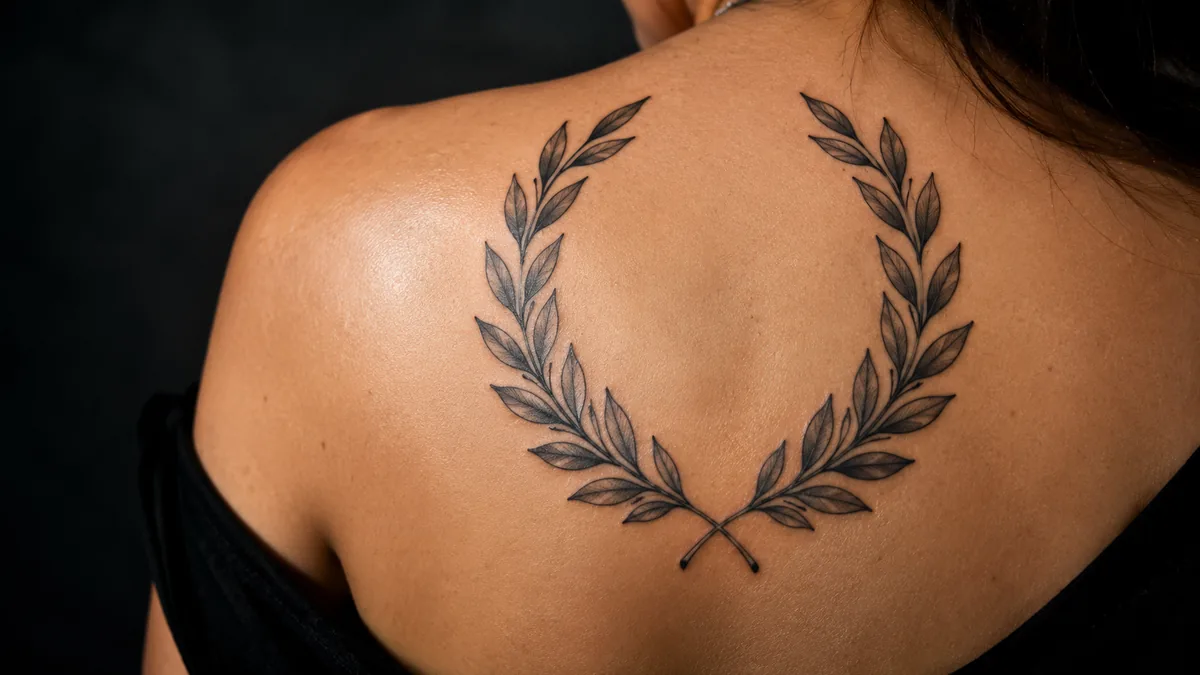
The laurel wreath is one of the oldest symbols humans ever put on their bodies, and it still hits the same way it did in ancient Greece. it means one thing: you won. Achievement, honor, hard-earned status. People get this tattoo because they’ve been through something real and came out standing.
It’s also one of the most versatile pieces you can get. Clean and minimal or loaded with detail, it wraps around almost any placement, and the symbolism holds across cultures. Here’s what the laurel wreath actually means as a tattoo and what you should know before you sit down for one.
Core Meaning: Victory and Achievement
The laurel wreath tattoo means victory above everything else. In ancient Greece and Rome, laurel crowns went to champions, generals, and emperors. Wearing one said you had done something others couldn’t. As a tattoo, that same energy carries. People get it after finishing degrees, surviving illness, completing military service, or just grinding through a chapter of life that nearly broke them.
It also carries ideas of honor and recognition, not just self-awarded glory. There’s a difference. A lot of clients frame it as a reminder that the work paid off. It’s not arrogant, it’s earned. That distinction matters when someone asks what your tattoo means, and you want an answer that lands right.
Historical and Cultural Background
Every leaf earns its place. So should you.
Laurel wreaths come from the Greeks, who crowned victors at the Pythian Games with branches of bay laurel, sacred to Apollo, god of the arts, light, and truth. The Romans picked it up and ran with it. Julius Caesar wore a golden laurel crown. Roman emperors put it on coins. It became the face of power and divine favor across the ancient world.
That legacy filtered into Western art, literature, and academic tradition. The word baccalaureate literally contains laurel berry. Poet laureate, the same root. So when someone tattoos a laurel wreath, they’re pulling from one of the longest-running symbols of human achievement in recorded history. That’s not hype, that’s just where it comes from.
Popular Design Variations
The classic two-branch oval wreath is the most recognized version, symmetrical, clean, reads from across the room. Fine line single-needle work gives it a delicate, almost engraved look. Bold traditional outlines with thick black strokes make it graphic and high-contrast, great for areas that get a lot of sun or stretch. Some artists add berries, which are part of the real bay laurel plant and add texture without muddying the meaning.
Other popular variations wrap the wreath around a symbol inside: a year, initials, a skull, a Roman numeral, a sun or moon. The wreath as a frame is extremely common. Some clients go for a broken or asymmetrical wreath to show resilience through imperfection. Open-bottom wreaths have a softer feel than closed ones. Each choice shifts the read slightly, so it’s worth thinking through before you commit.
Black and Grey vs. Color
Most laurel wreath tattoos are done black and grey or full black, and that’s the right call for longevity. Fine line black ink on this design heals clean and crisp when it’s well-placed and well-executed. Whip shade on the leaves gives depth without muddying the piece. Solid black fills on a bold traditional version will hold for decades in good skin. Black and grey also lets the shape and line work do the heavy lifting, which is where the design earns its elegance.
Color is less common but can work beautifully. Olive green leaves with fine line detailing look sharp fresh but require touch-ups as green fades faster than black. Gold or yellow accents on the berries give a Roman coin feel. Fully saturated traditional color with a bold outline pops hard. If you go color, pick an artist who does saturated work well, because muddy green on healed skin looks rough and kills the whole piece.
Best Placements and How It Ages
The wreath shape lends itself to circular or band placements. Upper arm, bicep, forearm, and thigh all work well because the skin is relatively stable and low-wear. An oval or circular wreath over the sternum or as a chest piece is extremely popular, especially for women. Spine placements look striking but the fine-line versions can spread slightly over years. The back of the neck is a solid spot for a small tight wreath if you’re going minimal.
Avoid the inner wrist, fingers, and feet for fine-line versions. Those are high-wear, high-friction zones, and fine lines blowout or fade fast there. A bold, thick-outlined version holds better in those spots but still needs touch-ups. The upper back, rib area (spicy, fair warning), and thigh are sweet spots. A well-executed laurel wreath in a good location with solid black ink ages gracefully. Twenty years in, it should still read clean.
Who Gets This Tattoo and Why
Athletes get it after big wins, sometimes with a date or sport reference inside. Graduates mark finishing degrees, especially law, medicine, or doctoral work where the laurel connection is literal. Veterans use it to honor service and sacrifice. People in recovery mark years clean. Academics, musicians, and writers who see themselves in the Apollo-and-laurel lineage go for it on principle. It’s a tattoo with broad appeal because achievement is universal.
Some people get it purely aesthetic, no heavy personal story attached, and that’s fine too. It’s a strong graphic shape that works on a lot of body types and skin tones. If you want to personalize it, add a meaningful date inside, incorporate a symbol specific to your field, or customize the number of leaves. Talk to your artist about what elements you want to carry weight and what’s just there to make it look right.
Finding the Right Artist for the Style
The laurel wreath punishes weak line work fast. Every curve on those leaves has to be clean and consistent, or the piece looks off from day one. For fine line work, find someone who specifically does botanical or illustrative tattoos with solid fine-line healed photos in their portfolio. Healed work matters more than fresh photos. Fresh tattoos always look better. Healed photos tell you how the artist’s lines actually hold.
For bold traditional or neo-traditional versions, find someone whose black outlines are crispy and even and whose fills are smooth without patchiness. Ask your artist whether they recommend a liner or shader needle count for the leaf fills. Good artists have opinions on this and will tell you what they prefer. Bring reference images but let them redraw it to fit your body properly. A flat image from Pinterest won’t wrap right without adjustment.









