
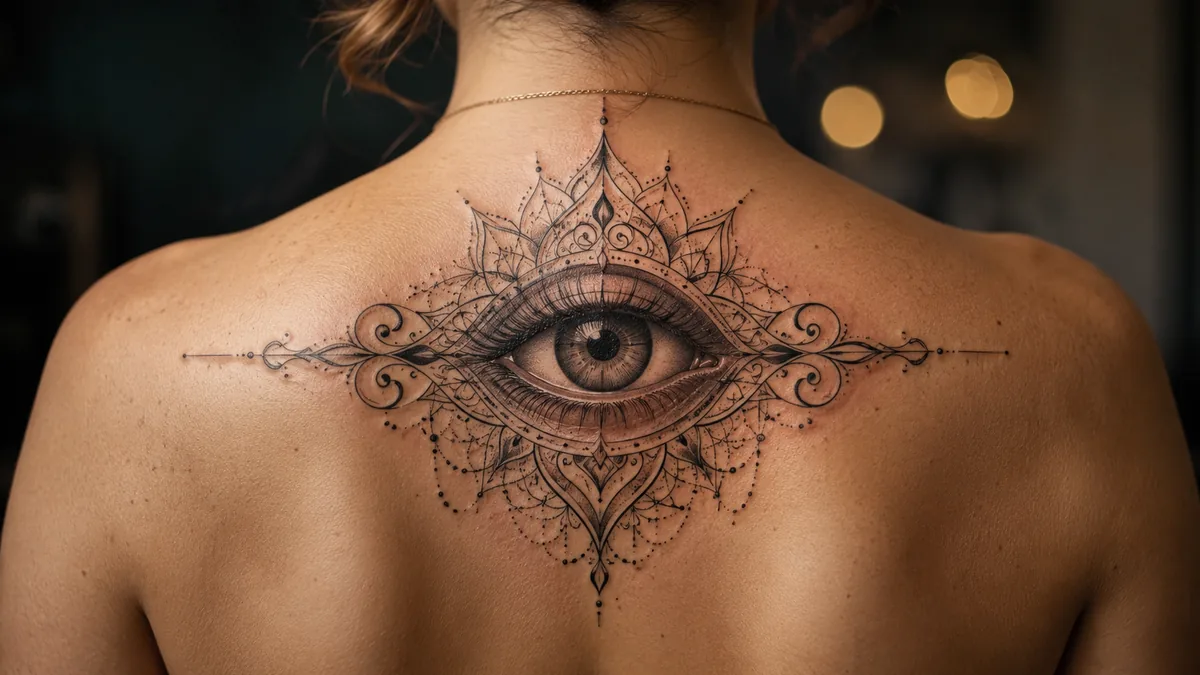
The third eye tattoo is one of those designs that actually means something. It’s not just aesthetically clean, though it usually is. People get it because they’re trying to say something real about awareness, intuition, and seeing past the surface-level noise of everyday life.
this tattoo is about perception. The idea that there’s more going on beneath what you can physically see, and that you’re tuned into it. That’s a message a lot of people want to carry on their skin permanently. Here’s what it really means, where it comes from, and how to get it done right.
What the Third Eye Actually Symbolizes
The third eye represents a sixth sense, an inner knowing that goes beyond ordinary sight. It’s tied to concepts of intuition, heightened awareness, psychic perception, and spiritual enlightenment. When someone gets this tattoo, they’re usually expressing that they trust their gut, value inner wisdom, or have gone through a serious shift in consciousness. It’s about seeing truth clearly, even when it’s uncomfortable.
The symbol also represents protection in many traditions. Some wear it to signal that they can see through deception, that they’re not easily fooled. It’s a statement of mental and spiritual sharpness. In short, this tattoo says: I pay attention to things most people miss.
Where It Comes From: The Real Cultural Background
It's not about seeing more, it's about seeing what others miss.
The third eye has deep roots in Hindu tradition, where it’s called the ‘ajna’ chakra, located at the center of the forehead between the brows. In Hindu iconography, the god Shiva famously has a third eye that, when opened, radiates immense power and destruction. It’s not just mystical decoration. It’s a serious spiritual concept tied to yogic philosophy and the idea of inner energy centers in the body.
Buddhist traditions also reference the third eye as a symbol of enlightenment and clear-seeing. In Taoism and various ancient Egyptian beliefs, similar concepts of a divine eye exist, most notably the Eye of Horus. The modern Western tattoo scene pulls from all of these threads, sometimes blending them, so knowing which tradition resonates with you helps make the piece more meaningful and personal.
Popular Design Variations
The most common version is a stylized eye centered on a triangle or surrounded by geometric shapes, radiating lines, or mandala elements. Geometric third eye tattoos are huge right now because the clean angles read sharp even at smaller scales. You’ll also see the Eye of Providence style, the all-seeing eye inside a triangle, sometimes with rays shooting outward. That version carries its own layered associations with Freemasonry and ancient symbolism.
Realism-style third eyes are another strong option, rendered like an actual human eye but placed on the forehead of a portrait or floating on its own. Some people go for a full Shiva portrait with the third eye as a focal point. Others incorporate lotus flowers, the om symbol, snakes, or pyramids. Fine line versions are popular for delicate placement on the wrist or behind the ear, though they need a skilled hand to stay crisp long-term.
Black and Grey vs. Color: Which Works Better
Black and grey is the dominant choice for third eye tattoos, and it makes sense. The symbol is inherently graphic and architectural, and a clean black and grey piece with solid linework and smooth whip shading will hold up for decades. The contrast reads strong from across the room. Bold will hold here, especially if your artist locks in those dark anchor points and doesn’t overwork the midtones.
Color can look stunning when done intentionally. Deep indigo and violet are popular because they tie into the ajna chakra’s associated color in Hindu tradition. Saturated jewel tones pop on the right skin tone and give the piece an otherworldly quality. That said, color fades faster than solid black, especially in high-wear zones. If you want color, go bold and plan for a touch-up down the line. Avoid watered-down pastels. They look faded the day they heal.
Best Placements and How It Ages
Forehead placement is the most literal and the most committed. It’s a high-visibility spot that reads exactly as intended, but it’s also a career conversation for some people. Chest and sternum are popular, especially centered on the breastbone where the design gets real estate to breathe. Upper arm and outer forearm are solid choices for visibility and healing. The skin in those zones is relatively stable, which means your linework stays tight and your shading stays clean over time.
Avoid placing a detailed third eye on the inner wrist, side of the hand, or fingers if longevity matters to you. Those are high-wear zones where ink migrates and fine lines blow out faster. The back of the neck works well for smaller versions but it’s a spicy spot. Behind the ear is delicate territory, fine for minimalist designs but not great for anything complex. If your piece has intricate geometric linework, give it a flat, low-friction surface and it will thank you.
Who Gets This Tattoo and How to Make It Yours
This tattoo attracts people who’ve gone through a real shift, a period of serious personal growth, a spiritual practice that stuck, or a moment where they feel like something clicked about the way they see the world. Meditators, yoga practitioners, people who’ve done psychedelic work, people deep in their own philosophical or spiritual path. It’s also popular among artists and creatives who identify with the idea of heightened perception and seeing things differently.
To make it personal, think about which tradition or meaning actually resonates with you and build the design around that. If it’s the Hindu chakra connection, consider incorporating Sanskrit or lotus elements. If it’s more about personal intuition and awareness, a cleaner geometric version with minimal symbolism might hit harder. Talk to your artist about what the piece is really saying for you. A good artist will help you build something that reads as intentional rather than generic.
Talking to Your Artist Before You Book
Walk in knowing what style you want and what the tattoo means to you. Artists appreciate a client who’s done real thinking about the piece, not just pulled a reference off Pinterest without context. Bring two or three reference images, not to copy them exactly, but to communicate style, weight, and tone. Be clear about how big you want to go. Third eye tattoos can work small and tight or large and detailed, but the design has to be scaled appropriately or you’ll lose the detail that makes it worth getting.
Ask your artist about their experience with geometric or mandala-adjacent work if that’s the direction you’re going. Clean, symmetrical geometric tattoos require a precise hand and a solid understanding of spacing. A slightly crooked triangle in a geometric piece will bother you every time you look at it. Look at healed photos in their portfolio, not just fresh-off-the-gun shots. Healed work tells you everything about how clean their lines really are and whether their shading settles or gets muddy over time.









