
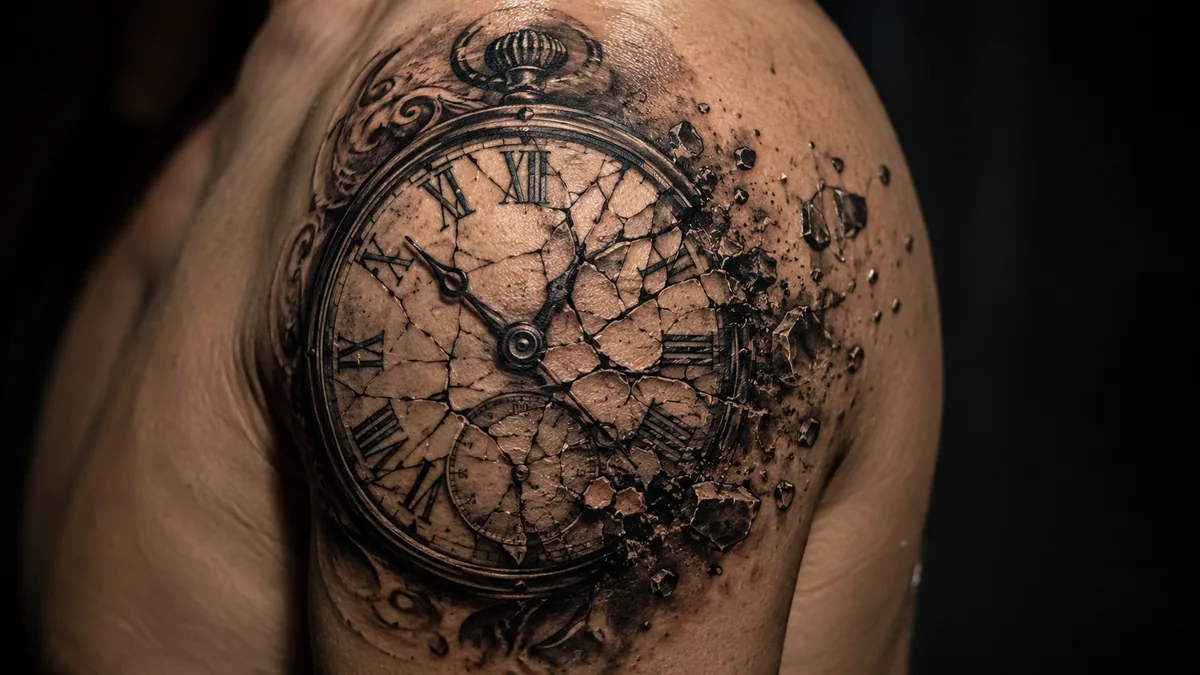
A broken clock tattoo is one of those pieces that hits differently every time you see it. Stopped hands, shattered glass, melting numbers, cracked face, whatever the specific design, the core message is the same: time isn’t infinite. The clock is broken because someone chose to stop it, or life stopped it for them.
People get this tattoo for a lot of reasons, and most of them are heavy. Loss, grief, survival, freedom from a toxic past, or just a raw reminder to stop sleepwalking through the day. It’s not decorative fluff. It means something real to whoever’s wearing it.
Core Meaning: Frozen Time and Mortality
The most direct reading of a broken clock is that time has stopped. Not slowed down, stopped. That distinction matters. When someone gets a clock frozen at a specific time, they’re marking a moment: a death, a birth, a trauma, a turning point. The broken mechanism is a statement that whatever happened then changed everything after it. Time, for them, is divided into before and after.
On a deeper level, broken clocks are about mortality. We all know time runs out. The busted clock just makes that unavoidable to look at. It’s a memento mori without the skull, quieter, but just as honest. You see it on guys who’ve been through real loss, and you see it on people who just want the reminder on their arm every morning to actually live their life.
Living in the Present: The Anti-Hustle Read
The hands stopped. You didn't.
There’s a second major current running through this tattoo. Some people wear a broken clock to reject the grind. Clocks run your schedule, your obligations, your anxiety. A broken one means none of that controls you anymore. It’s a refusal, of deadlines, of the rat race, of the idea that your worth is tied to productivity.
This reading is common with people who’ve burned out hard, left toxic careers, or shifted their priorities after a health scare or loss. It’s not laziness. It’s a deliberate choice to exist outside the standard timeline. That idea pairs well with quotes like ‘time is an illusion’ or with melting Dalí-style designs that make the clock look like it’s refusing to function on purpose.
Grief and Memorial Ink
One of the most personal uses of the broken clock is memorial work. Setting the hands to the exact time someone died, a parent, a partner, a friend, turns the tattoo into a permanent marker. The clock stopped because that person stopped. It’s a way of saying ‘this moment lives on my body because I’m not letting it disappear.’
These pieces tend to get paired with portraits, names, birth and death dates, or flowers associated with the person. If you’re doing this as memorial ink, think hard about the exact time you want. Pull the hospital record or the phone log. Get it right, because this one’s permanent and it needs to be accurate. That specificity is what makes it hit.
Cultural and Literary Background
The imagery has real literary roots. Miss Havisham in Dickens’ ‘Great Expectations’ stopped all the clocks in her house at the moment she was jilted on her wedding day, refusing to let time move forward. That image, a woman frozen in grief, clocks stopped at 9:20, wedding dress on decades later, is one of the most recognizable symbols of refusing to accept loss or change. It’s heavy, and it resonates.
Salvador Dalí’s ‘The Persistence of Memory,’ with its melting clocks draped over surreal landscapes, also feeds the design language. Dalí meant to question whether time is as rigid as we treat it. Both references are legitimate cultural touchpoints for broken clock tattoos, even if your client has never read Dickens or been to a museum. The symbols have soaked into the culture on their own.
Design Variations and Style Options
The design range is wide. You’ve got traditional pocket watches with cracked glass and stopped hands, a classic that reads clean from across the room and holds up in black and grey for decades. You’ve got grandfather clocks rendered in a more architectural, realistic style. You’ve got melting Salvador Dalí clocks that work beautifully in surrealism or neo-trad. And you’ve got fine-line minimalist clock faces that are clean and crispy but need a low-wear placement to age right.
Shattered glass over the clock face adds a layer of violence to the image, implying something broke the clock rather than it just winding down. Flames, ravens, roses, chains, and skulls all pair naturally with the imagery. Black and grey realism makes the mechanical detail sing. If someone wants color, deep blues and warm ambers can look stunning on a pocket watch, but bold will hold better long-term than anything pastel in that detail work.
Placement, Pain, and How It Ages
The forearm is the most popular placement, and for good reason. It reads well, heals nice, and has enough surface area for real mechanical detail. The upper arm and shoulder are solid too, especially for larger pieces that incorporate portrait elements or elaborate backgrounds. The chest and ribcage work for those who want it more private, but ribs are spicy, and fine-line detail in that zone can spread over time.
High-wear zones like fingers, hands, and feet are a bad match for anything with fine line detail in the clock face. The mechanical intricacy of a clock face needs a stable, relatively flat surface to stay sharp. Stay away from areas with heavy skin movement or sun exposure if you’re doing detailed linework. A well-placed forearm piece in solid black and grey with clean, bold lines is going to look solid at 30 years old. Plan for how it ages, not just how it looks fresh.
Who Gets This Tattoo and How to Make It Personal
Survivors get this tattoo. People who’ve lost someone, people who’ve come out the other side of addiction or illness, people who walked away from a life that was eating them alive. It also lands with creatives and artists who connect with the Dalí surrealism angle, and with people who just want a strong, meaningful piece that isn’t over-explained every time someone sees it.
To make it yours, set the time to something that matters. Add a name if it’s memorial ink. Choose a clock style that reflects your aesthetic, a worn Victorian pocket watch reads differently than a sleek minimalist face. Talk to your artist about what details carry weight for you personally. The broken clock is a strong enough symbol that even a clean, solo design says everything it needs to. You don’t need to over-explain it. Let the stopped hands speak.









