The nobody tattoo hits different depending on who’s wearing it. For some people it’s a quiet reminder of inner strength they don’t need to advertise. For others it’s a flat-out declaration: trust nobody, rely on yourself, and quit seeking approval you were never going to get anyway.
There’s also the movie angle. The 2021 Bob Odenkirk film gave the word a whole new layer of meaning, and a lot of people have grabbed onto that imagery. But the word itself has been showing up on skin long before the film. It carries real weight either way, and this article breaks down what’s actually going on when someone sits in the chair for a nobody tattoo.
Core Meaning: The Power of Being Underestimated
The nobody tattoo is fundamentally about hidden strength. It speaks to the person who gets overlooked, dismissed, or counted out, and who carries something underneath that most people will never see coming. It’s not a victim statement. It’s more of a quiet warning. The wearer knows what they’re capable of even if nobody around them does.
That contrast is the whole point. Society assigns value loudly, and ‘nobody’ flips that on its head. Getting it tattooed says: I don’t need your ranking. I know who I am. It’s an anti-validation move, and it resonates hard with people who’ve been underestimated in relationships, at work, or in life in general.
The Movie Connection: Hutch’s 7-2 Tattoo
The quietest word you can tattoo carries the loudest statement.
In Nobody (2021), Hutch Mansell has a wrist tattoo of the seven of spades and two of diamonds. That’s the worst starting hand in Texas Hold’em, statistically speaking. Off-suit, low cards, no straight or flush potential. On paper, a dead hand. In context, it marks him as a government assassin who dealt in violence for money, and seasoned characters in the film recognize it immediately and back down.
The card symbolism is tight. Spades carry associations with death and violence, diamonds point to money and payment. Taken together, the tattoo signals someone who spent their career doing dangerous work off the books. A lot of people who love the film get versions of those cards inked with that hidden-lethal-person concept in mind. It’s a solid concept for a tattoo and it’s rooted in actual poker hand hierarchy, not invented lore.
Trust Nobody: The Self-Reliance Variant
‘Trust Nobody’ is probably the most common phrase version you’ll see in studios. It comes from real experience: betrayal, being burned by people who were supposed to have your back, or just watching enough of life go sideways to stop handing out blind trust. It’s not pure cynicism. Most people wearing it frame it as a protective mantra, a reminder to rely on their own judgment first.
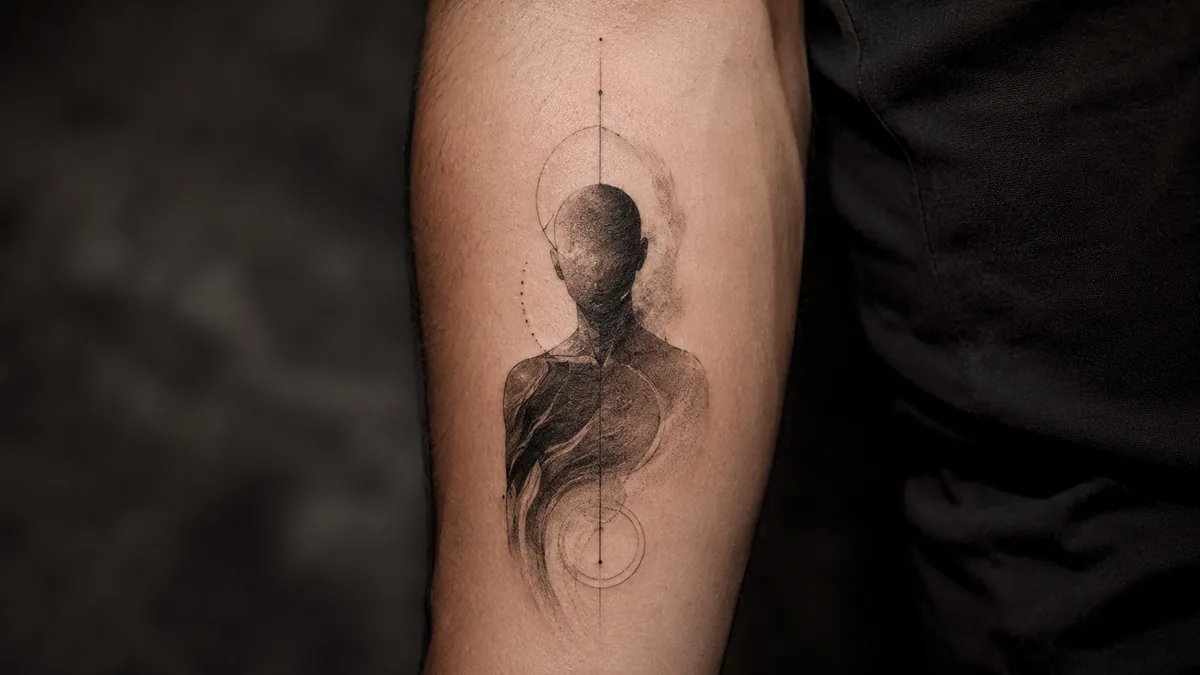
Visually, Trust Nobody pieces tend to run bold. Heavy blackwork lettering, sometimes paired with imagery like a lone wolf, broken chains, a faceless silhouette, or a single eye. The imagery reinforces the self-sufficiency message without needing words to explain it. The tattoo does the talking.
Anti-Ego and the Humility Angle
Not every nobody tattoo is about street hardness or movie references. Some people come in wanting the word as a philosophical statement about ego. They’re pushing back against hustle culture, clout-chasing, and the constant pressure to be somebody famous or important. The tattoo says: I’m not playing that game. Just doing my thing, no audience required.
This reading pulls from stoic and Buddhist ideas about detachment from status. It’s less common than the strength or betrayal angles but it’s real, and the people wearing it tend to want a clean, minimal execution. Simple lettering, no aggressive imagery, just the word sitting quietly on the skin. The meaning carries without decoration.
Design Variations and Style Options
The most popular execution is clean lettering on its own. All-caps NOBODY in a solid sans-serif reads from across the room and ages well. Script versions feel more personal but need enough stroke width to survive years without blurring into mush. Micro-thin cursive looks sharp fresh but give it five years of sun and skin movement and you’re dealing with smeared lines.
For clients who want imagery alongside the word, card motifs work well for the movie reference crowd. Faceless figures or shadow silhouettes pair naturally with the invisibility theme. Broken chains add the liberation angle without being heavy-handed. Blackwork handles all of these cleanly, and solid black ink holds better long-term than gray-washed detail that can muddy up over time.
Black and Grey vs. Bold Blackwork
Black and grey suits the quiet, introspective nobody concept really well. Soft shading, clean lettering, maybe a light whip shade on any accompanying imagery. It sits subtle on the skin and ages gracefully in the right placement. If you want the tattoo to feel like a private thing, black and grey is your lane.
Straight blackwork with saturated black ink and bold lines is the move for a Trust Nobody piece or a card tattoo that needs to read strong. Bold will hold. Thick lines resist blowout better over time and stay crisp through decades of wear. Either approach works for this subject, but you need to match the style to the emotional weight you want the piece to carry.
Best Placements and How the Tattoo Ages
Inner forearm and outer upper arm are your safest bets for longevity. Stable skin, less sun exposure, less friction than areas that flex constantly. The collarbone and upper chest work well too, especially for a smaller, more personal piece. Upper back between the shoulder blades handles bigger lettering or full compositions without the wear and tear that joint areas take.
High-wear zones are rough on text. Fingers, hands, knees, elbows, feet. The skin there moves constantly, gets washed repeatedly, and gets sun. Lettering in those areas blows out fast, especially anything fine-line. If you insist on a hand or finger placement, go thicker than you think you need. Otherwise you’ll be booking a touch-up within a year.