
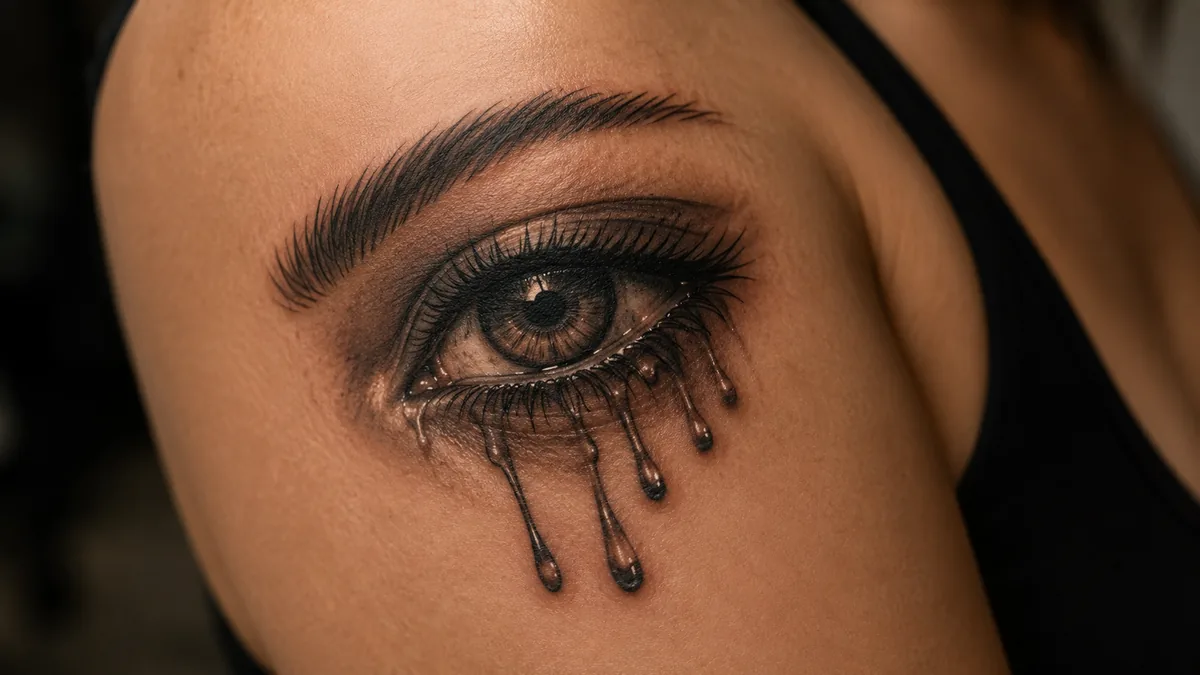
The crying eye tattoo is one of those images that hits you immediately. A single eye, a single tear, sometimes a stream. No fuss, no extra noise. Just raw human emotion locked into skin.
People get this tattoo for real reasons. Grief. Loss. Survival. Sometimes it’s a memorial, sometimes it’s a reminder of what they’ve been through. The meaning runs deeper than it looks, and the design has serious staying power in American tattoo culture.
Core Symbolism: What the Crying Eye Really Means
The most direct reading is grief and loss. A tear falling from an eye is universally understood as sorrow, and that’s exactly what most clients mean when they come in asking for this piece. It marks something painful, something that changed them. A loved one who passed. A chapter that ended hard. An era of their life they carry with them but can’t go back to.
Beyond grief, the crying eye also represents emotional honesty and vulnerability. It says: I feel things deeply, and I’m not hiding it. For a lot of people that’s powerful. In a world that tells you to toughen up and move on, putting a weeping eye on your body is a quiet act of defiance. It honors what you’ve felt.
Cultural and Historical Background
One tear holds more weight than a thousand words ever could.
The eye as a symbol has roots going back thousands of years across Egyptian, Greek, and Middle Eastern cultures. The Eye of Horus, the Evil Eye, the All-Seeing Eye, they all carry themes of protection, awareness, and spiritual sight. The crying version specifically emerged strongly in American tattooing through prison culture, where a tear under the eye had very loaded meanings tied to time served or lives lost.
Outside prison tattooing, the crying eye became a mainstream memorial symbol in American street culture during the 1980s and 1990s. Chicano tattooing in particular embraced the weeping eye as part of larger memorial pieces, often paired with roses, script, and portraits. That tradition gave the image real artistic weight and cemented its place in the tattoo canon.
Design Variations: What You Can Do With This Image
The range here is wide. Classic American traditional gives you a bold, graphic eye with thick outlines, a solid black pupil, and a fat teardrop with a clean highlight. It reads from across the room and holds up for decades. Fine line approaches go the opposite direction: hyper-detailed iris texture, wispy lashes, a delicate translucent tear. Beautiful, but demands a skilled artist and a location that won’t stretch or blur.
Some clients add elements that sharpen the personal meaning. Roses or marigolds frame it as a memorial piece. A crown above it nods to Chicano art traditions. Flames around it can signal anger wrapped in grief. Religious imagery, a rosary, a cross, or an angel, pushes it into spiritual mourning territory. Others keep it stripped down, just the eye and the tear, which honestly is often the strongest version.
Black and Grey vs Color: Which Works Better
Black and grey is the natural home for this tattoo. Grief and loss don’t need color. A skilled artist working in black and grey can build incredible depth in the iris, make that teardrop look like it’s about to drip off your skin, and whip shade the surrounding area to give the whole thing dimension. It ages beautifully when done right, especially if you stay out of the sun and keep the skin moisturized.
Color opens different doors. A blue or green iris can make the eye feel warmer, more personal, like a specific person’s gaze. Some artists use subtle watercolor washes behind the tear for an emotional, painterly effect. Fully saturated American traditional with red and yellow accents reads bold and graphic. Just know that bright colors in high-wear areas fade faster, and a crying eye tattoo that’s lost its punch loses a lot of its meaning.
Placement: Where It Lives Best on the Body
The forearm is the most popular spot. Inner forearm gives you a flat canvas, relatively low pain, and great visibility. The tattoo reads clearly and heals nice on that surface. The upper arm and bicep area work well too, especially for larger pieces with surrounding elements. Chest placement, particularly over the heart, makes an obvious and meaningful statement for a memorial tattoo, but expect a spicier session over the sternum.
The back of the hand and the neck are high-visibility spots that carry social weight. They’re commitment placements, no hiding them in a job interview. Fine line crying eye pieces are popular on the wrist and behind the ear, but both locations are high-wear and prone to fading and blowout over time. If you want it crisp in ten years, go for fleshier, flatter skin. Bold will hold regardless of placement, fine line will not.
How It Ages on Skin
This is where style choice matters most. A traditional bold-lined crying eye with solid fills ages the best of any version. Those thick outlines lock the design in place even as skin changes over time. The tear stays readable, the eye stays clean. A well-executed black and grey piece with good saturation also holds up strong, especially in a low-friction zone.
Fine line crying eye tattoos are the riskiest long-term. Thin lines can spread and blur, especially on thinner skin or areas that see daily movement and sun. The delicate iris detail that made it stunning at day one can look muddy at year five. That doesn’t mean fine line is wrong, it means placement and aftercare matter more, and you need an artist who knows exactly how light to go to get longevity out of minimal lines.
Who Gets This Tattoo and How to Make It Personal
Honestly, a huge range of people. People who’ve lost a parent, a best friend, a child. People who’ve survived addiction or abuse and want to mark the weight of that journey. Veterans honoring fallen brothers. Young people in their twenties who’ve already been through more than most. The crying eye is not a trend piece. People who get it usually mean it.
To make it yours, bring specifics to your artist. Your loved one’s eye color. A symbol that meant something to them, a flower they loved, a date worked into the design. The more personal the details, the more the tattoo does its job. A generic crying eye is still a solid piece. But one built around a real person or a real moment carries something extra, and you’ll feel that every time you look at it.









