The honeycomb is one of those designs that earns its place in every style, from blackwork sleeves to delicate fine-line wrist pieces. It reads clean, it holds up, and it means something real. That’s a rare combination.
a honeycomb tattoo is about structure and effort. The hexagonal cell pattern built by bees represents community, labor, precision, and the kind of results that only come from collective work. People choose this image because it connects to something they actually live by, not just something that looks cool on a flash sheet.
Core Meanings of the Honeycomb Tattoo
The honeycomb’s primary symbolism is community and interconnection. Each hexagonal cell only functions as part of the whole structure. That grid represents the idea that individual effort, repeated consistently, builds something far stronger than any single piece could on its own. It’s the tattoo version of ‘we over me.’
Hard work and dedication sit right behind that. Bees don’t stumble into a perfect geometric grid. They build it cell by cell through discipline and instinct. People who’ve grinded through something, built a life from scratch, or lean hard into a work ethic see themselves in that pattern. It’s not subtle symbolism. It’s direct.
Natural Order and Sacred Geometry
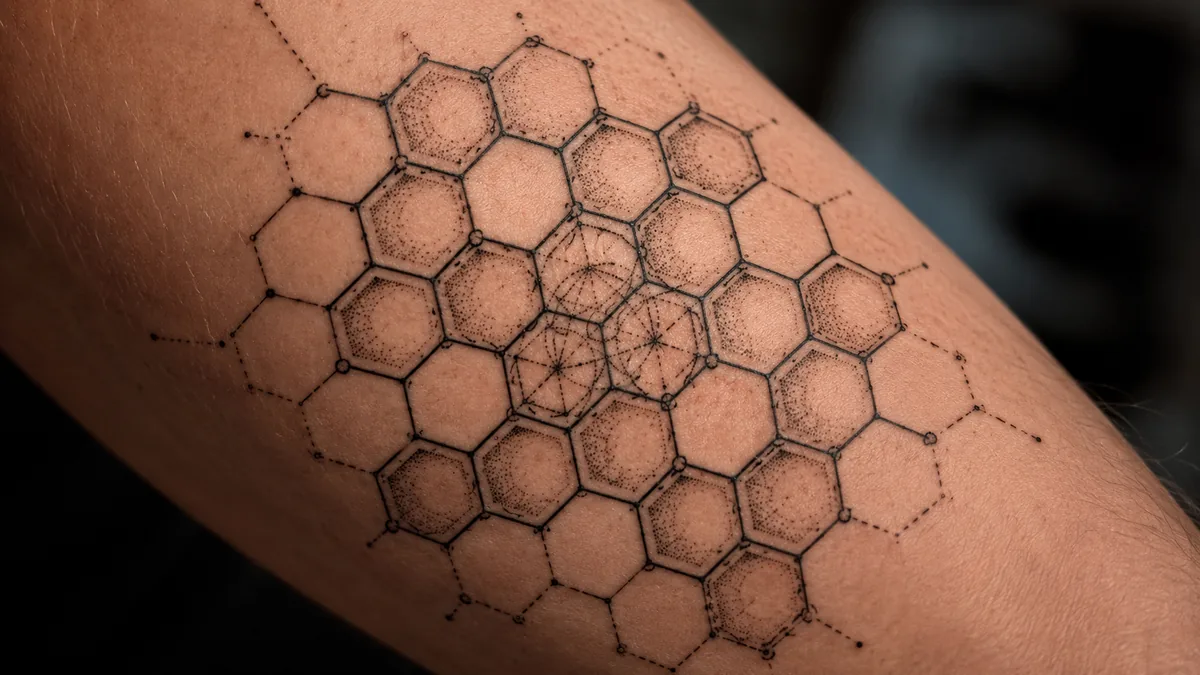
Every cell holds something, that is the whole point.
The hexagon is one of the most efficient shapes in nature. Bees land on it because it maximizes storage while minimizing material. Mathematicians call it the honeycomb conjecture, and it was formally proved in 1999: the hexagonal grid is the most efficient way to divide a flat surface into equal cells. That’s not mythology. That’s math.
For a lot of clients, the honeycomb represents natural order and the idea that nature figured things out long before humans did. It connects to sacred geometry tattoos, mandalas, and patterns that suggest the universe runs on hidden structure. If you’re into that worldview, the honeycomb fits right into it without needing any invented backstory.
Cultural and Historical Background
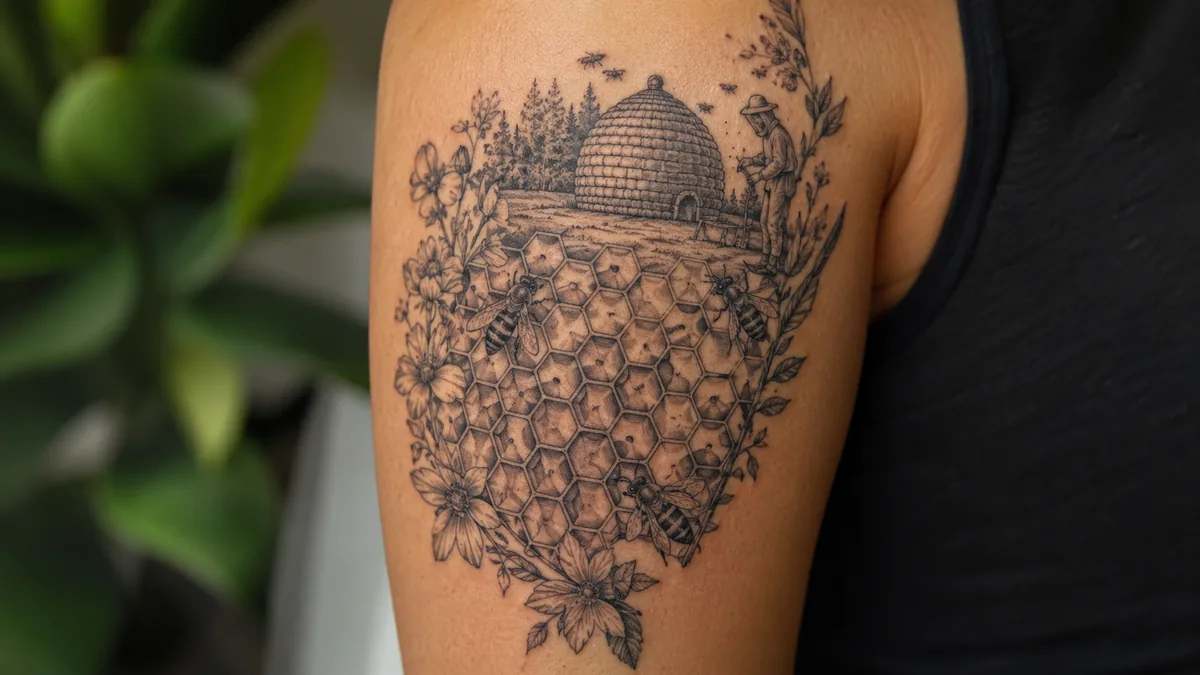
Bees and their architecture have carried symbolic weight across multiple real cultures. In ancient Egypt, bees were linked to the sun god Ra, and honey was placed in tombs as an offering. The Greeks associated bees with the soul, with industry, and with the Muses. Freemasons historically used the beehive as a symbol of industriousness and brotherly cooperation, which shows up in early American folk iconography.
Celtic traditions connected bees to the otherworld and considered them messengers between the living and the dead. None of that is invented for the sake of a tattoo pitch. These are documented historical associations that give the honeycomb deeper roots than most geometric designs. If any of those cultural threads resonate with you, they’re legitimate layers to bring into your piece.
Design Variations and Style Options
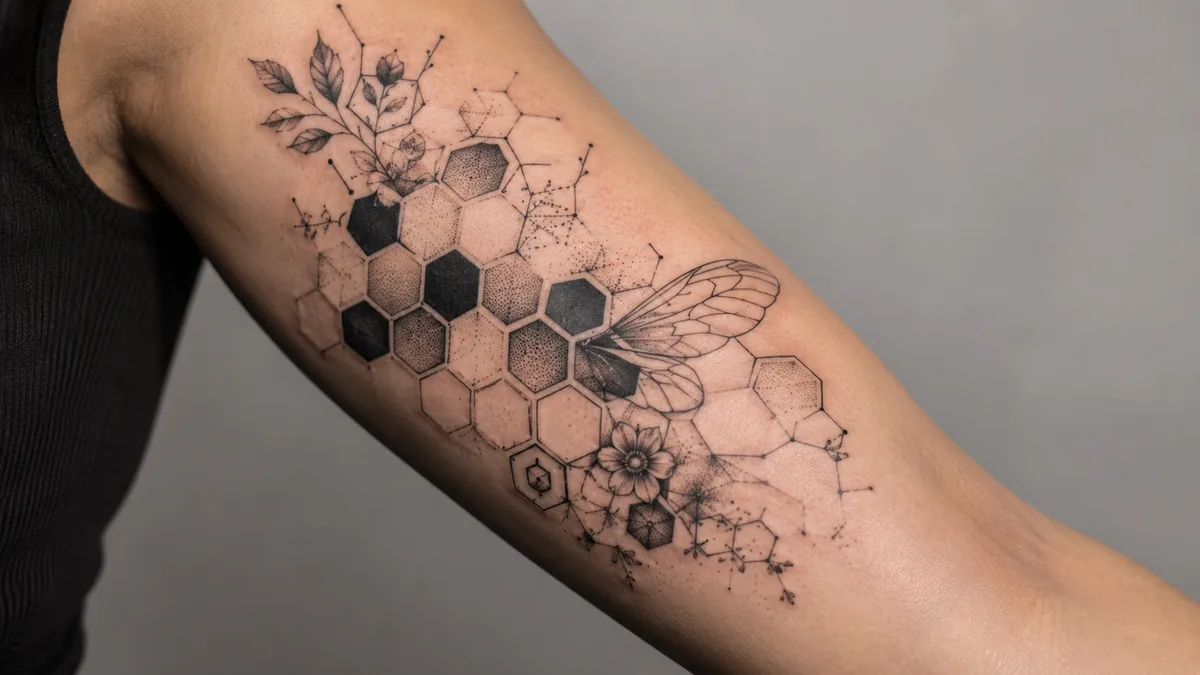
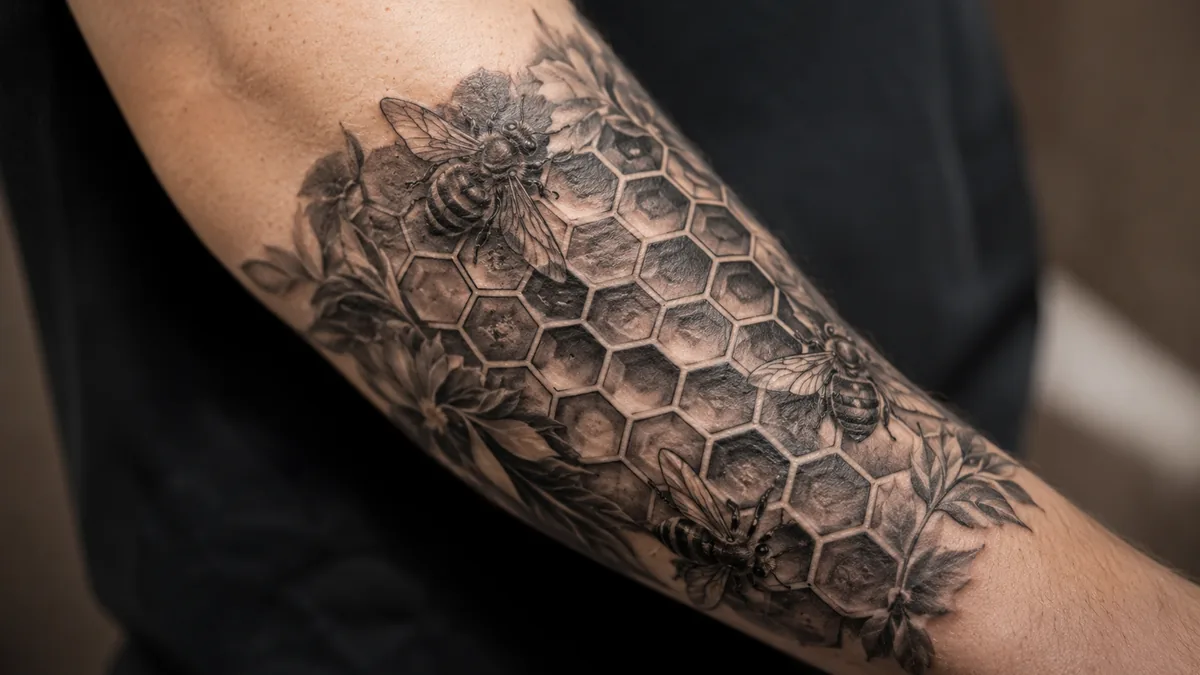
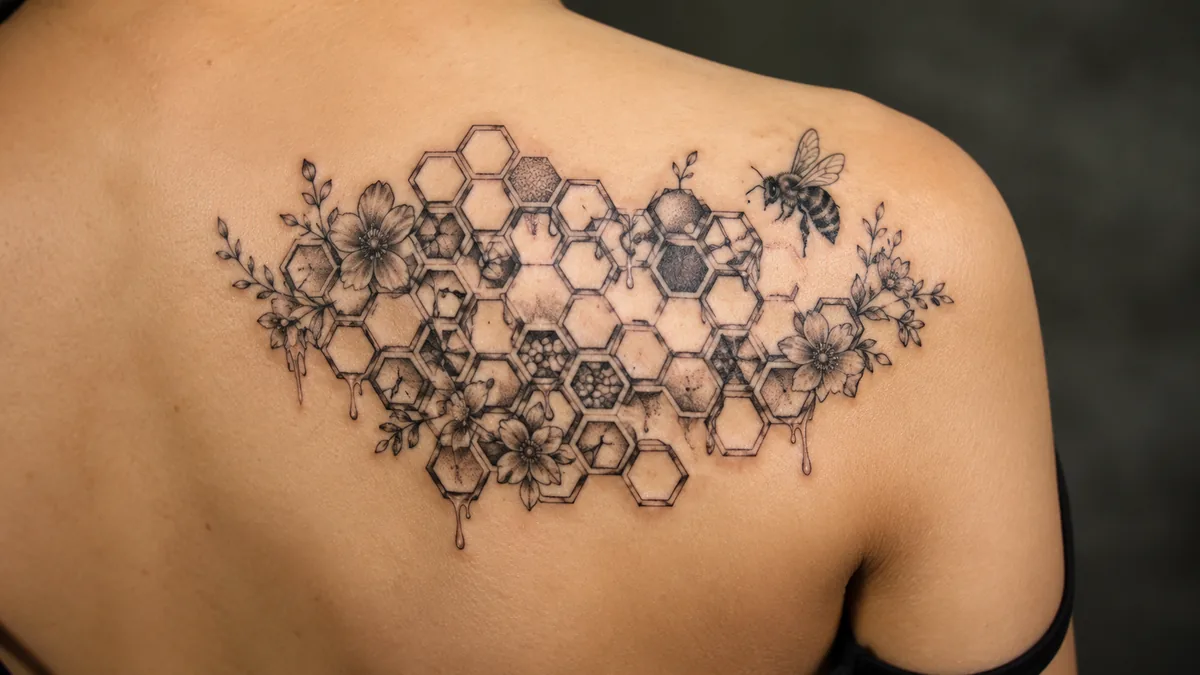
A straight honeycomb grid, crispy black lines on pale skin, heals sharp and reads from across the room. That’s the classic blackwork approach. Some clients want the pattern wrapping a body part, tiling across a forearm or shoulder blade like actual comb. Others want a single cluster of cells, maybe with a bee perched on it or honey dripping out of one cell. Those add-ons anchor the meaning visually.
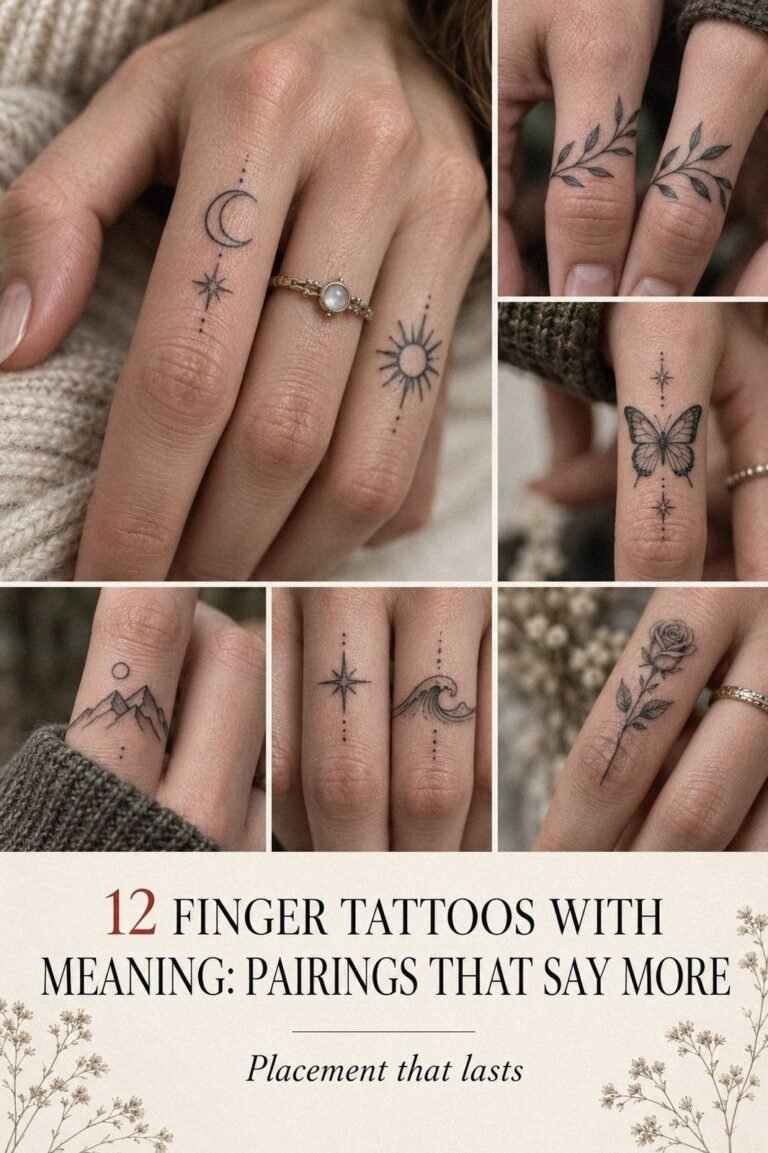
Fine line versions work well in smaller formats, especially on the wrist, inner arm, or behind the ear. The challenge with fine line is that very thin lines in high-wear zones can blur over time. Geometric dotwork variations shade each cell with precise dot fills, giving depth without solid black. Illustrative styles go more organic, slightly less perfect, and pair well with botanical elements like wildflowers or clover woven through the cells.
Color vs. Black and Grey
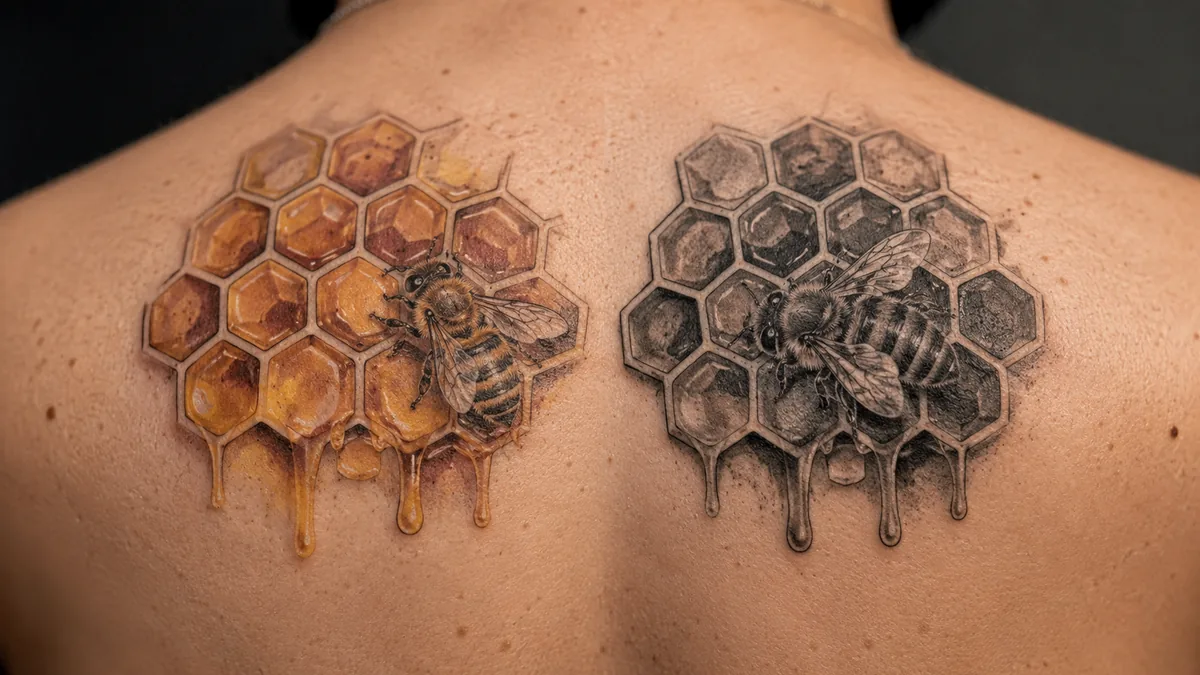
Black and grey honeycomb tattoos are the most versatile. Whip shading inside the cells gives them dimension without color, and the design reads clearly in any lighting. It ages predictably. If you want it to hold 20 years out, black and grey with solid outlines is your safest bet, especially on high-wear spots like hands, feet, or the outside of the elbow.
Color opens up the honey angle. Warm amber, golden yellow, and deep orange fills make the cells look like they’re actually full of honey. That version is saturated and bold, but color fades faster than black, so placement matters more. Keep color honeycomb tattoos out of direct sun exposure zones when possible, and be ready to touch up yellows and oranges sooner than you would a black and grey piece.
Placement and How It Ages
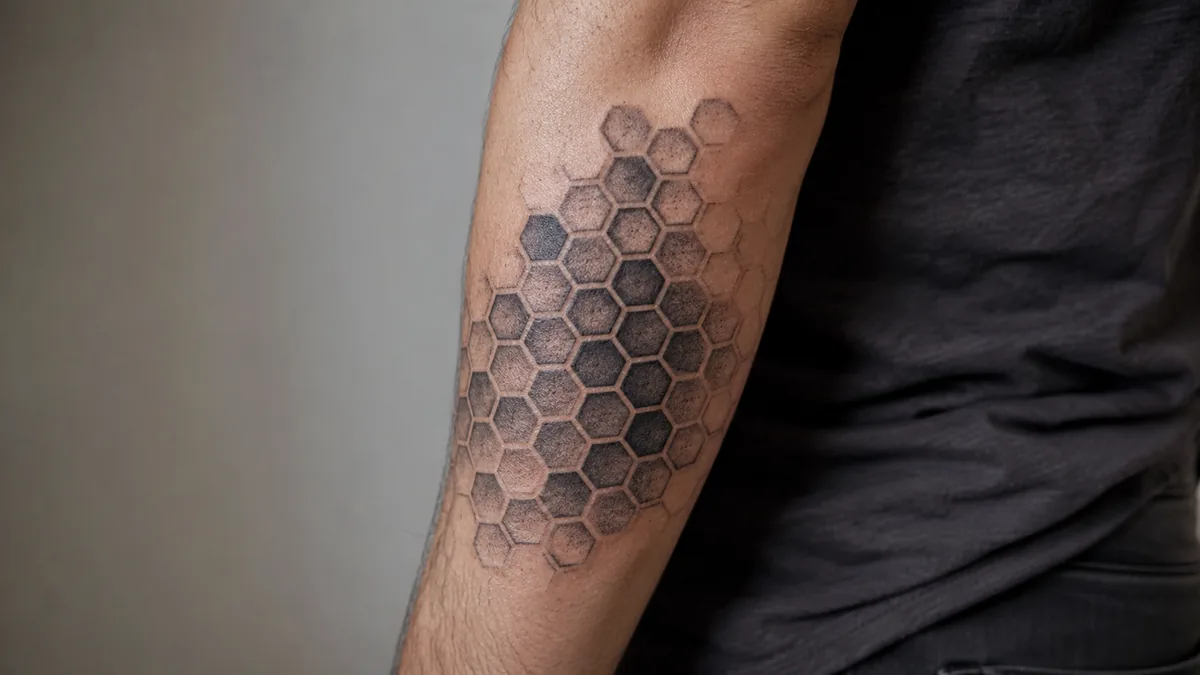
The honeycomb pattern is a geometric artist’s dream for wrapping body parts cleanly. The upper arm, thigh, calf, and shoulder blade all give enough flat real estate for the grid to tile properly without distortion. The inner bicep and inner forearm are popular for smaller, more intimate placements. The ribcage works but it’s spicy, no question about it.
Placement affects aging as much as style does. Fingers, hands, and feet chew up tattoos fast because of skin cell turnover and friction. A fine-line honeycomb on a finger will blur into a soft impression within a few years without touch-ups. The same design on the upper arm can stay crisp for a decade. Behind the knee and inside the elbow are flex zones where solid lines hold better than delicate ones. Bold will hold.
Who Gets Honeycomb Tattoos and How to Make It Personal
Beekeepers, farmers, and people with deep ties to the natural world get honeycomb tattoos as a direct personal reference. So do people in recovery who relate to the idea of rebuilding structure after things fell apart. Teachers, coaches, parents, anyone who sees their life as fundamentally about supporting a larger community tends to connect with this image. It’s also popular with people who just love geometry, and that’s a completely valid reason.
To make the piece personal, think about what you’re adding to the grid. A queen bee in the center changes the read entirely. Adding a specific flower tied to your region or your story makes the design place-specific. Incorporating initials or coordinates inside individual cells keeps the geometric look while hiding personal detail for anyone who doesn’t know to look. Talk to your artist about how the pattern wraps your chosen body part before committing to placement. The grid needs to flow with your anatomy, not fight it.