
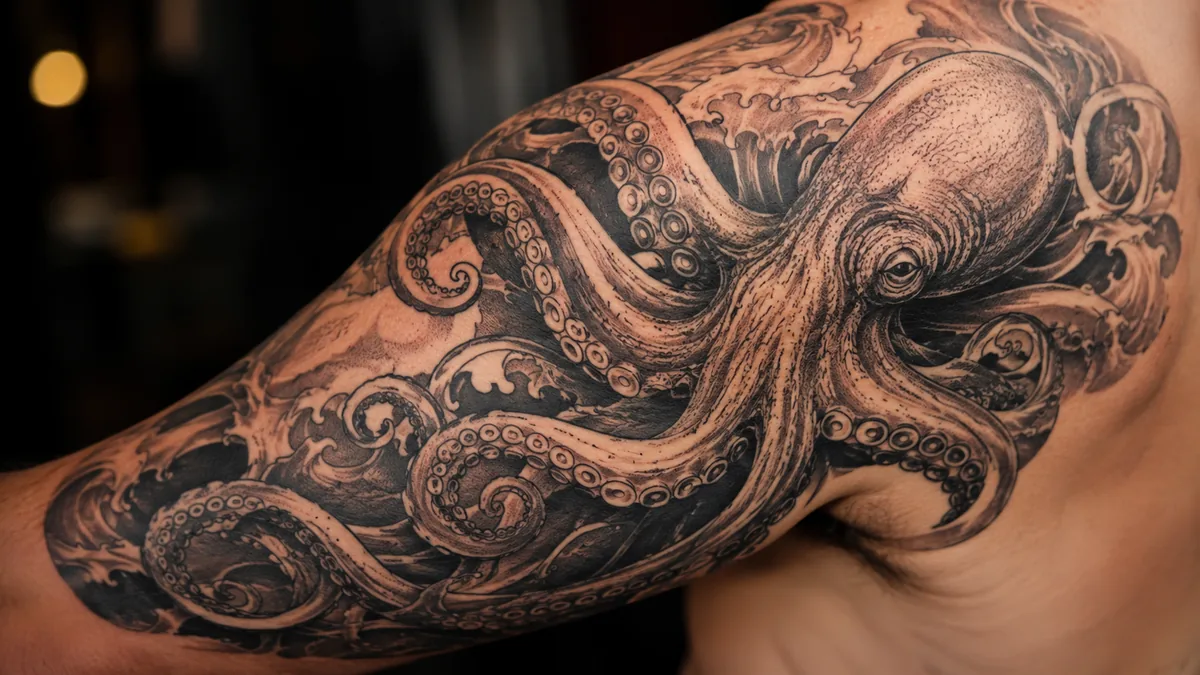
The kraken is a sea monster from Norse and Scandinavian maritime legend, a colossal squid-like creature said to drag ships to the bottom of the ocean. As a tattoo, it carries serious weight: power, the unknown, chaos, and a refusal to be tamed. People don’t get this piece for decoration. They get it because it means something.
a kraken tattoo signals that you’re comfortable with the deep end. The dark water, the things you can’t control, the forces bigger than you. It’s one of those designs that reads immediately from across the room and holds a full conversation without you saying a word.
Core Meaning: Power and the Unknown
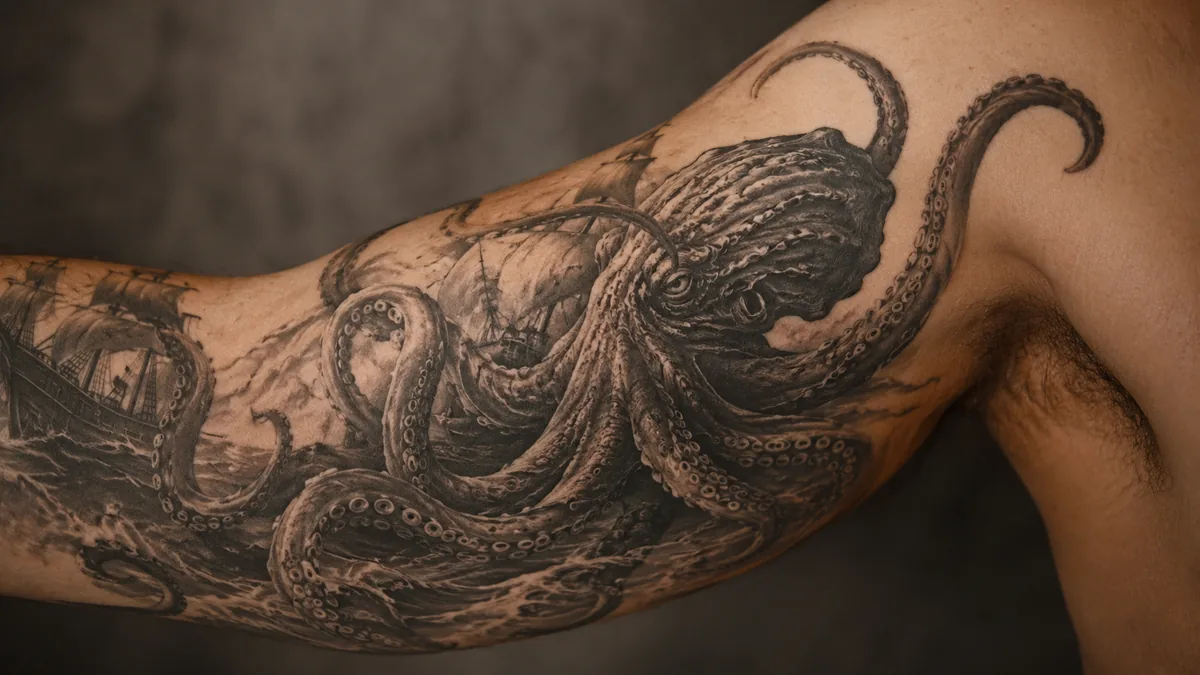
The kraken represents raw, uncontrollable power. It’s not a guardian or a protector in the traditional sense. It’s a force of nature that doesn’t negotiate. People who get this tattoo often identify with that energy, the idea that they contain something massive underneath the surface that most people never see. It’s also strongly tied to the concept of facing fear and surviving it.
The second major thread is mystery and the deep unknown. The ocean floor has always represented the unconscious, the parts of yourself you haven’t fully explored. A kraken rising from those depths is a direct statement about confronting what lives down there. That duality, power and depth, is what makes this tattoo resonate with so many different people.
Historical and Cultural Background
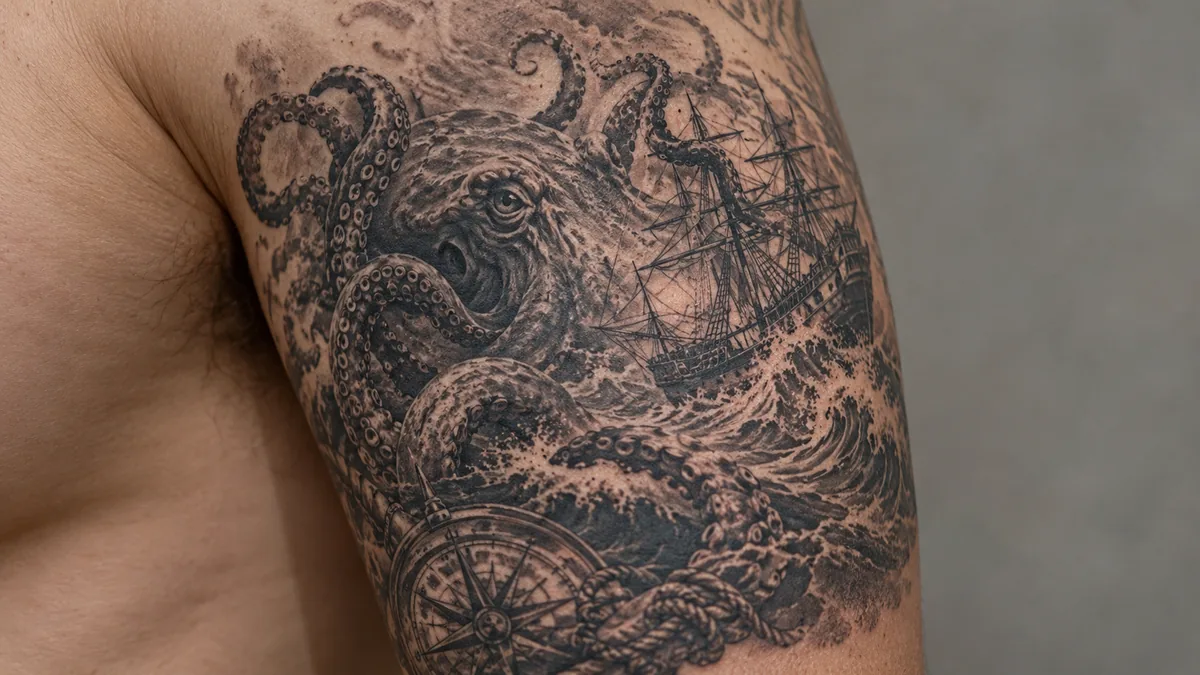
The kraken doesn't rise to threaten, it rises because it finally got bored of waiting.
The kraken comes from Norse and Scandinavian sailor folklore, documented as far back as the 13th century in texts like the Konungs skuggsjá. Sailors described a creature so massive it was mistaken for an island. It likely had roots in real sightings of giant squid, which can reach 40 feet. The word itself is Norwegian, referring to an unhealthy, twisted animal.
By the 18th and 19th centuries, the kraken had spread through European maritime culture and literature. Alfred Lord Tennyson wrote a poem about it in 1830. It’s not a creature borrowed from ancient mythology like Greek gods, but it’s genuinely rooted in real historical lore with centuries of documentation behind it. That’s worth knowing before you sit in the chair.
What It Says About You
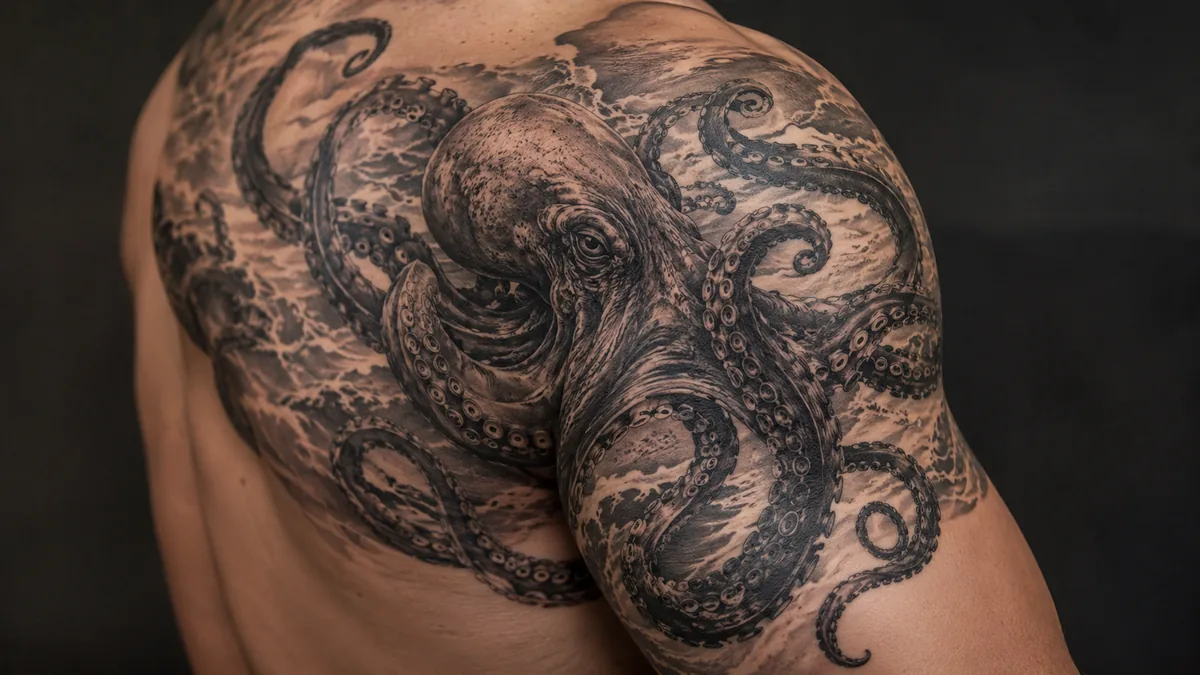
Most people who get a kraken tattoo are drawn to themes of resilience, depth, and controlled chaos. A lot of them have been through something significant, a period of their life where things felt like they were pulling them under. The kraken rising is a statement that they came back up, or that they’re not afraid of going down again. It’s a survivor’s piece as much as a power piece.
Others wear it as a declaration of being underestimated. The kraken is invisible until it’s not. That speaks to people who carry intensity quietly. There’s also a strong pull from people who love the ocean and maritime culture, divers, sailors, coastal people who have genuine respect for the sea and what’s in it. The personal angle is always yours to define.
Design Styles and Variations
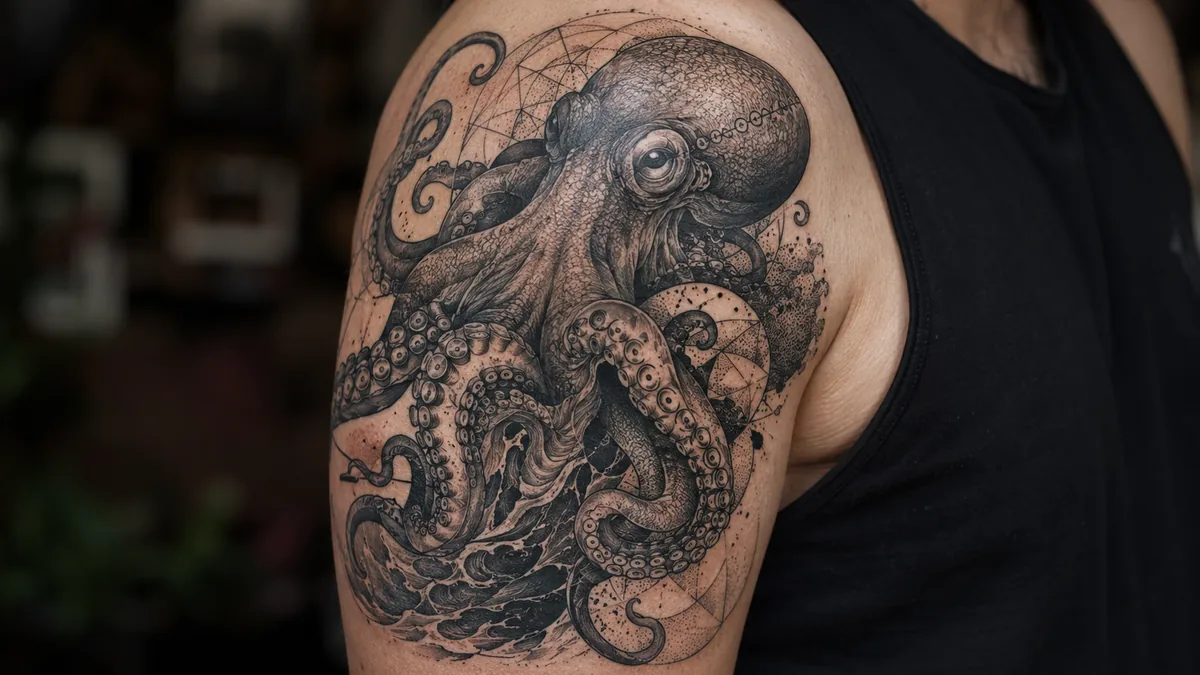
Neo-traditional and illustrative styles are the most popular for krakens right now. You get bold outlines, dramatic tentacles wrapping a ship or skull, and strong contrast that holds for decades. Traditional American style works too, thick black outlines with a limited, saturated palette. The design heals nice and reads clean even after years of wear. Japanese influence shows up in wave work surrounding the creature, tying it into a full composition.
Black and grey realism is a different animal entirely. A realistic kraken in greyscale, with whip shading on the tentacle texture and fine detail in the suckers, looks stunning on a large canvas but demands an artist who can handle fine line work and subtle gradients without blowout. Geometric or blackwork versions exist too, stylized into patterns and shapes, less literal but still powerful.
Color vs. Black and Grey
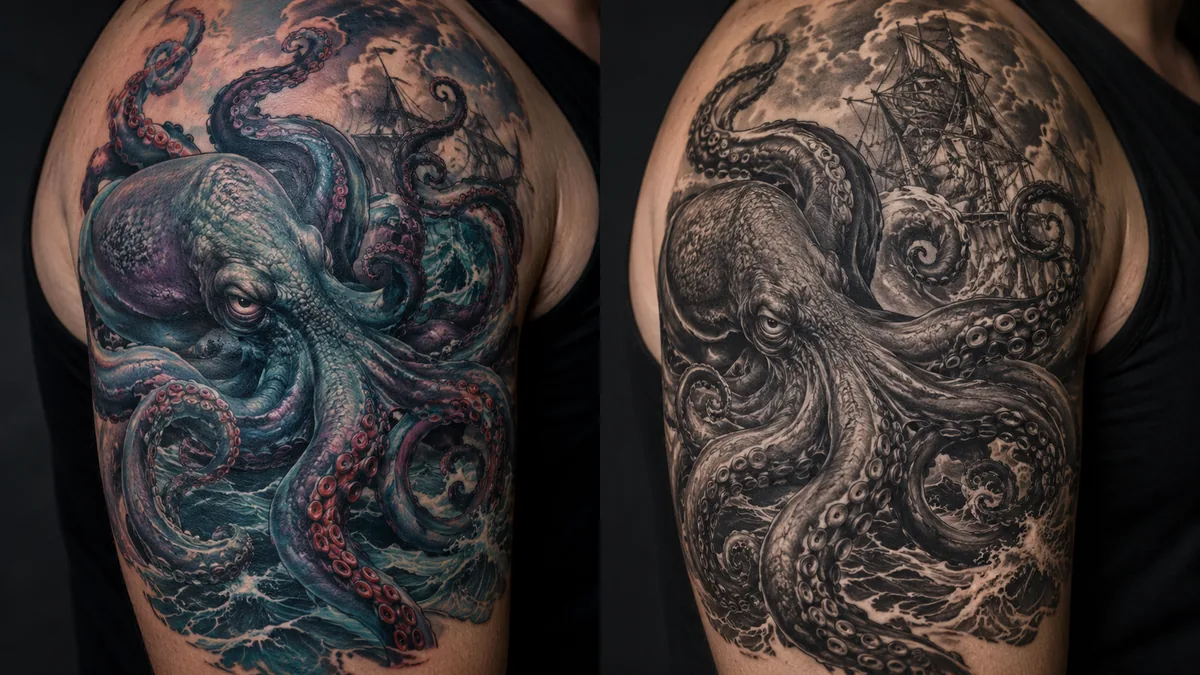
Black and grey is the dominant choice for kraken tattoos and for good reason. The subject lives in darkness and deep water. A desaturated palette reinforces that. It also tends to age better in most skin tones, especially on high-wear zones like forearms and hands. A solid black and grey piece with well-executed shading will still read crispy at the ten-year mark if it’s placed right and taken care of.
Color works best when you’re going illustrative or neo-traditional. Deep navy, teal, and ink-black with touches of bioluminescent green or violet can make a kraken look genuinely otherworldly. Avoid going too light with the blues if you want longevity. Light, unsaturated colors fade fast on exposed skin. If your artist is putting in color, ask about pigment density and how they expect it to hold in your specific placement zone.
Best Placements and How It Ages
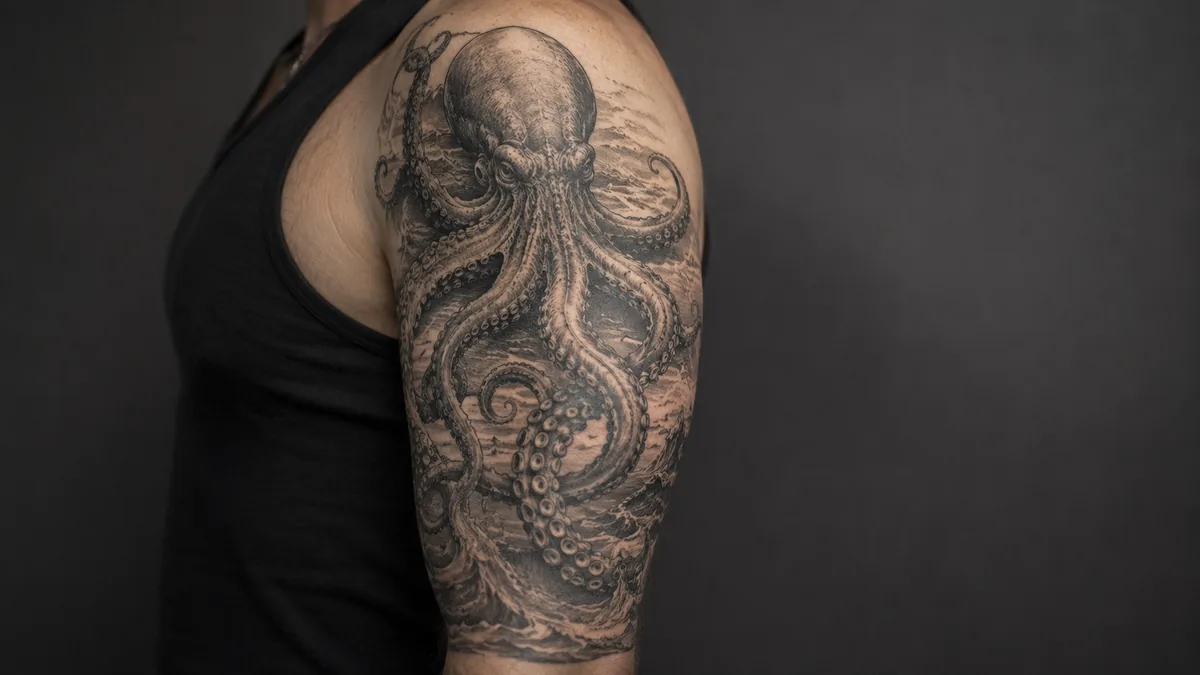
The kraken is a big composition. It needs room. The back, ribcage, thigh, and chest are the best canvases. A full back kraken is a statement piece. A half-sleeve or full sleeve with ocean elements works too, especially if you want the tentacles to wrap naturally around the arm. The subject lends itself to flow, which makes curved body parts like the ribs and shoulder ideal.
Ribs and sternum are spicy placements, high pain, worth knowing going in. The thigh is one of the better options for large black and grey work because the skin there tends to hold ink well and the area isn’t constantly bent or exposed to sun. Forearm placements age faster due to sun exposure and daily friction, so if you go forearm, keep it bold. Fine line detail in high-wear zones blurs over time.
Making It Personal
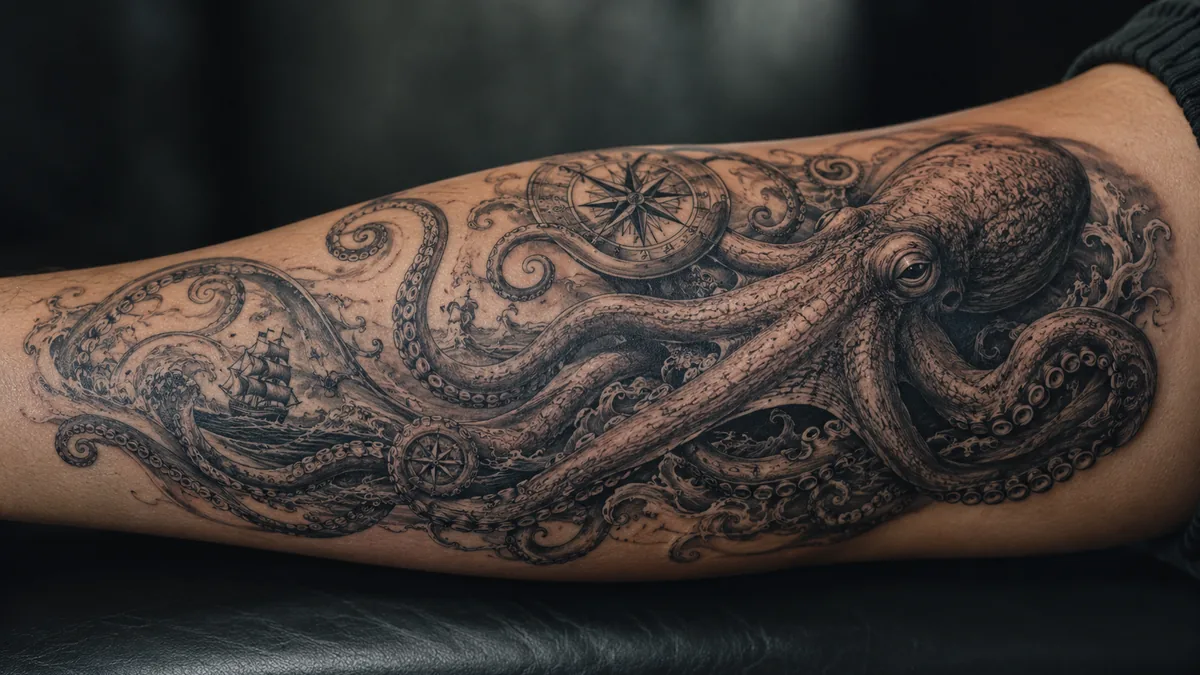
The strongest kraken tattoos have a specific anchor point beyond the creature itself. A ship being pulled under can represent a particular chapter of your life you’re closing out. A kraken breaking chains reads as liberation. Pairing it with coordinates, a compass, a specific quote, or a date gives the piece a second layer that only you fully know. Don’t over-explain it in the design, let the kraken carry the visual weight.
Talk to your artist about what the piece needs to mean to you before they sketch anything. A good tattooer will ask. The kraken is versatile enough to lean dark, hopeful, aggressive, or philosophical depending on how the composition is framed. If you want it to be a survival tattoo, frame the creature rising. If it’s about depth and mystery, have it receding into the dark. The direction matters more than most people realize.









