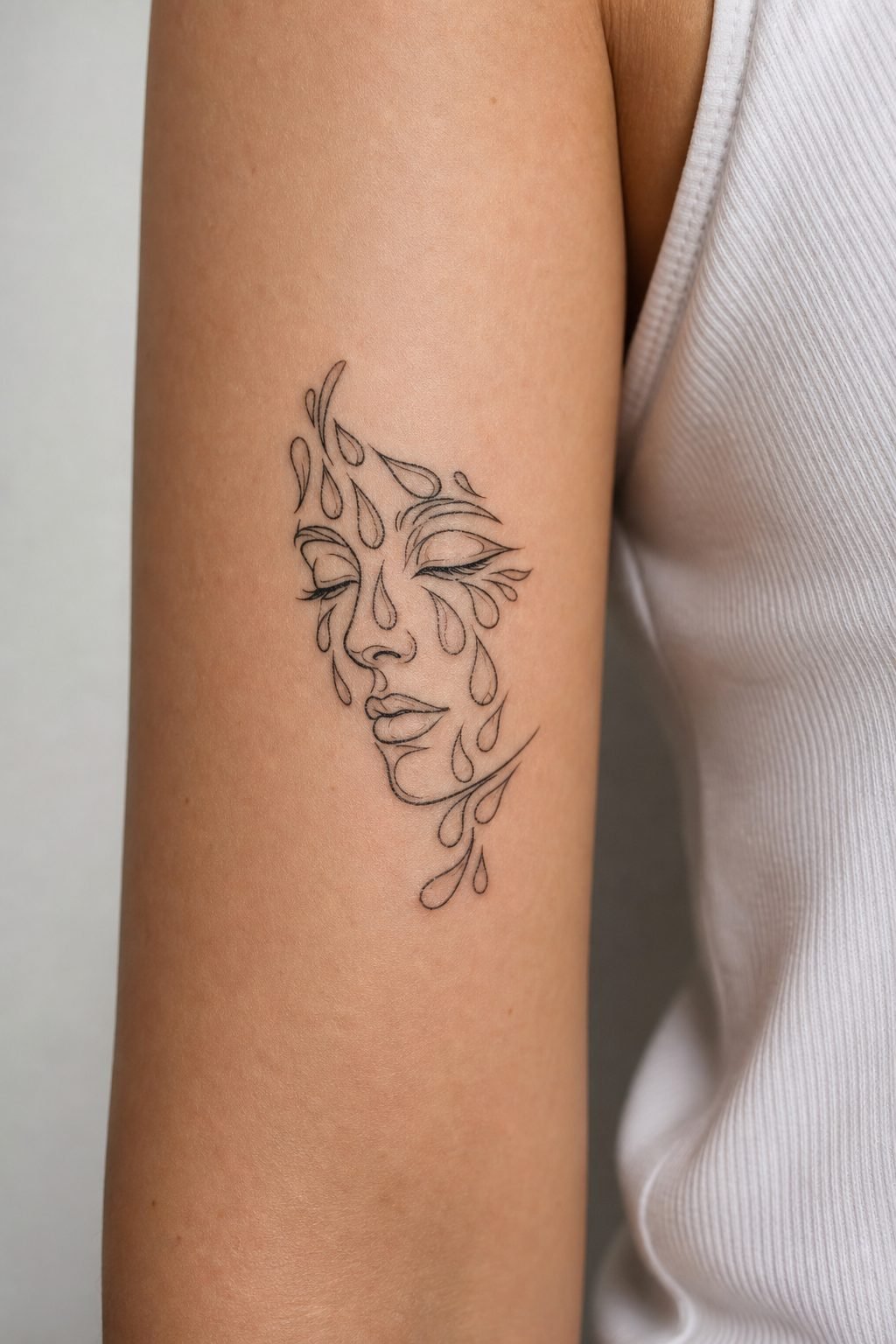
The teardrop tattoo under the eye is one of the most recognizable and emotionally loaded facial tattoos in existence. While it has historically carried associations with incarceration, loss, and gang affiliation, its meaning has broadened considerably in contemporary tattoo culture. Today, the design can represent everything from memorial grief to personal transformation, depending on the wearer, their location, and the specific style chosen.
Symbolism & History
The teardrop’s origins trace back to several distinct traditions that have since merged in popular understanding. Understanding these roots helps separate myth from documented practice.
- Prison and street culture: In certain American prison systems, particularly during the mid-to-late 20th century, a single teardrop often signified a period of incarceration or the loss of a fellow inmate. Multiple teardrops sometimes indicated multiple losses or sentences served.
- Gang identifiers: Specific gangs adopted the teardrop as a mark of membership or rank, though practices varied enormously by region and organization. The symbol was never universal across all groups.
- Memorial grief: Outside institutional contexts, individuals began using the teardrop simply to mark the death of a loved one, particularly a spouse, child, or parent. This usage predates and exists independently of prison associations.
- Personal struggle: Modern wearers frequently cite the teardrop as representing survived hardship, addiction recovery, or depression overcome, divorced entirely from criminal connotations.
The symbol’s power lies in its visual immediacy. A tear falling from the eye requires no explanation to read as sorrow, which is why the design has persisted despite its complicated reputation.
Common Variations & Styles
Artistic interpretation has produced numerous stylistic branches that carry their own subtle signals.
- Single filled teardrop: The classic solid black or blue drop beneath the outer eye corner. Most traditional and widely recognized.
- Outline only: An unfilled teardrop can suggest potential grief, mourning in progress, or a deliberate distancing from the filled-drop’s harder associations.
- Multiple teardrops: Rows or clusters that may represent cumulative losses, years of struggle, or simply aesthetic preference.
- Colored variations: Red drops for blood ties or violent loss; blue for depression or addiction; clear/white for spiritual cleansing or rebirth.
- Stylized or decorative: Incorporating filigree, geometric framing, or blending into larger face tattoos that contextualize the drop within a broader narrative.
- Crossed-out teardrop: A drop with a line through it, sometimes indicating a vow to leave past behaviors behind or rejection of former associations.
The style chosen often communicates more about the wearer’s intent than the mere presence of the tattoo itself.
Best Placements
While the classic placement sits directly beneath the eye, artists and clients have explored several positions that modify the symbol’s impact.
- Directly under the eye (inner or outer corner): Most visible and traditional. The inner corner placement draws more attention to the eye itself; outer corner placement follows natural tear tracks.
- On the cheekbone below: Slightly lower placement softens the intensity while maintaining facial visibility. Easier to incorporate into larger designs.
- Temple area: Less common, more private. Suggests internal rather than displayed grief.
- Behind the ear: Hidden placement for personal significance without public confrontation. Grows in popularity among those seeking meaning without social stigma.
Facial tattoos demand particular consideration of professional and social contexts, regardless of the symbol’s personal meaning. The face offers no concealment, making placement a deliberate statement about visibility.
Who Chooses This Tattoo / Personal Meanings
Contemporary wearers defy easy categorization. The teardrop has migrated across demographic boundaries in ways that complicate its once-narrow reputation.
- Military veterans: Some use the teardrop to mark fallen comrades, particularly in units with strong tattoo traditions. The symbol translates naturally from civilian street culture to military memorial practice.
- Recovery communities: Individuals marking survival from addiction, overdose losses, or suicide attempts within their circles. The teardrop becomes a badge of continued existence.
- Music and artistic subcultures: Rappers, punk musicians, and visual artists have adopted the teardrop as aesthetic rebellion or authentic hardship signifier, sometimes with and sometimes without lived experience of its harder origins.
- Memorial seekers: Parents who have lost children, widows and widowers, siblings marking early deaths. The tattoo functions as permanent elegy.
- Formerly incarcerated individuals: Some retain teardrops as honest documentation of their history; others cover or modify them as part of reintegration.
The meaning ultimately resides in the wearer’s explanation. No universal dictionary exists, and assumptions based solely on appearance frequently misread individual stories.
Similar Symbols
Tattoo collectors considering the teardrop often explore related imagery that carries comparable emotional weight with different cultural baggage.
- Hourglass: Time passing, mortality, memento mori tradition. Less confrontational than the teardrop while addressing similar themes.
- Broken chains or shackles: Liberation from imprisonment, addiction, or abusive situations. More explicitly narrative than the teardrop’s ambiguity.
- Crying eye: The traditional Sailor Jerry motif of a weeping eye, often within a heart or cloud. Romantic and melancholic rather than hardened.
- Semicolon: Modern mental health awareness symbol, specifically suicide prevention and continuation of life. Explicitly positive where the teardrop remains ambiguous.
- Specific dates or names: Literal memorials that remove interpretive uncertainty. Less visually striking but more personally precise.
These alternatives allow similar emotional expression with greater control over public perception.
Final Thoughts
The teardrop face tattoo remains one of body art’s most emotionally complex symbols, burdened with history yet continuously reinvented by individual wearers. Its power comes from this very tension between collective association and personal declaration. Anyone considering this placement should research thoroughly, consult experienced artists familiar with facial work, and prepare to explain their specific meaning repeatedly. The tattoo demands this engagement. Whether marking irreplaceable loss, survived darkness, or transformed identity, the teardrop ultimately succeeds when it serves genuine personal narrative rather than borrowed reputation. In tattoo culture’s evolving landscape, meaning increasingly belongs to the individual skin it inhabits.
Related Tattoo Meanings
- Russian Mafia Tattoo Meaning: A Guide to Prison Ink Symbolism
- Tear Drop Left Eye Tattoo Meaning: Symbolism History
- Tears Tattoo Meaning: Symbolism, History Variations
- Explore more
Frequently Asked Questions
What does a teardrop face tattoo actually mean?
A teardrop face tattoo traditionally symbolizes that the wearer has killed someone, spent time in prison, or lost a loved one. The exact meaning varies significantly by location, culture, and whether the teardrop is filled or empty.
Is it safe to get a teardrop tattoo if I haven’t been to prison?
Many tattoo artists refuse to do teardrop face tattoos on clients without documented prison time because of the dangerous associations. Getting one without understanding the context can lead to serious misunderstandings or even violence in certain environments.
Which side of the face does the teardrop go on and does it matter?
Placement rules vary by region and gang affiliation, with some traditions placing the teardrop under the left eye for a specific meaning and the right for another. Because these codes differ across prison systems and countries, placement can accidentally signal membership you don’t intend.
Can I get a teardrop tattoo in a different style to avoid the criminal association?
Artistic variations like watercolor, geometric, or brightly colored teardrops can distance the design from prison culture, though any face tattoo remains highly visible and stigmatized. Many artists recommend placing stylized teardrops elsewhere on the body to completely avoid the loaded symbolism.