
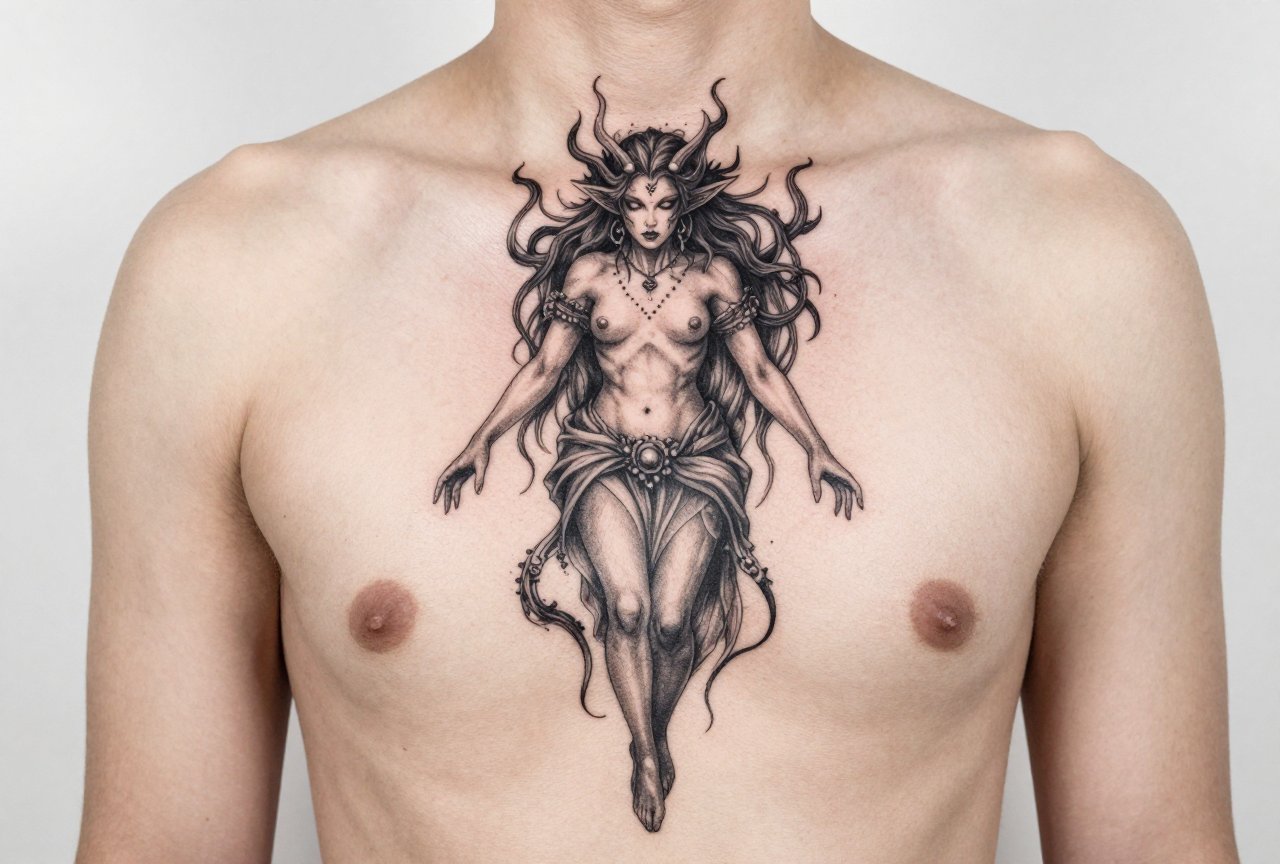
A supernatural tattoo typically draws from occult, horror, and paranormal imagery, think pentagrams, anti-possession symbols, spirit boards, or creatures that lurk in folklore. For most people who sit in my chair, it’s about claiming power over fear, marking a love of the macabre, or wearing protection they can feel. The meaning shifts with every client, but the visual language runs deep.
Symbolism & History
I’ve tattooed enough inverted crosses and ouija planchettes to know this: supernatural imagery isn’t one thing. It’s a whole vocabulary.
Protection & Warding
The anti-possession symbol from Supernatural the TV show? I probably do two or three a year, minimum. Clients want it small, clean, often behind the ear or on the ribs. They tell me it feels like armor. Historically, this echoes older traditions, sigils, hex marks, the Eye of Horus. People have always wanted to mark their bodies with something that keeps the dark out. I get it. There’s something grounding about carrying your own shield.
Embracing the Shadow
Then there’s the other crowd. They want the dark in. Baphomet. Lilith. Wendigo imagery. These aren’t evil tattoos, they’re honest ones. I’ve had clients tear up explaining how a demon design represents their depression, their addiction, something they fought and named. The supernatural becomes metaphor. That’s where this stuff gets heavy in the best way.
- Pentagrams: five-pointed star, often misunderstood. Point-up means protection; point-down gets darker connotations, though plenty of folks just like the geometry.
- Ouija imagery: planchettes, “yes/no,” full boards. Popular after breakups, oddly. New chapter energy.
- Creature features: vampires, werewolves, ghosts. Usually tied to personal mythology or fandom.
- Coffins, hourglasses, reapers: memento mori with a gothic twist.
Common Variations & Styles
Style changes everything. Same pentagram, three different ways, three completely different vibes.
Line Work vs. Black & Grey
Clean, single-needle lines look delicate, almost spiritual. I’ve done fine-line ouija planchettes that read like jewelry. But here’s the shop reality: thin lines spread. On hands, feet, anywhere that moves a lot, I warn clients. “This will feather.” Some don’t care. Some come back for touch-ups. Black and grey shading holds better, ages softer, gives that graveyard mood people want. I always ask: “Do you want this to look like a drawing, or like a photograph?”
Traditional & Neo-Traditional
Bold lines. Limited color. Coffins with roses, reapers with scythes, devils in sailor poses. These tattoos fight time. I’ve seen ten-year-old traditional pieces that still read from across the room. The supernatural imagery in this style feels almost nostalgic, like Halloween from when you were a kid, but permanent.
- Fine line + dotwork: ethereal, ritualistic. Good for sigils, constellations, spirit energy.
- Blackwork: heavy, solid black. Witchy, aggressive, holds forever.
- Color realism: rare for supernatural themes, but stunning when done, think glowing ectoplasm, burning candles.
- Ignorant style: deliberately rough, almost childlike. Cult-following energy, very internet-era.
Best Placements
Where you put it matters. I’ve watched good designs die in bad spots.
Behind the ear: perfect for small protection symbols. Hidden but findable. Heals rough though, lots of moisture, lots of hair contact. I tell people to sleep on the other side for two weeks. They never do.
Forearms: the billboard. Anti-possession symbols here are declarations. I’ve done them for fans who met their best friends through the show, for people who survived religious trauma and reclaimed the imagery. It’s visible. That matters.
Ribs and sternum: hurts like hell. Worth it for pieces that need vertical space, reapers ascending, coffins standing. The stretch of the ribs gives movement. I breathe with clients when I work there. In, out. In, out.
Thighs: underrated. Plenty of canvas, heals relatively easy, easy to hide. I’ve done full ouija boards on thighs. The client sits for hours, we order lunch, it’s a whole day.
Hands and fingers: I try to talk people out of this unless they’re committed. Supernatural hand tattoos get attention. Sometimes unwanted. The ink falls out faster. Touch-ups are constant. But for some folks, that’s the point. They want the wear. The faded ritual.
Who Chooses This Tattoo / Personal Meanings
After twelve years, I can sort of profile it. Not that I judge, everyone’s story is their own.
The Fandom Devotee
Usually wants the anti-possession symbol, the Winchester initials, “Carry On” script. Sometimes they bring reference screenshots on their phone. I don’t mind. The show got people through hard years. That’s real. I just make sure they know: this is your skin, not a poster. We tweak placement, size, maybe add personal elements. One client worked her grandmother’s birth flowers into the points of the star. Beautiful.
The Shadow Worker
Older clients, often. They’ve done therapy, maybe some Jungian reading. They want the witch, the demon, the dark goddess. Not to worship, to integrate. I did a Lilith piece on a woman who’d left a fundamentalist church. The image was fierce, unapologetic. She didn’t flinch once in the chair. Some pain is chosen.
The Aesthetic Collector
Younger, usually. They want the vibe. Coffin nails, tarot references, the whole mood board. That’s fine too. I just make sure they understand what they’re committing to. A ouija planchette looks cool at twenty-two. At forty, will it still feel like you? I ask because I care. They usually say yes. Sometimes they say “I don’t think that far ahead.” Fair enough.
Similar Symbols
If you’re drawn to supernatural imagery, you might also feel pulled toward:
- Alchemical symbols: transformation, the philosopher’s stone. Less spooky, more scholarly.
- Norse runes: protection, specific energies. Be careful, some get appropriated by groups you don’t want to be associated with. I keep a reference book in the shop.
- Sacred geometry: the overlap with pentagrams and flower of life is natural. Same clients, different mood.
- Day of the Dead imagery: skulls, marigolds, celebration of death rather than fear of it. Mexican tradition, distinct but spiritually adjacent.
- Gothic architecture: cathedral windows, gargoyles. The structure without the occult.
I always tell people: come with a feeling, not just a Pinterest board. The symbol should find you, not the other way around.
Final Thoughts
Supernatural tattoos aren’t about believing in ghosts. They’re about believing in something. Yourself. Your survival. Your right to own the dark instead of being owned by it. I’ve watched people shake with nerves before getting these pieces, then leave lighter. The needle does something. The image does something. Together, they make a mark that means.
If you’re considering this path, find an artist who gets it. Not just technically, emotionally. Ask to see their healed work. Ask how linework ages on your chosen spot. And if they roll their eyes at your fandom reference or your shadow-work symbolism? Walk. This is your skin, your story, your spell. Choose someone who respects that.
Frequently Asked Questions
Does the anti-possession symbol actually have historical roots, or is it just from the TV show?
It’s a creation of the Supernatural TV series, though it draws on general sigil traditions. The show’s version is specifically fictional, but many people choose it for personal meaning regardless of origin.
Will fine-line supernatural tattoos look good in ten years?
Fine lines tend to spread and soften over time, especially on high-movement areas. For longevity, bolder lines and some black shading hold up much better on skin.
Is it offensive to get occult or witchcraft imagery if I’m not part of those traditions?
Most occult symbols are fair game for personal use, but some specific closed-practice symbols should be avoided. A good artist will help you navigate what’s appropriate versus appropriative.
Why do so many people get supernatural tattoos after difficult life experiences?
The imagery lets people externalize struggle, name their fears, and claim power over them. It’s symbolic armor, turning something frightening into something you control and carry proudly.
Related Tattoo Meanings
- Ghost Tattoo Meaning: Spirit, Memory Transformation
- Traditional Japanese Cloud Tattoo Meaning: Wind, Change Spirituality
- Animal Tattoo Meaning: Symbolism, Spirit Guides Personal Power
- Explore more









