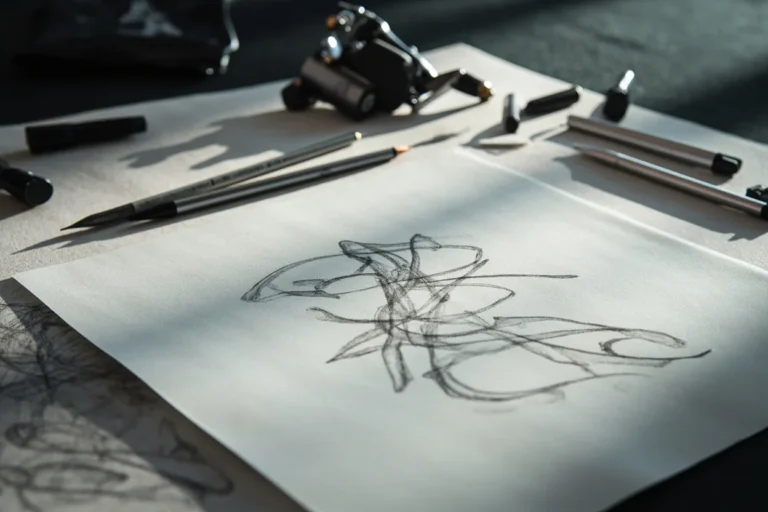
Choosing a tattoo comes down to three decisions: what you want, where it goes, and who puts it there. Get any of these wrong and you live with it. This guide walks through each step with the specifics that actually affect how a tattoo ages, how much it hurts, and whether you’ll still want to look at it in ten years.
Start With Placement, Not Design
Most people pick an image first and figure out placement later. That’s backwards. Placement determines how the tattoo ages, how visible it is, and how much pain you’ll deal with. A detailed mandala on the top of your foot will blur into a gray blob in five years. A simple black shape on your outer forearm stays crisp for decades.
High-Movement and High-Wear Areas
Skin stretches and rubs constantly in some spots. The inside of your arm, your ribs, your hands, and your feet all see heavy friction and flexing. Linework spreads faster here. Color fades unevenly. These areas also hurt more, ribs and feet are consistently rated the most painful by people who’ve sat for multiple sessions.
- Inner arm, inner thigh: Friction from clothing and body movement blurs lines faster
- Hands and fingers: Near-constant use and sun exposure; ink often falls out or blurs within a few years
- Feet and ankles: Shoes rub; swelling during healing is difficult to manage
- Ribs and sternum: Thin skin over bone makes for sharp pain and slower healing
Stable, Low-Wear Zones
Outer upper arm, outer forearm, outer thigh, and upper back/shoulder blade have thicker skin, less daily movement, and easier aftercare access. These are the workhorse placements for a reason. A tattoo here at age 25 still looks like itself at 55, assuming you didn’t gain or lose significant weight and you use sunscreen.
Match the Design to the Real Estate
A 2-inch tattoo with twenty tiny details becomes illegible in five years. Ink spreads under the skin, roughly 1-2 millimeters over time. What looks crisp at one inch wide becomes muddy when those lines blur together. The rule of thumb: if you can’t read it from ten feet away when it’s fresh, you won’t be able to read it at all in a decade.
Detail Density and Size
Small tattoos need to be simple. A single rose with bold outlines and limited shading holds up at 3 inches. A pocket watch with Roman numerals, chains, and smoke needs 6+ inches minimum, and even then the numerals may bleed together. Photorealistic portraits require large scale and skilled shading; go too small and the face becomes a smear.
- Under 2 inches: Simple symbols, single letters, minimal linework only
- 2-4 inches: Moderate detail, small florals, basic lettering, simple animals
- 5+ inches: Complex compositions, portraits, scenes with background elements
Black and Gray vs. Color
Black ink ages most predictably. It fades to a softer gray but stays readable. Color varies wildly: reds and dark blues hold reasonably well; yellows, light greens, and pastels fade fastest and may need touch-ups. White ink often turns yellowish or disappears entirely, especially on darker skin tones where it can also look raised or scarred. If you want color, commit to sunscreen and possibly future touch-ups.
Pick an Artist Who Actually Does Your Style
A shop that does walk-in tribals and script all day probably isn’t where you get your Japanese watercolor sleeve. Artists specialize. Their Instagram or portfolio should show fifty pieces similar to what you want, not one or two attempts. Look for healed photos, not just fresh work, anyone can make ink look bold the day it’s done.
What to Look For in a Portfolio
- Consistency in the style you want: traditional, black and gray realism, neo-traditional, fine line, etc.
- Healed results, not just fresh tattoos under perfect lighting
- Work at the size you want, an artist who only does large pieces may struggle with small, precise designs
- Clean lines in their linework pieces, smooth gradients in their shading
Consultations are usually free. Bring reference images, but not someone else’s tattoo, you want them to draw something for you. Ask how they handle aging in your chosen placement. A good artist will tell you if your idea won’t work where you want it.
Understand the Commitment: Pain, Time, and Money
Tattoos hurt. The sensation ranges from hot scratching to deep burning depending on placement and your personal pain tolerance. Sessions typically run 2-4 hours; larger work gets split across multiple appointments. Your skin swells and stops taking ink well after a few hours, so pushing through marathon sessions often wastes time.
Cost Expectations
Quality work isn’t cheap and cheap work isn’t quality. In most US cities, established artists charge $150-250 per hour or set flat rates by piece. A palm-sized tattoo might run $200-400. A full sleeve typically takes 15-30 hours total, often at $2,000-5,000+. Deposits are standard, usually $50-200, applied to the final cost but forfeited if you no-show or cancel without adequate notice.
Never haggle. This is someone’s skilled labor using sterile equipment in a licensed facility. If $50 flash specials are your budget, wait and save.
Healing Reality
Healing takes 2-4 weeks for surface closure, 2-3 months for full settling. The first week means washing gently, patting dry, and applying thin layers of recommended aftercare, usually a fragrance-free moisturizer or specific tattoo ointment. No swimming, no soaking, no picking scabs. Sun exposure during healing damages ink permanently. After healing, sunscreen becomes your tattoo’s best maintenance tool.
When to Wait
Some moments are wrong for permanent decisions. Major life transitions, breakups, grief, new sobriety, can produce urgent desires that cool in six months. The idea isn’t to suppress expression; it’s to make sure the design survives the emotion that spawned it. If you’ve wanted the same image in the same place for a year, you’re probably ready. If the idea appeared last Tuesday after a rough weekend, set it aside and revisit it quarterly.
Similarly, consider your professional context. Hand, neck, and face tattoos remain stigmatized in many industries. Visibility limits can be worked around with placement choices, upper arms covered by short sleeves, thighs hidden by standard hemlines. This isn’t about conformity; it’s about choosing your battles with eyes open.
Key Takeaways
- Pick placement first based on how you live, work, and want to present yourself
- Size your design appropriately, too much detail in too small a space ages badly
- Find an artist whose portfolio shows mastery in your specific style and at your desired scale
- Budget for quality work and expect proper aftercare to protect your investment
- Wait if the timing feels reactive; good ideas survive patience
A tattoo is a collaboration between your vision and an artist’s skill, applied to skin that changes over decades. Choose deliberately, and you get something that remains satisfying long after the initial excitement fades.
Frequently Asked Questions
How do I know if a tattoo idea is too detailed for the size I want?
Print your design at actual size and view it from ten feet away. If you can’t distinguish the main elements clearly, it needs to be larger or simplified. Your artist can also assess this during consultation and suggest adjustments that preserve the concept while ensuring it ages readable.
Should I tip my tattoo artist, and how much?
Tipping is standard in US tattoo culture, typically 15-20% for good work, similar to restaurant service. For multi-session pieces, some clients tip per session or give a larger tip at completion. Cash is preferred since not all shops process tips on cards.
Can I get tattooed over scars or stretch marks?
Sometimes, but it depends on the scar’s age and texture. Fully healed scars, usually at least a year old, can sometimes take ink, though the tattoo may look slightly different over that skin. Stretch marks are trickier; the ink can settle unevenly. An experienced artist will assess the area in person and be honest about likely results.
What if I don’t like the artist’s sketch after the consultation?
Speak up before the appointment. Minor revisions are normal and expected. If the direction feels fundamentally wrong, it’s better to part ways respectfully than proceed with work you don’t want on your body permanently. Most artists prefer honest feedback over unhappy clients and bad healed results in their portfolio.
Related Tattoo Guides
- How to Set Up a Tattoo Machine: A Complete Guide
- Ryan Ashley Tattoo Cost: What to Budget For
- How Long Does Laser Tattoo Removal Take? A Realistic Timeline
- Explore more