
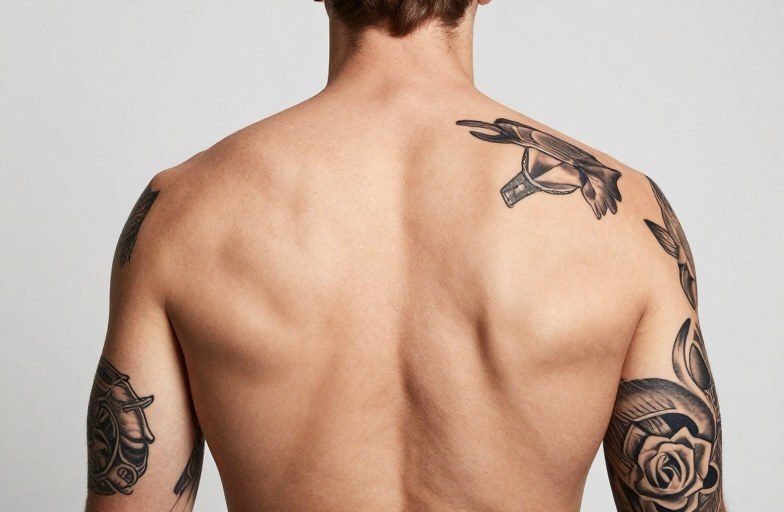
The Andreas Gustafsson back tattoo typically refers to a large-scale Nordic or Viking-inspired design spanning the full back, often featuring interlaced knotwork, runic elements, and mythological imagery. For many wearers, it signals ancestral connection, resilience, and a deliberate embrace of heritage rendered in a format that demands physical and mental commitment. The back placement itself amplifies the meaning: hidden from daily view, revealed only by choice.
Common Variations & Styles
Not every back piece attributed to this name looks identical. The style has splintered into recognizable branches, each with distinct visual rules and technical demands.
Traditional Nordic Knotwork
These designs rely on continuous line work derived from actual archaeological finds, Urnes style animal interlace, Borre style gripping beasts, Jellinge ribbon patterns. The lines must flow without breaks to honor the original craft. Tattooers working in this mode often study metalwork and woodcarving references directly rather than filtered tattoo flash. The result sits flat against the skin, reads clearly from a distance, and ages with structural integrity because the bold lines hold their weight.
Contemporary Dark Fantasy Blends
Some clients push the imagery toward grim, illustrative territory: ravens with torn edges, skulls merged with Mjölnir, wolves rendered in heavy black and negative space. This approach borrows from metal album aesthetics and graphic novels. It requires different technical skills, more whip shading, more saturated blacks, more risk of muddying over time if the contrast isn’t balanced precisely across the full back canvas.
- Full back: single unified composition, highest commitment, most visual impact
- Upper back/shoulder blade focus: frames the torso, easier to integrate with chest work later
- Spine-centered vertical: draws the eye along the body’s central axis, emphasizes posture
- Blackout backgrounds with red or white accent: modern trend, high maintenance for crispness
History & Cultural Roots
The visual language draws from material culture rather than written doctrine. Surviving artifacts, Oseberg ship carvings, Gotland picture stones, metal fittings from Viking Age graves, provide the actual vocabulary. The tattoo revival of these forms emerged largely in the 1990s and 2000s, often linked to Scandinavian metal music culture and later to broader neo-pagan movements. Some trace specific popular motifs to particular archaeological discoveries, like the Borre style grips that became ubiquitous after museum exhibitions traveled internationally.
Runic Inscriptions: Authentic vs Decorative
Runes appear frequently in these back pieces, but accuracy varies wildly. The Elder Futhark (24 characters, pre-Viking Age) and Younger Futhark (16 characters, Viking Age proper) carry different historical weight. Decorative rune-like marks without linguistic meaning are common filler; serious practitioners consult runologists or stick to well-documented bind-runes and inscriptions. Misrendered runes are a persistent issue, mirrored, rotated, or invented characters that signal aesthetic interest without scholarly engagement.
The Back as Ritual Canvas
Across cultures, the back holds special status for large ritual markings. Japanese irezumi, Polynesian tatau, and Thai sak yant all reserve the back for the most significant compositions. The Nordic revivalist tradition adopted this placement partly for practical reasons, the flat, broad surface accommodates expansive knotwork, and partly for symbolic resonance. The back supports, carries, and faces what lies behind; loading it with protective or ancestral imagery makes intuitive sense.
Personal & Modern Meanings
Heritage tattoos operate differently depending on the wearer’s actual ancestry. For Scandinavians, the back piece can function as reclaimed identity after generations of suppressed regional pride. For diaspora communities, Swedish-Americans, Norwegian-Canadians, it often bridges disconnection from homeland. For those without Nordic ancestry, the meaning shifts toward adopted values: toughness, exploration, fatalism, or aesthetic affinity with the visual grammar.
Gendered Readings of the Same Imagery
On male backs, these designs frequently emphasize warrior iconography: weapons, beasts of battle, scenes from Ragnarök mythology. On female backs, the same knotwork frameworks increasingly carry fertility and fate imagery, Norns, Freyja’s associations, Valkyrie figures, though plenty of women wear the warrior forms too. The technical execution doesn’t change; the cultural interpretation does, both by wearers and viewers.
Subcultural Signaling
Within heavy metal, folk metal, and certain pagan-adjacent communities, the full Nordic back piece operates as visible credential. It marks sustained commitment to a scene where temporary participation is common. The pain, expense, and permanence filter out casual interest. This function parallels how Japanese back pieces operate within yakuza tradition or how Chicano black and grey functions in specific California communities, though without the same organizational structure.
Similar & Related Symbols
Understanding adjacent imagery helps clarify what distinguishes the Gustafsson-style back piece from generic “Viking tattoo” aesthetics.
- Triple horn of Odin: specific devotional symbol, often smaller, usually chest or arm
- Vegvísir: Icelandic magical stave, post-Viking Age origin, frequently misunderstood as ancient
- Aegishjalmur (Helm of Awe): another post-medieval Icelandic symbol, popular for protective claims
- Yggdrasil renderings: world tree imagery, sometimes central to back pieces, sometimes standalone
- Celtic interlace: visually related but culturally distinct; mixing them reads as uninformed to knowledgeable viewers
The key distinction: authentic Nordic knotwork derives from specific dated styles with regional variations. Celtic work has its own archaeological record. Conflating them in a single back piece is a common error that signals surface-level engagement.
How It Ages on Skin
Back tattoos age better than many placements but present specific challenges. The skin thickness varies dramatically, thick and resilient over the upper back and shoulders, thinner and more prone to spread along the lower back and flanks. Knotwork’s interdependent lines mean blowout in one section disrupts the entire visual rhythm.
Line Weight and Longevity
Traditional Nordic work uses relatively uniform bold lines, which hold. Contemporary blends with fine detail and greywash shading fade faster, requiring more frequent touch-ups. The upper back sees less sun than arms or legs, preserving ink, but the lower back catches friction from clothing and seating. A full back piece typically needs assessment at 7-10 years for line crispness, sooner if the wearer tans heavily or gains significant muscle mass that stretches the skin.
Healing Reality for Large Work
Full back sessions mean sleeping on your side for weeks, avoiding chairs that press against fresh ink, and managing plasma and ink seepage across a massive surface area. The healing phase is logistically harder than smaller tattoos. Multiple sessions, often 8-15 for dense full back work, extend this challenge over months. The commitment to completion itself becomes part of the tattoo’s meaning for many wearers.
Color vs Black and Grey
Authentic Nordic source material was monochrome: wood, bone, metal, stone. Color enters these tattoos through modern interpretation, not historical fidelity.
Strict Black and Grey
Most technically accomplished pieces in this style stay black. The negative space between interlaced lines provides the contrast. Adding greywash can suggest depth and volume, but risks softening the graphic punch that makes knotwork readable. Some tattooers use dotwork or stipple gradients for subtle dimension without losing the carved quality.
Selective Color Accents
When color appears, it’s typically restrained: blood red in specific symbolic elements, occasional gold or ochre for metalwork simulation. Full color Nordic back pieces exist but read as illustrative rather than traditional. The pigment choices also affect longevity, red holds reasonably well on back skin, yellows and light greens fade faster and require more maintenance to keep visible.
Watercolor-style backgrounds behind traditional knotwork are a contemporary trend that ages poorly; the soft edges blur while the bold lines remain, creating visual conflict rather than harmony.
Key Takeaways
The Andreas Gustafsson back tattoo represents a specific intersection of archaeological revival, subcultural identity, and personal commitment to heritage or adopted values. Its meaning depends heavily on accurate execution, knowing which knotwork styles belong to which periods, understanding runic authenticity, and respecting the distinction between Nordic and Celtic visual traditions. The back placement amplifies both the physical and symbolic weight: this is not a casual decoration but a deliberate, sustained choice rendered on the body’s largest flat canvas. For those considering this path, the technical demands match the cultural ones. Research your source material, choose a tattooer with demonstrated expertise in the specific style rather than generic “tribal” experience, and understand that the healing process will test your commitment before the final image even settles. What remains after years is the structure of the lines and the intention behind them, both need to be built to last.
Frequently Asked Questions
How long does a full Nordic back piece typically take to complete?
Most full back pieces require 8-15 sessions of 3-5 hours each, spaced 3-4 weeks apart for healing. Dense knotwork takes longer than simpler compositions because every line must be precise and continuous.
Can I combine Celtic and Nordic knotwork in the same back tattoo?
Technically possible, but knowledgeable viewers will recognize the mismatch. The two traditions have distinct archaeological origins and visual rules. Mixing them without intentional conceptual bridging usually reads as uninformed rather than creative.
What should I look for in a tattooer who specializes in this style?
Seek portfolios showing actual Nordic knotwork, not generic tribal or Celtic-adjacent work. Ask about their reference sources, museum catalogs, academic publications, or archaeological site documentation indicate deeper engagement than Pinterest boards.
Does the back placement affect how much a large tattoo hurts?
The upper back and shoulder blades rank moderately on pain scales; the spine, lower back, and areas near kidneys hurt more. However, the sheer duration of full back work means cumulative fatigue becomes a significant factor regardless of specific spot sensitivity.
Related Tattoo Meanings
- Angel with Gun Tattoo Meaning: Duality, Protection Rebellion
- Anthony Padilla Tattoo Meaning: Symbolism and Design Guide
- Anvil Tattoo Meaning: Strength, Craft, and Endurance
- Explore more









