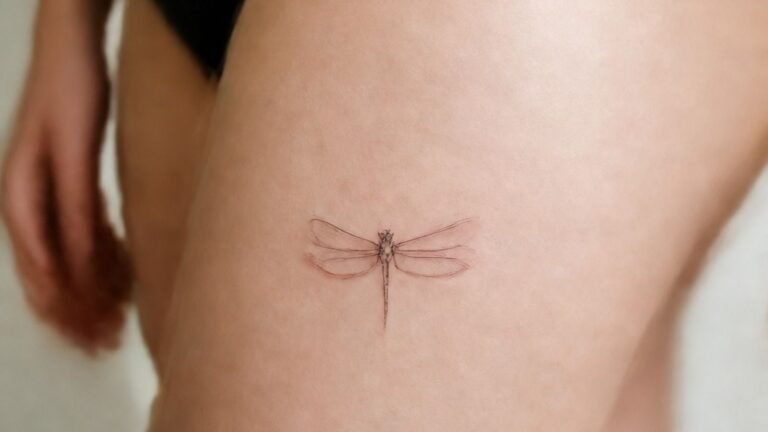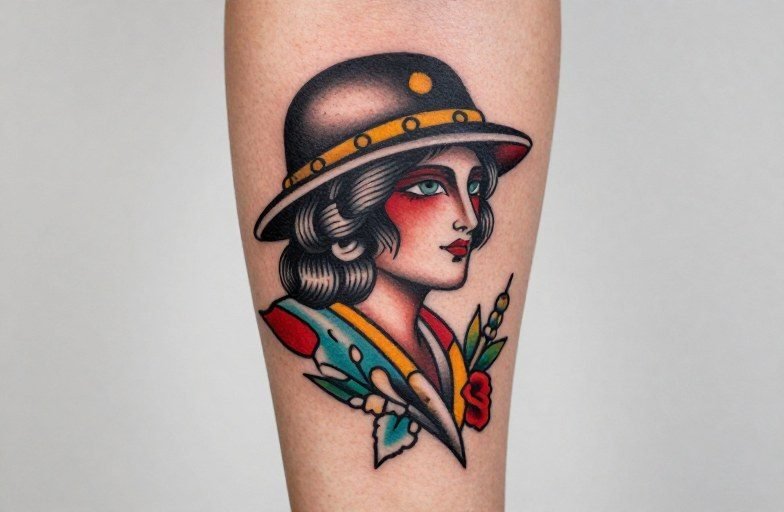
American traditional tattooing, sometimes called “old school” or “Western traditional”, is built on a visual language developed in the early-to-mid 20th century. Think heavy black outlines, saturated color fields, and instantly readable imagery: roses, daggers, eagles, pin-up figures, banners with lettering, and maritime symbols. The style prioritizes clarity over subtlety. Every design is engineered to read cleanly from across a room and to hold that legibility for decades. If you’re gathering inspiration, understanding these structural rules matters more than finding a cool reference photo.
Linework & Technique
Line Weight and Structure
The backbone of any American traditional piece is its outline. Artists typically work with 7-14 round liners for bold contours, varying needle groupings to create hierarchy. Thicker lines define outer contours and major forms; thinner lines handle interior details like feather textures or fabric folds. The goal isn’t realism, it’s graphic impact. Lines are packed solid, not sketchy or wispy. Gaps in linework aren’t “artistic looseness” here; they’re usually a technical flaw.
Shading follows the same directness. Whip shading and pendulum shading create smooth gradients, but they’re applied sparingly. Large areas of flat color sit next to unshaded skin, producing that signature poster-like quality. The technique demands confident, committed strokes. Hesitation shows. Good American traditional work has a certain mechanical precision that comes from repetition and deliberate muscle memory.
Skin Impact and Saturation
Needles penetrate at consistent depth, roughly 1.5 to 2mm, to deposit ink in the dermis without blowout. The style’s boldness actually protects it: heavy saturation means less reliance on delicate graywash that can muddy over time. When you’re browsing inspo, zoom in on healed photos. Fresh work always looks crisper; the real test is whether those lines stayed dense and those reds stayed red.
Color vs Black and Grey
The Classic Palette
Traditional American color work draws from a restrained, almost industrial palette: crimson red, navy blue, mustard yellow, Kelly green, and opaque black. White highlights add dimension but aren’t overused. These pigments were originally limited by what was commercially available, hence the style’s distinctive look. Modern artists have expanded the range slightly, but purists stick close to the canon.
Color packing technique matters enormously. Each hue gets its own dedicated needle to prevent cross-contamination. Solid fills are laid in methodically, often with small circular motions, building density without overworking the skin. Patchy color is the most common flaw in mediocre traditional work.
Black and Grey Adaptations
Black and grey American traditional exists, though it’s less common and arguably harder to execute well. Without color to create separation, the artist must rely entirely on line weight contrast and precise graywash gradients. The best black and grey trad pieces feel almost like woodblock prints, stark, graphic, deliberately flat in places. If you’re drawn to this variation, seek artists who specialize in it specifically; not every color trad artist translates well to monochrome.
Key Characteristics & Motifs
Iconic Imagery and Its Logic
Certain images recur for structural reasons, not just nostalgia. Daggers provide long, straight lines that frame other elements. Roses offer layered, readable forms that fill space organically. Eagles and swallows carry natural wing shapes that flow with body contours. Banners and scrolls solve lettering placement with built-in curves. Snakes, panthers, and pin-up figures each bring specific silhouettes that experienced artists deploy strategically.
- Placement-driven design: Knee caps get spider webs or mandalas that radiate naturally. Elbows suit roses or circular motifs. Forearms accommodate vertical compositions with banners.
- Lettering conventions: Traditional script is blocky, slightly curved, with consistent spacing. Cursive or delicate fonts read as stylistically off.
- Negative space: Skin is used deliberately. Not every gap gets filled; the breathing room is part of the composition.
Flash Origins and Modern Interpretation
The term “flash” refers to pre-drawn designs historically displayed on shop walls. Original flash sheets by artists like Sailor Jerry Collins, Bert Grimm, and later Ed Hardy established the visual vocabulary. Contemporary artists working in this style often reference these classics directly, reinterpret them with personal twists, or create entirely new motifs that obey the same structural rules. When collecting inspiration, studying vintage flash teaches you more than scrolling Pinterest, you’ll start recognizing what makes a design structurally sound versus merely “traditional-ish.”
How It Ages
The Longevity Advantage
American traditional tattoos age better than most styles, and it’s not accidental. Heavy black lines act as fences, keeping color from migrating. Large pigment particles in traditional inks resist breakdown longer than delicate graywash. The limited palette means less complexity to lose. A well-executed trad piece at ten years often looks more “vintage” than “degraded”, the softening can even enhance the aesthetic.
That said, blowout still happens with poorly angled machines or overworked skin. Sun exposure fades reds fastest. Areas with frequent friction, palms, fingers, inner thighs, degrade regardless of style. The trad advantage is relative, not absolute.
Touch-Up Reality
Most traditional pieces benefit from a single touch-up after healing, especially if you have dry or oily skin that didn’t take evenly. After that, maintenance is minimal compared to watercolor, fine-line, or realism work. When evaluating healed inspo, note whether the artist’s older pieces hold their weight or whether they rely on fresh photos for their portfolio.
Choosing the Right Artist
Portfolio Red Flags and Green Lights
Look for consistency in line quality across multiple pieces, not just one standout photo. Healed work should appear in the portfolio, artists proud of their longevity will show it. Pay attention to how they handle tricky areas: hands, necks, joints where skin moves constantly. Traditional designs should look intentional there, not squeezed or distorted.
- Green light: Bold, uniform lines; saturated, even color; confident handling of classic motifs; healed examples that aged well.
- Red flag: Wobbly outlines, muddied color transitions, designs that look “traditional” only in subject matter but not in structure, portfolios showing only fresh work.
Geographic concentration still matters for this style. Certain cities, Richmond, Los Angeles, Austin, parts of the UK and Europe, have deep traditional scenes with multiple generations of artists. That doesn’t mean great trad artists don’t exist elsewhere, but the density of peer influence and apprenticeship culture historically strengthens the work.
Consultation Dynamics
A good traditional artist will steer you toward placements and scales that serve the design. They might decline to shrink a complex composition past readability. They’ll discuss whether you want strict historical accuracy or a contemporary interpretation. The conversation should feel collaborative but informed, you’re bringing ideas, they’re bringing structural knowledge.
Aftercare Notes
American traditional work heals similarly to other tattoo styles, but the heavy saturation creates specific considerations. Large color fields may weep more plasma initially. Thick scabbing is common; resist picking. The Saniderm/second-skin approach works well for the first 24-72 hours, then switch to thin, fragrance-free moisturizer. Over-moisturizing is a bigger risk than under-moisturizing with bold work, soggy skin doesn’t hold ink.
Expect visible peeling around day 4-7. The flat color areas often look patchy during this phase; most of that resolves as the epidermis settles. Final color assessment isn’t reliable until 6-8 weeks. Schedule touch-ups after that window, not at two weeks when you’re anxious.
Key Takeaways
American traditional tattooing rewards preparation. The style’s constraints, bold lines, limited colors, readable imagery, strategic placement, aren’t limitations; they’re what make the work endure. When gathering inspiration, prioritize structural understanding over collecting pretty pictures. Study flash history, evaluate healed work critically, and choose artists whose technical consistency matches their stylistic flair. The best American traditional tattoos don’t just reference the past; they apply its hard-won visual logic to whatever matters to you now. Done right, that bold rose or dagger or banner will still read clearly when you’re decades older, the lines softened but never lost.
Frequently Asked Questions
How big should an American traditional tattoo be to age well?
Most traditional designs need at least palm-sized dimensions to maintain their structural integrity. Tiny trad tattoos lose their bold impact and blur faster than the style’s intended scale.
Can American traditional tattoos cover old tattoos or scars?
Yes, the heavy black lines and solid color fields make this style excellent for cover-ups. The graphic density can mask older work or textured skin better than delicate styles.
Is it disrespectful to get a Sailor Jerry design copied exactly?
Direct copying of historical flash is generally accepted in traditional tattoo culture, though many prefer artists to reinterpret classics with personal variation. Ask your artist about their approach.
Why do American traditional tattoos use so much black?
Black ink provides structural boundaries that prevent color migration over time and ensures the design remains readable even as colors fade or skin changes.
Related Style Guides
- American Traditional Letter Tattoos: Bold Script Guide
- American Traditional Tattoos for Females: Style Guide
- Chicano Stomach Tattoos: Style Placement Guide
- Explore more