Getting tattooed in Madrid is absolutely doable for US travelers, and the city has a strong, professional scene with shops that meet high hygiene standards. You’ll find English-speaking artists in most central studios, especially around Malasaña, Lavapiés, and the Salamanca district. The key differences from US shops are subtle: pricing often runs slightly lower than major American cities, aftercare products may differ, and you’ll need to plan your travel around the healing process before flying home.
The Direct Answer
Finding Reputable Shops
Madrid’s tattoo scene clusters in specific neighborhoods, and walking in cold rarely works for quality work. Malasaña draws the alternative crowd with dense concentrations of studios; Lavapiés offers more experimental artists and mixed international styles. The Salamanca district tends toward pricier, appointment-only studios with longer wait times. Look for shops displaying their registro sanitario number publicly, this is the regional health registration, roughly equivalent to state licensing in the US. Most established artists post portfolios on Instagram; DM booking is standard. Avoid anywhere that won’t show you fresh-healed photos of healed work, not just fresh tattoos.
Language and Communication
Younger artists in central Madrid usually speak functional English, but don’t assume fluency for complex custom designs. Bring reference images, write down specific terms (line weight, saturation, negative space), and confirm every detail before the stencil goes on. Some shops employ bilingual receptionists or use translation apps without embarrassment, better a five-minute language pause than a permanent miscommunication. Written aftercare instructions in English are common at tourist-facing studios; request them if not offered.
What to Expect Step by Step
Before You Sit Down
Book at least 2-3 weeks ahead for custom work; walk-ins typically cover only small flash pieces. Eat a solid meal within four hours of your appointment. Madrid’s late schedule means shops often open around noon and run past 8 PM, plan accordingly. Bring your passport; some studios require ID matching deposit records. Cash remains common for tips and sometimes deposits, though cards work for balance payments.
During the Session
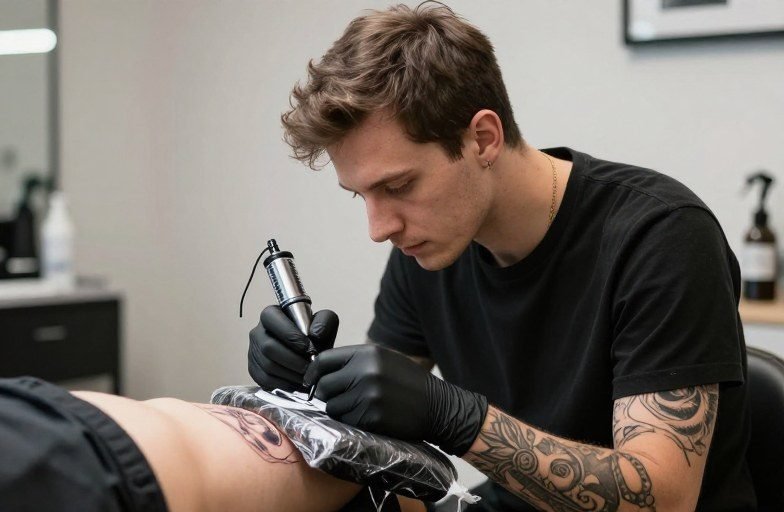
Madrid studios generally follow EU hygiene protocols: single-use needles opened in front of you, disposable barriers on equipment, and nitrile gloves changed between clients. The tattooing itself feels identical to US experiences, same machines, same inks (often the same brands: Intenze, Eternal, Dynamic). Pain varies by placement, not by country. Ribs, sternum, feet, and inner biceps hurt; outer forearms and thighs sit at the tolerable end. Sessions running long may include a coffee break, Madrid runs on café con leche, and artists are no exception.
- Stencil placement: you get one approval before needle touches skin
- Stretching: the artist will handle skin tension; don’t help unless asked
- Breaks: ask for them; five minutes won’t ruin the line
- Final wipe: expect to see blood and plasma; fresh tattoos look angry
Healing Timeline
Days 1-3: Oozing and Tenderness
The first three days produce plasma, ink leakage, and that tight, sunburned sensation. Madrid’s dry continental climate actually helps here, less humidity means less maceration under wraps than Florida or Houston. Keep the initial bandage on per your artist’s instructions, usually 2-6 hours. Wash gently with fragrance-free soap; Spanish pharmacies stock excellent options like La Roche-Posay Lipikar or simply ask for jabón neutro. Pat dry, never rub. Apply a thin layer of recommended aftercare; if the artist suggests Bepanthen (common in Spain), it’s a decent panthenol-based option, though many US travelers prefer bringing their own trusted balm.
Days 4-14: Peeling and Itching
Flaking starts around day four, sometimes day five. The skin looks dusty, not glossy. Itching peaks during this window, slap it, don’t scratch. Madrid’s tap water is safe for washing but can be hard; distilled water isn’t necessary but doesn’t hurt. Loose clothing matters more than usual if you’re walking 15,000 steps daily through museums. By day ten, the surface usually looks settled, though the layer beneath remains active. Flying home during this window is fine; the TSA has no restrictions on fresh tattoos, though tight airplane seats can irritate fresh thigh or back pieces.
Weeks 3-4: Settling In
Color saturation looks muted compared to day one, this is normal, not blowout. The skin returns to normal texture but remains sensitive to sun. Madrid’s altitude (2,000 feet) and intense UV mean serious sun protection if you’re still in town. A healed tattoo at four weeks isn’t fully settled; collagen remodeling continues for months. The final color settles around week six.
Aftercare Essentials
Products Available in Spain
Spanish pharmacies carry reliable alternatives if your usual US products don’t travel well. Bepanthen Crema (not the ointment with lanolin if you’re sensitive) works for moisture. Avene Cicalfate serves as a gentler option for reactive skin. Avoid antibiotic creams containing neomycin unless specifically recommended, they’re common allergy triggers. Coconut oil from any supermarket functions in a pinch, though it’s comedogenic for some. The key is thin, frequent applications, not thick occlusive layers that suffocate the wound.
Travel-Specific Concerns
Swimming pools, the Retiro Park boats, and day trips to Toledo or Segovia expose fresh work to sun, dust, and questionable water. Keep tattoos covered for two weeks minimum before submerging in any water, Mediterranean salt included. Hotel towels are fine; just pat, don’t rub. Air conditioning in Madrid dries skin aggressively; you may need more frequent moisturizing than at home. If you’re moving between cities, carry aftercare in your day bag, not checked luggage.
- Swimming: absolute minimum 2 weeks, ideally 3-4
- Sun exposure: SPF 50+ physical block, reapply every 2 hours
- Walking: fresh foot tattoos and Madrid’s cobblestones are a bad match
- Sleep: clean, light sheets; avoid letting pets near healing work
Cost Factors
Pricing in Madrid runs roughly 20-30% below comparable work in New York, Los Angeles, or Miami, though top-tier artists command international rates. Small pieces (under 2 hours) often have flat rates starting around €80-120. Hourly rates for established artists range €100-180, with some premium names at €200+. The VAT-inclusive pricing means no hidden tax surprise at checkout, what’s quoted is what’s paid. Tipping isn’t culturally mandatory as in the US; rounding up or 5-10% for exceptional work is appreciated but never expected. Deposits are standard, usually 20-50%, often non-refundable within 48 hours of appointment.
Hidden costs to budget: touch-ups if you’re home before healing completes, aftercare product purchases, potential clothing damage from ink or plasma leakage, and the obvious, don’t plan heavy drinking the night before, both for pain tolerance and because Madrid’s late nightlife culture tempts poor decisions.
When to See a Professional
Infection Signs
Redness spreading beyond the tattoo border after day three, increasing heat, yellow or green discharge, and red streaks all warrant medical attention. Madrid’s public healthcare system covers emergencies regardless of insurance status, though private clinics like Quirónsalud offer faster service for cash pay. Don’t try to tough out infection on a return flight, cabin pressure changes can worsen inflammation, and you’re contagious to others.
Allergic Reactions and Blowouts
Red ink allergies present as persistent, raised bumps specifically in red areas. Blowouts (ink spreading beyond intended lines) happen from needle depth issues, not aftercare. Both require professional evaluation. If you’re still in Madrid, return to the shop; reputable artists will assess honestly. If home, consult a dermatologist familiar with tattoo complications, not all are. Document everything photographically for any potential revision discussions.
What to Remember
Madrid offers legitimate, professional tattooing with real artistic range, but the fundamentals don’t change across borders. Research your artist’s healed portfolio, communicate clearly about design intent, and respect the healing process regardless of vacation excitement. The best souvenir from Madrid isn’t rushed; it’s planned, paid for properly, and given the two weeks of mundane care that makes it last. Bring loose clothes, pack your patience with your aftercare, and remember that a tattoo collected abroad carries the extra weight of memory, make sure it’s one worth keeping.
Frequently Asked Questions
Will a fresh tattoo cause problems at airport security when flying back to the US?
No. Fresh tattoos don’t trigger security concerns and aren’t restricted by TSA or customs. The main issue is physical comfort, long flights irritate fresh work, especially on backs, thighs, or anywhere pressed against seats. Bring loose clothing and plan to moisturize during layovers.
Can I use US aftercare products I bring, or do I need to buy Spanish ones?
Your usual products work fine if packed in travel sizes. Spanish pharmacies offer excellent alternatives if you prefer not to carry liquids, but there’s no requirement to switch. Consistency matters more than brand nationality.
How do I verify a Madrid shop’s hygiene standards without reading Spanish?
Look for visible health registration numbers, single-use needle protocols, and artists who open supplies in front of you. The regional registration number format is distinctive; absence of any displayed credentials is a walk-away signal regardless of language barriers.
Is it safe to get tattooed a few days before leaving Madrid?
Generally yes for small to medium pieces, but not ideal for large work requiring extensive aftercare monitoring. The first 48 hours need consistent attention you’ll be distracted from while traveling. Plan larger sessions earlier in your trip, with at least 4-5 days buffer before departure.
Related Tattoo Guides
- How to Say Tattoo in Spanish: Artist s Guide to Terms Shop Talk
- What to Put on a Tattoo to Heal: A Practical Guide
- What Tattoo Colors Fade the Least: A Practical Guide
- Explore more