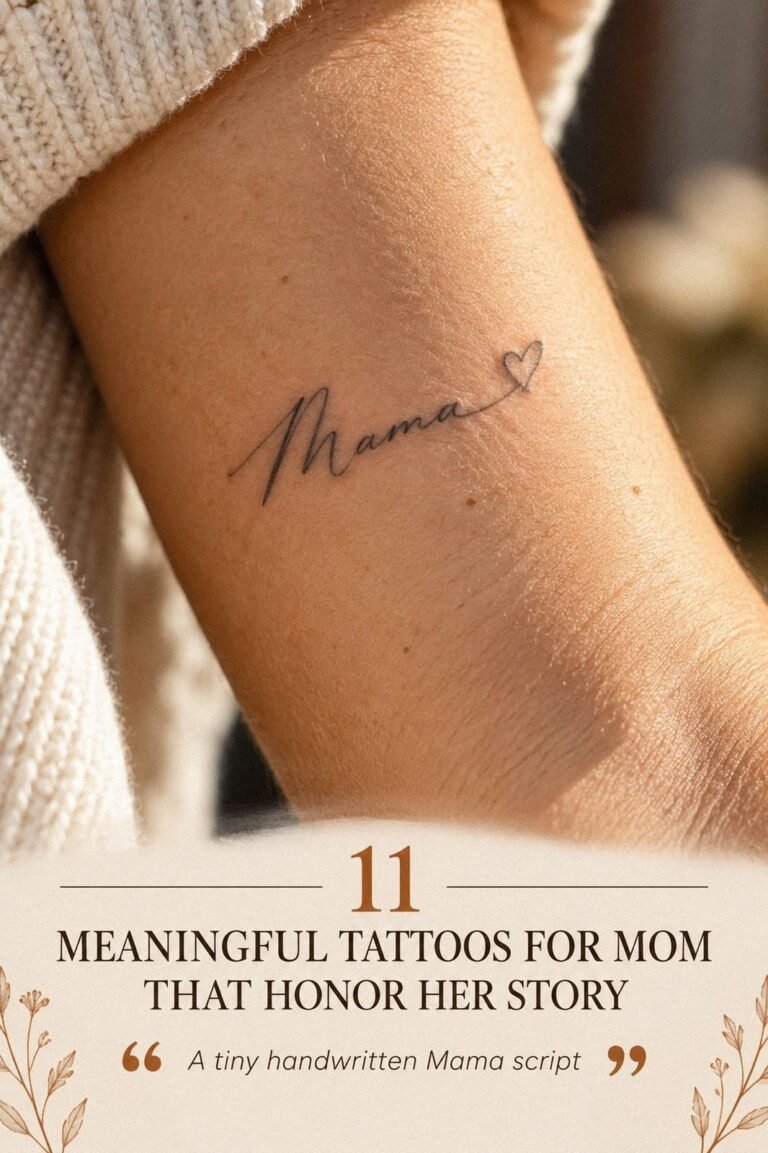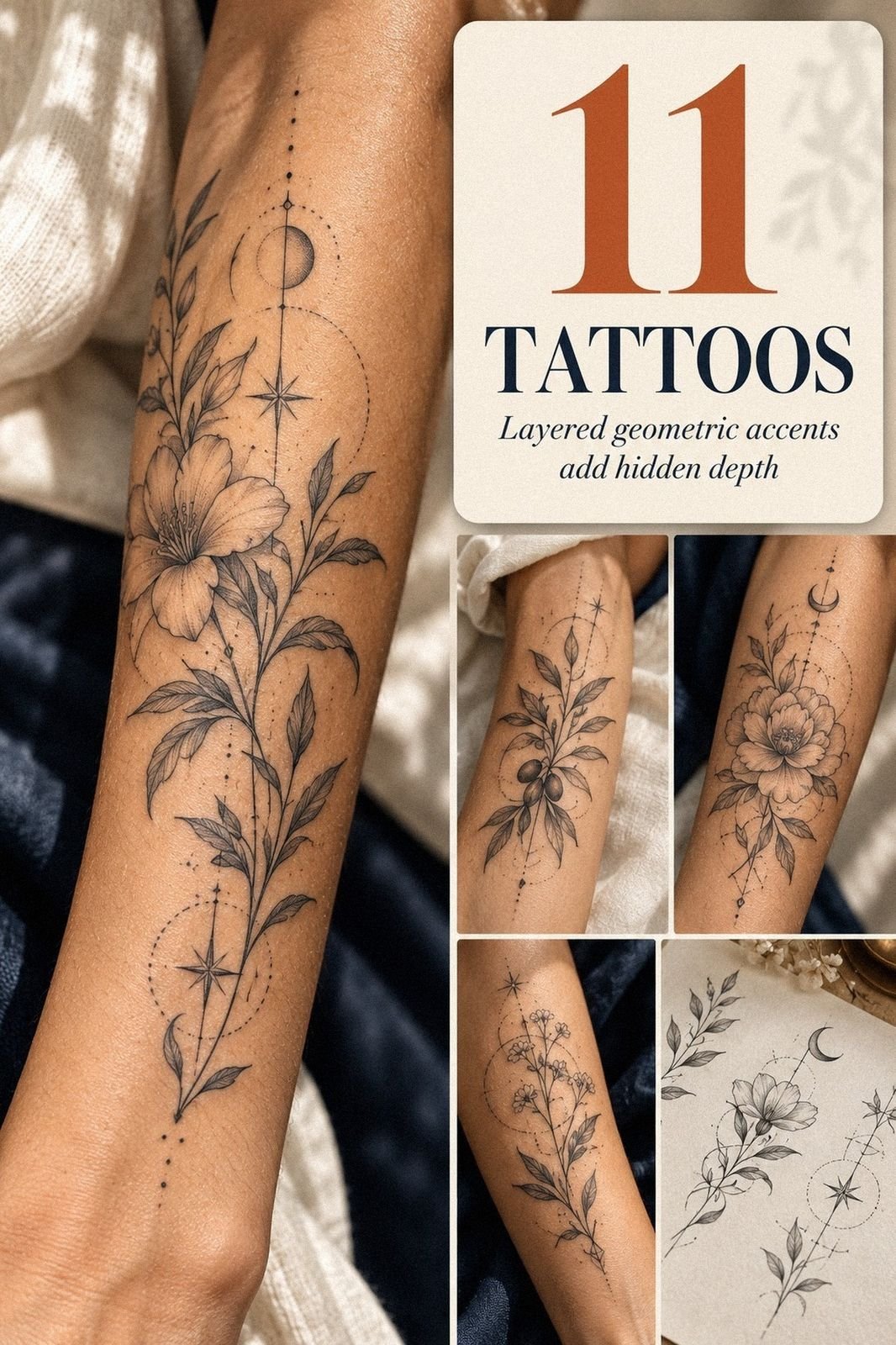
Half moon tattoo ideas hold up best when you keep the shape clean, give it enough skin, and quit shrinking it past the point of readable linework. I see the same half moon tattoo fail in my chair every month: someone brought a Pinterest screenshot of a wrist moon loaded with stars, dots, and script, then watched it blur into a fuzzy comma within a year. It wasn’t the artist’s fault, and it wasn’t bad taste. It was bad scale, bad placement, and a design that asked too much from too little skin. Most half moon tattoos don’t need more ink. They need better math.
Here’s the layered call I’d make before you book:
Scale first. A half moon needs about 2 inches of clearance to hold a clean line, a soft wash, or one or two stars without crowding. Anything tighter than 1 inch should stay minimal, one crescent, no shading, no extras. Anything larger than 4 inches is where you can add phases, faces, or botanical anchors and still have room to breathe.
Wear second. Low-wear zones like the outer upper arm, calf, outer thigh, and upper back keep linework crisp for years. High-wear zones like the fingers, sides of the hand, feet, inner bicep, elbows, and ribs fade faster, blow out easier, and often need a touch-up by year two. Match the design’s ambition to the placement’s traffic.
Cost third. A simple half moon runs about $50 to $150 at most US shops, while custom fine line or red ink work typically falls between $100 and $250 per hour. A 2 to 3 inch piece usually takes under an hour, so realistic planning lands around $120 to $250 for the chair. Anything bigger, with shading or color, multiplies from there.
Why Does the Two-Inch Rule Work So Well?
Because most half moon tattoos don’t fail from bad taste, they fail from bad scale. Once you push a moon much under 1 inch and still ask for shading, stars, dots, or leaves, the lines start competing with each other instead of reading as one clean shape. I keep coming back to the same rule: if you want detail, give it at least 2 inches and a placement that doesn’t fold hard every time you move.
And that doesn’t mean bigger is always better. It means the skin needs enough clearance for the moon to stay a moon after the peel, not a fuzzy comma.
If you want the tiniest version possible, go simpler. If you want more symbolism, go larger. That’s the trade, and it’s worth respecting.
- Fine Line Half Moon Wrist Tattoo
- Tiny Half Moon Behind The Ear Tattoo
- Shaded Half Moon Forearm Tattoo
- Half Moon And Stars Collarbone Tattoo
- Minimal Half Moon Finger Tattoo
- Botanical Half Moon Ankle Tattoo
- Blackwork Half Moon Shoulder Tattoo
- Red Ink Half Moon Rib Tattoo
- Half Moon Spine Tattoo With Dots
- Watercolor Half Moon Upper Arm Tattoo
- Matching Half Moon Friendship Tattoo
- Sun and Moon Contrast Makes the Crescent Pop
- Luna’s Open-Skin Crescent for Darker Skin Tones
- Turn a Moon Phase Into a Sternum Sweep
- Antique Engraving Against Clean Minimal Linework
1Fine Line Half Moon Wrist Tattoo
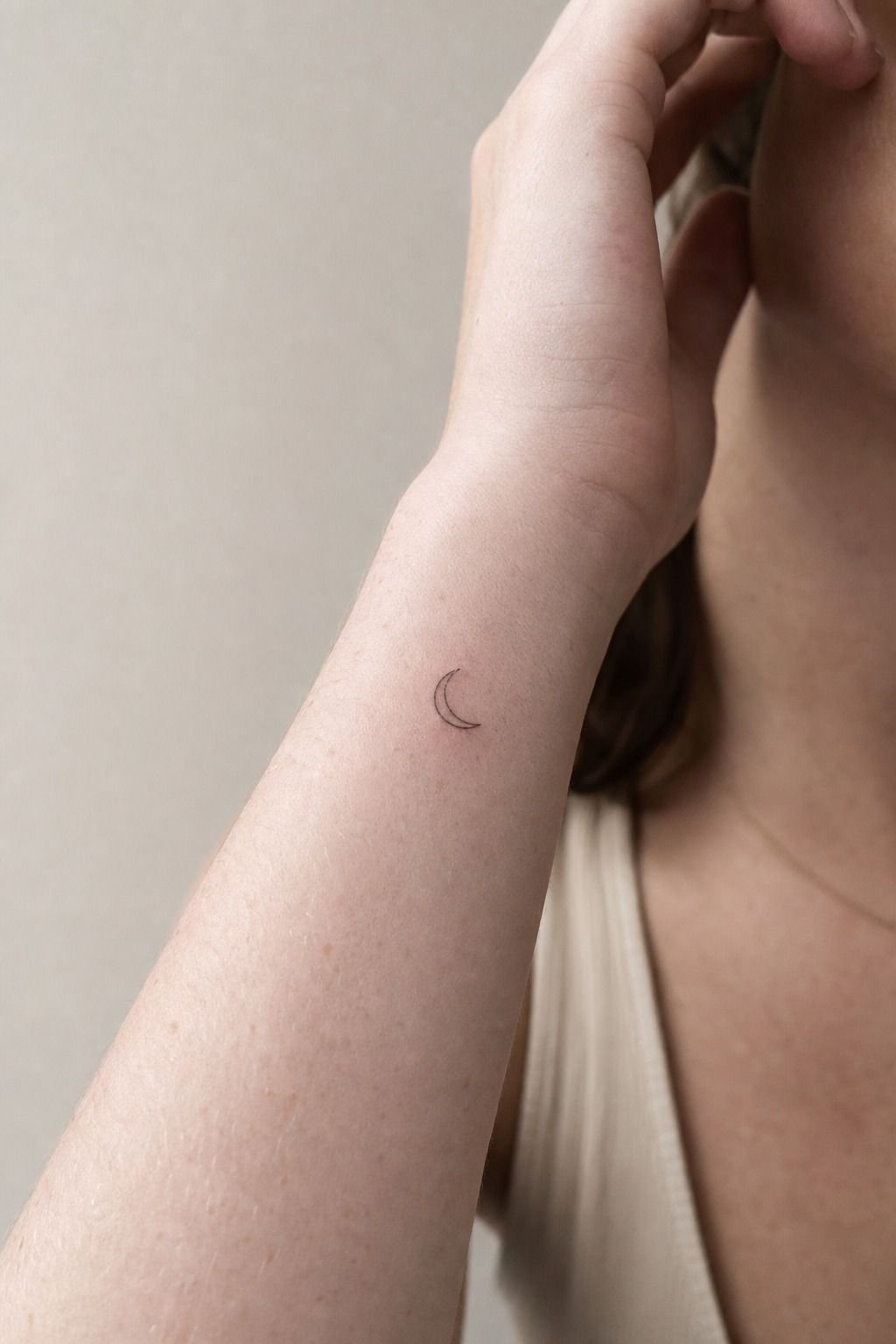
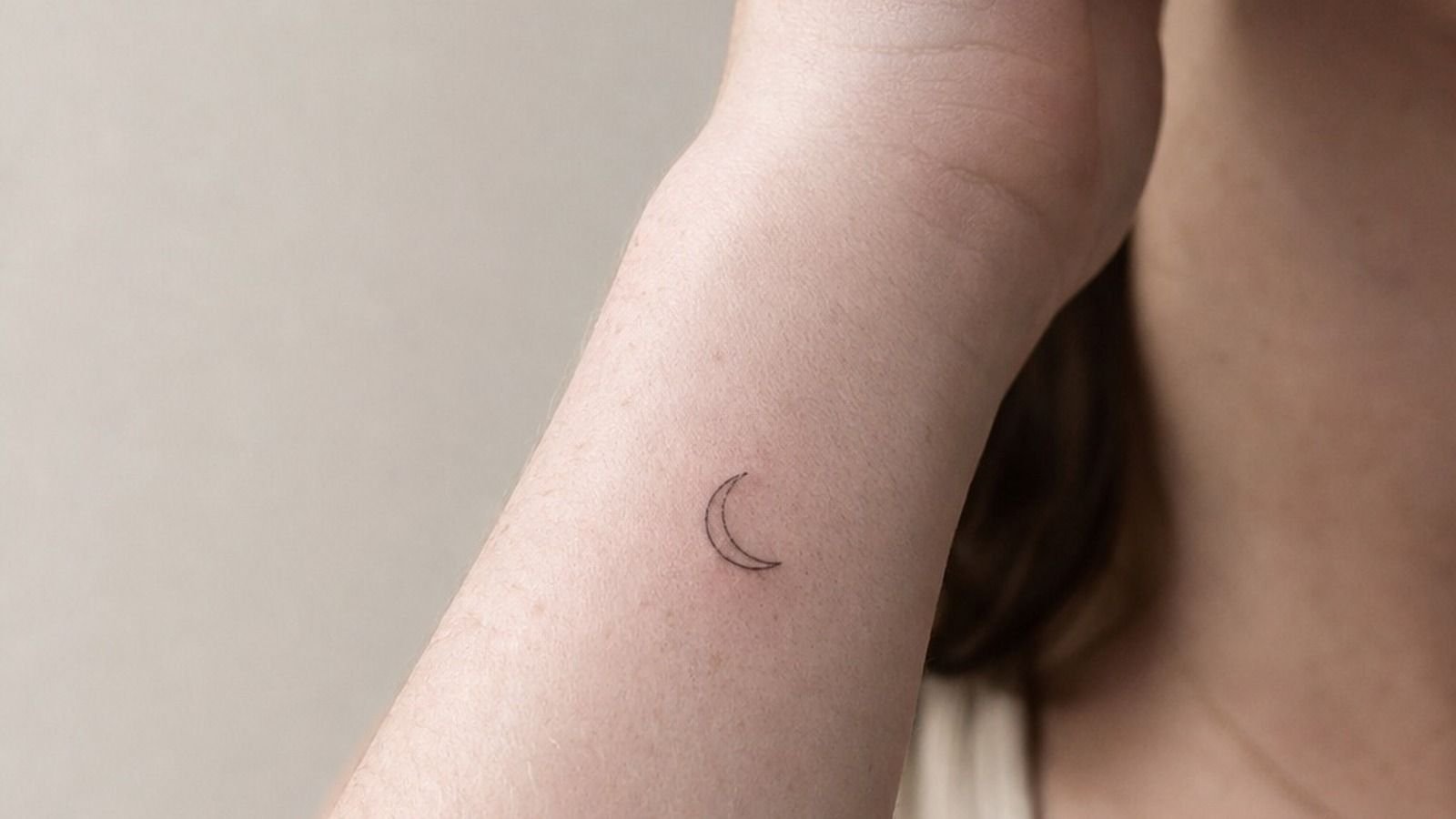
Start with a fine line moon on the wrist if you want a first tattoo that feels personal but still reads clean at a glance. On fair cool-pink skin, a simple arc with one neat inner contour looks soft without going weak.
I like this one at about 1.25 to 1.75 inches, because you get single-needle linework that can stay crispy without crowding the curve. If you cram stars, names, and texture into that size, it won’t age cute on you.
Your wrist placement is visible, but it’s also a high-wear zone. Sleeves rub it, watches hit it, and sun gets it fast. That means you need an artist who can pull black tattoo ink in one clean pass, not ten fuzzy ones.
Keep the design light, skip micro shading, and let the skin show. If you want symbolism first, read this moon tattoo meaning guide. But if your goal is longevity, keep this one clean and quiet.
2Tiny Half Moon Behind The Ear Tattoo
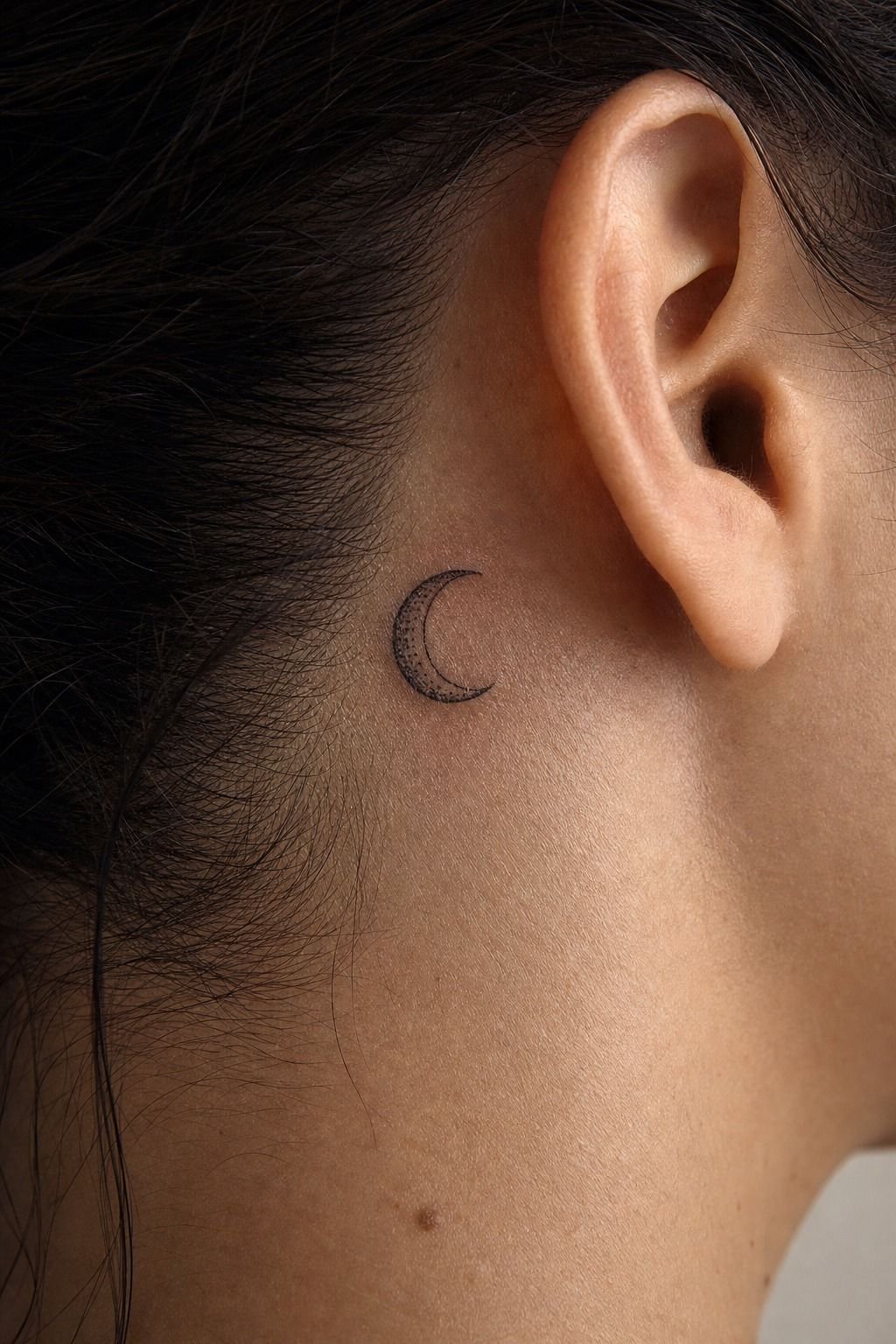
Go behind the ear when you want a tattoo that feels private until your hair is up. On medium warm ivory skin, a tiny moon tucked close to the hairline can look clean and sharp, especially if the open side follows the curve behind the ear.
The sweet spot is small, around 0.75 to 1 inch, with fine line black ink and no extra clutter. You need that shape to read fast, because this placement is tiny by nature.
But here’s the catch, behind-the-ear tattoos can get chewed up if your artist keeps overworking thin skin. You want crispy lines, low trauma, and a short session, often under an hour.
I’ve seen people ask for dots, sparkles, and script back there, and it almost always gets too busy. Want a moon symbol that stays simpler?
This crescent moon tattoo meaning breakdown can help you keep the message tight. Less ink, better heal.
Simple wins here.
3Shaded Half Moon Forearm Tattoo
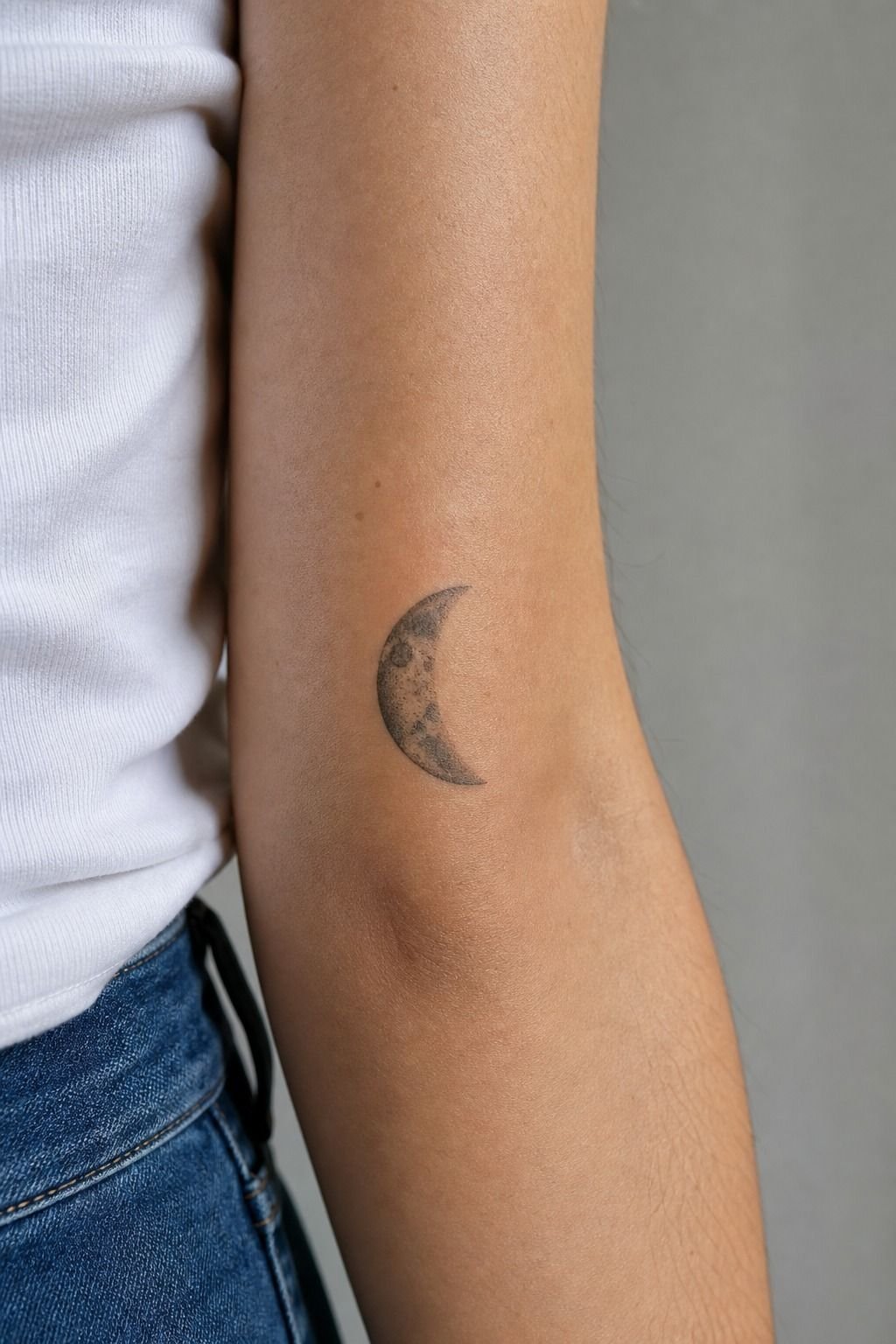
Reach for a soft grey wash when you want a moon that has volume without losing its shape. On medium olive skin, a 2 to 3 inch crescent on the inner forearm takes grey wash beautifully because the skin is forgiving and the surface is flat enough to hold an even tone. I’ll have the artist dilute the ink and use a whip shade pass so the shadow fades from dark to light across the curve, almost like the moon’s own terminator line.
What I like here is the grey wash technique: it adds dimension without demanding the contrast that blackwork needs, so the result stays soft even after the peel. Forearm sits at the friendly end of pain too, mostly a dull hum during shading, sharper during linework. If you want symbolism layered into a single crescent, this moon phases tattoo meaning article maps out which phase reads cleanest at this size.
4Half Moon And Stars Collarbone Tattoo
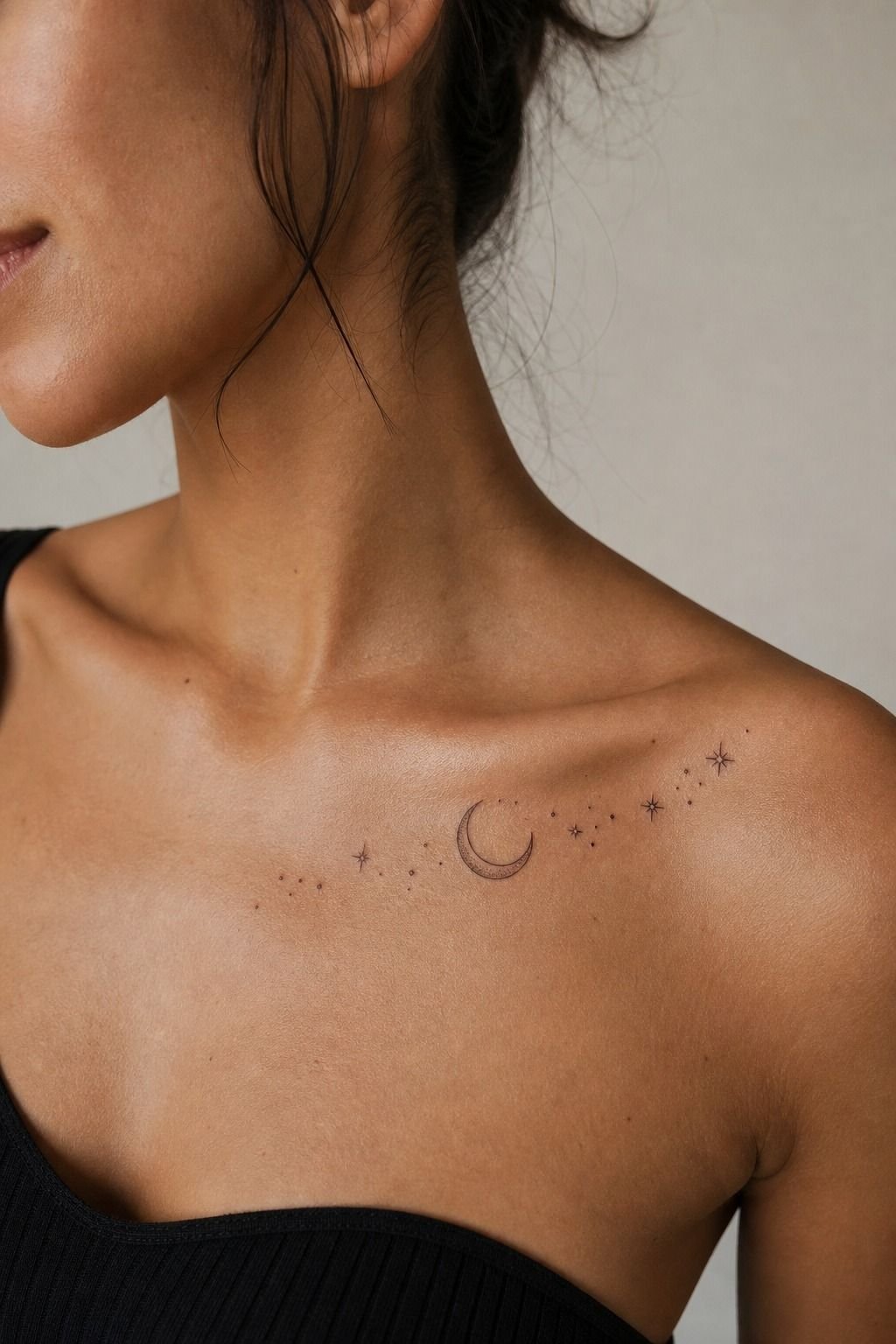
Anchor the moon to the collarbone if you want the placement itself to do half the work. A slim half moon with two or three tiny stars can follow that bone line so cleanly on golden tan skin that the tattoo looks placed, not just pasted on.
I’d keep this around 3 to 4 inches total, because collarbone placement needs enough length to flow with the body. Too short, and it sits there like a sticker.
Collarbone tattoo pain is a little spicy because you’re close to bone, but the visual payoff is strong. And this is where people go wrong, they add too many stars. Don’t.
A half moon and stars tattoo heals nicest when the moon stays the hero and the stars just frame it. If you like the symbolic side, this meaningful moon and stars tattoo meaning article is worth a read.
Take clean spacing over extra detail every time.
5Minimal Half Moon Finger Tattoo
Treat the finger like a flash tattoo, not a custom one. On medium warm skin, a 0.5 to 0.75 inch crescent tucked on the side of the finger reads best as a single arc, no shading, no stars, no micro detail.
I’ll pull this as a single-pass line with a 3RL needle, go light on pressure, and let it heal as a soft mark. Anything more ambitious turns to soup within a year.
The honest truth about finger tattoos is that they fade, blow out, and need touch-ups, often by month six. That’s not a flaw of the artist, it’s physics: constant friction, sun exposure, and thin skin. If you go in knowing you’ll likely revisit it every 12 to 18 months, a half moon finger tattoo can still be charming.
Plan on touch-ups as part of the deal, and pick an artist who treats the finger like a placement risk, not a canvas. Get something simple, accept the maintenance, and you’ll wear it well.
6Botanical Half Moon Ankle Tattoo
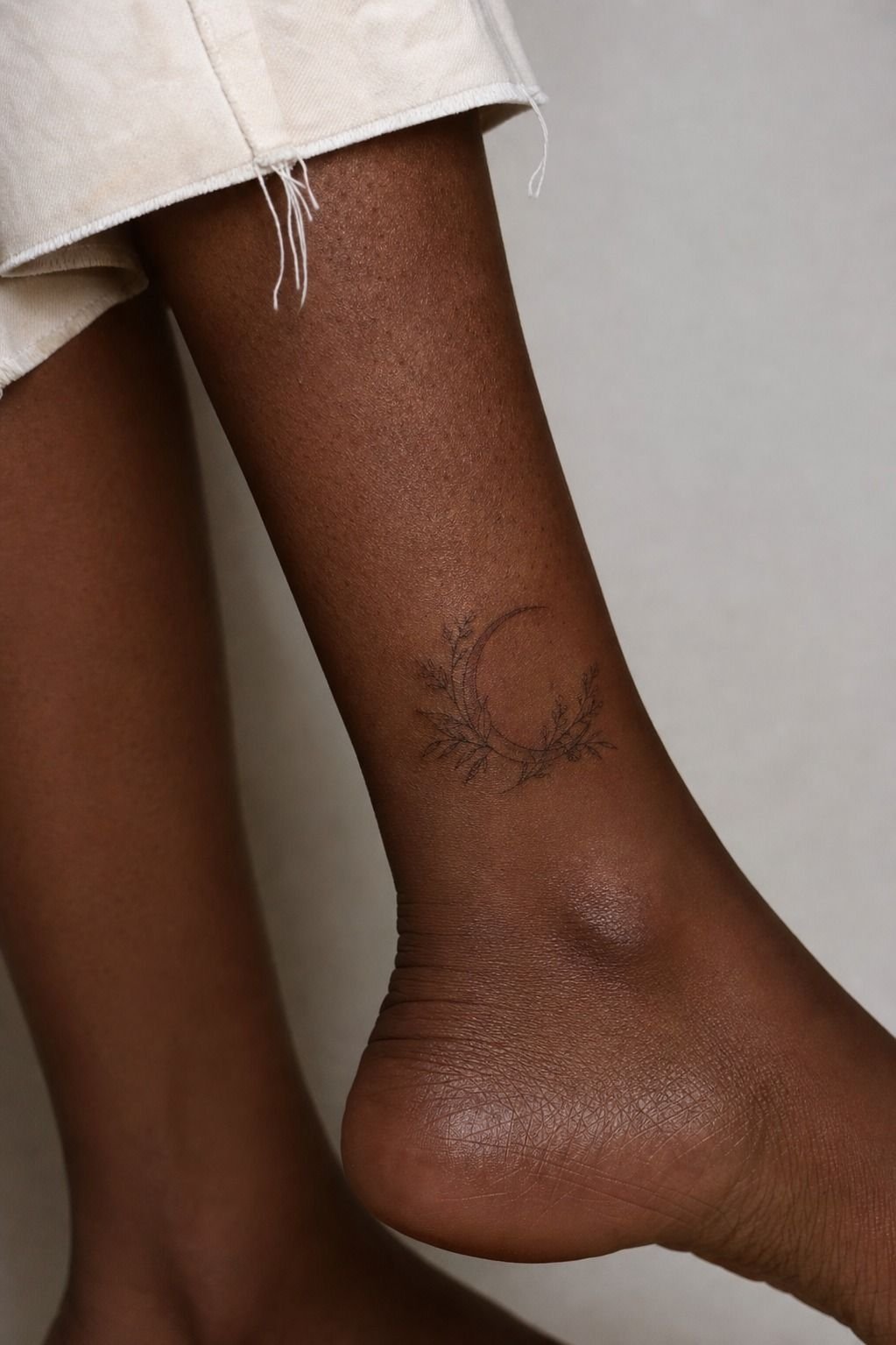
Wrap the curve with leaves if you want a half moon tattoo that feels softer without turning fussy. On deep ebony skin, a botanical ankle moon looks strongest when the leaves stay bold enough to separate from the main crescent after healing.
I like a 2 to 3 inch design with black fine line ink and a few thicker leaf stems so the shape doesn’t disappear. The ankle gives you nice flow, especially when the moon hugs the outer bone and lower shin.
This is one of those moon tattoo placement choices where size matters more than people think. Too tiny, and the leaf detail gets muddy.
Too delicate, and you lose the contrast that makes the moon read. Your ankle is also a high-friction spot from socks and shoes, so your aftercare has to be tight.
Wash gentle, keep it lightly moisturized, and skip the gym friction until the surface has closed. The fresh tattoo aftercare guide can help if you want a clean day-by-day routine for high-friction zones.
7Blackwork Half Moon Shoulder Tattoo
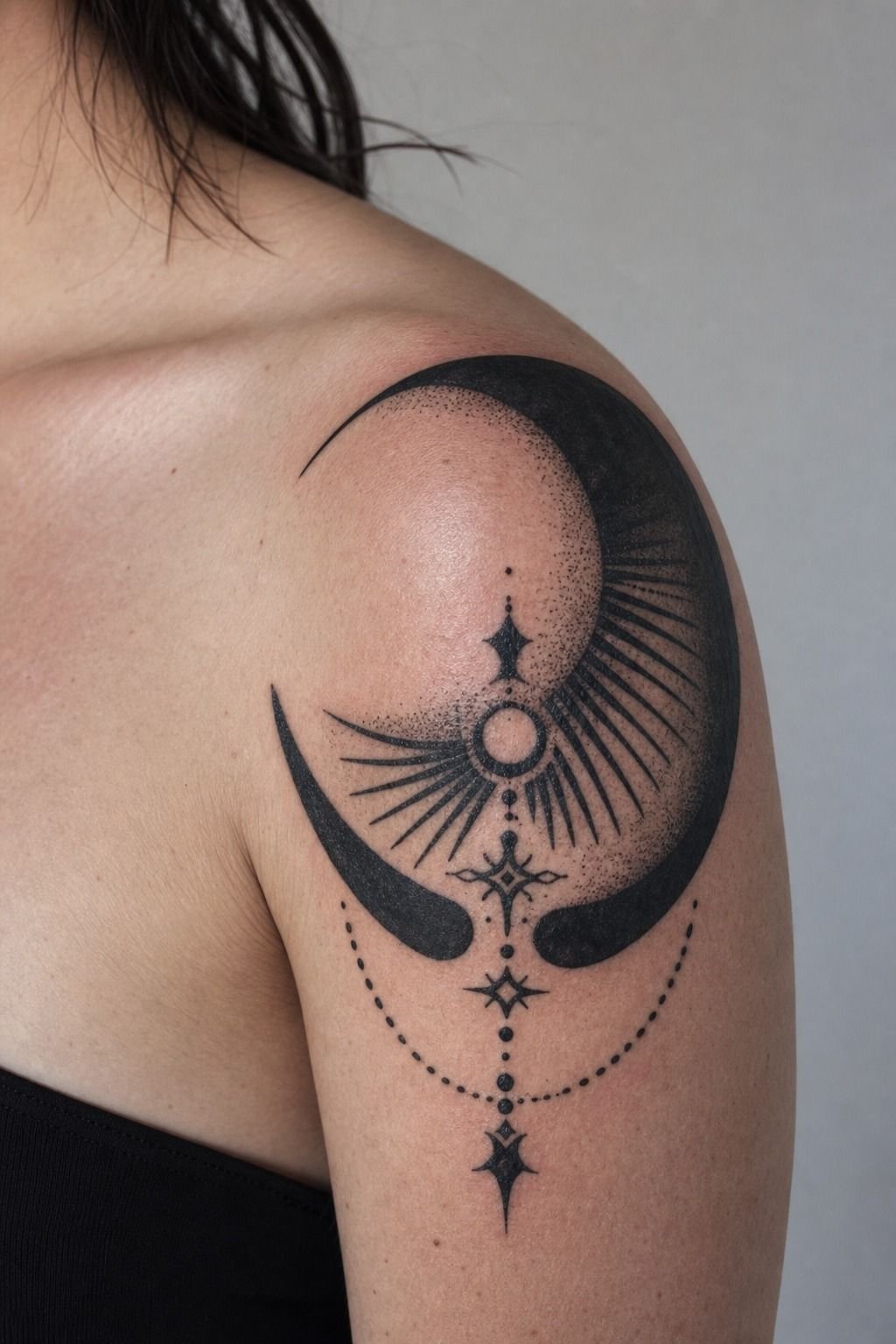
Commit to contrast with blackwork if you want the moon to read from a few feet away, not just in close-up photos. On fair cool-pink skin, a shoulder half moon with dense black fill and open skin around it has real presence.
This is one of my favorite ways to make a unique moon tattoo feel modern without getting trendy. At 3 to 5 inches, solid blackwork fill gives you bold shape, clean edges, and longevity you can trust.
Shoulder tattoos heal nicely because they are lower wear than hands or ribs, and the curve of the delt gives the moon a natural cradle. But you need a tattooer who can pack black in a solid pass with big mags, not scratch at it fifty times. Otherwise the skin gets angry and patchy.
Curious how moon imagery shifts when it goes more dramatic? This realistic moon tattoo guide shows where texture helps and where bold simplicity wins.
Bold will hold, especially here.
8Red Ink Half Moon Rib Tattoo
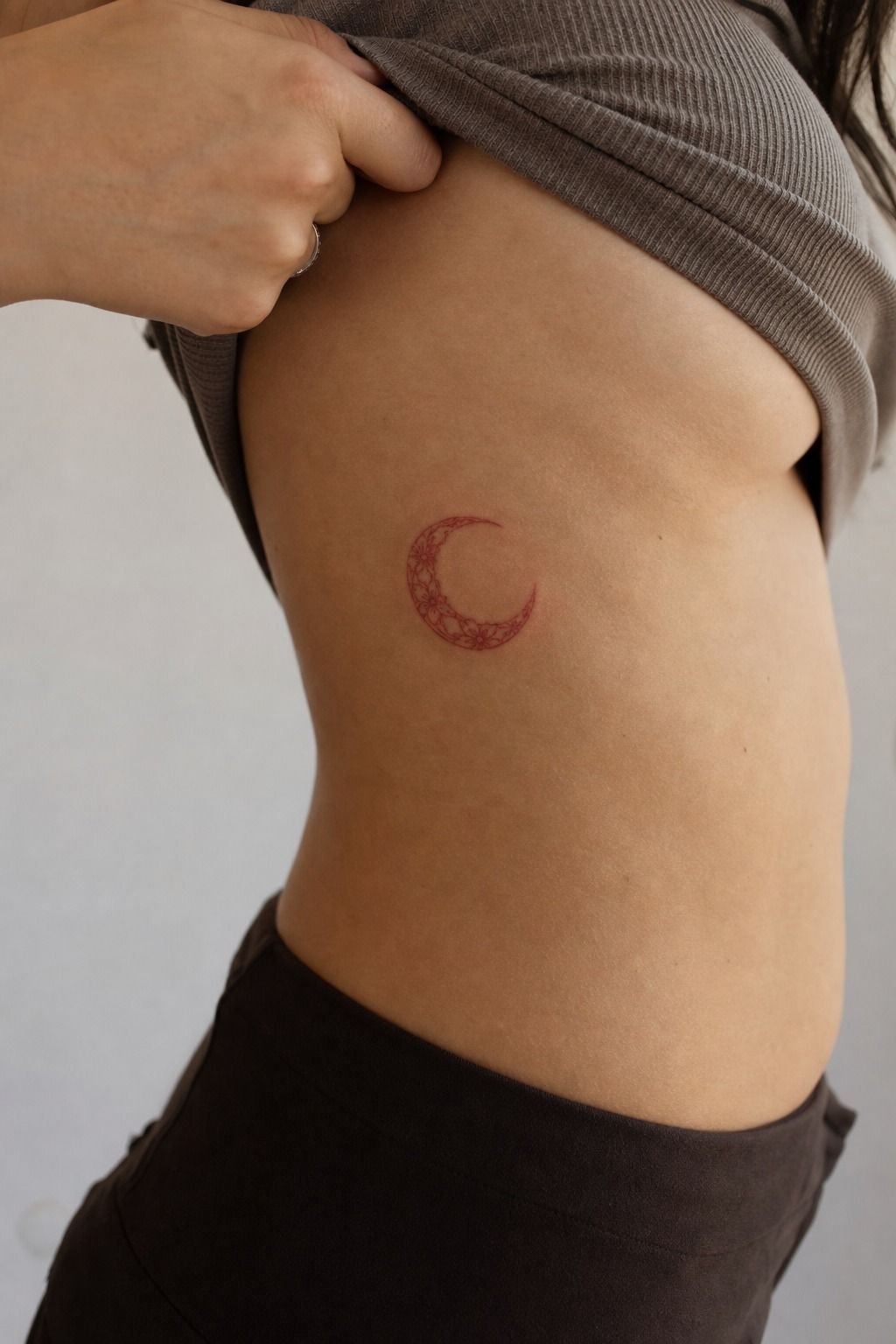
Let red ink burn bright along the ribs when you want a moon that feels intimate and a little dangerous. On medium warm ivory skin, a 2.5 to 3 inch half moon in saturated red tattoo ink sits on the ribs like a slow ember, especially when the linework is one solid pass and the color is packed deep in a single pull. I’ll mask it lightly, push the contrast, and let the curve hug the rib cage without crowding it.
Ribs are spicy. There’s no cute lie about it.
Lines feel sharper, shading becomes a dull burn, and a long session will wear you down. Plan for breaks, breathe through the linework, and pick an artist who’s comfortable doing color packing in one pass so the skin doesn’t get chewed up.
Red ink can fade faster than black, especially with sun and friction, so commit to sunscreen and a touch-up mindset. If you want to know what red ink does over time, this does red tattoo ink fade faster guide maps out the timeline honestly.
9Half Moon Spine Tattoo With Dots
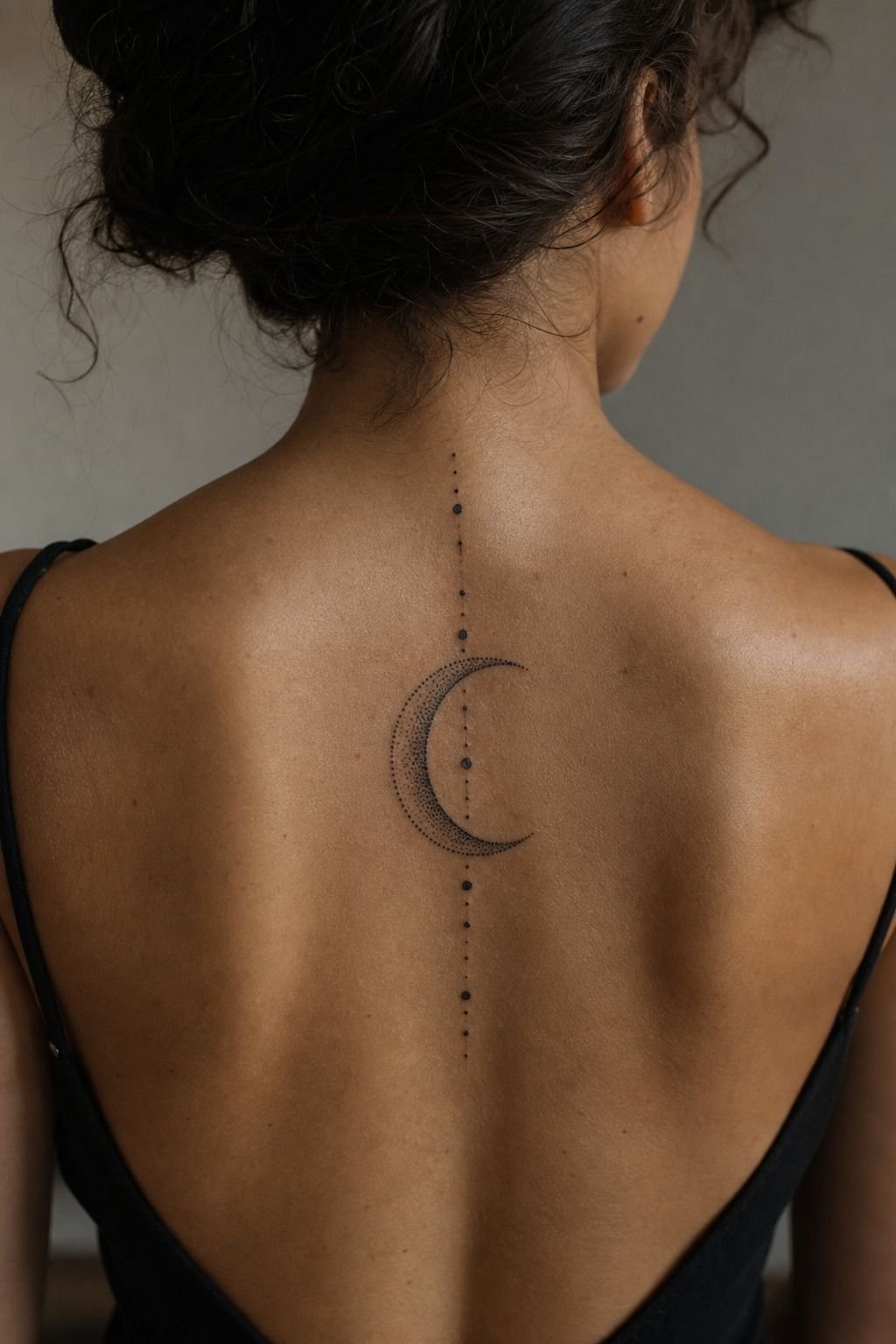
Use the spine when you want symmetry to carry the whole design. A half moon centered along the back with descending dots can look incredibly clean on medium olive skin, especially when the dots stay evenly set apart and the crescent sits high enough to follow the upper spine naturally.
I’d map this at 3 to 5 inches total and keep the dot trail light with dotwork black ink. That gives you elegance without forcing detail that the body doesn’t need.
This is one of my Three-Dot Drift Rules: keep the moon centered, keep the dots few, and keep the dots evenly set apart. Break any one of those, and the tattoo starts looking accidental.
Pain sits in the medium-to-spicy range because of the bone, but the heal is usually decent if clothing isn’t rubbing it raw all week. For collectors planning something bigger later, this spine tattoo ideas page helps you think ahead so the spine piece doesn’t fight future work.
10Watercolor Half Moon Upper Arm Tattoo
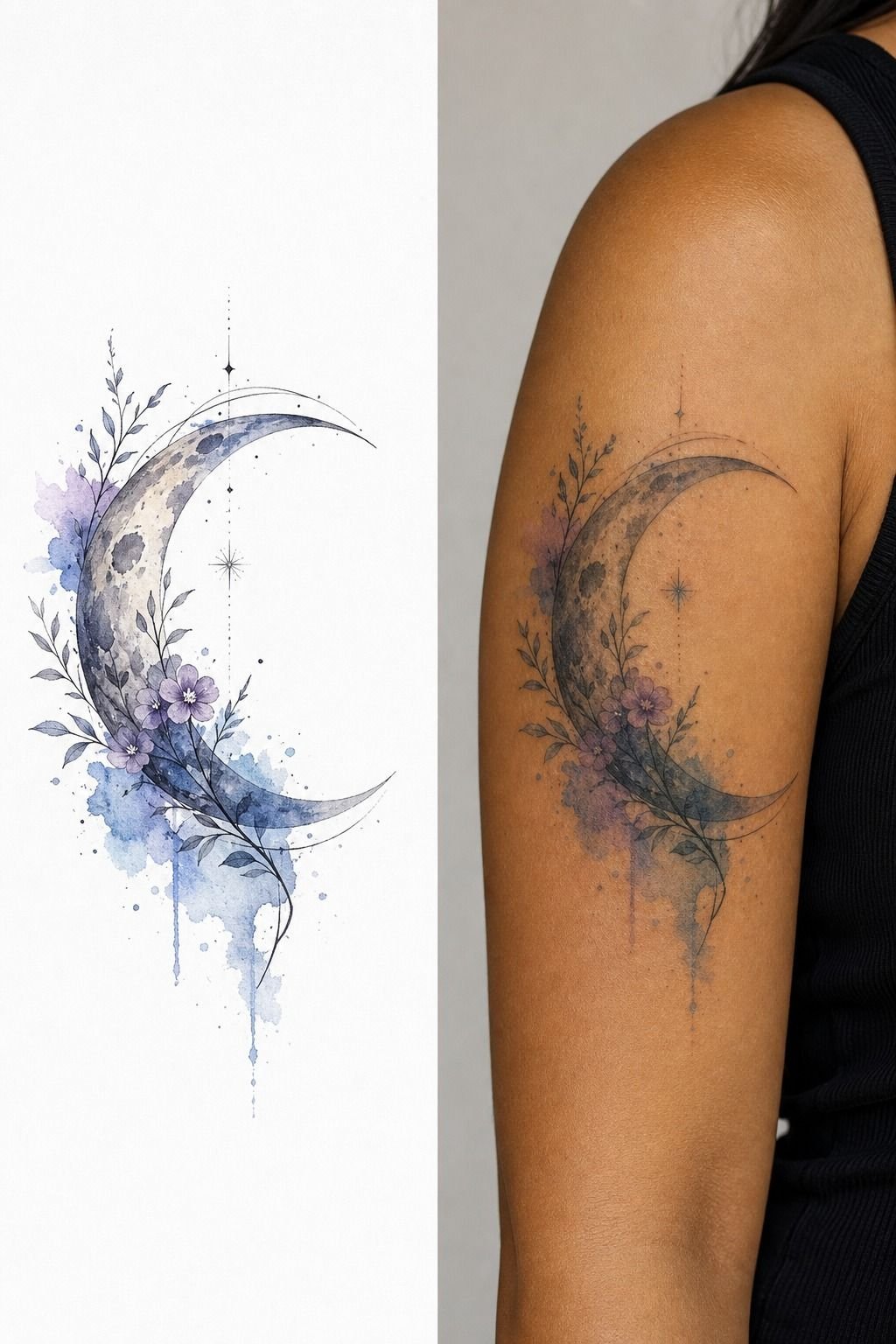
Use watercolor as an accent, not a replacement, for linework. On golden tan skin, a 3 to 4 inch crescent on the upper arm looks best when the wash bleeds outward from a clean anchored linework base, not when the whole shape floats as loose color. I’ll have the artist lay the crescent in solid black first, then layer diluted ink in soft splashes around the curve so the moon stays readable while the wash adds mood.
The mistake I see with watercolor tattoos is going pure color with no anchor. Within a year, that loose moon looks like a smudge with no shape.
Always anchor watercolor with line, even if the line is thin and minimal. Upper arm is also one of the easier placements to heal, so it’s a smart spot to experiment with color without committing to ribs or spine. If you want to see how this style holds up over time, this crescent moon detailed design page shows examples where line and wash actually cooperate.
11Matching Half Moon Friendship Tattoo
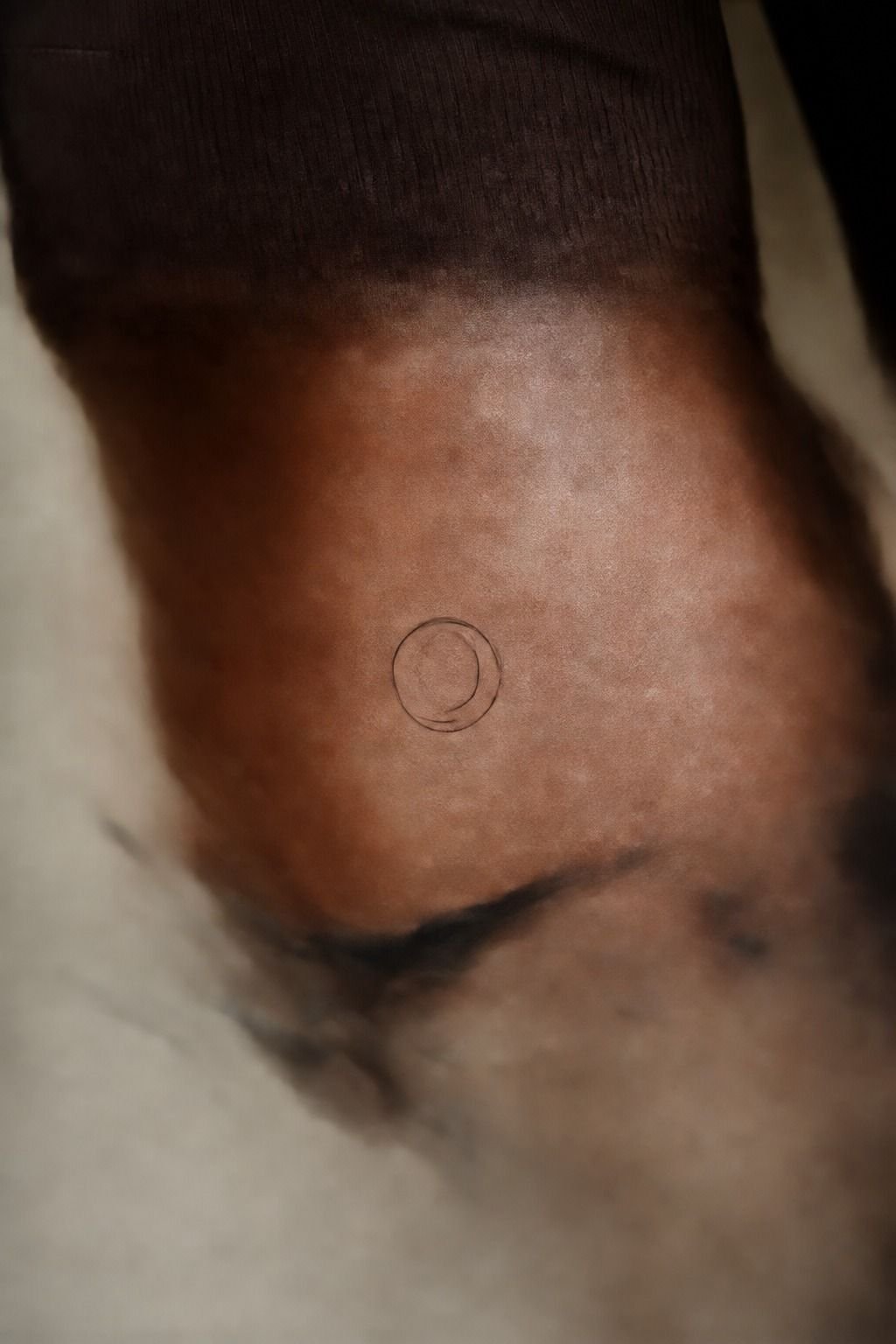
Match the concept, not every millimeter, if you’re getting friendship tattoos. A half moon on the hip of deep brown skin with a warm undertone can look gorgeous when the shape is shared but each person gets a slight twist, maybe one fuller crescent, one cleaner arc, one tiny star only where it fits.
Around 2 to 3 inches with custom fine line design is usually enough. Identical isn’t always the smartest choice.
Skin tone, placement, muscle, and personal style all change how the tattoo reads. Friends come in wanting Pinterest-exact twins, and the better result is matched energy with better placement for each person. The hip is a good low-visibility option if you want it personal and easy to hide while healing.
For symbolism that still feels tied together, this moon cycle tattoo meaning guide gives you a shared story without forcing a copy. That’s the grown version of matching ink.
12Sun and Moon Contrast Makes the Crescent Pop
Pair a half moon with a sun to anchor the crescent visually. On fair warm skin, a 3 inch crescent across the inner forearm reads boldest when a smaller sun sits across from it, the contrast between the dark fill of the moon and the radiating lines of the sun gives the design two focal points without forcing detail into either. I’ll map the spacing so the negative space between them is at least as wide as the moon itself.
This is one of my favorite ways to teach the negative-space rule: the empty skin around the moon is just as much a part of the design as the ink itself. Cramming the sun close kills the contrast and makes both shapes look like noise.
Push them apart, let the skin breathe, and the tattoo reads from across the room. For deeper symbolic layering, this sun and moon tattoo guide walks through how the pairing has been worn across cultures.
13Luna’s Open-Skin Crescent for Darker Skin Tones
The prettiest dark-skin moon tattoos aren’t timid. They use open-skin contrast, confident outlines, and enough scale for every element to stay visible after settling.
On rich brown or deep ebony skin, I’ll test a stencil at real viewing distance and push the black where the design needs structure. Fine line can work beautifully, but faint linework isn’t the goal.
Think of “Luna” here as a design rule, not a character: a clean crescent, one luminous gap, and no grey haze swallowing the center. A skilled artist may sit at the upper end of the $100 to $250 hourly range. That cost can be worth it when their healed portfolio proves they understand contrast across different skin tones.
14Turn a Moon Phase Into a Sternum Sweep
Stretch three simple phases beneath the sternum if you want a dramatic, feminine, architectural tattoo that moves with your torso. Keep each moon clear and let the center crescent carry the darkest fill. At 5 to 7 inches, the shapes have enough clearance to age without merging into one dark band.
This placement is spicy. Lines feel sharper over the center, shading becomes a dull burn, and a long appointment can wear you down.
Ask for a session estimate before booking so the cost doesn’t surprise you. Tap out for five rather than pass out on me. For honest pain prep, this sternum tattoo pain guide breaks down what the chair actually feels like.
15Antique Engraving Against Clean Minimal Linework
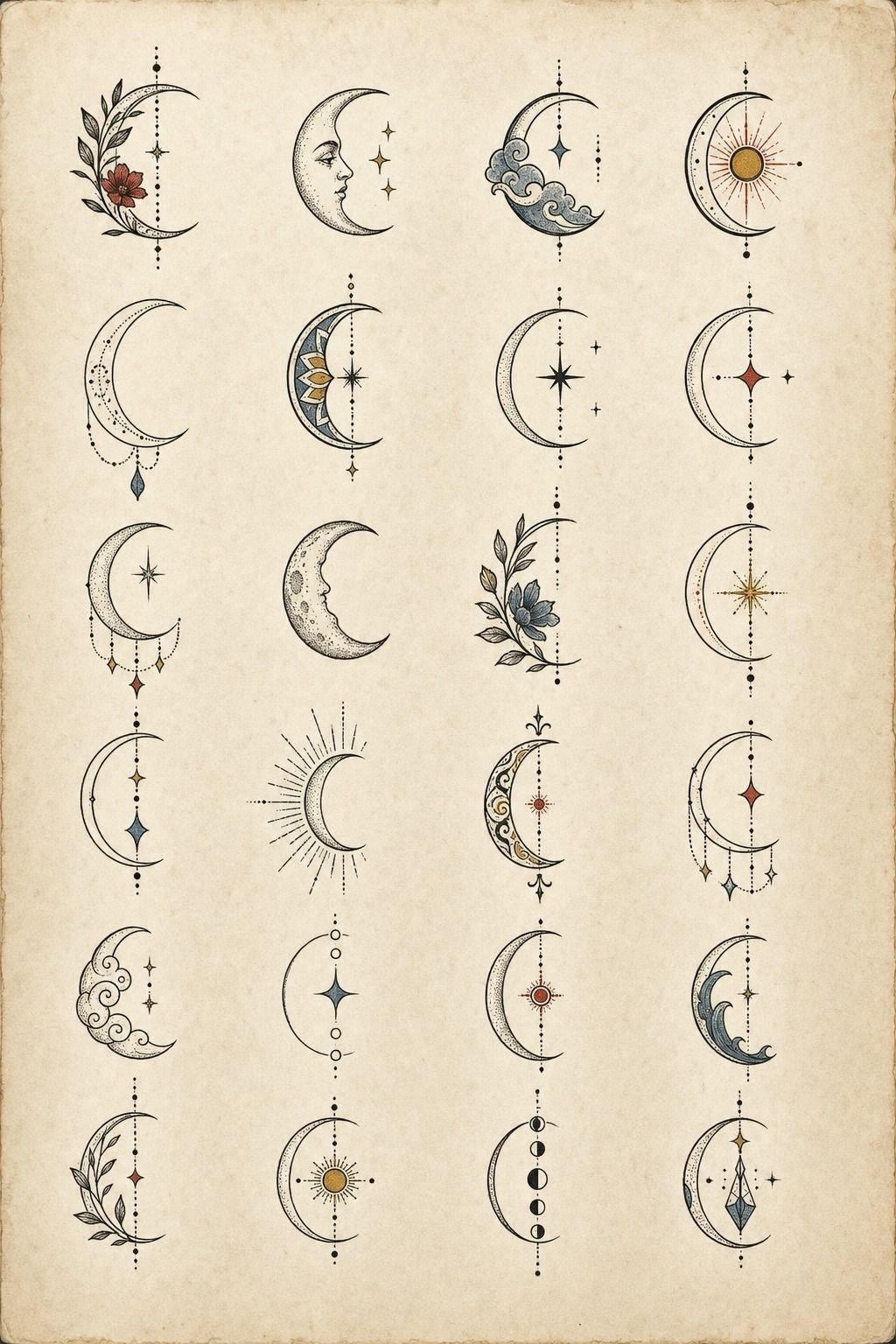
Mix antique engraving textures with modern minimal linework when you want a moon that feels like an heirloom without losing edge. On fair cool-pink skin, a 2.5 inch crescent on the outer forearm can hold a thin line outline paired with one small engraved star, dot, or roman numeral inside the curve. The contrast between the minimal line outline and the textured engraving makes both styles sharper than they would be alone.
The trick is restraint: pick one engraved element, not five, and let the rest of the crescent stay clean. Engraving textures blur if they get too tight, so the engraved detail needs to sit at least 1 mm wide to hold up after healing.
This style also ages beautifully because the engraved mark reads as texture even as fine lines soften. If you want to see how texture and minimal linework play together, this realistic moon tattoo guide shows where detail earns its place and where it just adds risk.
The Clean-Heal Rule I Wish More People Respected
Here’s what I tell clients when they bring me moon-tattoo-ideas screenshots: the design matters, sure, but the clean heal matters more. I’ve watched a too-small celestial design settle into mushy little marks more times than I can count, and every time the cause was the same, too much detail in too little skin.
Skin softens edges. Skin swells.
Skin peels. Skin changes every decision you made while the stencil still looked perfect.
That means you should think about contrast, placement, and skin movement before you think about cute extras. A half moon tattoo usually looks best when the curve is obvious from the first glance.
Not after someone squints. Not after you explain it.
If the placement bends too hard, rubs too much, or gets blasted by sun every day, your clean little moon won’t stay that way for long. Fingers, sides of hands, feet, and ribs can all be beautiful, but they ask more from you: more patience, more aftercare, more acceptance that touch-ups may be part of the deal.
And honestly, most people don’t need more tattoo detail. They need more restraint. A moon with one clean outline, maybe a soft wash, maybe a couple of balanced stars, will age better than the version loaded with micro dots, tiny script, and three symbolic layers fighting for attention.
I’d rather make you something slightly bolder that still looks like itself in ten years than something whisper-thin that only looked good on day one. That isn’t me being harsh.
It’s me trying to save you from paying twice.
If you’re picking between tattoo placements, go with the body zone that gives the design enough skin and your lifestyle enough grace to heal it right. Forearm, outer upper arm, calf, and outer ankle are usually friendlier than high-wear zones.
Keep the first few days clean, treat it like an open wound, and don’t suffocate it with ointment. Then be patient through the peel and that shiny silver-skin stage.
The tattoos that heal best are rarely the busiest ones. They’re the ones that were built to breathe on skin from the start.
What Should You Know Before Booking?
How much does a half moon tattoo usually cost?
About $100 to $300 is common in the US for a small to medium half moon tattoo, though some shops start with a shop minimum around $50 to $100. Custom fine line work, shading, or color packing pushes toward the upper end of the artist’s hourly rate. For a fuller budget breakdown, this how much does a tattoo cost US guide lays out what shapes the final number.
Are half moon tattoos a good idea for a first tattoo?
Yes, they’re a strong first tattoo when you keep the design simple and choose a forgiving placement like the forearm or upper arm. Clean linework ages better than over-detailed micro tattoos, and the symbol gives you meaning without forcing a huge session. If you want the symbolic angle first, read this crescent moon tattoo meaning guide.
How do I choose a tattoo artist for a half moon tattoo?
Pick an artist whose healed photos show crispy lines, smooth saturation, and clean placement choices. Healed portfolio shots tell you more than fresh tattoos ever will, and you should always care about studio hygiene, not just style. Compare fine line and blackwork portfolios side by side using this realistic moon tattoo guide to see what good healed work looks like.
How much do half moon tattoos hurt?
It depends on placement. Forearm, shoulder, and thigh are usually more tolerable, while ribs, fingers, sternum, and feet are spicier.
Placement choice changes the whole experience, and lines usually feel sharper than shading. For an honest read on specific spots, this most painful tattoo spots guide maps what to expect.
How long does a half moon tattoo take to heal?
Surface healing is usually about 2 to 3 weeks, and full settling often takes 2 to 3 months. Gentle aftercare helps a lot, especially in the first few days when the tattoo is still an open wound. For a clear day-by-day routine, this tattoo healing stages day by day guide walks you through each phase.
What’s the best placement for a half moon tattoo?
Forearm and outer upper arm are the safest bets if you want clean aging, tolerable pain, and enough skin for the shape to breathe. Low-wear placements usually hold fine lines better than fingers, feet, or the side of the hand. If you want a fuller placement breakdown, this 18 tattoo placement ideas page shows how different zones age over time.
The Low-Wear Rule I’d Start With
If I had to pick one starter, I’d start with the shaded forearm half moon. It gives you soft contrast, a tolerable pain level, and a way easier heal than wrist or ribs.
At 2 to 3 inches with a single-needle outline and one light grey wash, it ages cleanly for years and gives you room to add a phase or a star later if you want to grow the piece. Pin that direction for later and compare it with this realistic moon tattoo guide when you’re ready to plan the next one.