Knowing whether a tattoo needs a touch-up requires patience. A tattoo can look dull, flaky, cloudy, or uneven while it is still healing.
Quick answer: A tattoo may need a touch-up if it is fully healed and still has missing color, patchy lines, light spots, or uneven saturation. Do not judge during peeling, and do not touch up irritated or unhealed skin.
Touch-up signs
Wait for the tattoo to settle before deciding.
| Option | Best use | Keep in mind |
|---|---|---|
| Patchy line | Small fix after healing | Could be normal early healing |
| Missing color | Color touch-up | Do not pick scabs |
| Light fine line | Possible second pass | Placement may be the issue |
| Blowout | Not a normal touch-up | Needs different advice |
| Old fading | Refresh, not touch-up | May need redesign |
Faded patches in solid black areas, gaps in line work, and muddy grey sections that used to read crisp are your clearest signals. Pull up a photo from the day you got tattooed and hold it next to the healed piece under decent light. If you can spot blown-out lines that feathered into the surrounding skin, color that shifted from saturated to washed-out, or spots where the ink just didn’t take at all, you’re looking at work that needs attention.
High-wear zones lie about healing. Hands, fingers, feet, and inner elbows get constant friction and flex, so they’ll show wear within months, not years. A botanical sleeve on a bicep might stay crispy for five years while the same artist’s fine line finger tattoo looks rough by summer. That’s not the artist’s fault. That’s placement. Know what you’re working with before you assume something went wrong.
What makes this work on real skin
A great tattoo at week two means nothing, judge it at month three.
A healed tattoo should be judged after the skin is no longer peeling, shiny, or irritated. The exact timing depends on the tattoo and your body.
Send clear photos to the artist instead of guessing. They can usually tell whether the tattoo needs time, aftercare, or a touch-up appointment.
Skin type matters more than most clients expect. Oily skin can push certain pigments out during healing, leaving patchy color in shaded areas or thin lines that healed softer than intended. Dry or scarred skin absorbs ink unevenly, which shows up as inconsistent saturation in black and grey work. Neither situation means a bad tattoo. It means the skin did what skin does, and a targeted touch-up pass fixes it.
The design style affects how obvious wear becomes over time. Bold traditional pieces with solid black outlines and heavy fill hold up for decades because the linework is thick enough to stay readable even as the edges soften slightly. Fine line micro-realism is the opposite. Thin lines under 1mm don’t have much room to spread before they lose definition. If you went fine line, build a realistic expectation that a refresh pass every few years is part of owning that style.
Before you book or apply it
Check the studio policy before booking another artist for a fresh touch-up.
- Wait until the tattoo is fully healed.
- Photograph it in natural light.
- Ask the original artist what they see.
- Do not touch up infected or irritated skin.
Wait a full eight to twelve weeks before even scheduling a touch-up consultation. Skin that looks rough at week three can look completely solid by week ten once the deeper layers finish settling. Booking at week four and then having the artist needle into tissue that’s still healing underneath creates more trauma and unpredictable results. Patience here costs nothing. Impatience costs you another healing process and possible scarring.
Go back to your original artist when you can. They know the needle configuration they used, the depth they worked at, and whether a particular area gave them trouble during the session. That context speeds up the correction significantly. If you can’t go back, bring clear reference photos of the original piece, healed photos showing the current state, and be upfront about how long ago it was done and how you cared for it. Honest intake saves everyone time.
Mistakes to avoid
Do not panic during the peeling stage. Many tattoos look worse before they look settled.
Do not assume a touch-up can fix a design that was too small or poorly placed from the start.
Safety source note: This guide keeps safety advice conservative and points readers to primary public-health or dermatology sources.
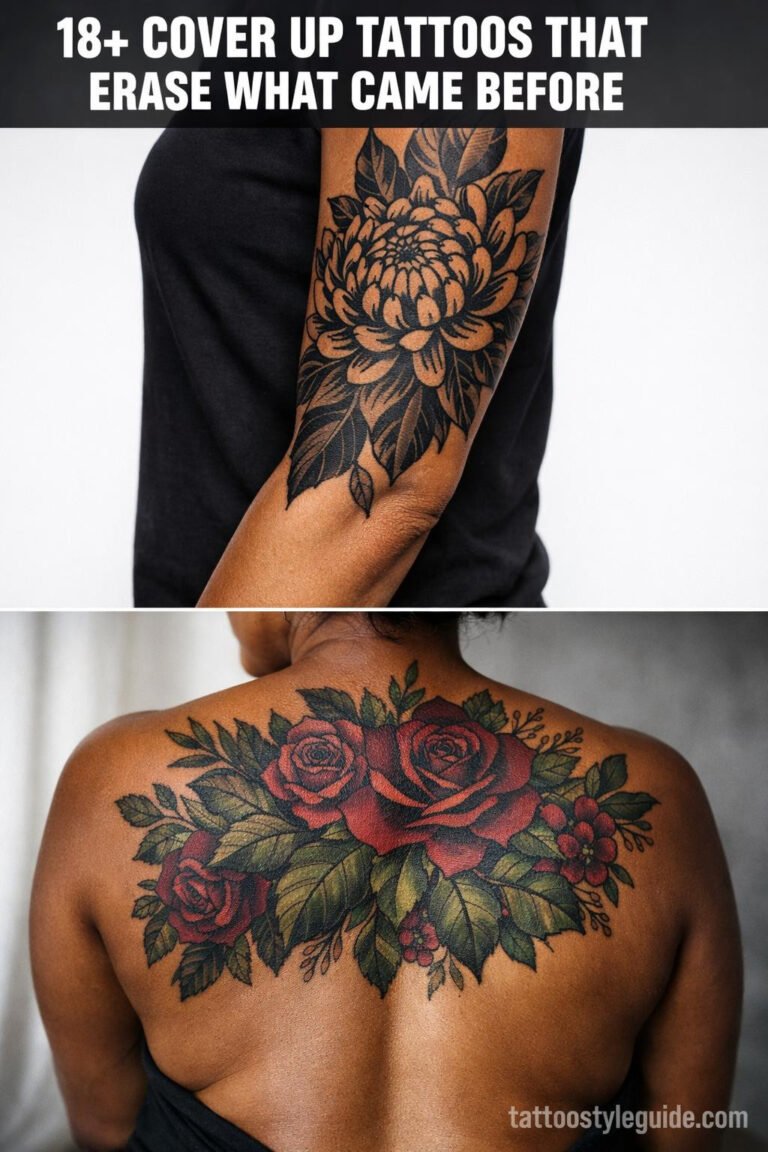
Don’t let anyone talk you into a cover-up when a touch-up will do. A cover-up requires going significantly darker and larger, which limits your design options permanently. If the underlying tattoo just has faded spots or a few blown-out lines, a focused touch-up session preserves the original intent. Cover-ups are the right call when the design itself is the problem, not when the execution just needs a maintenance pass.
Skipping aftercare on the touch-up is the same mistake twice. A lot of clients are looser about aftercare on their second healing because they’ve been through it before. But a touch-up session is still a fresh wound, especially if the artist had to rework a large shaded section or re-saturate dense color. Keep it moisturized, out of the sun, and away from chlorine for the full two weeks. Sun exposure is the fastest way to undo a touch-up you just paid for.