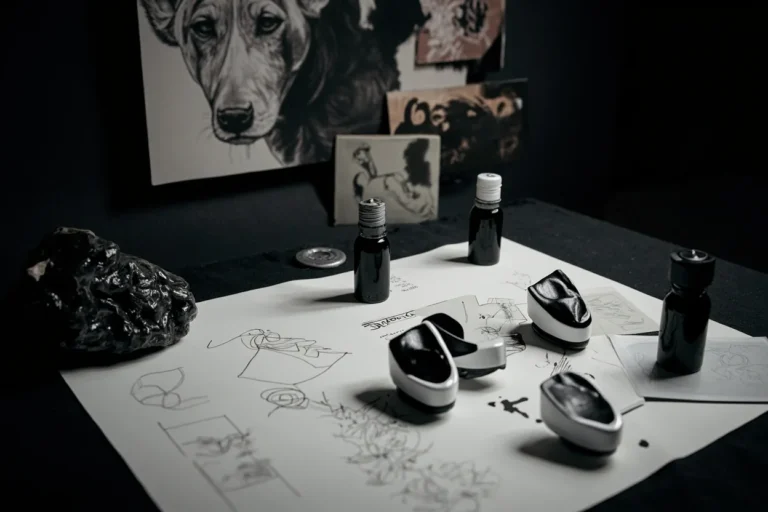
Ignorant style tattoos use deliberately crude drawing, but the choice still needs taste, placement, and long-term confidence.
Quick answer: Ignorant style tattoos are intentionally raw, simple, and imperfect. They work best as small symbols, funny drawings, handwritten marks, or patchwork pieces when the wearer understands the look.
Ignorant Style Tattoos style directions
A tattoo style is more than a look. It decides line weight, shading, color, artist fit, and how the piece will read years after the first photo.
| Direction | Best use | Watch out for |
|---|---|---|
| Crude symbol | Anti-polished mark | Taste risk |
| Funny drawing | Personal humor | May age socially |
| Patchwork filler | Casual collection | Can feel random |
| Handwritten phrase | Raw personality | Readability |
| Tiny character | Playful mark | Line quality |
How to make it work on real skin
Looking effortless takes more skill than looking finished.
The danger is obvious: what feels funny now can feel lazy later. The style is permanent even if the attitude is casual.
Good ignorant tattoos still have placement logic. Bad ones just look badly placed.
Ignorant Style Tattoos: Crude Lines, Real Taste Risk: artist fit and aging
This style depends on execution. Line weight, contrast, spacing, and the artist’s healed portfolio matter more than the label used on social media.
Ask what should be simplified for your skin, placement, and size. A good tattooer will protect the design from becoming too fragile.
- Make sure you like the bad-drawing look on purpose.
- Keep the symbol personal.
- Avoid offensive jokes.
- Think about future patchwork.
Mistakes to avoid
Do not use the style as an excuse for poor hygiene or poor technique.
Do not get a joke tattoo you would hate explaining sober.
What makes this style work after the fresh photo
A good ignorant style tattoos tattoo is not just a surface look. It depends on line weight, contrast, spacing, artist fit, and how the design will settle after the skin stops looking glossy.
Use the style directions as a way to compare references: Crude symbol, Funny drawing, Patchwork filler, Handwritten phrase, and Tiny character. If those examples look unrelated, the style may need a tighter brief before the artist can design something coherent.
| Reference to compare | What to inspect | Decision rule |
|---|---|---|
| Crude symbol | Anti-polished mark | Taste risk |
| Funny drawing | Personal humor | May age socially |
| Patchwork filler | Casual collection | Can feel random |
| Handwritten phrase | Raw personality | Readability |
| Tiny character | Playful mark | Line quality |
Artist fit matters more than the trend name
Some tattooers are strong at bold traditional work and weak at tiny realism. Some can draw ornamental symmetry but not faces. Some can pack black smoothly but struggle with delicate color. Match the artist to the style, not just the studio location.
Healed portfolio examples matter here. Fresh photos show the first hour. Healed photos show whether lines hold, shading settles smoothly, and the tattoo still reads without perfect lighting.
How to brief the design without over-controlling it
Bring references for mood, placement, and detail level. Then give the artist room to redraw the idea for skin. A tattoo design has to survive curves, pores, movement, sun, and time; a flat reference image does not.
Visual reference note: Save references that show healed work, not only viral fresh tattoos. If a style looks good only under studio lighting, ask what it looks like six months later.
Reader questions before you book
Is this style good for a first tattoo?
It can be, if the design is readable, the placement is realistic, and the artist has healed examples in the same style.
How do I know if an artist can do this style?
Look for healed work, not just fresh photos. Check line consistency, shading, symmetry, and whether similar designs still read clearly.
Should I make the design smaller to save money?
Not if size is what keeps the tattoo readable. Shrinking a detailed style often creates a weaker tattoo and a future touch-up problem.
What should I bring to the consultation?
Bring style references, placement photos, a rough size range, and notes on what you do not want. That is enough for a good artist to design from.