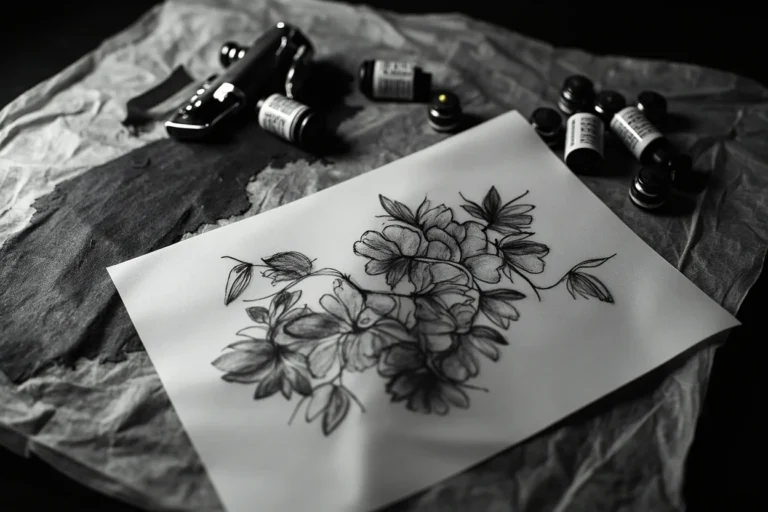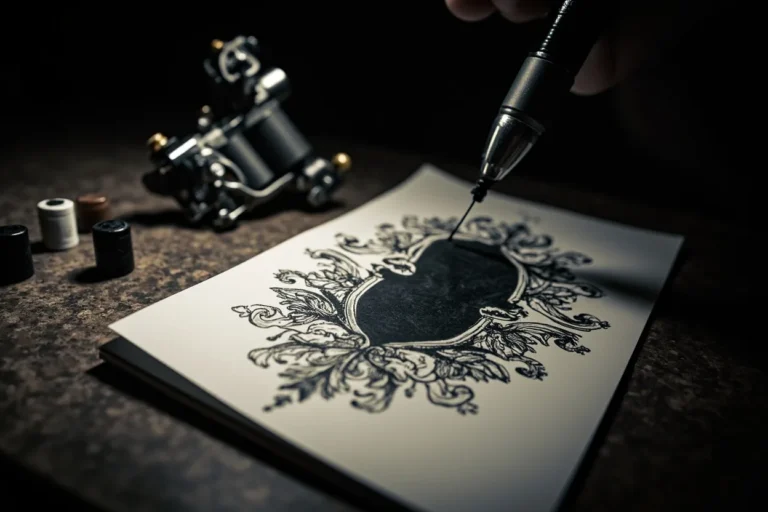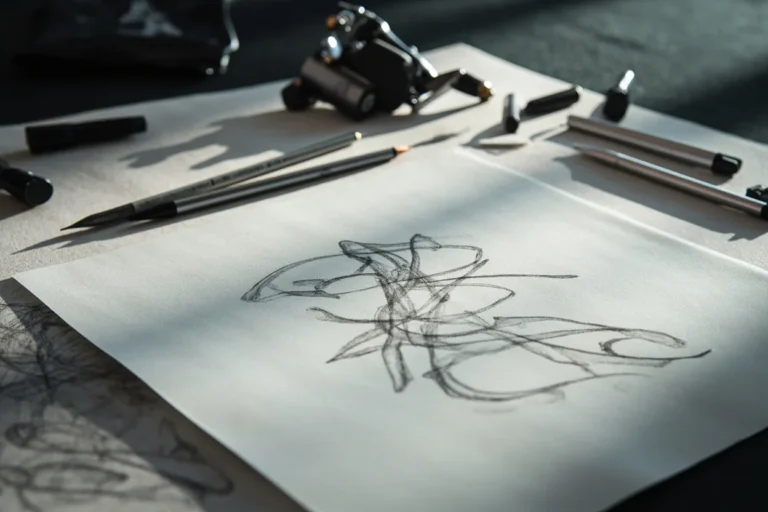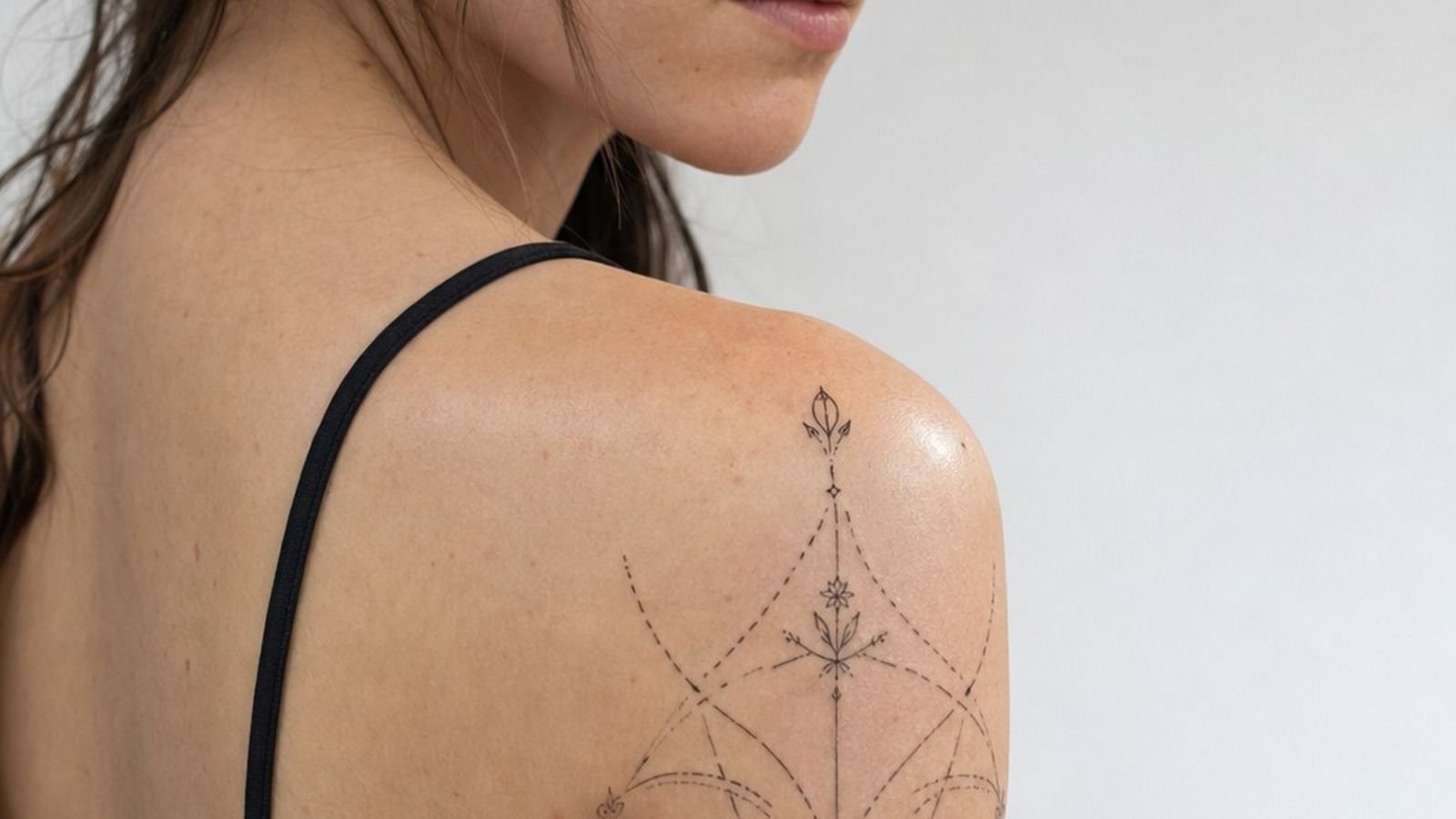
Knee tattoos women save on Pinterest look gorgeous in the mockup, then turn to soup by year two because nobody planned for the bend. Short answer: they hold up fine when you design for the joint, not around it. I’ve tattooed a lot of knees, and the fixable mistakes always happen before the needle touches skin. Here’s the full process, step by step.
- Start with a placement map for inner knee tattoos
- Pick a kneecap design that moves with your joint
- Place fine-line florals along the inner knee curve
- Plan around-the-knee bands that flex without warping
- Map under-knee script to your natural sitting lines
- Choose a style that ages well on knee skin
- Budget for the sessions a kneecap piece needs
- Schedule your appointment around knee swelling windows
- Keep the design bold enough for knee stretching
- Protect fresh ink from knee friction and bending
- Heal a knee tattoo without cracking the scabs
- Research artists who specialize in knee tattoo flow
- Match pain expectations to inner versus outer knee
- Anchor watercolor washes with strong knee linework
- Stack small motifs across the knee for a curated cluster
- Test the placement with a temporary knee stencil first
- Dress for easy access during your knee tattoo session
- Avoid over-detailing areas that fold under the knee
- Commit to touchups after a kneecap settles
1Start with a placement map for inner knee tattoos
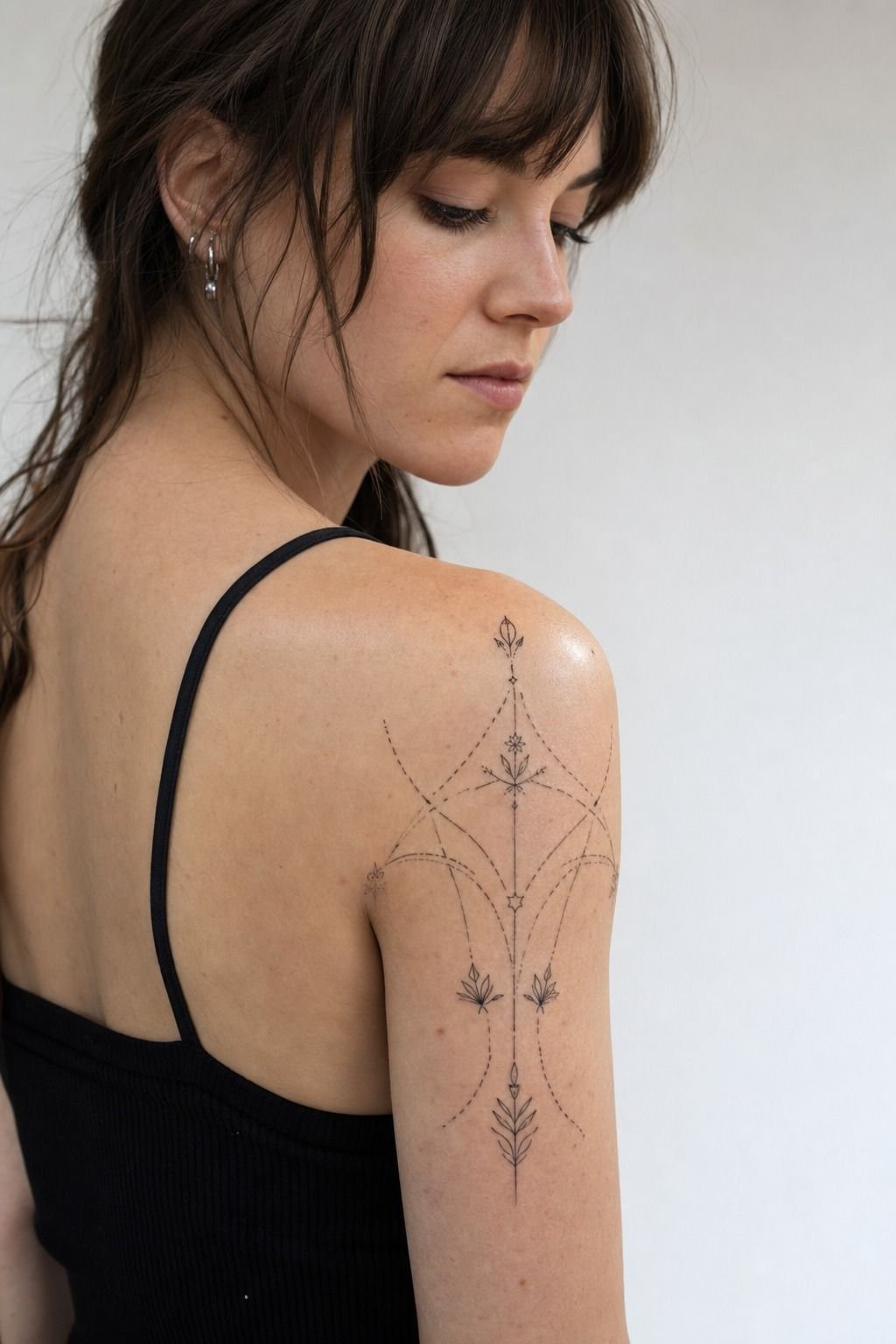
Before you fall in love with any design, map the skin it has to live on. Your inner knee is a high-wear zone: it creases every time you sit, squat, or climb stairs, and ink sitting in a crease fades way faster than ink on flat, calm skin.
Stand in front of a mirror. Then sit.
Then bend deep. Watch where your skin folds and where it stays smooth.
I call this The Bend Test, and I run it with a skin-safe marker on every knee client before we even talk design. Look at the healed fine line piece above: clean lines on quiet skin stay crispy.
Lines crossing a fold need breathing room or they’ll blur.
My hard rule for any inner knee tattoo: nothing symmetrical across the ditch. It’ll never line up the same way twice.
2Pick a kneecap design that moves with your joint
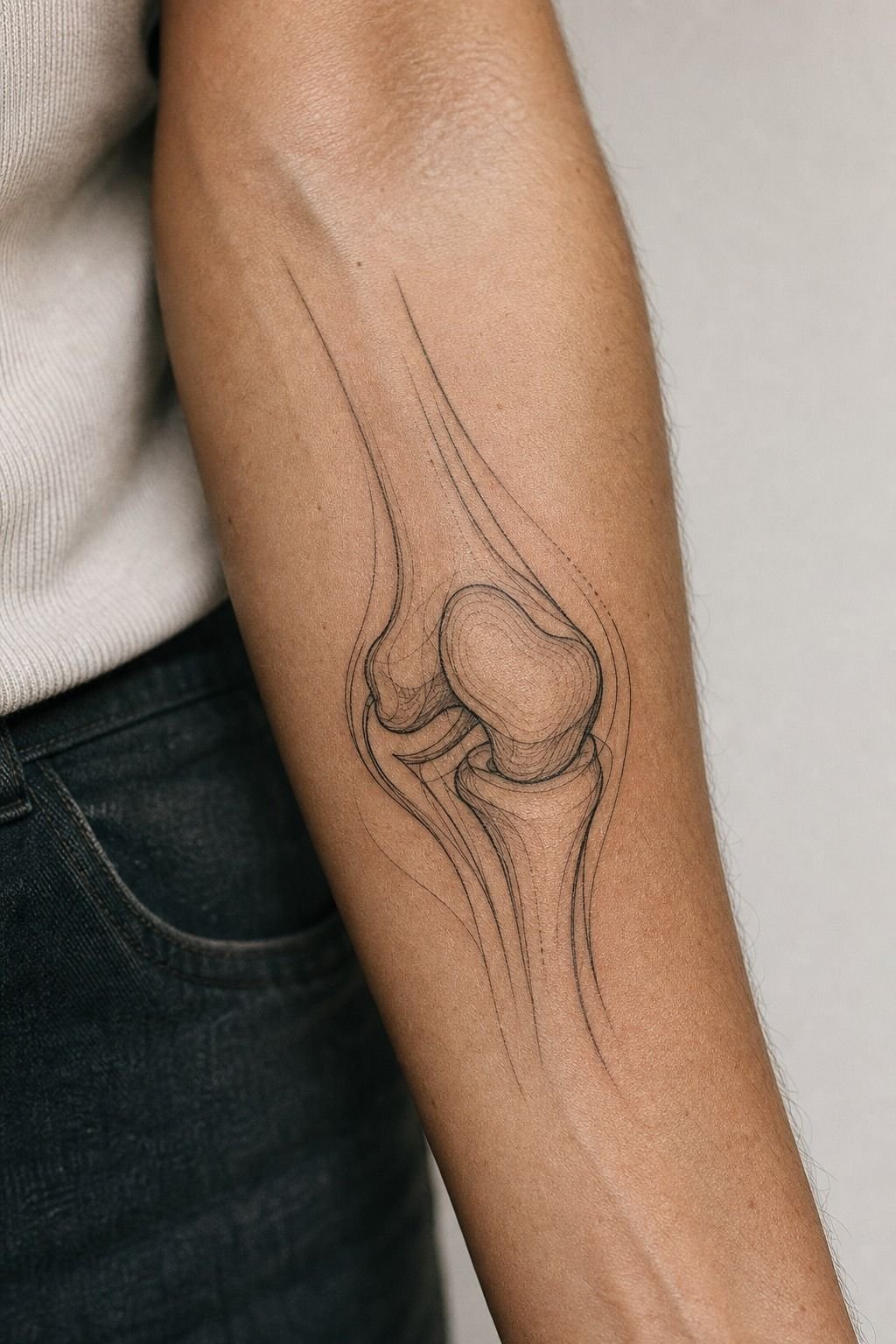
The kneecap is a round, sliding bone under thin skin, so fight it and you’ll lose. Designs that radiate from a center point move with the joint: a mandala, a sun, a chrysanthemum, a compass rose. They read right bent or straight because there’s no straight line to warp.
Anything with a horizon, a portrait, or a tight geometric grid? Bad idea on the cap.
But bend your leg and a perfect square becomes a trapezoid. The macro shot above shows what I mean about ink texture: every line sits in skin that stretches daily.
If you want your knee cap tattoo to flow upward, let one element trail onto the lower thigh. I plan that transition the same way I plan thigh tattoos for women, following the muscle instead of fighting it.
3Place fine-line florals along the inner knee curve
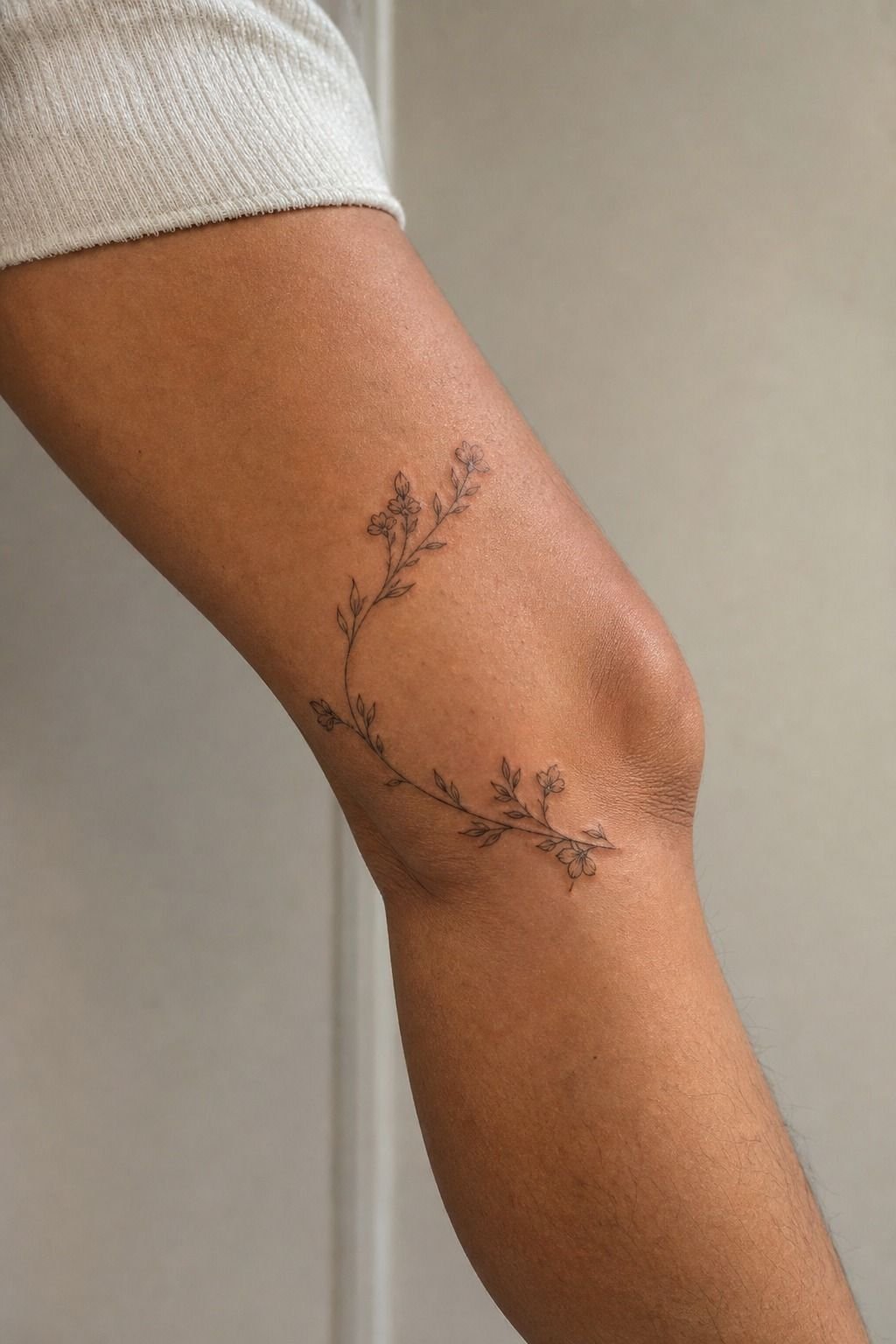
Florals are the most requested knee tattoo ideas in my books, and the inner curve is where they shine. A stem that follows your natural crease line reads intentional, like the healed botanical piece above.
See how the lines settled soft but still readable? That’s good saturation on a single needle.
Size up, though. A two-inch sprig with tiny petals will mush out on knee skin within a few years.
I draw knee florals at three to four inches minimum so the details survive the stretch. If you want daintier, bump it toward the calf where the skin stays calm.
Building a bigger botanical leg piece later? Same logic I use for fine line florals on the forearm: the stems follow the limb, never across it.
4Plan around-the-knee bands that flex without warping
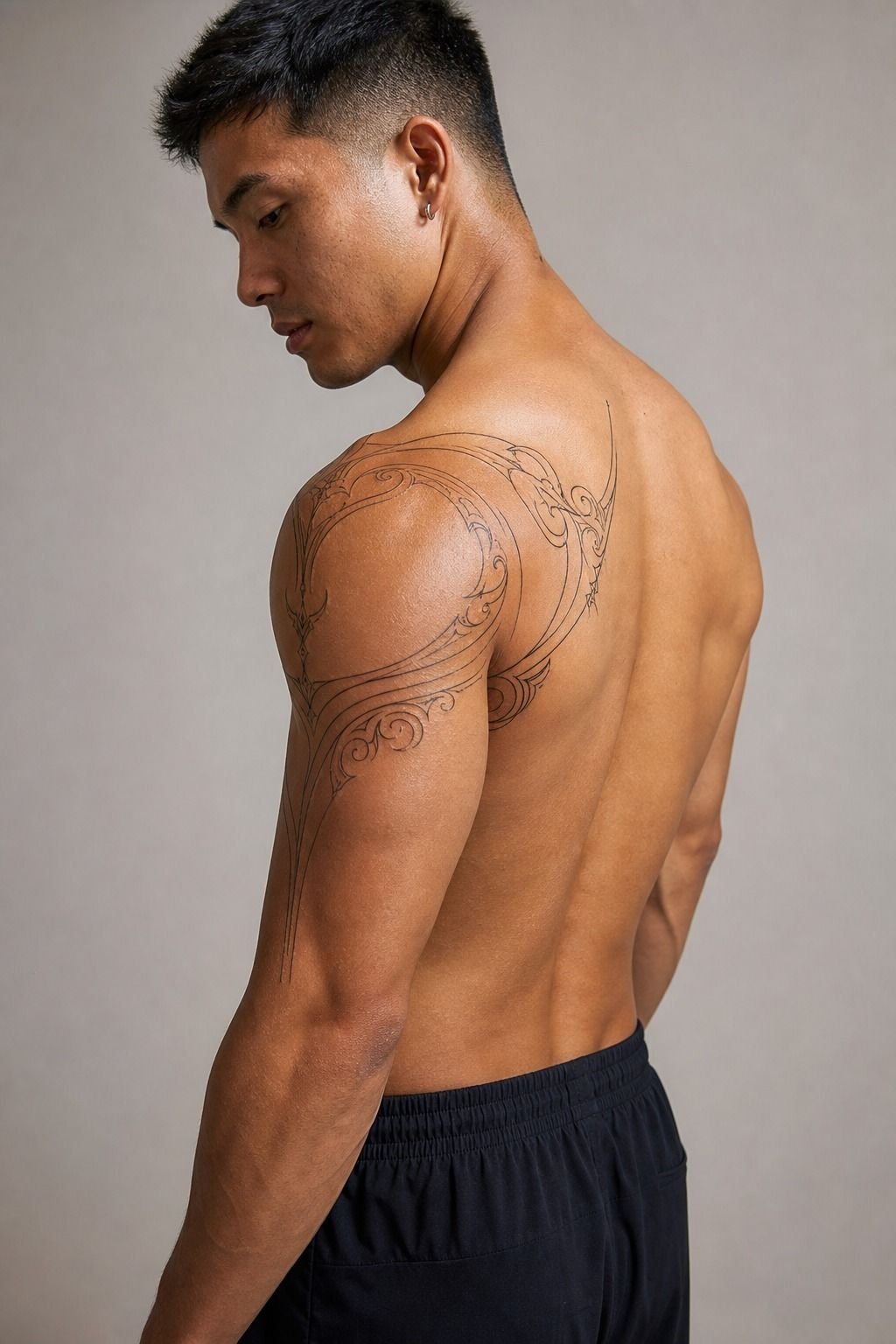
An around the knee tattoo sounds simple. It isn’t. Any band crossing the ditch will warp, because that skin folds flat every single time you sit.
The placement guide above shows how a wrap design has to respect the joint, and the same principle applies here.
Two options work. First, break the band: run your ornamental linework across the front and sides, then leave the ditch open or fill it with dots and small sprigs. Second, taper the band so it’s widest over the cap and narrowest behind the knee where skin compresses.
And measure twice with the leg bent. A band drawn on a straight leg rides up half an inch when you squat. I’ve fixed enough warped bands to know.
5Map under-knee script to your natural sitting lines

Under knee tattoo script has one enemy: the horizontal crease that shows up when you sit.
6Choose a style that ages well on knee skin
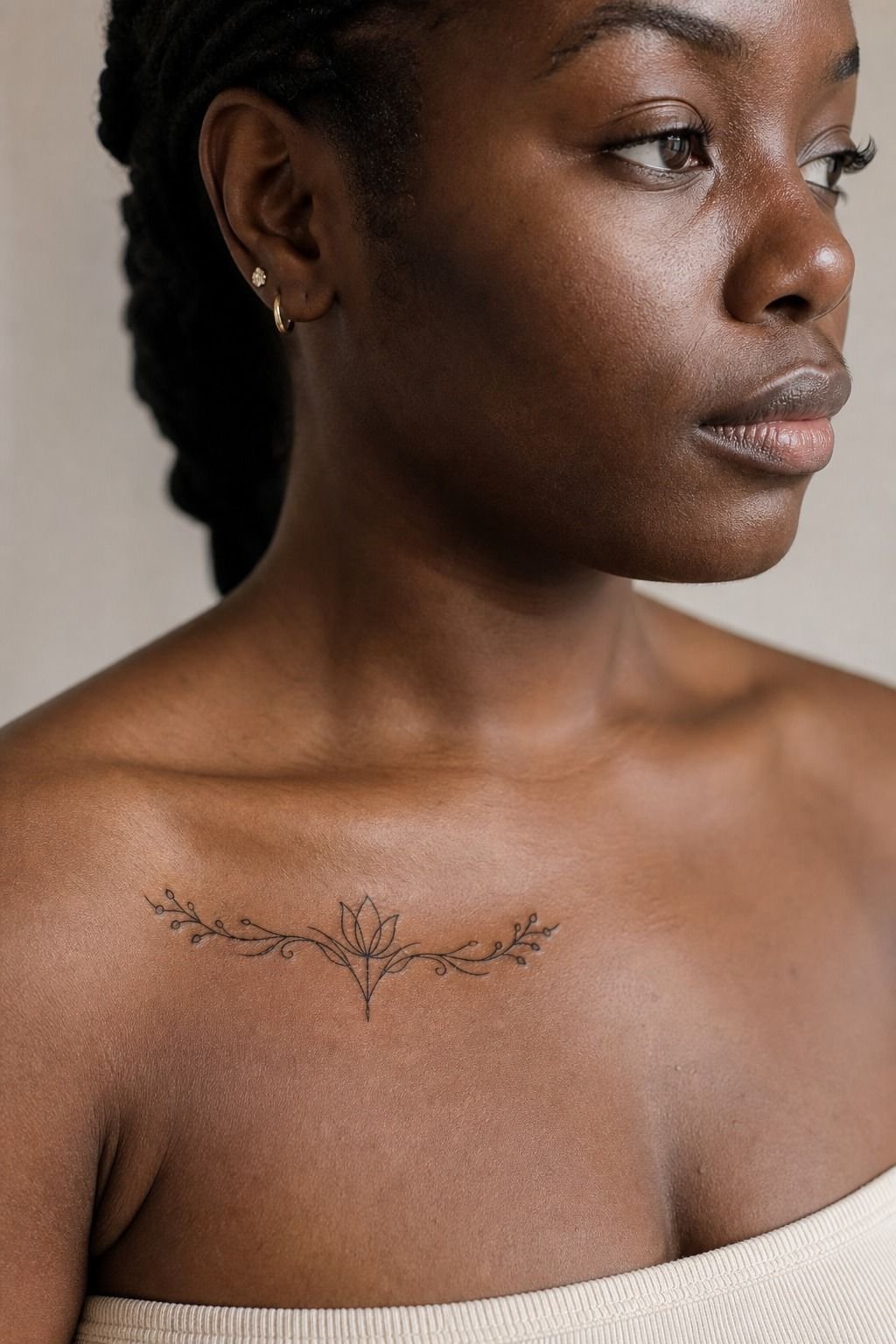
Real talk: the knee is where delicate trends go to die. Micro-realism, whisper-thin fine line, tiny dotwork gradients, all of it fights a losing battle on skin that stretches thousands of times a day. Bold will hold.
That’s the whole game on a joint.
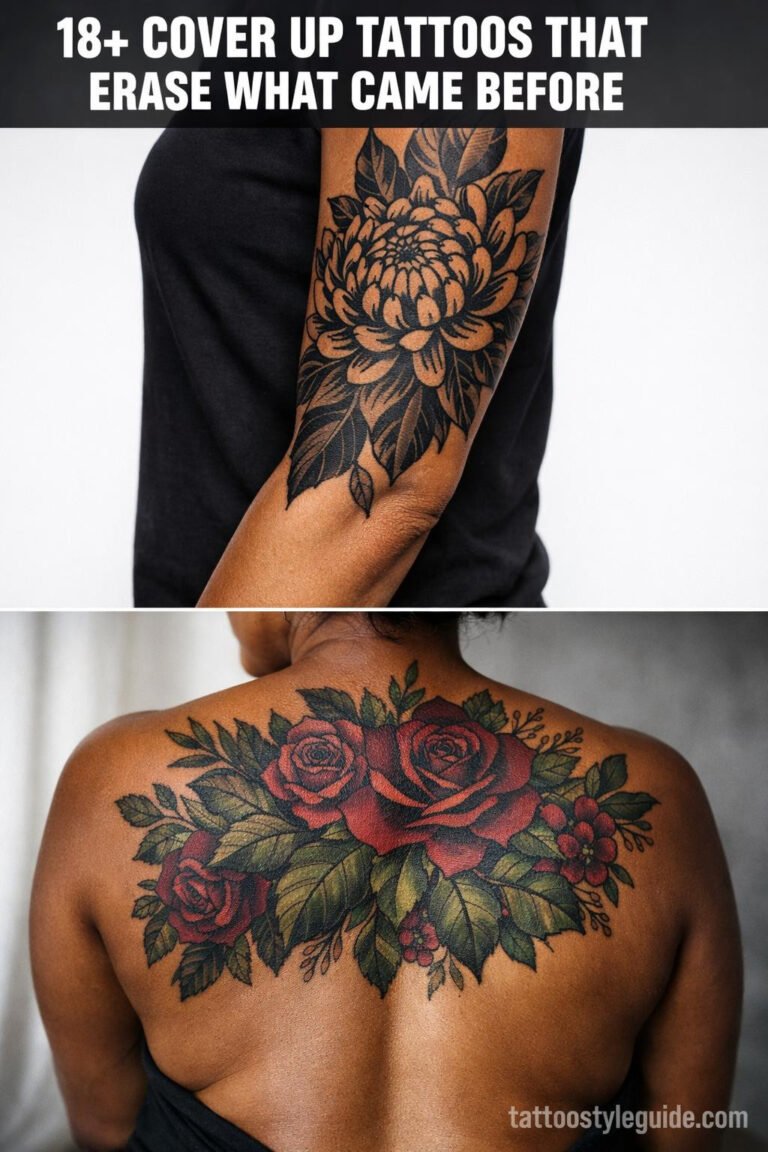
American traditional is the safest bet: thick outlines, solid color packing, simple shapes that read from across the room. Blackwork and heavier neo-trad age beautifully there too. Look at the piece above on deep skin: confident lines and solid saturation are what stay readable over time, on every skin tone.
You can still do fine line on a knee. Just anchor it with a stronger outline than you would elsewhere, and accept it’ll soften. My shoulder tattoos for women guide covers where the delicate stuff belongs instead.
7Budget for the sessions a kneecap piece needs
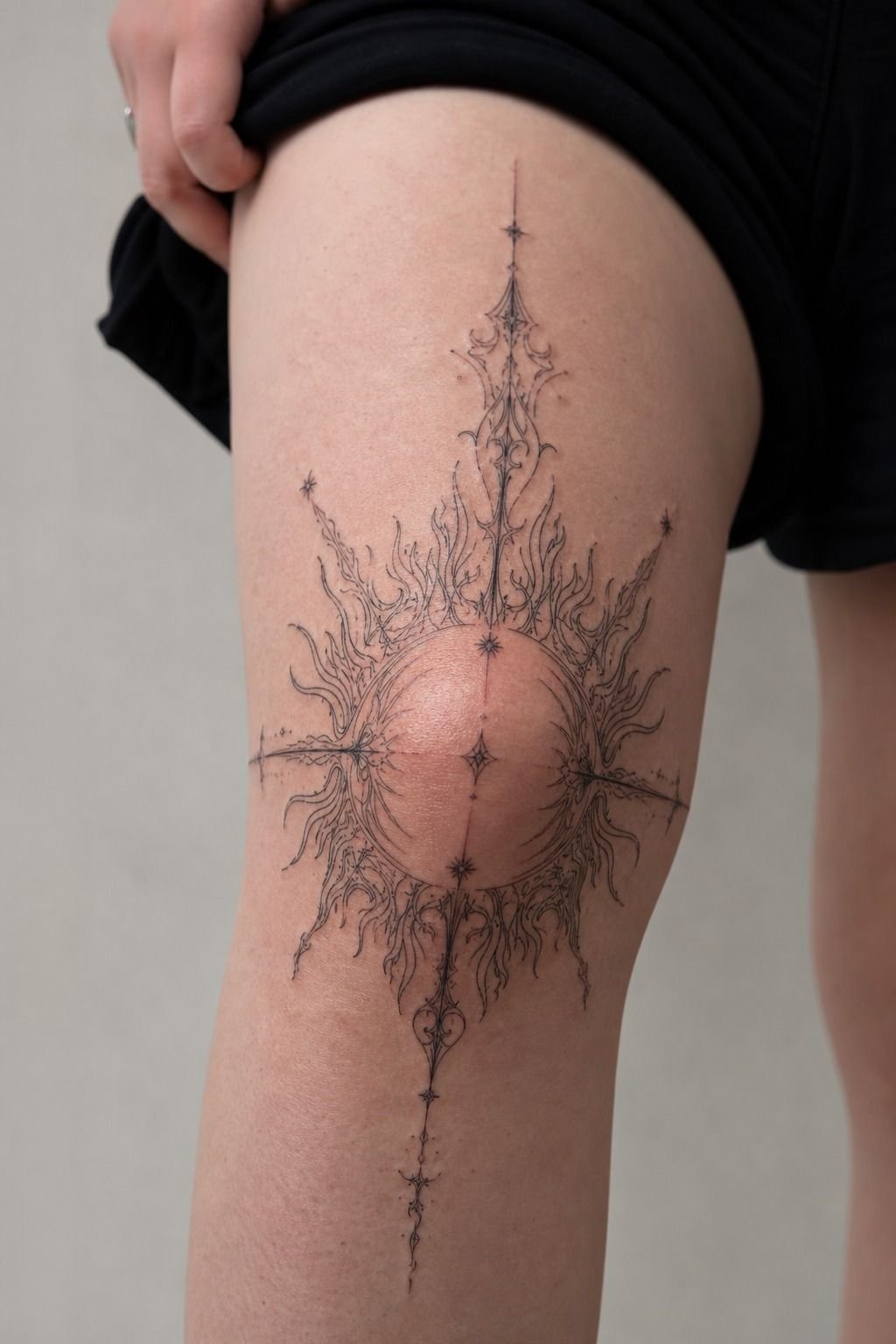
Money talk, because knees surprise people. Most US shops run a shop minimum around $80 to $150, and hourly rates typically land between $100 and $250 depending on the artist and region. A kneecap piece with any detail usually takes two to four hours, sometimes split across sessions because swelling cuts appointments short.
Typical ranges I see:
Budget a touch-up too, around month three. Many artists include the first one free or cheap, so ask before you book.
8Schedule your appointment around knee swelling windows
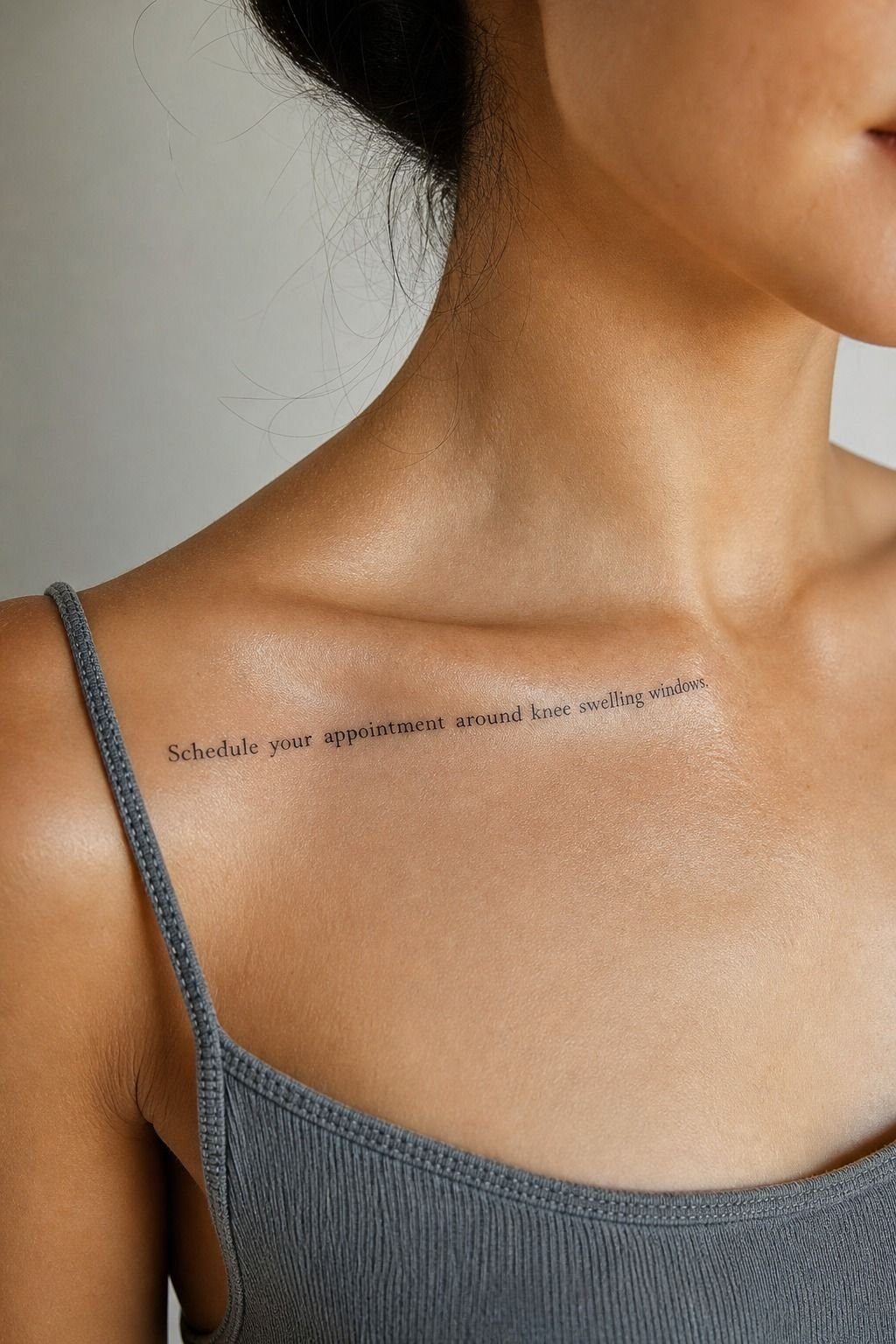
Knees swell. A lot.
It’s a joint full of fluid, and once it puffs up mid-session the skin gets spongy and won’t take ink evenly. I call the first two days after your appointment the 48-hour swell window, and you should plan your week around it.
Book a day when you can go home and put your leg up after. Not before a long flight, a wedding, leg day, or a shift on your feet.
The healed collarbone piece above is what calm, unstressed healing looks like. Knee skin needs the same peace, it just gets less of it.
Morning sessions swell less in my experience. Skip the salty takeout the night before, too. Puffy skin in, blurry lines out.
9Keep the design bold enough for knee stretching
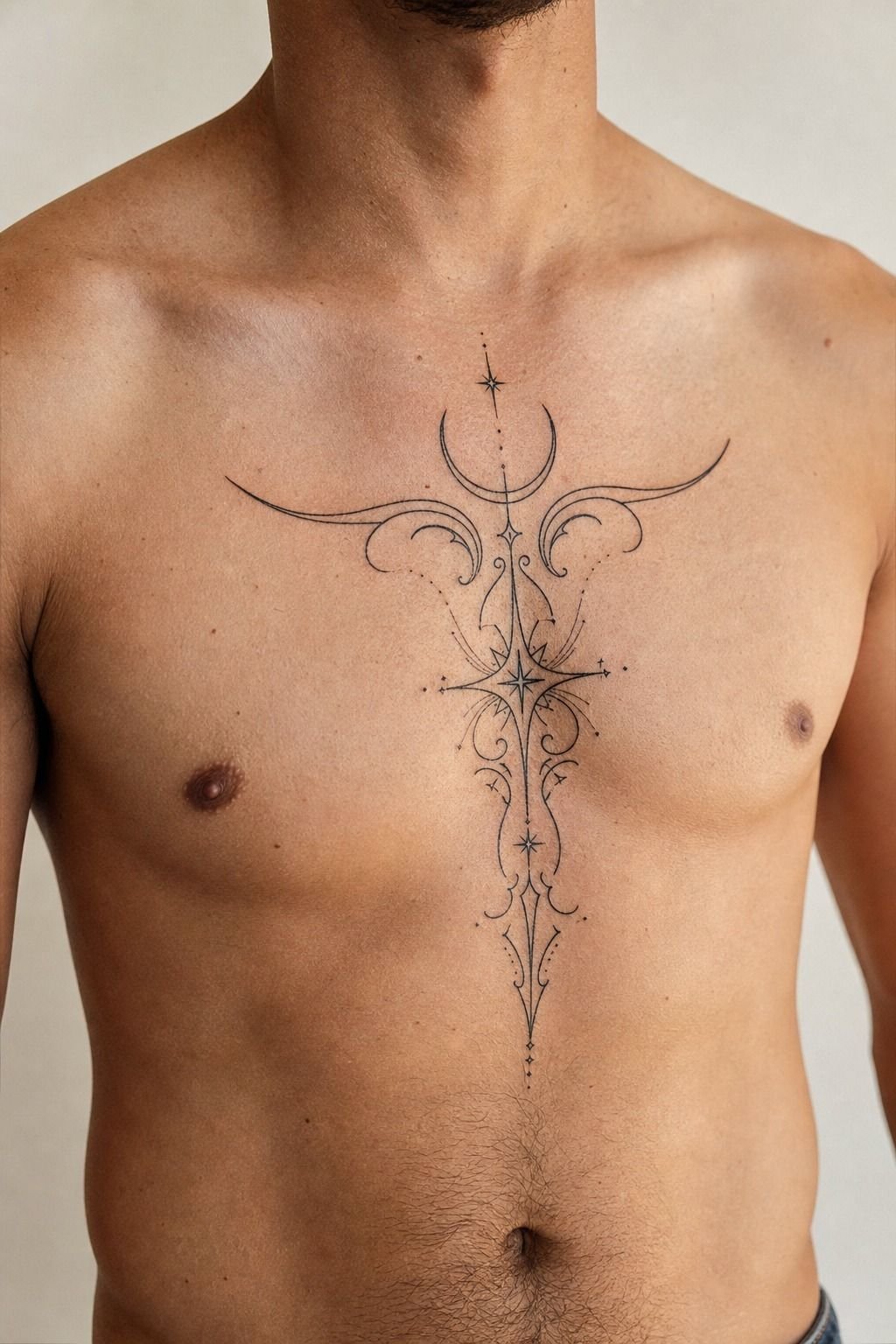
Knee skin moves more than almost any canvas on your body, so line weight is everything.
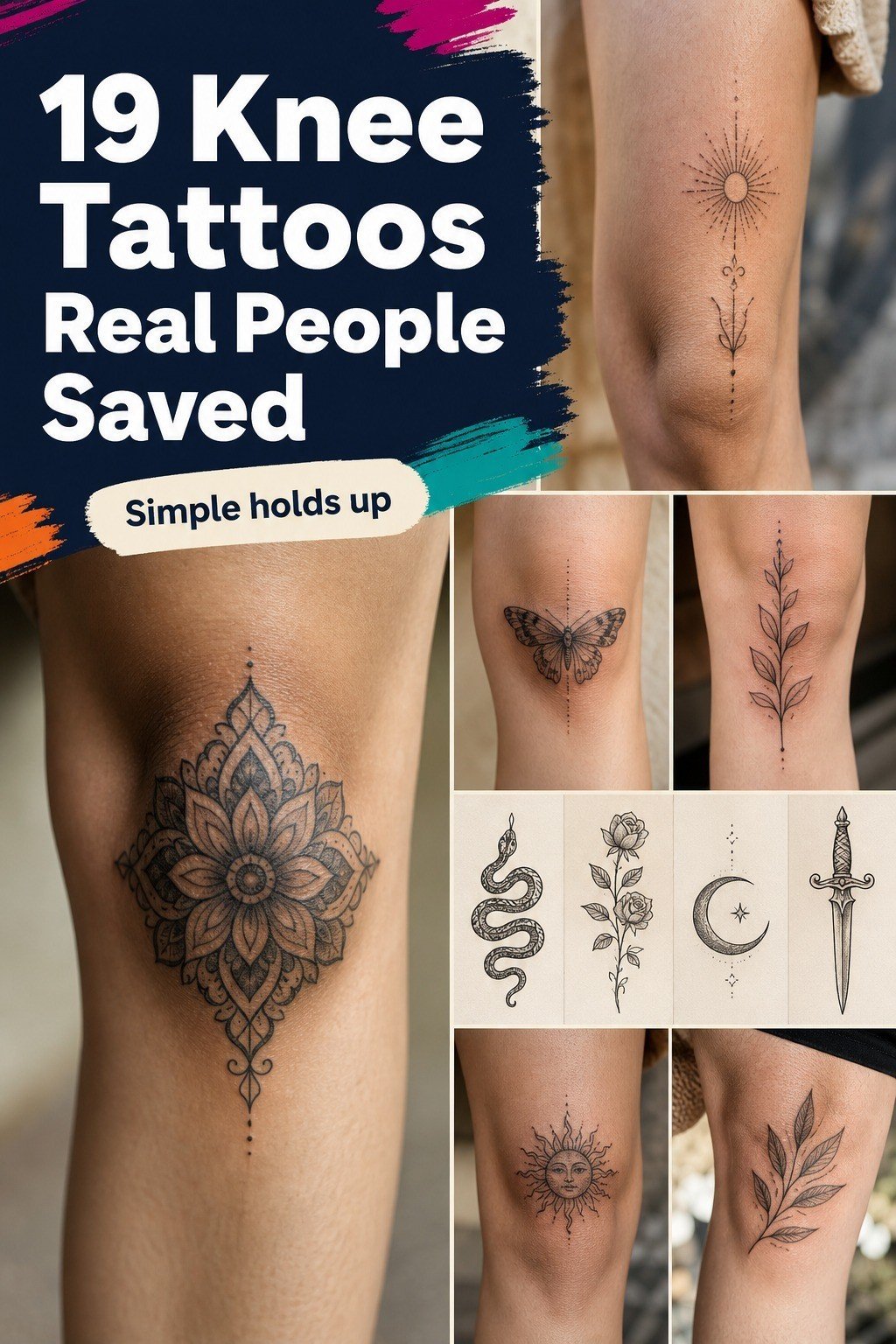
10Protect fresh ink from knee friction and bending
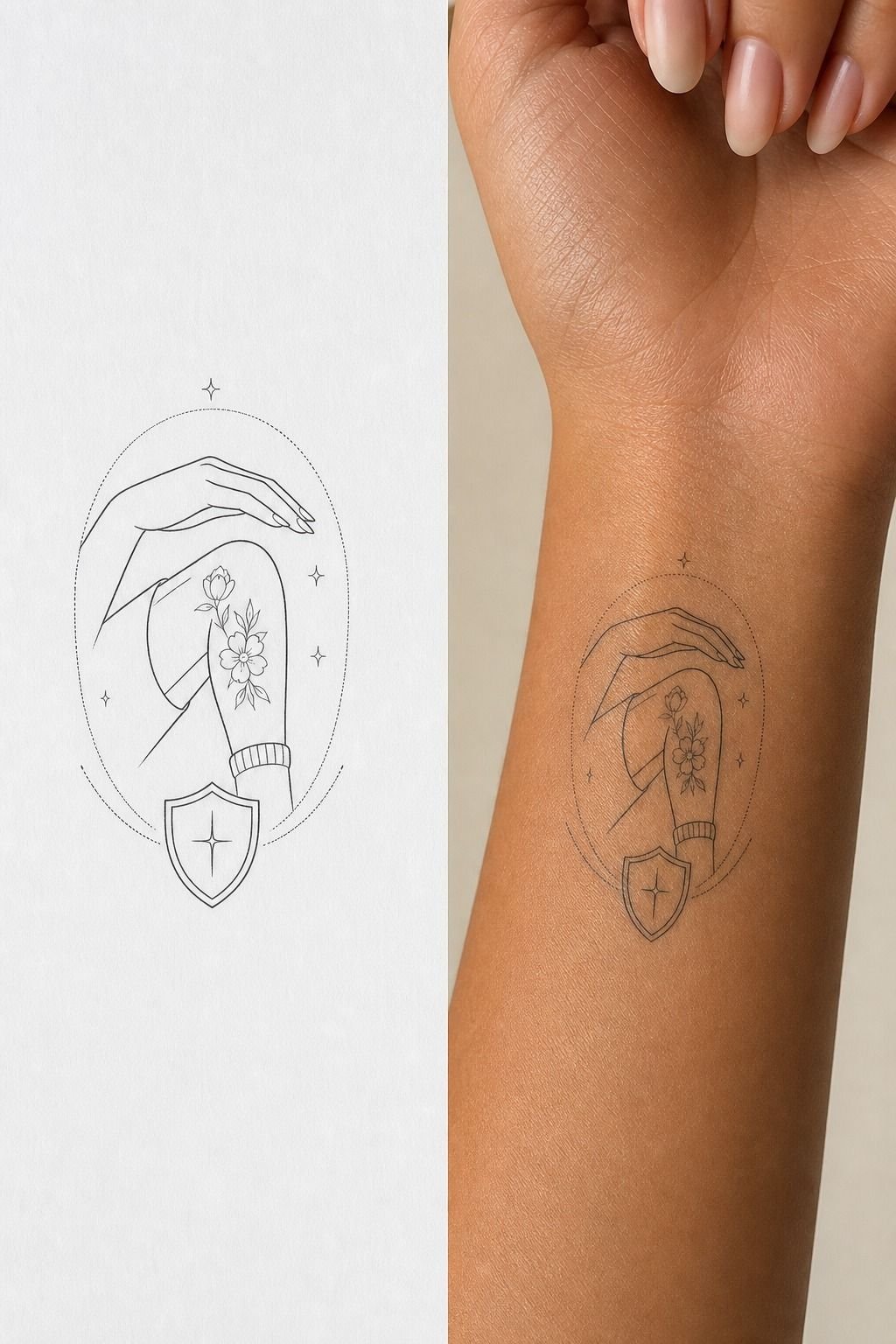
First few days, your knee tattoo is an open wound that bends. Treat it like that. The split image above is the goal: stencil on the left, healed on the right, and everything in between is aftercare.
If your artist offers it, take the second-skin film (Saniderm or similar). It shields fresh ink from fabric friction and lets the knee flex without drying out. Leave it on the full three to five days unless it peels early.
No film? Then loose clothing only.
Leggings rubbing a fresh knee piece will chew it up, and I’ve seen friction pull color out in patches.
Bend gently and often enough that the skin doesn’t stiffen, but skip deep squats for a week. Your gym will survive without you.
11Heal a knee tattoo without cracking the scabs
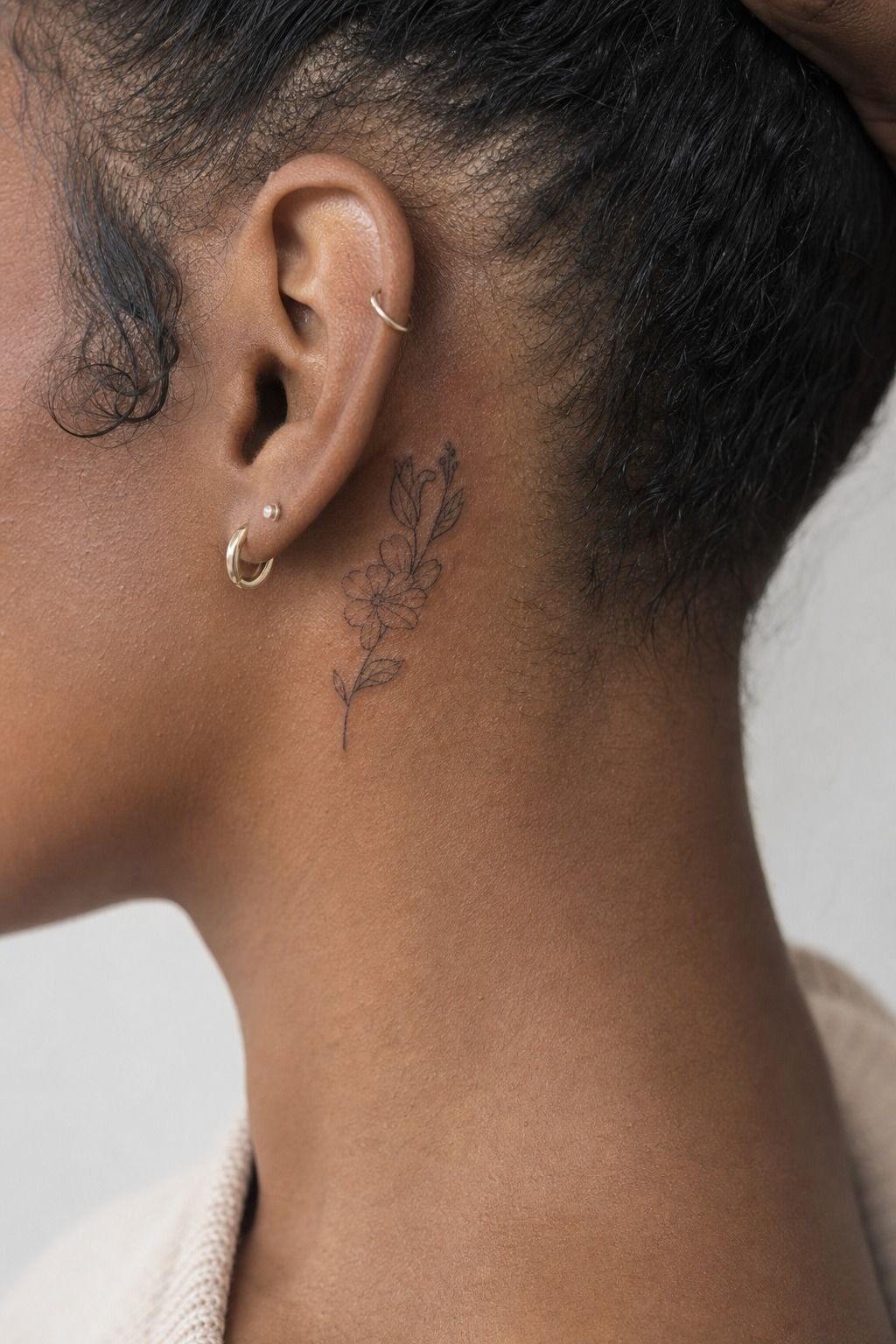
A knee scab that cracks takes ink with it.
12Research artists who specialize in knee tattoo flow
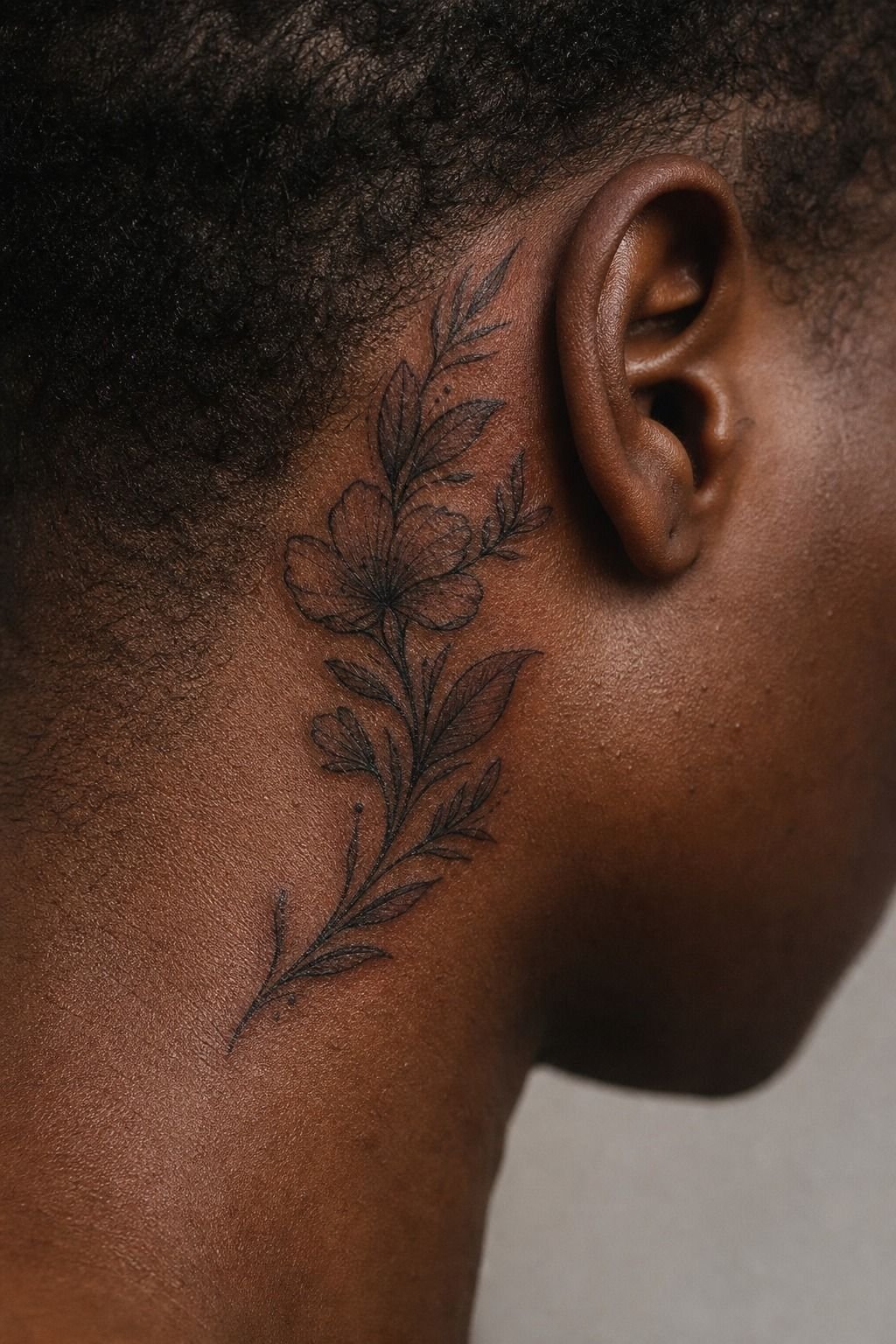
Not every good artist is a good knee artist. Joints are their own skill: you’re designing for skin that folds, stretches, and swells. Scroll portfolios for healed photos, not just fresh ones.
Fresh knee tattoos all look great. Healed ones tell the truth.
Zoom the macro shots like the one above. You want crispy single-pass lines, even saturation, no patchy grey.
Then ask directly: how do you adjust designs for the ditch? An artist who’s done knees will talk about breaking bands and sizing up details without blinking.
One who hasn’t will say it’ll be fine. It won’t be fine!
If their portfolio only shows flat placements, use the questions from my shoulder tattoo guide and push harder on healed results.
13Match pain expectations to inner versus outer knee
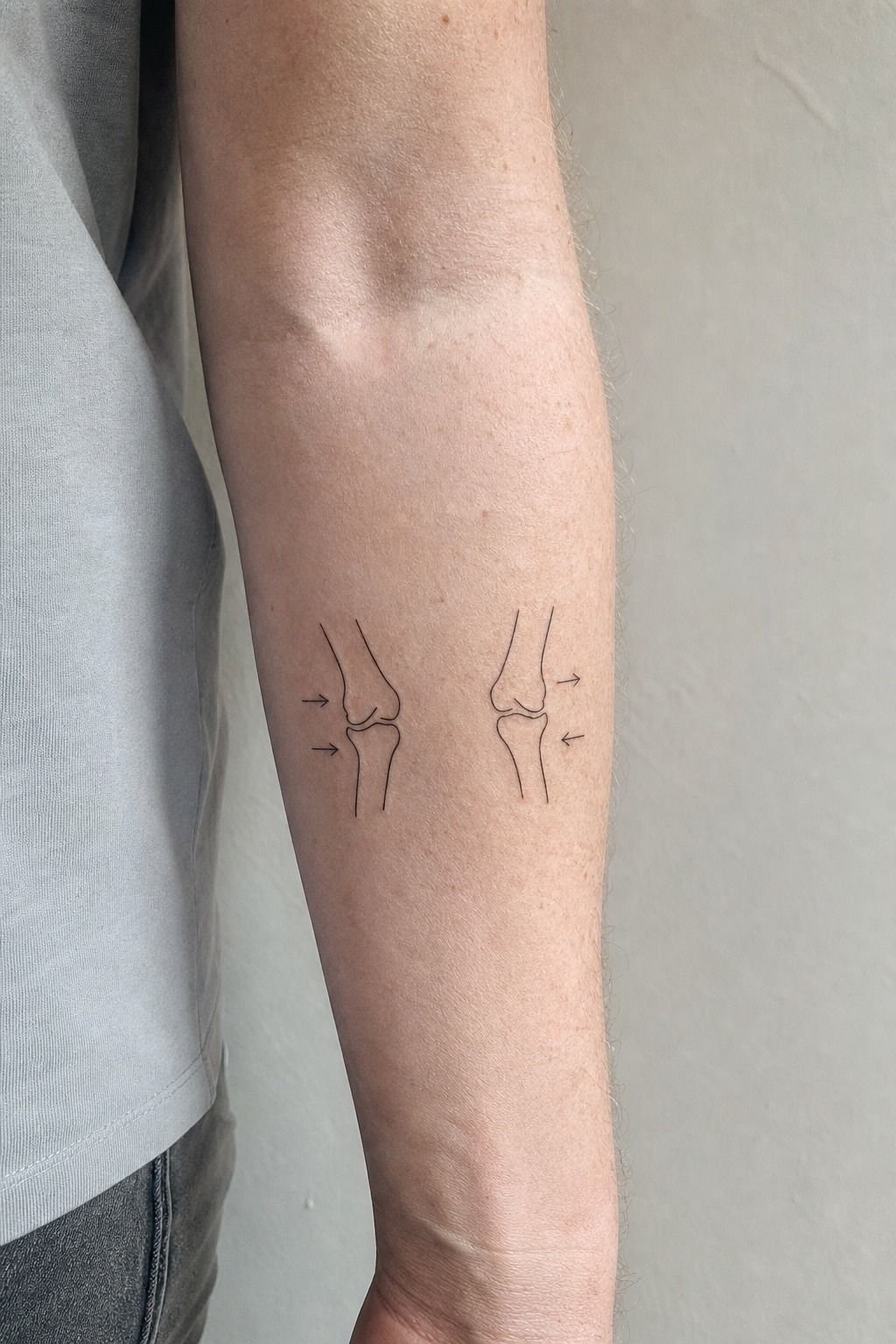
Honest pain map, because nobody believes me until they’re in the chair. The kneecap itself is spicy, seven to eight out of ten: thin skin straight over bone, lots of vibration.
The inner ditch is worse. That’s an eight or nine, soft nerve-dense skin, and it’s where people tap out.
The outer knee and the sweep toward the thigh? Chiller, maybe a five. The healed forearm piece above sits in that same tolerable family.
Lines feel sharp and hot, shading is a dull burn, and color packing is the spiciest part on any knee.
Eat before you come. Breathe through the ditch work.
And tap out for five minutes rather than pass out on me, nobody’s impressed. Stomach is the other spot with this reputation, and my stomach tattoos for women rundown matches.
14Anchor watercolor washes with strong knee linework
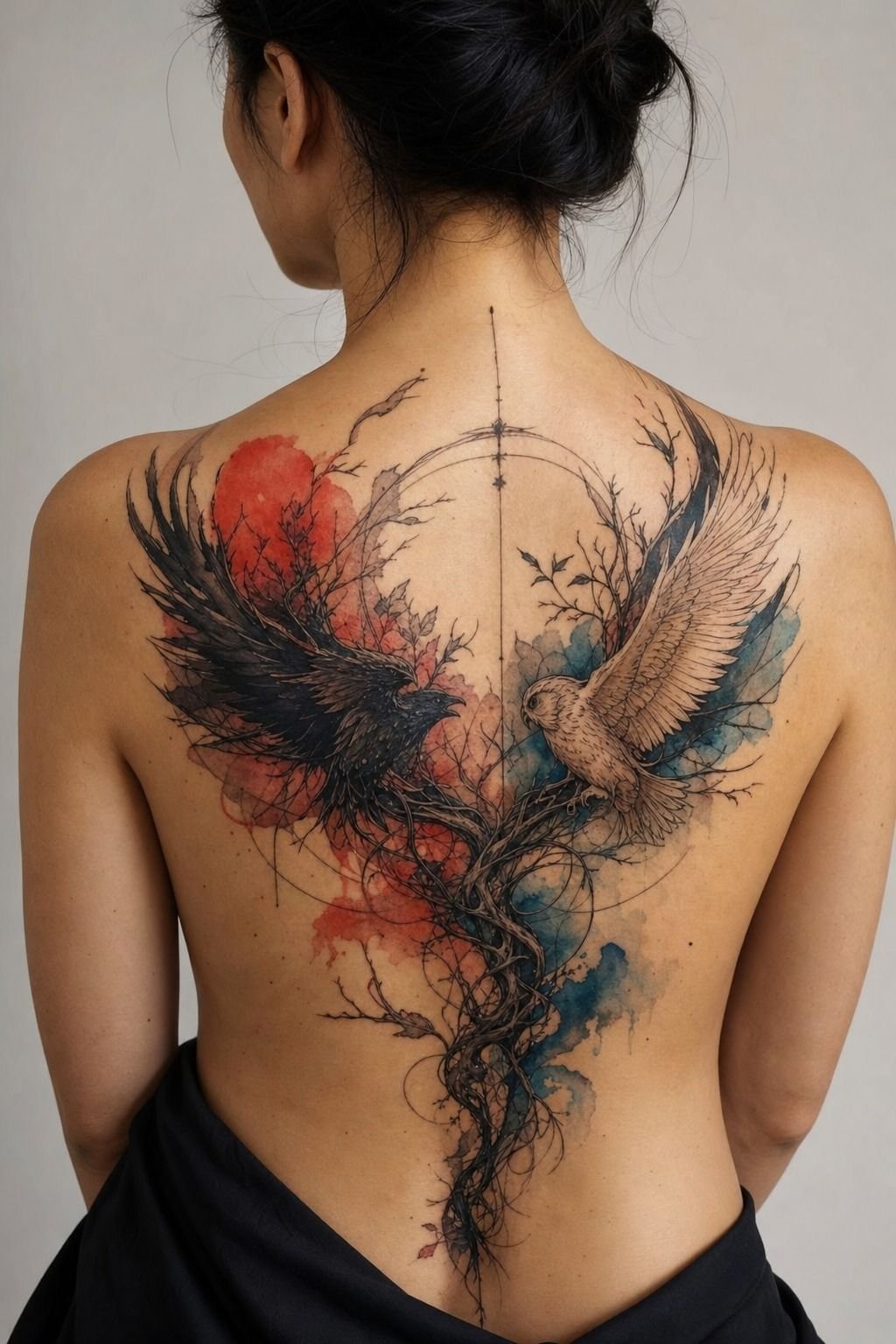
Watercolor on a knee can work, but only one way: anchored with line. Bare color washes with no structure will blur into a bruise-looking cloud within a couple years on a joint. The upper back piece above shows the right build, soft washes held inside black linework that does the heavy lifting.
The lines carry the design as the color softens. That’s the trade: in ten years the wash will mute, and the skeleton still has to read. On a knee, I’d push the anchor lines one weight heavier than the artist’s default.
Saturation matters too. One solid pass with a curved mag, not fifty scratches, because overworked knee skin heals rough. Want the same anchored look on calmer skin?
That’s the approach I sketch for thigh tattoos for women all the time.
15Stack small motifs across the knee for a curated cluster

Don’t want one big piece? Build a cluster. Small motifs scattered across the cap and sides read like a patchwork collection instead of a single statement.
The flash sheet above is exactly the energy: several little designs you’d pick and stick over time.
Ground rules so it doesn’t turn chaotic. Keep every motif above an inch, because tiny super-detailed fillers turn to soup on a joint.
Repeat one element (a star, a dot cluster, a leaf shape) across two or three pieces so your eye connects them. And leave negative space between motifs.
Knees need air.
Clusters grow well into a leg sleeve tattoo later if you keep spacing loose. Same planning I use for patchwork stomach pieces: every tattoo should stand alone and still play nice with the next one.
16Test the placement with a temporary knee stencil first
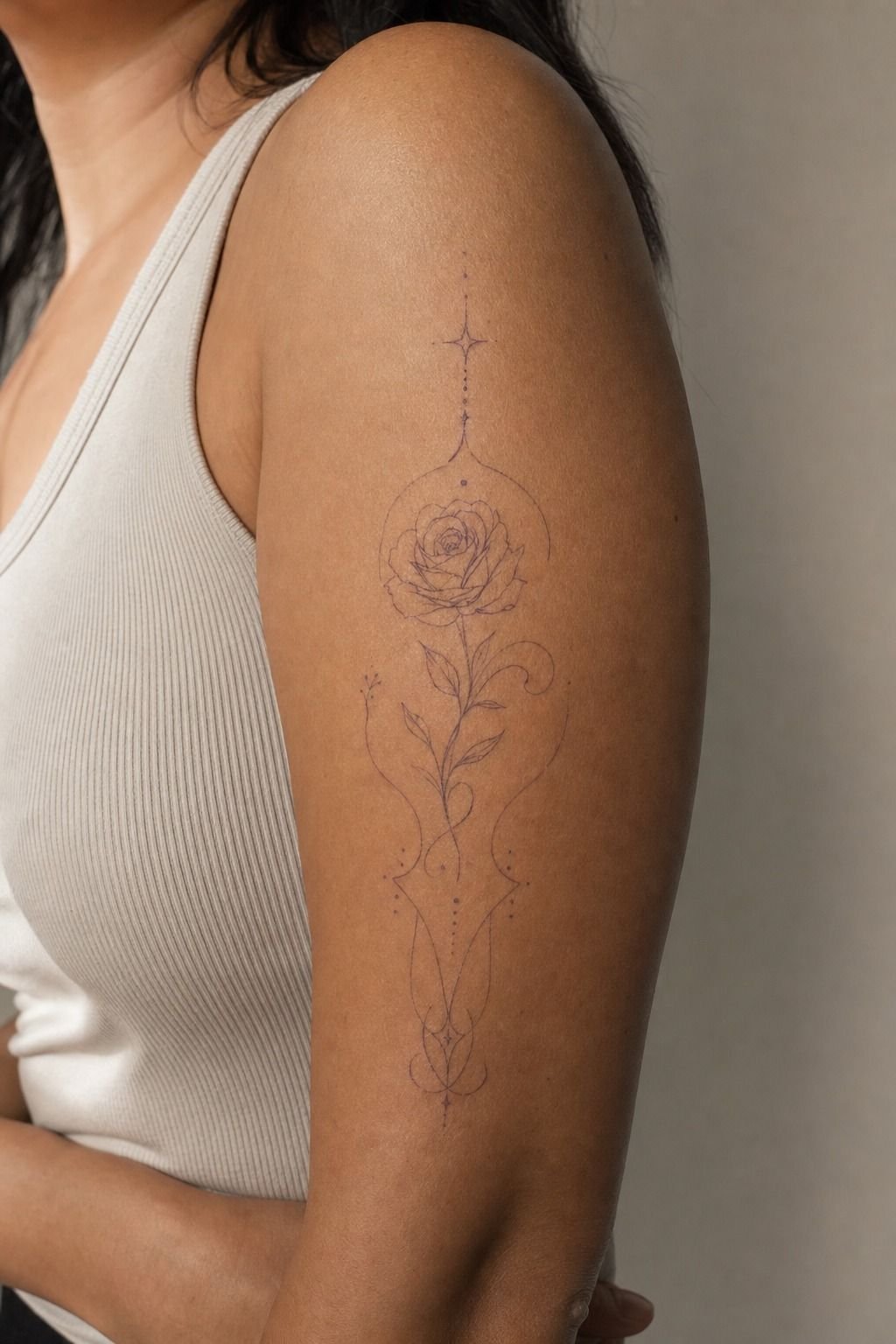
Before you commit, wear the idea for a day.
17Dress for easy access during your knee tattoo session
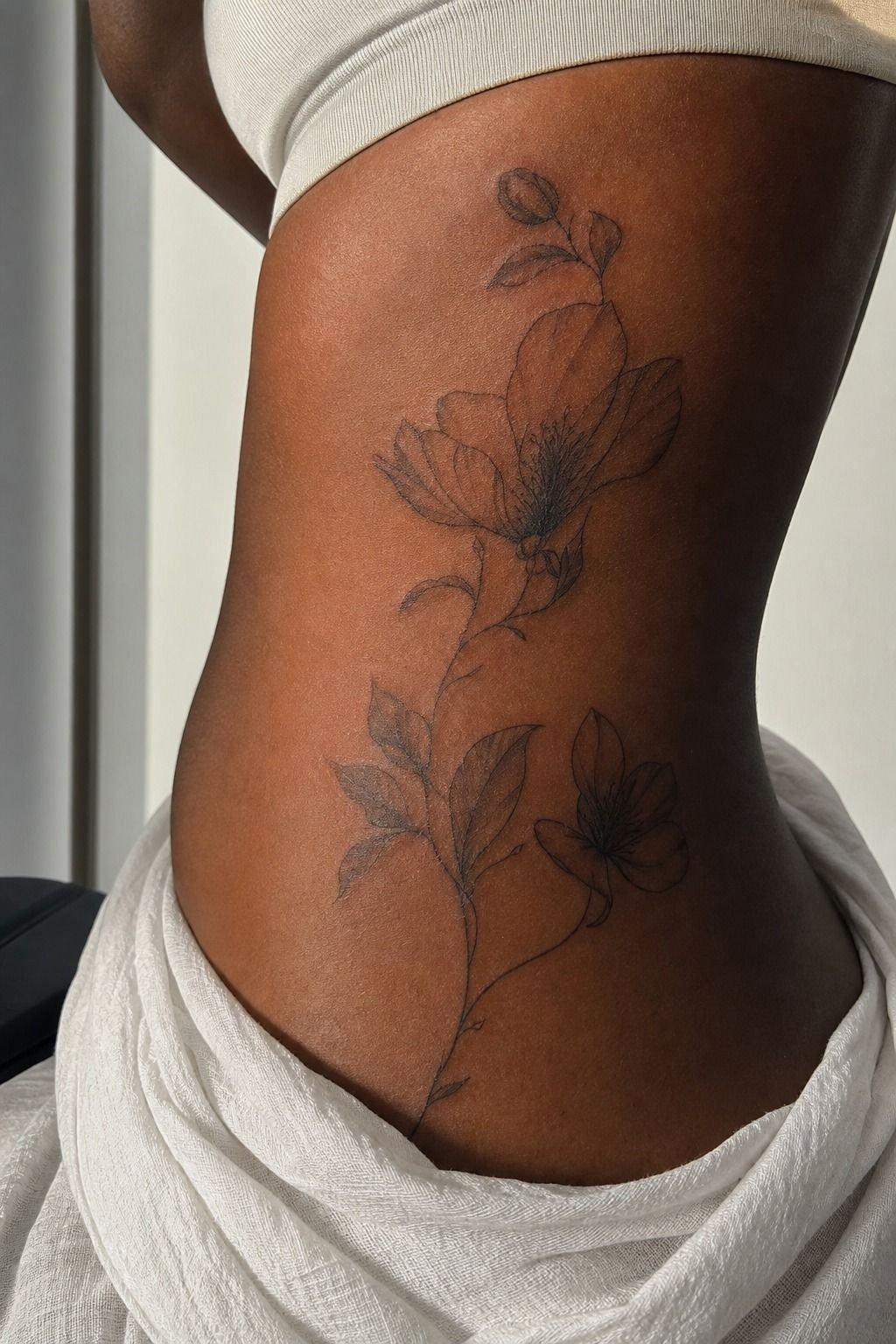
What you wear matters more than people think. Your artist needs the whole knee plus a few inches in every direction, and you need to not freeze for two to four hours. Loose shorts are the move, or wide-leg pants that roll above the knee and stay put.
Skip leggings, skinny jeans, and anything tight you’d have to peel over fresh ink after. The macro rib shot above? That client dressed right for access, and it makes the session smoother for everyone.
A zip hoodie is your friend in cold studios.
Bring snacks, water, and a phone charger. Knee sessions run long because of swelling breaks, and hangry clients tap out early. Same clothing speech I give for side tattoos for women, where access is everything.
18Avoid over-detailing areas that fold under the knee
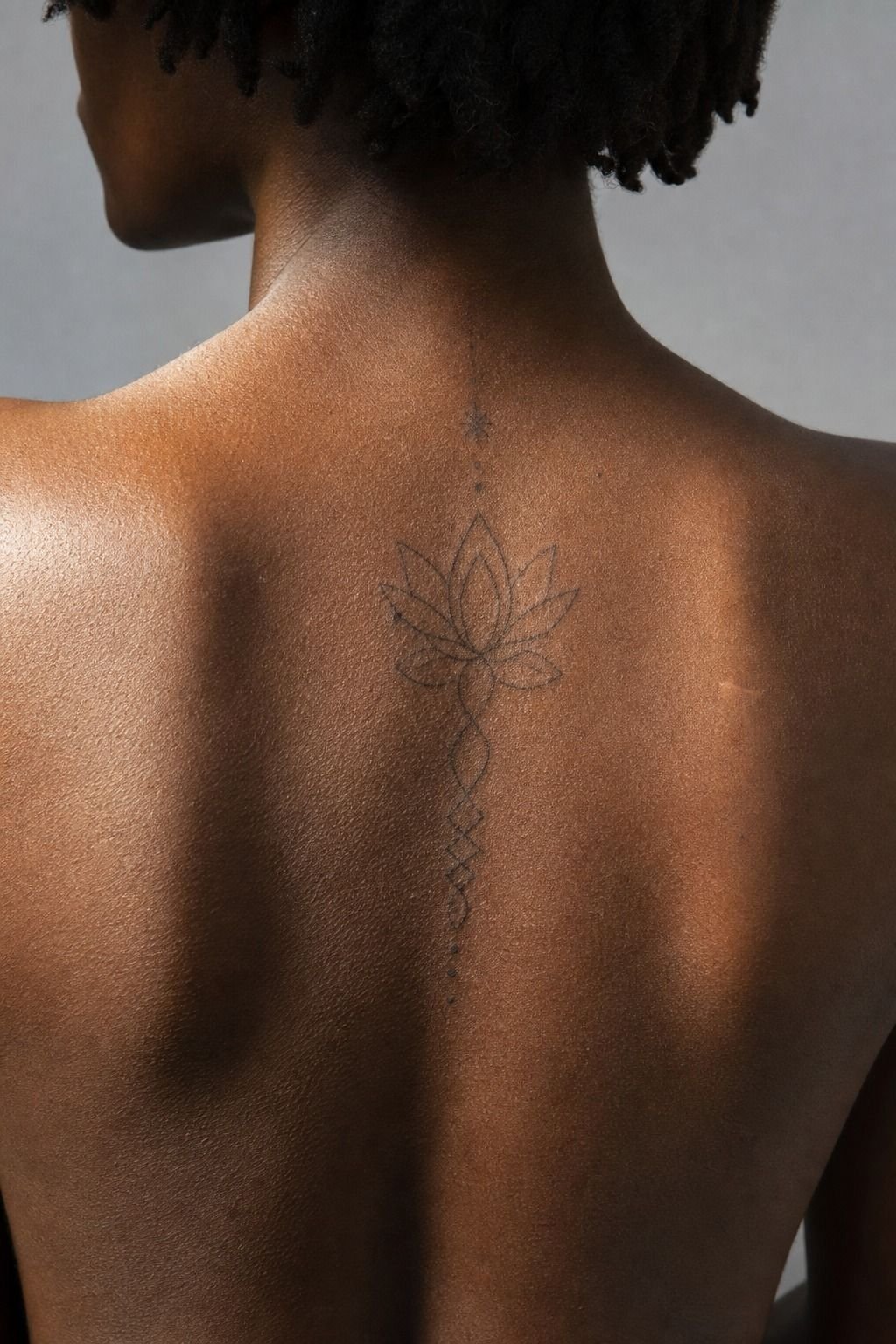
Here’s my Soup Rule: any detail smaller than a pencil eraser, placed on skin that folds, becomes soup within five years. The under-knee fold is the worst offender on the whole leg. That crease compresses daily, and fine texture there doesn’t stand a chance.
So simplify. If your design has filigree, micro-dots, or dense crosshatching, move that richness above the kneecap or onto the thigh where skin stays calm. Keep the fold zones to bold shapes and open space.
The healed upper back piece above shows what confident simplicity looks like years later: still readable, still clean.
This is where I talk clients out of Pinterest-exact references. References are for vibe. A good artist redraws for your skin, and knee skin votes for simple, every single time!
19Commit to touchups after a kneecap settles
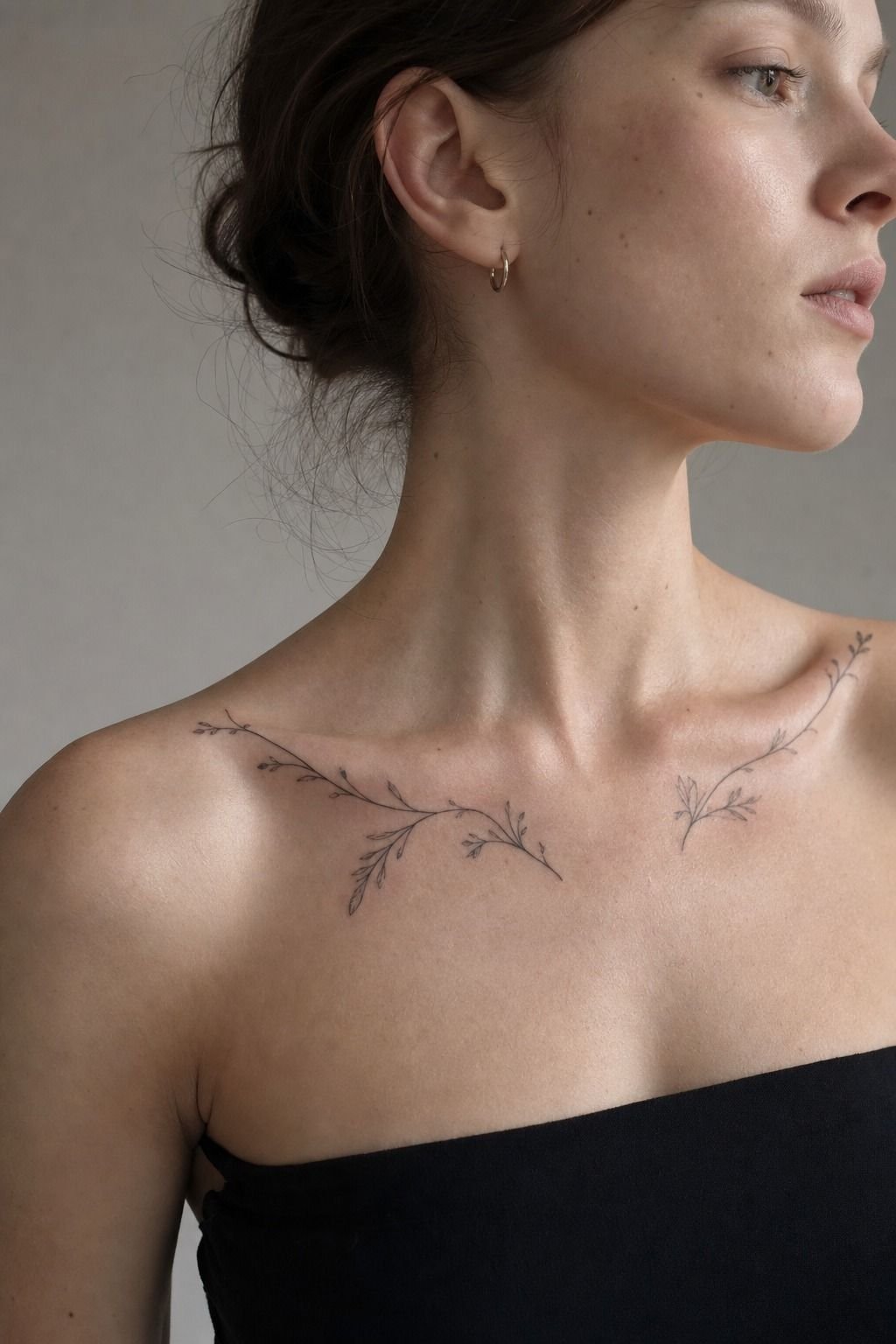
Knees are a high-wear zone, period. Even a perfectly executed kneecap piece will soften faster than the same tattoo on your outer arm, because the skin stretches and the joint swells. Plan a touch-up around the two-to-three-month mark, once full healing is done.
First touch-ups are often free or discounted, but only if you ask at booking and you followed aftercare. Artists can tell when a blur is sun damage or picking, and that one’s on you. The wrap piece above shows settled ink that’s been maintained right.
After that, maintenance is boring but everything: SPF 50 whenever the knee sees sun, moisturizer on dry skin, a refresh every few years. Like neck tattoos for women, knees are for people who accept upkeep. That’s the deal!
What Ten Years of Tattooing Knees Taught Me
Hot take: the knee isn’t a canvas, it’s a machine that happens to have skin on it. Every decision in this guide comes back to that.
My mistakes first, because I made them so you don’t have to. Early in my career I tattooed a gorgeous fine-line wildflower sprig right across a client’s ditch.
Two inches, delicate, exactly her reference. Fresh, it was beautiful.
Eight months later she came back and the center had mushed into a gray smudge where the crease lives. I redid it free, redrawn at four inches with the ditch left open.
That redraw taught me more than any apprenticeship year: the design isn’t done when it looks good on paper, it’s done when it survives the bend.
Second mistake: overworking a kneecap. I was packing color into a traditional rose on a client’s cap, going back over spots that wouldn’t saturate.
Should’ve stopped. Swollen joint skin lies to you mid-session, it looks patchy when it’s just puffy.
We finished in a second session and it healed solid, but I chewed up his skin learning that lesson. Now I split knee color work by default.
The philosophy under all of it: bold will hold, and simple ages cute on you. Clients bring me knee references with mandalas the size of a quarter and script you’d need a magnifier to read.
My job is to be the no before their skin becomes the proof. If a design can’t survive ten thousand bends a day, it doesn’t belong on a knee, no matter how good it looks on a screen.
Plan for year ten, not day one, and your knee piece will still read from across the room when the trendy stuff has turned to soup.
A Few Things Worth Answering
How much does a knee tattoo usually cost?
Typical US range: a shop minimum of $80 to $150 for small motifs, and $100 to $250 per hour for bigger kneecap work. A detailed centerpiece usually lands between $200 and $600 total. Rates vary by artist and region, so get a quote at your consult.
Are knee tattoos a good idea for a first tattoo?
Honest answer: not my first pick. The pain is spicy and healing demands real discipline on a joint that never stops bending. If your heart’s set on it, choose a small bold motif on the outer knee and skip the ditch.
A forearm tattoo is the gentler warmup.
How do I choose a tattoo artist for a knee tattoo?
Ask to see healed photos of joint work specifically, not just fresh pieces. Crispy single-pass lines, even saturation, no patchiness. Then ask how they handle the ditch.
A knee-experienced artist answers instantly with real specifics about breaking bands and sizing up detail.
How much do knee tattoos hurt?
More than average. The cap runs seven to eight out of ten (thin skin over bone), the inner ditch hits eight or nine, and the outer knee sits around a five. Lines feel sharp, shading burns dull, and color packing is the spiciest part.
How long does a knee tattoo take to heal?
Surface healing takes about two to three weeks, full healing two to three months underneath. Wash with gentle unscented soap, moisturize thin, keep it out of sun and pools. Knees heal slower than arms because they’re always moving.
What’s the best placement for a knee tattoo?
The kneecap itself for bold symmetrical designs, or the sweep above it toward the thigh for anything delicate. Both age far better than the ditch.
Want flow upward? Plan it like a thigh tattoo so the composition follows the muscle.
Where I’d Start First
If I had to pick one step, I’d start with the placement map. Every blurry knee I’ve fixed began as a design that ignored the bend. Pin this for later, then go run The Bend Test in front of a mirror.
SEO title: 19 Knee Tattoos Women Ideas That Hold Up Over Time Meta description: Plan knee tattoos women won’t regret: placement maps, bold styles, real costs, pain and healing timelines. Save these 19 ideas for your next consult. Focus keyphrase: knee tattoos women Slug: knee-tattoos-women