
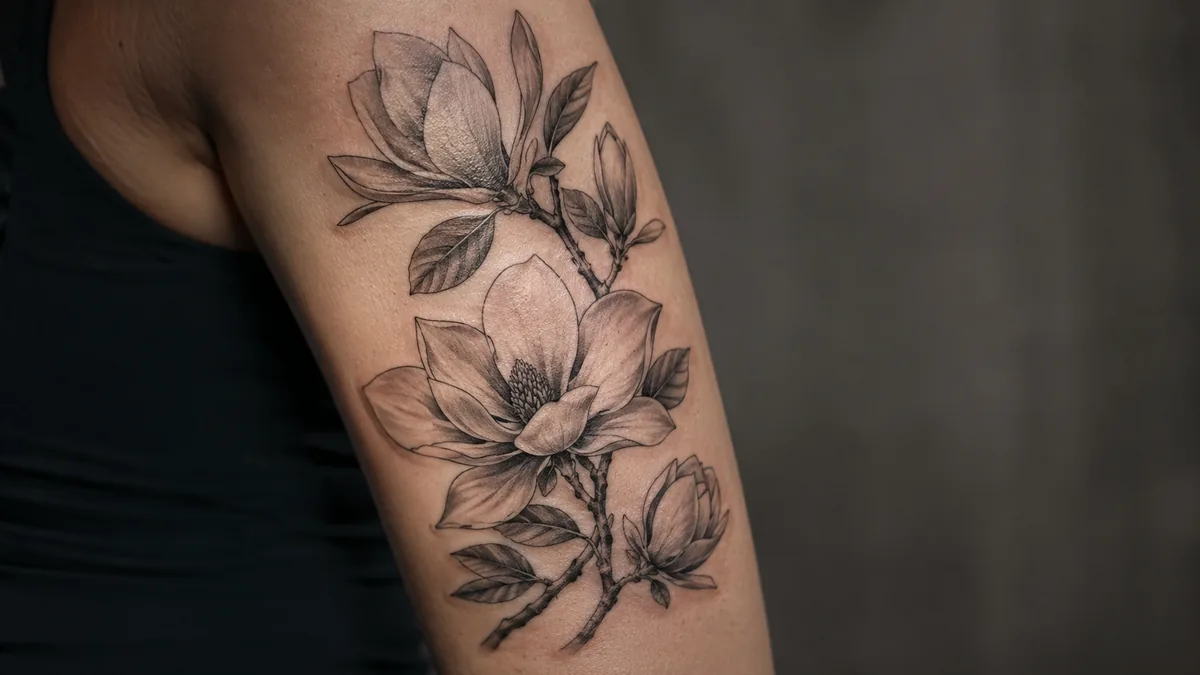
The magnolia is one of those flowers that looks delicate but is anything but. It blooms before its leaves come in, pushing through cold weather with no protection. That’s the core energy this tattoo carries: beauty that doesn’t wait for perfect conditions.
People get magnolia tattoos for a range of reasons, from honoring Southern roots to marking personal transformation. The symbolism is real and layered. Here’s what it actually means and what you need to know before you sit down for one.
What the Magnolia Tattoo Actually Means
The magnolia is widely understood to symbolize purity, perseverance, and dignity. Because the flower blooms on bare branches before any leaves appear, it reads as a symbol of strength through vulnerability, showing up fully before conditions are ideal. It carries a quiet confidence, not flashy, but grounded.
Femininity is another major thread here, but not the soft passive kind. Magnolia femininity is self-possessed. People also associate it with a love of nature, long life, and nobility. In the tattoo world, clients often describe it as representing the part of themselves that keeps going when things get hard.
Cultural and Historical Background
A magnolia doesn't bloom to impress. It blooms because that's what it does.
In Chinese culture, the magnolia has been a symbol of purity and feminine beauty for over a thousand years. During the Tang Dynasty it was associated with the emperor and represented the idealized qualities of the court. In Japan, the flower, called mokuren, is tied to a love of nature and an appreciation for things that don’t last forever, a thread that runs through a lot of Japanese aesthetic philosophy.
In the American South, the magnolia carries strong regional identity. It’s the state flower of both Mississippi and Louisiana. Southern clients frequently get this tattoo to honor family, home, or heritage. That connection is genuine and deeply felt, not just aesthetic. Both traditions are worth knowing when you’re designing the piece.
Popular Design Styles for Magnolia Tattoos
Fine line magnolias are extremely popular right now, especially single-bloom compositions with thin, precise petals and delicate stamens at the center. They read elegant and feminine without being fussy. The challenge is longevity: fine line work in high-wear zones like fingers or wrists tends to fade faster, so placement matters a lot with this style.
Black and grey magnolias give you serious depth. A skilled artist can whip shade the petals to get that soft gradient that makes the flower look three-dimensional on skin. Neo-traditional takes push the outline weight up and saturate the colors, which holds better long-term. Botanical realism with full color is another strong choice, using pinks, whites, and deep greens for a piece that reads beautifully from across the room.
Color vs. Black and Grey
Color magnolias lean into the flower’s natural palette: soft blush pinks, creamy whites, deep burgundy, and rich green leaves. A fully saturated color piece heals nice when placed on low-friction skin like the upper arm, thigh, or back. The pinks can shift slightly over time, so touch-up planning is smart. White ink highlights on petals add realism but fade quickest.
Black and grey is the more versatile long-term choice. It ages more predictably, and the contrast between deep blacks and light grey washes gives the flower real presence without color drift. If you want something that still looks crispy and solid a decade out, black and grey with clean lines is the safer bet. Both styles are legitimate. It comes down to the look you’re after and how committed you are to upkeep.
Best Placements and How It Ages
The magnolia works best as a medium-to-large piece. The flower has a lot of natural detail, and cramming it small loses what makes it special. Upper arm, forearm, thigh, ribcage, sternum, shoulder blade, and calf are all strong placements. These areas give the artist room to work and have relatively consistent skin texture, which means the detail holds.
High-wear zones, think hands, wrists, behind the ear, and feet, are spicy to tattoo and rough on fine detail. Ink in those spots migrates and blows out faster. Ribcage placement is spicy for a different reason, pain. Bone-adjacent spots like the sternum and ribs hurt significantly. The healed result there is usually worth it, but go in knowing what you’re signing up for. Thigh and upper arm are the most forgiving overall.
Who Gets Magnolia Tattoos and Why
Clients who choose magnolias are often marking something real: a period of personal difficulty they came through, a tribute to a grandmother or mother, a connection to Southern identity, or a commitment to their own resilience. It’s not a trendy placeholder tattoo. The people who get it usually have a specific reason, even if that reason is private.
It also lands with people who want something unambiguously feminine without leaning on overworked imagery like roses or lotuses. The magnolia feels specific. Less expected. That matters to clients who want a tattoo that represents them personally, not just a category. The symbolism is versatile enough to carry individual meaning while still being universally readable as beautiful, strong, and grounded.
How to Make Your Magnolia Tattoo Personal
The bloom shape, color, and surrounding elements all shift the meaning. A single closed bud reads as potential and new beginnings. A fully open bloom in peak form reads as confidence and arrival. A falling or partially wilted petal can signal impermanence and acceptance of change, a nod to the Japanese aesthetic of mono no aware, the beauty of things that don’t last.
Adding specific elements sharpens the personal meaning. A hummingbird signals joy and vitality. Initials worked into the stem honor someone specific. A particular color, like the deep purple of a Tulip magnolia versus the white of a Southern magnolia, lets you specify exactly which flower you mean, which matters if regional or personal identity is the point. Talk through this with your artist before your appointment. The details make it yours.









