
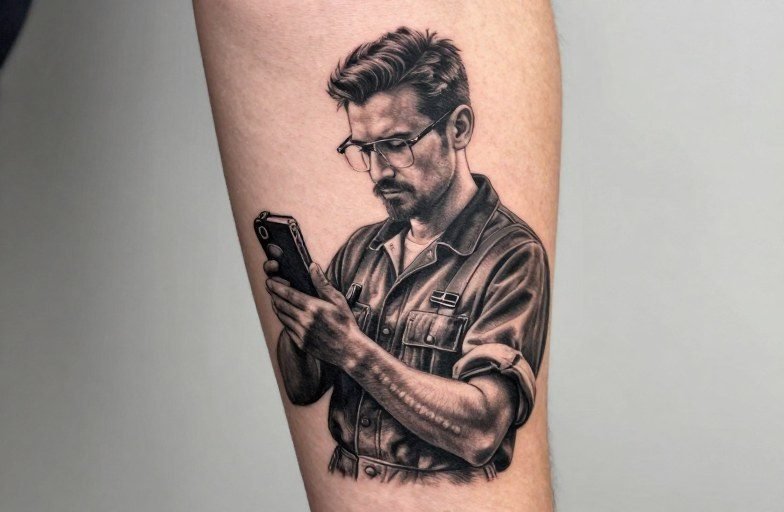
A meaningful mechanic tattoo celebrates hands-on skill, problem-solving, and the beauty of functional design. For many, it marks a career, a passion for building and fixing, or an appreciation for how things work under the surface. The imagery, gears, pistons, wrenches, engines, speaks to precision, persistence, and the satisfaction of making something broken run again.
Symbolism & Core Meaning
At its heart, mechanic imagery is about interconnection and function. Gears mesh or they don’t; tolerances are exact or they fail. That precision appeals to people who value competence over talk. The symbolism extends beyond literal auto repair into any craft where understanding systems matters more than appearances.
The Appeal of Visible Mechanics
Exposed engines, cutaway views, and steampunk-inspired mechanical hearts gained traction through the early 2000s bio-mechanical trend popularized by artists like H.R. Giger. These designs suggest that the wearer is themselves a machine, efficient, complex, perhaps slightly dangerous. The skin-as-metal-skin motif works especially well wrapping around muscle structure, following the body’s natural engineering.
Tools as Identity
Single tools carry quieter weight than full engine diagrams. A well-worn wrench, a torque spec, a spark plug rendered at actual size, these read as insider language to those who know, and as clean graphic design to everyone else. That dual legibility is part of the appeal.
Personal & Modern Meanings
Today, mechanic tattoos serve people who may never have turned a wrench professionally. Software engineers, surgeons, musicians, anyone whose work involves systems thinking, find resonance in mechanical metaphor. The gear represents being one part of something larger, the piston repetitive productive motion, the diagnostic code reading hidden patterns.
Career Commemoration
For actual mechanics, these tattoos often mark time: apprenticeship completion, a shop’s closing, a mentor’s influence. Specificity matters here. A tattoo of the exact engine you rebuilt with your father carries weight no generic piston can match. Serial numbers, shop logos, and tool brands (Snap-on, Matco, Mac) ground the design in lived experience.
Recovery and Rebuild Narratives
“Rebuilt not replaced” has become a common theme. Engine rebuild imagery, new bearings, honed cylinders, fresh gaskets, maps neatly onto personal recovery from injury, addiction, or loss. The metaphor works because rebuilding is harder than replacing, and more satisfying. The scarred block that runs clean again.
Similar & Related Symbols
Mechanic imagery overlaps with several adjacent tattoo traditions, each carrying slightly different connotations.
- Steampunk: Victorian aesthetics plus imagined technology. More whimsical, less utilitarian. Brass and leather rather than grease and steel.
- Biomechanical: Organic forms merging with machinery. Darker, more body-horror adjacent. Often credited to Giger’s Alien designs.
- Traditional hot rod/pinstriping: Speed culture, mid-century Americana. Flames, dice, and eight-balls share shop space with piston imagery.
- Aviation mechanics: Propellers, radial engines, riveted aluminum. Similar craft pride, different machine culture.
- Industrial/welding: Beads, coupons, hoods. Overlapping skillset, distinct visual language.
Choosing between these depends on whether you want to signal general competence (mechanic), specific subculture (hot rod, aviation), or philosophical stance (biomechanical fusion of human and machine).
Mythology & Folklore
Mechanical beings appear across cultures, though direct precedents for modern mechanic tattoos are limited. Hephaestus, Greek god of the forge and fire, crafted automata, self-moving servants of bronze. Often linked to early mechanical imagination, his lame leg and soot-blackened skin made him a patron of laborers rather than warriors.
The Golem and Constructed Life
Jewish folklore’s golem, animated from clay by sacred word, represents humanity’s urge to build servants that exceed our control. The mechanic tattoo’s darker variants, exposed wiring, failing systems, touch this anxiety. The machine that won’t start. The tool that slips.
Prometheus and Stolen Fire
Some trace mechanical symbolism to Prometheus, thief of fire and technology. The punishment, liver eaten daily, regenerated nightly, mirrors the mechanic’s body: hands that heal scarred, knees that recover from concrete floors, the repetitive damage of useful work.
Color vs Black and Grey
This choice dramatically changes how mechanic tattoos read and how they endure.
Black and Grey Realism
The dominant approach. Carbon deposits, oil stains, cast iron textures, all read naturally in monochrome. Shading achieves the metallic sheen through careful value contrast rather than silver ink. Ageing tends to be forgiving: as lines soften, the mechanical forms remain readable because the subject matter is inherently high-contrast (holes, threads, edges).
Color Applications
Color works best when it serves specific purpose: rust orange on a patina’d wrench, safety yellow on caution labels, the particular blue of a Snap-on tool chest. Avoid attempting “chrome” in tattoo pigment, it never convincingly reads as reflective, and the white highlights needed age poorly. Blood red in biomechanical pieces can suggest lubricant or injury, depending on context.
One practical note: colored mechanical diagrams, blueprint style with white lines on blue fields, have become popular. These read well initially but the blue tends to shift toward grey-green within five to ten years, muddying the technical precision that makes them appealing.
How It Ages on Skin
Mechanic tattoos face specific ageing challenges related to their subject matter and typical placement.
Line Weight and Detail Density
Technical drawings tempt artists toward hairline precision: gear teeth counted, bolt threads indicated, part numbers legible. This doesn’t last. Lines below a certain threshold blur into each other within a few years, especially on high-movement areas. The best mechanic tattoos use bold enough line weight to define forms while suggesting finer detail through shading rather than outline.
Placement matters enormously. Forearms and calves hold detail well. Hands, feet, and inner biceps do not. A full sleeve of interlocking gears can look stunning at completion and illegible at ten years if the gears were sized for a notebook page rather than a moving arm.
The Problem of “Busy”
Mechanic imagery naturally clusters: engines are dense, transmissions complex. Without negative space, these tattoos become visual noise as they age. Successful designs isolate key components, a single piston, a section of camshaft, rather than reproducing shop manual diagrams. The empty skin around the tool becomes as important as the tool itself.
Final Word
Meaningful mechanic tattoos work when they honor the actual labor and thinking that mechanical work requires. Skip the borrowed romance if you’ve never skinned a knuckle. Find the specific tool, the particular engine, the actual serial number that connects to your experience. The best ones look like they could still turn, still torque, still function, inked with enough structural honesty that a real mechanic would recognize the part. That recognition, from someone who knows, is worth more than any universal symbol could carry.
Frequently Asked Questions
Do mechanic tattoos have to be realistic to look good?
Not at all. Bold traditional styling, geometric simplification, and even abstract approaches can work well. The key is recognizable proportion and functional logic, gears that could actually mesh, tools oriented for real use. Violate mechanical reality and the design loses its grounding.
What’s the best placement for a detailed engine or gear tattoo?
Outer forearm, calf, and thigh offer flat surfaces that age well and allow viewing at natural scale. Avoid wrapping complex mechanical diagrams around highly curved areas like the elbow or shoulder cap, where distortion makes precision meaningless.
How do I make sure the tools in my tattoo are accurate?
Bring reference photos of actual tools, not clip art. A real combination wrench has specific proportions: handle thickness, open-end angle, markings from actual use. An artist specializing in mechanical subjects will welcome this specificity and catch errors that would read as amateur to anyone in the trade.
Can mechanic tattoos work for women or non-mechanics?
Absolutely. The symbolism of systems thinking, repair, and functional beauty belongs to no single demographic. What’s important is genuine connection to the meaning, whether that’s professional skill, family history, or personal philosophy, rather than borrowing aesthetic without substance.
Related Tattoo Meanings
- Medusa Assault Tattoo Meaning: Symbolism Design Guide
- MGK New Tattoo Meaning: Machine Gun Kelly s Ink Explained
- Vida Loca Tattoo Meaning: Loyalty, Loss, and Street Culture
- Explore more









