
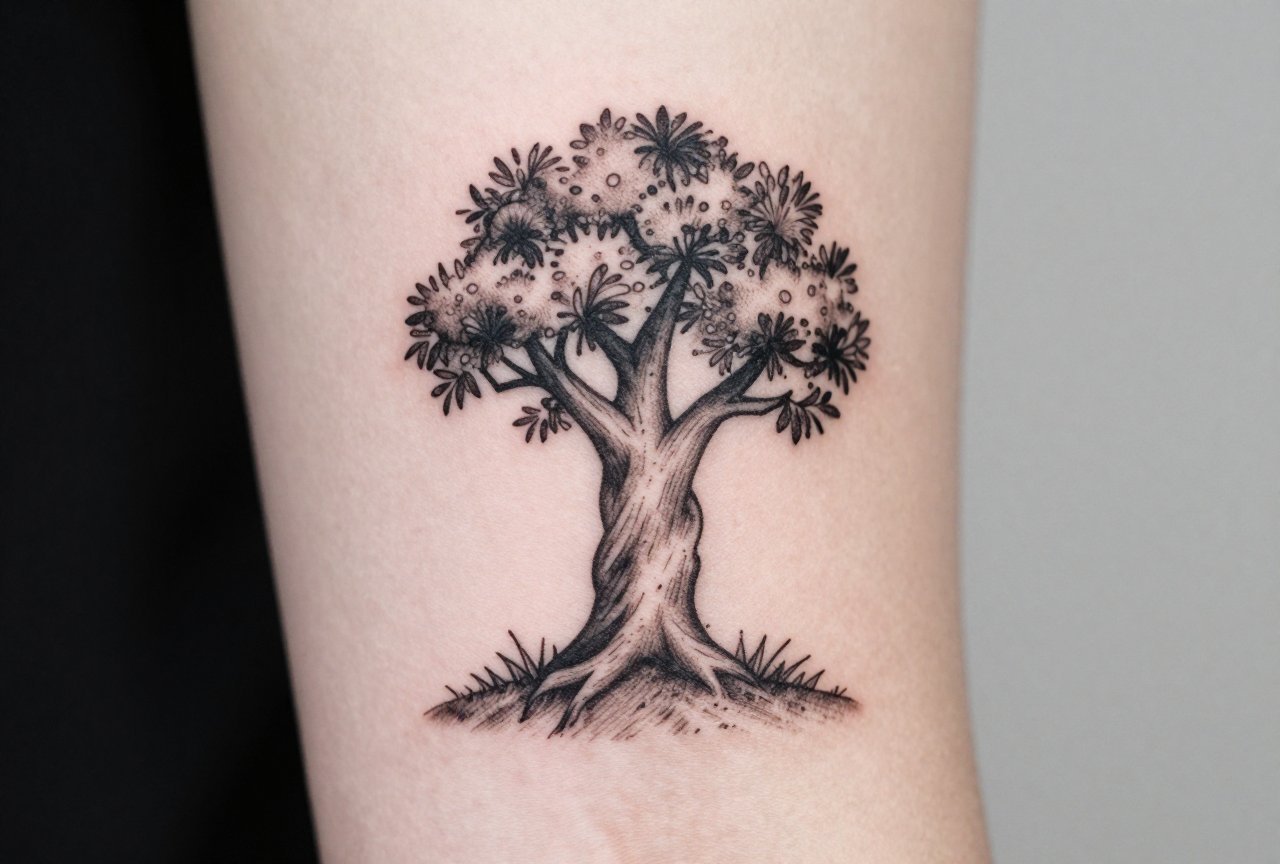
“Still I Rise” is a declaration of survival. Borrowed from Maya Angelou’s iconic 1978 poem, this tattoo carries the weight of refusing to stay down, through oppression, heartbreak, addiction, grief, or whatever slammed you to the floor. I’ve tattooed these words on people who’ve clawed back from things I can’t imagine, and the meaning shifts slightly every time: defiance, hope, stubbornness, or quiet triumph.
Symbolism & History
Angelou’s poem wasn’t subtle. It was a Black woman’s direct answer to centuries of degradation, written with the rhythm of spirituals and blues. When someone walks into my shop asking for these words, I always ask what they’re rising from. The answer tells me everything about how to design it.
From Page to Skin
The literary weight matters. This isn’t a generic motivational quote scraped from Instagram, it’s a specific voice from a specific struggle. I’ve had clients who carry the book with them to appointments, who can recite the whole poem, who tear up when we talk about the line “You may trod me in the very dirt / But still, like dust, I’ll rise.” That context separates a meaningful tattoo from Pinterest wallpaper.
What the Words Actually Mean on Skin
- Resilience after trauma: The most common reason I hear. Abuse survivors, cancer fighters, people who’ve lost everything.
- Cultural pride: For Black clients especially, this often connects to ancestral strength and ongoing resistance.
- Addiction recovery: I’ve done this on forearms where the scars used to be, the words literally covering old tracks.
- Queer identity: Rising above family rejection, religious trauma, or violence.
- General stubbornness: Sometimes it’s just “life keeps hitting me and I keep getting up.” That’s valid too.
Common Variations & Styles
There’s no single way to tattoo this phrase. I’ve done it maybe thirty times, and no two looked alike. The design choices carry their own meaning.
Typography Choices
Script matters. Flowing cursive feels personal, intimate, like a note to yourself. Bold serif or typewriter font hits harder, more manifesto, less diary. I did one in Angelou’s own handwriting (reconstructed from signed books) that took forever to get right but hit different for the client. All caps versus sentence case changes the energy entirely. Shouting versus whispering.
Common Visual Additions
- Phoenix imagery: Obvious but effective. Fire, ash, wings spreading. Works best with color, heals tricky on some skin tones.
- Flowers pushing through concrete: Roses, lotus, dandelions. The lotus especially, rises from mud, blooms clean.
- Broken chains or open handcuffs: Heavy symbolism, needs solid black to read long-term.
- Sunrise/horizon lines: Simple, clean, pairs well with thin script.
- Angelou’s portrait: Rare, usually for serious literary devotees. Hard to do small; needs real estate to read.
Line versus shading: these words work either way. I’ve done just the outline, whisper-thin, on a collarbone. I’ve done them solid black, punched in, on a ribcage where every letter hurt. The pain is part of it for some people. They want to feel it.
Best Placements
Where you put it changes who sees it and when.
Forearm: Most common. You see it when you’re low. Others see it when you reach for things. I’ve done this placement on waiters, teachers, nurses, people whose hands are always in motion, always visible. It becomes part of how they move through space.
Ribcage: Hidden, intimate, hurts like hell. Usually for the wearer alone, or someone very close. The ribs expand when you breathe; the words literally move with your life.
Along the spine: Vertical, rising. The placement itself becomes the metaphor. I’ve done this on dancers, yoga teachers, people who feel their strength in their backs.
Thigh or calf: More space for imagery integration. Easier to cover for conservative workplaces. I’ve seen this on teachers who roll up pants in summer, on runners whose legs carry the message forward.
Behind the ear or on the wrist: Small, delicate. The words become jewelry. These fade faster, need touch-ups, but that maintenance becomes ritual.
Who Chooses This Tattoo / Personal Meanings
In my chair, I’ve learned not to assume. The sixty-year-old grandmother and the twenty-two-year-old college dropout might share the same words for completely different reasons.
Stories I’ve Actually Heard
A woman who left her husband after he broke her cheekbone. She wanted it where her wedding ring used to sit, on the finger itself. We compromised on the inner forearm so she could see it without him seeing it first, back when she was still afraid.
A man who got out of Pelican Bay after fifteen years. He’d read the poem in the library, copied it by hand a hundred times. We did it across his chest, old English font, took three sessions. He didn’t flinch once.
A teenager whose mother chose the words for her after her first suicide attempt. That one I remember because the mom cried in the waiting room and the kid was numb, just numb. I hope the tattoo outlasted that numbness.
A middle-aged white guy who’d lost his tech job, his marriage, his house in the crash. He felt weird about claiming Angelou’s words, worried it was appropriation. We talked for an hour. He got it small, private, no imagery. A conversation, not a statement.
What Artists Actually Discuss
Shop talk: we notice patterns. This phrase spikes after public tragedies, after celebrity deaths, during election years. After Maya Angelou died in 2014, I did five in two months. After George Floyd, the requests came with different energy, more urgent, more tied to the poem’s original context. We see who reads the whole poem versus who knows the title from a poster. Neither is wrong, but the conversation goes different places.
Similar Symbols
Clients sometimes bounce between these ideas before landing on “Still I Rise.” Worth knowing the cousins:
- “Nevertheless, she persisted”: Political, specific, newer. Less poetic but more immediately recognizable in certain circles.
- Semicolon: Mental health specific, quieter, more coded. Project Semicolon made this ubiquitous; some find it too common now.
- “This too shall pass”: Older, more resigned. Endurance rather than defiance.
- Phoenix alone: Visual shorthand without the literary anchor. Can feel generic without personal story.
- “Unbroken” or “Unbreakable”: Direct, but lacks the upward motion, the active verb. Rising is doing something.
- Japanese/Chinese characters: We steer people away unless they read the language. Too many bad translations, too much aesthetic tourism.
The difference with “Still I Rise” is the specificity of voice. It’s not abstract encouragement. It’s someone particular, saying something particular, in a particular historical moment. That weight either matters to you or it doesn’t.
Final Thoughts
I’ve watched this phrase age on skin. The thin lines blur, the black softens to charcoal, the edges feather where the body changed. The meaning doesn’t. If anything, it deepens, what you were rising from becomes memory, and the tattoo becomes proof that you did.
Get it big or small, alone or surrounded by imagery, in Angelou’s spirit or just borrowing the words. But know what you’re claiming. These aren’t empty letters. They’re a promise you make to yourself, witnessed by whoever holds the machine, that you intend to keep getting up. The ink just makes it harder to forget.
And if you’re in my chair asking for this, I’ll ask what you’re rising from. Not to judge. To make sure I give you something worthy of the answer.
Frequently Asked Questions
Do I need to be Black to get a Still I Rise tattoo?
There’s no rule, but context matters. The poem emerges from specific Black experience, so consider if you’re honoring that or erasing it. I’ve had thoughtful conversations with white clients who acknowledged the source and chose private placement or paired it with direct homage. The ones who didn’t think about it at all usually made me uncomfortable.
Will the words blur together if I get it too small?
Yes, eventually. Thin script below an inch tall can become illegible in five to ten years. I tell clients to go bigger than they think, or accept that it’ll need touch-ups. Solid lettering lasts longer than hairline detail. Your artist should show you healed examples, not just fresh photos.
Is it weird to get this tattoo if I haven’t read the whole poem?
Not weird, but you’re missing depth. The title alone is powerful, but the full poem builds, each stanza adds weight. I’ve lent my copy to clients before their appointment. Some read it and changed their design. Others felt more certain. Either way, you’re making a more informed choice.
How much does a typical Still I Rise tattoo cost?
Depends on size, placement, and your artist’s rate. Simple script without imagery might run $150-400 in most shops. Add a phoenix or detailed background and you’re looking at $500-1500, maybe multiple sessions. Good work isn’t cheap. This isn’t a piece to bargain hunt.
Related Tattoo Meanings
- Straight Line Tattoo Meaning: Symbolism, Styles Why People Get It
- Symbolic Religious Tattoo Meaning: Faith, Protection Personal Belief
- Ribbon Tattoo Meaning: Symbolism, Styles Personal Stories
- Explore more









