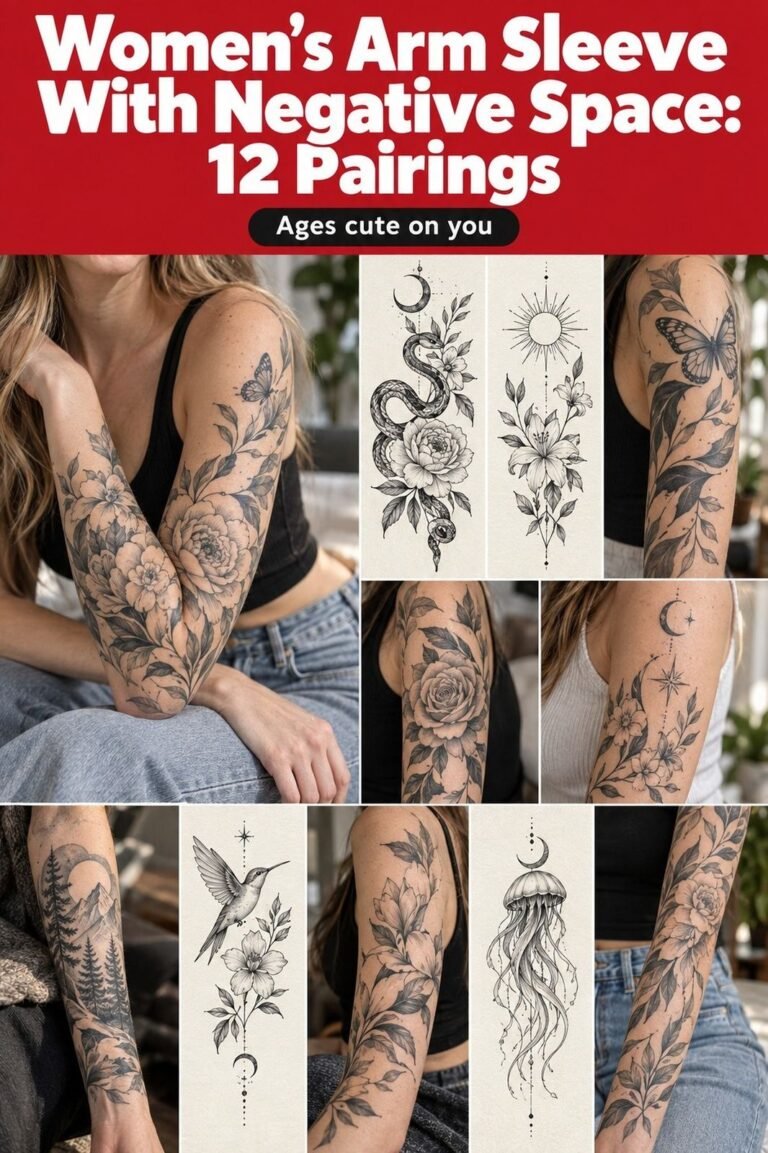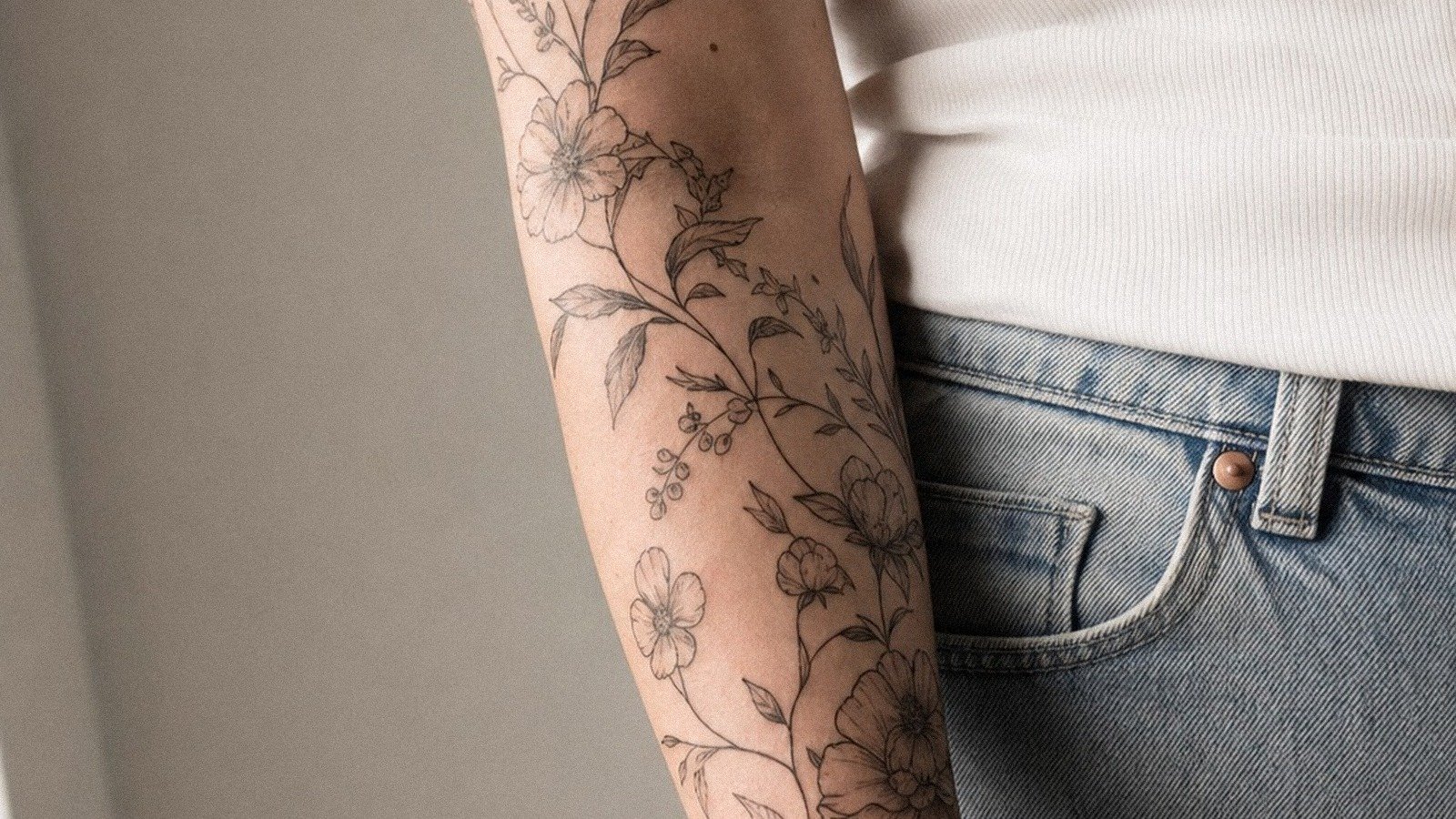
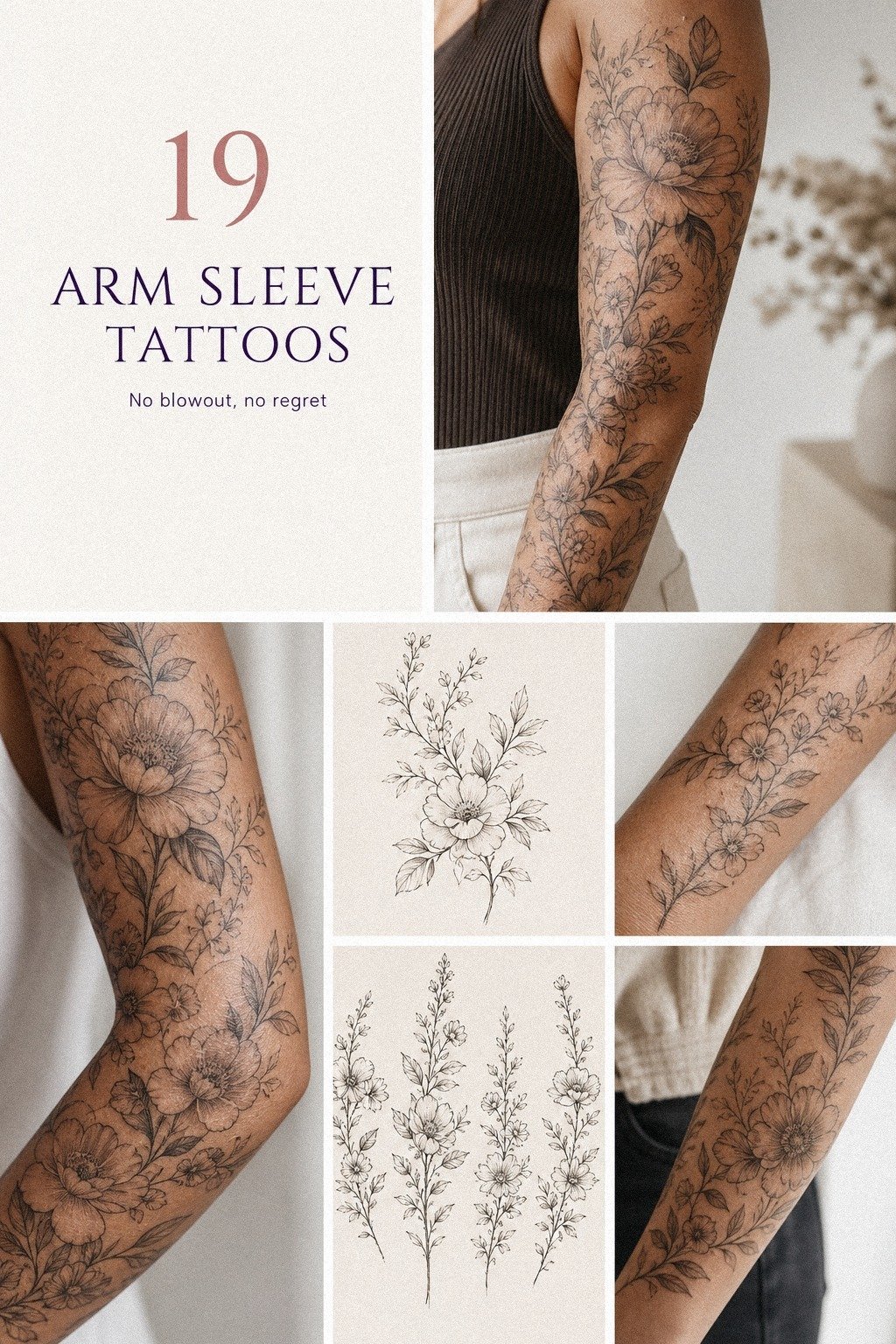
Arm Sleeve Tattoos For Women age well when the lines stay readable, the shapes follow your arm, and you don’t cram every idea into one sitting. I got serious about mine the week I turned 30, after saving references for months and still feeling weirdly stuck. Then I built it in stages. It healed cleaner than I expected.
Here’s what it looked like before
Before the sleeve, my arm wasn’t empty in a dramatic way. It was just a patch of skin I’d been saving because I knew I did not want random stickers fighting each other later. I had one tiny healed piece near the tricep, nothing else, and a camera roll full of screenshots that did not belong together.
What pushed me over wasn’t trend pressure. It was realizing I wanted a women’s arm sleeve that could grow without turning muddy.
I wanted movement from wrist to shoulder, enough negative skin to keep it elegant, and flowers that still read clean when my arm bends, lifts, and twists. That is a different goal from collecting one-off tiny tattoos, and if you’re weighing the same choice, start by deciding whether you want a full story or just scattered moments.
- I Saved Floral Arm Sleeve References First
- I Chose A Quarter Sleeve Starting Point
- I Picked Fine Line Peonies For Flow
- I Added A Butterfly Near The Elbow
- I Placed Wildflowers Around The Inner Arm
- I Kept The Shoulder Cap Soft
- I Used Vines To Connect The Forearm
- I Asked For Blackwork Leaves Between Florals
- I Tested Stencil Flow With Bent Elbow
- I Left Breathing Room Around The Wrist
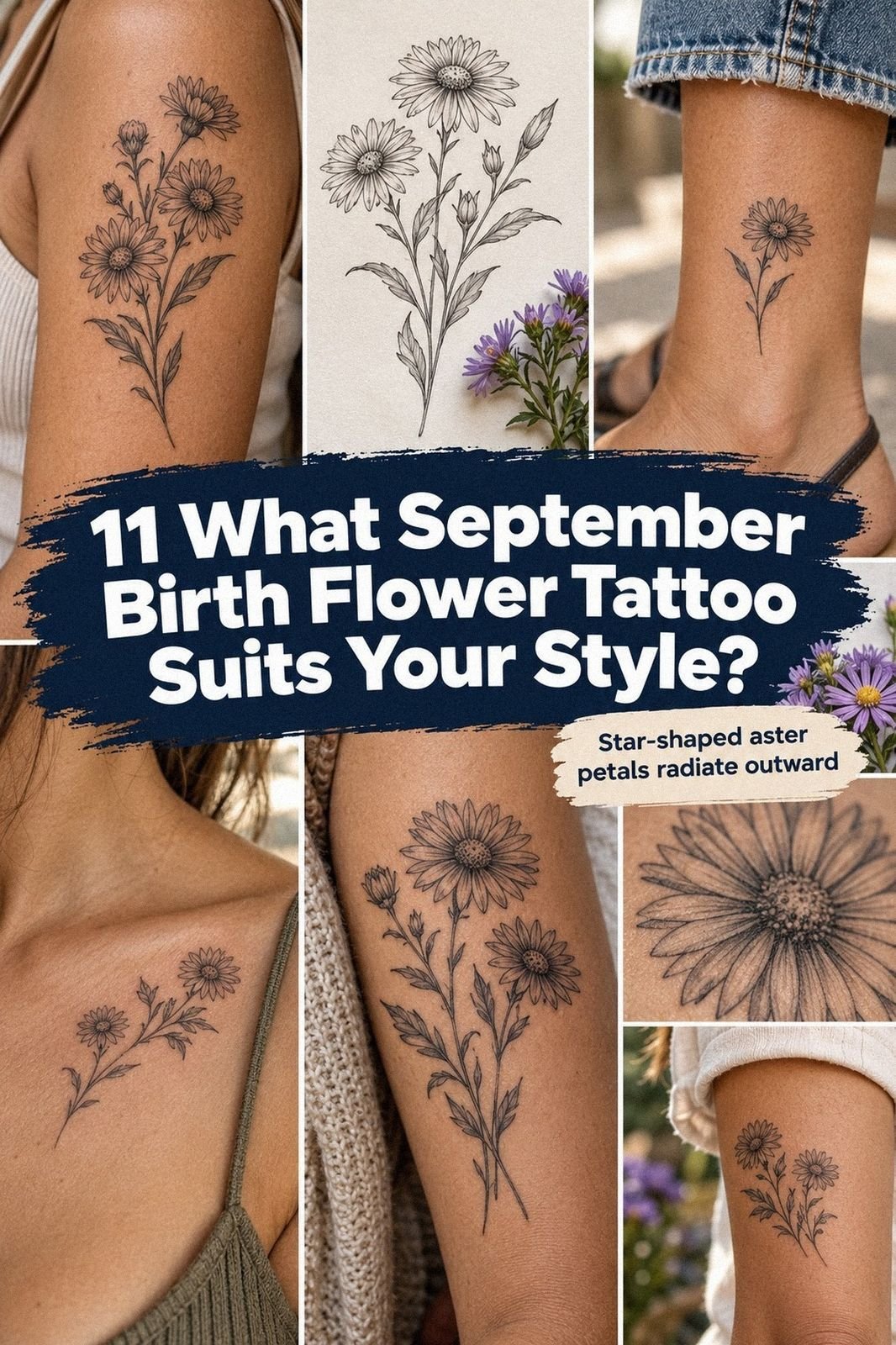
- I Added Birth Flowers For Personal Meaning
- I Chose Soft Shading Over Heavy Filler
- I Placed Script Along The Inner Bicep
- I Matched Butterfly Wings To Arm Curves
- I Built A Girly Sleeve With Negative Skin
- I Planned Pain Breaks Around Elbow Ditch
- I Checked Healed Fine Line Sleeve Photos
- I Booked Touchups Before Summer Sun
- I Protected The Arm Sleeve During Healing
1I Saved Floral Arm Sleeve References First
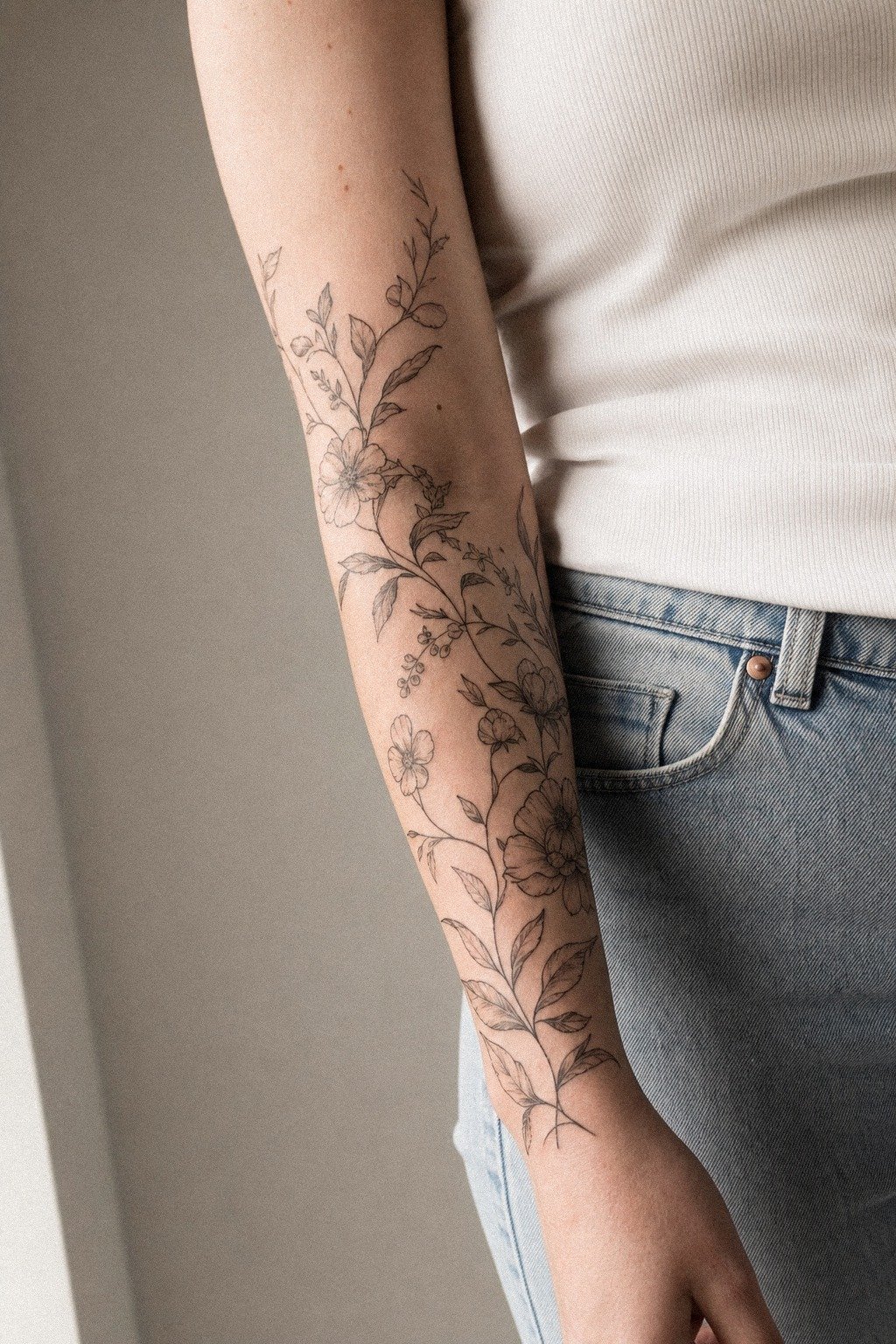
First, I got brutally picky with references. I wasn’t saving every pretty flower tattoo on Pinterest.
I was saving botanical fine line work with healed photos, visible stems, and shapes that still read from a few feet back. That is what keeps a sleeve from turning to soup later.
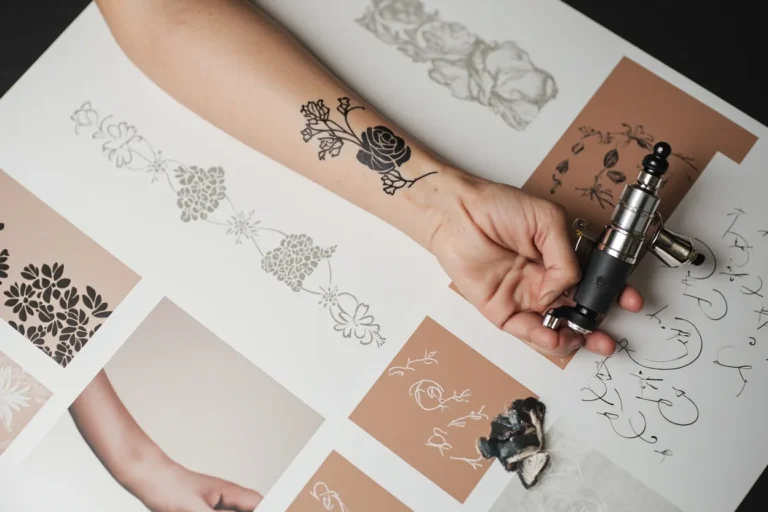
I made a folder for peonies, one for wildflowers, and one for sleeves that used open skin well. If you’re building your own reference set, look for sleeves that wrap a forearm instead of sitting flat like paper art. I kept coming back to arm tattoos for women because you can compare placements side by side, and that helps you catch what flows versus what just looks cute in a crop.
2I Chose A Quarter Sleeve Starting Point
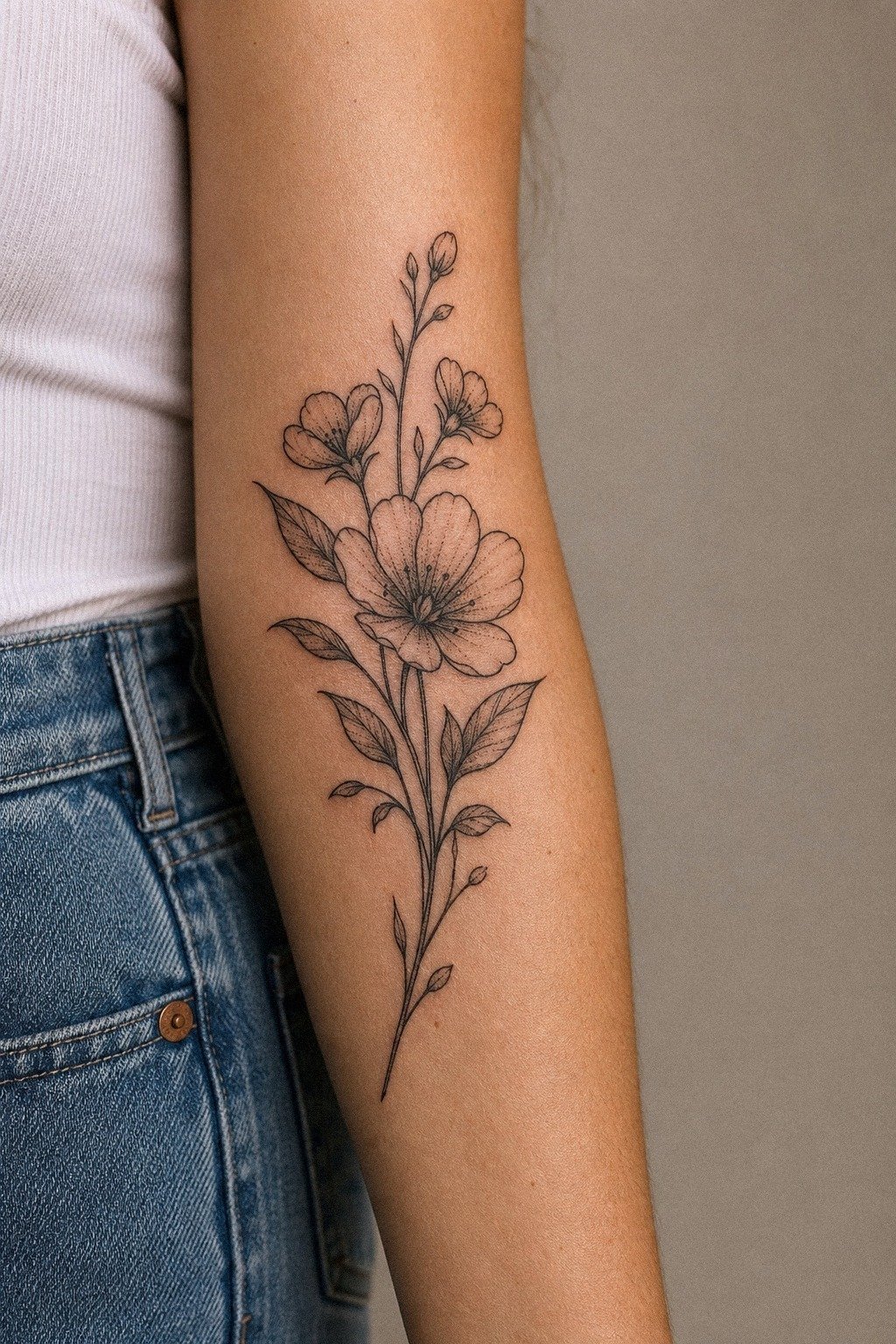
Instead of booking a full Quarter Sleeve Tattoos For Women concept in one shot, I started with a quarter sleeve anchor on the outer forearm.
3I Picked Fine Line Peonies For Flow
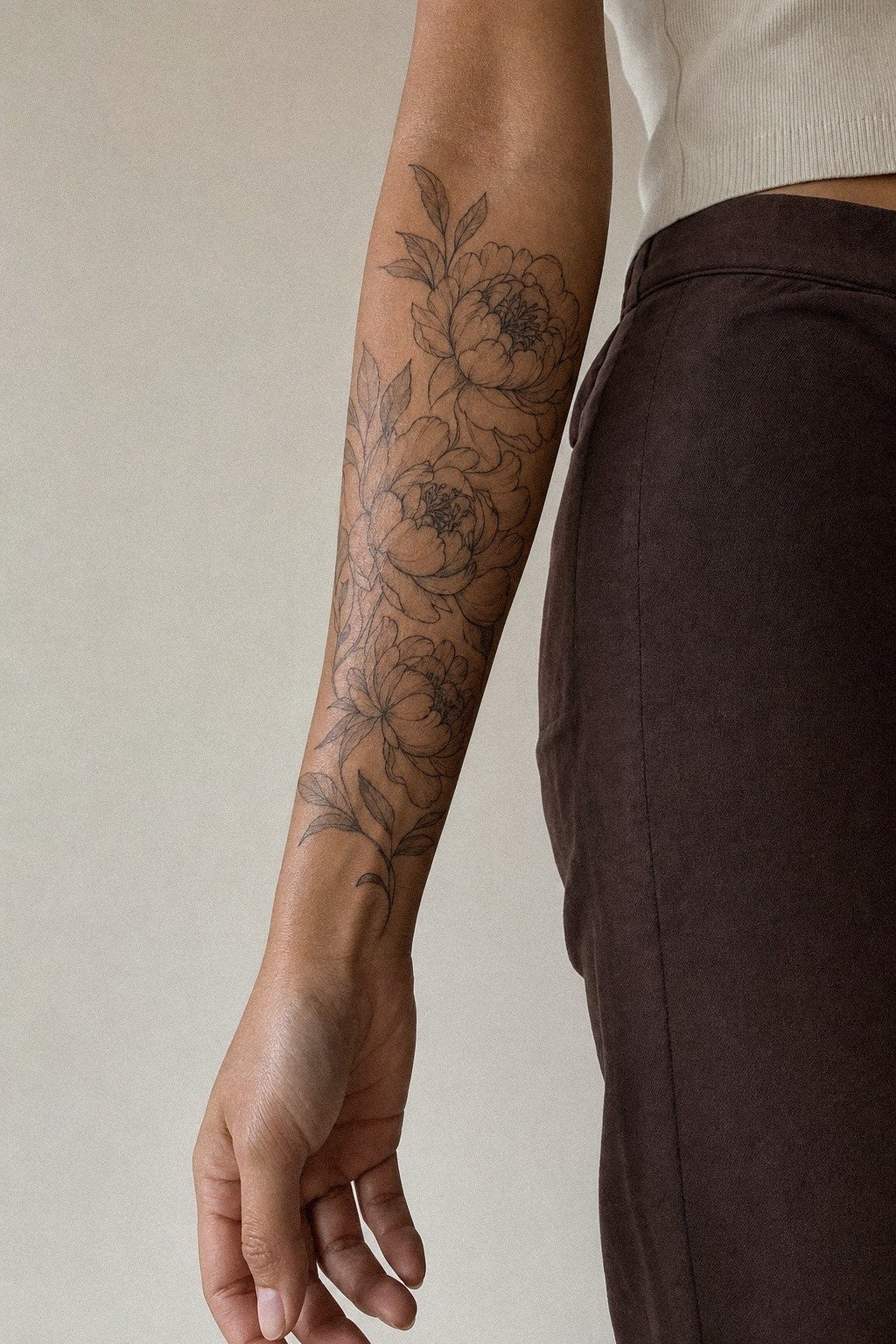
Peonies were the turning point because they do a lot of work without looking forced. A good fine line peony gives you a broad petal shape, soft overlap, and enough natural curve to carry the eye up the arm. That is why they show up so often in Arm Tats For Women that age cute instead of stiff.
I asked for open petals with clear outer contours, not fifty tiny inner lines. One clean pull matters more than extra fussing, and you can see it once the tattoo heals.
If you’re deciding between roses and peonies, peonies usually give a softer read on the forearm. I still looked through small arm tattoos ladies for scale ideas, but I knew I did not want micro detail that would flatten out in a few years.
4I Added A Butterfly Near The Elbow
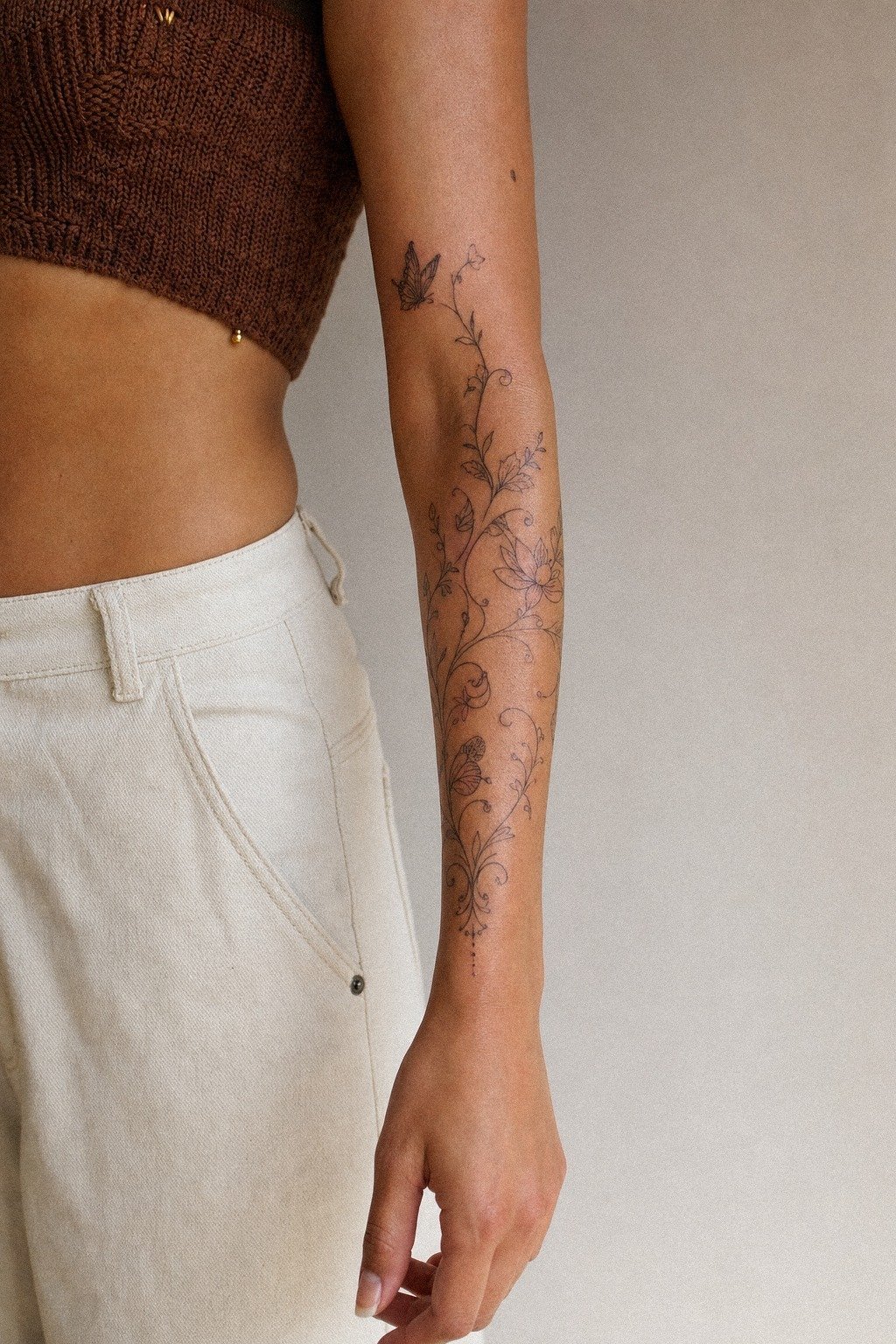
The elbow area needs movement, not a stiff badge parked on top of the joint. So I added a Butterfly Tattoo with the wings angled around the outside of the elbow, not centered like a stamp. That little change made the sleeve feel alive the second the arm bent.
A butterfly works here because the wings can mirror the arm’s own curve. I kept the body narrow and the wing edges readable, with enough black in the outline to hold.
If your artist places a butterfly straight across the ditch, ask to see it with the arm bent first. Why guess when the elbow changes the drawing so much?
But once we tested the angle, the whole sleeve started making sense.
5I Placed Wildflowers Around The Inner Arm
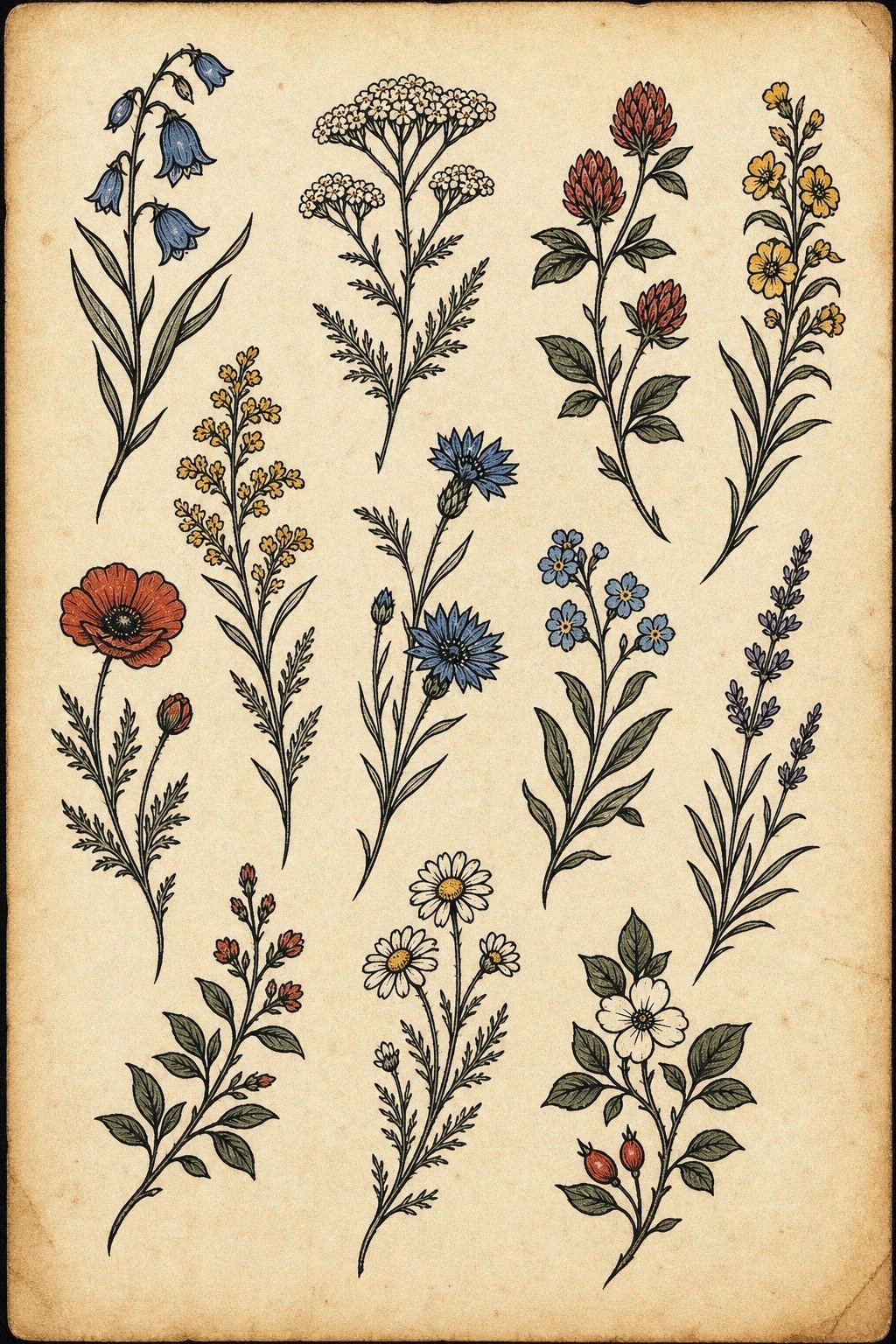
Wildflowers on the inner arm gave the sleeve its softer side. That skin is thinner, a little spicier, and way less forgiving if the linework gets scratchy, so I kept the stems airy and the blossoms small but not tiny. Think readable, not precious.
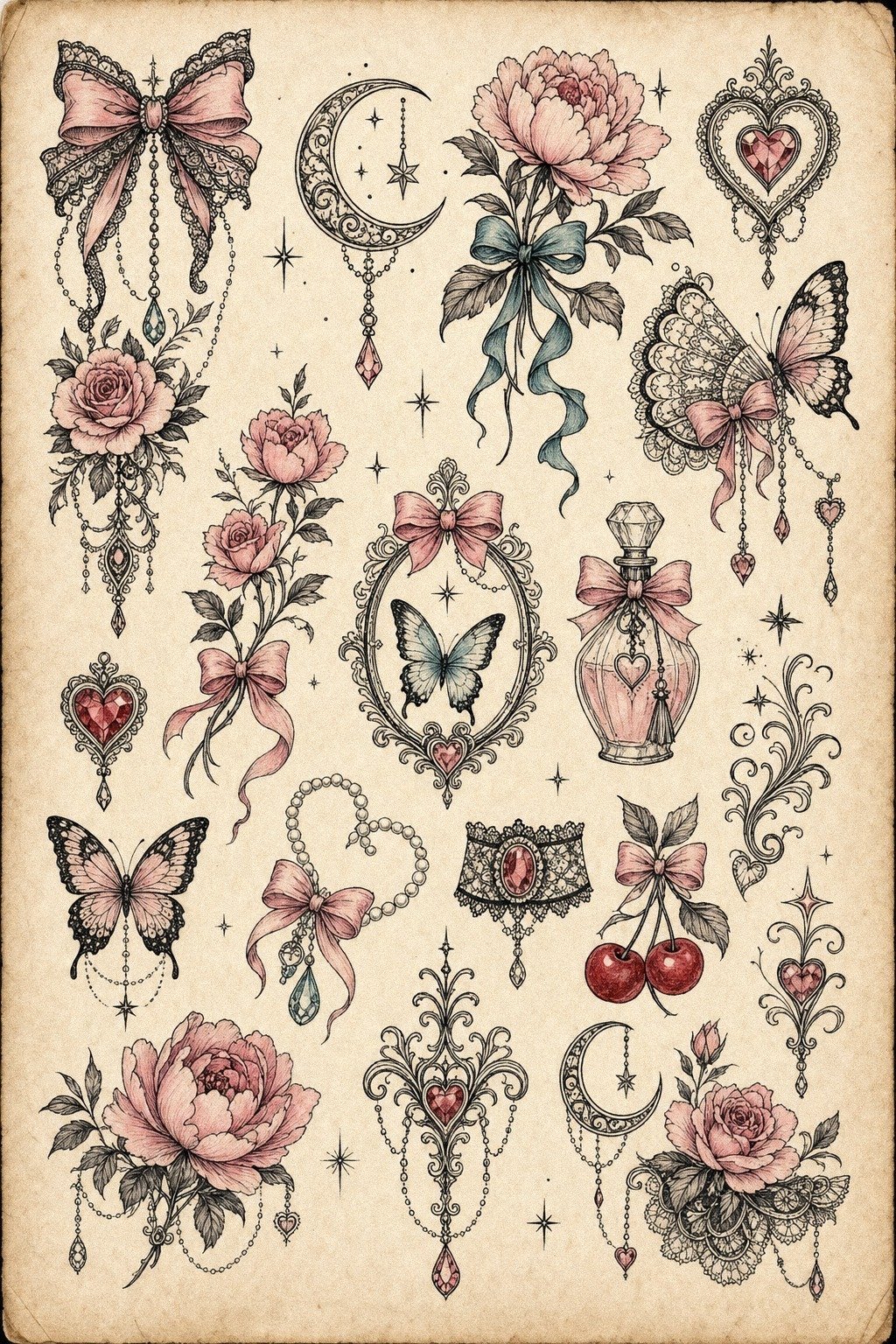
My artist pulled out a flash sheet first, which helped more than I expected. Seeing several stem directions on paper made it obvious which shapes would wrap the inner forearm without tangling together.
If you’re mixing bolder florals outside with looser flowers inside, that contrast keeps the sleeve feminine without getting syrupy. I also compared a few shoulder tattoos for women layouts because shoulder-to-inner-arm flow teaches you a lot about how botanical work should taper.
6I Kept The Shoulder Cap Soft
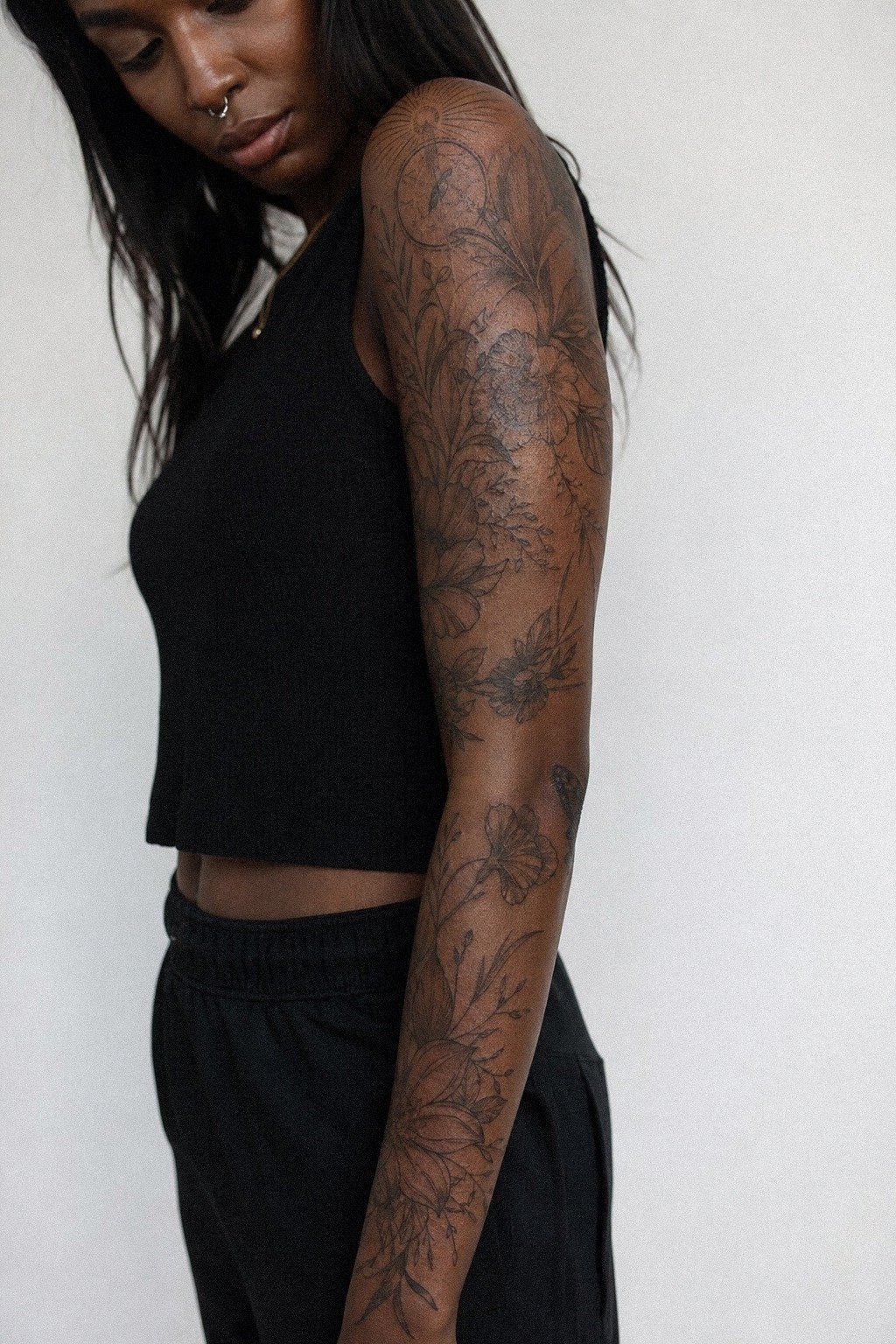
When I finally extended upward, I did not want a hard wall of ink at the shoulder cap. I wanted a soft finish that could still become a fuller Upper Arm Tattoos For Women story later if I chose to keep going. So we used lighter florals, thinner branching lines, and more visible skin than on the forearm.
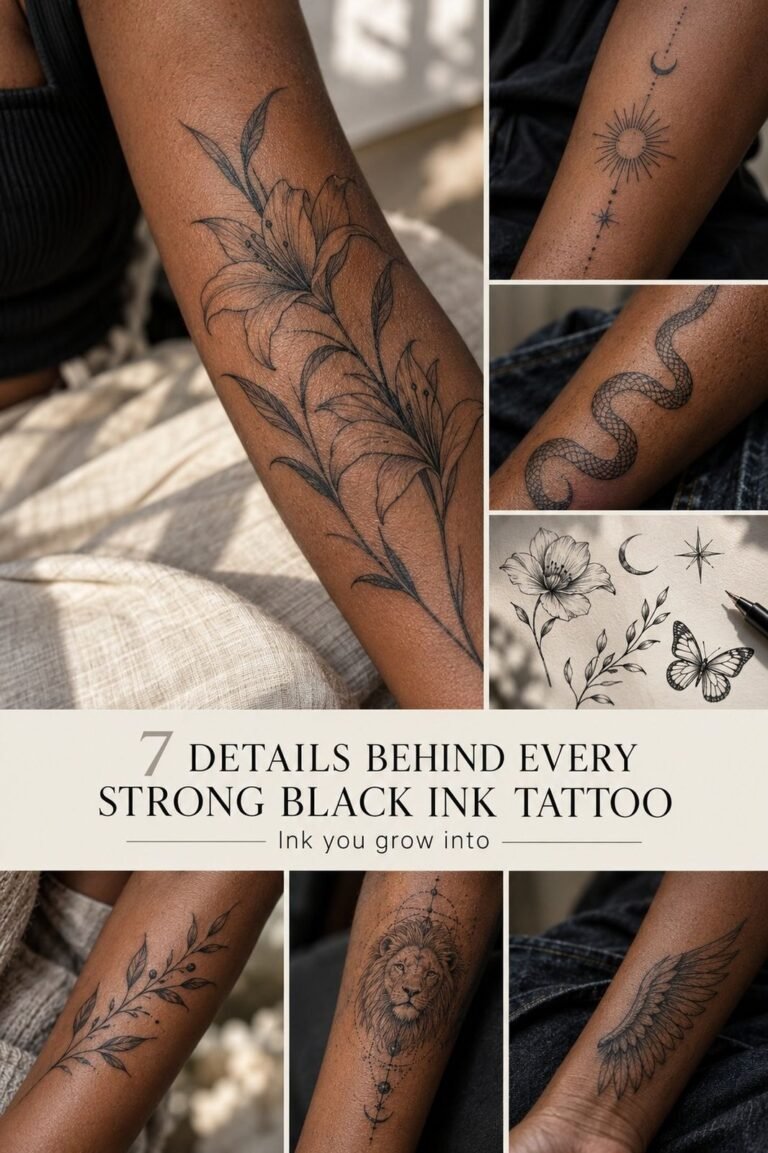
That matters on deeper skin too. Fine line can look beautiful on deep ebony skin when the artist respects contrast and doesn’t rely on whisper-thin marks that disappear once healed. I told mine to keep the silhouette clear first, then add softness inside.
But I skipped dusty grey filler because soft doesn’t mean faint. It means the edge feels intentional, not chopped off.
7I Used Vines To Connect The Forearm
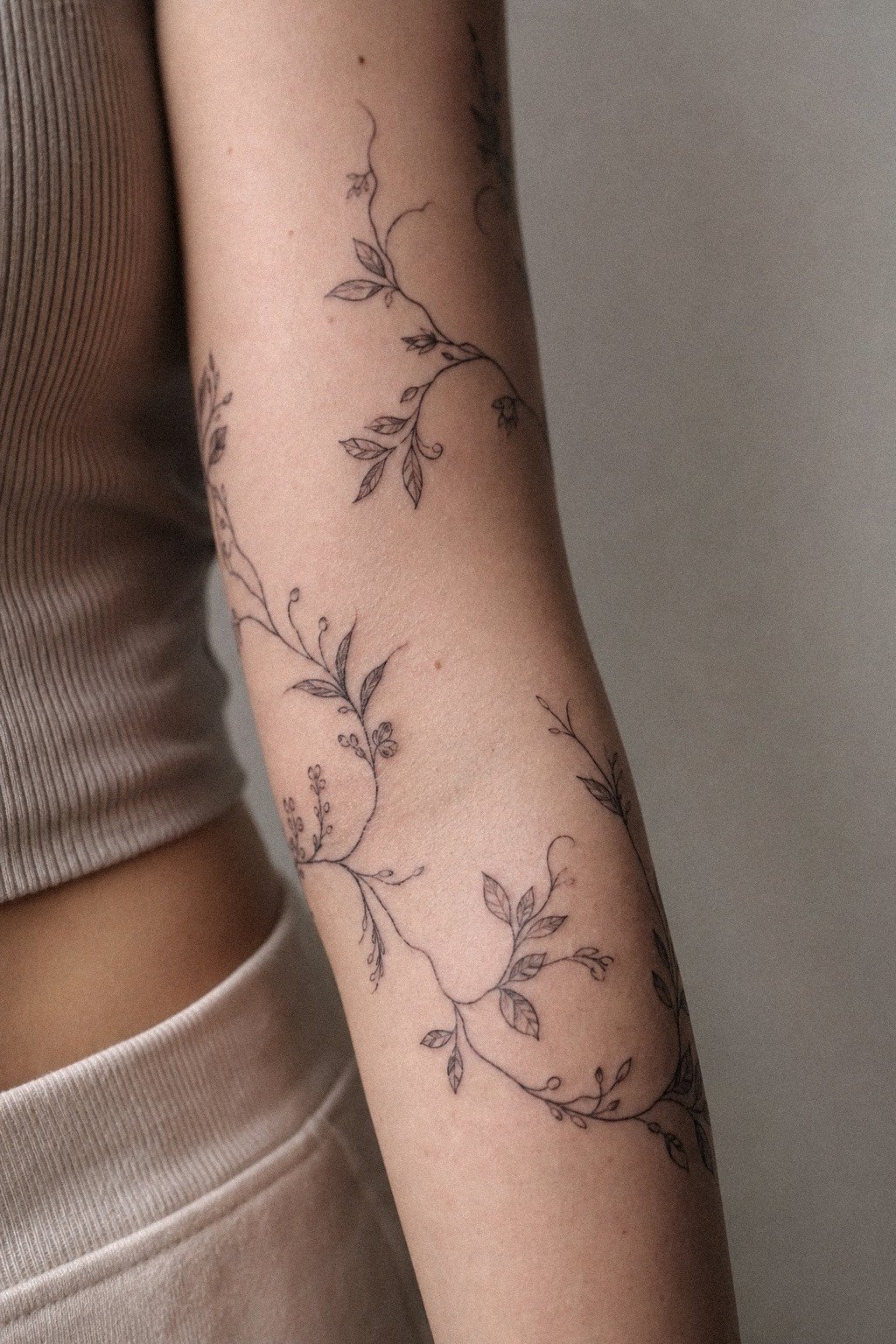
Vines are where a sleeve either gets elegant or gets cheesy fast. I used them like connectors, not extra filler. The vine linework linked one floral cluster to the next and gave the forearm a real direction from wrist toward elbow.
The move is keeping the stems varied in thickness and curve so they don’t look like barbed wire. Mine weave behind petals, then come forward again, which makes the arm feel wrapped instead of stickered.
If you’re building a Girly Sleeve Tattoo, vines can save you from random gaps, but only if they stay secondary. And yes, we checked them in motion, because a line that looks sweet on a flat stencil can look awkward once your hand turns palm-up.
8I Asked For Blackwork Leaves Between Florals
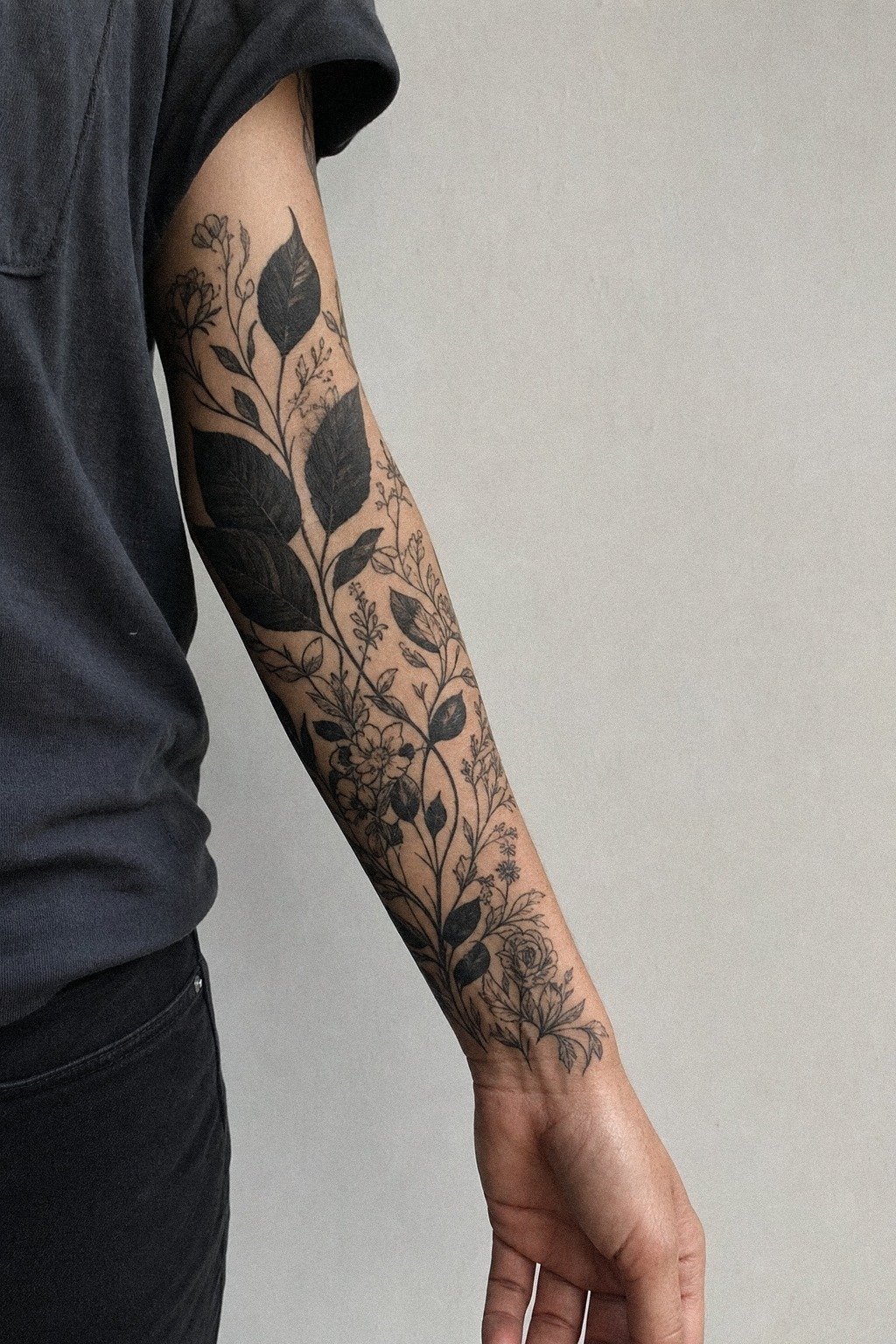
This was one of the smartest calls in the whole sleeve. Between the fine line flowers, I added blackwork leaves with a little more fill and a cleaner silhouette. That contrast gave the lighter florals something to push against, so the whole sleeve did not heal flat.
Black is your best friend for longevity. Not because everything needs to be heavy, but because a sleeve needs a value structure if you want it to read in ten years.
I told my artist I wanted soft petals and solid leaf moments, kind of a push-pull effect. If you’re only using pale outlines everywhere, the arm can look washed out once the fresh crispness settles.
I kept peeking at 22 half sleeve tattoos for women worth the commitment because half sleeves with good contrast teach this lesson fast.
But contrast is the point here. Those darker leaves are what keep the florals from floating away once the tattoo settles.
9I Tested Stencil Flow With Bent Elbow
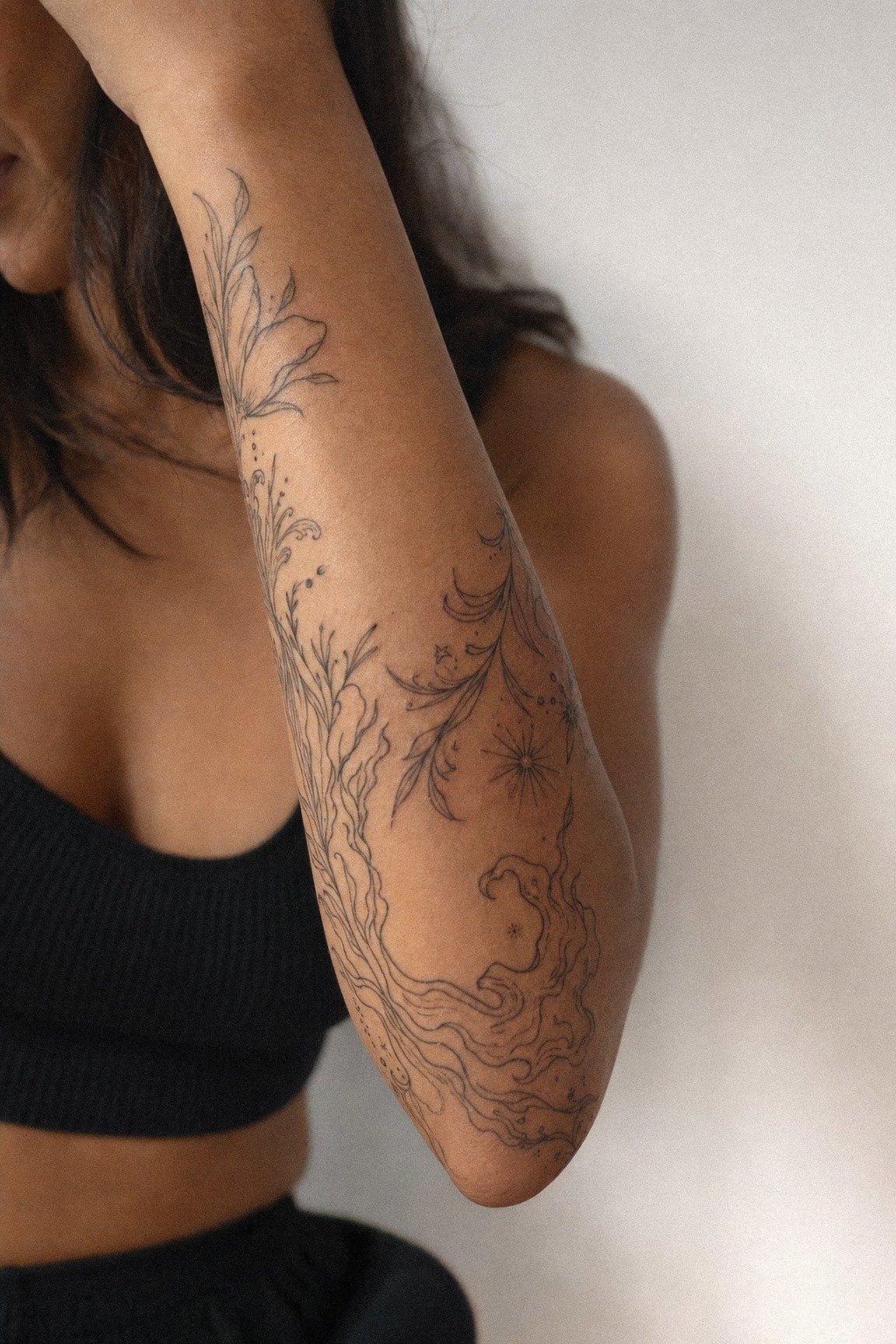
Before any line touched skin, we did the full bent-elbow test.
10I Left Breathing Room Around The Wrist
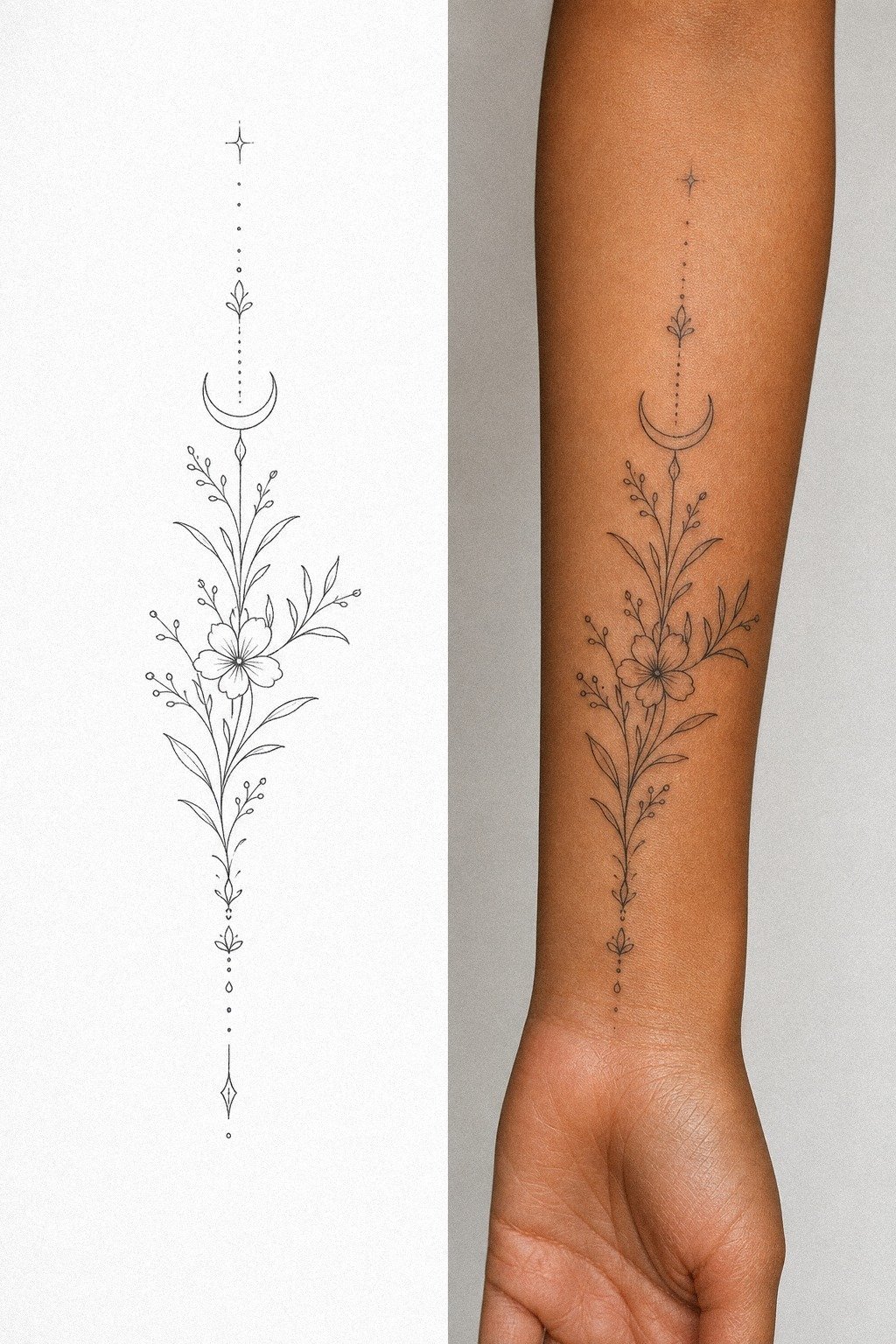
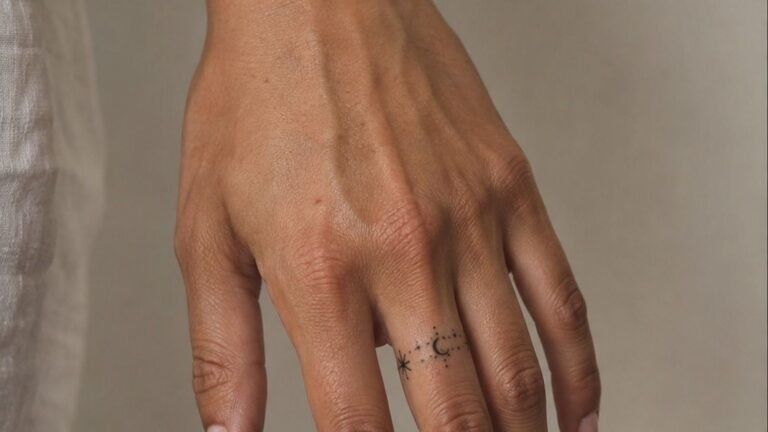
At the wrist, I left open skin on purpose. I did not want the sleeve choking the cuff line or turning into a dark bracelet that would blur first. Fine line needs a little runway near high-wear zones, and the wrist gets plenty of friction from sleeves, bags, watches, and daily life.
We kept the final lower stems about 1 to 1.5 inches above the crease, depending on which side of the forearm you were looking at. That is enough distance for the design to finish cleanly while still feeling connected.
If you want the look of a full arm piece without crowding the most fragile edge, this is how you do it. But if you push tiny details into the crease, you’re asking for extra maintenance.
I also checked stomach tattoos for women here because high-movement skin teaches the same lesson about leaving readable edges.
11I Added Birth Flowers For Personal Meaning
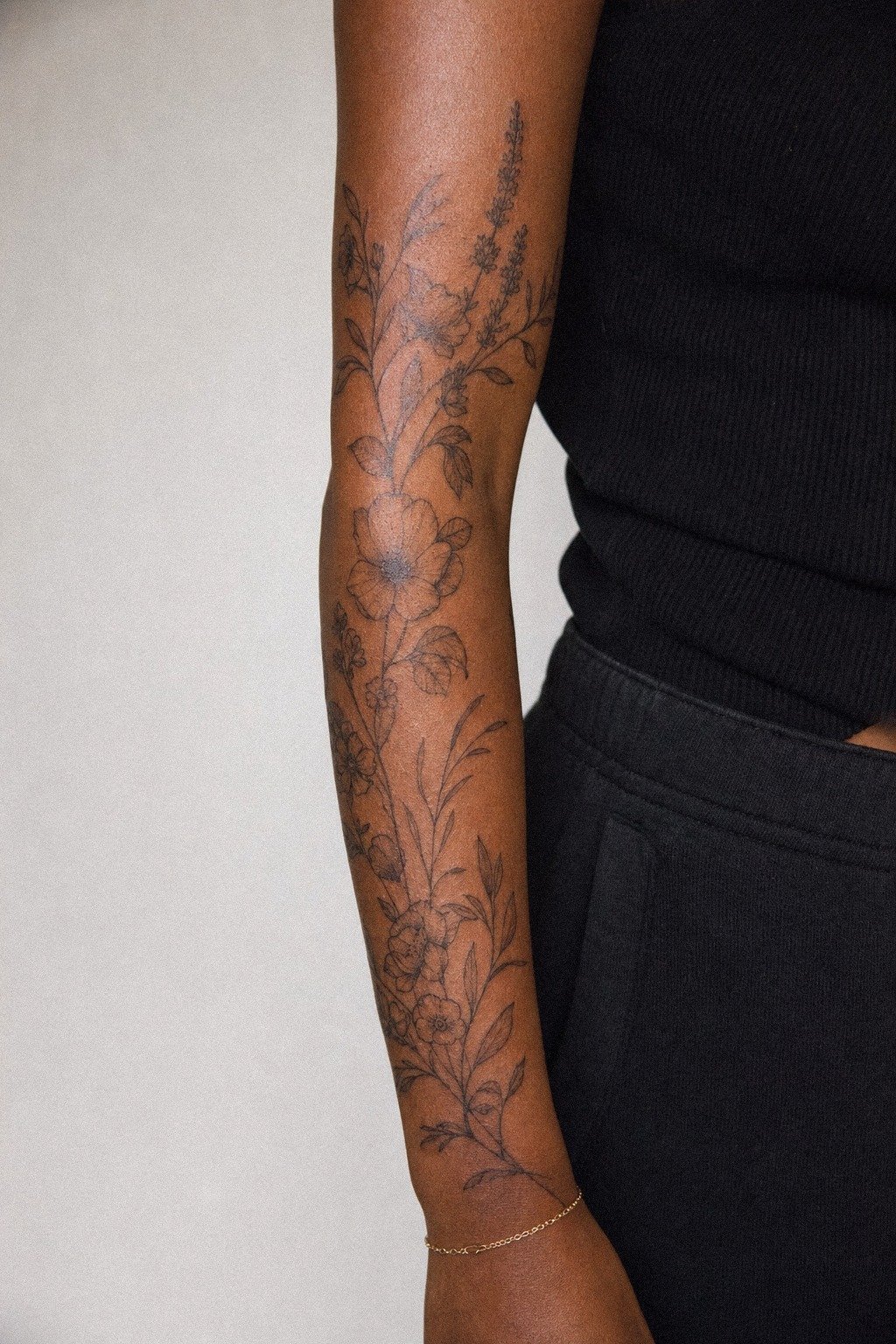
This is where the sleeve stopped being just pretty and started feeling mine.
12I Chose Soft Shading Over Heavy Filler
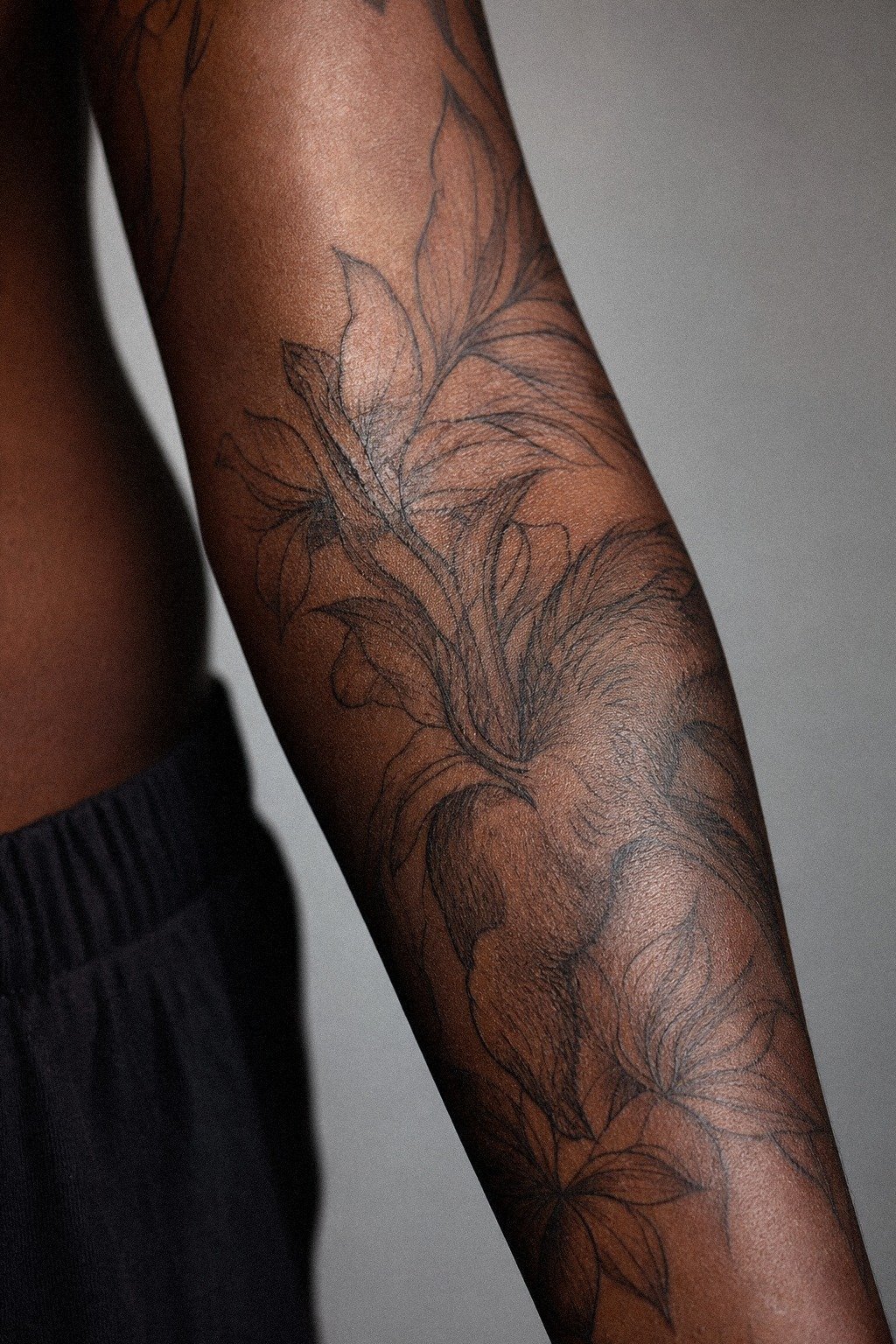
I said no to heavy filler and yes to soft shading. Specifically, I wanted a little grey wash and whispery pepper shading under some petals, not clouds of dark background chewing up the skin. That choice kept the forearm bright and let the linework stay the star.
Soft shading heals nice when it’s intentional. Heavy filler can work in blackwork sleeves, sure, but in a floral fine line piece it can crush the shape and age harder than you wanted. My artist used shading to push one flower back and pull another forward, which made the sleeve feel layered without overworking the skin.
But we stopped the second the contrast felt balanced. More isn’t always better here.
13I Placed Script Along The Inner Bicep
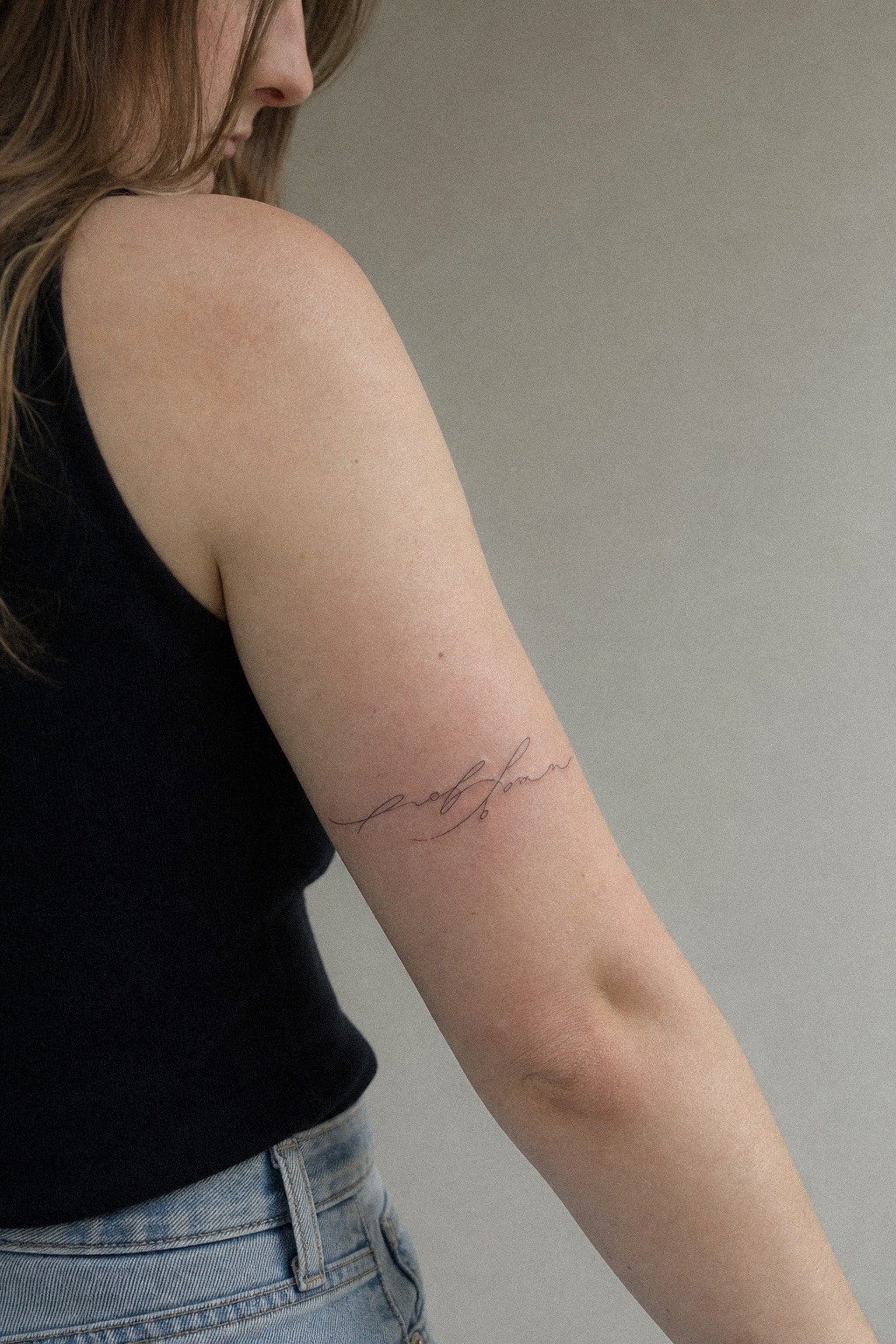
Script belongs where the body can carry it without stretching every letter to death. I placed mine along the inner bicep, where the phrase could run with the arm instead of fighting across it. That spot made the text feel intimate, not performative.
We kept the lettering simple, a clean single needle script with enough spacing that it won’t mush out fast. I passed on trendy micro cursive because it looks sweet fresh and can turn fuzzy early.
If you’re thinking about adding words to a sleeve, choose fewer words and better spacing. I looked at side tattoos for women for how script follows body lines, and that helped me keep the phrase long and light instead of chunky.
14I Matched Butterfly Wings To Arm Curves
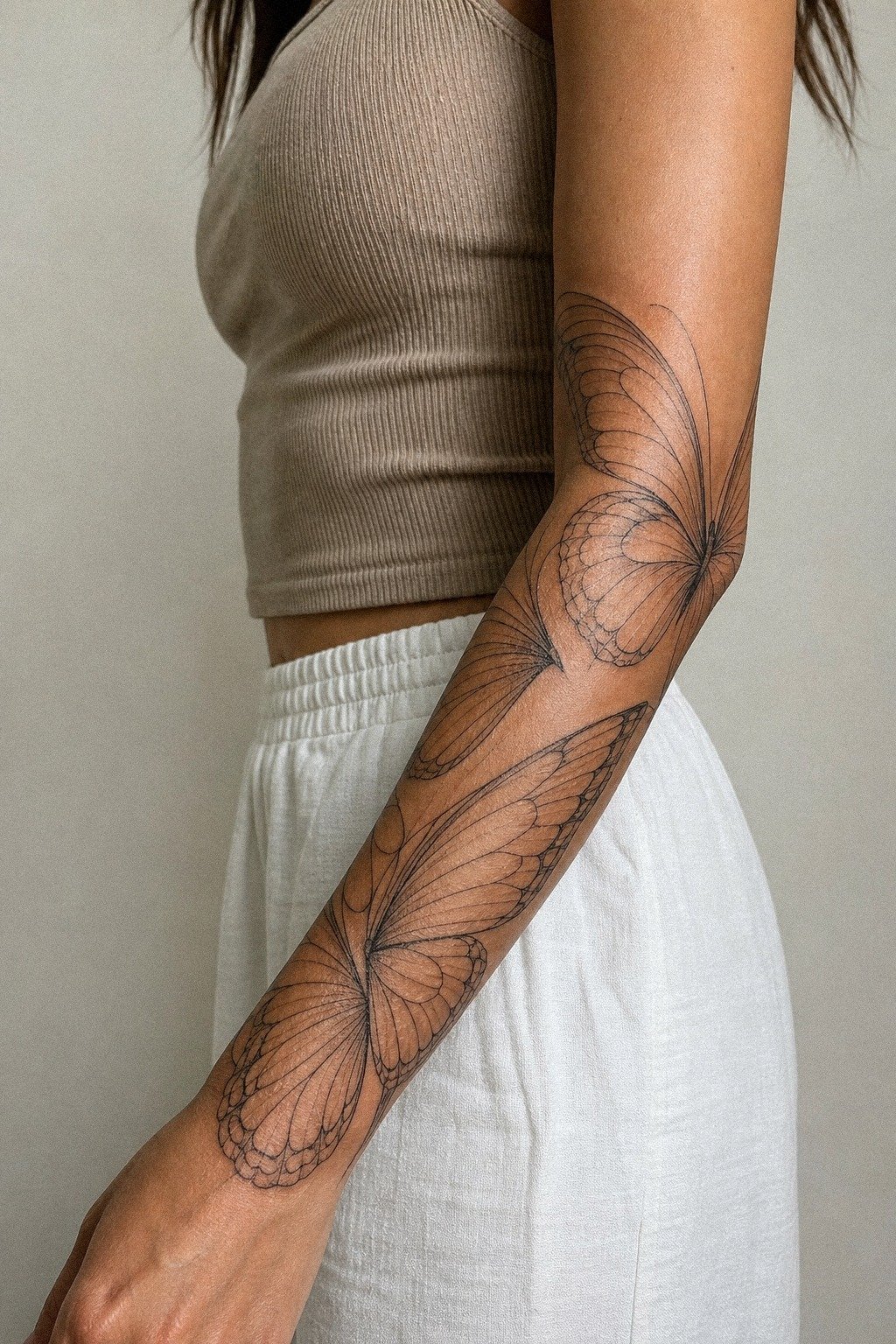
By this point, the butterfly wasn’t just a motif. It became a shape lesson. We redrew the upper wing arc so it echoed the round of my arm instead of flaring out sideways, and that one correction made the whole Women’s Arm Sleeve feel more custom.
This is why I tell people not to bring a Pinterest-exact demand to a tattooer. References are for vibe, not Xerox copying.
If you want the piece to look like it belongs on you, the wing width, body angle, and gap between the top petals all need to respond to your actual anatomy. But once that wing line matched the arm, it read cleaner from every angle. Huge difference!
I even glanced through 18 arm tattoos for guys who build the full sleeve because strong sleeve flow reads the same no matter who wears it.
15I Built A Girly Sleeve With Negative Skin
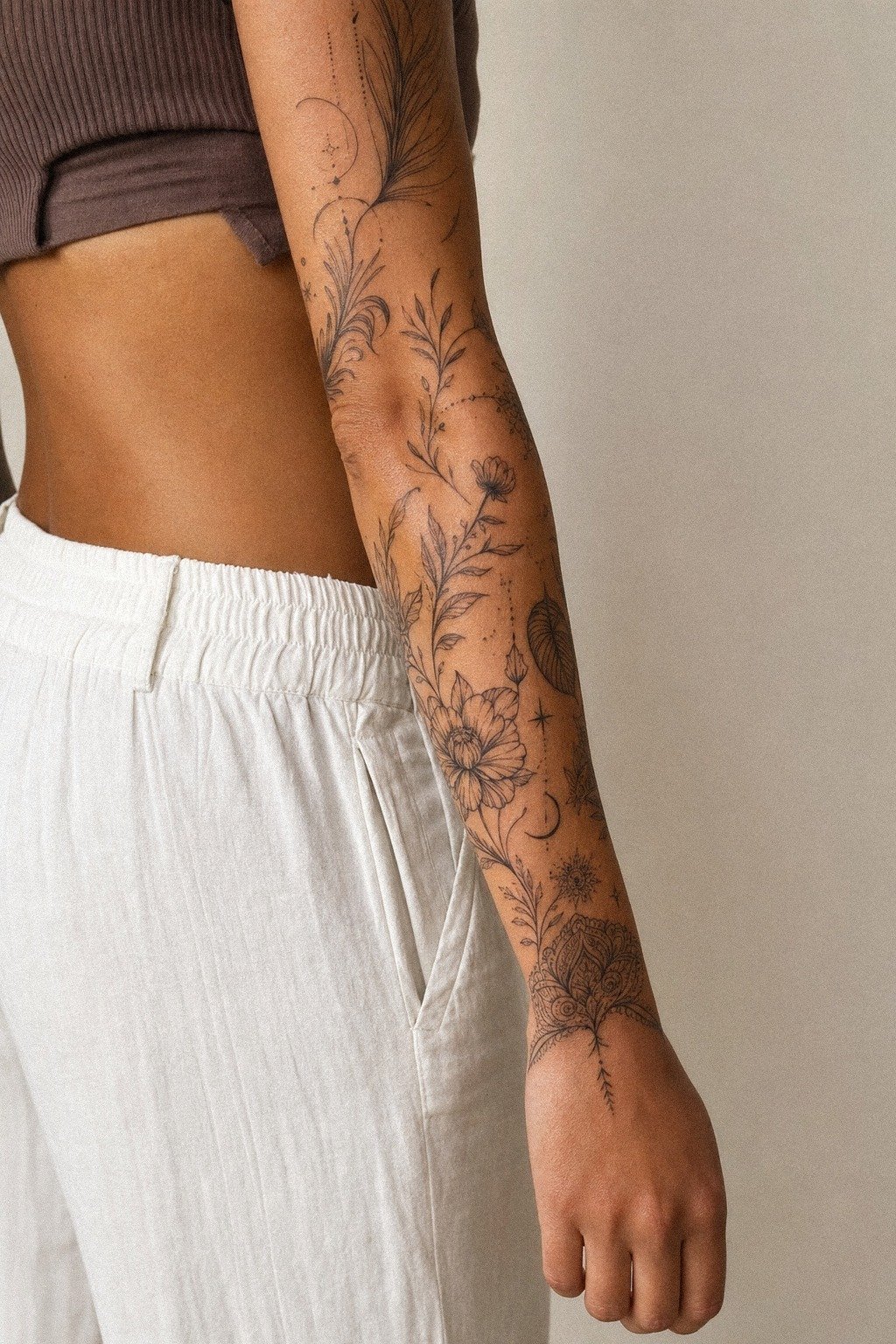
The sleeve got its feminine read from what we left out as much as what we tattooed. I kept slices of clear skin between florals, leaves, and the butterfly so the arm never turned into one gray mass. That is the negative-skin move I trust most in a Girly Sleeve Tattoo.
You don’t need lacey clutter to make a sleeve feel soft. You need rhythm. Open skin beside a crisp petal edge, then a darker leaf, then another open pocket.
That pattern lets the eye rest and keeps the flowers from getting chewed up visually. If your stencil already looks busy on paper, it will look busier on a real arm.
But once we edited out two extra blossoms, the whole thing felt more expensive and more grown.
16I Planned Pain Breaks Around Elbow Ditch
Real talk: the elbow ditch was the spiciest part for me.
17I Checked Healed Fine Line Sleeve Photos
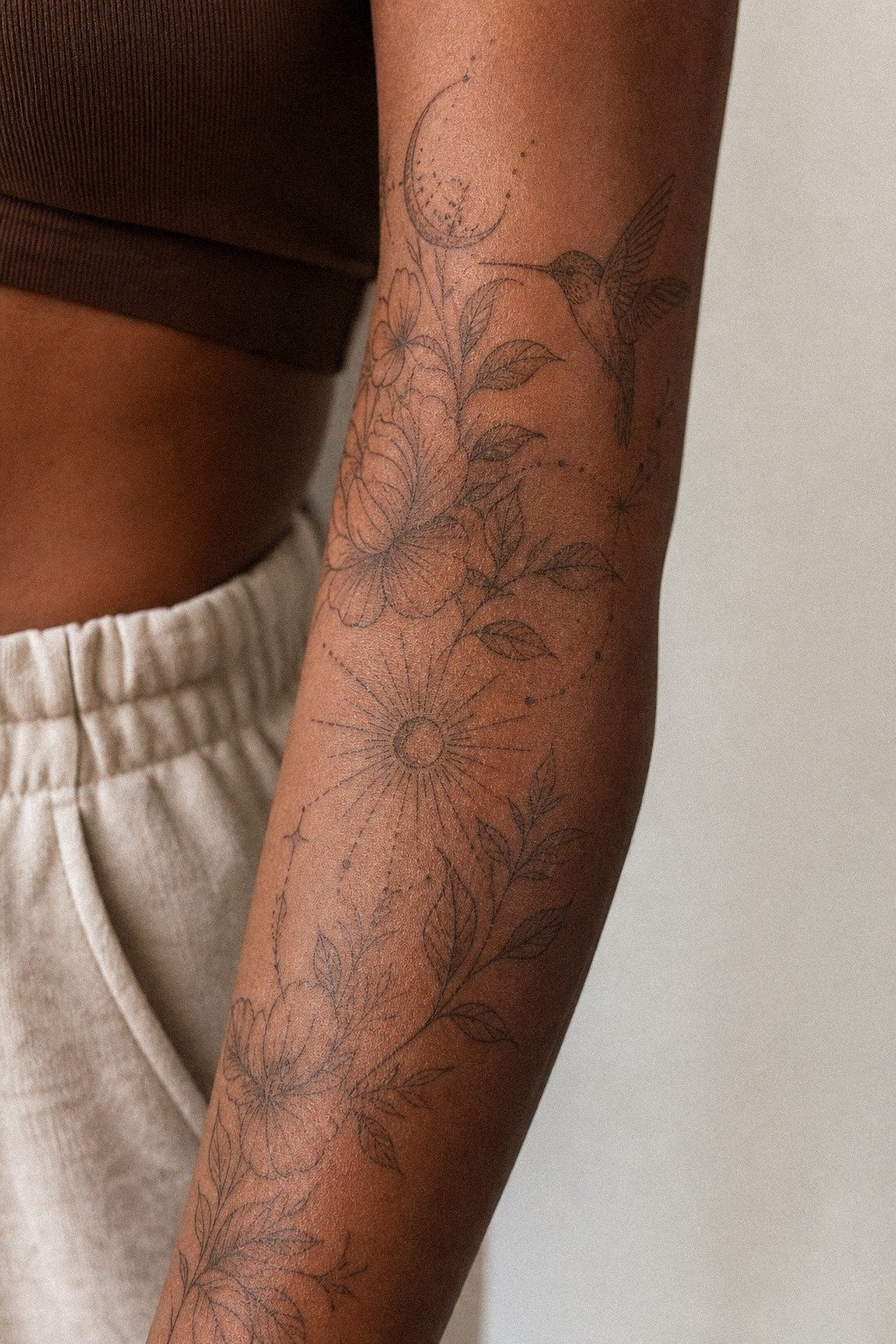
Fresh tattoos lie a little. Everything looks darker, sharper, and more dramatic in the first week, so I asked to see healed fine line sleeve photos before I committed to the final pass. That one habit saved me from asking for details I would’ve regretted later.
Healed photos show whether the lines stay crispy, whether the grey wash turns patchy, and whether the black anchors still read. If an artist only posts fresh work, I want more proof before I book.
You should too. I also used small arm tattoos ladies and 22 half sleeve tattoos for women worth the commitment to compare healed density, because scale mistakes are easier to catch when you stop staring only at brand-new ink.
18I Booked Touchups Before Summer Sun
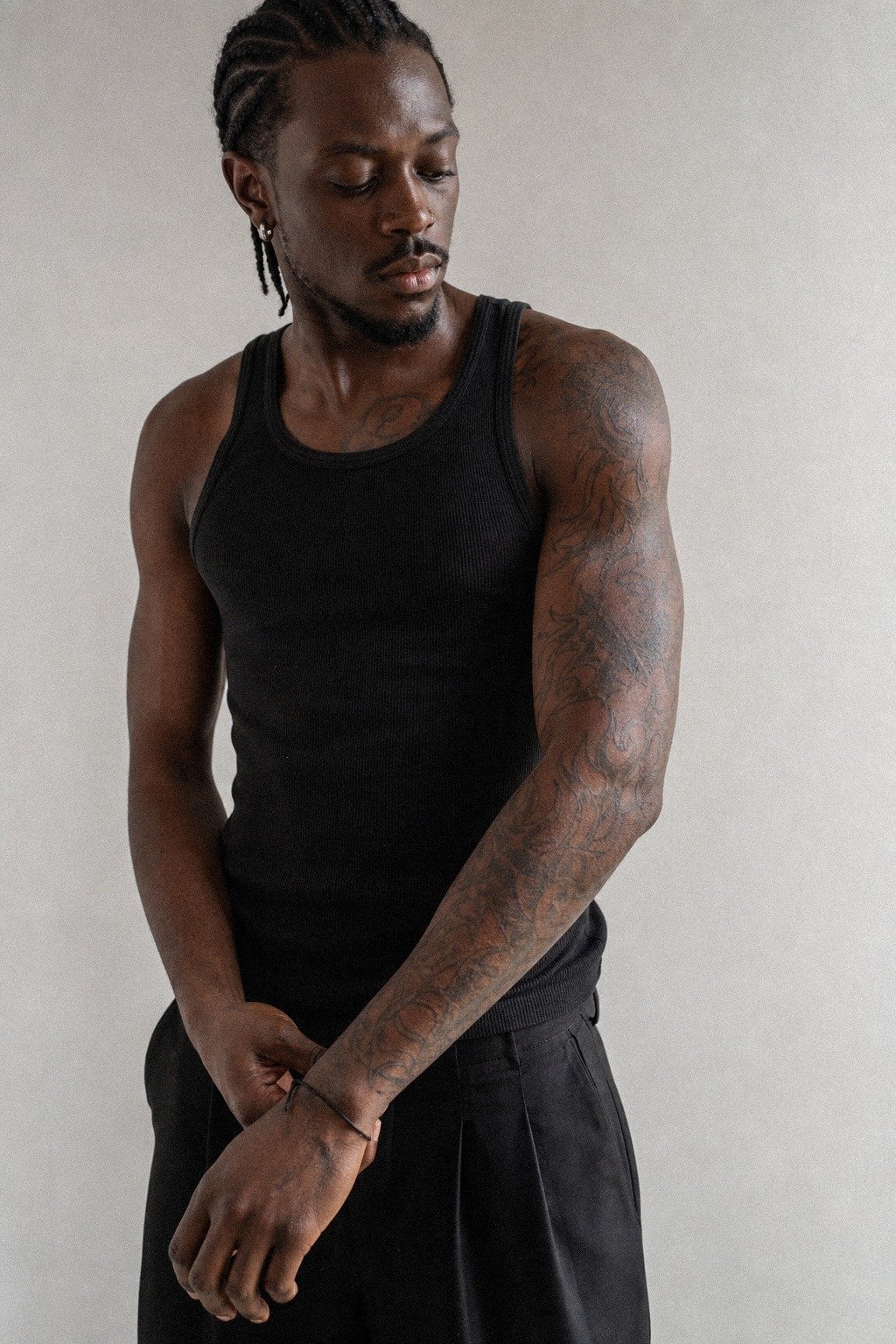
I booked my touchup window before peak summer because UV is brutal on fresh and freshly healed fine line work.
19I Protected The Arm Sleeve During Healing
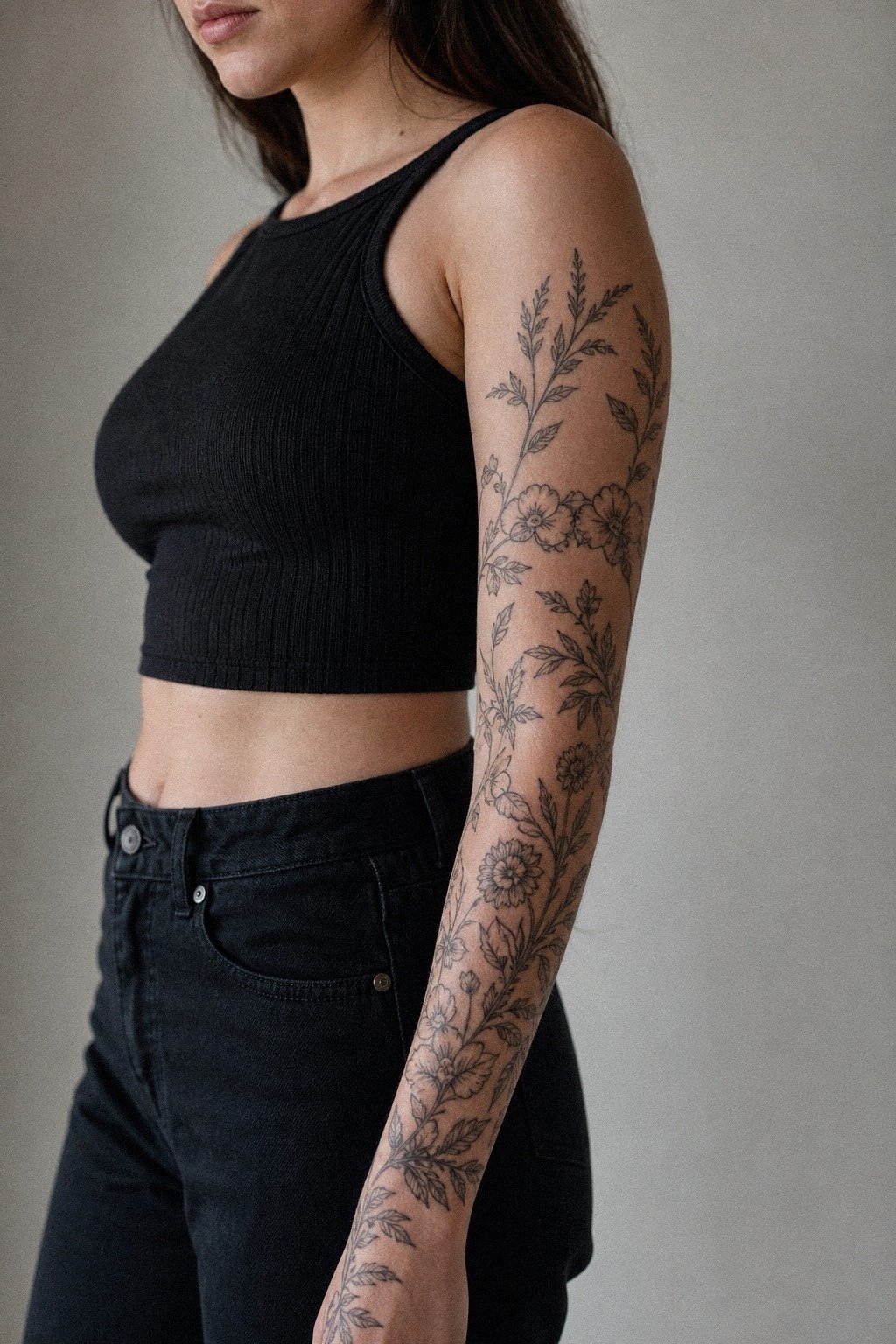
For healing, I kept it boring. Gentle unscented soap, clean hands, a thin layer of ointment early on, then light lotion once the skin started drying out.
First few days, it’s an open wound, so treat it like that. No gym friction across the forearm.
No pool. No picking when it peels like a sunburn.
The protection part is less glamorous than the tattoo session, but it’s what decides whether those crispy lines stay crispy. I wore loose sleeves when I had to, kept the arm out of direct sun, and left the flakes alone even when they looked rough. But once the peel passed and the silver skin settled, the sleeve looked clean, soft, and way more cohesive than if I’d rushed the process.
Worth it! And yes, the boring aftercare part is what keeps a fine line sleeve looking expensive later.
How much it cost
I can’t give you one magic number because sleeves get built at different speeds, by different artists, in different cities. But I can give you the honest tattoo math I used before booking. Most US shops have a minimum around $50 to $100, and many experienced artists charge roughly $100 to $250 per hour.
A floral fine line sleeve often gets planned in stages, not one marathon day.
Here’s the range that matters if you’re budgeting your own sleeve. And yes, size, density, artist demand, and whether you add script or blackwork contrast will shift it.
If you’re comparing styles, floral fine line usually asks for restraint more than brute hours. That is why I tell people to budget for placement and pacing first, not just for square inches of skin. I also kept 22 half sleeve tattoos for women worth the commitment open while planning because half-sleeve scale is the easiest way to spot whether your budget matches your ambition.
The Bent-Elbow Test
The best sleeves don’t only look good in a still photo. They survive movement. My rule was simple: if a flower head, wing tip, or script line looked awkward with the elbow bent, it wasn’t ready yet.
That is the bent-elbow test, and you should steal it. A sleeve sits on skin that twists all day, so checking the stencil in motion tells you more than admiring it in a mirror ever will. And if the stencil only works when your arm is perfectly straight, it does not work.
The Three-Zone Sleeve Rule
What finally made my sleeve feel grown and clean was dividing the arm into three jobs. Outer forearm for the boldest flowers.
Inner arm for softer stems and script. Upper arm and shoulder for a lighter fade-out that lets the whole thing breathe.
Once I saw it that way, every decision got easier.
I think a lot of women get talked into overfilling because they’re shown the arm as one blank canvas instead of a set of moving zones. But skin wear is not even.
The wrist and ditch take more friction, the outer forearm reads best from a distance, and the shoulder can handle a softer exit. If you map those three zones before you book, you’re much less likely to chase filler later.
That is the part that worked for me.
Here is how I explain it now when friends ask. Zone one is the read-first zone, usually the outer forearm, where your strongest flower or butterfly should live because that is what people clock immediately.
Zone two is the intimate zone, usually inner arm or inner bicep, where softer stems or script can sit closer to the body and feel more private. Zone three is the release zone near the upper arm and shoulder, where you taper, lighten, or stop before the sleeve starts looking boxed in.
And this rule saves money too. If you know which zone needs the boldest linework, you stop wasting time tattooing details nobody will read well. I also like it because it makes artist conversations sharper.
You are not walking in with a vague collage of screenshots. You are talking about read, wear, pain, and how the sleeve should age on actual skin.
That is a much cleaner way to build something you will still like years from now. Big difference!
The Negative Skin Window
My other big lesson was leaving a negative skin window in every major section. Not huge gaps. Just enough open skin that each flower got its own edge and each darker leaf had its own area to hit.
And here is the thing: when everything is filled, nothing stands out. That one edit choice is why the sleeve still reads clean instead of turning into grey chatter.
The Questions I Get Asked Most
How much does a Arm Sleeve Tattoos For Women usually cost?
About $100 to $250 per hour is a normal US hourly range, with many shops starting around $50 to $100 minimums. For planning, think in stages.
A quarter sleeve first. Build-out later.
Bigger custom sleeves cost more because the drawing, placement, and session time stack.
Are Arm Sleeve Tattoos For Women a good idea for a first tattoo?
Yes, if you start with a readable section instead of forcing a whole arm on day one. A quarter sleeve anchor gives you clean placement, manageable pain, and a clear path to expand later. I usually tell first-timers to compare small arm tattoos ladies with arm tattoos for women before they commit.
How do I choose a tattoo artist for Arm Sleeve Tattoos For Women?
Pick someone whose healed work shows crispy lines and calm skin, not just pretty fresh photos. Portfolio first.
Healed images. Studio hygiene.
And if the style is floral fine line, make sure they can show sleeves on different skin tones, not one lucky forearm over and over.
How much do Arm Sleeve Tattoos For Women hurt?
Forearm and outer upper arm are usually more tolerable, while the elbow ditch, inner arm, hands, ribs, feet, and sternum are spicier. Lines feel sharper and shading feels more like a dull burn. Pain also depends on session length, your sleep, and whether you’re white-knuckling the whole appointment.
How long does a Arm Sleeve Tattoos For Women take to heal?
Surface healing is usually around 2 to 3 weeks, while deeper settling can take 2 to 3 months. Wash gentle.
Light ointment early. Unscented lotion later. No pools, no hard sun, and no picking if you want the linework to heal nice and stay clean.
What’s the best placement for Arm Sleeve Tattoos For Women?
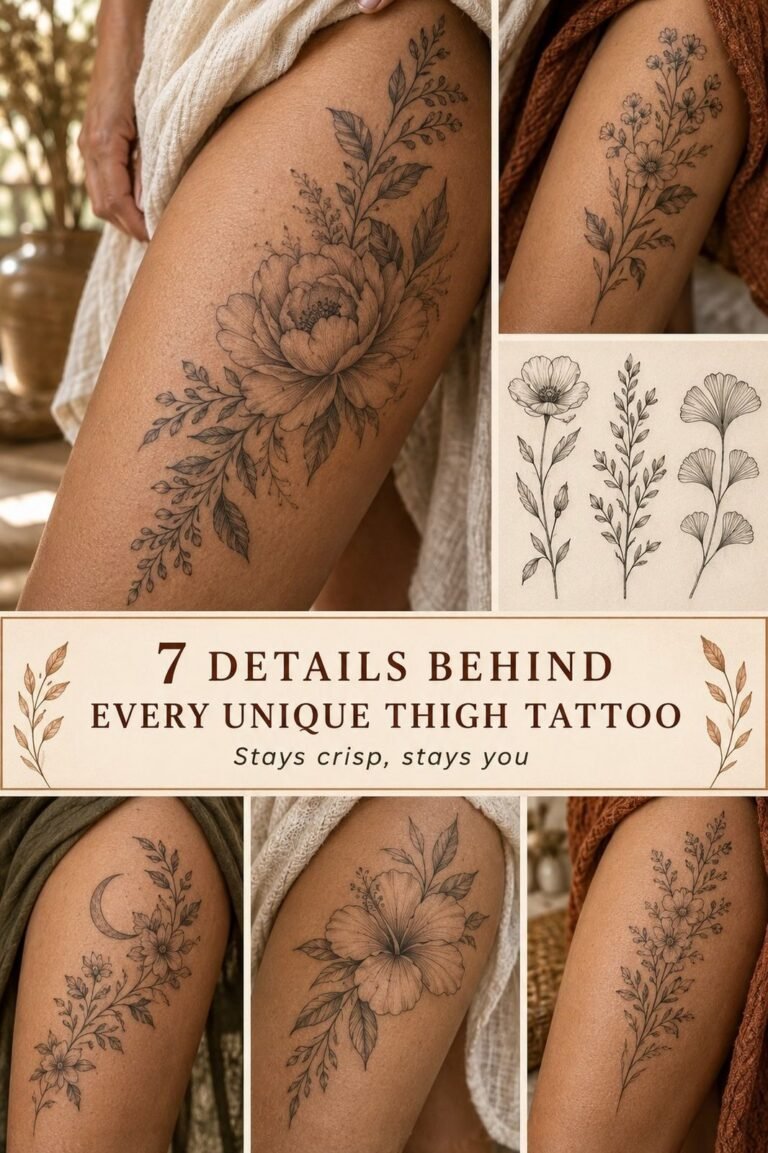
Outer forearm and upper arm are the safest starting points if you want clean readability and a more chill pain level. They age better than high-wear spots like hands and wrists packed with micro detail. If you want a second-body-placement comparison, thigh tattoos for women are another low-wear example.
Where I’d Start First
If I had to pick one, I’d start with the quarter sleeve anchor on the outer forearm. That spot gives you the clearest read, the easiest future expansion, and fewer regrets if your taste shifts. Pin that idea first, then build the rest once the first piece heals.