Aesthetic mandala art can age clean on skin if you stop treating it like a tiny sticker and start planning it like real tattooing. I almost talked a client into going too small on her first sternum piece, and I’m glad I caught myself. The fix was simple: better scale, cleaner blackwork, and more open skin. That’s what keeps mandala work crisp years later!
- Fine Line Mandala Sternum Tattoo
- Geometric Mandala Forearm Tattoo
- Ornamental Mandala Spine Tattoo
- Blackwork Mandala Shoulder Cap Tattoo
- Start With a Dotwork Mandala Thigh Tattoo
- Minimal Wrist Mandala Tattoo
- Sacred Geometry Mandala Back Tattoo
- Why does a lotus mandala work so well under the bust?
- Radha Krishna Mandala Sleeve Tattoo
- Modern Mandala Neck Tattoo
- Blackwork vs Single Needle on the Ankle
- Open-Skin Mandala Hand Tattoo
- Creative Mandala Sun Chest Tattoo
- Bold Elbow Mandala Tattoo
- Soft Shaded Mandala Hip Tattoo
- Can matching mandala finger tattoos ever be worth it?
1Fine Line Mandala Sternum Tattoo
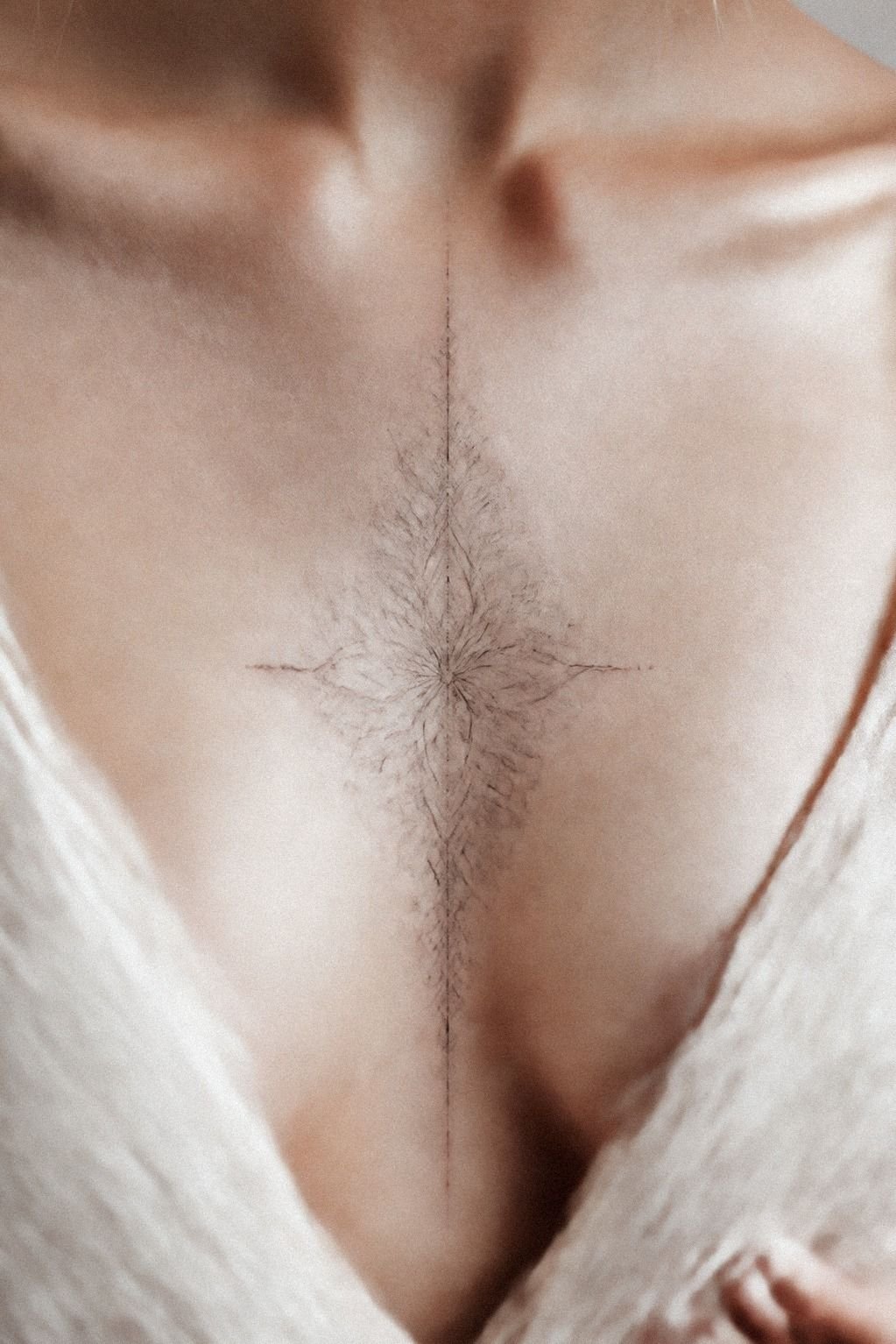
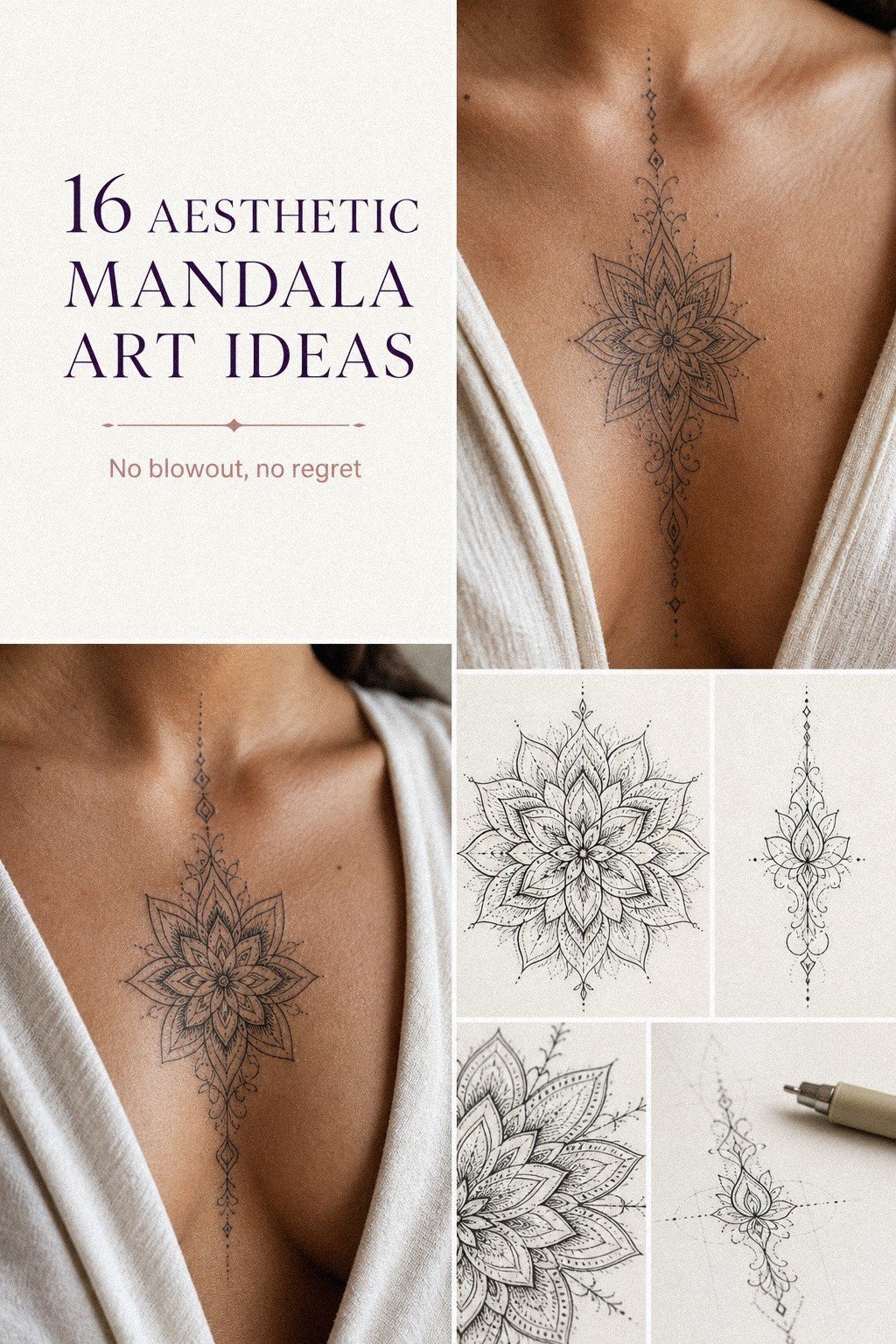
Place a fine line sternum mandala with real clearance around the center point, especially on fair cool-pink skin where every wobble shows. I tell you to think in inches, not vibes: about 4 to 6 inches wide usually gives those petals enough skin so they don’t crowd each other. If you force a tiny version right between the breasts, the lower arcs can heal soft and start drifting toward soup.
I like this look when the linework stays airy and the center bloom sits just under the cleavage line, not too high. Your artist should pull those lines in one clean pass and leave the filler light, because sternum skin gets spicy fast. But the payoff is big!
It isn’t the cheapest placement when the stencil needs extra symmetry checks, but it’s often worth the cost if you love that centered, elegant look. If you want more symmetry references before you book, look at 20 mandala tattoo designs that reward a steady hand and notice how the clean ones keep open skin doing half the work.
2Geometric Mandala Forearm Tattoo
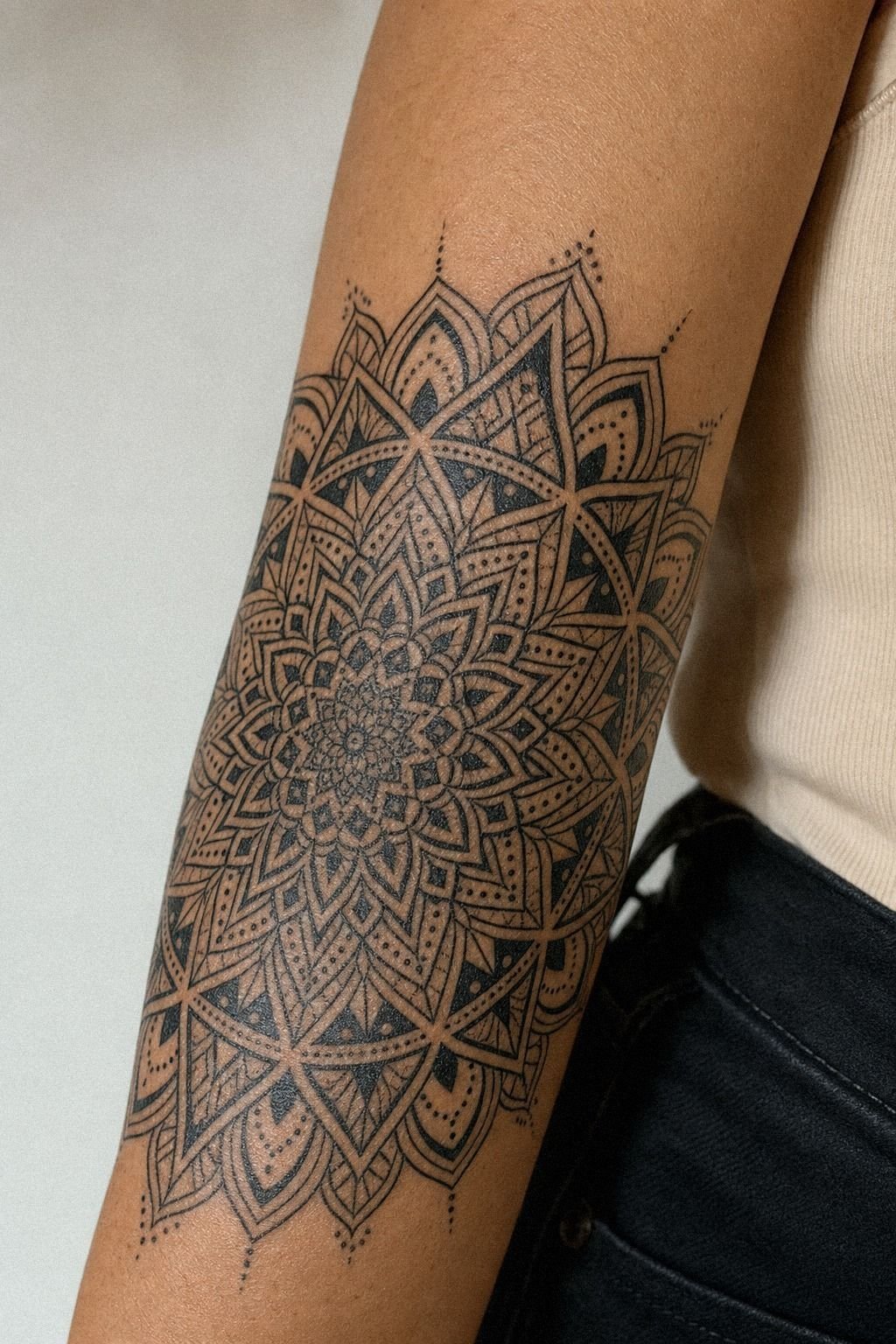
Use your forearm when you want geometric mandala work that reads clean from a few feet away and still gives you daily visibility. A forearm layout around 5 to 7 inches long is a sweet spot for medium warm ivory skin because the flat plane helps the stencil sit true. You get less distortion there than you do on a wrist or hand, and that matters when every spoke has to meet dead center.
I push clients toward firmer contrast here: solid black outlines, soft grey wash in the second ring, then no fussy micro-texture in the tips.
And your forearm is a low-wear zone compared with fingers, so it usually heals nice with less maintenance. And yes, this is one of the easier geometric placements for a first timer!
It also gives you strong long-term payoff because touch-ups tend to be less frequent than they are on high-wear spots. If you like this sharper route, my best comparison point is the blackwork geometric tattoo dotwork mandala guide, because you can see how black density changes the whole read.
3Ornamental Mandala Spine Tattoo
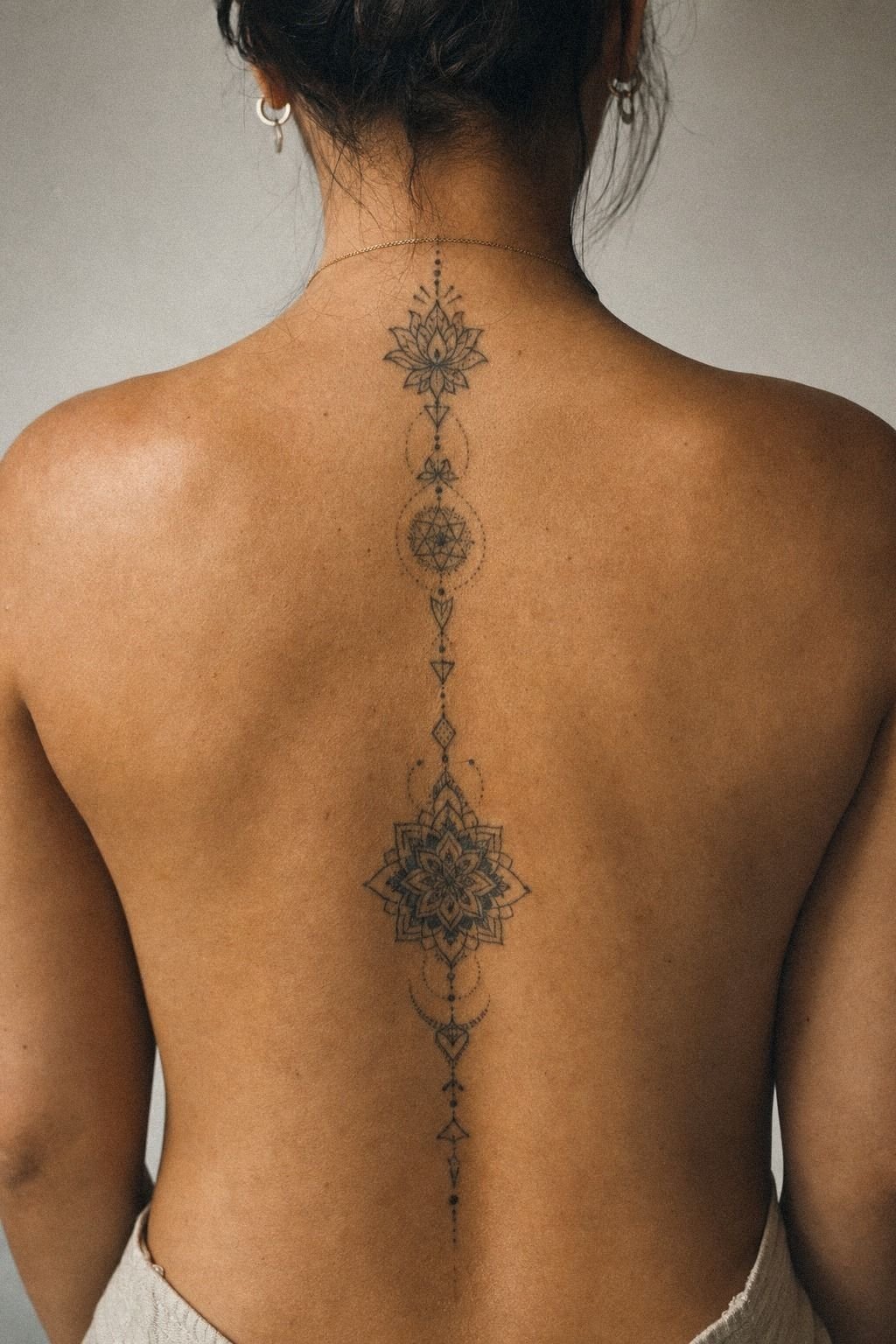
Run an ornamental mandala down the spine only if you’re ready to let the body line lead. On medium olive skin, a healed spine piece looks strongest when the mandala breaks into stacked sections instead of one giant medallion from neck to low back. You want the top ornament centered between the shoulders, then enough distance between drops so the whole thing doesn’t compress once your back bends.
Healing matters here more than people think. Your shirt rubs, your bra rubs, and sleeping flat can make the first week annoying. I tell clients surface healing is usually about 2 to 3 weeks, but the settled look takes closer to 2 to 3 months.
But when the linework is crispy and the clearance is honest, a spine mandala ages clean. The payoff here isn’t bargain pricing. It’s that a smart layout keeps the whole tattoo graceful instead of cramped.
For more sacred symmetry references, mandala mehndi designs are useful for flow, even if the tattoo version needs heavier anchors.
4Blackwork Mandala Shoulder Cap Tattoo
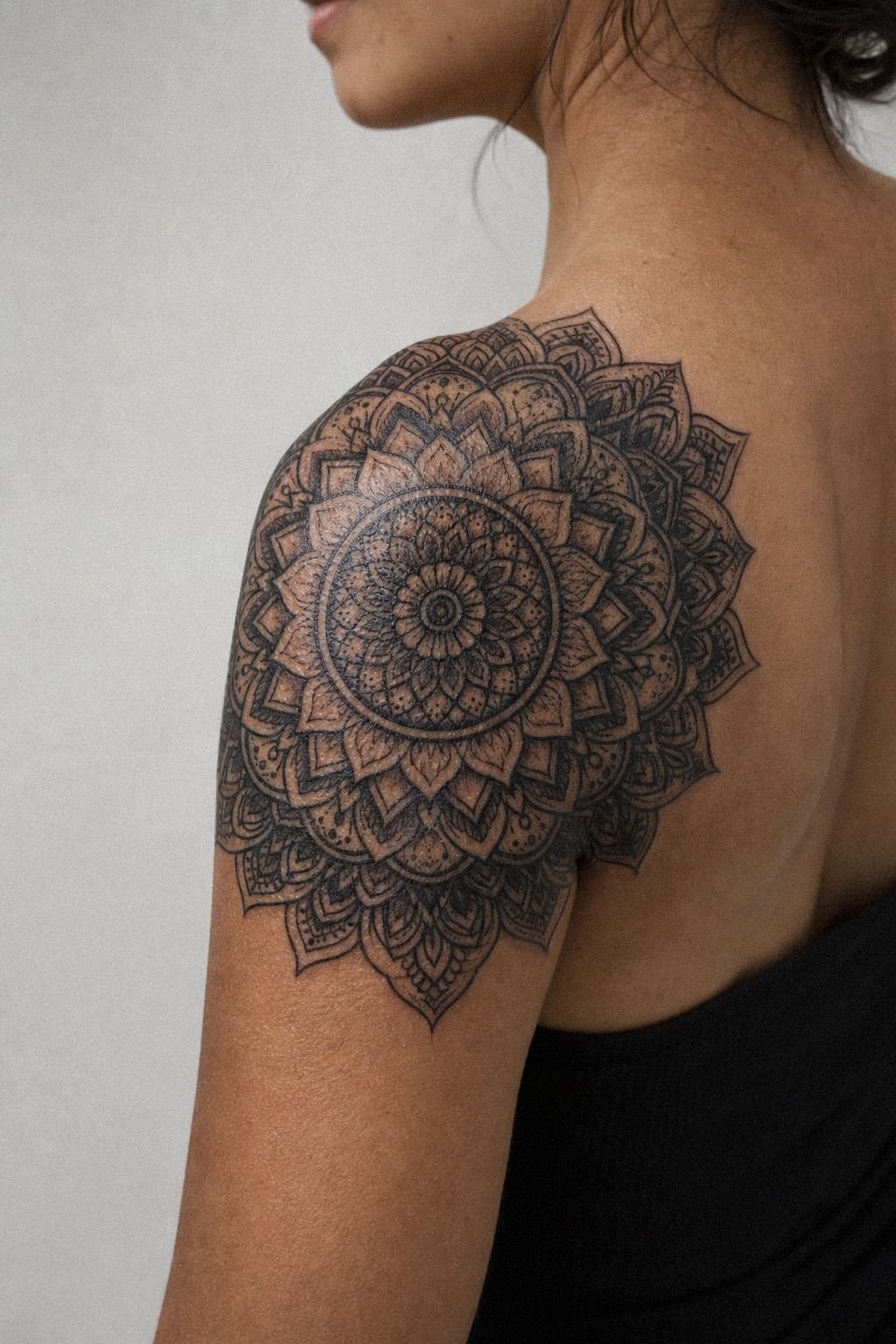
Wrap a blackwork mandala over the shoulder cap when you want the design to move with the anatomy instead of sitting on top of it like a sticker. Golden tan skin loves this style because the black hits hard without needing extra fuss, and the round muscle gives you a natural frame. I usually map a shoulder cap like a half dome, with the boldest petals landing on the outer shoulder and the softer geometry tapering toward the upper arm.
Your artist should use confident liners for the outside ring and big mags for any packed solid black, not scratch at it fifty times. That’s how skin gets chewed up.
A shoulder cap also gives you better longevity than a hand or finger because it’s lower wear and sees less constant sun. That makes it a smart longevity play if you want something dramatic without signing up for constant maintenance. If you’re torn between blackwork and finer geometry, compare it against the blackwork geometric tattoo dotwork mandala guide and pay attention to how bold will hold over time.
5Start With a Dotwork Mandala Thigh Tattoo
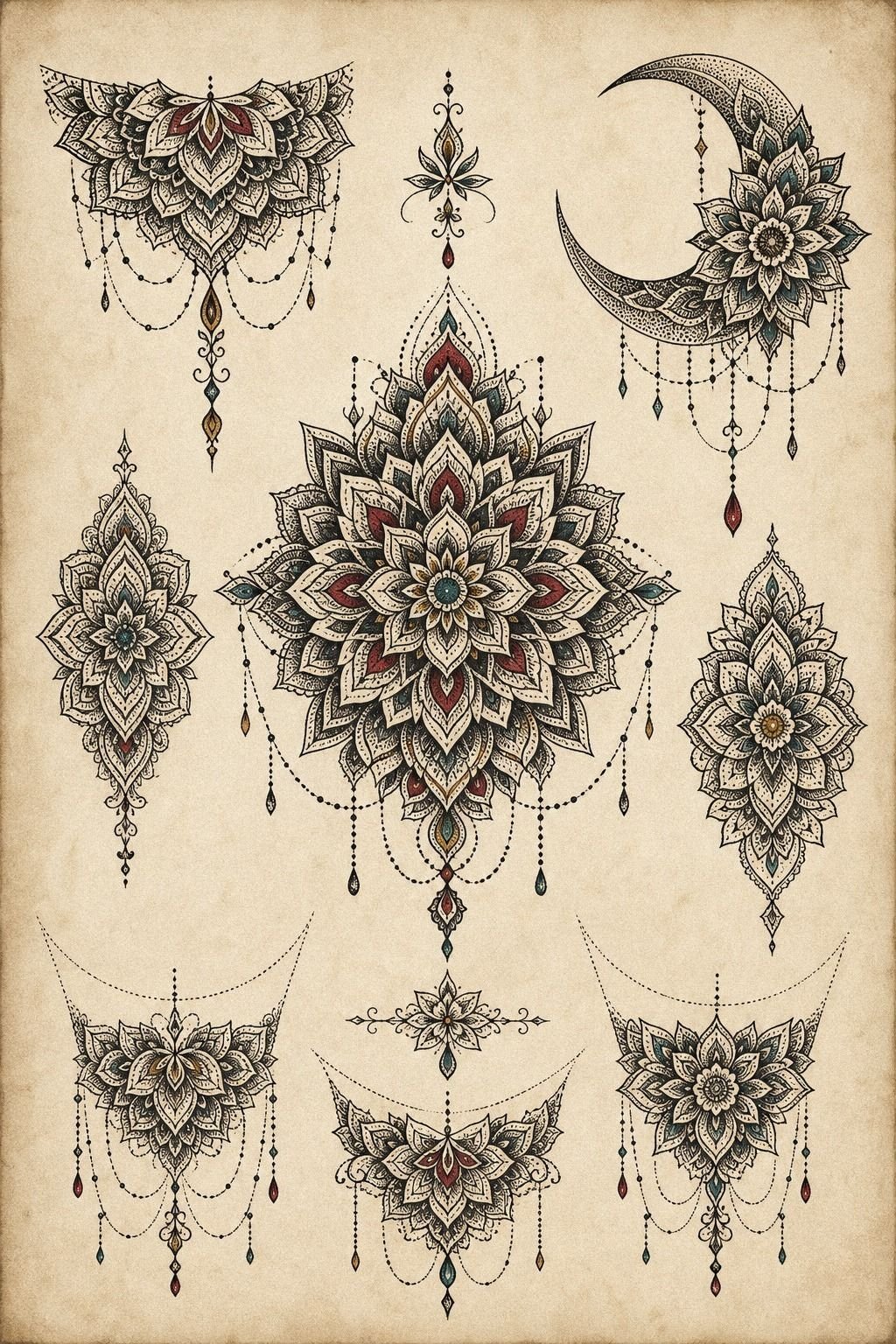
Bring a dotwork thigh idea in as a flash-style concept before you ask for a finished tattoo.
6Minimal Wrist Mandala Tattoo
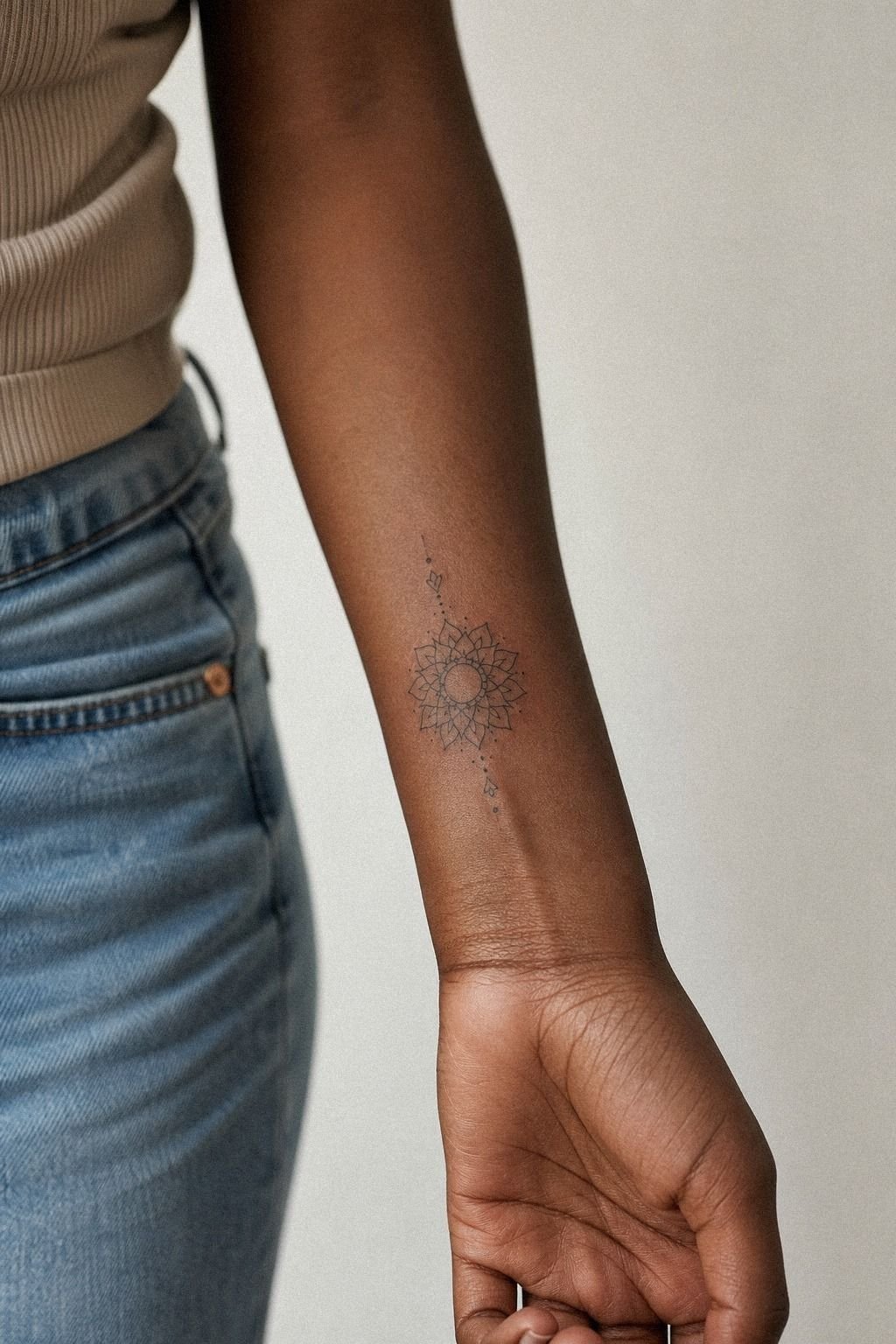
Keep a wrist mandala brutally simple on deep ebony skin, because the contrast is gorgeous but the placement is still high wear. A tiny center flower with 2 or 3 outer rings can look clean at first, yet if you ask for lace-level detail on a wrist, the edges may soften faster than you want. I usually tell clients to bump the design a little higher onto the lower forearm so it gets less bending and more skin to breathe on.
Minimal doesn’t mean weak. It means you pick one clean focal point, hold the outer line weight steady, and let the empty skin frame the design. Your daily friction from sleeves, watches, and gym work matters here.
But if you keep it simple, this can age cute on you for years. It isn’t the placement I’d call the best money call, though, because touch-ups can sneak into the long-term upkeep. For more line-led references, 20 mandala tattoo designs that reward a steady hand shows why restraint usually beats detail stacking on small placements.
7Sacred Geometry Mandala Back Tattoo
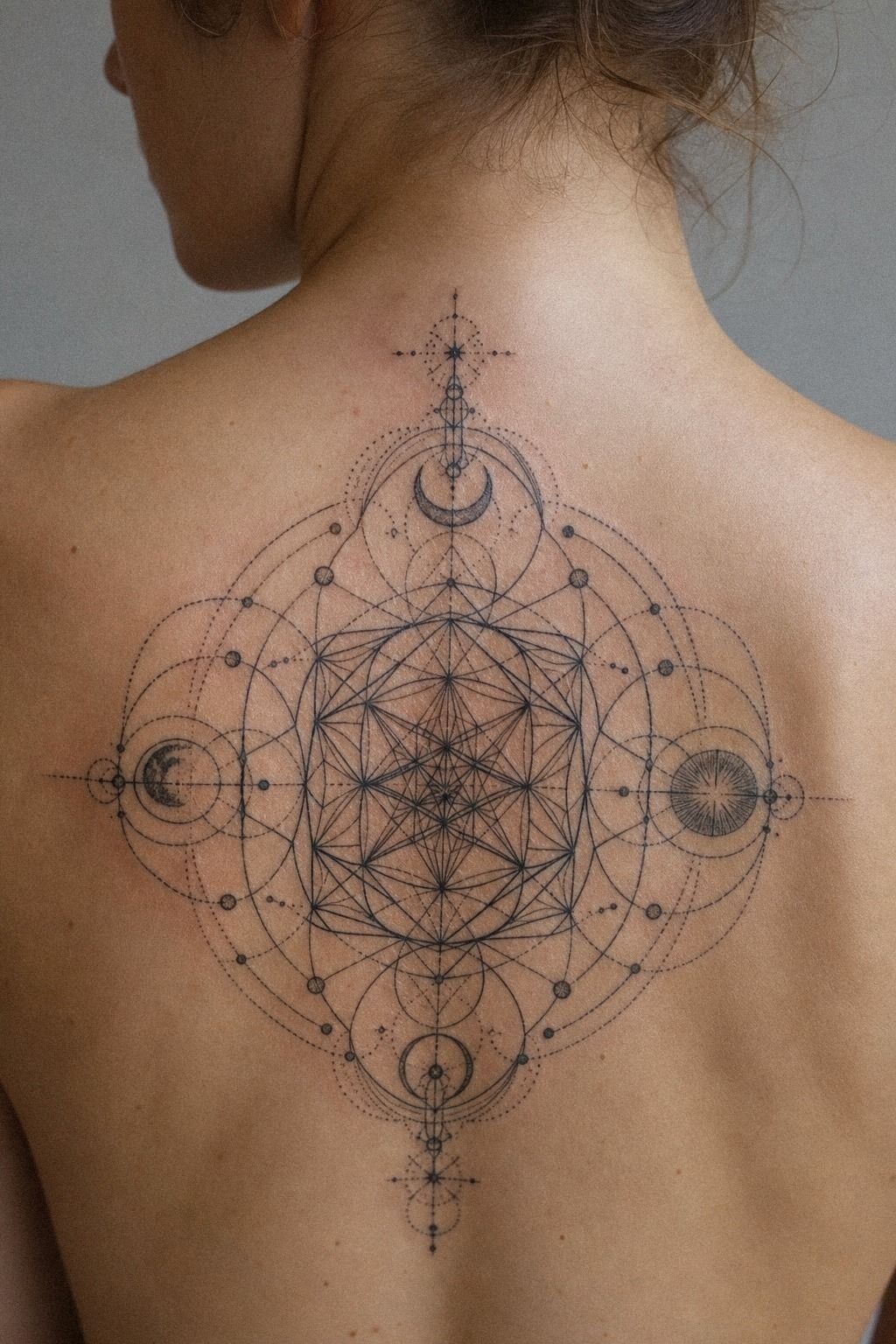
Build a sacred geometry back mandala with enough scale to justify the math. On fair cool-pink skin, the upper back gives you a broad, stable panel, which means your artist can keep circles round and intersections clean without fighting elbows or wrists. I like starting around 6 to 8 inches for a centered upper-back piece, then pushing bigger if you want layered geometry behind the main mandala.
This is where disciplined contrast matters. Thin lines alone can heal flat on a big back piece, so I like a black anchor ring, then softer pepper shading under the secondary shapes.
Your upper back is low wear, easy to cover from UV, and usually far more chill pain-wise than ribs or sternum. Why waste a great placement on timid scale? If you’re studying symmetry systems, mandala mehndi designs can help you see how repetition stays clean when the outer rings don’t compete with the center.
8Why does a lotus mandala work so well under the bust?
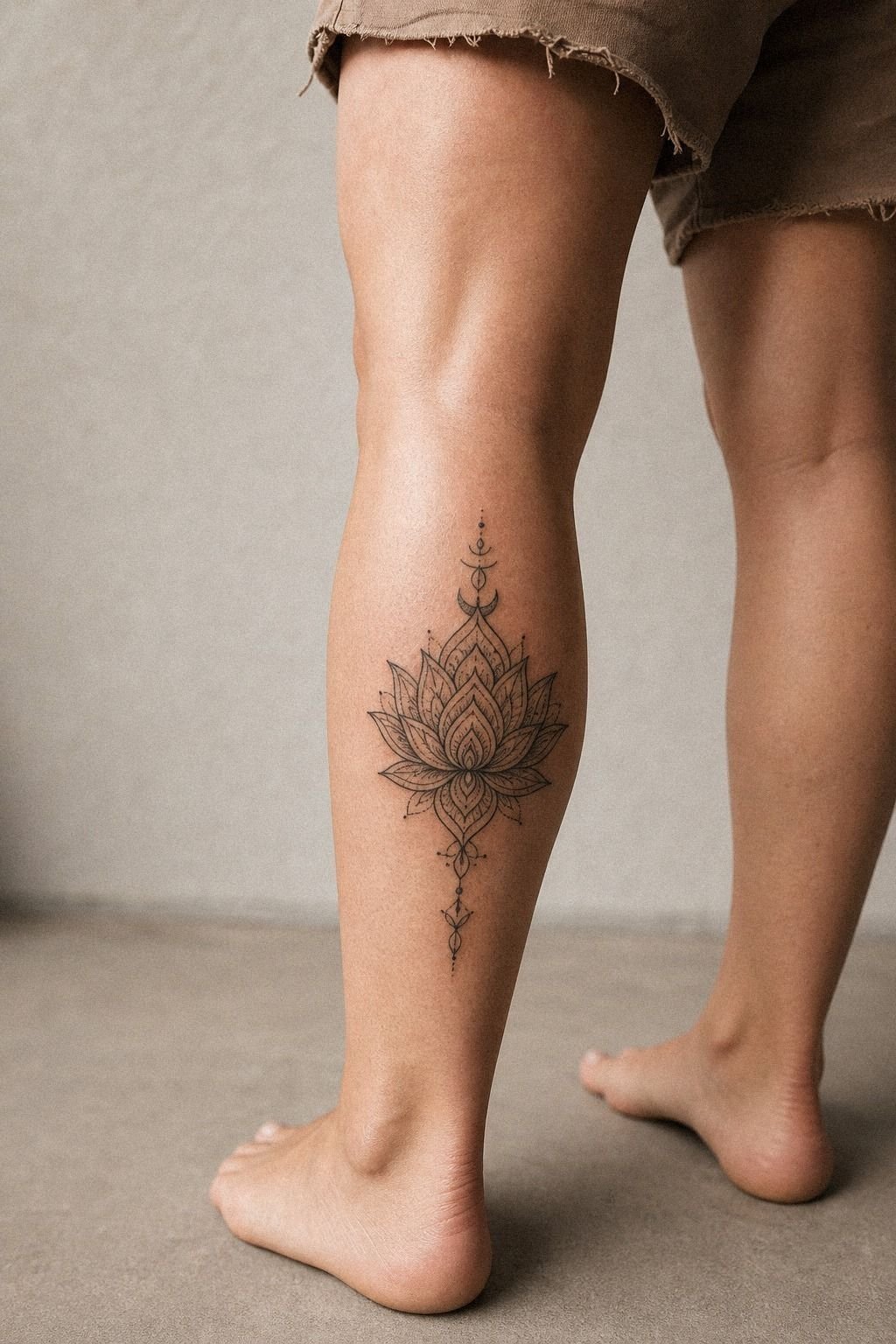
Even though this lotus mandala is framed like a healed calf reference, the thing worth stealing for an underboob tattoo is the petal clearance.
9Radha Krishna Mandala Sleeve Tattoo
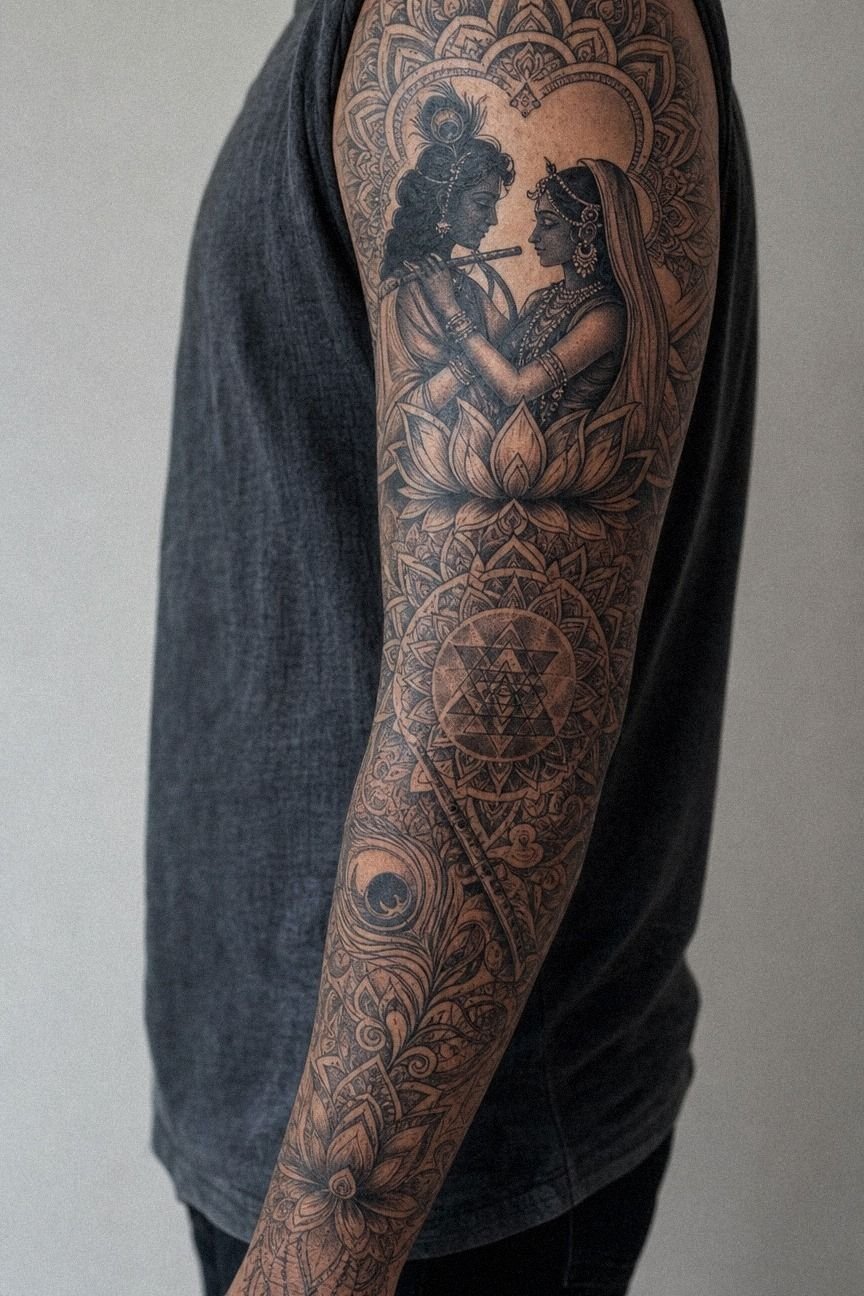
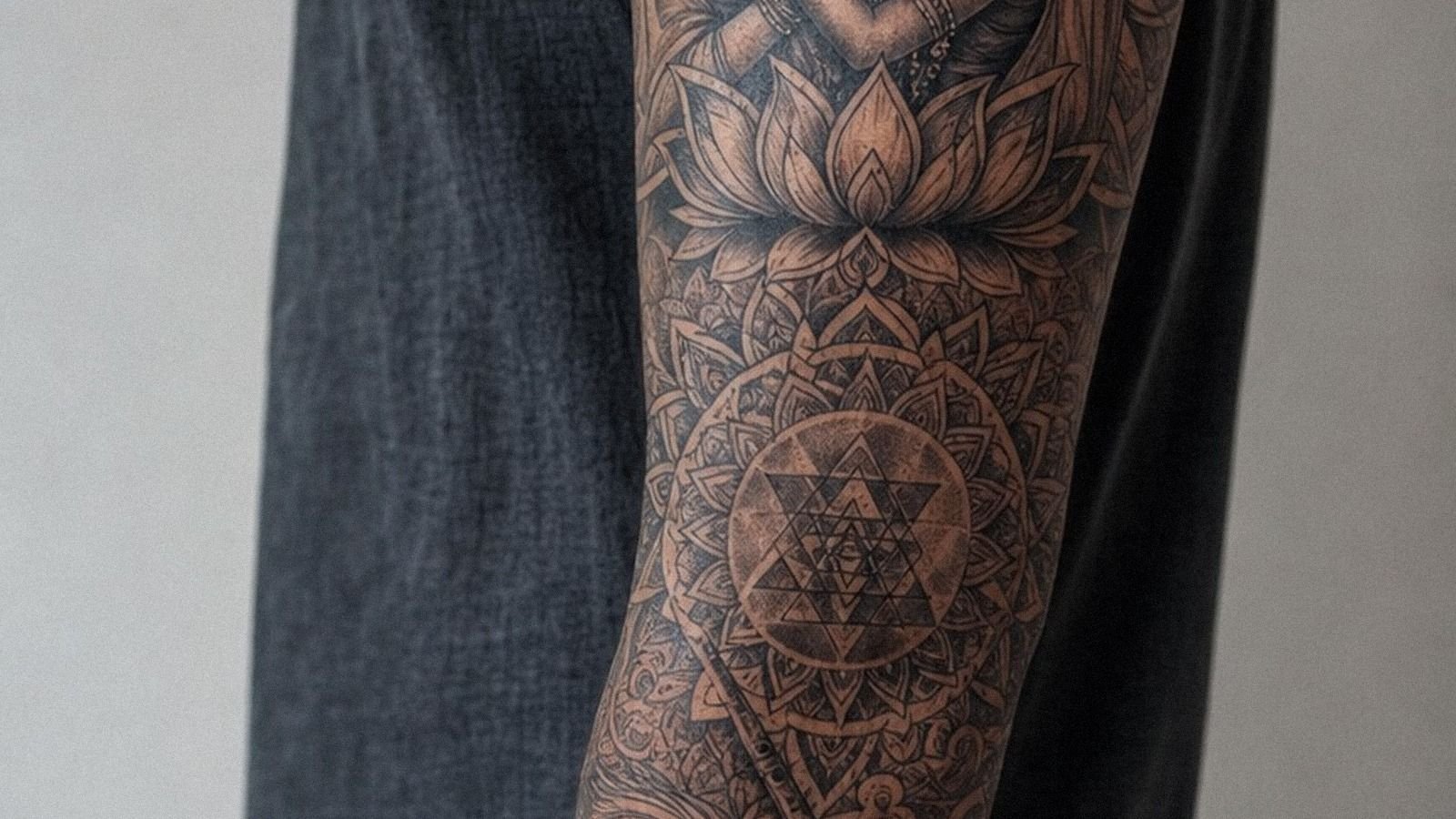
Treat a Radha Krishna mandala sleeve like narrative geometry, not random symbols stuffed into a forearm. Since the image reads as a forearm wrap on medium olive skin, I would keep the deity elements large enough to stay readable and let the mandala framework support them instead of swallowing them. A sleeve section like this needs hierarchy: portrait or icon first, ornamental halo second, filler last.
You also need the right artist. Religious or cultural imagery falls apart fast in the wrong hands, especially if the tattooer only does trendy fine line and not stronger illustrative black and grey. I tell clients to ask for healed photos, not just fresh ones, and to study whether the faces still read after several months.
But when it’s done well, this kind of sleeve feels rich without getting muddy. For composition ideas, mandala mehndi designs and the art chicano tattoo guide together can show you how reverence and structure can coexist.
10Modern Mandala Neck Tattoo
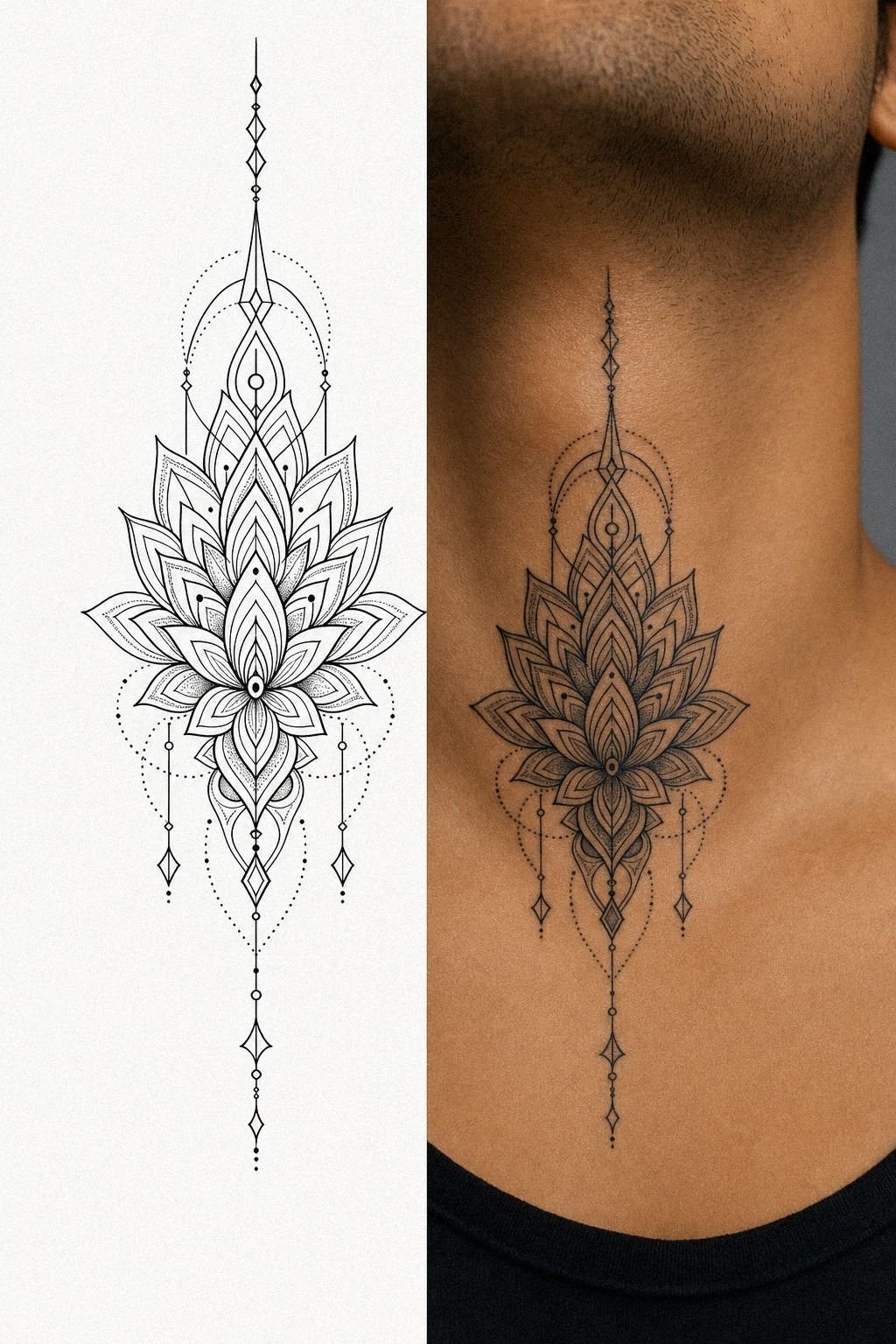
Use a stencil-to-healed comparison for a modern mandala neck tattoo before you approve the final drawing. That split image matters because neck tattoos lie to people on paper.
A design can look balanced as a clean illustration, then wrap too far once it hits the side or back of the neck. I want you checking the healed half for real-life spread, not just admiring the crisp stencil side.
Modern works best here when the outer geometry gets edited down hard. One central motif.
A few clean rays. Maybe a tapered drop.
That’s enough.
Your neck sees sun, movement, and close scrutiny every single day, so over-detail is the fastest way to lose that clean editorial look. If you want a lower-priced version, keep it smaller and simpler instead of forcing in extra detail you can’t afford to maintain. If you want more proof that restraint wins, compare this against the blackwork geometric tattoo dotwork mandala guide and notice how the strongest neck-scale pieces leave skin open.
11Blackwork vs Single Needle on the Ankle
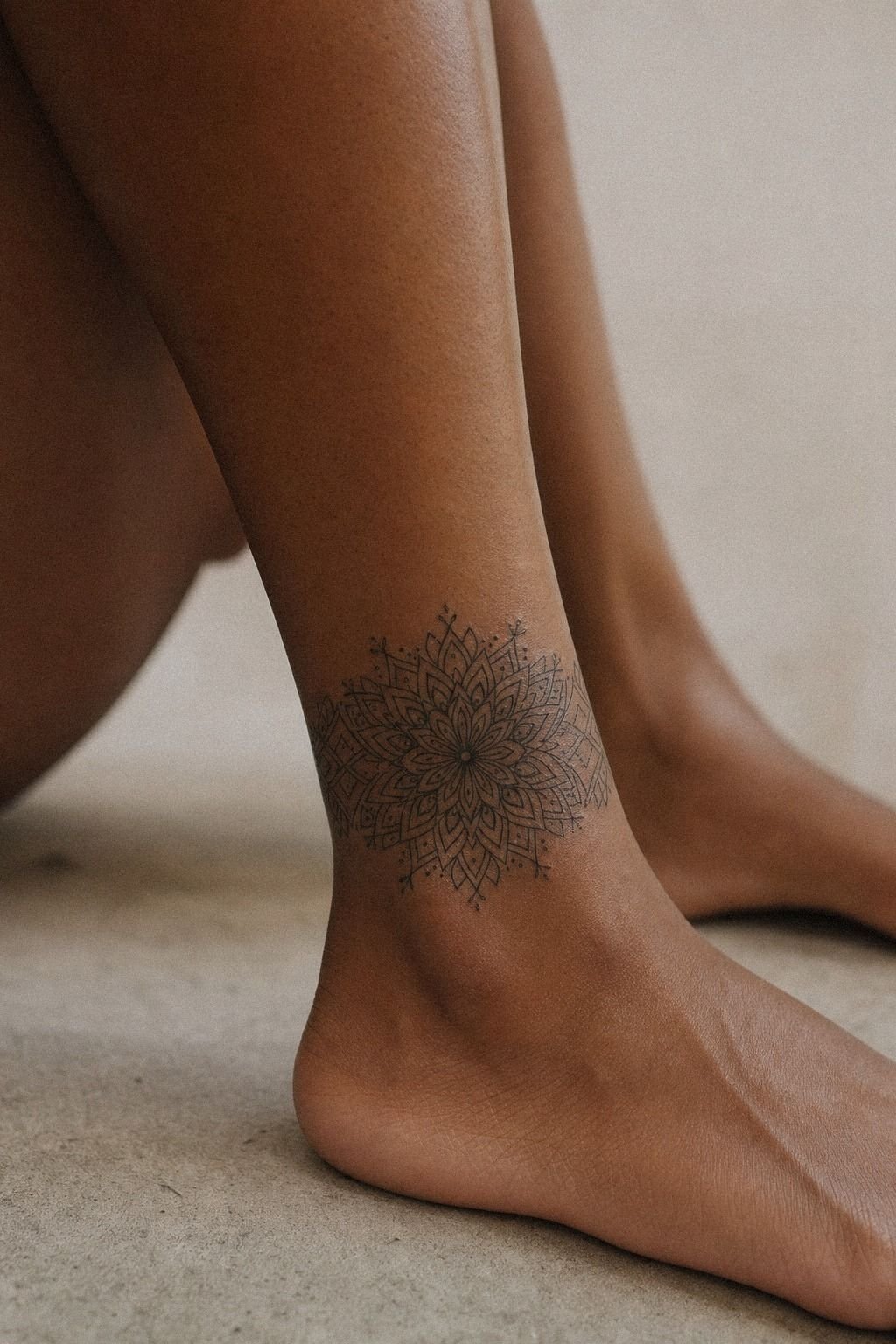
Choose single needle on the ankle only if your design is honest about what that tool does well.
12Open-Skin Mandala Hand Tattoo
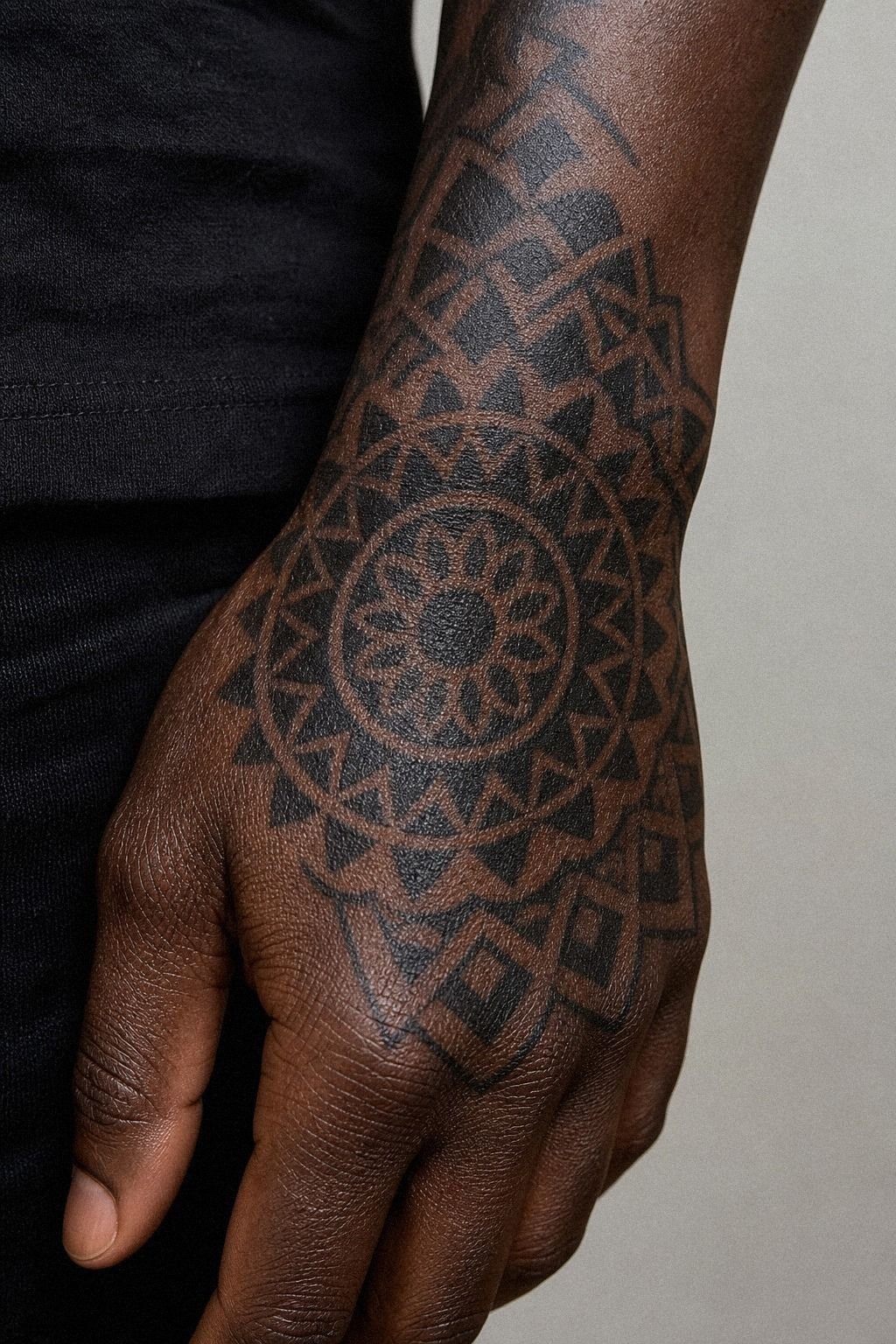
Cut a hand mandala with open channels on purpose or don’t do it at all. Deep ebony skin makes the black hit hard, but a hand tattoo lives in one of the roughest high-wear zones you can pick.
That means the open breaks between petals are not just pretty. They’re survival.
If every black shape touches the next one, the design can thicken as it ages and lose all that nice crisp geometry.
I tell clients straight: hands are for people who accept touch-ups. Sun, soap, friction, and constant movement work against you from day one. That’s the long-term tradeoff nobody should pretend away.
But if you keep the mandala bold, use open channels with clean breaks, and don’t chase tiny lace detail, the read can still stay strong. Want a benchmark for that balance? The blackwork geometric tattoo dotwork mandala guide is useful here because it shows how negative skin keeps blackwork from collapsing into one heavy mass.
13Creative Mandala Sun Chest Tattoo
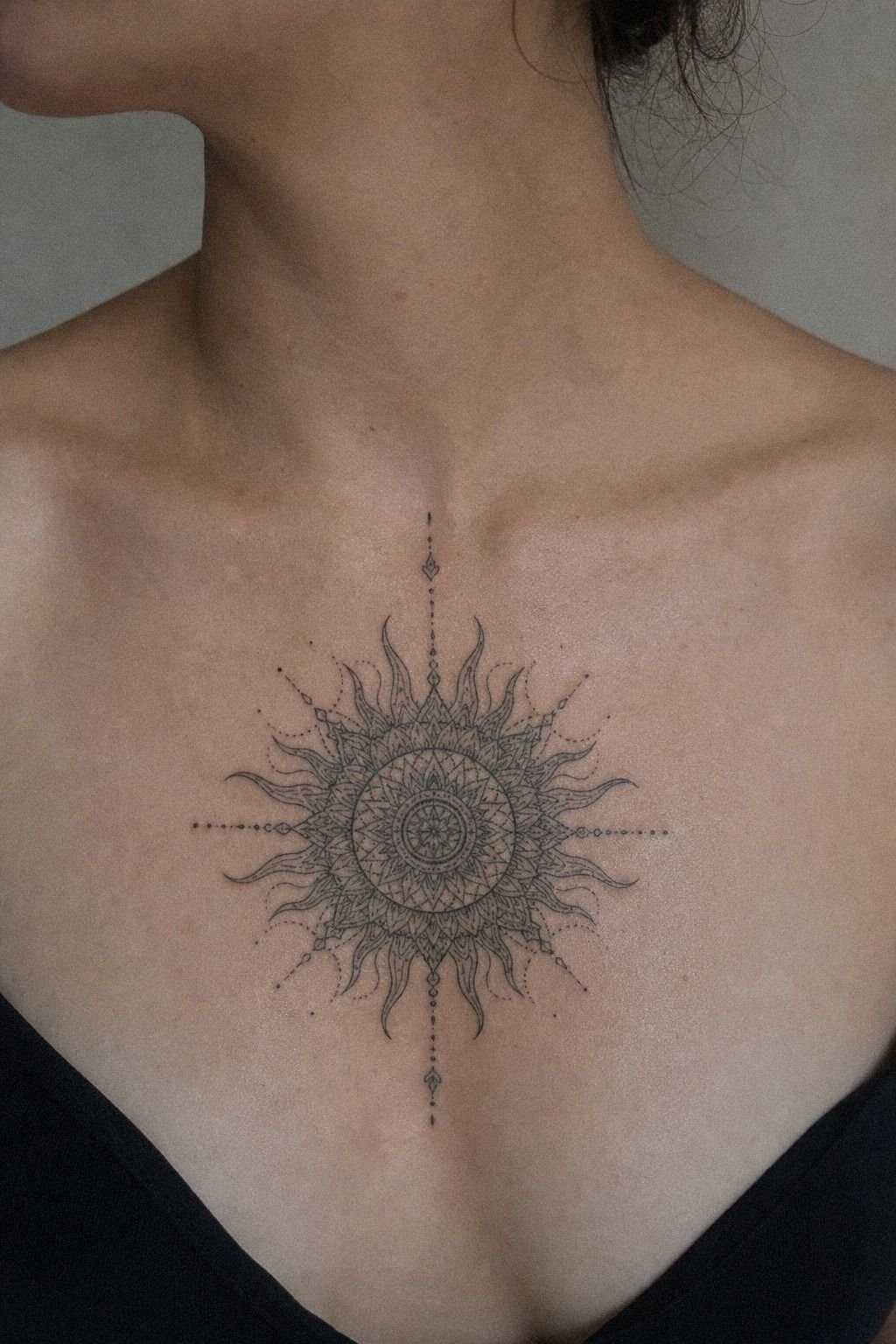
Anchor a mandala sun high on the chest when you want something symbolic that still feels graphic and clean. On fair cool-pink skin, a healed upper-chest piece reads best when the central sun stays bold and the ornamental rays don’t get too fussy. I like a chest sun that sits between the collarbones or slightly lower, depending on your build, with enough outer spacing that the whole piece still reads when you move.
This is a smart place to mix geometry with a little softer shading. A black center, a ring of clean rays, then a faint grey wash halo can give you warmth without making the chest look crowded.
And yes, chest work can be spicy near bone! But a strong chest mandala ages better than a tiny finger symbol nine times out of ten. If you want adjacent inspiration, 16 mandala mehndi designs that prove symmetry is sacred can help you spot repeating sun geometry that still feels balanced.
14Bold Elbow Mandala Tattoo
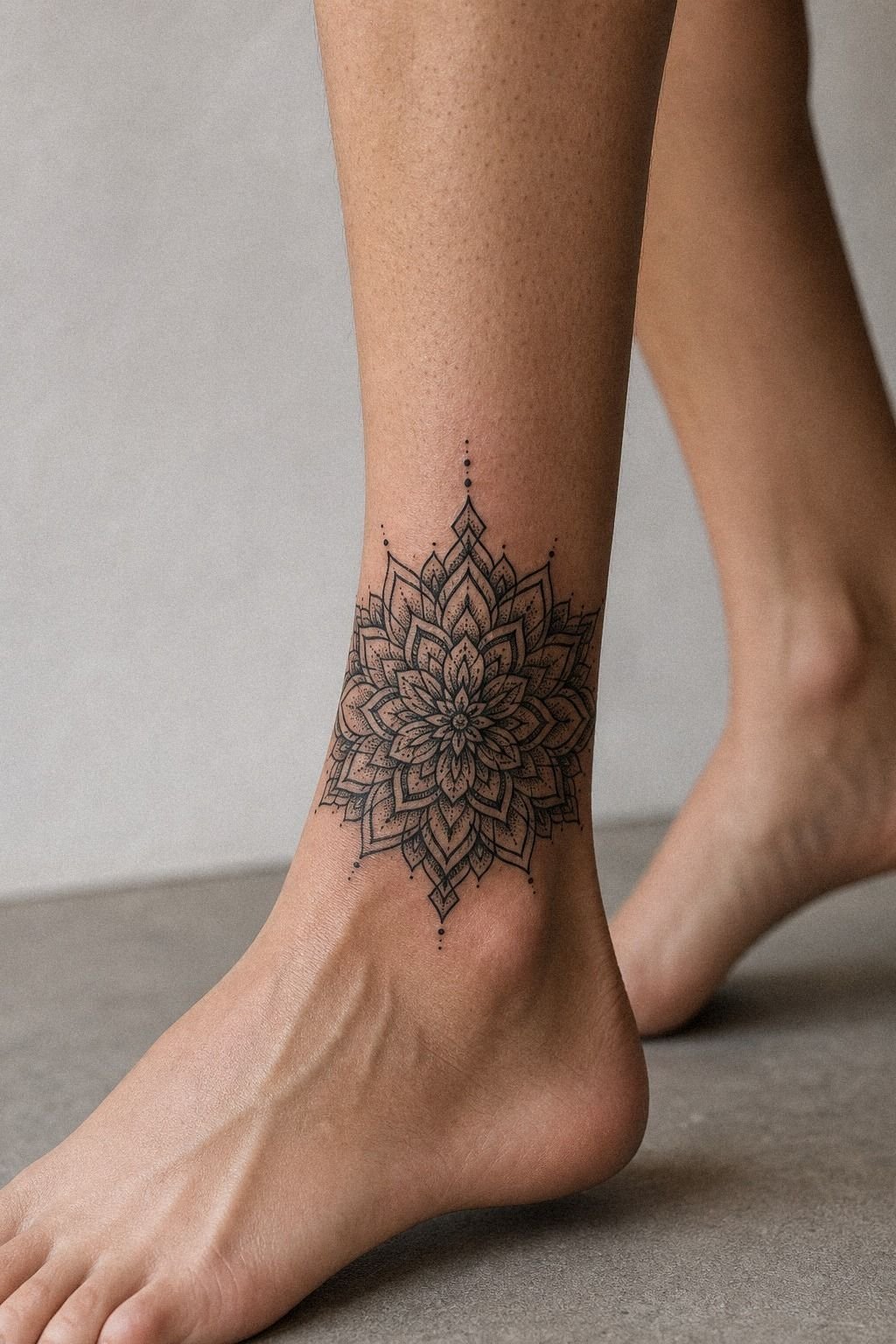
Even though the placement guide image wraps an ankle, the lesson transfers perfectly to a bold elbow mandala: wrap the joint, don’t just stamp the center. Elbows move, stretch, and heal rougher than flatter skin, so I make the outer ring heavier and the petal count simpler than clients expect. If you try to force fragile detail into that bend, the whole thing can look busy before it’s even healed.
Bold is the right call here because elbow skin takes a beating. Expect the pain to feel sharp during lines and mean during color packing or heavy black fill.
But a solid black mandala with clean geometry will outlast a whispery one every time. I often tell clients to study the blackwork geometric tattoo dotwork mandala guide before committing, because that bolder language is usually what elbow skin wants from you.
15Soft Shaded Mandala Hip Tattoo
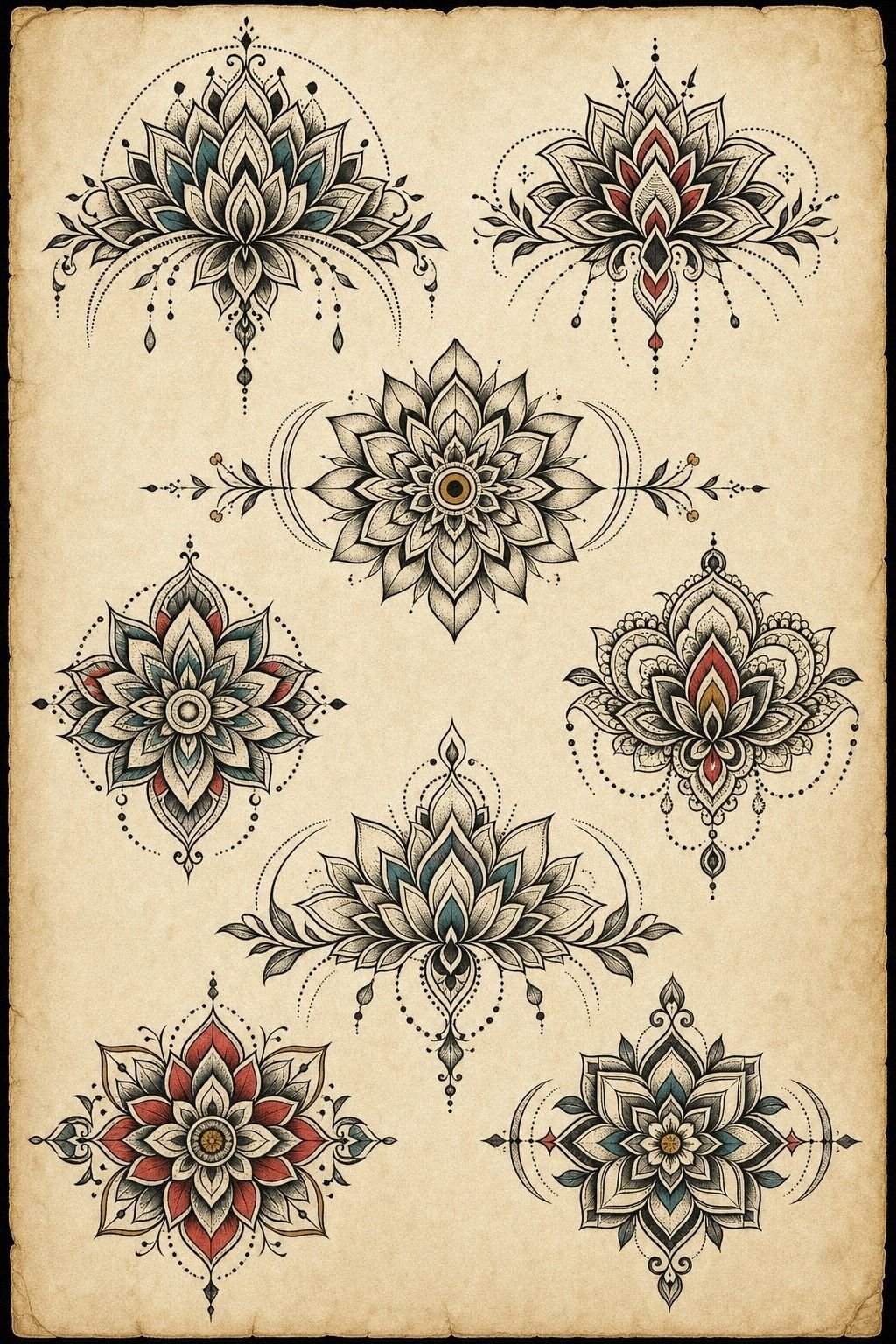
Use a flash sheet to judge soft-shaded hip ideas before you choose the final one. That aged paper presentation is helpful because it strips the skin tone variable away and lets you compare shape, flow, and how much grey wash each version carries. On the hip, I like a design that leans with the iliac curve instead of fighting it, usually something 4 to 6 inches so the soft shading has enough breathing distance.
A hip tattoo can feel intimate without needing tiny detail. Grey wash dot accents and one stronger outer ring usually heal nicer than an overworked fine-line cluster.
I made this mistake early in my career and packed too much softness into a small hip piece. It looked cute fresh, then healed flat. If you want references that prove contrast matters, 20 mandala tattoo designs that reward a steady hand is worth saving next to your flash picks.
16Can matching mandala finger tattoos ever be worth it?
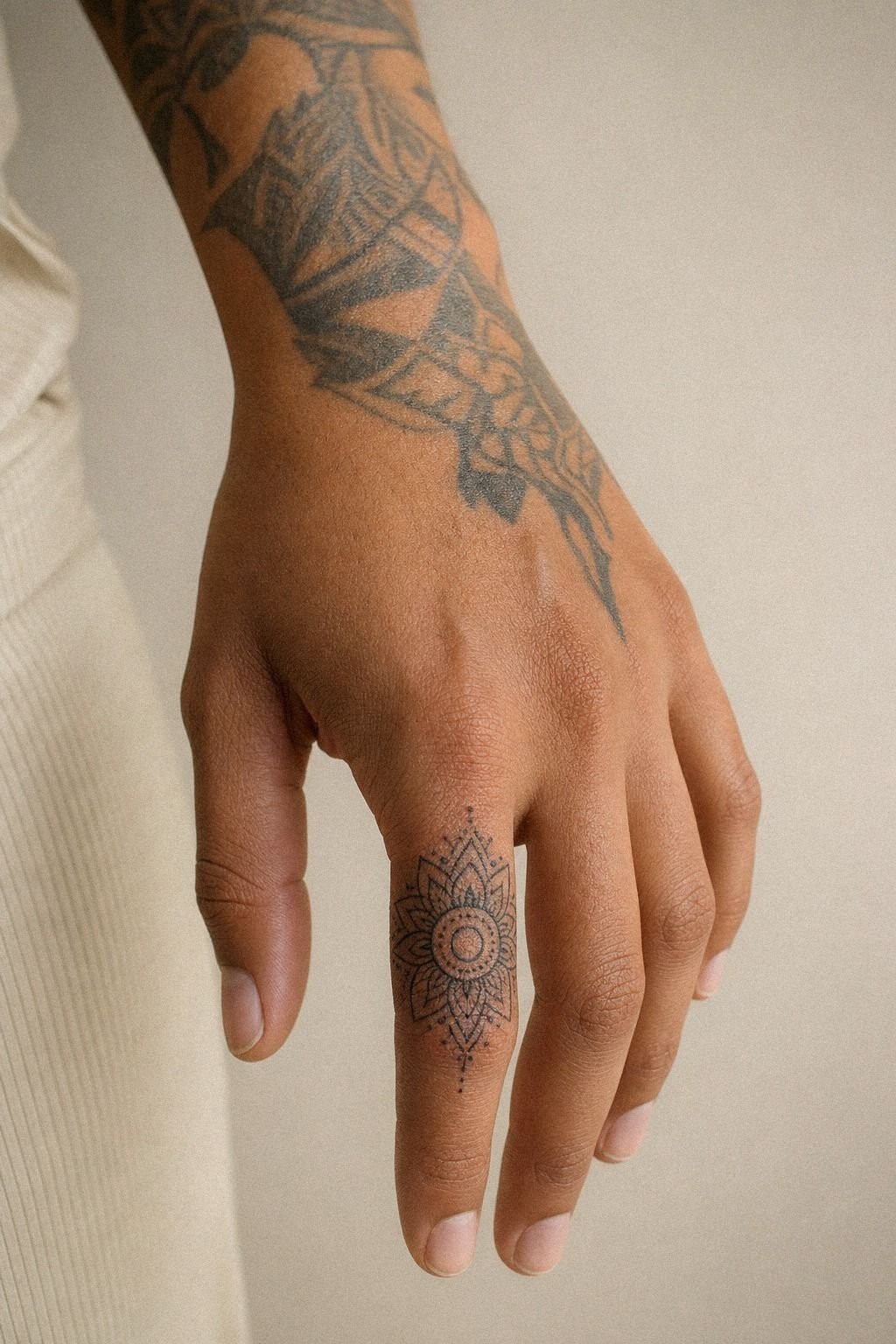
Match finger mandalas only if you and the other person both understand the upkeep.
The Black-Anchor Rule
Here is the honest data I give clients before we size a mandala. Black is your best friend for longevity, low-wear placements buy you time, and very fine lines need more restraint than Pinterest admits.
If you want a design that still reads clean later, you don’t win by shrinking it. You win by simplifying it.
Typical US shop minimum is about $50 to $100, and many experienced artists charge around $100 to $250 per hour. That doesn’t mean bigger is always better.
It means cleaner planning is worth paying for, because fixing muddy symmetry later usually costs more. Real talk: the cheapest mandala is rarely the best move!
The Hold-First Rule
When people bring me mandala references, the mistake usually isn’t taste. It’s scale.
They show me something elegant, then ask if we can shrink it to fit a wrist, finger, or the dead center of the sternum with every petal intact. That’s where good ideas go bad.
A mandala only looks timeless when the structure has clearance on skin, the black has somewhere to settle, and the open breaks stay intentional after healing.
I’ve learned to judge these designs by how they’ll look at month three, not minute three. Fresh tattoos flatter everybody. The lines are extra crisp, the skin is tight, and even a fussy design can look cleaner than it really is.
Then the tattoo relaxes. The line spreads a little.
The body moves. Sun hits it.
Lotion, friction, sleep, gym wear, all of it starts doing what life does. If the design was too packed from the jump, that tiny softness is enough to blur the hierarchy.
So my rule is simple: build the tattoo for the healed version first. I want a solid center, confident outer geometry, and fewer rings than you think you need. I want open skin where the design needs to breathe and saturated black where the eye needs to land.
But if the placement is a hand, finger, sternum, ankle, or elbow, I want even more honesty because those spots are less forgiving. You don’t need the most complicated mandala in the feed. You need one that still looks deliberate after two summers, a few gym sessions, and real life.
The other thing nobody says enough is that artist choice matters more than concept choice. I’d rather see you get a simpler geometric mandala from someone with healed photos, clean stencil placement, and crispy one-pass lines than a hyper-detailed custom drawing from a scratcher chasing trends.
That’s not boring. That’s how tattoos age with dignity.
And when a piece heals nice, you feel it every time you catch it in the mirror.
The Questions I Get Asked Most
How much does Aesthetic Mandala Art usually cost?
Most aesthetic mandala tattoos land around $100 to $300 for a small to mid-size piece, while larger sternum, back, or sleeve work can cost more because session time climbs. Shop minimums. Hourly rates.
Design complexity. Region.
Those are the price drivers.
Are Aesthetic Mandala Art a good idea for a first tattoo?
Yes, they can be a solid first tattoo if you pick a forgiving placement like the forearm, thigh, or shoulder. Clean geometry.
Clear scale. An artist with healed examples.
That’s the combo that keeps your first piece from turning muddy.
How do I choose a tattoo artist for Aesthetic Mandala Art?
Pick someone with crispy healed linework and real symmetry, not just pretty fresh photos. Healed mandalas.
Clean stencil placement. Strong black saturation.
And if you want a comparison set, browse the blackwork geometric tattoo dotwork mandala guide before you book.
How much do Aesthetic Mandala Art hurt?
It depends on placement, but sternum, ribs, hands, feet, and elbows are spicier than forearm, thigh, or shoulder. Lines feel sharper.
Shading feels like a dull burn. Color packing or solid black is usually the spiciest part.
How long does Aesthetic Mandala Art take to heal?
Surface healing is usually 2 to 3 weeks, while the settled healed look takes closer to 2 to 3 months. Gentle soap.
Thin ointment. No pools.
No picking. And keep it out of hard sun while the skin is rebuilding.
What’s the best placement for Aesthetic Mandala Art?
For most people, forearm or upper back is the best placement because the geometry stays readable and the wear is lower. If you want something more private, thigh and shoulder cap are also smart because they age more predictably than fingers.
The Placement-First Call
If I had to pick one, I’d start with the geometric forearm mandala. The skin is stable, the pain is manageable, and the symmetry has a real chance to stay clean. Pin it for later and compare it with 20 mandala tattoo designs that reward a steady hand.