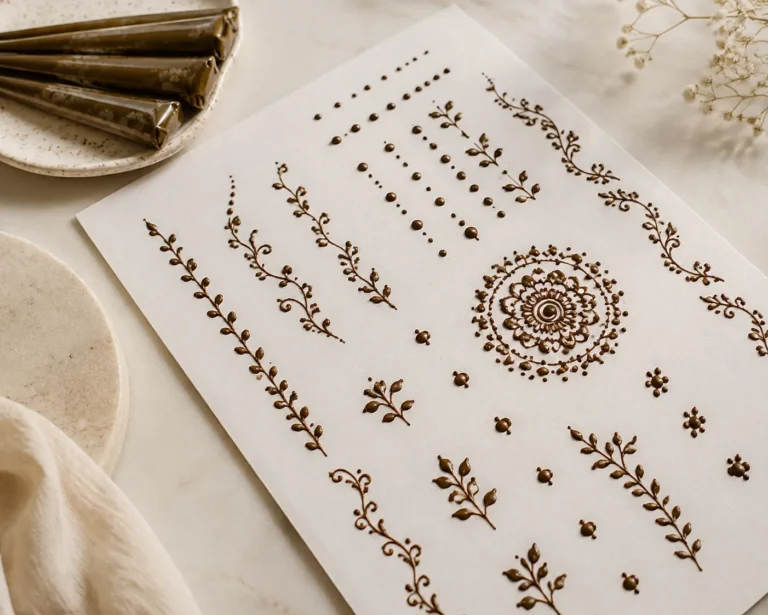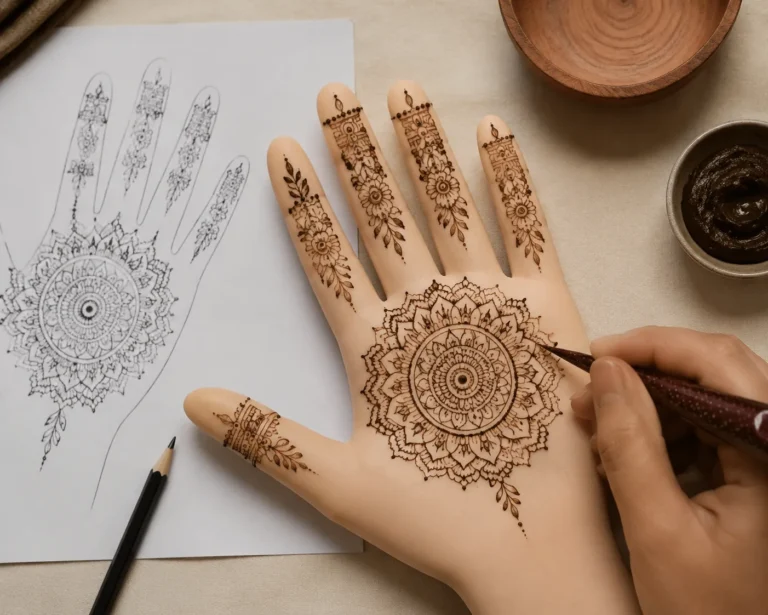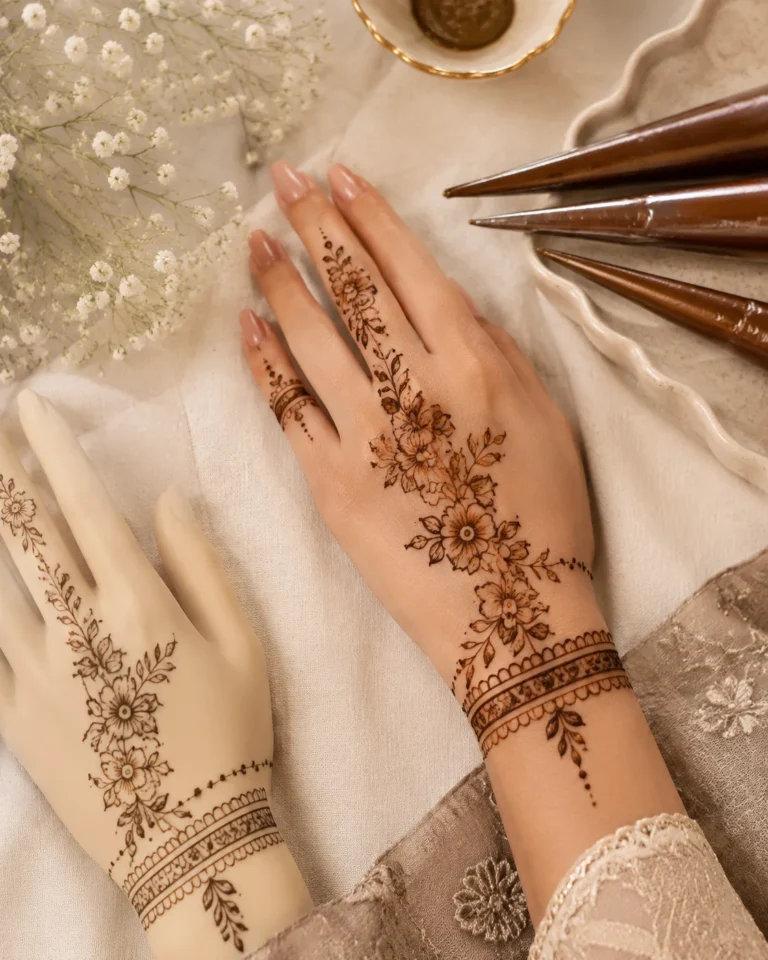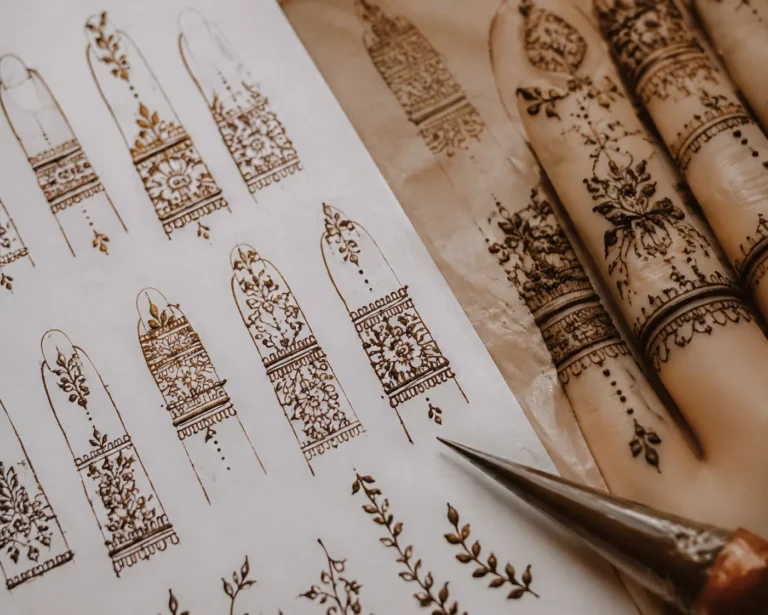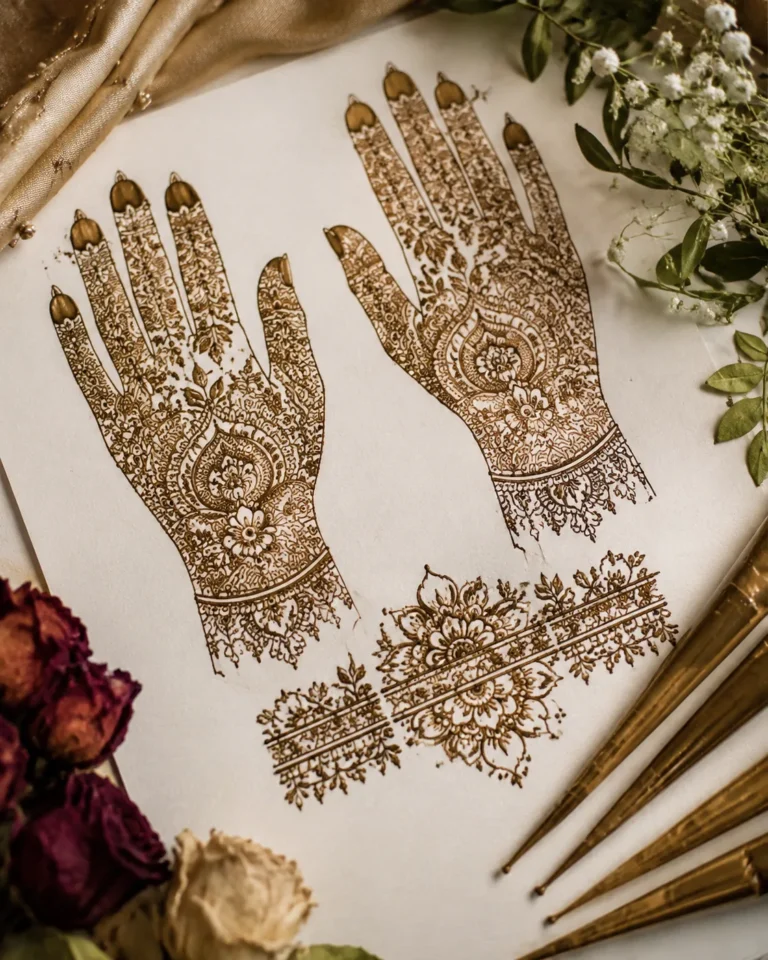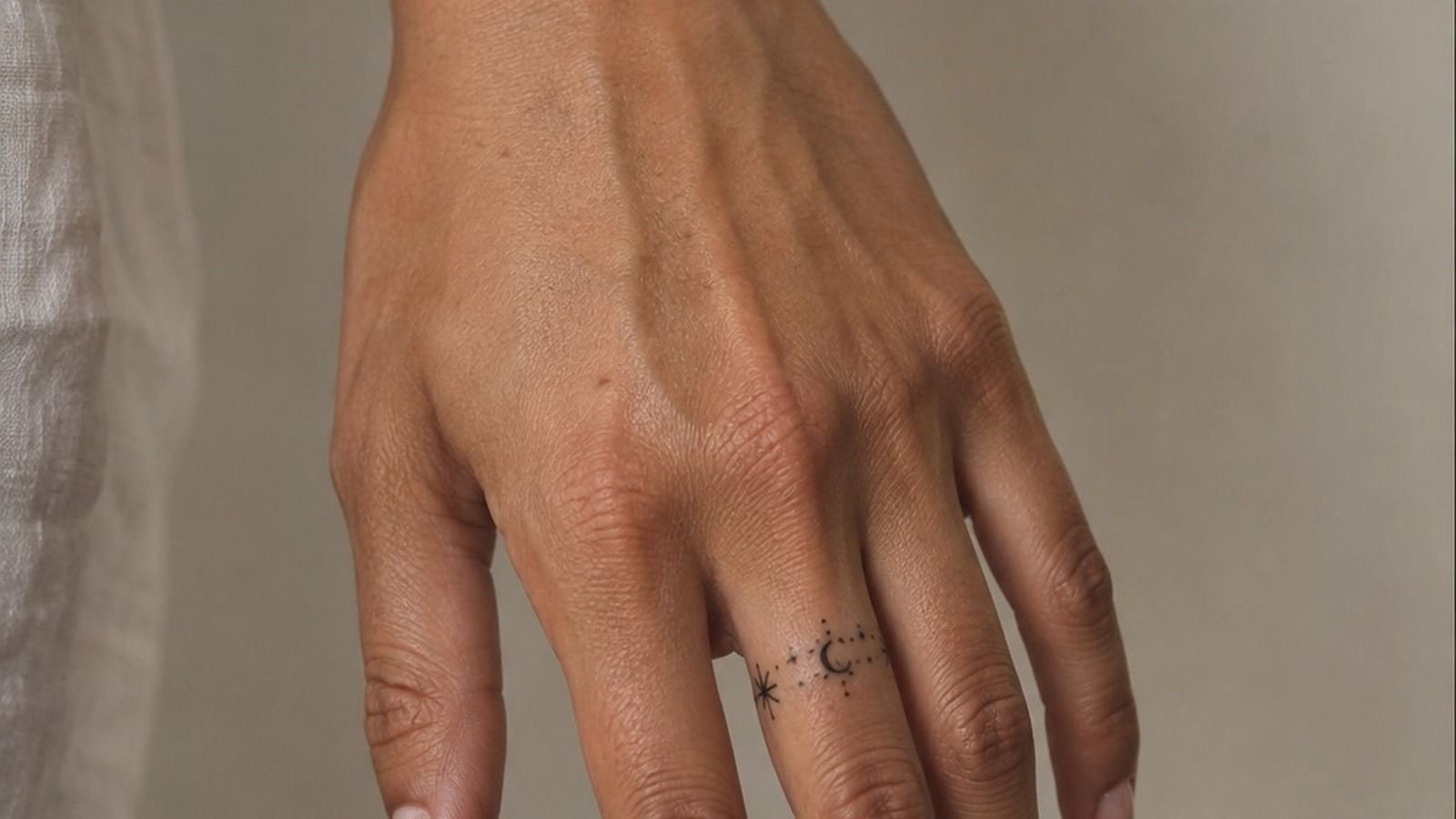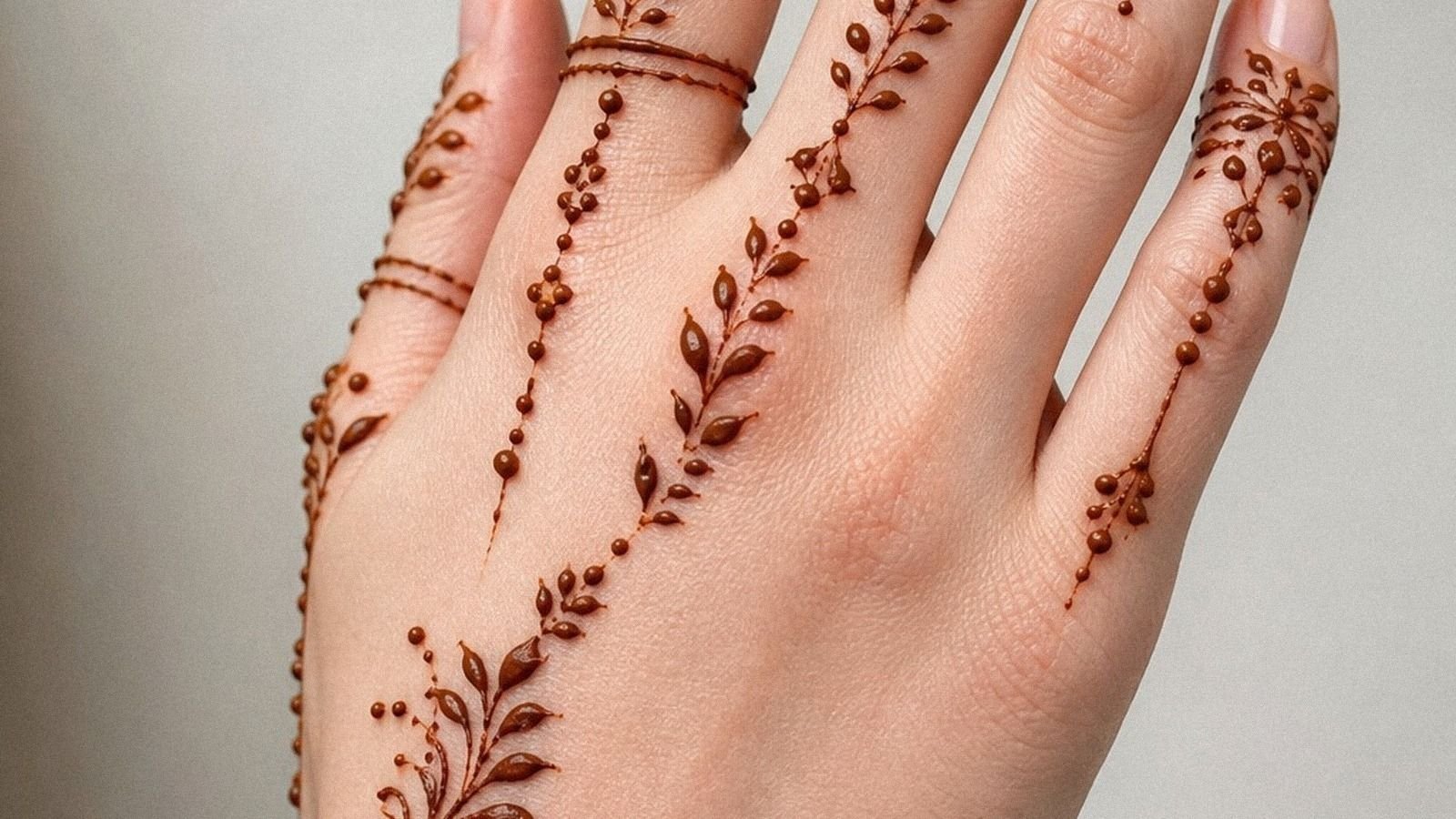
Modern henna designs are having a moment, and the best ones don’t need heavy fill to feel finished. I almost overcomplicated my first henna-inspired tattoo sketch with tiny extras everywhere. Bad call. Clean linework, smart placement, and a little open skin will hold harder than fussy detail ever will.
- Minimal Modern Henna Finger Trails
- Wrap a Fine-Line Modern Henna Wrist Band
- Negative Space Modern Henna Palm Design
- Aesthetic Modern Henna Back Hand Pattern
- Let an Elegant Vine Travel Across the Fingers
- Soft Florals Versus Full Knuckle Fill
- Modern Henna Bracelet Style Wrist Wrap
- Arabic Modern Henna Hand Trail
- Let Dotwork Frame the Finger Joints
- Jagua-Style Modern Henna Wrist Accent
- Should Fingertip Caps Stay Partial?
- Small Lotus Modern Henna Wrist Accent
- Why Does a Half-Palm Mandala Feel More Current?
- Bold Dots Against Bare Skin on the Side Hand
- Build a Sharp Finish With One Hero Line
1Minimal Modern Henna Finger Trails
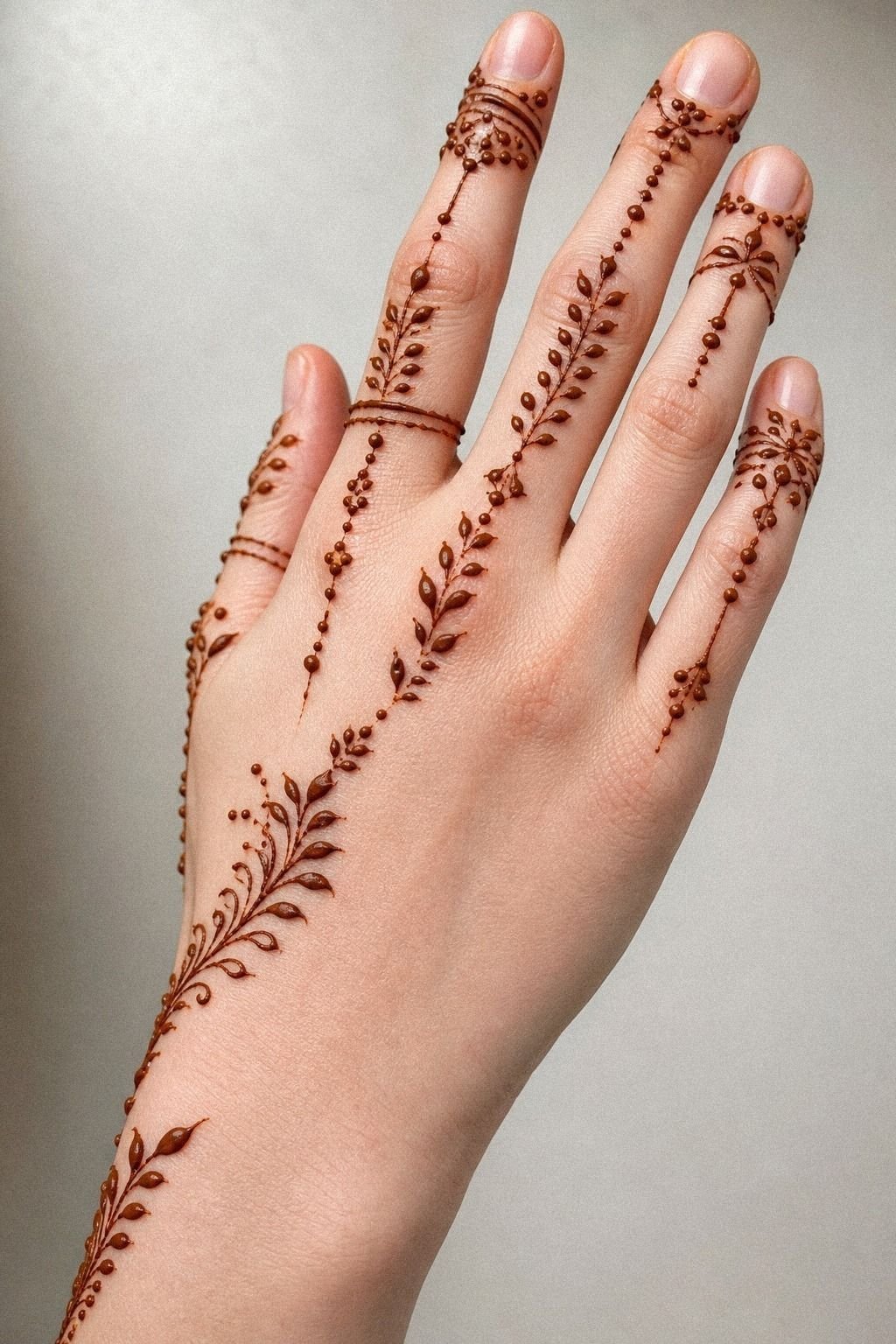
Start with the back of the hand and let the line taper down each finger instead of trying to pack every inch. That reddish-brown henna paste look works because the trail stays narrow, then opens just enough near the knuckles to keep your eye moving. If you want to turn this into a tattoo later, I’d keep it closer to 3 to 4 inches so the flow stays crisp and the line does not crowd itself.
I like this for you if you want something visible but still light. Fingers are high-wear, so I wouldn’t make the tiny loops too tight or they will soften fast.
And if you’re still figuring out your taste, sketching this path first with temporary henna tells you a lot about movement on your skin. For more restrained references, look at simple henna designs for beginners. The open version is usually the smarter call.
– Single-needle linework for a tattoo version. Clean pull. No fuzzy retracing. – Outer hand placement for the strongest read.
Better than stuffing detail into the sides.
2Wrap a Fine-Line Modern Henna Wrist Band
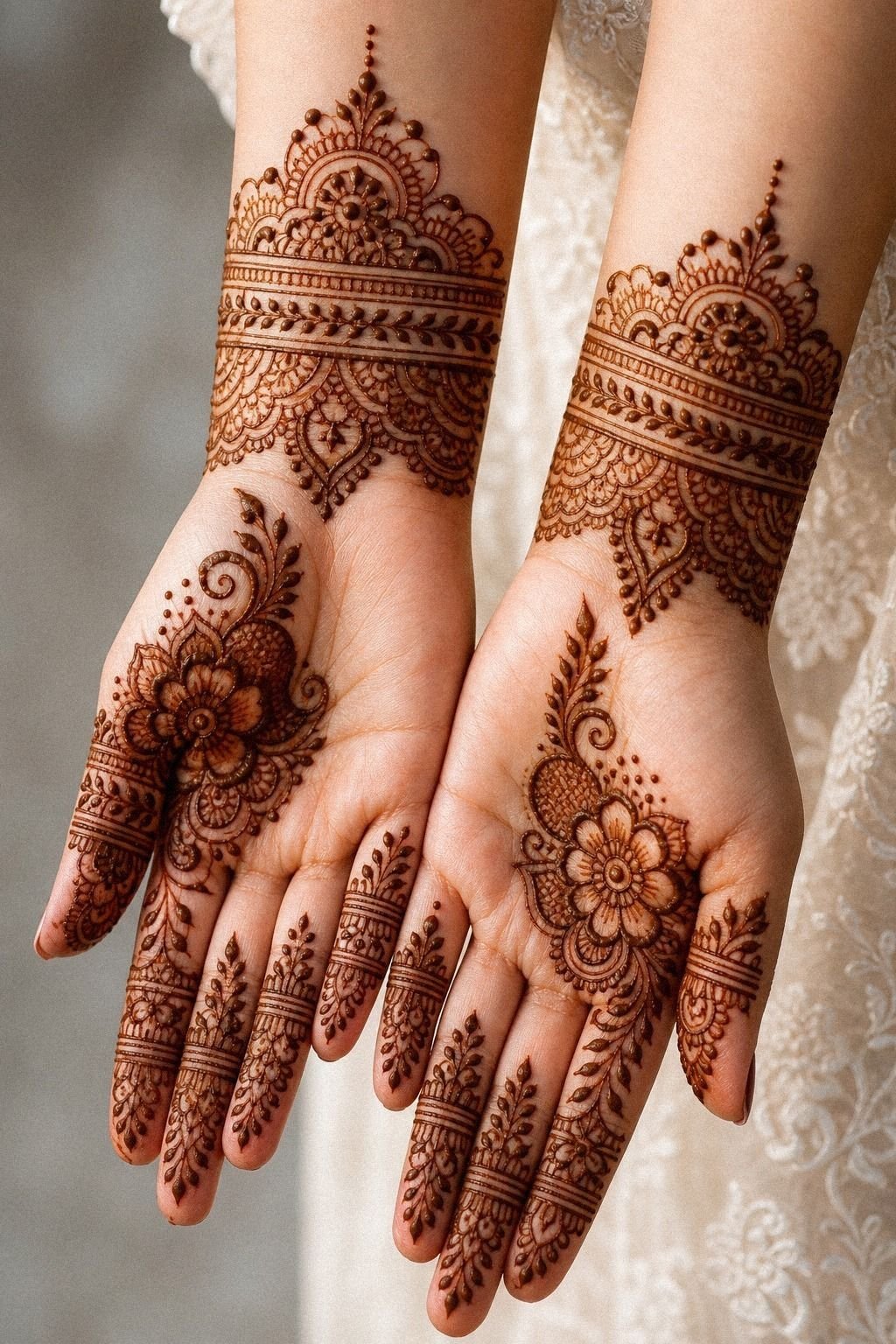
Wrap the wrist like jewelry, but leave enough open skin so it doesn’t read like a flat cuff. On medium warm ivory skin, that soft brown fine-line band looks best when the top and bottom edges stay slightly irregular instead of perfectly boxed in.
You want motion, not a stamp. If you later book this as ink, bump the band width to about 0.5 to 0.75 inch so it ages nicer long term.
I have seen people ask for a super skinny wrist ring, and that is where things can get chewed up over time. Your wrist bends all day, and that movement matters.
But a band with a few clean drops or leaf points holds better and still feels delicate. If you’re comparing this with other wearable layouts, modern mehndi designs gives you a clearer sense of what wears well.
– Balanced negative spacing between the borders. That’s what keeps it from going flat. – Soft red-brown stain for henna practice. Good preview before black ink.
3Negative Space Modern Henna Palm Design
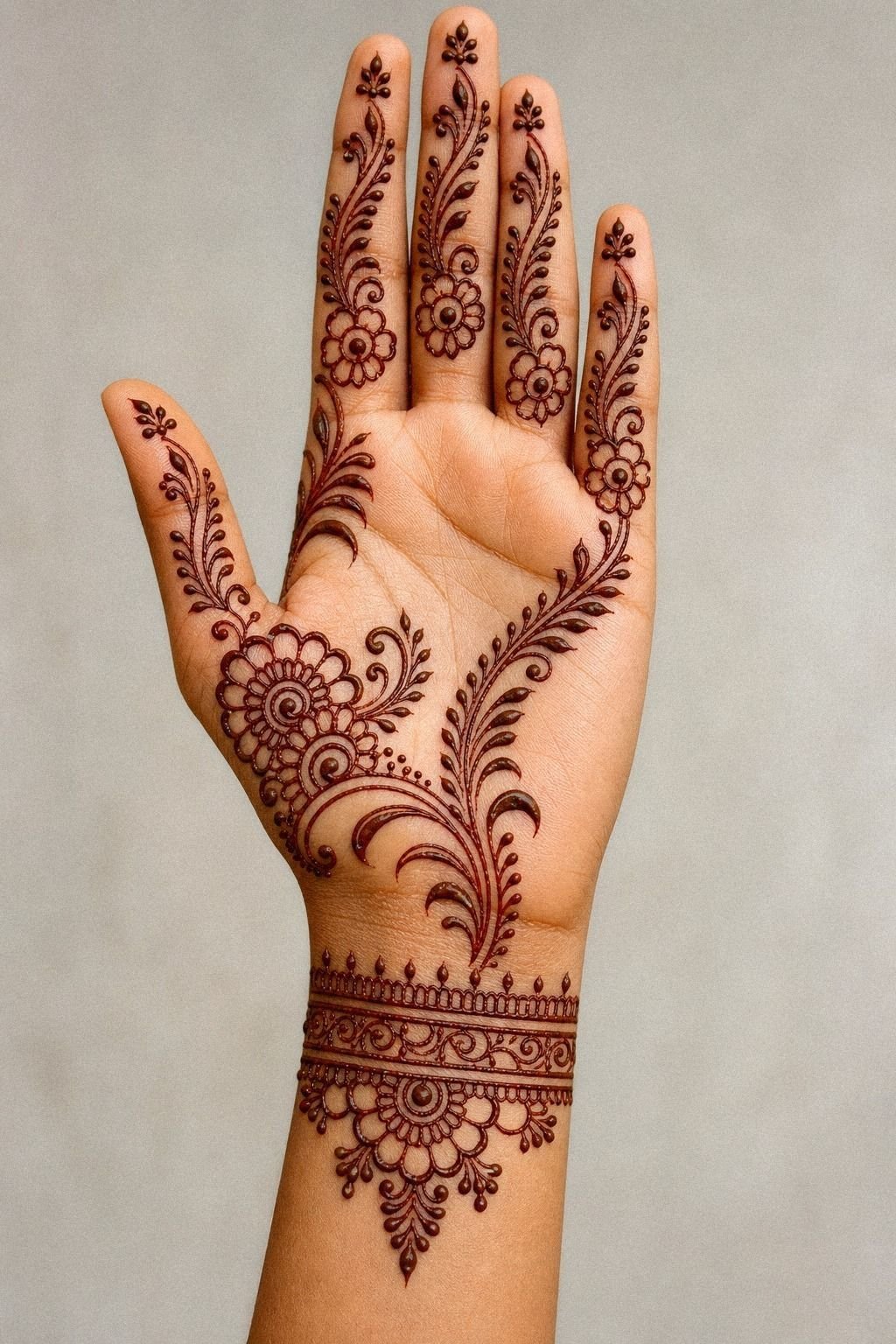
Use the center of the palm as the pause, not the place where you dump the biggest motif. On medium olive skin, that contrast between open palm and reddish detail is what makes an open-skin layout feel modern instead of busy. If you copy this as a tattoo concept, I’d move the heaviest parts off-center so your lines do not get lost in the crease map.
Palm work is spicy, and it fades harder than most people expect. That’s why I treat this more like a design study than a first tattoo placement. You can still steal the idea, though.
Carry the open-center concept onto the outer forearm or upper hand, and it’ll heal cleaner. If you like this cleaner balance, 17 modern mehndi designs that translate beautifully into skin is worth saving before you lock it in.
– Open middle field so the design stays airy on skin. – Dot and leaf clusters near the edges. More control, less soup later.
4Aesthetic Modern Henna Back Hand Pattern
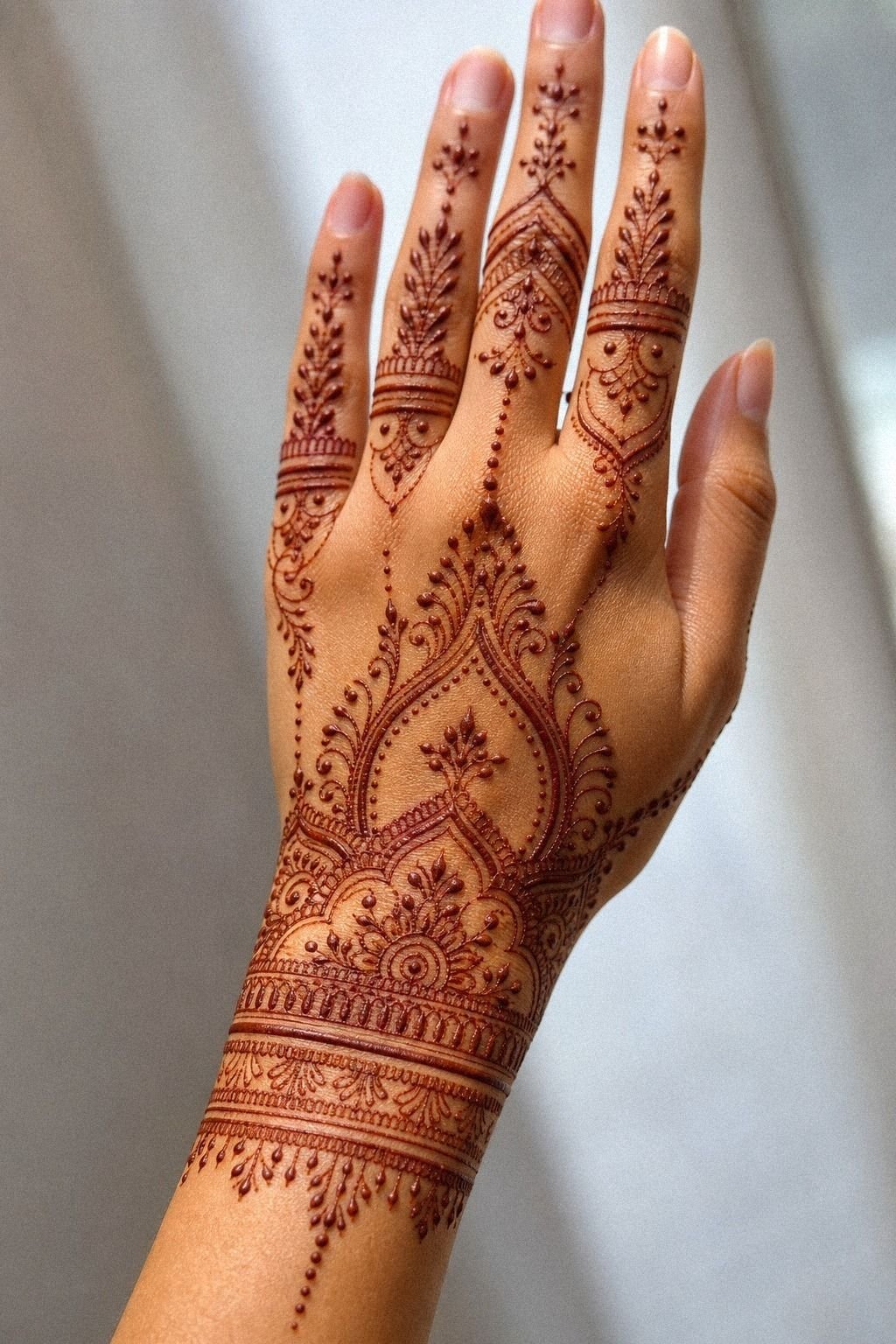
Build the pattern on the back of the hand like fabric, then stop before it becomes wallpaper. On golden tan skin, the warm brown back-hand pattern reads best when the fingers carry lighter detail and the hand takes the denser lattice.
That’s the difference between rich and muddy. You want the eye to land, travel, then rest.
I usually tell people they don’t need to mirror every finger exactly. A little asymmetry keeps the whole thing alive. And honestly, if you made this into a tattoo, I’d anchor the main shape over the metacarpals and skip extra fill between every joint.
You need some clean skin for contrast! For more pattern-heavy references that still stay readable, tap through henna mehndi designs. That comparison keeps you from blindly copying one viral save.
– Crispy lattice linework across the hand. Better than soft, scratchy mesh. – Light fingertip detailing so the main motif stays in charge.
5Let an Elegant Vine Travel Across the Fingers
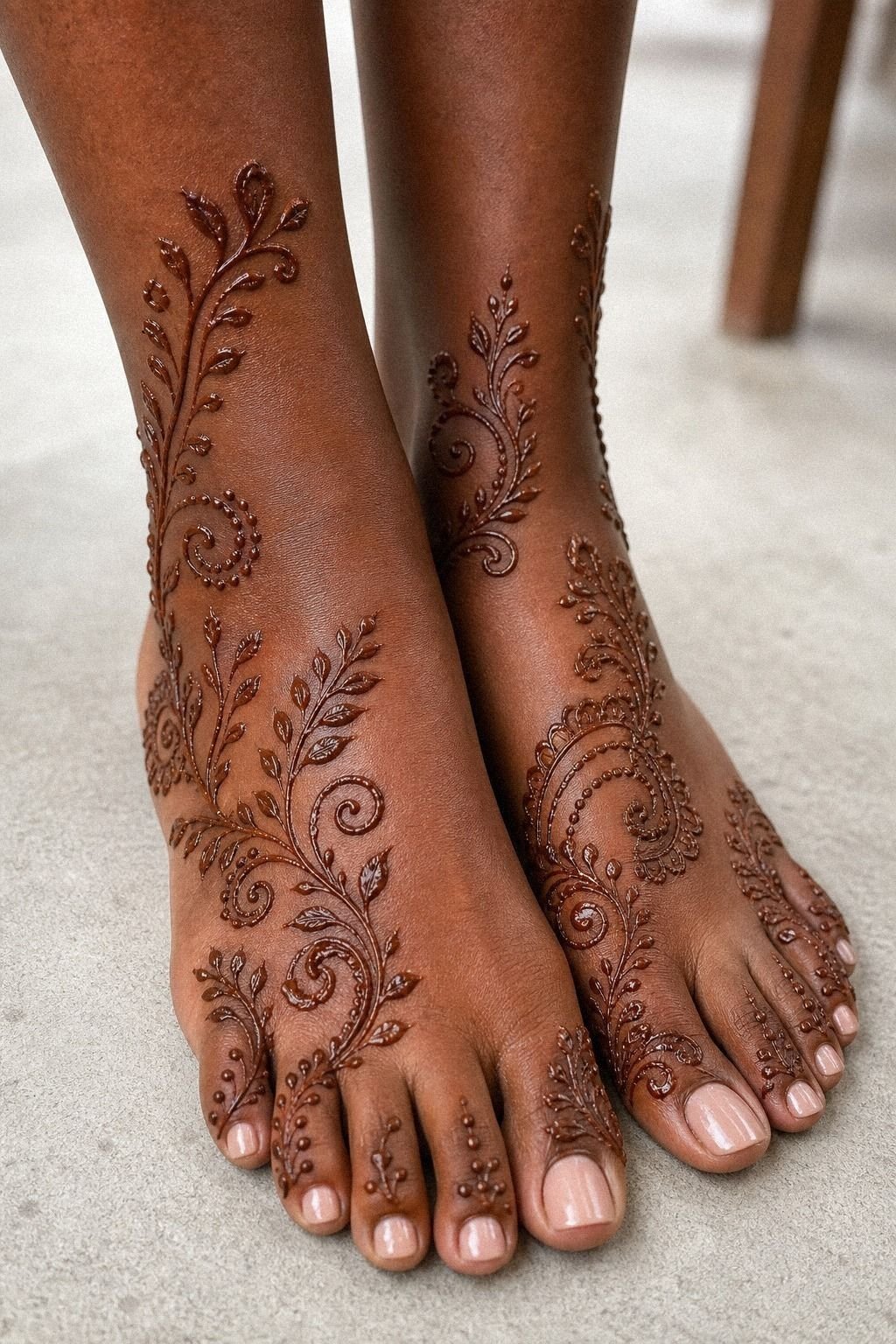
A vine works best when it feels like one confident route, not five tiny detours.
6Soft Florals Versus Full Knuckle Fill
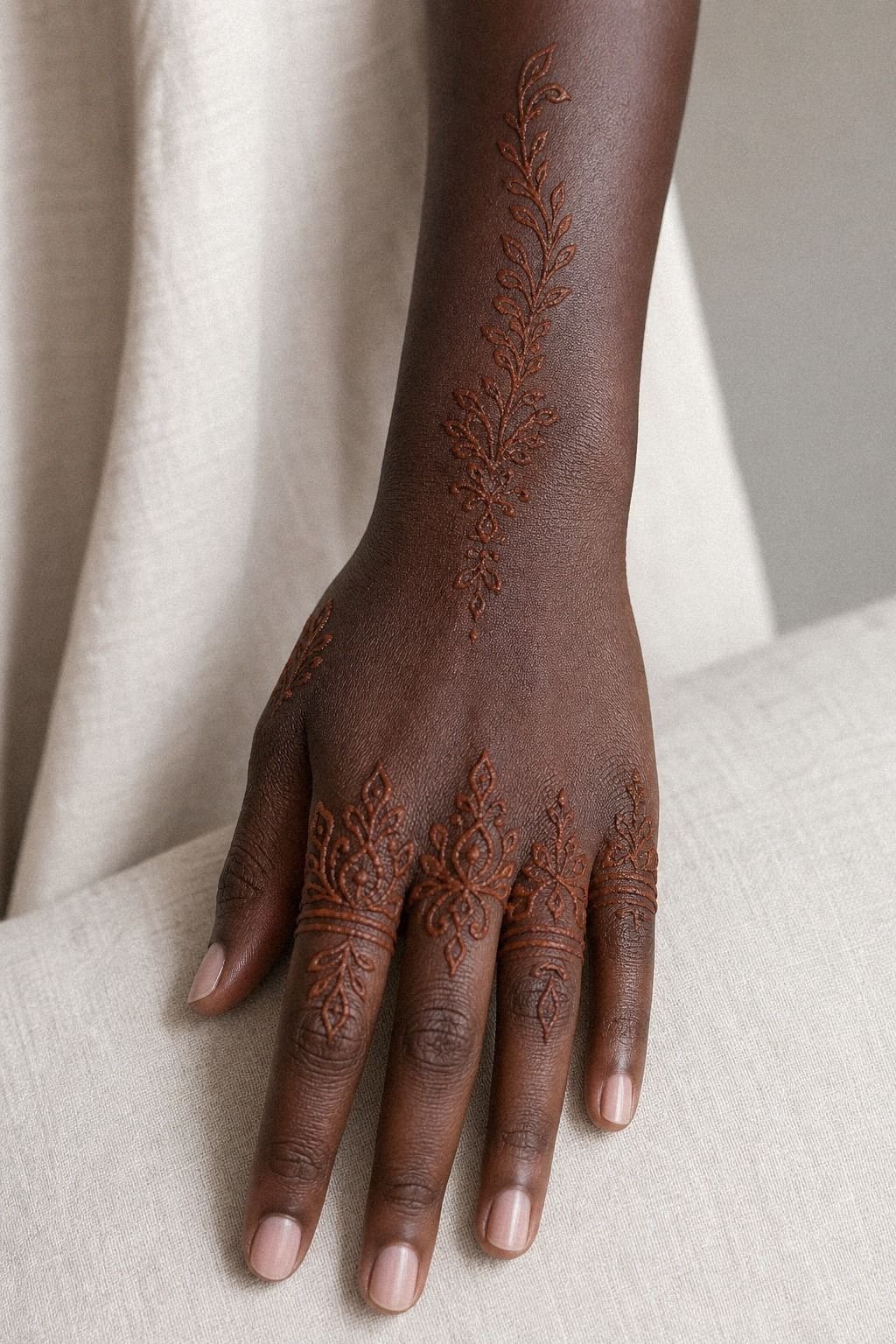
Skip the urge to connect every little flower with more filler. Tiny knuckle accents work because each bloom gets to stand on its own, especially on deep ebony skin where the warm micro-floral clusters pop hard against open skin.
I like three to five small hits here, not ten. Once you overpack the joints, the detail starts fighting the anatomy.
This is a sweet test-drive idea if you’re thinking about a fine-line hand tattoo but aren’t ready to commit. The shapes are small, the layout is low-pressure, and you learn fast whether visible placement feels like you.
If you want softer entry-level references, 24 simple henna designs to practice before going bold is a solid place to start. This route is usually kinder to your skin too.
– Tiny petal groupings over the knuckles. Cute now, still readable later. – Clean dots between blooms only where the eye needs a bridge.
7Modern Henna Bracelet Style Wrist Wrap
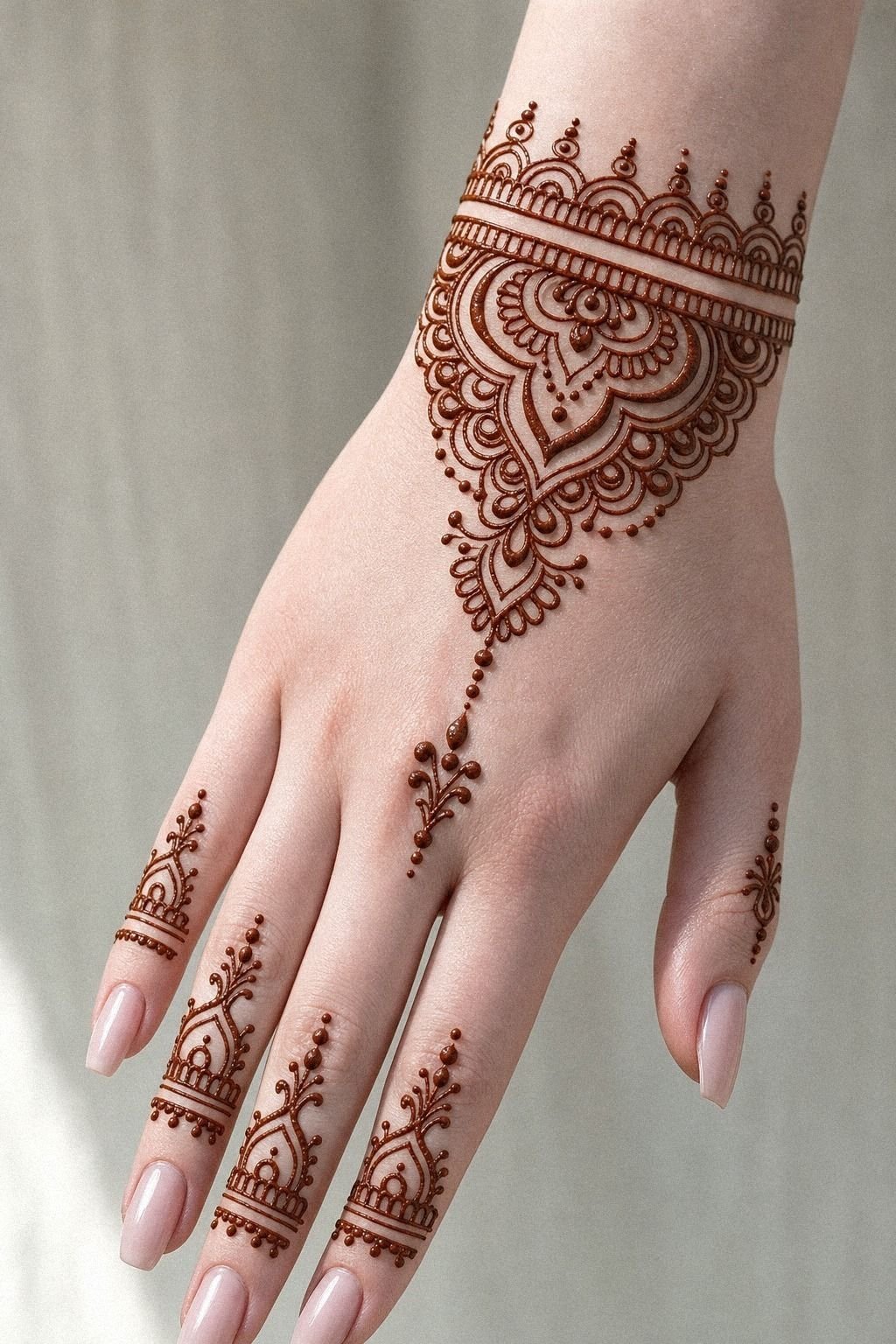
Treat this like a bracelet with intent, not a random strip around the arm. On fair cool-pink skin, a wrist wrap motif looks strongest when one side carries the statement element and the opposite side stays lighter.
That little imbalance makes it feel designed. If everything matches edge to edge, it can look stamped on.
I made the mistake once of drawing a wrist wrap too tight with too many micro petals. It looked fine fresh, then read flat from a few feet away. Since then, I leave more open skin and one clear hero shape.
You should too. If you’re pairing this with other wearable henna references, 15 henna designs that earn their place beyond the festival makes the long-term wear a lot clearer.
– Hero medallion near the top wrist so the eye lands somewhere first. – Open underside spacing for comfort, movement, and a cleaner future tattoo map.
8Arabic Modern Henna Hand Trail
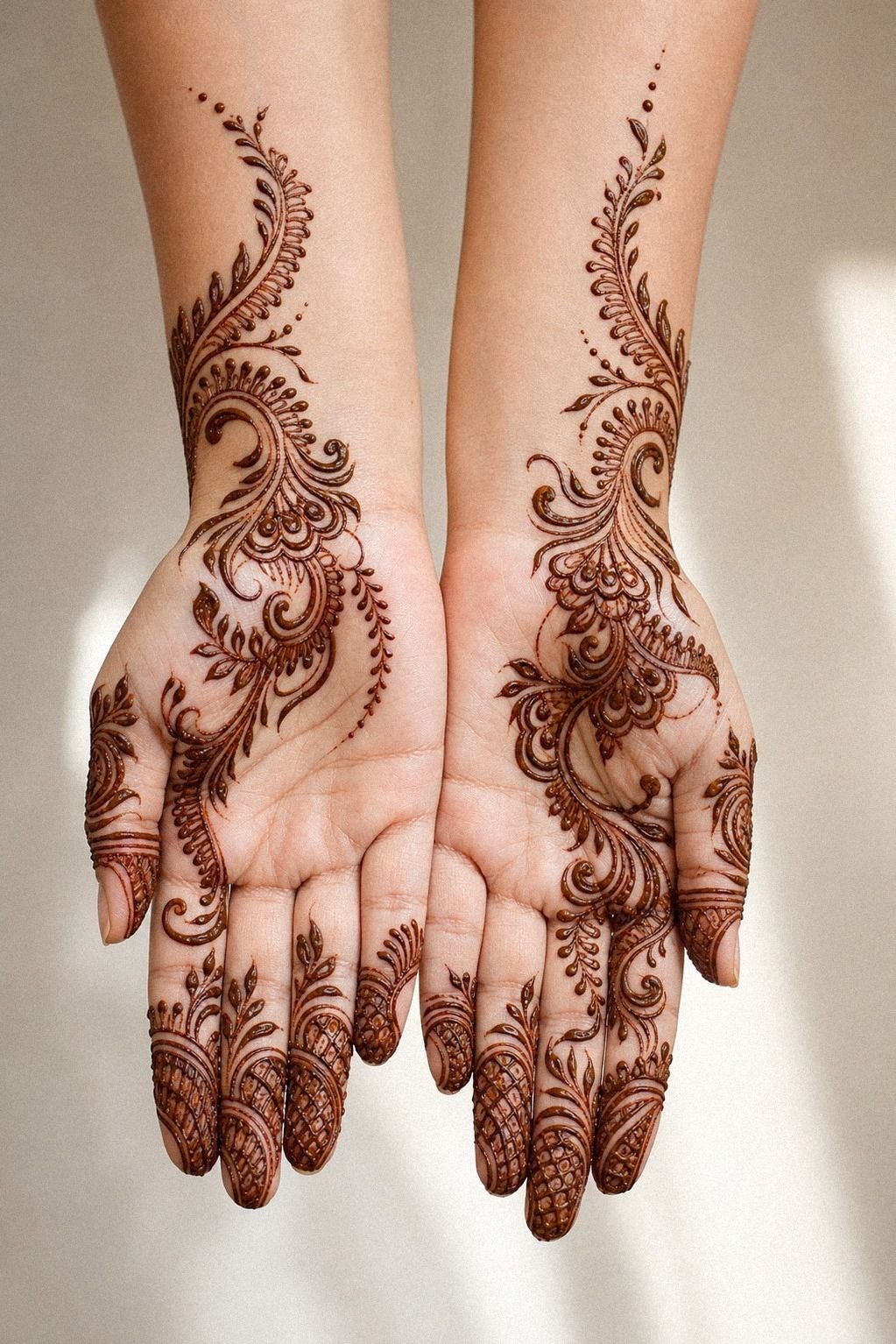
Let the trail sweep diagonally over the hand instead of centering it like a badge. On medium warm ivory skin, this Arabic-style trail works because the leaves and teardrops move in one direction, then thin out before the fingertips.
That’s what gives you elegance without bulk. A design can be full and still feel light if the flow stays disciplined.
You don’t need mirror-image hands for this to hit. In fact, I prefer a lead hand and a quieter partner hand so the set doesn’t feel too formal. But keep the line quality consistent on both hands, or the whole look falls apart.
If you want more directional references before you commit, see arabic mehndi designs. That little homework gives you a clearer style picture before you’ve spent real money.
– Diagonal sweep composition from wrist into fingers. More graceful than a centered block. – Teardrop and leaf sequencing with clean gaps. That’s the modern part.
9Let Dotwork Frame the Finger Joints
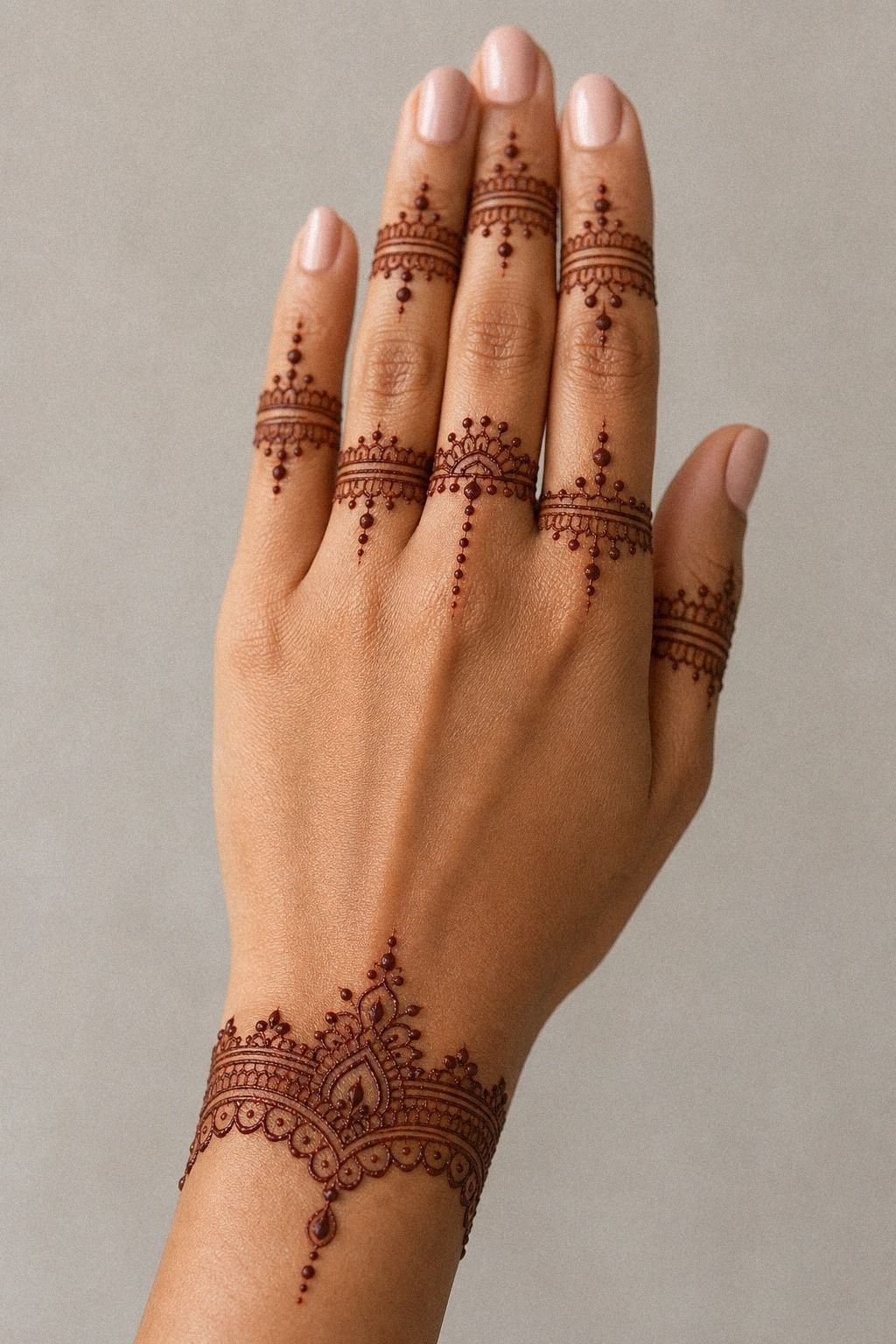
Use dots like punctuation, not wallpaper. Around the finger joints and wrist, that soft brown dotwork chain works when the dot sizes step down cleanly instead of staying all the same.
Why does that matter so much? Because scaled dots create rhythm, and rhythm keeps a minimal design from looking unfinished.
For a tattoo translation, I’d make every third dot slightly bolder and keep the smallest ones off the highest-friction spots. Hands get washed, scraped, sun-hit, all of it.
So you want structure built in from day one. And if you’re curious how simple marks can still feel expensive, mandala mehndi designs shows that nicely.
It is a lean look that still delivers solid visual punch.
– Graduated dot sizing across the joints. Subtle, but it does the heavy lifting. – Short wrist extension so the pattern feels intentional, not cut off.
10Jagua-Style Modern Henna Wrist Accent
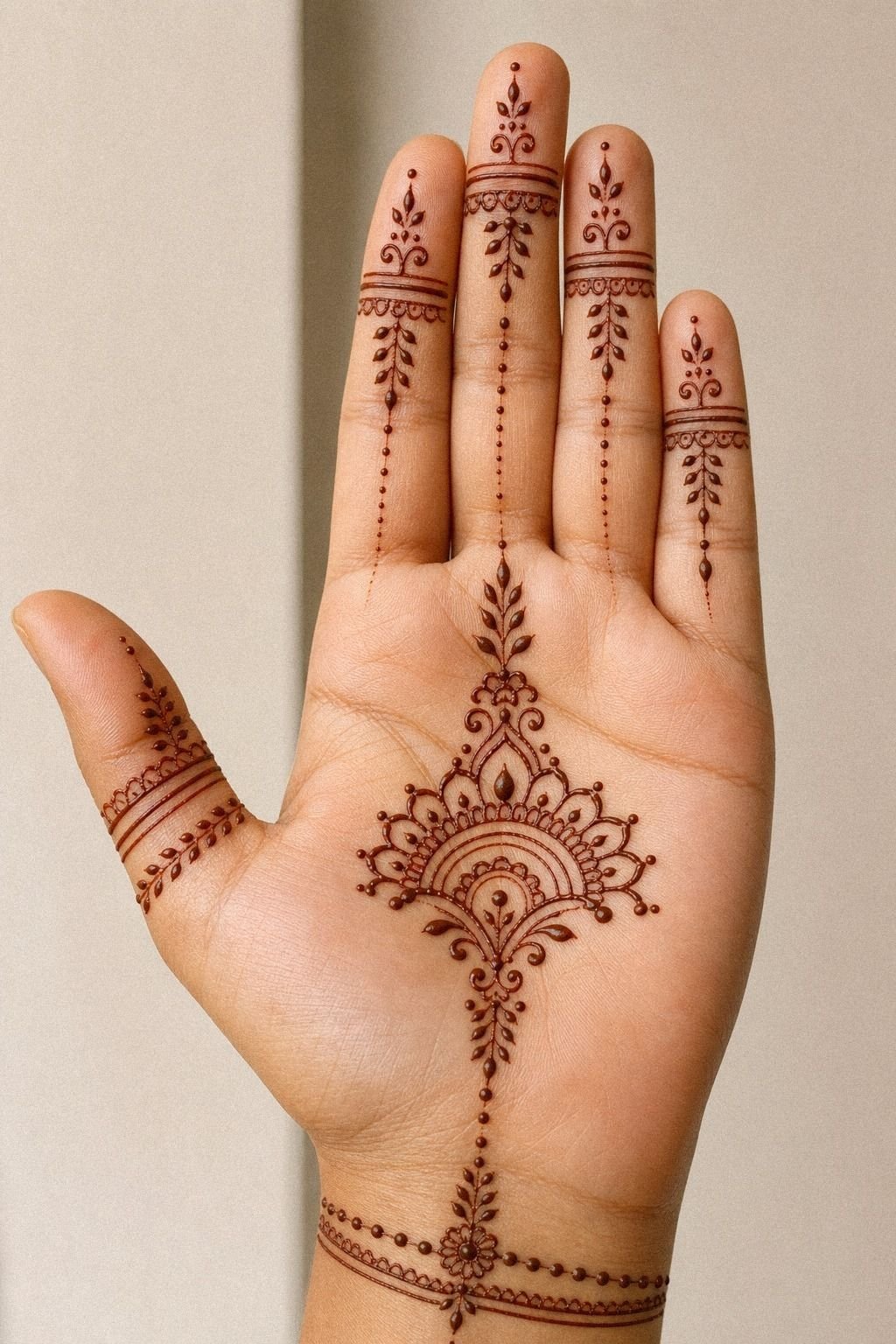
Strip the design back to long lines, one clean wrist turn, and a single drop shape that acts like a full stop.
11Should Fingertip Caps Stay Partial?
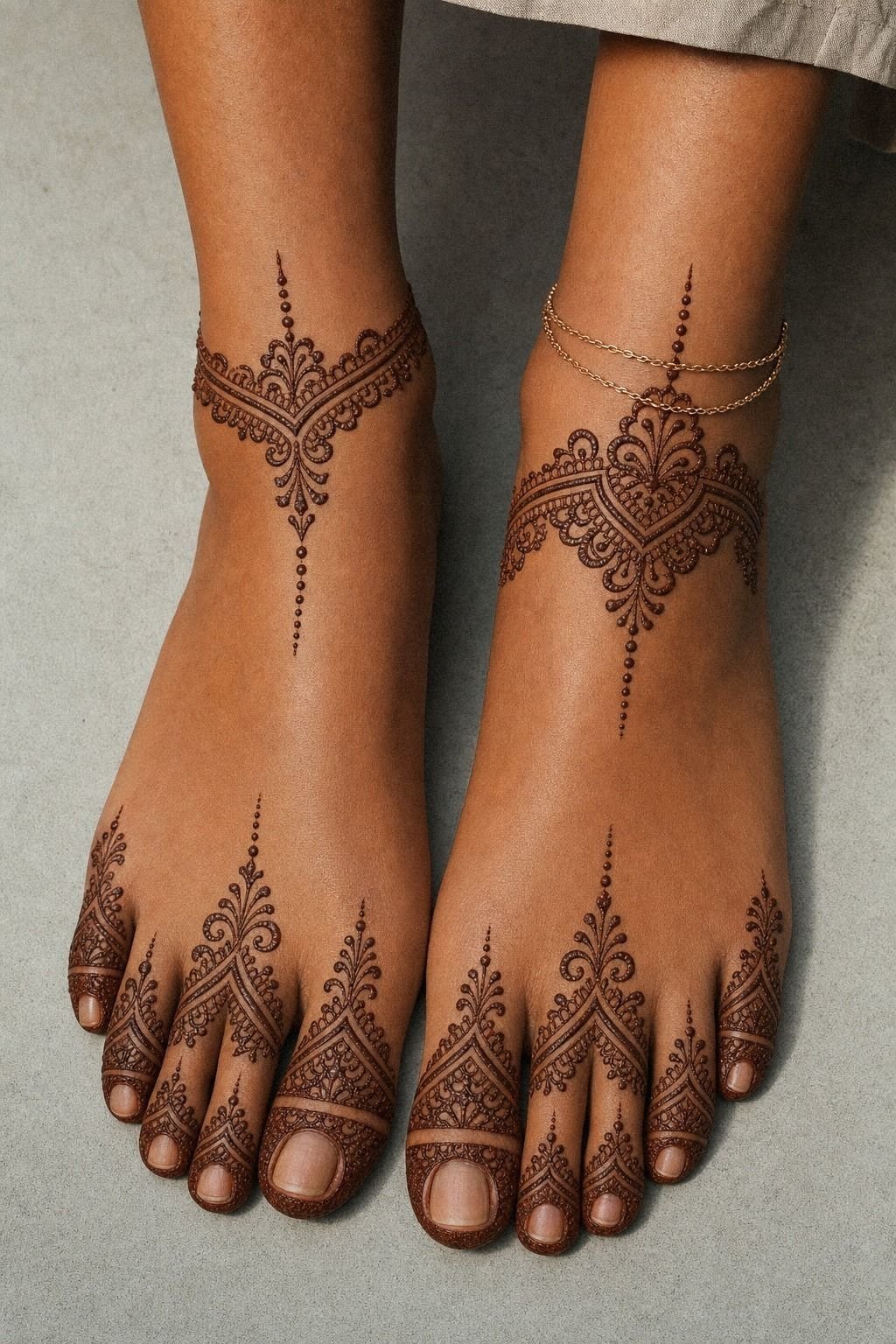
Yes, almost always. On deep brown skin, the reddish fingertip-cap motif reads best when the filled sections stop short and leave visible skin between each cap and the next detail.
That pause is everything. Without it, the whole thing can turn muddy fast.
If you ever convert this to ink, I’d say no to fully filled fingertip caps unless you’re fine with touch-ups. High-wear zones will ask more from you. But the partial-cap approach with clean line breaks has a much better shot at staying cute.
If you want other designs that reward restraint, why tattoos blur over time is worth a look before you decide what the maintenance really looks like.
– Partial fingertip coverage instead of solid blocks. Lighter, cleaner, smarter. – Short connector lines only where the design needs continuity.
12Small Lotus Modern Henna Wrist Accent
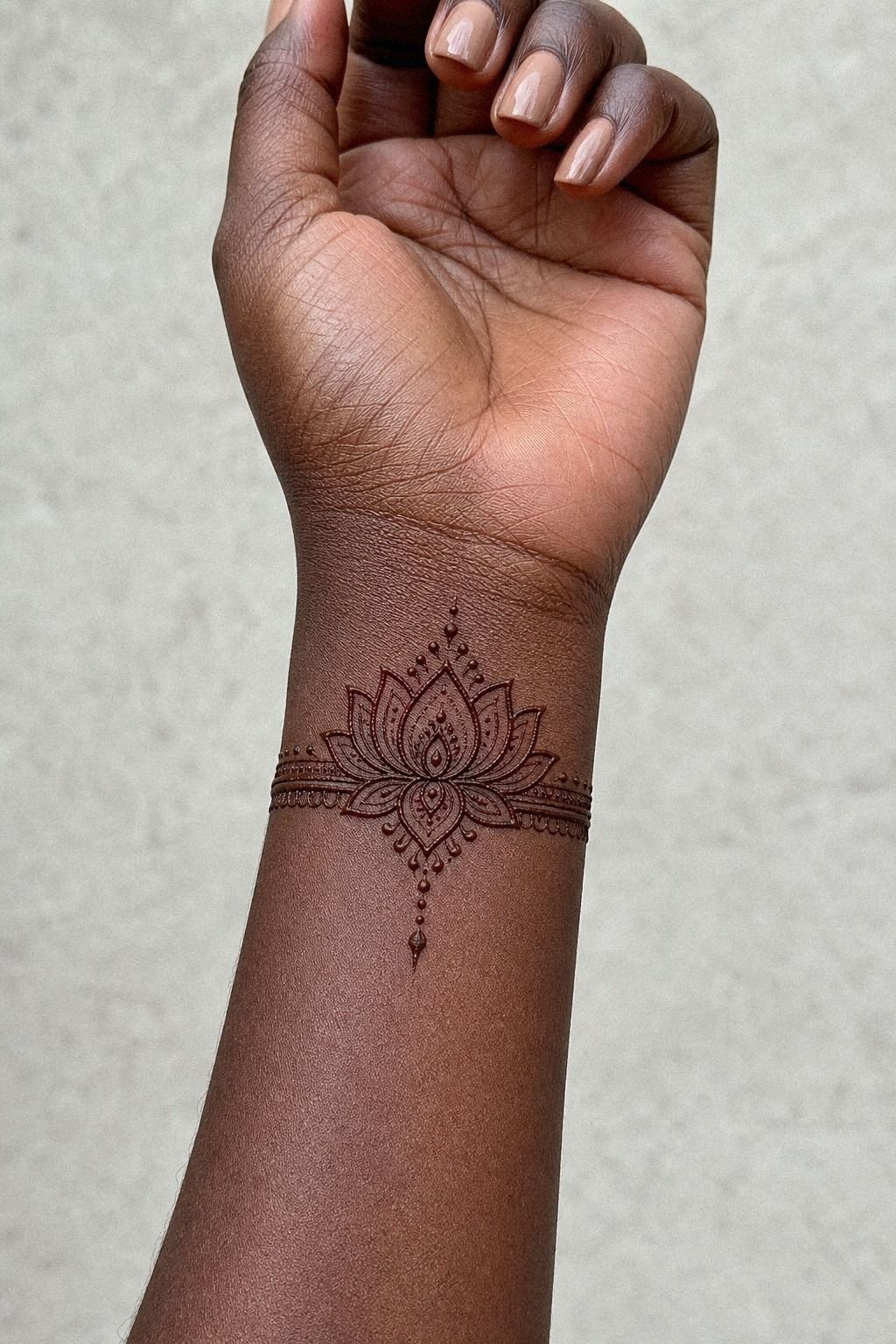
Anchor the lotus close to the wrist and let the forearm stay mostly open. On deep ebony skin, a small lotus accent lands best when the petals stay simple and the stem or dot trail doesn’t try to do too much. This is one of those designs that can age cute on you if you don’t undersize it from the start!
I love this for first-timers because it gives you symbol, placement, and softness without a huge time commitment. A tiny lotus around 2 to 3 inches can be a clean one-hour tattoo in many studios, depending on detail.
That makes it a strong budget option when you want meaning without blowing the cost wide open. For more starter-friendly inspiration, check kids henna designs for simplified shapes.
– Simple petal geometry so the lotus stays readable years later. – Forearm-adjacent placement for lower wear and a calmer heal.
13Why Does a Half-Palm Mandala Feel More Current?
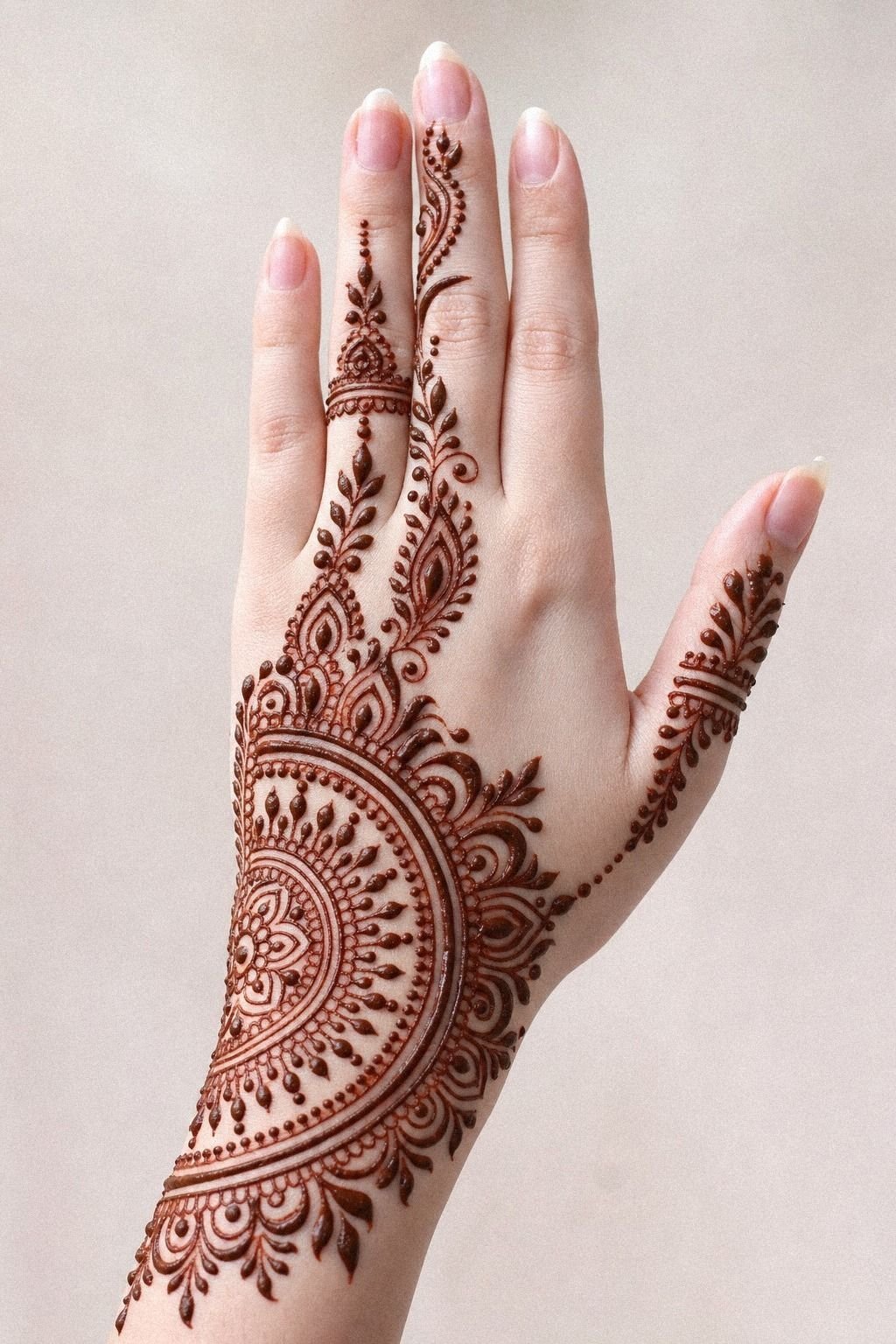
Because the crop does half the styling for you. On fair cool-pink skin, that half-palm mandala works because the eye gets a clear focal point, then open skin around it.
If you centered a full wheel here, it would feel heavier and less current. The cropped version has more attitude.
Palm-adjacent tattoos inspired by this look aren’t beginner territory, and I say that with love. They can be spicy, they can fade, and they can need maintenance.
But lifting this exact half-and-half idea onto the outer forearm or upper thigh gives you the same balance with a much nicer heal. Want more bold-but-controlled references?
– Off-center mandala geometry so the design feels modern, not ceremonial-heavy. – Quiet outer field around the motif. Contrast is doing half the work here.
14Bold Dots Against Bare Skin on the Side Hand
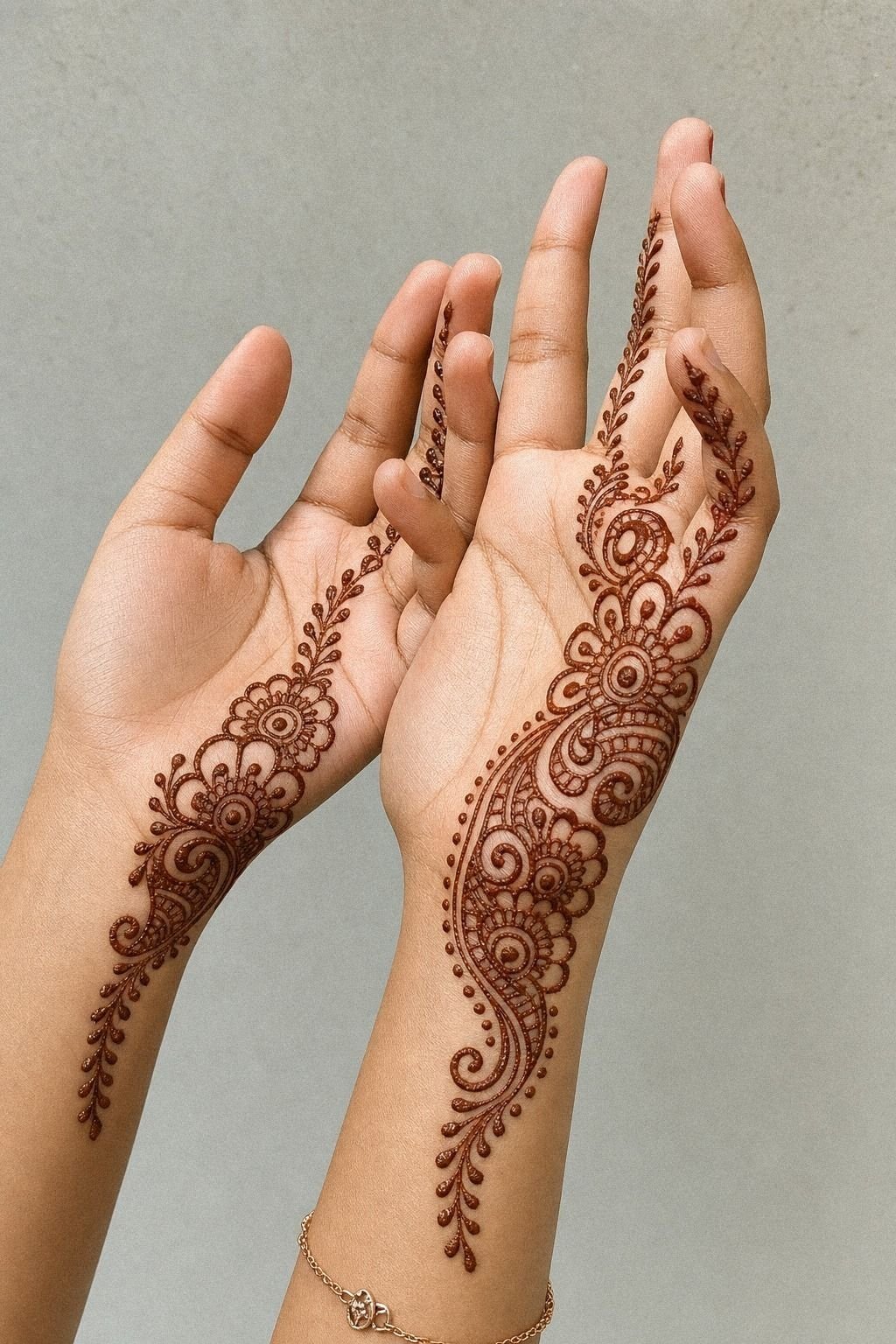
Work the design along the side of the hand like a seam instead of spreading it over every surface. On medium warm ivory skin, that side-hand placement feels new because it hides and reveals itself depending on how you turn your wrist.
I like that. It gives you edge without screaming for attention every second!
This is also a smart test if you think you want a side-of-hand tattoo later. You get to live with visibility, movement, and wear in real time.
But I’d avoid super tiny hooks or lace-like loops near the pinky edge because that area gets beat up. For more modern paths and cleaner flow, keep finger mehndi designs in your reference pile.
It’s a stylish look, but only if the linework stays clean enough to justify the upkeep.
– Side seam composition from lower palm toward the pinky. Sleek and directional. – Selective micro detailing only at the turns. Too much will go soft.
15Build a Sharp Finish With One Hero Line
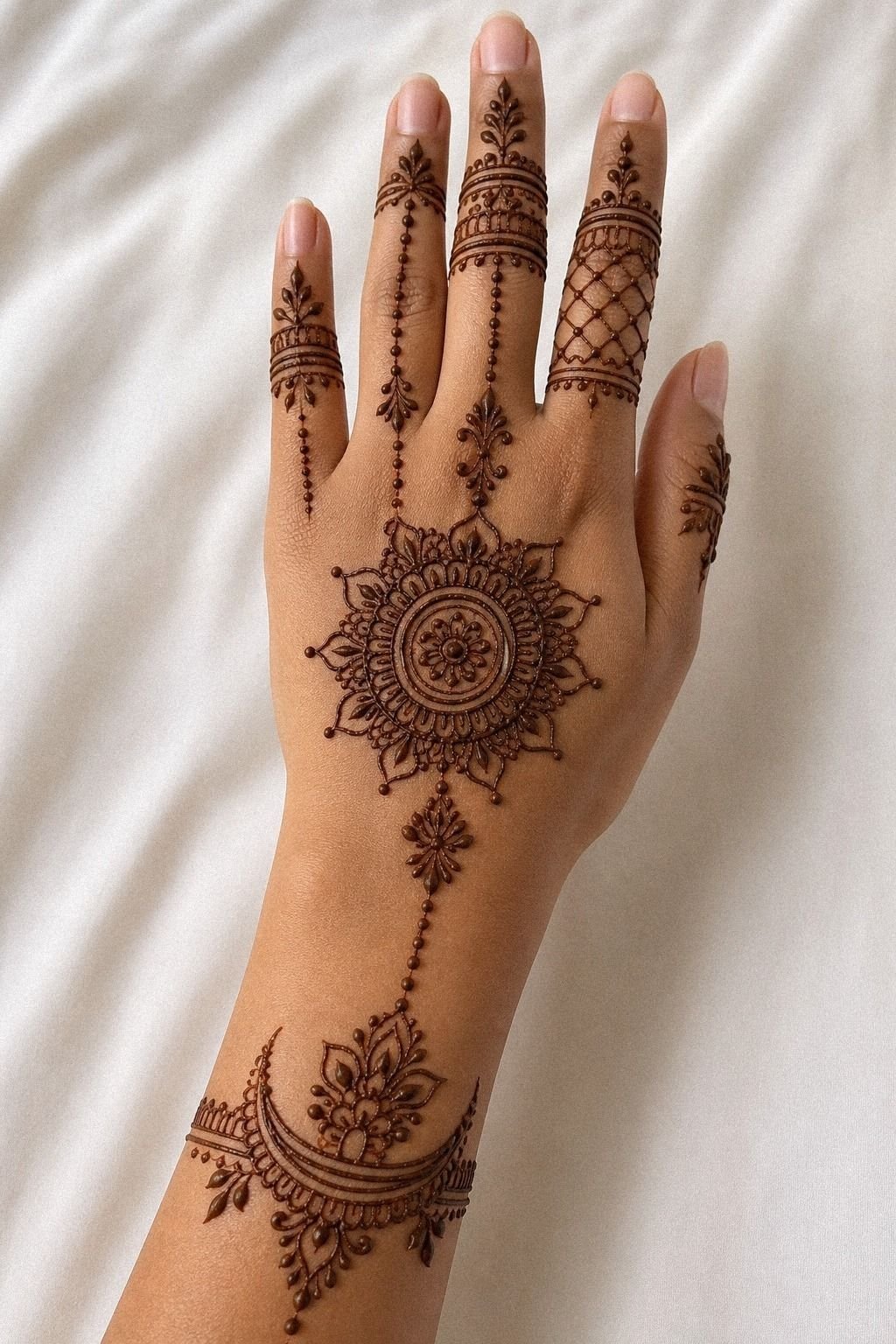
Finish with the version that proves line quality is the whole game.
The Clean-Line Rule I Use Before Turning Henna Into Ink
When someone brings me modern henna references for a tattoo, I do not start by asking which flower or mandala they like best. I start with flow, contrast, and where the design is going to live on skin. That’s the part Pinterest skips.
A pattern can look gorgeous as fresh henna and still make a weak tattoo if every line is too close, every tip is too tiny, or the placement sits in a high-wear zone that will chew it up.
Here’s the practical filter I use. First, can you still read the main path from a couple feet away?
If not, it’s too busy. Second, are the smallest details sitting on fingers, feet, or deep creases?
If yes, I either enlarge them or move them. Third, does the design rely on stain softness more than structure?
Henna can get away with that. Tattoos cannot. Black ink is your best friend for longevity, and strong shapes beat delicate noise every time.
I also think people underrate how useful henna is as a test run for tattoo ideas. You get to wear the movement for a few days, notice what catches your eye, and figure out whether the placement feels like you.
That is huge. I have watched clients realize they loved the motif but hated the visibility, or loved the hand flow but wanted it bumped up the forearm where it would age cleaner and hurt less.
That kind of edit saves regret, saves budget, and gives you much better value for the final appointment.
Use this table as your quick reality check before you book anything permanent. It isn’t about killing the vibe. It is about making sure the vibe heals nice and the cost feels fair.
What People Always Want to Know
How much does a Modern Henna Designs usually cost?
About $100 to $300 is a normal US range for a small to medium henna-inspired tattoo, though shop minimums often start around $50 to $100. Bigger hand or foot work can run higher. The cleaner and simpler the layout, the better the value usually is.
– Hourly rates around $100 to $250 in many US studios – Hand and foot placement often priced up for difficulty and touch-up risk
Are Modern Henna Designs a good idea for a first tattoo?
Yes, if you keep the layout clean and place it smart. A simpler henna-inspired tattoo on the outer forearm or upper arm gives you readable linework, manageable pain, and a better shot at a smooth heal. If you want a low-risk preview of that vibe, 15 mehendi designs for hands simple enough to DIY is a good filter.
– Lower-wear placement over fingers if longevity matters – Clearer motifs instead of tiny packed lace for first-timers
How do I choose a tattoo artist for Modern Henna Designs?
Look for crispy healed linework first, not just pretty fresh photos. You want an artist whose portfolio shows clean pulls, steady symmetry, and skin that isn’t overworked. I also like when they show hands and wrists, not just easy flat placements.
For more reference sorting, use fine-line tattoo needles longevity placement guide.
– Healed photos in natural light – Studio hygiene and linework specialty
How much do Modern Henna Designs hurt?
It depends on placement, but hands, feet, ribs, and sternum are the spicier zones. Outer forearm, upper arm, shoulder, and thigh are usually more tolerable for most people. If pain is your biggest concern, where tattoos hurt less gives you a better planning baseline than guessing.
– Lines feel sharper at the start – Shading feels duller if your design includes any soft fill – Tap out for five if you need it!
How long does a Modern Henna Designs take to heal?
The surface usually settles in about 2 to 3 weeks, while full healing can take 2 to 3 months. The best aftercare is simple: wash with gentle unscented soap, moisturize lightly, and skip pools, hard sun, and gym friction early on. If you already know you are rough on your skin, plan for placement choices that heal easier.
– Thin ointment layer in the first days only – No picking flakes once it peels like a sunburn
What’s the best placement for Modern Henna Designs?
My first picks are outer forearm and upper arm because they show the flow well and give fine lines a better chance to age clean. If you love the look on hands or feet, go in knowing touch-ups may be part of the deal. For simpler placement ideas, compare tattoo ideas by placement.
– Outer forearm for visibility and cleaner longevity – Upper arm for lower wear and easier healing
Where I’d Start First
If I had to pick one, I’d start with the Fine-Line Modern Henna Wrist Band! It gives you jewelry energy without hand-level wear, and the open skin helps it heal cleaner for the money. Pin it for later and compare it with modern mehndi designs before you book.