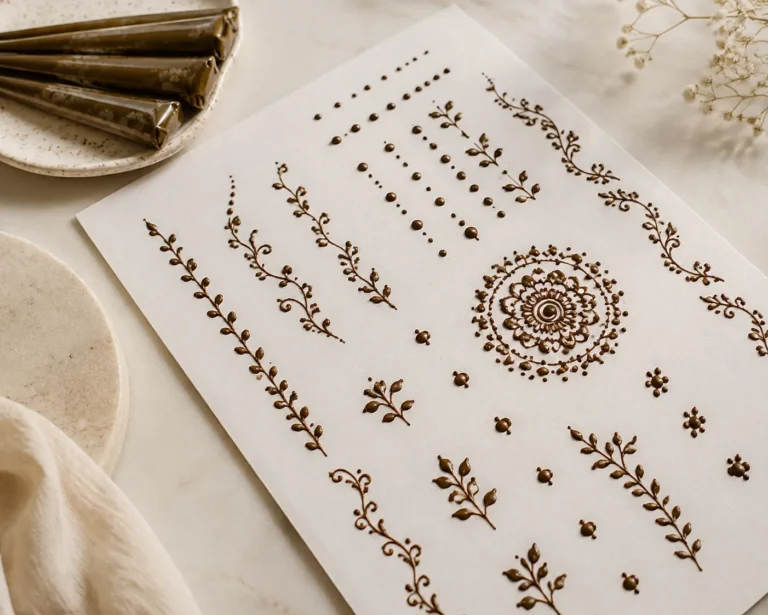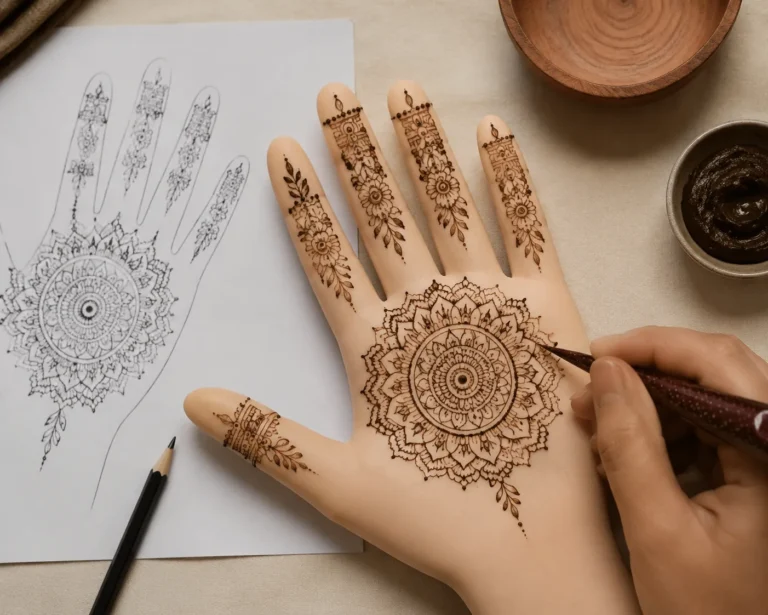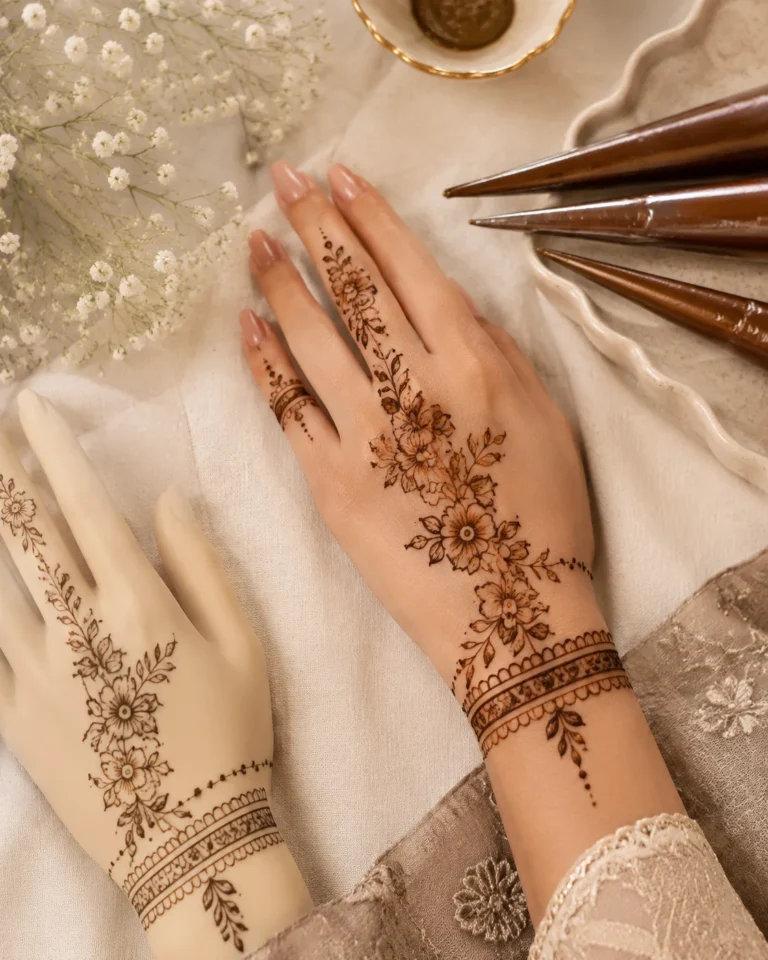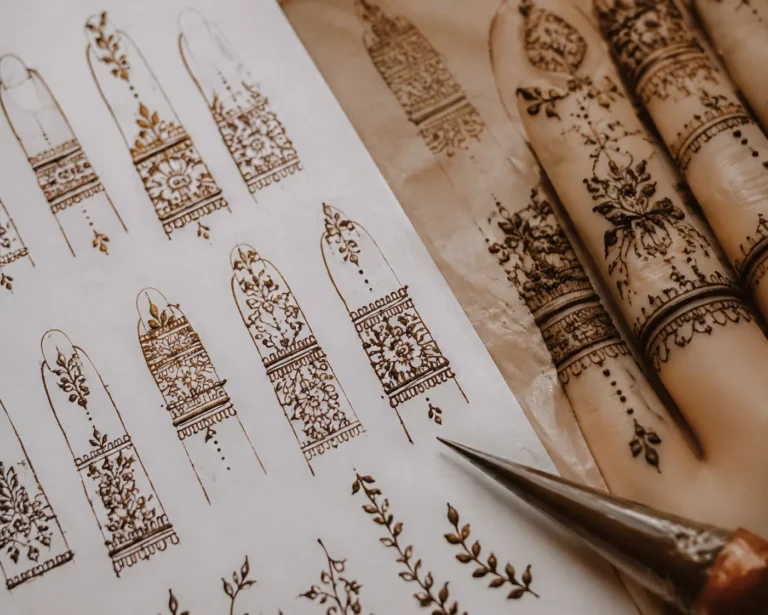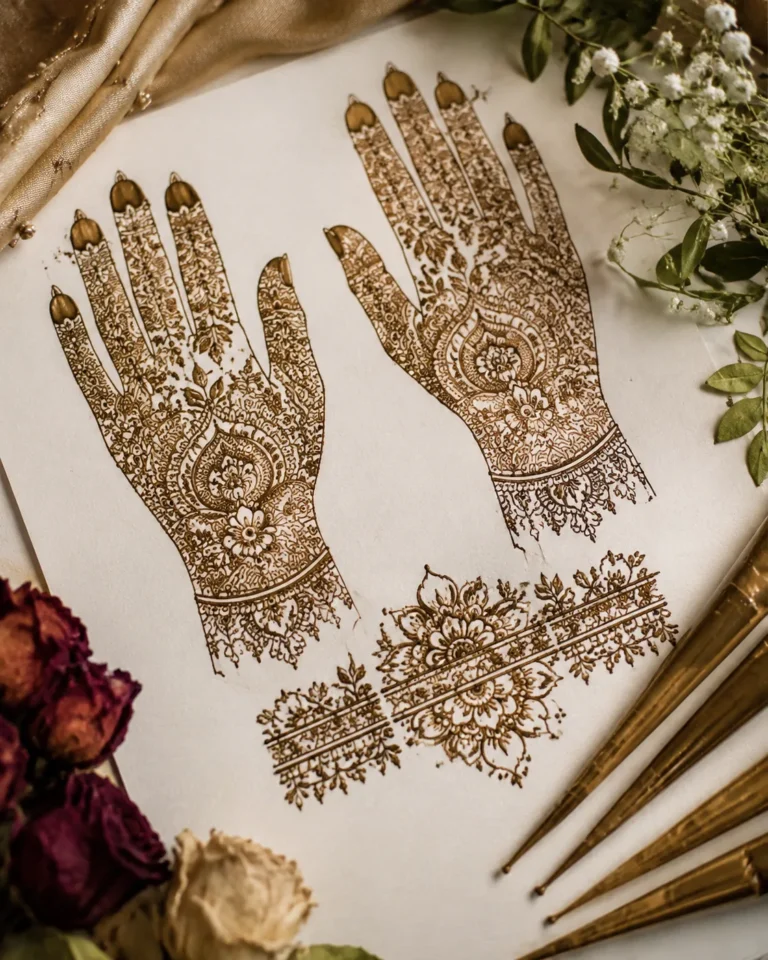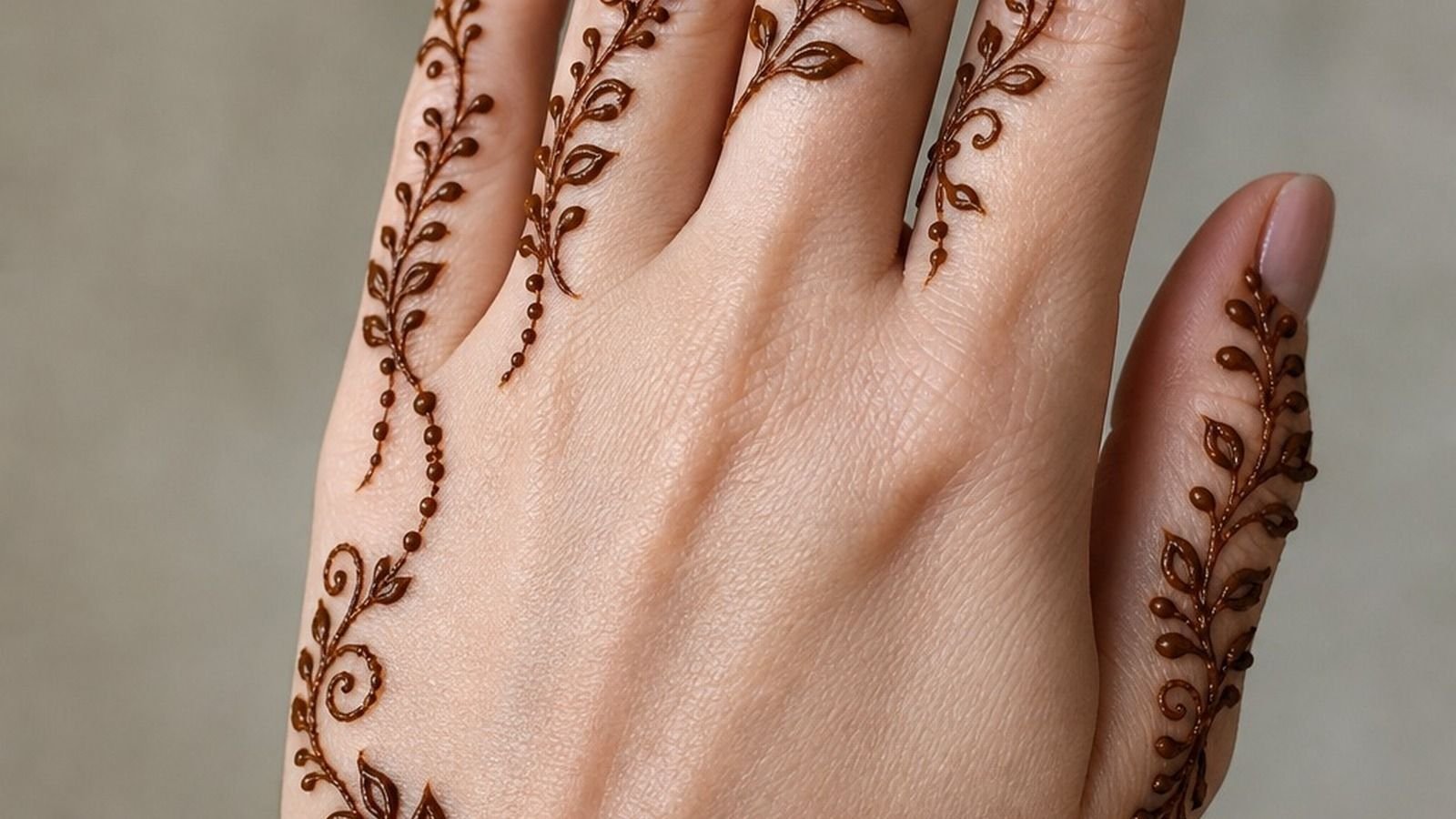
Small henna designs answer the real question fast: the best ones stay readable because they leave enough open skin to do part of the visual work. I almost overpacked my first tiny hand pattern, and it looked busy before the paste even dried. Since then, I have gotten pickier. Henna is not a tattoo; it is a temporary paste design made with a cone, and it can be an expressive, personal way to test a motif before committing to anything permanent.
- Tiny Finger Vine Henna Design
- Why does a small wrist mandala read cleaner?
- Build a simple palm crescent henna design
- Let the back of the hand stay minimal
- Tiny Floral Henna Ring Design
- Ankle bracelet or forearm cuff?
- Easy Thumb And Index Henna Detail
- Let a side-finger trail stay airy
- Small Lotus Henna Design For Wrist
- Dots versus petals on the hand
- Tiny Sun And Moon Henna Design
- Catherine cone test for a fine line collarbone motif
1Tiny Finger Vine Henna Design
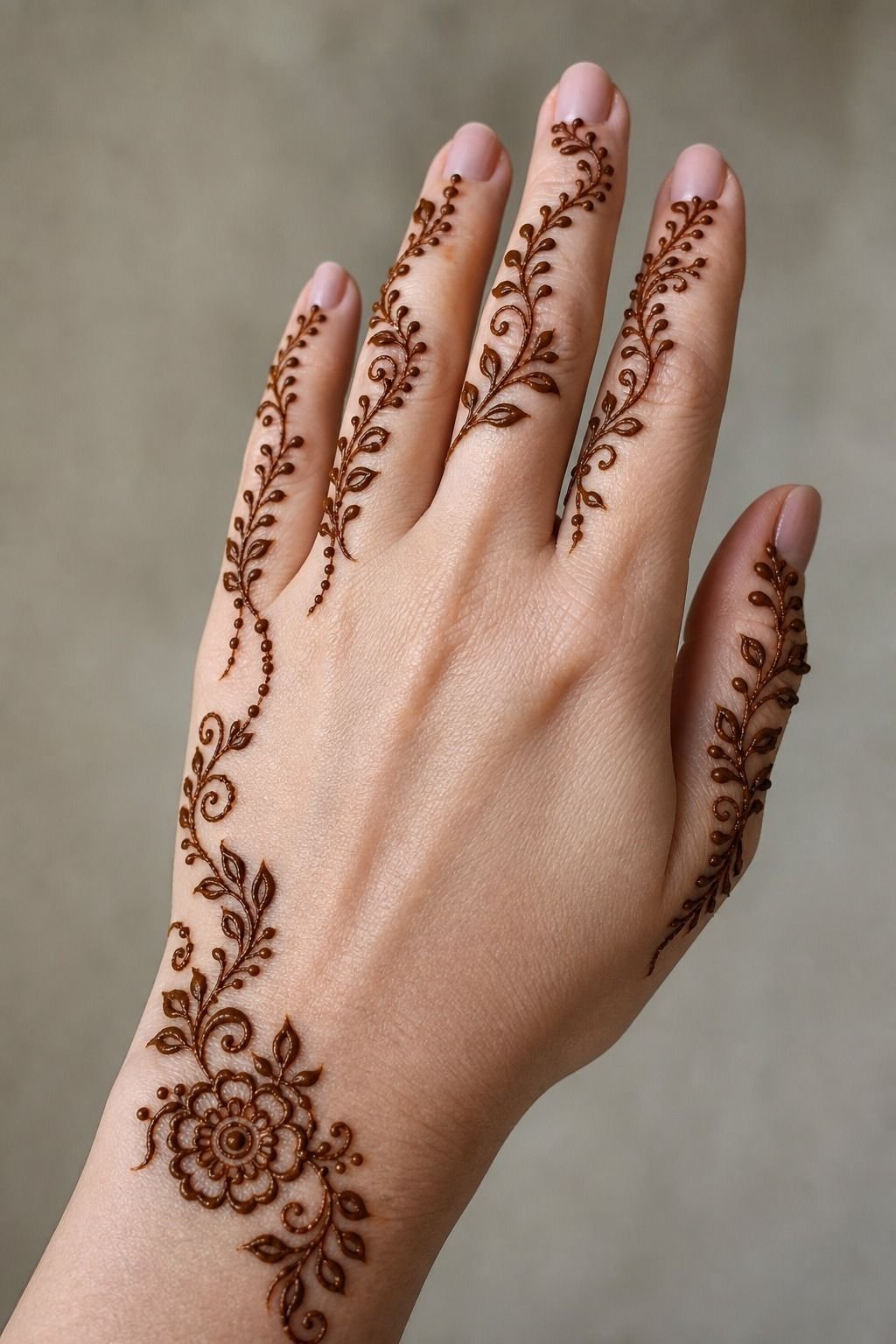
[IMAGE: Jamila finger vine henna with a slim leafy trail crossing the back of the hand and tapering onto one finger on fair cool-pink skin.]
A tiny finger vine works because it follows the hand instead of fighting it. On fair cool-pink skin, reddish-brown henna stain looks cleanest when the vine keeps one clear direction and doesn’t start zigzagging for extra drama. If you want a visible placement that still feels delicate, this is a smart first trial run.
Keep the stem narrow and let the leaves break rhythm a little, or the whole thing starts reading stiff. I like this when the vine stays around 2 to 3 inches long and uses one clean pull for each curve, not a bunch of fuzzy corrections. Jamila henna powder is useful here when mixed into a smooth paste and strained well.
You should also respect the wear. Fingers are high-friction, so your design can fade faster from washing, rubbing, and heat. But that does not mean you skip them.
It means you keep the motif minimal enough that it still reads after the surface softens. If you want a cheaper trial, simple henna designs for beginners and latest simple mehndi designs are both worth saving.
2Why does a small wrist mandala read cleaner?
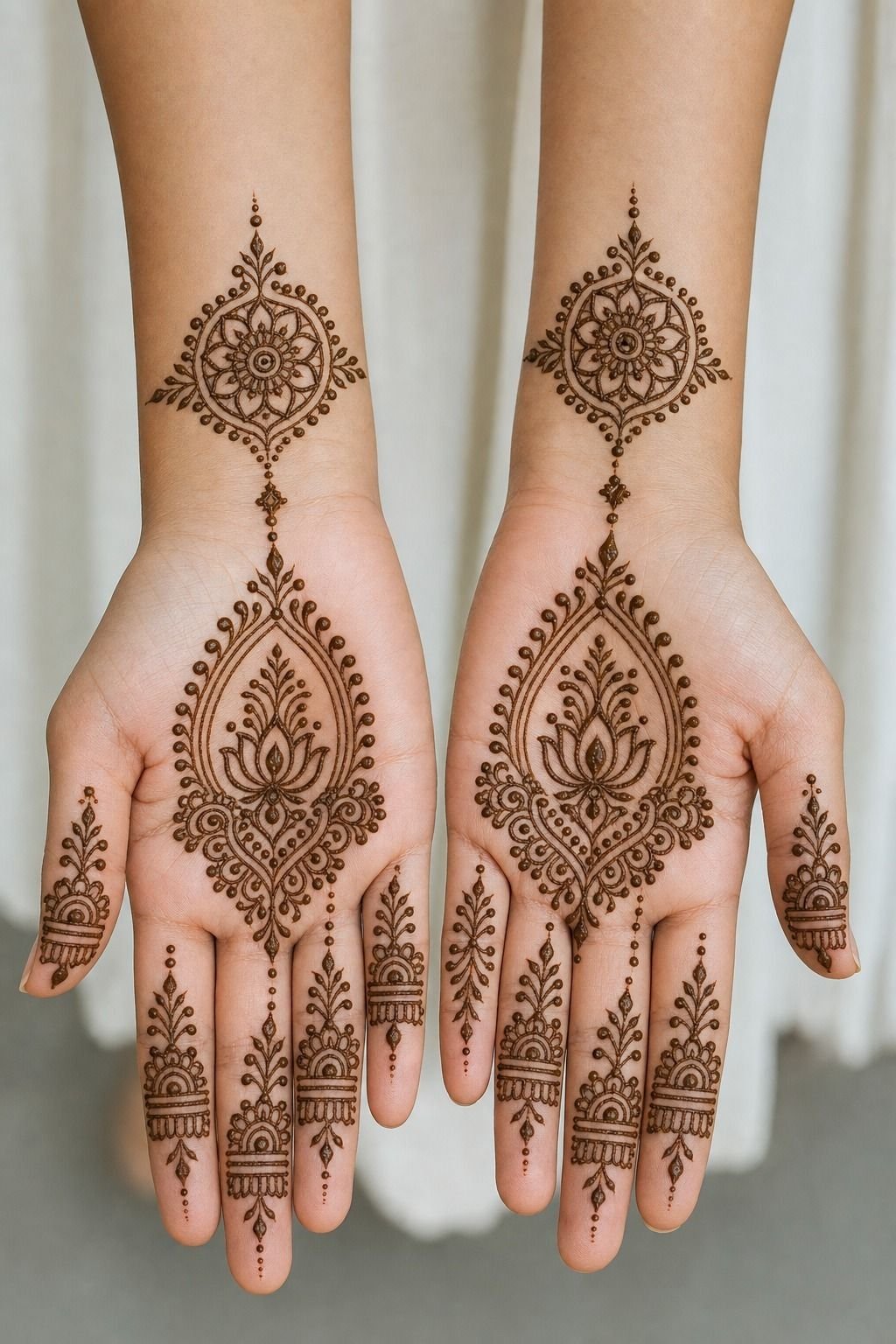
[IMAGE: small wrist mandala henna centered on medium warm ivory skin with tight petals, airy outer dots, and open skin around the edge.]
This one sits on medium warm ivory skin and leans on balance. A small mandala looks polished when the center stays tight and the outer petals breathe instead of stacking into mush. If you’re testing a future permanent design with henna first, that clean center gives you more mileage than one more ring of filler ever will.
I tell people to build a mandala from the middle out, then stop sooner than they want to. Why?
Because the first version usually looks better before you add the last ring. A 1.5 to 2 inch build at the wrist or inner forearm gives you enough clearance for dots, tiny scallops, and soft petal spacing without turning the whole thing into soup.
You can borrow the same logic for a lasting body design later. Clean radial symmetry.
A few darker anchors. No panic-filling. If you’re comparing fuller traditional flow, henna mehndi designs and 24 henna designs that reward a steady hand show the same principle at different detail levels.
3Build a simple palm crescent henna design
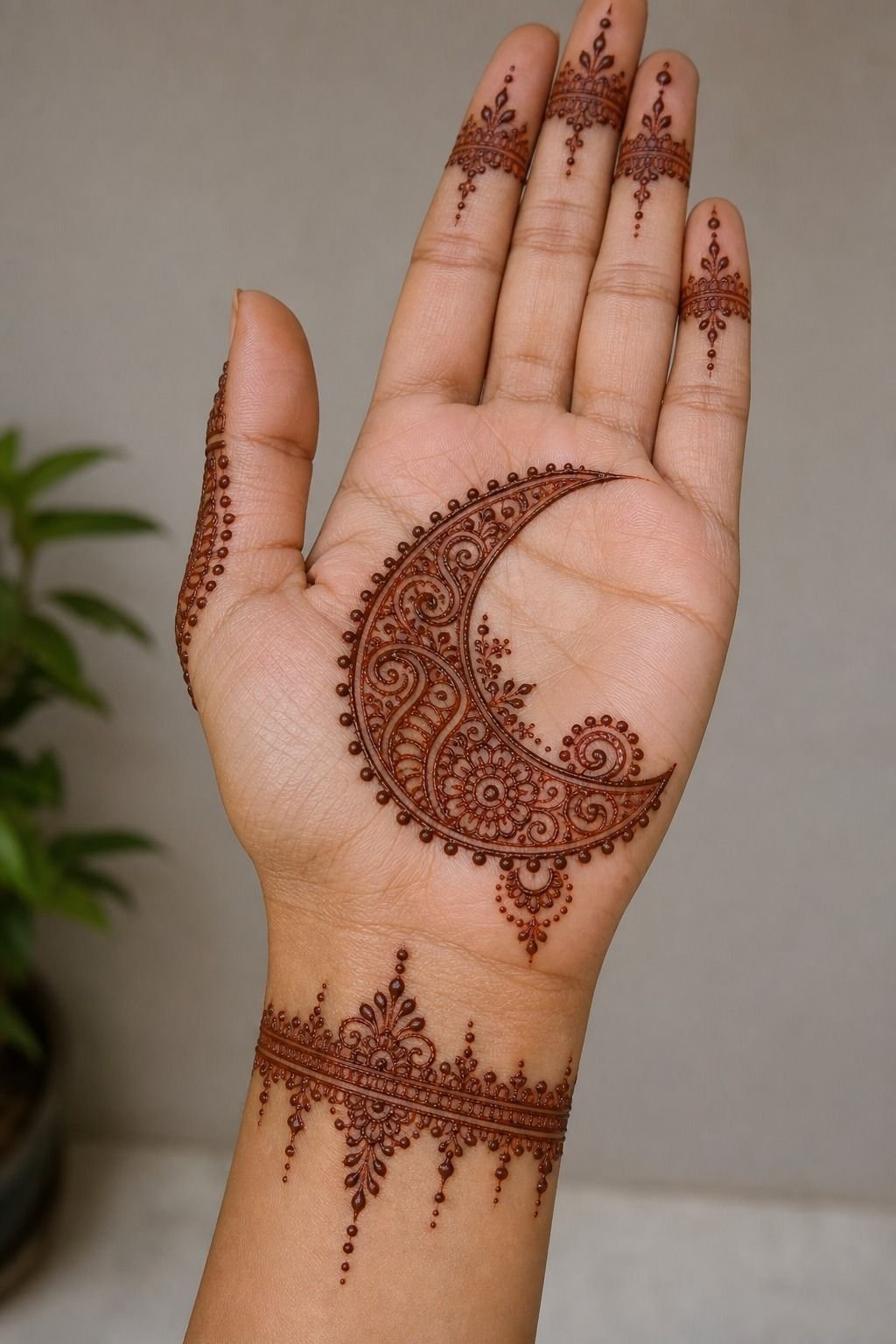
[IMAGE: palm crescent henna on medium olive skin with a bold moon, light wrist echo, and just a few supporting dots.]
A crescent on the palm hits fast because the palm already gives you a strong shape to frame. On medium olive skin, crescent moon henna looks grounded when the center symbol stays bold and the supporting marks stay quiet. You want that anchored feel if your taste runs minimal, not bridal-heavy.
I’d keep the moon bold and the extras soft. A slim crescent, three to five dots, maybe a tiny star or two, then done!
The palm sweats and rubs, so over-detailing is just asking for blur. Catherine Natural Henna cones work well for little arc shapes because the paste line stays steady when you’re turning that curve.
Here’s the part people miss. A palm design looks best when the wrist echo is lighter than the center symbol.
If the wrist line gets louder than the moon, your eye loses the focal point and the whole thing feels less elegant. For more practice-first references, 24 simple henna designs to practice before going bold is worth your time.
4Let the back of the hand stay minimal
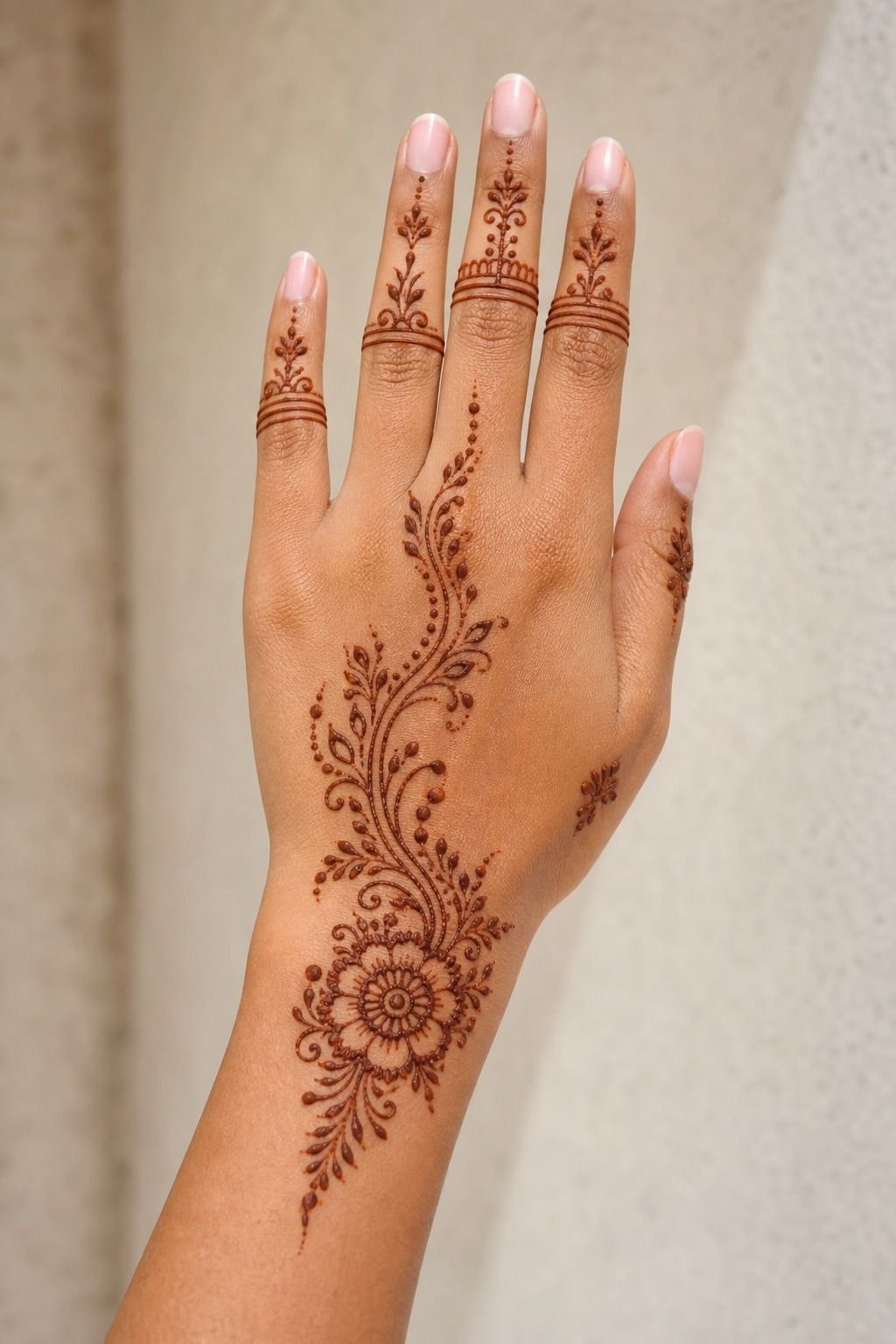
[IMAGE: minimal back-of-hand henna on golden tan skin with a clean center path, soft dots, and open skin between motifs.]
This is the kind of understated build I trust on golden tan skin because the stain shows warm and clear without needing a ton of filler. A clean center path with two side accents reads polished, feminine, and a little more grown-up than a full hand flood. If you’re using henna to judge placement, this is one of the best low-commitment tests.
I like a center line that starts near the middle knuckle, then relaxes before the wrist. That pause matters.
It keeps the whole thing airy. Golecha natural henna is useful here because a steady bead of paste gives you crisp dots and confident curves instead of blobby stops.
Back-of-hand designs are visible, which means they feel bolder than their actual size. That’s good for budget planning.
You get the look of a striking statement motif without paying for excessive detail or wasting paste. If you want more full-hand references before you commit to a larger occasion design, 23 full hand mehndi designs to show your artist first gives you the bigger-picture version.
5Tiny Floral Henna Ring Design
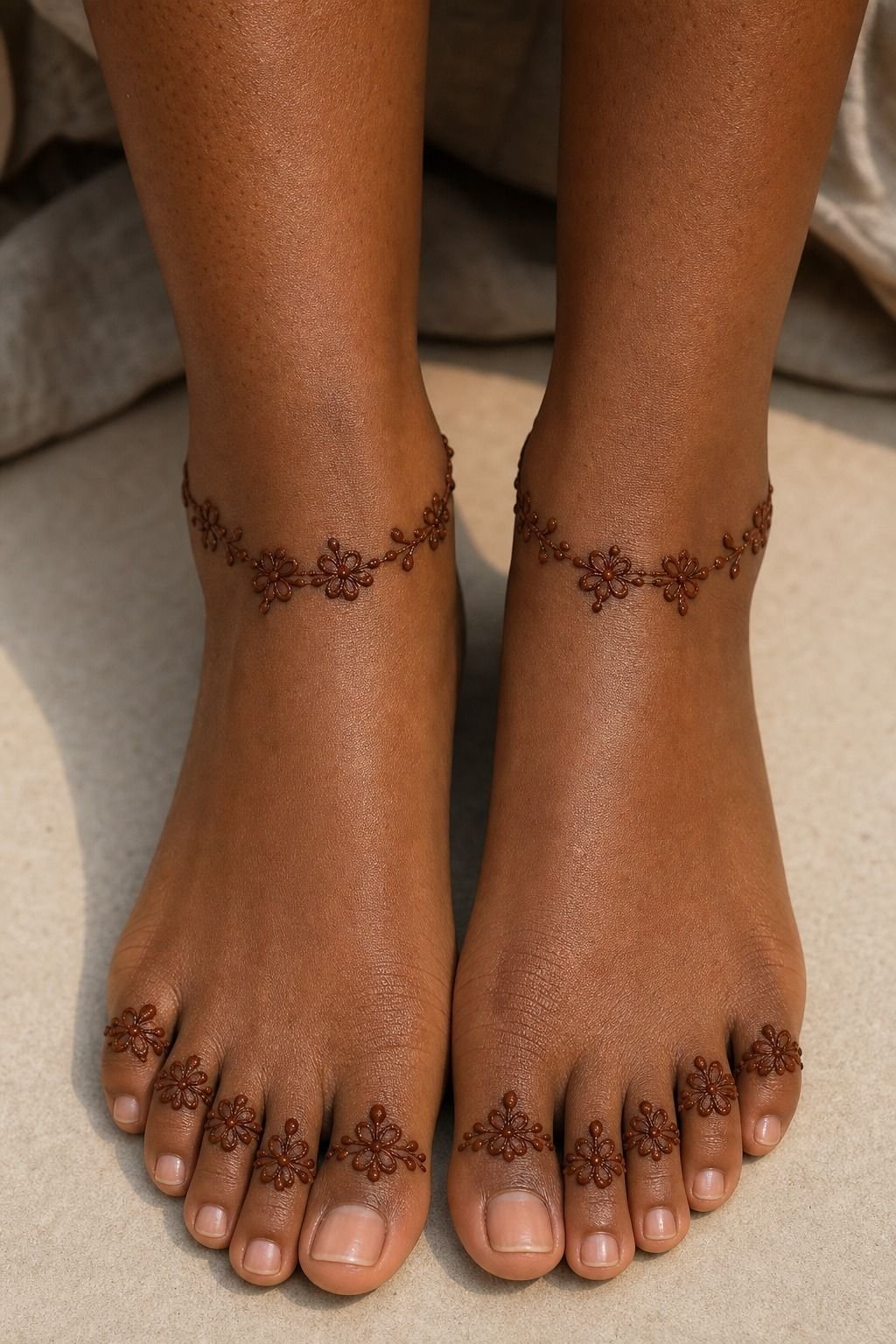
[IMAGE: tiny floral henna ring design wrapping the ankle line on deep brown skin with one chunky flower and a dotted stem.]
The title says ring design, but the floral logic works even better when the motif wraps a toe, sits above the ankle bone, or traces the top of the foot as a linked band. You still get the ring effect, just with better flow for the placement you’re wearing. That makes it a smarter move than forcing a tiny bloom where it does not fit.
This is where I like petal shapes that stay chunky enough to read. A micro rose sounds cute until it turns into a blob.
A five-petal bloom with one leaf pair and a dotted stem stays crisp in henna because the design isn’t overworked. FreshJagua gel creates a different temporary stain, while classic henna keeps the earthy brown softer.
Feet are high-wear for henna, so I wouldn’t crowd them. Let the floral ring sit off the ankle bone with a little clearance. Keep the paste on for the recommended drying period, then protect the stain with a lemon-sugar seal if you want deeper color.
If you’re collecting more flowing references, 15 arabic henna designs that flow with the hand and kids henna designs can both help you strip the idea back to what actually matters.
6Ankle bracelet or forearm cuff?
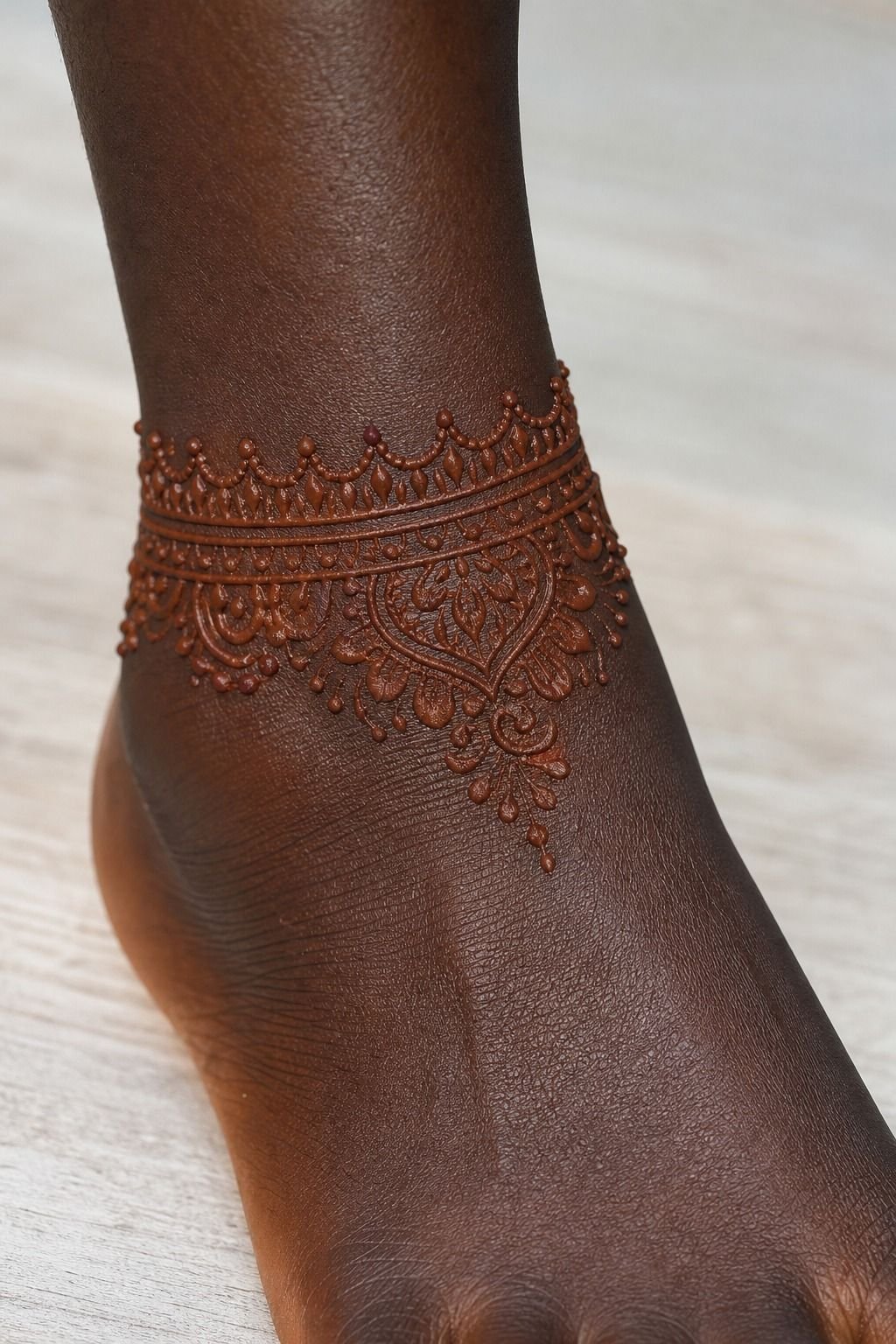
[IMAGE: ankle bracelet henna pattern compared with a slim forearm cuff, both on deep ebony skin with even dot spacing and clean outer borders.]
The funny part here is that the reference shows a forearm and hand, not an ankle, and that actually makes the pattern easier to judge. You can see the border logic clearly. If you want the longer-lasting temporary result, I lean forearm cuff over ankle bracelet because the skin usually gets less rubbing and washing.
Ankle bracelet placement looks playful. Forearm cuff placement looks intentional.
That is the trade-off. For the ankle, keep the band narrow and the inner filler soft.
For the forearm, you can afford slightly bolder anchors without the whole thing feeling heavy.
And yes, money matters here too. A skilled mehndi artist may charge around $10 to $40 for a small design, while a bridal or event booking can cost $75 to $300 or more depending on time and complexity. If you want contrast between tight and open layouts, modern mehndi designs and henna mehndi designs are useful to compare side by side.
7Easy Thumb And Index Henna Detail
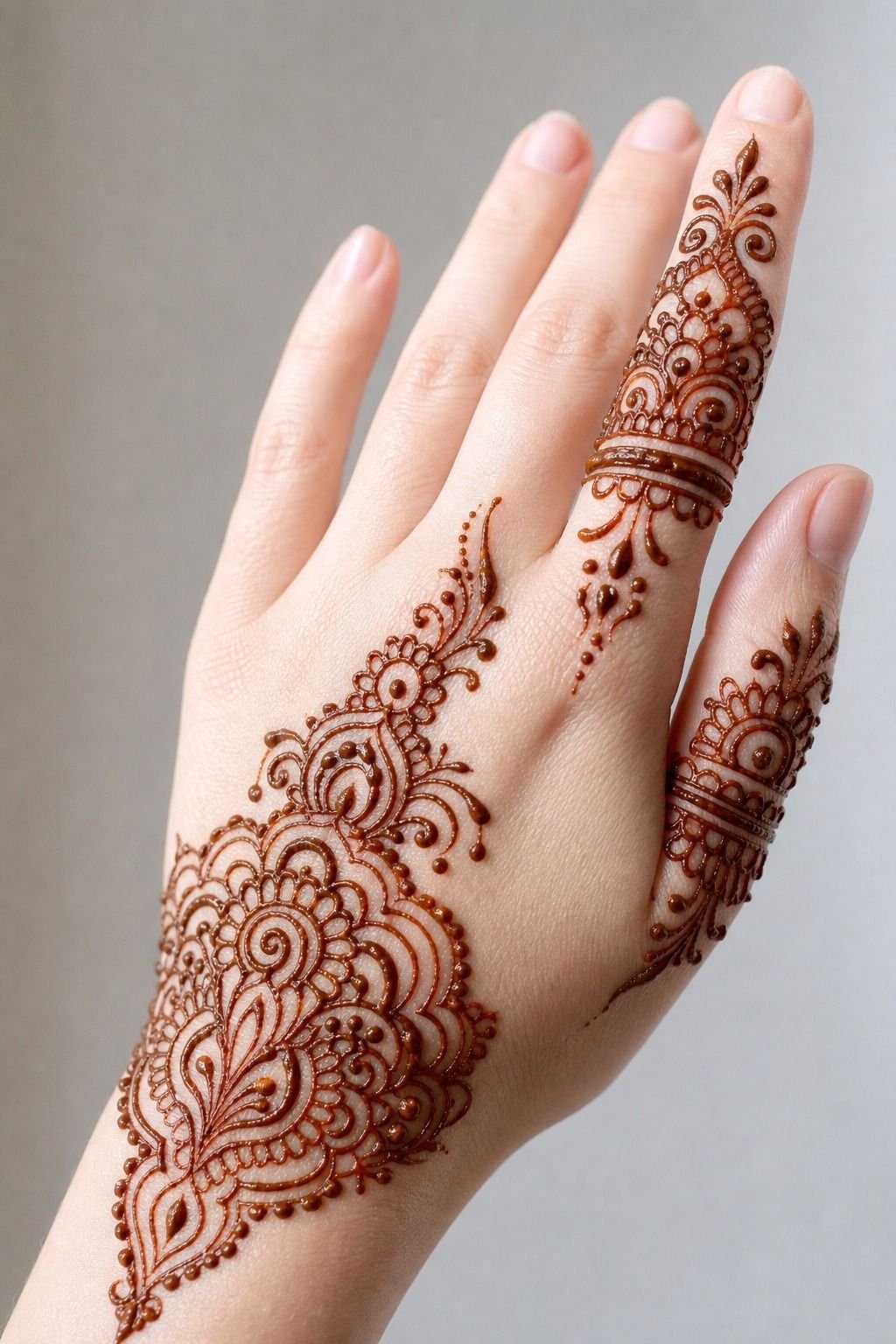
[IMAGE: thumb and index henna detail on fair cool-pink skin with a dot chain on the index and one leaf sprig at the thumb joint.]
Thumb and index work is tiny, but it doesn’t have to look timid. On fair cool-pink skin, thumb joint henna detail lands exactly where your eye goes first, which is why a small build here often reads stronger than a bigger weak design elsewhere. If you’re after dainty henna ideas, placement does half the work for you.
I like a dot chain on the index with one leaf sprig curling onto the thumb joint. That is enough.
Once you start threading three different motifs through two tiny fingers, the whole thing gets crowded and loses its snap. NehA henna cones are helpful for these narrow passes because you need a steady bead of paste, not sudden blobs at the turn.
Be realistic about wear. Thumb and index placement gets washed, pinched, and rubbed all day.
So keep the lines bold enough to survive a little breakdown. If you’re making a first attempt, simple henna designs for beginners and 23 full hand mehndi designs to show your artist first can help you decide how much detail is enough.
8Let a side-finger trail stay airy
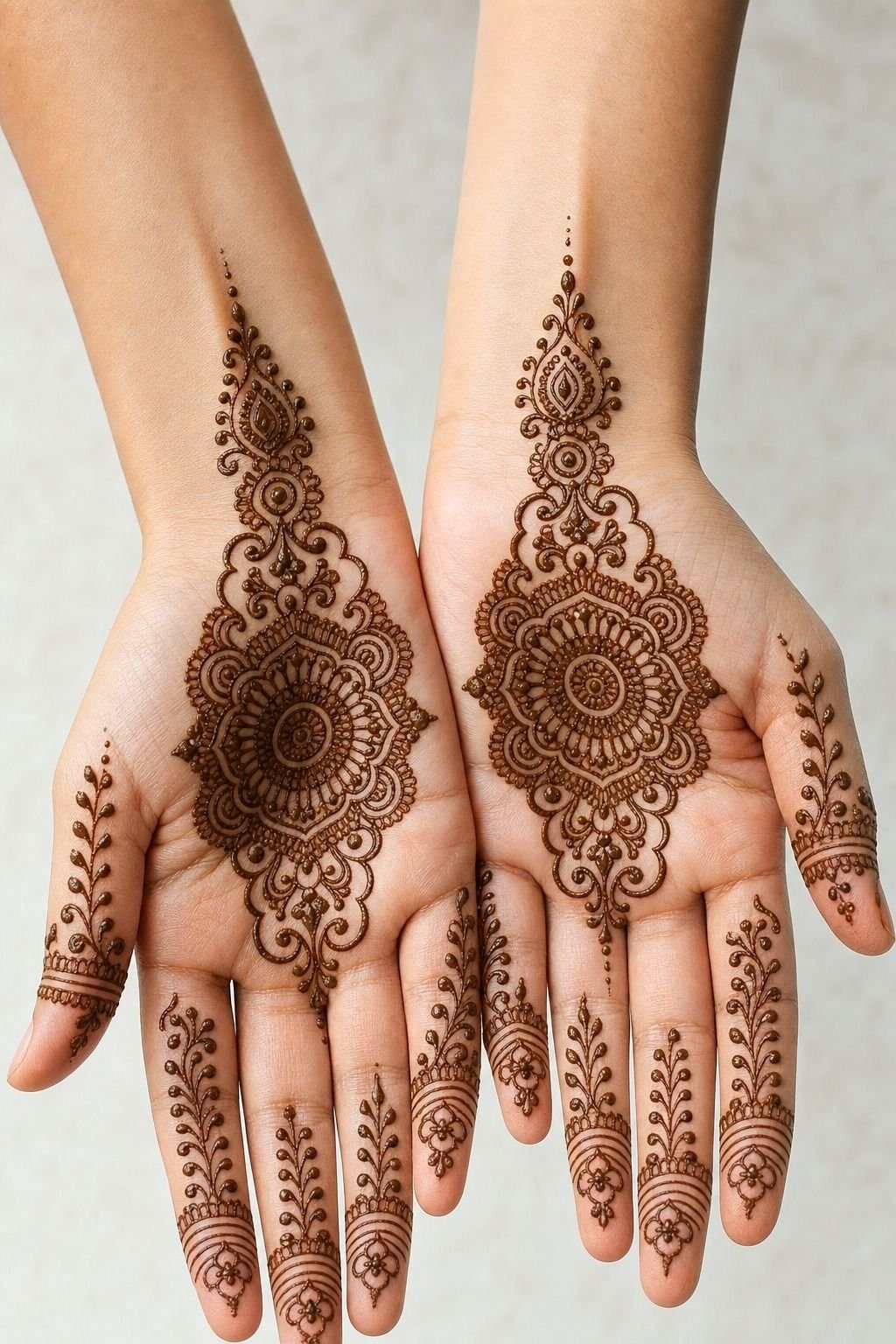
[IMAGE: side-finger henna trail with a slim stem, tiny teardrop leaves, and a short dot taper climbing one warm ivory finger.]
A side-finger trail feels intimate and a little less expected than a full front-view finger pattern. On warm ivory skin, side-finger vine henna looks best when the trail whispers instead of shouting. That softer read gives you sleek style without paying the price of overcrowding.
I’d use three ingredients and stop there. A slim stem. Tiny teardrop leaves.
A short dot taper near the knuckle. I call it the Two-Breath Rule: if you can’t finish the shape in two calm passes, it’s too busy for that strip of skin.
Golecha natural henna lays down clean for these narrow trails, and one shaky pull will show immediately.
You can pair this with bare nails or jewelry and it still won’t fight for attention. But do not drag the trail across every finger. One side, one path, done!
For more refined references, 15 henna designs that earn their place beyond the festival is a good next save.
9Small Lotus Henna Design For Wrist
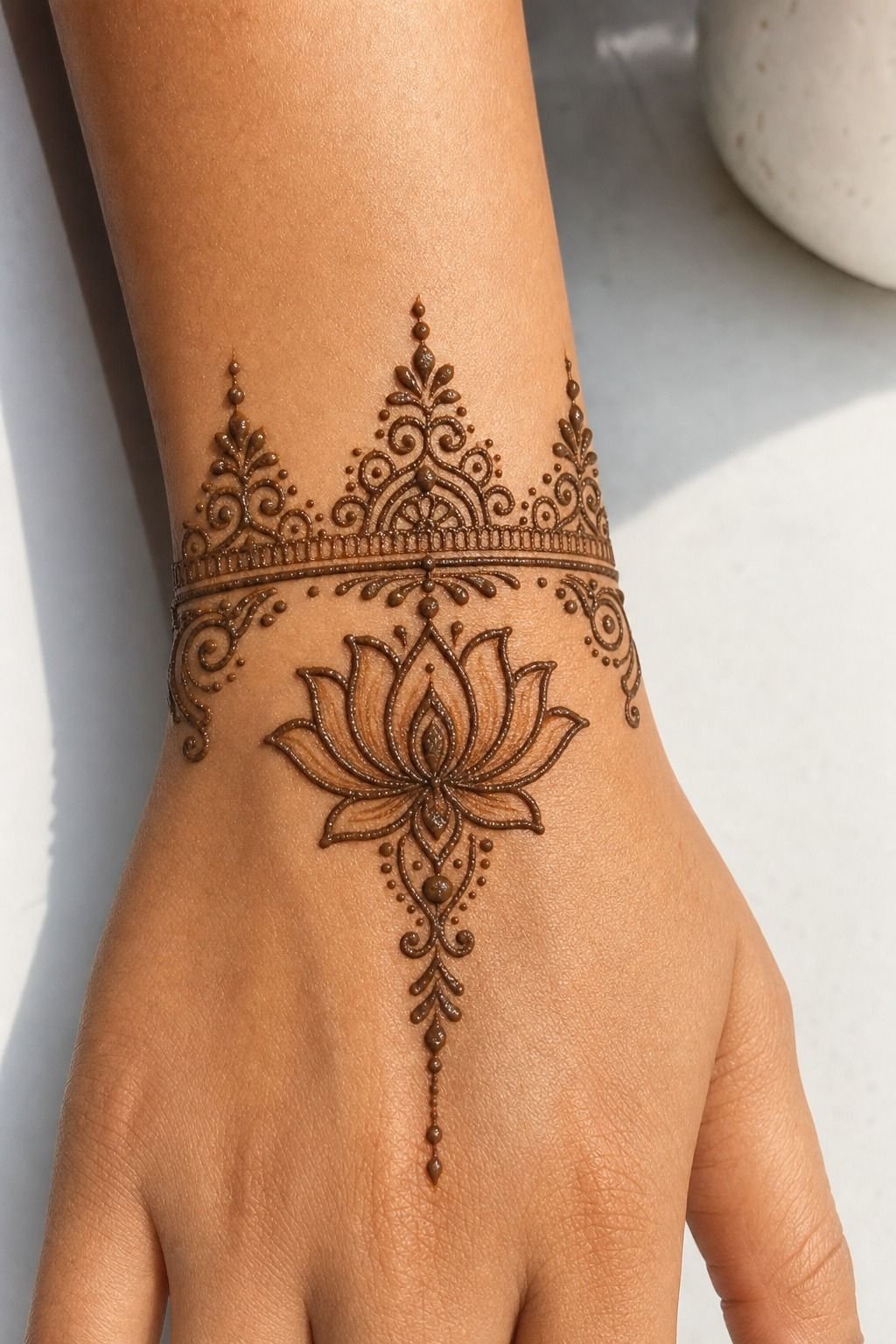
[IMAGE: small lotus wrist henna on medium olive skin with four clean petals, a tiny drop accent, and generous open skin around the bloom.]
A lotus on the wrist only works when the petals stay clean and the stem doesn’t get cheesy. On medium olive skin, lotus wrist henna feels meaningful when there’s enough open skin around it for the symbol to breathe. If you’re into symbolic small work, this is one of the safest bets.
I prefer a low petal count here. Four or six petals max, one center line, maybe a tiny drop under the bloom. More than that and you start losing the soft geometry that makes a lotus feel calm.
Prem Dulhan henna cones can be great for symmetrical petal edges because the paste sits where you place it instead of spreading wide.
The wrist is a nice test zone if you’re thinking about a future permanent design. It gives you clear visibility and enough room to judge scale before you spend more on a larger custom concept. If you want other clean symbolic references, 24 henna designs that reward a steady hand and 15 arabic henna designs that flow with the hand fit the same lane.
10Dots versus petals on the hand
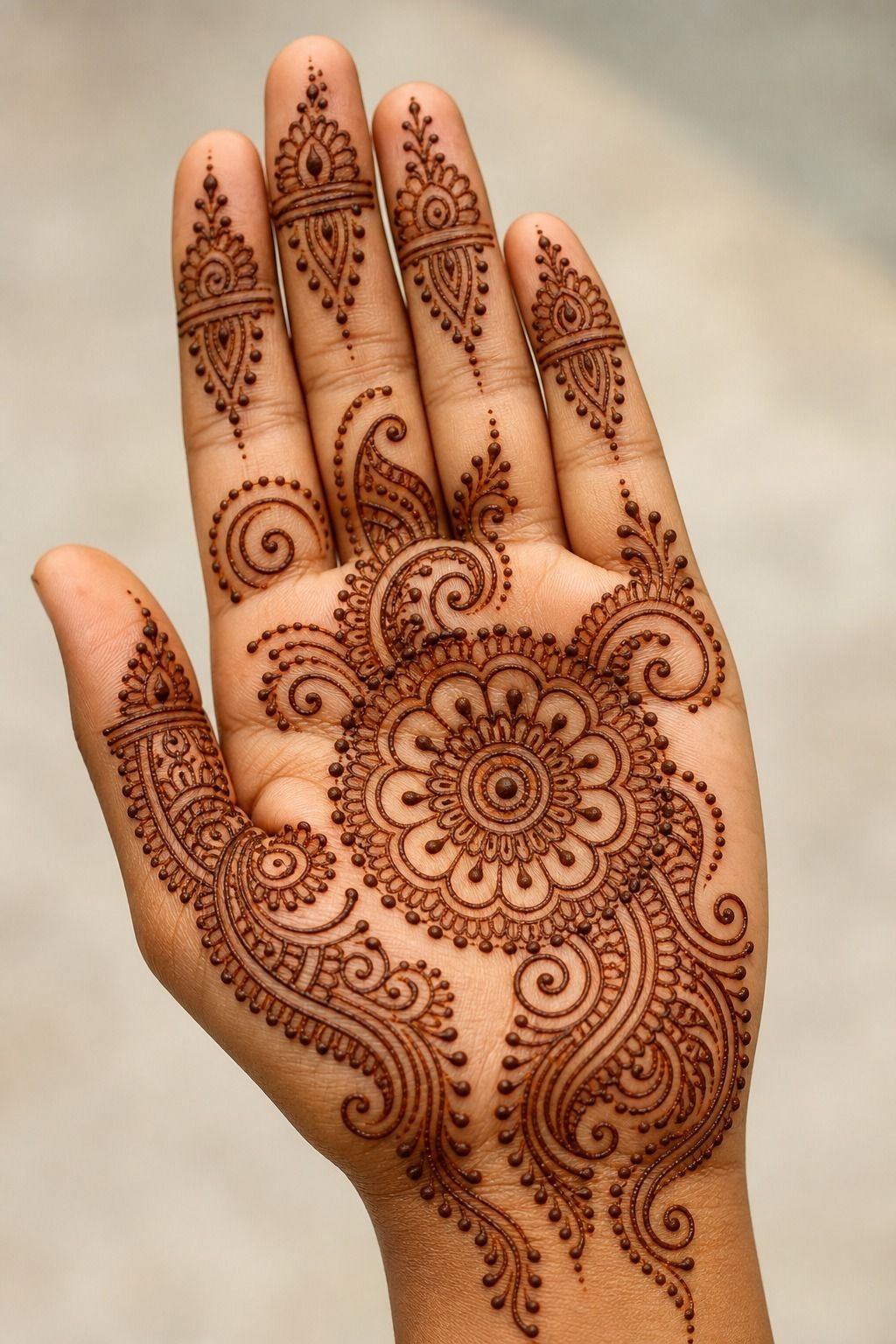
[IMAGE: dotted hand henna pattern on golden tan skin with clean spacing, one central path, and a tiny petal accent near the knuckle.]
Dots can carry a whole design when the spacing is right. Petals can too.
But if you’re choosing between the two for a tiny layout, dots usually give you better value because they stay graphic without taking up much width. That’s especially true on the hand, where clutter shows fast.
I like dots when you want jewelry energy. I like petals when you need one soft focal shape. What I don’t like is using both at the same visual volume.
That’s how a tiny pattern starts looking busy and chewed up. Kaveri henna paste is solid here because the paste bead stays round instead of flattening into little commas.
Think about the second-day color too. Tiny petals can lose their edge if you cram them in, while a bold dot chain often still reads clearly as the stain deepens. If you want to compare stripped-back layouts, latest simple mehndi designs and kids henna designs show how simple can still feel finished.
11Tiny Sun And Moon Henna Design
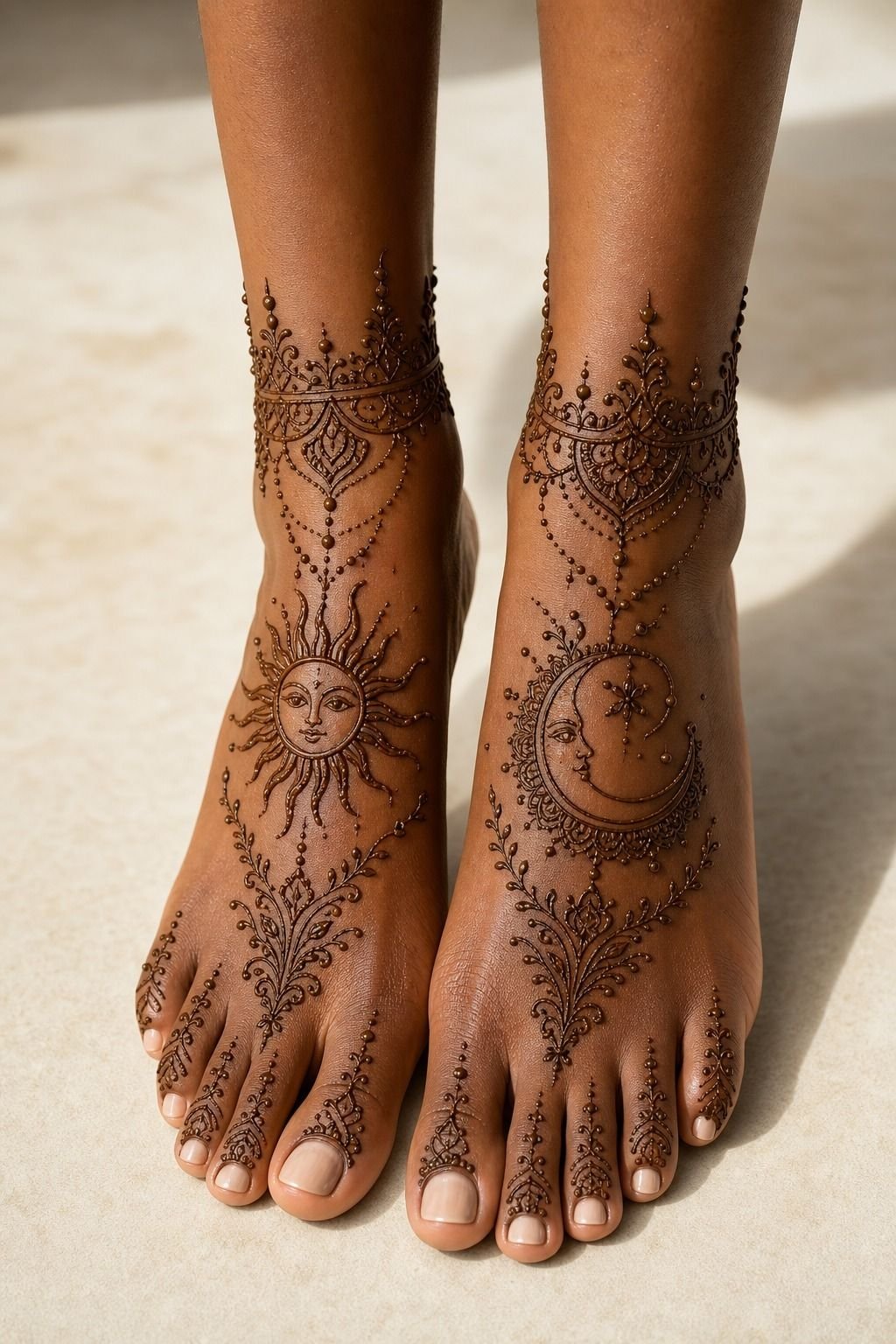
[IMAGE: sun and moon henna design placed across the ankle line with one coin-small moon, one tiny sun, and connector dots on deep brown skin.]
This sun and moon pairing gives you meaning fast without needing a giant storytelling piece. Keep the icons coin-small and let the surrounding dots or tiny rays do the movement. If you want symbolic work that still feels playful, this is a clean choice and usually a worthwhile henna test before a larger permanent idea.
I’d put the moon where the ankle curves and let the sun sit slightly forward on the top of the foot. Not matched too perfectly. That slight offset feels more alive.
I call it the Moon-and-Ray Method because each symbol gets its own open skin, then the connector dots tie them together without turning into filler.
Feet fade fast, so this is another place where bold will hold better than hair-thin fuss. Keep the icon shapes simple and the design still looks expressive on you. For more symbolic flow, henna mehndi designs and 15 henna designs that earn their place beyond the festival are both useful.
12Catherine cone test for a fine line collarbone motif
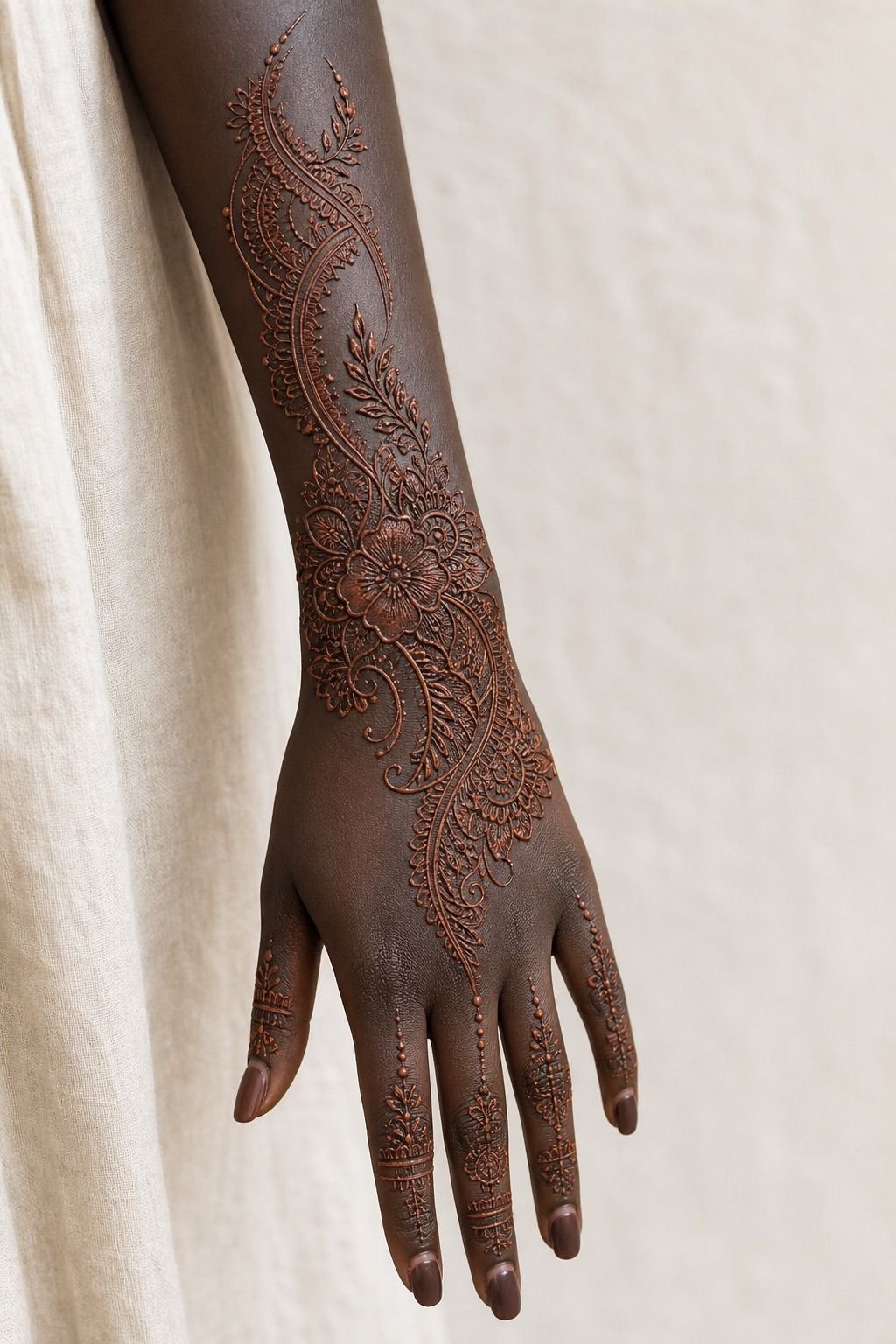
[IMAGE: fine line collarbone henna motif tested on a forearm first, showing a slim vine, one soft flower, and dotted connectors on deep ebony skin.]
Testing a collarbone idea on the forearm first is smart. You get to judge the line weight, rhythm, and stain depth before you commit the whole concept to a trickier body line. If you’re curious about permanent design planning, this is one of the best low-cost ways to test whether a slim ornamental motif still feels like you.
A collarbone motif should stay long and light. Think a slim vine, one central flower, or a dotted chain with two soft leaf flares. On the forearm version, you can see why that works: the design has movement, but it doesn’t get crowded.
Catherine Natural Henna cones are solid for fine passes like this because the line stays narrow when you’re stretching the motif lengthwise.
But don’t mistake fine for fragile. Fine detail still needs contrast, especially on deep skin tones and in narrow placements. I’d rather see one confident pass than ten scratchy ones every single time!
And if you’re still gathering reference shapes, kids henna designs and modern mehndi designs can help you edit the shape down.
The Clean-Line Rule I Keep Coming Back To
When clients bring me tiny henna references, the same problem shows up over and over. They do not start too simple. They start too ambitious.
Everybody thinks the magic is in adding more dots, more petals, more chains, more micro detail. It isn’t.
The magic is in knowing what to leave out so the eye lands where it should. That’s the part that makes a small design feel polished instead of cheap.
I’ve made that mistake myself, especially early on when I thought every little gap needed one more mark. It didn’t.
The design looked busy, then flat, then tired. Once I started pulling back, everything got better. The lines looked cleaner.
The pattern had rhythm. And the skin did some of the work for me instead of fighting the design.
That change alone made small custom work feel more worthwhile for clients, because the result stayed elegant longer.
That’s why small henna designs are such a good test for permanent body art thinking. You learn flow fast. You learn whether a wrist symbol holds its own at 2 inches, whether a finger vine stays readable after wear, whether an ankle motif needs thicker anchors, and whether your idea still feels right after a full day of seeing it on your body.
That part matters more than people admit, especially if you’re trying to protect your budget before booking a larger appointment.
I also think small work teaches restraint in a way big work does not. A large piece gives you places to hide awkward transitions.
Tiny work exposes everything. One shaky dot chain.
One cramped petal. One crowded turn at the knuckle.
You see it all. Annoying, yes. Useful, absolutely!
If a small henna design still looks balanced when you strip it to the bones, chances are the larger version will read cleaner too.
So my rule is simple. Pick one focal shape. Give it support, not competition.
Keep high-wear zones simpler than low-wear ones. Leave the paste on for 1 to 2 hours, seal it lightly with lemon-sugar if appropriate, and avoid water while it develops.
When you’re tempted to add one more flourish, pause for a second and look again. Nine times out of ten, you were already done.
A Few Things Worth Answering
How much does a small henna design usually cost?
If you mean a small temporary design, DIY supplies may cost around $5 to $20. A mehndi artist often charges $10 to $40 for a simple motif, while event and bridal work can run $75 to $300 or more. You should ask about minimums first because coverage, detail, and travel can change the real price conversation.
Are small henna designs a good idea for a first permanent design?
Yes, they can be, especially if you keep the design clean and the placement low-wear. A simple shape ages better than a tiny over-detailed one, and henna lets you test whether the flow still feels right on your skin before you commit. For comparison, simple henna designs for beginners is a good starting point.
How do I choose a mehndi artist for small henna-inspired work?
Look for clear photos of finished stains, clean cones, and designs shown after the paste has been removed. Crisp stain placement tells you more than a heavily edited preview, and you want an artist who understands safe natural henna and consistent paste flow. If you want to compare complexity before you book, 23 full hand mehndi designs to show your artist first helps you sort simple from overworked.
Does applying a small henna design hurt?
Natural henna paste should not hurt when applied to healthy skin. A comfortable application feels cool or slightly tight as the paste dries, though some people may react to fragrance or essential oils. Ask what is in the cone, avoid unknown black henna, and patch-test unfamiliar ingredients before a larger design.
How long does a small henna design take to develop?
Keep the paste on for about 1 to 2 hours, or longer if the artist recommends it and your skin tolerates it. After the dry paste flakes away, the stain may look orange at first, deepen through the next day, and reach its darkest color around day two. Natural henna usually fades over 1 to 3 weeks.
What’s the best placement for small henna-inspired designs?
Outer forearm and upper arm are two of the easiest picks if you want something that stays readable. Low-friction placements hold detail better, while fingers, hands, feet, elbows, and knees need a simpler design and more touch-up acceptance. If you want placement flow ideas, 15 arabic henna designs that flow with the hand is useful.
Where I’d Start First
If I had to pick one, I’d start with the tiny finger vine. It proves fast whether you like visible placement, and the shape looks clean without begging for filler. Pin that one for later and use it to judge how much detail your skin really needs.