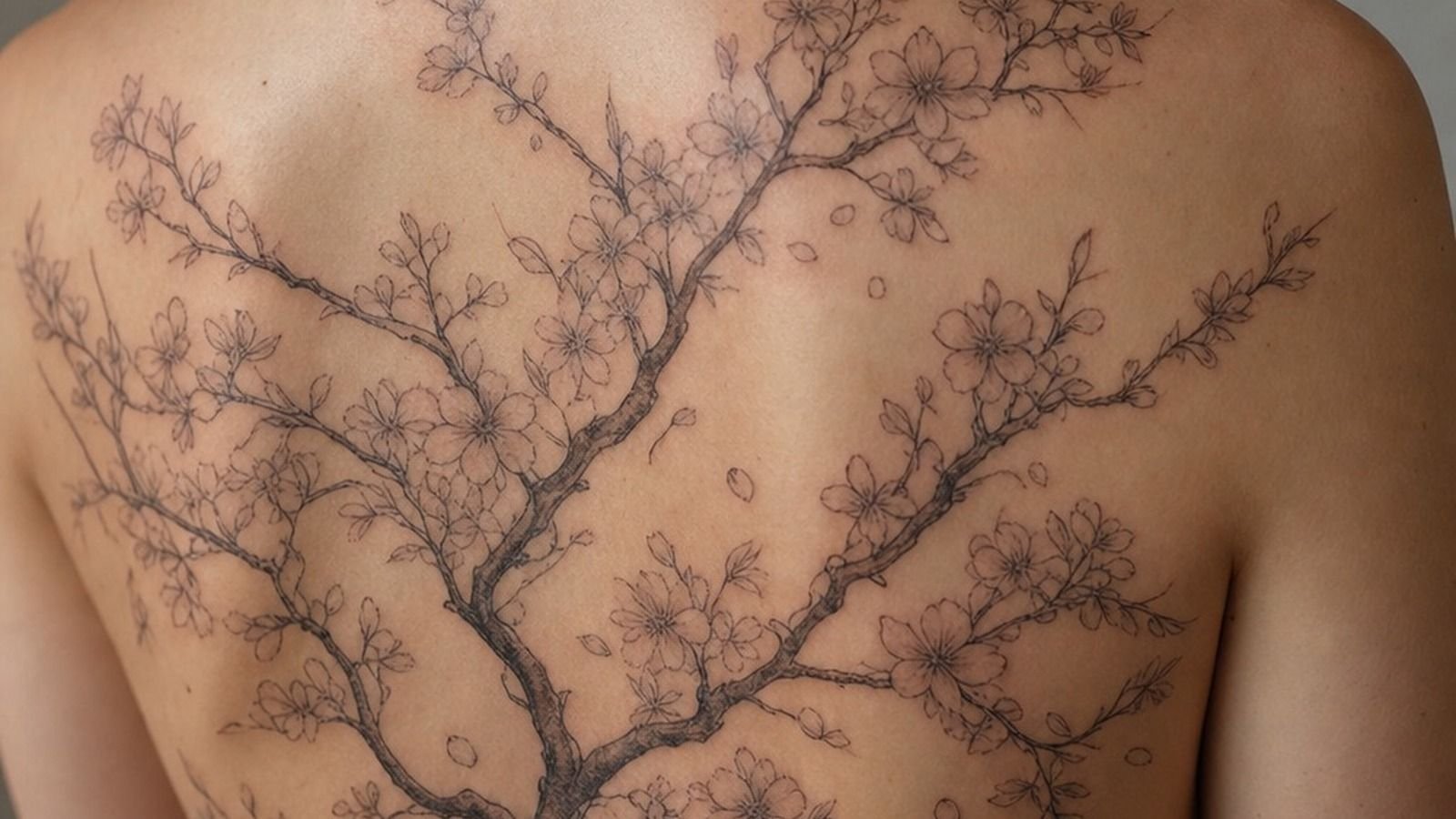
The short answer: a sakura tree tattoo stays crisp when the linework is a single clean pull, the size actually fits the placement, and the petals get room to breathe. I’m Hazel, and I’ve lined more cherry blossoms than I can count. Most blowouts I fix aren’t bad luck. They’re tiny branches crammed into spots that were never going to hold them. Here’s how I’d plan yours, step by step, so it heals nice and still reads in ten years.
- Start with a Full Sakura Tree Backpiece Layout
- Pick Fine-Line Branches for a Minimalist Trunk
- Place the Trunk Along Your Spine for Flow
- Keep Petal Placement Soft Around the Shoulder
- Plan a Forearm Sleeve Around a Twisted Trunk
- Build a Japanese Cherry Blossom Tree With Wind Bars
- Choose Blackwork Roots to Ground the Design
- Anchor a Sakura Branch Across Your Collarbone
- Layer Watercolor Wash Behind the Tree Silhouette
- Frame a Sakura Tree Across Your Chest Panel
- Weave a Tebori-Inspired Texture Into the Bark
- Budget for a Full-Color Sakura Tree Sleeve
- Protect Your Sakura Tattoo During the Peeling Phase
- Pair a Small Trunk With Angel-Number Script
- Schedule Touch-Ups to Keep Blossom Pink Bright
- Match a Branch Set for Couples or Best Friends
1Start with a Full Sakura Tree Backpiece Layout
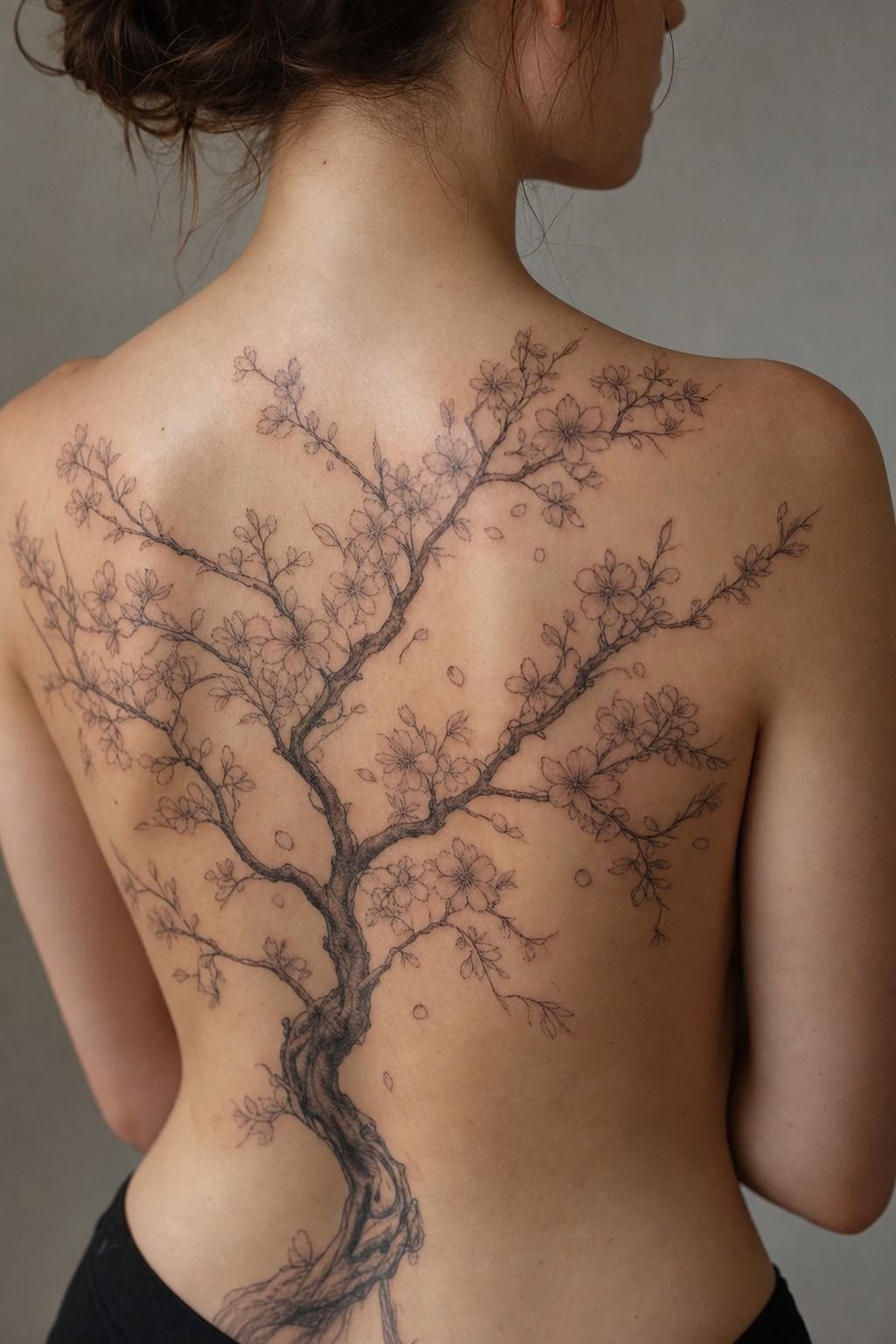
If you’re going big, the back is the best canvas you’ll ever give an artist. The trunk climbs the spine, branches stretch over both shoulder blades, and the blossoms spread where the skin is flat and stable. Flat skin means steady lines, and steady lines mean less blowout risk.
Plan for a piece that’s 10 to 14 inches tall, split across two or three sessions. Your artist should stencil the whole tree on you standing, not lying down, because your back shifts shape when you move. I’ve redrawn trunks that looked perfect on the table and bent weird the second the client stood up.
Before you commit, read up on the sakura tree tattoo meaning so the design says what you actually want it to say. Impermanence, renewal, a season of your life. The layout should carry that.
2Pick Fine-Line Branches for a Minimalist Trunk
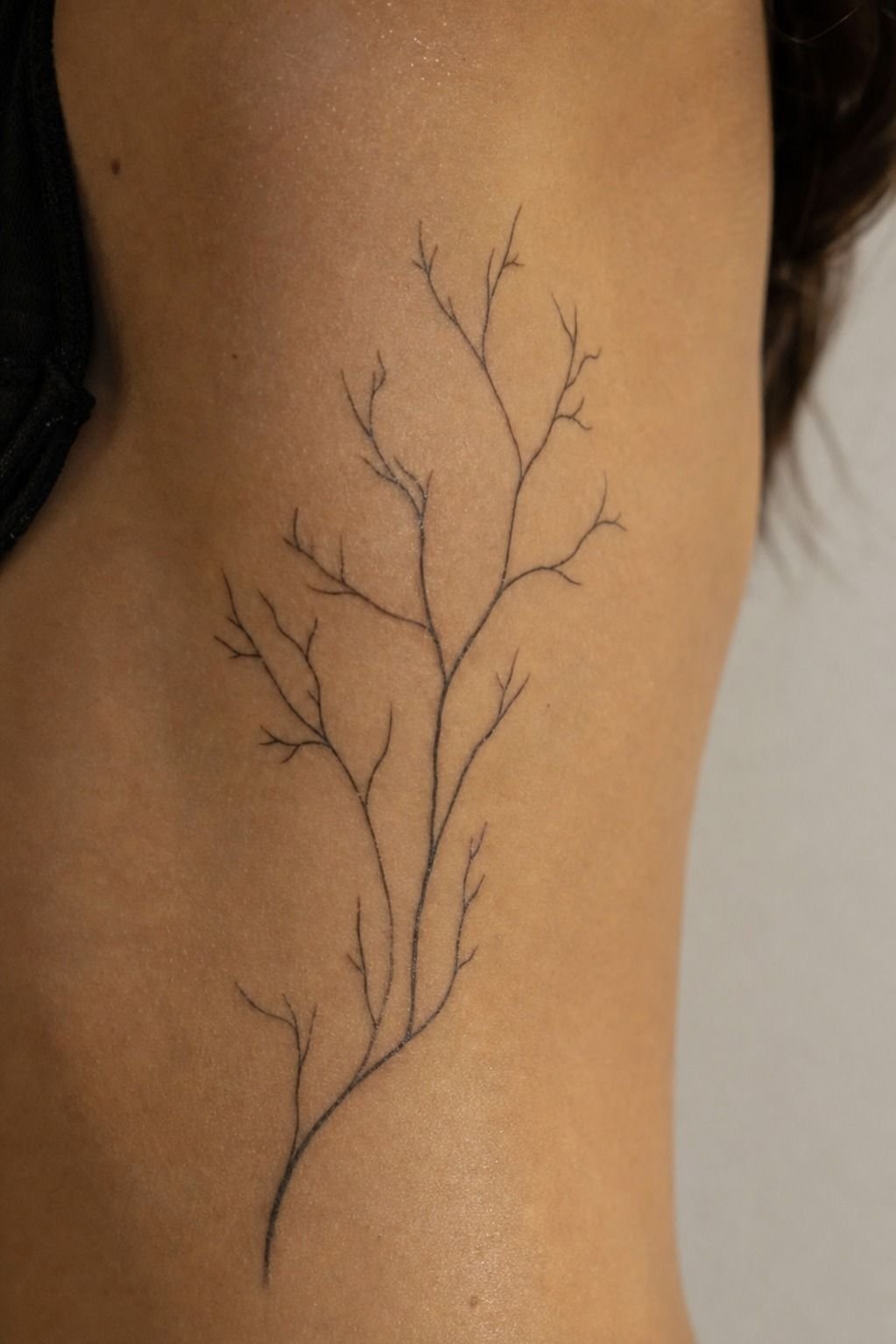
Minimalist doesn’t mean weak. A clean fine-line trunk done with a single needle (think a tight 3RL liner) can look incredible on ribs or a forearm, but only if the line goes in one confident pull. Ten fuzzy passes chew up the skin and that’s where blur starts.
Here’s the trap: people shrink a detailed tree down to two inches and every branch turns to soup within a few years. Fine lines naturally widen a touch as they settle, so your branch spacing needs breathing room built in from day one. I’d rather give you five clean branches than fifteen that mush together.
Ask to see healed photos, not just fresh ones. Fresh fine line always looks crispy. Healed fine line tells you the truth about the artist’s hand.
3Place the Trunk Along Your Spine for Flow
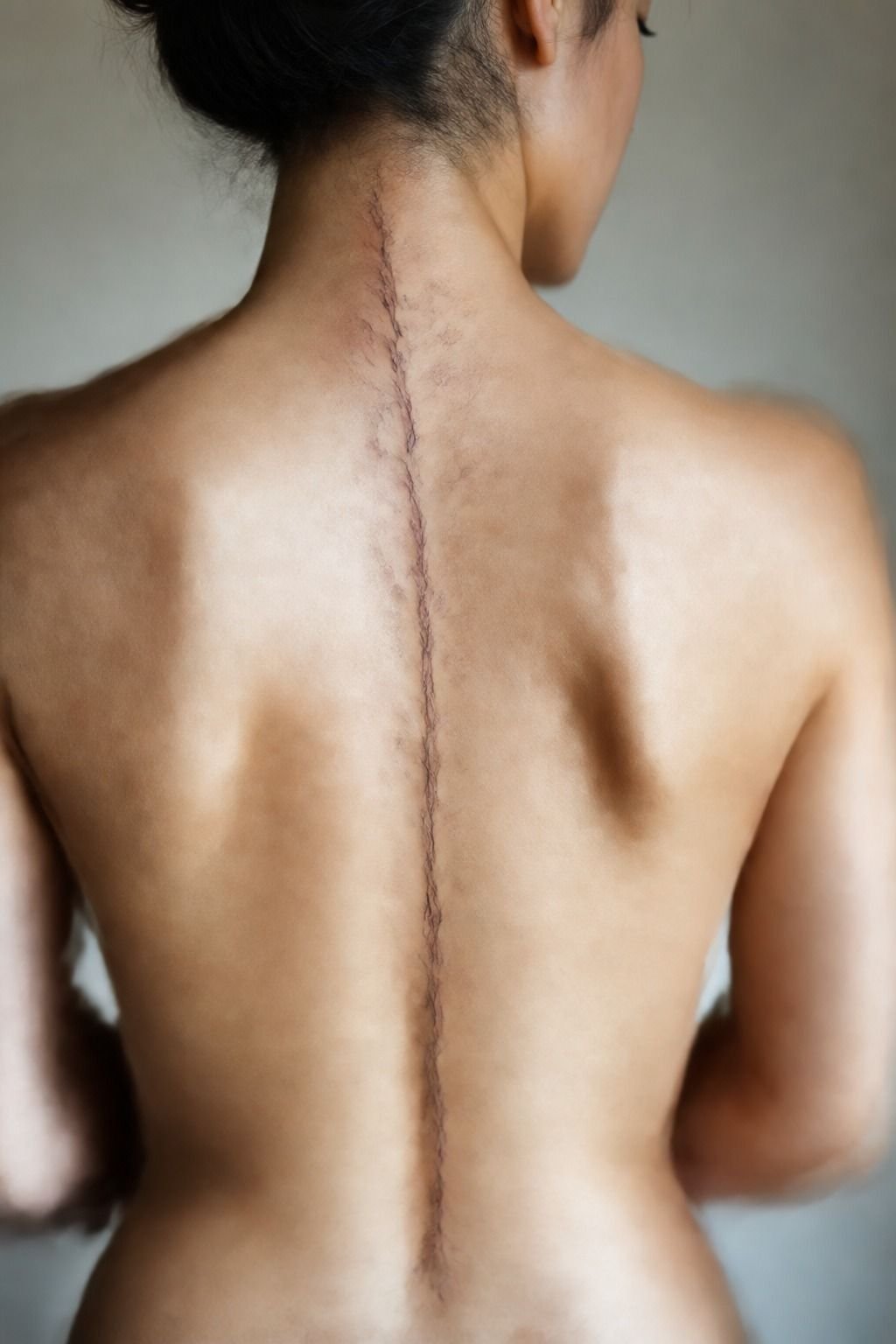
The spine is a natural centerline, and a trunk that follows it moves with your body instead of fighting it. This is what artists mean by flow: the design bends where you bend. A sakura trunk placed dead straight down a twisted spine will look crooked even if the linework is perfect.
Pain-wise, the spine is moderate. You’ll feel vibration over the bone, and the lower back gets spicier than the upper. It’s very doable in one sitting for a trunk-only outline, maybe two to three hours.
One honest warning: the spine is a medium-wear zone. It ages fine, but bras, waistbands, and backpack straps add friction. Keep the thickest part of the trunk between those friction lines and your lines will hold noticeably longer.
4Keep Petal Placement Soft Around the Shoulder
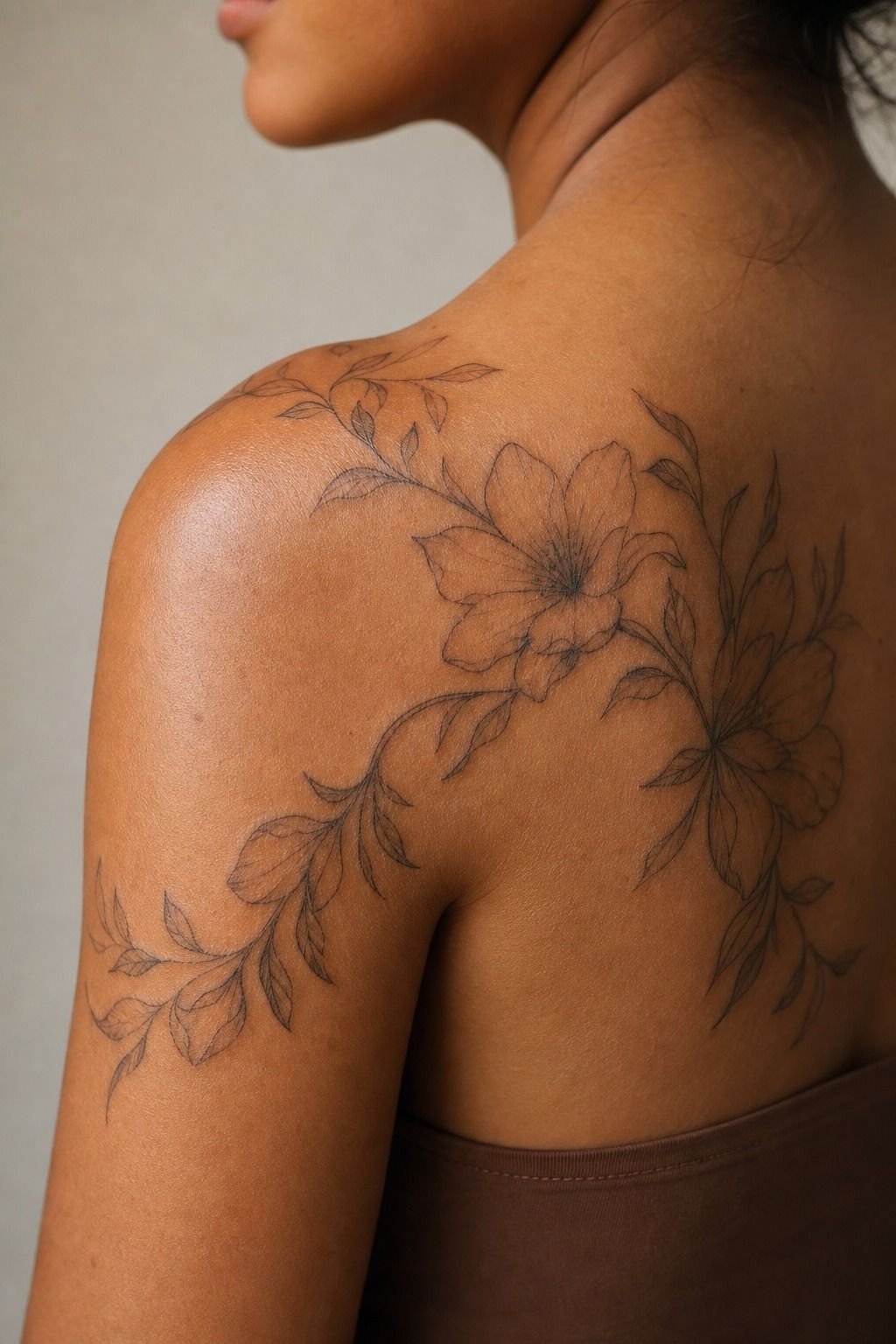
Petals want movement. Around the shoulder, they should scatter like the wind just caught them, not sit in a rigid grid. I usually place a loose cluster at the cap of the shoulder and let single petals drift down the arm a few inches, each one tilted a different way.
Shading is where most shoulder blossoms go wrong. A soft grey wash under each petal gives depth, but push it too dark and the petals heal muddy against the pink. Keep the wash whisper light and let one darker petal per cluster carry the contrast.
If the symbolism of the bloom itself is why you’re here, the sakura flower tattoo meaning page breaks down what falling petals versus full bloom say. Falling petals lean bittersweet.
Full bloom reads as a peak moment. Choose on purpose.
5Plan a Forearm Sleeve Around a Twisted Trunk
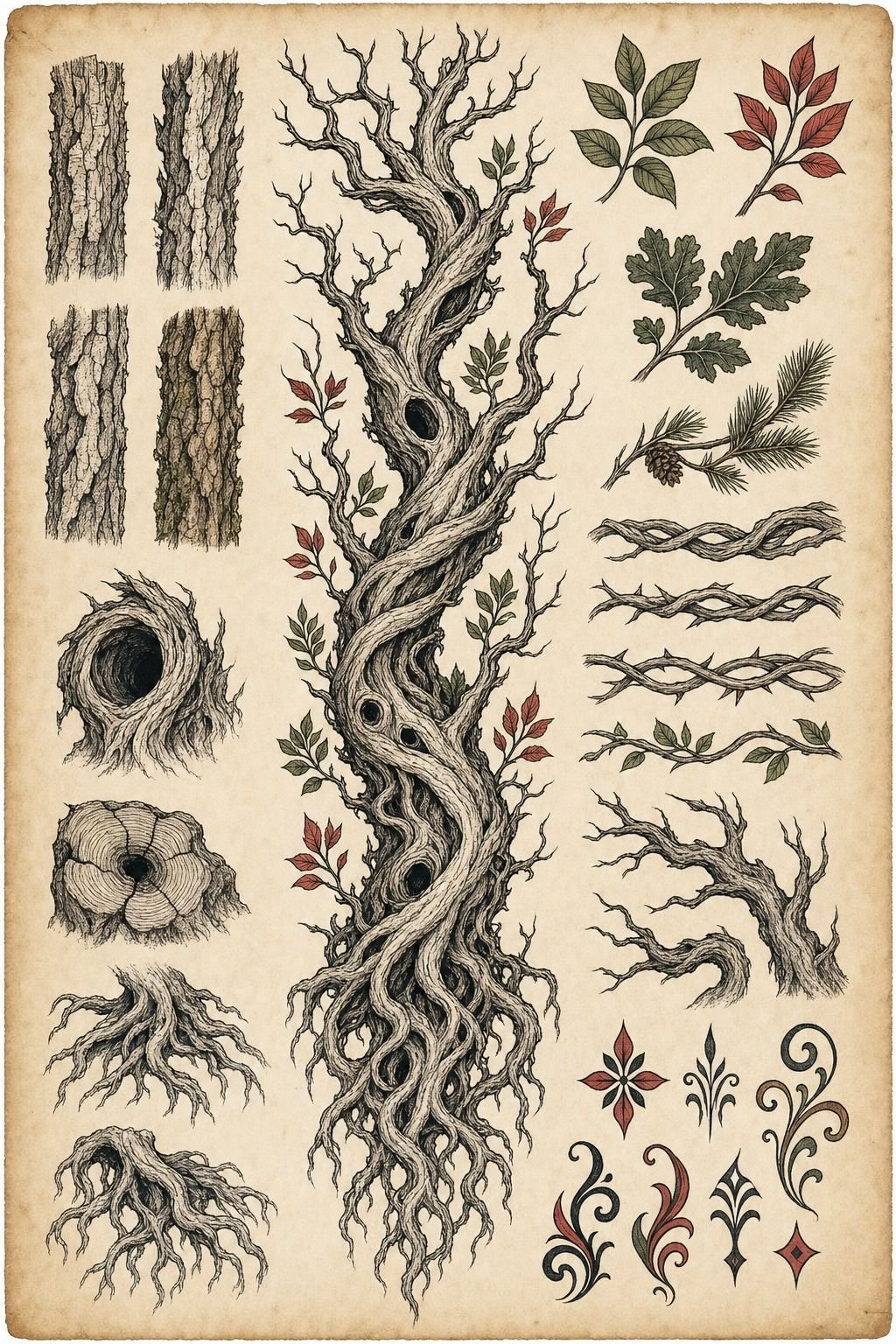
A twisted trunk gives a forearm sleeve its skeleton. The spiral of the bark wraps naturally around the arm, so the design looks like it grew there instead of being pasted on. This is why flash sheets of sakura designs always show the trunk mid-twist: it’s the strongest compositional move in the whole style.
The outer forearm is a low-wear zone, one of the best-aging spots on your whole body. Lines stay tight, color stays bright, and pain sits at a chill three out of ten for most people. A half sleeve like this usually runs four to six hours across one or two sessions.
One thing I tell every sleeve client: bring references for vibe only. If you want Pinterest-exact, I’m not your artist. A good realistic palm tree tattoo guide shows the same principle in a different tree: trunk structure first, foliage second.
6Build a Japanese Cherry Blossom Tree With Wind Bars
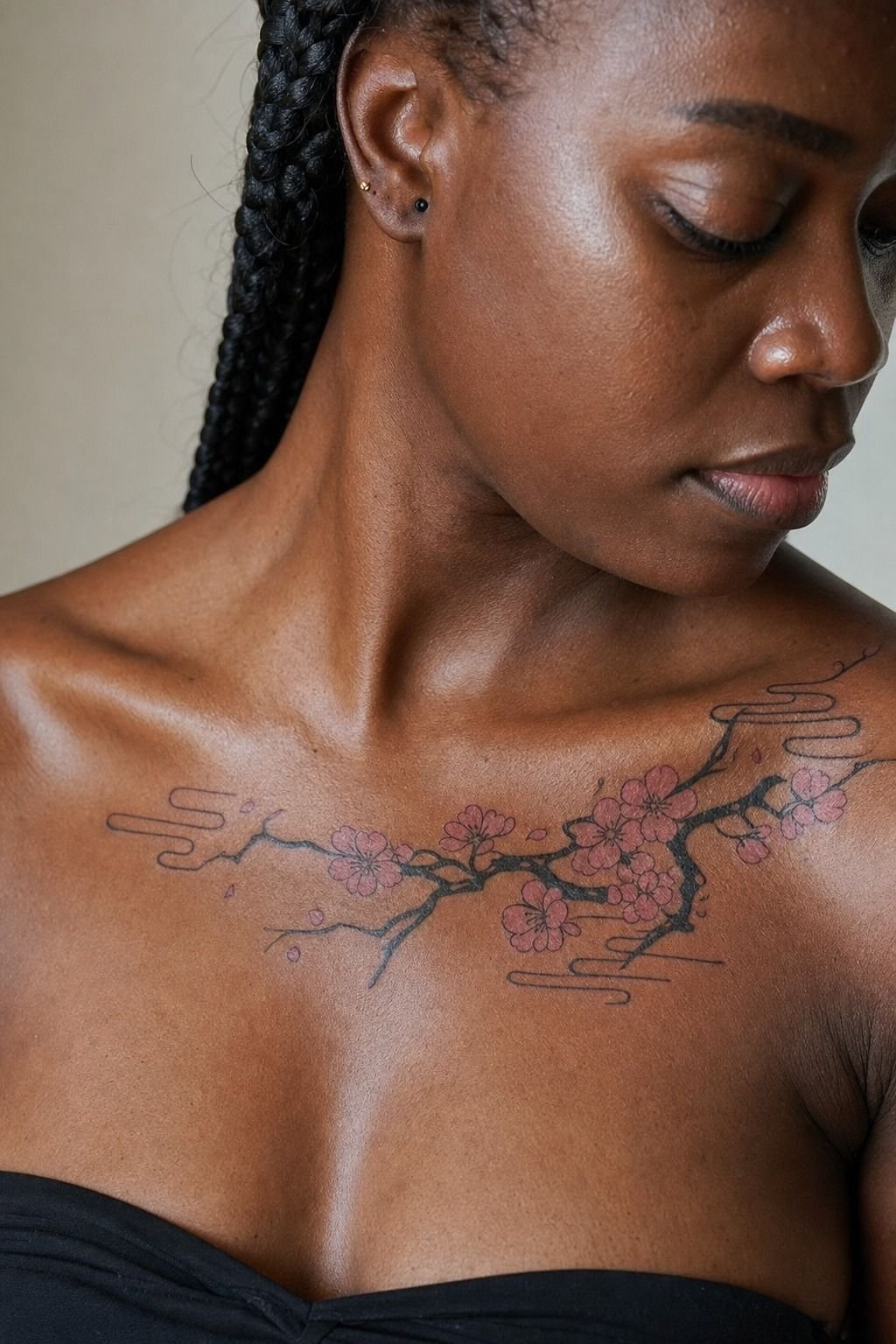
In traditional Japanese work, sakura rarely floats alone. It rides on wind bars, those sweeping curved bands that give the whole composition motion. The blossoms, the bars, the dark background: everything locks together, and that structure is exactly why irezumi ages so well.
This is a bold style, and bold will hold. Thick outlines, saturated color packing, deep contrast.
On deeper skin tones, your artist should lean into rich magentas and strong black rather than pale pastel pink, which can heal ashy on ebony skin. A skilled artist adjusts the palette to you.
Sessions run long for this style, often three to five hours each, and a collarbone-to-shoulder composition might take two or three sittings. The cultural weight matters too, so skim the sakura tree tattoo meaning before you sit. This style deserves respect, not just aesthetics.
7Choose Blackwork Roots to Ground the Design
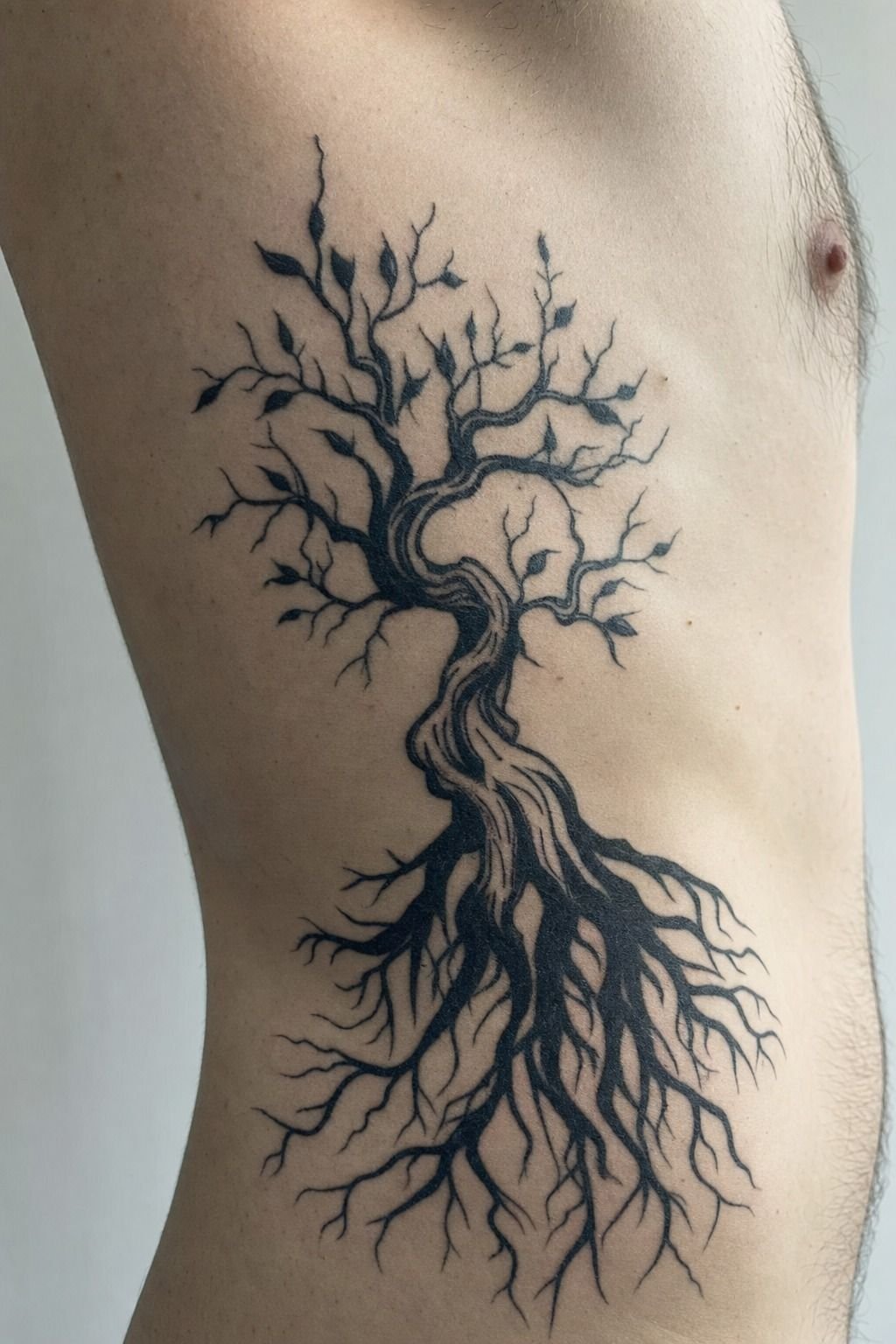
Roots are the anchor most sakura designs skip, and honestly, that’s a missed opportunity. A blackwork root system under the trunk gives the tree weight and gives the eye a resting point under all that delicate pink. Solid black at the base, fine branches above: the contrast makes both halves look better.
Solid fill is technique-heavy work. Your artist should pack it with a magnum shader in one solid pass, not scratch at it fifty times and overwork your skin. Overworked black heals patchy and grey, and fixing it means going back over already-traumatized skin.
If the rooted look speaks to you, it’s worth reading the tree of life tattoo meaning for how roots shift the symbolism toward grounding and family. Darker themes exist too; the poison tree tattoo meaning is the moody cousin of the same idea.
8Anchor a Sakura Branch Across Your Collarbone
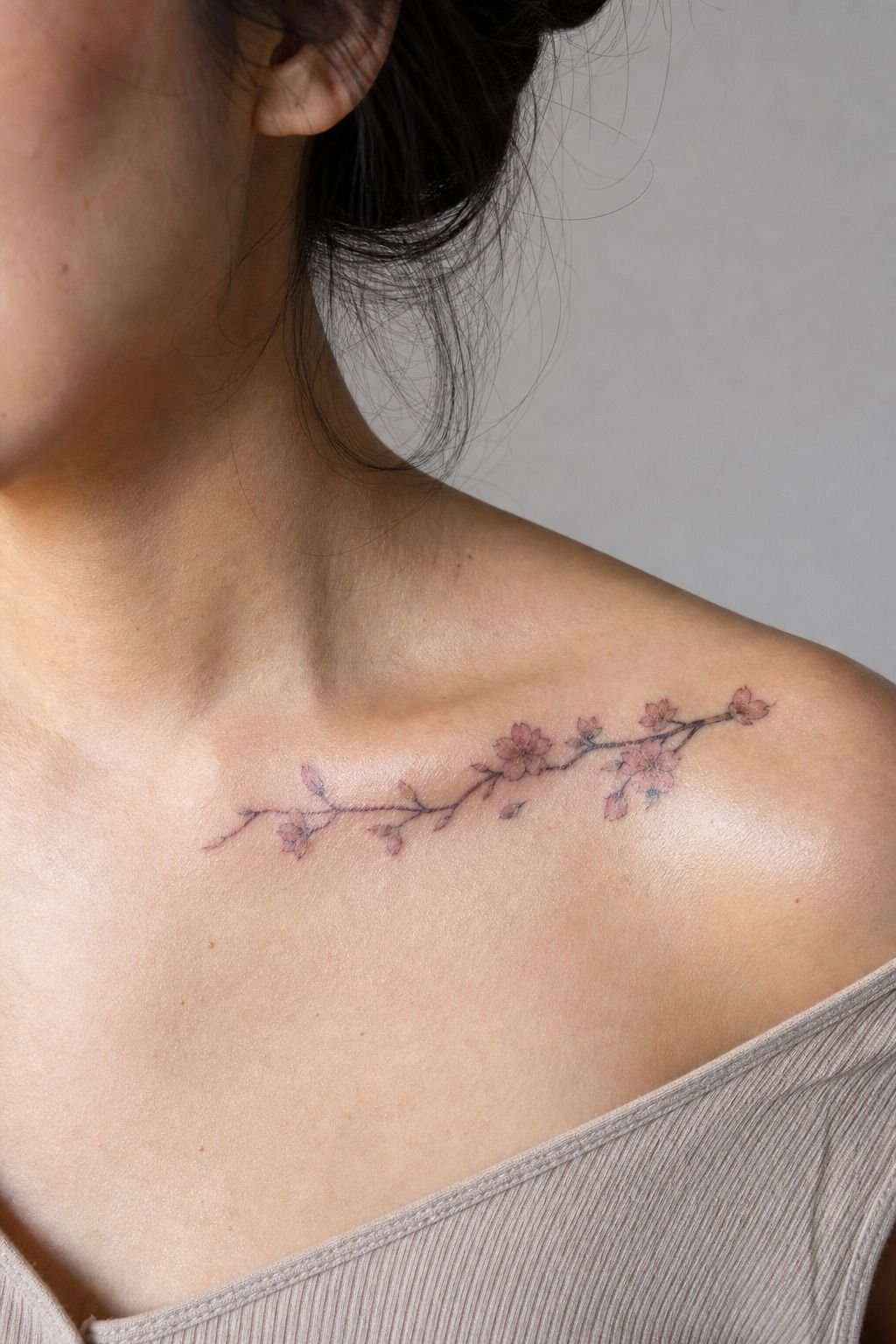
A single branch laid along the collarbone is one of the prettiest placements I do, and one of the spiciest.
9Layer Watercolor Wash Behind the Tree Silhouette
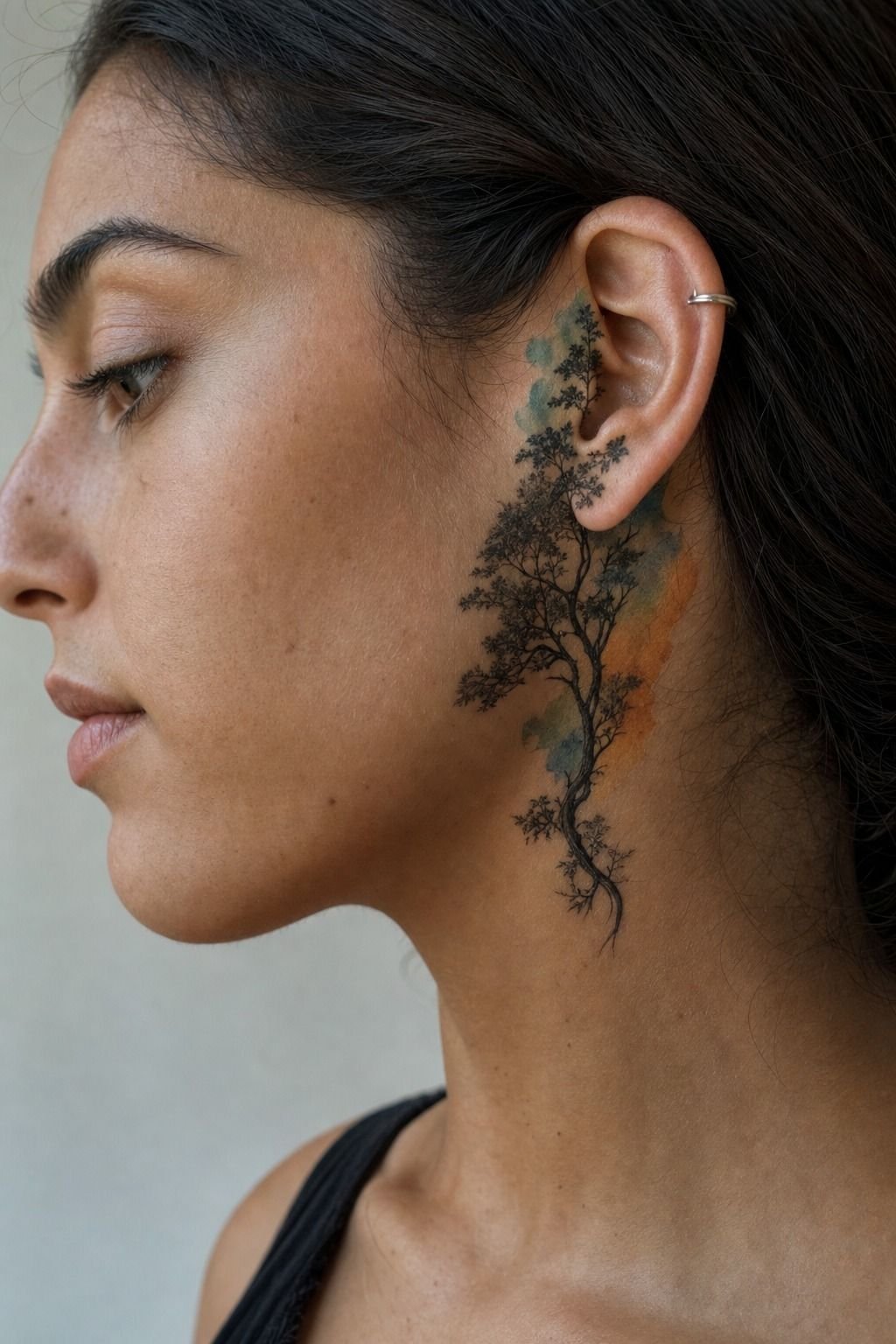
Watercolor sakura is gorgeous and it’s also the most abused technique in this whole list. Here’s my rule, no exceptions: watercolor always gets anchored with line. The tree silhouette needs a real outline holding it together, because pure color wash with no structure blurs into a pink cloud within a few years.
The wash itself should sit behind the tree, not on top of it. Soft bleeds of pink and coral drifting past the branches, like pigment dropped in water. Behind the ear works for a small version; keep it under three inches and accept that this zone fades faster than most.
Book the touch-up before you even leave the studio. Watercolor needs a refresh sooner than blackwork, usually around year two or three, and clients who know that up front are never disappointed!
10Frame a Sakura Tree Across Your Chest Panel
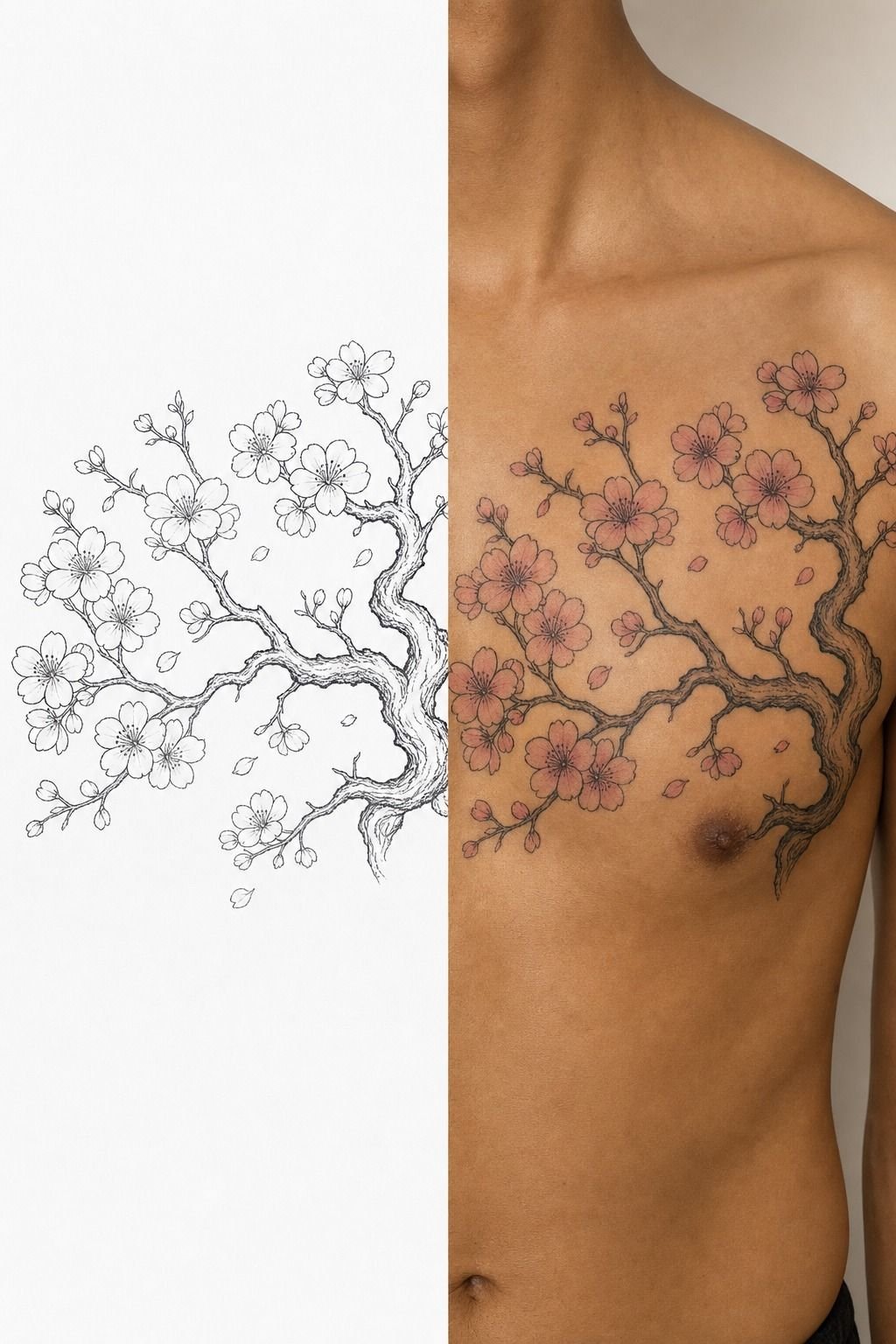
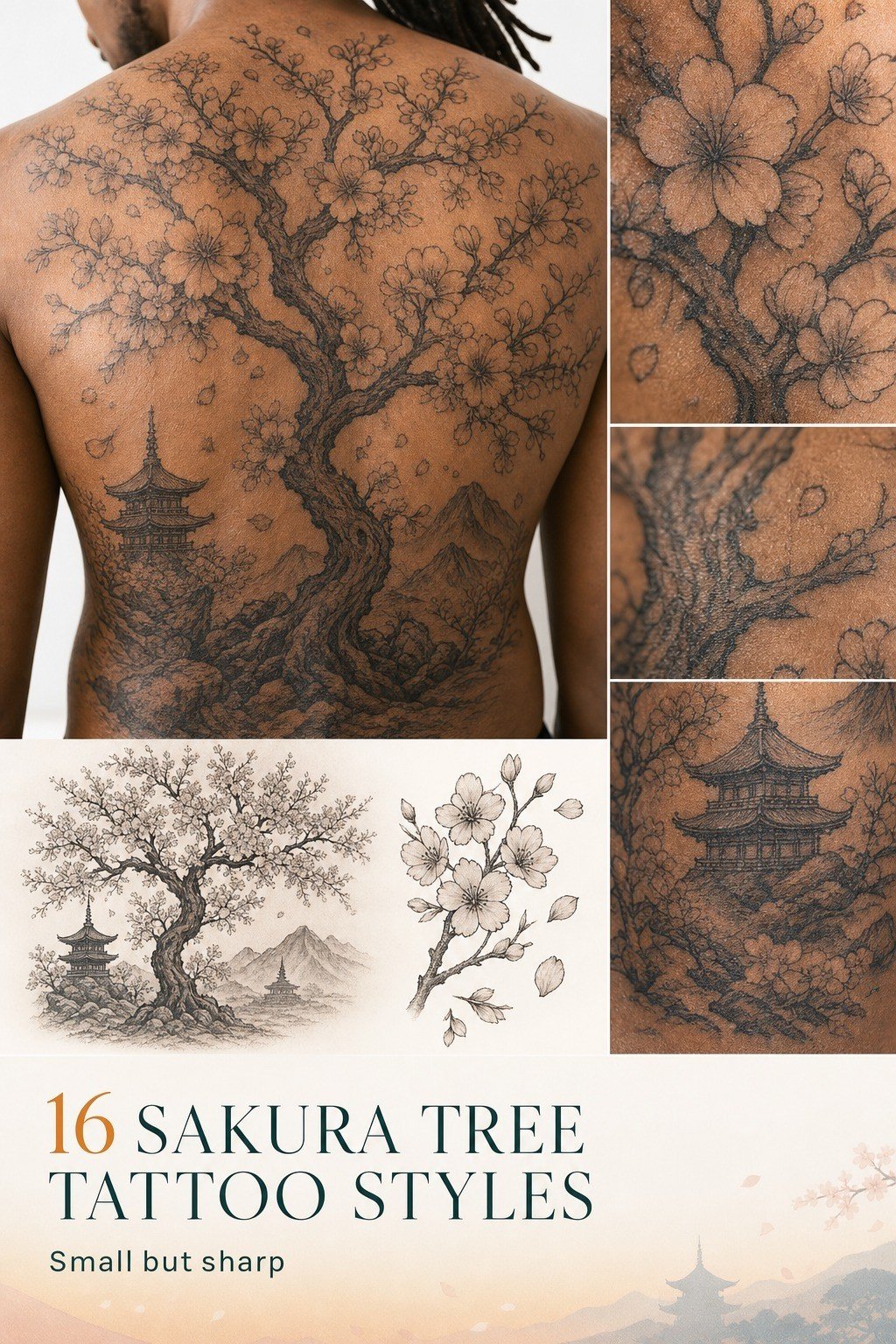
A chest piece lives or dies at the stencil stage. That split image of stencil versus healed result exists because chest skin shifts constantly: breathing, posture, how you lie on the table. Your artist should check the stencil with you standing, sitting, and lying down before a single line goes in.
Symmetry is the trap. Both sides of the chest look symmetrical and absolutely aren’t.
A good artist mirrors the tree’s balance rather than copying it exactly, so it reads even on a body that isn’t. Trust the stencil session and don’t rush it; twenty extra minutes here saves a lifetime of lopsided.
Sternum pain is real, one of the spicier zones on the body. Split the piece into two sessions if you need to. The linework session first, shading and color second.
11Weave a Tebori-Inspired Texture Into the Bark
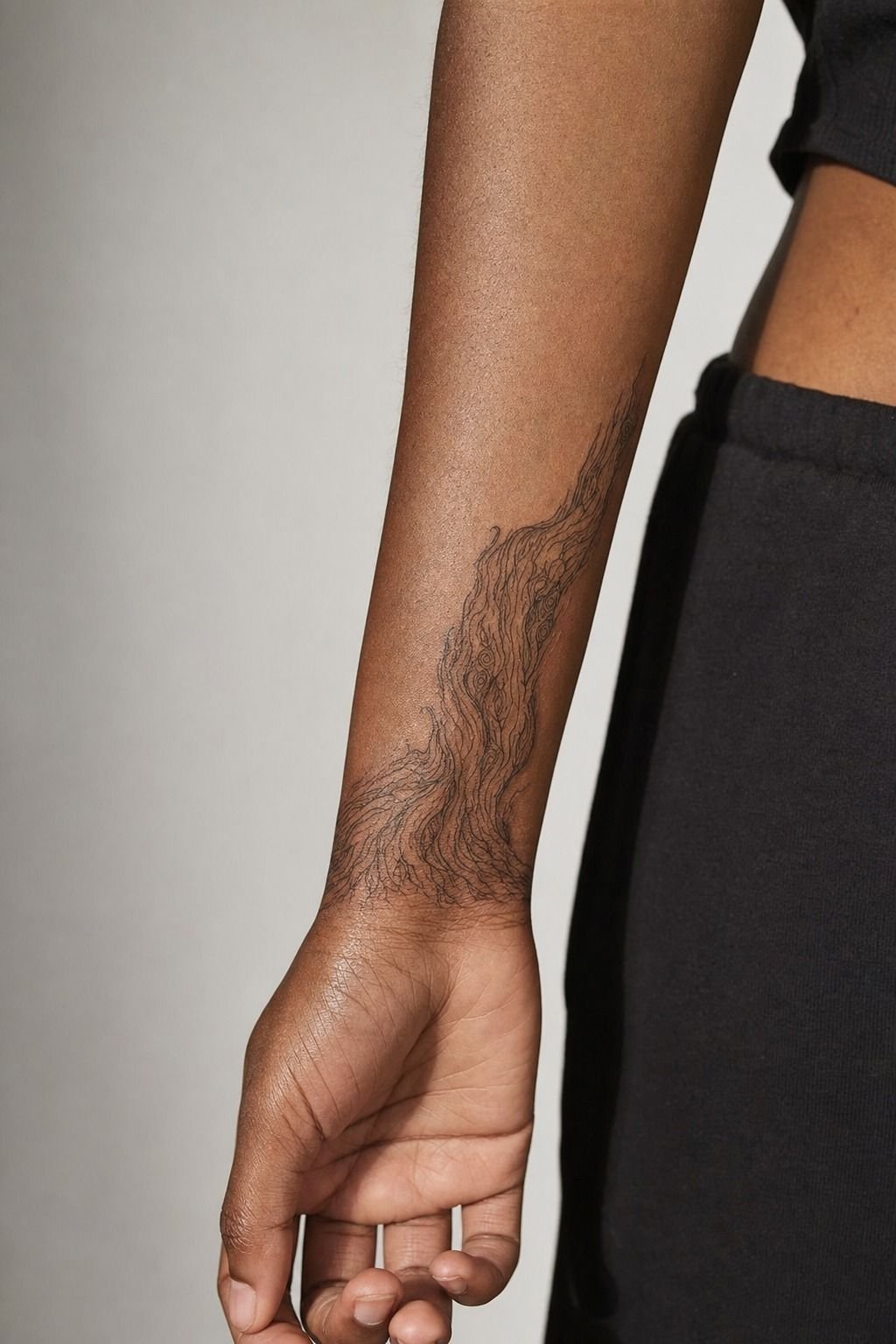
Bark texture is what separates a tree tattoo from a tree sticker. Tebori, the traditional Japanese hand-poke method, builds bark from hundreds of tiny deliberate marks, and you can borrow that texture with a machine using pepper shading: tight stippled dots that read as rough, aged wood.
The technique matters more than the tool. Dots placed in soft gradients, denser in the trunk’s shadow side, sparse where light hits.
On a wrist piece like this one, the texture has to be simplified down, because micro-detail at that size won’t survive healing. Fewer marks, more intention.
Deep skin tones carry this texture beautifully, by the way, since the contrast of dot work reads clearly. Just expect your artist to push the spacing wider than the flash shows. That’s not a compromise, that’s experience.
12Budget for a Full-Color Sakura Tree Sleeve
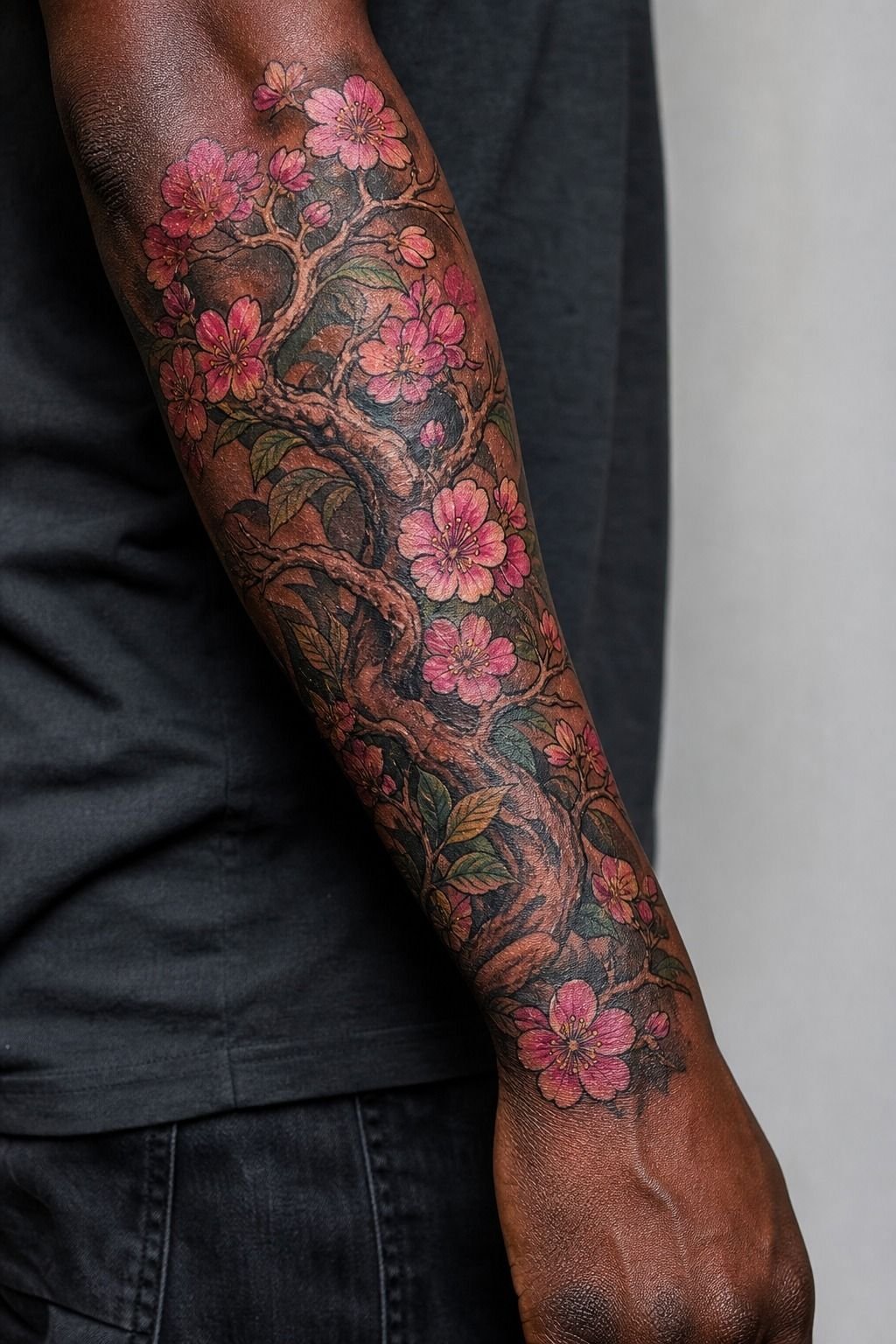
Let’s talk money, because nobody else will. A full-color sakura sleeve is a multi-session project, and the price reflects hours, not the picture.
US shop minimums typically run $50 to $100, and hourly rates sit around $100 to $250 depending on the artist and the region. Color sleeves eat hours.
Here’s a realistic breakdown so you can plan instead of panic:
Color packing is the spiciest part of the process and the slowest. A saturated pink done right takes passes, patience, and an artist who won’t rush the fill.
Budget tip that isn’t a move: book sessions monthly so the cost spreads out, and never shop this project on price alone. Cheap color work is the most expensive tattoo you’ll ever get fixed.
13Protect Your Sakura Tattoo During the Peeling Phase
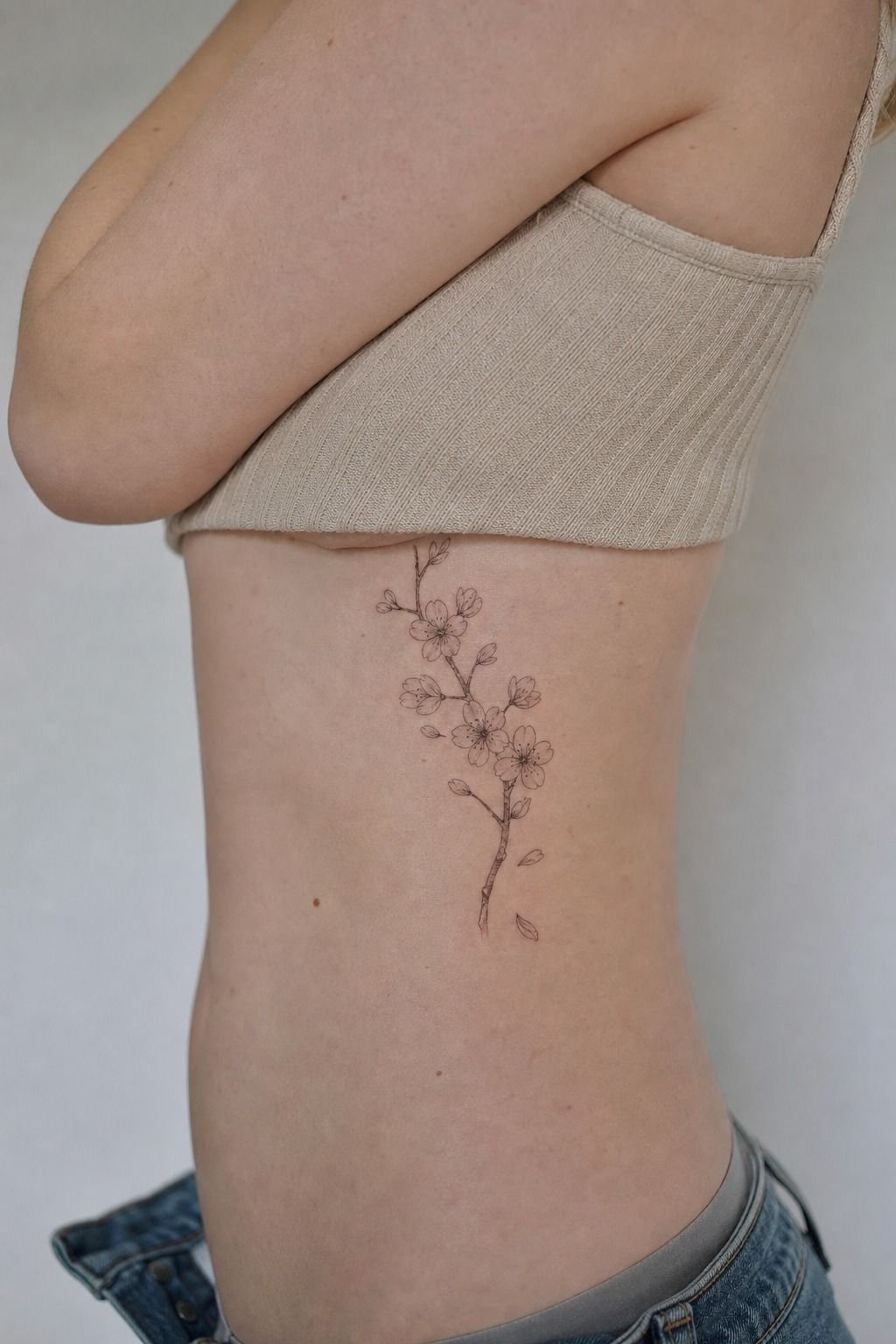
First few days, your tattoo is an open wound.
14Pair a Small Trunk With Angel-Number Script
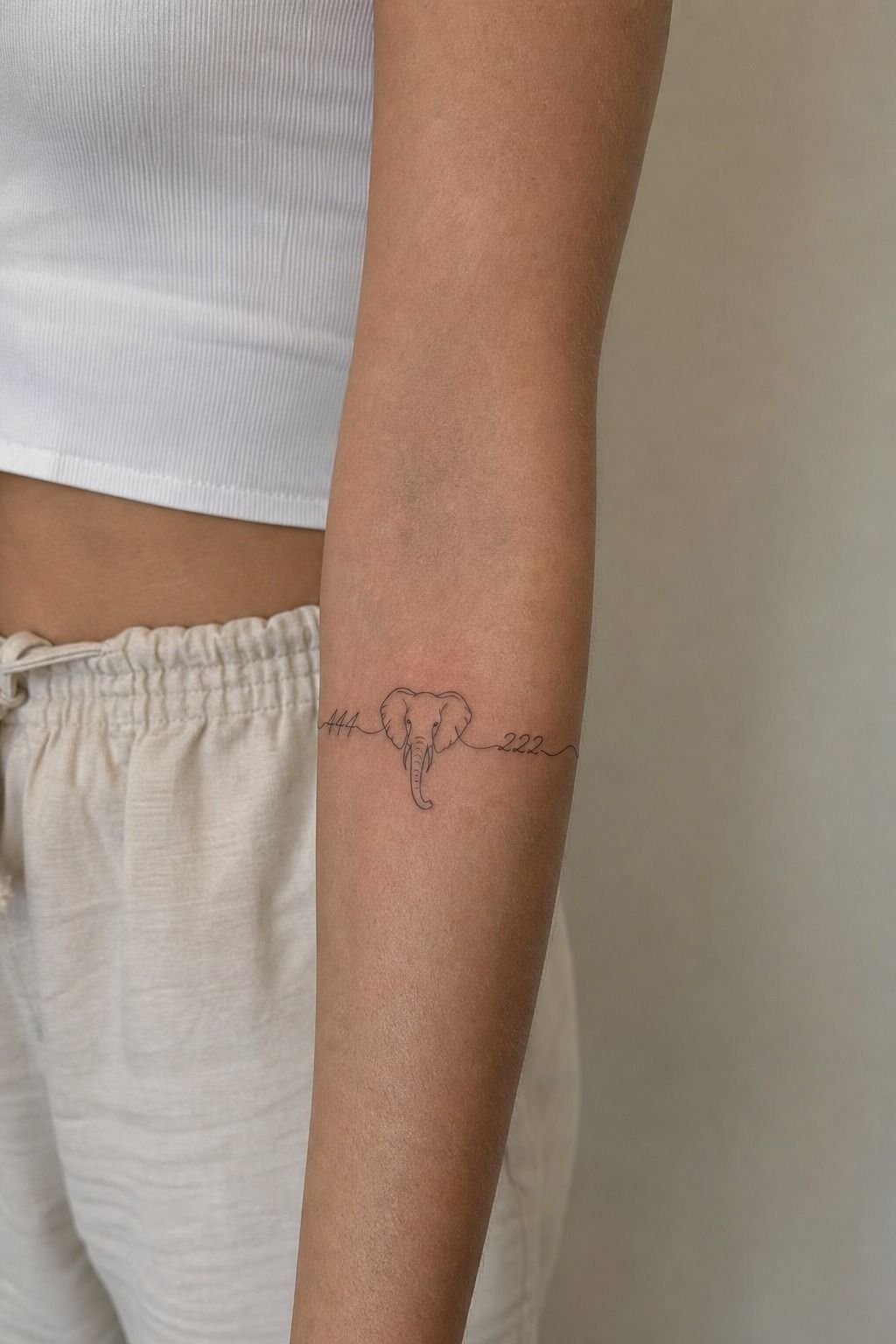
A tiny sakura trunk with a short line of script under it is one of my most requested combos, and it works when both elements respect each other’s scale. The trunk around two inches, the fine script in a single line beneath it, nothing stacked or crowded. 111, 222, a date, a word. Small and quiet.
The mistake I refuse to do: script smaller than a centimeter tall. Those letters close up as they age and your meaningful number becomes a smudge. Slightly bigger, slightly bolder, and it ages cute on you instead of turning into a rumor.
The inner forearm is perfect for this. Low pain, easy healing, and you see it every day, which is the whole point of a number that means something. Curious about deeper tree symbolism to pair with it?
The poisonous tree tattoo meaning and the softer palm meanings in the palm tree tattoo meaning page both contrast nicely with sakura’s fleeting-bloom energy.
15Schedule Touch-Ups to Keep Blossom Pink Bright
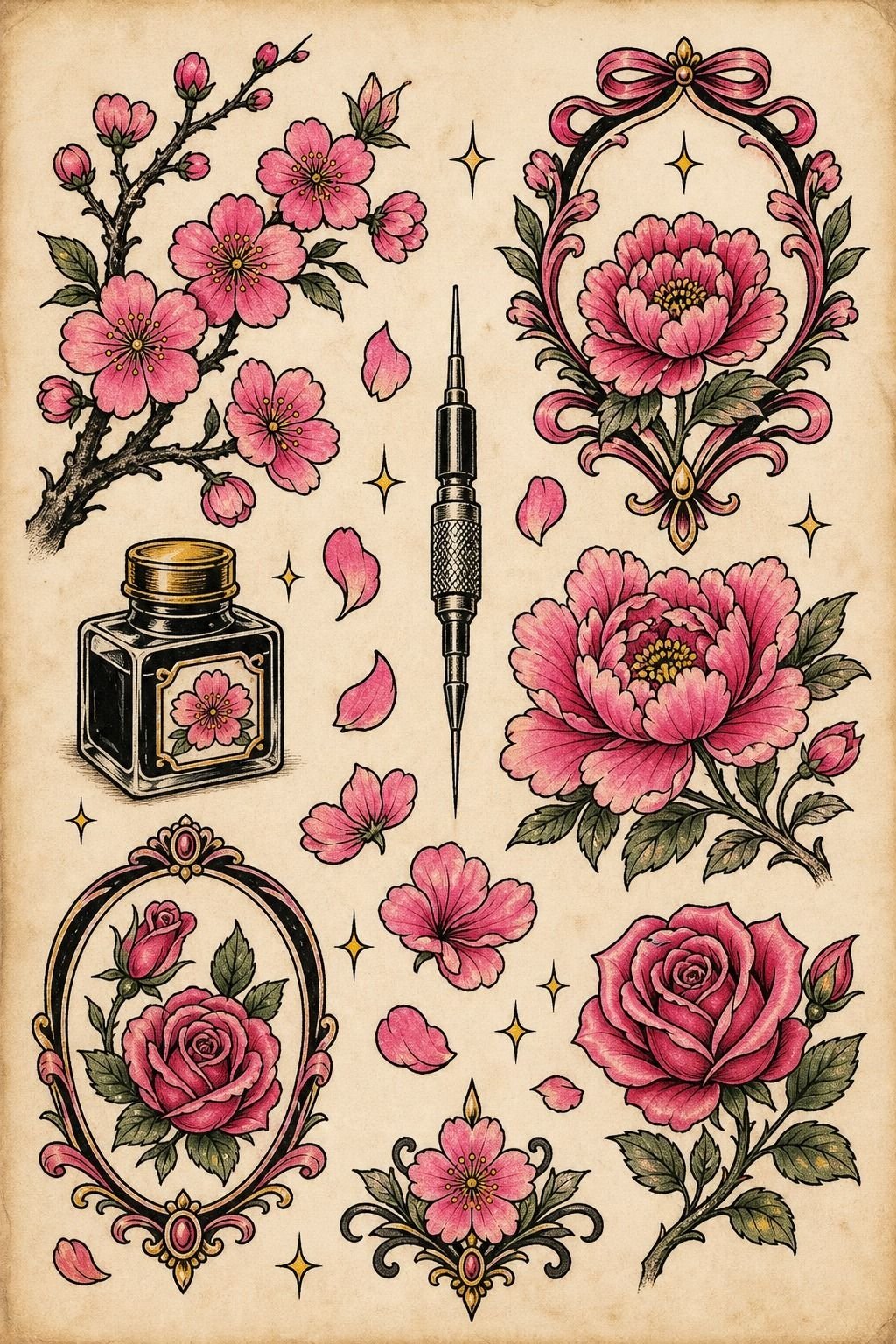
Pink is the diva of the ink palette. It looks unreal fresh, and it’s the first color to soften as the years pass.
That’s not failure, that’s physics. Planning touch-ups from the start is how collectors keep blossom work bright for a decade instead of watching it go dusty by year three.
My usual rhythm: a check-in photo at six months, a possible light pass at the one to two-year mark, then every few years after that depending on your sun habits. Most artists charge a small flat rate or a short hourly minimum for refreshing their own work. Flash sheets of pink-heavy designs exist partly so artists can plan those refresh passes efficiently.
Daily SPF on the tattoo is the single biggest thing you control. A mineral sunscreen, reapplied when you’re outside, does more for your color than any aftercare product ever will!
16Match a Branch Set for Couples or Best Friends
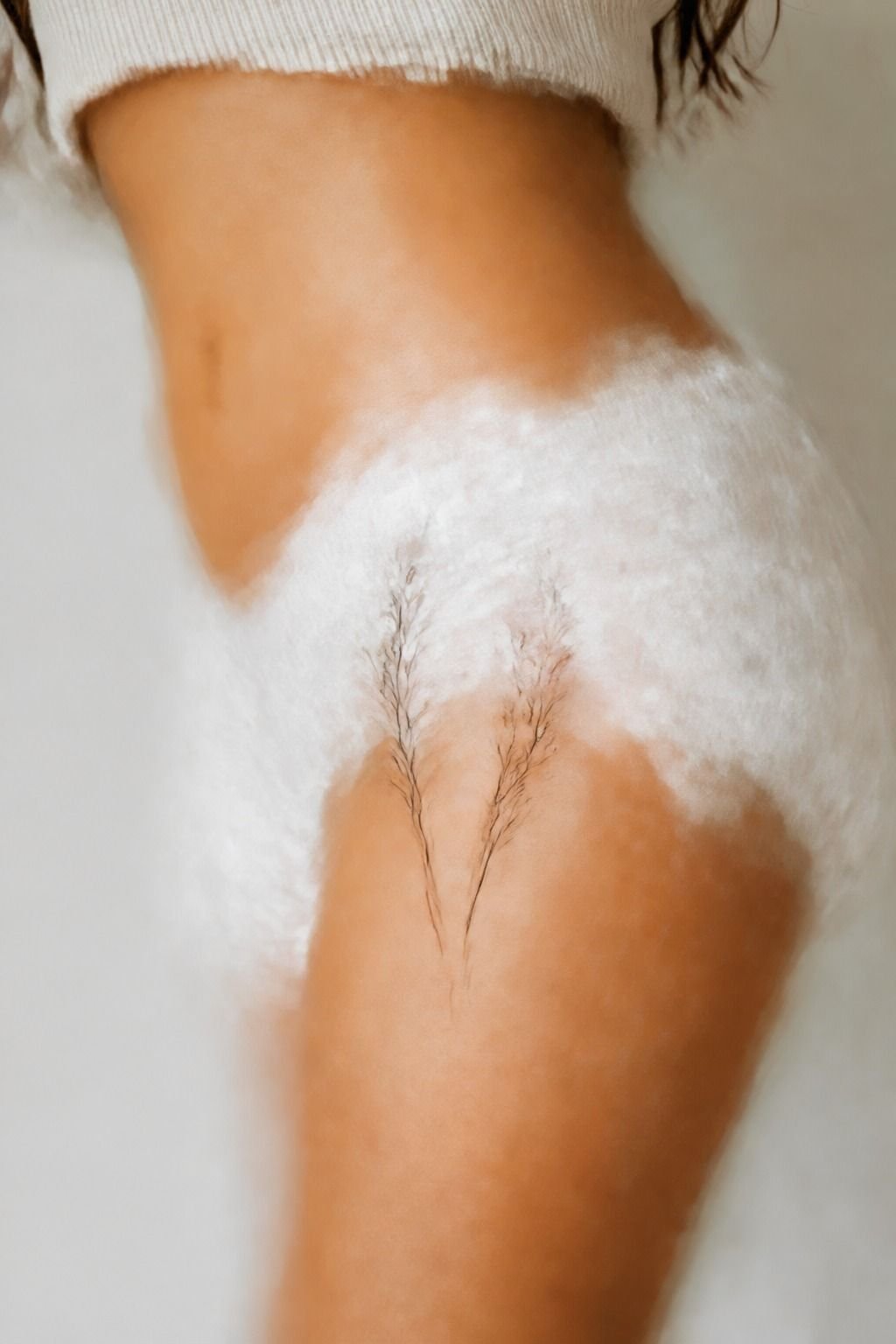
Matching sakura branches work best when they’re designed as one tree split in two. One of you carries the left-leaning branch, the other the right.
Alone, each tattoo is complete. Together, the composition closes. That design logic matters way more than picking the same Pinterest image and copying it twice.
The outer thigh is my favorite spot for these: low pain, low wear, and plenty of room for a five to seven-inch branch that won’t mush out. Golden tan skin takes soft pink beautifully with a slightly deeper rose mixed in for staying power.
One piece of big-sister advice. Get the tattoo because you love the tree, not only because you love the person.
People change, and the sakura tree tattoo meaning is honestly about exactly that: beautiful things, brief seasons, what stays with you. If the branch still means something to you on its own, you’ll never regret it.
What a Decade of Lining Petals Taught Me
I want to be straight with you about the mistakes, because I made most of them early and I still see other artists making them.
My first sakura piece, I crammed twenty blossoms into a design that needed eight. The client loved it fresh.
Eighteen months later it healed into a pink haze, and I did the repair for free because it was my fault, not hers. That day rewired how I design.
Every petal you remove makes the remaining ones stronger. Editing is the skill, not drawing.
Second lesson: stop chasing the smallest possible version. Pinterest pushes micro everything, and I get it, tiny tattoos photograph well. But skin isn’t paper.
Ink settles and lines widen a hair every year, and a tree designed at the absolute minimum size has zero margin for that settling. I now design every sakura piece about twenty percent larger than the client’s first instinct, and I’ve never had anyone come back wishing it were smaller.
Not once.
Third, and this one’s about you, not the artist: your healing habits matter more than our linework. I’ve put identical work into two clients in the same week and watched one heal crisp and one heal dull, purely because one of them went tanning at day ten.
The best sakura tattoo is a partnership. We give you clean single-pass lines, room to breathe, and color packed solid. You give it gentle washing, no picking, and sunscreen like it’s a religion.
Is all that fuss worth it for a flower? Look at a healed five-year-old sakura backpiece, petals still bright, trunk still sharp, and tell me it isn’t. That’s the whole reason I keep drawing trees.
The Questions Worth Answering First
How much does a sakura tree tattoo usually cost?
Most sakura pieces run $100 to $350 for a small branch and $500 to $1,200 for a half sleeve. US shop minimums sit around $50 to $100, hourly rates around $100 to $250. Size, color, placement, and your artist’s experience all move the number.
Are sakura tree tattoos a good idea for a first tattoo?
Yes, honestly one of the best firsts. A branch on the outer forearm gives you tolerable pain, clean healing, and a design that ages gracefully. Start medium-sized rather than tiny, and your lines will thank you in five years.
How do I choose a tattoo artist for a sakura tree tattoo?
Look at healed portfolio photos, not just fresh ones. Clean single-pass lines, soft even shading, blossoms that still read after a year. Bonus if they specialize in fine line, Japanese work, or florals rather than doing a bit of everything.
How much do sakura tree tattoos hurt?
Depends entirely on placement. Ribs, sternum, and collarbone are the spicy zones; forearm, thigh, and outer shoulder are the chill ones. Lines feel sharp, shading is a dull burn, and color packing is the part most people remember.
How long does a sakura tree tattoo take to heal?
Surface healing takes two to three weeks, full settling about two to three months. Wash gently, moisturize thin, no sun, no pools, and never pick the peeling flakes. Pink ink especially needs strict SPF for life, and the aftercare basics in our sakura flower tattoo meaning guide apply here too.
What’s the best placement for a sakura tree tattoo?
For longevity, the outer forearm or thigh: low-wear zones where lines stay tight and color holds. For drama, the back or chest. Just size the design to the spot, because a wrist-sized tree belongs on the forearm instead.
Where I’d Start First
If I had to pick one step, I’d start with placement. Every blur problem I’ve ever fixed traces back to a design squeezed into the wrong spot. Pick the zone first, size the tree to fit it, and everything after that gets easy.
Pin this for your consult.