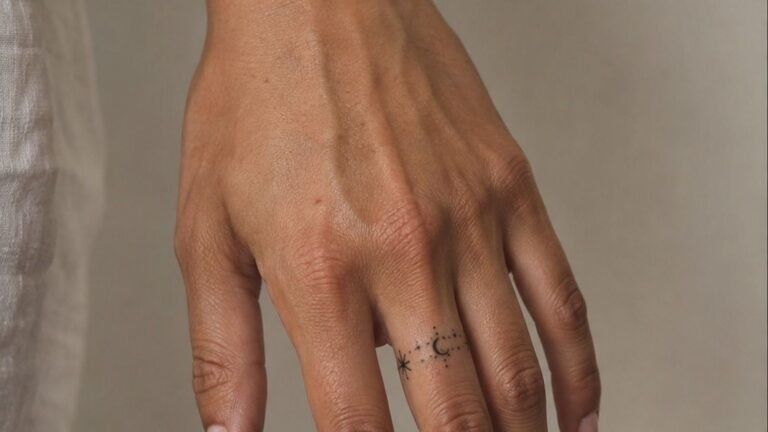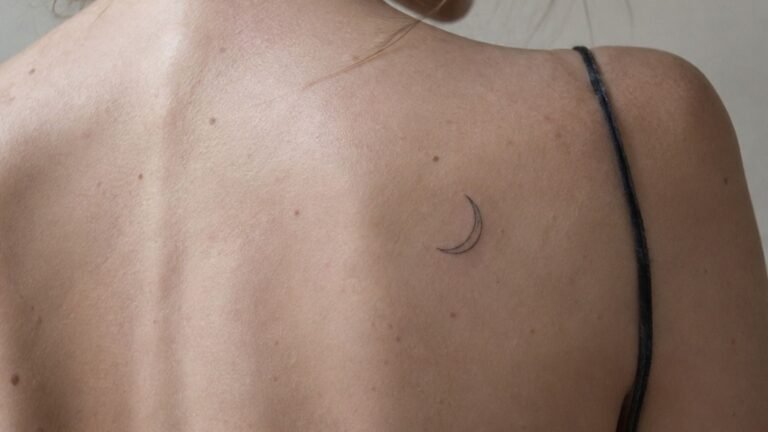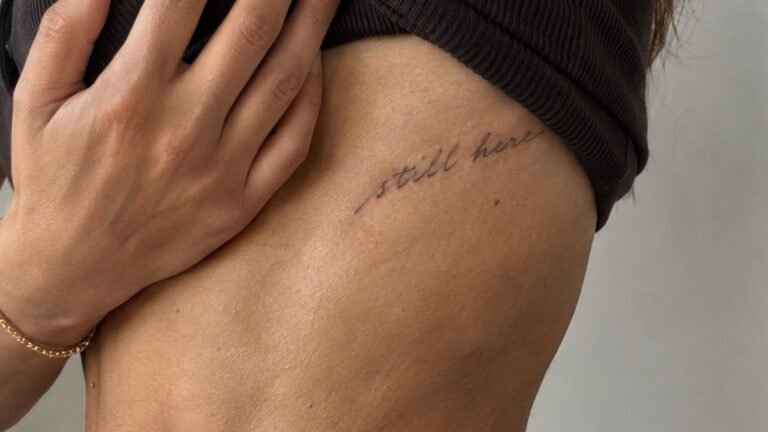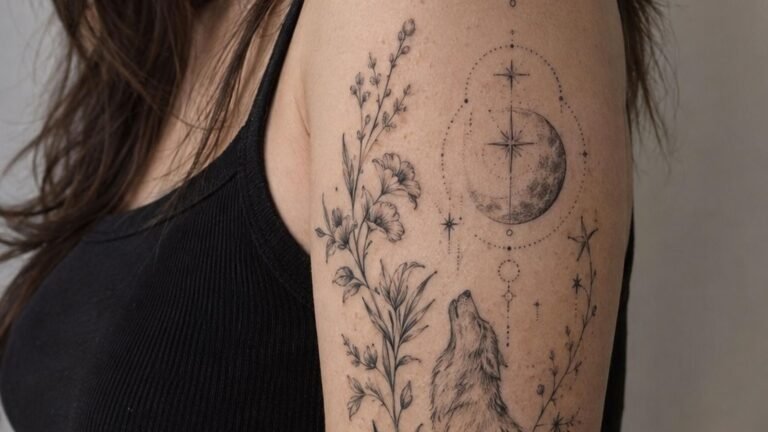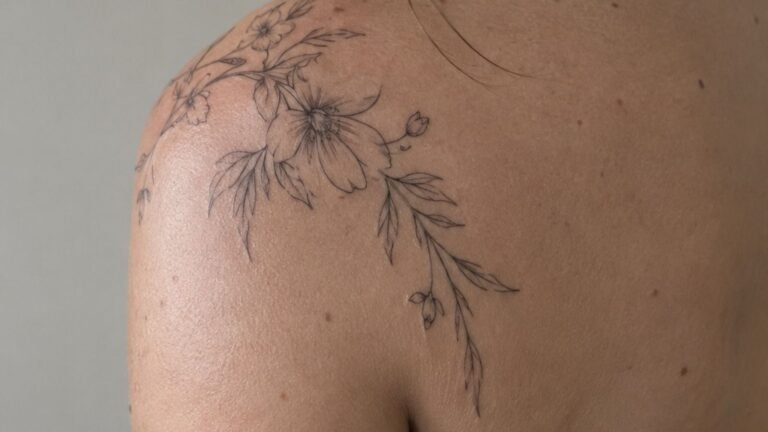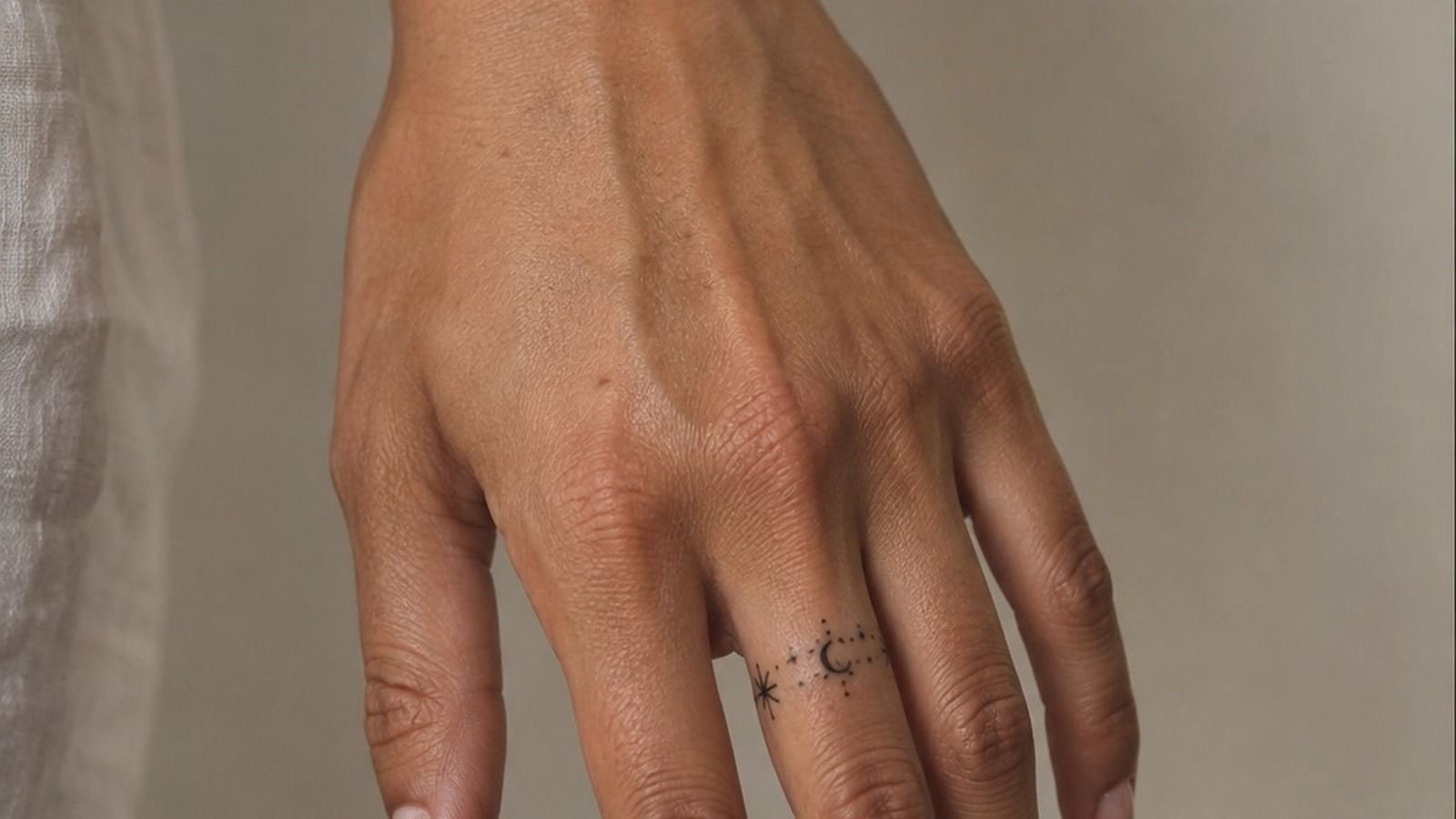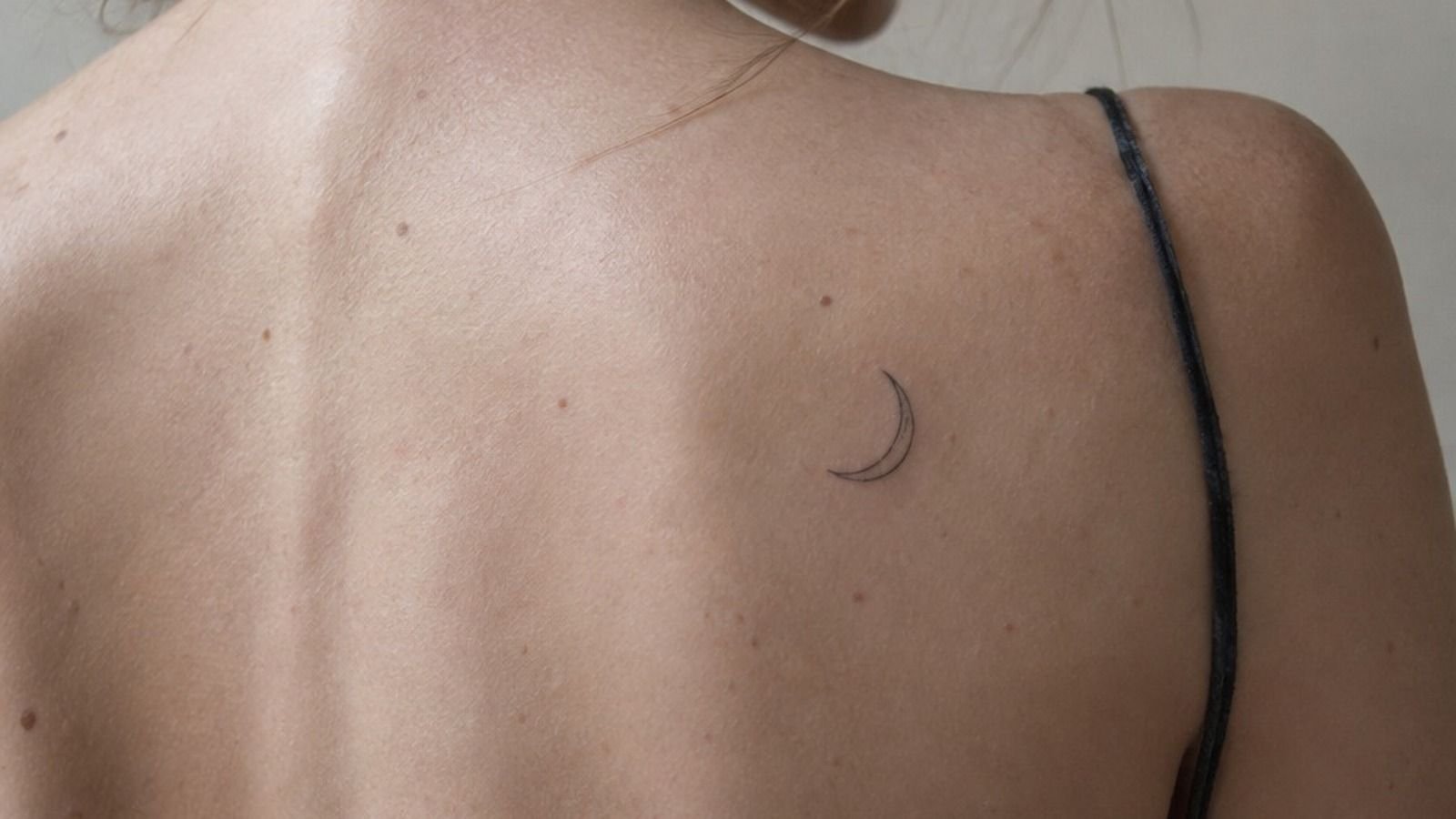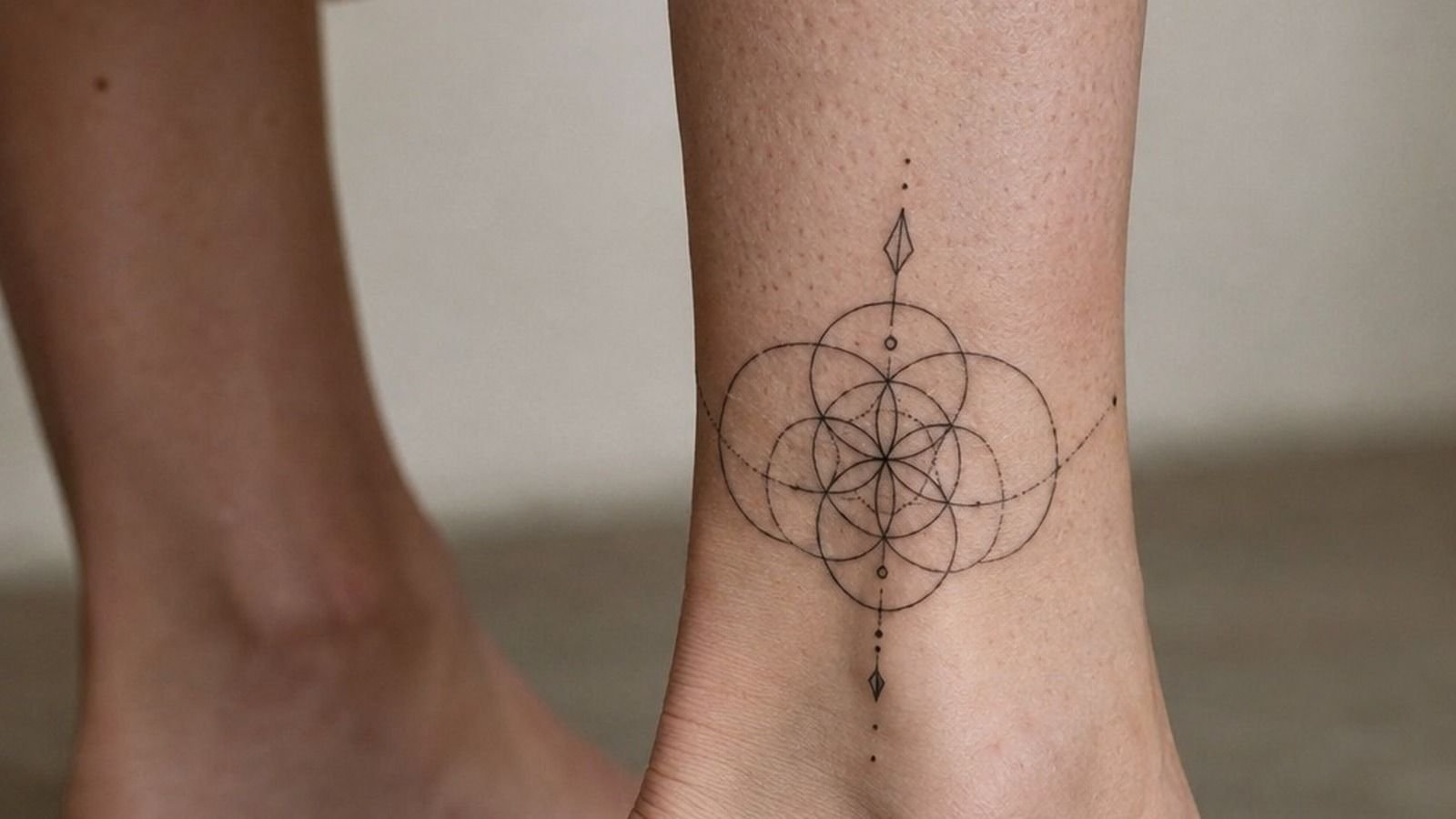
You want a Fineline Geometric Tattoo that still reads clean in five years. Most advice skips the part that matters: line weight, placement, and healing all work together. I learned that after watching a delicate ankle design blur where skin folded constantly. Start with the drawing, then make the body part earn it. That’s the difference!
- Start with a Sacred Geometric Line Concept
- Pick Minimal Polygonal Fine Line Symbolism
- Place Interlocking Circles Along the Forearm
- Keep Fine Line Triangles Crisp and Balanced
- Plan a Meaningful Celestial Geometry Composition
- Trace a Delicate Mandala with Precise Linework
- Choose Bold Symmetry for a Geometric Sternum Tattoo
- Map Flowing Sacred Lines Around the Ankle
- Build an Intricate Animal-Geometry Fusion in Fine Line
- Match Personal Coordinates with Sharp Geometric Arcs
- Follow Crisp Aftercare for Lasting Geometric Linework
1Start with a Sacred Geometric Line Concept
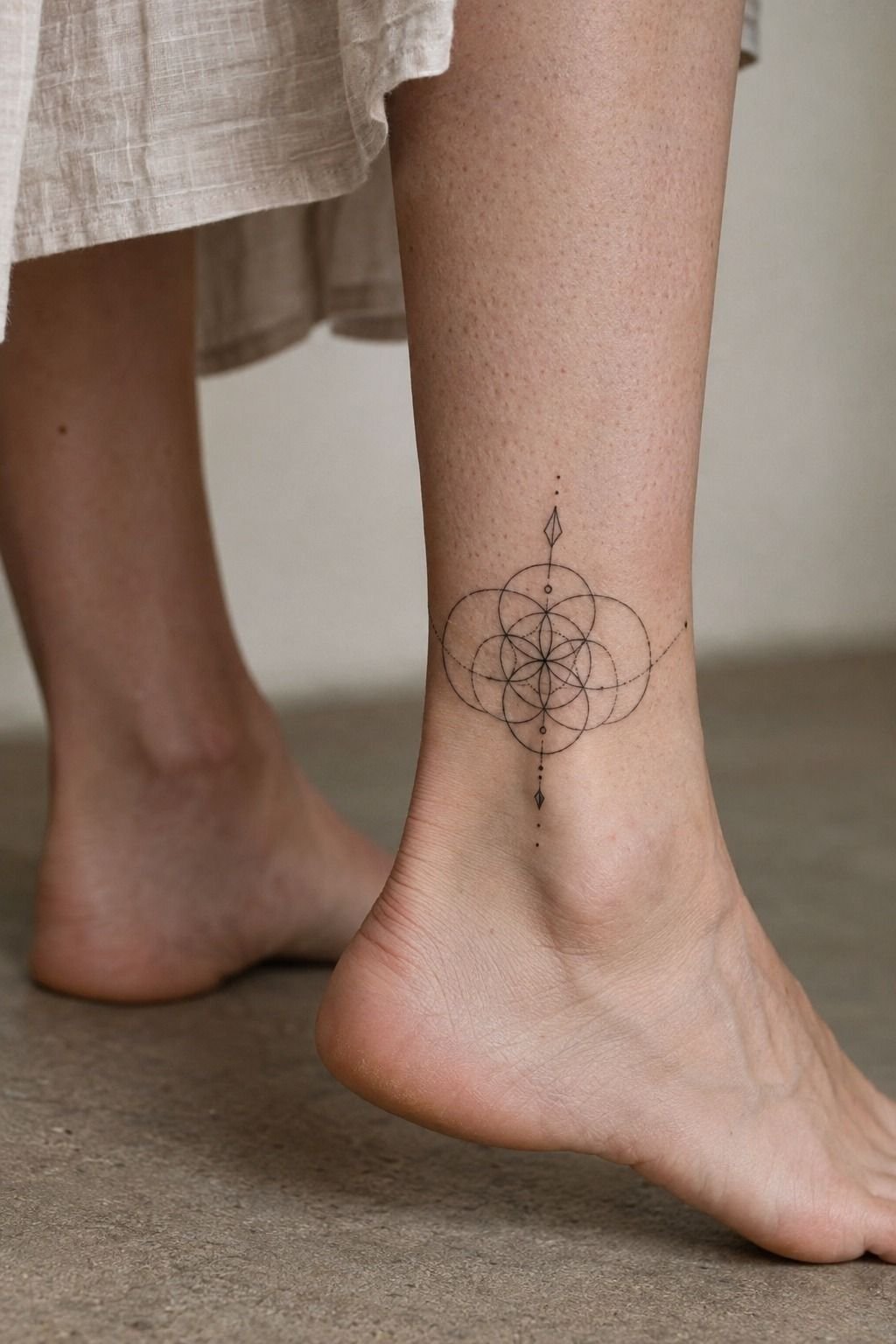
Begin with one visual idea, not a folder of unrelated references. A sacred geometric line concept might center on a triangle, radial circle, flower of life, or repeating angle.
Your design should have one dominant rhythm that the eye can follow. I’d choose a crisp triangle over six competing symbols because the negative space stays readable as your skin changes.
Sketch the design at the size you’re considering. A tiny symbol can look striking on paper and lose its character once it reaches your ankle.
Your artist can test the shape on a transfer sheet, then adjust the spacing around the ankle bone. Black ink gives the cleanest starting point, especially when the design relies on thin outlines.
Ask yourself what the tattoo should communicate when you see it without context. Sacred geometry can feel symbolic, personal, or quietly powerful.
Your answer doesn’t need to be mystical. Maybe the circle represents continuity, while the four points mark family, place, memory, and change.
I’d avoid copying a complex Pinterest image line for line. It may have been drawn for a larger area or a different body shape. Save a geometric tattoo pattern for reference, but bring your artist a clear mood and one meaningful anchor.
2Pick Minimal Polygonal Fine Line Symbolism
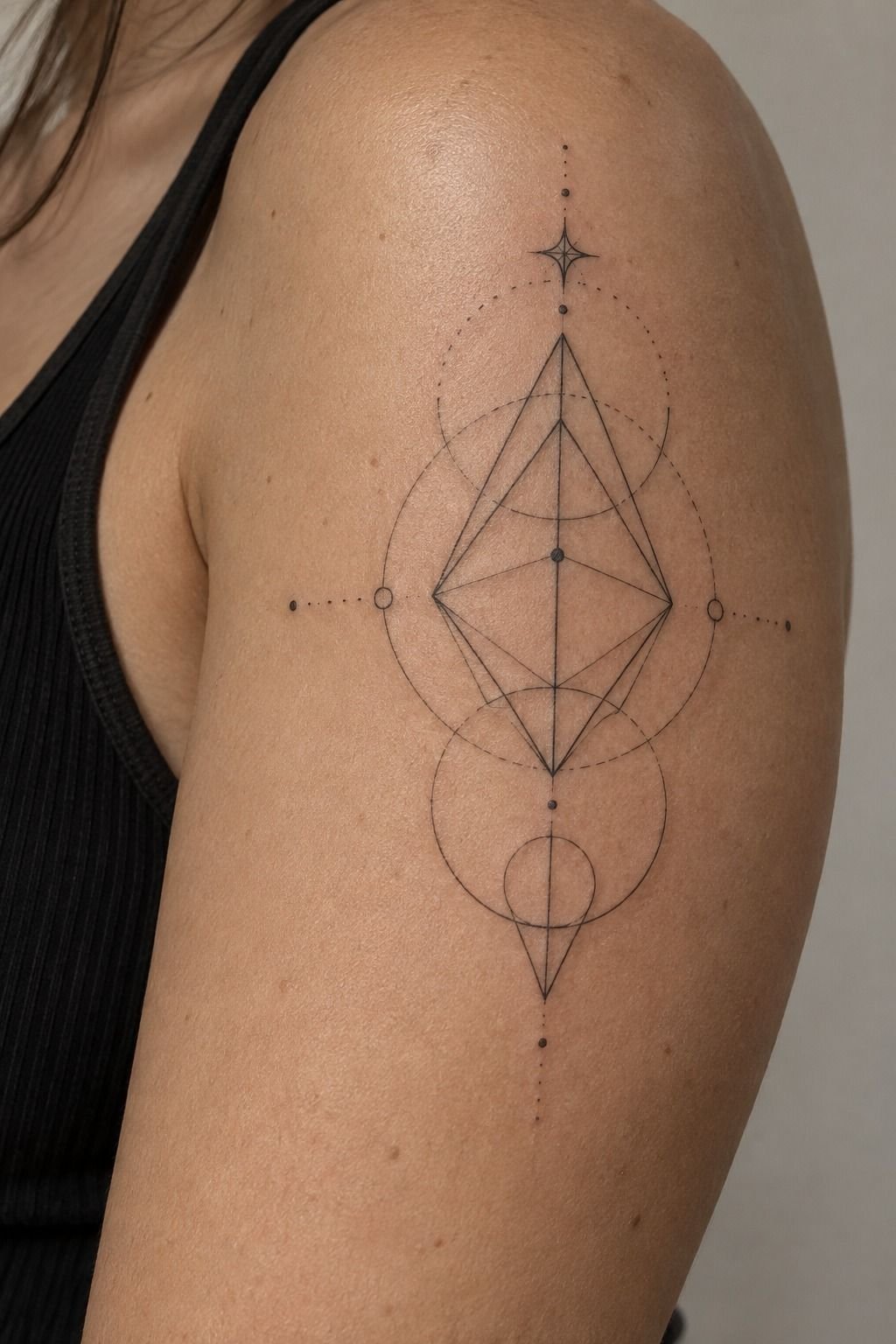
Minimal polygonal symbolism works when every line has a job. Choose one main polygon, then add only the marks that support it.
Your eye should land on the central form before noticing the smaller points and intersections. A dainty outline with too many internal cuts won’t stay crisp for long.
For a polygonal animal, mineral, or celestial shape, ask your artist to separate details with open skin. Single-needle linework can look delicate and expressive, but it needs breathing room. I’d rather see three clear interior lines than nine cramped ones that merge after healing.
Look at your reference under different lighting. Cool daylight shows whether the angles are balanced, while a close phone photo reveals shaky joins.
Your artist should show healed examples, not only fresh work photographed under bright studio lamps. Fresh ink often looks sharper than the settled result.
And don’t confuse minimal with empty. A sleek design can carry a meaningful story through proportion alone.
If you’re drawn to restrained marks, compare your sketch with this geometric line tattoo collection before you commit. Keep the most personal shape and remove the decoration that only looked useful at first.
3Place Interlocking Circles Along the Forearm
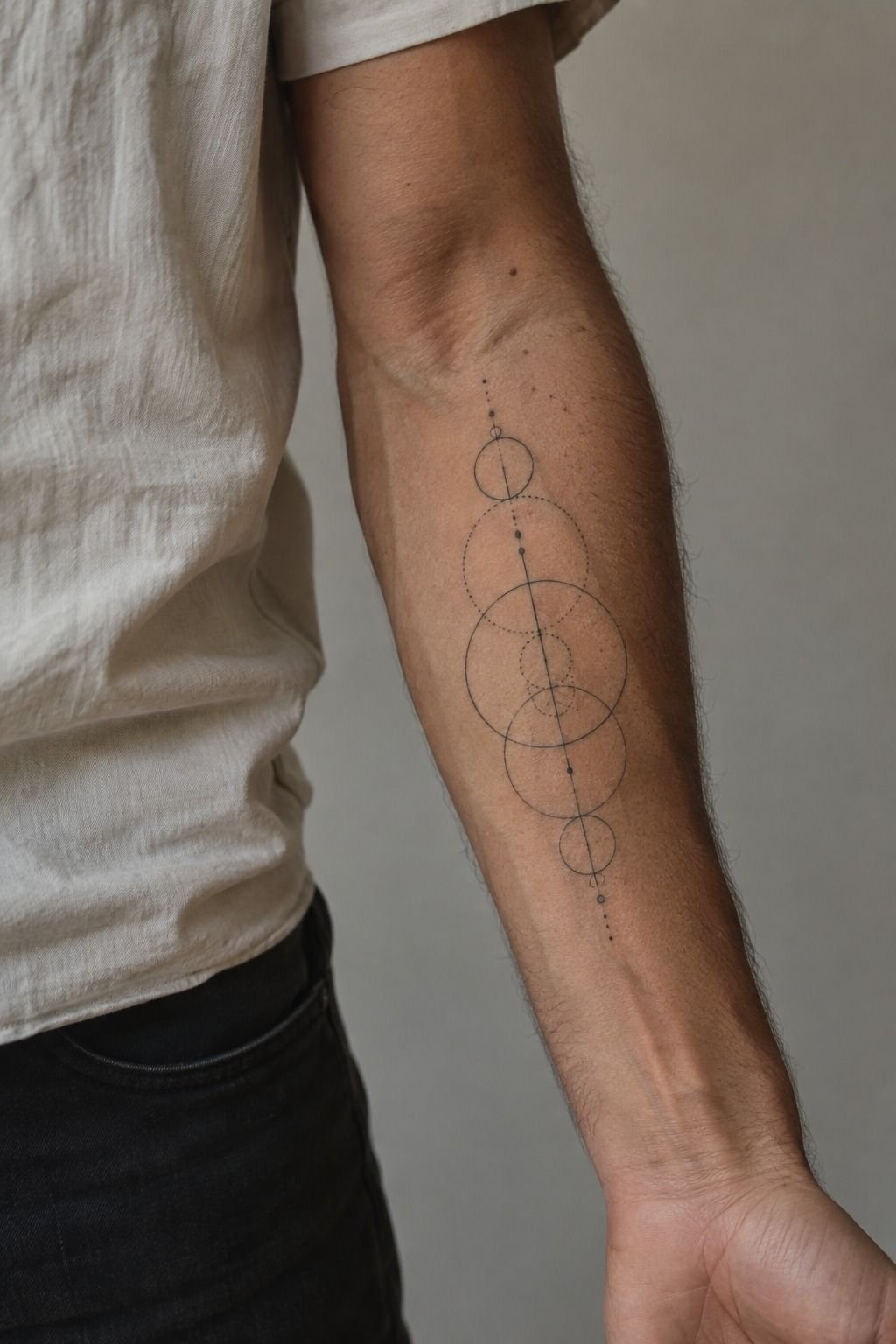
Interlocking circles need a surface that lets the eye travel without too many bends.
4Keep Fine Line Triangles Crisp and Balanced
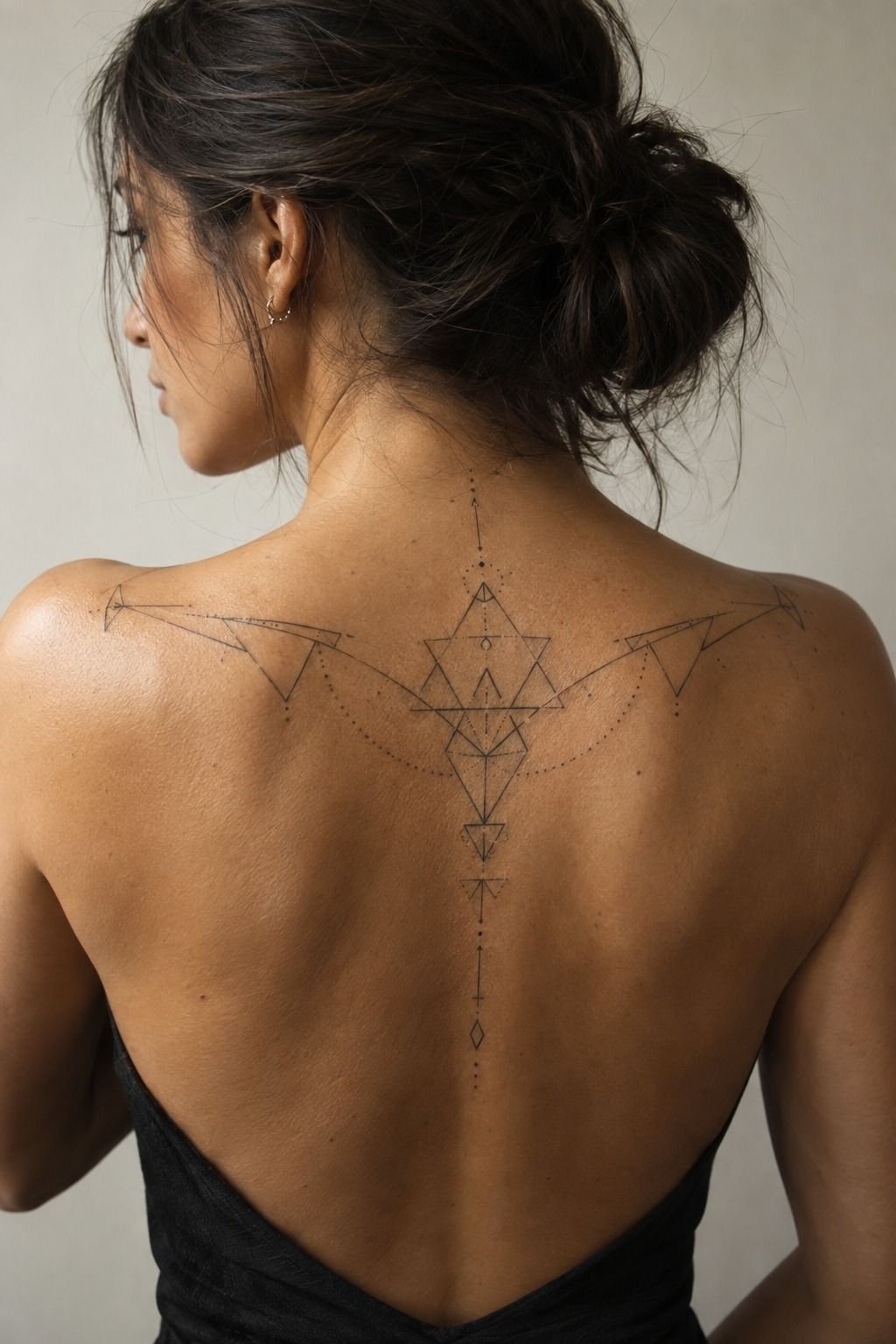
Triangles look simple, but small errors become obvious because your eye expects symmetry. Start by fixing the outer triangle, then place interior lines from its center rather than guessing each distance. Your artist can use a stencil ruler or digital template to keep the three corners aligned.
A back or shoulder placement gives your design more stable skin than a hand or foot. Three-quarter-inch spacing would be too specific for every body, so let the artist measure your anatomy and preserve the design’s proportions instead. The useful rule is consistent negative space, not a universal measurement.
I’d skip a tightly packed triangle stack on the upper back. It can look ornate in the stencil and muddy once the skin settles.
A smaller number of sharper shapes feels more intentional, and your composition will age with less visual noise. Bold black fill can anchor one triangle, but use it sparingly beside fine outlines.
But balance isn’t the same as perfect mirroring. Your body curves, and forcing a mathematically exact layout onto a curved surface can make the tattoo appear crooked. Ask your artist to correct for the body’s natural slope.
If you’re comparing styles, this blackwork geometric tattoo guide shows how solid areas change the visual weight.
A quick check helps. Stand, relax your shoulders, and look at the stencil from several feet away. Then photograph it from the side.
Your tattoo should still have a clear focal point when you aren’t inspecting every corner.
5Plan a Meaningful Celestial Geometry Composition
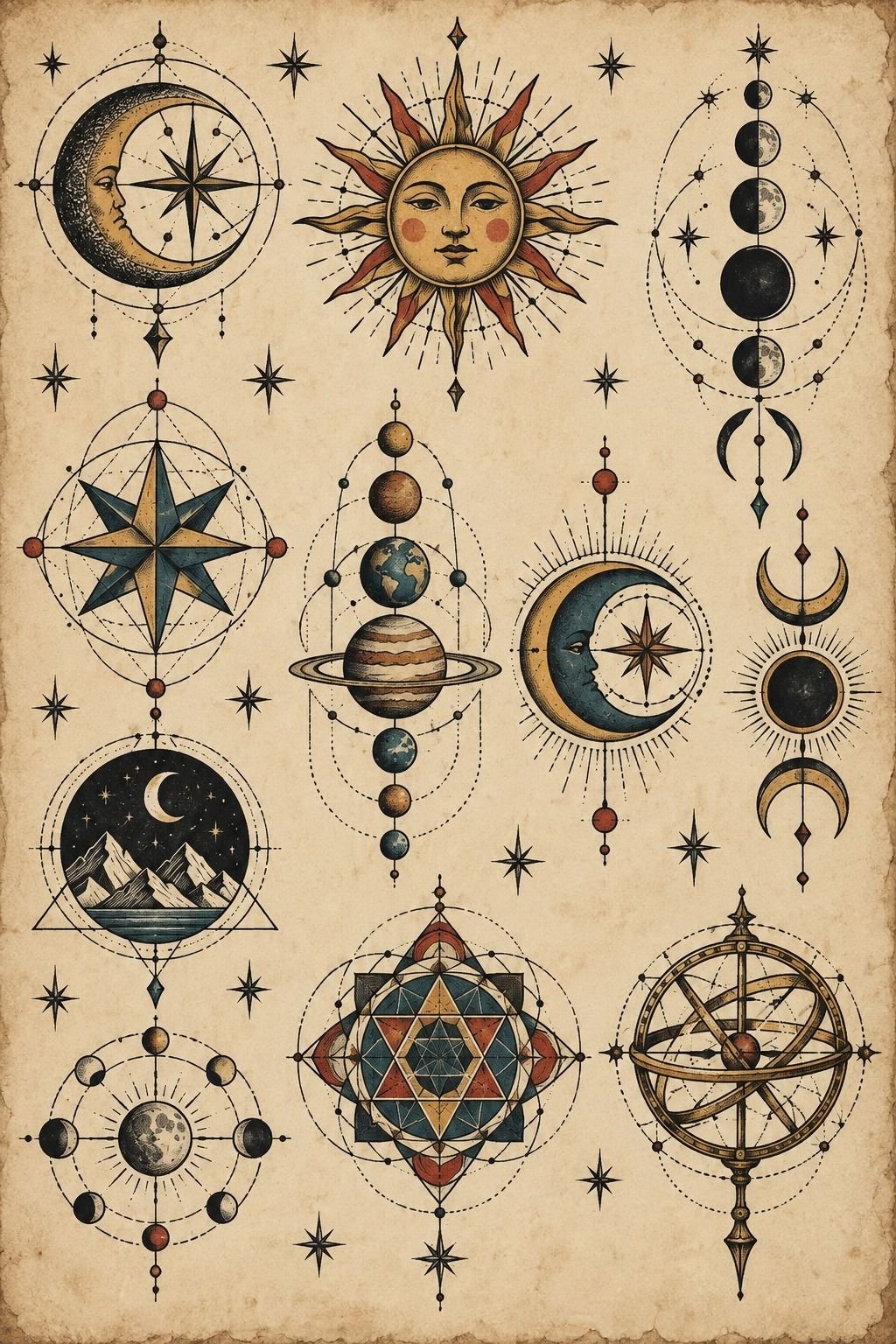
Celestial geometry becomes meaningful when the stars and arcs connect to something specific in your life. Choose a moon phase, constellation, eclipse shape, or orbit line that has a reason behind it. Your reference sheet can be whimsical, but the final tattoo should feel personal rather than assembled from random symbols.
Start with the largest celestial form on paper. Hand-drawn flash has a raw quality that digital designs sometimes lose, so keep a little of that irregular character if your artist supports it.
Then decide where the clean geometry enters. A circle around a moon can create an elegant frame, while a few sharp rays add a more daring edge.
I’d avoid adding every astrological mark you recognize. The result can become visually loud and emotionally vague.
Pick one constellation or date-based detail, then leave enough skin around it for the lines to remain separate. Your artist can translate the idea into a crisp composition without reproducing a textbook diagram.
For a flash-sheet process, bring two references: one for symbolism and one for line behavior. Aged off-white paper can show how the concept feels, but it won’t tell you how the design will sit on your body. Use the geometric tattoo artist near me guide to build a shortlist, then inspect each portfolio for healed celestial work.
And remember that a haunting moon design doesn’t need heavy shading to feel atmospheric. Your negative space can do most of the emotional work. I’d choose a few sharp stars over a gray cloud of filler every single time!
6Trace a Delicate Mandala with Precise Linework
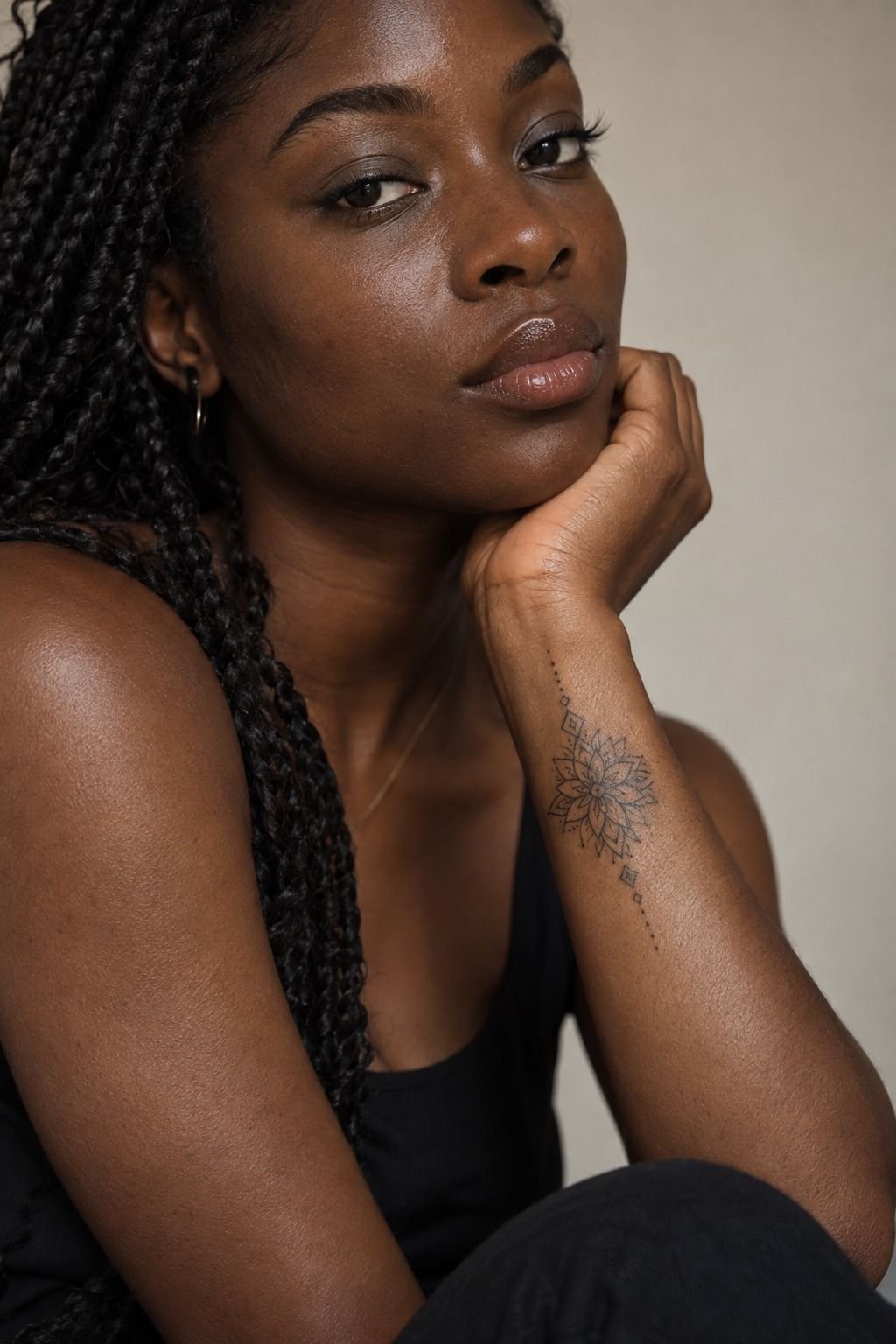
A mandala should be built from the center outward.
7Choose Bold Symmetry for a Geometric Sternum Tattoo
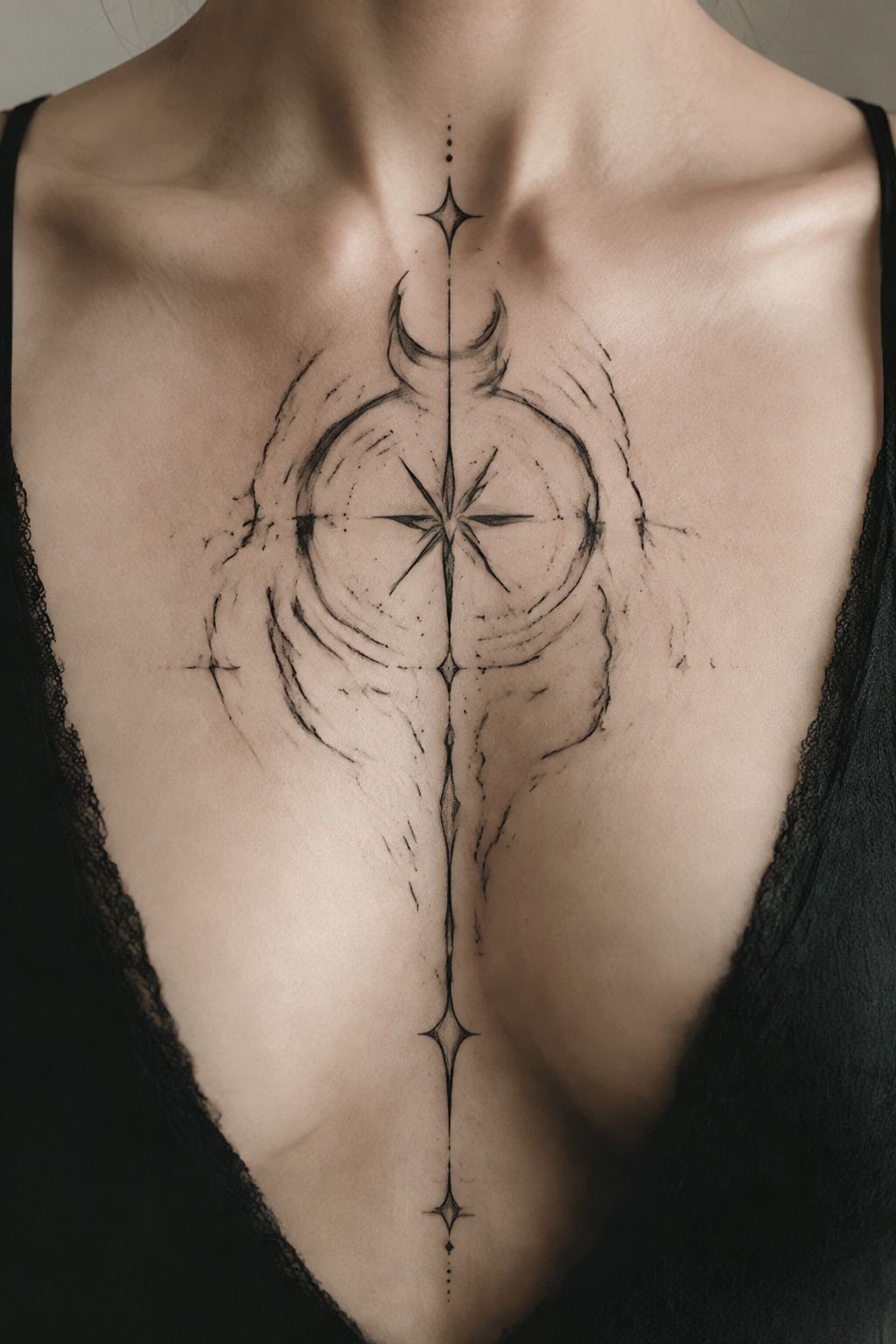
Sternum tattoos need a strong central axis because the chest rises, falls, and shifts with every breath. Begin with a vertical guide from the base of the throat toward the center of the ribcage. Your artist should check the stencil while you’re standing naturally, not while you’re holding your breath.
A bold symmetrical design can feel fierce and empowering, but it shouldn’t become a black block. Negative-space geometry keeps the composition expressive and lets the skin show through between the heavier points. I’d choose one dark central detail and crisp surrounding lines instead of filling every second shape.
The sternum is one of the more painful placements for many clients because the skin is close to bone. Your artist can divide a large concept into manageable sections, and you can ask how long the session is expected to last. Don’t schedule a demanding appointment when you’re dehydrated, rushed, or trying to push through fatigue.
What if the design looks symmetrical on the stencil but not on your body? That’s common.
Your ribcage isn’t a flat sheet, so the artist may make tiny optical adjustments. Stencil transfer paper helps you see those choices before they become permanent.
And I wouldn’t place the most fragile micro-details at the lowest point of the sternum. Clothing friction and movement can make that area harder to protect during healing. Your best focal point usually sits where the composition stays visible and stable when you stand naturally.
8Map Flowing Sacred Lines Around the Ankle
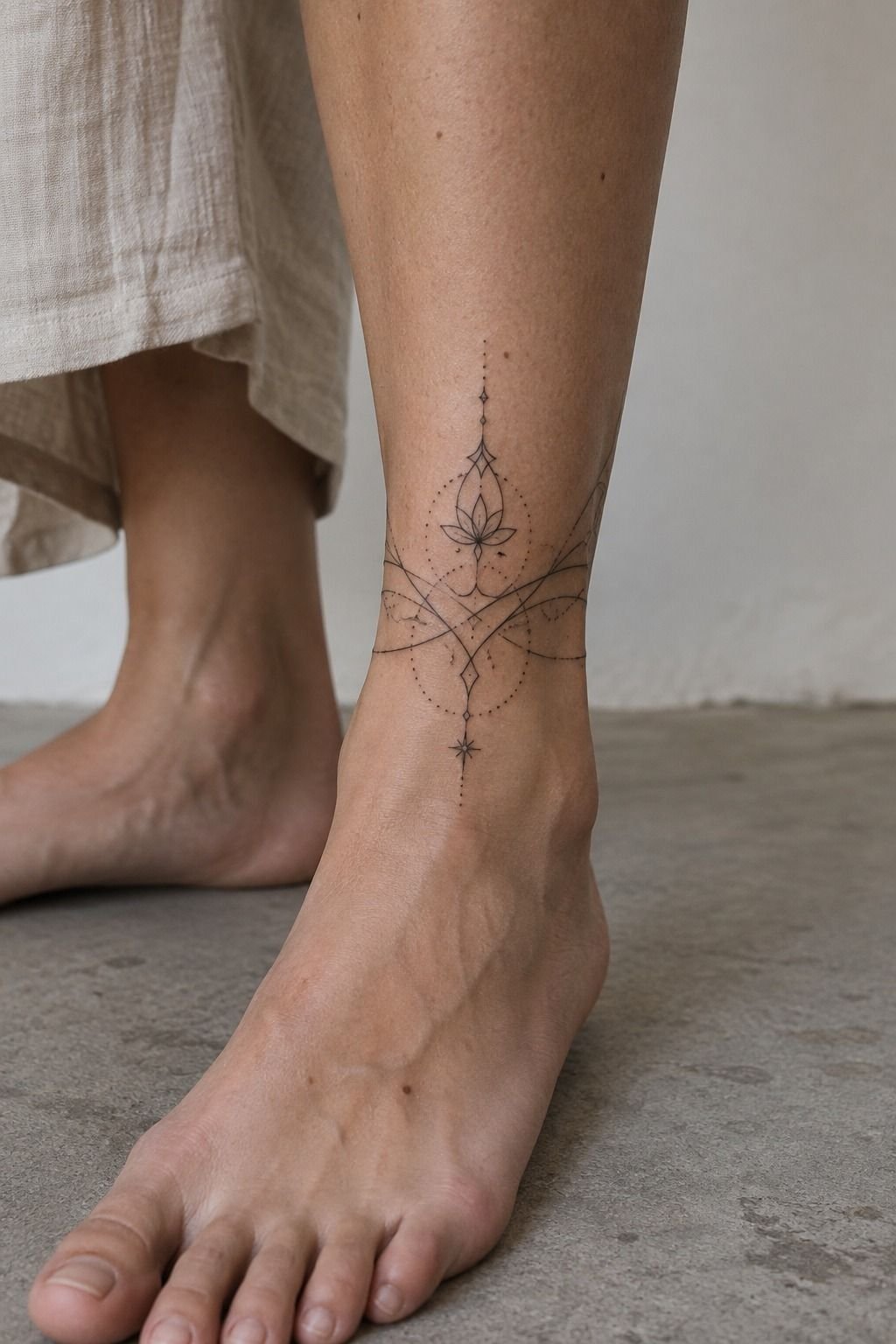
Flowing sacred lines should follow the ankle’s movement instead of fighting it.
9Build an Intricate Animal-Geometry Fusion in Fine Line
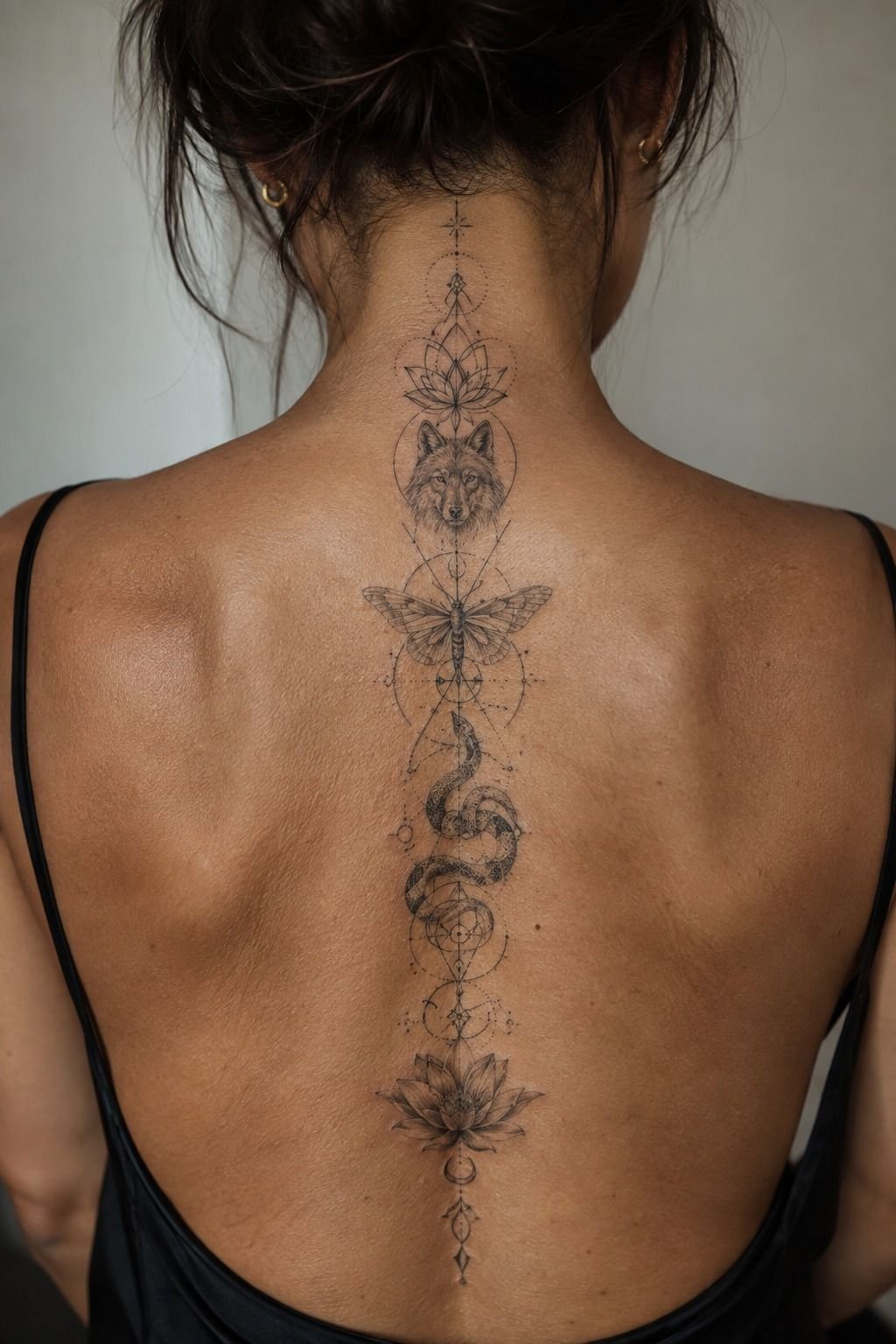
An animal-geometry fusion needs one recognizable silhouette before the geometric framework appears. Start with the animal’s posture, then use polygons, arcs, or sacred marks to shape the interior. Your viewer should read the creature first and discover the abstract structure second.
A spine placement gives the design a dramatic vertical path, but the anatomy can distort a perfectly straight grid. Olive-toned skin may show a strong contrast with black linework, though your artist should still work from healed examples on comparable skin. I’d preserve the animal’s face and eyes with fewer lines rather than cluttering its expression.
Choose the animal for a reason, not only because its outline photographs well. A fox, moth, cat, or bird can carry a personal association that makes the tattoo meaningful months later. Your artist can simplify the reference so the symbolism survives without turning the design into a tiny illustration.
I’d avoid placing the smallest geometric details directly over the spine’s most prominent points. Solid black accent marks can create structure, but they need enough surrounding skin to remain separate. Use the geometric cat tattoo guide if a feline silhouette fits your concept, then ask your artist to adapt it rather than copy it.
And don’t let “intricate” become an excuse for adding lines everywhere. The best fusion has a quiet area, a focal area, and one surprising transition. Your back will carry the larger composition, but clarity still matters more than complexity.
10Match Personal Coordinates with Sharp Geometric Arcs
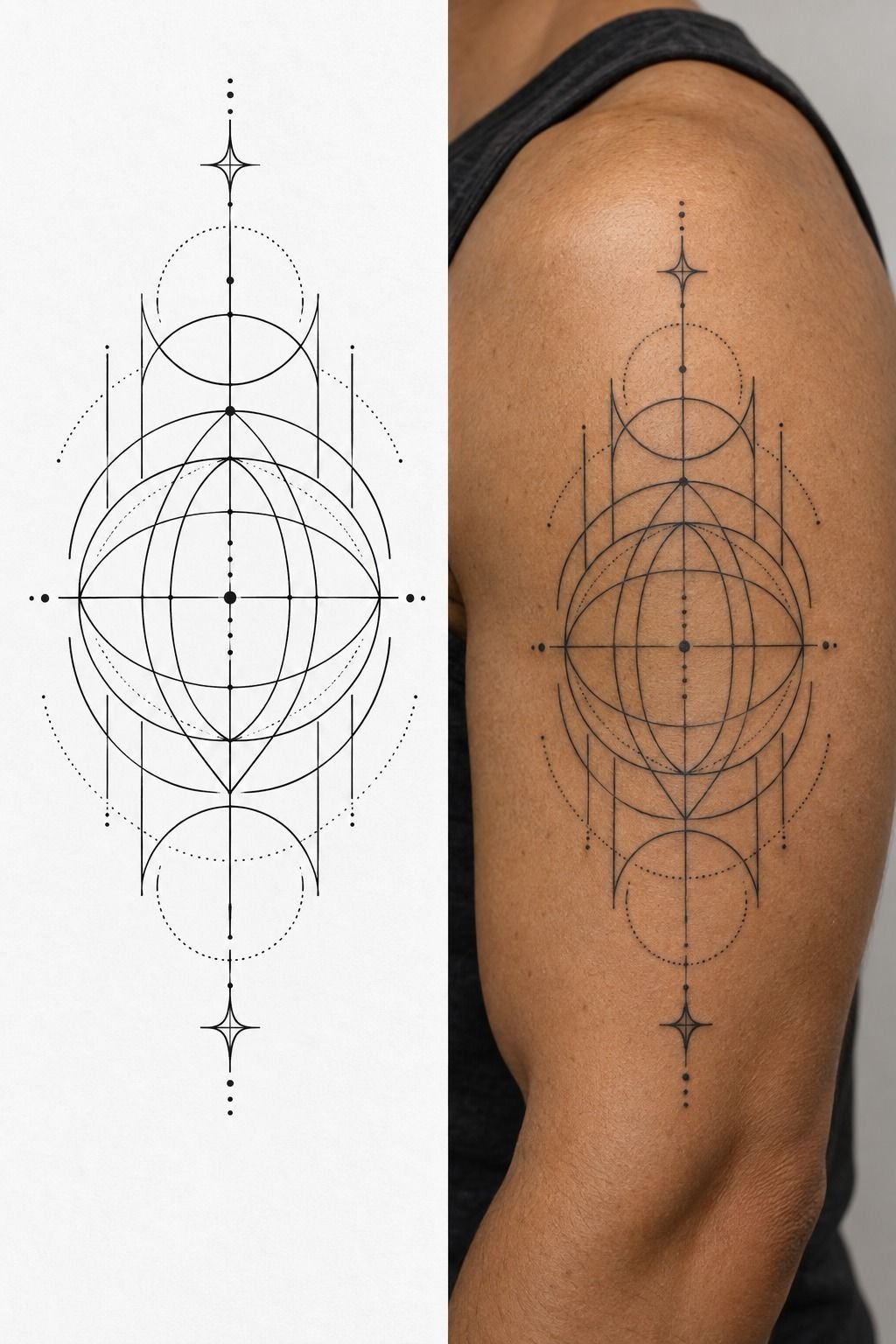
Coordinates can turn a geometric tattoo into a private landmark. Decide whether the numbers represent a birthplace, a meaningful meeting point, or a location tied to someone you love. Your artist can build sharp arcs around the coordinate line, but the numbers themselves must remain readable.
Start by checking the spelling, digits, and format twice. Stencil lettering can look clean on white paper, yet tiny numerals may blur if squeezed beside dense geometry. I’d give the coordinates their own pocket of negative space and let the arcs frame them instead of crossing through every number.
A split reference is useful here because it shows both the plan and the skin result. Your artist can place the stencil on your chosen area, photograph it, and adjust the scale before beginning.
Don’t approve the design while standing at an angle only. Check it straight on, relaxed, and from the side.
The strongest contrast is sharp geometry over a softer body curve. White transfer paper makes the proposed arcs easy to inspect, especially on deeper skin tones, but it isn’t a substitute for a healed portfolio. Look for clean joins, consistent spacing, and artists who photograph their work after the initial redness fades.
If you’re unsure about scale, compare the tattoo with a coin or another familiar object while discussing it with your artist. Your goal isn’t the smallest possible design. It’s the smallest version that keeps the coordinates legible and the arcs crisp.
11Follow Crisp Aftercare for Lasting Geometric Linework
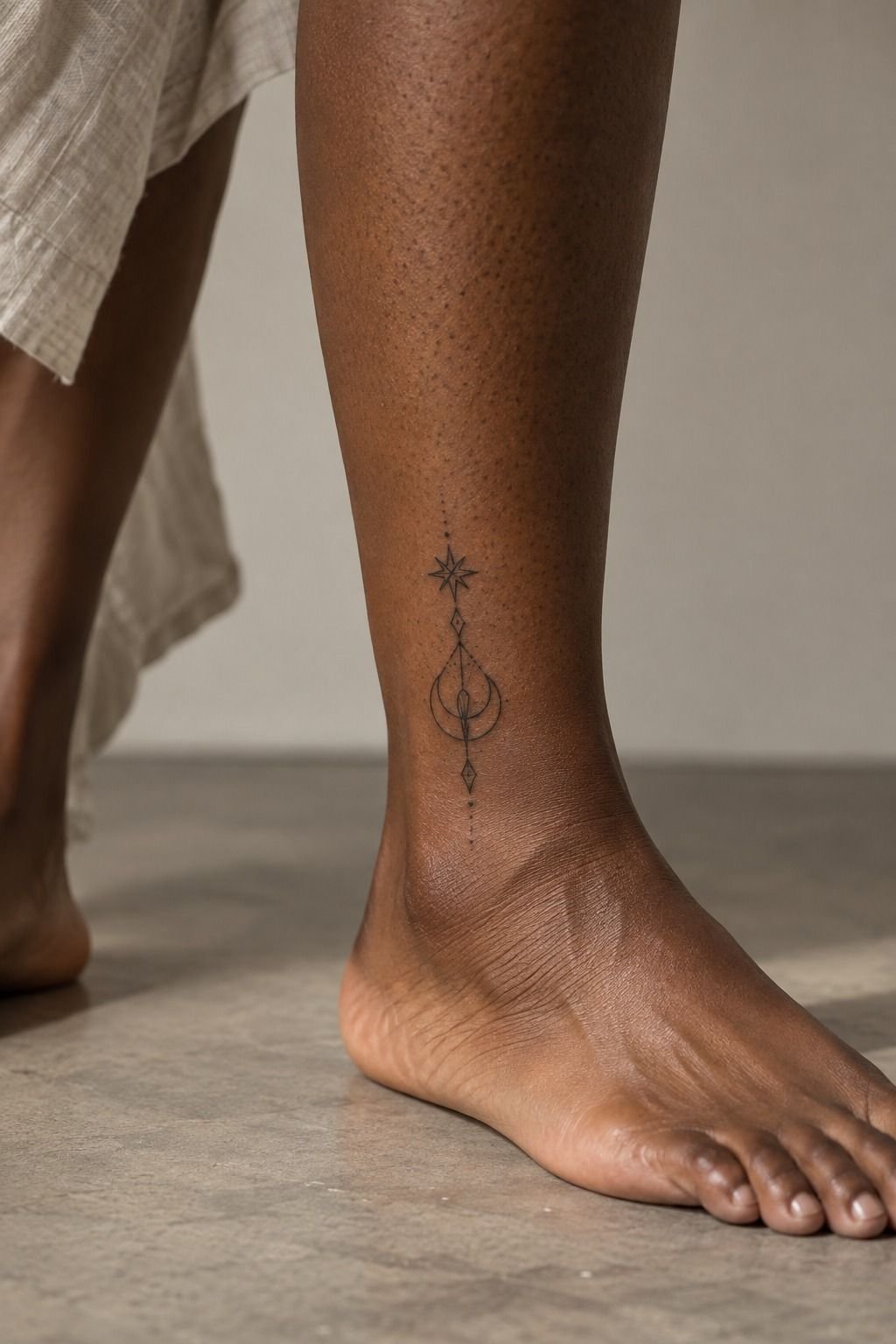
Aftercare starts with listening to your tattoo artist’s instructions. Wash gently when advised, pat the area dry, and apply a light layer of the recommended moisturizer. Fragrance-free lotion is often easier on healing skin than a heavily scented product, but your artist’s guidance should lead.
Keep direct sun away from fresh ink, and avoid swimming while the surface heals. Your tattoo may look settled after about 2 to 3 weeks, but complete healing can take around 2 to 3 months. Don’t judge the final line quality while the skin is still shiny, flaky, or tender.
Fine lines can widen over time, especially when the design is placed where skin folds, receives friction, or gets repeated ultraviolet exposure. Broad-spectrum sunscreen helps protect healed work once your artist says the skin is ready. I’ve watched a crisp ankle piece hold its shape far better after its owner stopped treating sunscreen as optional.
Solid black areas generally age more reliably than extremely faint marks, but placement still matters. Your artist can balance a delicate outline with a small black anchor so the composition remains readable. I’d never chase the thinnest line simply because it looks dainty in a fresh photograph.
And if you notice unusual heat, spreading redness, or worsening pain, contact your artist or a medical professional promptly. Your job is simple: keep the area clean, protected, and undisturbed. For planning future work, this geometric tattoo pattern reference can help you choose a design with enough spacing to age gracefully.
What You’ll Need Before Your Appointment
You’ll need a clear concept, a placement you’ve tested, and an artist whose healed portfolio matches your goal. Bring references for line behavior, symbolism, and body placement. Printed reference images can help you compare details without endlessly scrolling, especially when your phone makes every fresh tattoo look sharper than it will in real life.
You’ll also need realistic budget expectations. Typical US pricing varies by artist and region.
A shop minimum may sit around $50 to $100, while hourly rates often fall near $100 to $250. A small Fineline Geometric Tattoo may land around $100 to $300, but the artist, placement, complexity, and session length all affect the quote.
Your artist may quote by the piece instead of by the hour. That’s normal.
Ask what is included, whether a consultation is charged, and how revisions work. I’d choose a skilled artist with healed examples over the cheapest appointment, because a clean stencil and thoughtful placement protect your result before the needle touches your skin.
If you’re still comparing references, save this geometric tattoo artist search guide and review each portfolio slowly. Look for crisp joins, stable curves, clean healing, and designs that suit different body shapes. Your appointment should feel deliberate, not rushed.
Why Fineline Geometric Tattoos Keep Pulling People In
Fine-line geometry has become more visible because it gives people a way to wear symbolism without committing to a large, heavily shaded image. The style can be minimal or ornate, delicate or edgy, depending on line weight and spacing. I think its appeal comes from that range.
You can choose something quiet and still make it unmistakably yours.
The style also photographs well, which helps explain its steady presence on Pinterest. A clean circle, sharp triangle, or flowing arc reads instantly in a saved image.
But the photograph is only the beginning. Your body curve, skin tone, daily friction, and aftercare decide whether the design remains crisp.
A stylish reference isn’t automatically a good plan for your anatomy.
I’ve gone back and forth on ultra-thin linework. It can look ethereal when it’s fresh, but the most successful tattoos I’ve seen leave enough visual weight to survive time.
Aged black ink often keeps the structure grounded, while pure micro-detail can fade into visual static. That doesn’t mean every piece needs bold blackwork.
It means your artist should design for the healed tattoo, not the appointment photo.
And personal meaning still matters more than trend value. Ask why you want the geometry, then decide which part deserves the strongest line.
Is it the orbit, the animal, the coordinate, or the central triangle? Once you know that, your choices become easier. Browse geometric tattoo gold references for contrast ideas, but keep your own story at the center.
The Mistake I’d Avoid After Designing Eleven Geometric Tattoos
I’d avoid treating “fine line” as a promise that every design can be made tiny. That assumption caused one of my early sketches to lose its best detail.
The reference looked refined, but the skin needed more space between the arcs. I enlarged the main form, removed two interior marks, and the finished tattoo became far more readable.
Your artist’s healed work should carry more weight than a fresh Instagram post. Ask to see images taken after the redness and surface shine are gone.
Healed portfolio photography tells you whether the artist understands line spacing, skin movement, and long-term contrast. A fresh tattoo can hide uneven saturation and crowded details.
I’d also avoid choosing a placement only because it looks good in one mirror photo. Your ankle, wrist, sternum, and spine all move differently.
Test the stencil while you stand, sit, bend, and relax. Your body isn’t a flat page, and a good artist will adjust the geometry to follow it.
The most useful question is simple: will I still understand the design when the lines soften slightly? If the answer is no, remove detail before the appointment. A simplified stencil may feel less impressive for five minutes, but it gives your tattoo a better chance of staying sharp.
Your design can be vibrant without being crowded, personal without being literal, and bold without becoming heavy. That balance is where the style feels timeless. I’d rather own a clear geometric symbol for decades than a complicated sketch that only worked during its first week.
The Questions I Get Asked Most
How much does a Fineline Geometric Tattoo usually cost?
A Fineline Geometric Tattoo usually costs about $100 to $300 in the US, though a shop minimum may be around $50 to $100 and hourly rates often run $100 to $250. A clear quote depends on your artist, region, placement, size, and detail.
Are Fineline Geometric Tattoos a good idea for a first tattoo?
Yes, they can be a meaningful first tattoo when you choose a tolerable placement and a design with enough spacing. Your artist should show healed linework, explain aging, and help you avoid cramped details. A thoughtful placement matters more than choosing the smallest possible design.
How do I choose a tattoo artist for Fineline Geometric Tattoos?
Review the artist’s portfolio for clean linework, healed photos, balanced geometry, and work on skin tones similar to yours. Visit a hygienic studio and ask direct questions about stencil revisions and aftercare. This geometric tattoo artist guide can help you organize your search.
How much do Fineline Geometric Tattoos hurt?
Pain varies by person and placement. Ribs, feet, hands, and sternum are often more painful, while the forearm, thigh, and shoulder tend to be more tolerable. A relaxed appointment helps, so eat beforehand, hydrate, and tell your artist when you need a short pause.
How long does a Fineline Geometric Tattoo take to heal?
The surface usually heals in about 2 to 3 weeks, while complete healing can take roughly 2 to 3 months. Wash gently, moisturize as directed, avoid swimming during early healing, and protect healed ink from strong sun. Your artist’s instructions should guide each stage.
What’s the best placement for Fineline Geometric Tattoos?
The forearm, thigh, and shoulder are practical choices because they’re often more tolerable and easier to protect. Your ankle or sternum can create a striking result, but those areas may hurt more and experience extra movement or friction. Study this geometric line tattoo guide before choosing.
Where I’d Start First
If I had to pick one step, I’d start with the placement stencil. Your body curve decides whether every circle, triangle, and arc can breathe, and a perfect drawing can fail when it ignores movement.
Ask for healed examples, test the stencil standing and sitting, then save the design for later. That’s the crispness insurance.