Modern Mehndi Designs Front Hand stay crisp longest when the artist protects negative space, uses confident line weight, and accounts for friction. I’ve learned that after a delicate palm piece blurred faster than I expected. A striking henna-inspired pattern doesn’t need every mark to be tiny; bold anchors give fine-line ink space to breathe. Here are 13 personal directions, plus aftercare choices that help them stay readable.
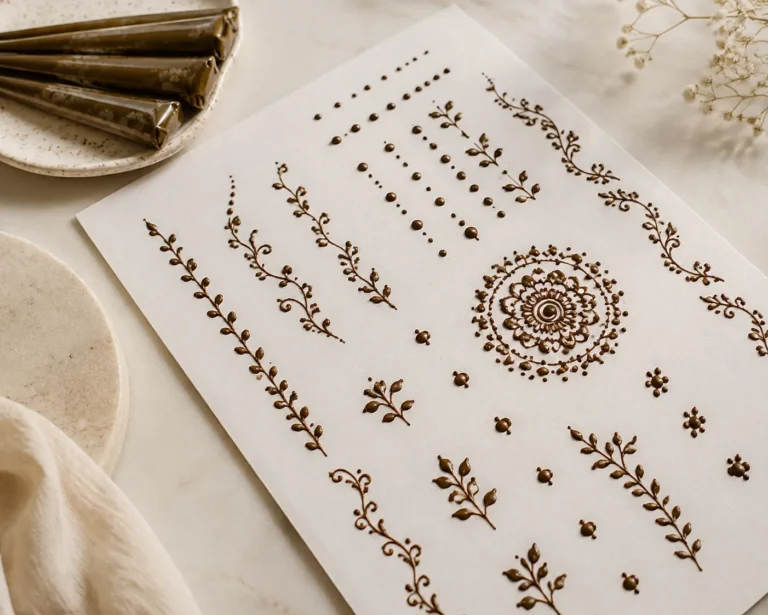
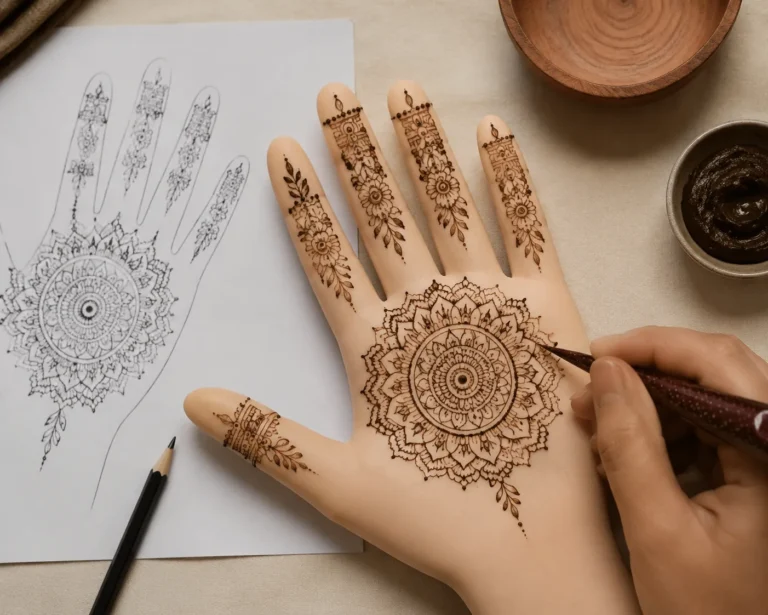
- ✓ Minimal Mandala Centerpiece With Fine Linework
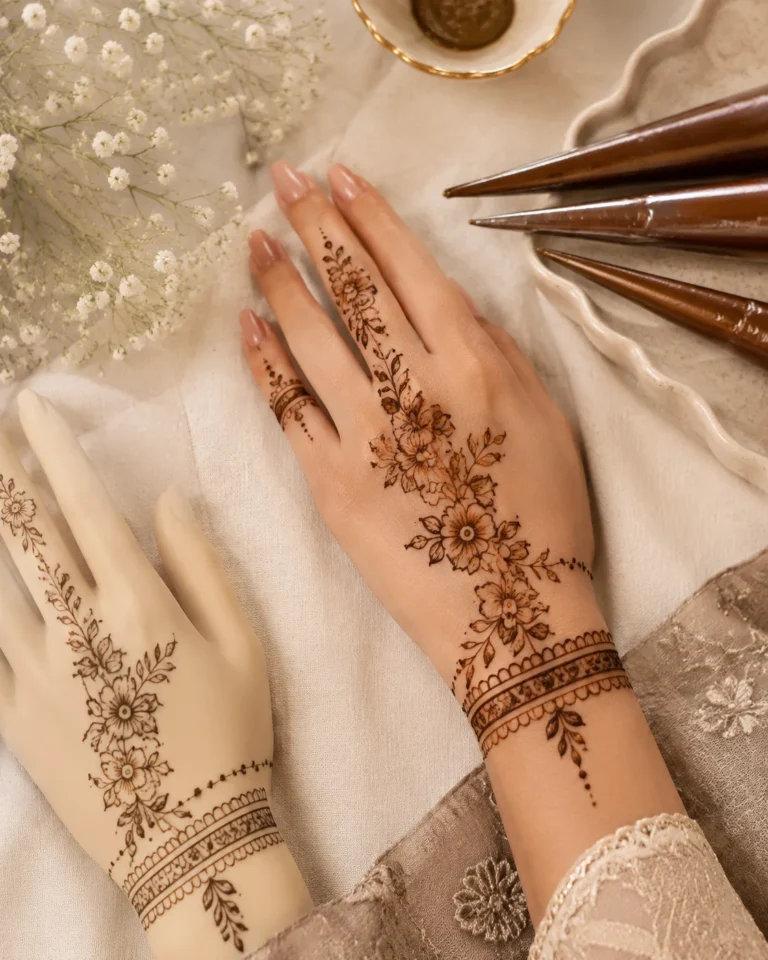
- ✓ Bold Botanical Vines Across The Front Palm
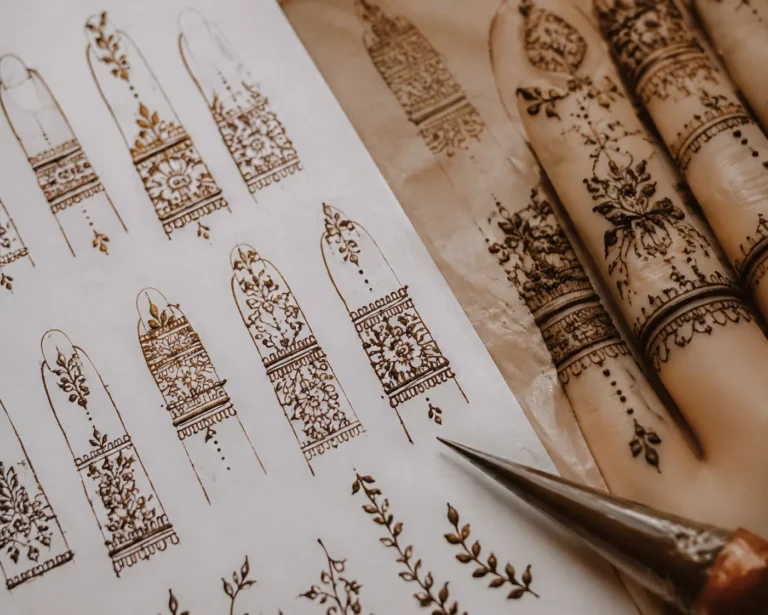
- ✓ Delicate Finger Mehndi With Geometric Accents
- Minimal Mandala Centerpiece With Fine Linework
- Bold Botanical Vines Across The Front Palm
- Delicate Finger Mehndi With Geometric Accents
- Contemporary Arabic Flow Along The Front Hand
- Intricate Bracelet Band With Negative Space
- Symbolic Moon And Stars On The Palm
- Sharp Contemporary Grid Mehndi For Front Hand
- Elegant Half Mandala With Fingertip Details
- Dainty Lotus Trail Along The Wrist
- Ornate Peacock Motif Across The Front Palm
- Edgy Blackwork Mehndi With Crisp Symmetry
- Playful Modern Dots And Curved Lines
- Sacred Sun Design With Flowing Fingerwork
1Minimal Mandala Centerpiece With Fine Linework
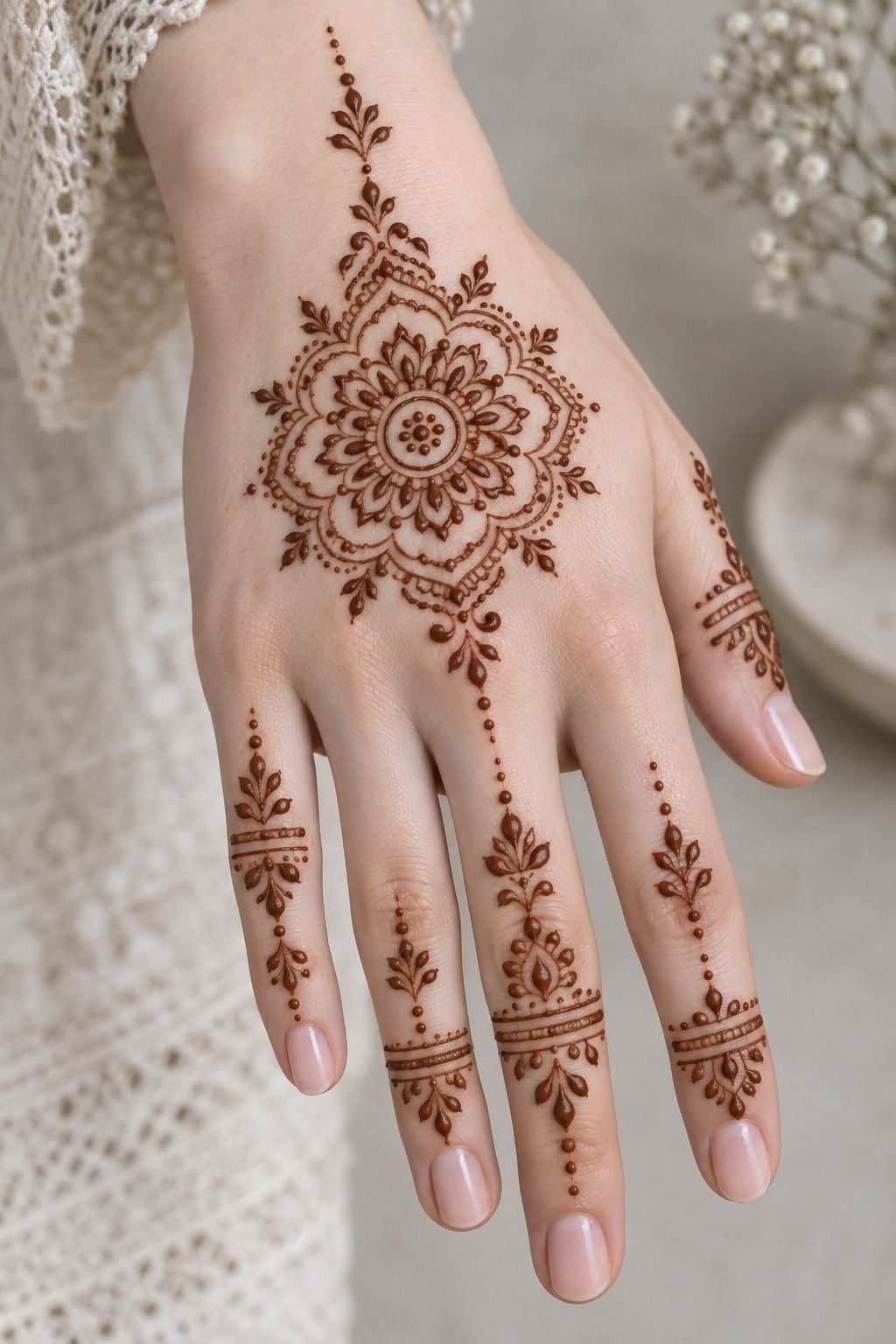
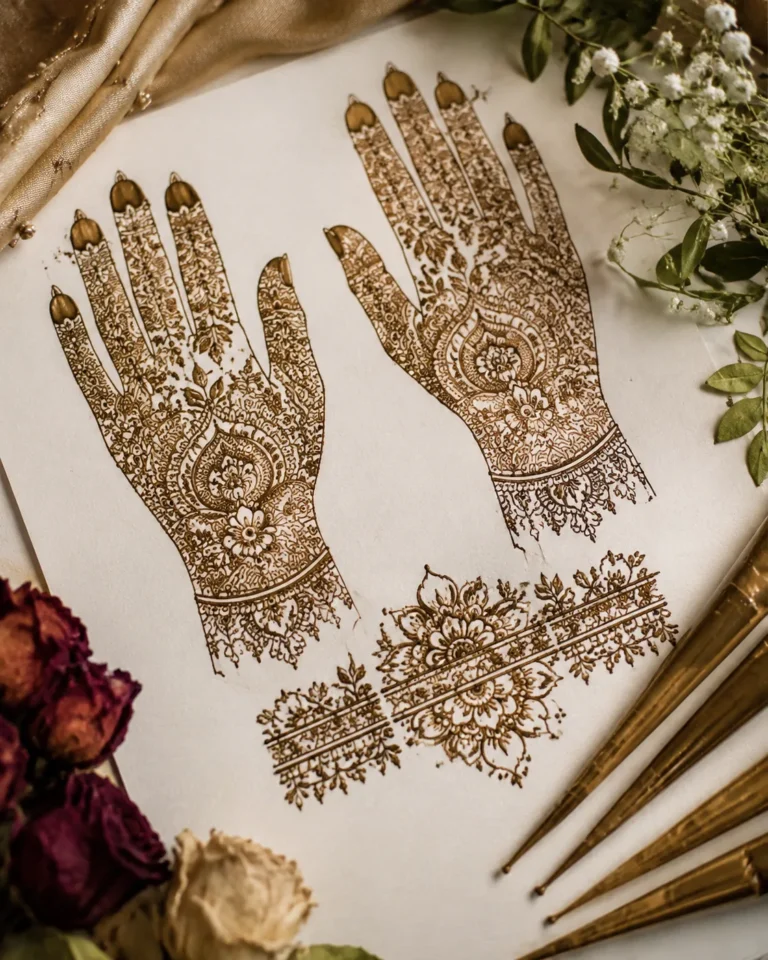
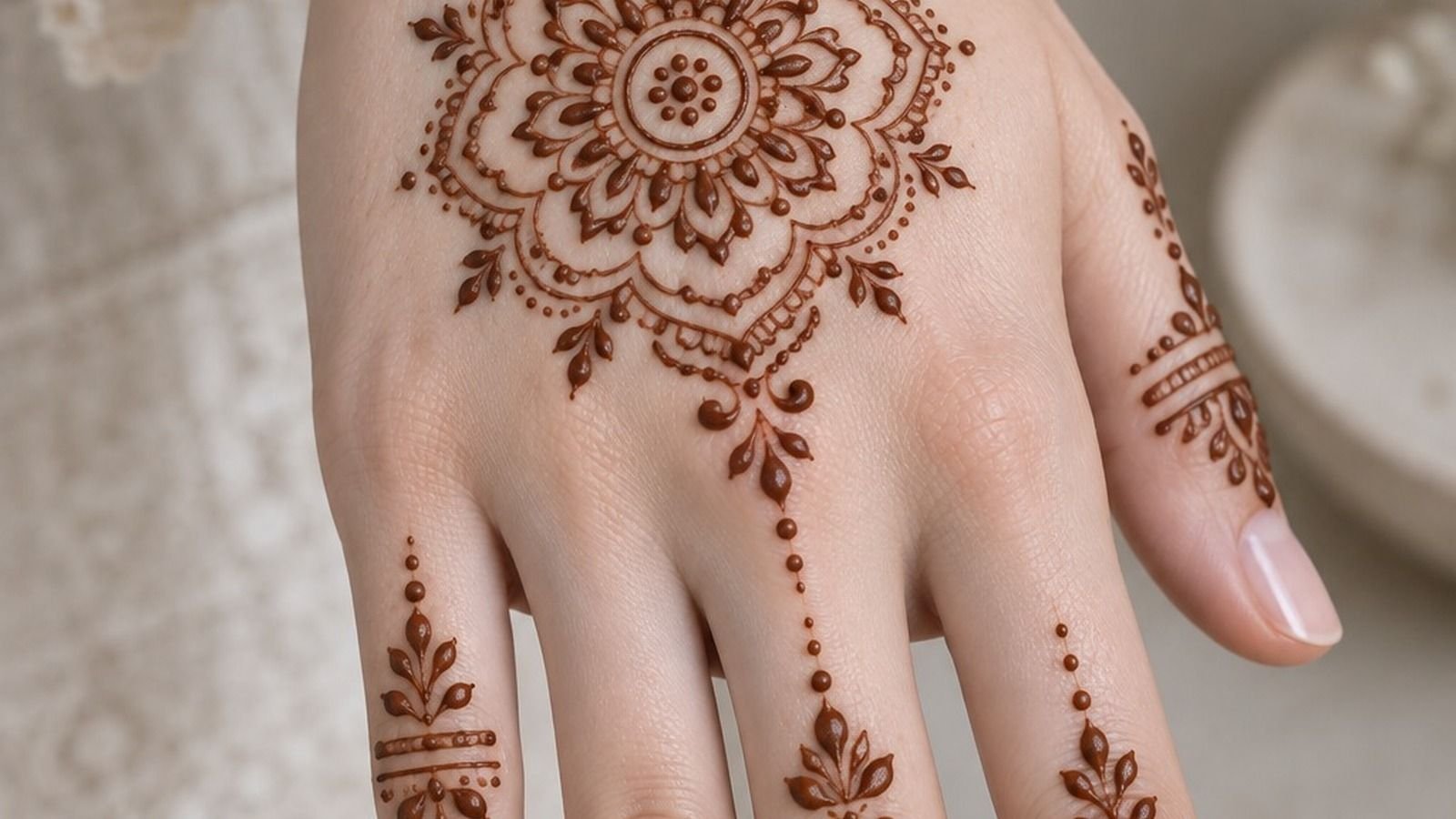
The reference image keeps the mandala on the back of the hand, with fine arcs running toward the fingers and reddish-brown paste sitting in raised, deliberate lines. The effect is intricate but controlled. If you’re studying Latest Mehndi Designs Unique Front Hand, notice how much skin remains open around the center.
That open field keeps a small symbol legible.
For a permanent version, don’t copy every paste filament with a needle. I’d ask for single-needle linework in the petals, then a slightly stronger contour around the center. When every stroke is equally thin, the mandala loses its hierarchy as your skin changes.
Your artist can place the same design on the palm-facing side, but I’d keep the densest detail above the deepest crease. And if you’re choosing between a full fill and a small center, choose the open version; it looks more personal and won’t turn into a reddish blur. That distinction matters!
Use brown-black tattoo ink for the permanent interpretation, not cosmetic henna paste, and follow the studio’s aftercare. Bring the image, a measured tracing of your hand, and one sentence about what the mandala means to you. That keeps the final piece symbolic instead of merely ornamental.
2Bold Botanical Vines Across The Front Palm
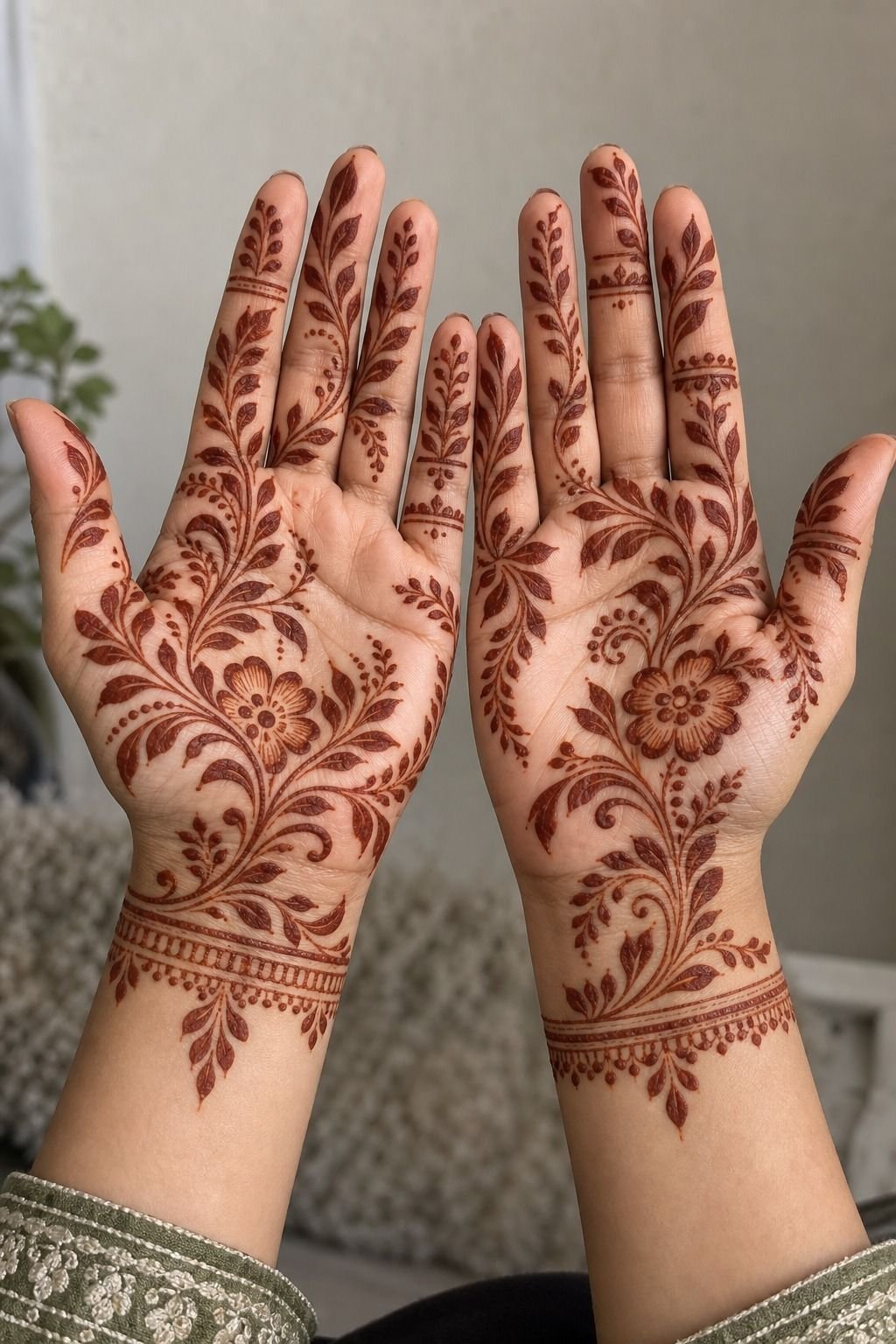
Both palms in the reference carry branching vines, small leaves, and reddish-brown mehndi paste across a medium-golden skin tone.
3Delicate Finger Mehndi With Geometric Accents
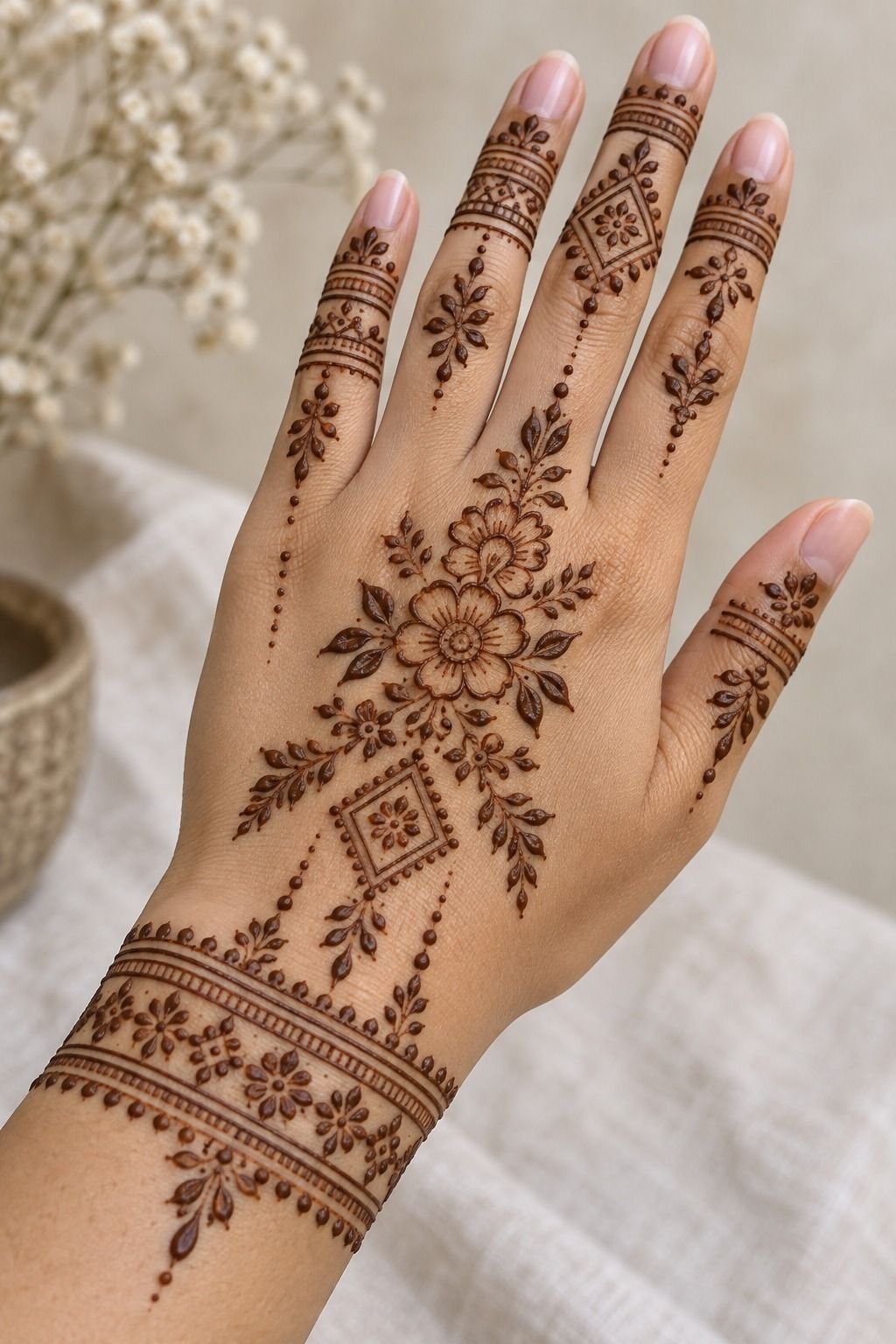
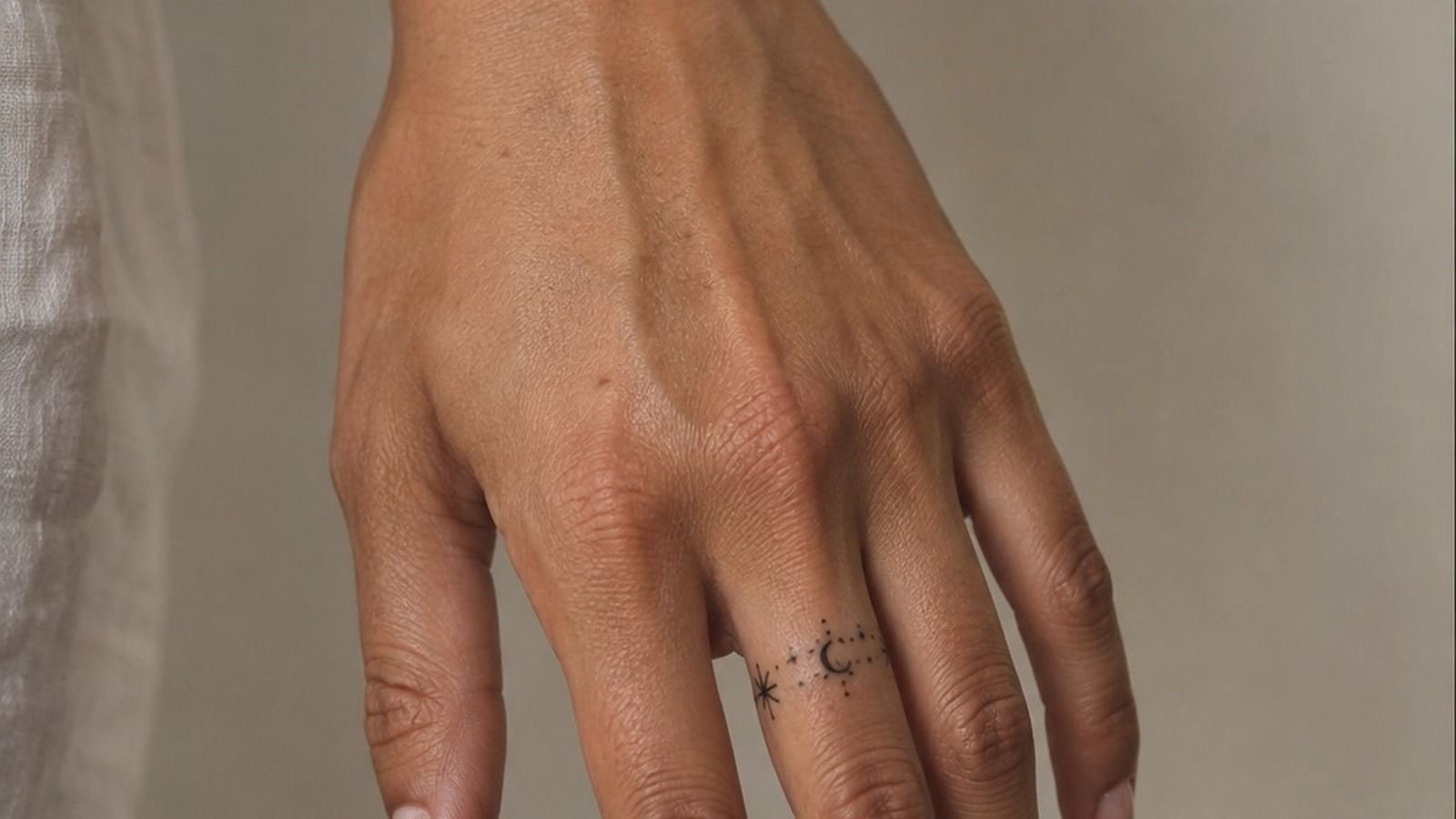
The image shows a hand and wrist on a medium-olive skin tone, with fine marks on the fingers and small geometric interruptions near the wrist. It suits Front Palm Mehndi Designs Simple because the pattern is dainty without feeling unfinished. The sharp little angles keep the design from becoming overly sweet.
Finger tattoos need restraint. I’d use fine-line needle work for the tiny diamonds, then repeat one shape at the wrist so your eye has somewhere to land. Identical bands around every finger can blur into one dark strip, especially where the skin folds and moves.
Your artist should check each finger from several angles before marking it. When you’re holding your hand naturally, the lines can look different than they do when your fingers are spread. Keep the wrist accent understated, and don’t push every motif toward the knuckle.
For a permanent translation, geometric black ink will usually read more clearly than a pale reddish tone. I wouldn’t choose this idea if you want a large, heavy statement; it works because the pattern stays small.
Compare it with simple mehndi designs front hand easy before your consultation. Clean, fast, and memorable!
4Contemporary Arabic Flow Along The Front Hand
The reference follows an Arabic-inspired curve from the fingers toward the palm, with open sections between the sweeping leaves. That makes the style sleek and graceful rather than dense. For Stylish Mehndi Designs For Front Hand, this is the best choice when you want your tattoo to look like it is moving even while your hand rests.
The main Arabic-inspired curve should be drawn first. Everything else is supporting movement. Ask your artist to taper the final leaf instead of ending with a blunt dot, because a hard stop can make the design feel cut off.
On golden-tan skin, reddish-brown paste gives the reference its soft contrast, while permanent ink needs a stronger value. You can use a muted black-brown, but don’t make every leaf identical. One slightly larger leaf near the wrist gives the flow a graceful focal point.
I went back and forth on symmetry here. I’d skip a mirrored pair and keep one side more open; that imbalance is what makes the motif expressive.
A wrist-to-finger taper will also age more cleanly than a packed band. See these front hand mehndi designs before you settle on the final curve.
This is where restraint wins!
5Intricate Bracelet Band With Negative Space
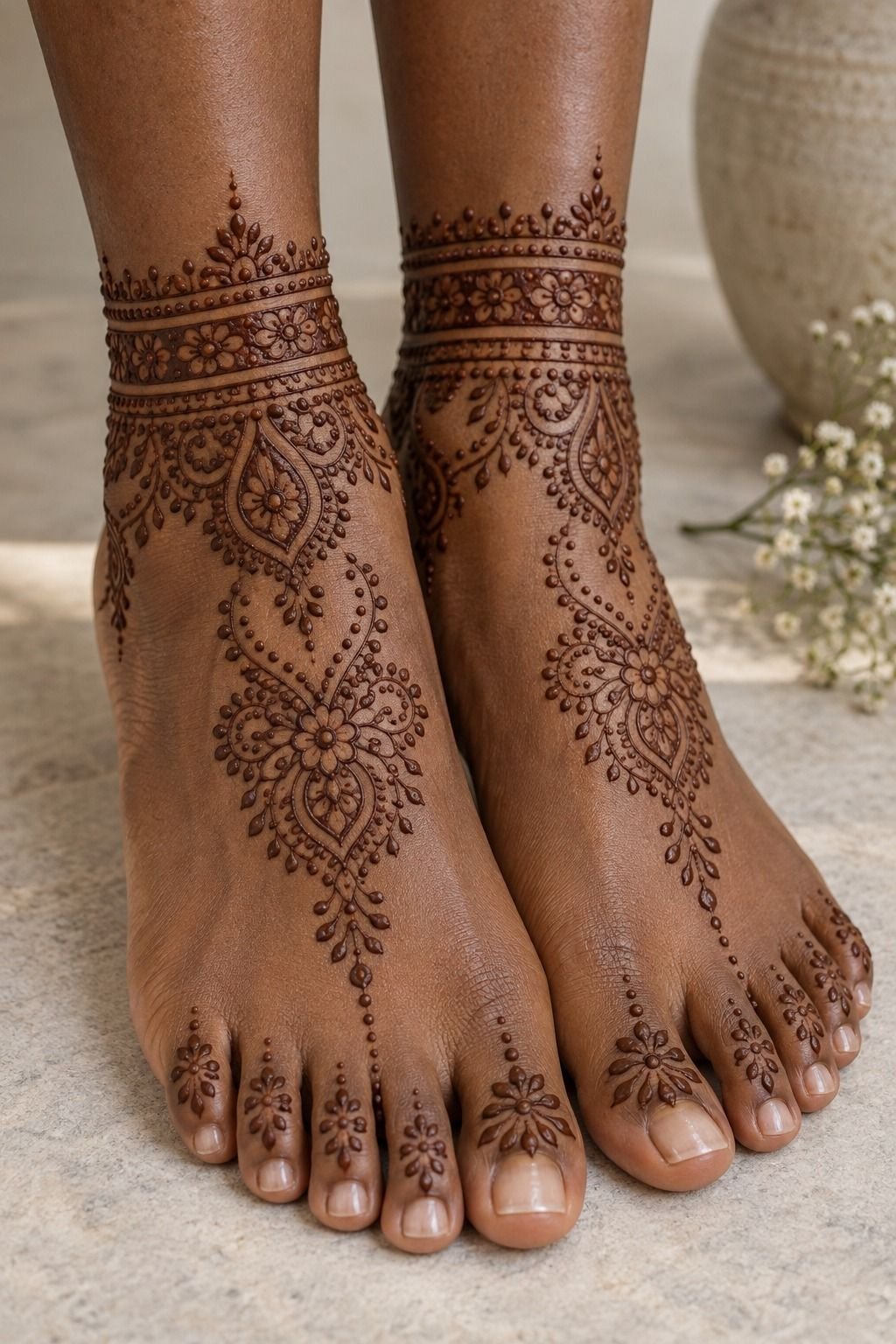
The reference image places the intricate band around feet and ankles on deep-brown skin, but the same structure translates well to a wrist or front hand. It has repeating arches, small openings, and a clear border. Trending Mehandi Designs often lean dense; this one stays edgy because the empty intervals do part of the work.
A good ankle bracelet band has a beginning, a center rhythm, and a clean return. If you’re moving it to your hand, ask for a narrower version that stops before the deepest wrist crease. A full wrap can look polished at first and then become difficult to read as the skin flexes.
The deep-brown skin in the image makes the reddish paste appear rich and graphic. For permanent ink, your artist can use deep-brown skin as the reference for contrast while adjusting the line weight to your own undertone. Don’t copy the width blindly; measure your wrist or hand in inches or centimeters first.
I’d skip a solid, uninterrupted ring. Negative-space intervals make the band feel more personal, and they help separate each motif after the finest lines soften. Browse stylish mehndi designs for front hand for pattern rhythm, then ask your artist where friction will be highest.
6Symbolic Moon And Stars On The Palm
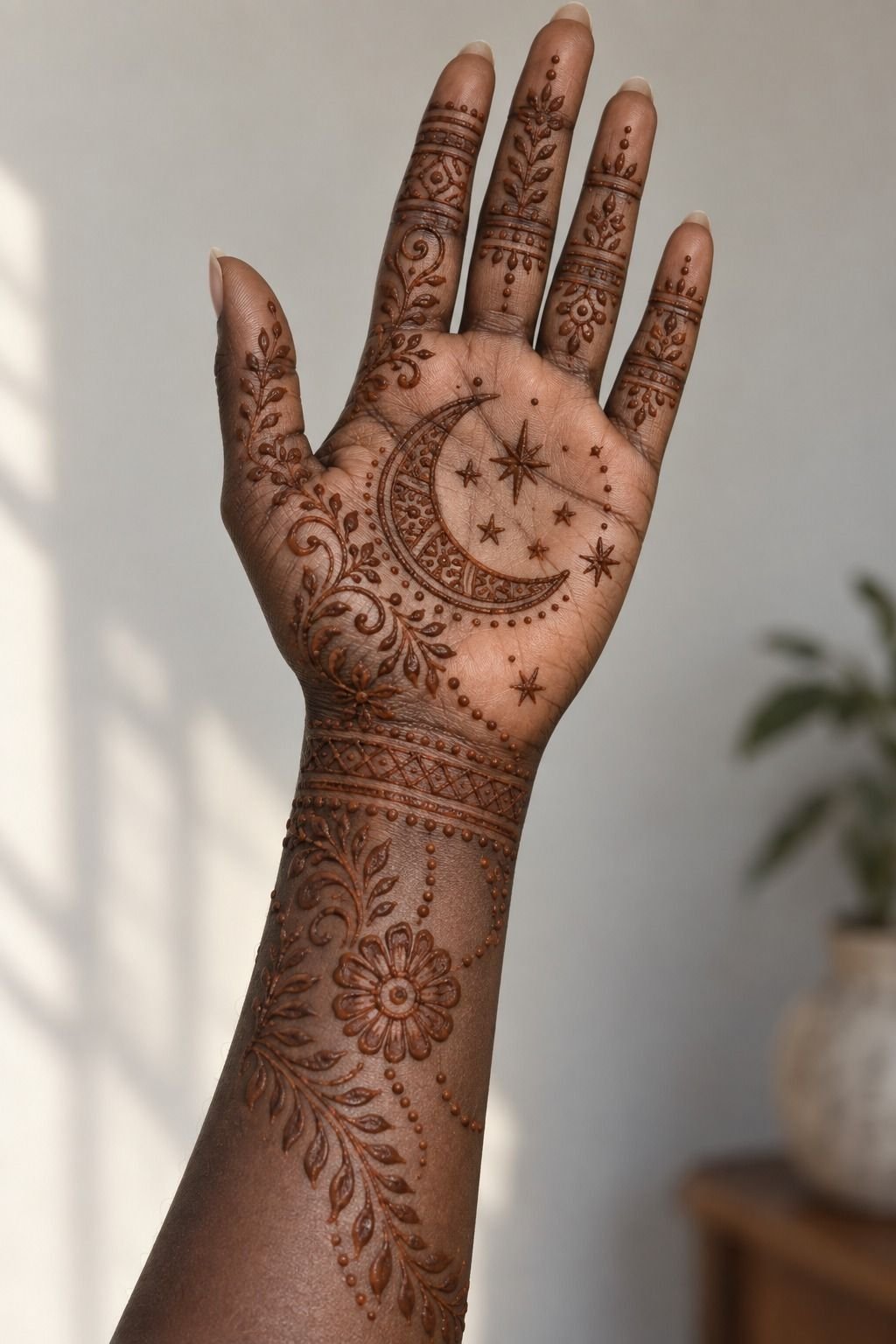
This reference moves from a forearm onto the hand of a person with deep-ebony skin, using a moon, tiny stars, and curved framing marks. The concept feels sacred and symbolic without needing a large scene. Fancy Mehndi Designs can become crowded quickly, so this quieter arrangement has more emotional weight.
Make the moon-and-star symbols the only obvious focal point. Your artist can scatter a few small points around them, but I wouldn’t add clouds, flowers, and extra constellations to fill every gap. The open palm gives the design an ethereal pause.
The deep-ebony skin shown in the image makes the reddish-brown paste visible through contrast and texture. Permanent work should be designed around your own skin, not copied from a screen. You may prefer black ink with carefully spaced marks, while your artist may recommend a different value for clarity.
If you’re placing it on the front hand, keep the moon away from the deepest center crease. Palm-side placement needs a realistic conversation about friction, healing, and possible softening.
Use these modern mehndi designs as a style reference, but let your artist edit the smallest stars. Less can feel more meaningful.
7Sharp Contemporary Grid Mehndi For Front Hand
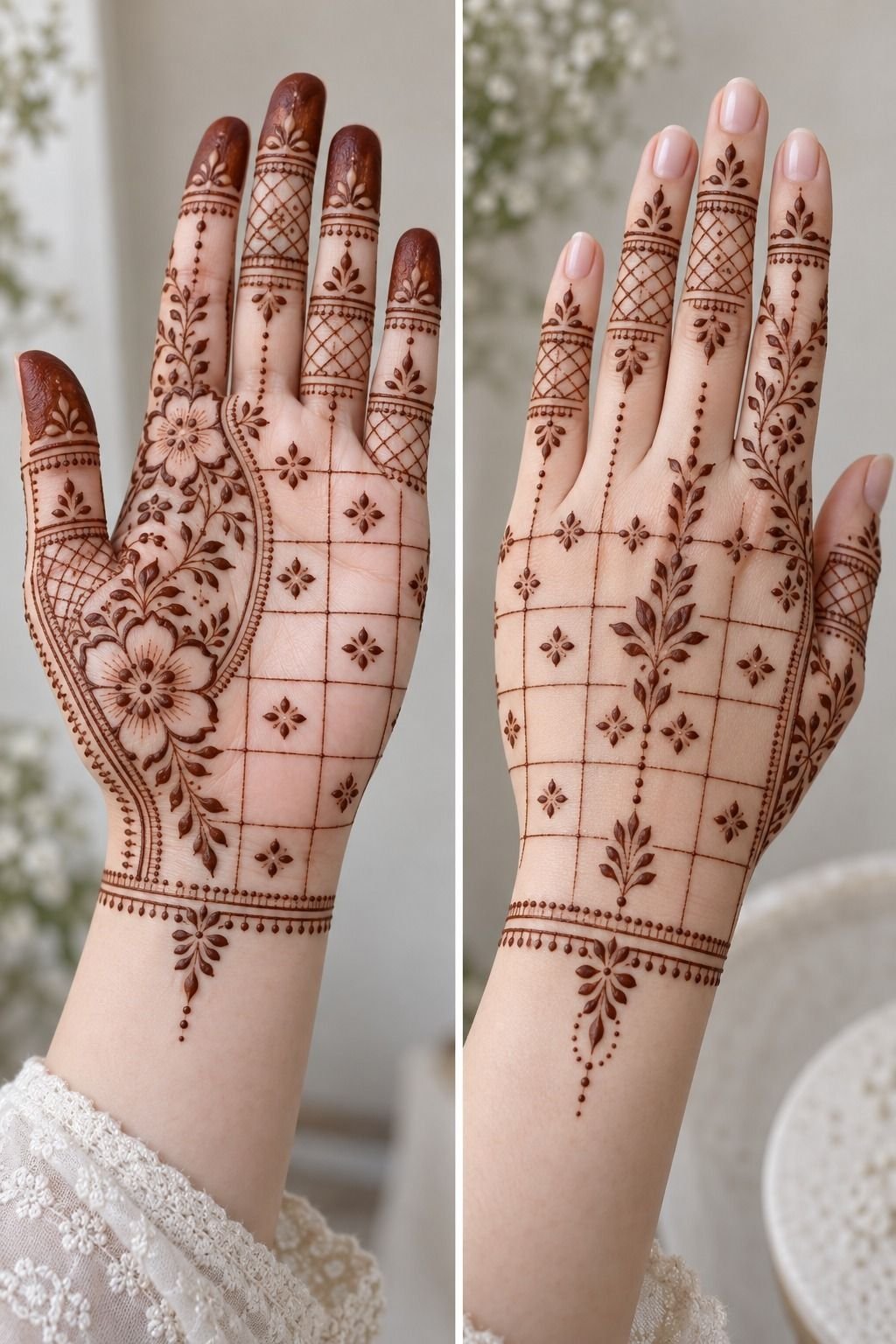
The image shows a back-of-hand design with a repeating grid across the fingers and a medium skin tone underneath. The structure is sharp, crisp, and powerful because the lines have a visible order. If you’re drawn to a modern grid, decide first whether you want symmetry or a deliberate break.
A geometric grid needs consistent spacing, but it shouldn’t run identically across every finger. Leave one small interruption near the knuckles so your hand can move without making the pattern look rigid. And why fill every square when two open sections would create more contrast?
Your artist can stencil the layout, check it while your hand is relaxed, and then adjust for movement. I wouldn’t extend the grid all the way to every fingertip; the outer edge becomes noisy, and the central structure loses authority. A strong blackwork ink anchor near the palm is enough.
When you’re comparing references, look for healed photographs rather than only fresh ones. The front hand mehndi designs collection can help you compare layouts, but your final choice should account for your own hand shape. The best healed linework still looks deliberate after the skin settles.
That’s the whole point!
8Elegant Half Mandala With Fingertip Details
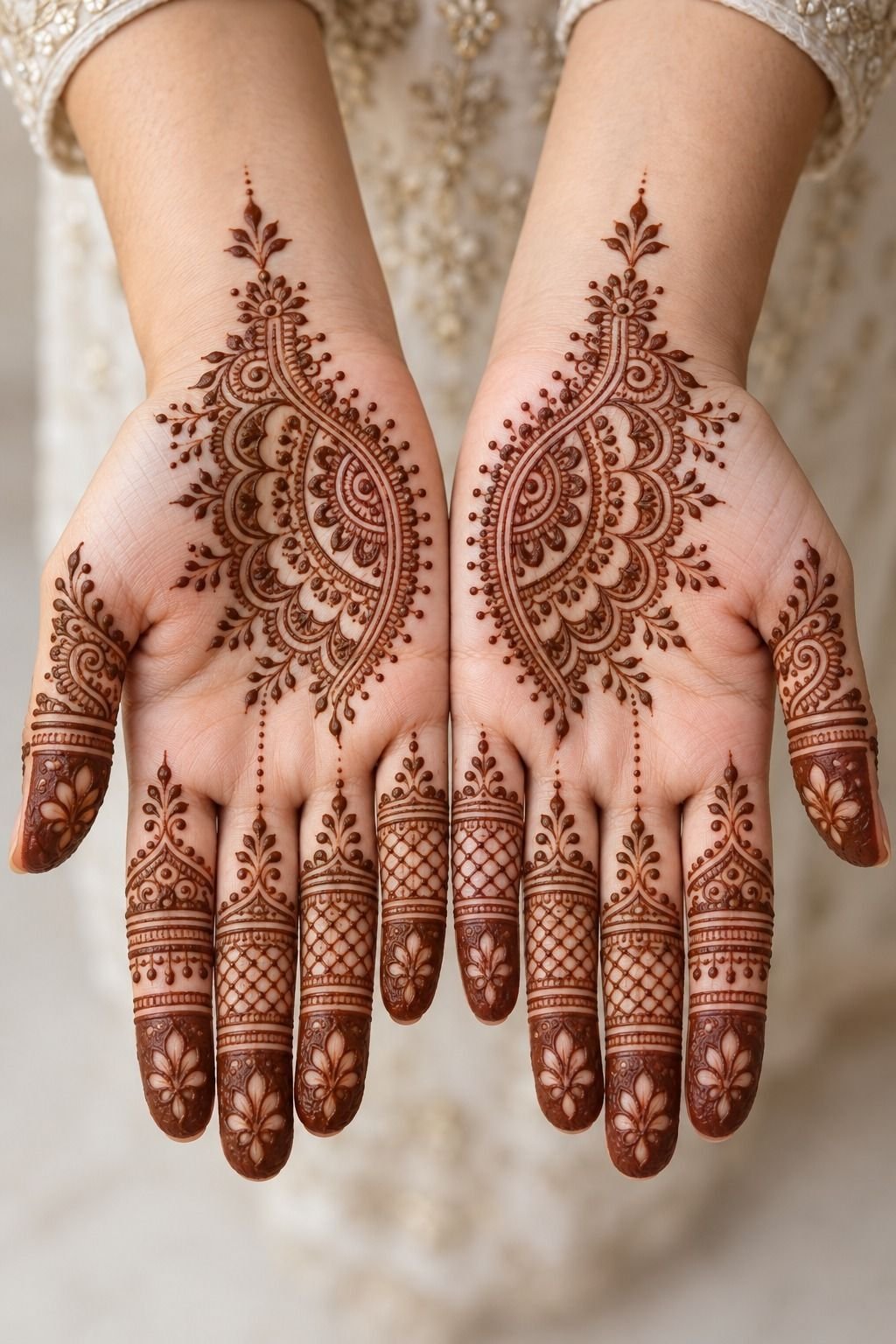
Both palms in the reference carry a half mandala, with fingertip details and repeated arcs on a medium-golden skin tone. The composition is elegant because it stops short of total coverage. For a classic front-hand statement, this gives you a recognizable center without turning the palm into one solid field.
Start with the half-mandala arc, then decide how many fingertips need detail. I prefer two or three decorated fingers and one quieter finger as a visual pause. When you’re choosing between a complete mandala and this half version, the half version is easier to personalize.
Your artist should photograph the stencil with your fingers both together and spread apart. The center may look balanced in one position and skewed in another. Use medium-olive skin references only as a color conversation, not as a reason to copy someone else’s contrast or line weight.
A small negative-space crescent near the wrist can keep the composition open. You don’t need a heavy outline around every petal. See 18 simple mehndi designs front hand you can copy fast for simplified structures, then ask your artist to make the key arc slightly stronger than the fingertip details.
9Dainty Lotus Trail Along The Wrist
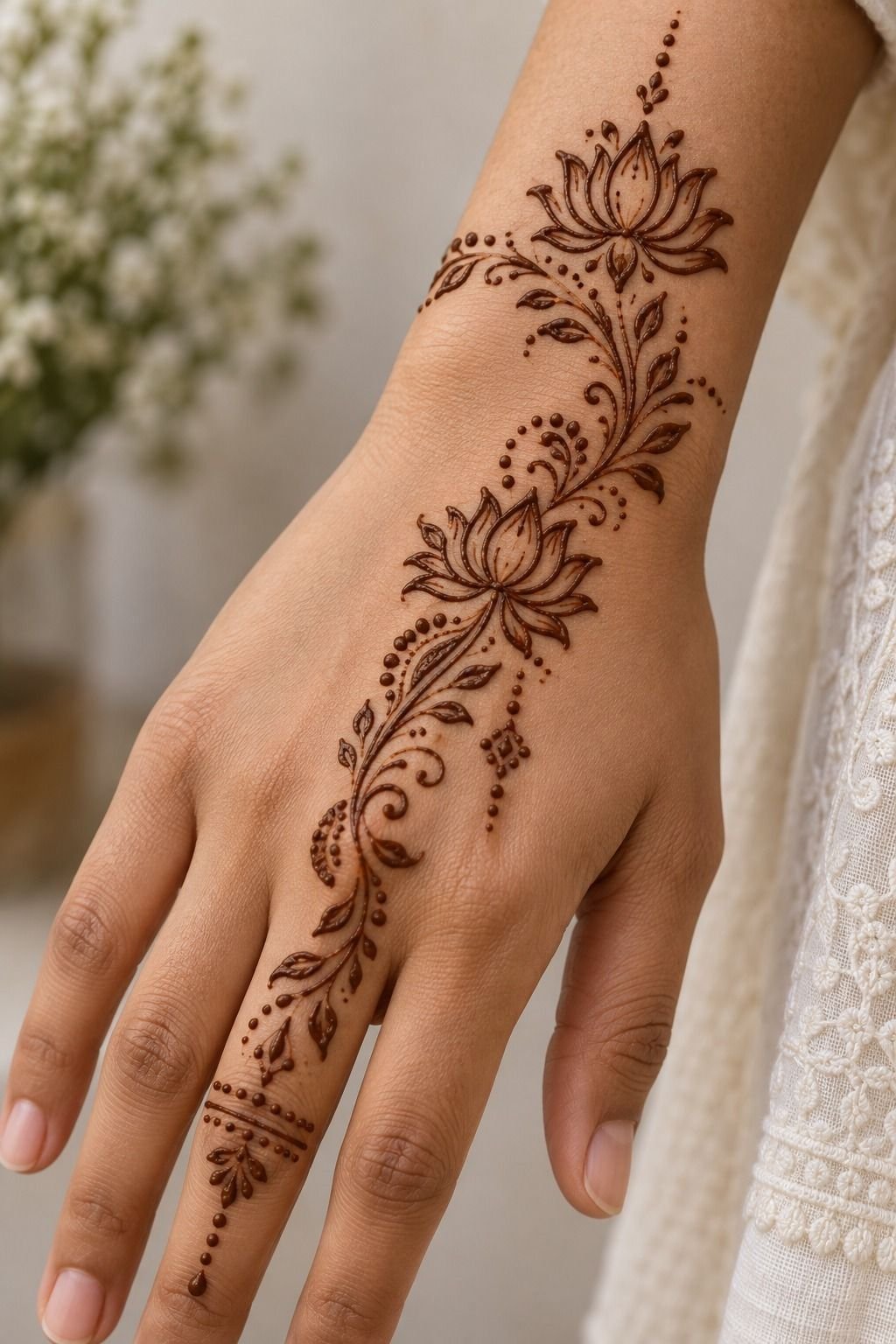
The reference follows a lotus from the hand toward the wrist on a medium-olive skin tone, with separated petals and a narrow trail. It feels playful and romantic without being overly ornate. A lotus works especially well when you want one meaningful symbol instead of an entire field of motifs.
Keep the lotus petal trail slightly irregular. Perfectly repeated petals can look stamped, while small changes in width make the flower more expressive. If you’re placing it on the front hand, let the stem follow the wrist’s natural direction rather than cutting straight across the crease.
The photo’s olive skin tone shows how much the reddish-brown paste depends on contrast. A permanent artist can translate that visual softness with a carefully spaced fine-line ink, but you should expect the thinnest marks to widen a little with time.
I’d skip centering the lotus directly on a deep moving crease. Choose a nearby patch of skin where the petals can remain distinct.
Your 15 stylish mehndi designs for front hand references can help with direction, but your own wrist movement should decide the final trail. Give your eye a pause.
10Ornate Peacock Motif Across The Front Palm
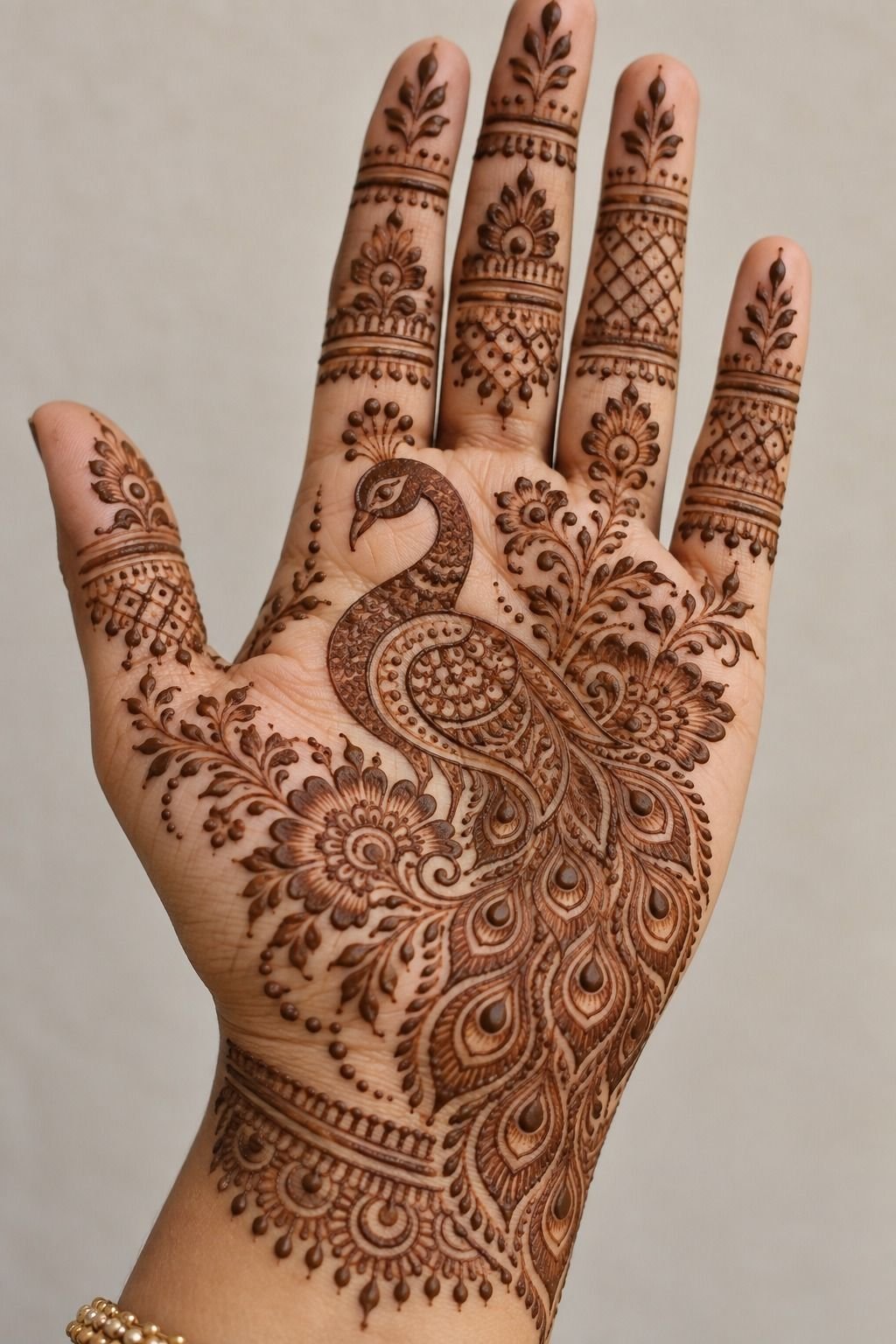
The reference shows a peacock across the fingers and palm of a golden-tan hand, with an ornate body, curved feathers, and a clear central eye. The image feels iconic and vibrant because the bird has a recognizable silhouette before you notice the smaller marks.
Make the peacock feather eye the strongest point. Your artist can build the surrounding feathers with open curls, but I wouldn’t fill every tail section with identical dots. The eye gives your viewer a place to land, while the surrounding lines provide movement.
On golden-tan skin, the reddish-brown paste reads with a traditional mehndi character. For permanent work, you may prefer a brown-black value with selective solid areas. Ask your artist to place the black fill only where it supports the silhouette, not where it merely fills leftover skin.
If you’re adapting this to one front hand, keep the head or eye away from the deepest palm crease. The beautiful mehndi design front hand collection can give you alternate peacock proportions, but a smaller design with a readable feather shaft linework will outlast a crowded copy. Strong shape first, detail second.
11Edgy Blackwork Mehndi With Crisp Symmetry
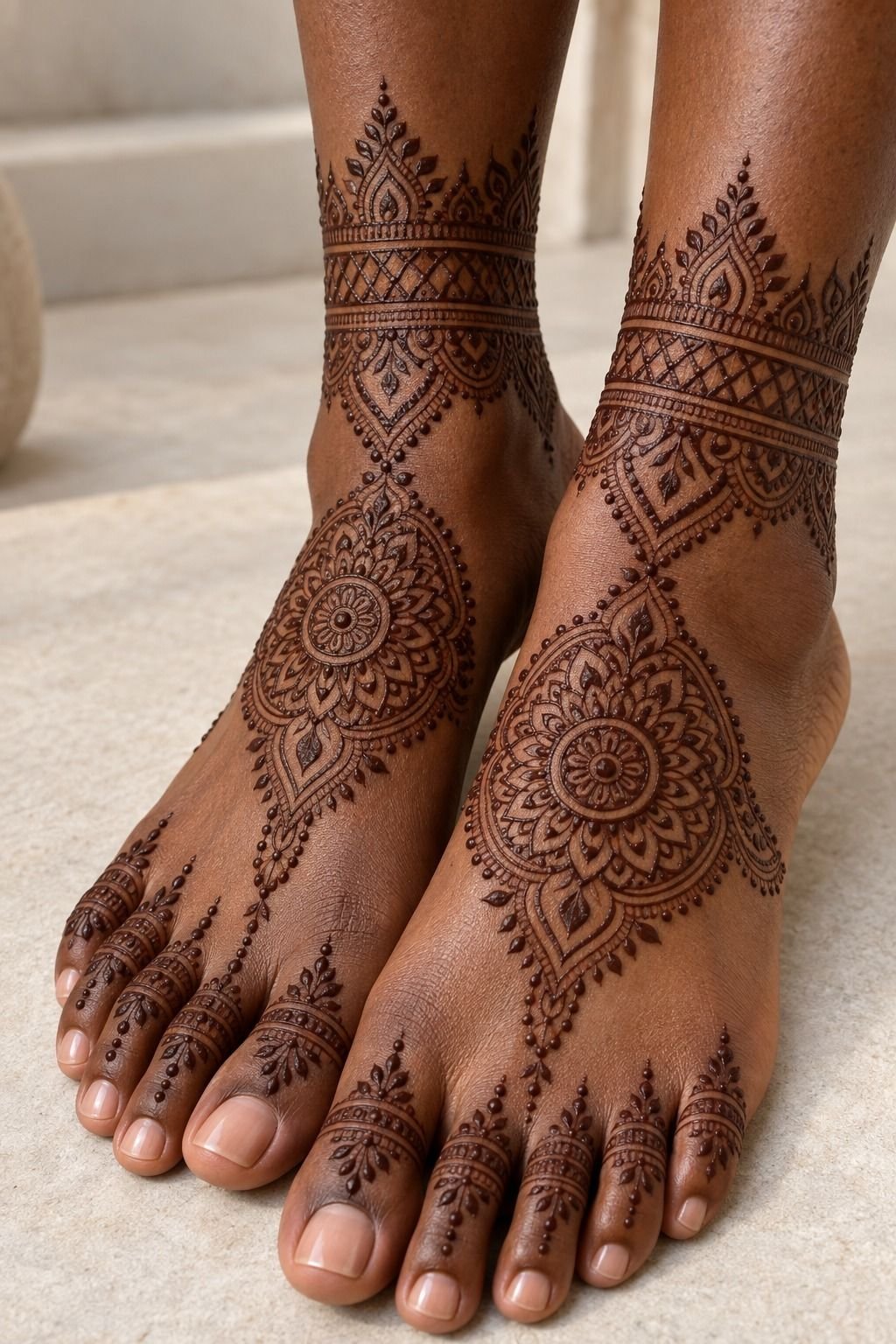
The reference places dense blackwork patterns around feet and ankles on deep-brown skin, with repeated symmetry and strong dark sections.
12Playful Modern Dots And Curved Lines
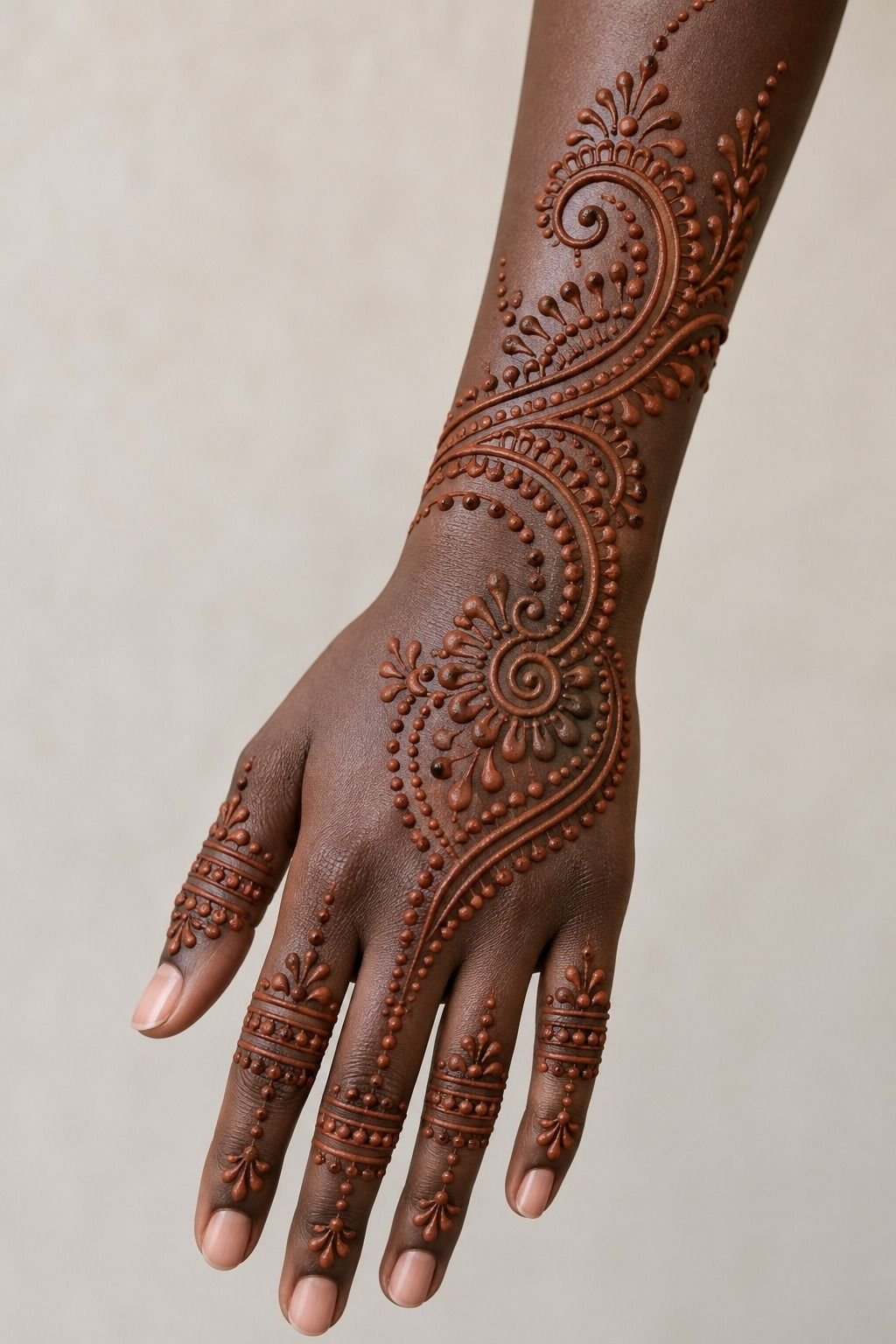
The reference shows curved lines and dot clusters moving from a forearm onto a hand with deep-ebony skin. The pattern is playful and whimsical because the marks vary in scale. It doesn’t pretend to be perfectly measured, but the curves still need a clear direction.
Start with one dotwork pattern as the visual anchor. From there, your artist can add two or three curved trails, leaving enough distance between them for each line to remain visible. Random dots without a center can look unfinished, so I wouldn’t scatter them evenly across the entire hand.
The deep-ebony skin in the photo gives the reddish-brown paste a strong visual presence. For a permanent translation, use deep-ebony skin references only to discuss contrast, then let your artist choose an ink value that suits you. Your design should be personal, not a color imitation.
If you’re placing this on the front hand, keep the longest curve away from the most active crease. Curved linework looks best when it follows movement instead of fighting it. See modern mehndi designs for more open compositions, and ask for a few stencil versions before the needle starts.
One sharp anchor is enough!
13Sacred Sun Design With Flowing Fingerwork
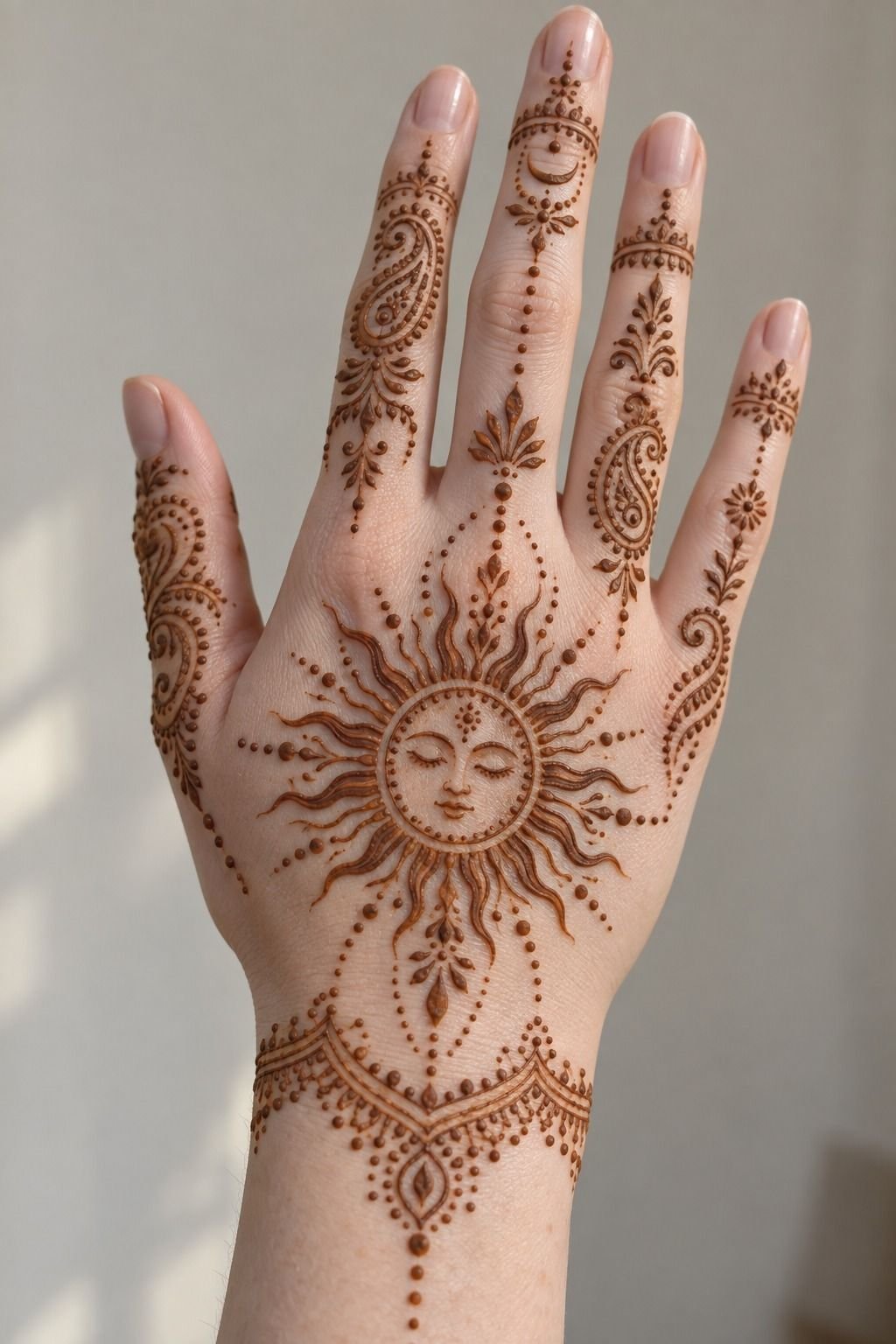
The reference places a sun on the back of a lighter-toned hand, with rays moving toward the fingers and flowing marks between them.
Why Does the Negative-Space Rule Age Better?
I used to think the most impressive mehndi-inspired tattoo was the one with the most detail. Then I watched a delicate palm design lose its smallest loops while a simpler symbol stayed readable.
The lesson was uncomfortable, but useful: open skin isn’t unfinished. It gives the important marks somewhere to stand.
My second mistake was treating a fresh tattoo as the final result. Fresh ink can look dark, sharp, and almost painted on.
After healing, the surface settles, the lines soften, and the design has to carry itself without that fresh intensity. Now I ask to see healed tattoo photographs before I commit, especially when a design depends on tiny finger details.
I also used to ignore friction because the reference image looked so convincing. Hands, palms, feet, and fingers work constantly, and they don’t behave like still paper.
If you’re choosing between a dense palm and a slightly smaller composition, I think the smaller one is usually the more daring decision. It leaves room for age, movement, and your own skin to remain part of the design.
My rule is simple now: one strong silhouette, one meaningful detail, and enough brown-black ink to keep the structure readable. The rest can stay quiet. That approach feels expressive without being loud, and it gives your artist room to make a real judgment instead of tracing every mark mechanically.
The Questions I Get Asked Most
How much does a Modern Mehndi Designs Front Hand usually cost?
In the US, a typical shop minimum is about $50 to $100, while hourly rates often fall around $100 to $250. Your artist, region, size, placement, and session length will change the quote. Compare healed work, ask for a written estimate, and browse simple mehndi designs front hand easy before booking.
Are Modern Mehndi Designs Front Hand a good idea for a first tattoo?
Yes, if you choose a manageable front-hand placement and understand that hands can be sensitive and unpredictable. Clear lines and meaningful symbols are easier to assess than a crowded first piece. If you’re unsure, start with a simpler design and compare it with modern mehndi designs before choosing your final size.
How do I choose a tattoo artist for Modern Mehndi Designs Front Hand?
Choose an artist with a healed linework portfolio, clean stencil placement, and clear studio hygiene. Ask whether they regularly tattoo hands, palms, or fingers, because those areas need specific judgment. You don’t need the artist with the most dramatic feed; you need someone whose healed work still looks crisp.
How much do Modern Mehndi Designs Front Hand hurt?
Hands, feet, ribs, and the sternum are commonly more painful zones, while the forearm, thigh, and shoulder are often more tolerable. Your hands and feet may feel sharper because the skin is sensitive and constantly moving. Tell your artist if you need a pause, and don’t schedule around a rushed day.
How long does a Modern Mehndi Designs Front Hand take to heal?
Surface healing usually takes about 2 to 3 weeks, while complete healing can take about 2 to 3 months. Wash gently, moisturize as directed, and avoid strong sun and swimming during early healing. Don’t judge the final lines too soon; your tattoo can look different as the skin settles.
What’s the best placement for a Modern Mehndi Designs Front Hand?
The forearm is often more tolerable and gives flowing designs room to breathe, while the front hand is more visible and more exposed to friction. A forearm placement may suit fine detail better, but a palm or finger design can feel more personal. Discuss aging, visibility, and pain before choosing.
What color should I choose, and can I do it on a $500 budget?
For 2026, brown-black or deep black ink gives mehndi-inspired patterns the clearest long-term structure. A brown-black tattoo translation can echo reddish henna without relying on temporary paste.
A $500 ceiling may cover many single-session designs, but ask your artist first. Use cosmetic henna only for temporary practice, never a DIY permanent tattoo.
Where I’d Start First
If I had to pick one, I’d start with the Minimal Mandala Centerpiece. Its open center and stronger outer contour give your hand a readable focal point after the finest lines soften. Pin the mandala for later and compare it with these front hand mehndi designs before you book.