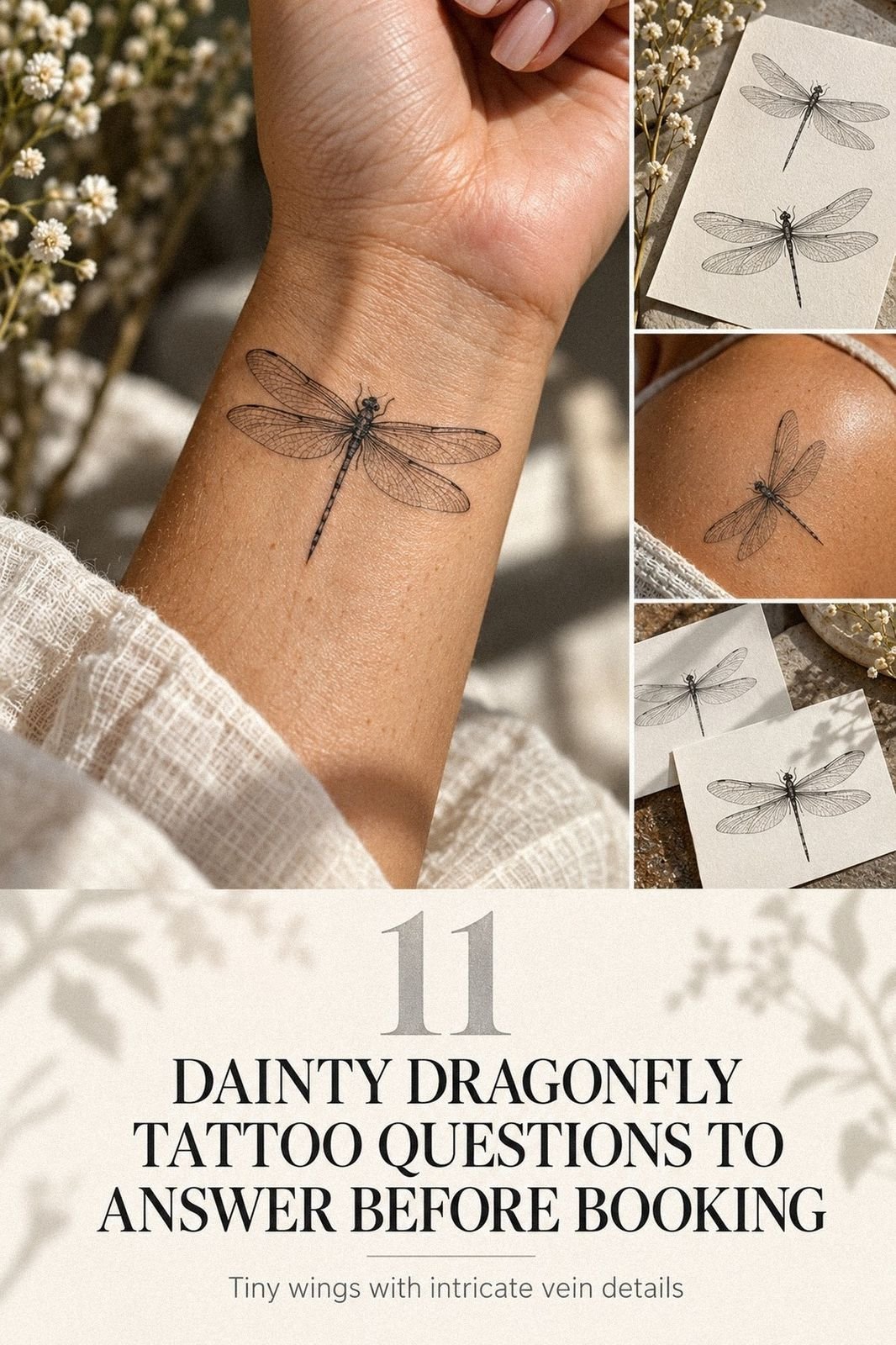
A dainty dragonfly tattoo can stay discreet without feeling forgettable. I once chose placement before considering friction, sunlight, or how fine lines behave after healing. That was my mistake. These 11 ideas pair crisp terracotta ink with placements you can show, cover, or keep entirely personal!
Editor’s note: the best choice isn’t always the smallest one. Your dragonfly needs enough breathing space for its body, wing joints, and symbolic details to remain readable. A thoughtful design can feel delicate, meaningful, and striking without demanding attention.
- Fine Line Dragonfly Tattoo on the Wrist
- Tiny Dragonfly Tattoo Behind the Ear
- Minimalist Dragonfly Tattoo with Single Needle: Is Smaller Always Better?
- Dainty Dragonfly Tattoo Along the Collarbone: Fine Line Over Heavy Fill
- Watercolor Dragonfly Tattoo with Delicate Wings: Color Over Dense Black
- Dragonfly Tattoo Designs with Botanical Details: The Stem-and-Wing Rule
- Place Fine Dotwork Dragonfly Tattoo on the Ankle
- Mark a Symbolic Dragonfly Tattoo with Birthstone Accents
- Dainty Dragonfly Tattoo Across the Finger: Does It Hold Up?
- Ornate Dragonfly Tattoo on the Shoulder Blade: Stencil Over Saturation
- Match Tiny Dragonfly Tattoos for Best Friends
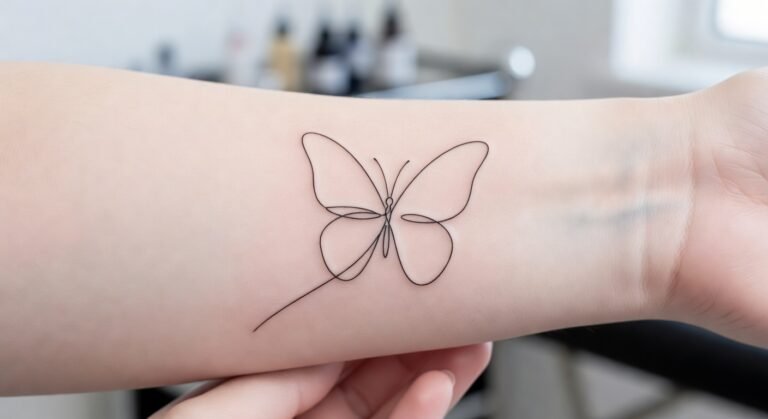
1Fine Line Dragonfly Tattoo on the Wrist
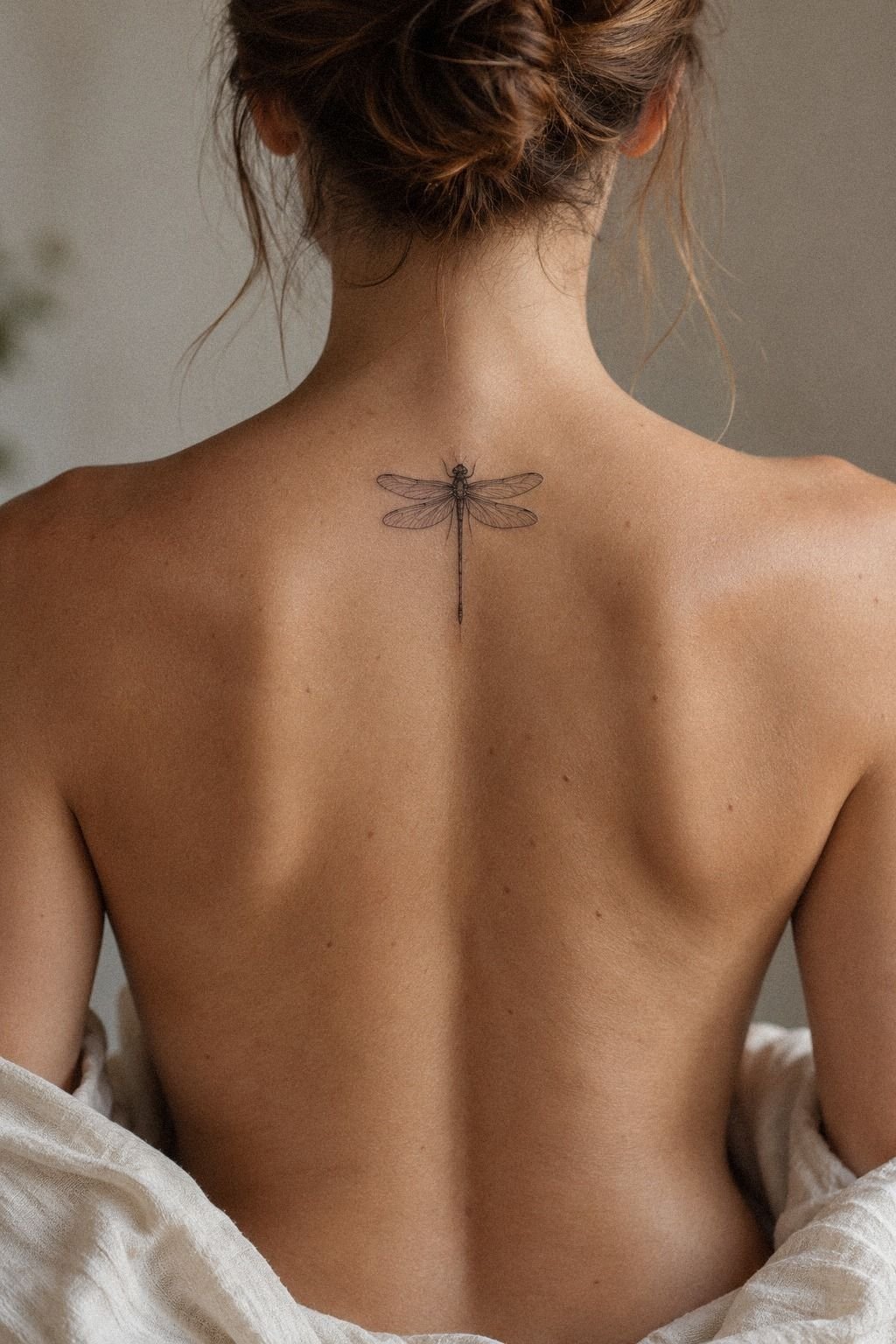
A wrist design gives you control. Your sleeve can cover it, while a rolled cuff lets the wings peek out when you want them visible.
Ask for fine-line terracotta ink with an open wing shape. Dense fill can blur faster where skin meets daily friction.
Keep the dragonfly along the natural length of your wrist. Your eye will follow the body. The shape won’t compete with your watch or bracelet.
I’d skip a minimal botanical mark here. A tiny stem can work, but the insect should remain the clear subject. That keeps the result sleek and understated.
The wrist moves constantly. You’ll want an artist who understands spacing and healed line weight. Look for clean, healed examples in this small dragonfly tattoo portfolio, not only fresh work.
A short session can still produce a timeless result when the stencil is measured carefully. Your tattoo shouldn’t be reduced to a needle number. Ask about line width, aftercare, and how the wings may soften over time.
Choose a 3RL needle grouping only if your artist believes it suits your skin and design. That conversation gives you more value than copying a random wrist reference.
2Tiny Dragonfly Tattoo Behind the Ear
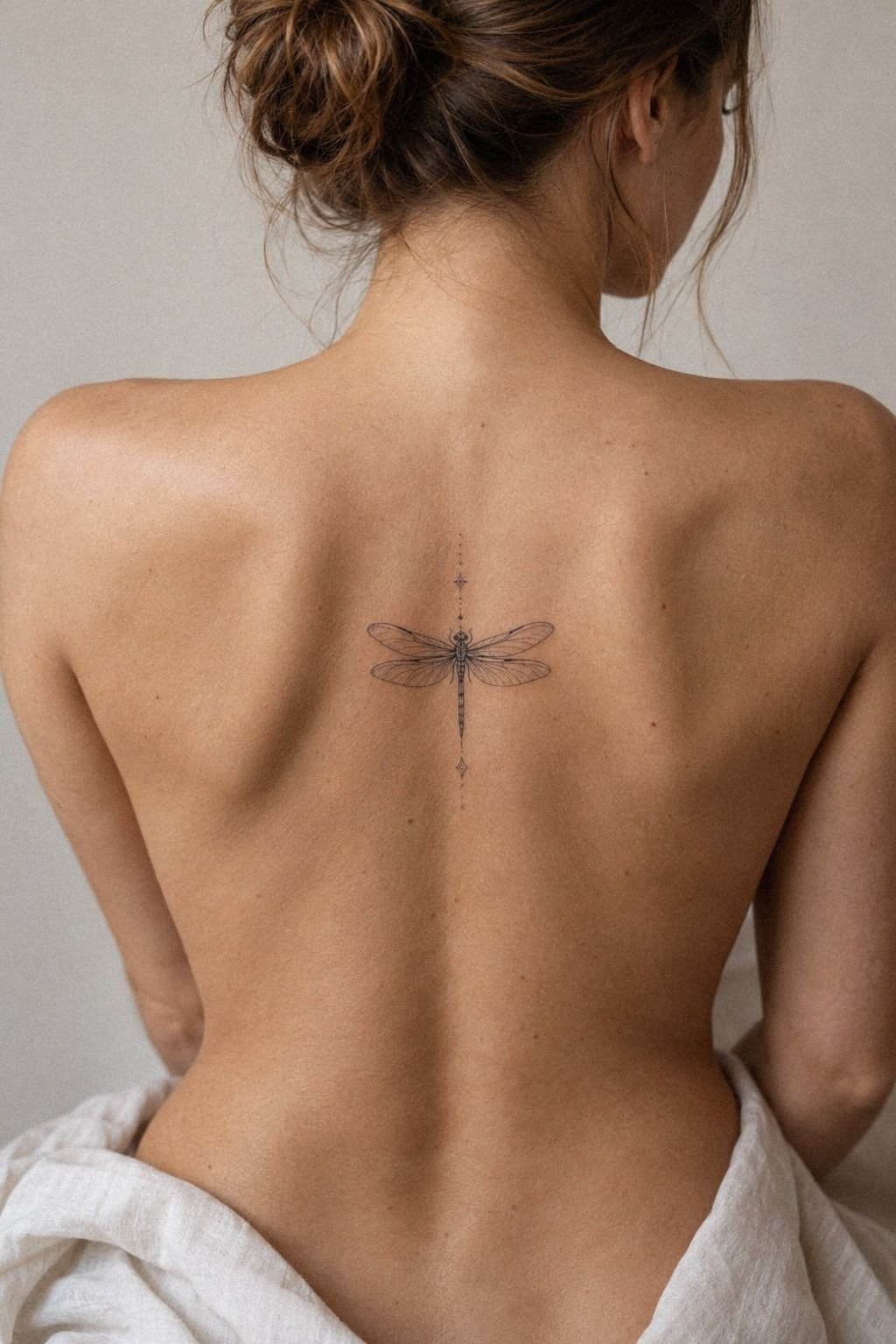
Behind the ear is a discreet choice for a tiny dragonfly you can hide with your hair. It feels personal, dainty, and quietly expressive.
The space is small, so your artist needs a clear open silhouette. An open body and two simple wings will usually age better than microscopic decoration.
This placement can be selectively visible when your hair is tied back. It can also disappear during work or formal events. That makes it a playful option for someone who wants control.
A clay-toned accent can add warmth without crowding the wings. Keep any aged-brass color restrained so the design stays readable.
Behind the ear may feel sharper than the wrist. You’ll also need to consider headphones, glasses, hair products, and daily friction. A healed behind-ear tattoo will show you more than fresh studio examples.
3Minimalist Dragonfly Tattoo with Single Needle: Is Smaller Always Better?
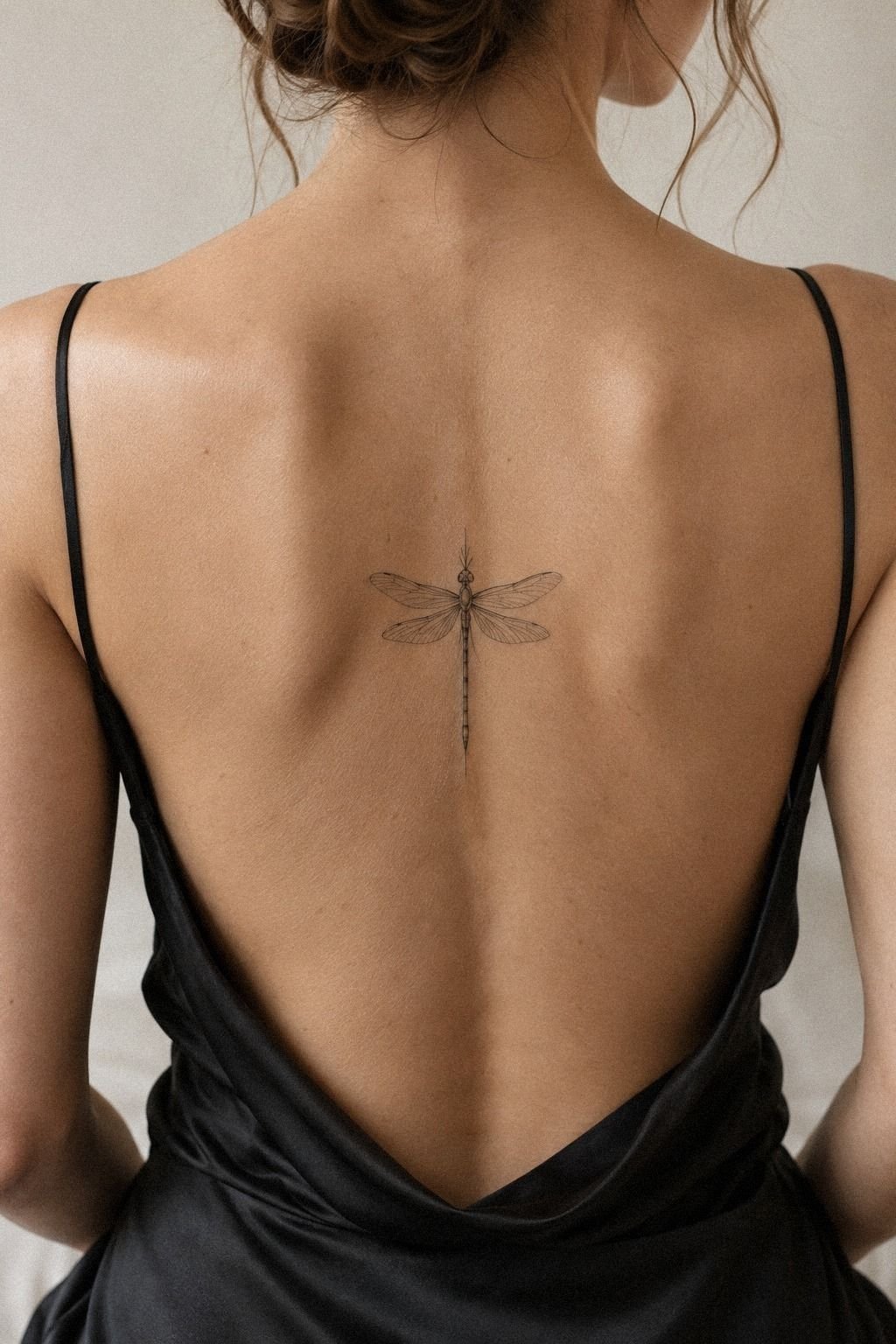
A minimalist dragonfly can look like a drawn mark on your forearm. Single-needle linework and a clean oval wing structure can keep the design light.
If your artist recommends a plum outline, it can give the wings clear contrast without making them heavy. The open center keeps the piece minimal rather than dense. That balance can feel polished and personal.
A small rose-gold accent can add expressive warmth near the body or wing joints. Keep it limited so the shape remains empowering rather than crowded.
Is smaller always better? No. Your artist needs enough room for the body, wing joints, and decorative marks to remain separate.
I’d rather see a readable 1.5-inch design with clear anatomy than a one-inch blur. The stencil may look impressive. The healed result still needs room to breathe.
Choose vegan plum tattoo ink only through a licensed professional who can explain the pigment and aftercare. The brand matters less than technique, sanitation, and healed results.
You’ll want examples reviewed weeks or months later. Fresh work can look sharp, but healed work reveals how the lines actually settle. That evidence is empowering when you’re comparing artists.
A minimalist piece can feel elegant and meaningful when the negative skin does some of the work. Skip extra lettering unless it has real meaning for you.
If you need more direction, browse these unique dragonfly tattoo ideas and mark what still reads clearly from several feet away.
4Dainty Dragonfly Tattoo Along the Collarbone: Fine Line Over Heavy Fill
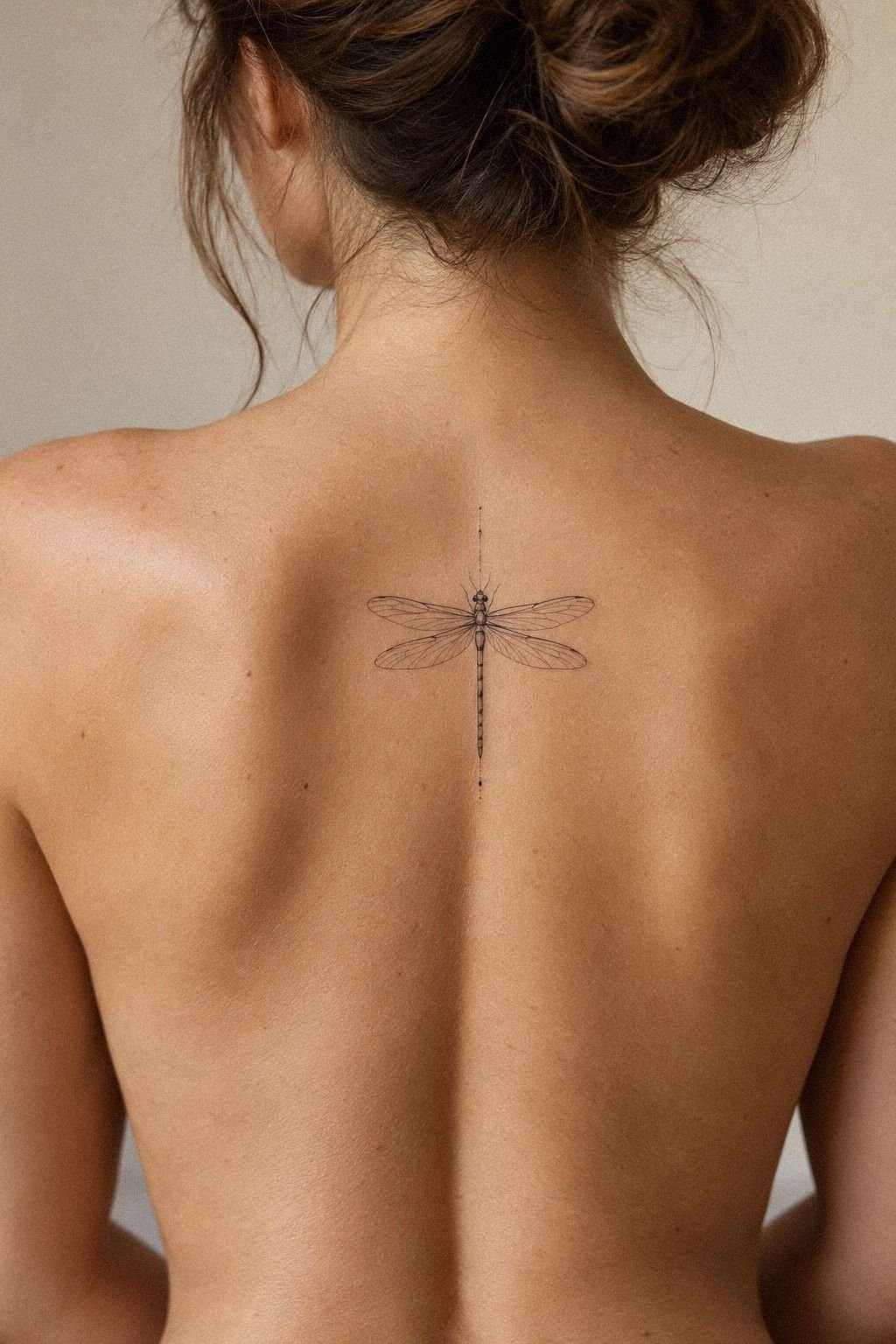
The collarbone gives your dragonfly a graceful, flowing path.
Ask your artist to follow the natural curve instead of forcing a perfectly straight stencil. A navy accent with a restrained white detail can keep the wings distinct while preserving the delicate shape.
The collarbone can make a fine-line design feel elegant without requiring heavy fill. I’d keep the body narrow and let the wing spacing do the expressive work.
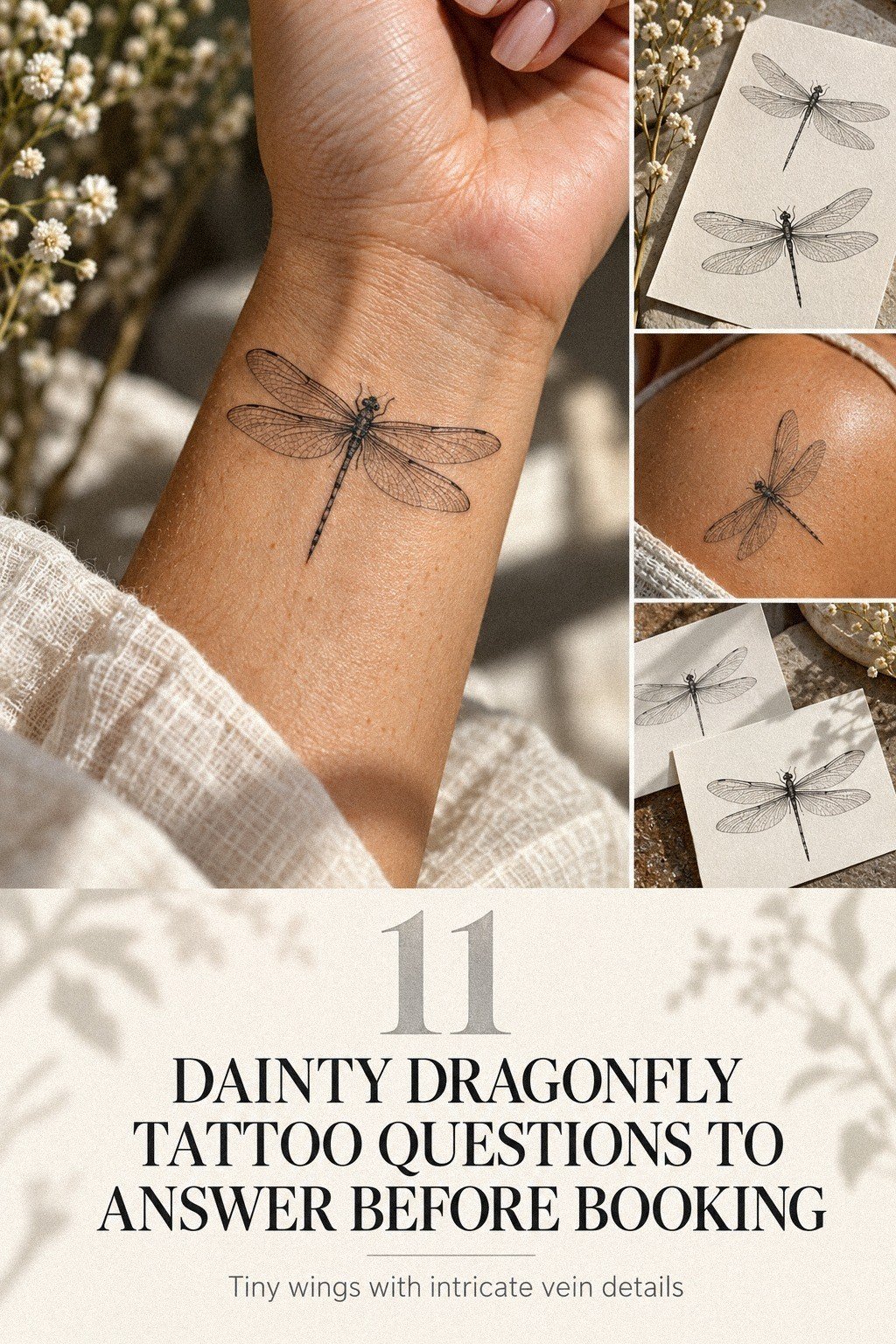
5Watercolor Dragonfly Tattoo with Delicate Wings: Color Over Dense Black
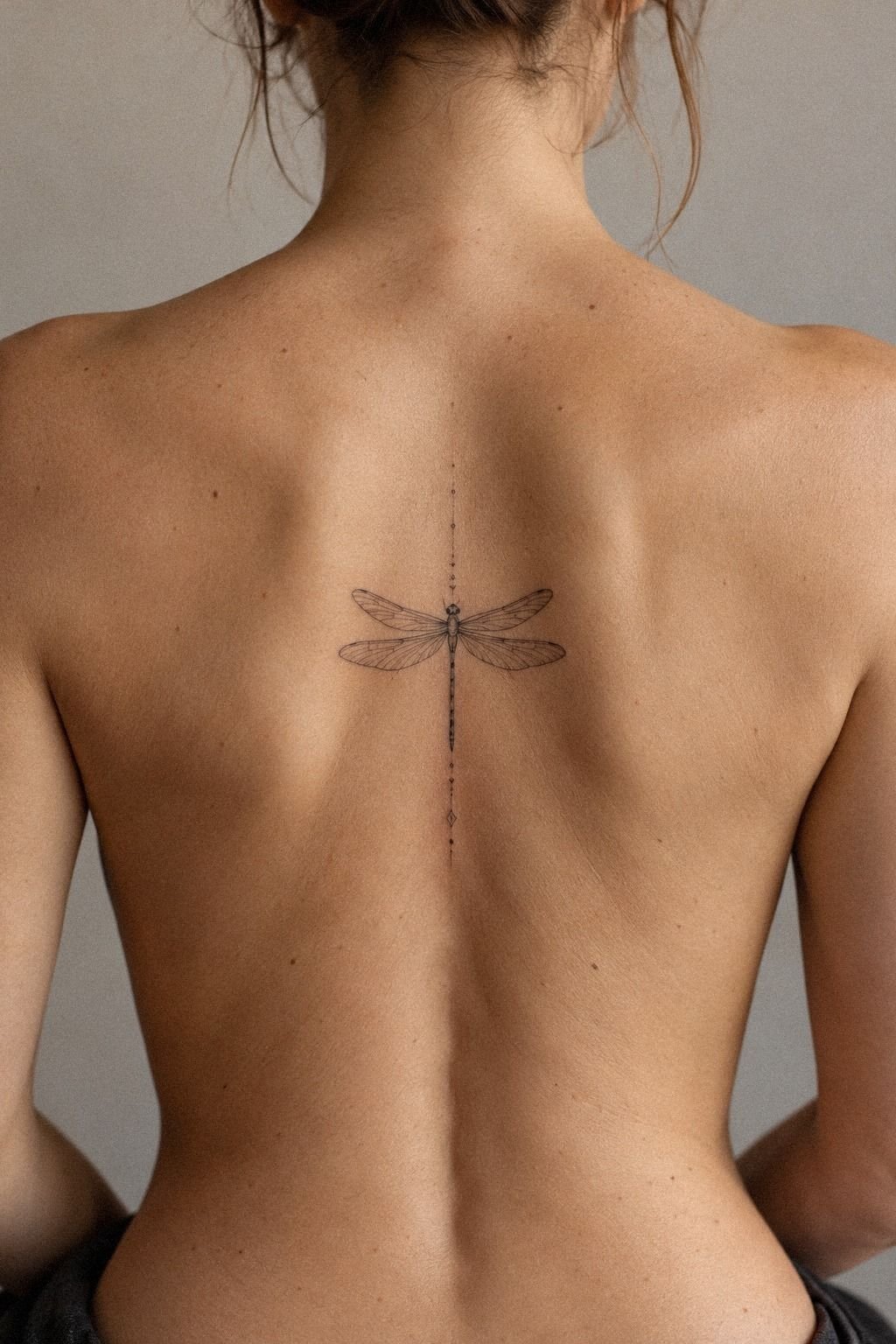
A watercolor dragonfly works best when the color supports the shape. A transparent emerald watercolor wash can sit behind delicate wings while a narrow cream body keeps the insect readable.
Ask your artist whether the color is a soft accent or the main event. I prefer a crisp outline with restrained gold marks. Your eye should still recognize the wings after the color softens.
A broad wash may look vibrant at first. It can lose definition sooner than solid pigment. That doesn’t make watercolor wrong, but it does make planning important.
Your artist should redraw the design for the chosen placement. A paper concept isn’t always a direct stencil. Skin curvature, scale, and movement can change everything.
Before your consultation, compare color balance in this dragonfly tattoo design collection. Decide whether you want color to feel romantic, symbolic, or purely decorative.
Watercolor tattoos need sensible sun protection. Wait until the surface has healed before applying sunscreen. Don’t pick at peeling skin.
The style is daring and whimsical, but it isn’t maintenance-free. That’s fine if you’re willing to protect the soft color. That balance matters!
6Dragonfly Tattoo Designs with Botanical Details: The Stem-and-Wing Rule
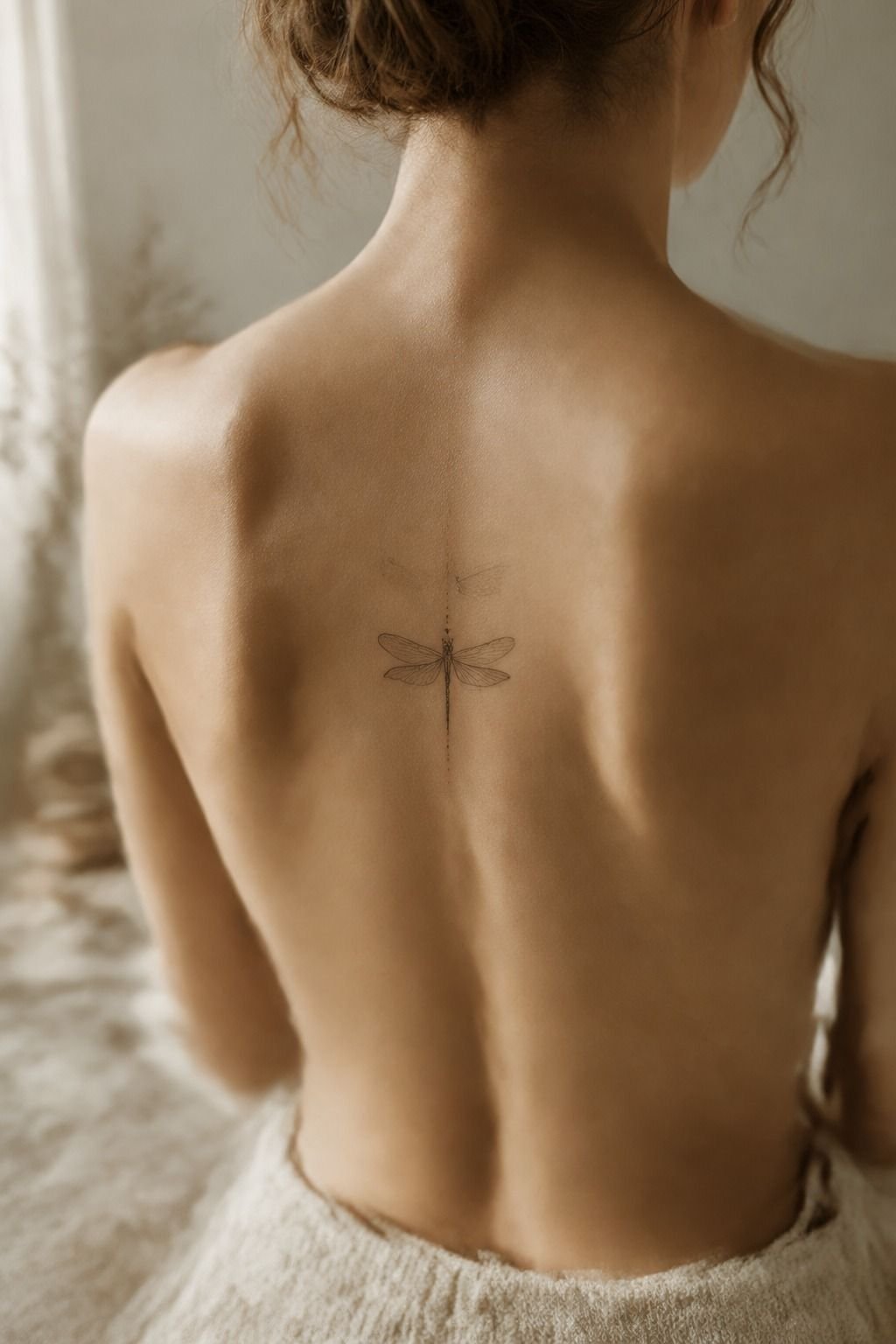
Botanical details can make a dragonfly feel symbolic.
A slender botanical stem can guide the body without stealing attention from the wings. Ask for open leaves, careful spacing, and only enough detail to keep the design intricate rather than crowded.
Rust or forest-green accents can work beautifully with a black or cream body. Keep the color selective. A dragonfly should still be recognizable before anyone notices the surrounding marks.
7Place Fine Dotwork Dragonfly Tattoo on the Ankle
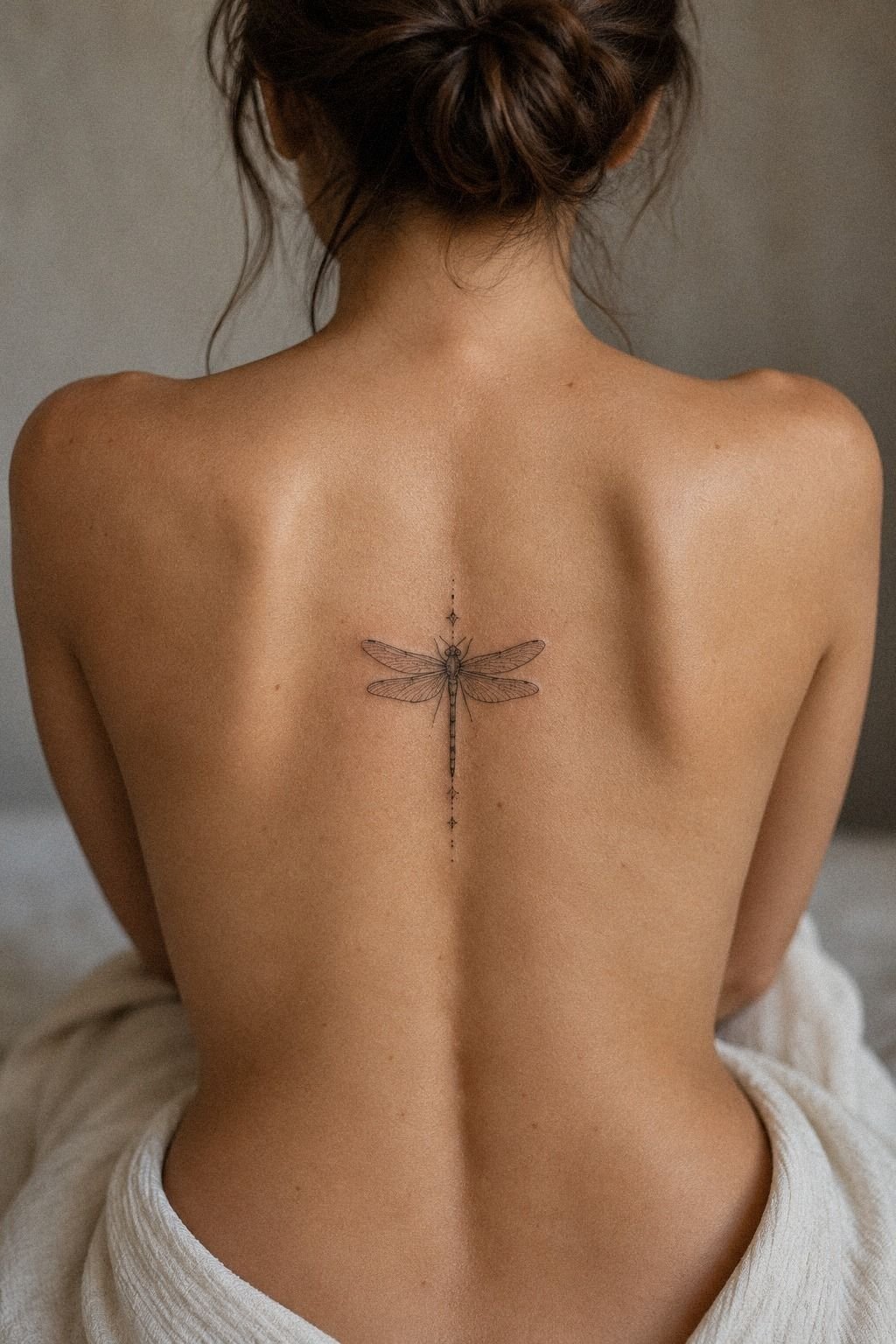
Fine dotwork gives an ankle dragonfly a textured, almost illustrative finish. Charcoal dotwork shading can define the wings without filling them completely.
Your artist can use clustered dots near the body. Dusty-rose and brass accents can loosen toward the wing edges for a delicate fade.
That approach feels intricate without becoming ornate. I’d avoid making every wing identical. Slight changes can give the insect a more expressive rhythm.
Ankle placement is visible in sandals but easy to cover with socks. That makes it practical if you want control.
I’d avoid placing the design directly on the most active crease. Your skin bends there, and repeated friction can make fine spacing harder to preserve.
The foot and ankle can feel more intense than the forearm. Bony areas may be especially sharp. You’ll want to plan a calm appointment and wear loose clothing afterward.
Don’t schedule a long day of walking immediately after the session. A small dotwork tattoo reference set can help you compare dot density before you commit.
8Mark a Symbolic Dragonfly Tattoo with Birthstone Accents
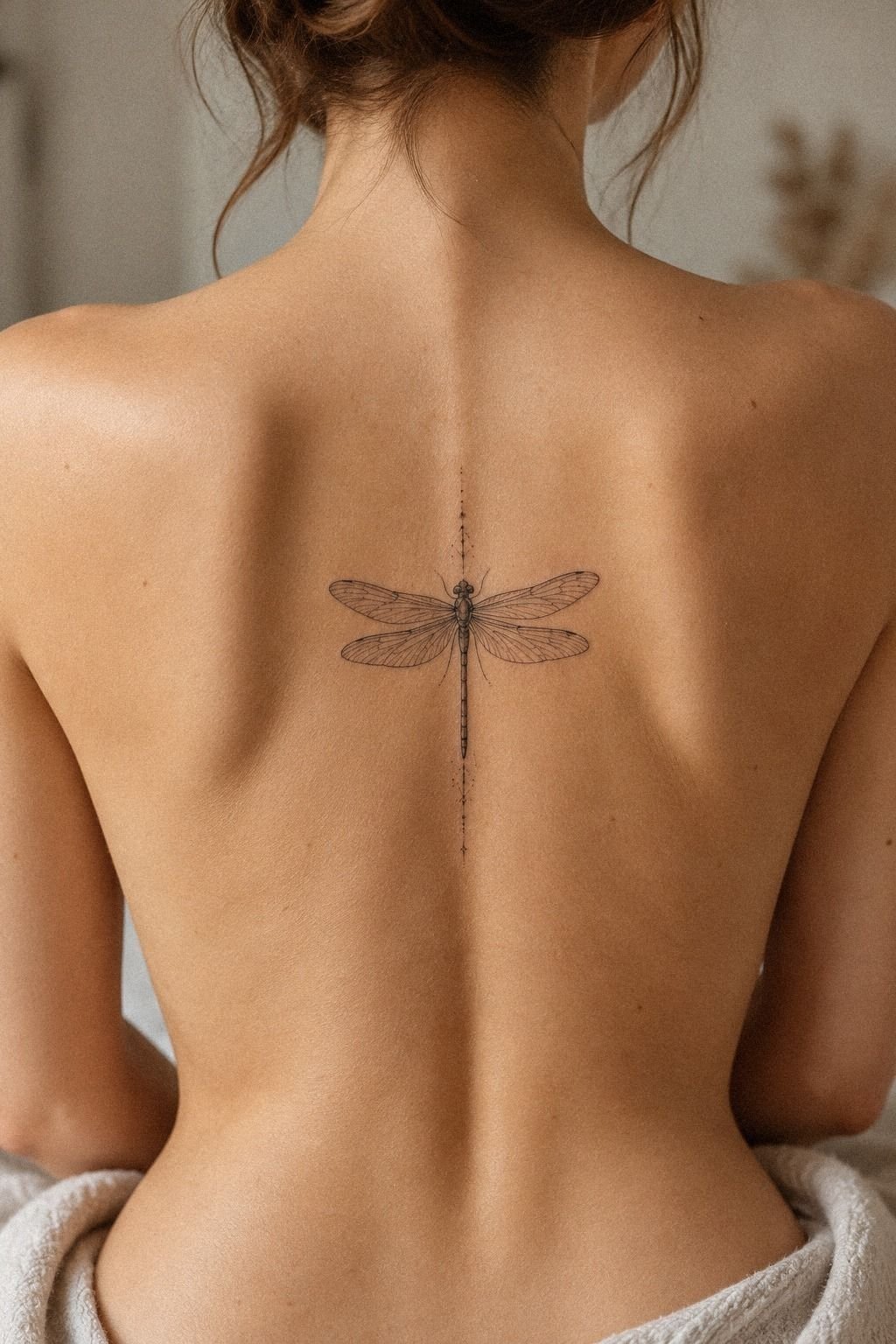
A symbolic dragonfly can carry a birth month, memory, or private color without becoming literal. Birthstone color accents can make the design feel meaningful without adding a sentence of text.
A single warm-camel dot may be enough. Too many stones can turn a delicate piece into a crowded emblem.
You might connect the dragonfly to a person, a season, or a sacred turning point. The meaning doesn’t need to be obvious to anyone else.
I’d keep the black body clear and let the accent remain small. That gives the design a bold focal point while preserving its airy shape.
This idea can work on the wrist, collarbone, shoulder blade, or upper back. Ask your artist to test the color at the final size.
Color can shift as it heals. Your artist should explain the expected result and how sun exposure may affect it.
9Dainty Dragonfly Tattoo Across the Finger: Does It Hold Up?
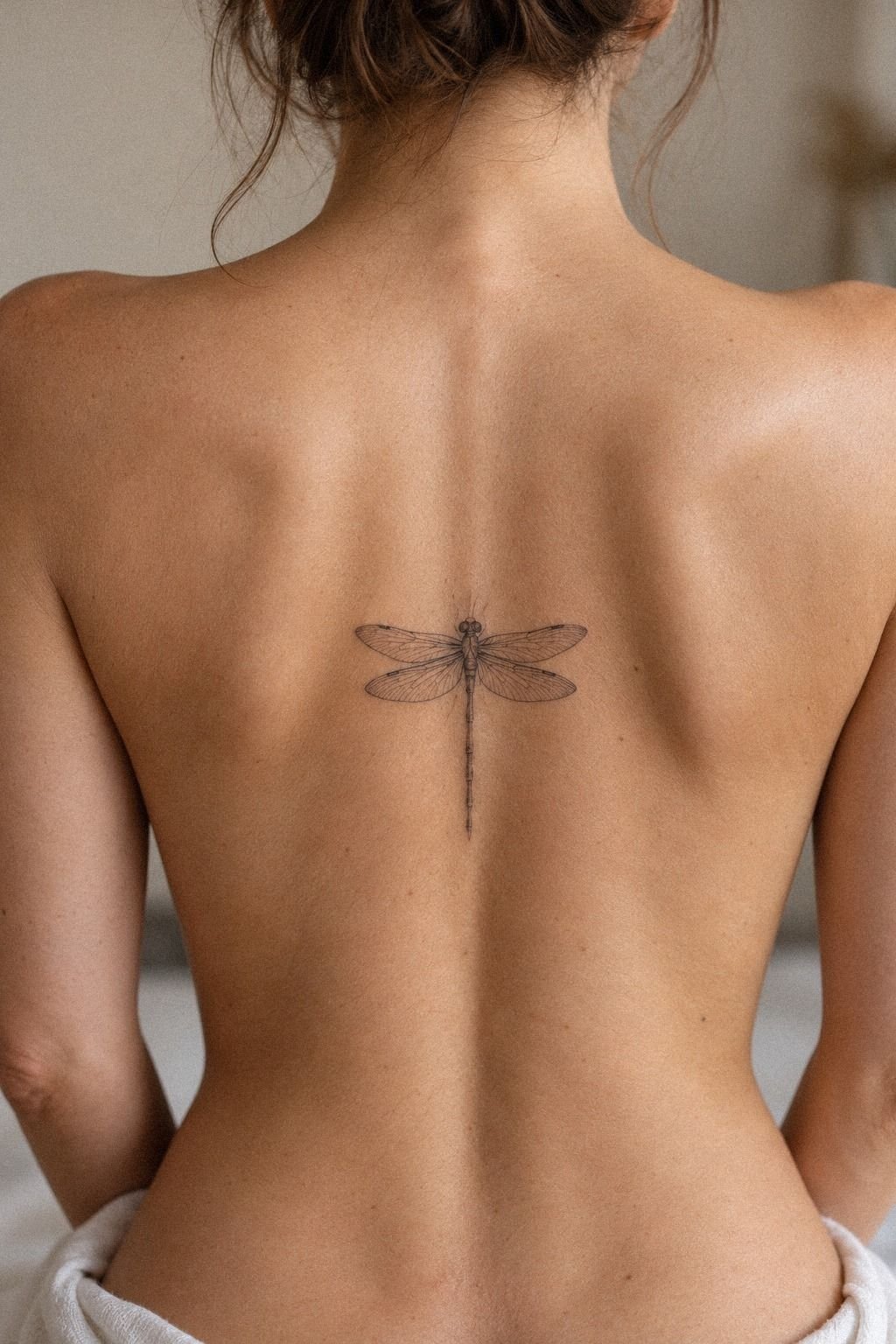
A finger placement is edgy because the location is so exposed.
The design should stay simple. A midnight-blue body with a tiny copper or ivory detail can feel personal without forcing too much pigment into a narrow area.
Finger tattoos face washing, movement, and friction. Ask your artist how often similar work needs a touch-up, and decide whether that maintenance suits you.
10Ornate Dragonfly Tattoo on the Shoulder Blade: Stencil Over Saturation
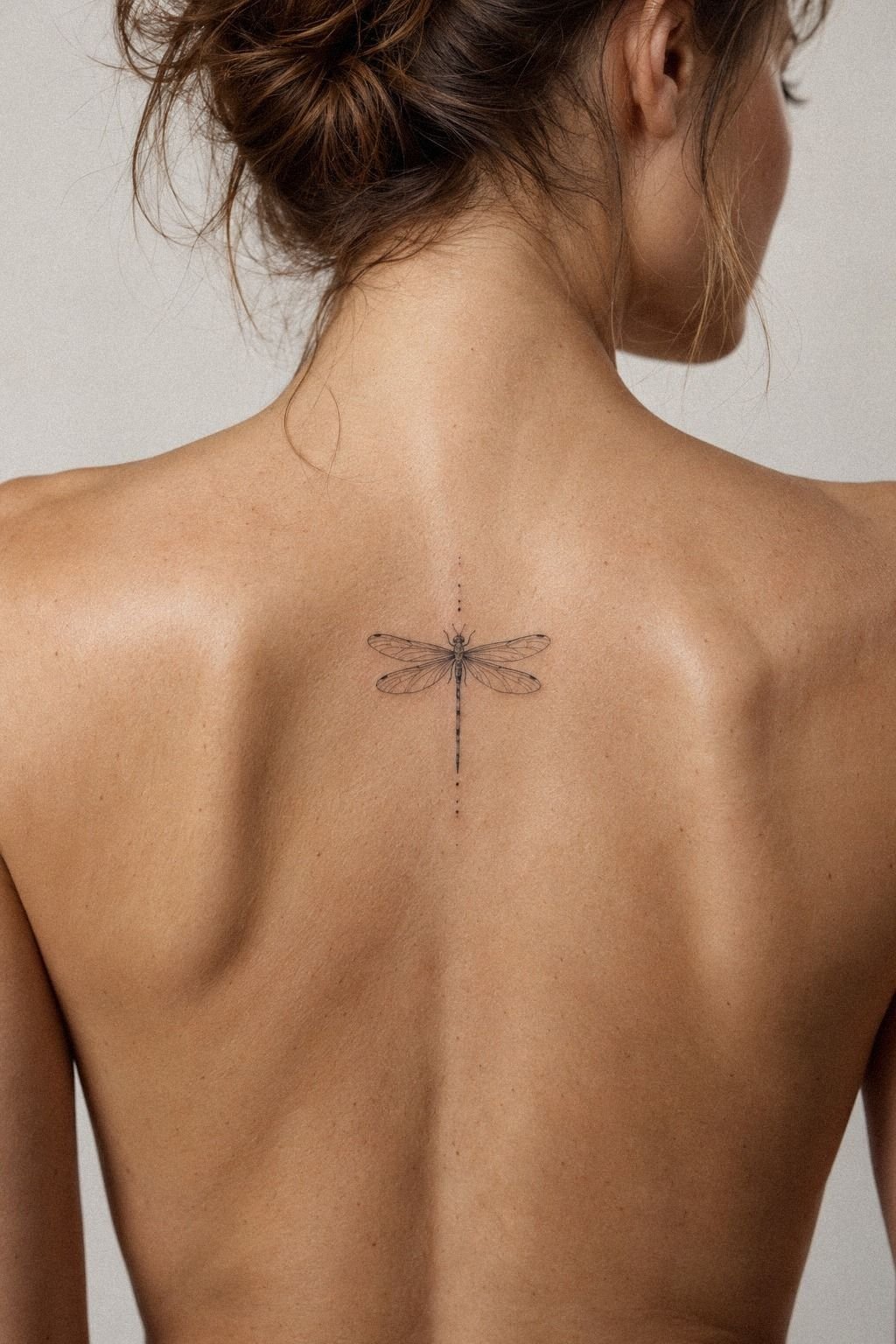
The shoulder blade gives an ornate dragonfly more breathing space. Sage-green linework can include elegant curves, controlled texture, and a stronger wing silhouette.
Still, ornate doesn’t mean crowded. I’d keep the body sharp and use warm-cream accents only around the wing edges.
Too many curls can turn a dragonfly into an unrecognizable shape. That risk becomes greater after the lines soften.
Before committing, compare the stencil with healed work from the same artist. You’ll see whether their lines remain crisp and whether dark areas heal evenly.
Your shoulder blade also gives you privacy when you want it. A sleeveless top can reveal the piece selectively.
The area may feel more tolerable than ribs, feet, hands, or sternum. Every body responds differently, though.
Aftercare still matters. You’ll want loose clothing, clean hands, and no pool time while the surface heals.
For a related insect composition, browse this dragonfly tattoo design guide before booking.
11Match Tiny Dragonfly Tattoos for Best Friends
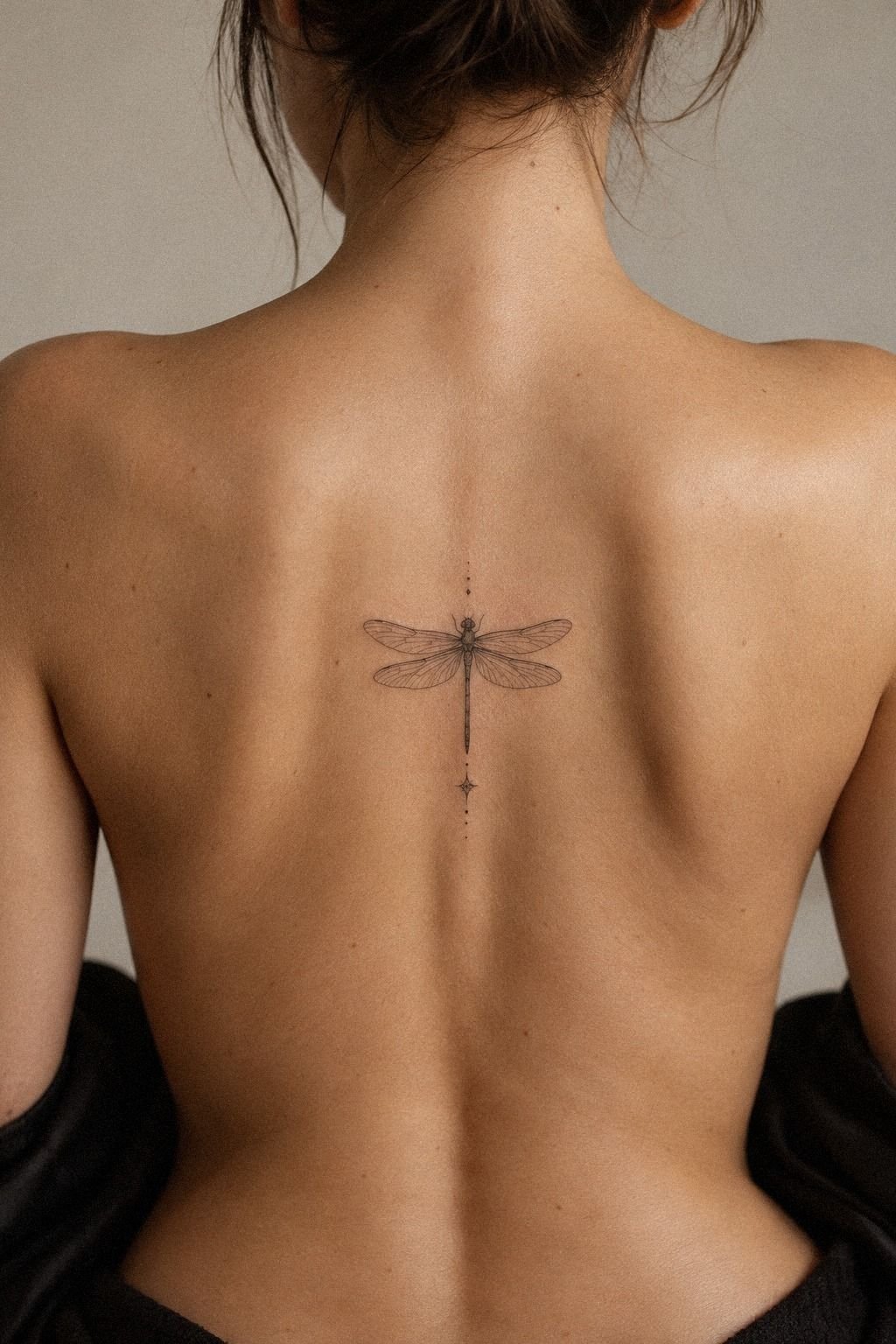
Matching tattoos don’t need to be identical to feel connected.
A matching placement can create the bond, while each person chooses a slightly different wing angle or accent. That keeps the idea personal instead of making both tattoos feel copied.
Terracotta, stone, and olive accents can work as a shared palette. One friend might choose more terracotta, while the other keeps the design mostly olive.
The strongest matching tattoos feel timeless because they reflect the relationship, not a passing trend. Agree on the meaning first. Then let each artist adapt the details to the wearer’s skin and placement.
Placement Before the Stencil
Placement affects visibility, friction, healing, and long-term value more than many first-time clients expect. A placement consultation should include your normal clothing, work routine, exercise habits, and sun exposure.
Wrist and finger tattoos are easy to display. They also face constant movement and washing.
Behind the ear is discreet but gives the artist limited space. The shoulder blade offers more design freedom, while the collarbone creates a graceful line.
Your favorite reference may not translate perfectly to your body. That’s normal. A skilled artist can preserve the idea while adjusting the length, wing angle, and spacing.
Those changes often make the final piece feel more personal. They can also protect the design from looking cramped after healing.
If you’re choosing between two locations, consider which one you’ll still enjoy seeing after the novelty fades. This small dragonfly tattoo portfolio can help you compare scale.
Your daily life should make the final decision. A stylish placement is only useful if it works with your routine.
How to Make Fine Detail Stay Readable
Fine detail needs restraint. A readable wing structure usually matters more than extra dots, miniature text, or a decorative border.
If the viewer can’t identify the dragonfly quickly, the design may be too crowded for its scale. Clarity gives a small tattoo more power.
Ask your artist what the smallest recommended line gap is for your chosen placement. Skin changes, lines soften, and pigment settles.
An open design gives those changes somewhere to go. It can keep the wings from closing together too quickly.
Your artist should explain whether the design is intended to be delicate, bold, or somewhere between. Those words affect line weight and spacing.
I’d rather pay for a clear, polished design than chase an ultra-tiny version. A piece that only looks impressive on day one isn’t a smart choice.
A healed portfolio can tell you more than a fresh result. Compare work after several weeks or months, then ask what touch-ups typically cost.
If you want another reference point, browse these unique dragonfly tattoo ideas and remove any detail that doesn’t support your main idea.
A Budget That Protects the Result
A tiny tattoo isn’t automatically a low-cost tattoo. Studio minimum pricing may apply even when the design takes less than an hour.
An established specialist may charge more because of experience and demand. That can be worthwhile when the work requires precise spacing.
The cost can rise with color, custom drawing time, difficult placement, or a highly detailed design. Ask for a written estimate after the artist reviews your concept.
You’ll get a clearer answer than relying on a general price list. A direct quote also helps you plan for deposits and possible touch-ups.
Your budget should include aftercare products, travel, and time away from work. The lowest quote isn’t always the best value.
Clean practice, careful design, and healed results deserve priority. A quality tattoo consultation can protect both your money and your expectations.
If you want to compare adjacent symbolic styles, look through these dainty ladybug tattoo ideas. Ask yourself which design still feels personal rather than merely affordable.
Questions to Ask Before Booking
Bring a short list of practical questions. Ask about healed tattoo examples, line weight, placement changes, pigment choice, aftercare, and whether the artist has worked successfully on skin similar to yours.
Ask how long the appointment should take. Confirm whether the quoted price includes the consultation and stencil adjustments.
You can also ask what happens if the design needs a small correction after healing. A direct answer is a good sign.
Discuss visibility before the appointment. You may want the dragonfly hidden during work but visible in social settings.
Your artist can adjust angle and scale so the tattoo follows your preferences without losing its shape. That kind of planning feels empowering.
Finally, ask whether the artist thinks your chosen size is realistic. A professional who recommends making the design slightly larger may be protecting its long-term clarity.
You can compare more small-scale references in this small dotwork tattoo guide before your consultation.
What Dainty Dragonfly Ink Gets Right
The best dainty dragonfly tattoos aren’t defined by being tiny. They work because the design has enough space to remain readable.
The placement should suit your daily life. The artist should understand how skin changes as it heals.
I’ve seen small tattoos fail because someone chased scale instead of clarity. Your dragonfly needs a body, wing structure, and one visual decision that makes it yours.
That could be an open center, a birthstone point, a botanical stem, or a particular wing angle. One strong choice is often more powerful than five small ones.
The choice between wrist, ankle, collarbone, finger, and shoulder blade isn’t only about sensation or visibility. It’s also about friction, sun, movement, and how often you want to see the piece.
Healed black pigment usually gives you a stronger anchor than pale color alone. Open skin keeps the image delicate.
I’d also be honest about budget. Typical U.S. pricing varies by artist and region, and many studios charge a minimum even for a tiny tattoo.
You might pay more for a highly sought-after specialist. The cheapest option isn’t automatically the most personal or safest.
For another comparison point, revisit this dragonfly tattoo design collection and remove any detail that doesn’t support your main idea.
The most stylish result is often the one with the clearest decision. It can be bold without being loud.
The Questions Worth Answering First
How much does a Dainty Dragonfly Tattoo usually cost?
A typical U.S. tattoo may fall around a studio minimum of $50 to $100, while hourly rates often run about $100 to $250. Your artist, region, size, and placement all matter.
Bring a clear reference, but ask for a quote after the artist reviews the design. A tiny tattoo isn’t always cheap if the studio has a minimum.
You’ll want to budget for quality, hygiene, and experience rather than chasing the lowest number. The right artist may cost more, but that price can be worth it for clean technique and better long-term value.
Are Dainty Dragonfly Tattoos a good idea for a first tattoo?
Yes, a dainty dragonfly can be a meaningful first tattoo. Several placements offer manageable sessions and strong control over visibility.
Your forearm, shoulder, or upper back may feel more tolerable than ribs, feet, hands, or sternum. Choose a design with readable spacing.
You don’t need a complicated symbol to make your first piece personal. You can also discuss the expected sensation before booking.
How do I choose a tattoo artist for Dainty Dragonfly Tattoos?
Look for a portfolio with healed fine-line work, clean sanitation practices, and designs similar to your reference. Your artist should explain how the tattoo may soften.
Ask about placement, line weight, and aftercare. Request healed examples, not only fresh tattoos.
A polished stencil can look different after several weeks. That evidence is more useful when comparing quality and cost.
You can also review this dainty sun tattoo placement guide to compare how another small design handles placement.
How much do Dainty Dragonfly Tattoos hurt?
Pain varies, but forearm, thigh, and shoulder placements are often more tolerable than ribs, feet, hands, and sternum.
Your tattoo may feel sharp, warm, or scratchy. The appointment usually becomes easier once you relax.
The exact sensation depends on your body and the artist’s technique. You’re allowed to ask for a pause, change position, or discuss comfort before the session begins.
How long does a Dainty Dragonfly Tattoo take to heal?
The surface usually heals in about 2 to 3 weeks, while complete healing can take roughly 2 to 3 months.
Your aftercare should include gentle washing, light moisturizing, and avoiding direct sun and swimming during the early stage.
Don’t pick peeling skin. You’ll protect the linework by following your artist’s specific instructions, even if the tattoo looks settled before deeper healing is complete.
For another small tattoo reference, compare healed details in this small dragonfly tattoo guide.
What’s the best placement for Dainty Dragonfly Tattoos?
The best placement depends on your visibility and tolerance. Forearm and shoulder placements are often easier to monitor.
Behind the ear, finger, and ankle offer more discreet scale. Each area has its own friction and movement concerns.
Your artist should check movement and friction before applying the stencil. A design that fits your life will feel more successful than one chosen only for appearance.
Can a Dainty Dragonfly Tattoo include color?
Yes. A small watercolor tattoo accent can add a birthstone, memory, or favorite shade without overwhelming the wings.
Ask how the color may soften and how sun exposure could affect it. Your artist can keep the outline crisp while using color sparingly.
A restrained accent often feels more timeless than a full rainbow wash. It also keeps the dragonfly recognizable from a distance.
The One I’d Choose First
If I had to pick one, I’d start with the fine-line wrist dragonfly. You can cover it, check the healing easily, and give the wings enough space to stay readable.
Pin that reference for later and take it to an artist with healed work you trust. Take your time!