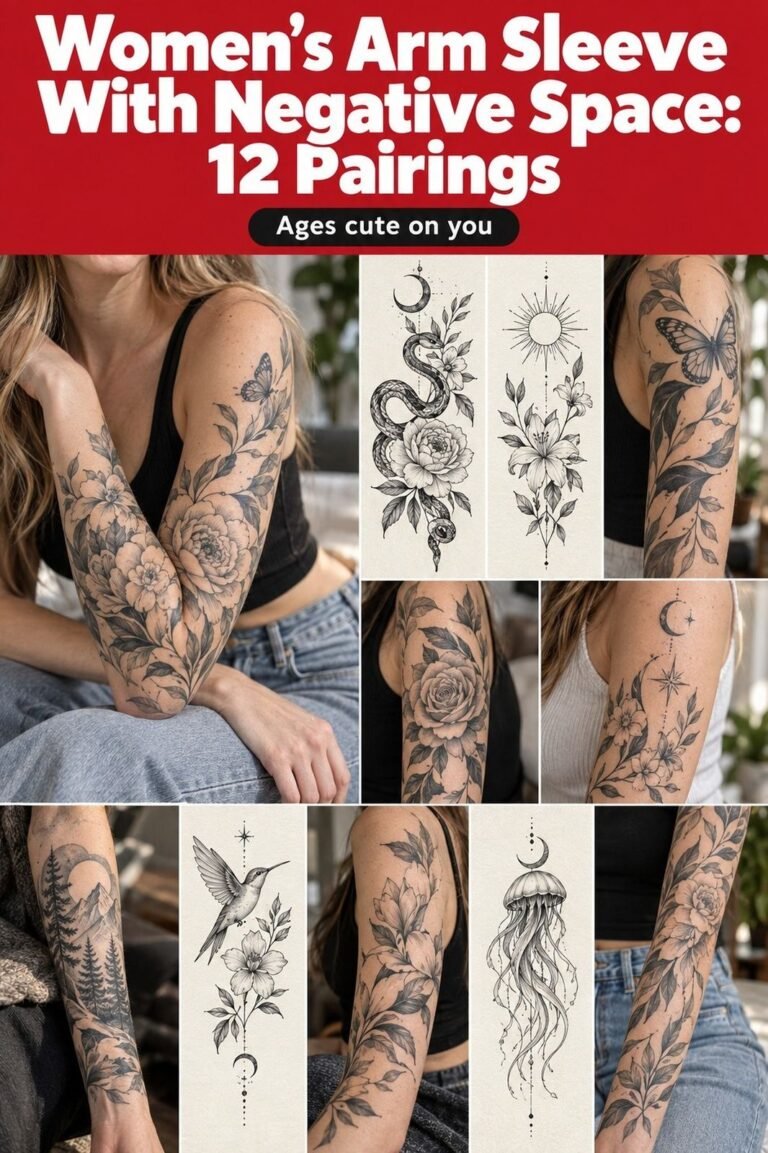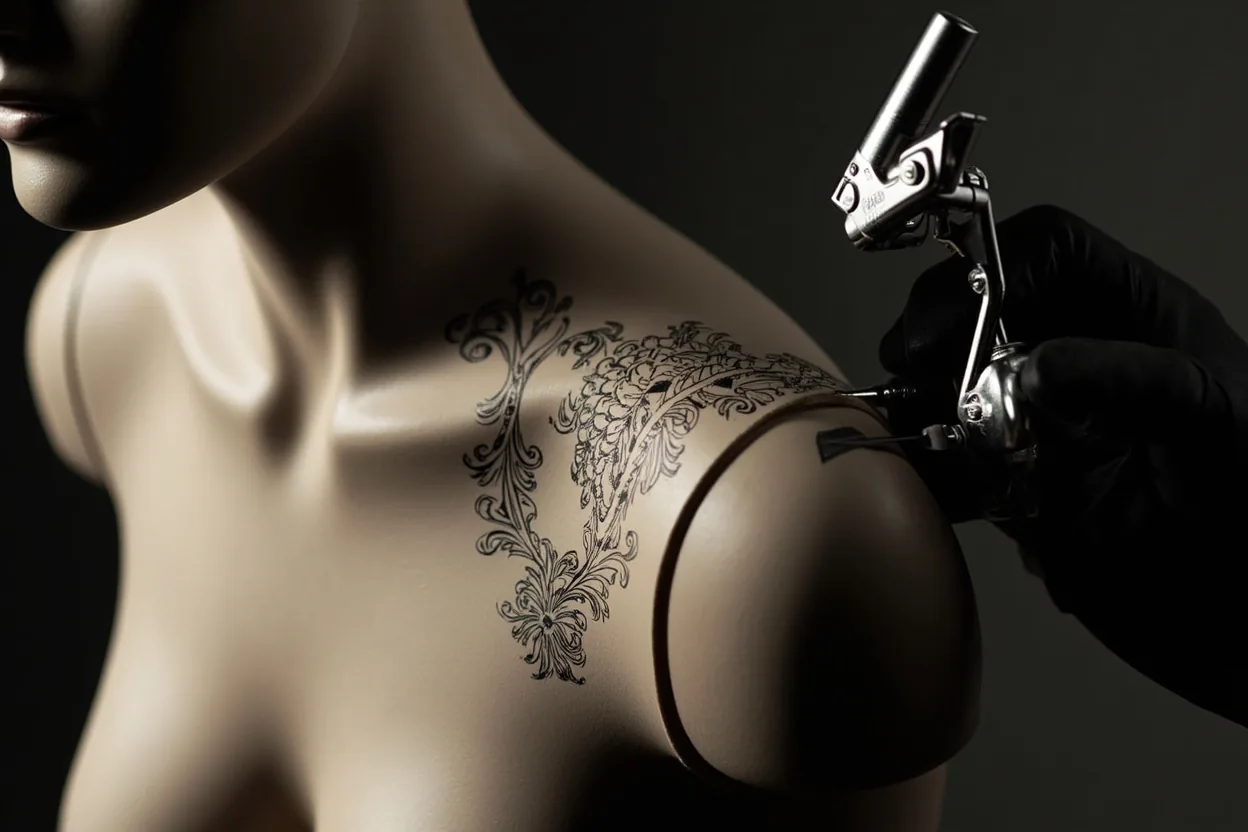
Shoulder tattoo ideas have one major advantage: the body already gives the tattoo a strong frame. The mistake is ignoring the curve and placing a flat design where it should wrap.
Quick answer: Good shoulder tattoo ideas include florals, ornamental caps, traditional roses, blackwork, mandalas, snakes, butterflies, shoulder blade pieces, and designs that can grow into an upper-arm or sleeve layout.
Shoulder tattoo ideas by layout
Decide whether the tattoo should sit on top of the shoulder, wrap around it, or move toward the arm or back.
| Idea | Best use | Watch-out |
|---|---|---|
| Shoulder cap floral | Frames the deltoid | Needs body-aware flow |
| Traditional rose | Bold timeless piece | Line weight matters |
| Blackwork ornament | Strong contrast | Symmetry can be hard |
| Butterfly or moth | Soft focal point | Wing placement matters |
| Snake curve | Movement around shoulder | Needs custom drawing |
Cap sleeves work the flat deltoid muscle, running a design from just below the collarbone across the top of the shoulder and stopping before the tricep. Cap placements read clean from the front and keep the design tight enough that it doesn’t lose shape when you move your arm. Quarter sleeves push further down and wrap the bicep, which means your artist has to account for the curve so linework doesn’t look skewed when the arm hangs at rest.
Full shoulder pieces that bleed into chest panels or upper back panels need to be planned as one composition, not two separate tattoos stitched together later. Negative space between zones turns into dead skin fast. Map the whole thing out in one consult, get the stencil placed while you’re standing up, and check the flow in a mirror before ink touches skin.
The shoulder likes flow
The shoulder doesn't need a border, the bone is the border.
A shoulder tattoo should be judged from the front, side, and back. A design that looks centered in one photo can look misplaced from another angle.
The shoulder is also a smart place to start if you might want a sleeve later. Ask the artist to leave room for future expansion.
The shoulder joint shifts constantly, so designs placed directly over the ball of the joint can distort when you raise your arm. Experienced artists build in intentional gaps or use bold geometric lines that still read well even when the skin stretches. Fine-line botanicals centered over the joint are a risky call. They look great lying flat on a table but turn into a blurry mess at the six-month mark.
Black and grey shading wraps the shoulder’s curves better than heavy solid black fill, which can look blobby at the edges where the muscle rounds off. Whip shading gives you soft gradients that follow the contour naturally. If you want saturated color, keep the brightest hues on the flat top of the deltoid where pigment sits stable, not on the side where skin thins out and color tends to fade uneven after the first heal.
Portfolio checks
Shoulder tattoos reward artists who understand body mapping.
- Ask for photos from multiple angles.
- Ask how the design could extend later.
- Ask whether symmetry or flow matters more for the design.
- Ask where the main focal point should sit.
When you’re reviewing an artist’s portfolio for shoulder work, zoom in on healed photos specifically, not fresh shots taken right off the table. Fresh tattoos look sharp regardless of skill level. Healed work reveals whether fine lines held their separation or turned gray and fuzzy, whether black fill stayed solid or went patchy, and whether the composition still reads clearly once swelling and redness are gone. Ask for healed photos flat out. Any artist worth booking has them.
Pay attention to how the artist handles the wraparound transition where the design moves from the top of the shoulder onto the outer arm or the back. That curve is where a lot of shoulder pieces fall apart. Lines that look parallel on the top of the shoulder can appear to bow or twist once they hit the curve. Look for consistent line weight and smooth shading transitions in those transitional zones, not just the center of the piece.
Shoulder mistakes
Avoid placing a flat rectangular design on the shoulder without redrawing it. The body will bend it anyway.
Do not ignore clothing lines. Tank tops, sleeves, and straps change how much of the tattoo is visible.
Overloading the shoulder cap with too much detail is the most common mistake. The deltoid is not that big. Cramming a full landscape, a portrait, and a banner into a space that’s maybe four by five inches means nothing reads clearly from across the room. Bold will hold, and bold reads. Scale your main focal point to fill the space confidently, then let everything else breathe around it.
Skipping the in-person stencil check and trusting flat digital mockups is how people end up with placements that feel off. The shoulder is three-dimensional. A stencil laid on your actual body, checked while you’re standing in your normal posture, tells you the real story. Also, don’t book a shoulder piece right before summer and plan to wear tank tops in the first two weeks. UV on a fresh heal fades color fast and can blow out linework before it’s fully locked in. Four to six weeks minimum before direct sun exposure.