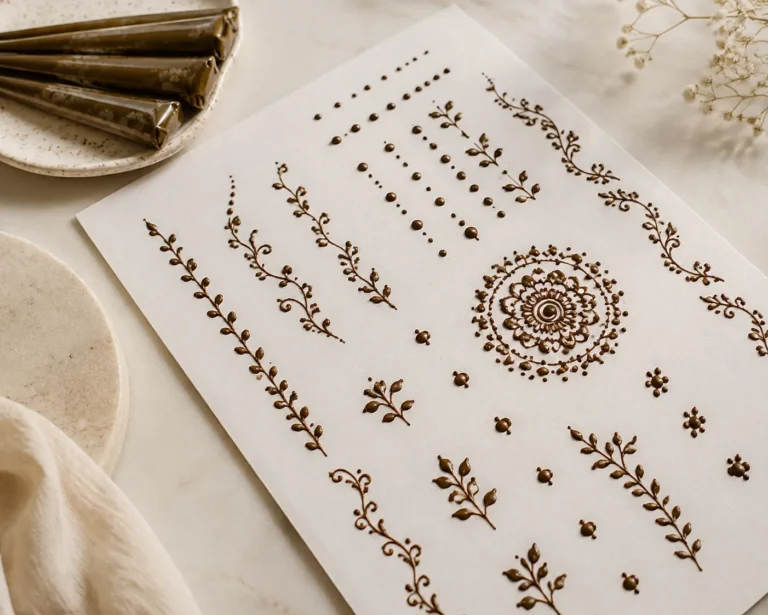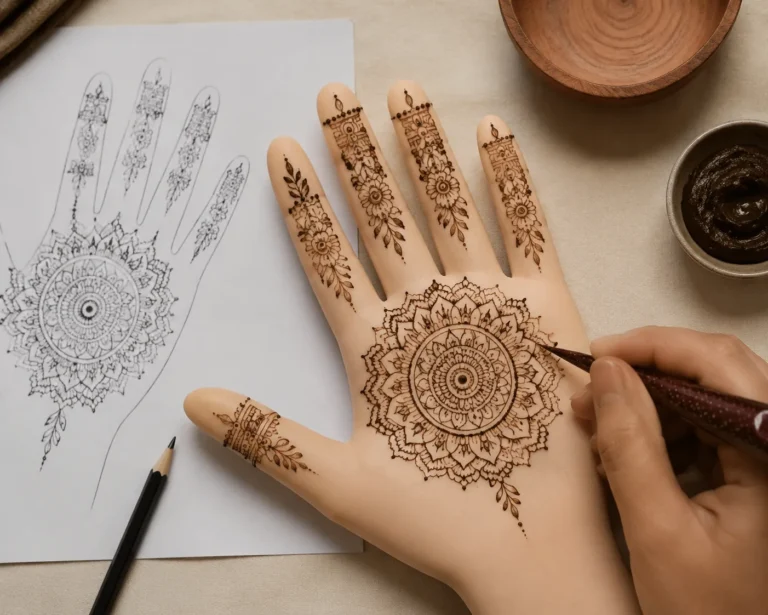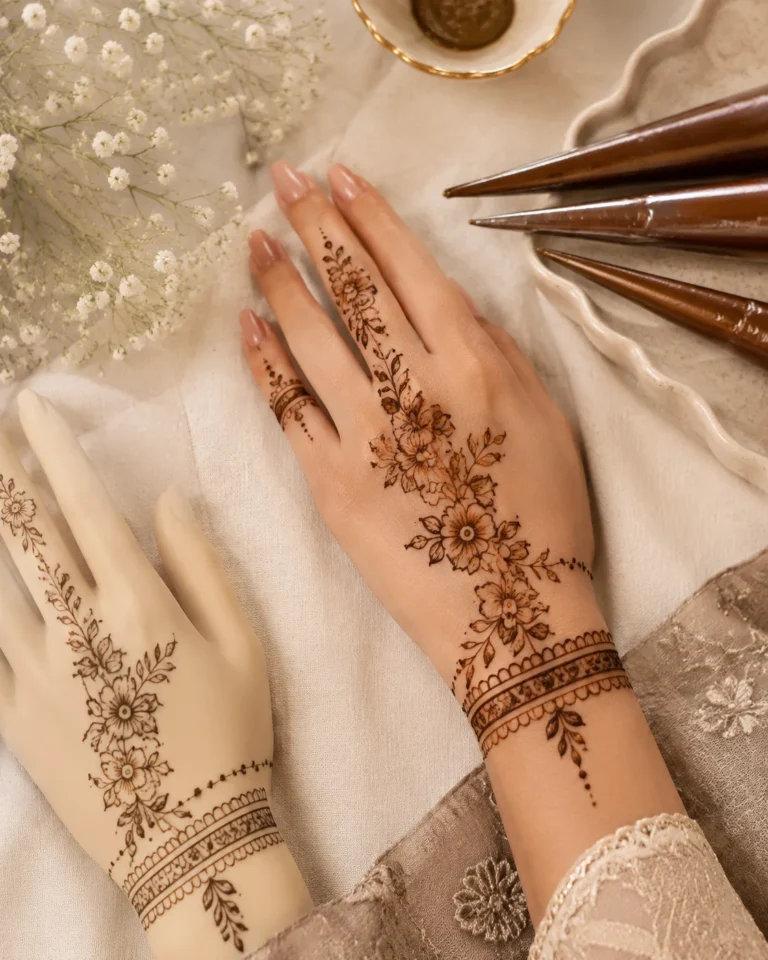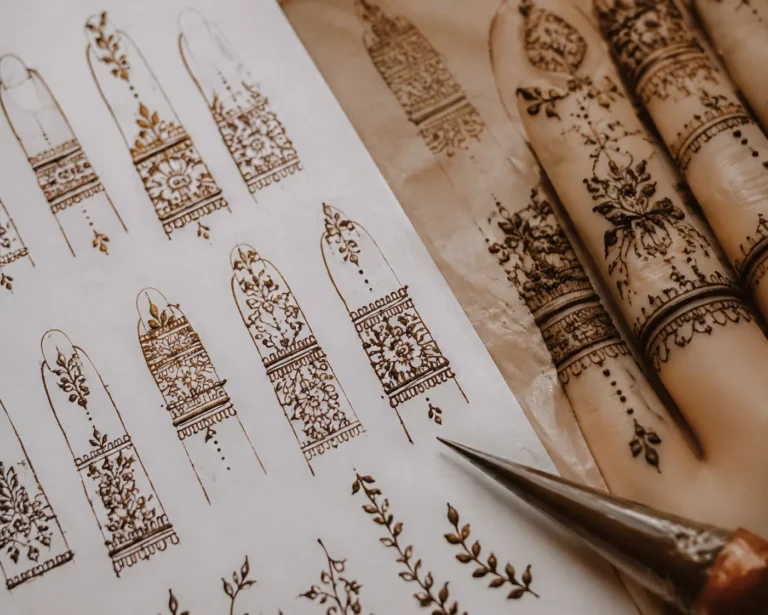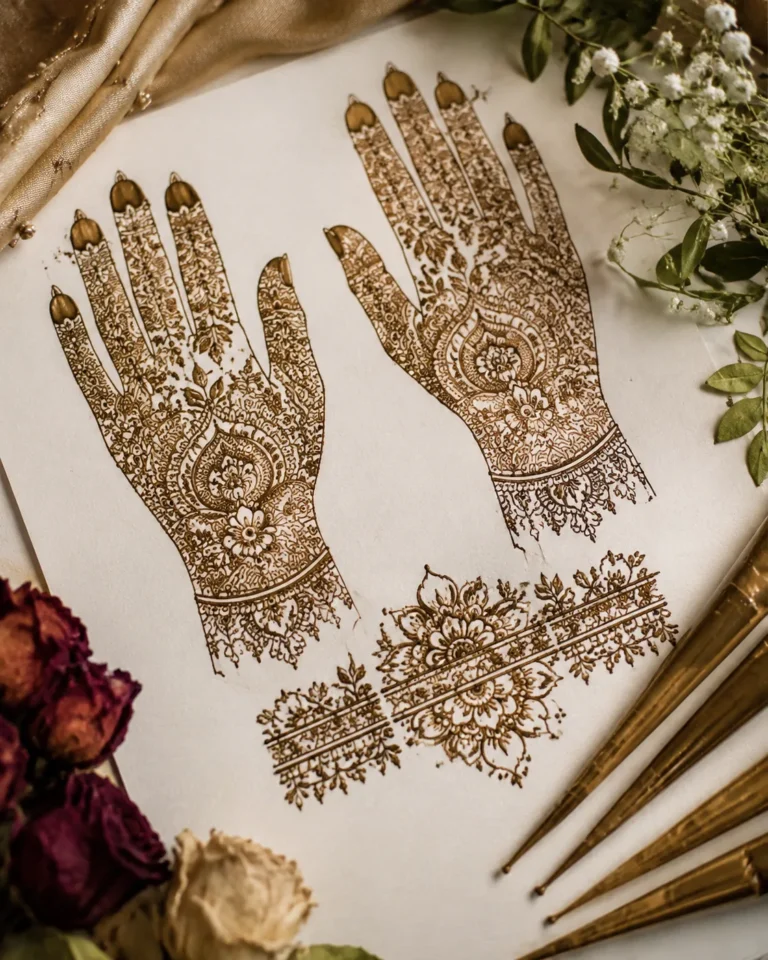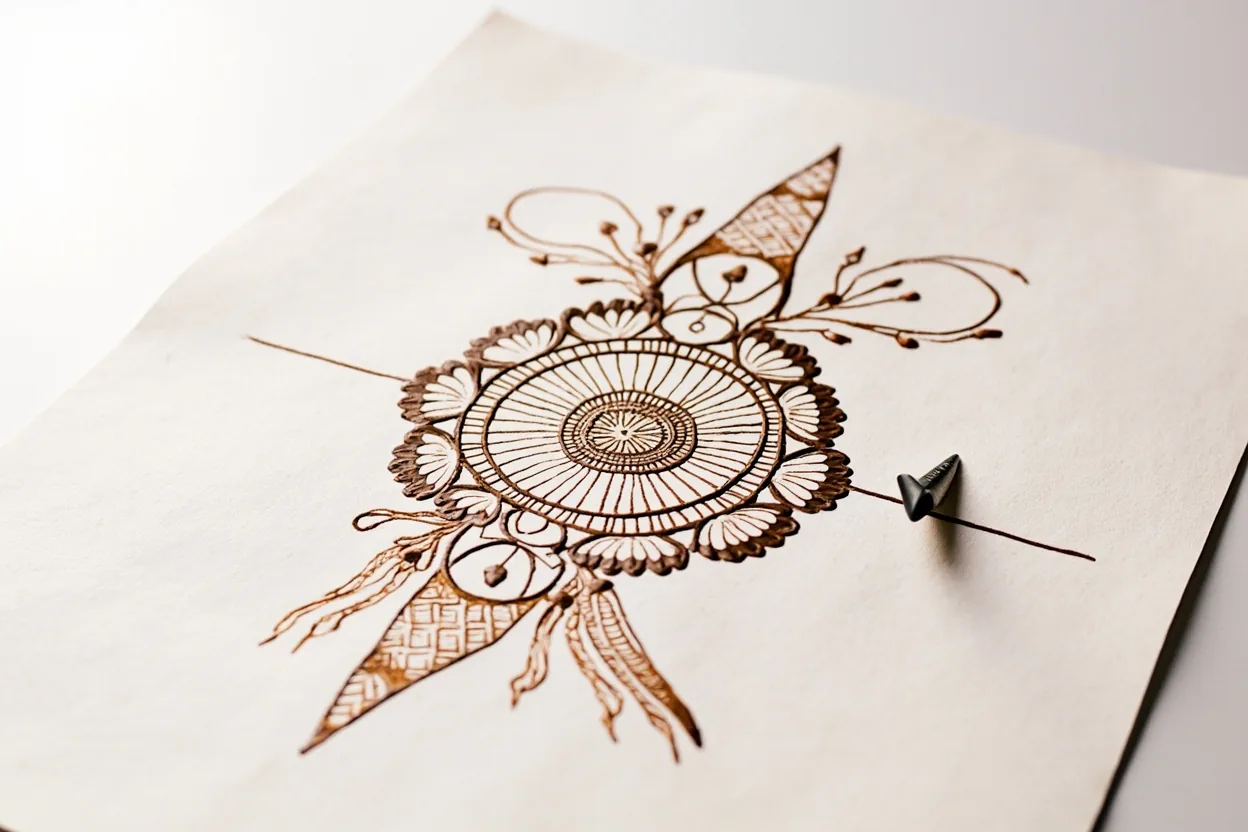
Mandala mehndi designs look simple until the circle is off. Symmetry, ring spacing, and dot control decide whether the design feels calm or messy.
Quick answer: Good mandala mehndi designs include palm centers, back-hand medallions, wrist mandalas, finger-connected circles, bridal mandala fills, and simple dot-ring patterns for beginners.
Mandala mehndi ideas
A mandala design needs a strong center and consistent rings.
| Option | Best use | Keep in mind |
|---|---|---|
| Palm mandala | Classic center | Circle must be steady |
| Back-hand medallion | Jewelry-like focus | Size should fit hand |
| Finger-connected mandala | Full hand flow | Connections can crowd |
| Wrist mandala | Bracelet effect | Small rings blur quickly |
| Minimal dot mandala | Beginner version | Spacing carries it |
Mandala mehndi designs run a wide range. You’ve got full-hand coverage with rings flowing into wrist cuffs, half-hand pieces stopping at the knuckles, and fingertip-only patterns for people who want something delicate. Back-of-hand mandalas sit flat and photograph beautifully, while palm-side work fades faster with wear. For a longer-lasting stain, the forearm is a sweet spot: enough flat skin for the rings to breathe, low movement, and easy aftercare.
Thigh and sternum placements handle larger mandala builds well. Both zones have fewer contours fighting the geometry, so the circles stay true. Shoulder-cap mandalas are popular too but they wrap around muscle, which can distort the outer rings if your artist doesn’t plan the curve. Talk placement with your artist before you commit to a size, not after.
What makes this work on real skin
Henna washes off. Ink stays. Know the difference before you commit.
Mandala mehndi works because the eye expects order. If one ring is rushed, the whole design can feel unstable.
For beginners, fewer rings with cleaner spacing usually look better than many tiny rings drawn unevenly.
Mandala mehndi geometry lives and dies by clean paste flow. The inner rings are usually delicate, intricate lines, and those details need clean, dry skin to sit right. Any excess moisture during application can make the paste spread before it dries. That is a blurred center waiting to happen where the petals stack closest. An experienced mehndi artist will keep the cone steady and work in short, confident passes.
The outer fill sections are where whip shading earns its keep. Soft gradients on the petal edges give the mandala depth without crowding the linework. In black and grey, this contrast is what makes the piece read from across the room. Fully saturated black fills can look brutal fresh but tend to hold better over time than delicate grey washes, which fade first in high-wear spots like the inner wrist or fingers.
Before you book or apply it
Mark the center visually before building the rings around it.
- Start from the center and work outward.
- Repeat shapes consistently.
- Use dots to soften spacing errors.
- Stop before the design gets crowded.
If you’re getting a henna mandala, do it at least 48 hours before any event you’re dressing for. The paste needs 6 to 8 hours to dry fully on skin, and the color darkens over the next day. Showering, cooking, and any chlorine contact will fade it faster. Moisturizing with coconut or eucalyptus oil extends the stain, which typically lasts 10 to 14 days on palms and 7 to 10 on the back of the hand.
For a mehndi application, eat a solid meal beforehand and avoid applying lotion or oil to the skin. Ask your mehndi artist about the placement before the cone starts so you’re not guessing mid-application. Longer mandala sessions, especially anything 4 hours-plus, will leave the paste drying in stages, and details added late need the same careful lemon-sugar seal before they look crisp.
Mistakes to avoid
Do not keep adding rings just because there is space. A mandala can become heavy and lose its center.
Avoid mixing too many floral and geometric styles inside one small circle.
Safety source note: This guide keeps safety advice conservative and points readers to primary public-health or dermatology sources.
The biggest mistake is scaling a mandala too small. Designers compress the rings to fit a wrist or an ankle and the detail collapses within two years. Those fine inner lines blur into a grey smudge as the skin moves and stretches. Bold will hold. Push your artist for a minimum diameter that keeps the ring spacing readable, usually at least an inch of open space between major rings on smaller pieces.
Picking at the dried paste during the first few hours is especially punishing on geometric work. Any lifted paste in a mandala leaves a gap that breaks the symmetry, and touching up delicate geometry before it stains is tedious. Let it dry fully, seal it with lemon-sugar, and leave it on for 1 to 2 hours before gently flaking it away. High-wear zones like fingers and inner wrists will fade faster, so expect the stain to last about 1 to 3 weeks.