
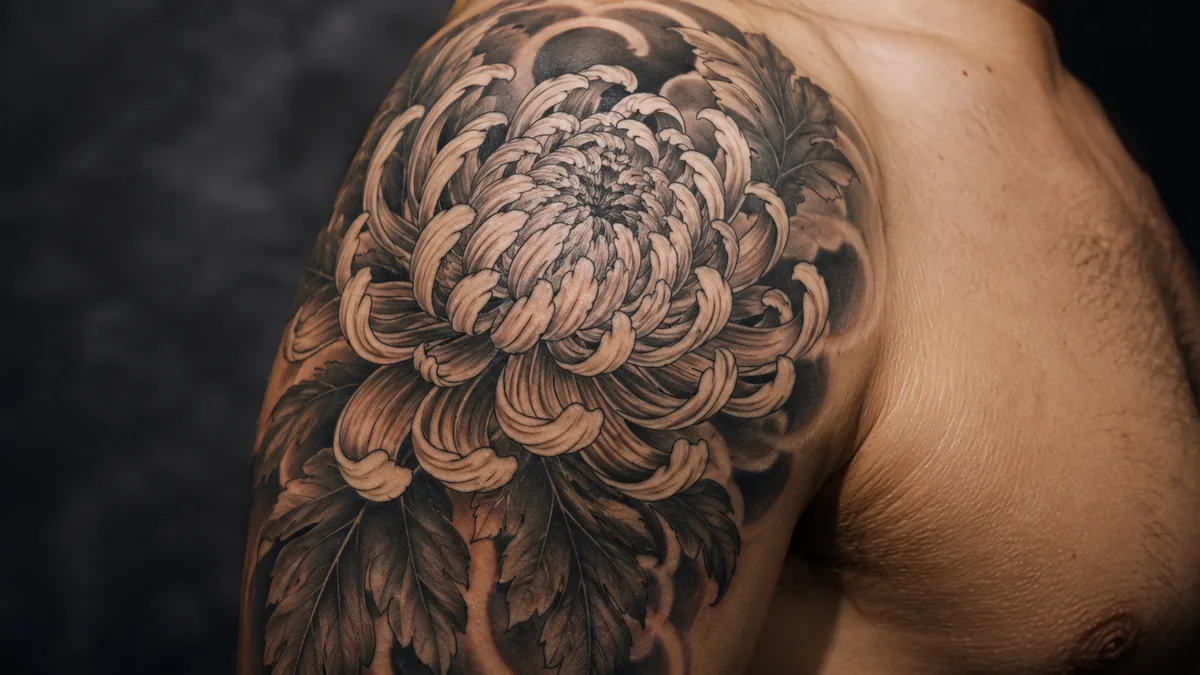
The chrysanthemum is one of the most loaded flowers you can put on your skin. It carries centuries of real cultural weight from East Asia, and it translates beautifully into tattoo work across every style from traditional Japanese to fine line black and grey.
People get this flower for a lot of different reasons. Resilience, longevity, rebirth, joy. The meaning shifts depending on your cultural reference point and the choices you make in the design. Here is what the chrysanthemum actually means and how to wear it right.
Core Symbolism: What the Chrysanthemum Stands For
The chrysanthemum is tied to longevity, perseverance, and joy. It blooms in late autumn, sometimes into the first frost, which is where the resilience reading comes from. A flower that refuses to quit even when everything else is dying. That speaks to a lot of people who have come through hard seasons.
In Western tattoo culture, it also carries meanings of loyalty, love, and rebirth. Some clients choose it specifically as a symbol of renewal after a major life change. Others just know it as a flower that looks incredibly bold in ink and carries enough weight to stand on its own without needing a quote underneath it.
Japanese Roots: The Imperial Flower
A flower that means both death and immortality earns its place on your skin.
In Japan, the chrysanthemum, kiku in Japanese, is the symbol of the imperial family. The 16-petal chrysanthemum seal is the crest of the Emperor. That gives the flower an association with power, nobility, and the sun itself. Japanese tattoo tradition treats it with serious respect, often pairing it with waves, dragons, or koi for full-sleeve compositions.
Beyond royalty, the kiku also represents perfection, simplicity, and a life well-lived. It appears in Japanese funerary tradition too, which adds a layer of honoring the dead or memorializing loss. That dual nature, beauty and mortality together, is exactly why it fits so naturally into irezumi and traditional Japanese tattooing.
Chinese and Other Cultural Meanings
In Chinese culture, the chrysanthemum is one of the Four Gentlemen, alongside orchid, plum blossom, and bamboo. It represents the virtues of a scholar: integrity, humility, and a refined spirit. It’s closely associated with autumn and is considered a flower of retirement and a life of ease after hard work.
The chrysanthemum also shows up in Korean and Vietnamese traditions where it carries similar associations with longevity and health. In Victorian-era European flower language, it generally meant cheerfulness and well-wishing. None of these readings contradict each other much. Across cultures the core stays consistent: endurance, honor, and the dignity of aging gracefully.
Design Styles and Variations
The chrysanthemum translates into basically every major tattoo style. Traditional Japanese work renders it with thick, confident outlines and flat saturated color, usually red, yellow, or white, with bold petals fanning out in a tight radial pattern. Neo-traditional builds on that structure but adds more dimension and a wider color palette. Both styles read from across the room and hold up over decades.
Fine line and botanical realism go a softer route, capturing the layered petal structure with delicate linework and subtle grey washes. Blackwork versions strip the flower down to pure silhouette or intricate dotwork and look especially crispy on larger pieces. Geometric interpretations frame the bloom in mandalas or sacred geometry. Whatever direction you go, the chrysanthemum has enough natural structure to support it.
Color vs Black and Grey
Color chrysanthemums hit hard. Red reads as love or passionate devotion. Yellow ties back to the original solar symbolism and joy. White, especially in Japanese contexts, connects to grief and honoring the dead. Pink is softer, leaning toward affection and admiration. If you want the cultural meaning to come through clearly, color choice matters and a good artist will talk you through it.
Black and grey versions are timeless. A solid black and grey chrysanthemum with well-executed whip shading has a depth and elegance that holds up clean through years of healing. High-contrast black and grey also photographs beautifully, which is not nothing. If you are going fine line, keep the detail work in lower-wear zones or accept that some of the crispness will soften over time. That can look stunning too, just know it going in.
Placement and How It Ages
The chrysanthemum is a round, radial flower with dense petal structure, which makes it naturally suited to thigh panels, upper arms, chest pieces, and shoulder caps. These are relatively flat surfaces where the design can spread without distortion. A medium to large chrysanthemum reads best with room to breathe. Cramming a detailed bloom into a small wrist spot will muddy over years as the lines migrate.
For longevity, avoid high-friction zones like the inner elbow crease, fingers, and feet if you want the detail to stay crisp. The ribcage is a popular placement and looks excellent but it is genuinely spicy and the skin there moves a lot. Upper thigh and upper back are lower wear and tend to heal clean. Bold will hold, so if your artist is recommending thicker line weights, listen.
Who Gets This Tattoo and How to Make It Yours
Chrysanthemum clients span a wide range. Japanese traditional collectors who want the full cultural context. People marking a loss or celebrating surviving something brutal. Folks who just love botanical work and want a flower with actual structure and history behind it. It is popular across genders and backgrounds precisely because the symbolism is rich without being locked into one narrow reading.
To personalize it, think about what the flower means to you specifically and build the surrounding elements around that. Pair it with a specific color tied to your heritage. Add a banner with a date. Set it inside a Hannya mask for a full Japanese composition. Or keep it clean and solo, just the bloom on its own. A great chrysanthemum needs nothing else to carry a room.









