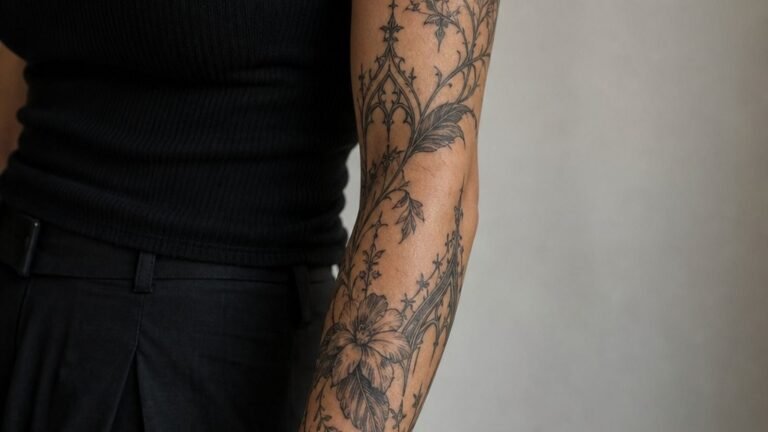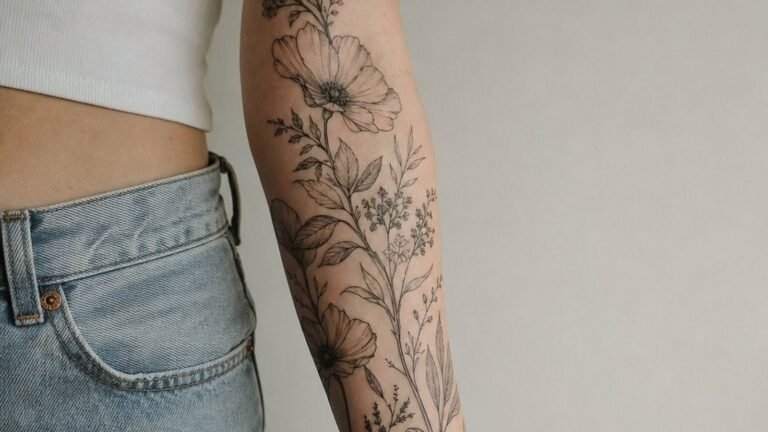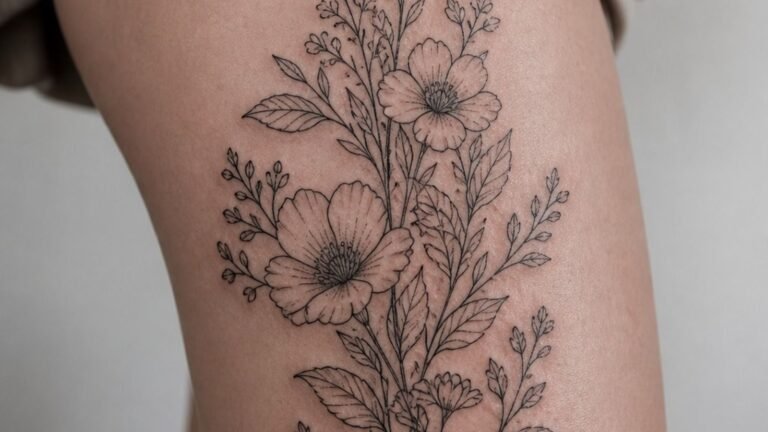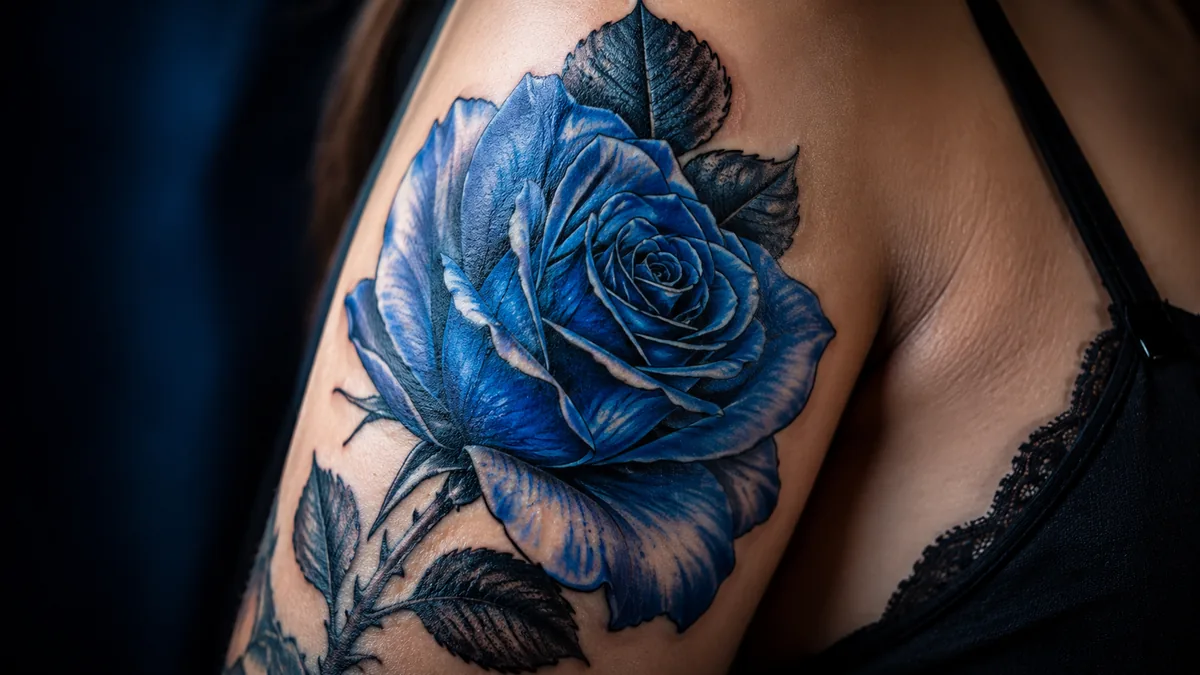
The blue rose doesn’t exist in nature. You can’t grow one. That’s exactly the point. As a tattoo, it carries the weight of that impossibility, representing things you want but can’t quite reach, love that defies logic, beauty that shouldn’t exist but does anyway.
It’s one of the more loaded flower tattoos out there. Not just pretty. People pick blue roses when they want something that says more than a standard red rose can. Here’s what it actually means and how to get it done right.
The Core Meaning: Mystery and the Impossible
The blue rose’s main symbolism comes straight from its impossibility. Naturally occurring blue roses don’t exist. Breeders have been chasing them for centuries without hitting true blue. Because of that, the flower became a symbol of mystery, the unattainable, and the pursuit of something just out of reach. As a tattoo, it says you’re chasing something real to you even if the rest of the world thinks it can’t happen.
People also read it as a symbol of the unique, the extraordinary, or things that exist outside the ordinary world. If you’ve got an unconventional life path, a love story that doesn’t fit the mold, or a dream that people keep telling you is unrealistic, the blue rose speaks to all of that. It’s not a cliché. It earns its meaning.
Love, Longing, and the Unattainable
Blue roses don't exist in nature, that's exactly the point.
In the language of flowers, a blue rose represents unattainable or unrequited love. Red means passionate love you have. Blue means love you want and can’t fully hold. That distinction matters. A lot of people get blue rose tattoos to mark a relationship that ended, a person they couldn’t be with, or a love that existed in a form that couldn’t last. It’s honest ink.
It also carries a sense of longing more broadly. Not just romantic. Missing someone who passed. Grieving a version of yourself or a life that didn’t play out. The blue rose holds space for that kind of quiet, permanent ache. It’s a heavy symbol worn lightly, which is part of why it translates so well to skin.
Historical and Cultural Background
The blue rose has roots in Western literature and art going back centuries. It showed up in poetry as a symbol of the impossible ideal, something beautiful and desired that can never truly be possessed. In Chinese culture, the rose in general carries meanings of prosperity and love, but blue specifically has long been associated with mystery and rarity across many Asian artistic traditions.
In Victorian flower language, called floriography, blue roses were associated with mystery and attaining the impossible. Victorians were serious about flower symbolism, and blue roses stood apart from red and pink as representing something that transcended ordinary romantic love. That meaning has held steady into modern tattoo culture, which is why it still reads as layered rather than basic.
Design Variations: Styles That Work
Blue roses translate well across almost every major tattoo style. Traditional American and neo-traditional give you bold, saturated petals with thick black outlines that read from across the room and hold up for decades. The contrast between deep cobalt or royal blue fill and solid black linework is clean, crispy, and ages predictably. Bold will hold here. Fine line blue roses are popular right now, especially in single-needle or micro-realism, but they need a skilled hand and a low-wear placement to survive long term.
Realism and color realism push the blue into lavender, cerulean, and navy gradients that mimic actual rose petals. Watercolor style drops the outlines and lets the blue bleed soft, though those pieces fade faster. Black and grey blue roses are technically grey, but artists often add a touch of blue wash or blue ink diluted down to give the petals a cool, moody tone. That version is subtle and ages well in most skin tones.
Color Choices and What They Change
Full color blue roses give you range. Royal blue is classic and saturated. Ice blue reads delicate. Navy looks moody. Purple-blue hybrids shift the meaning slightly toward spirituality and transformation since purple carries its own symbolism. When you’re choosing, think about your skin tone. Saturated blues pop on lighter skin and can look muddy on deeper tones unless the artist works with contrast strategically. Talk to your artist about this directly before you commit.
Black and grey with a blue wash is a solid middle ground. It ages more predictably than full saturated color, avoids the fading issues of watercolor, and still communicates the blue rose idea clearly. Some clients go fully black and grey and let the context, like adding a moon or leaving the rose isolated, carry the symbolism without relying on color at all. That works fine. The rose’s shape alone carries the meaning.
Placement and How It Ages
The upper arm, outer forearm, thigh, shoulder blade, and calf are all solid placements for blue rose tattoos. Low-wear zones mean the color stays saturated longer, the lines don’t blur, and you avoid blowout from skin stretching or constant friction. Detailed fine line roses do best on the inner forearm, upper arm, or ribcage if you want that area. Avoid high-wear zones like fingers, palms, and the sides of feet for any detailed color work. It will not hold.
Larger pieces, like sleeve elements or thigh panels, give the artist room to do proper petaling, depth, and shading. Small blue roses work too, but go bolder with the linework if you’re going small. Tiny fine line roses in spicy spots like the ribs or sternum look great fresh but can spread and lose crispness over time. Your artist should tell you honestly what will and won’t survive in your chosen spot.
Who Gets Blue Rose Tattoos and How to Make It Personal
Blue rose clients tend to be people who’ve been through something. Not always, but often. Someone who lost a parent, ended a long relationship, or built a life people said wasn’t possible. It also pulls in people who just love roses but want something that isn’t red, something that feels like theirs specifically. Both are valid reasons to get tattooed.
To make it personal, think about what you’re pairing it with. A crescent moon shifts it toward mystery and intuition. A clock or hourglass adds a time-and-loss layer. Lettering underneath can anchor it to a specific person or date without being heavy-handed. You can also ask your artist to work in a color variant or petal count that means something to you. The design doesn’t need to explain itself to strangers. It just needs to mean something to you.