The cactus tattoo means one thing at its core: you survive. This plant lives in the harshest conditions on earth, stores its own water, and still blooms. That’s not an accident as a tattoo choice.
People get cactus ink for a lot of reasons, and most of them are personal. But there’s a consistent thread running through all of it: strength without needing anyone’s help, and beauty that doesn’t ask for ideal conditions.
Core Symbolism: What a Cactus Tattoo Actually Means
Resilience is the number one read. The cactus doesn’t need rain to show up. It doesn’t fold under heat or drought. For a lot of people, that’s exactly the message they want permanently on their skin. It’s personal armor. It says: I’ve been through dry seasons and I’m still here.
Right behind resilience is protection. Those spines aren’t decoration. They’re defense. A lot of wearers connect with that layer too, especially people who’ve had to build walls to protect themselves. The cactus does both at once: it’s tough on the outside and keeps something vital alive on the inside.
Endurance, Solitude, and Self-Sufficiency
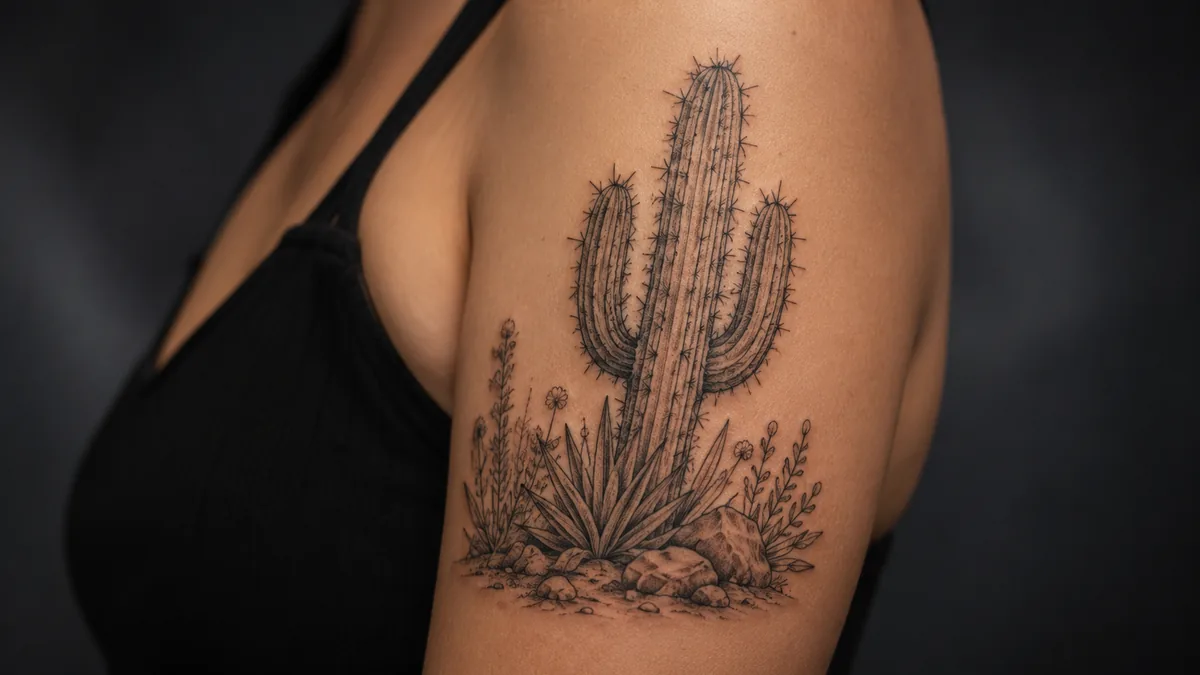
Soft blooms, hard spines, the cactus never apologizes for what it takes to survive.
The cactus doesn’t lean on anything. It stands alone in open desert and thrives. That self-sufficiency hits hard for people who’ve had to figure things out without a support system. It’s a quiet symbol of independence, not the loud kind. The understated kind that just keeps going.
Solitude is part of it too, but not in a sad way. Desert solitude is chosen, clear-headed, peaceful. Some people get a cactus tattoo after a period of isolation that made them stronger. It marks a version of themselves that went inward, did the work, and came out more grounded.
Cultural and Regional Background Worth Knowing
In the American Southwest and Mexico, the cactus is deeply tied to land and identity. The saguaro specifically is protected under Arizona law, and it’s a cultural icon of the Sonoran Desert. For people from that region, the cactus tattoo is also a nod to home, to dry red landscape, to a place that shaped them.
In Mexican folk art and Day of the Dead imagery, the nopal cactus appears as a national symbol. It’s on the Mexican flag. So for Mexican and Mexican-American wearers, a cactus tattoo can carry cultural pride alongside the personal symbolism. That’s a real and common layer of meaning, not a stretch.
Popular Design Variations and Styles
Traditional American bold-line cactus with solid fills reads clean from across the room and ages like a tank. Saguaro, barrel cactus, and prickly pear are the most popular shapes. Add a sunset, a skull, or a simple banner and you’re working in classic territory. Bold will hold, especially on the arm or thigh.
Fine line cactus tattoos blew up with the rise of single-needle work. Detailed, botanical, delicate. They look incredible fresh but need a low-wear zone to survive. Watercolor cactus, geometric line-work, and small minimalist designs are also common. Each style pulls a slightly different crowd, but the meaning stays consistent underneath.
Color Versus Black and Grey
Color cactus tattoos pop hard. Saturated greens, warm desert oranges and yellows, maybe a pink bloom on top. They read bright and lively. If you want the piece to feel warm and celebratory, color is the move. Just know that greens fade faster than blacks, so be ready to come back for a refresh in five to eight years depending on your skin.
Black and grey gives the cactus a more somber, contemplative feel. Whip shade and smooth gradients let you build real texture into the spines and ribs. A lot of people go this route when the meaning is heavier, tied to loss or survival. It sits quieter on the skin and heals nice if your artist knows what they’re doing with grey wash.
Best Placements and How the Tattoo Ages
Forearm and upper arm are the most popular spots for cactus tattoos. Good canvas, easy to show off, holds ink well. Calf is another solid choice, especially for taller designs like a saguaro. These are all low-wear zones relative to hands or fingers, so the tattoo stays sharper longer.
Fine line cactus on the ribs or sternum is common but spicy. Pain is real in those zones, no sugarcoating it. Inner wrist and finger placements look great fresh but fade and blur fast from friction. Blowout risk goes up on thin skin over bone. Talk to your artist about sizing: a cactus needs enough room to read its silhouette clearly, or it loses the whole point.
Who Gets Cactus Tattoos and How to Make One Personal
People who have survived something, people who value independence, people from desert regions, and people who just love the aesthetic. The cactus crosses demographics easily. It works as a first tattoo because it’s legible, versatile, and holds meaning without needing a paragraph of explanation.
To make it personal, add what’s specific to your story. A bloom that matches a birth flower, a specific species from a place that matters to you, coordinates of your hometown underneath. Some clients add small elements inside the cactus silhouette, a tiny moon, a word, an animal. Keep it cohesive and talk it through with your artist before you finalize. A good custom cactus is more than crispy lines. It should tell your version of the story.