The semicolon tattoo started as a mental health movement symbol and it hit hard. The core idea is simple: a semicolon is used when an author could have ended a sentence but chose not to. You are the author. Your life is the sentence.
The anxiety version leans into that same meaning but puts a finer point on it, connecting specifically to the daily battle of living with anxiety disorders. It’s not about a single crisis moment. It’s about showing up every day when your own mind fights you.
The Core Symbolism
The semicolon as a mental health symbol was popularized by Project Semicolon, a nonprofit founded in 2013 by Amy Bleuel. She chose the semicolon because it represents a pause, not an ending. For people living with anxiety, depression, or suicidal ideation, that punctuation mark became a shorthand for continued survival. The anxiety-specific version carries that same weight but focuses on the chronic, everyday nature of anxiety disorders rather than a single breaking point.
People who get this tattoo are saying they chose to keep going. That’s it. No overcomplication needed. The mark is small, the meaning is enormous. It reads immediately to anyone who knows the movement, and it opens conversations that genuinely matter.
Where the Anxiety Angle Comes From
You are the author. The sentence continues.
Anxiety disorders are the most common mental illness in the US, affecting over 40 million adults. As awareness around mental health grew through the 2010s, people wanted visible symbols of that struggle. The semicolon fit because anxiety rarely has a clean narrative. You don’t recover once and walk away. You pause, keep moving, pause again.
The phrase ‘anxiety semicolon’ became its own tattoo category as people started combining the base symbol with imagery specific to anxiety, things like storm clouds, cracked hearts, the word ‘breathe,’ or wave designs that represent being overwhelmed and still swimming. The anxiety angle isn’t separate from Project Semicolon’s roots. It’s a natural extension of them.
Popular Design Variations
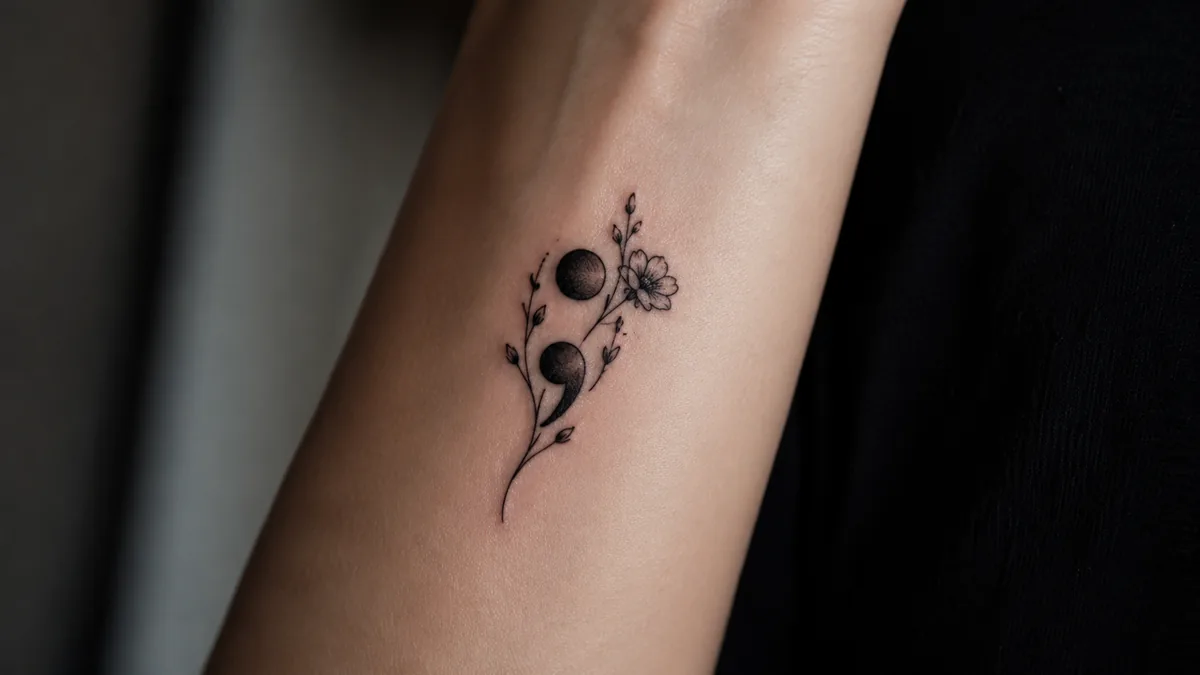
The straight semicolon is the most common. Clean, minimal, fine line. You see it on wrists, inner arms, behind ears, on fingers. Some people integrate it into a larger piece, turning the dot into a heart, a butterfly, or a lotus. Others script a word through it, ‘survivor,’ ‘breathe,’ ‘still here.’ Butterfly variations are especially popular because the butterfly life cycle maps well onto the symbolism of transformation and survival.
For the anxiety-specific builds, storm imagery shows up a lot. A semicolon inside a storm cloud, a lightning bolt replacing the tail, rain lines dropping from the dot. Wave designs are big too. Some clients go full sleeve anchor piece with the semicolon as the focal point surrounded by choppy water that calms into smooth lines. The symbol is small but it scales into complex compositions without losing its meaning.
Fine Line vs Bold Traditional
Fine line is the dominant style for semicolon tattoos. It photographs clean, heals soft, and the minimalism matches the intimate nature of the symbol. A 10mm fine line semicolon on the inner wrist is the bread and butter of this category. The issue with fine line is longevity. Hair-thin lines in high-wear zones like the wrist or finger can fade and blur within three to five years, especially on oilier skin types.
Bold outline versions hold way longer. A solid 2-3mm line weight reads from across the room and stays crispy for decades in good conditions. If someone wants this tattoo to look sharp at 50, I steer them toward a thicker stroke or a blackwork style with some weight to it. Fine line is beautiful but bold will hold. That’s just facts.
Color Options and Black and Grey
Most anxiety semicolon tattoos run black and grey or solid black. The restraint is intentional. This isn’t a flash piece. The simplicity is part of the statement. A saturated single-needle black semicolon with no color is the classic for a reason. It’s serious, permanent, and clean.
That said, color shows up. Watercolor washes behind the symbol are popular, soft purples, blues, teals. Some clients want a full-color butterfly or flower integrated into the design. The challenge with watercolor is that it fades faster than solid color, so I always recommend anchoring the edges with real linework. An unanchored watercolor piece will look muddy in five years. Give it a clean outline and it holds.
Best Placements and How They Age
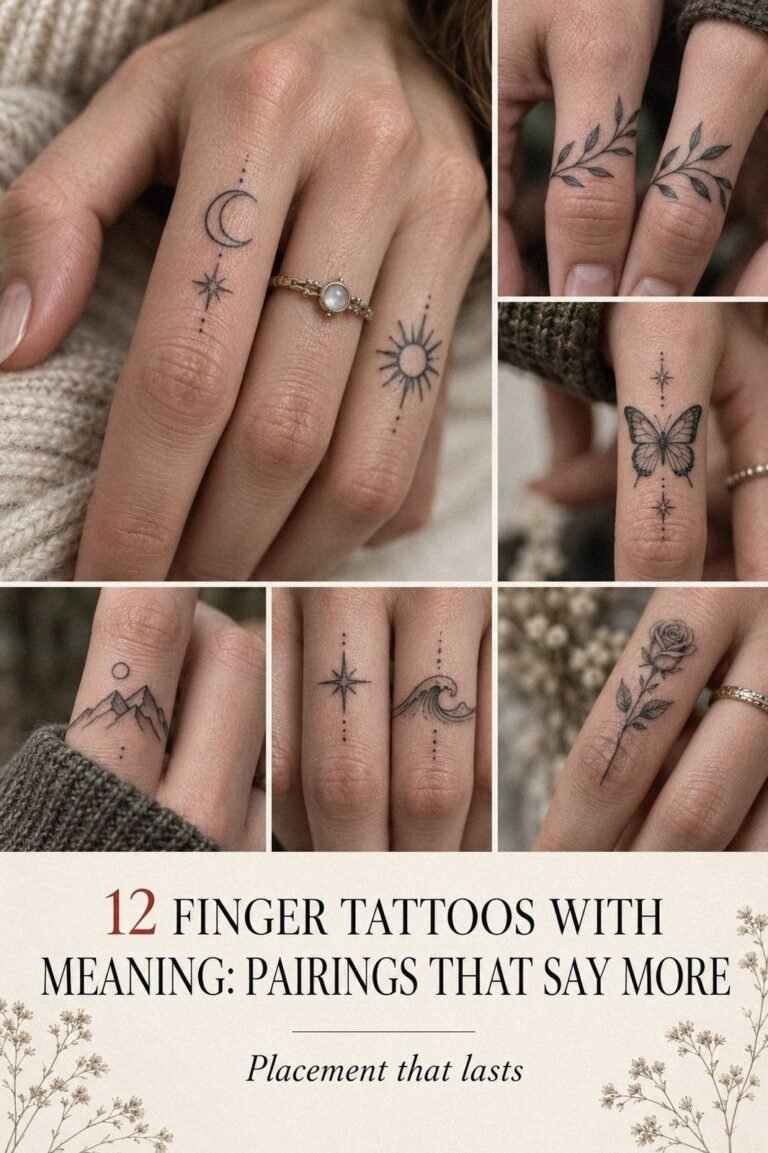
Inner wrist is the most common spot and it makes sense. It’s visible during everyday moments, easy to show or cover, and heals reliably. The wrist is a medium-pain zone, nothing spicy. Behind the ear is popular for a more private placement. Finger tattoos look great fresh but the skin there regenerates fast. Expect touchups every few years or significant fading. High-wear zones age rough.
Inner forearm is the sleeper pick. Great skin, minimal sun exposure if you’re wearing sleeves, holds ink beautifully. Shoulder and upper arm work well for larger builds with added imagery. Collarbone and sternum placements are chosen when someone wants the tattoo near the heart, literally. Those areas have solid longevity. Avoid knuckles and palms for a piece this meaningful. You’ll be chasing it forever.
Who Gets This Tattoo and How to Make It Personal
This tattoo cuts across every demographic. I’ve done it on 18-year-olds and 60-year-olds, every gender, every background. What they share is a relationship with mental health, personal or in support of someone they love. Some people get the date of a turning point worked into the design. Some add the initials of someone they lost. Some get it matching with a friend or sibling who fought the same battle.
Making it personal means thinking beyond the symbol itself. What imagery connects to your specific experience of anxiety? Water, fire, geometric structure, botanical, abstract line work. Bring reference images to your artist and talk through what each element means to you. A good artist will build around the symbol in a way that’s cohesive and personal, not just dropped-in clip art. The base meaning is universal. The execution should be yours.