The inside of the arm, sometimes called the inner bicep, the ditch, or the forearm’s soft side, carries a reputation for being both personal and surprisingly tricky. Skin here moves constantly, stretches with muscle growth, and sits in a spot where sunlight rarely reaches but friction from clothing hits daily. That combination makes it one of the more interesting places to work, and one that rewards careful planning more than most.
Popular Styles That Hold Up
Line Work and Single-Needle Pieces
Thin lines age faster on the inner arm than on the outer forearm or calf. The skin here flexes and compresses with every bend of the elbow, which gradually blurs delicate details. Single-needle tattoos can look stunning fresh, but on the inner bicep especially, expect some softening within three to five years. That isn’t failure, it’s physics. For longevity, line-based designs should carry slightly heavier weight than what looks perfect on paper, or be placed higher toward the shoulder where movement is less dramatic.
Black and Gray Realism
This style dominates the inside arm for good reason. Smooth gradients hide the minor blowouts that happen when skin stretches during tattooing, and the tonal range ages gracefully even as lines soften. Portraits, animals, and organic subjects all translate well. The ditch (inner elbow crease) remains challenging for smooth shading, artists often work around it or design pieces that incorporate the natural contour rather than fighting it.
Traditional and Neo-Traditional
Bold outlines and limited color palettes were developed partly for longevity, and they earn their reputation here. Traditional designs on the inner forearm or bicep maintain readability for decades. The limited color range, heavy black, red, yellow, green, also means less trauma during application, which matters on skin that can swell and bruise more than tighter areas.
Script and Lettering
Words on the inner arm carry natural intimacy, you’re showing them to someone, not broadcasting to a room. But script demands attention to placement. The inner forearm’s length works for phrases; the inner bicep’s curve suits shorter words or single names. Lettering should avoid the ditch entirely, as the crease distorts text and accelerates aging. Sans-serif fonts generally hold crisper edges than elaborate scripts.
Design Ideas by Specific Location
Inner Forearm
This is the most visible inside-arm placement, shown when sleeves roll up or hands gesture. Designs here often serve as daily personal markers rather than hidden secrets. Effective choices include:
- Vertical compositions that follow the bone structure
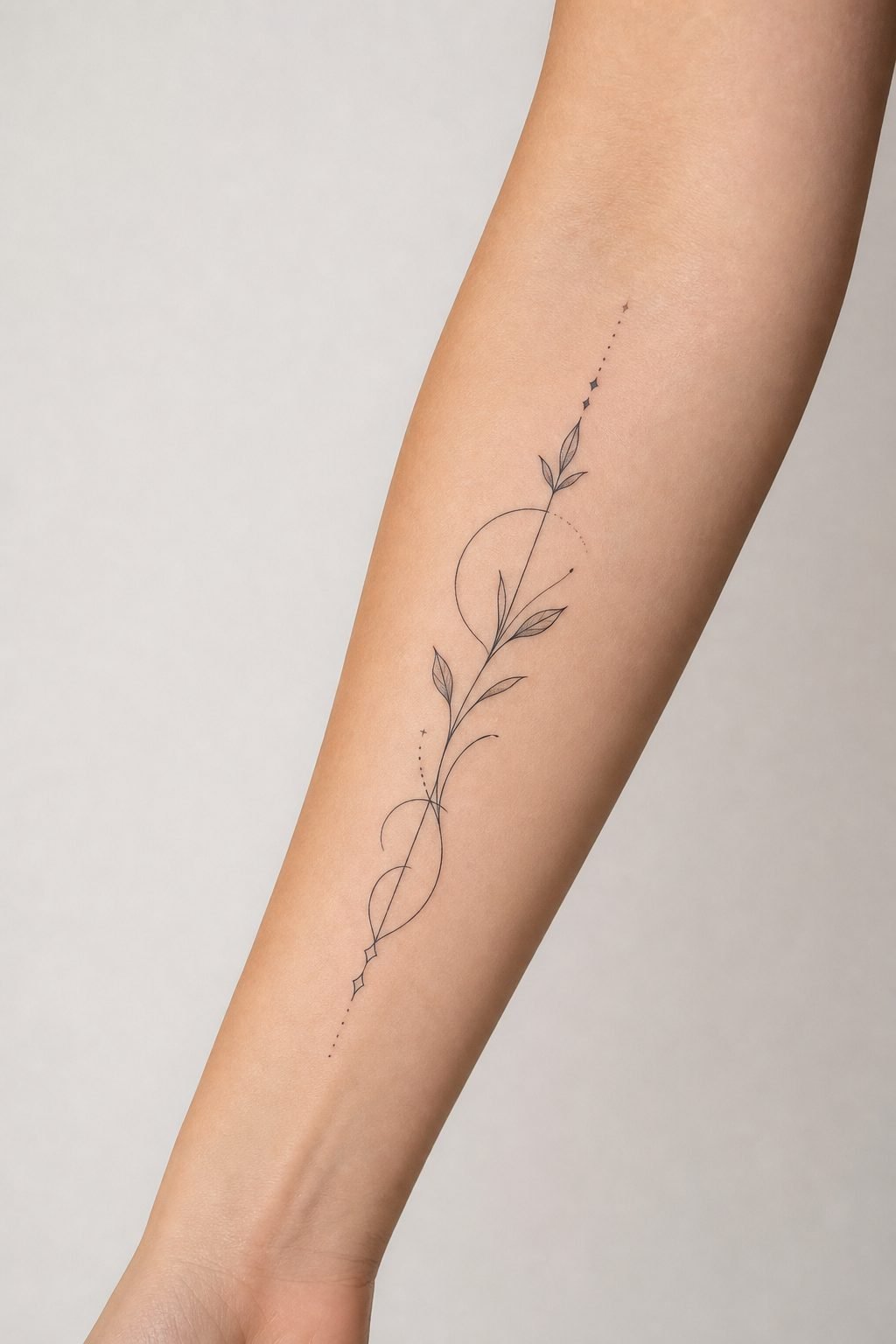
- Floral stems or vines that wrap slightly toward the wrist
- Geometric patterns that use the forearm’s flat plane
- Animals in profile, facing toward or away from the body
The inner forearm heals relatively easily compared to the ditch or inner bicep, though the ulnar nerve area (pinky side) can be sensitive during sessions.
Inner Bicep
Hidden when arms hang naturally, revealed with a flex or a rolled sleeve. The muscle’s peak and valley create natural framing. Designs that work with this topography succeed more often than those that ignore it. Common effective approaches:
- Wraparound elements that start on the inner bicep and continue to the outer arm
- Central images with soft edges that can accommodate muscle growth
- Text placed above the muscle’s fullest point, not across its flex line
Weight fluctuations and gym habits change this area more than most. A design that looks centered on a relaxed arm may shift when the muscle is pumped.
The Ditch (Inner Elbow)
Not technically “inside of arm” in the broad sense, but often incorporated into larger pieces. Skin here is thin, wrinkled, and subject to constant folding. Solid black or heavy saturation works better than detail. Many artists recommend avoiding the ditch entirely for first tattoos, or using it only for connecting elements between forearm and upper arm pieces.
Best Placements for Different Body Types
Arm shape affects tattoo appearance more than most people anticipate. Thinner forearms with visible veins suit delicate work less well than expected, the subcutaneous structures create visual noise beneath the ink. Slightly fuller inner arms provide cleaner canvases for detailed work.
For muscular builds, the inner bicep offers dramatic reveal potential but requires designs that won’t distort with size changes. A piece that looks balanced at 15-inch biceps may compress and crowd at 17 inches. Artists often size inner bicep work slightly smaller than clients initially want, anticipating natural growth.
On larger arms, the inner forearm’s flat surface becomes more pronounced, making it ideal for geometric or symmetrical designs that need stable ground. The relative lack of contour variation means images read clearly from multiple angles.
Color Choices and Aging
Black and Gray
Unquestionably the safest long-term choice for the inner arm. Without sun exposure, black ink stays remarkably true here, often better than on the outer arm where UV fades even the best work. Gray wash can develop a slightly greenish cast over time as the black particle size settles, but this happens gradually and uniformly.
Color Saturation
Reds and oranges perform well on the inner arm’s protected skin. Blues and purples can muddy faster, particularly in the ditch or inner bicep where lymphatic flow is more active. Yellows and whites require heavy saturation to remain visible; on lighter skin, they often become skin-tone within a decade. On darker skin, white ink is generally avoided entirely in favor of negative space or darker contrasts.
Color realism on the inner arm demands commitment to touch-ups. The flexing and friction this area experiences means even well-saturated color may need refreshing at the seven-to-ten-year mark.
Tips for Choosing Your Design
- Consider your daily movement. If you work at a desk with arms bent, the inner forearm crease sees constant action. Designs crossing this line will age faster.
- Plan for the long flex. Hold your arm straight, then bend it fully. Watch how your skin stretches and compresses. Any design should look acceptable in both states, not just one.
- Match the artist to the style. Inner arm work requires confidence with stretching skin and unconventional positioning. Not every artist who excels on flat back pieces handles the arm’s complexity equally.
- Think about hair growth. Inner arm hair is often lighter and sparser than outer arm, but it varies significantly. Dense hair can obscure fine detail; plan accordingly or commit to maintenance.
- Allow for swelling in your schedule. Inner bicep and ditch tattoos swell more than most placements. Don’t plan tight-sleeve events or gym sessions in the first week after.
Final Thoughts
The inside of the arm rewards designs that embrace its intimacy and accept its limitations. This isn’t the place for showpieces meant to dominate a room, it’s for work that matters to you, revealed selectively, carried through daily motion. Choose weight over delicacy, placement over coverage, and an artist who understands how skin moves. The best inside-arm tattoos look like they grew there, not like they were applied despite the location.
Frequently Asked Questions
How painful is an inner arm tattoo compared to other placements?
The inner bicep ranks moderate to high for most people, with the ditch being notably intense due to thin skin and nerve proximity. The inner forearm is generally more manageable, though the ulnar side near the elbow can sting. Pain varies individually, but expect more sensitivity than the outer arm.
Will an inner arm tattoo stretch if I build muscle?
Moderate muscle growth typically causes minimal distortion, but significant size increases, several inches on the bicep, can shift placement and compress designs. Inner forearm pieces are more stable. Discuss your fitness goals with your artist during the design phase.
How long does an inner bicep tattoo take to heal?
Surface healing runs about two weeks, but the inner arm’s constant movement and friction from clothing can prolong irritation. Sleeping with the arm straight and wearing loose sleeves helps. Full settling of the ink takes closer to six weeks.
Can I cover old scars with an inner arm tattoo?
Scar tissue on the inner arm is common and usually tattooable once fully healed, typically one to two years old. The texture affects ink saturation, so experienced artists often work scar areas more slowly. Results vary by scar depth and type.
More Tattoo Ideas
- Line Drawing Simple Star Wars Tattoo Ideas
- Minimalist Spongebob Tattoo Ideas
- Small Butterfly Tattoos for Women: Ideas Placement
- Explore more