
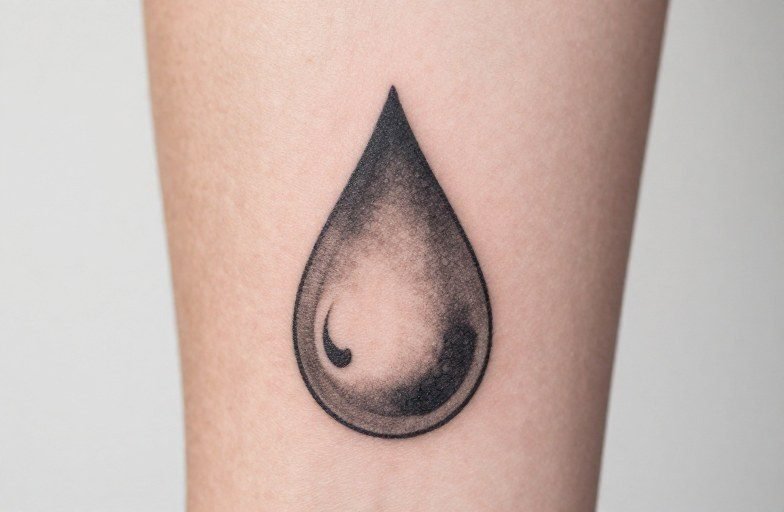
The filled tear drop tattoo most commonly represents loss, grief, or time spent, meanings that shift based on cultural context, placement, and whether the drop sits alone or among other imagery. Unlike an outline-only version, the solid black fill creates a heavier, more permanent visual statement that reads clearly from a distance and ages distinctly on skin.
Symbolism & History
Origins and Cultural Layers
The tear drop’s tattoo history is often linked to prison and street culture, particularly in the 1970s, 1980s American West Coast scene. Some trace it to Chicano tattoo traditions where a filled drop indicated a completed act, time served, or mourning for a lost friend or family member. The distinction between filled and unfilled mattered: an outline might signal intent or incomplete status, while solid black marked finality.
Outside carceral contexts, the symbol traveled into broader tattoo culture through music, film, and migration between communities. By the 1990s, it appeared on mainstream figures, sometimes with genuine personal meaning, sometimes as aesthetic appropriation. This dual life means the filled tear drop now carries unavoidable historical weight even when worn by someone with no connection to its original contexts.
Contemporary Meanings
Today’s wearers often choose the filled drop for:
- Survived trauma or depression, “the tears I held back and finally released”
- Lost loved ones, especially when paired with initials, dates, or small companion imagery
- Personal transformation, “the end of a chapter that cost me something”
- Solidarity with others who’ve experienced similar grief
The fill itself becomes symbolic: nothing hollow, nothing temporary, a complete emotional state made visible.
Common Variations & Styles
Single vs. Multiple Drops
One filled tear drop keeps the message ambiguous enough for personal interpretation. Multiple drops, two, three, sometimes running down the cheekbone pattern, amplify the statement. Three drops often reference specific losses or a cumulative period of hardship. Placement in a vertical line mimics natural tear tracks; scattered placement suggests repeated, separate events.
Stylistic Approaches
Traditional American: bold black fill with a slight blue highlight or white dot to suggest wetness. Clean edges, minimal shading, reads well at small sizes.
Black and grey realism: softer edges, subtle gradation from dark core to lighter “surface tension” rim. Requires more skin real estate to execute properly, tiny realism blurs faster.
Neo-traditional: decorative elements, jewel-tone fills replacing pure black, ornamental framing. The tear drop becomes a vessel rather than a literal fluid shape.
Minimalist: pure geometric form, no highlight, no embellishment. Lives or dies on precise execution and perfect healing.
Companion Imagery
Roses, clocks, broken chains, or text transforms the drop’s meaning. A filled drop above a rose suggests beauty grown from grief; with a clock, time lost or time that changed everything. These combinations help personalize a symbol that otherwise risks misinterpretation.
Best Placements
Face placement, high on the cheekbone, outer eye corner, or temple, carries the strongest historical association and the most social weight. Even in progressive shops, artists may discuss this placement extensively with clients due to its loaded visibility. The skin here is thin, mobile, and sun-exposed; black fill holds reasonably well but can soften at edges within 5, 10 years.
Behind the ear offers concealment with occasional reveal. The curved surface distorts the drop shape slightly when viewed straight-on, so artists often elongate the design to compensate.
Neck and collarbone placements read as serious but less confrontational than facial work. The flat planes allow clean fill application, though sun exposure requires consistent protection to prevent greying.
Inner forearm and wrist maintain visibility for the wearer while allowing cover-up with sleeves. These areas heal predictably and suit smaller designs well.
Ribcage and chest provide space for larger compositions where the drop integrates into broader memorial pieces. The stretch and movement here demands slightly thicker line work to maintain crisp edges long-term.
Who Chooses This Tattoo / Personal Meanings
There’s no single demographic. The filled tear drop appears on people who’ve lost partners to overdose, survived suicide attempts, done time, buried parents young, or simply processed depression through body modification. The common thread is a desire to externalize something internal without explaining it verbally.
Some wearers specifically want the historical edge, the prison association, the danger implied. Others actively work against that reading, choosing delicate surrounding imagery or soft placement to redirect interpretation. Neither approach is more “authentic”; tattoo meaning has always been negotiated between wearer, viewer, and cultural moment.
One genuine consideration: in professional contexts, visible tear drops still trigger assumptions. Clients choosing face or neck placement should understand this isn’t neutral imagery, regardless of personal intent. The symbol’s weight precedes individual narrative.
Similar Symbols
Outlined tear drops (unfilled) historically suggested incomplete status, ongoing mourning, or intended action not yet taken. Today many wearers simply prefer the lighter visual weight.
Single straight tears, elongated, less bulbous, appear in Japanese tattoo tradition as part of larger narrative scenes, often representing rain or divine sorrow rather than personal grief.
Broken hearts with bandages, stitched wounds, or coffin imagery occupy adjacent symbolic territory but carry less ambiguous cultural baggage.
Hourglasses and wilting flowers express time and loss through more universally legible imagery, useful for those wanting memorial meaning without the tear drop’s specific associations.
How the Ink Ages
Solid black fill ages better than fine detail or heavy greywash. Over decades, the drop may soften at edges, develop a slight blue cast as black pigment particles break down, or spread minimally into surrounding skin. On face and neck, sun exposure accelerates this; on covered areas, the design stays crisper longer.
Touch-ups are straightforward, refill the center, sharpen the outline. The simplicity of the form is its longevity advantage. Complex highlight effects (white ink dots suggesting wetness) tend to fade or yellow faster than the black core, sometimes requiring revision to maintain the intended dimensional look.
Final Thoughts
The filled tear drop remains one of tattoo culture’s most loaded simple forms, small enough to complete in minutes, heavy enough to carry for life. Its meaning depends on who wears it, where they place it, and what surrounds it, but the symbol’s history always hums beneath individual interpretation. For those drawn to it, the question isn’t whether the design “works” aesthetically; it’s whether they’re prepared to carry its full weight in public. Good artists will discuss this openly, not to discourage but to ensure the choice lands with clear intention. The best tear drop tattoos come from that honesty, wearer and artist both understanding exactly what mark is being made.
Frequently Asked Questions
Does a filled tear drop always mean someone has been to prison?
No. While the symbol has strong historical links to incarceration culture, many people wear it for personal grief, survival, or memorial reasons. Context, placement, surrounding imagery, and the wearer’s background, shapes how it’s read.
What’s the difference between a filled and outlined tear drop?
Traditionally, filled indicated completion or finality, time served, loss finalized, while outlined suggested something ongoing or intended. Today these distinctions blur, and many choose based purely on visual preference rather than coded meaning.
How small can a filled tear drop be and still age well?
Extremely small drops (under dime-sized) risk blurring into solid blobs over time. For longevity, aim for at least the size of a nickel, with clean oval proportions rather than needle-fine points that won’t hold definition.
Can a filled tear drop be covered up or removed later?
Cover-ups are challenging due to dense black fill, though possible with larger surrounding designs. Laser removal works but requires more sessions than lighter ink due to the concentrated black pigment. Consider this permanence part of the symbol’s weight.
Related Tattoo Meanings
- Five Point Star Tattoo Meaning: Symbolism, Styles What to Know
- Ganesha Tattoo Meaning: Symbolism, Styles Placement Guide
- Shooting Star Tattoo Meaning: Wishes, Change Fleeting Beauty
- Explore more









