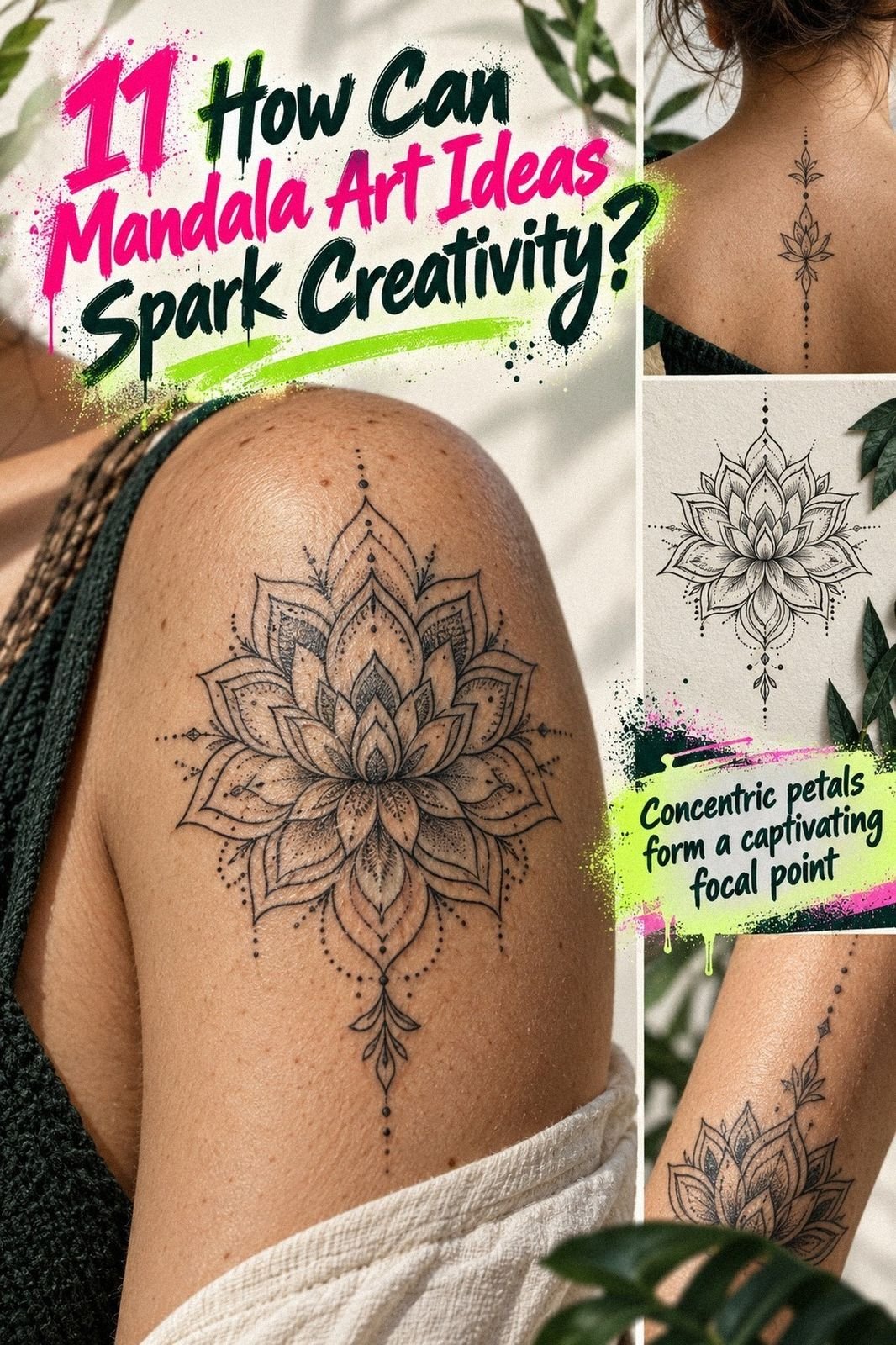
Mandala art tattoos can stay crisp and meaningful without a huge budget. I’ve learned that the best savings often start with smart tattoo placement before you book.
Don’t overthink: Dotwork Mandala Art for Fine-Line Skin.
Choose a design your artist can finish in one focused session. You’ll avoid extra revisions and protect the linework. Simple planning matters!
Editor’s note: the strongest budget mandalas usually have one memorable idea, deliberate spacing, and enough open skin for every mark to breathe.
- Start with a Sacred Mandala Tattoo Centerpiece
- Dotwork Mandala Art for Fine-Line Skin
- Where Should Flowing Mandala Art Sit on the Forearm?
- Keep Negative Space Crisp Around Floral Mandala Ink
- Plan a Fierce Geometric Mandala Sleeve
- Layer Symbolic Moons Inside Your Mandala Tattoo Design
- Delicate Mandala Art Behind the Shoulder
- Balance Bold Petals with Sharp Mandala Linework
- Add Meaningful Initials Within a Circular Mandala
- Can You Tolerate a Rib Mandala Tattoo?
- Protect Vibrant Mandala Ink Through Careful Healing
1Start with a Sacred Mandala Tattoo Centerpiece
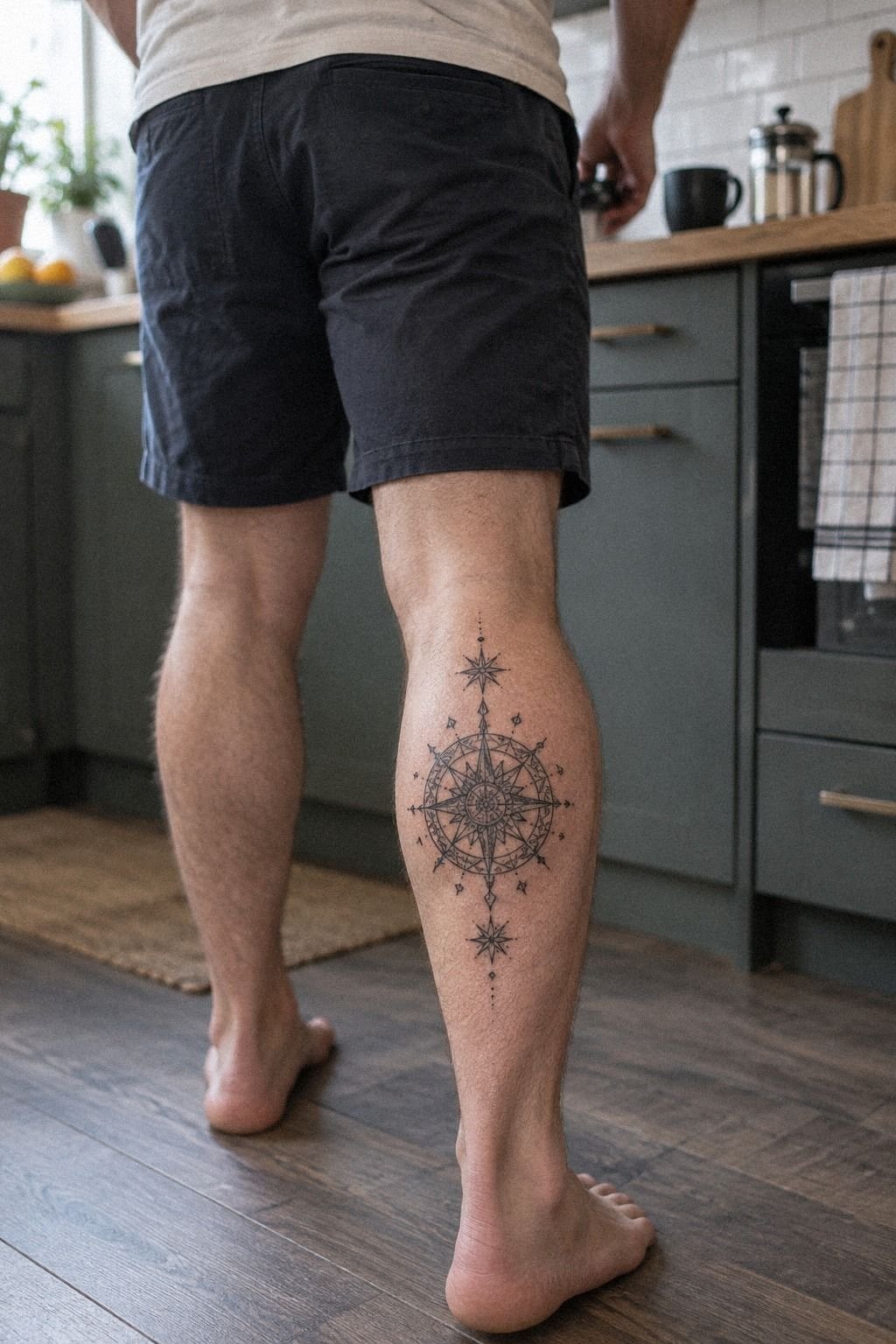
Begin with one clear focal point. Add stars, rings, or surrounding marks only after the center feels complete.
A geometric mandala tattoo with varied star sizes guides the eye outward. The result feels sacred, symbolic, and personal without heavy shading.
The calf gives you a practical starting point. It usually offers more workable surface than a wrist or finger.
I’d keep tiny details apart because close marks can blur as skin changes. A carbon-black ink center with open skin around each star looks more striking than a crowded design.
Use one center, one supporting ring, and a few stars. I call this the Sacred Center Rule.
You don’t need twelve symbols to make the tattoo meaningful. You’ll spend less when your artist isn’t redrawing a complicated composition during the appointment.
Before you book, compare your idea with this guide to modern mandala art. Notice how scale changes the mood. Bring one focused reference instead of a folder filled with conflicting designs.
2Dotwork Mandala Art for Fine-Line Skin
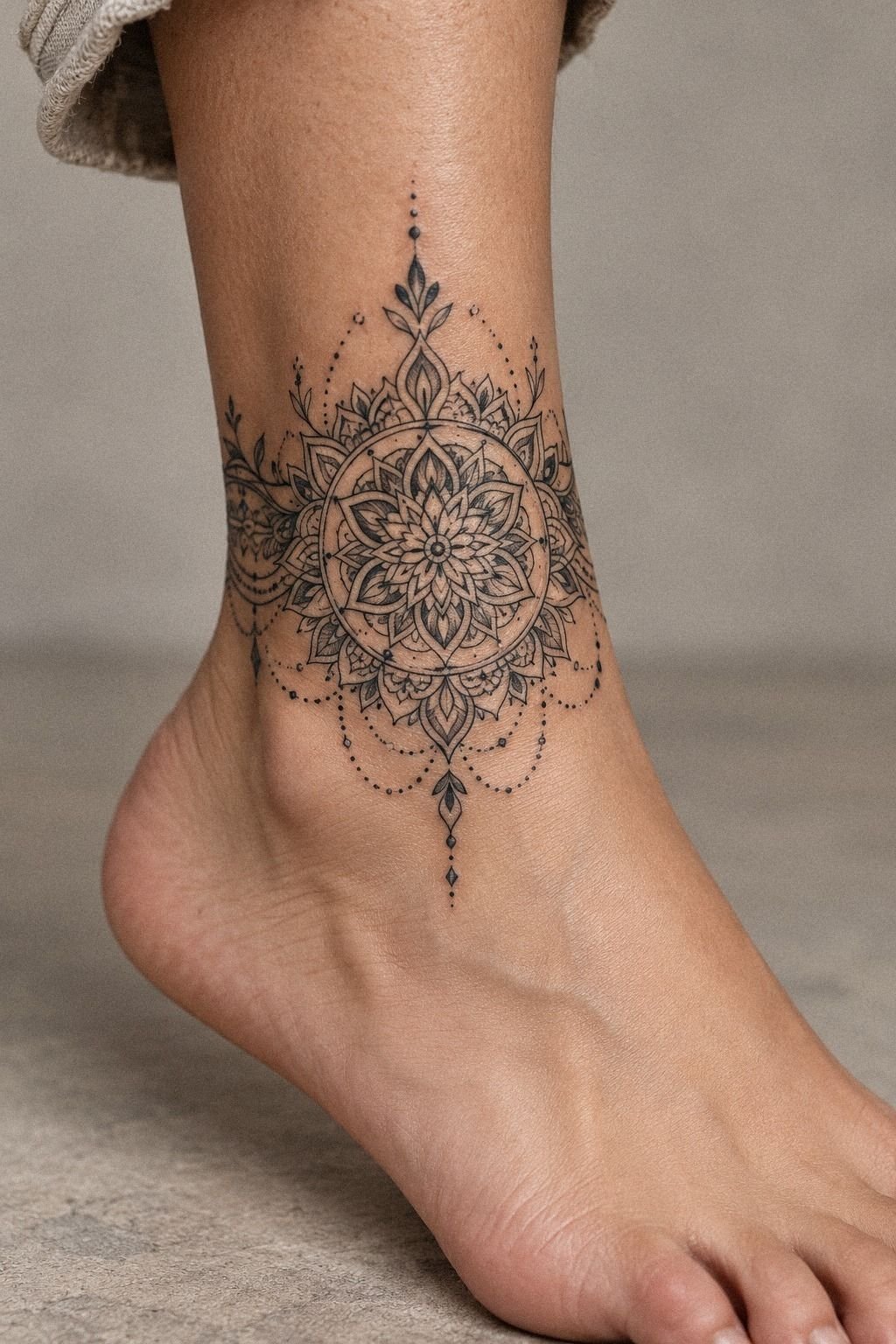
Choose dotwork when you want an intricate mandala that feels delicate rather than dense. Tiny points create shading and rhythm without filling every section with solid black. The finished design can feel ornate while keeping its shape readable.
Ask your artist how many dots the design truly needs. A dotwork stencil should show the main circles, petals, and spaces before the appointment. If every gap is packed with texture, the tattoo may lose its crisp silhouette.
Dotwork can help control session time. Your artist can concentrate texture in a few areas and leave the surrounding skin open. The result can feel understated and polished without requiring a long appointment!
Study this dotwork art reference before deciding. Look for clean outer edges, graceful spacing, and a strong center. Designs that rely on detail everywhere are harder to simplify later.
3Where Should Flowing Mandala Art Sit on the Forearm?
Follow the natural length of your forearm instead of forcing a round design into a narrow area.
4Keep Negative Space Crisp Around Floral Mandala Ink
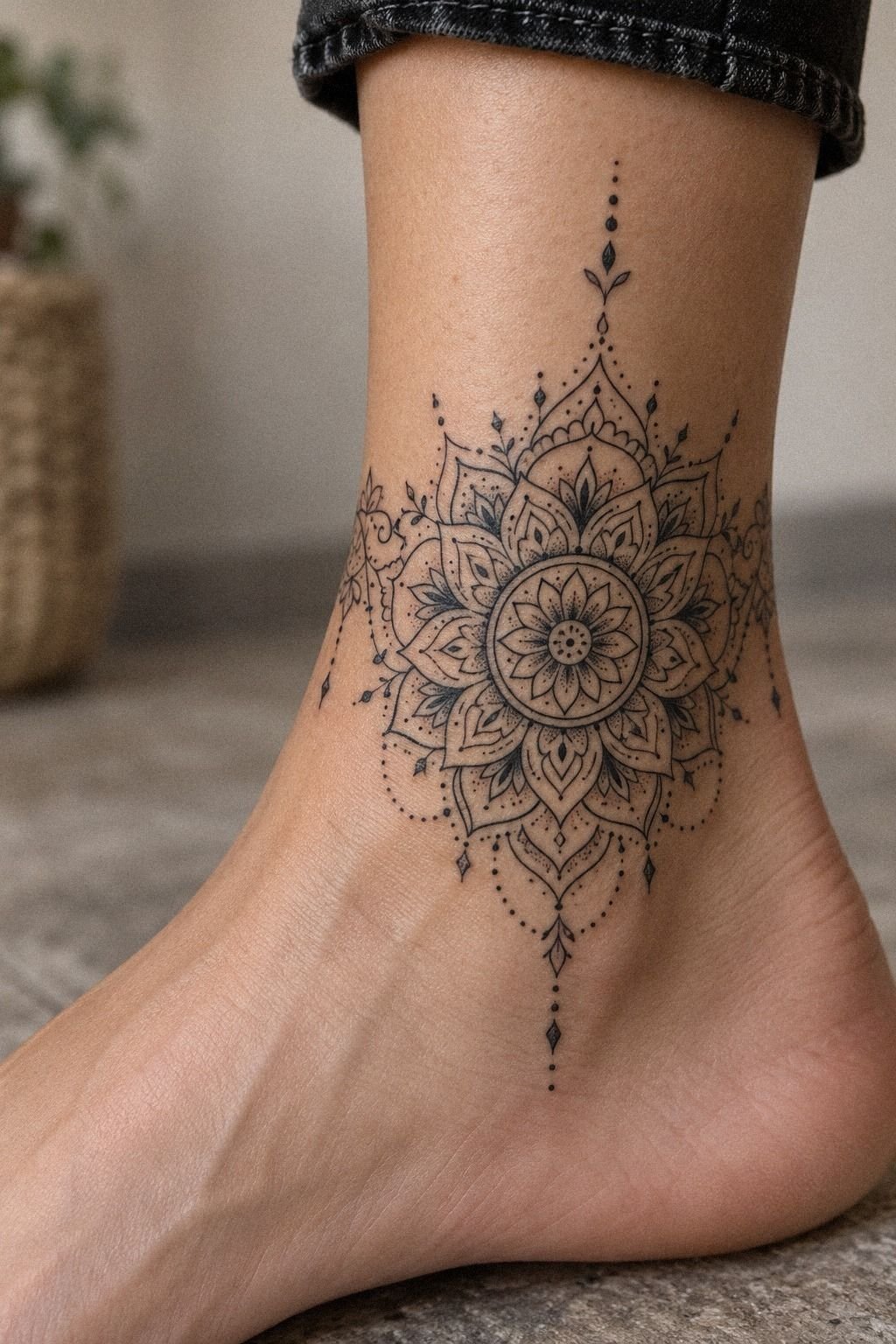
Protect the open skin around a floral mandala by treating it as part of the design. A floral mandala stencil should leave room between the petals, stems, and geometric structure. That contrast can feel feminine, understated, and sharp at once.
Ask for clear separation between the petals, stem, and outer ring. If you want more leaves, wait until the stencil is on your skin. I’ve approved extra details because paper looked empty, then realized the composition needed that space.
Your skin is the background. Keep it visible. Don’t ask for every petal to be shaded solidly.
A few black petal accents will make the open areas appear brighter and help the tattoo stay readable as it settles.
You’ll find useful references in this beautiful mandala art unique design gallery. Look for designs with clear gaps between motifs. If a favorite reference feels crowded, ask your artist to simplify it before you commit.
5Plan a Fierce Geometric Mandala Sleeve
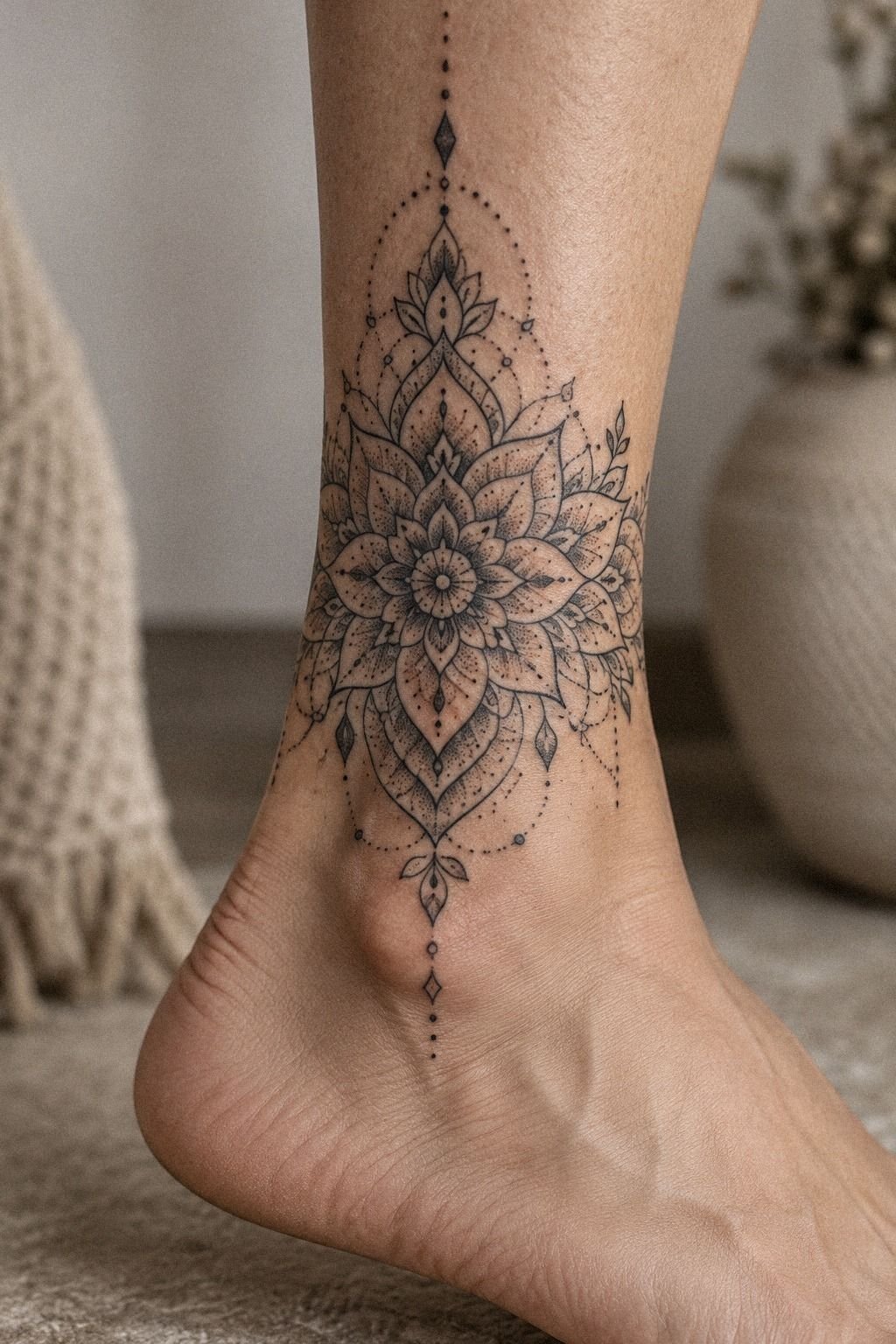
Build a sleeve plan on paper before committing to separate tattoos.
6Layer Symbolic Moons Inside Your Mandala Tattoo Design
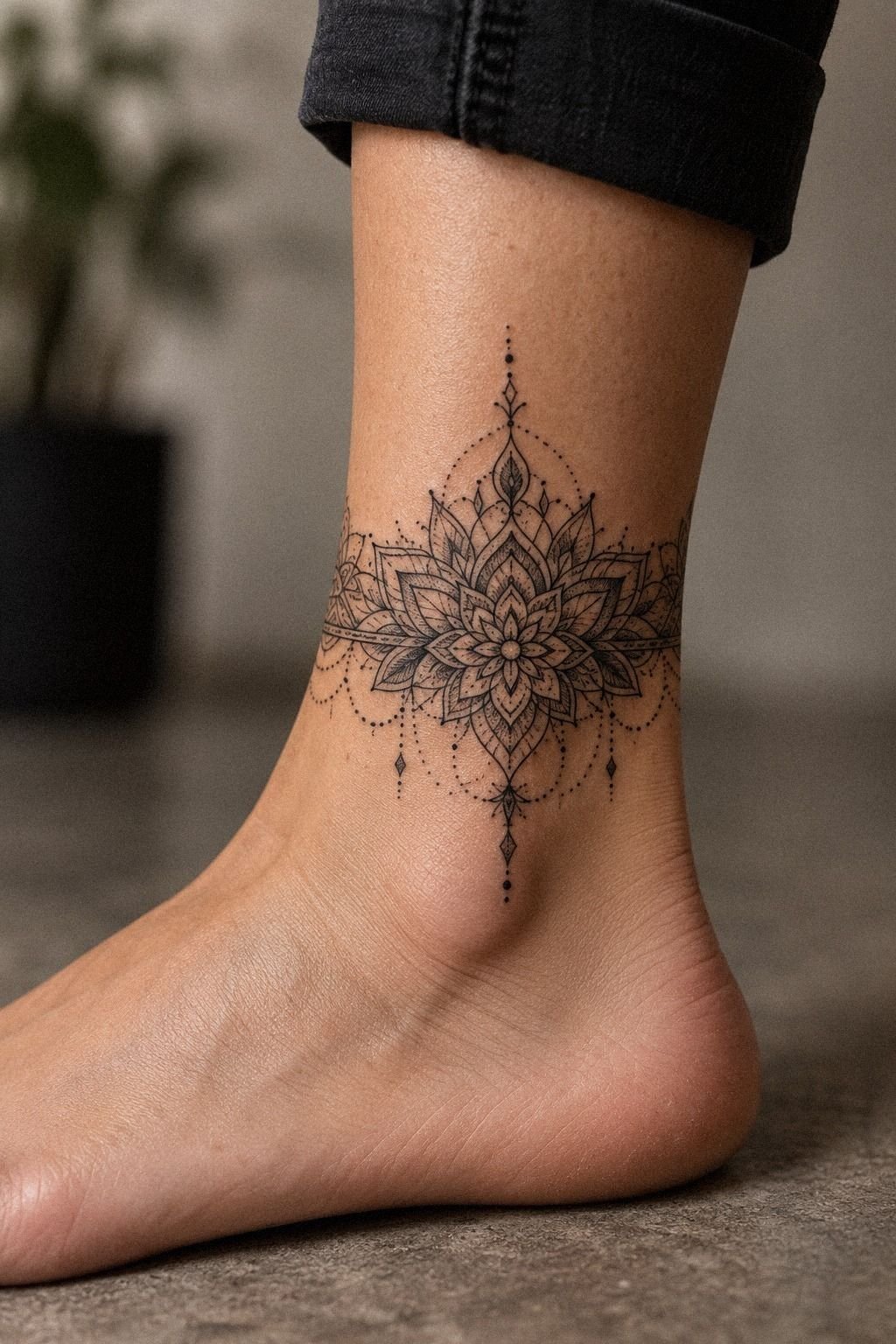
Layer one symbolic moon inside the mandala instead of adding several unrelated icons. A crescent moon stencil helps you judge how much space the central symbol needs. The shape can feel ethereal and meaningful without a complicated surrounding pattern.
If you’re choosing between a tiny moon and a larger one, I’d choose the larger shape for a sternum design. Tiny curves can lose clarity when surrounded by rings and dots. Your tattoo should read clearly from a short distance.
Ask about contrast instead of asking for more detail. A clean black crescent with open stars and spaced dots can feel elegant without becoming heavy. I’ve gone back and forth on this design because symmetry is tempting, but a slightly offset star can make the piece more expressive.
You can compare moon-centered compositions with this aesthetic mandala art reference. Save the example that feels most personal. Don’t copy every symbol simply because it appears in the picture.
7Delicate Mandala Art Behind the Shoulder
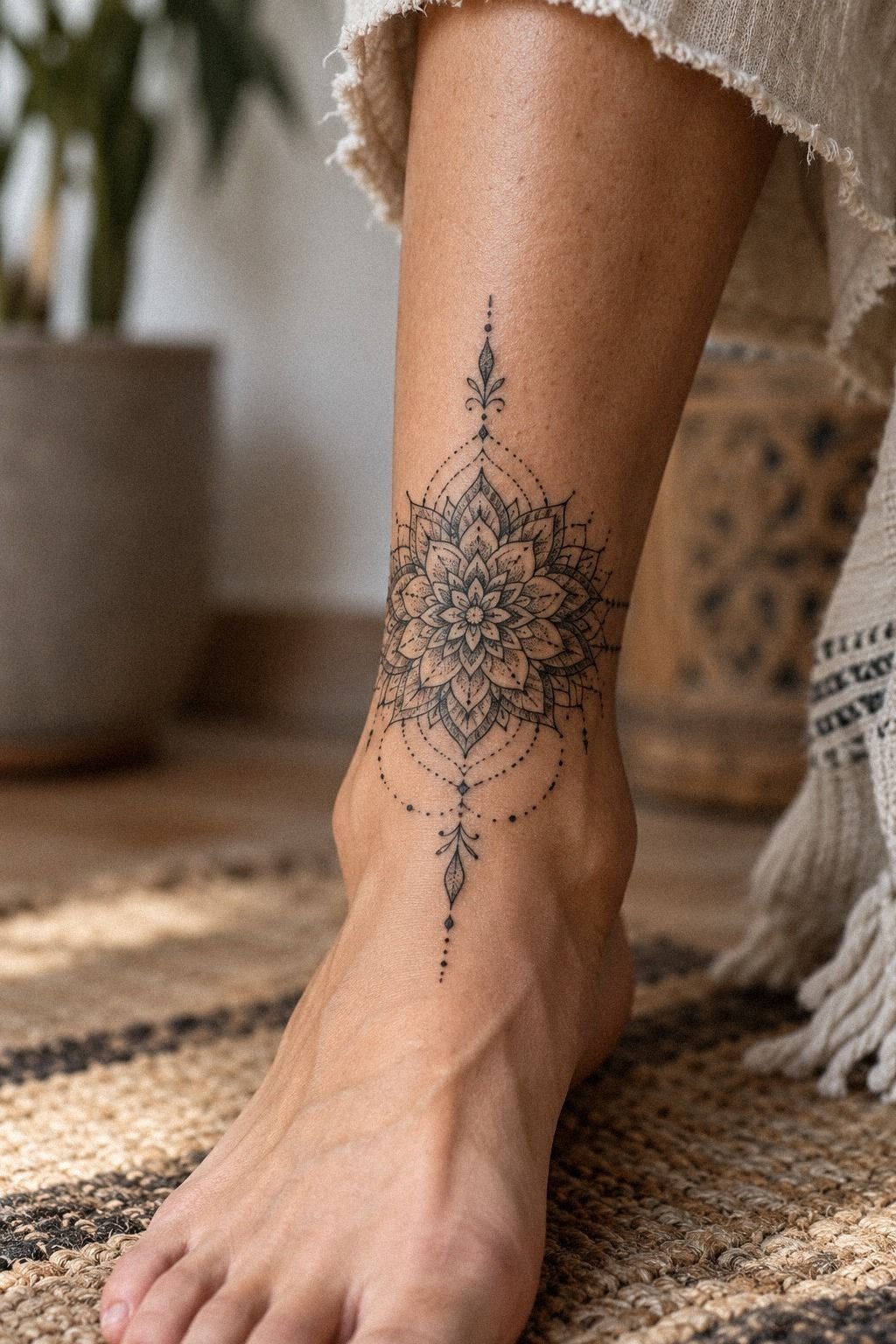
Place a delicate mandala behind the shoulder when you want something discreet with graceful movement. The curved surface gives your artist space for a circular motif and smaller points that follow the natural slope.
Ask to see the stencil while you move your arm forward and back. Skin folds and stretches there. A design that looks balanced at rest may shift during motion.
A thermal stencil transfer gives you time to check the placement before paying for the session.
Keep the outer edge crisp and the interior lighter. Heavy fill can make a shoulder tattoo look larger than expected.
Open skin keeps it understated. A vertical version usually follows the shoulder more gracefully than a wide design.
For another placement reference, look through aesthetic mandala art. Notice how a refined outline can carry the idea without dense shading. That’s a stylish budget choice for a polished result in one appointment.
8Balance Bold Petals with Sharp Mandala Linework
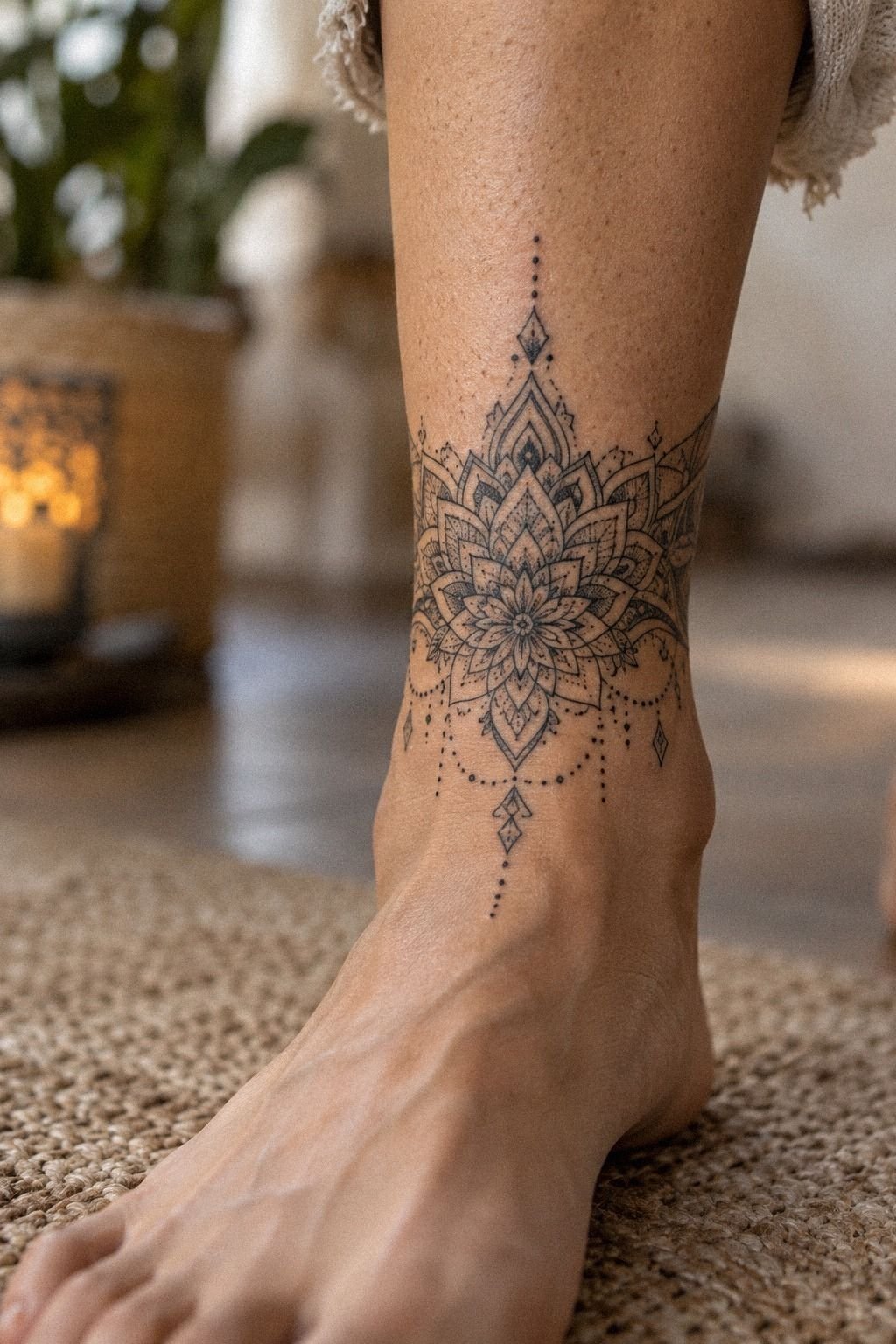
Balance soft petals against sharp geometry so neither part overwhelms the other. Precise mandala linework can make bold petals feel controlled instead of bulky. Pointed outer shapes with rounded inner petals create a striking rhythm.
Wrist tattoos need careful scale because the available skin is limited. Ask your artist to protect the main circle and simplify tiny marks that would crowd it. One solid accent can give the design weight without filling every section.
Try the Two-Edge Balance. One side carries sharper points, while the other carries softer curves.
You’ll get contrast without extra symbols. This approach feels bold, expressive, and personal when the line weight stays consistent.
If you’re unsure which style suits your collection, compare the structure with these geometric tattoo ideas. Show your favorite line direction to your artist. Explain what you want changed instead of bringing only a screenshot.
9Add Meaningful Initials Within a Circular Mandala
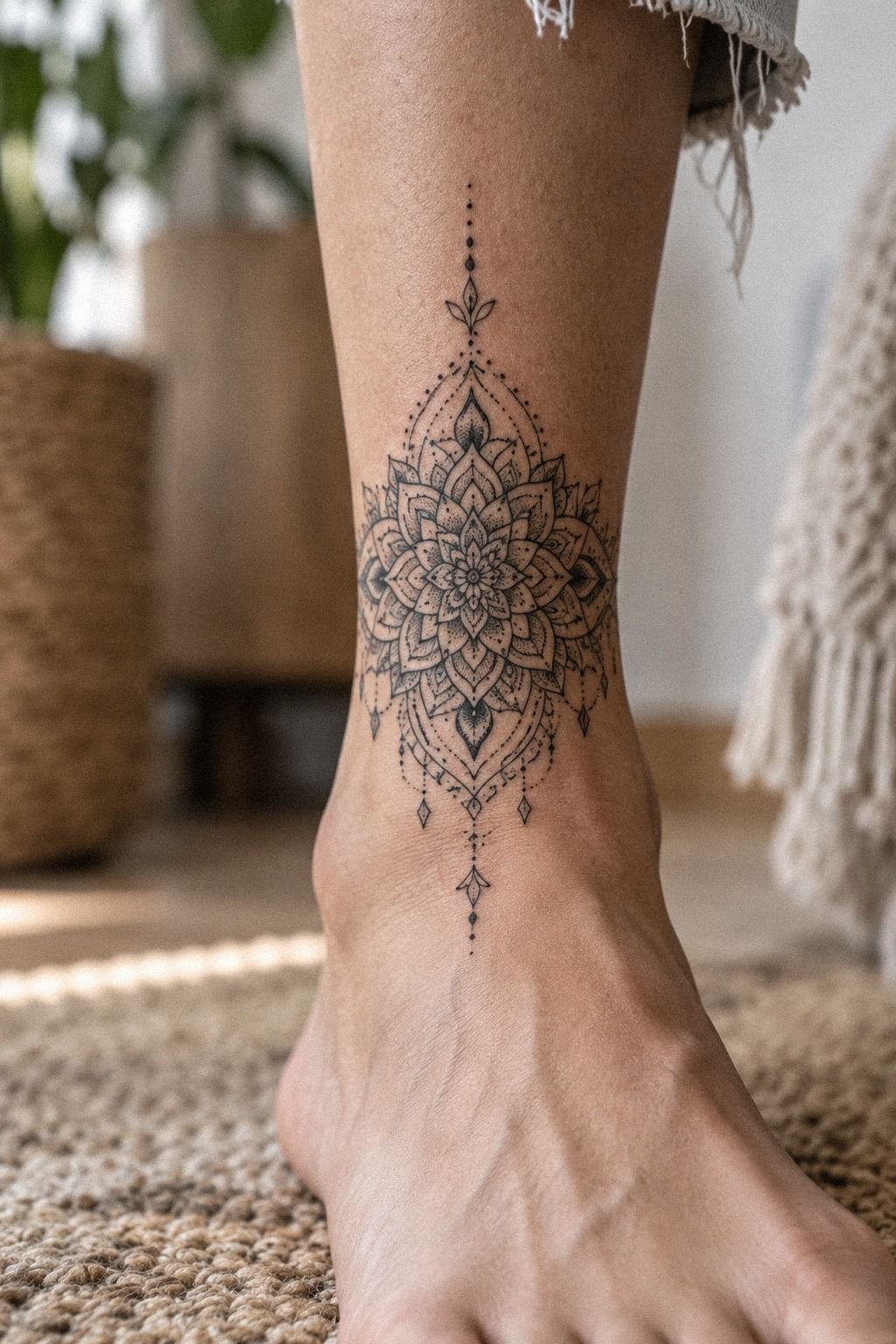
Add initials only after the circular structure is stable.
10Can You Tolerate a Rib Mandala Tattoo?
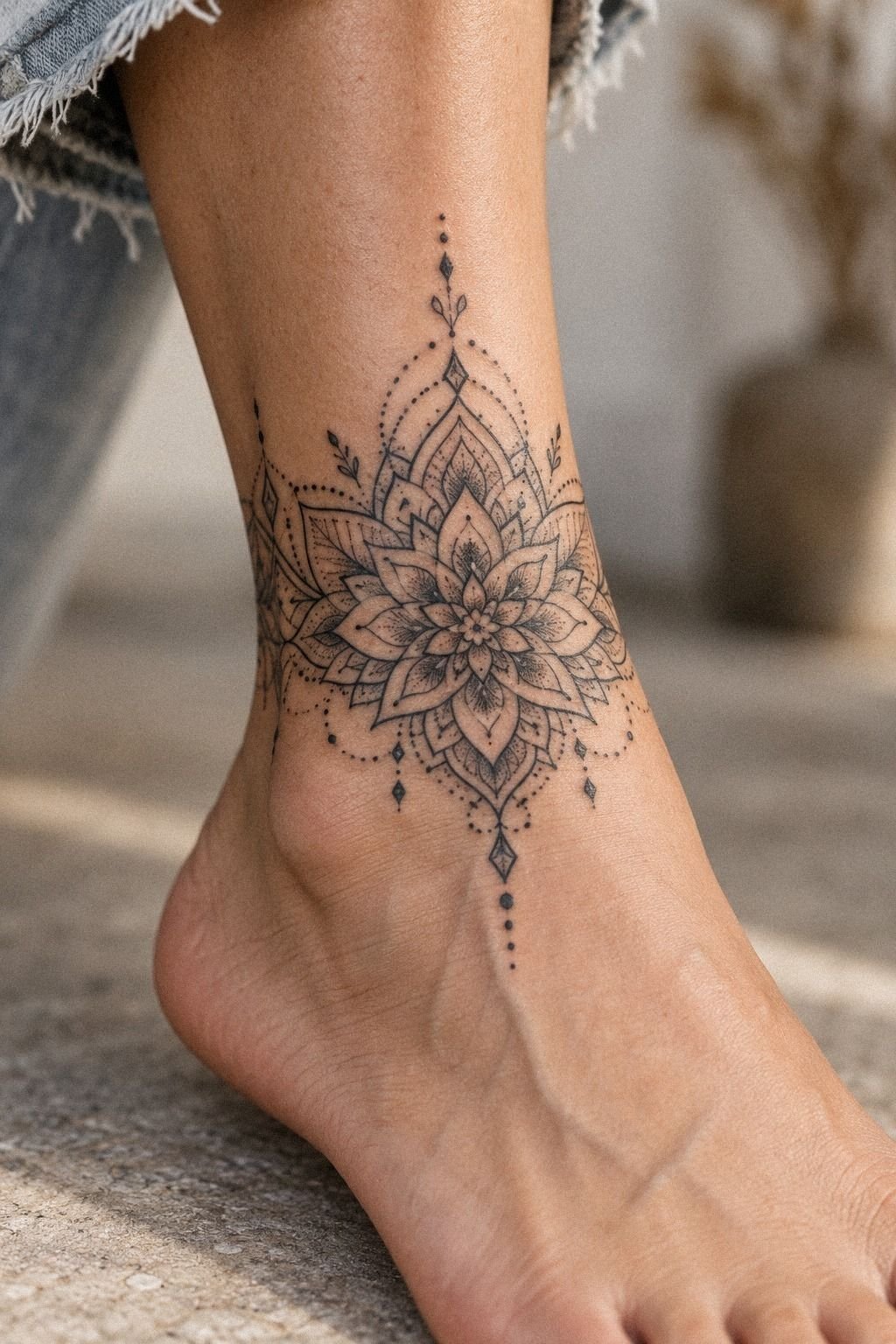
Test your tolerance with the stencil before assuming the ribs will be easy. Rib tattoo placement can feel intense because the skin is thin and close to bone. A long session may feel more demanding than the design looks on paper.
Ask your artist how long the appointment should take. Discuss whether short breaks are practical. You’ll have a better experience if you’ve eaten, hydrated, and worn clothing that won’t rub the area.
A smaller design with clear spacing may be a smarter first step than a large, heavily shaded piece. If you’re unsure, compare the ribs with the forearm, thigh, or shoulder before paying a deposit.
The most empowering choice is the placement you can sit through calmly! A daring location is not automatically the best one. Your comfort affects the quality of the final work.
11Protect Vibrant Mandala Ink Through Careful Healing
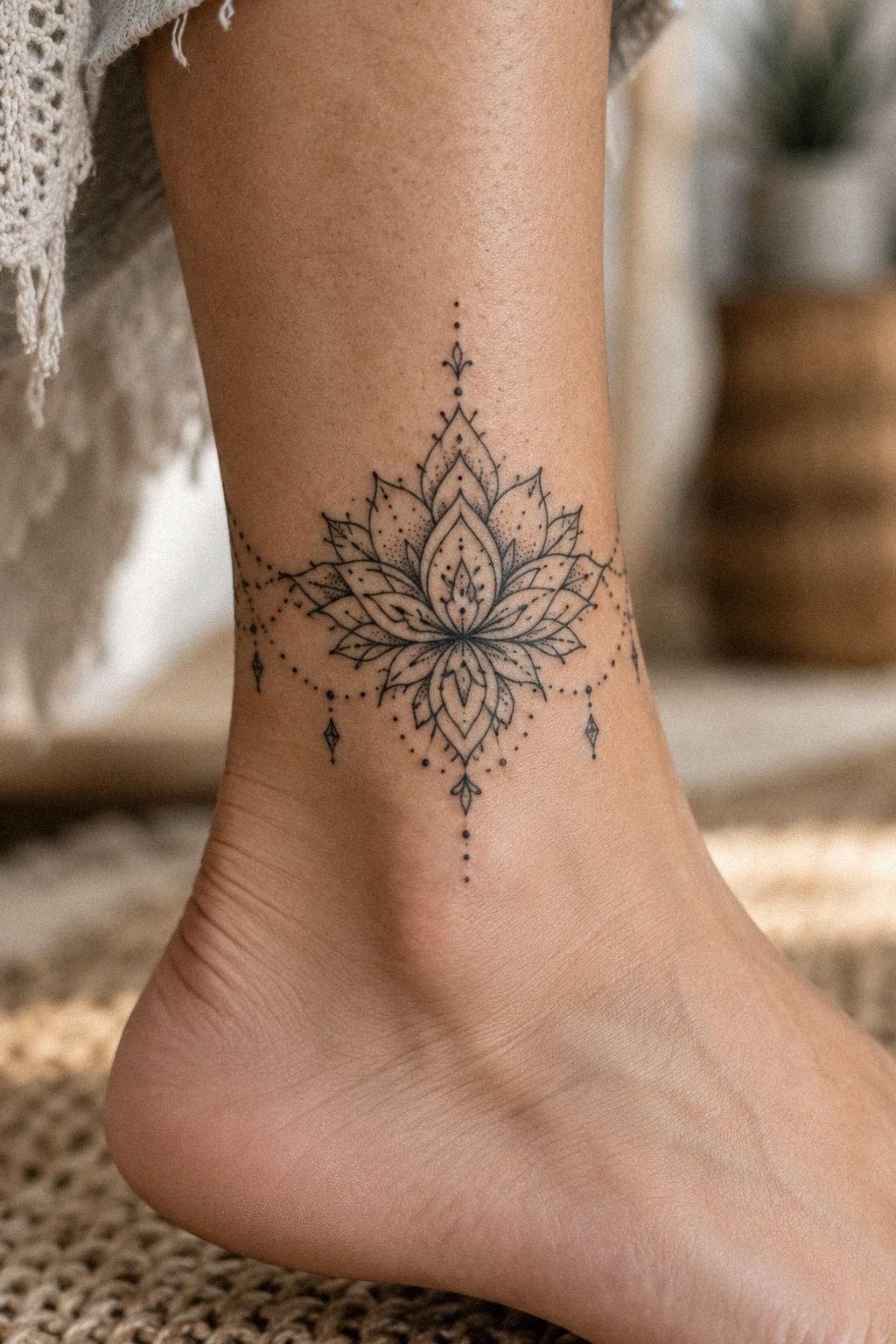
Protect vibrant mandala ink by following the instructions your artist gives you. Fragrance-free cleanser is commonly used for gentle washing, followed by the product your artist recommends. Your first job is simple: keep the area clean and don’t pick at peeling skin.
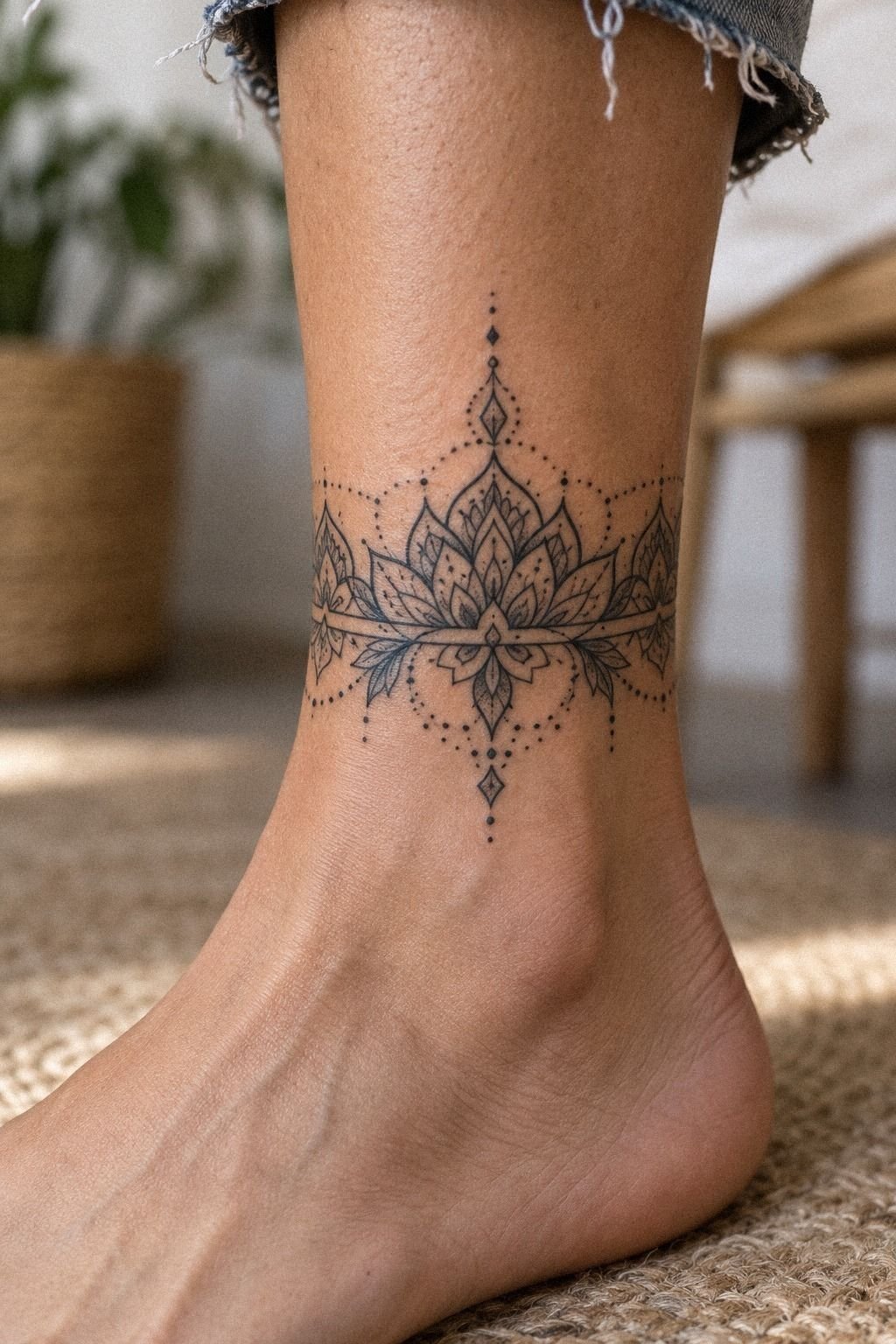
Avoid swimming and strong sun exposure while the surface heals. I’d also avoid tight footwear around an ankle tattoo because rubbing can irritate the area. Careful aftercare gives your skin a better chance to settle evenly.
Surface healing often takes about two to three weeks. Complete settling may take two to three months. Fine lines can widen over time, especially with repeated UV exposure.
Black solid areas and sensible placement often age better than crowded micro-detail. Ask your artist how the design may change as it settles. That conversation is more useful than chasing a temporary, vibrant finish.
For another style comparison, visit watercolor art tattoo. You can also compare color decisions with modern mandala art. Don’t add new products because a friend used them.
Follow your artist’s care instructions.
The Three-Ring Rule I Still Use
I’ve made enough tattoo planning mistakes to distrust the phrase “just make it a little more detailed.” My first instinct is usually to add another symbol, border, or layer of shading. That impulse feels creative, but it can weaken the design.
When I plan a mandala, I begin with the Three-Ring Rule: one main center, one supporting ring, and one outer rhythm. Everything else has to earn its place.
The rule isn’t about making your tattoo plain. It gives your eye somewhere to rest.
A clean transfer stencil shows whether the center is strong before the needle enters your skin. If the design works only because the page is filled with tiny marks, it probably needs editing. Trust the stencil!
Your artist can make a smaller tattoo feel more polished by protecting open areas. Open-skin spacing is not wasted space. It keeps the main motif recognizable and gives the design a sharper silhouette.
Budget matters because extra detail often means extra session time. You’ll get more value from thoughtful composition than decorative clutter. That’s my firm opinion.
The Budget Check I Use Before Booking
Here’s the cost range I’d use for an initial conversation with a US tattoo studio. These are planning figures, not promises. The artist, region, placement, and complexity all matter.
Ask whether the quote includes stencil preparation, revisions, color, and touch-up guidance. A written tattoo estimate can prevent confusion when the design changes between consultation and appointment.
If your budget is tight, reduce complexity before reducing artist quality. A smaller, well-spaced tattoo from an artist with consistent healed work is usually better than a crowded piece chosen only because it costs less.
You’re paying for judgment as much as ink. Save money for clear design decisions, suitable placement, and enough appointment time. Cutting those corners can create more expense later.
Cut Costs Before You Book
Cut costs by simplifying the composition before the stencil is drawn. Focused design planning can remove extra borders, repeated symbols, and unnecessary shading without weakening the meaning.
Choose one or two visual priorities. Maybe it’s the moon, center flower, or sharp outer geometry.
If every feature seems equally important, the artist may need more time. The finished tattoo may also feel less readable.
Ask whether a smaller size will preserve the line spacing. Some designs shrink beautifully. Others need more room to remain crisp.
Your artist should be honest about that difference.
Compare your draft with this geometric universe tattoo collection if you like stars, planets, and circular structures. Notice which examples use restraint. The quieter ones often have the strongest silhouette.
What I Would Leave Out
I’d leave out tiny text, crowded symbols, and details that exist only because an empty section feels uncomfortable. Open-skin spacing gives the eye a clean pause and helps the main motif stay recognizable.
I’d also avoid copying a design without understanding its scale. A mandala that looks sleek on a large thigh may feel cramped on a wrist. Your artist can preserve the idea while changing the proportions.
Color deserves the same restraint. Vibrant accents can be expressive, but several colors may increase cost and complicate the visual hierarchy. If you want color, choose one dominant shade and let the black structure lead.
A meaningful tattoo doesn’t need to explain every part of your story. One symbolic mark can be enough. That’s where a personal, timeless design usually begins.
The Consultation Notes That Save Money
Bring three notes to your consultation: preferred placement, approximate size, and the feature that must remain. Consultation notes keep the discussion focused and make it easier for your artist to quote the work.
Show references for line quality, spacing, and mood rather than asking for an exact copy. You might say that you want a crisp outer ring, delicate dotwork, or a fierce central flower. Specific language saves time.
Ask to see the stencil at the actual placement. You’ll notice problems that weren’t visible on a phone screen, especially around the ribs, shoulder, wrist, and ankle. Don’t approve it while standing at an angle you’ll never use.
You should also ask about healed examples. Fresh ink can look vibrant and sharp, but a healed portfolio shows how the artist handles spacing, line weight, and skin movement. That evidence matters more than a dramatic social-media image.
A Few Things Worth Answering
How much does Mandala Art Ideas Creative usually cost?
I’d plan on about $100 to $300 in the US for a small mandala tattoo. Size, placement, artist, and region all affect the price.
A clear stencil and defined scope help you receive a useful quote. Studio minimums may run from $50 to $100.
Are Mandala Art Ideas Creative a good idea for a first tattoo?
Yes, I think a mandala can be a strong first tattoo when the placement feels tolerable and the scale stays readable. Clean linework gives you a clear design to discuss. If you’re nervous, consider the forearm, thigh, or shoulder instead of the ribs or sternum.
How do I choose a tattoo artist for Mandala Art Ideas Creative?
I’d choose an artist with consistent linework, healed photographs, and geometric designs similar to yours. A healed portfolio matters more than a dramatic fresh tattoo photo. Ask about hygiene, stencil approval, session timing, and experience with fine detail.
How much do Mandala Art Ideas Creative hurt?
Pain depends on placement, sensitivity, session length, and shading. Forearm and shoulder placements are often more tolerable, while ribs, feet, hands, and sternum can feel intense. I’d discuss breaks with your artist before beginning, especially if the design may take several hours.
How long does a Mandala Art Ideas Creative take to heal?
I’d expect the surface to heal in about two to three weeks. Complete settling can take two to three months.
Gentle washing and careful sun avoidance support healing. I’d also avoid swimming, picking, and friction while your skin recovers.
What’s the best placement for Mandala Art Ideas Creative?
I’d choose based on visibility, pain tolerance, and design shape. Forearms suit flowing linework, while calves and thighs give circular mandalas more space. If you want privacy, consider the shoulder or ribs.
Remember that sensitive areas may make the session harder.
For more placement ideas, compare this geometric mandala tattoo collection with dotwork art. You’ll have an easier consultation when you can explain the shape, spacing, and placement you prefer.
Where I’d Start First
If I had to pick one step, I’d start with the Sacred Center Rule. One strong center gives your artist room to protect every line. That saves money on cluttered revisions.
I’d choose a small-to-medium mandala tattoo on the forearm, calf, thigh, or shoulder for a strong balance of visibility, space, and session comfort. Pin the modern mandala art guide for later. Book only when the stencil still feels right.
A Last Look Before Booking
Read the design from across the room. Does the silhouette still feel iconic? Can you identify the center without studying every dot?
Check the placement while standing, sitting, and moving. Confirm the estimated price, session length, healing guidance, and deposit terms before committing. A final stencil check can save you from an expensive correction.
If the design feels meaningful, readable, and personal without extra clutter, you’re probably ready. Keep the plan focused, trust a skilled artist, and let the open skin do some of the work.