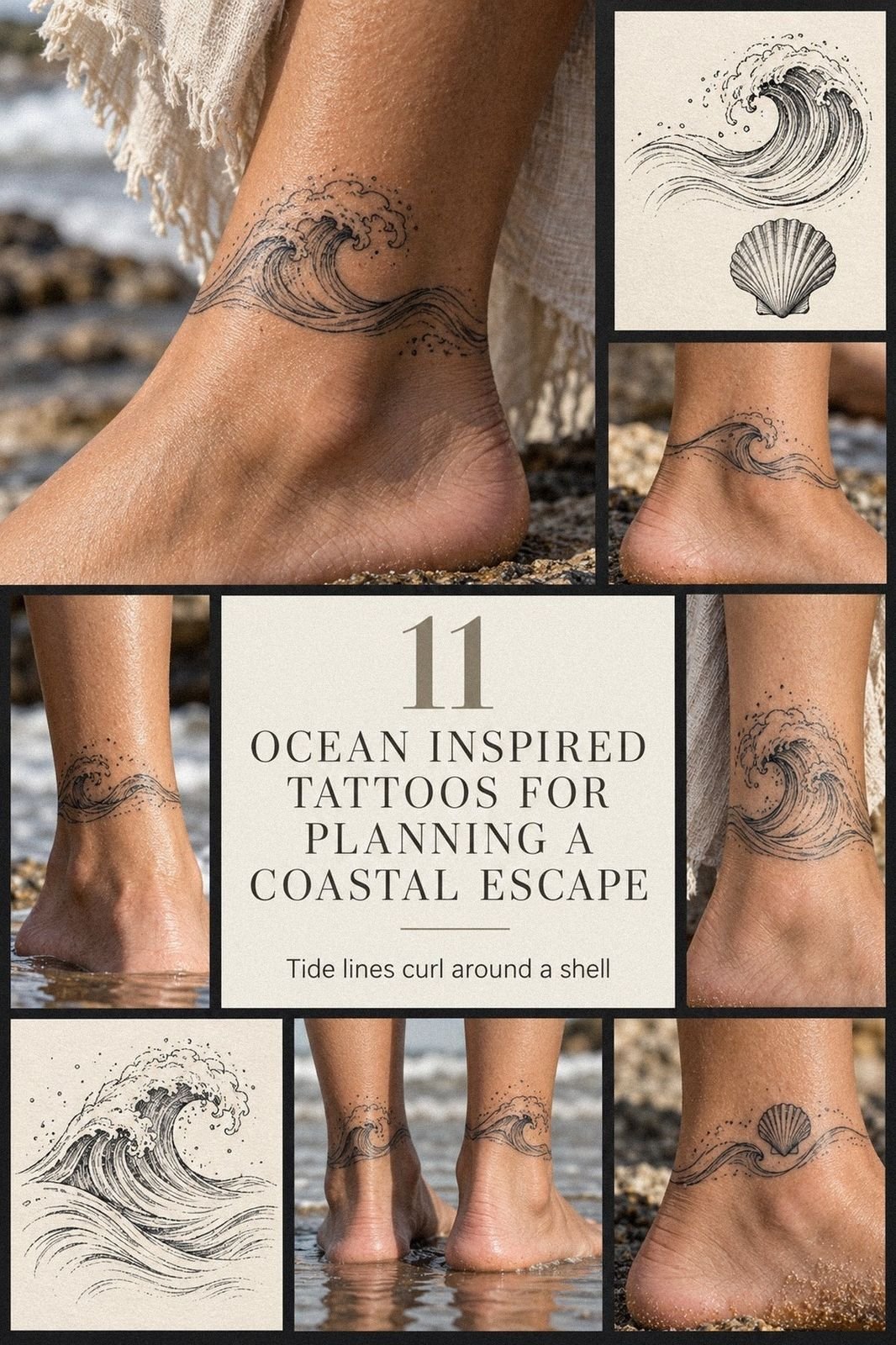
Ocean Inspired Tattoos can stay crisp when you match line weight, placement, and aftercare to the design. I learned that the hard way after choosing a delicate wave for a high-friction spot. Now I look for clean black linework, enough breathing room, and a style that still reads when the skin settles. The ocean gives you endless direction!
Editor’s note: The strongest ocean tattoos aren’t always the largest or most detailed. A symbolic shell, a fierce kraken, or a graceful horizon can carry more meaning when the artist gives every mark enough room.
- Fine Line Waves Around the Ankle
- What Makes a Realistic Ocean Sleeve Worth the Cost?
- Minimalist Crescent Moon Over Rolling Waves
- Let a Colorful Koi Turn Through Ocean Currents
- Tiny Seashell Tattoo Behind the Ear
- Bold Kraken or Sleek Sea Creature?
- Watercolor Jellyfish With Flowing Tentacles
- Can Matching Ocean Horizons Stay Personal?
- Why Does a Geometric Whale Tail Work on the Ribcage?
- Storm-Keeper Lighthouse Beneath Heavy Clouds
- Delicate Coral Reef Across the Shoulder
1Fine Line Waves Around the Ankle
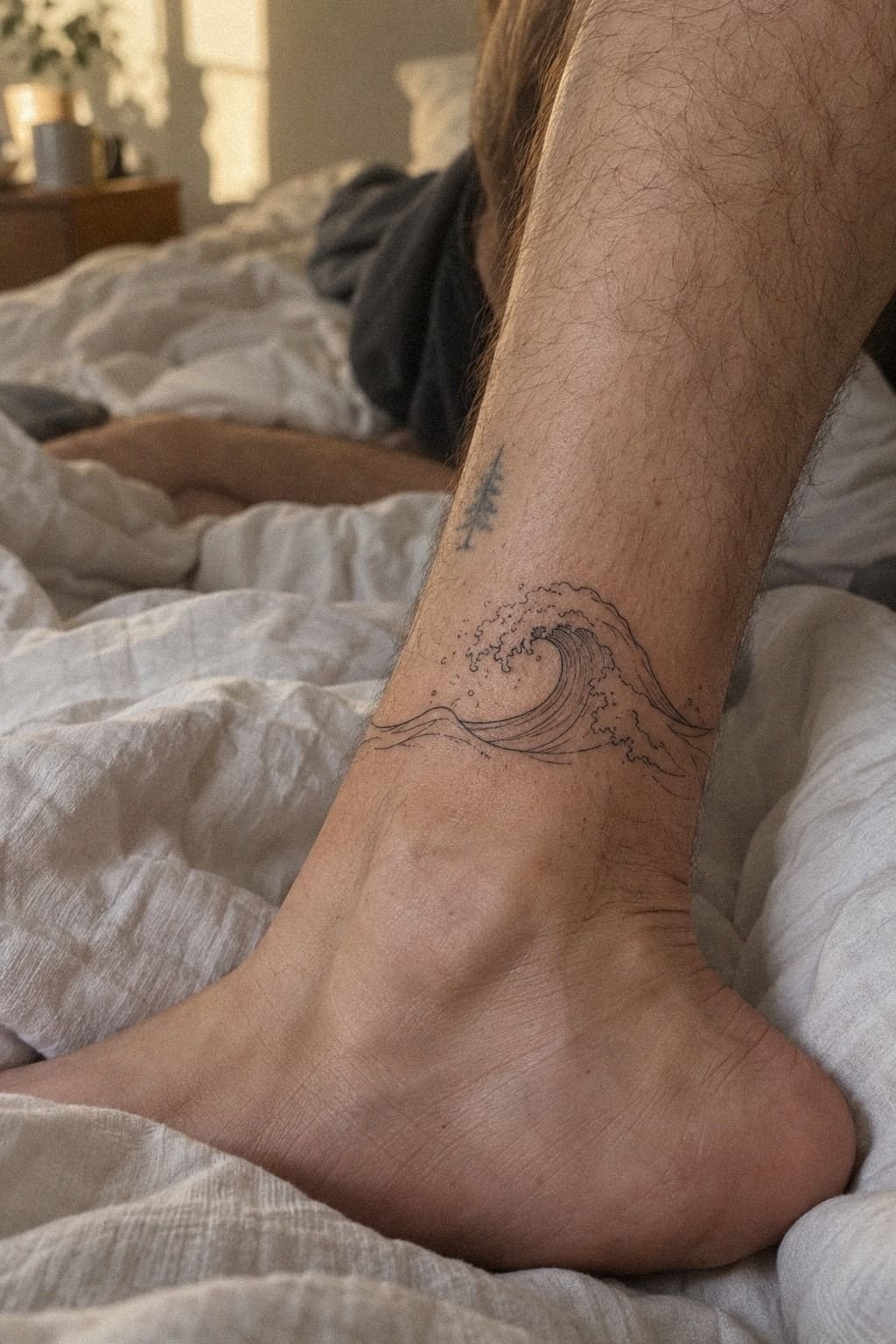
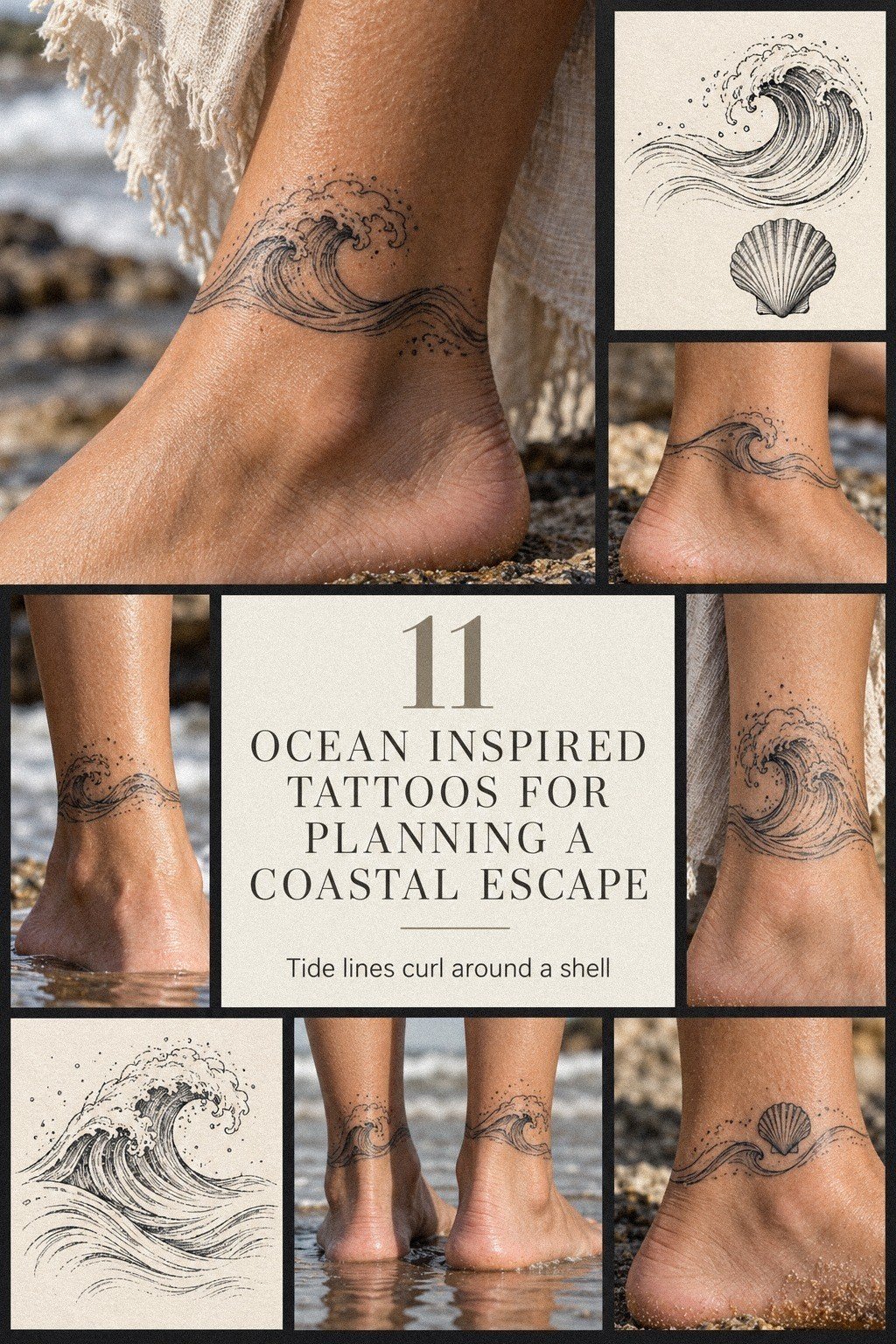
A fine line wave around the ankle feels personal without taking over your whole leg. You’ll get a striking result from one curling crest, a few foam marks, and plenty of untouched skin around the design. I’d keep this Ocean Tattoo Design narrow, because crowded details can blur together as your tattoo settles.
Ask your artist for single-needle black ink with a slightly heavier outer curve. That contrast helps your eye read the wave from a distance while the smaller foam lines keep it delicate up close. If you’re planning sandals or cropped trousers, this placement gives your tattoo an understated flash of movement.
The ankle can be less forgiving than the forearm because the skin is close to bone and gets rubbed by socks and shoes. You’ll want to avoid placing the finest foam marks directly under a tight shoe edge. A careful aftercare routine can protect the fine foam marks while the surface settles.
I’d skip a full-color ocean scene in this small area. It might sound vibrant, but color packed into a narrow ankle tattoo can lose its crisp separation. A 3RL single-needle configuration gives you the sharp, flowing look this design needs without making the piece feel heavy.
For placement comparisons, browse where tattoos hurt less. You’ll see why I’d choose the outer ankle over the front of the foot if you want a personal, meaningful piece that remains easy to cover. It may cost less than a larger ankle composition, but the value comes from keeping the idea readable.
2What Makes a Realistic Ocean Sleeve Worth the Cost?
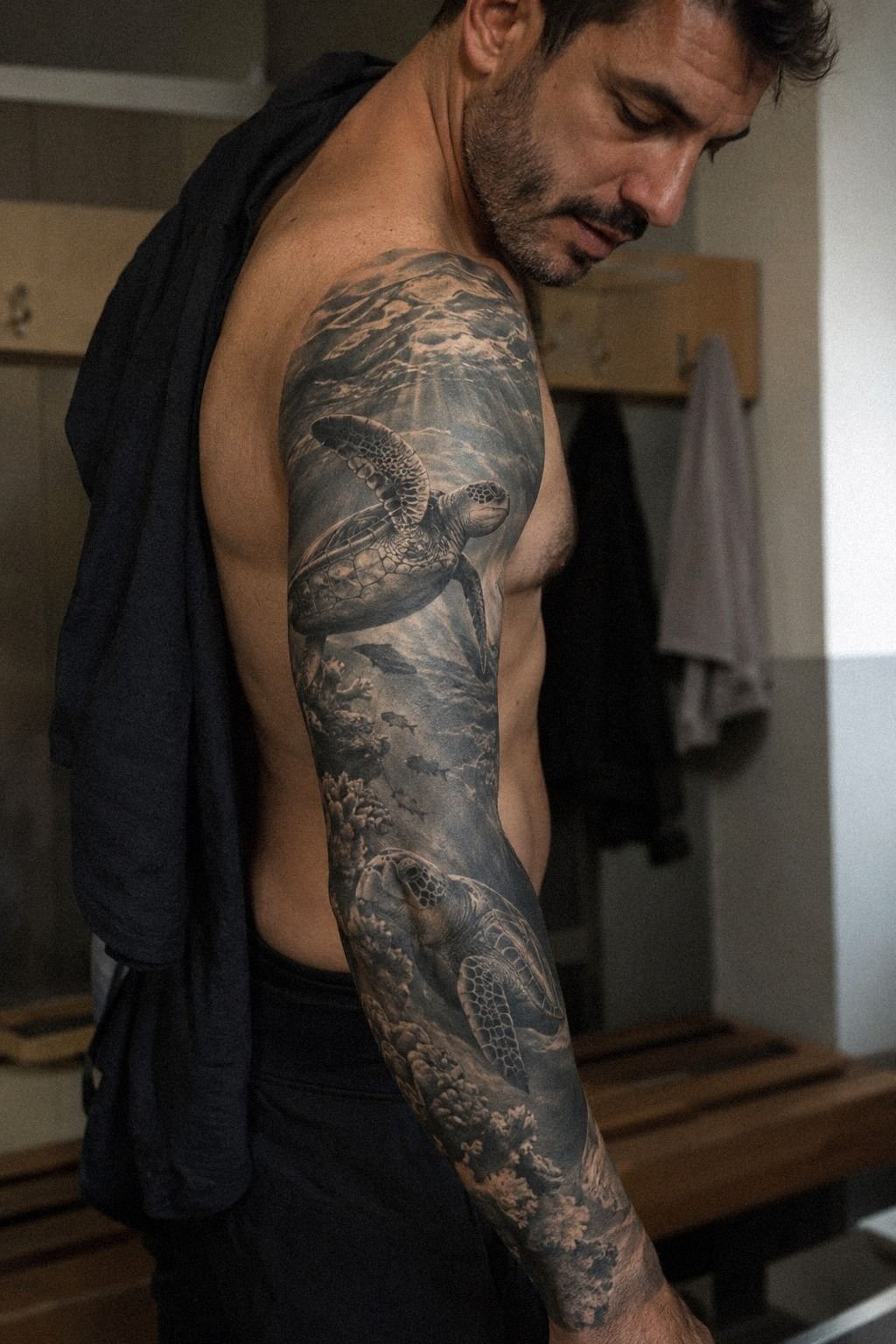
A realistic ocean sleeve gives you room for movement, depth, and a memorable sea-life story.
3Minimalist Crescent Moon Over Rolling Waves
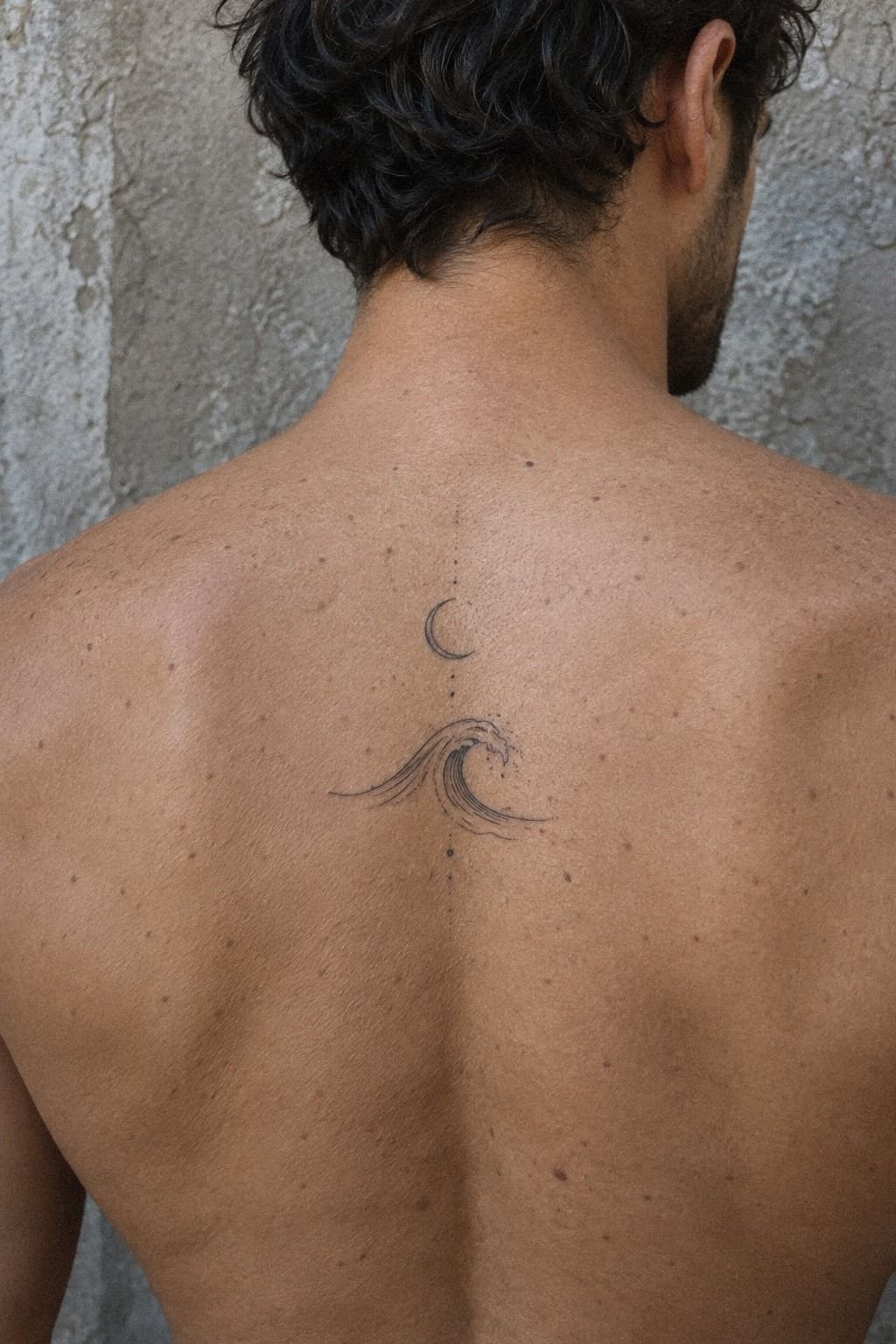
A crescent moon above rolling waves creates a symbolic Ocean Lover Tattoo with a quiet, personal mood. You’ll get the strongest result when the moon stays minimal and the wave carries the movement. I’d avoid adding stars, shells, and text unless your artist can preserve generous negative space around the minimal crescent moon tattoo.
The spine gives this design a naturally vertical path. A fine wave can curl beneath the moon, following the centerline without looking stiff. If you’re choosing a back placement, ask your artist to show you the stencil while you’re standing, because posture changes the curve.
This idea works well in black ink, muted blue, or a small touch of pale grey. I’d choose black for the main wave and keep any color secondary. A crisp dark anchor tends to remain more readable than several pale tones competing across a narrow design.
Your spine may feel sharper than an outer arm or thigh, especially near the vertebrae. You’ll want to plan loose clothing for the first few days and avoid friction while the surface heals. The visible skin may settle in 2 to 3 weeks, while complete healing can take about 2 to 3 months.
For color decisions, compare examples of white ink tattoos. I’d use white only as a tiny foam highlight here, because the moon and wave need a strong, expressive outline to stay legible. That keeps the design worth the money even if the smallest highlight fades first.
4Let a Colorful Koi Turn Through Ocean Currents

A colorful koi moving through ocean currents gives you a playful bridge between Japanese-inspired shape language and Sea Tattoo Ideas. The fish should feel like it’s turning through water, not floating beside it. You’ll want the fins, tail, and current lines to share the same direction.
The neo-traditional koi tattoo needs a confident outline before the color goes in. Rich coral, deep teal, and muted gold can create a vibrant palette, but I’d limit the number of major colors. Too many shades can make the fish lose its bold silhouette.
Behind the ear is a daring placement for a compact version of this idea. You’ll get a sharp little flash when your hair moves, but the area has limited room for complex scales. I’d simplify the koi’s body and let one curling current suggest the larger story.
If you’re considering a bigger version, the thigh or upper arm gives your artist more space to build water around the fish. I’d skip a tiny full-body koi with ten separate scale rows. It sounds intricate, but those marks may soften into visual noise over time.
A saturated teal pigment can look bright at first, yet your aftercare still matters more than the color name. Keep the tattoo out of direct sun while it heals, and use sunscreen once the surface is fully closed. The ocean movement should remain the star!
5Tiny Seashell Tattoo Behind the Ear
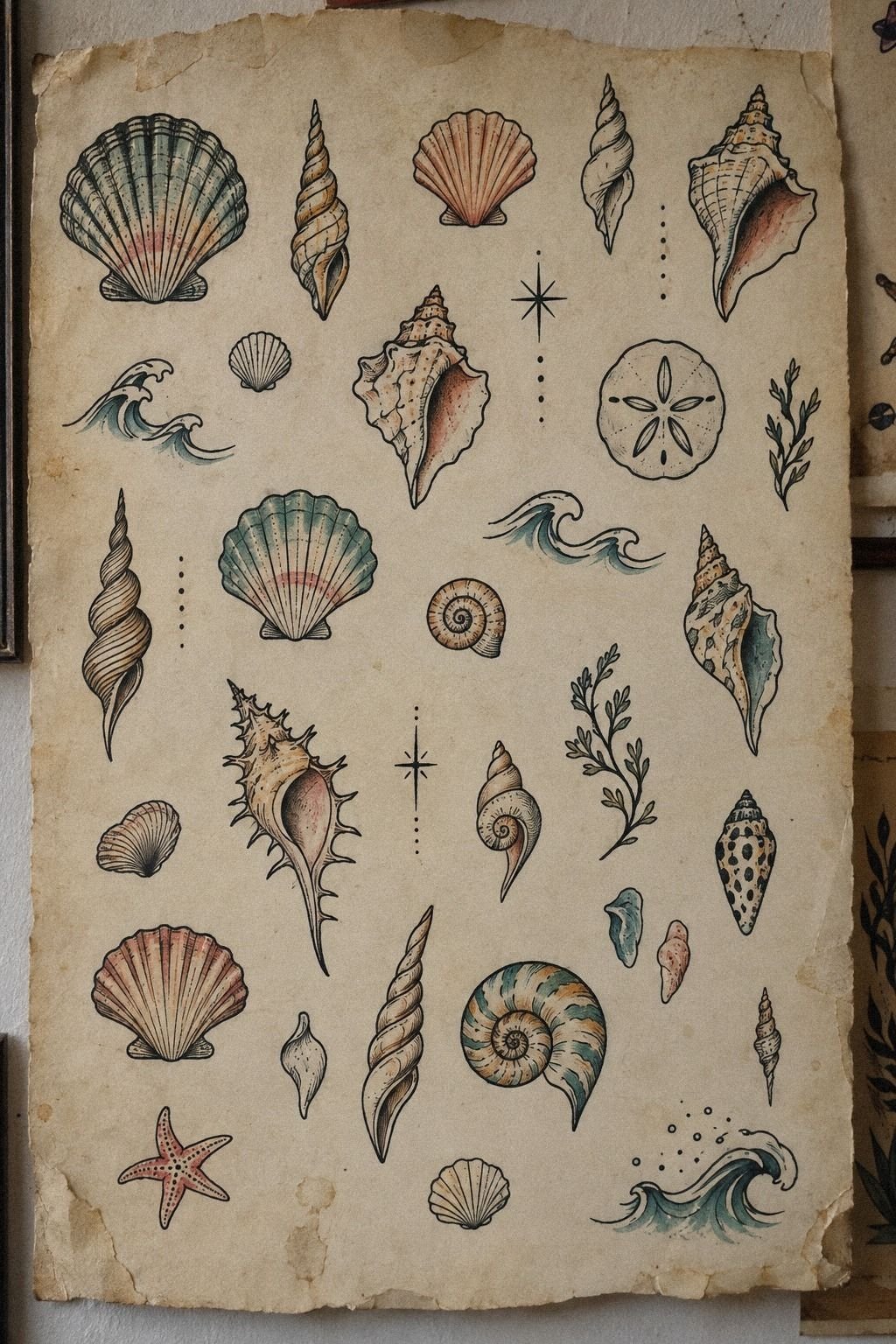
A tiny seashell behind the ear is a dainty choice for anyone who wants a personal Sea Tattoo Design without a large commitment. You’ll get more charm from one clean spiral and a firm outer contour than from a miniature beach scene crammed into the same space.
The fine line seashell should have enough open skin between its ridges. I’d ask for three or four intentional interior curves, not a dozen hair-thin marks. That keeps the shell recognizable when you see it in a mirror or in a quick photograph.
Behind the ear can be sensitive, and the skin gets exposed to hair products, headphones, and repeated touching. You’ll want to follow your artist’s washing instructions carefully. A gentle wash, light moisturizer, and no picking will give the surface the best chance to settle evenly.
I’d choose solid black with a single soft grey accent instead of pale white ink. The contrast feels crisp and understated, and it gives the shell a more timeless outline. If you want a slightly feminine direction, add one small pearl dot rather than extra decoration.
Your artist’s flash sheet may show this design among other shells, waves, and sea stars. That’s useful because you can compare scale before committing. I’d place it slightly behind the ear rather than directly in the fold, where movement and rubbing can be harsher.
For a small tattoo, the budget can be modest, but the value still depends on line control. Compare healed examples before deciding that a low price is automatically worth it. I’d pay for a polished outline rather than save money on a cramped design.
6Bold Kraken or Sleek Sea Creature?
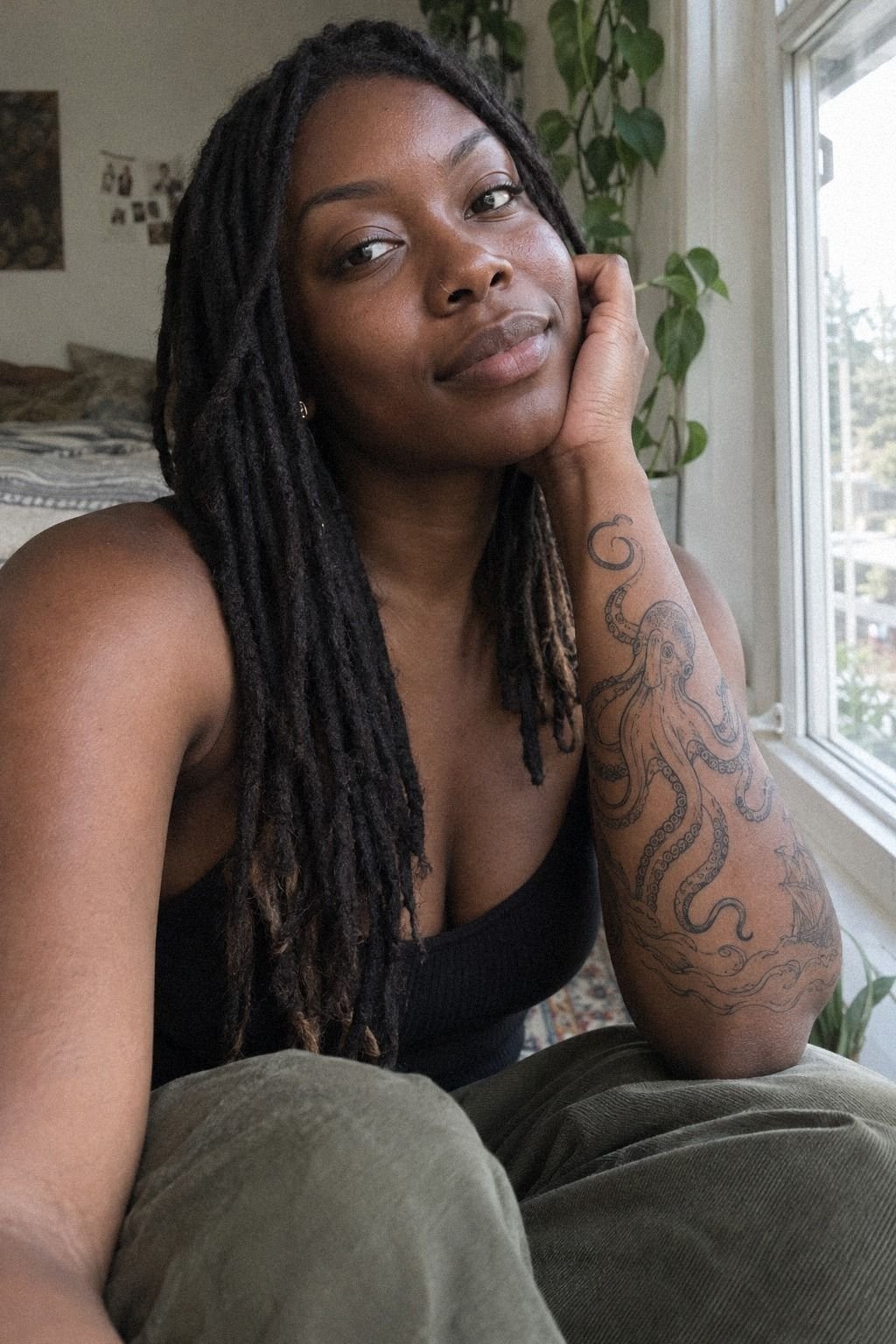
A kraken wrapped around the forearm is an expressive, edgy Ocean Inspired Tattoos choice with plenty of room for drama. You’ll get the clearest story from one dominant tentacle, a sharp eye, and controlled negative space. I’d avoid drawing every sucker if the piece is meant to stay sleek.
The bold black kraken needs a strong silhouette that reads before anyone notices the smaller texture. Your artist can use thick outer lines, selective solid fills, and a few sharp suction-cup marks to create depth. That contrast makes the design feel fierce rather than muddy.
Deep ebony skin can carry powerful blackwork beautifully when the design uses clear spacing and thoughtful contrast. You’ll want an artist who regularly photographs healed work across a range of skin tones. Fresh saturation is only part of the decision; healed clarity is the real proof.
I’d place the kraken’s head near the wider upper forearm and let the tentacle spiral toward the wrist. That direction gives your tattoo a natural flow when your hand moves. I’d skip a flat, centered layout, because it can make the creature look pasted on.
Here’s a useful cost reference for typical US tattoo pricing:
Your actual quote will depend on the artist and region, not just the size. I’d ask for a written estimate before booking, especially for a complex kraken. That simple step protects your budget and gives you a clearer sense of the final value.
7Watercolor Jellyfish With Flowing Tentacles
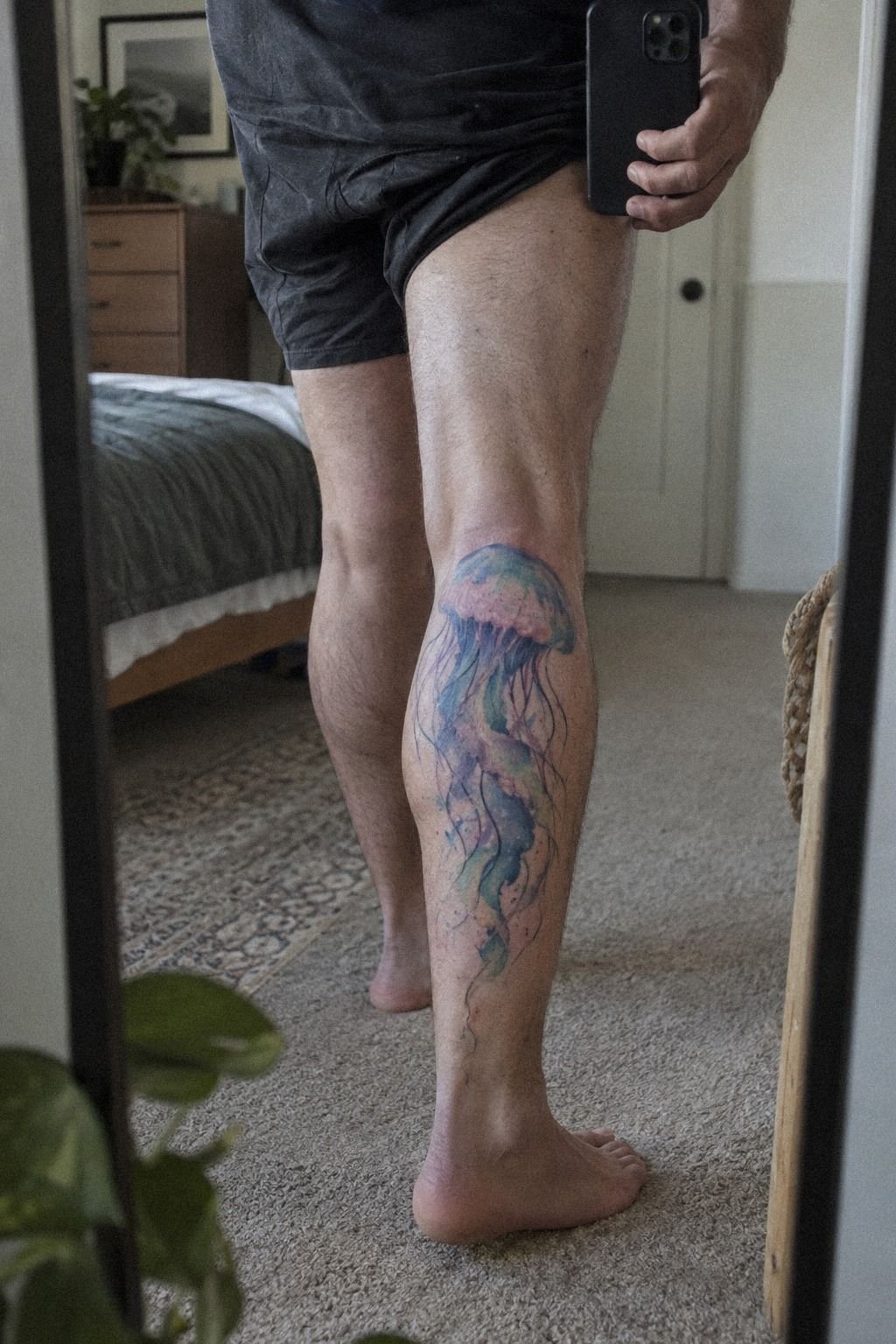
A watercolor jellyfish can look ethereal when the bell stays crisp and the tentacles carry the softer movement. You’ll get the most graceful result from a controlled silhouette with color fading outward, rather than a random wash around the whole tattoo.
The watercolor jellyfish tattoo should still have a readable dark structure. I’d use a fine black or deep blue bell outline, then layer coral, violet, and ocean blue beneath it. Without that anchor, the design may look expressive at first but lose its shape as lighter pigments soften.
The calf gives your jellyfish a long vertical canvas, which suits flowing tentacles. You’ll want to keep the lowest strands separated, especially if you walk a lot or wear clothing that rubs the area. A few intentional gaps can make the design feel weightless without using decorative filler.
I’d skip placing the palest color at the outermost edge of every tentacle. That’s where sunlight and natural fading can reduce contrast first. Put your sharpest accent near the bell, where the eye expects the visual weight to be.
Your artist should explain that watercolor-style tattoos age differently from bold blackwork. The color may soften, and a touch-up might be part of long-term care. Read red ink tattoo guidance before adding warm highlights, because lighter pigment can fade faster than darker pigment.
A watercolor piece can be worth the cost when you genuinely want its soft character, not when you expect it to behave like solid blackwork. Ask what maintenance may cost later. Honest advice now gives the design stronger long-term value.
8Can Matching Ocean Horizons Stay Personal?
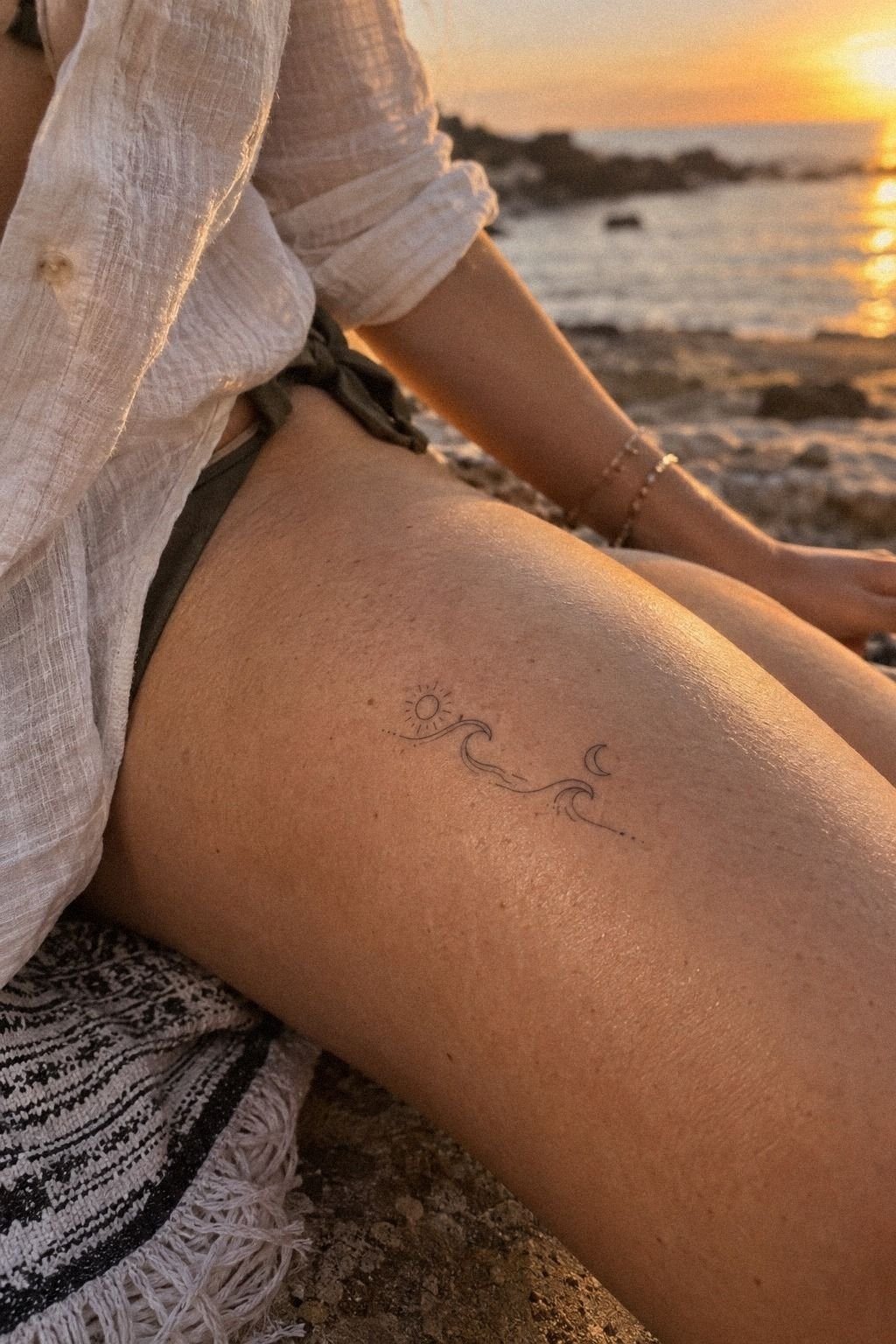
Matching ocean horizon tattoos can feel romantic without forcing you and your partner into identical artwork. You’ll get a more personal result if each horizon uses the same line height but includes one small difference, such as a sun, moon, bird, or wave direction.
The matching horizon line tattoo works best when both pieces stay minimal. I’d use one dark horizon, one small rising or setting shape, and a controlled strip of negative space. The design remains crisp because there aren’t many tiny elements competing for attention.
A thigh placement gives you privacy, room for a slightly wider design, and a more tolerable tattooing experience for many people. You’ll want to agree on scale before booking, since matching tattoos can feel disconnected if one person chooses a much larger version.
I’d skip adding names or dates unless they carry real meaning for you. The ocean horizon already gives the tattoo a symbolic feeling of distance, return, and shared direction. Let the image do the emotional work instead of making it spell everything out.
You can also connect the pieces through color. One person might have a deep navy horizon, while the other has a muted coral sun. That keeps the tattoos harmonious without making them look like a copy-and-paste set.
If you’re considering a visible placement, browse ocean-themed tattoo references. You’ll find ideas that can help you and your partner decide whether your pair should feel delicate, bold, or slightly whimsical. The most meaningful matching tattoo is one you’d still choose independently.
9Why Does a Geometric Whale Tail Work on the Ribcage?
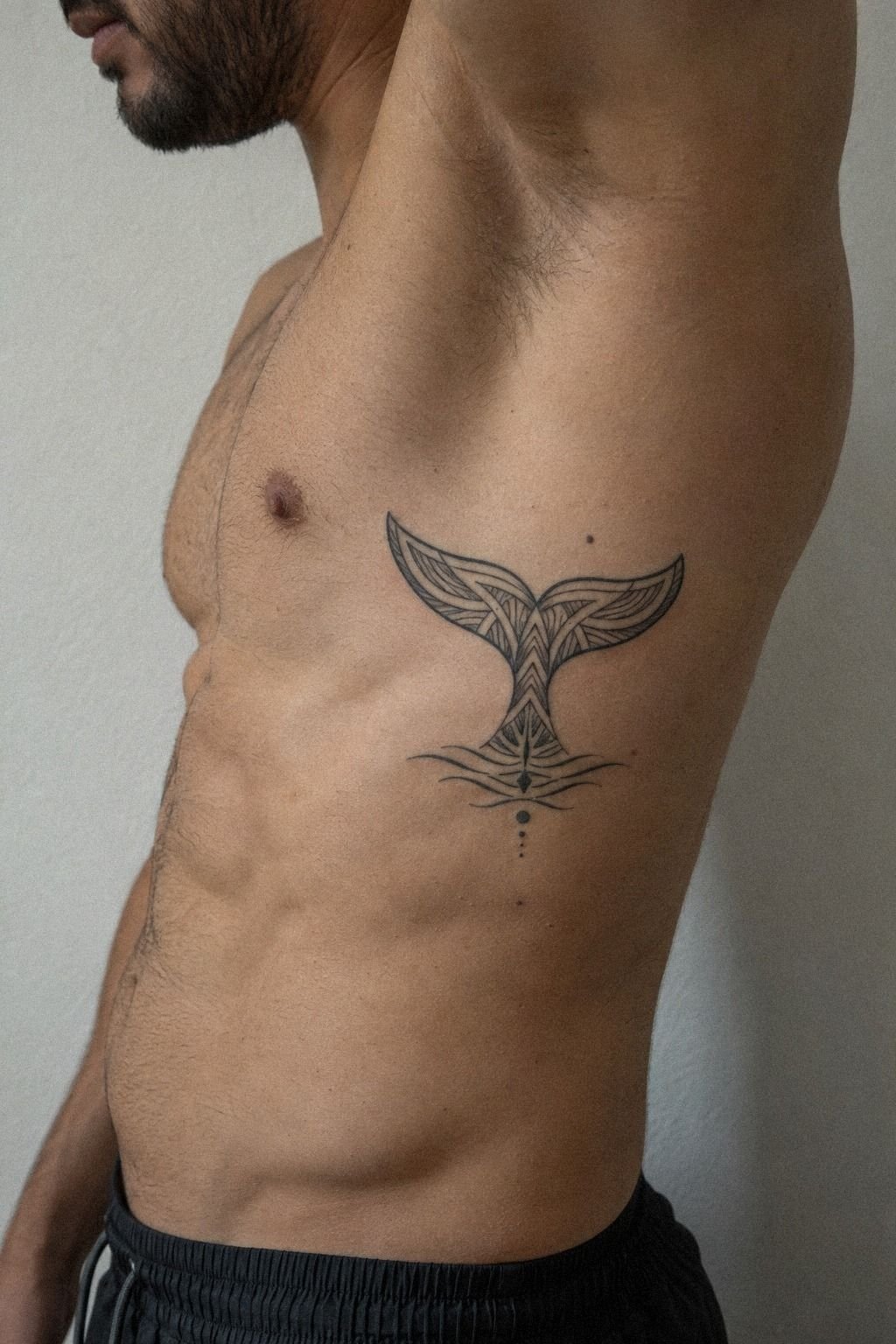
A geometric whale tail on the ribcage gives you a sharp, symbolic Sea Life Tattoo with a strong sense of motion.
10Storm-Keeper Lighthouse Beneath Heavy Clouds
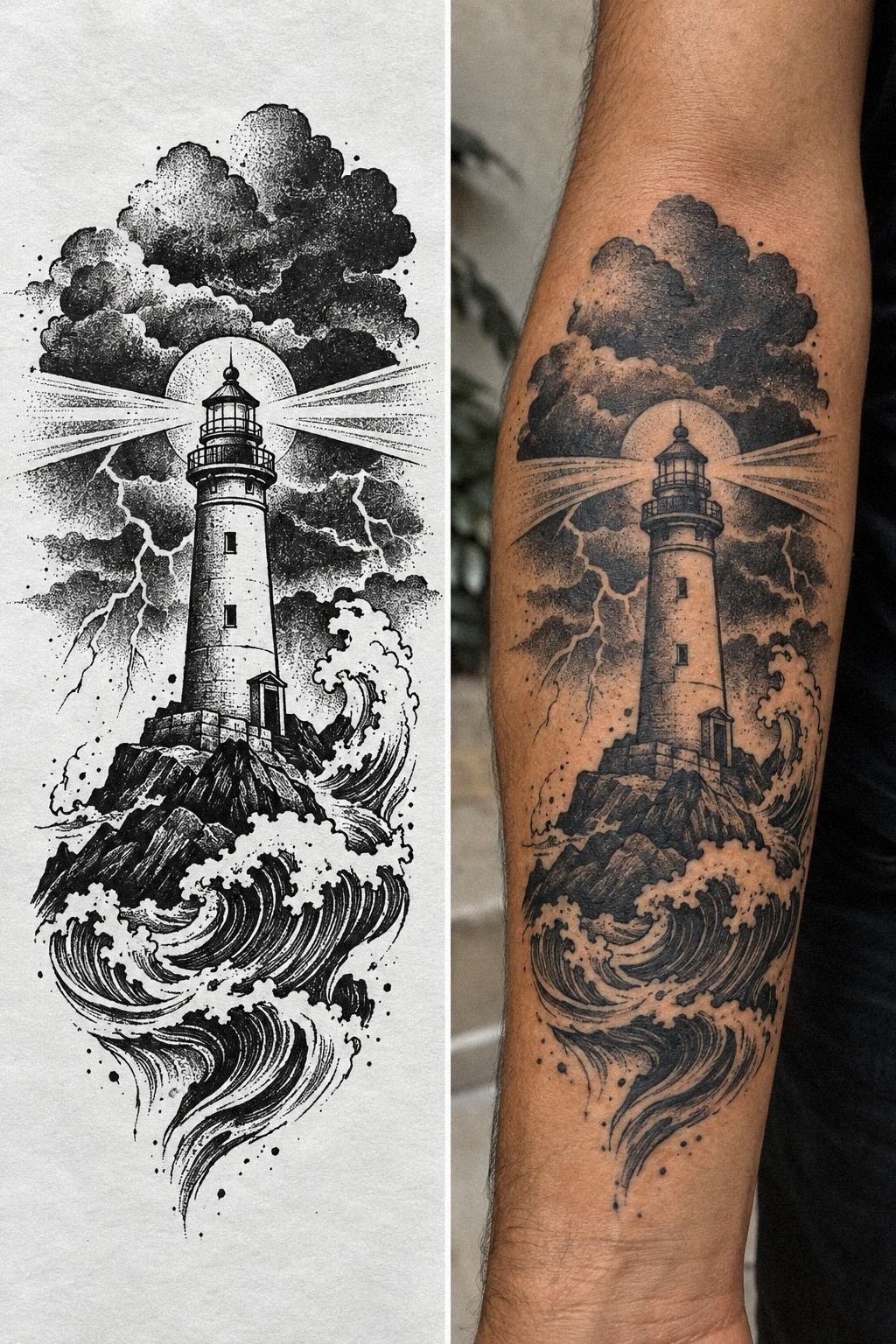
A blackwork lighthouse beneath stormy clouds gives your tattoo a meaningful, almost sacred story without needing text. You’ll get a striking contrast between the dark sky and the bright beam if the artist protects enough negative space around the light.
The blackwork lighthouse tattoo should use solid black selectively. I’d make the clouds heavier near the top, then let the lighthouse remain crisp with a clean tower shape and a bright gap for the beam. Too much fill can erase the structure you wanted people to notice.
This design works especially well as a stencil-based concept because you can inspect the silhouette before it reaches your skin. You’ll want the lighthouse to remain recognizable at a glance, even if the smaller clouds soften slightly with age.
I’d skip pale blue highlights in a mostly black design. They may look moody on the day, but the lighthouse’s power comes from black ink, clear spacing, and sharp geometry. A small grey transition can add depth without weakening the visual anchor.
The arm or calf may give you a more comfortable canvas than the ribs. You’ll want to ask your artist how the beam will follow the body’s movement. A solid blackwork tower with a clean beam can stay timeless if the proportions are right.
For longevity, read why tattoos blur over time. I’d rather see a bold lighthouse with four clear cloud shapes than a crowded storm scene that depends on tiny marks. Paying for restraint often gives you better long-term value.
11Delicate Coral Reef Across the Shoulder
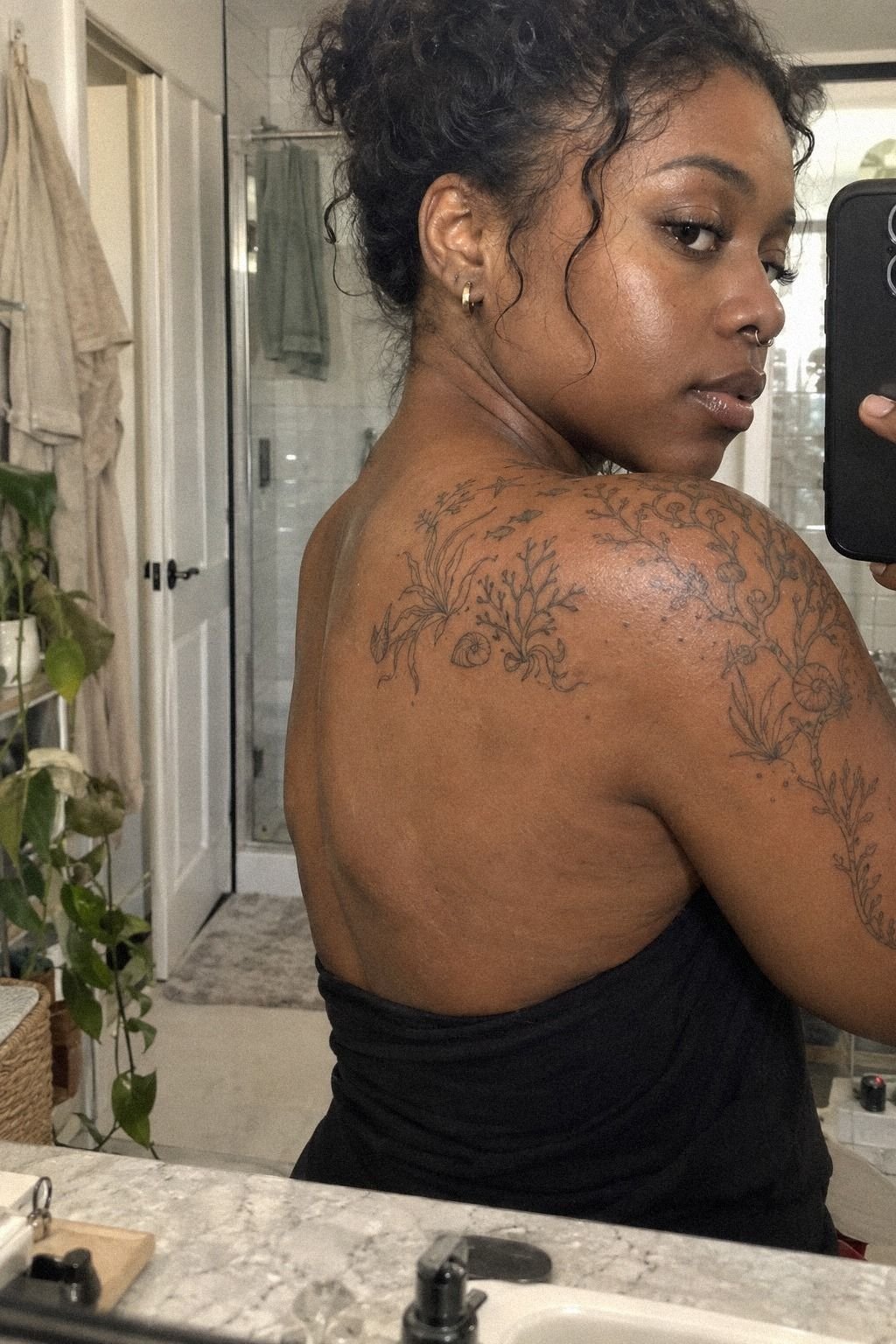
A delicate coral reef across the shoulder lets you build an intricate Ocean Inspired Tattoos piece that follows the body instead of sitting like a sticker. You’ll get a graceful shape from branching coral, one small fish, and a few open gaps between the elements.
The fine line coral reef tattoo needs a clear hierarchy. I’d make the coral branches the main structure, then use tiny fish or bubbles as secondary details. If every mark has equal weight, your eye won’t know where to settle.
Deep brown skin with a warm undertone can carry crisp black linework beautifully when the artist understands contrast and healed results. You’ll want to review portfolio images in natural light, not only heavily edited studio photographs.
The shoulder gives you a practical balance between visibility and privacy. You can show the tattoo with a tank top, cover it easily for work, and avoid some of the friction that affects hands or feet. A black coral branch design will remain readable if the lines aren’t packed too tightly.
I’d skip white ink as the main reef color. White can be meaningful as a tiny glint, but it shouldn’t carry the structure. Your artist can use open skin, black accents, and restrained grey shading for a crisp, polished effect.
For a wider reference pool, revisit sea-themed tattoo ideas. You’ll find coral, shells, waves, and sea creatures that can help you decide whether your reef should feel delicate, bold, or quietly symbolic. A shoulder reef is worth the cost when the composition follows your body instead of fighting it.
Skin Tone, Contrast, and Healed Clarity
Every skin tone can support a striking ocean tattoo, but the design needs to be planned around contrast rather than copied from a reference photo. Ask to see your artist’s healed work on skin close to yours.
A healed tattoo portfolio tells you more than a fresh studio image. Look for photographs taken in ordinary light, where you can judge whether the lines still separate and whether the colors retain their character.
Deep blackwork, saturated pigments, and negative space behave differently across skin tones. Your artist should explain which details need stronger contrast and which pale highlights may be less reliable.
I’d rather see a crisp, expressive design adapted to your skin than an exact copy that loses its smallest marks. Personalization is part of making the tattoo feel meaningful.
Sun Exposure and Long-Term Color
Sun exposure is one of the biggest threats to a vibrant tattoo. Once the skin has fully healed, use a broad-spectrum sunscreen whenever the design will be outside for extended periods.
A fully healed tattoo can handle ordinary life, but repeated ultraviolet exposure may soften contrast and reduce color intensity. That matters especially for teal, coral, violet, and pale grey.
During healing, keep the tattoo away from direct sun and follow your artist’s instructions. Don’t rush into swimming, heavy friction, or aggressive products because the tattoo looks dry or itchy.
If you love a vibrant color plan, ask whether the artist recommends a future touch-up. That doesn’t mean the design failed. It means you’re being realistic about how skin and pigment change over time.
Lines That Survive Real Skin Movement
Longevity starts with the relationship between the design and the placement. A well-spaced tattoo design can handle ordinary movement more gracefully than a crowded composition, even when both were drawn by the same artist.
I’d look at friction, sun exposure, stretching, and how often you’ll see the tattoo before choosing a location. You’re not only buying a fresh stencil. You’re choosing how the piece will live on your skin for years.
A small personal tattoo may be the right budget decision if it keeps the strongest idea intact. More skin doesn’t automatically create more value. Sometimes a sharp, understated wave says more than an expensive scene filled with details nobody can read.
Ask to see healed work in the style you want. Healed linework tells you more than a perfect appointment-day photograph, especially if you’re considering fine lines, pale color, or delicate geometry.
Color, Contrast, and Long-Term Value
Color can make an ocean tattoo playful, romantic, or haunting, but every pigment changes the maintenance conversation. I’d rather see two intentional colors than a full palette that loses its hierarchy after the surface settles.
Black gives the eye a reliable anchor, while teal, coral, violet, and muted gold can add emotion around it. Your artist should explain how your chosen colors may behave with your skin tone and daily sun exposure.
If your budget is tight, invest first in the drawing, placement, and artist’s healed portfolio. You can always simplify the color plan. It’s harder to rescue a composition that was too crowded from the beginning.
The best value isn’t always the lowest quote. A thoughtful color plan can reduce unnecessary touch-ups and help the design remain vibrant without making every part equally loud.
Placement Questions I’d Ask Before Booking
I’d ask whether the design still works at the smallest size you can comfortably afford. If the answer is no, the concept may need editing before you pay a deposit.
I’d also ask how clothing, work, sports, and sunlight may affect the location. A practical tattoo placement should fit your actual routine, not only the pose you imagine for the reveal.
Then I’d ask what happens if a fine line expands slightly. Your artist should be able to explain which marks are essential, which can disappear, and how the composition will still read.
Finally, ask about the studio’s minimum, hourly rate, expected sessions, and deposit policy. Those details make the cost easier to judge and prevent a beautiful idea from becoming an uncomfortable financial surprise.
The Crisp-Line Decision
I used to think longevity was mostly about choosing a talented artist. That matters, but it isn’t the whole story.
Your design, placement, line weight, skin exposure, and aftercare all work together. A delicate wave on a protected shoulder can age more calmly than the same wave on a constantly rubbed foot.
My biggest mistake was treating tiny detail like free space. I kept adding foam, bubbles, and texture because the stencil looked empty. Once the tattoo healed, the design needed those gaps.
Now I’d rather remove three details than force them into a piece that needs room to breathe.
You should also decide whether you want a tattoo that reads from across the room or one that rewards a closer look. Bold blackwork usually holds its structure longer, while fine linework can feel more intimate but may soften. Neither choice is wrong, but they ask different things from your placement.
Color deserves the same honesty. Saturated pigment can create a vibrant koi or jellyfish, yet black usually gives you the strongest long-term anchor. I’m not against color; I’m against using five competing shades when two would tell the story more clearly.
Your first appointment should include a real conversation about scale. Ask what will happen if a line expands slightly, where sun exposure will hit, and whether the design still works without its smallest marks. You’re choosing an image for your skin, not just a fresh photograph!
What People Always Want to Know
How much does an Ocean Inspired Tattoo usually cost?
I’d expect a small ocean tattoo to cost about $100 to $300 in the US, while shop minimums often fall around $50 to $100 and hourly rates around $100 to $250. The artist, region, placement, color, and detail level will change the estimate.
Are Ocean Inspired Tattoos a good idea for a first tattoo?
I think they can be, especially if you choose a manageable placement and a clear design. Simple black linework can feel meaningful without requiring a huge commitment. I’d consider the forearm, thigh, or shoulder before ribs, feet, hands, or sternum.
How do I choose a tattoo artist for Ocean Inspired Tattoos?
I’d review healed portfolio photographs and look for the style you want, whether that’s realistic shading, fine linework, watercolor, or blackwork. I’d also check studio hygiene, consultation habits, and whether the artist regularly works on your skin tone.
How much do Ocean Inspired Tattoos hurt?
I’d expect pain to vary by person, but ribs, feet, hands, and sternum are often more intense because they’re close to bone or highly sensitive. Forearm, thigh, and shoulder placements are commonly more tolerable. Session length and personal sensitivity matter too.
How long does an Ocean Inspired Tattoo take to heal?
I’d plan for the surface to settle in about 2 to 3 weeks, while complete healing can take roughly 2 to 3 months. Wash gently, moisturize as directed, avoid picking, and stay away from swimming and direct sun during the early healing stage.
What’s the best placement for an Ocean Inspired Tattoo?
I’d start with the forearm, shoulder, thigh, or outer ankle because you can control visibility and often get clear line placement. A shoulder or forearm gives your artist more room than the wrist, foot, or behind the ear.
Where I’d Start First
If I had to pick one, I’d start with the minimalist crescent moon over rolling waves. Its open spacing gives fine lines room to age, and the spine makes the movement feel intentional. Pin it for later, then compare it with ocean-themed tattoo ideas before booking.
If you prefer something more daring, the kraken or storm-keeper lighthouse has stronger blackwork structure. If you want something dainty, the seashell or geometric whale tail may feel more personal. The right design should be crisp, meaningful, and worth the commitment!