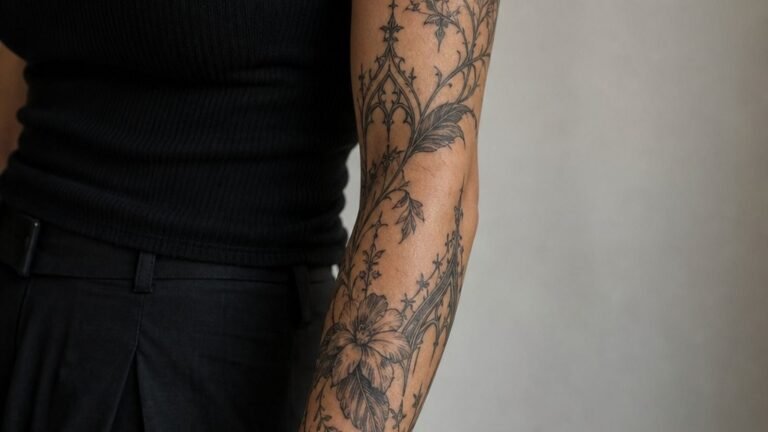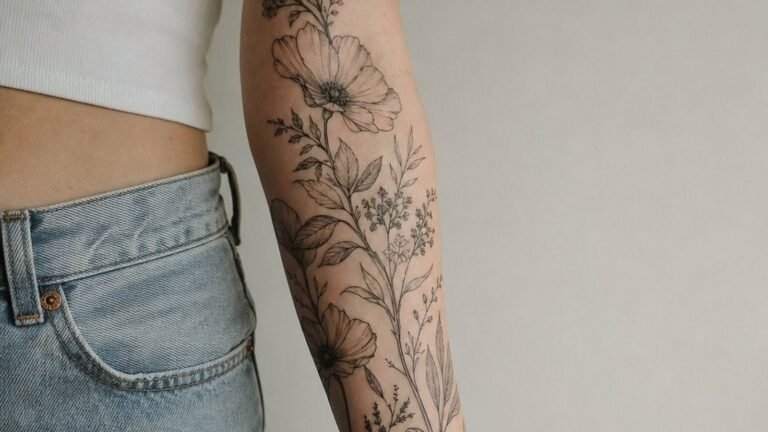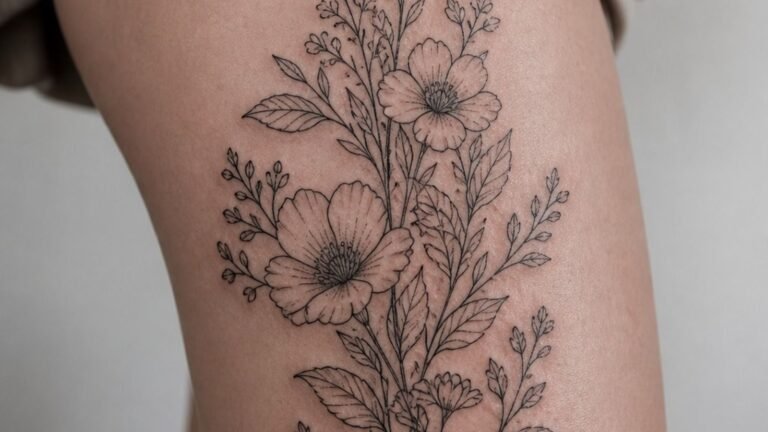
I almost skipped my first cherry blossom. A client told me she’d been carrying a Pinterest board for two years and every artist she asked talked her out of it. “Too soft,” they said. “You want something with weight.” She got the cherry blossom anyway, healed it clean, and two years later it’s the tattoo that reads from across the room while her “heavier” piece has faded into mush. That moment stuck with me. Most of the hand-wringing I hear about Japanese flower tattoos isn’t about the flowers. It’s about whether the linework will hold, whether black will stay black, whether the placement fights the body or works with it. So I wrote this listicle the way I’d talk to a friend in the studio: here are fourteen Japanese flower tattoo ideas that actually hold, with the placement, the linework weight, and the aging truth behind each one.
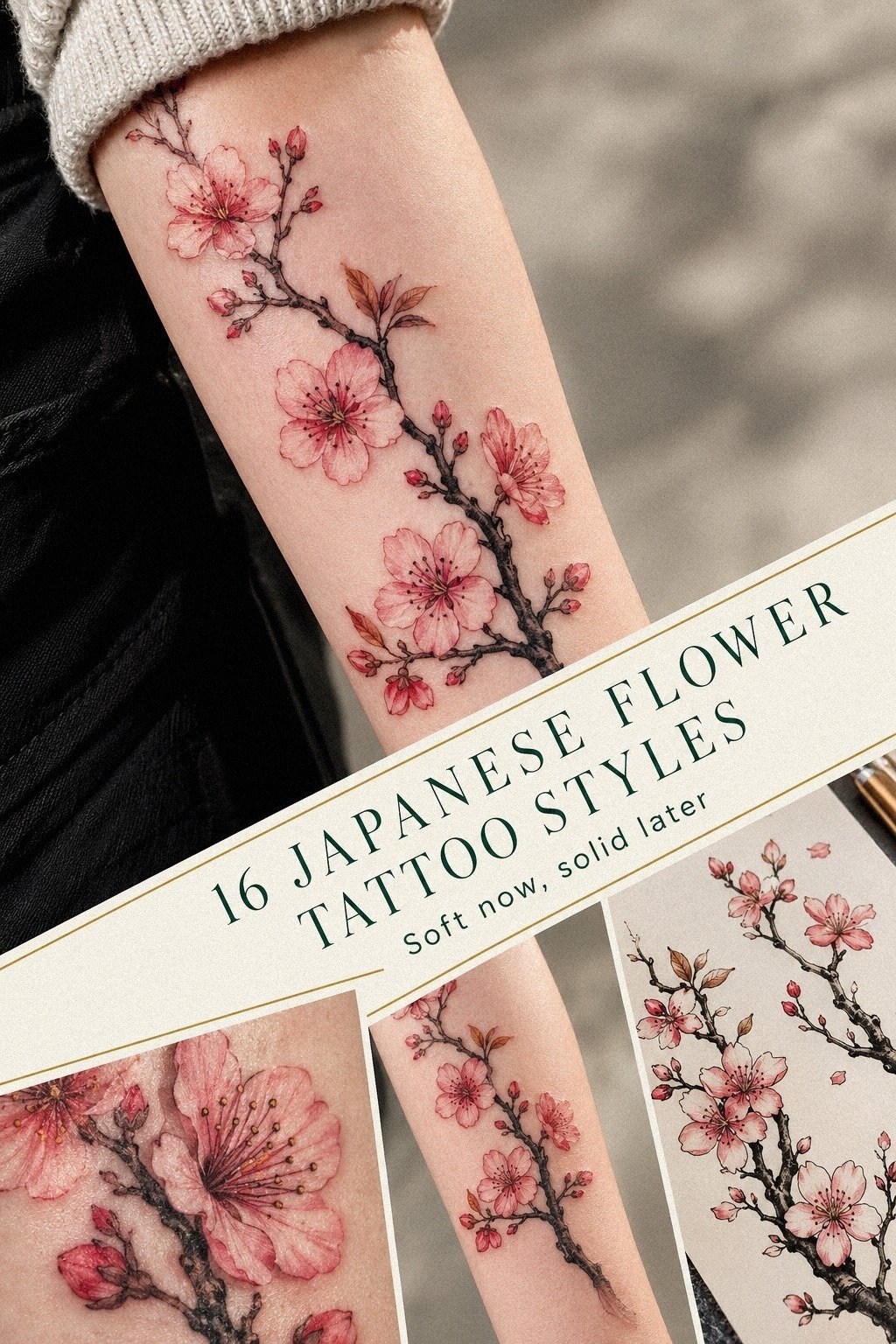
- Anchor a Cherry Blossom Branch on the Inner Forearm
- Go Full Back with a Peony Irezumi
- Center a Chrysanthemum Across the Shoulder Cap
- Wrap a Blackwork Lotus Around the Thigh
- Pick from Flash for a Japanese Peony Quarter Sleeve
- Stack a Cherry Blossom Fine Line Down the Spine
- Pair Chrysanthemum and Koi for a Forearm Sleeve
- Let a Wisteria Vine Crawl Down the Ribs
- Curve a Camellia Around the Hip
- Frame a Japanese Maple Across the Calf
- Float a Plum Blossom Along the Collarbone
- Hand Poke a Peony with Tebori on the Hand
- What Makes Peonies Hold Better Than Cherry Blossoms?
- Center a Chrysanthemum on the Sternum
- Bold Line vs Fine Line on Cherry Blossoms
- Tuck a Cherry Blossom Behind the Ear
1Anchor a Cherry Blossom Branch on the Inner Forearm
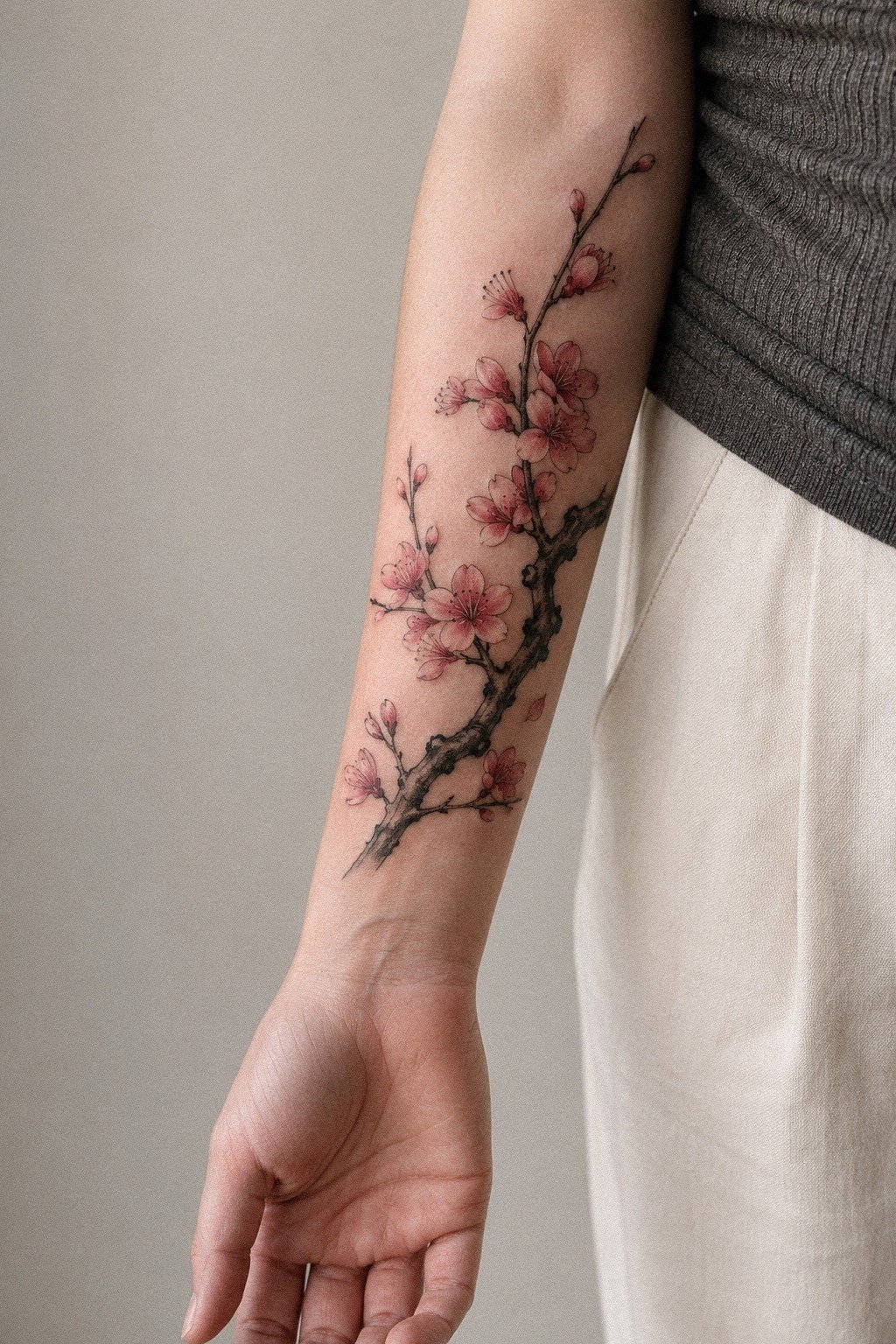
Cherry blossoms on the inner forearm are a workhorse placement. The skin is thin but the canvas is wide, so you get flow without the blowout risk you fight on ribs or stomach.
A real branch with three to five open blooms and a few buds reads as a story, not a sticker. I’d push the linework to a 7RL or 9RL needle, not single-needle fine line, because fine line cherry blossoms turn to gray soup by year three on this placement.
Inner forearm flexes a lot, and fine line doesn’t love flex.
Bold black holds. That’s the rule.
Pair it with a soft grey wash in the petals, no color yet if you want it to age cleanest. A healed piece on fair cool-pink skin with three-quarter editorial crop is what you’re aiming for, and it’s what makes this placement work.
If you’re building a whole sleeve around it, the irezumi tattoo guide shows how branches tie into larger pieces. The most common mistake I see here is going too small.
A two-inch cherry blossom branch looks like a bruise in six months. Give it at least five inches of length so it has room to breathe!
2Go Full Back with a Peony Irezumi
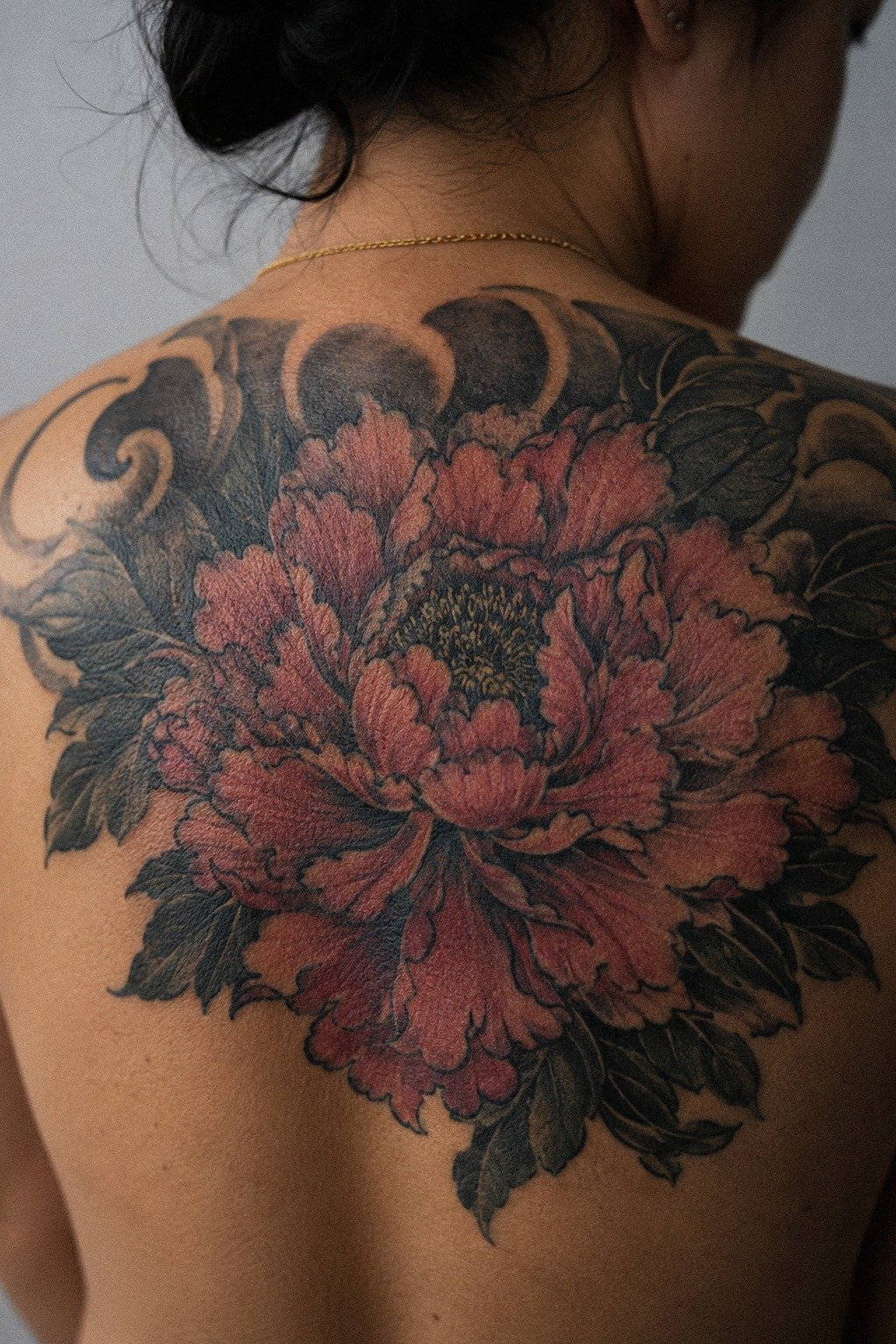
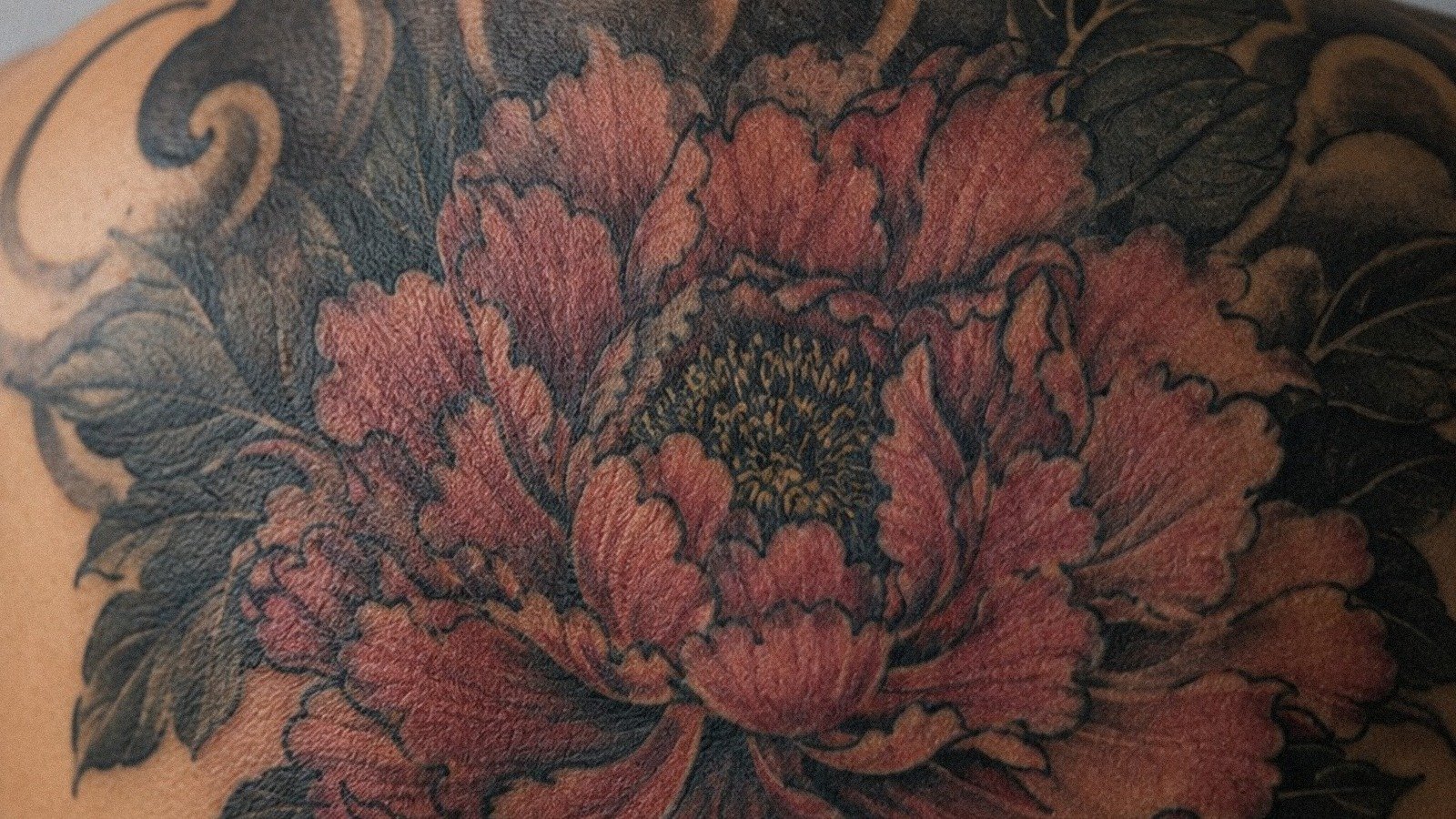
A peony full back in classic irezumi is one of the heaviest commitments you can make, and one of the most rewarding. We’re talking eight to fifteen hours of work across multiple sessions, sometimes more if you’re adding water, wind bars, or a crane.
The peony itself takes most of that time, with each petal layered in soft grey wash before the bold outline goes on top. This is hand-poke tebori or machine, depending on the artist, and the back is the one placement where tebori really makes sense because the skin is forgiving and the canvas is enormous.
What holds this together is the way the petals layer. A skilled irezumi artist pushes contrast hard so the healed piece doesn’t flatten out, and the ink texture you see up close in a macro shot is exactly what makes this style age right.
The back ages beautifully because you don’t sit on it, you don’t flex it, and the sun rarely reaches it. If you’re a first-timer, this is not the place to start.
But if you’ve got a collector mindset, the Japanese warrior tattoo guide walks through how peonies pair with samurai and koi in full-body suits. The peony alone is a statement.
The peony with wind bars and a rising sun is a different level.
3Center a Chrysanthemum Across the Shoulder Cap
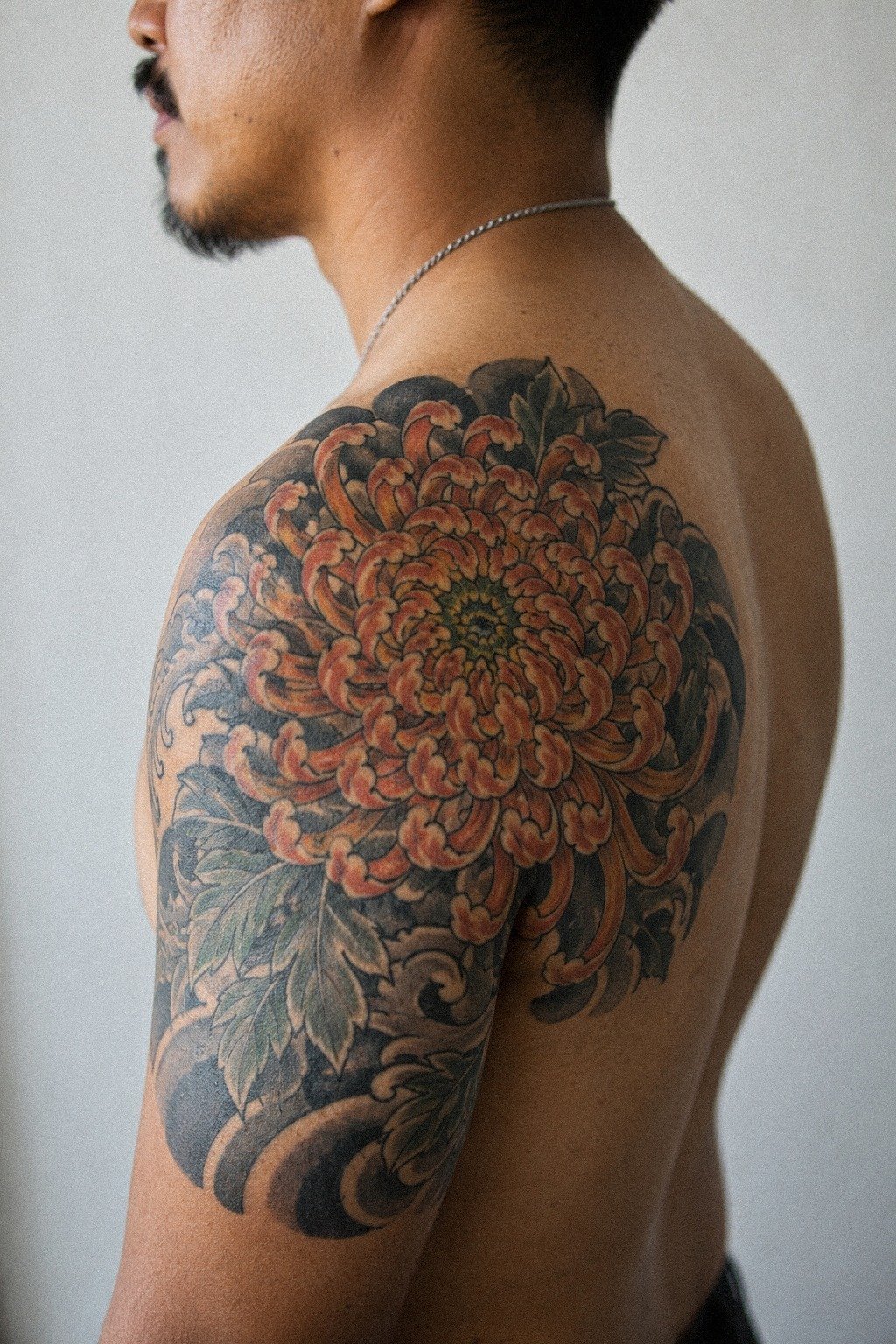
The shoulder cap is one of the easiest placements to heal and one of the most forgiving for linework. The curve of the deltoid gives the chrysanthemum a built-in frame, so the petals radiate from a single anchor point instead of floating on flat skin.
I’d push the linework to a 7RL or 9RL outline with a soft pepper shading pass in the petals, no solid black fill, because a packed chrysanthemum turns heavy fast on this much canvas. The shoulder ages well too.
You don’t sit on it, you don’t flex it constantly, and shirts cover it most of the time, which means the sun barely touches it.
Anatomically, this placement rewards a chrysanthemum between six and ten inches across. Smaller than that and the petal layers start fighting each other.
Bigger than that and you bleed into sleeve territory, which is a different conversation. On medium olive skin the healed piece has a lived-in softness that bold black can’t fake with fresh ink.
If you want a single bloom that anchors future work, this is one of the cleanest places to put one. The great Japanese tattoos guide walks through how a shoulder chrysanthemum ties into full sleeves.
4Wrap a Blackwork Lotus Around the Thigh
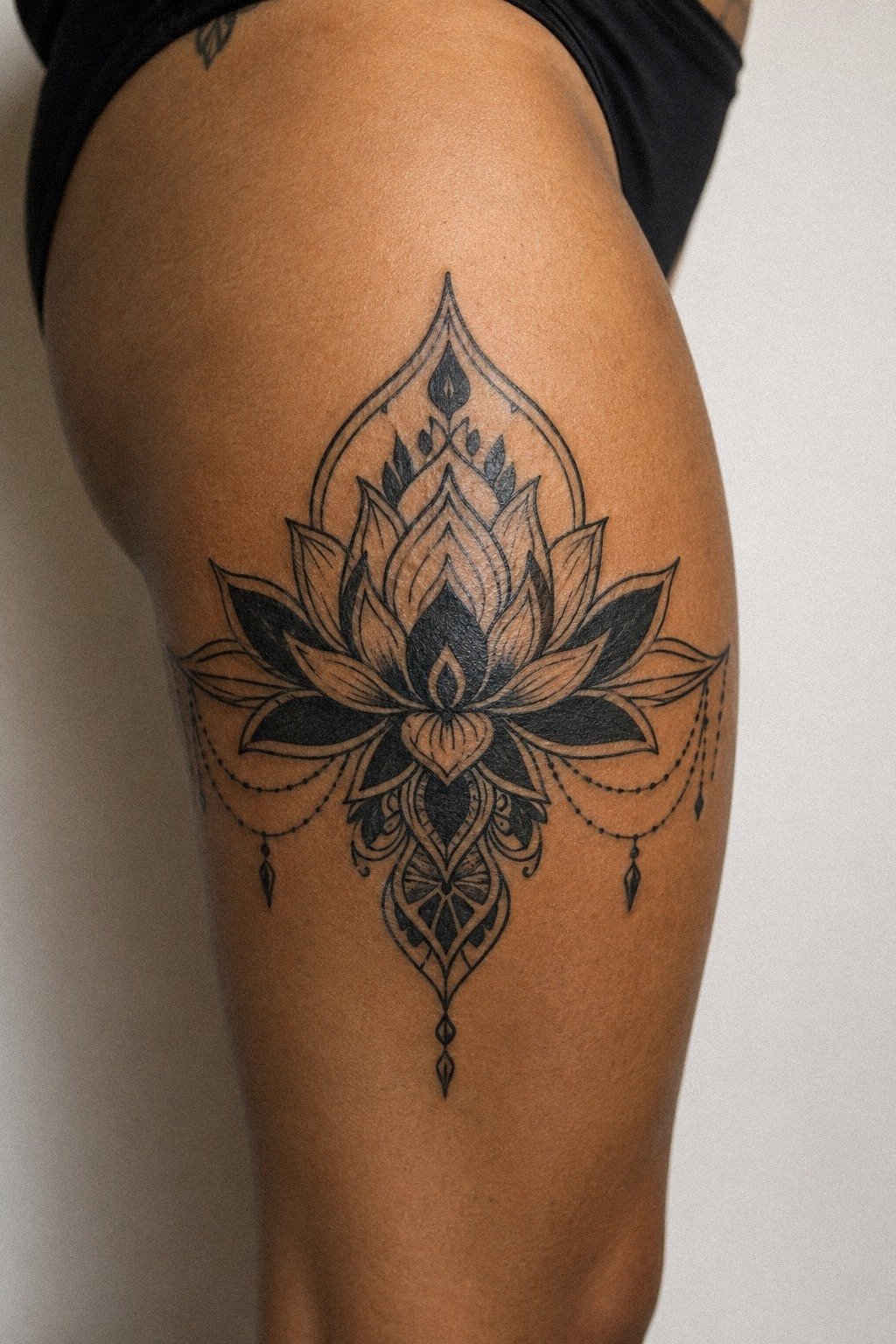
Thigh tattoos get a bad rap for stretching, and that’s true if the design stretches with the skin. A blackwork lotus, though, is mostly negative space and bold contour, so it holds its shape even when the thigh changes. The lotus here is a Buddhist symbol of awakening, and on the outer thigh you’ve got a flat canvas that takes detail well.
I’m talking 3/4-inch petal tips, bold black packing, and a single-needle finish on the water ripples underneath.
Anatomically, this is a placement that works. The thigh is low-wear, low-sun, and you don’t flex it constantly.
Golden tan skin with this kind of blackwork pops because the contrast is high. If you’re thinking about going bigger, the Japanese artwork tattoo guide shows how lotus flowers anchor sleeve work on the upper leg.
The lotus doesn’t need to be huge to land. A six-inch lotus on the outer thigh reads beautifully.
Bigger than that, and you’re into a thigh panel that wants more story around it. Decide which one you’re buying before you sit down.
5Pick from Flash for a Japanese Peony Quarter Sleeve
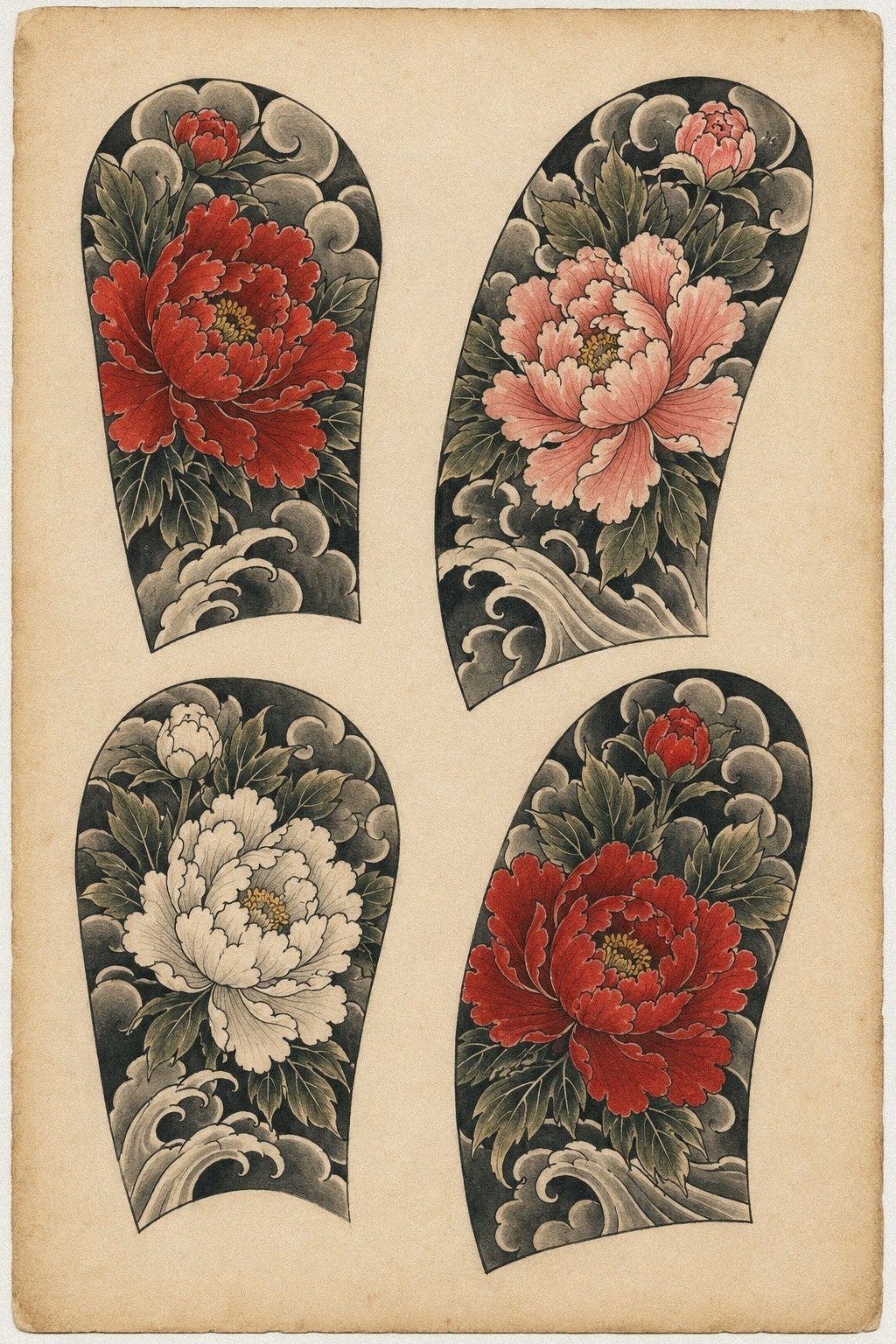
Flash sheets still work, and a traditional Japanese peony on aged off-white paper with several hand-drawn designs is a great way to get a quarter sleeve without waiting six months for a custom drawing. Flash is “get what you get,” which means the artist drew it once, it’s clean, and it’ll heal clean.
You don’t get to Pinterest-exact it. References for vibe only.
If that’s a deal-breaker for you, custom is your road. If it’s not, flash saves you time and money.
A quarter sleeve is roughly a half-sleeve from shoulder to elbow. The peony here can sit on the bicep with the wrist side reserved for something else, or you can build the whole upper arm around one bloom with leaves and water bars.
On fair skin the black ink reads strong, and you don’t need color to make this work. Quarter sleeves run two to four hours per session, usually two sessions. Flash is underrated.
Don’t sleep on it.
6Stack a Cherry Blossom Fine Line Down the Spine
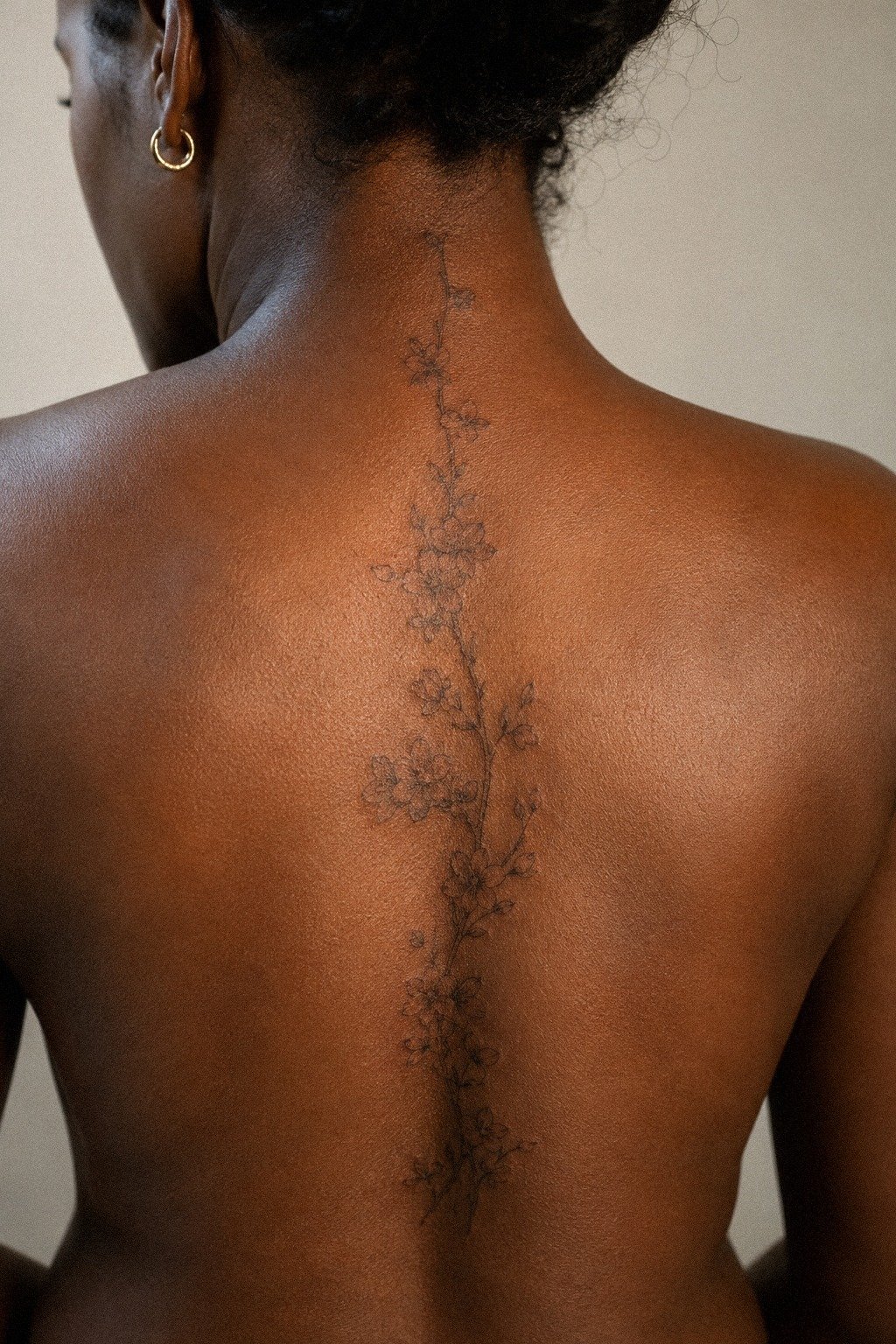
Spine tattoos are a commitment because of the pain, and a fine line cherry blossom down the spine is one of those pieces that’s stunning when it heals and terrible when it doesn’t. The gamble is real.
Fine line on the spine can work, but only with an artist who knows single-needle work and only if you accept that touch-ups will be part of the deal. The spine is bony, the skin is thin, and the ink doesn’t always grab evenly. You need a steady hand and a patient client.
Here’s the part nobody tells you. Fine line ages faster than bold line, especially on a high-flex zone like the spine.
By year three, you’ll want a refresh on the thinnest petals. That’s normal, not a failure.
The good news: healed fine line on deep ebony skin has a softness to it that bold black can’t match, and the editorial three-quarter crop from neck to mid-back shows off the linework without distraction. If you’re committed to fine line, the fine line tattoo needles longevity placement guide walks through how single-needle work ages across placements. Pain here is real but tolerable.
Tap out for five minutes if you need to, then go back in.
7Pair Chrysanthemum and Koi for a Forearm Sleeve
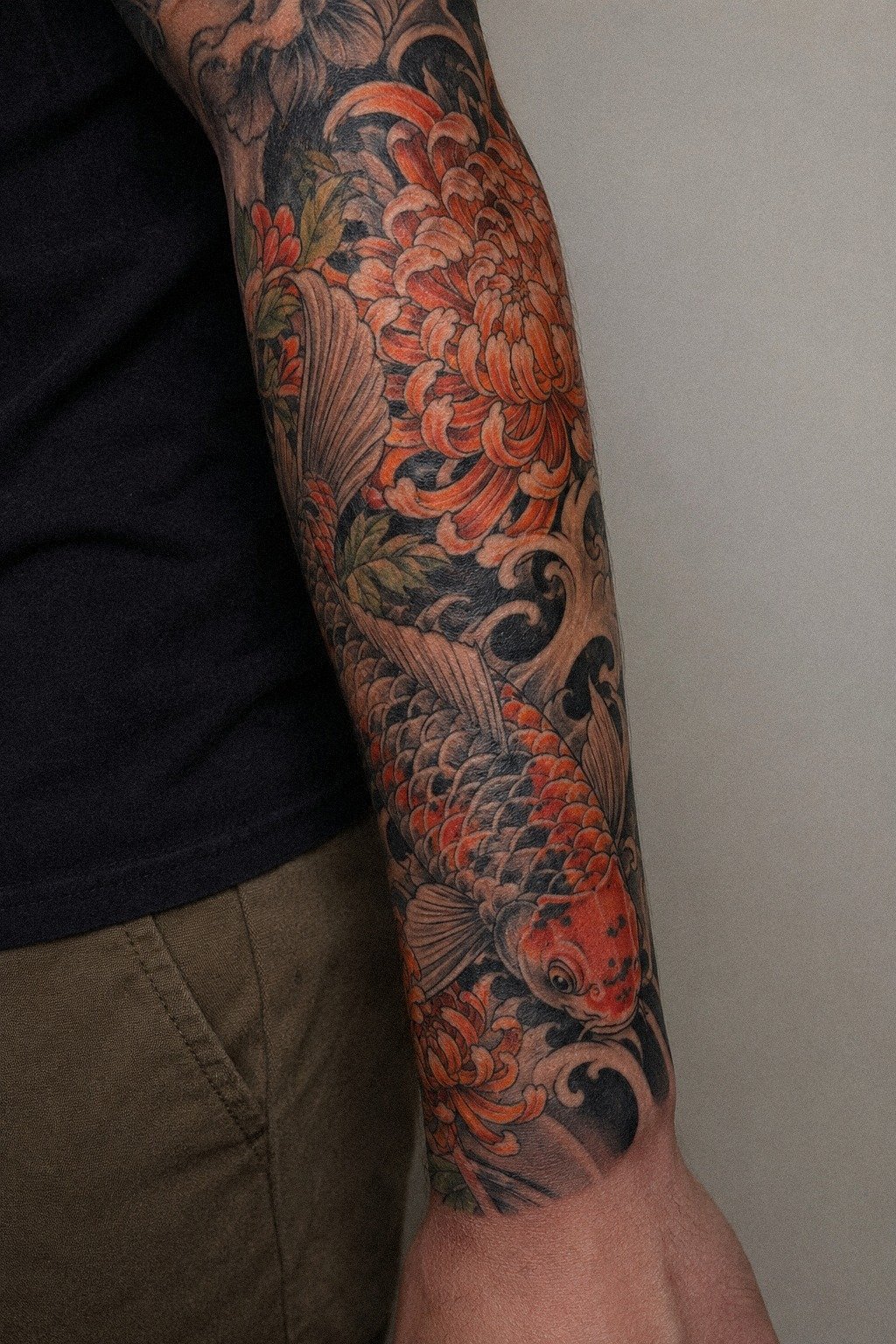
Chrysanthemum and koi is one of those combinations that exists for a reason. The chrysanthemum anchors the upper forearm with its layered petals, and the koi swims in negative space below it, usually curving with the inner bicep.
Both elements are classic irezumi iconography, and together they tell a story of perseverance: the koi pushing upstream, the chrysanthemum holding through every season. On a forearm sleeve you’ve got room to breathe without crowding either piece.
Linework is where this idea lives or dies. I’d push the chrysanthemum petals to a 7RL outline with a soft whip shade, and the koi scales to a 5RL with a saturated grey wash so they pop against the flower.
Skip solid black fill on the koi body or the whole thing reads as one heavy block. A healed piece on warm ivory skin with the koi wrapping the inner forearm is one of those sleeves that gets better at year three than year one.
Forearm sessions run three to five hours, usually split across two appointments. If you’re building out a full sleeve, the irezumi Japanese traditional tattoo guide shows how these two anchor larger compositions. This combo is a collector’s piece.
Plan it like one.
8Let a Wisteria Vine Crawl Down the Ribs
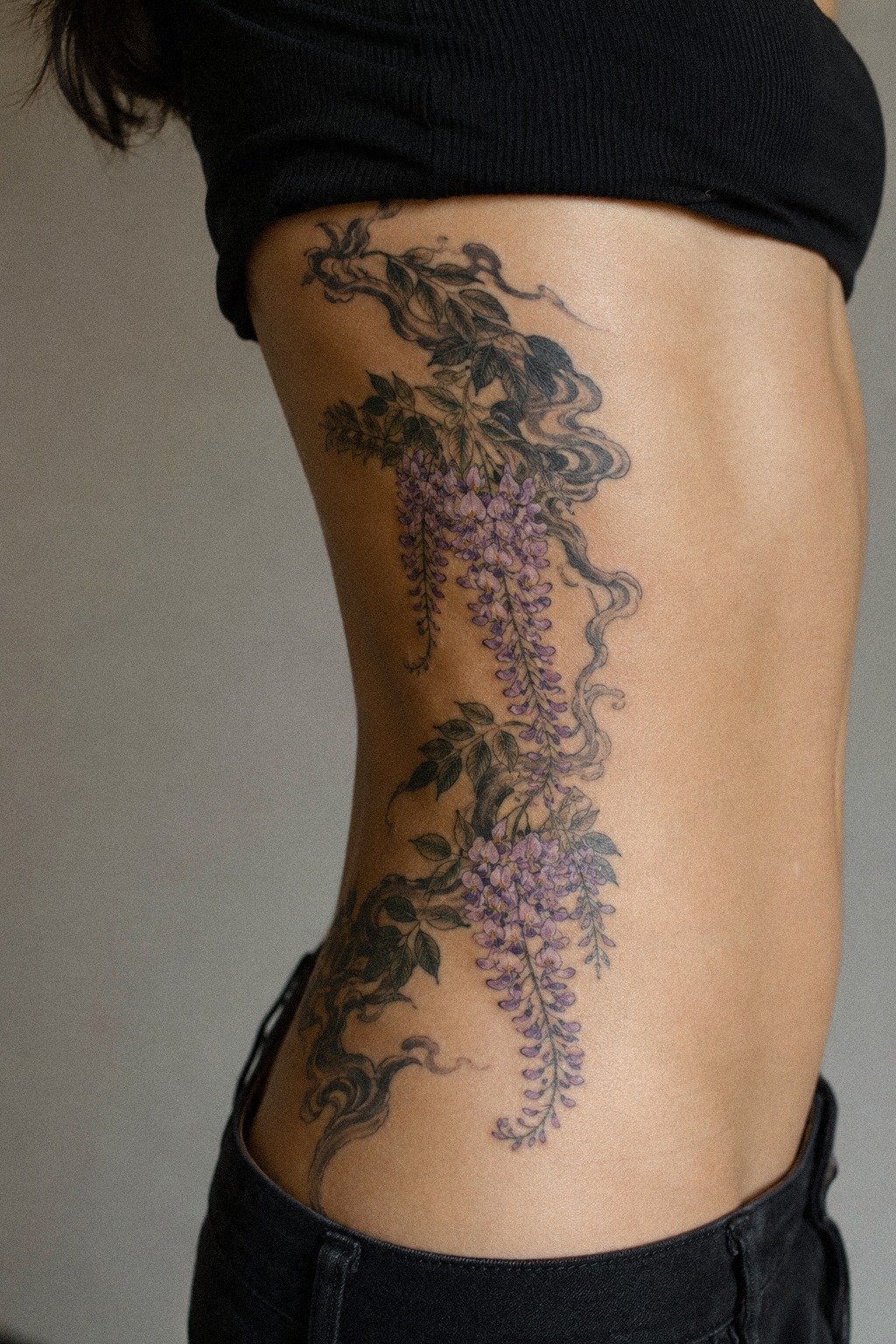
Wisteria on the ribs is spicy, no other way to put it. The ribs are bony, the skin is thin, and the linework has to be confident because the canvas is uneven. A wisteria vine with hanging clusters of small flowers and a few leaves tells a spring story, and on the side ribcage, it follows the body’s natural curve in a way flat placements can’t.
This is not a beginner’s spot, but it’s one of the most rewarding placements when the linework lands.
Here’s what I’d push for. A medium needle, around 7RL, for the vine itself, and a single-needle or 3RL for the tiny flower clusters.
The smaller the flower, the more important it is to have an artist who can pack tiny shapes solid. On medium warm ivory skin in natural daylight, the healed piece has a lived-in look that screams real tattoo, not Pinterest sketch.
If you’re curious about the symbolism, wisteria in Japanese culture represents longevity and endurance, and the Japanese temple tattoo meaning post covers how temple imagery weaves into the same visual vocabulary. Pain on ribs is real!
Eat before your session, take breaks, and don’t hold your breath.
9Curve a Camellia Around the Hip
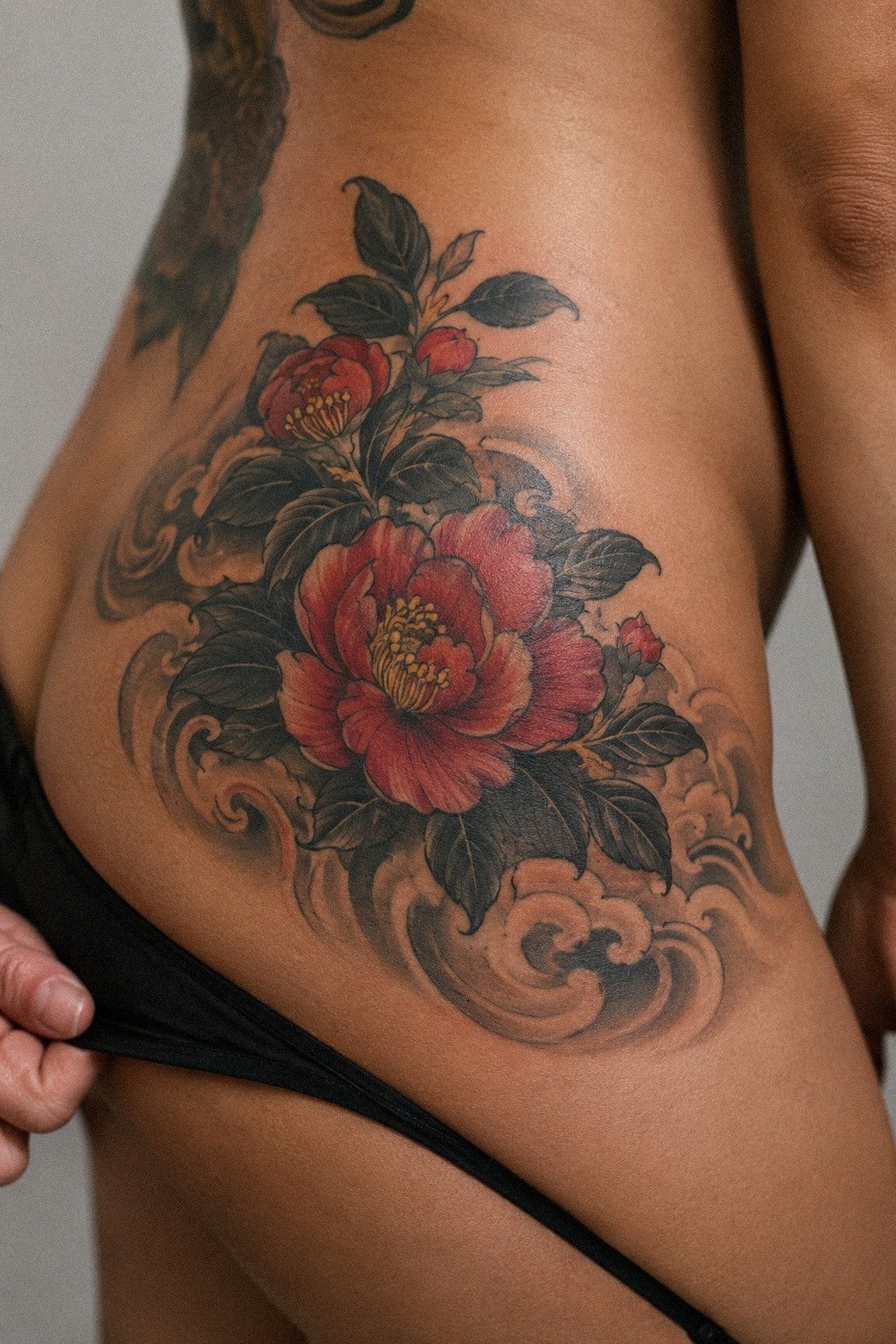
The camellia is one of the most elegant Japanese flowers, and it curves beautifully around the hip bone. The petals are clean, geometric, and they hold their shape on a curved surface better than a cherry blossom or peony would. Camellias also symbolize love and devotion in Japanese culture, which makes this a meaningful placement for someone commemorating a relationship, a memory, or a personal vow.
Anatomically, the hip is a placement that heals well because clothing covers it most of the time. You don’t sit on it, you don’t flex it constantly, and the sun rarely reaches it.
On medium olive skin, the camellia reads strong in black and grey, and color versions in soft reds and pinks age cleanest. The risk here is going too small. A camellia smaller than four inches starts to lose its geometric clarity and turns into a smudge by year two.
The snowdrops flower tattoo meaning post covers other small-but-mighty flower tattoos if you’re considering alternatives. And camellia on the hip is for someone who wants the tattoo to be theirs, not everyone’s!
10Frame a Japanese Maple Across the Calf
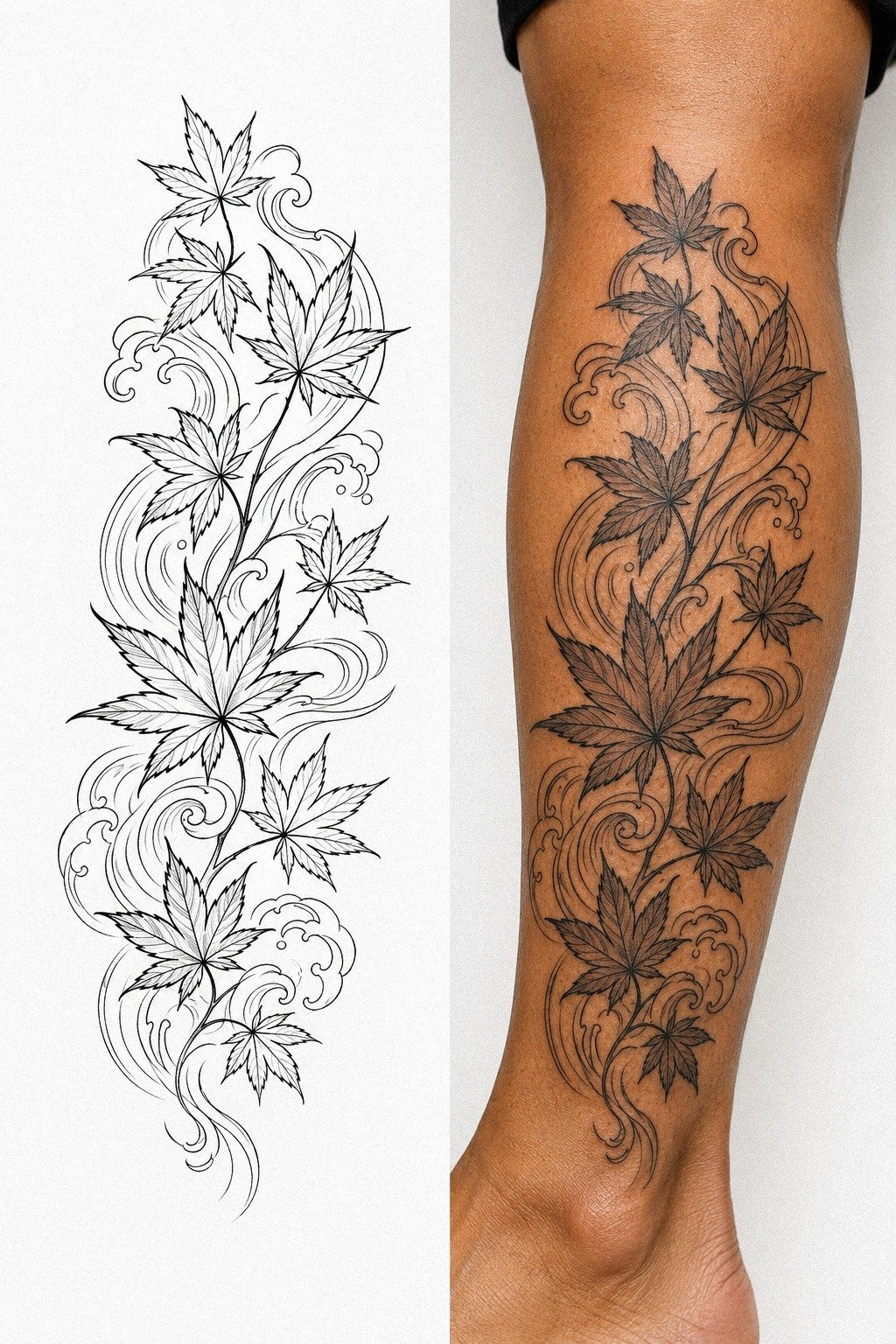
The calf is one of the most underrated placements for Japanese work. It’s low-wear, the canvas is wide, and the muscle provides a slight curve that adds dimension to flat designs.
A Japanese maple leaf or branch with seasonal color shifts tells an autumn story, and the way the lobes spread out works beautifully with the calf’s natural shape. This placement also heals predictably, which matters more than people think.
A split image showing the stencil on paper and the healed piece on the calf is the kind of reference that tells the whole story. The stencil is clean and graphic, the healed piece is soft and lived-in, and the difference between them is what tattooing actually looks like.
Maple leaves want bold black outline and soft grey shading inside the lobes. Skip the orange-red color unless you’re committed to touch-ups every few years, because color on the calf fades faster than you’d think.
The calf is for someone who wants a tattoo they can show off in shorts but cover with pants at work. The Japanese artwork tattoo guide walks through how maple leaves anchor larger leg pieces. Versatile placement, strong aging, real statement.
And you can build a whole leg sleeve out of this idea if you want to go bigger!
11Float a Plum Blossom Along the Collarbone
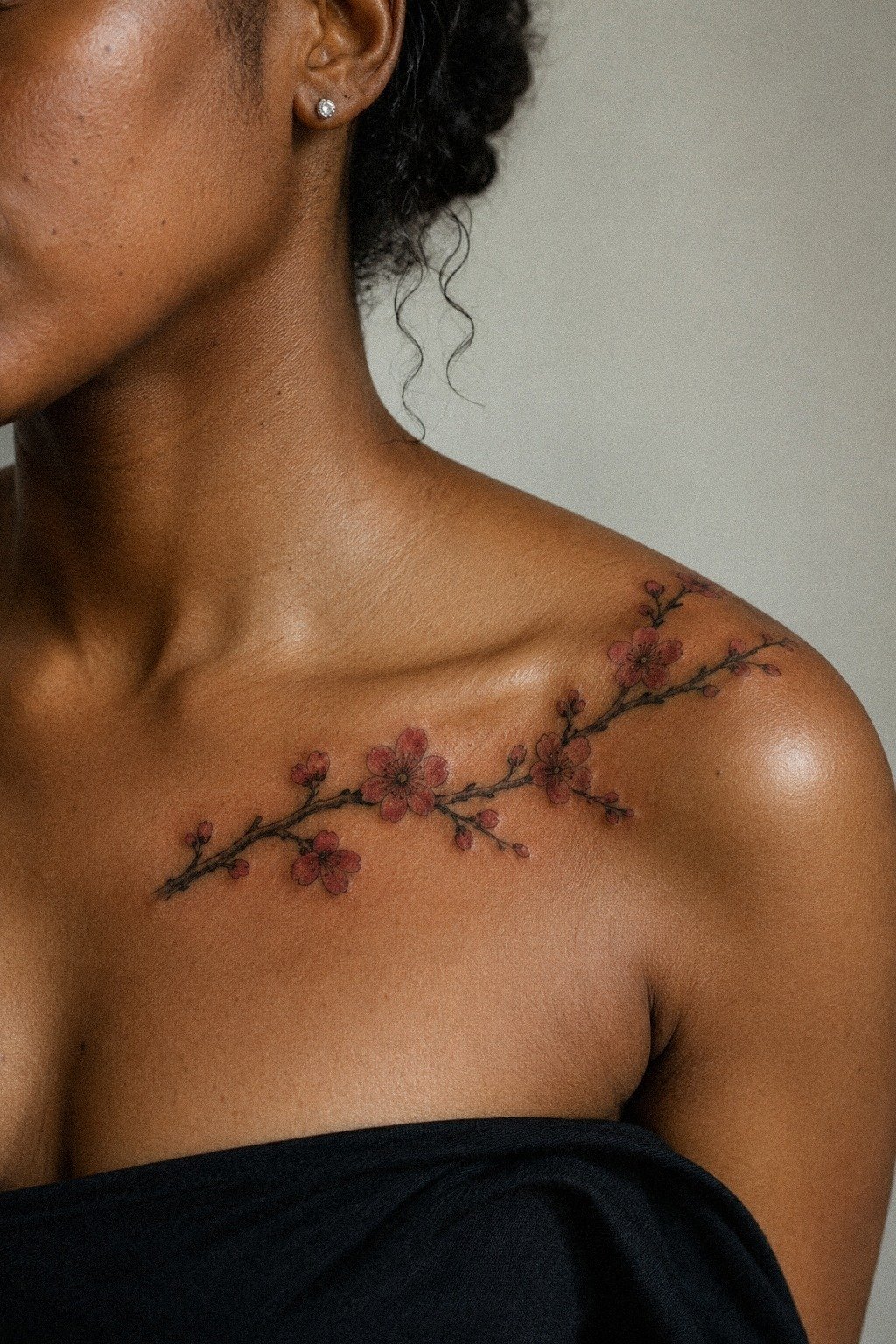
Plum blossoms bloom before cherry blossoms, which makes them a symbol of resilience and renewal, and on the collarbone that symbolism lands harder than almost anywhere else. The placement is visible, the skin is thin, and the bone underneath means pain is real but tolerable for a small piece. A plum blossom branch with two to three open blooms and a few buds curves naturally along the collarbone’s line, and the three-quarter editorial crop from shoulder to chest shows it off without distraction.
On deep brown skin with warm undertone, plum blossoms read beautifully in black and grey. The skin tone adds depth to the grey wash in the petals, and the bold black branches pop without looking harsh. I’d push the linework to a 5RL or 7RL needle, not single-needle, because fine line doesn’t hold well on the collarbone’s high-flex zone.
This is also a placement that wants a small piece. A plum blossom branch that’s longer than six inches starts to compete with the collarbone’s natural line instead of following it.
The lily flower tattoo meaning post covers other flowers that hold well on this much skin and bone. Plum comes first.
Cherry follows. Both ideas carry weight.
12Hand Poke a Peony with Tebori on the Hand
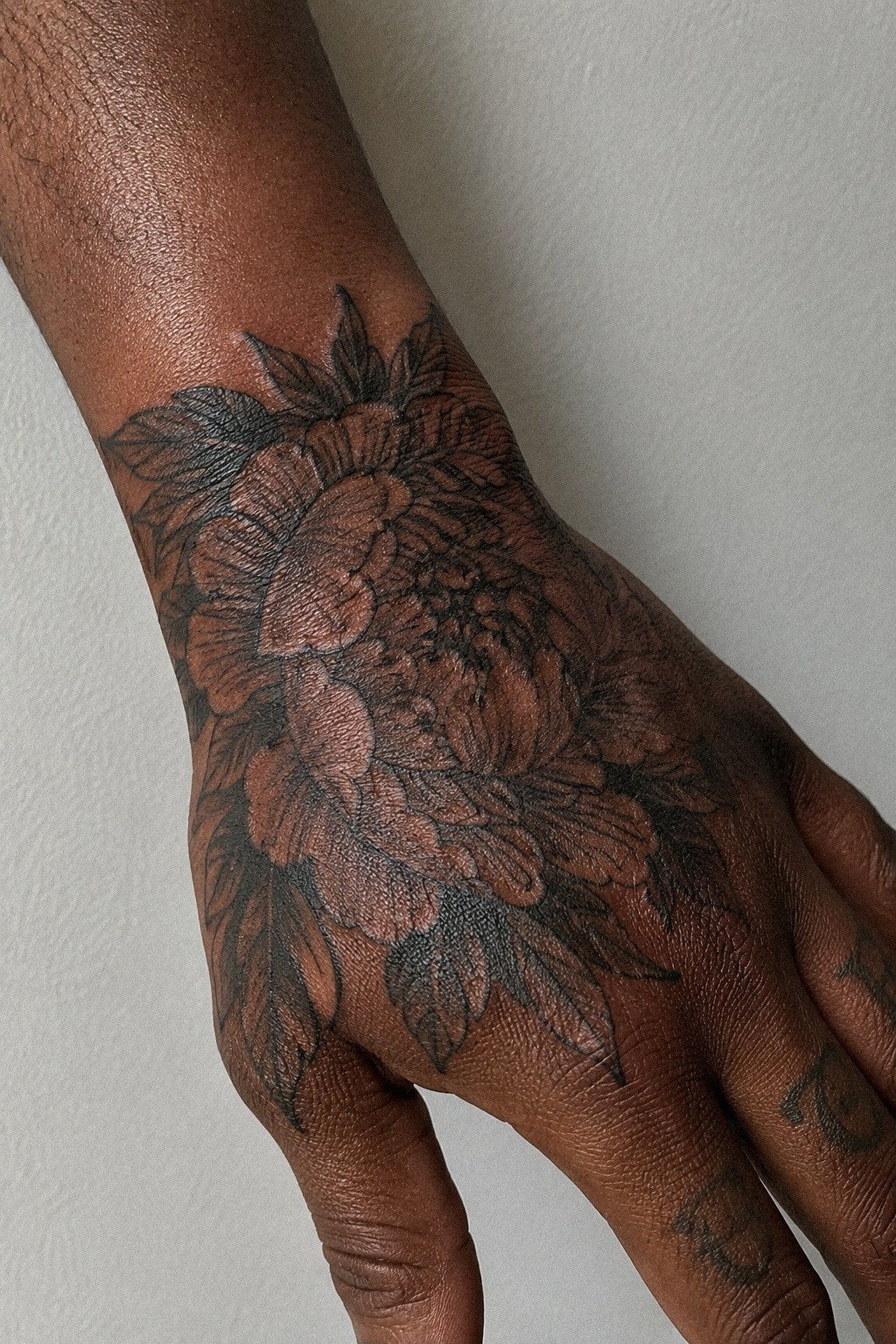
Tebori is hand-poke tattooing, the traditional Japanese method that predates machines. A peony on the hand done in tebori is a serious commitment to the craft, and it heals differently than machine work.
The ink goes in with a stick and needle, no motor, and the texture of the result has a softness that machine tattooing can’t quite replicate. The hand is one of the few placements where tebori still makes sense for modern clients.
The hand is also a high-wear zone. Fingers fade, hands fade, knuckles fade. That’s the deal.
If you want a hand tattoo, you accept touch-ups as part of the ownership. On deep ebony skin in a macro close-up, tebori ink has a depth that’s hard to describe.
The linework is slightly softer than machine, the grey wash settles into the skin differently, and the overall effect is more painterly. This is not a beginner’s tattoo and not a beginner’s placement.
The Japanese tattoo artists guide covers artists who specialize in tebori if you’re serious about it. The peony on the hand is a collector’s piece. Treat it that way.
13What Makes Peonies Hold Better Than Cherry Blossoms?
Here’s the question clients ask me every week: if both are classic Japanese flowers, why does a peony age so much cleaner than a cherry blossom? The answer comes down to silhouette and surface area. Peonies have thick, layered petals with built-in shadow pockets, so even when the grey wash softens at year five, the bold outline still reads as a peony because the shape carries the meaning.
Cherry blossoms, by contrast, are mostly negative space and thin lines. Every detail is doing the work.
When fine line softens, the whole piece softens with it.
This is also why I’d never put a cherry blossom on a high-wear zone without a bold black outline. The placement and the linework have to fight for the flower’s survival.
A peony forgives a lot. A cherry blossom doesn’t.
If you’re torn between the two, ask yourself how much touch-up maintenance you actually want to commit to. The honest answer tells you which flower to book.
For more on how layered petals age across placements, the neo trad Japanese tattoo guide breaks it down style by style.
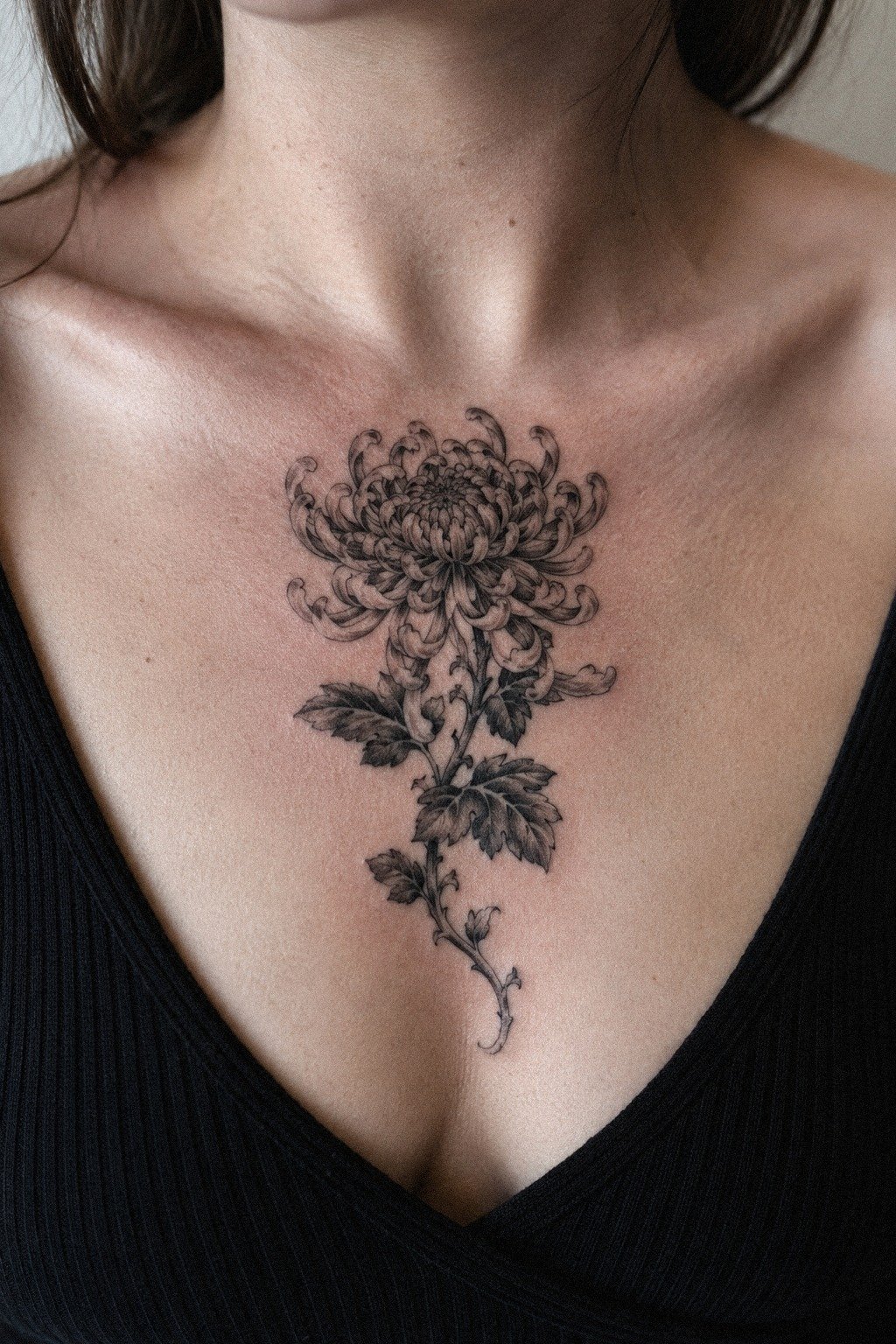
14Center a Chrysanthemum on the Sternum
Sternum tattoos are spicy. The bone is close to the skin, the nerves are exposed, and the linework has to be confident because the canvas is unforgiving.
A chrysanthemum centered on the sternum is one of those placements that looks incredible when it heals and brutal during the session. The pain is real, the healing is real, and the result is real.
No faking it.
A healed chrysanthemum on fair cool-pink skin in natural daylight has a glow that other placements can’t match. The sternum is visible, the skin tone carries the grey wash, and the bold black outline pops without looking heavy. I’d push for a 5RL to 7RL outline and soft grey wash in the petals, no color on the first pass.
The sternum is a placement that ages well because clothing covers it most of the time and you don’t flex it constantly. Pain here is high.
Eat before your session, take breaks, and don’t tough it out if you need to tap out. The Japanese warrior tattoo guide covers other bold center-body pieces if you want to compare. The chrysanthemum on the sternum is for someone who wants to commit.
15Bold Line vs Fine Line on Cherry Blossoms
Cherry blossoms expose the difference between bold line and fine line harder than any other Japanese flower. Bold line, 7RL or thicker, holds its shape through flex and sun and years of daily wear.
Fine line, single-needle or 3RL, looks sharper on day one and softer by year three. That’s not a flaw, it’s just what ink does in skin. If you want a cherry blossom that still reads at year five, bold line is the only honest answer.
Fine line isn’t wrong, it’s just a different commitment. You’ll budget for a refresh around year three, you’ll protect it harder from the sun, and you’ll accept that the thinnest petals will blur first.
That’s the trade. A bold line cherry blossom on the inner forearm or the back of the shoulder will outlive a fine line version on the same placement, easily.
The how to heal a tattoo faster guide covers the aftercare side, but the linework choice happens before you ever sit down. Pick the line weight for the five-year version, not the five-minute version.
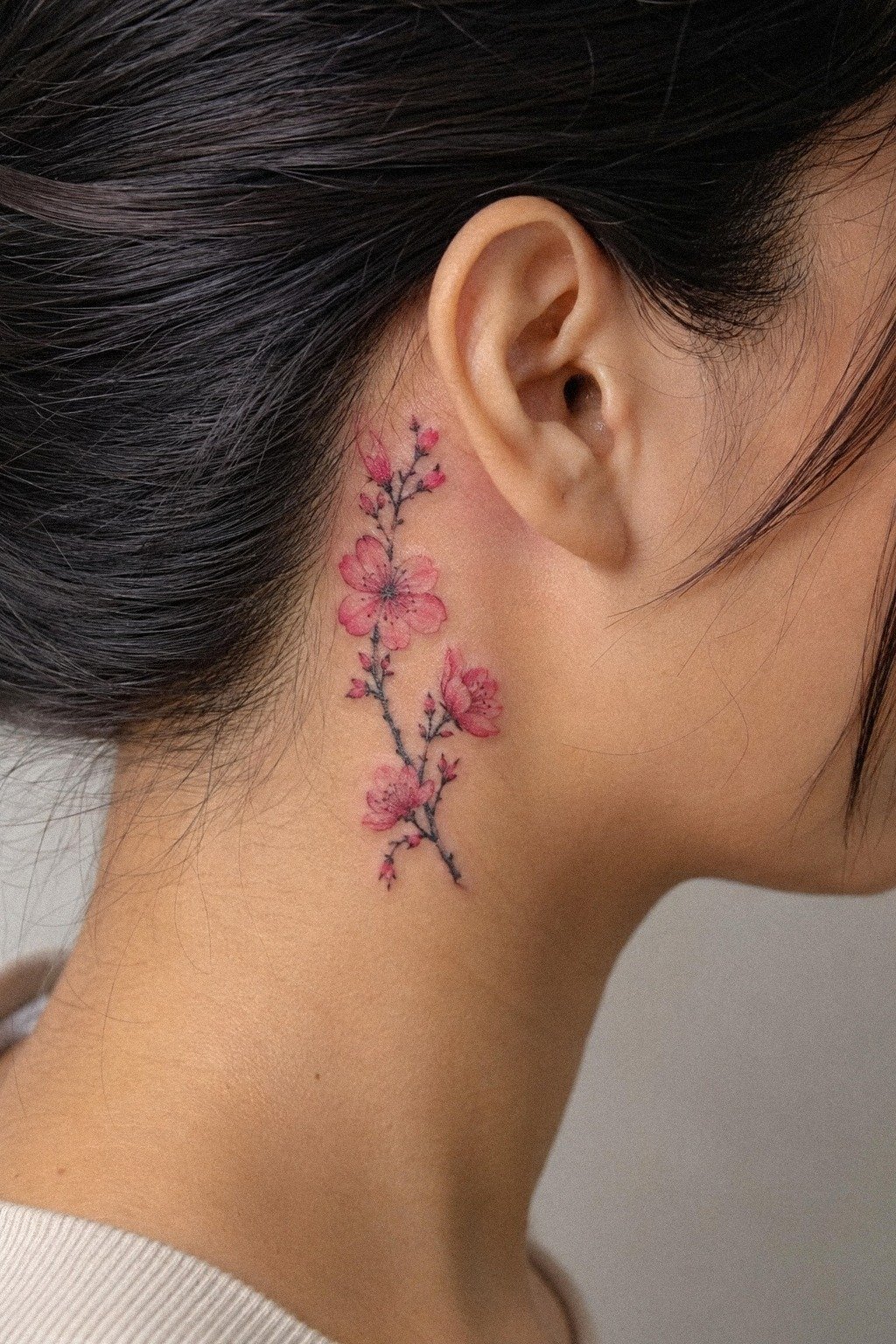
16Tuck a Cherry Blossom Behind the Ear
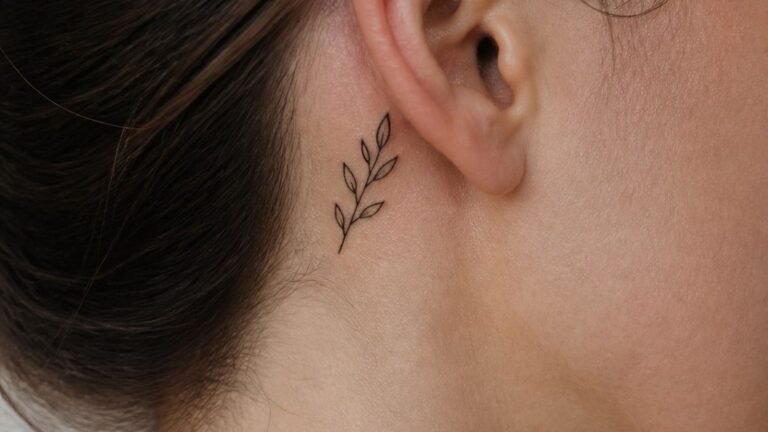
Behind the ear is a small, sweet placement that rewards clean linework and confident needle work. A cherry blossom with two to three petals and a few small leaves fits naturally in the curve behind the ear, and the anatomical placement guide showing how it sits on the body is the kind of reference that makes or breaks a small tattoo.
The risk here is going too detailed. Tiny petals, tiny leaves, tiny everything.
By year two, the tiny details turn to soup.
The rule for behind-the-ear tattoos is simple. Less is more. One cherry blossom, not three. Bold black outline, not fine line.
No color on the first pass. On medium warm ivory skin, the healed piece reads clean even when the rest of your hair covers it. This is a placement that wants a small tattoo, and small tattoos want bold lines. The snowdrops flower tattoo meaning post covers other small-but-meaningful flower tattoos if you want options.
Behind the ear is for someone who wants a private tattoo that shows up when they want it to. Done right, it’s a whisper, not a shout.
The One Rule That Decides If Your Japanese Flower Tattoo Holds
Here’s the thing about Japanese flower tattoos that nobody talks about in the Pinterest comments. The flower doesn’t matter as much as the linework does.
I learned this after watching a beautiful peony turn to gray mush in two years while a simple five-petal cherry blossom on the same client stayed crispy and black. The difference wasn’t the artist or the placement. It was the line weight.
The rule I give every client: bold will hold. Black is your best friend for longevity.
Color is spice. If you want a Japanese flower tattoo that still reads clean in five years, push the linework weight up, not down. Fine line looks great on day one.
It does not age great. That’s not a knock on fine line artists, it’s a fact of how ink settles into skin over time.
The thinner the line, the faster it spreads, and the faster it turns into a gray smudge.
Placement matters just as much, and the truth is it shows. Outer arm, thigh, calf, and upper back are low-wear zones that age well. Inner bicep, fingers, hands, feet, ribs, and stomach are high-wear or high-flex zones that fade or blowout faster. None of this is a deal-breaker.
It’s just information. Get a hand tattoo knowing you’ll want touch-ups.
Get a fine line cherry blossom knowing it needs a refresh at year three. These aren’t failures. They’re the terms of ownership.
I also want to push back on the idea that you need color to make a Japanese flower tattoo feel real. You don’t.
Black and grey Japanese work has a depth that color can’t match, and it ages better than any color piece. If you want color, go for it. Just know that you’re signing up for more maintenance over the life of the tattoo.
There’s no wrong answer here, but there is an informed answer, and informed clients get tattoos they’re happy with for decades.
The last thing. Stop comparing your healing tattoo to a Pinterest photo.
Healed tattoos look different from fresh ones. They settle, they soften, they breathe into the skin. That’s the goal. A tattoo that looks identical to a Pinterest photo six months later is a tattoo that’s probably going to age fast.
The softening is the aging. Embrace it, protect it from the sun, and your Japanese flower tattoo will still be reading clean when other people’s ink has turned to mush.
For more on how different placements and line weights age across the body, the fine line needles longevity placement guide is the closest thing I have to a cheat sheet.
The Questions Worth Answering First
How much does a Japanese flower tattoo usually cost?
Typical US shop minimums run about $50 to $100, and hourly rates land around $100 to $250 depending on the artist and region. A small cherry blossom behind the ear might be a flat $150 to $300, while a full back peony runs $2,000 to $6,000 or more across multiple sessions.
Are Japanese flower tattoos a good idea for a first tattoo?
Yes, and here’s why. Placement options are forgiving, linework holds up well, and the subject matter gives you room to personalize without overcommitting. A forearm or shoulder cap flower is a manageable first piece.
How do I choose an artist for a Japanese flower tattoo?
Look for a portfolio with clean linework and healed photos, not just fresh ink. Ask about their specialty. A good Japanese work artist will have a stack of references and will talk you through line weight and placement.
How much do Japanese flower tattoos hurt?
Honest scale. Ribs, feet, hands, and sternum are spicy.
Forearm, thigh, calf, and shoulder are more tolerable. Lines feel sharper than shading.
Color packing is the spiciest part.
How long does a Japanese flower tattoo take to heal?
Surface healing runs about 2 to 3 weeks. Full settling takes 2 to 3 months.
Treat it like an open wound the first few days. Gentle unscented soap, thin ointment layer, no sun, no pools.
What’s the best placement for a Japanese flower tattoo?
Outer forearm and shoulder cap are the easiest to heal and age the best. If you want something visible but not loud, the collarbone works. If you want a private piece, behind the ear.
Where I’d Start First
If I had to pick one, I’d start with the cherry blossom branch on the inner forearm. You can’t learn how your skin heals, how an artist’s linework holds, or how a Japanese piece ages on you until you’ve got one on your body.
Get the cherry blossom. Heal it.
Live with it for a year. Then decide if you want more. When you do, the Japanese tattoo artists guide shows where to find the right artist to keep going.