By Marco Ferrer, tattooer. Realism, Japanese traditional, and blackwork. Trained in Osaka, working in the US.
I’ve been packing solid black for over a decade, and I’ll tell you the thing most people learn too late: blackwork isn’t one style. It’s a family of styles that all share one ingredient, and that ingredient is unforgiving. Black either sits flat and gorgeous under the skin, or it sits patchy and you’re back in my chair for a touch-up.
There’s no in between.
So let’s talk about what you’re actually buying, what it costs, where it belongs on your body, and how it ages after ten years of sun and gym friction.
What Does Blackwork Actually Mean in a Shop?
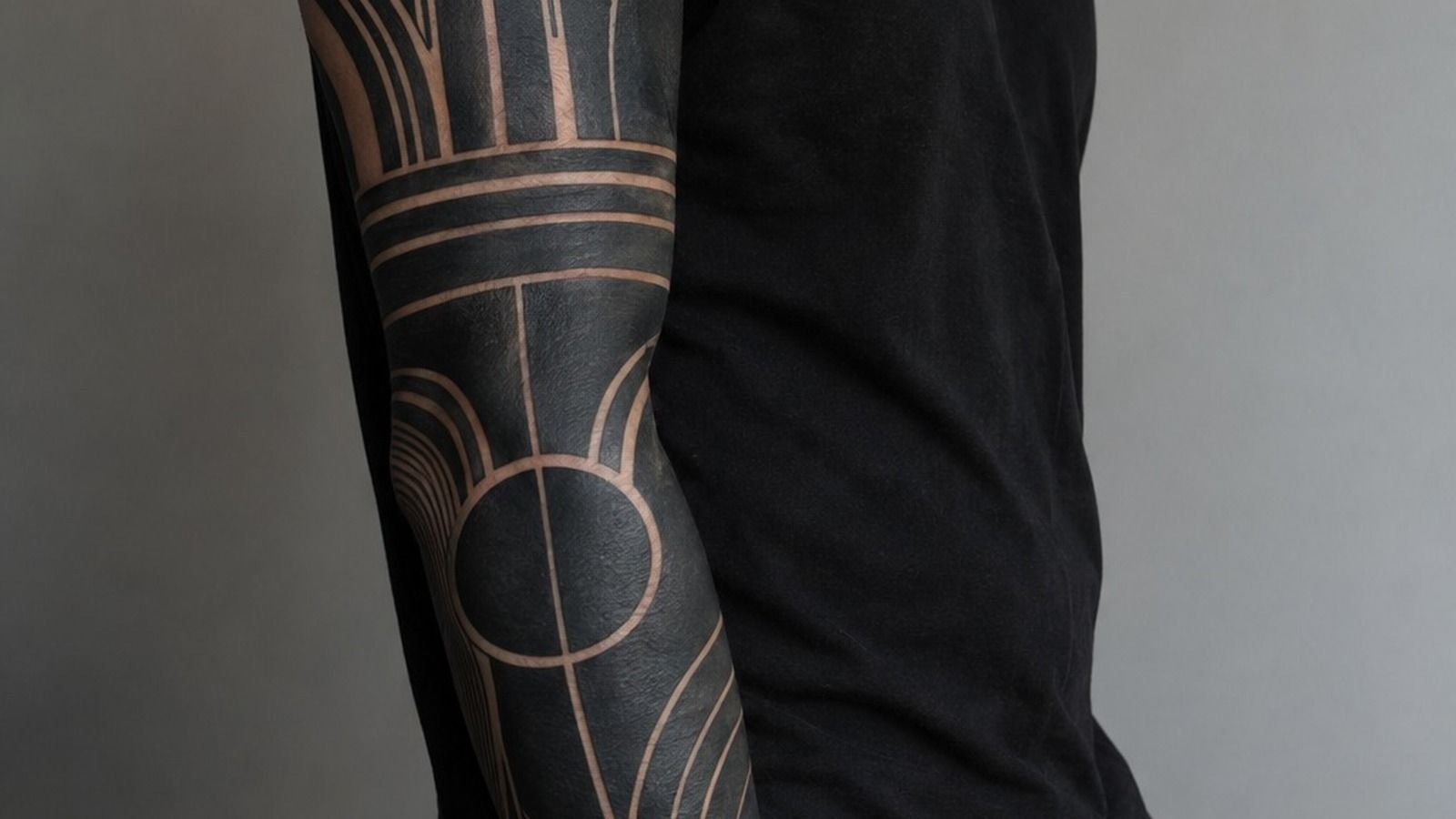
When I say blackwork, I mean any design built primarily from solid black ink, with negative space doing the work that color or grey wash would normally do. No brown, no soft grey transitions, no color spice. Skin tone is your highlight.
That covers a huge range. Ornamental patterns that wrap a bicep.
Illustrative blackwork with heavy linework and stippled texture. Neo-tribal.
Blackout panels. Big chunks of Japanese work like a koi body or a dragon silhouette read as blackwork too, even inside a traditional composition.
If you’re still deciding between this and softer stuff, read our breakdown of fine line versus bold line tattoos before you commit to anything. The two age in completely different directions.
Pick Your Blackwork Family Before You Pick a Design
Clients walk in with forty saved images and no idea that half of them are incompatible styles. Narrow it down first. It saves you money and it saves me two hours of drawing you something that fights itself.
Here’s how I sort them:
Notice blackout at the bottom of the healing column. That’s not an accident, and we’ll get there.
If ornamental is calling you, our geometric tattoo ideas gallery is the fastest way to figure out whether you want symmetry or chaos. Both are valid. They just cost different amounts of chair time.
Ornamental Against Illustrative: Two Completely Different Builds
An ornamental piece is architecture. I design it around your anatomy first, then fill it with pattern.
It has to flow with your deltoid, not sit on top of it like a sticker. That means the drawing happens on your skin with markers, not on an iPad in a vacuum.
Illustrative blackwork is a picture. A raven, a moth, a hand holding a candle. It has a subject and a background, and the negative space is compositional rather than structural.
The practical difference for your budget: ornamental work is more drawing time and less machine time. Illustrative is the reverse.
A dense ornamental shoulder cap might be four hours of stencil work over two visits, then six hours of packing. An illustrative forearm piece is usually one confident session.
For subject-driven pieces, our snake tattoo meaning and dragon tattoo designs guides are solid starting references. Vibe only, please. I’m not tracing anyone’s Pinterest board pixel for pixel.
Why Does Solid Black Heal Nicer Than Heavy Grey Wash?
Because you’re not overworking the skin. When I pack black, I’m doing one thing: getting pigment into the dermis in a single solid pass with a big mag. In, saturated, done.
When someone builds the same darkness out of diluted grey wash and twelve passes, they’ve traumatized every layer on the way down. That’s what heals patchy and blows out at the edges.
Real talk from the chair: bold will hold. Black is your best friend for longevity.
Color is spice. A crispy black design with simple shapes reads from across the room in ten years.
A tiny super-detailed one turns to soup.
That’s the whole physics of it, and it’s why I push people toward black more often than they expect.
Map Your Placement Around Flow and Wear
This is the part clients skip and regret. Placement isn’t just about what looks cool in the mirror today. It’s about friction, sun, and how your skin moves.
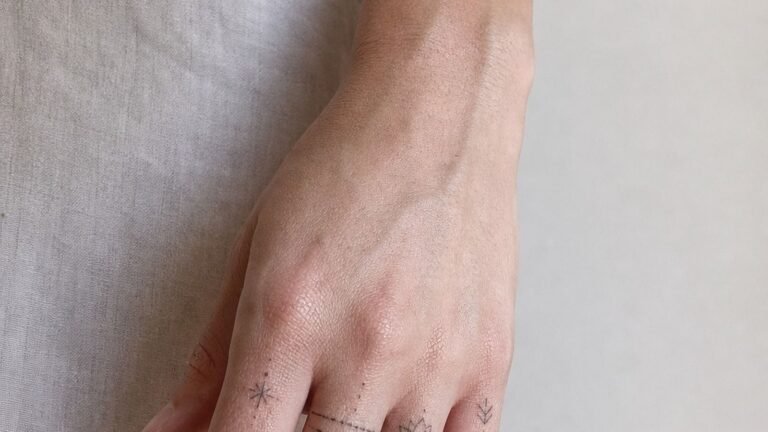
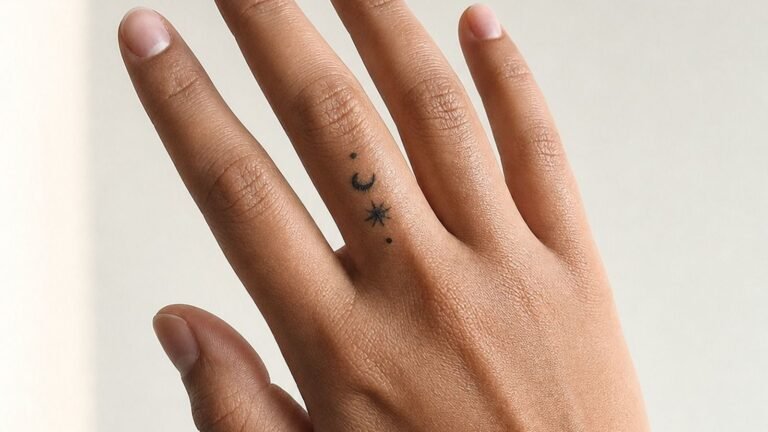
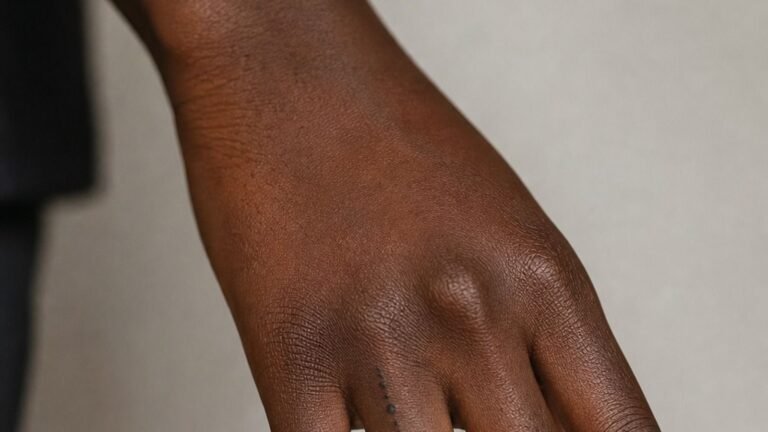
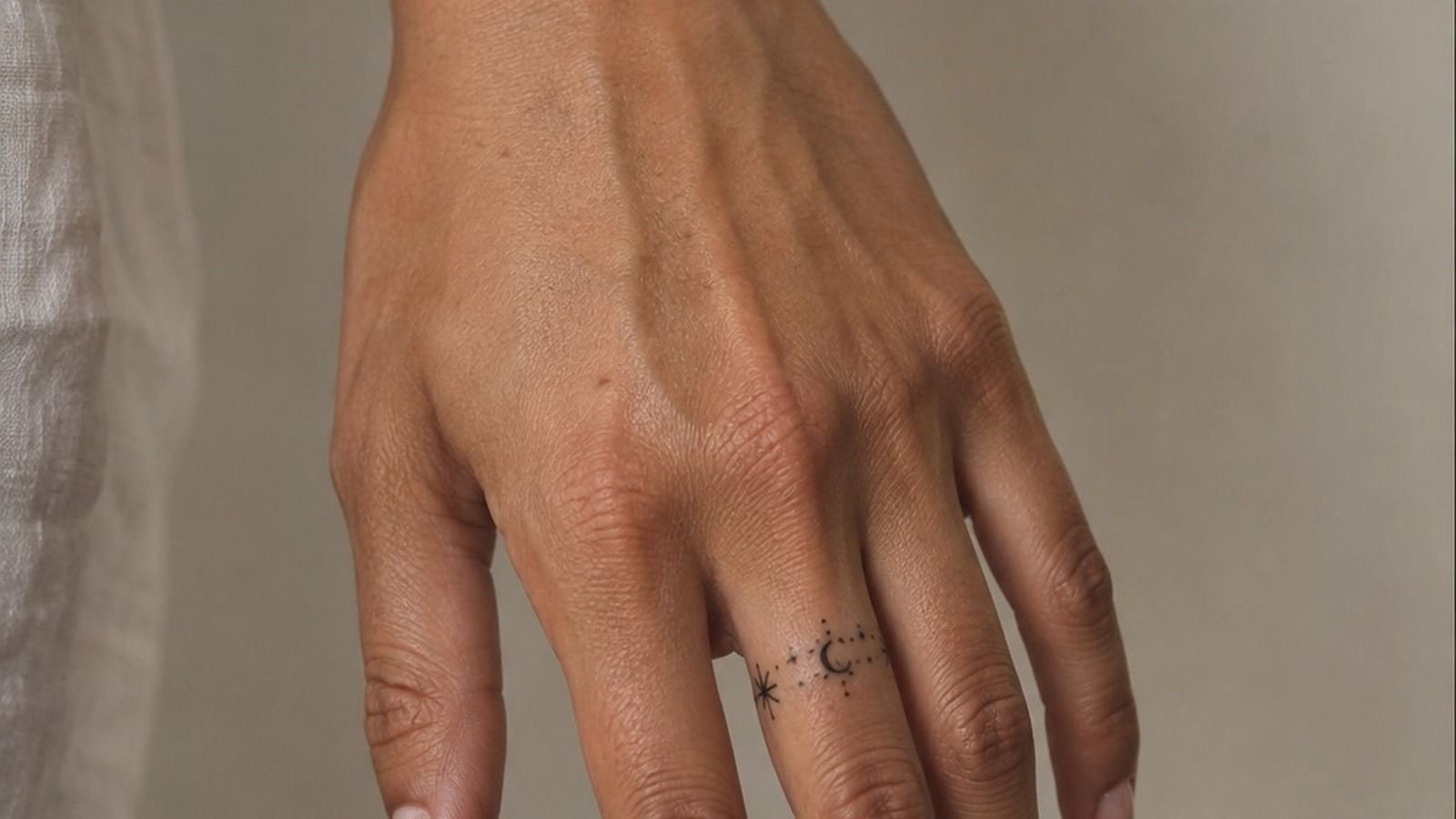
High-wear zones that fade and blow out: fingers, hands, feet, elbows, knees, inner bicep. Blackwork on hands looks brutal and beautiful for about eighteen months, then it needs maintenance. I’ll do it.
I just need you to accept touch-ups as part of the price.
Low-wear zones that age gracefully: outer and upper arm, thigh, calf, upper back, sternum. Solid black on an outer bicep at forty will still be sharp at sixty if you wear sunscreen.
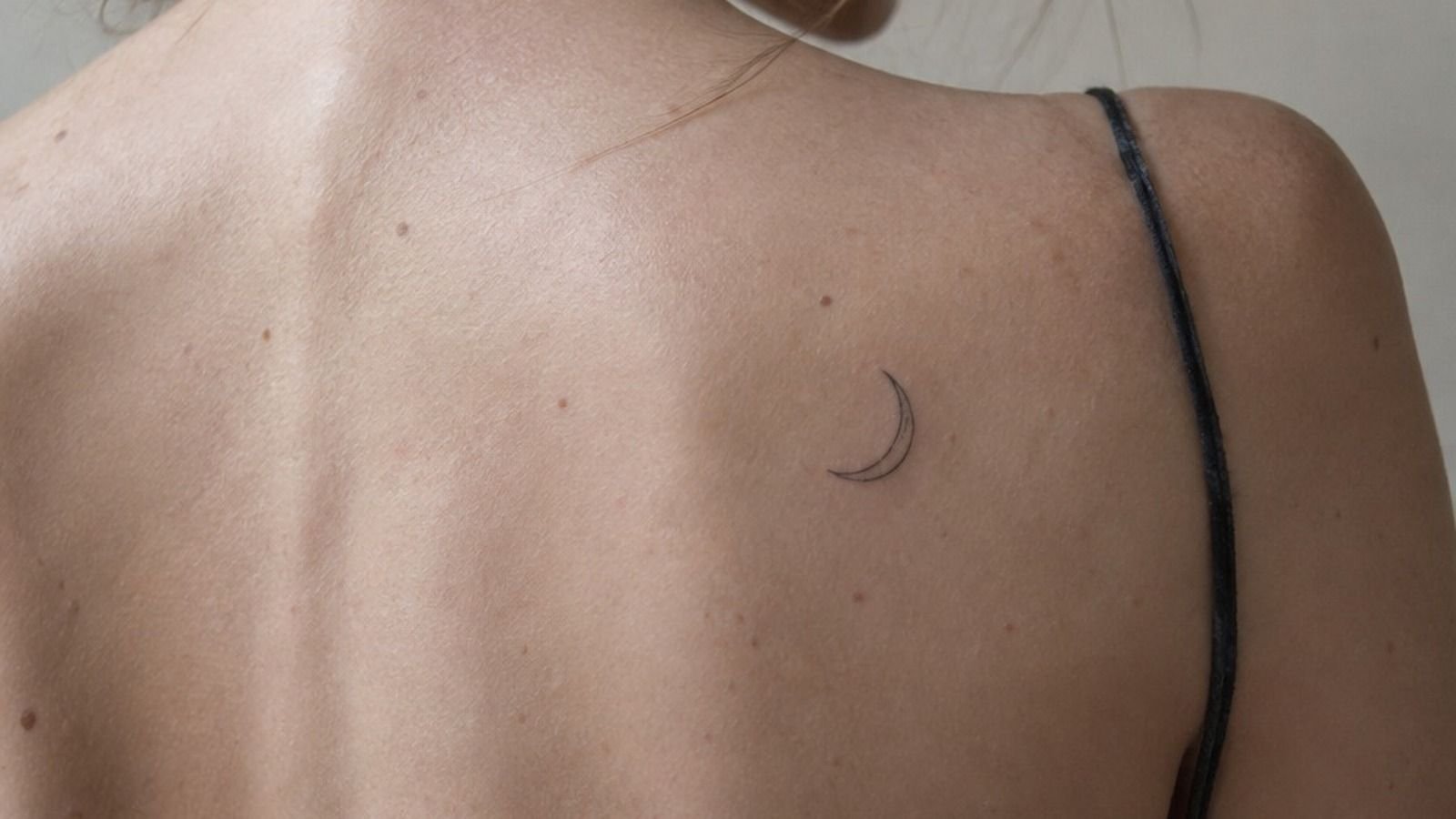
If a small dense design lands on a wrist, I’ll tell you straight: that size on a wrist is gonna mush out. Bump it up the forearm so it breathes and ages nicer. Clients push back, then they thank me at the two year mark.
Dig deeper with our forearm tattoo ideas, thigh tattoo ideas, and back tattoo ideas if you want to see how scale changes at each spot.
Horiyoshi III and Why Big Black Isn’t New
People treat heavy black like a modern trend. It isn’t.
Horiyoshi III in Yokohama built entire bodysuits where the background black carries the whole composition, and that tradition goes back centuries in irezumi. The black isn’t filler.
It’s the thing that makes the koi pop.
I learned tebori hand-poking in Osaka for two years, and the single most valuable lesson was patience with saturation. You don’t attack the skin. You build it in confident passes, you let the black do its job, and you leave.
If you’re drawn to that world, start with our Japanese sleeve tattoo ideas guide. It’ll show you why background matters more than the dragon.
Dotwork Against Whip Shading: Pick Your Texture
Both create gradient. They cost very different amounts of time.
Dotwork is thousands of individual points, tighter near the dark end, looser near the light. It’s meditative, it’s stunning, and it’s slow.
Expect to pay for that time. A dotwork mandala on a sternum runs longer than an equivalent solid-black design by a factor of two, easy.
Whip shading flicks the needle out of the skin mid-pass, leaving a soft tapered fade. It’s faster, it’s punchy, and it heals velvety instead of patchy when it’s done right.
My honest value call: dotwork is worth it on ornamental and sacred-geometry work where the texture is the point. On illustrative pieces, whip shade gets you 90% of the effect at half the price. Check our mandala tattoo ideas if you’re leaning ornamental.
Neo-Tribal Isn’t 1998 Tribal, and That Matters
Let’s clear this up because I get the nervous question weekly. The tribal your uncle got in 1998 was a generic blob of thorns with no relationship to his body. Neo-tribal is a genuine revival built on flow, negative space, and asymmetry, and the current wave of artists doing it are exceptional draftspeople.
The difference is anatomy. A good neo-tribal shoulder piece follows your deltoid line and makes your arm look bigger. A bad one sits there like a decal.
Ask to see healed photos, not fresh ones. Always healed photos.
Our guide on how to choose a tattoo artist walks through exactly what to look for in a portfolio, and it applies double for blackwork, where sloppy saturation hides in fresh photos.
How Much Does a Blackwork Tattoo Cost in the US?
Straight numbers, no dancing. US shop rates in 2026 sit between $100 and $250 per hour depending on the artist’s demand and city. Europe runs roughly 120 to 200 euros per hour.
Shop minimums are typically $100 to $150.
Here’s what that translates to in real projects:
Is it worth it? For low-wear placements with bold shapes, absolutely. That’s the best value in tattooing because the design holds for decades with almost no maintenance cost.
For hands and fingers, budget for a touch-up every two to three years on top of the initial price.
Never shop on price alone. A cheap blackwork piece from a scratcher costs triple to fix, and some of it can’t be fixed at all. Our sleeve tattoo cost guide breaks down deposits, tipping, and multi-session budgeting in more detail.
Blackout Sleeves: Worth It, or a Regret Machine?
I do them. I also talk about half of the people who ask for them out of it, and I’m fine with that.
A blackout sleeve is exactly what it sounds like: solid black from wrist to shoulder, sometimes with negative space designs left in the skin. Done well it’s absolutely striking. Done badly it’s a grey-brown mess with visible pass lines and it’s permanent in the truest sense.
The honest considerations:
– It takes multiple long sessions and the last hour of each is genuinely rough. – Healing is harsher than any other blackwork. More weeping, more swelling, longer recovery. – Laser removal on blacked-out skin is expensive, slow, and often incomplete. – White ink over healed black looks grey, not white. Anyone promising otherwise is lying to you.
If you want the drama without closing the door, ask for a heavy black design with intentional negative space instead. You get the same bold visual weight and you keep your options open. That’s the smarter buy.
Cover-Ups: Blackwork Against Faded Old Color
This is where blackwork earns its reputation. Solid black covers almost anything.
Old green tribal, a faded name, a blown-out lettering piece from a kitchen party. Black eats it.
The catch is that you can’t put black over black and get a design. You get a shape. So a cover-up either becomes ornamental (pattern flowing over the old piece) or it becomes a bold silhouette where the old tattoo lives inside a dense area.
I usually recommend one to two laser sessions first if the original is dark. It buys me room to work and gives you a much better result. More on approach in our cover-up tattoo ideas guide.
Prep Your Skin the Week Before
Cheap insurance, huge payoff:
– Hydrate for three days straight. Hydrated skin takes ink better and it’s less irritable. – Don’t drink the night before.
Alcohol thins your blood and thin blood pushes ink back out. – Eat a real meal within two hours of your appointment. Blackwork sessions are long and blood sugar crashes are miserable. – Don’t shave the area yourself the morning of.
I’ll do it clean with a fresh blade. – Moisturize daily for a week, then stop the day before.
Bring snacks and headphones. A six hour packing session is a job, not a spa visit.
What Does Blackwork Feel Like? An Honest Pain Read
Lines feel sharper. Shading is a dull burn. Solid black packing with a big mag is the spiciest part, and it’s a hot, scraping sensation that builds over the session rather than hitting all at once.
Ribs, sternum, inner bicep, and the back of the knee are genuinely spicy. Outer arm, forearm, calf, and outer thigh are chill by comparison. Most people handle four hours on an outer arm fine and tap out at ninety minutes on ribs.
Tap out for five rather than pass out on me! I would much rather take three breaks and finish clean than push through and end up with rushed work. Our tattoo pain chart by body part ranks every zone if you want to plan around it.
Heal It Like the Open Wound It Is
First few days it’s an open wound. Treat it that way.
1. Leave the wrap on for the time I tell you.
Second-skin bandages stay on 24 to 72 hours. Plastic wrap comes off in two hours. 2.
Wash gentle with unscented soap and lukewarm water, twice a day. Pat dry with paper towel, never a bath towel. 3. Thin layer of unscented ointment. Thin.
Don’t suffocate it. 4. It’ll peel like a sunburn around day five.
Don’t pick the flakes or you’ll pull black out and end up with light patches. 5. Around week two you’ll hit silver skin, that shiny milky stage. That’s normal. It’s still healing underneath. 6.
Surface healing takes two to four weeks. Deeper healing takes three months.
No pools, no ocean, no hot tubs, no sauna, no gym friction on the fresh area for two full weeks. Blackwork is dense, so it holds moisture and it holds bacteria if you get lazy. Full protocol lives in our tattoo aftercare guide and the week by week timeline is in tattoo healing stages.
Eternal Ink, Dynamic, and the Blacks I Actually Use
Not all black ink is equal, and this is worth knowing when you’re comparing artists.
Dynamic Black is the workhorse. Dense, reliable, heals dark.
Eternal Ink Liner Black lays crisp lines and dilutes cleanly for grey wash. Fusion Ink Black and World Famous Pitch Black both pack heavy and stay black rather than drifting blue over the years.
The old drift-to-blue-green problem came from cheap carbon-based inks in the 80s and 90s. Modern pigments from reputable brands hold true black. If an artist can’t tell you what’s in their cap, that’s your answer about the shop.
For the machine side, I run coil for lining and a Cheyenne Sol Nova or FK Irons Flux rotary for packing. Big magnums, one solid pass, no scratching at it fifty times.
Flash Against Custom: Which Is the Better Buy?
Flash is pre-drawn. Pick and stick, get what you get, usually a fixed price that’s cheaper per square inch. Blackwork flash is often the best value in the entire shop because the design has already been proven to work.
Custom means I draw for your body and your idea. It costs more because drawing time is real time. Worth it for sleeves, back pieces, and anything that has to wrap anatomy.
My take: if you’re getting a standalone piece under six inches, buy flash from an artist whose style you love. If you’re building a sleeve, go custom.
And if you want Pinterest-exact, I’m not your artist. References for vibe only.
Blackwork FAQ
Does blackwork hurt more than regular tattooing? The packing does, yes. It’s the same needle depth but sustained over a larger area for longer. The lines feel identical to any other style.
Will it turn blue or green over time? Not with modern ink. That was a problem with older pigments. Well-packed black from a quality brand stays black, though it softens slightly at the edges after fifteen years.
Can blackwork be removed later? Partially. Dense solid black takes many laser sessions and is expensive, often $300 to $600 per session with eight or more needed. Go in assuming it’s permanent.
How much should I tip? 15 to 25% is standard in the US. On a long project, tip per session rather than saving it all for the end.
Is white ink worth adding for highlights? Sometimes, on fresh skin with strong contrast. It fades faster than black and it goes cream-colored, not bright white. Budget it as a nice extra, not the backbone of the design.
What’s the best first blackwork placement? Outer forearm or outer calf. Low pain, low wear, easy to heal, and you can see it. Our first tattoo guide covers everything else.
The Short Version
Blackwork rewards confident choices. Bold shapes, generous negative space, low-wear placement, and an artist who packs saturated black in one clean pull. Skip the tiny hyper-detailed stuff, protect it from sun with a real SPF (see our sun protection for tattoos notes), and budget for a touch-up if you put it on a high-wear zone.
Do that and you’ll have a piece that reads from across the room for the rest of your life. That’s the whole point!
More from the guide: blackwork tattoo ideas, dotwork tattoo ideas, black and grey tattoo ideas, chest tattoo ideas, and the tattoo touch-up guide.