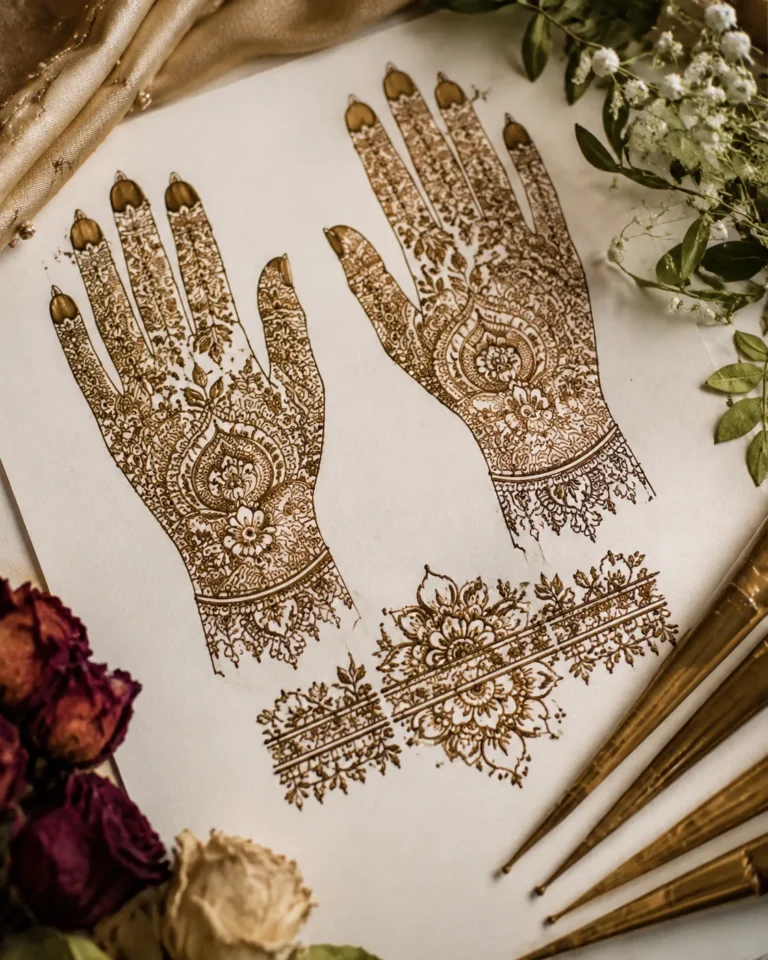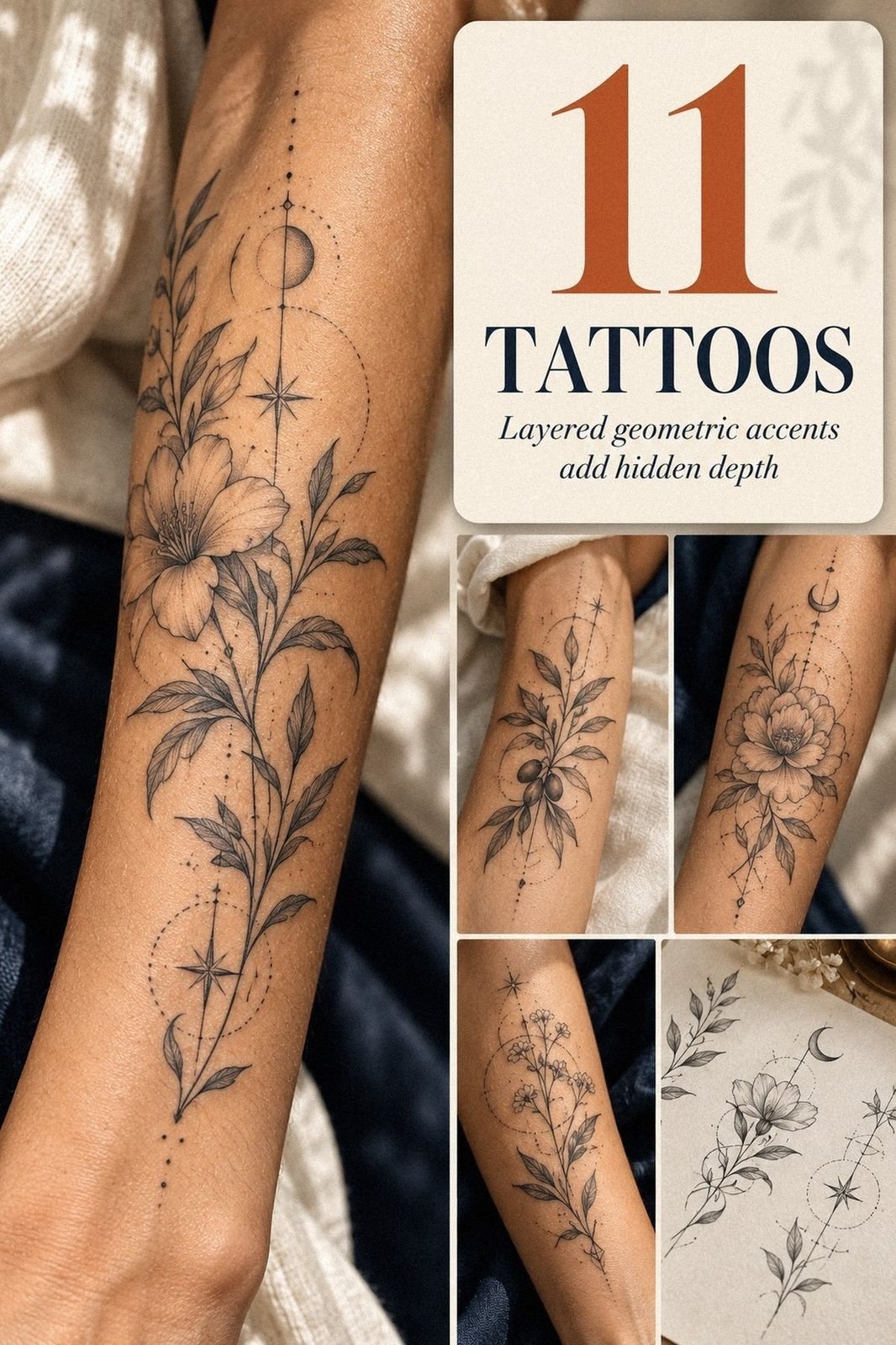
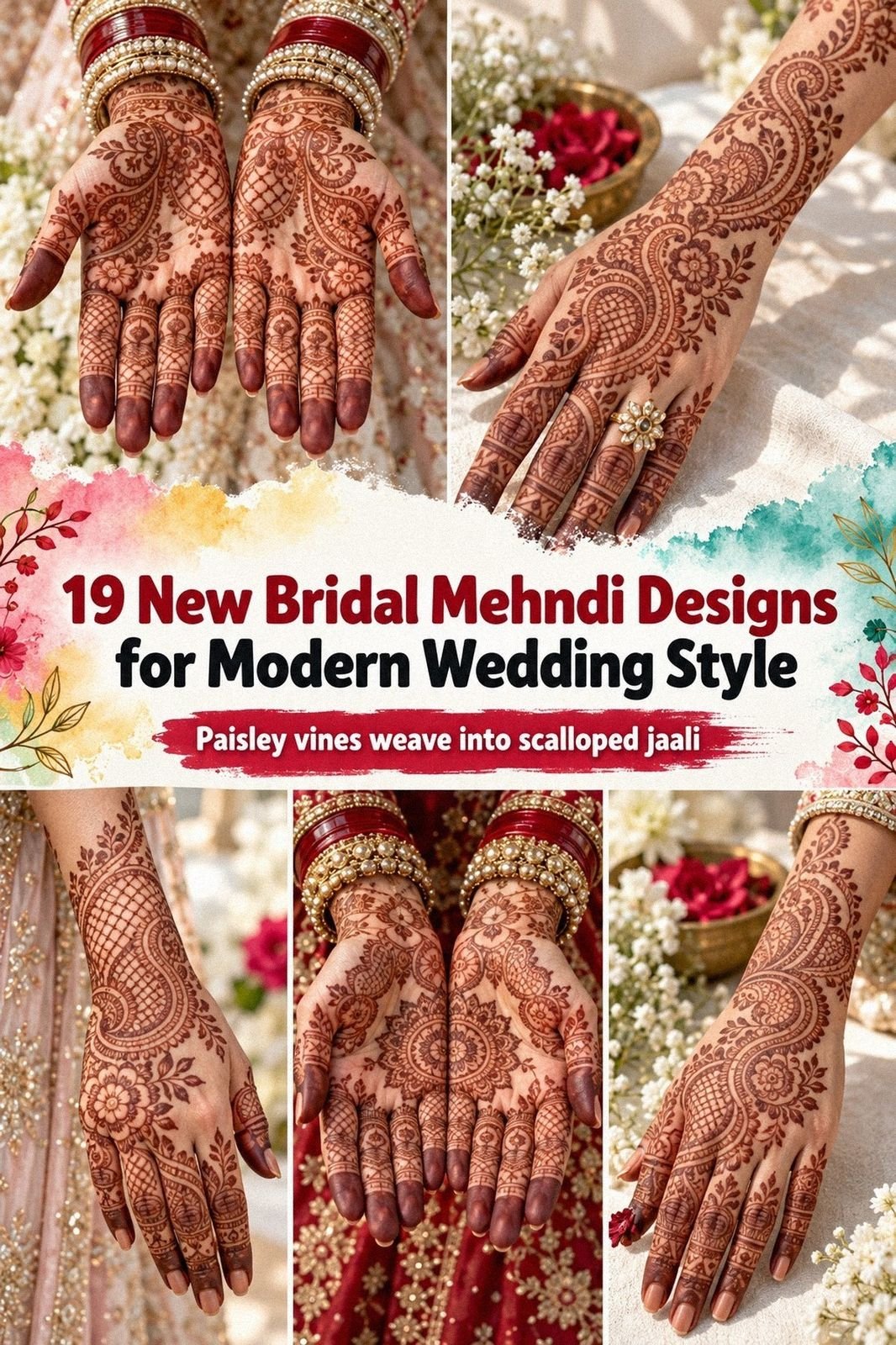
New bridal mehndi designs read best on skin when the lines stay open, the black stays crisp, and the layout gives your eye somewhere to rest. I learned that the hard way after saving a pile of overworked references for a fine-line mehndi-inspired tattoo sleeve consult. Too much filler. Not enough air.
Here’s what it looked like before
Before I cleaned the idea up, my reference folder was a mess. You know the reference-board mess.
Full-hand bridal patterns packed so tight you could not tell where the mandala stopped, where the vines started, or where your artist was supposed to let the skin breathe. On a phone screen it looked rich.
On actual skin, especially once you shrink lines down to hand or wrist scale, that same density can heal muddy fast on high-wear skin.
I also kept seeing the same mistake in first-timer boards. People would bring screenshots with fifteen tiny motifs, fingertip caps, lace bands, paisleys, initials, and micro-jaali all fighting for the same inch and a half.
That is how you get soup later. So I rebuilt the whole direction like I would for any fine-line tattoo plan: anchor first, rhythm second, filler last. If you’re still collecting references, start with these bridal mehndi designs before you decide what deserves real skin.
- I Picked A Full Hand Bridal Layout
- I Mapped The Main Palm Mandala
- I Chose Dense Indian Bridal Filling
- Groom Initials: Cute Detail Or Pricey Regret?
- I Framed Fingers With Fine Bridal Bands
- I Built Paisley Trails Across Knuckles
- I Extended Mehndi Past The Wrist
- Leave Air In, Or The Whole Thing Gets Pricey To Fix
- I Layered Lotus Details Near Thumbs
- I Used Jaali Lines On Back Hands
- I Placed Tiny Bridal Motifs Between Vines
- Match Both Hands, But Don’t Copy-Paste Them
- I Deepened The Fingertip Henna Caps
- Wrist Bracelet First, Forearm Drama Later
- I Connected The Design Toward Forearms
- I Checked Symmetry Before Paste Dried
- Clean Every Finger Edge, Or It Starts Looking Cheap
- I Let The Stain Develop Overnight
- The Best Photo Usually Costs Less Than The Busiest Design
1I Picked A Full Hand Bridal Layout
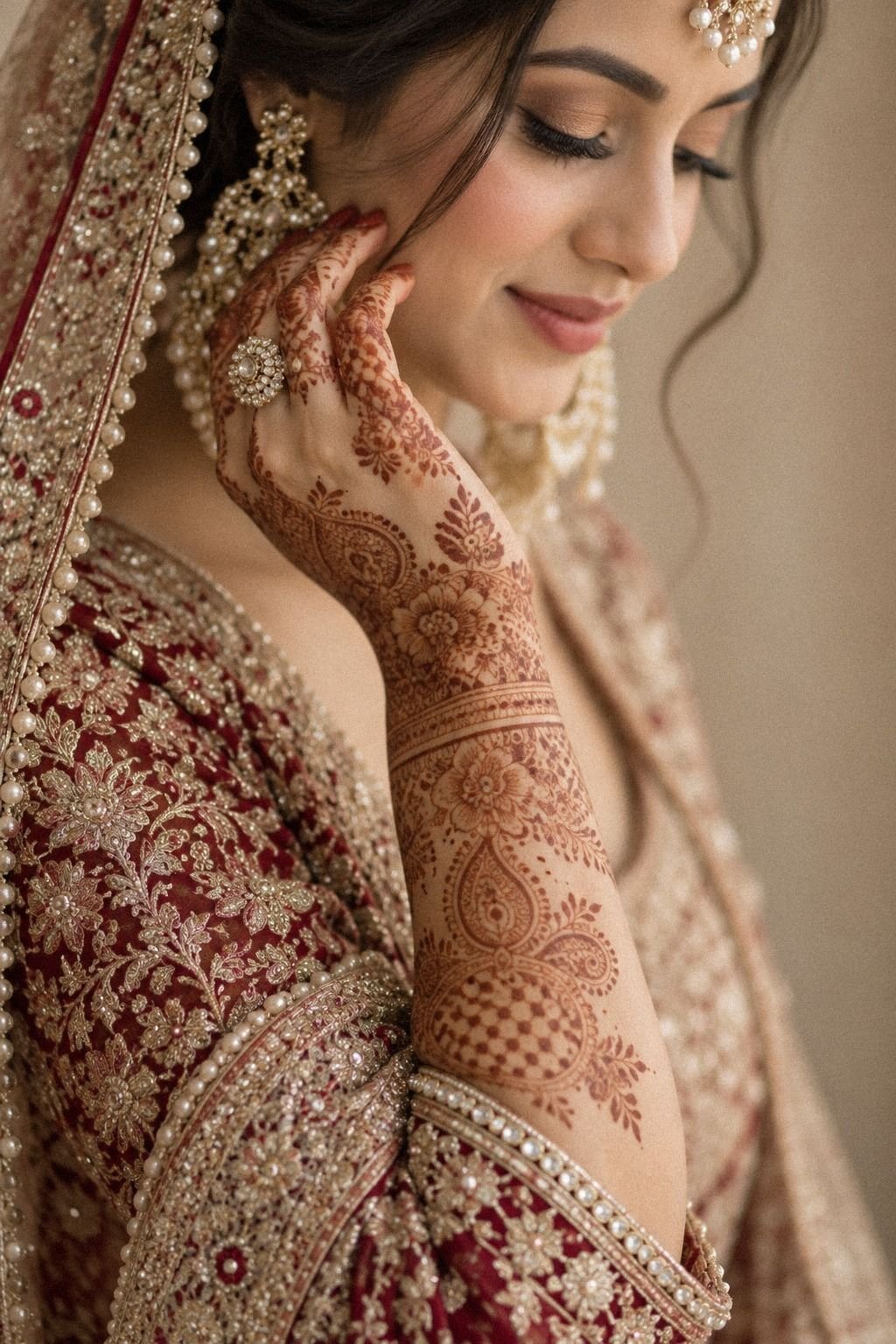
I started with the full hand because you need the overall read before you fuss over details. When a bridal mehndi tattoo wraps the whole hand, you want one shape that still reads from across the room and one close-up story that rewards people when they lean in. That’s the Full-Hand Read Rule I use with clients who love dense reference boards.
On fair cool-pink skin, crisp black linework keeps the design from disappearing. I like a 3.5 to 5 inch spread across the back of the hand so your major petals and leaf tips have room to heal nice.
If you cram that same idea into 2 inches, your artist has to cheat the spacing and you lose the bridal softness you came for. And if you’re chasing fuller coverage, this roundup of 23 new bridal mehndi designs that cover every inch right shows why size matters.
2I Mapped The Main Palm Mandala
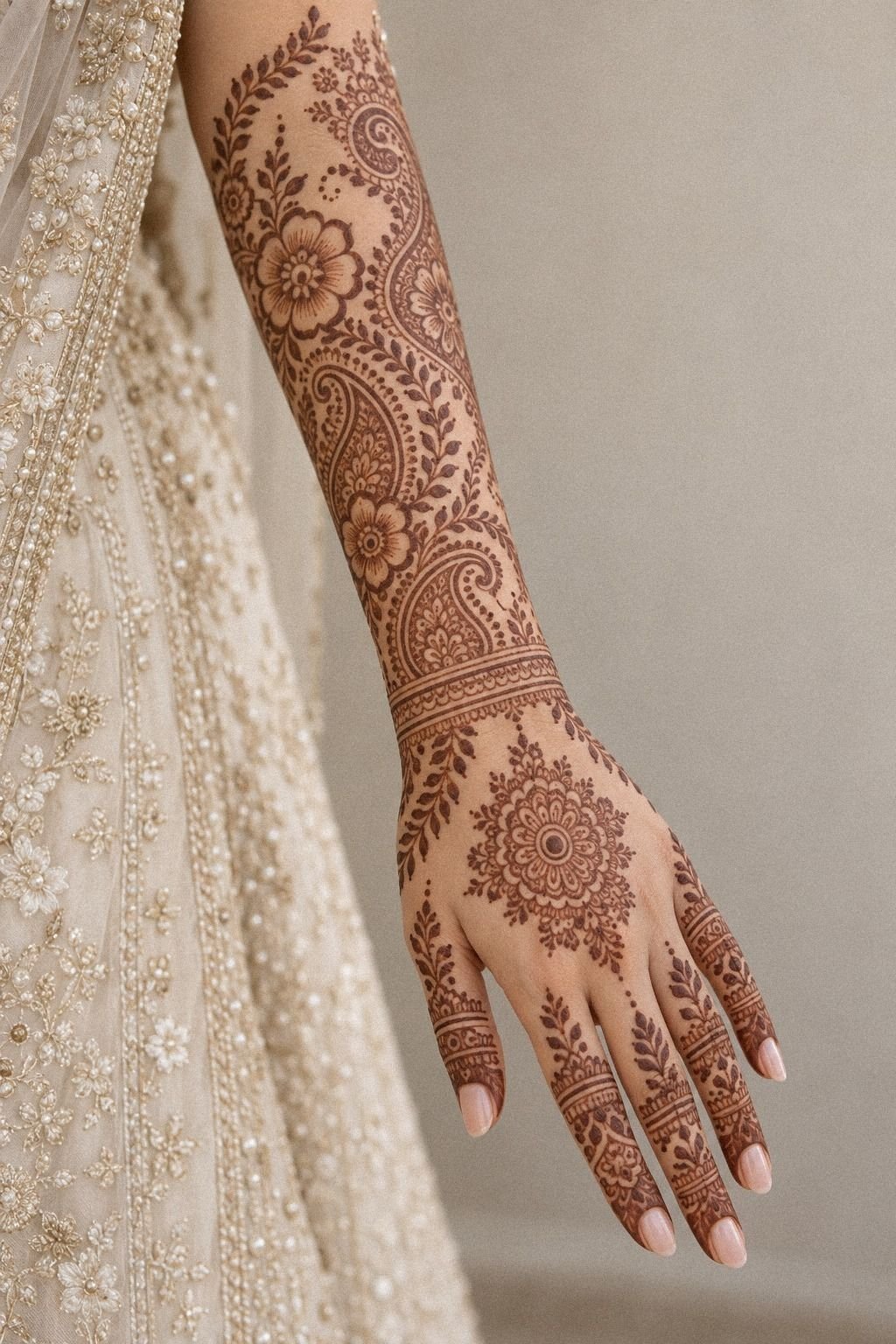
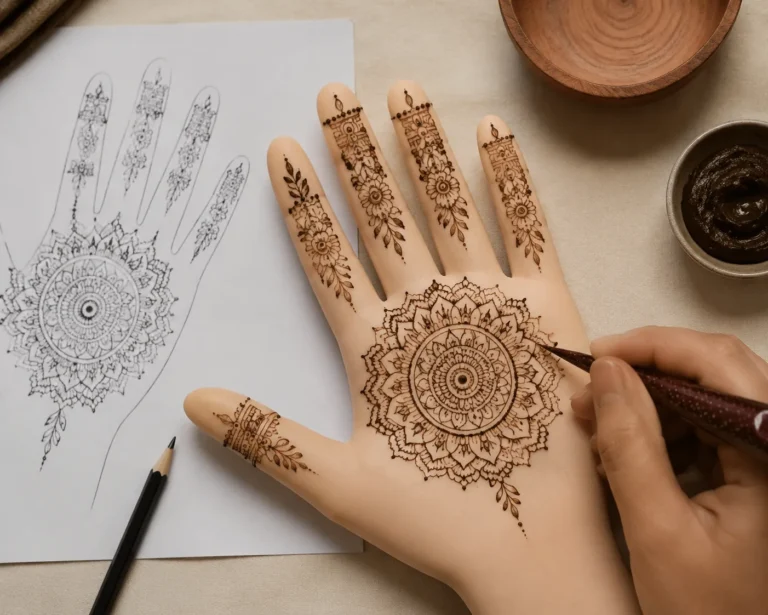
Instead of treating the mandala like filler, I treated it like the engine. That center medallion needs to lock the whole design in, even when you translate the idea onto an upper back tattoo or a larger geometric panel.
You want your eye to land fast, then travel outward through clean rings and petal breaks. That’s what keeps it from reading flat.
For a macro piece, I like a bold center around 1.5 to 2 inches wide with secondary rings spaced enough for a single clean pull, not ten fuzzy ones. Medium warm ivory skin can carry soft grey wash behind black lines if the contrast stays honest.
But I wouldn’t let the shading take over. Bridal-inspired work should feel airy, not smoked out. If you want more centered symmetry ideas, the strongest examples in mandala mehndi designs show that balance really well.
3I Chose Dense Indian Bridal Filling
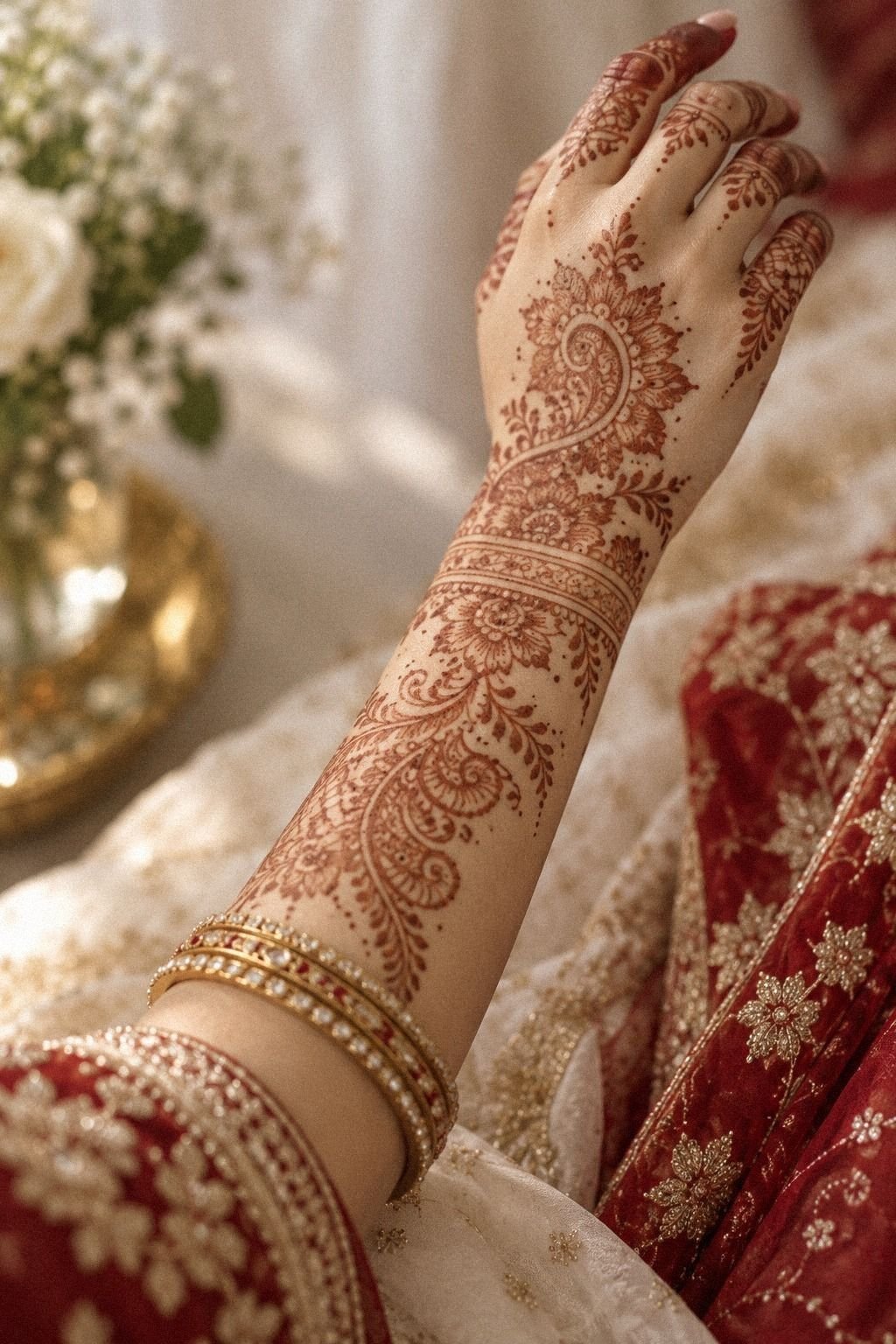
Dense filling can look incredible when the artist knows exactly where to stop. On a healed upper arm piece, you can see right away whether the tiny dots, leaf textures, and mesh panels were built to age cute on you or just shoved in to impress Pinterest.
I always tell people that dense isn’t the enemy. Random dense is.
The fix is clear structure. I group the fill into three textures max: fine dots, tiny leaf hooks, and one jaali or lace pattern. That gives your skin a repeat pattern without turning the whole tattoo into visual static.
On medium olive skin, healed black lines with a little breathing room stay cleaner than ultra-thin filler stacked edge to edge. If you like a more modern rhythm, these 15 trendy mehndi designs that balance old roots new lines show the cleaner direction I mean.
4Groom Initials: Cute Detail Or Pricey Regret?
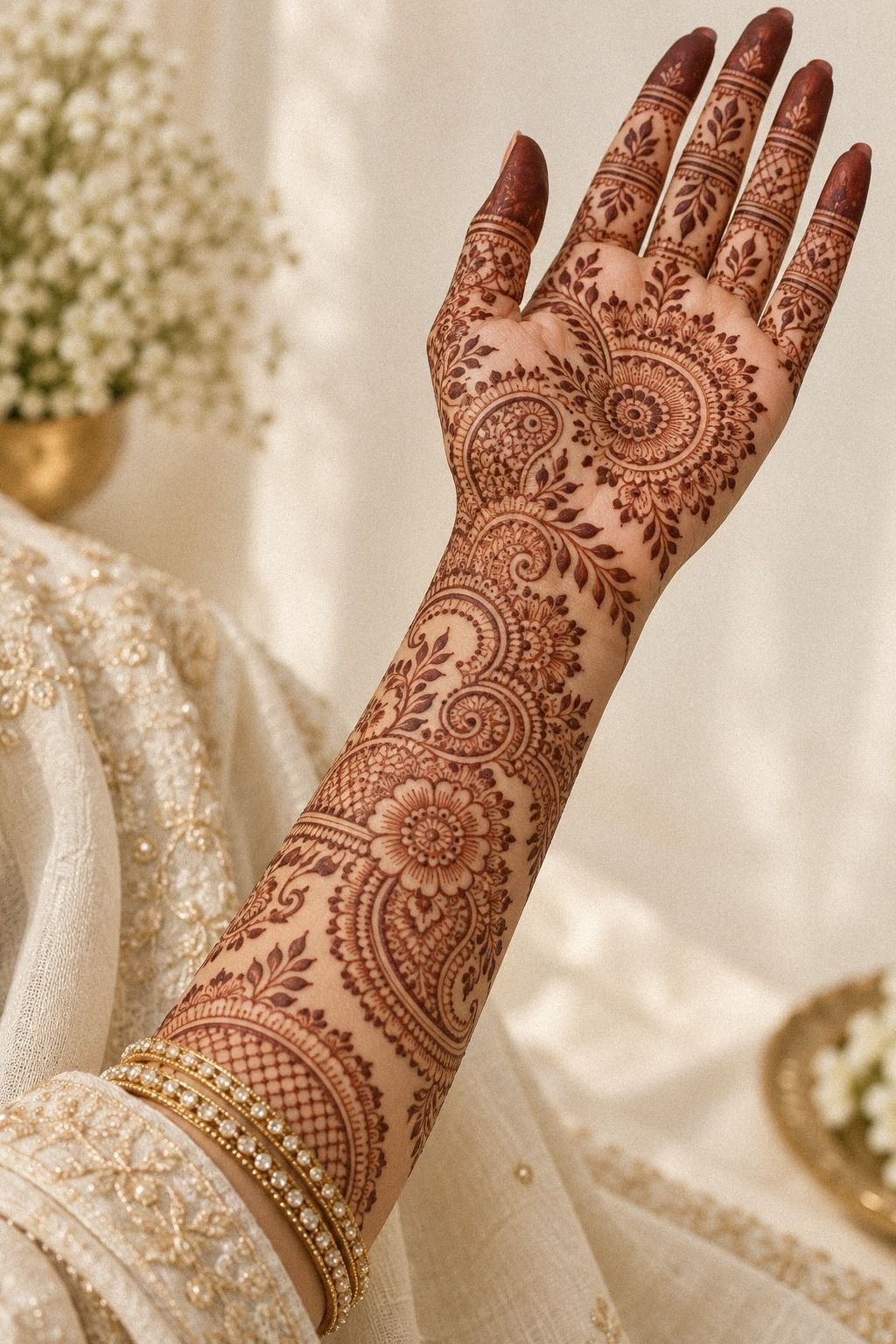
This is where people get sentimental and lose the plot.
5I Framed Fingers With Fine Bridal Bands
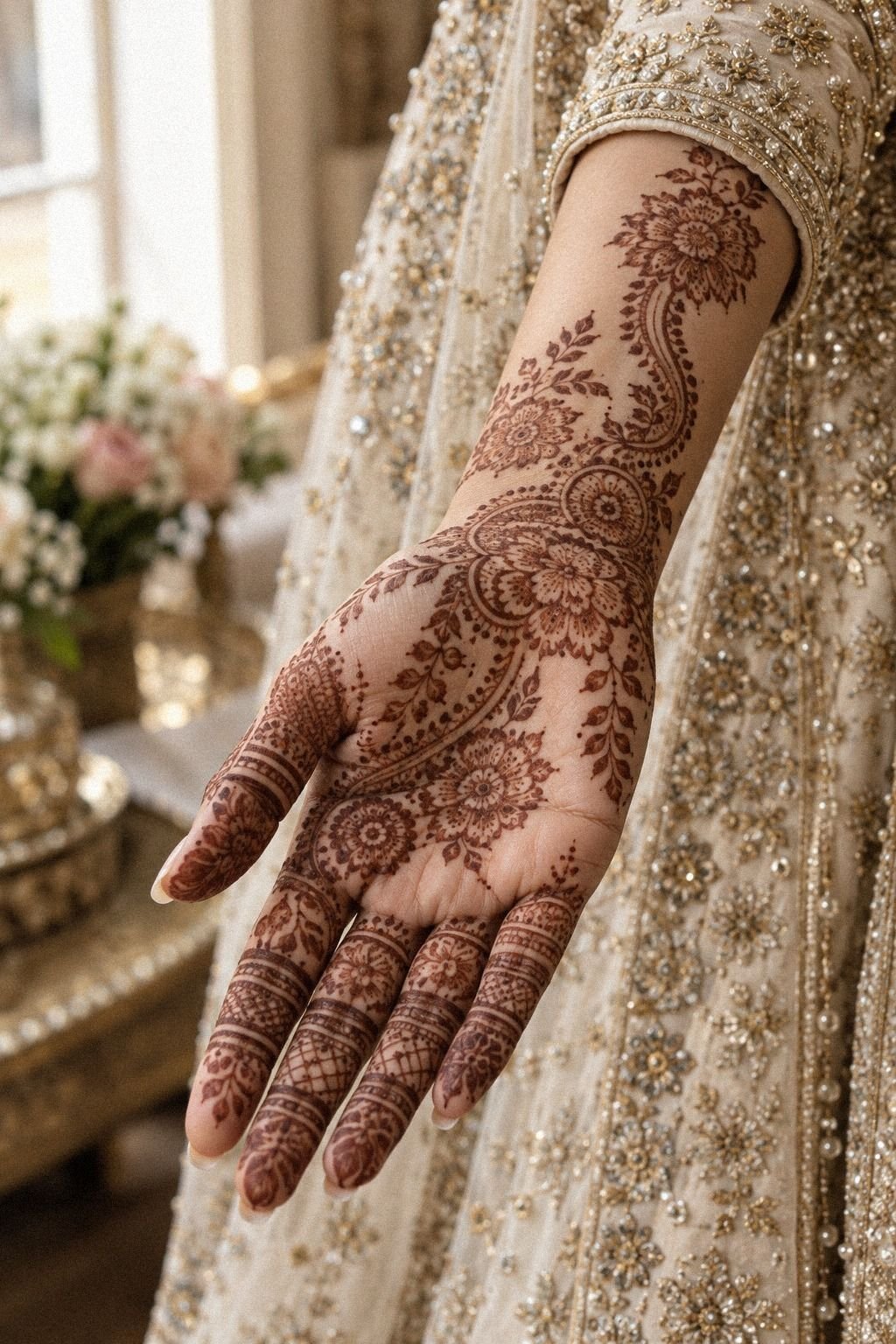
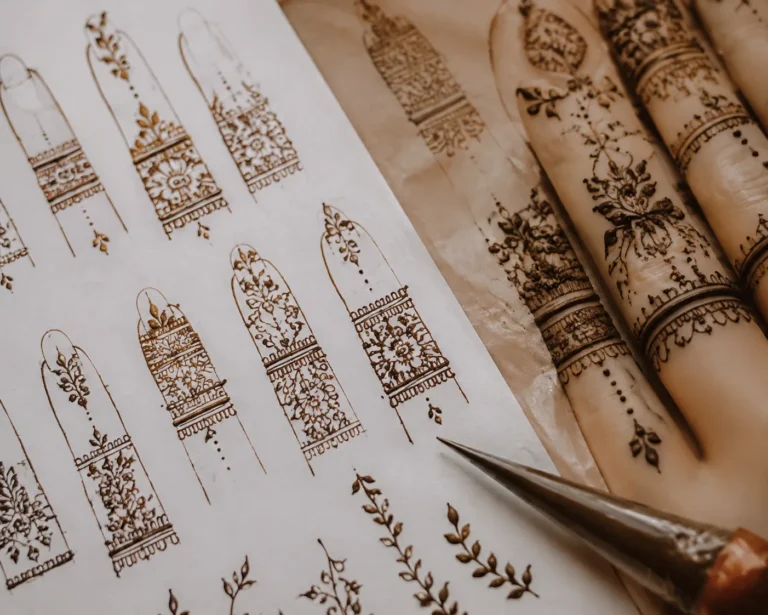
Finger framing looks delicate in a flash sheet, but the real question is whether it will survive high-wear life on skin. Your fingers wash, bend, rub, and heal rougher than low-wear zones, so those bands need stronger spacing than people expect. This is one of those placements where bold will hold, even in a fine-line style.
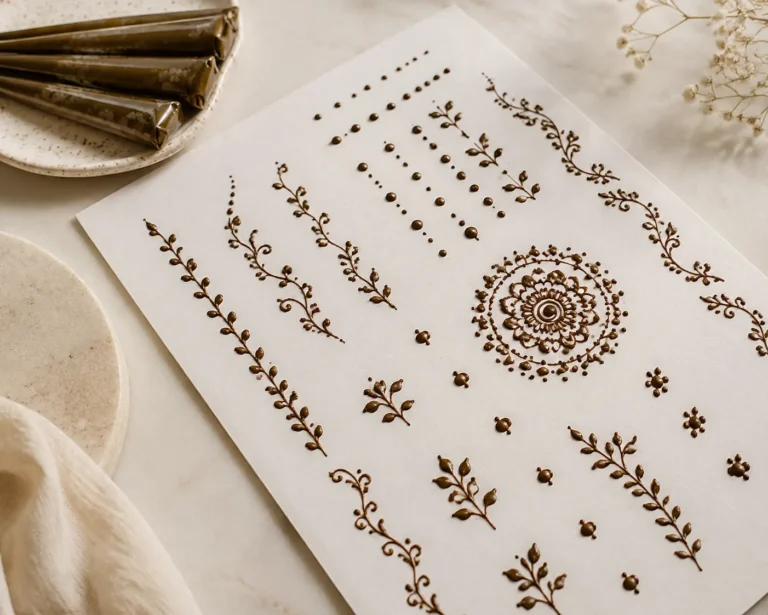
When I sketch bridal bands, I leave tiny windows between each ring instead of stacking them tight. One clean scallop, one dot chain, one leaf rhythm.
That’s enough. A scratcher will try to force six textures into one finger because it looks detailed on paper.
Don’t do it! If you want more ideas that keep finger work readable, I like pairing this section with the lighter spacing in latest simple mehndi designs.
6I Built Paisley Trails Across Knuckles
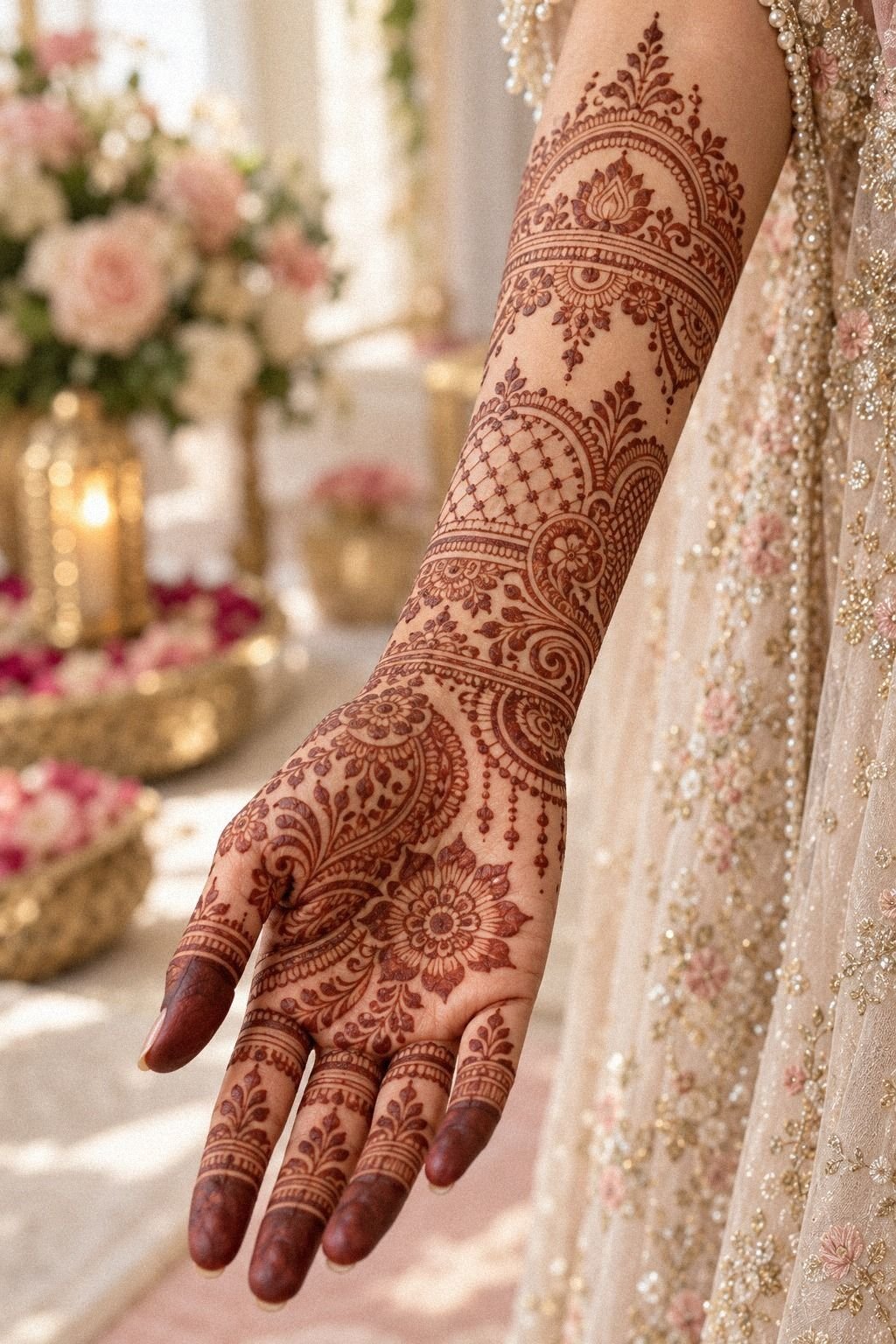
Paisley over knuckles sounds risky because it is. The skin moves a lot, the healing can get chewed up, and any line that lands right in a crease needs to be placed with intention. But when the paisley trails float just above the bend lines, the whole thing reads elegant instead of cramped.
On deep ebony skin, I want those paisleys slightly larger and cleaner than the reference image in your head. Not simplified into nothing.
Just opened up enough that the outer contour stays crispy after healing. I also like to taper the trail as it moves toward the side of the hand or ankle so your eye gets motion without clutter.
For more bridal-season flow references, 24 Pakistani mehndi designs built for bridal season has good pattern rhythm to study.
7I Extended Mehndi Past The Wrist
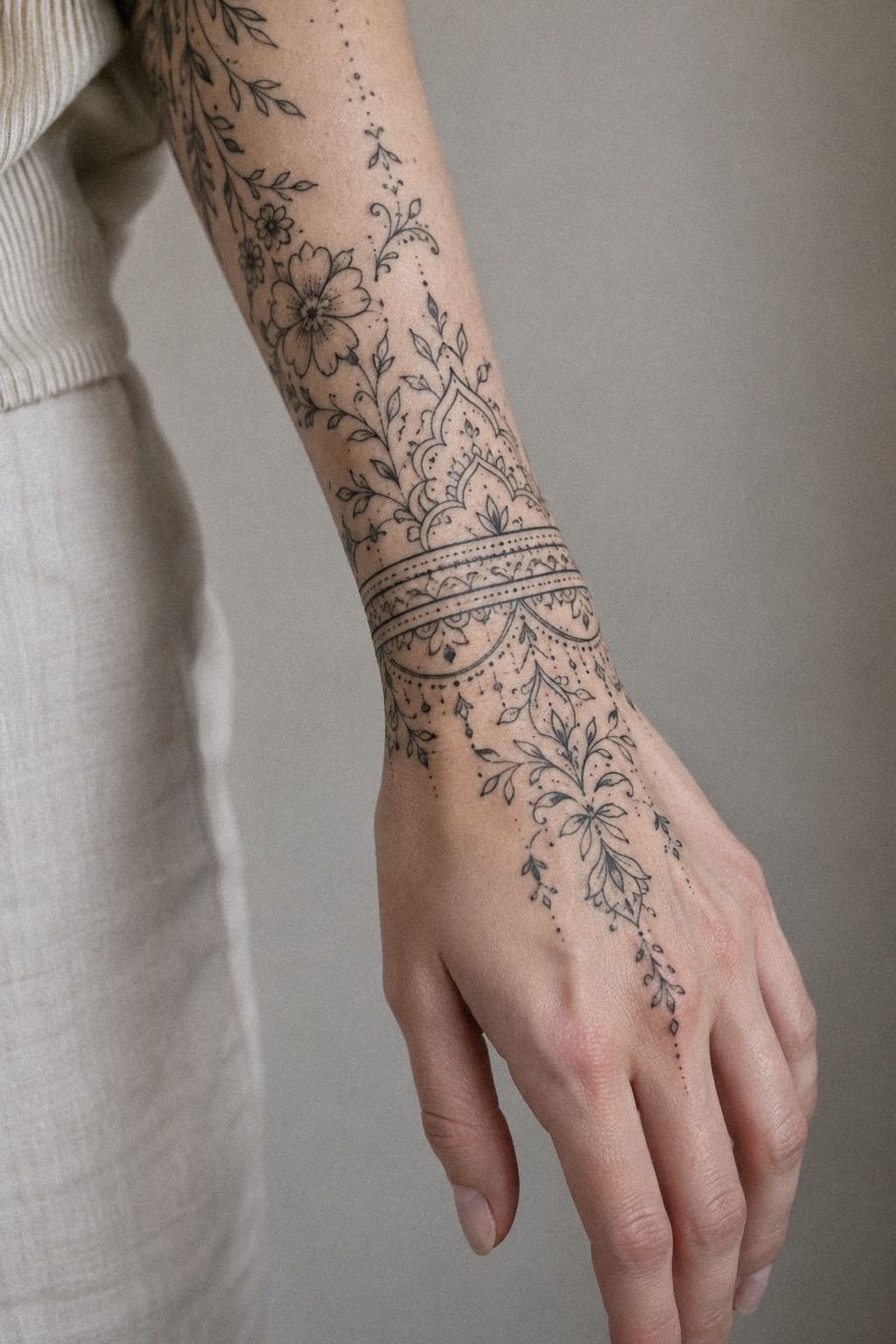
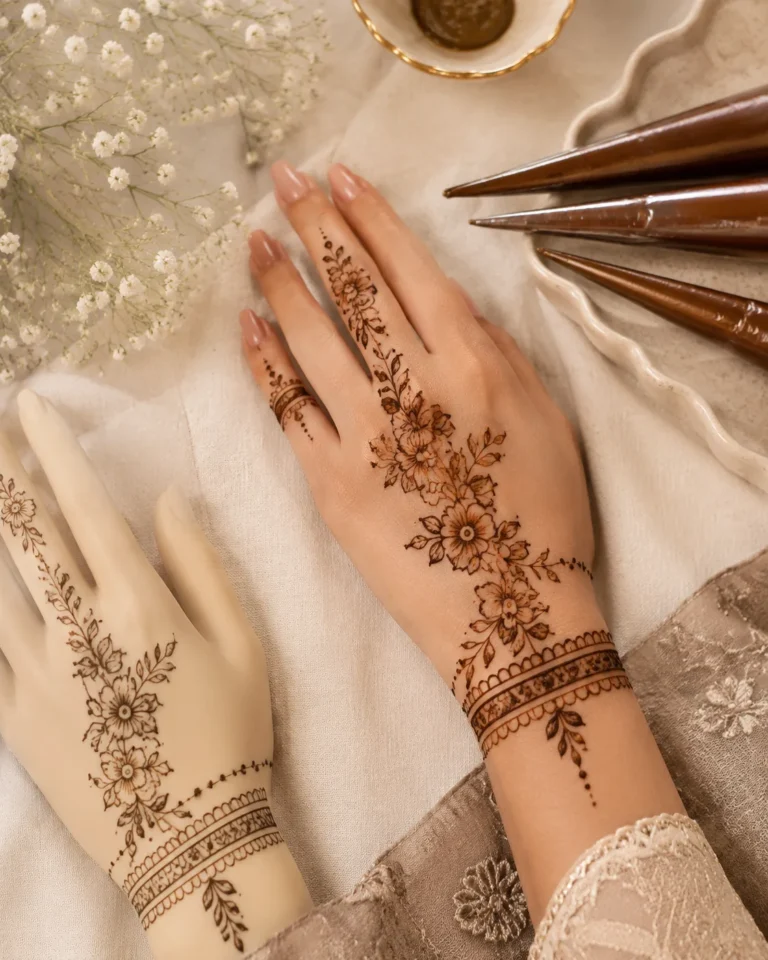
Once the pattern hits the wrist, you have a placement choice. Stop it like a glove edge, or let it travel. I almost always vote travel, because a mehndi-inspired tattoo that dies abruptly at the wrist can look chopped off, especially in macro photos where the line endings are doing all the work.
The better move is a soft taper. I let one main vine run another 1 to 2 inches past the wrist, then break it with smaller dots or leaf flicks so your forearm takes over slowly.
On fair cool-pink skin, that little extension makes the black line feel softer even though the tattoo is technically larger. But do not turn the wrist exit into a second full motif.
It should whisper, not yell. If you want more wrist-to-forearm pacing, browse these bridal mehndi designs again with that transition in mind.
8Leave Air In, Or The Whole Thing Gets Pricey To Fix
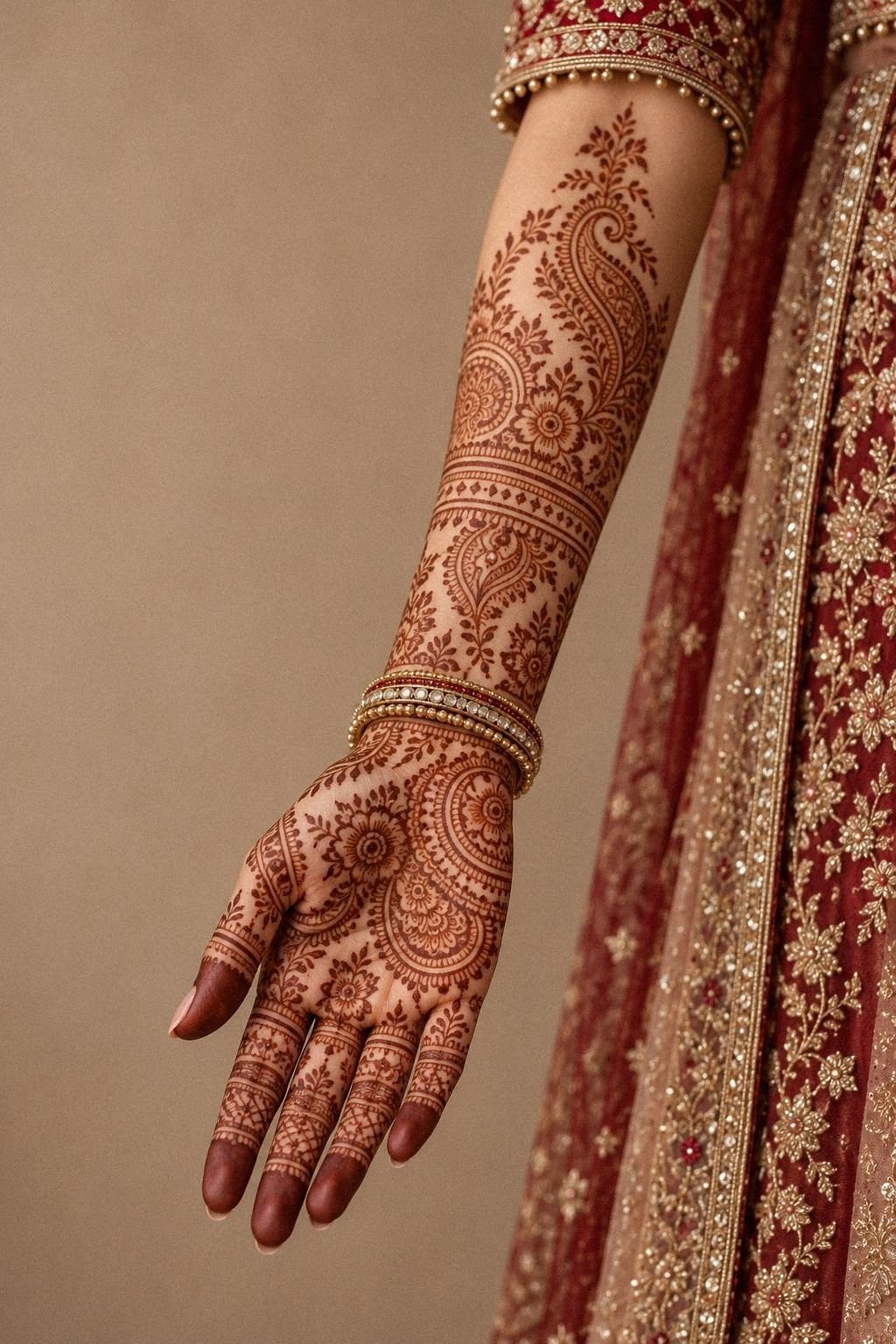
Negative space is not empty skin you forgot to fill.
9I Layered Lotus Details Near Thumbs
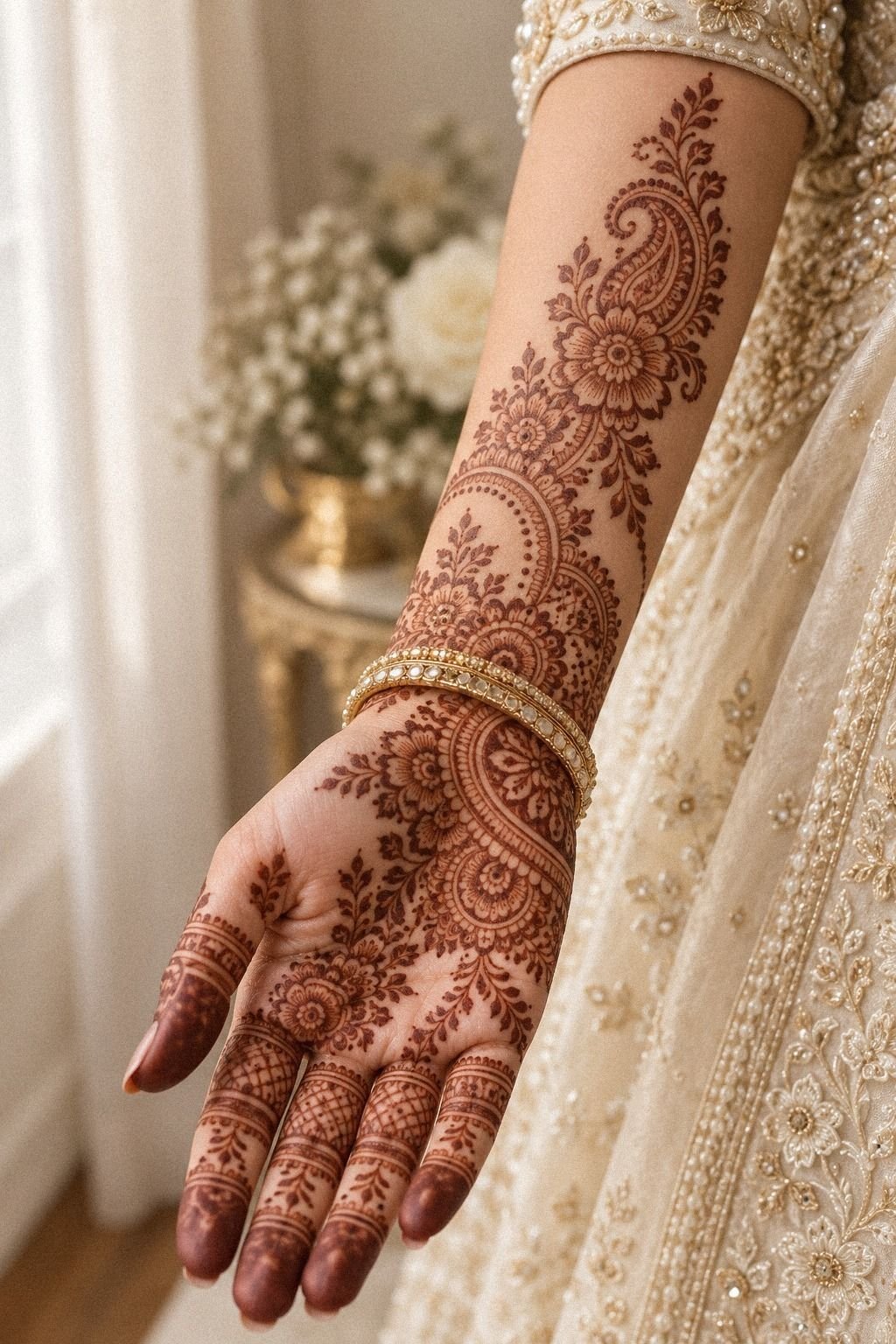
Lotus details by the thumb are pretty, but they can get fussy fast if each petal is too skinny. The thumb base moves more than people think, and any motif there has to flex with your grip. So I treat the lotus as a soft side anchor, not the star of the show, even when the reference image is built around it.
If I’m adapting that feel onto a placement map like behind the ear, I keep the lotus simplified to five or six clear petals and use the surrounding dots to hint at bridal detail. You still get the romance.
You just do not get mush. And honestly, that is the whole point.
If lotus-heavy references are your thing, you will pull more usable ideas from peacock mehndi designs than from overcrowded wedding boards because those layouts usually respect flow better.
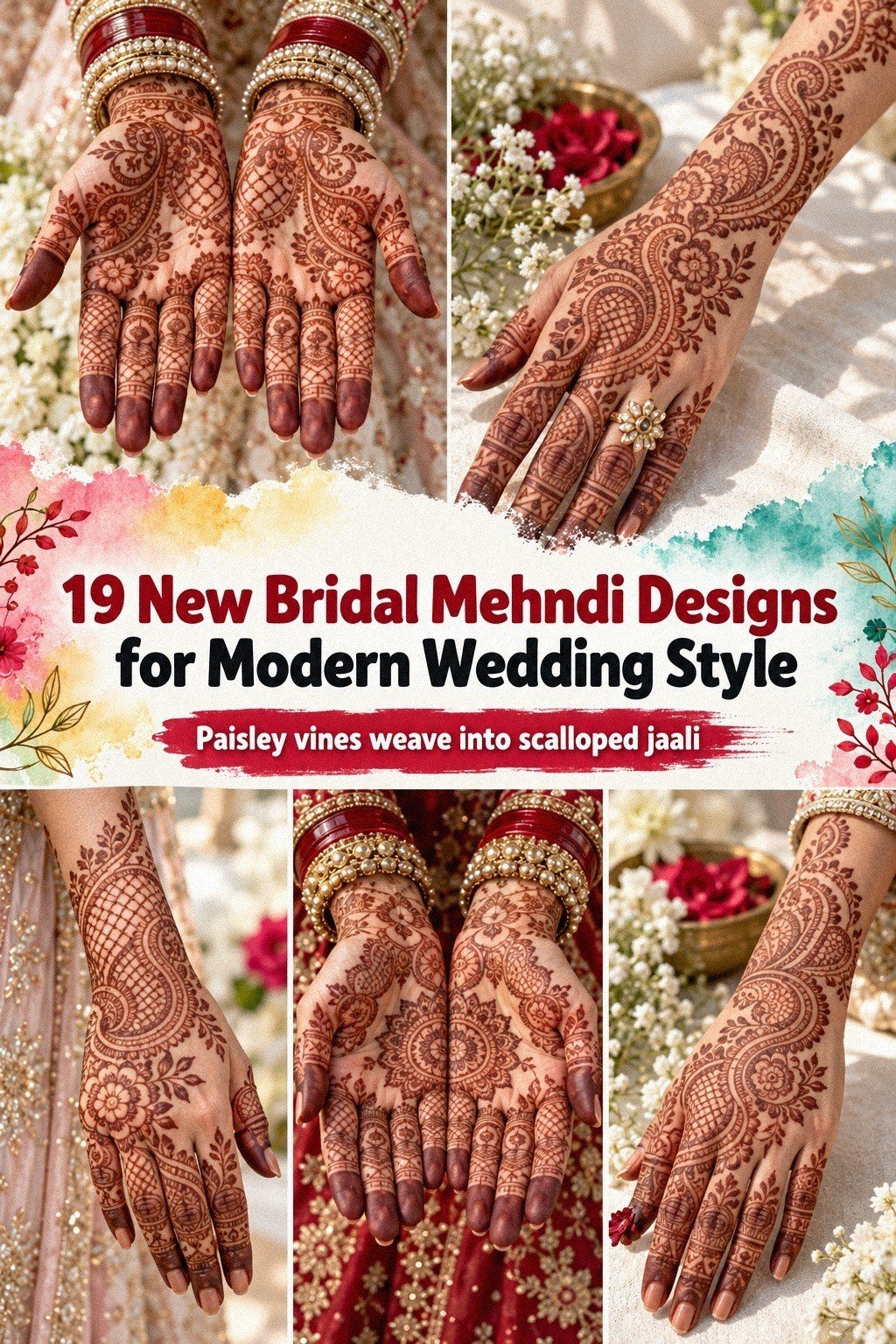
10I Used Jaali Lines On Back Hands
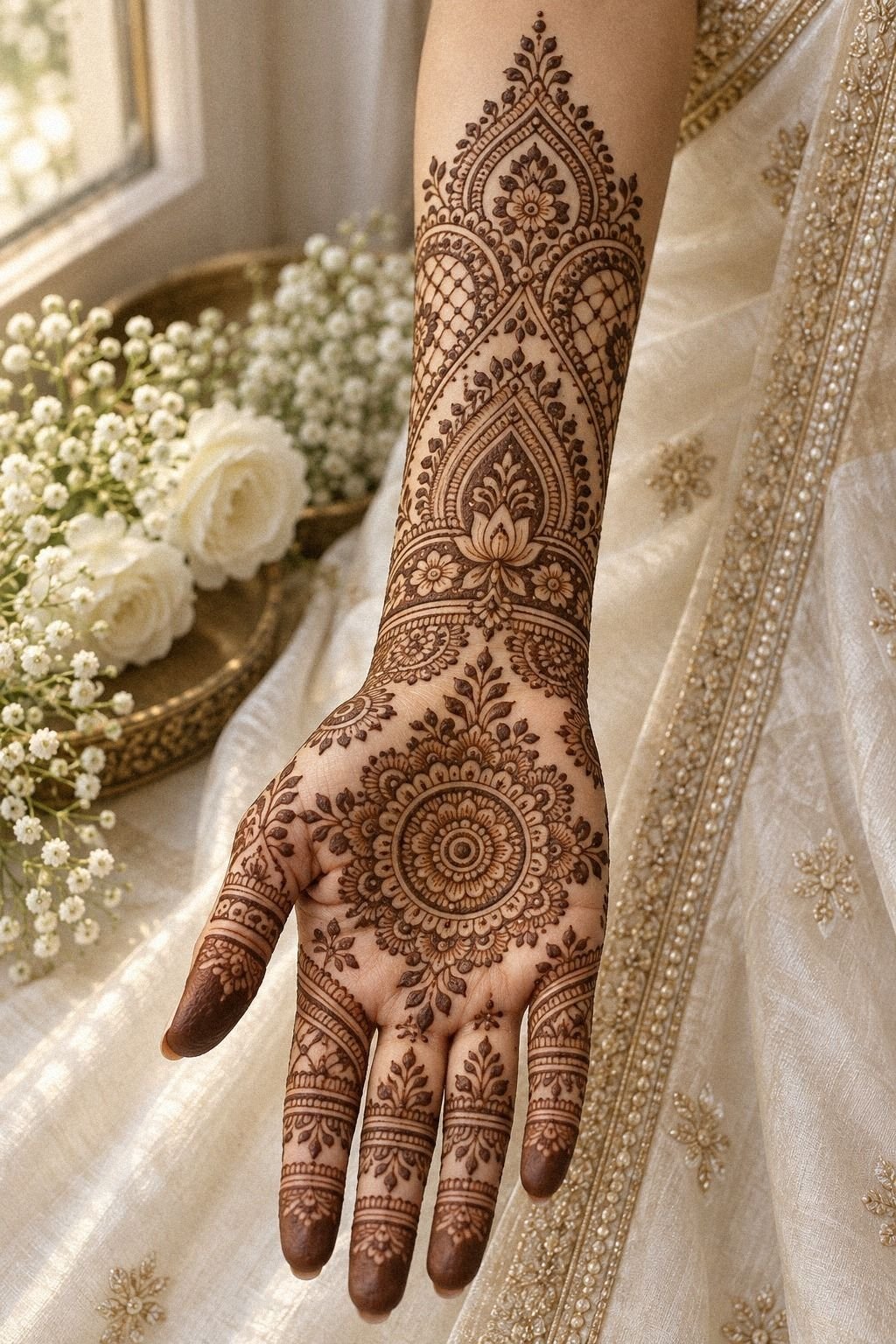
Jaali lines can either make a back-hand tattoo feel couture or make it feel like a grey net thrown over everything. The split-stencil view is useful because you can see where the drawing was clean on paper and where the healed version needed bigger windows.
That’s why I don’t trust stencil beauty by itself. Skin tells the truth.
My rule is simple: if the jaali diamonds are too tiny to survive one clean pass with stable contrast, they don’t belong there. I would rather use fewer cells and let the surrounding florals carry the richness.
On upper back placements, I also widen the lattice where the shoulder blade moves so the healed version doesn’t look patchy. For more open mesh inspiration, modern mehndi designs is worth a look.
11I Placed Tiny Bridal Motifs Between Vines
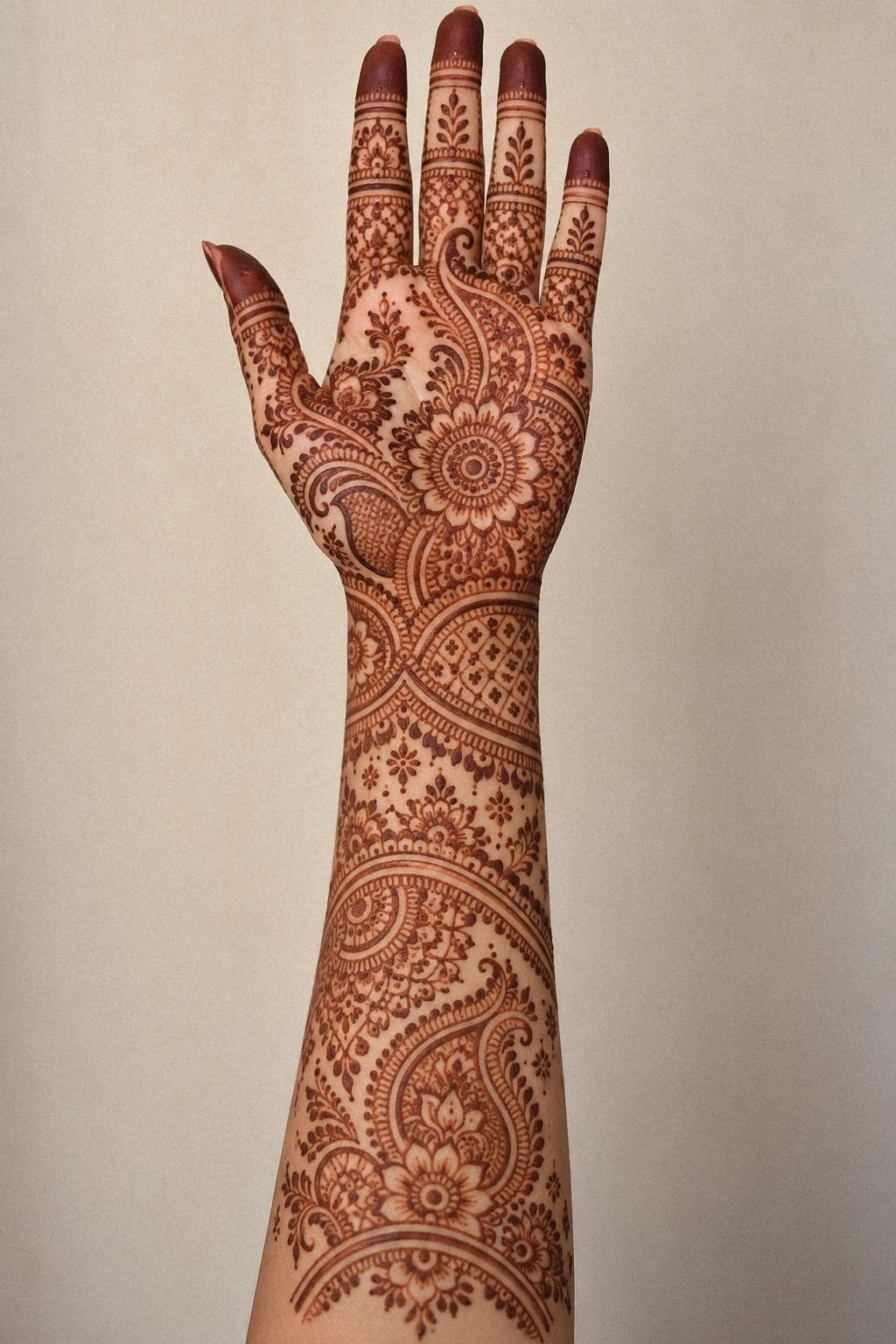
Tiny motifs are where you can sneak personality in without hijacking the main linework. A little paisley bud, a petal fan, a dot-star, even a tucked crescent. On an inner forearm, those small notes can live between the vines and still heal clear because the skin is smoother and lower wear than the hand.
But I keep the count tight. Three or four micro-motifs in one 4 to 6 inch run is plenty if the main stems are doing their job. Your eye should discover them, not get assaulted by them.
And if you want something symbolic, this is where I would place it instead of burying initials in the densest part of the piece. The strongest spacing examples I keep sending clients live in 15 trendy mehndi designs that balance old roots new lines.
12Match Both Hands, But Don’t Copy-Paste Them
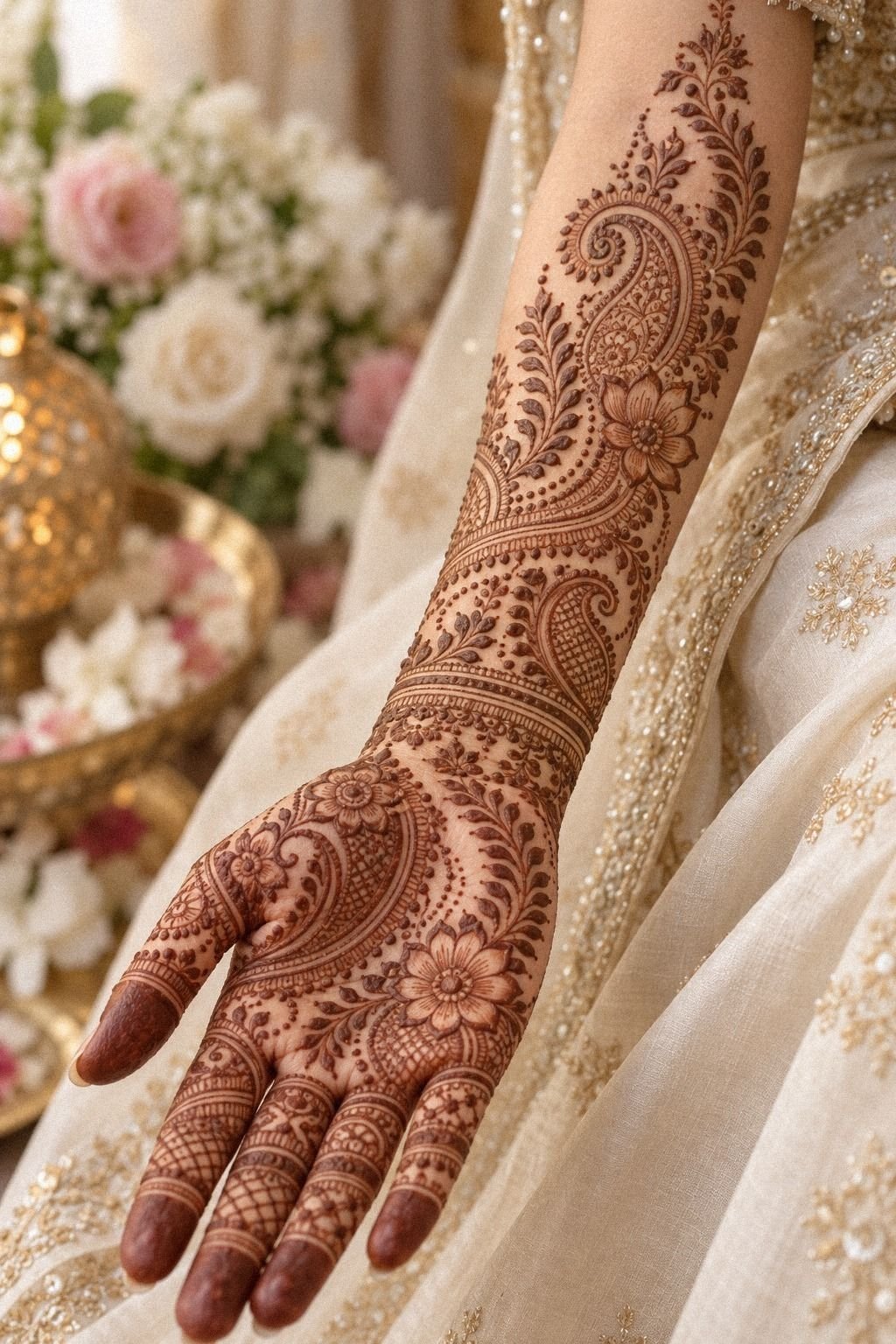
Perfect mirror work sounds smart until it starts looking stiff.
13I Deepened The Fingertip Henna Caps
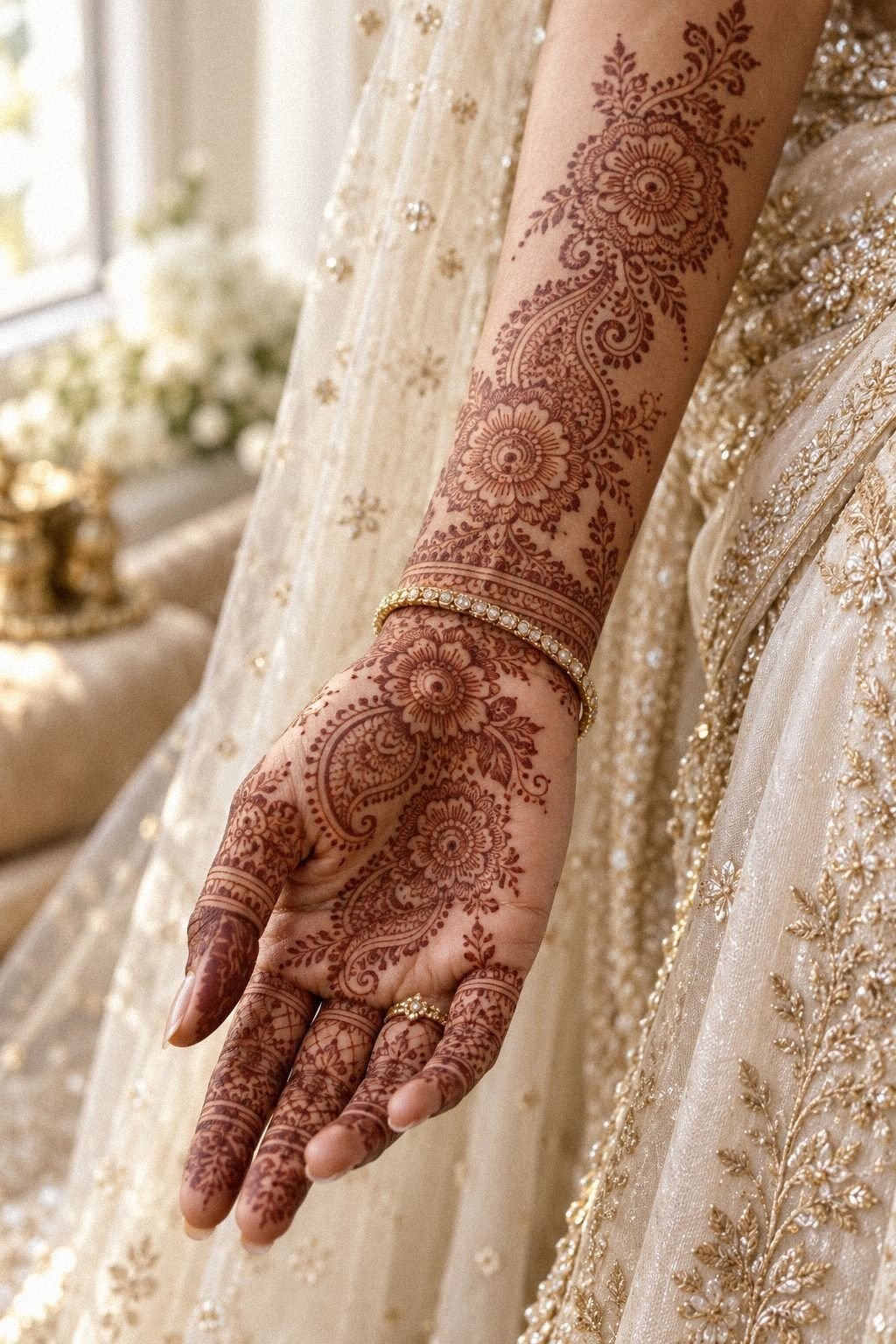
Fingertip caps are pure drama. They also fade faster than the pretty pictures admit because fingertips are one of the highest-wear zones on your body.
So when I use that look in a mehndi-inspired tattoo concept, I either make the cap visibly bolder than the surrounding linework or I skip it entirely. Half-committing just makes it look timid.
For a healed finger piece on fair cool-pink skin, a darker cap with a clear edge reads stronger than a whisper-thin gradient. You want solid black, not a dusty smudge.
And you need to accept that touch-ups may happen sooner here than on forearm, shoulder, or calf. Hands are for people who understand maintenance.
For softer versions of this idea, latest simple mehndi designs gives you cleaner alternatives.
14Wrist Bracelet First, Forearm Drama Later
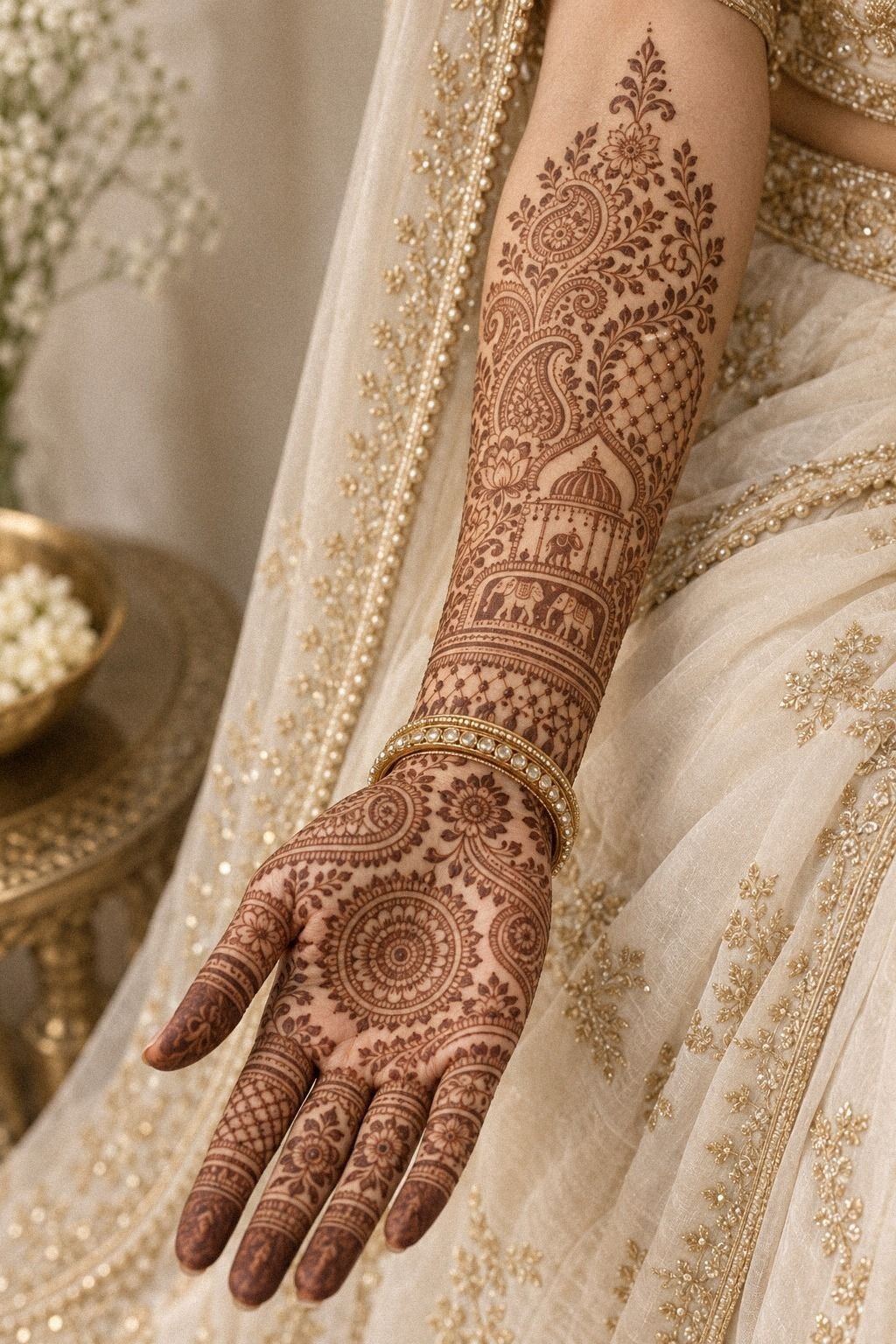
A wrist bracelet is one of the easiest ways to make bridal-inspired linework feel intentional instead of random.
15I Connected The Design Toward Forearms
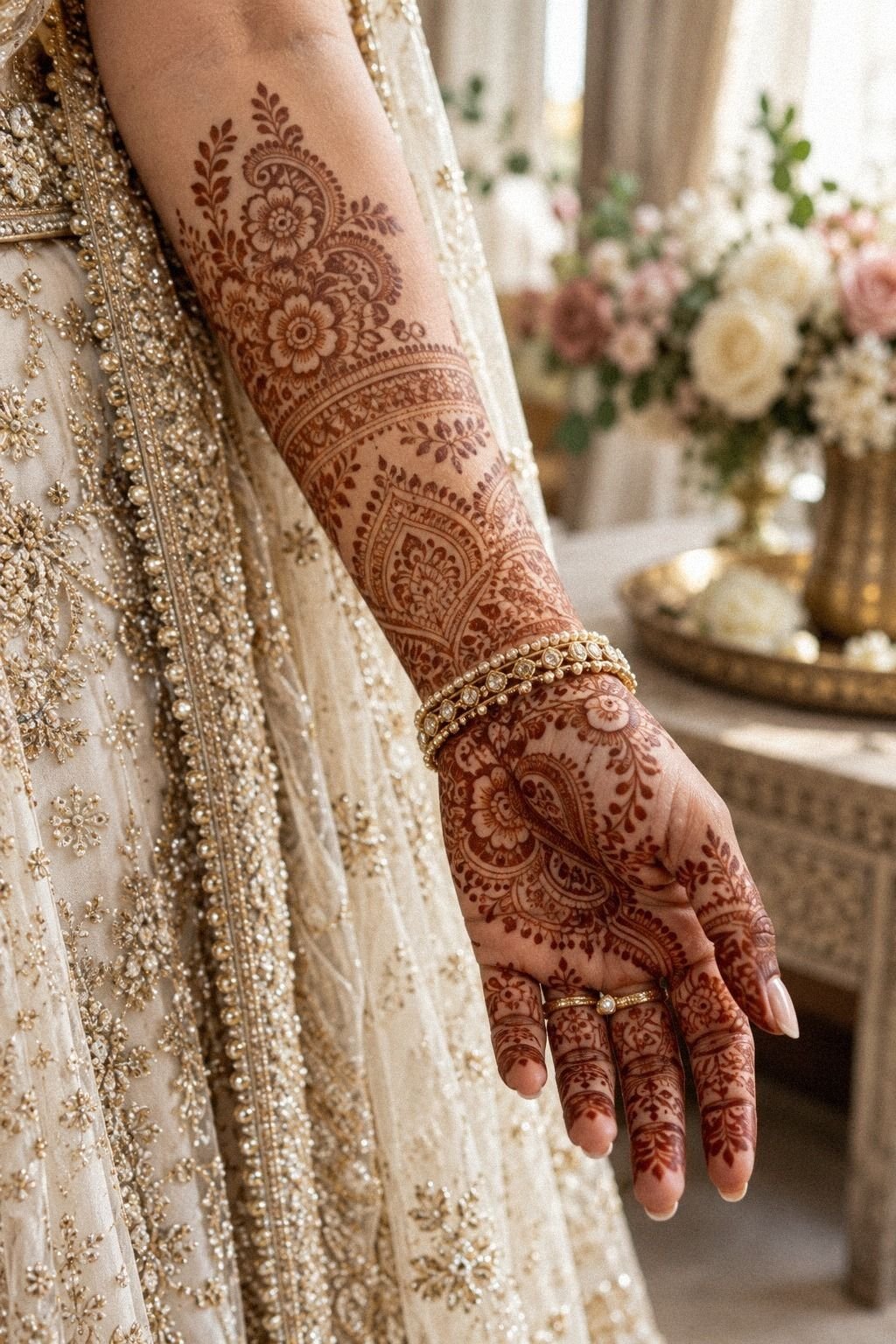
This is the section where the flash sheet can fool you. A hand design and a forearm design may both look good alone, but the bridging section is what makes the tattoo feel custom.
I connect them with rhythm, not bulk. One vine, one repeated petal shape, one dotted trail. That’s enough to guide your eye upward.
If you overbuild the connector, the forearm starts competing with the hand and your focal point gets lost. But if you keep the bridge narrow and let it flare later, the whole piece breathes better.
For 6 to 8 inch forearm runs, I like one major bend in the vine and two small branch-offs only. Need examples of that cleaner build?
24 Pakistani mehndi designs built for bridal season shows good long-form flow.
16I Checked Symmetry Before Paste Dried
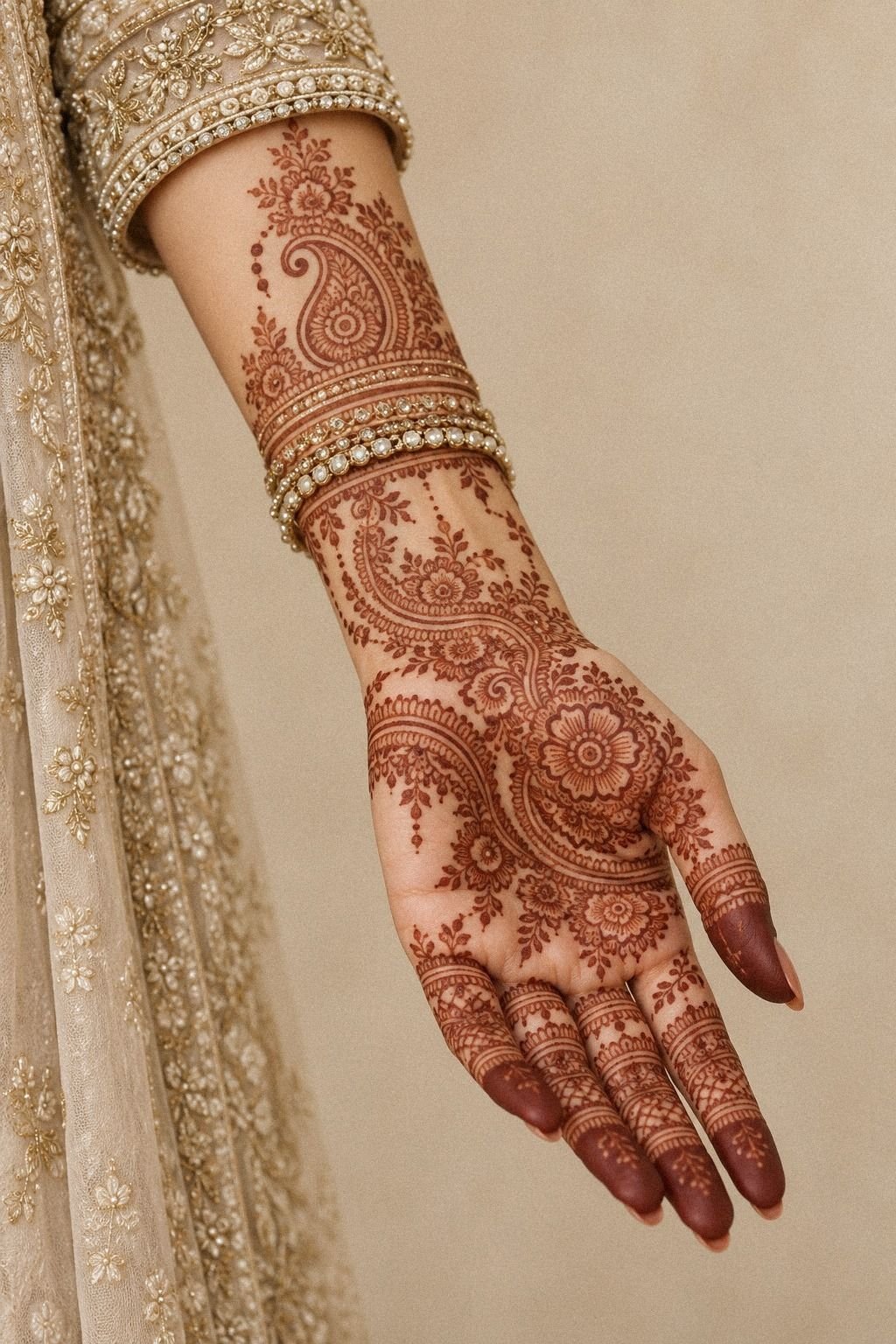
Even when the final destination is a tattoo, I still mock up mehndi-inspired symmetry early like I would if paste were on skin and the clock were running. Why?
Because imbalance shows up fast on ankles, hands, and other narrow placements where the bones give you less forgiveness. If one side is heavier, the whole piece limps.
For an ankle crop on golden tan skin, I compare the left and right pull from three angles: straight on, slight turn, and walking stance. That’s boring studio work, but it is the difference between elegant and off.
And yes, ankles are a little spicy. Still more manageable for most people than ribs or sternum, though.
If symmetry matters most to you, save a few cleaner references from modern mehndi designs before you commit.
17Clean Every Finger Edge, Or It Starts Looking Cheap
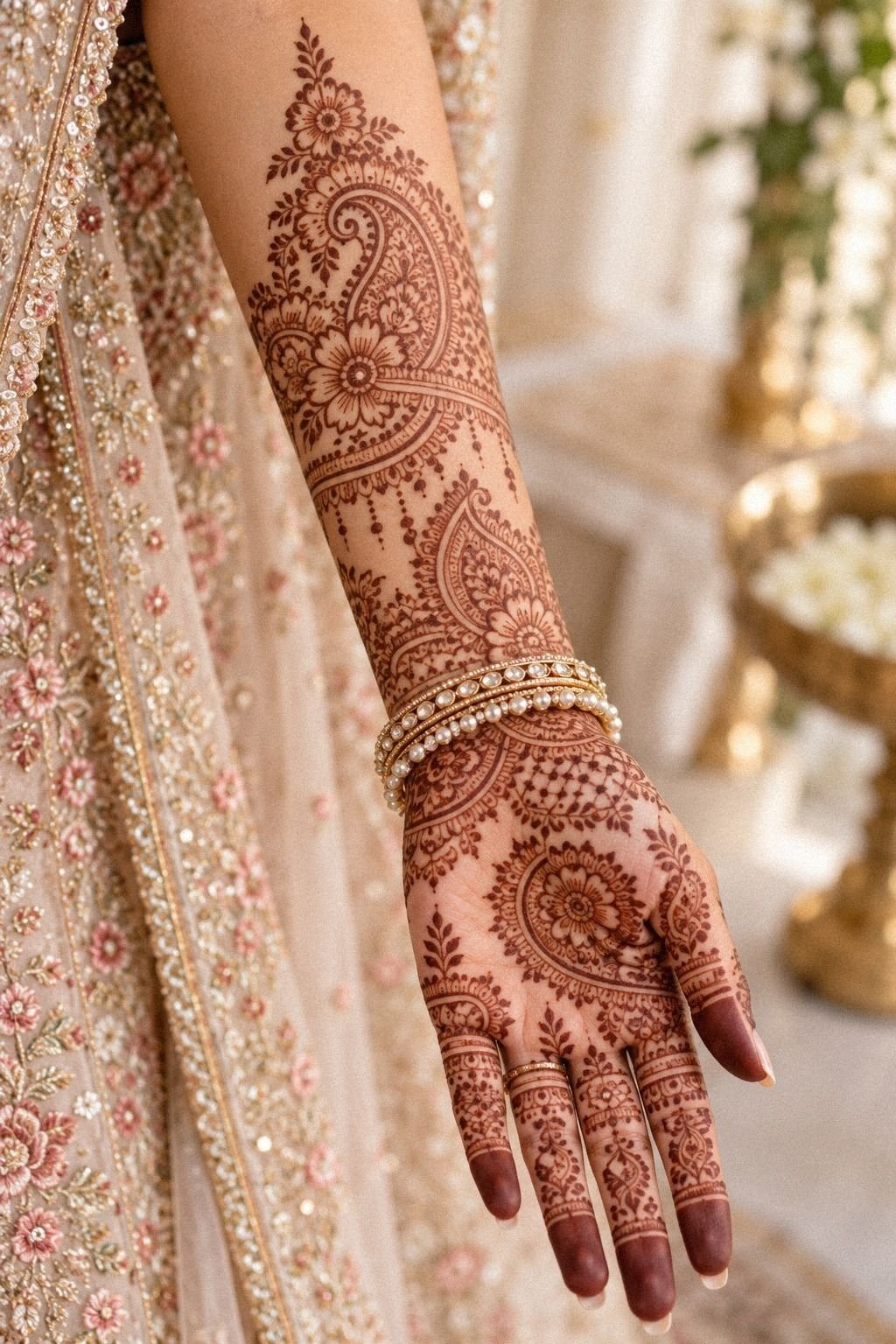
Finger edges are where sloppy linework shows first.
18I Let The Stain Develop Overnight
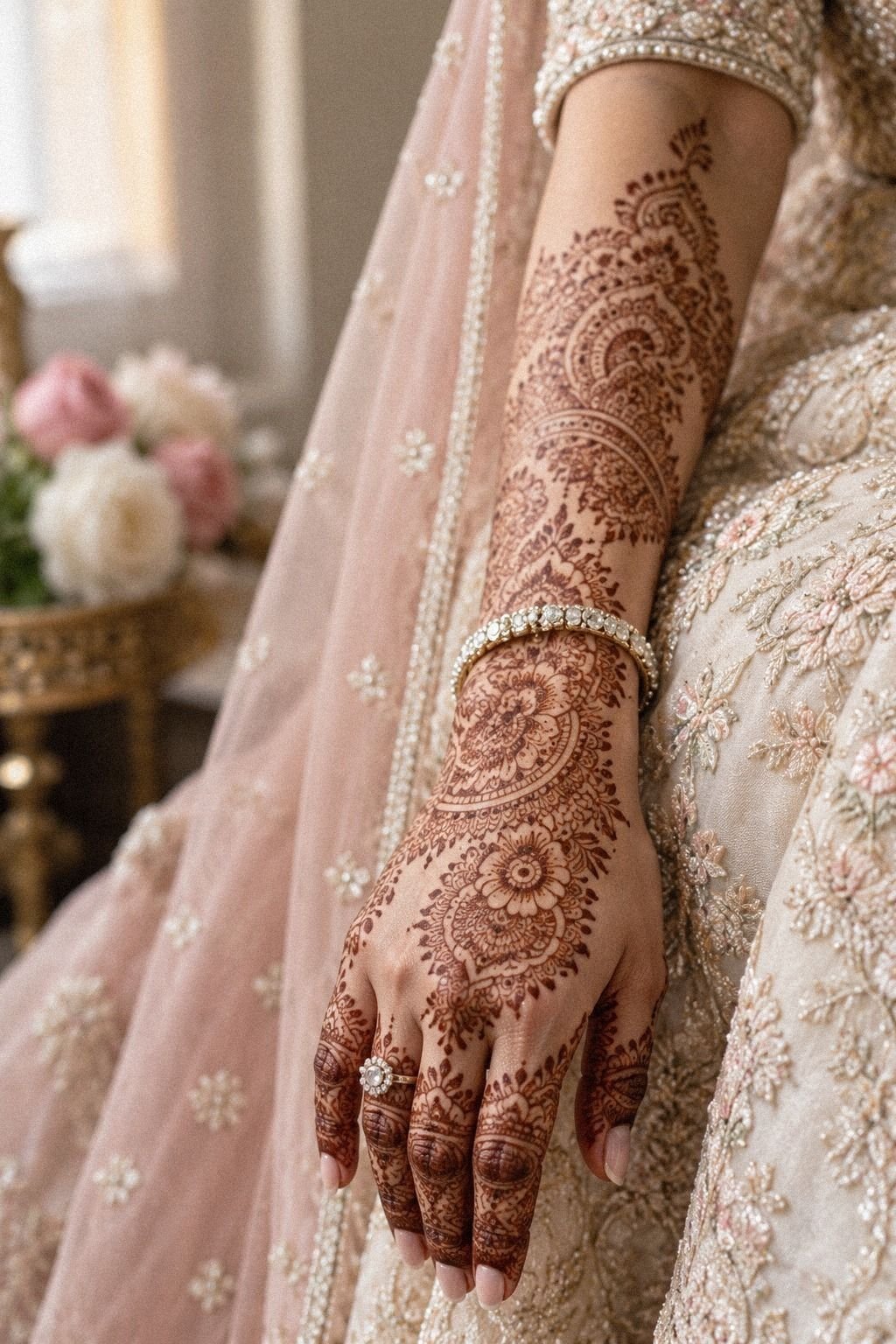
For the tattoo version of this idea, “let it develop” really means giving the design enough contrast in the drawing stage that the healed result will not fade into a polite whisper. On a shoulder piece with deep ebony skin, that matters a lot. Tiny bridal details can look dreamy on day one and flat by month three if the contrast was too timid.
So I deepen the anchors before the needle ever touches skin. Thicker outer petals.
Cleaner black fills. Softer pepper shading only where it helps separate layers.
Then your aftercare does the rest: gentle unscented soap, a thin layer of ointment, no pool, no gym friction, no sun. First few days, it’s an open wound, treat it like that.
If you need more healing-minded inspiration, latest simple mehndi designs tends to show the layouts that heal nicest.
19The Best Photo Usually Costs Less Than The Busiest Design
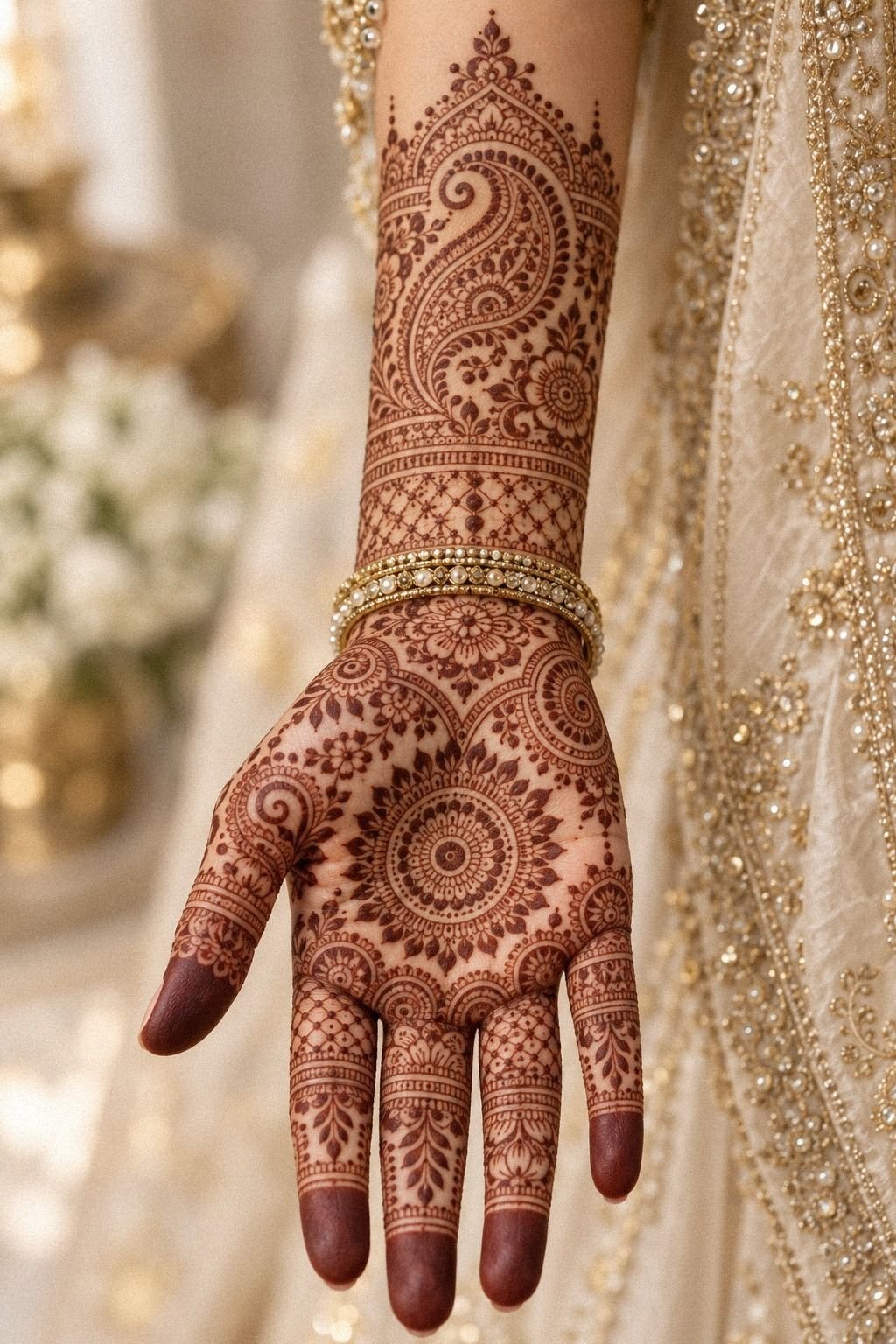
The design that photographs best is usually not the busiest version.
How much it cost
Tattoo pricing for new bridal mehndi designs is usually straightforward once you stop thinking in “full set” terms and start thinking in placement, size, and time. In most US studios, the shop minimum sits around $50 to $100, and many custom artists charge roughly $100 to $250 per hour. A small finger accent may only take one hour.
A full hand-to-forearm bridal layout can turn into a half-day session fast.
Here is the cleanest pricing breakdown I explain to clients.
The real cost driver is not whether the design looks “simple.” It’s how many clean passes, angle changes, and tiny breaks your artist has to build without chewing the skin up. Fine-line mehndi tattoos look light, but good ones are slow. If you want a second reference set before you budget, modern mehndi designs and mandala mehndi designs help you judge scale better.
Why cleaner bridal-mehndi tattoos are winning right now
What changed is pretty simple. People still want richness, but they don’t want soup five years later.
I keep hearing the same thing in consults: you want bridal symbolism, hand flow, and a feminine finish, but you also want the tattoo to stay readable when the line settles a little over time. That’s a smart shift.
And I think it is overdue. Fine-line work isn’t fragile when it’s designed with skin in mind. Black is still your best friend for longevity, high-wear zones still need more breathing room than Pinterest admits, and a tattoo that reads clean in one glance will almost always photograph better too.
The part I wish more first-timers understood
I love bridal-mehndi references, but I wish more people knew the difference between pattern beauty and tattoo beauty. They are not the same job.
Mehndi can lean on stain softness, super-tight filler, and temporary wear. A tattoo has to live in your skin, stretch when you move, peel like a sunburn, settle under silver skin, and still look intentional months later. That’s a different standard.
The first time I rebuilt one of these boards for a client, I cut nearly a third of the tiny details out. She thought I was stripping the romance away.
Then I spaced the central floral, widened the finger bands, simplified the thumb lotus, and added real negative windows. Suddenly the whole piece looked more bridal, not less, because your eye could finally follow it.
That’s the weird part nobody expects.
And this is where people usually argue with me. They think cleaner means plainer.
It does not. Clean just means every line has a job.
I also think people get spooked by the phrase “go bigger” because they assume it means heavier. It does not. Sometimes bumping a motif from 0.4 inch to 0.75 inch is the difference between crispy lines and future blur. Sometimes moving a design off the exact wrist crease and up the forearm half an inch is the difference between cute now and soup later.
And if you want fingertip caps or micro-lace on the side of the hand, real talk: you need to accept maintenance. Those are high-wear zones.
They fade. They may need touch-ups.
That doesn’t make them bad ideas. It just means you should choose them on purpose.
But here is the key reminder I want you to remember when you start cutting references down. You’re not losing detail. You’re choosing which detail gets to stay loud.
So when you bring references in, I want you thinking like this: where does the eye land first, where does the skin flex most, and what detail would still make sense if I saw it in ten years from across the room? If you can answer those three questions, your artist can build something clean, soft, and solid instead of just copying what your phone served you. And yes, that extra editing step is worth it every time (especially on hands)!
What People Always Want to Know
How much does a New Bridal Mehndi Designs usually cost?
Usually about $100 to $300 for a small to medium version, though a full hand or hand-to-forearm layout can climb higher in total price. Shop minimums often start around $50 to $100, and detailed hand work can be worth the higher rate when the spacing is clean.
– Small accents – Hand placement – Artist rate
Are New Bridal Mehndi Designs a good idea for a first tattoo?
Yes, if you keep the layout clean and pick a predictable placement that heals well. Forearm, outer arm, and shoulder usually give you a calmer first experience than fingers, ribs, or feet, and they often give you better long-term value too.
– Cleaner line read – Lower-wear skin – Easier aftercare
How do I choose a tattoo artist for New Bridal Mehndi Designs?
Look for healed photos, not just fresh ones. Crispy lines and clean spacing matter more here than trendiness, and you want someone who understands fine-line flow on real skin. If the healed work looks fuzzy, the lower quote isn’t worth it.
– Healed portfolio shots – Fine-line specialty – Clean studio setup
How much do New Bridal Mehndi Designs hurt?
Pain level depends on placement. Hands, fingers, ribs, feet, and sternum are usually spicier, while outer forearm, shoulder, and thigh are more tolerable for most people. Lines feel sharper, shading feels like a dull burn, and breaks are always worth it when you need one.
– Lines sharper – Shading duller burn – Breaks help
How long does a New Bridal Mehndi Designs take to heal?
Surface healing is usually about 2 to 3 weeks, while full settling under the skin can take 2 to 3 months in real healing time. Wash gently, moisturize lightly, and keep it out of pools and strong sun. The first few days matter most if you want the tattoo to heal nice.
– Gentle soap – Thin ointment – No picking
What’s the best placement for New Bridal Mehndi Designs?
For longevity, I like outer forearm or upper arm best because the lines stay readable and the skin quality takes wear better. For impact, the back of the hand is gorgeous, but it needs more upkeep and a touch-up budget.
– Low-wear zones – Better line aging – Higher visibility on hand
Where I’d Start First
If I had to pick one, I’d start with the wrist bracelet. It gives the whole design a clean stop, keeps the hand from looking crowded, and buys your artist room to let the line breathe. Pin that starter move first, then build out from there.
{ “title”: “19 New Bridal Mehndi Designs Ideas You’ll Want to Save in 2026”,