The cross is one of the oldest tattoo symbols on the planet. It shows up on skin across every culture, every religion, and every generation, and it still doesn’t feel played out. That’s because it carries real weight.
If you’re coming from a place of faith, memorial, heritage, or just love the way it looks, the cross tattoo earns its spot. Let’s break down what it actually means, where it comes from, and how to wear it right.
What a Cross Tattoo Actually Means
The most straightforward reading is Christian faith. The Latin cross, that tall vertical bar crossed by a shorter horizontal one, represents the crucifixion of Jesus Christ and the promise of salvation that follows. For a lot of people, getting it tattooed is a public declaration of belief, a permanent reminder of what they’re anchored to.
But the cross means more than one thing. It also represents sacrifice, death, and resurrection in a broader sense. People get crosses to honor loved ones they’ve lost. Others wear it as a symbol of personal struggle and making it through. The shape itself, two lines meeting at a center point, carries ideas of balance, intersection, and the connection between the earthly and the spiritual.
Historical and Cultural Roots
A cross tattoo means nothing until you decide what it means to you.
The cross predates Christianity. Ancient civilizations used cross symbols in Egypt, Mesopotamia, and pre-Columbian America to represent the four cardinal directions, the meeting of heaven and earth, or the cycle of life. The Egyptian ankh, a cross with a looped top, specifically meant eternal life. These weren’t Christian symbols. They were cosmological ones.
When Christianity spread through Europe and eventually worldwide, the Latin cross became the dominant visual. By the medieval period, crusaders and knights had cross imagery embedded in armor, flags, and skin. Sailors tattooed crosses as protection at sea. The Celtic cross came out of Ireland and Scotland as Christianity blended with older pagan visual traditions around the 5th century AD.
Popular Design Variations
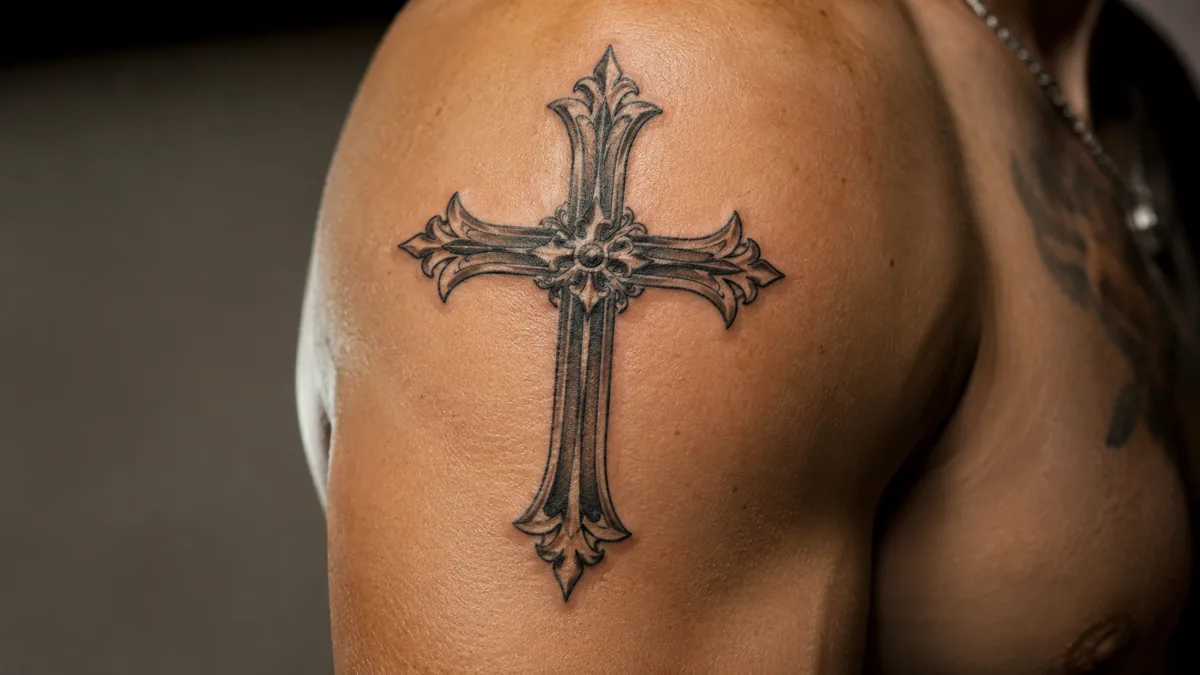
The Latin cross is the baseline, clean and simple. The Celtic cross adds a circle connecting the arms and usually features knotwork or interlace fill. The Gothic cross has ornate pointed ends, sometimes with additional embellishments, and leans darker and more dramatic. The Maltese cross, with its eight-pointed notched arms, is tied to the Knights of Malta and shows up heavily in firefighter and biker tattoo traditions.
The Rosary cross wraps a beaded rosary around the design. Orthodox crosses add a second shorter crossbar at the top and a slanted footrest bar at the bottom. Wooden cross tattoos, made to look carved or rough-hewn, tend to be memorial pieces. Fine line crosses are popular for subtle placements. Chicano crosses, often done with heavy shading and script lettering, have their own visual language rooted in Southern California street tattoo culture.
Black and Grey vs. Color
Most cross tattoos are done in black and grey or solid black. The symbol is strong enough on its own that color isn’t necessary, and a bold black cross reads from across the room. Black and grey with whip shading gives it depth and dimension, especially useful for three-dimensional or ornamental crosses. Fine line blackwork keeps it minimal and precise.
Color opens up options for stained glass style crosses, where the arms are filled with bold saturated panels of red, blue, and gold. These look incredible fresh but require touch-ups as color fades faster than black. For most clients, black ink is the right call. It’s timeless, it ages clean, and it doesn’t muddy up over time the way packed color sometimes does.
Placement and How It Ages
The chest is the classic spot, centered over the heart. It ages well there, low friction, low sun exposure, and the flat surface lets the design stay readable for decades. The upper arm and shoulder are similarly solid, good for medium to large pieces. The forearm works for smaller crosses, especially fine line work, though sun exposure means you’ll want to keep it moisturized and touch it up every few years.
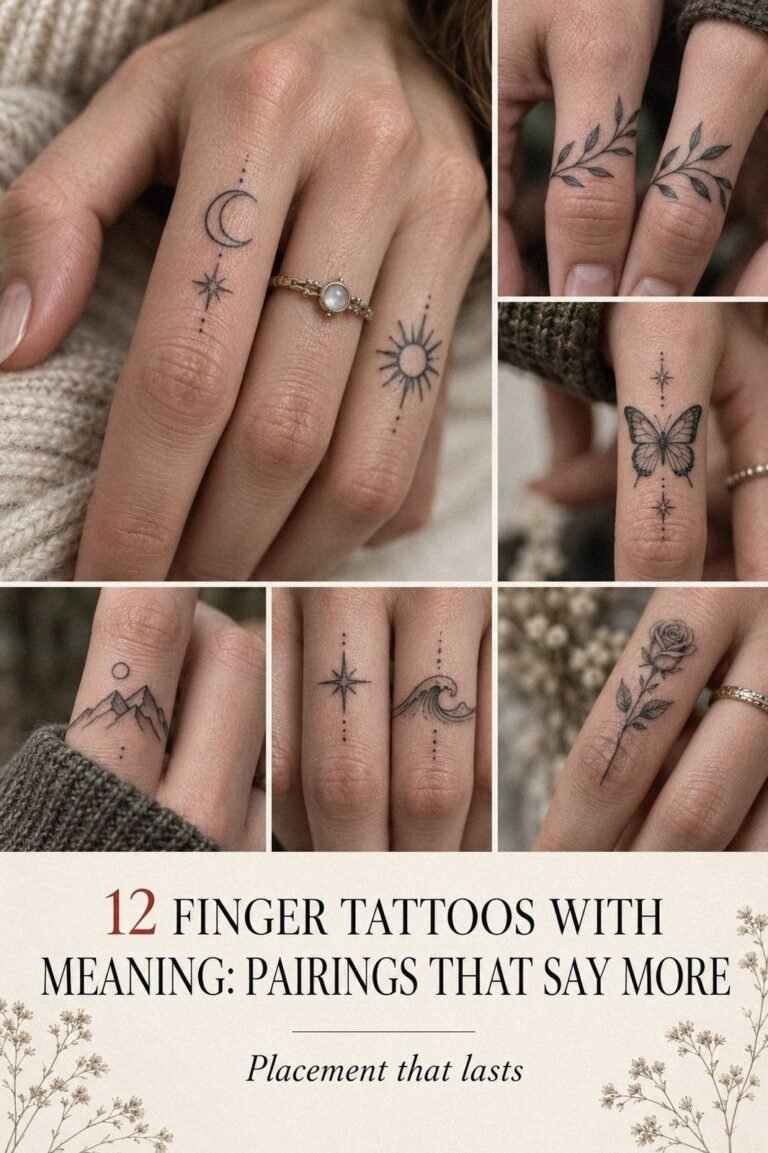
Hands, fingers, and the ribcage are higher-wear or spicier zones. Finger crosses are notorious for blowout and fading since the skin there is thin and moves constantly. Neck crosses are visible and bold, great for people who want no ambiguity about their commitment. Ankle and foot placements heal slower and wear faster. Go bold in high-wear zones, not fine line, because bold will hold.
Memorial Crosses and Making It Personal
A significant portion of cross tattoos are memorial pieces. A cross with a name, a date, or a banner reading RIP or In Loving Memory is one of the most common requests in any shop. It’s direct, legible, and communicates exactly what the wearer wants without explanation. Some clients add portrait work inside or around the cross. Others keep it stripped down to just the shape and the name.
Making a cross personal doesn’t require complicating it. Incorporating a birthstone color, a specific flower, or texture work that mirrors a material meaningful to the person all go a long way. A carpenter’s cross in rough wood grain reads different from a polished ornamental cross. Think about what the belief or the person you’re honoring actually looked like in your life, then build the tattoo outward from that image.
Who Gets Cross Tattoos
Devout Christians are the obvious demographic, but cross tattoos span well beyond that. Catholic and Orthodox communities have strong traditions of devotional tattoos, especially in Latin American, Eastern European, and Filipino cultures where religious iconography and body art overlap naturally. Bikers have worn crosses, specifically the Iron Cross and the Maltese Cross, since early American biker culture in the 1950s.
Military veterans sometimes get crosses tied to unit patches, fallen brothers, or personal faith sustained through deployment. Athletes get them as a sign of gratitude or protection. Plenty of people get a small, simple cross because they grew up in a faith household and want to carry that part of their identity without being loud about it. The symbol is flexible enough to hold all of those readings at once. Pick the one that’s true for you and tattoo toward it.