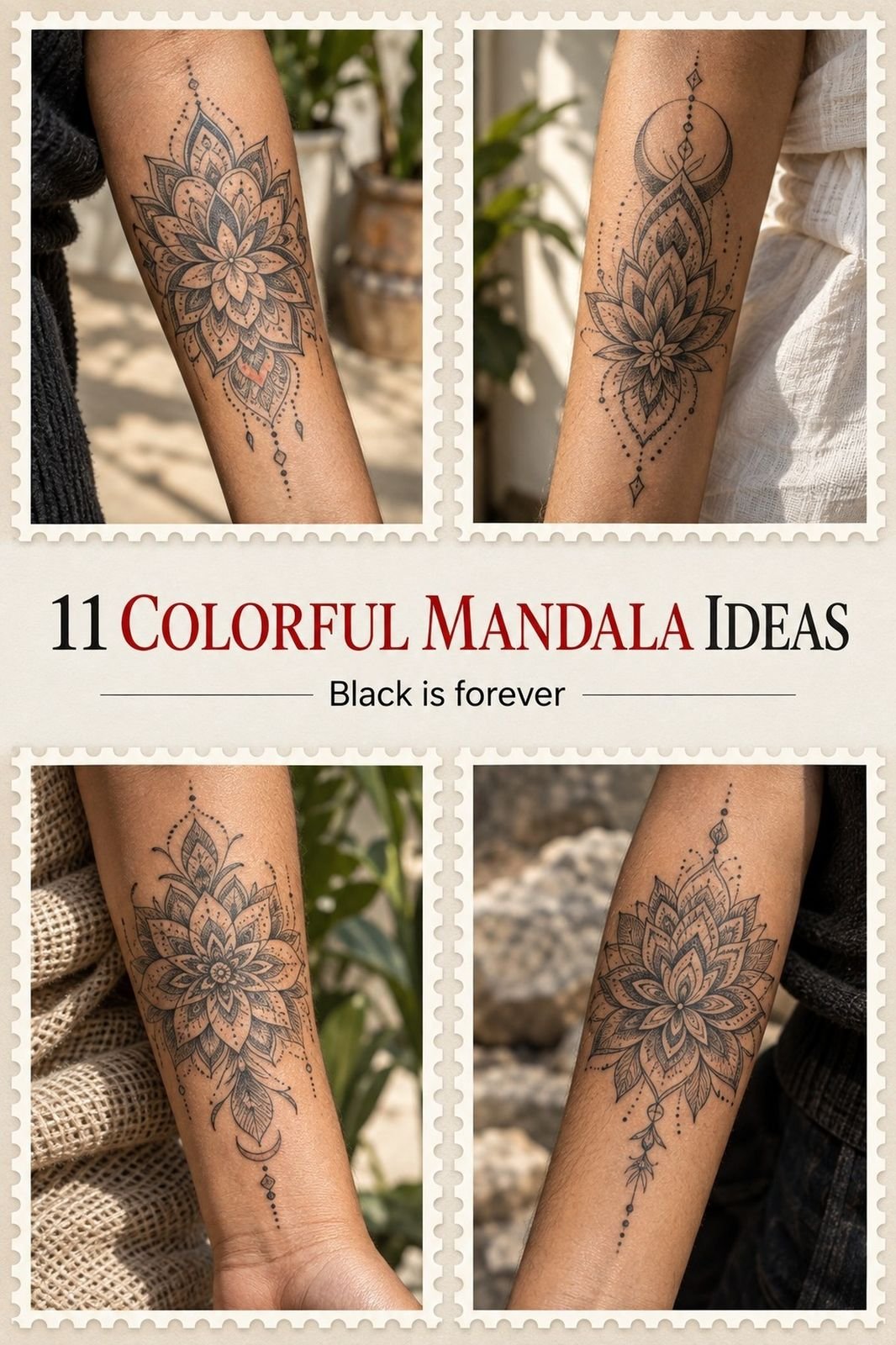
Colorful Mandala Design can stay budget-friendly when you reuse a clear stencil, choose one lead color, and plan placement before booking. I once paid for a redesign because I rushed the scale. You don’t need every pigment available. You need a clear tattoo plan, a skilled hand, and a personal concept.
The strongest designs use color with restraint. That keeps your tattoo readable as it ages.
If you’re choosing your first mandala, start with placement and line weight before you fall for a reference. That small pause can save money!
- Colorful Mandala Drawing Forearm Sleeve
- Colorful Mandala Design Shoulder Cap
- Mandala Art Design Colour Back Tattoo
- Colorful Mandala Drawing Fine Linework
- Modern Mandala Art Chest Piece
- Vibrant Mandala Finger Tattoo
- Ornate Colorful Mandala Ankle Design
- Sacred Mandala Design Sternum Tattoo
- Watercolor Mandala Art Upper Arm
- Geometric Mandala Drawing Calf Tattoo
- Jewel Toned Mandala Spine Design
1Colorful Mandala Drawing Forearm Sleeve
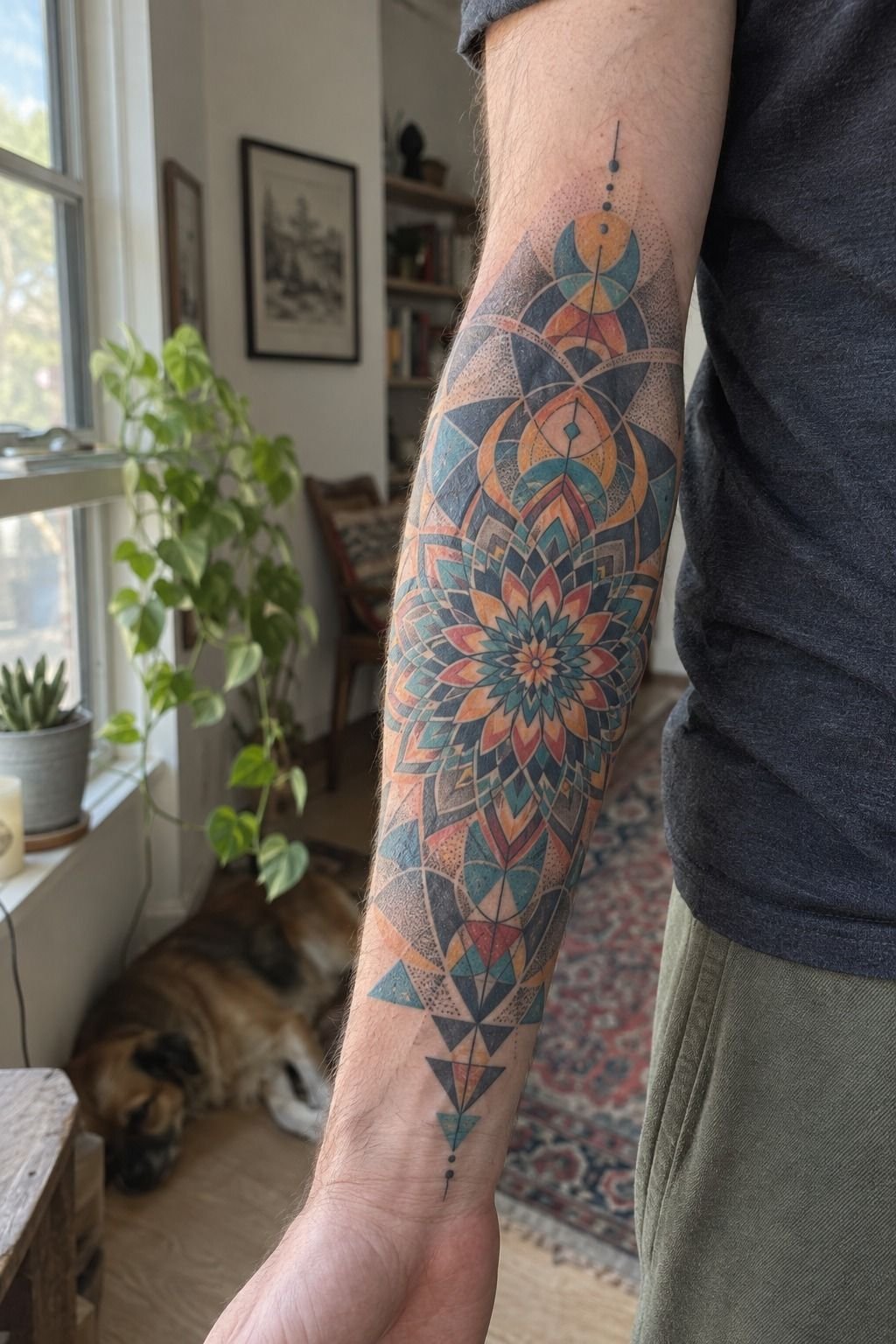
A forearm sleeve gives a geometric tattoo layout room to develop from wrist toward elbow. On fair, cool-pink skin, rich jewel tones can make the center feel striking. You won’t need a full arm of saturated ink.
Choose one dominant color. Let two smaller accents repeat through the petals.
Ask your artist for precise ruled lines, balanced circles, and open skin between motifs. A black ink outline can hold the design together. Cobalt, magenta, and marigold can fill selected shapes.
I’ve seen crowded sleeves lose their rhythm when every section gets equal color.
You don’t need to pay for a full sleeve in one appointment. Start with the central mandala.
Leave a clean stopping point near the wrist. If you’re still collecting references, compare this placement with these beautiful mandala art designs.
They use larger negative spaces.
A forearm heals where you can monitor it easily. You’ll still need gentle washing, light hydration, and sun protection.
The surface often settles in two to three weeks. Complete healing can take two to three months. That waiting period matters!
2Colorful Mandala Design Shoulder Cap
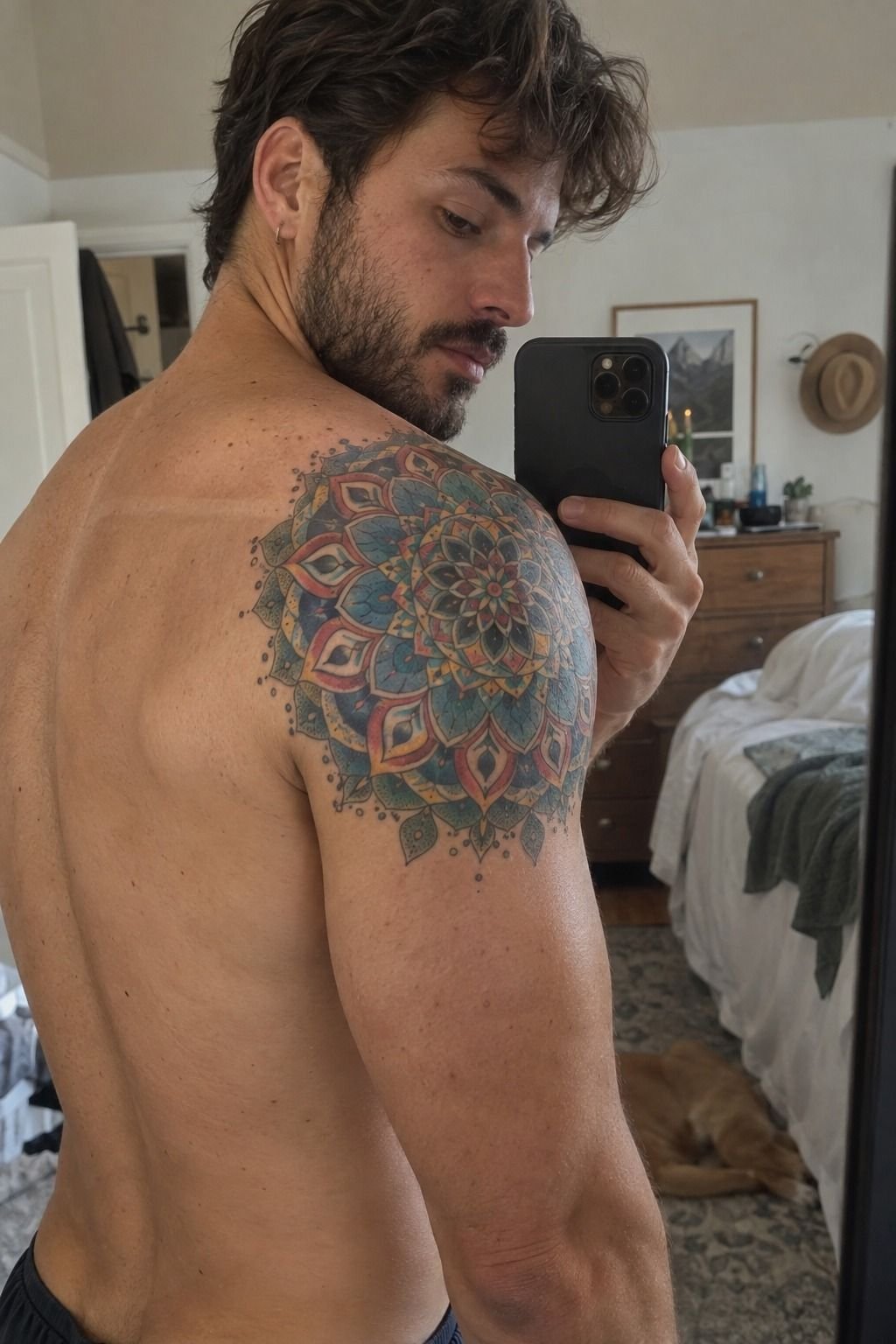
A shoulder cap works best when the mandala follows the deltoid’s curve. It shouldn’t sit like a flat sticker.
That rounded placement makes turquoise pigment feel flowing. Small coral points can create a graceful turn around the arm.
Keep the middle open enough for the eye to find the center. A fine black outline can define the petals.
Your artist shouldn’t outline every tiny color shift. I’d skip a fully packed background. It can make the shoulder feel heavier than the design needs.
A shoulder is often more tolerable than ribs, hands, feet, or sternum. Sensitivity still varies.
If you’re concerned about cost, book the central cap first. Add surrounding details later. Your artist can preserve the geometry when the first session has a clear border.
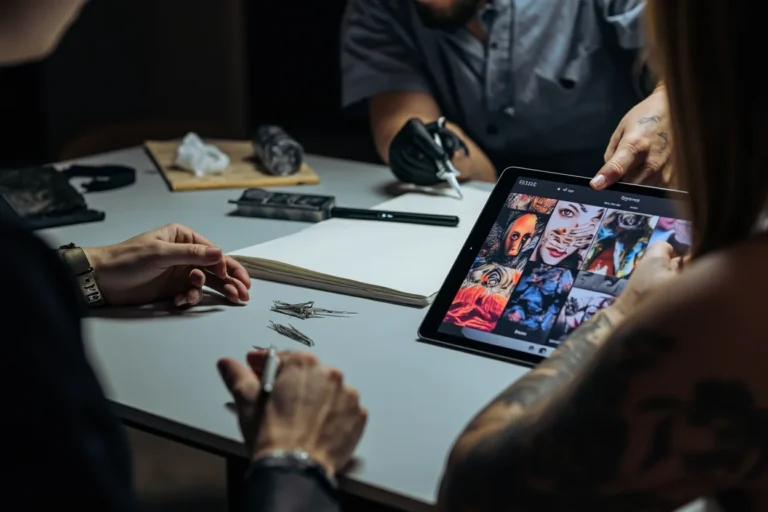
For another approach, browse these unique tattoo design drawings before your consultation. Bring two or three references. Don’t bring twenty nearly identical screenshots.
You’ll get a sharper conversation when your artist knows which lines, colors, and scale you want.
3Mandala Art Design Colour Back Tattoo
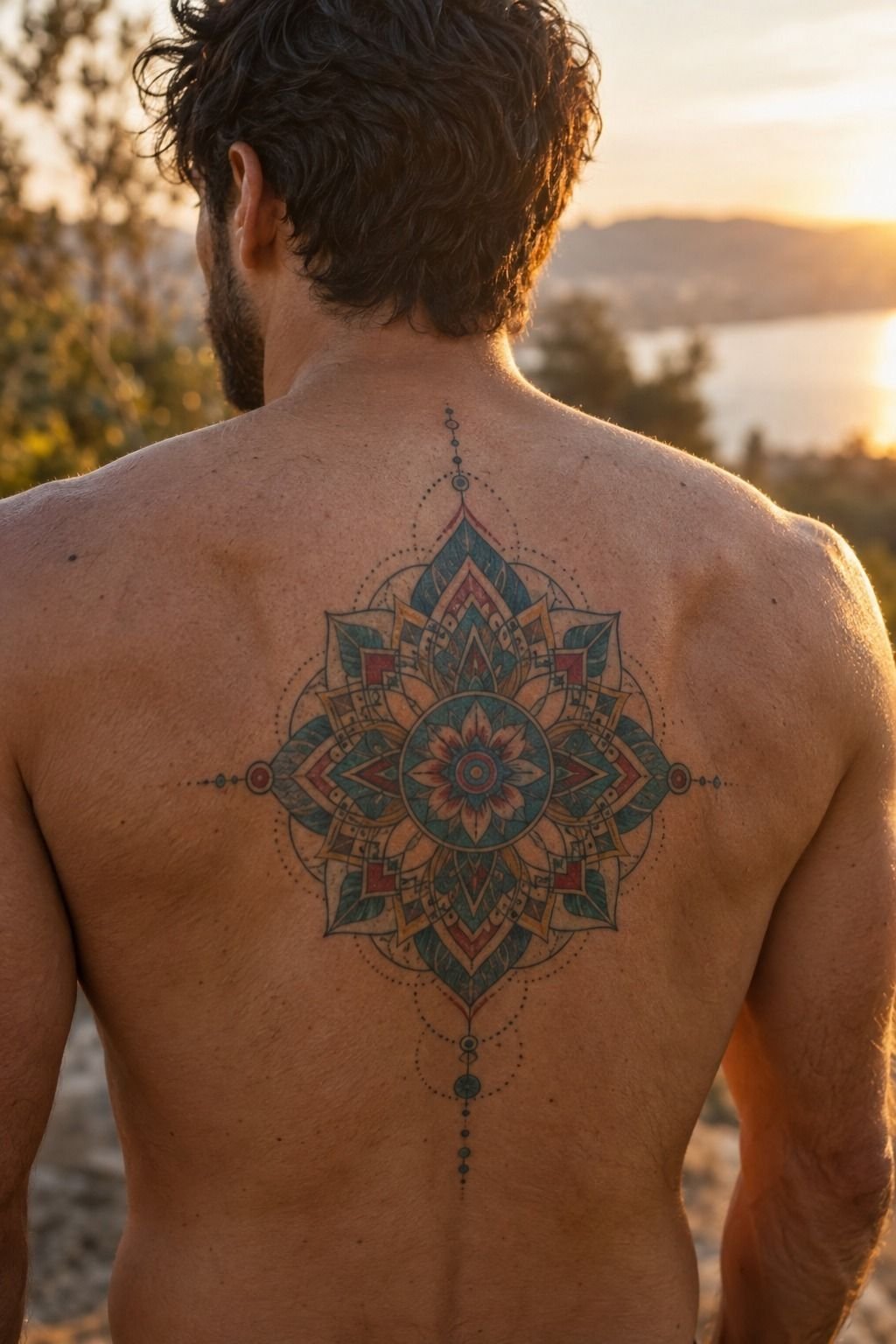
The upper back gives a large mandala a stable surface. You can explore intricate ring work without squeezing it into a narrow placement. On medium olive skin, emerald, saffron, and plum can create fierce contrast.
Deliberate areas of untouched skin keep the pattern readable.
Ask for a measured centerline before the stencil goes on. The design should sit evenly across the spine.
Its outer geometry should follow the shoulder blades. I once approved a stencil while standing crooked.
The imbalance became obvious in a photo from behind.
A back piece can cost less when you plan one connected design. Your artist may still divide the work into sessions. Dense color packing takes time.
Don’t chase every shade. Three well-chosen pigments often read more clearly than nine competing ones.
These Mandala Art Design Colour references can help you compare symmetry and scale. Inspect healed work, not only fresh photographs.
Fresh ink looks saturated. Healed ink shows whether the artist understands spacing, line weight, and pigment placement.
4Colorful Mandala Drawing Fine Linework
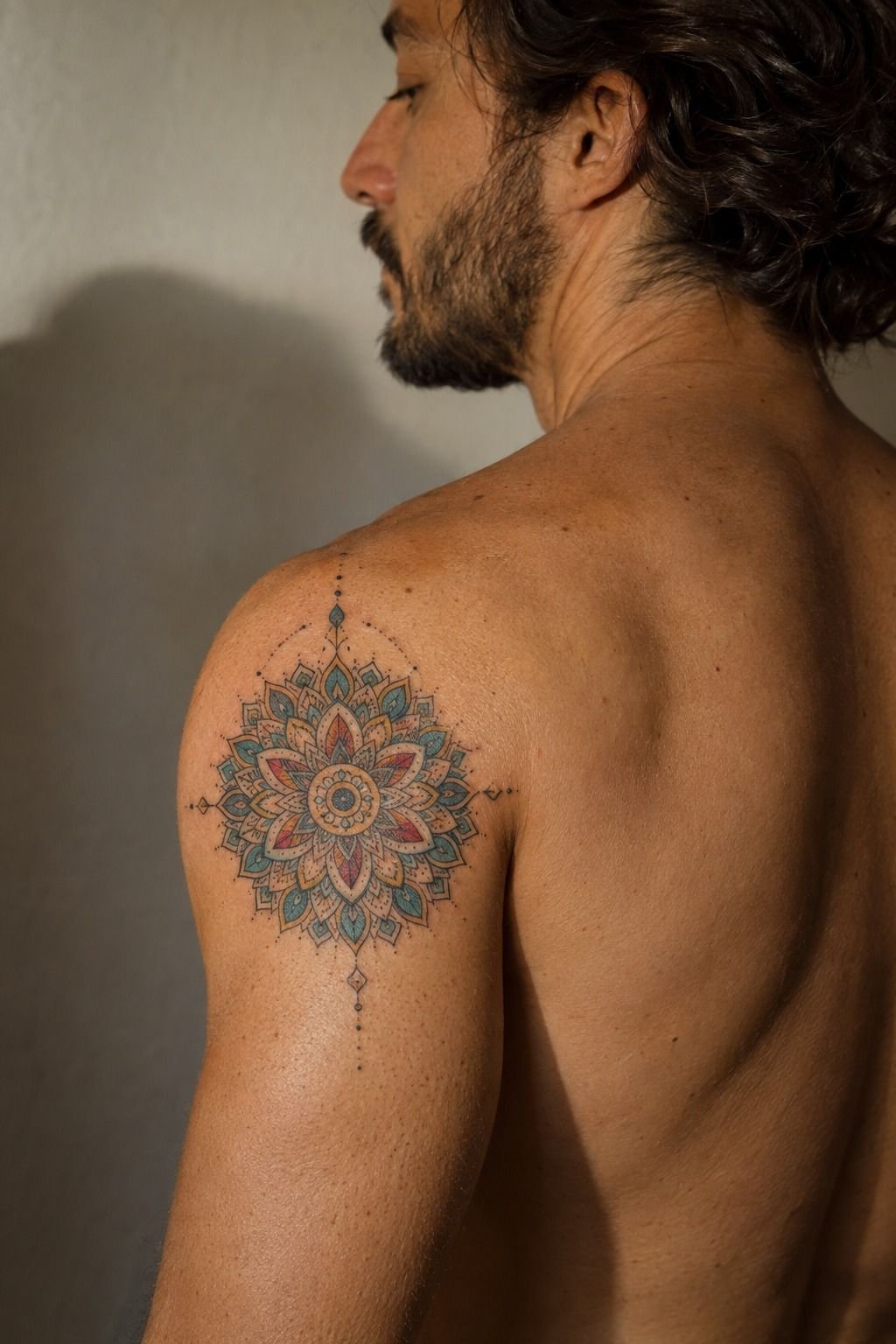
Fine linework makes a mandala feel delicate. Delicate doesn’t mean careless. The design still needs a precise linework plan and enough breathing space around each mark.
Ask your artist which lines will remain strong after healing. Tiny spokes can soften. Closely packed petals can merge.
A simple radial structure often looks more elegant than a miniature pattern with too many turns.
A restrained color system can keep the cost controlled. Use one center color and one supporting accent. A small pigment selection also makes touch-ups easier.
Fine linework suits a minimal, understated concept. It can still feel symbolic and meaningful.
Clear structure matters more than adding every decorative detail. Less can be daring!
5Modern Mandala Art Chest Piece
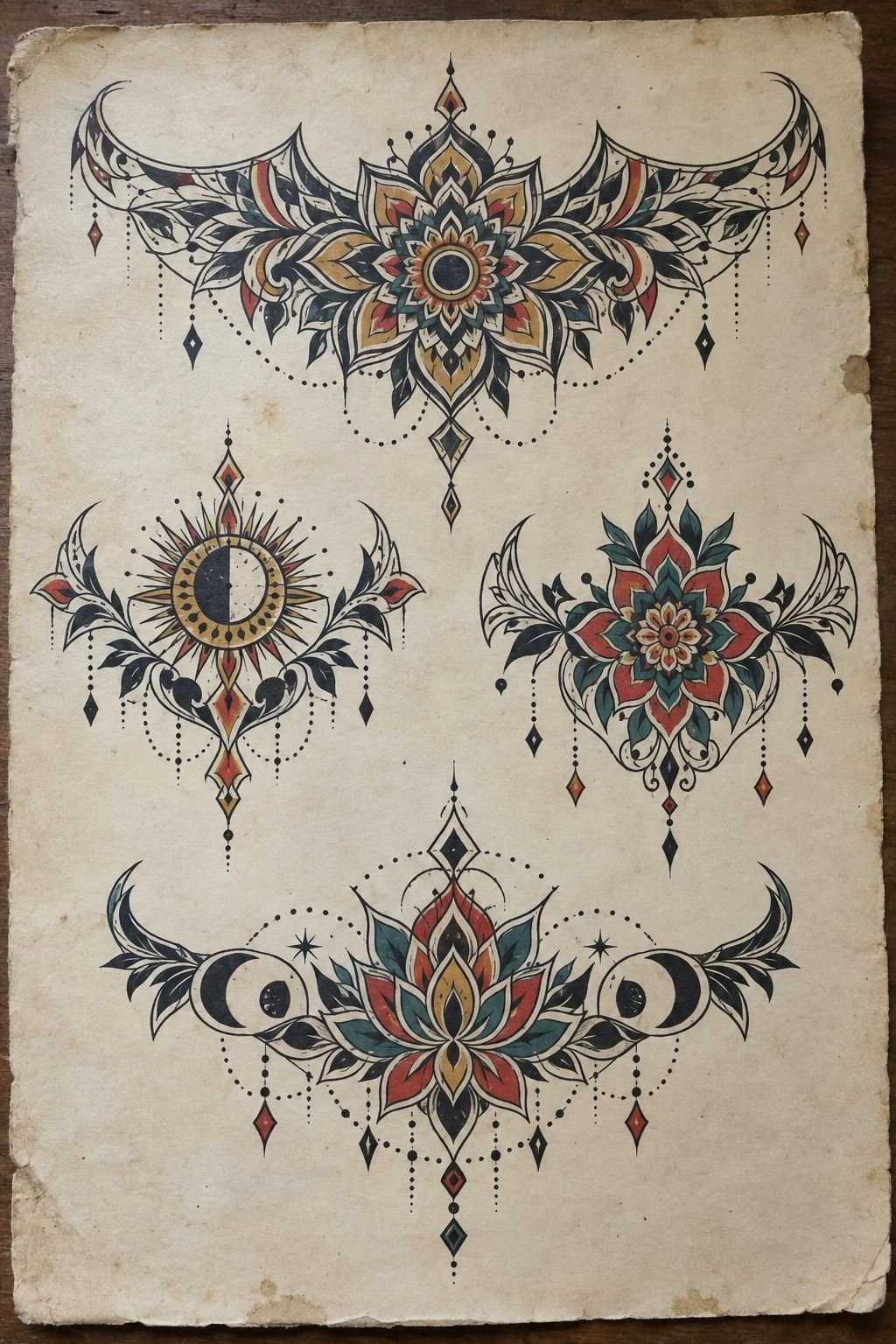
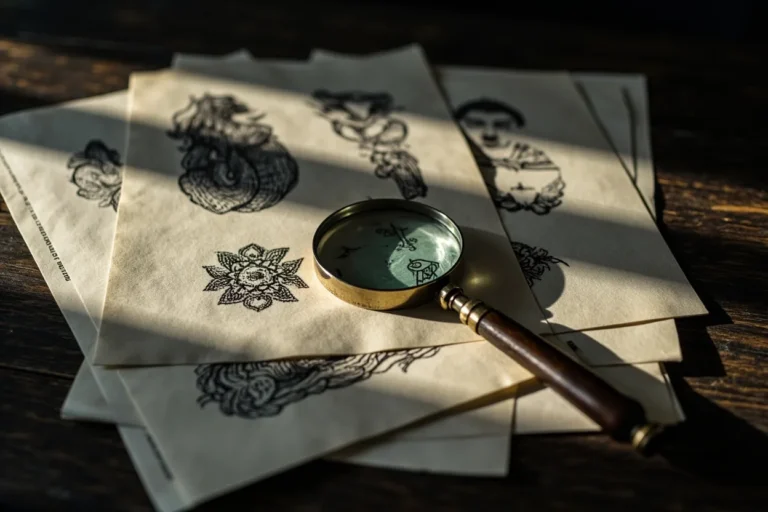
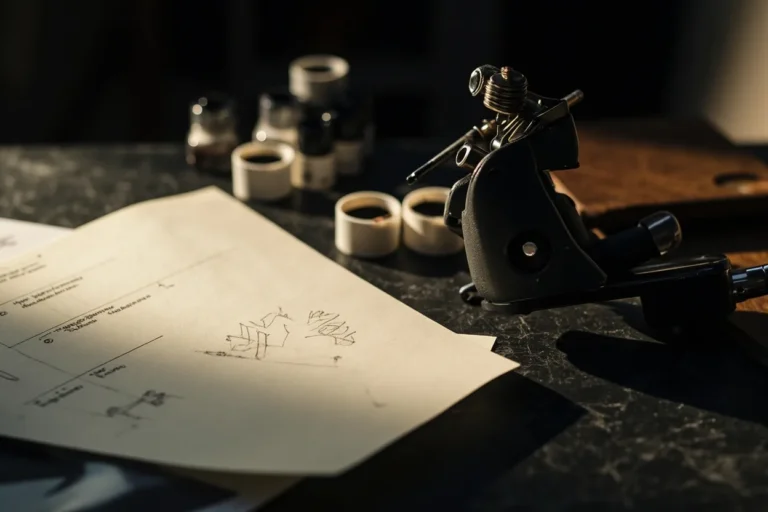
A chest mandala can look bold when its geometry follows the sternum. It can then spread toward the pectoral muscles. For a flash-sheet concept on aged off-white paper, imagine hand-drawn designs in black with spot color.
Crimson centers, blue petals, and mustard accents can work well.
The paper reference should show structure. It shouldn’t only show decoration.
Ask your artist how the stencil will change on the body. A traditional flash sheet can be a useful starting point.
Your anatomy still needs its own proportions.
Chest work may feel more intense than an outer shoulder or forearm. The skin sits close to bone in places.
You don’t need to commit to the largest design on the page. Choose one central emblem. Let the artist scale the outer ring so it won’t blur into nearby details.
I’d avoid copying a flash design line for line. Take the central geometry. Change the color order.
Adjust the petals to suit your body. These modern mandala art ideas can help you compare older flash language with newer, cleaner compositions.
6Vibrant Mandala Finger Tattoo
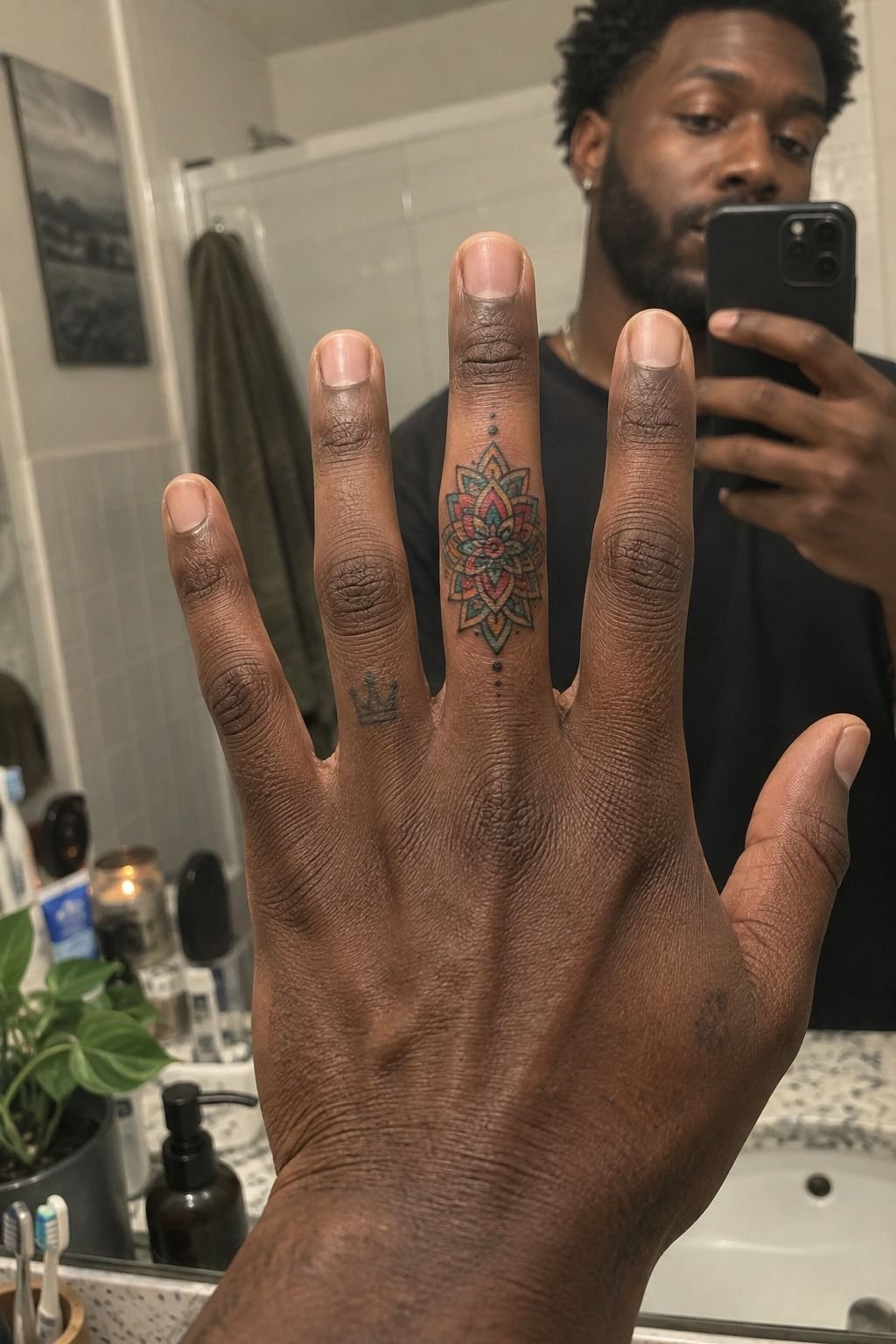
A finger mandala needs discipline. The available skin is limited.
The area also receives constant friction. On deep ebony skin, a solid black center can help the color remain legible.
Red, amber, or blue accents can create a vibrant focal point.
Keep the pattern simple. A small radial symbol with four to six major divisions often ages better.
A miniature design with dozens of hair-thin spokes may blur. Finger tattoos can fade faster than protected placements.
Your artist should be direct about touch-ups.
This is where your budget plan should include maintenance. The first appointment might be short. That doesn’t make the placement low-risk.
If you’re choosing between a finger and an upper arm, the upper arm is safer for long-term line stability.
Before you book, look through these tattoo design website ideas. Pay attention to healed finger work. Don’t judge only by fresh saturation.
The right reference will show whether the artist can keep spacing readable after swelling fades.
7Ornate Colorful Mandala Ankle Design
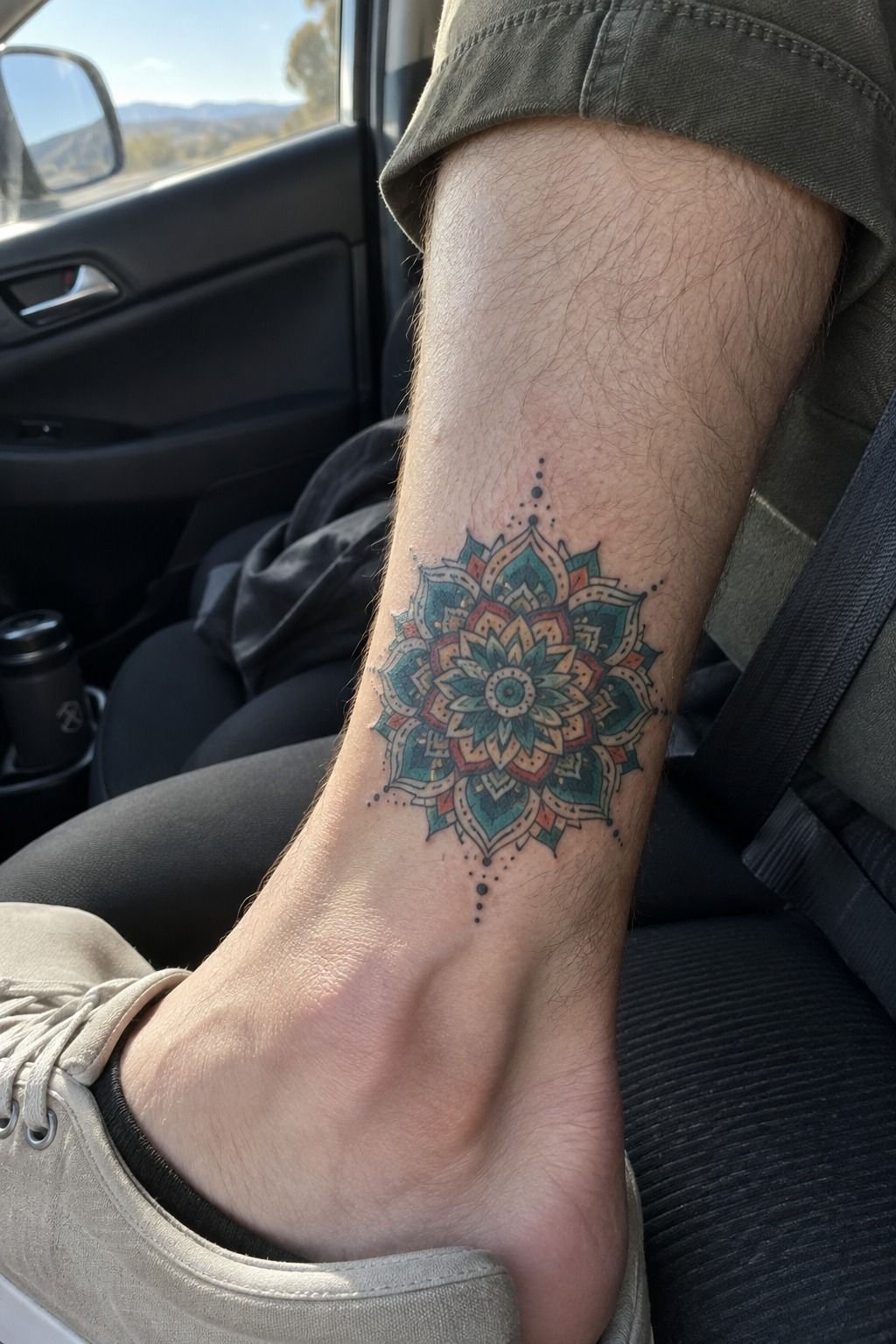
An ankle mandala can be ornate without becoming bulky. Let the outer points follow the ankle’s natural curve. A narrow vertical design often works better than a wide circle that wraps too far around the joint.
Keep the inner center strong. Reduce the number of tiny spokes near the edges. Your artist can use a compact ankle stencil to test the shape before any color is added.
Ankle skin receives friction from socks and footwear. Plan for careful aftercare.
A controlled palette can also reduce the cost of a later touch-up. Choose one accent that repeats.
Don’t fill every petal.
This placement can feel stylish and personal without demanding a large session. A crisp central symbol may carry more meaning than a crowded border. Clear scale will protect the design’s graceful shape.
8Sacred Mandala Design Sternum Tattoo
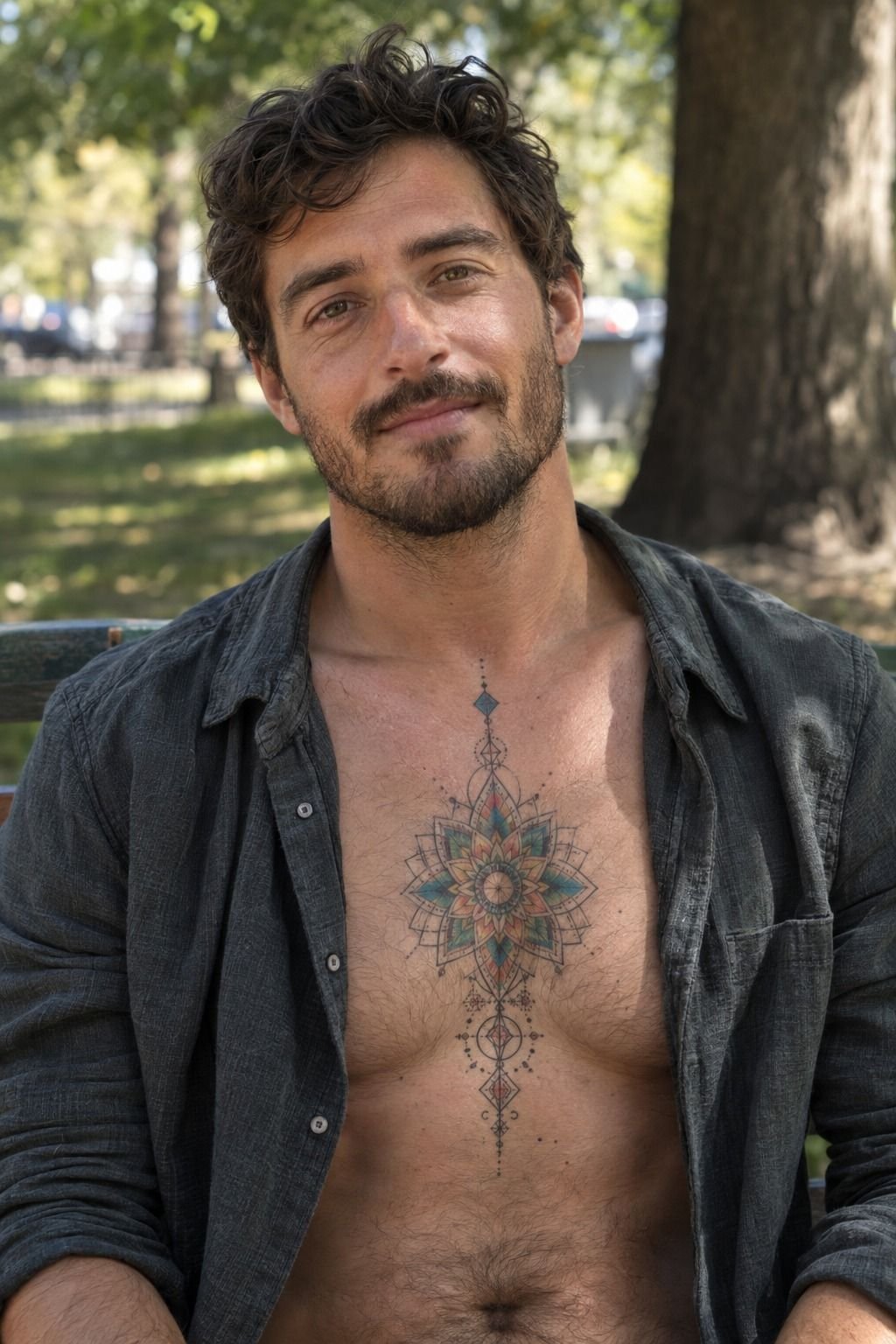
A sternum mandala can feel sacred when it has a calm central axis.
9Watercolor Mandala Art Upper Arm
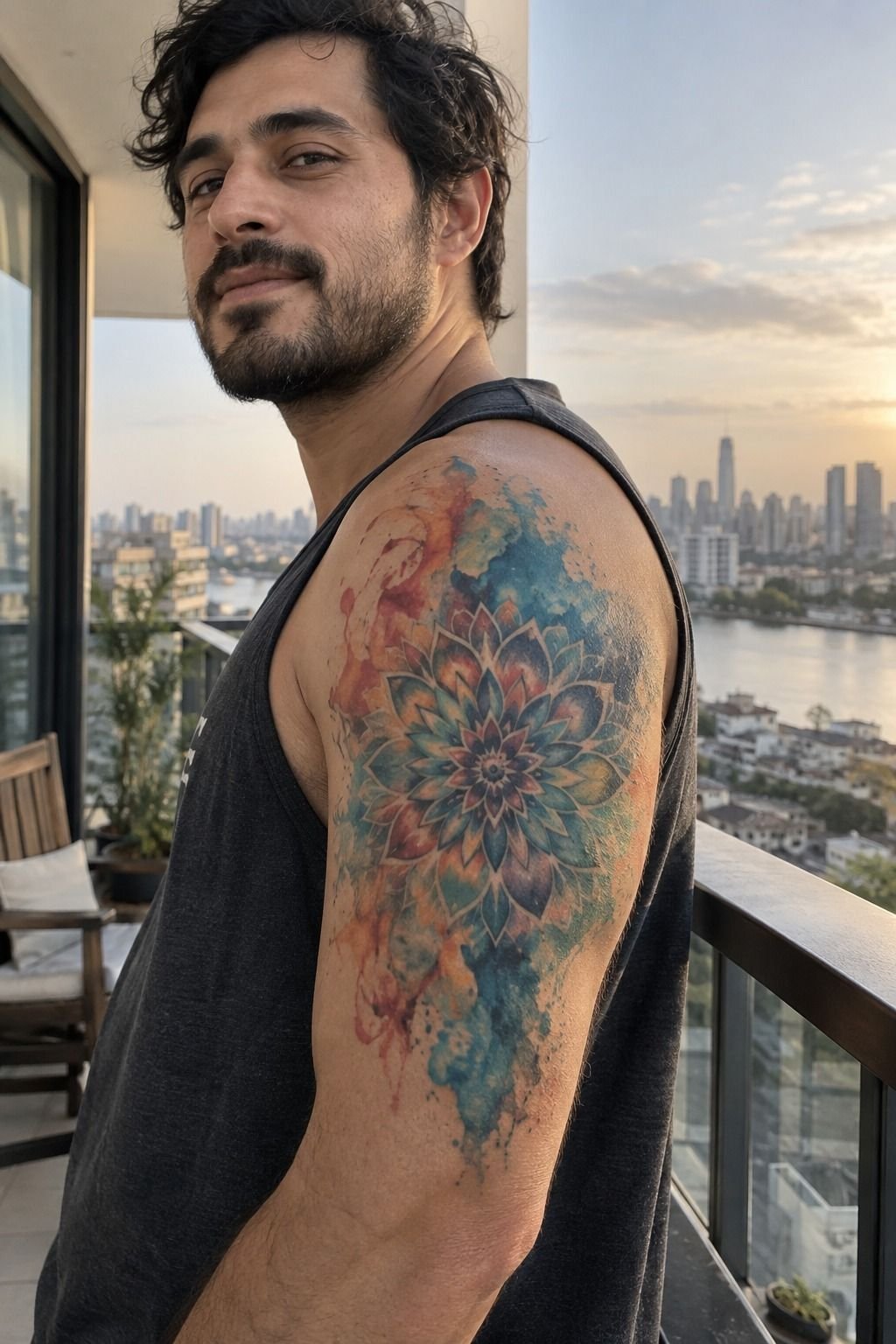
An upper-arm mandala is a strong place to test a watercolor approach. The area gives color room to soften around the geometry. It is also easier to cover than a hand, neck, or finger design.
Ask whether your artist uses a firm outline with watercolor accents. Some artists use a softer edge throughout.
A watercolor pigment plan should explain where the color will stop. Without that boundary, the design can lose its center as it heals.
A romantic palette of plum, rose, and copper can work well here. Don’t select colors from a screen alone. Printed references and healed examples give you a more honest comparison.
This watercolor tattoo design page can help you compare solid color blocks with softer transitions. A playful color story can still have discipline. The artist must control where each hue begins and ends.
10Geometric Mandala Drawing Calf Tattoo
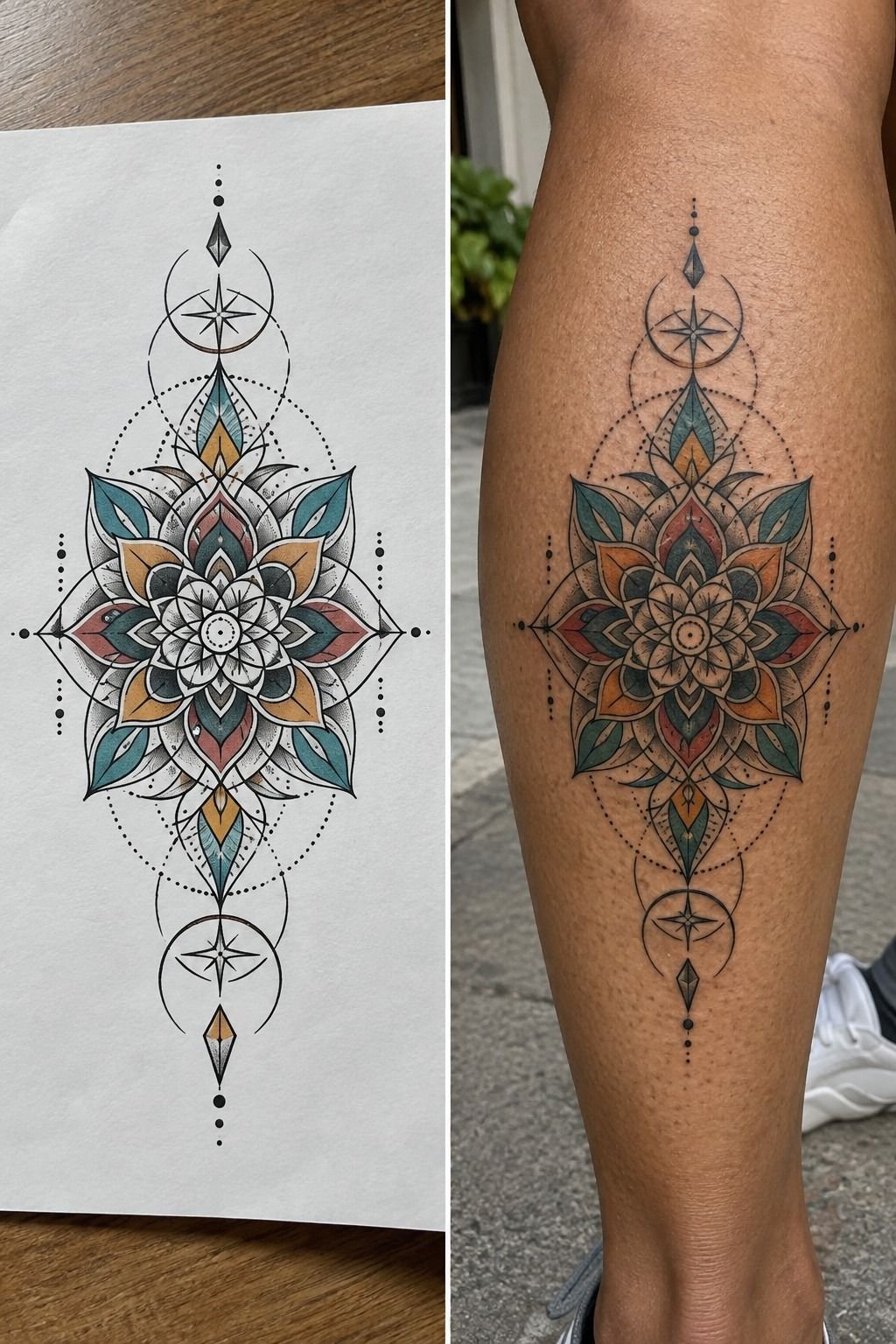
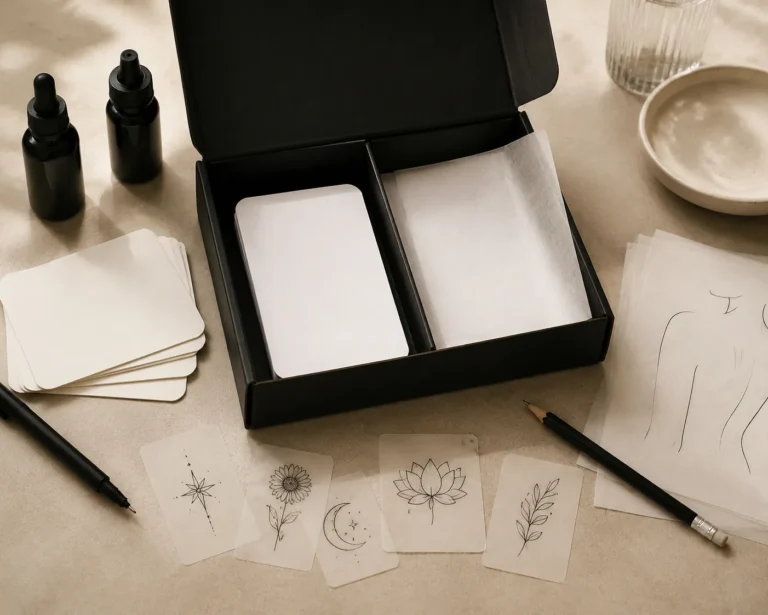
A calf tattoo works well when you want a geometric mandala that can be shown or covered. A split reference, with a stencil on white paper beside the healed result, can reveal how a healed black outline changes after the first few weeks.
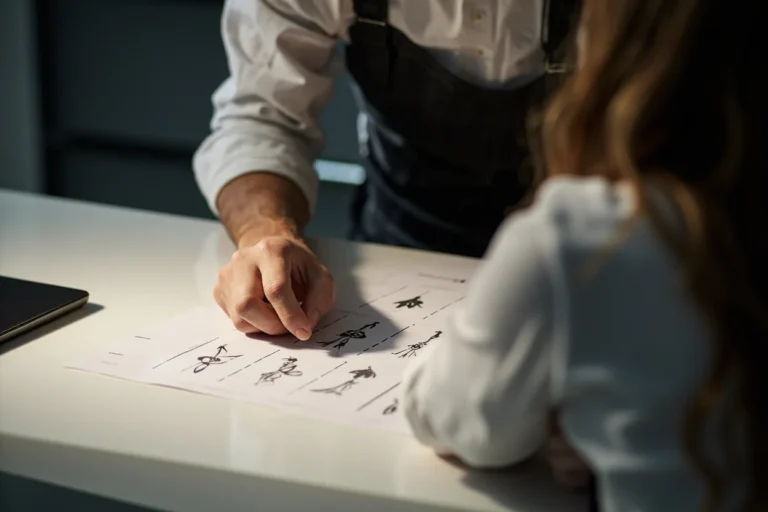
Ask your artist to show the stencil before the needle starts. Look for equal spacing and a centered axis.
Line weights should match the intended scale. The calf can support a powerful structure. Bigger doesn’t automatically mean better.
I’d choose a clear central circle over a busy border. A black anchor with three colored sections can look sleek. That is often stronger than a rainbow treatment.
You don’t need every petal to carry a different shade.
These tattoo outline stencil design examples can help you understand the transition from paper to skin. If you’re comparing artists, ask for healed photographs and approximate session length. Your budget should account for time, not just size.
11Jewel Toned Mandala Spine Design
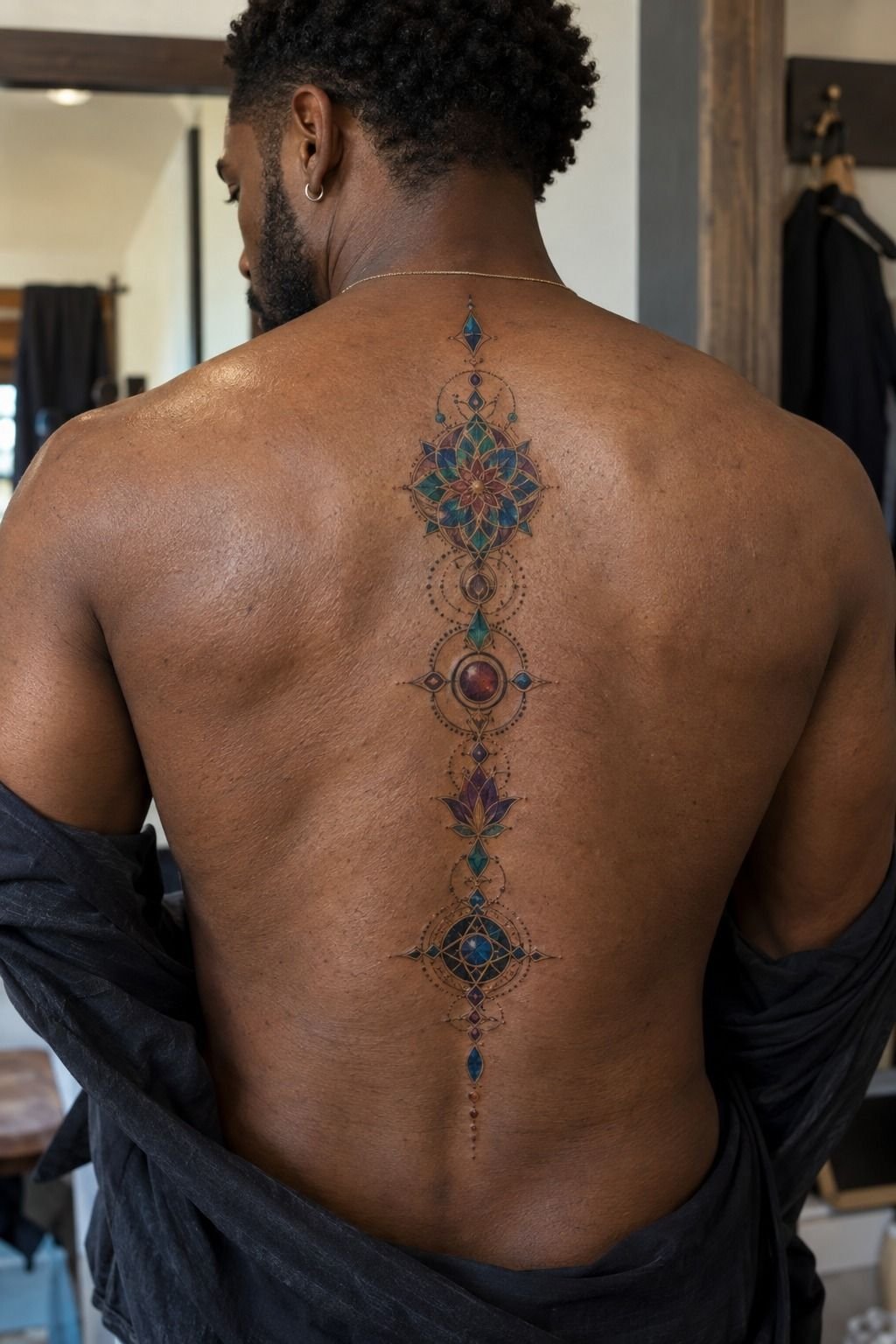
A spine mandala can look jewel toned when sapphire, garnet, and emerald are placed in deliberate blocks. The long placement favors a vertical structure. It needs a clear beginning, middle, and end.
A spine stencil must be checked while your body is standing naturally. Ask your artist to mark the center before the design is transferred. A slight shift can change the balance of every outer ring.
Spine work may require more patience than a forearm piece. Plan breaks.
Ask about session length. Choose a color system that stays readable when the design is viewed from several feet away.
A spine design can feel iconic without becoming oversized. Keep the major shapes distinct. A bold center and measured spacing will do more than extra pigment.
The Color Anchor Rule
The Color Anchor Rule is simple. Choose one pigment that appears in the center and returns in at least two outer details.
That repetition makes a saturated jewel tone feel intentional. Your other colors can remain quieter.
For example, an emerald center can appear again in two small leaf shapes. Crimson and gold can support it around the edge.
I wouldn’t give every petal equal attention. Your eye needs a hierarchy.
This rule can reduce cost. You aren’t asking for a full spectrum of custom mixing.
A focused palette also makes future touch-ups simpler. If you’re working with a limited budget, spend the time on stencil accuracy and the center first.
Save these colorful mandala art references for your consultation. The best reference will show your color priorities.
It won’t only show the overall shape. Less pigment can still create a refined result.
Which Color Should Lead Your Mandala?
Start with your skin tone, placement, and the mood you want the tattoo to carry. A crisp cobalt blue may feel edgy and graphic.
Rust, plum, or saffron can feel vintage. Your favorite color matters.
Contrast matters too.
Ask your artist which pigments will remain legible after healing. Some colors need stronger outlines. Others need more open skin.
You don’t have to choose a trend color if it fights the design’s structure.
I’d avoid selecting colors from a screen alone. Brightness varies from one display to another.
Bring printed references. Ask to see healed work in similar tones.
That small step can prevent a costly correction.
The watercolor tattoo design page is useful when you’re choosing between solid blocks and softer transitions. A whimsical palette can still have discipline. The artist must control where each hue begins and ends.
Crisp Geometry Over Crowded Detail
Crisp Geometry Over Crowded Detail is the choice I’d make for a first colorful mandala. Clear circles and strong spacing usually age better than a dense field of tiny marks. Your healed tattoo needs room for every major shape.
Fine lines can widen over time. This happens faster when the design is packed into a small placement.
A blackwork foundation gives the mandala stronger structure. Open skin prevents the colors from merging visually.
This doesn’t mean your tattoo has to look plain. You can add a daring color break.
You can use a symbolic center or a pointed outer edge. If you’re tempted by every reference detail, ask which features will still matter after five years.
Use these tattoo design book references to compare bold and delicate approaches. A sharp design can still feel feminine, masculine, or completely personal. Structure gives you freedom.
The Healed Line Test
The Healed Line Test asks one question. Can you still recognize the major shapes after the first brightness fades? Your artist should show healed work.
Fresh photographs aren’t enough.
Look for consistent circles and clean color boundaries. Check whether lines have spread into neighboring sections. A healed tattoo photograph tells you more about technique than dramatic studio lighting.
Your aftercare affects the result. It can’t repair weak placement or overcrowded spacing.
Wash gently. Moisturize lightly.
Avoid pools and strong sun while the surface heals.
The skin may look settled after a few weeks. Deeper healing can still continue.
If you want more softness, compare healed examples in this watercolor tattoo guide. A meaningful center should remain readable.
What the Budget Really Covers
A tattoo budget includes more than ink. Your artist’s experience, studio minimum, regional pricing, placement, session length, and design preparation all affect the quote. The references below are typical US planning points.
They aren’t a promise of a fixed price.
A custom stencil may take meaningful preparation even when the final tattoo is small. Ask whether consultation and drawing time are included.
Ask whether a deposit applies. When comparing quotes, compare the artist’s healed portfolio too.
I wouldn’t choose the cheapest appointment automatically. A skilled linework artist can save you from paying for correction later.
This matters most with symmetrical geometry. Good planning pays off!
You can control cost by booking one well-planned focal piece. Don’t collect several unfinished fragments. A personal center may give you more satisfaction than a larger design filled with details you don’t care about.
For more planning examples, compare these beautiful mandala art designs before your consultation. Bring a clear concept, a realistic budget, and one or two healed references.
My Take on Colorful Mandala Design in 2026
Colorful mandalas are having a moment. They bridge geometric structure, symbolic repetition, blackwork contrast, and watercolor softness.
I find the strongest examples less interested in showing every technique. They choose one main idea.
The designs I’d save now are modern, stylish, and quietly empowering. They don’t lack drama. The drama comes from placement, symmetry, and one confident color decision.
If you’re planning a new tattoo this year, pay attention to healed references and pigment behavior. Don’t chase a short-lived trend. A personal color story will outlast a popular palette.
Your tattoo should feel connected to you.
And yes, a colorful mandala can remain classic when the underlying geometry is sound. You don’t need to make it smaller, louder, or more complicated. The strongest choice is often the one your artist can execute cleanly.
These modern mandala art ideas can help you compare current layouts with traditional structures. Look for the idea that still feels right after the first excitement fades.
My Editorial Rule for Choosing the Design
I’ve learned to judge a mandala in three passes. First, I look at the stencil and ignore the color. Then I look at the healed linework and ignore the placement.
Finally, I ask whether the color supports the geometry.
If a piece fails the first pass, no amount of pigment will rescue it. My own worst decision came from approving a design while I was excited by the reference.
The center was whimsical. The outer ring looked impressive on paper.
On skin, the details were too compressed. I had chosen the image before I had chosen the scale. Now I’d rather pay for a thoughtful consultation than rush toward an appointment.
Ask how the design will age. Ask which lines need more weight.
Ask where the artist expects color to soften. Those questions aren’t fussy. They’re practical.
I also believe the best mandalas have one imperfectly human choice inside all that symmetry. Maybe the outer points change slightly.
Maybe one color appears only once. That variation can make the tattoo feel raw and expressive.
If you’re torn between a smaller piece and a larger one, choose the version with better spacing. A timeless tattoo doesn’t need to dominate your body. It needs a center you can recognize and lines you can trust.
Use these tattoo design drawing references to compare line weight before you choose the final sketch. The right reference should clarify your decision.
What People Always Want to Know
Where can I buy a Colorful Mandala Design, and is there a disclosure?
You don’t need to buy the tattoo itself. Save references. Then work with a licensed artist who creates or adapts the stencil for your body.
This guide contains no affiliate or Amazon links. Base your choice on healed work, hygiene, and communication.
How much does a Colorful Mandala Design usually cost?
A typical US studio may charge about $50 to $100 as a minimum. Hourly rates often fall near $100 to $250. The final quote depends on the artist, region, size, placement, and detail.
Ask for a written estimate before your deposit.
Are Colorful Mandala Design a good idea for a first tattoo?
Yes. Outer forearm, upper arm, shoulder, and thigh placements are often more tolerable.
Clear linework can age well when the design has enough space. Start with a subject that feels meaningful, not merely fashionable.
How do I choose a tattoo artist for Colorful Mandala Design?
Look for clean symmetry, controlled color, and healed photographs. Your artist should specialize in the linework you want. They should also work in a hygienic studio.
A strong healed portfolio matters more than a low quote or a large following.
How much do Colorful Mandala Design hurt?
Pain varies. Ribs, feet, hands, and sternum are commonly more sensitive. Outer forearm, thigh, and shoulder placements are often more tolerable.
Your placement choice affects comfort, session length, and how the design ages.
How long does a Colorful Mandala Design take to heal?
The surface usually settles in two to three weeks. Complete healing takes about two to three months.
Wash gently. Moisturize lightly.
Avoid swimming and strong sun. Patient aftercare helps the color settle without unnecessary irritation.
What’s the best placement for Colorful Mandala Design?
Outer forearm and upper arm placements offer visibility and workable skin. Sternum and spine placements can create stronger symmetry.
They may feel more intense. Your placement plan should balance visibility, pain, line longevity, and the scale the design needs.
Where I’d Start First
If I had to pick one, I’d start with the colorful mandala shoulder cap. Its curve gives the geometry room. The pain is often manageable.
You can keep the palette focused without losing impact. Pin the mandala art guide for later and show your artist the healed references you trust.