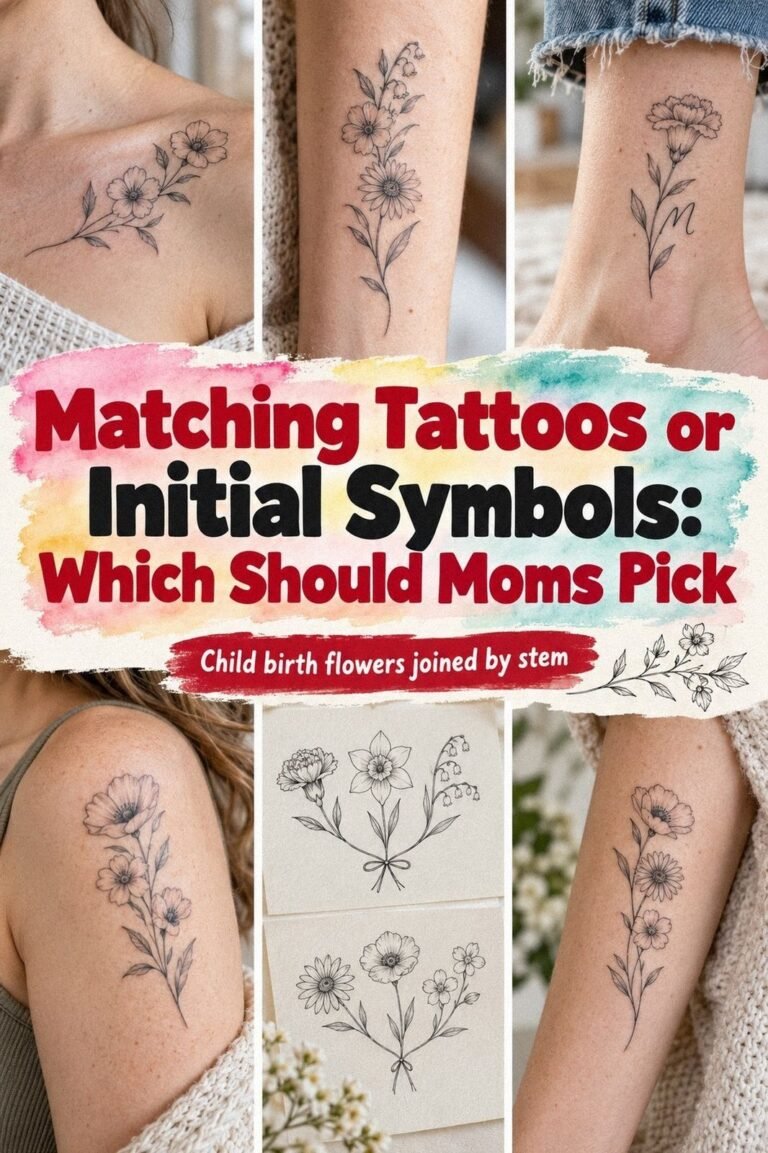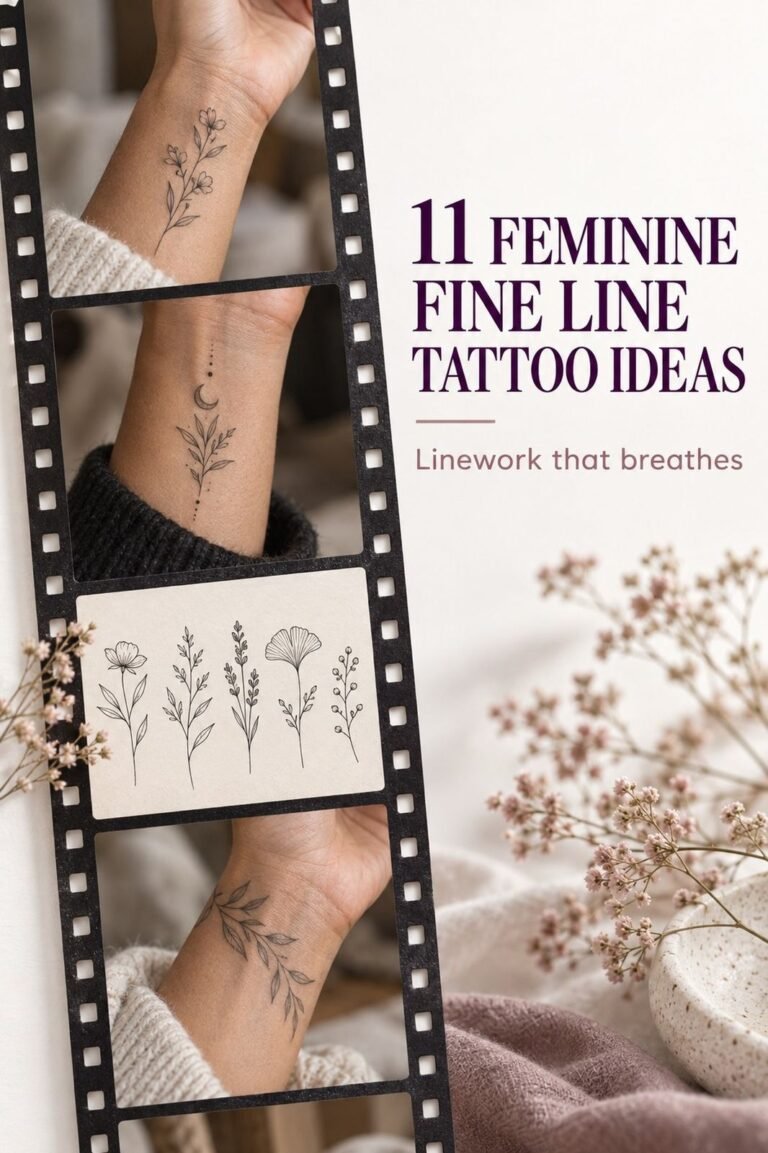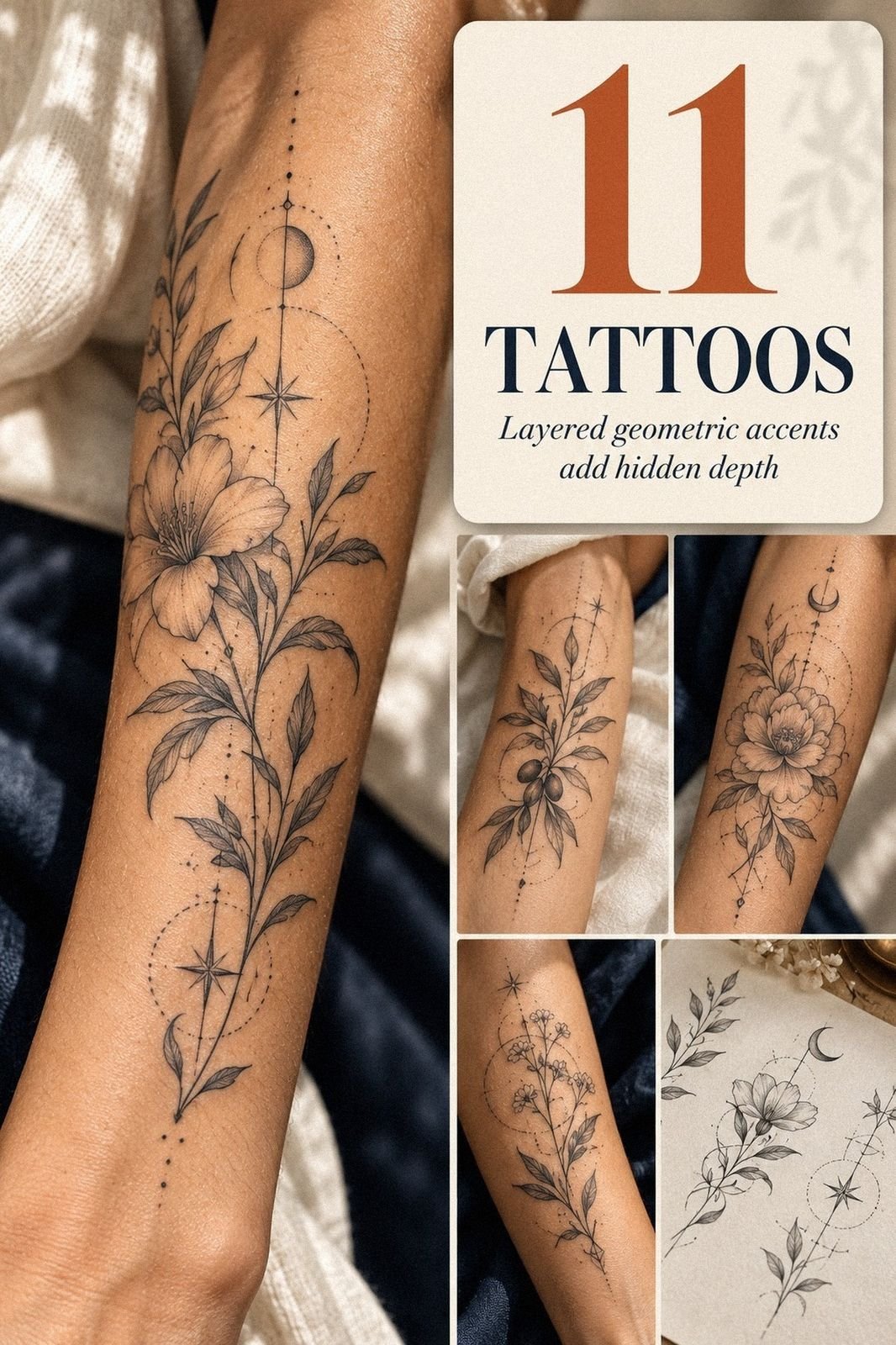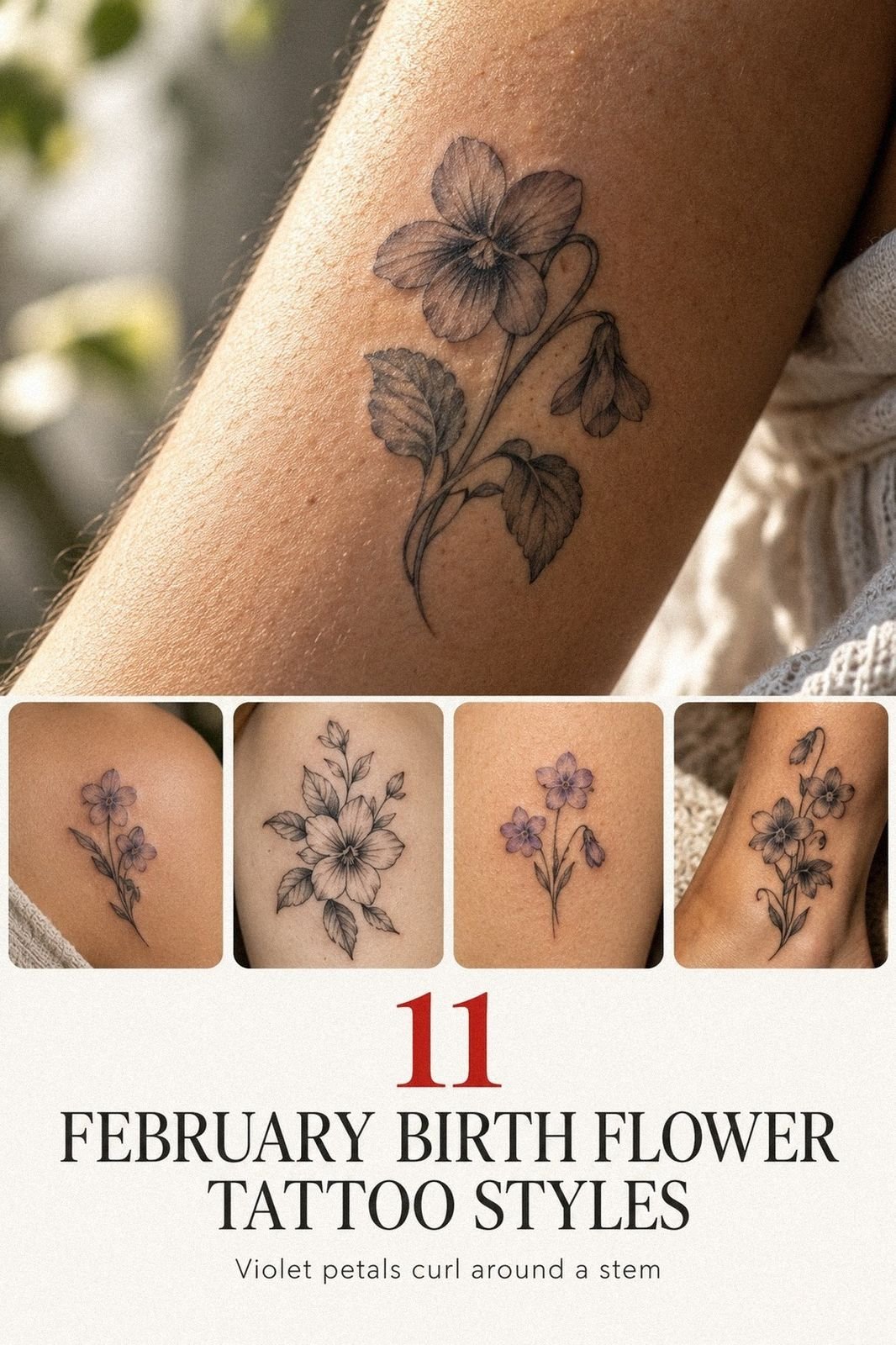
Watercolor tattoo work used to make me nervous. I saw too many pieces with pretty color and zero structure, then watched them heal flat and fuzzy. The good news is that watercolor tattooing is not the problem. Bad planning is. If you want watercolor tattoo ideas that stay clean, I’ll show you where to anchor the line, how big to go, what the cost can look like, and which placements age cute on real skin.
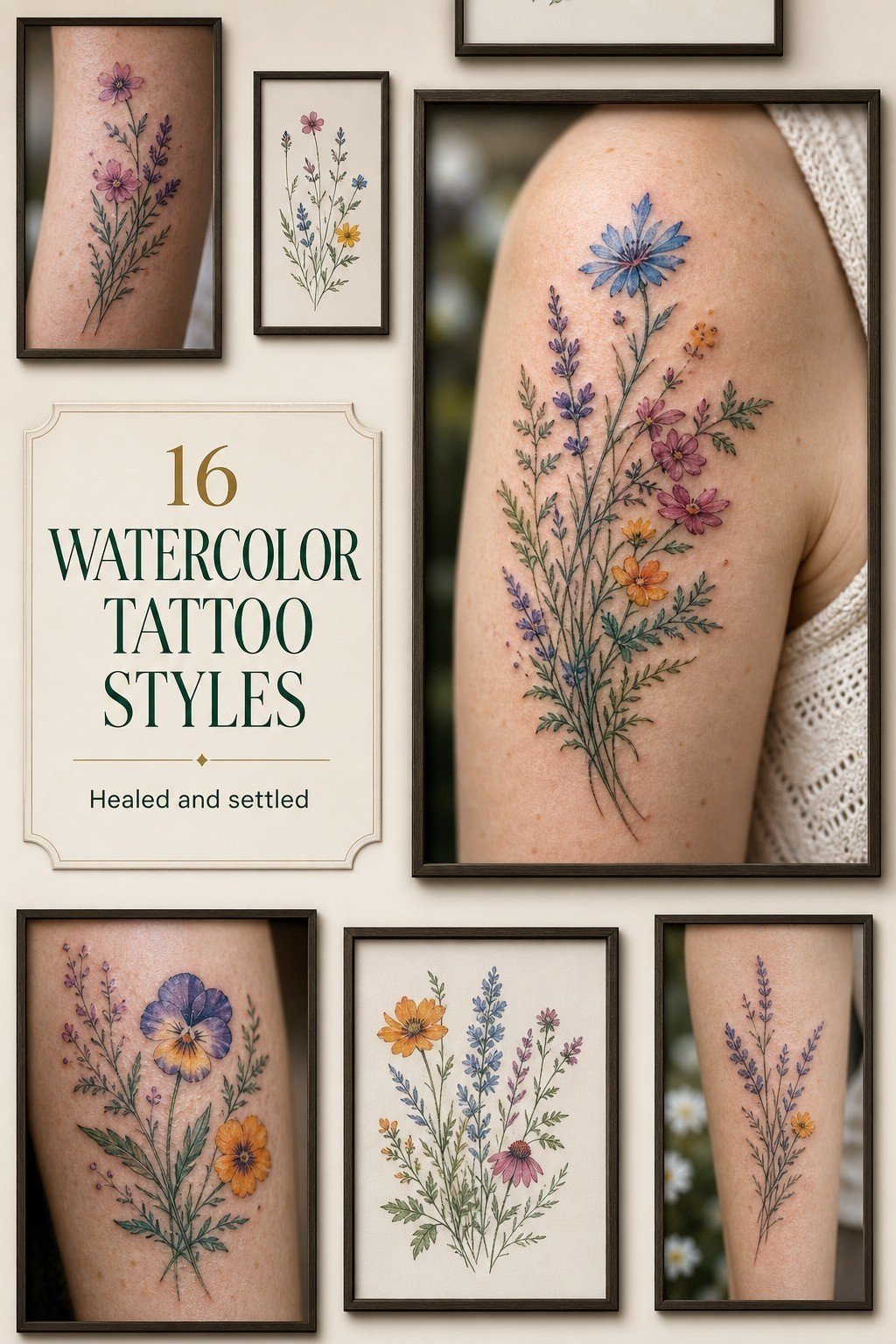
- Build A Watercolor Wildflower Tattoo With Fine Line Stems
- Let A Soft Watercolor Butterfly Tattoo Flow On The Shoulder
- Is An Abstract Watercolor Splash Behind The Ear Worth It?
- Map A Watercolor Sleeve Tattoo With Ink Wash Florals
- Why Does A Tiny Watercolor Heart On The Wrist Get Risky?
- Push A Watercolor Phoenix Tattoo With Bold Black Linework
- Use The Crescent Halo Rule For A Watercolor Moon Tattoo
- What Makes A Watercolor Hummingbird With Soft Bleeds Hold Up?
- Center A Watercolor Lotus Tattoo Along The Spine
- Can A Watercolor Pet Portrait Work With Minimal Outline?
- Contrast A Watercolor Compass With Clean Travel Meaning
- Move A Watercolor Dragonfly From Ankle To Lower Calf
- Let A Watercolor Rose Win With Sketchy Linework
- Follow The Nebula Anchor Rule For A Watercolor Galaxy
- Edit A Watercolor Quote Tattoo Before You Add Paint
- Balance A Watercolor Wave Tattoo On The Ribcage
1Build A Watercolor Wildflower Tattoo With Fine Line Stems
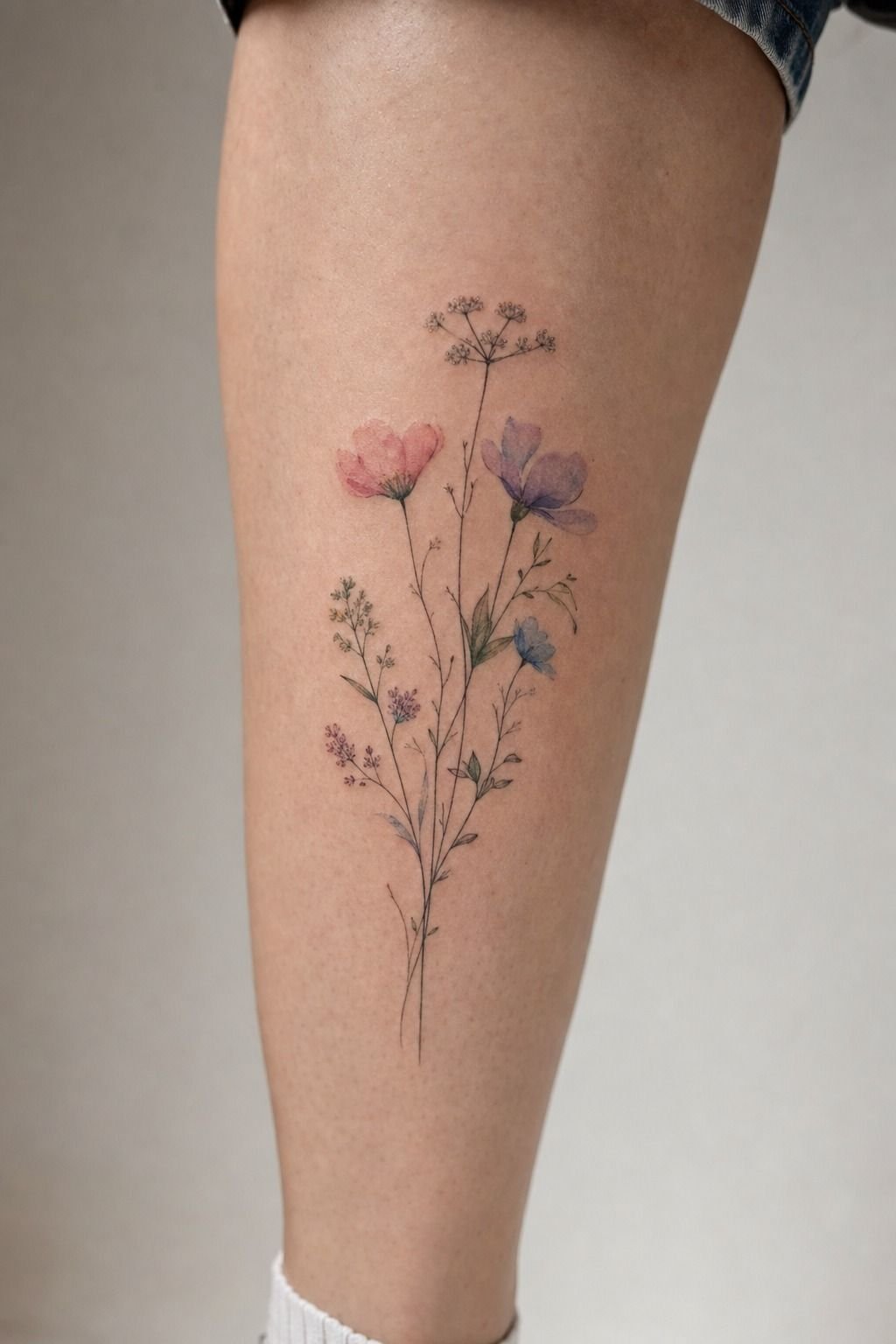
This is the kind of watercolor tattoo that proves soft color can still heal nice when the bones are right. On a calf, you get a low-wear placement, enough vertical length for the stems to breathe, and skin that usually holds black linework without getting chewed up fast.
I like wildflower tattoos here because you can stagger the blossoms instead of cramming them into one tight bundle. Think three to five blooms over about 4 to 6 inches, with one clean pull on each stem and diluted pink, blue, or lavender wash tucked behind the petals.
Do not make the flowers too tiny. Tiny watercolor turns to soup faster than people expect, and it’s a bad trade to save $80 if the whole thing blurs by year three. If you’re building a mood board, start with these watercolor tattoo ideas and save examples that keep the line structure visible after healing.
2Let A Soft Watercolor Butterfly Tattoo Flow On The Shoulder
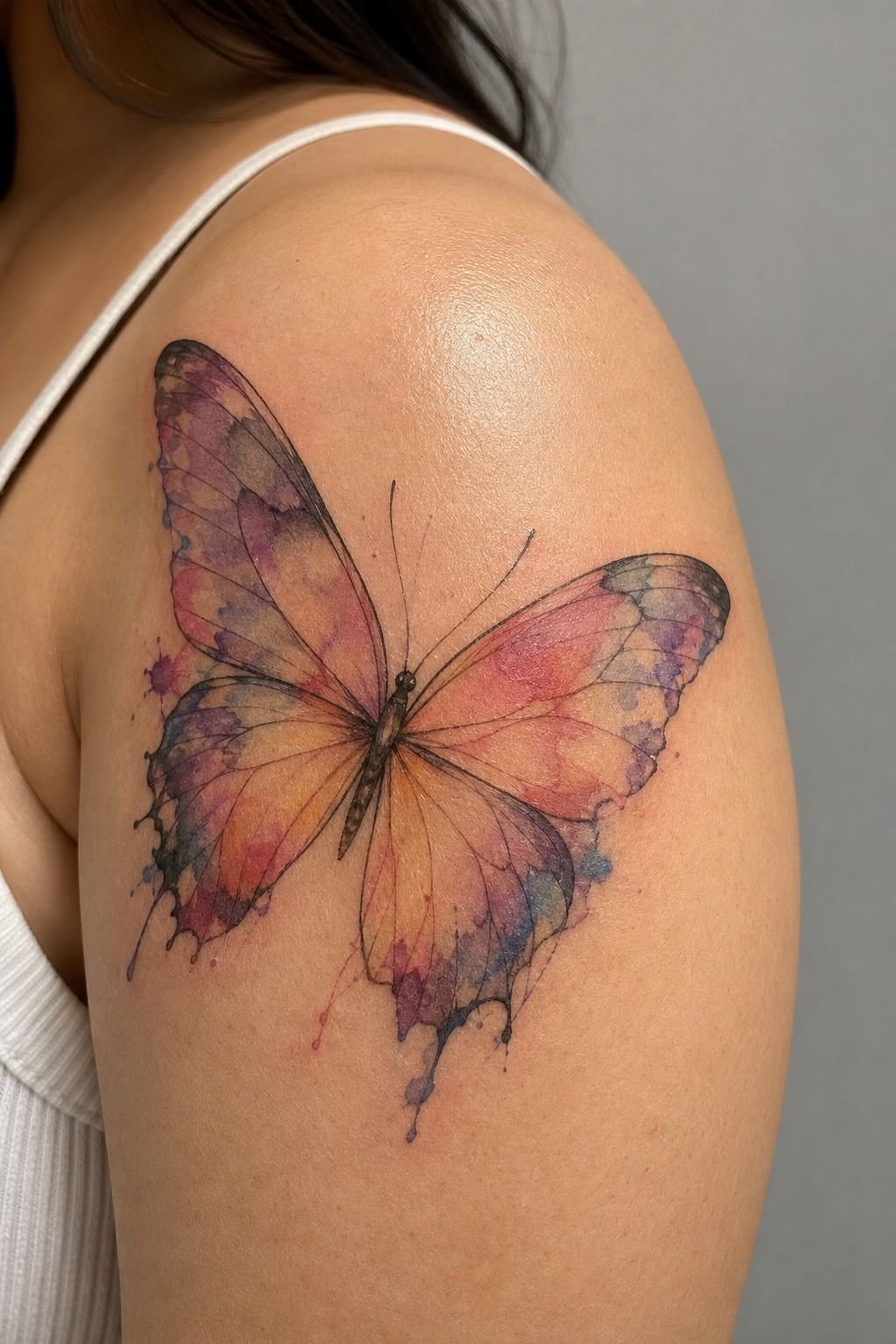
A shoulder butterfly tattoo is a smart first watercolor pick because the placement gives you curve without constant friction. You get motion from the wing shape, but you also get enough clearance for soft color bleeds that don’t slam into each other. I love this on medium warm ivory skin because peach, dusty blue, and mauve can sit soft while a single needle outline keeps the body and wing edges crisp.
Keep the butterfly design around 3 to 5 inches so the wing sections do not mush together later. And skip the fully outline-free version. It looks airy on day one, sure, but it often heals too flat unless your artist pushes contrast with a little grey wash or selective black.
The win here is restraint. A butterfly does not need twenty colors to feel alive.
It needs clean wing breaks, a soft center, and a tattooer who will not overwork the skin chasing saturation. If you need help picking someone who can do that balance, my first stop would be this watercolor tattoo artists guide.
3Is An Abstract Watercolor Splash Behind The Ear Worth It?
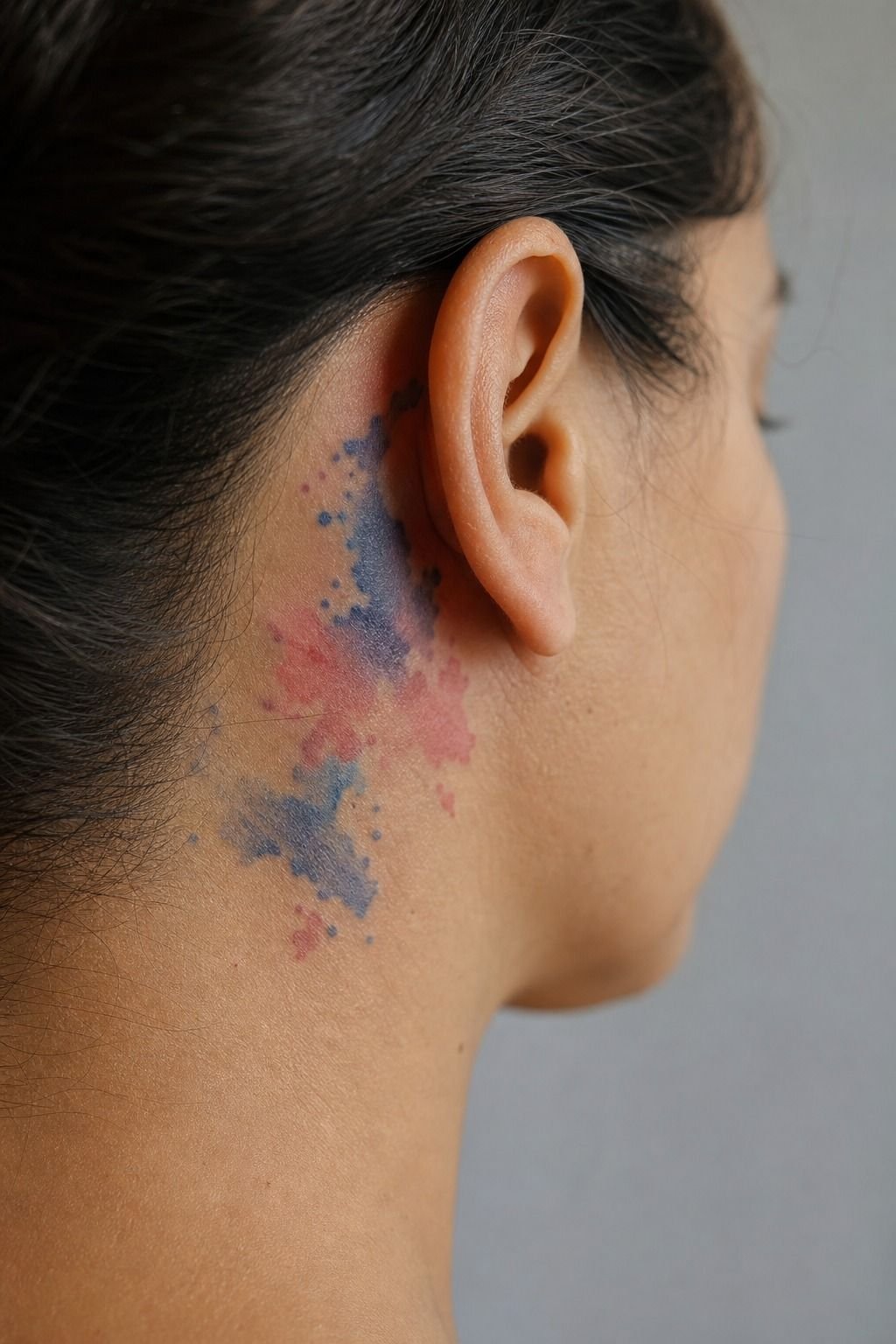
Behind the ear is cute, but it is a high-wear placement for anything too soft.
4Map A Watercolor Sleeve Tattoo With Ink Wash Florals
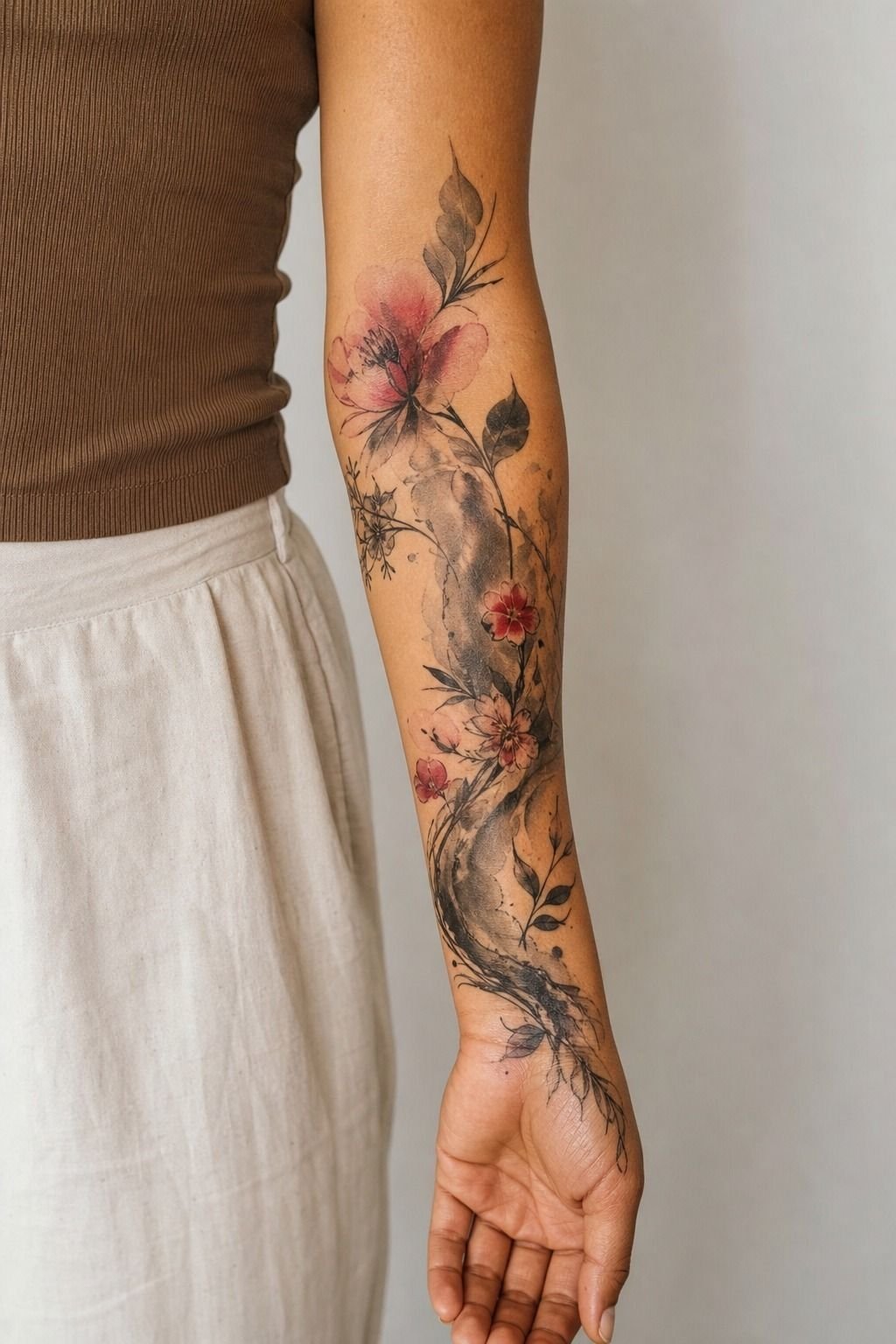
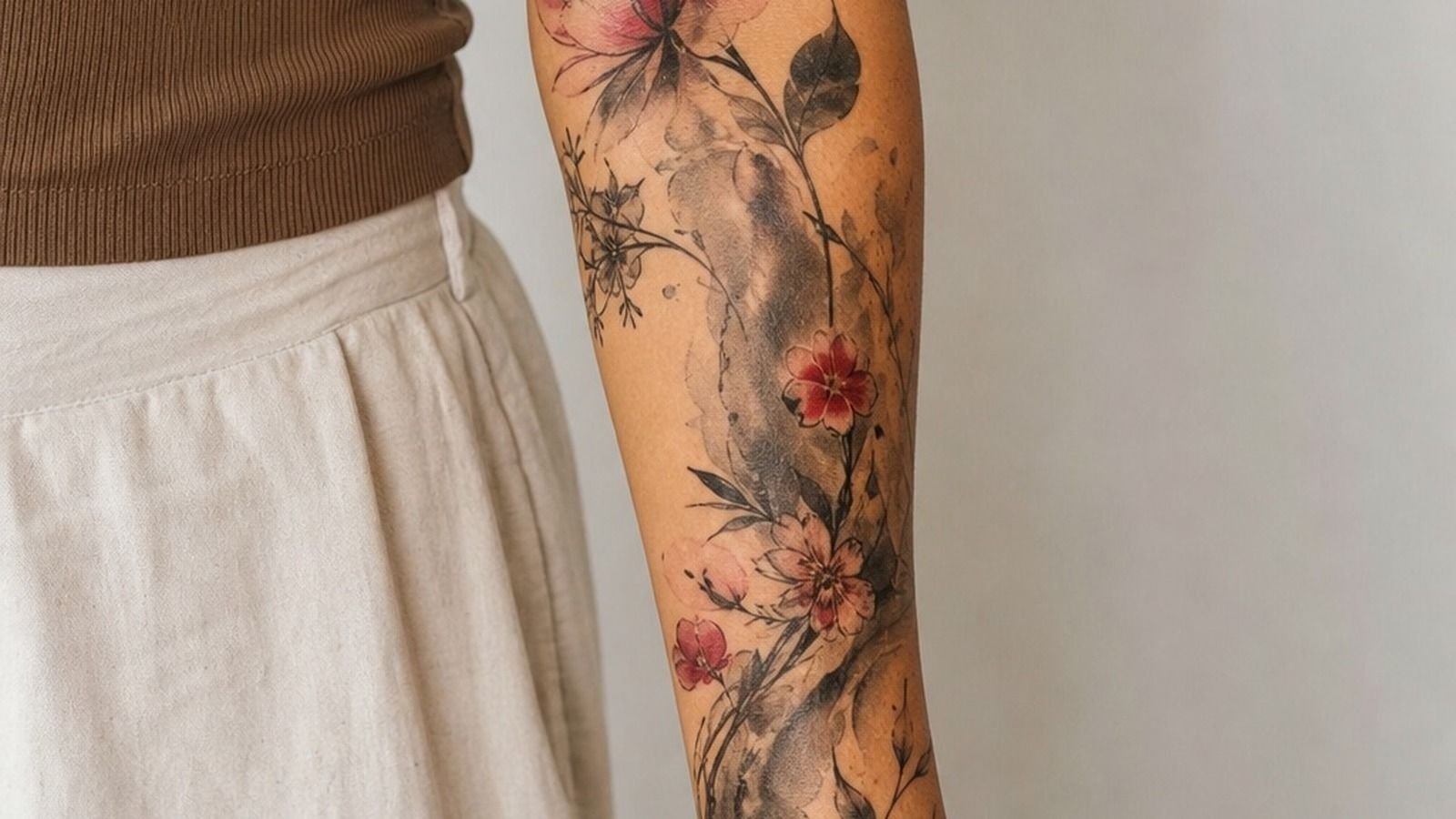
A watercolor sleeve only works when the flow is mapped before the first drop of color hits skin. On a forearm, I build the sleeve around movement: blossom clusters at the wider planes, lighter wash through the inner transitions, and enough open skin so the whole piece does not turn muddy. This is where grey wash shading matters.
Most clients don’t need a full packed sleeve right away. A better plan is 7 to 9 inches of floral movement, then add later once you see how your skin heals the first pass. That keeps the piece readable and stops you from rushing into filler.
Typical US rates run about $100 to $250 an hour, so a half-sleeve watercolor plan often lands in the multi-session lane.
If you’re planning a sleeve tattoo, ask for healed photos before you book. Fresh watercolor can look electric, but the real test is the settled color after 2 to 3 months. For planning references, I still like broad galleries like watercolor cat tattoo ideas before narrowing to one artist.
5Why Does A Tiny Watercolor Heart On The Wrist Get Risky?
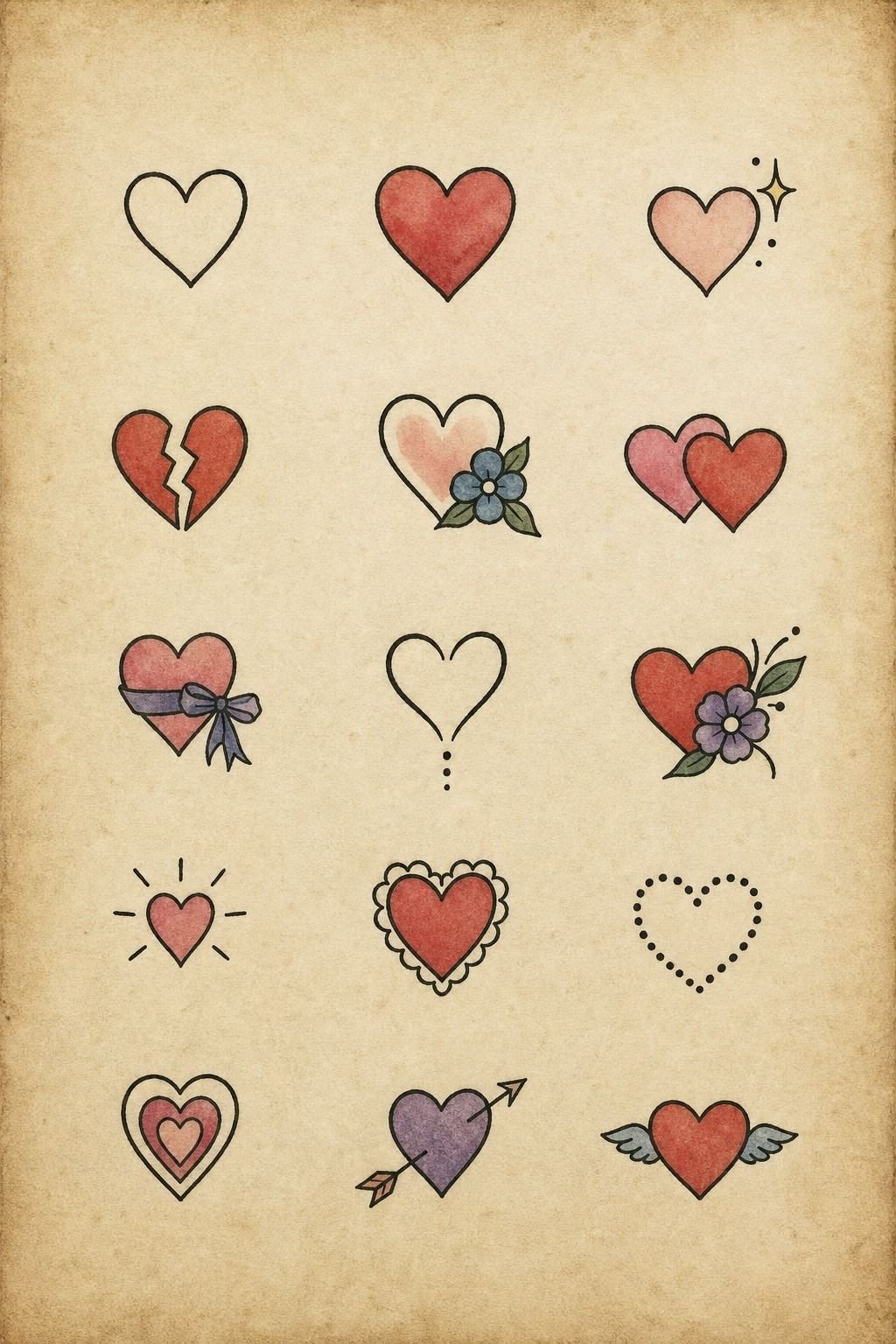
This is the wrist heart tattoo people try to make too precious.
6Push A Watercolor Phoenix Tattoo With Bold Black Linework
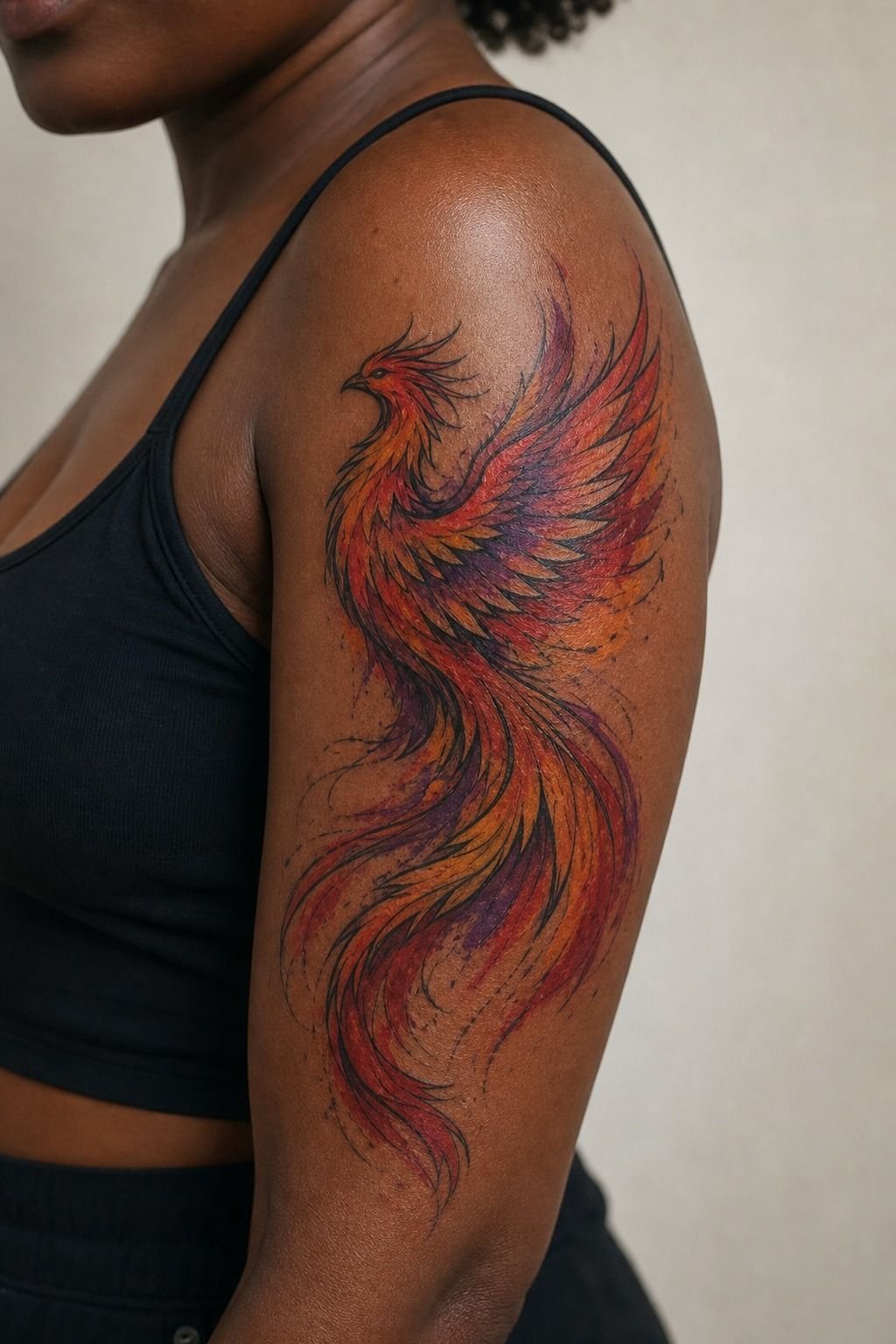
A watercolor phoenix is exactly where color needs discipline. The symbol wants movement, heat, and color, but it also needs a strong skeleton or the feathers blur into one patch.
On deep ebony skin, bold contrast is your best friend. I’d rather use saturated red, orange, and ember gold over a bold black liner framework than chase pale pastel that disappears.
Upper arm placement is a solid pick for this because you get enough muscle to support a bigger wing arc and the pain level is more chill than ribs or sternum. I usually start a phoenix around 5 to 7 inches minimum. Anything smaller and the feather breaks get too cramped.
But the bold line is what makes it hold. Color packing is spice, not structure. For symbolism research, pair your visuals with this deeper yin yang tattoo meaning style of concept reading before you commit.
7Use The Crescent Halo Rule For A Watercolor Moon Tattoo
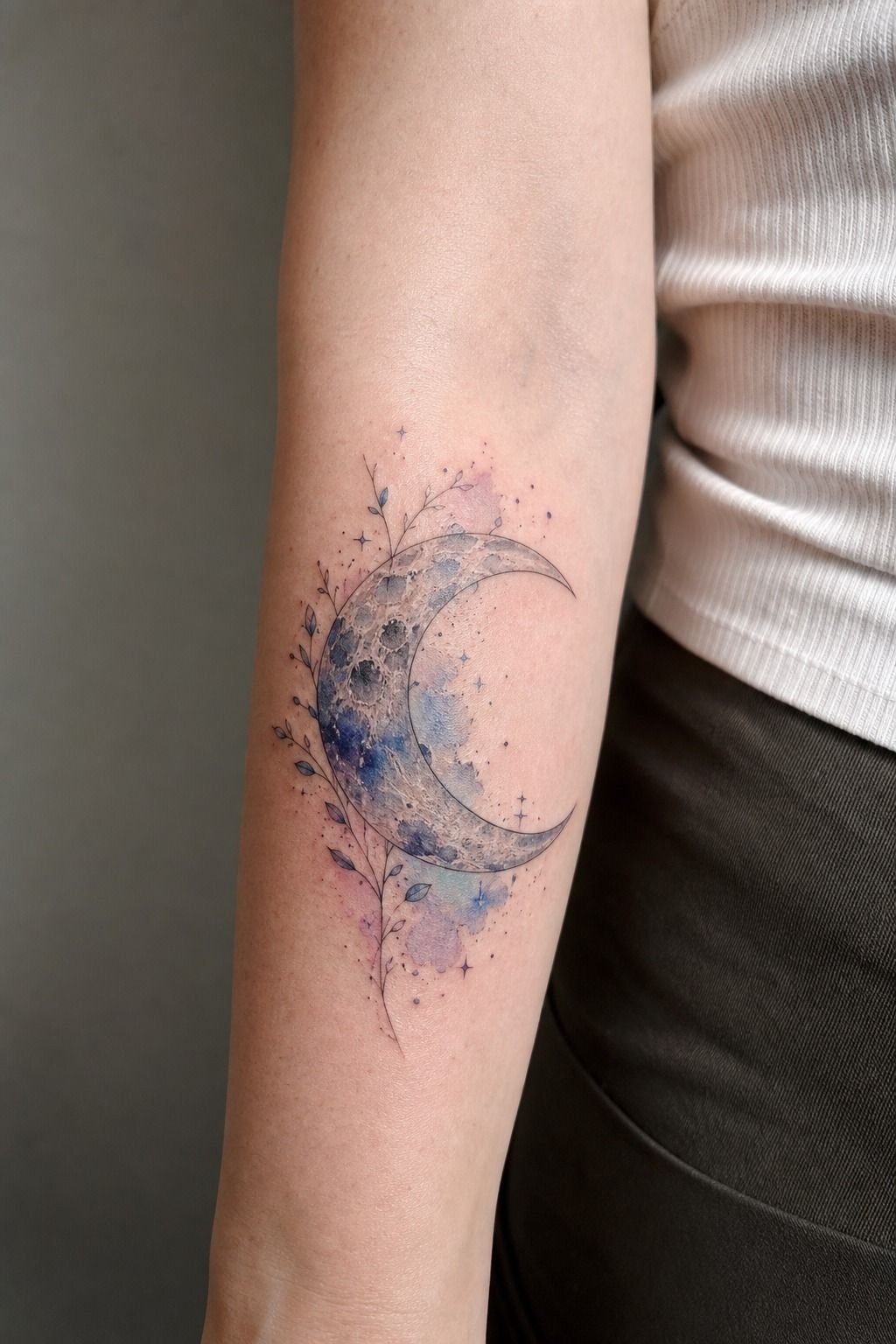
Moon tattoos can go soft without going weak if the shape stays readable first. On the forearm, I like a crescent with a smoky wash halo, maybe indigo and faded plum, then a thin but confident line to keep the moon edge from dissolving. This is one of those dreamy tattoos that feels soft in photos but still has enough pepper shading to heal with texture.
Keep the moon design around 3 inches if you want visible craters, stars, or a drip of color. Smaller than that, the detail does not earn its keep. And please do not let anyone scatter ten tiny stars around it just because Pinterest loves filler.
The forearm already gives you a clean stage. Let the main symbol breathe. If you want more soft celestial references, browse this watercolor tattoo artist resource with healed examples in mind and watch for crisp crescent edges.
8What Makes A Watercolor Hummingbird With Soft Bleeds Hold Up?
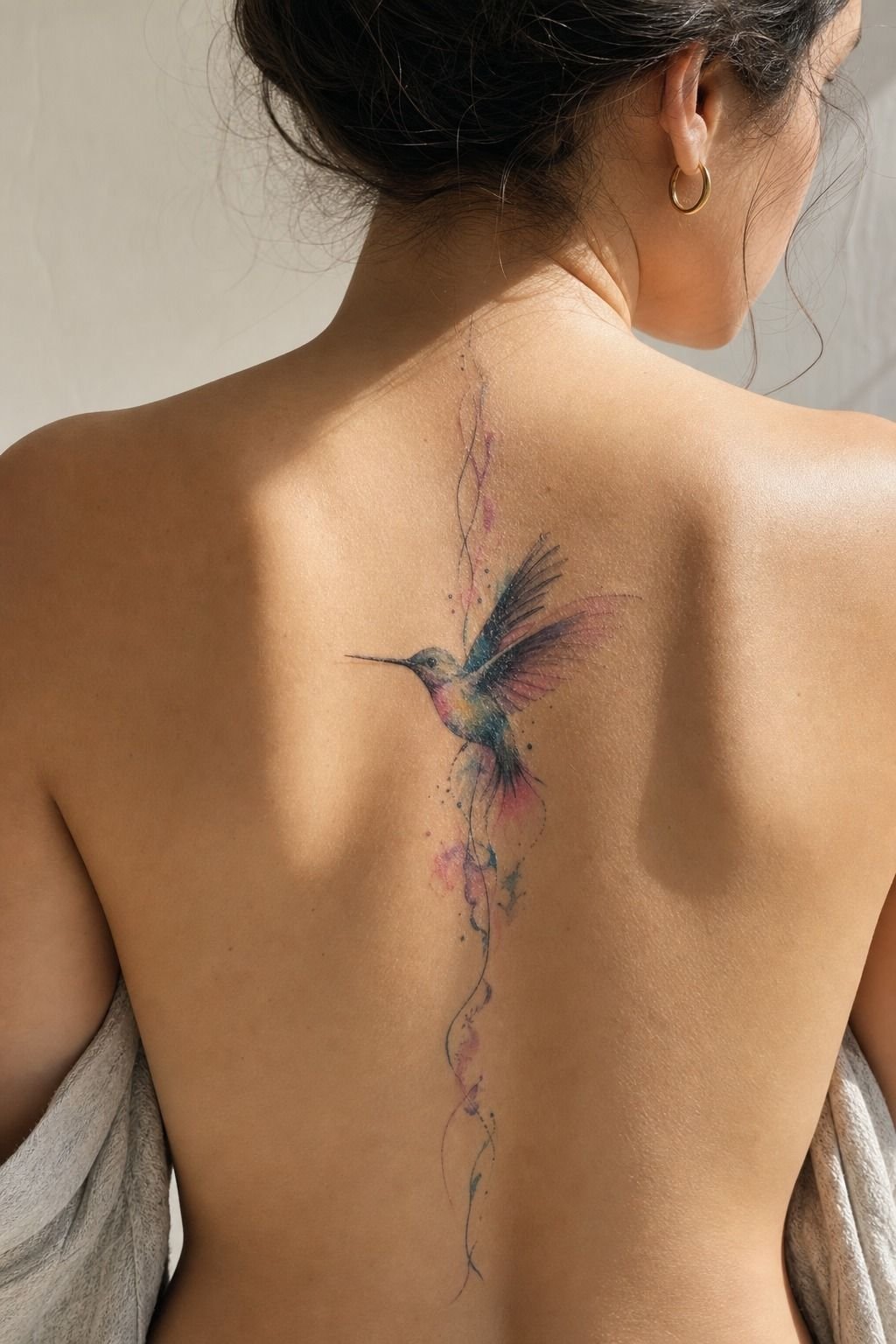
A hummingbird tattoo with soft bleeds can look fast and airy, but along the spine it needs control or it’ll heal patchy.
9Center A Watercolor Lotus Tattoo Along The Spine
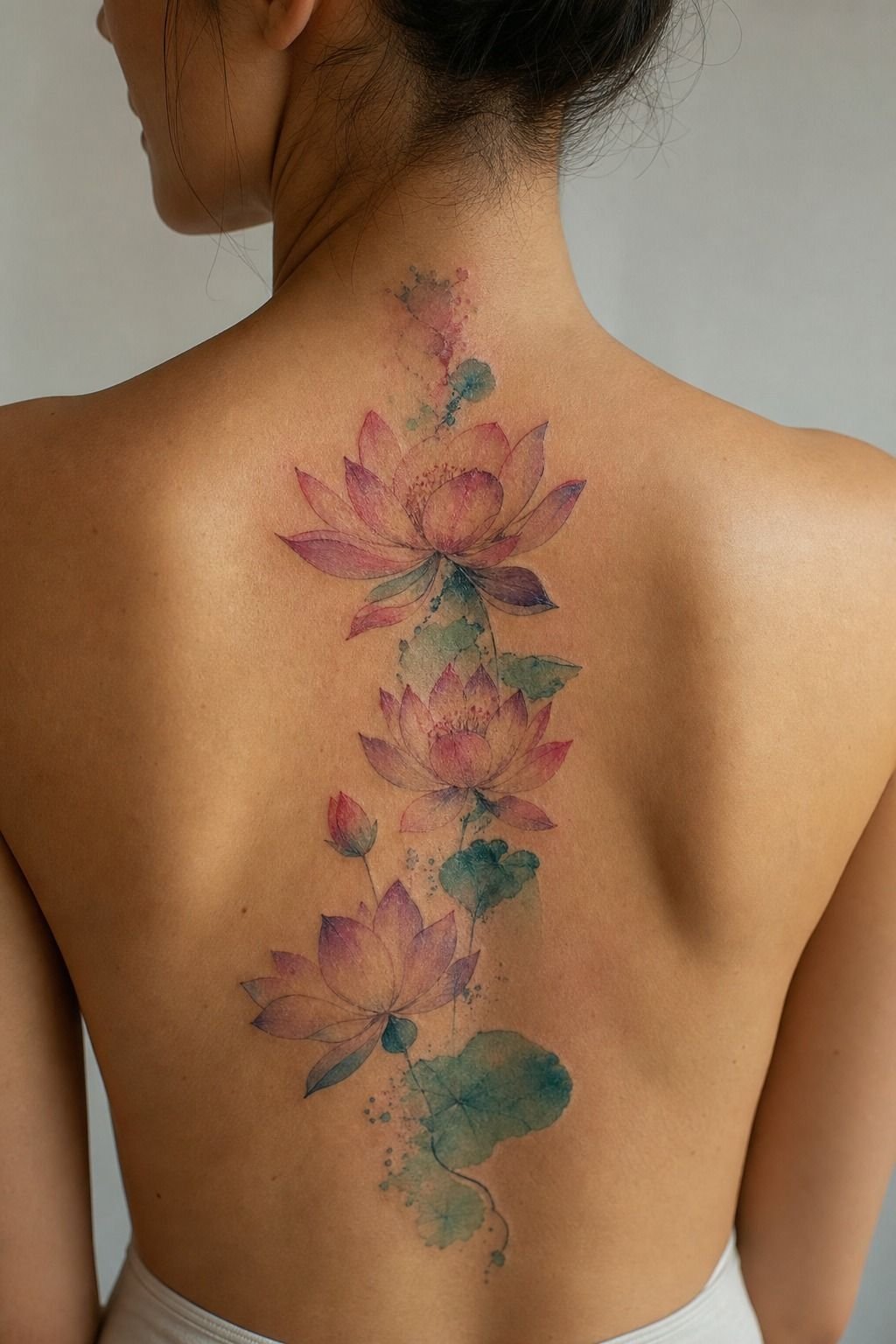
A spine lotus tattoo is one of those placements that looks centered and calm even before the color goes in. I map the petals to the natural line of the back so the bloom opens evenly from the middle instead of leaning. On medium olive skin, mauve, raspberry, and blue-violet usually show better than very pale pink.
And yes, I still want fine black linework through the petal breaks. The sweet spot is often 5 to 8 inches long so the petal layers do not collapse into each other.
Spine tattoos hurt. No need to romanticize it.
But the payoff is strong because the shape stays elegant with very little visual clutter. If you want spiritual symbolism, do the homework before you book. This Yin Yang tattoo meaning article is a good example of checking meaning before chasing pure aesthetics.
10Can A Watercolor Pet Portrait Work With Minimal Outline?
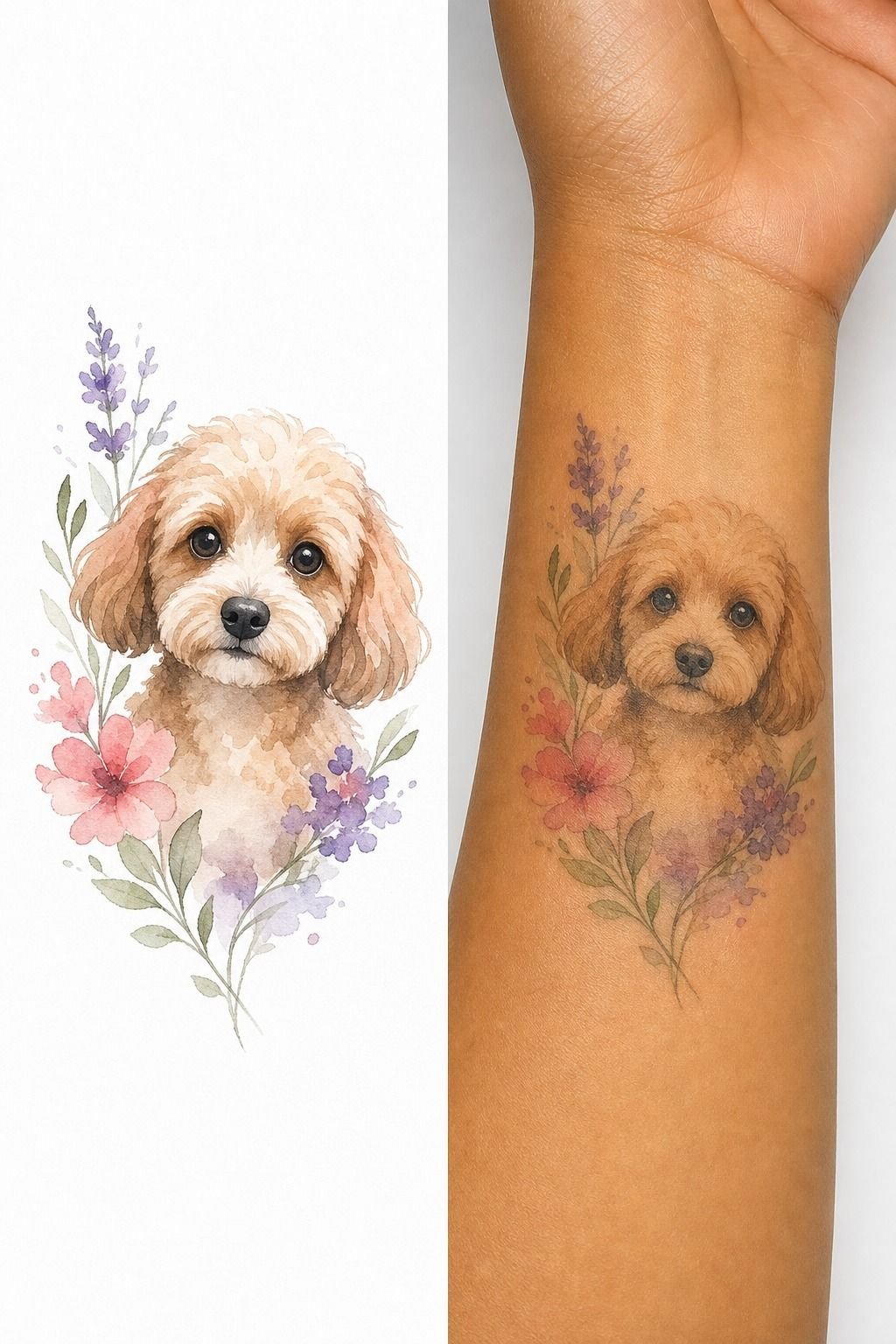
For a cat or dog portrait, I would rather see 4 to 6 inches on the outer arm or thigh than 2 inches on the ankle.
11Contrast A Watercolor Compass With Clean Travel Meaning
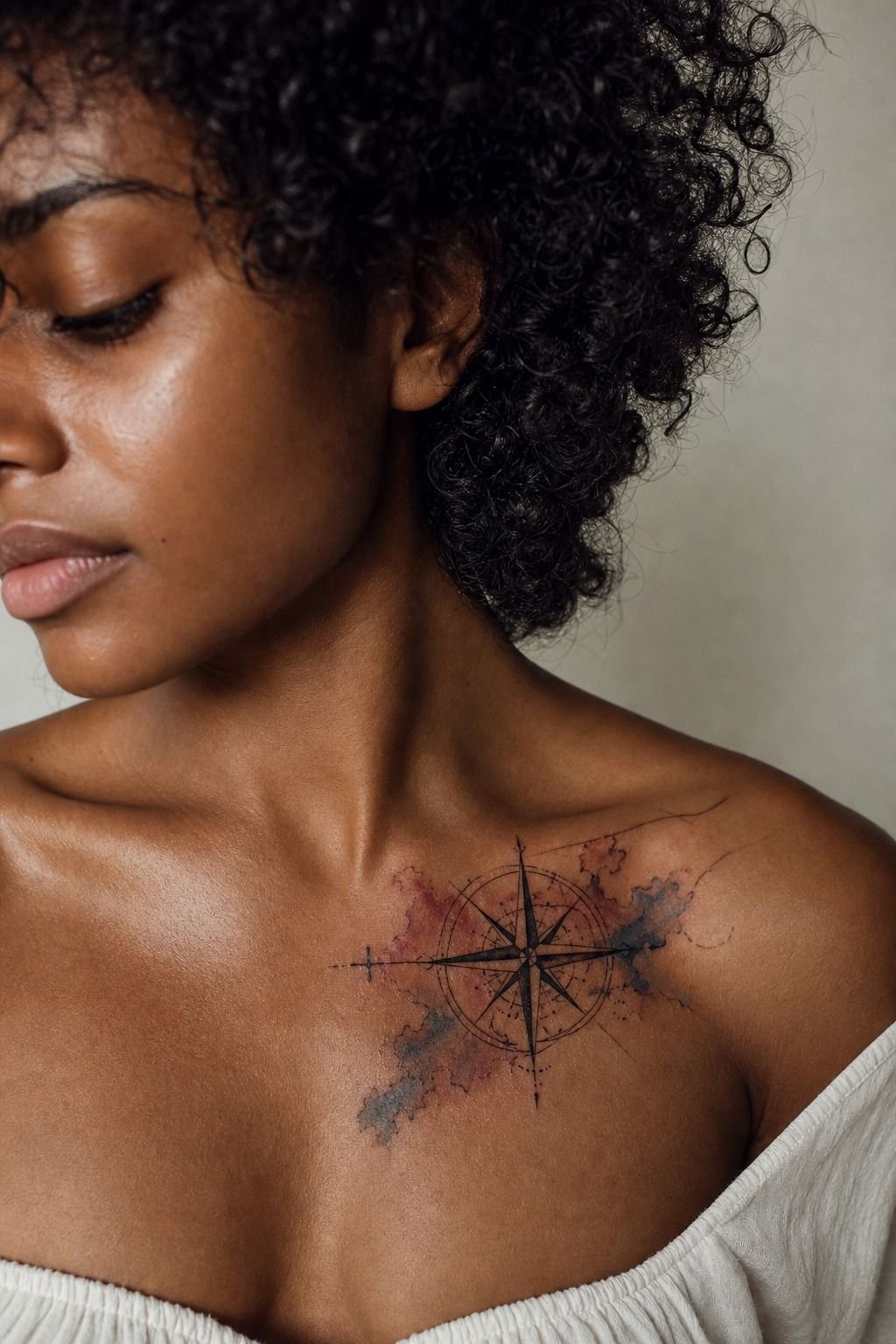
A collarbone compass has built-in direction. The horizontal line of the bone gives the design tension, and watercolor can soften the geometry so it does not feel stiff. For deep brown skin with a warm undertone, I prefer stronger teal, rust, or wine over pale sky blue.
The center point and cardinal marks still need a crisp round liner so the compass does not lose its shape.
This is usually best around 3 to 4 inches wide. Smaller gets too fussy.
Bigger can fight the anatomy unless you really want a statement piece. And collarbone work has bite.
It isn’t unbearable, but it’s spicier than outer arm for most people.
If meaning is the main draw, read around first. A symbolism piece should say something real to you, the same way a Zeus tattoo meaning guide helps people avoid empty myth references. The best result is a symbol you won’t outgrow in six months.
12Move A Watercolor Dragonfly From Ankle To Lower Calf
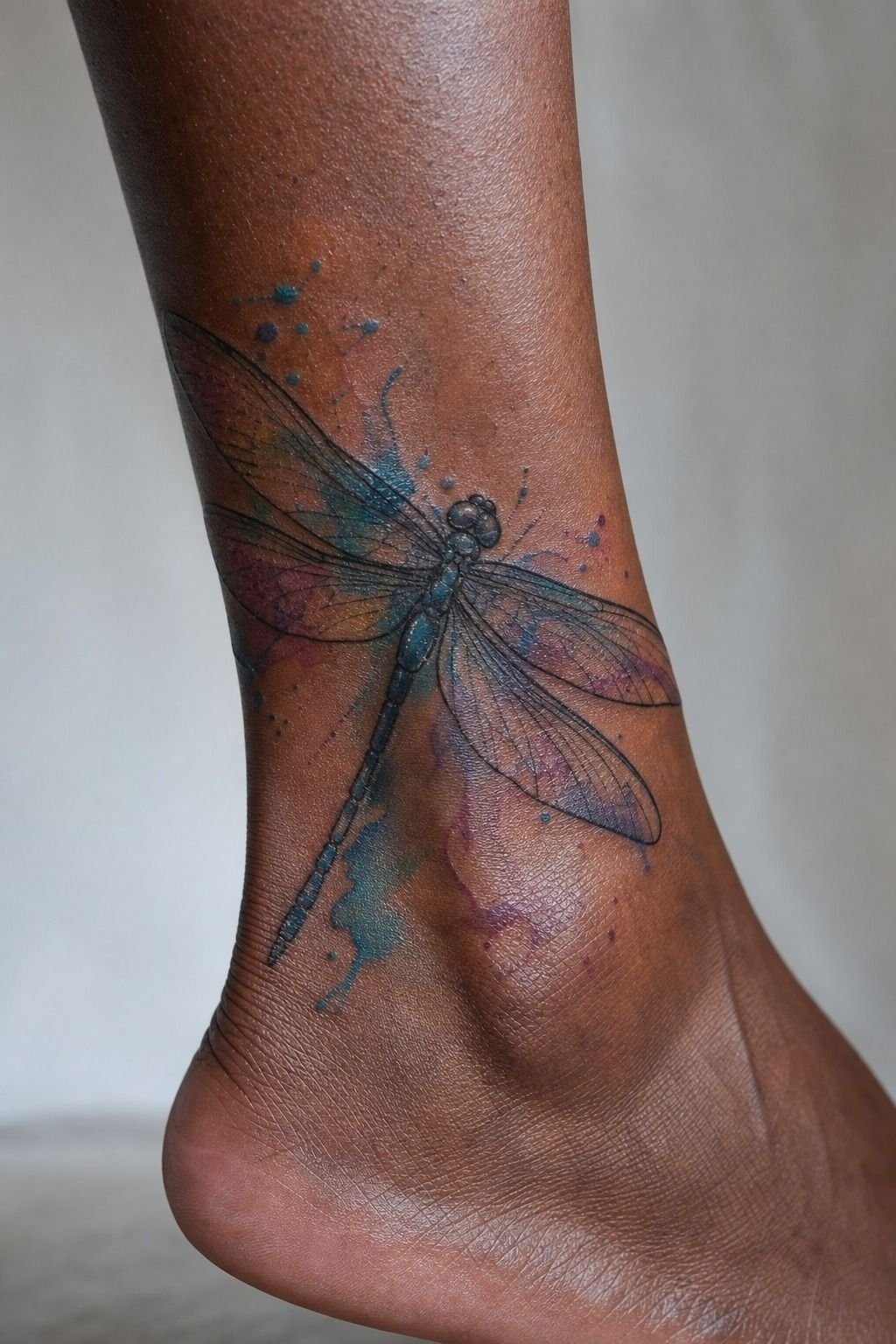
Dragonfly tattoos suit watercolor because the wing shape already feels light, but the ankle can humble a design fast. It’s a high-wear zone.
Socks rub. Shoes hit it.
Skin there can dry out and fade pale tones quicker than you think. So if you want this placement, simplify the body, keep the wings open, and let a dark thorax line do the heavy lifting.
I’d start closer to 2.5 or 3 inches instead of trying a micro piece. That extra scale gives the wing panes enough clearance to stay distinct after healing. But if you’re hard on your feet or live in sneakers, I would slide the dragonfly up to the lower calf.
Same delicate vibe, less touch-up drama. For more examples of soft color held together by structure, check these watercolor tattoo ideas and ignore the ones that are all haze and no backbone.
13Let A Watercolor Rose Win With Sketchy Linework
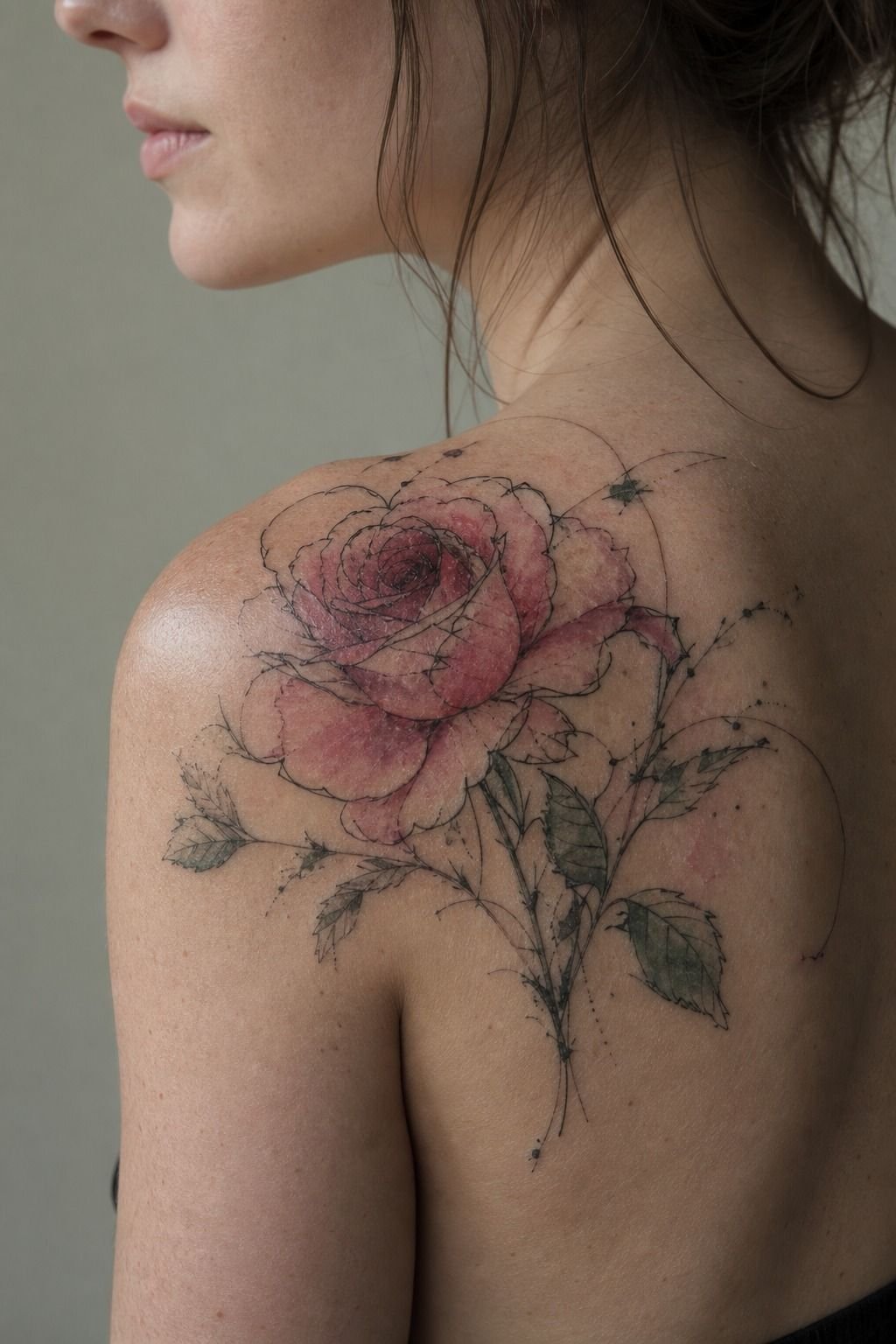
Sketchy linework can be so good on a rose because it gives the tattoo movement without forcing every petal edge. The mistake is making the sketch marks too faint or too random. A healed shoulder rose needs line hierarchy: stronger outer curves, lighter center flicks, then color bloom behind it.
I like dusty red, blush, and a touch of violet over a whip shaded black base for this look. Shoulder skin usually treats watercolor well, and you can go 4 to 6 inches without crowding the petals.
Why does this sketchy rose work better than a fully painted rose? Because the sketch line keeps it honest. It still looks like a tattoo, not a stain.
If you’re collecting florals, you can cross-check what holds up in this watercolor tattoo artists guide.
14Follow The Nebula Anchor Rule For A Watercolor Galaxy
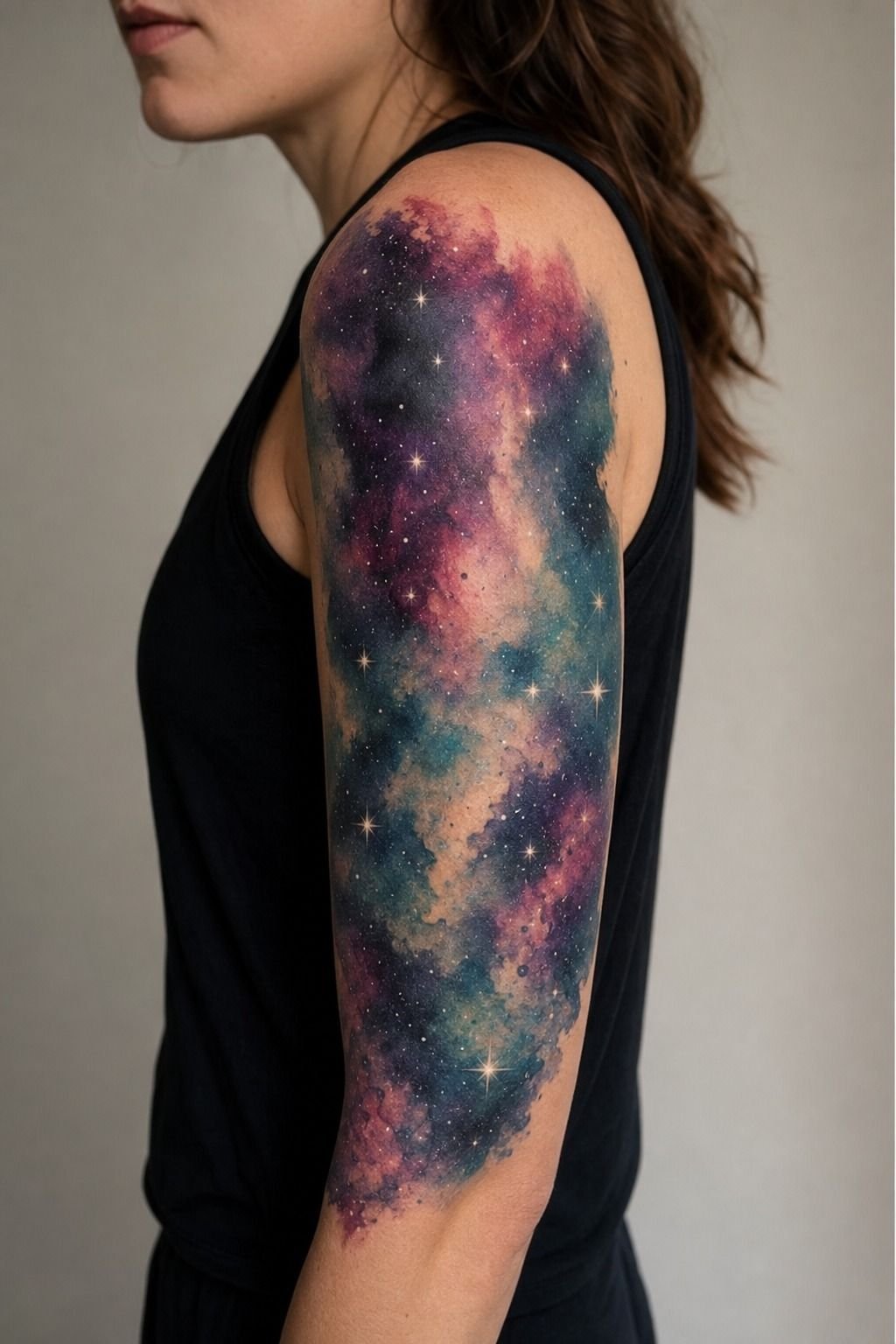
Galaxy tattoos can get messy fast, so I build them with what I call the Nebula Anchor Rule. Dark planet shapes first.
Star points second. Color cloud last.
That order matters because the upper arm gives you a broad curve, and a galaxy without anchor marks just turns into a bruise-colored blob.
On medium warm ivory skin, blue-violet, magenta, and a little black usually give the best contrast wash. Go at least 5 inches across if you want layers that still read in a few years.
I know the no-outline galaxy is trendy. I wouldn’t do it.
Not here. Not if longevity matters. Upper arm is a low-wear zone, so give it a design worthy of that advantage.
If you like mixed-style fantasy work, this biomech watercolor tattoo guide shows how structure keeps wild concepts readable.
15Edit A Watercolor Quote Tattoo Before You Add Paint
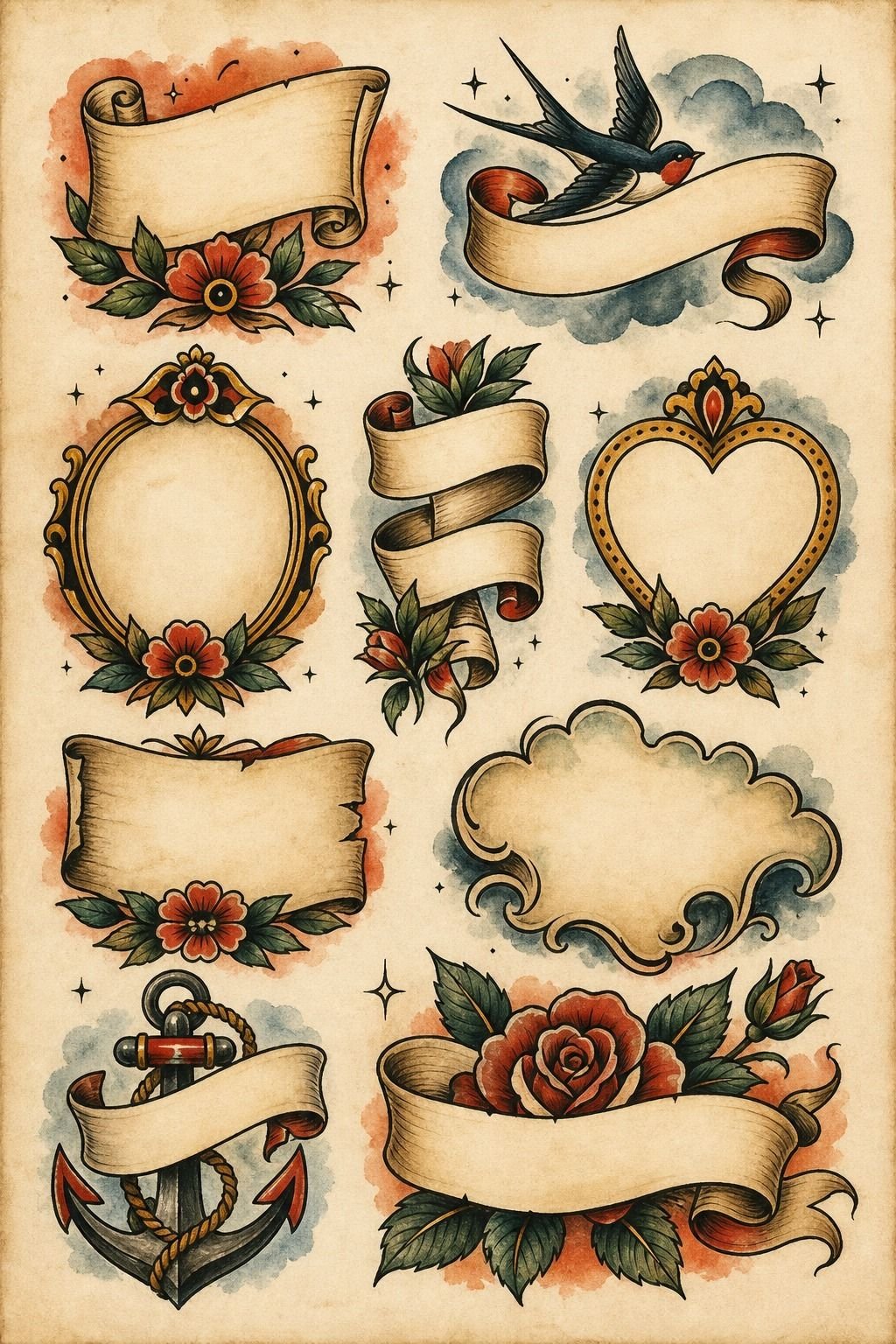
Quote tattoos with painted backgrounds need editing more than inspiration. The words have to win.
The color is there to support the phrase, not swallow it. When I sketch these as flash, I use a clean script or print line, then one brushy band of color behind the strongest words.
A script liner setup with controlled spacing matters more than fancy splatter ever will. Keep the phrase short, ideally 3 to 6 words, and do not cram it onto a tiny wrist just because it looks cute on paper.
Painted backgrounds age better on forearm, upper arm, or outer shoulder where you have a little runway. But if the quote is deeply personal, I’d still tell you to sit with it for a month first. If you want artist-shopping help, this watercolor tattoo artist guide is where I’d send you before booking.
16Balance A Watercolor Wave Tattoo On The Ribcage
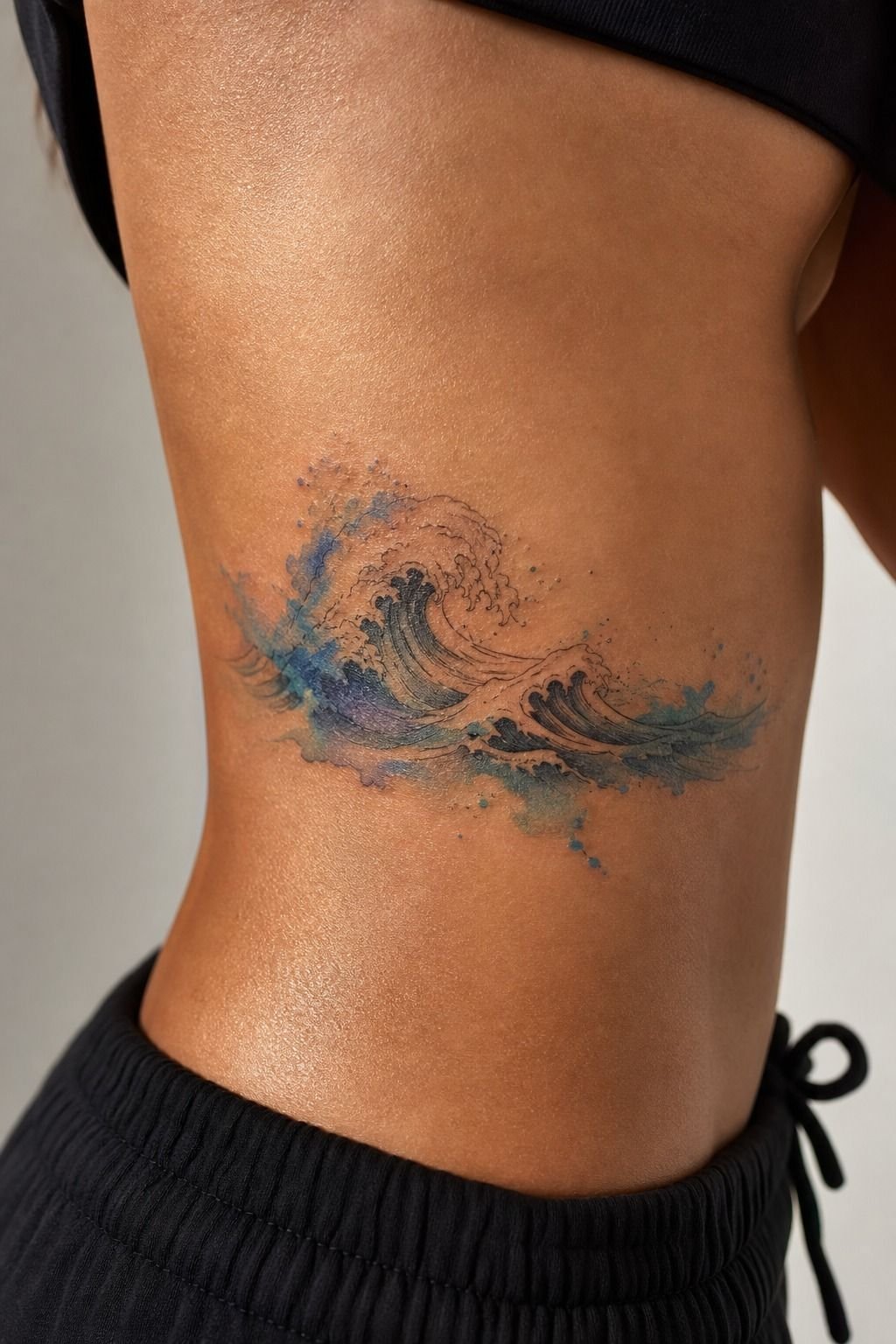
A ribcage wave tattoo is gorgeous and rude.
The Black-Anchor Rule
Here’s the practical part most watercolor tattoo roundups skip: color alone does not age well enough to carry the whole design. You need structure first. Think of black tattoo pigment as the frame that lets soft wash stay soft without healing into patchy soup.
When I plan a watercolor piece, I look at three things before color: placement wear, line thickness, and whether the subject still reads in stencil form. If it doesn’t work as a clean stencil, it won’t magically become strong once the color goes in.
But the smart move is not going smaller. It is going clearer.
A soft tattoo with a confident line almost always beats a super-detailed mini with pastel haze everywhere. If you’re comparing small-symbol meanings before paying a custom deposit, guides like YHWH tattoo meaning and Yantra tattoo meaning can help you cut clutter before it hits the stencil.
And that difference shows up years later, not just on day one!
The Clean-Heal Rule
I have fixed more bad watercolor plans on paper than I have bad watercolor tattoos on skin, because once the skin is overworked, you are already behind. That’s the part clients don’t always see on Pinterest.
They see the fresh photo. I see whether the artist gave the tattoo a chance to age well.
My clean-heal rule is simple: if the design does not make sense in black first, it will not make sense in watercolor later. That’s true for florals, moons, pet portraits, all of it. A soft wash should support the shape, not rescue it.
When I draw for a first-timer, I want the tattoo to read clean at a glance from a few feet away, even after the pinkness drops and the silver skin stage passes.
Placement does half the job. Low-wear placements like outer forearm, upper arm, calf, and thigh give watercolor the best shot at staying clean because the skin isn’t getting rubbed and beat up all day.
High-wear zones like fingers, hands, feet, and the ankle area can still work, but you have to go simpler and accept touch-ups. That’s not fear talking.
That’s just how skin behaves.
And color choice matters more than people think. Pale yellow, baby pink, and super-light sky blue can look sweet fresh, but they don’t always hold with the same punch long term. I lean toward stronger teal, magenta, violet, coral, and blue layered over black structure because they stay visible longer without needing the artist to chew the skin up for saturation.
One solid pass with the right needle grouping beats ten scratchy ones every time. Watercolor is not fragile.
Lazy design is fragile. If your artist shows healed work, talks honestly about scale, and isn’t trying to sell you a Pinterest-exact copy, you’re in a much better lane.
References for vibe only. Custom decisions for your skin. That’s how a tattoo heals clean, not patchy.
A Few Things Worth Answering
How much does a watercolor tattoo usually cost?
About $100 to $300 is common for a small to medium piece, though shop minimums can start around $50 to $100 and custom work often runs $100 to $250 an hour. Bigger watercolor tattoos take more planning.
More line. More time.
More planning. For broader planning, use my watercolor tattoo ideas guide before you ask for a quote.
And yes, custom placement tweaks can push the total higher!
Are watercolor tattoo a good idea for a first tattoo?
Yes, if you keep the design clean and the placement smart. A first watercolor tattoo heals better when the idea is simple.
Outer forearm, shoulder, or calf usually make more sense than hands, ribs, or feet. If you’re browsing general first-tattoo inspiration, start with tattoo ideas women Pinterest and filter for designs with visible linework.
How do I choose a tattoo artist for watercolor tattoo?
Look for healed photos, clean linework, and color that still looks solid after the shine is gone. A watercolor specialist beats a dabbler every time.
Studio hygiene. Consistent portfolio.
One style they clearly know how to push. My watercolor tattoo artists guide is the checklist I would use.
How much do watercolor tattoo hurt?
It depends on placement, but ribs, feet, hands, and sternum are usually the spiciest. Outer arm and thigh are easier starts.
Lines feel sharper. Shading is a dull burn. Color packing is often the roughest part.
But most people handle it better than they expect!
How long does a watercolor tattoo take to heal?
Surface healing is usually 2 to 3 weeks, while full settling often takes 2 to 3 months. Gentle aftercare protects the color. Unscented soap.
A thin layer of ointment. No pools, sun, or picking.
What’s the best placement for watercolor tattoo?
Outer forearm, upper arm, calf, and thigh are usually the safest bets for clean healing and decent longevity. Low-wear skin gives soft color a better future. Ankles, feet, and behind the ear can work, but they need simpler designs.
Can I buy a watercolor tattoo design online or do it DIY on a budget?
You can buy flash or references online, but don’t DIY the tattoo itself. Bad tattoos get expensive when they heal badly.
Buy inspiration if you want. Then pay a real tattoo artist to redraw it for your skin.
If you need a softer concept path, compare it with strawberry tattoo meaning or a painterly piece like the realistic strawberry tattoo guide.
The First-Pass Rule
If I had to pick one, I’d start with the watercolor wildflower on the calf. The placement gives soft color a fair shot, and the stem structure keeps it from healing like a blurry bruise. Pin that idea for later and bring it to a real watercolor specialist.