
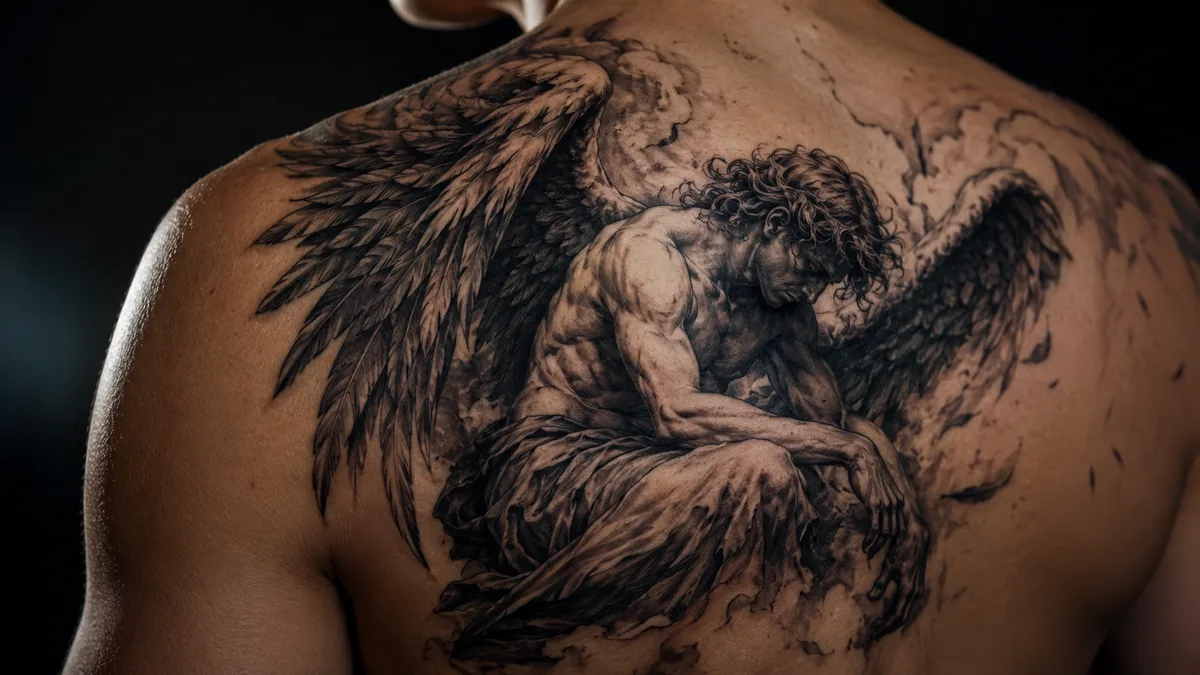
A fallen angel tattoo isn’t just a pretty image. It’s one of the most loaded symbols you can put on your skin. It speaks to people who’ve been through hell, who’ve made mistakes, who’ve been cast out, or who simply refuse to fit into someone else’s idea of good. The imagery cuts straight to the bone.
Most clients who walk in asking for a fallen angel aren’t just chasing aesthetics. They’re after something that says, ‘I’ve fallen, but I’m still here.’ That kind of weight behind a piece makes it hit different. Let’s break down what this tattoo actually means and how to wear it well.
Core Meaning: What a Fallen Angel Tattoo Really Stands For
the fallen angel represents a being of power and grace who has been cast down, punished, or who chose to fall. The dominant themes are rebellion, loss, struggle, and survival. It’s not a dark tattoo in the evil sense. It’s more about the complexity of existing between two worlds, neither fully good nor fully corrupt.
A lot of people connect it to personal failure and recovery. Getting knocked down hard, losing faith, or hitting rock bottom and clawing back up. The angel still has wings. It’s not destroyed. That detail matters. The fallen angel carries its dignity into the fall, which makes it one of the most human symbols in tattoo culture.
Cultural and Religious Background
Not all who fall from grace chose to stay on the ground.
The concept of fallen angels comes primarily from Abrahamic religions, particularly Christianity, Judaism, and Islam. The most famous example is Lucifer, an archangel who rebelled against God and was expelled from Heaven. This story appears across the Old Testament, the Book of Enoch, and later in Milton’s ‘Paradise Lost,’ which gave the fallen angel much of its visual drama in Western art.
The Book of Enoch expanded the mythology significantly, describing the Watchers, a group of angels who descended to Earth out of desire or disobedience. These texts shaped centuries of religious art. By the time tattoo culture picked up this imagery, it was already rich with meaning around pride, punishment, and the cost of free will. That literary and artistic lineage gives fallen angel tattoos real cultural depth.
Popular Design Variations
The most classic version shows an angel figure kneeling or collapsed, wings drooping or torn, head bowed. You see a lot of dramatic lighting in these, strong shadows across the face, feathers scattering. Some go more aggressive with cracked or burned wings, which pushes the symbolism toward destruction and ruin. Others keep the wings intact but folded tight, showing restraint rather than damage.
Portrait-style fallen angels are also popular, especially influenced by baroque and Renaissance paintings. Think heavy drapery, muscular bodies, sorrowful expressions. On the other end, illustrative and neo-traditional versions simplify the forms with bold outlines and flat fills, making the image read sharp even at smaller scales. Some clients blend in snakes, chains, halos cracked in half, or roses to layer the meaning.
Black and Grey vs. Color
Black and grey is the natural home for this tattoo. The moodiness of a good whip shade job, the soft gradients on fabric and feathers, the deep black saturation on the wing shadows, it all serves the subject perfectly. A skilled artist can build incredible depth in a fallen angel piece using nothing but black ink and time. It ages well too, especially in a low-wear zone.
Color versions exist but are less common. When they do show up, they tend to use a limited palette, deep blues and purples for the wings, cold skin tones, maybe a single warm gold or red accent on a halo or flame. Fully saturated color on a piece this detailed can get muddy over time if the artist doesn’t plan the values carefully. If you want color, find someone whose healed color work you’ve actually seen in person.
Placement and How It Ages
The back is the classic choice for a reason. A full back piece lets a fallen angel breathe. The wingspan can stretch naturally, and the figure has room for real anatomical detail. The chest is another strong option, especially a full chest or sternum piece where the wings wrap over the pec muscles. Both zones are lower-wear areas, which means the fine details and subtle shading hold longer.
Sleeves and thighs work well for medium to large versions. Avoid cramming a complex fallen angel into a small space. The detail density in these designs doesn’t survive miniaturization. If you’re set on a smaller piece, strip it down to one strong element, the face, a single wing, the figure in silhouette. Small and clean beats small and blown out every time. Ribs and knees are spicy for placement; mentally prepare if that’s your zone.
Style Matchups: Which Tattoo Style Works Best
Realism and black and grey realism are the top choices for clients who want the full cinematic impact. A realistic fallen angel with proper anatomy, fabric texture, and feather detail is a serious undertaking, often 15-plus hours of work on a large piece. Find an artist with a portfolio full of figures, not just floral work. Anatomy matters enormously here, wings especially.
Neo-traditional is a solid middle ground if you want bold lines that hold long-term with some stylized drama. The simplified shading in neo-trad holds better through years of sun and skin changes than hyper-detailed fine line. Fine line fallen angels look stunning fresh but require honest placement choices and a realistic conversation about how they age. High-movement zones will blur fine line detail faster than you want.
Who Gets This Tattoo and How to Make It Personal
Fallen angel tattoos attract a wide range of clients. People in recovery, people who’ve left strict religious upbringings, people who feel like outsiders, people who’ve survived serious loss. The unifying thread is an experience of being cast out or brought low and finding meaning in that. It’s not a tattoo for someone who wants something decorative and safe. It’s a tattoo for someone with a story.
To make it personal, bring your story into the details. The face can be a portrait, yours or someone you’ve lost. The wings can be species-specific, raven feathers instead of generic angel wings change the whole read. Symbols layered in, a specific scripture reference, a date worked into a design element, a name hidden in shadows, these are the touches that make a well-worn concept feel like it belongs to one person.









