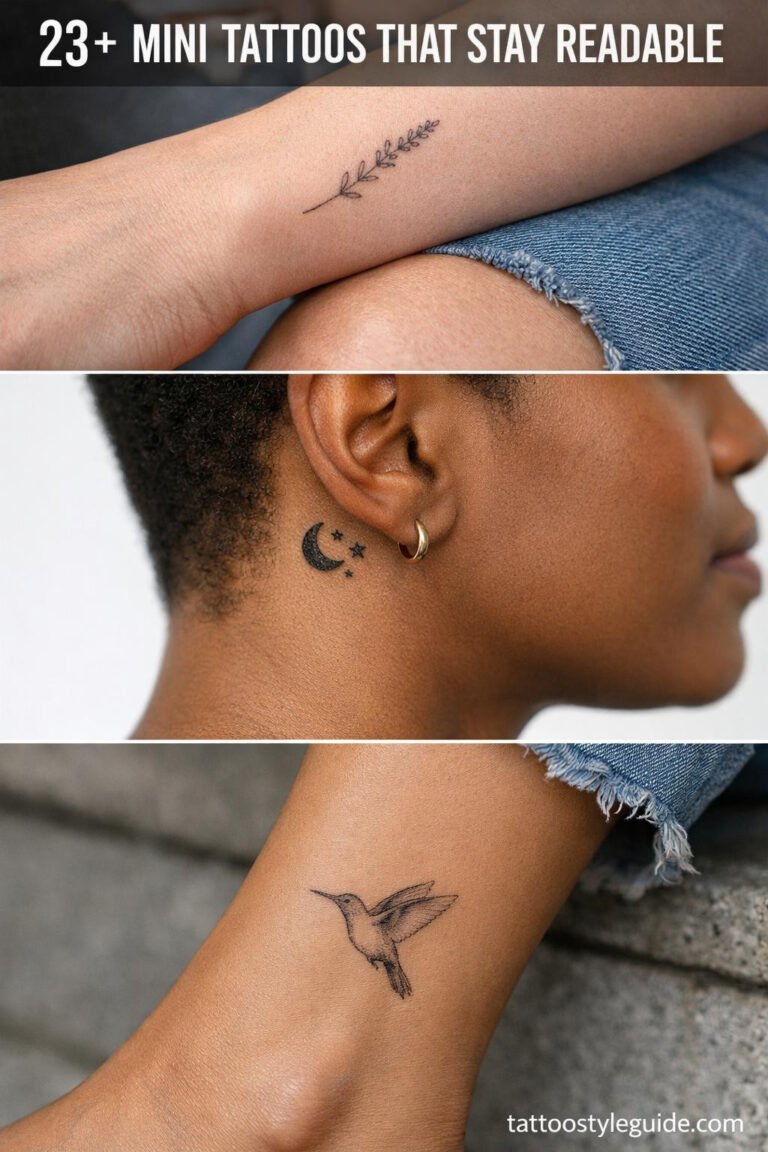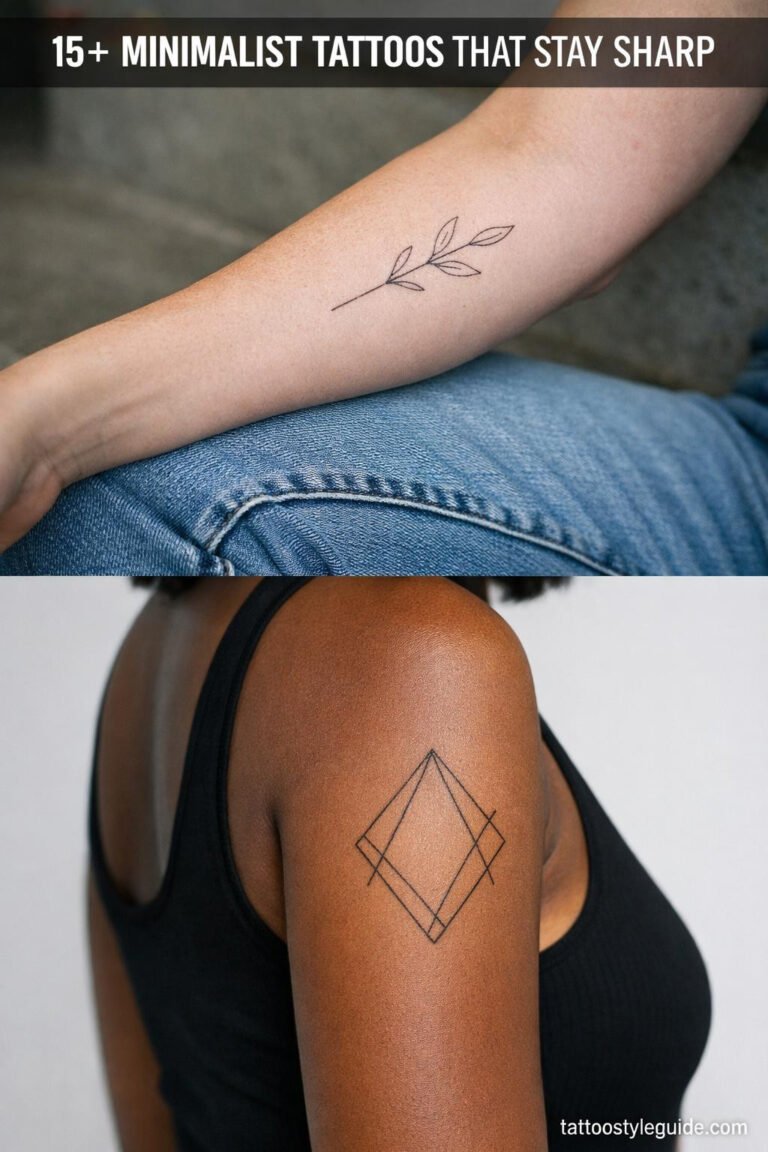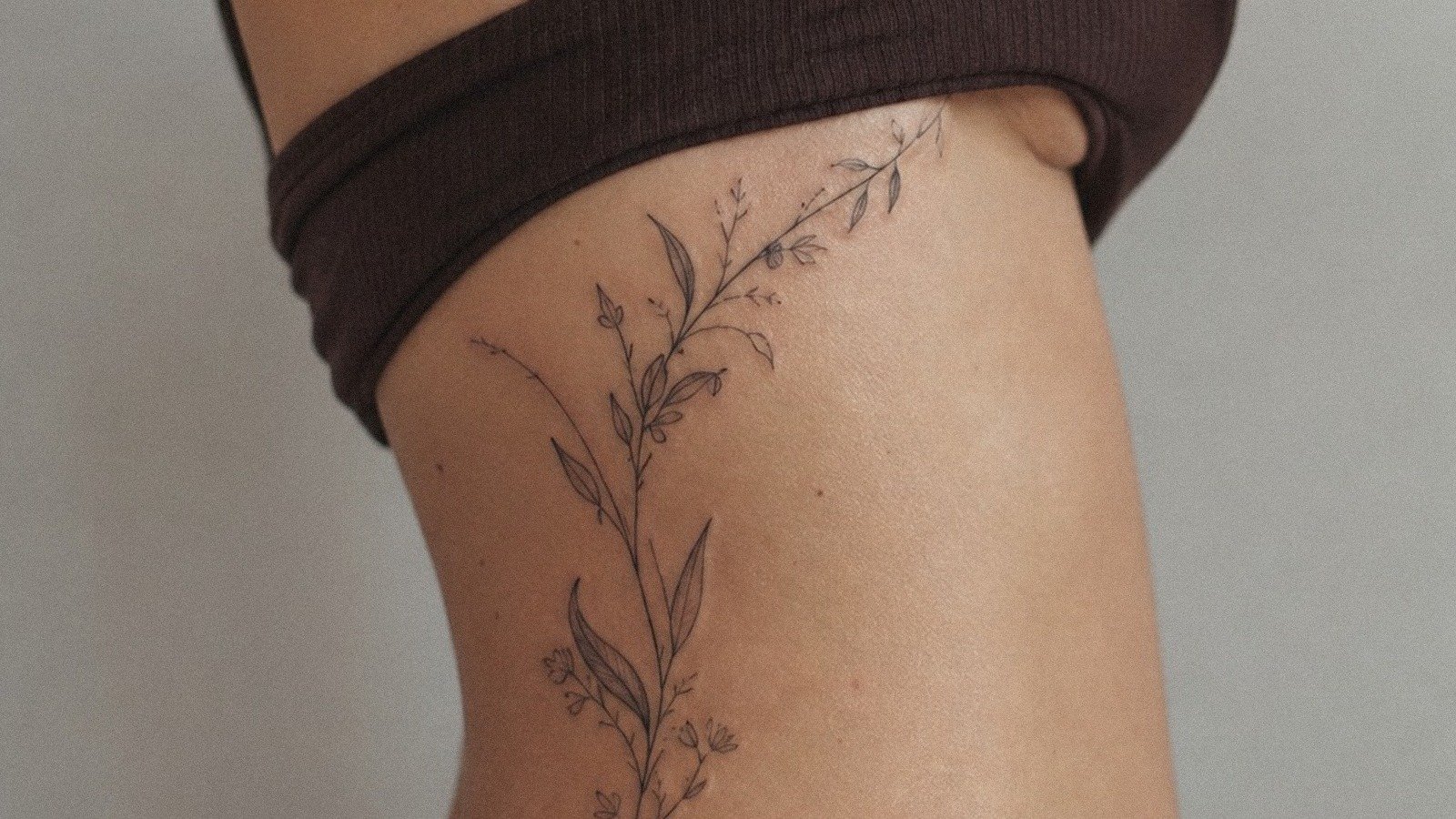
Fine line tattoos can heal clean and stay crisp if you size them right, place them smart, and pick an artist who can pull one clean line instead of ten fuzzy ones. I see people rush the cute part and skip the longevity part. That’s where the trouble starts. This guide walks you through the order I’d use in the shop so your fine line tattoo still reads soft and sharp years from now.
Don’t overthink: What Makes A Fine Line Tattoo Feel Personal?.
Before You Start With The Crisp-First Rule
Before you book, get your basics straight: size, placement, pain tolerance, and long-term upkeep. Fine line work looks light, but the planning can’t be light. You want enough room for the line to breathe, enough contrast to heal nice, and a body spot that won’t chew it up fast.
Here is the quick version I give first-timers. A tiny piece under 2 inches can be beautiful, but only if the design stays simple. Most shops in the US have a minimum around $50 to $100, and many fine line artists charge about $100 to $250 per hour.
Surface healing is usually 2 to 3 weeks, while the full settle-in can take 2 to 3 months. Save this part.
It matters! And yes, it saves money later, keeps you from paying twice, and makes the whole tattoo feel more worth it.
- Start With A Tiny Fine Line Symbol
- What Makes A Fine Line Tattoo Feel Personal?
- Place Fine Line Script Along The Rib
- Keep Fine Line Florals Clean And Simple
- Use The Hidden-Ankle Budget Rule
- Choose Fine Line Tattoos For First Ink
- How Spicy Is This Placement Really?
- Ask For Single Needle Fine Line Work
- Check Healed Fine Line Tattoos Before Booking
- Save Subtle Fine Line Wrist Tattoo References
- Build Meaningful Fine Line Tattoos Around Dates
- Try Small Fine Line Ink Behind The Ear
- Place Fine Line Birth Flowers On The Shoulder
- Shared Idea, Not Copy-Paste Matching Tattoos
- Keep Fine Line Lettering Short And Legible
- Think In Layers With The Future-Sleeve Rule
- Use Fine Line Stars For Hidden Placement
- Pick Fine Line Red Ink With Caution
- Want It To Heal Clean? Protect It Early
1Start With A Tiny Fine Line Symbol
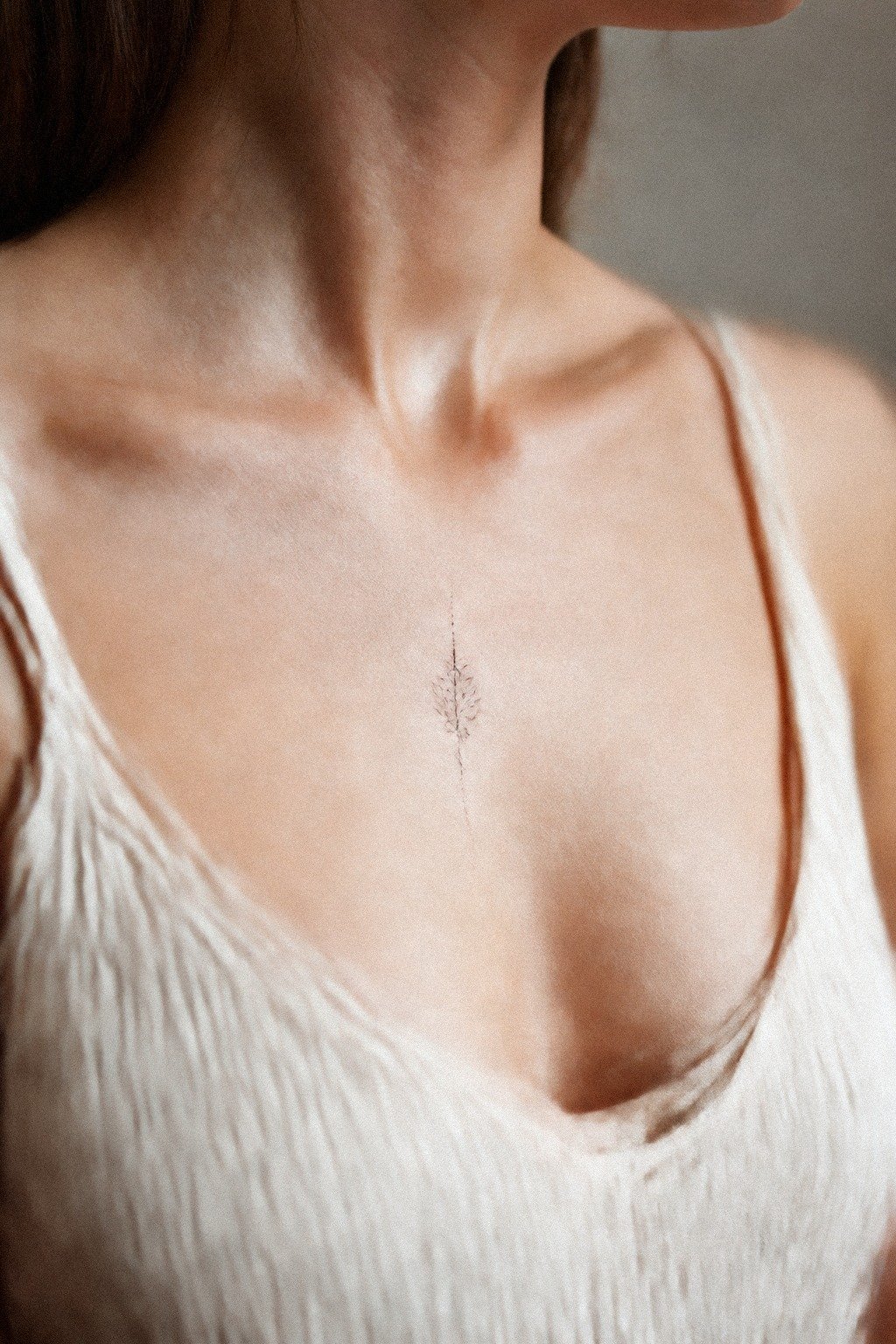
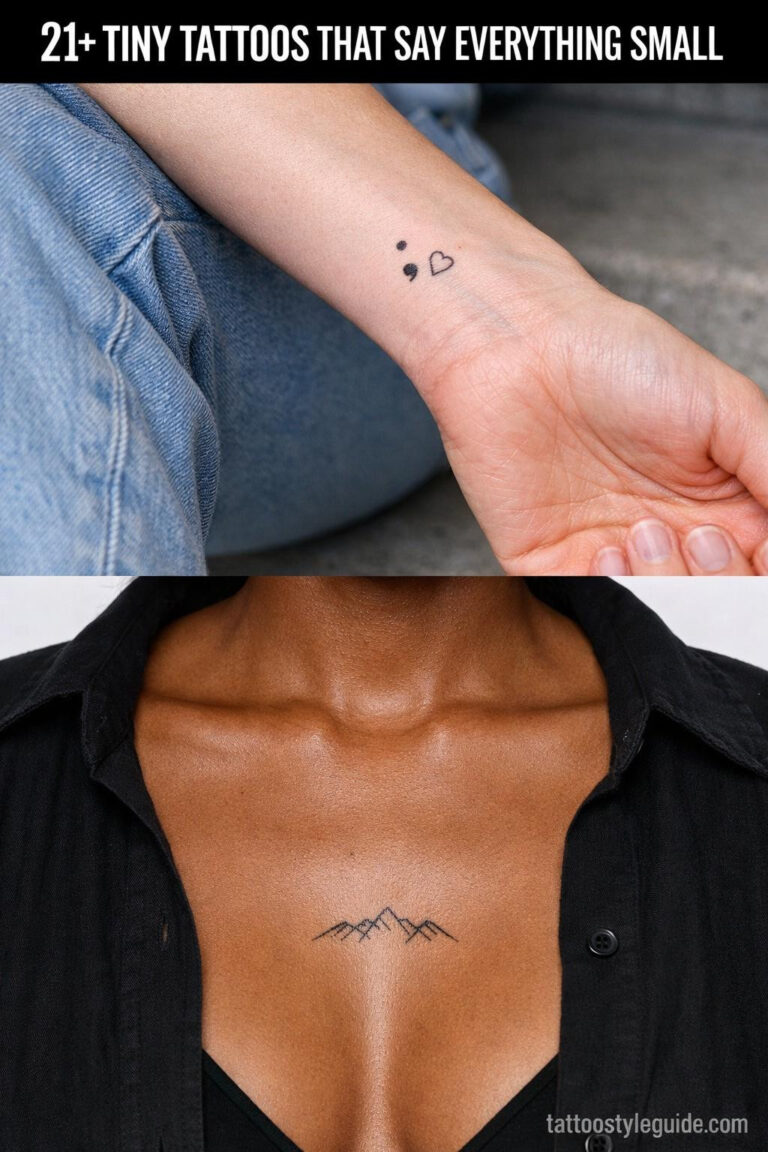
Start small, but not microscopic. On a sternum, a tiny symbol looks elegant when it sits centered and leaves clean skin around it, especially on fair cool-pink skin where every wobble shows. I’d rather see you choose a simple moon, star, or abstract mark at about 1.5 to 2.5 inches than force a complex idea into a stamp-size shape.
That’s the whole Tiny-First Rule I push for subtle pieces. Fine line can read airy here, but the sternum is spicy, and tiny does not mean easy.
Keep the line count low, ask for solid black over washed-out grey, and compare it with healed examples in this fine line tattoo needles longevity placement guide. If the symbol reads from across the room now, it has a shot later.
2What Makes A Fine Line Tattoo Feel Personal?
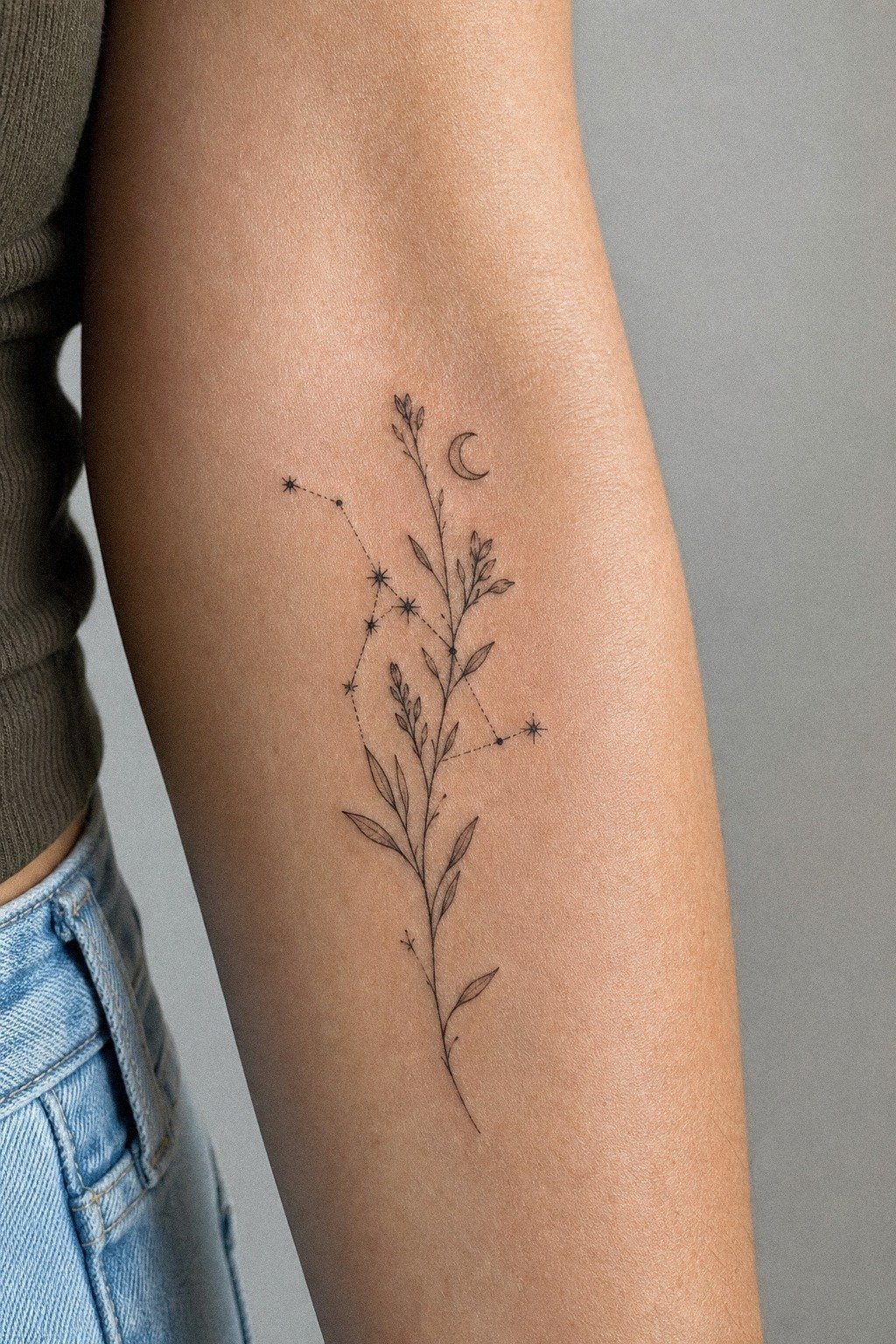
Pick the idea before you pick the font, flower, or placement.
3Place Fine Line Script Along The Rib

Rib script works when you keep it short, give it length, and let the ribcage do the design work. On medium olive skin, a healed line of script along the side ribcage can look soft and private because the curve carries the eye. This is one of those placements where flow matters more than decoration.
But ribs are spicy, and script is unforgiving. I’d keep it to three to six words, avoid hairline calligraphy, and choose clean cursive or narrow print with open counters.
When a script tattoo wraps just enough to follow the rib without diving into the fold, it heals cleaner and stays legible longer. If you already love tiny text, read why tattoos blur over time before you lock in a size that is too precious.
4Keep Fine Line Florals Clean And Simple
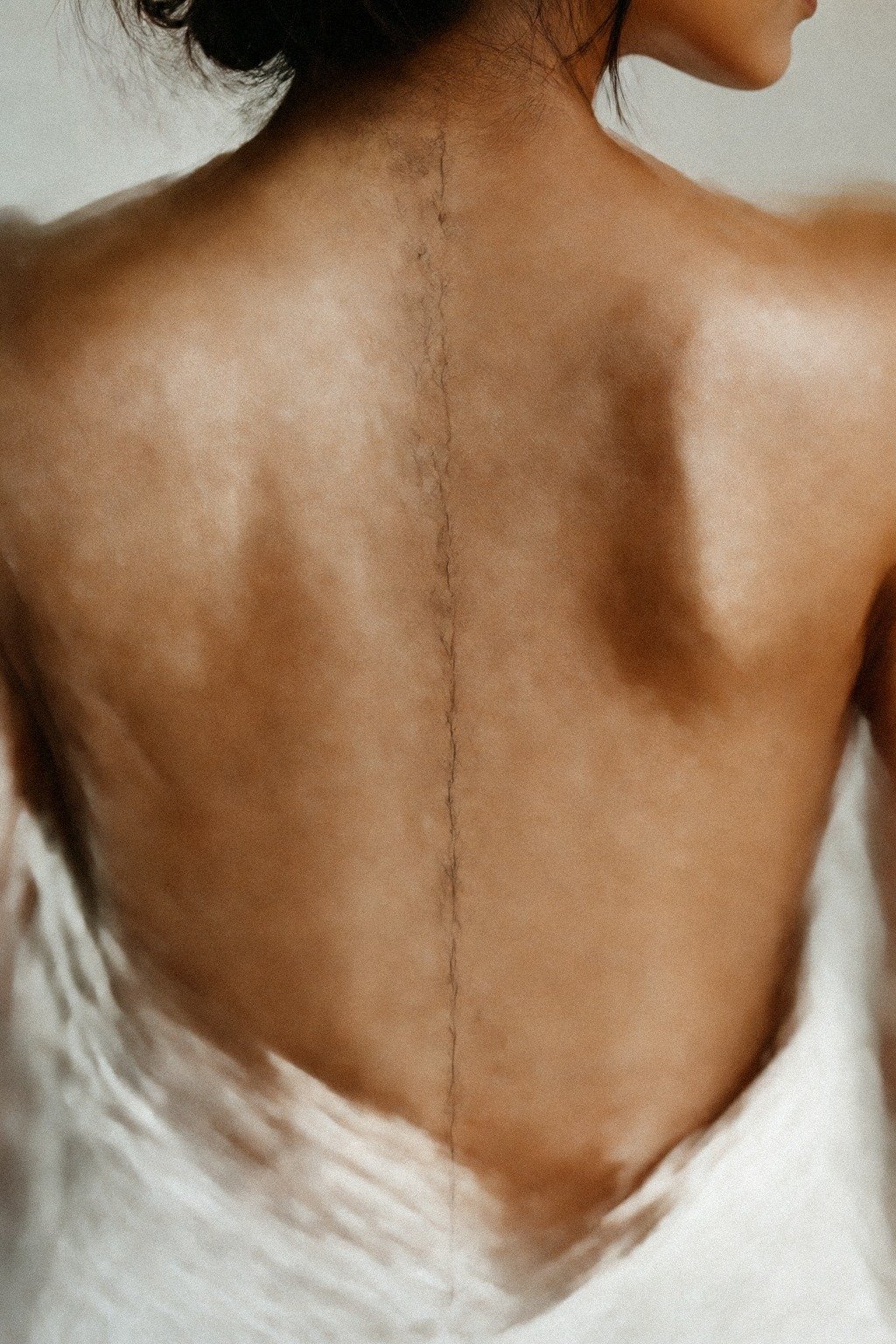
Spine florals look best when the negative space does the heavy lifting. On golden tan skin, a fine line floral running the spine can feel anatomical and graceful because the stem follows the center line instead of fighting it. I like one main bloom, a secondary bud, and enough negative space that the petals don’t turn to soup.
This is where people overbuild the drawing. Too many tiny leaves, too much interior texture, too many overlapping petals.
Keep the botanical read clear from a few feet back. A chrysanthemum, lily, or iris can all heal nice here if the artist uses confident outlines and skips fussy shading.
If your reference looks more like wallpaper than tattoo design, strip it down until the stem and bloom still make sense on bare skin.
5Use The Hidden-Ankle Budget Rule
Ankle tattoos need planning before they need romance.
6Choose Fine Line Tattoos For First Ink
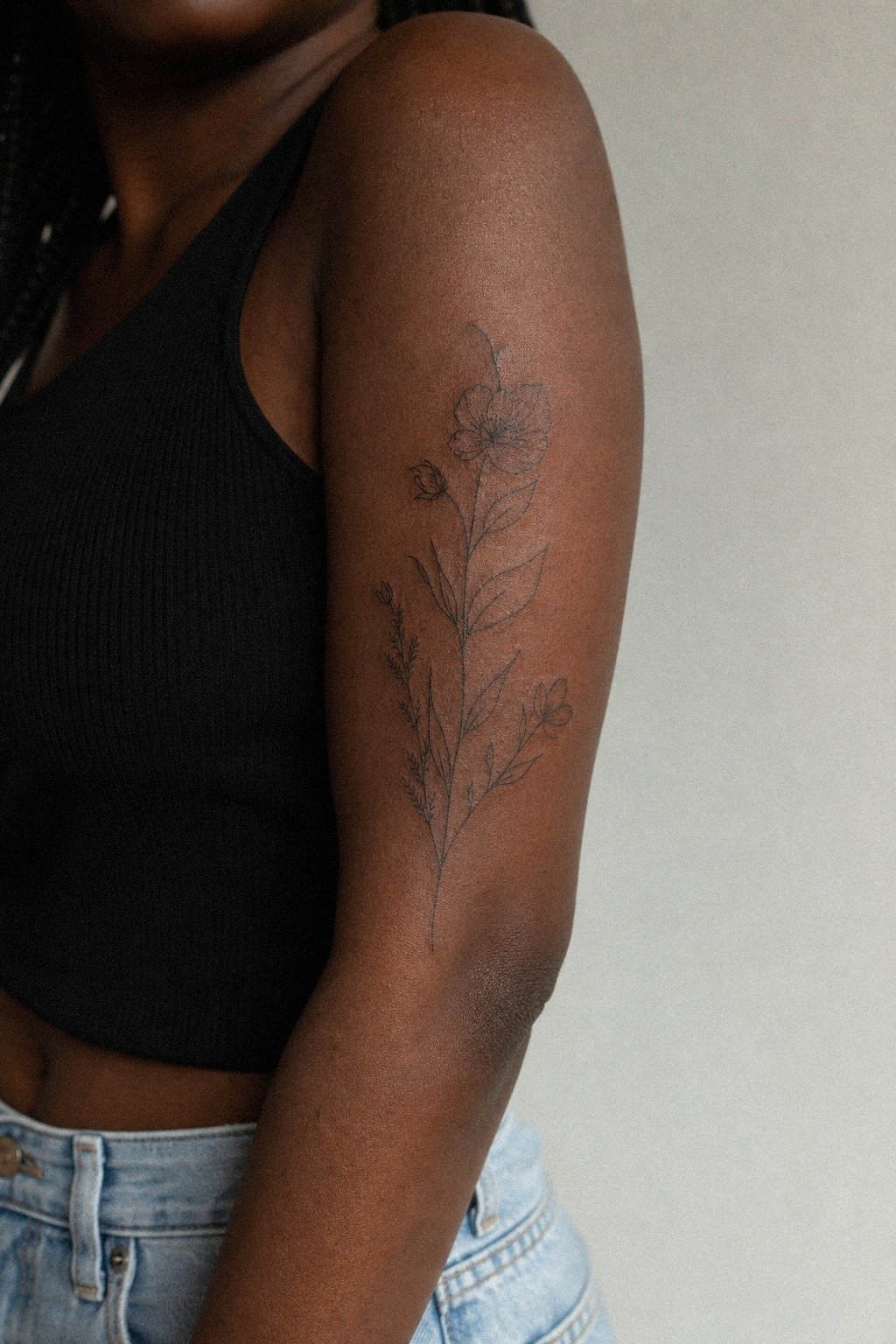
Your first tattoo should teach you how you sit, heal, and live with ink. On a deep ebony upper arm, a finished fine line piece can look clean and rich because the placement is stable and the body moves with it instead of crushing it. That’s why I like upper arm, outer forearm, or shoulder for first-timers more than fingers or feet.
The piece does not need to be bigger to be meaningful. It needs to be readable and doable. I’d keep first ink around 2 to 4 inches, one main subject, and no tiny filler orbiting around it.
That gives you enough tattoo to learn from without turning the session into a pain test. Want the plain truth? A calm first experience usually leads to better choices later, because you’re thinking clearly instead of white-knuckling through a bad placement.
It also keeps your first tattoo from getting blown into a cover-up fix later.
7How Spicy Is This Placement Really?
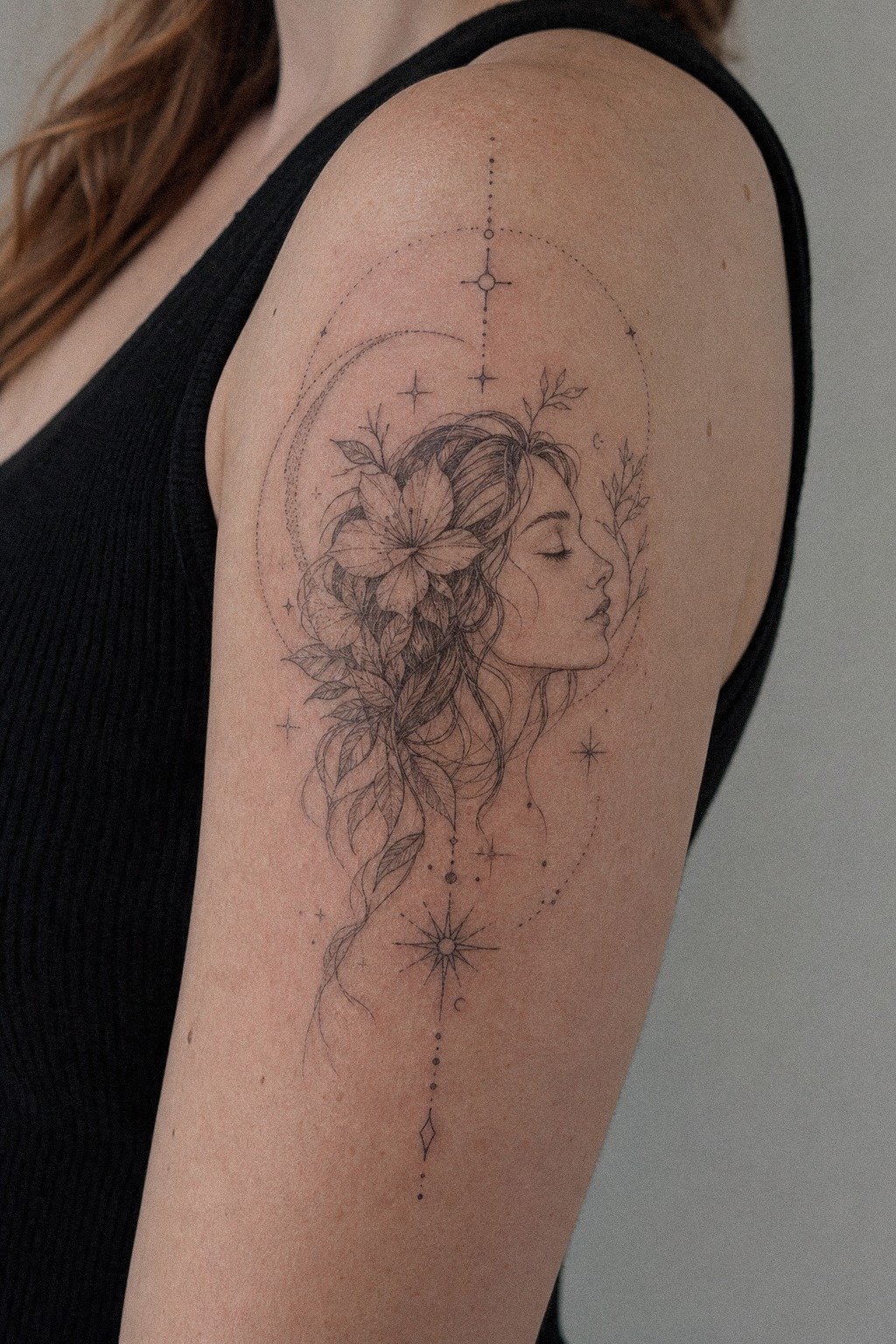
Pain tolerance should shape placement from the start, not as an afterthought.
8Ask For Single Needle Fine Line Work
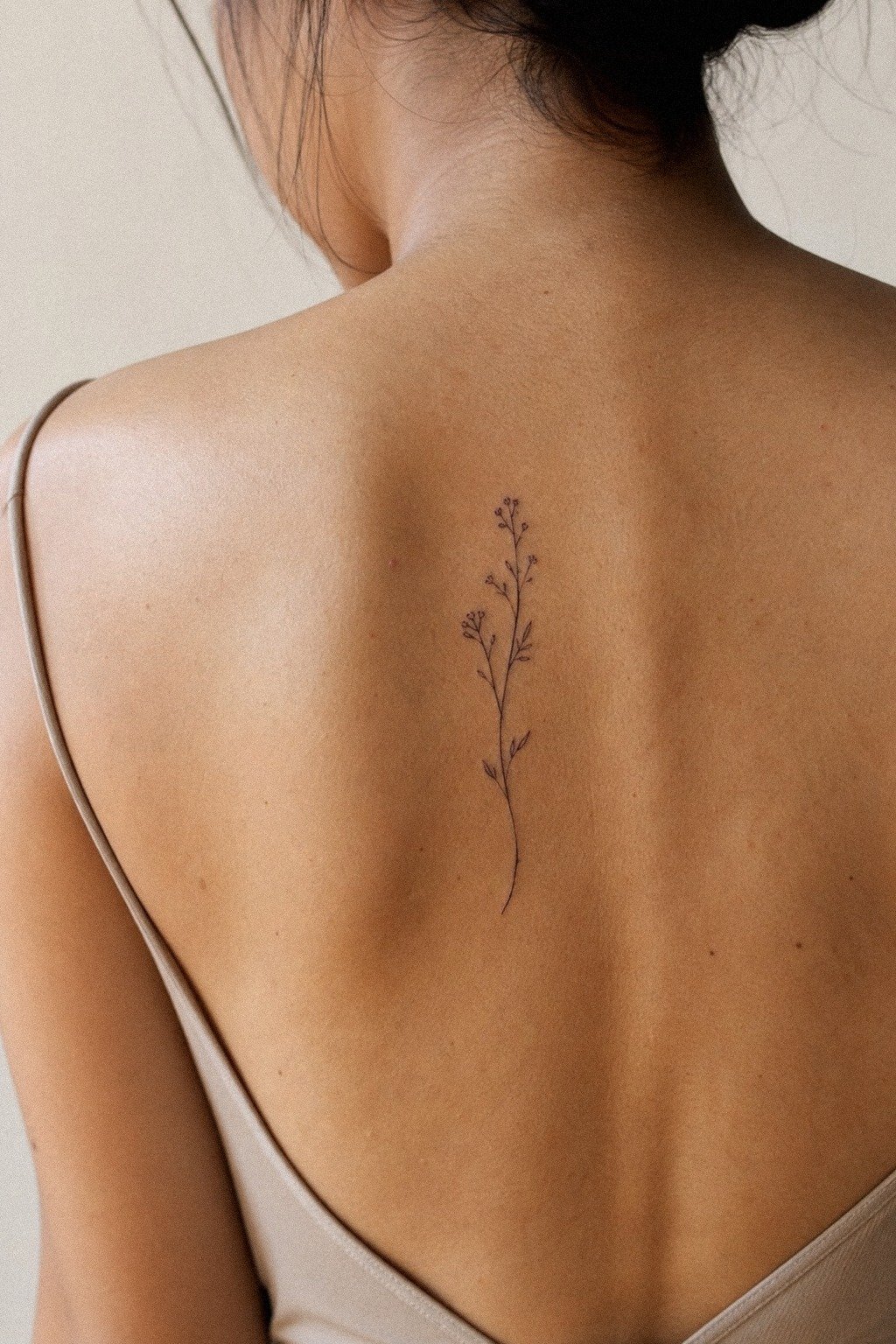
Single needle is a tool choice, not a magic word. On a healed upper back tattoo in natural daylight, you can tell when the artist used a delicate hand and kept the lines crispy instead of scratchy. That’s the look people mean when they ask for subtle tattoos that still feel intentional.
But don’t ask for single needle just because TikTok told you to. Ask whether the design benefits from it. Some artists use a very tight liner instead because it heals more reliably at the size you want.
I care less about the label than the result: smooth line entry, even saturation, and no overworked skin. The clean-heal version of this conversation shows up a lot in this fine line tattoo needles longevity placement guide, and it’s worth reading before you book.
9Check Healed Fine Line Tattoos Before Booking
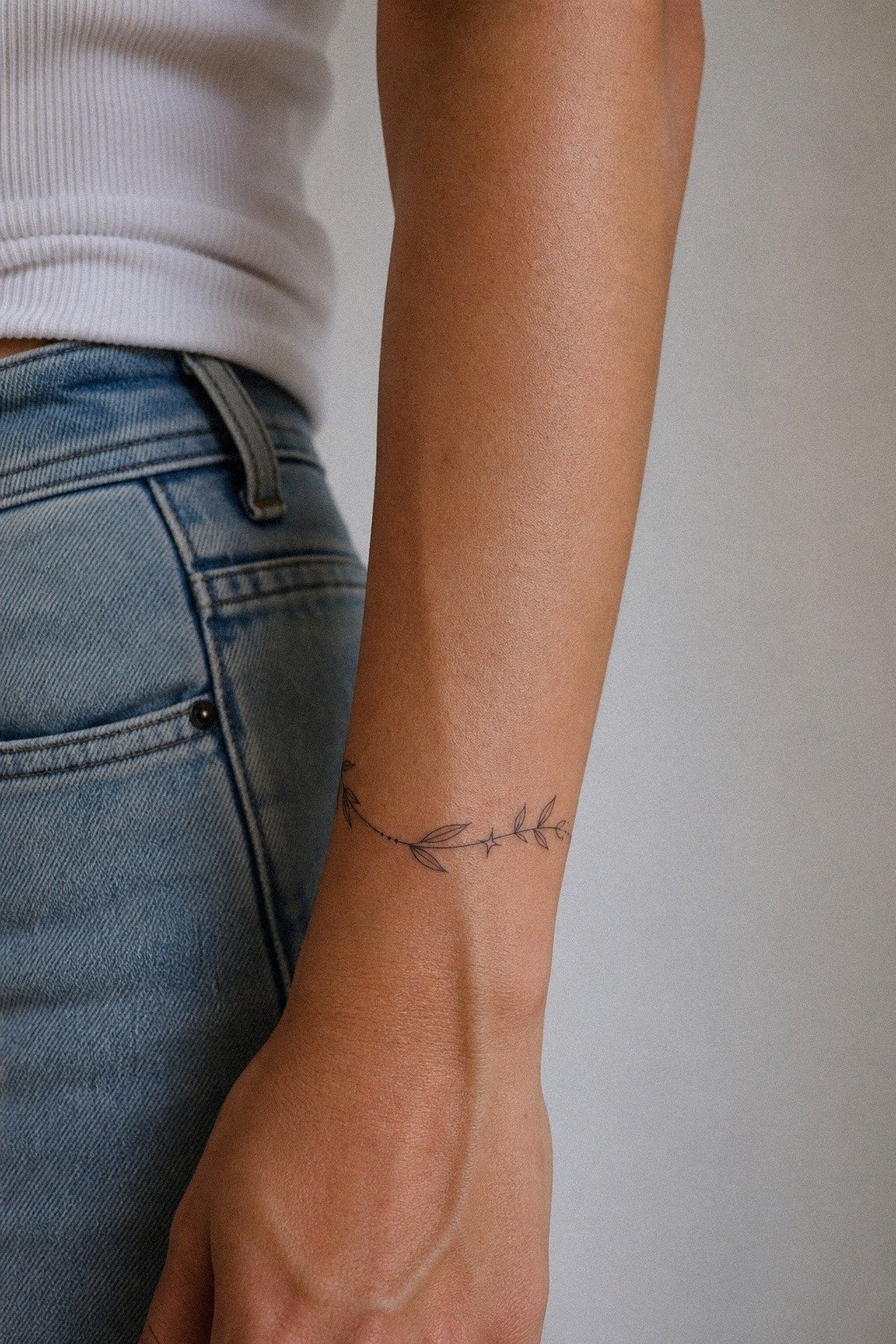
Fresh tattoos lie to you a little. They are shiny, sharp, and swollen, so almost everything looks crisper on day one than it will at month three.
A wrist placement guide makes that obvious because it shows how small linework sits on a bendy, high-use part of the body. I always want clients to scroll healed work, not just fresh studio shots.
Look for photos taken in daylight with the skin relaxed. You want to see whether the line stayed confident, whether tiny details fused, and whether the black healed solid instead of patchy. If an artist only shows fresh tattoos with ring-light glare, I’d slow down.
And if you’re already worried about an old piece, compare your options in can you fix a bad fine line tattoo. Healed evidence is the booking filter that saves you.
That part alone can save you a cover-up bill later and protect what you paid for.
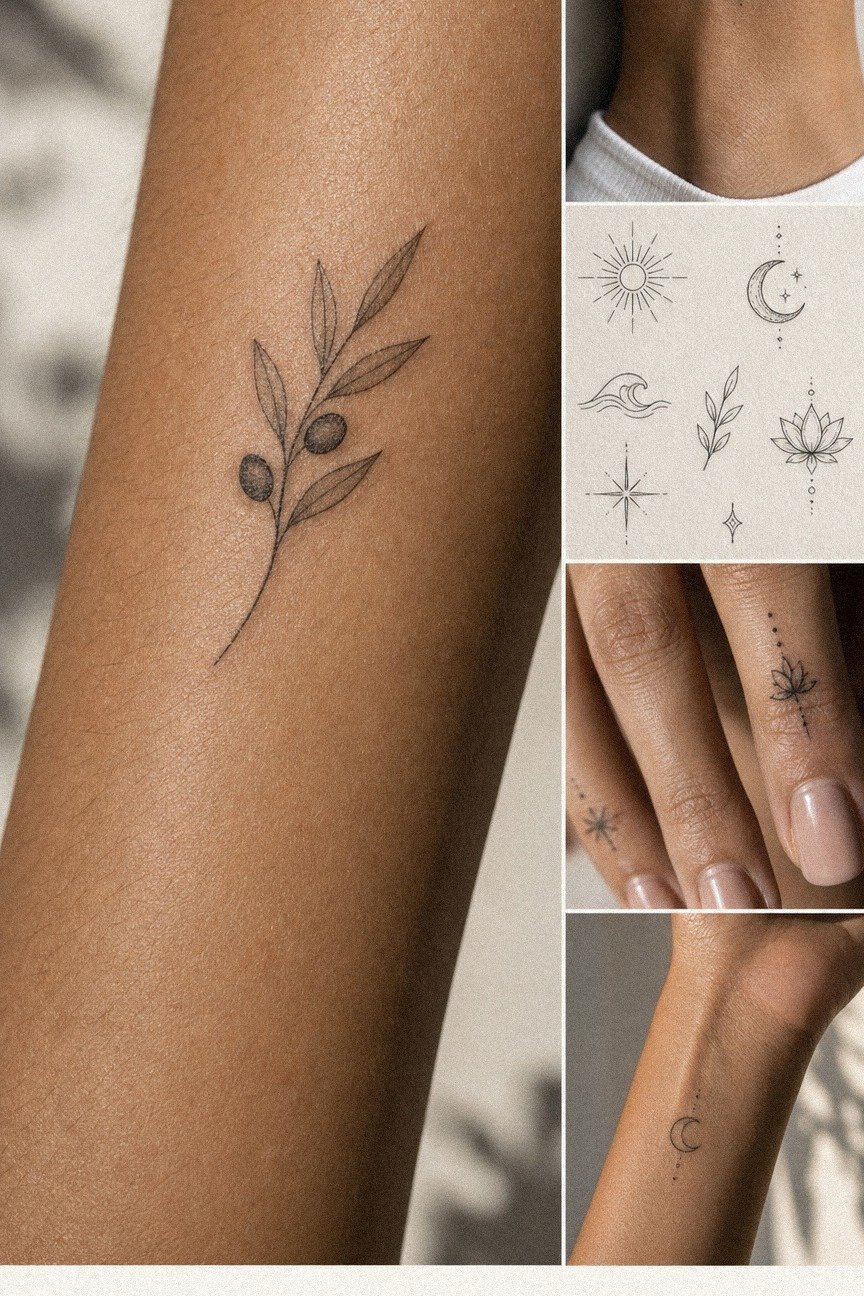
10Save Subtle Fine Line Wrist Tattoo References
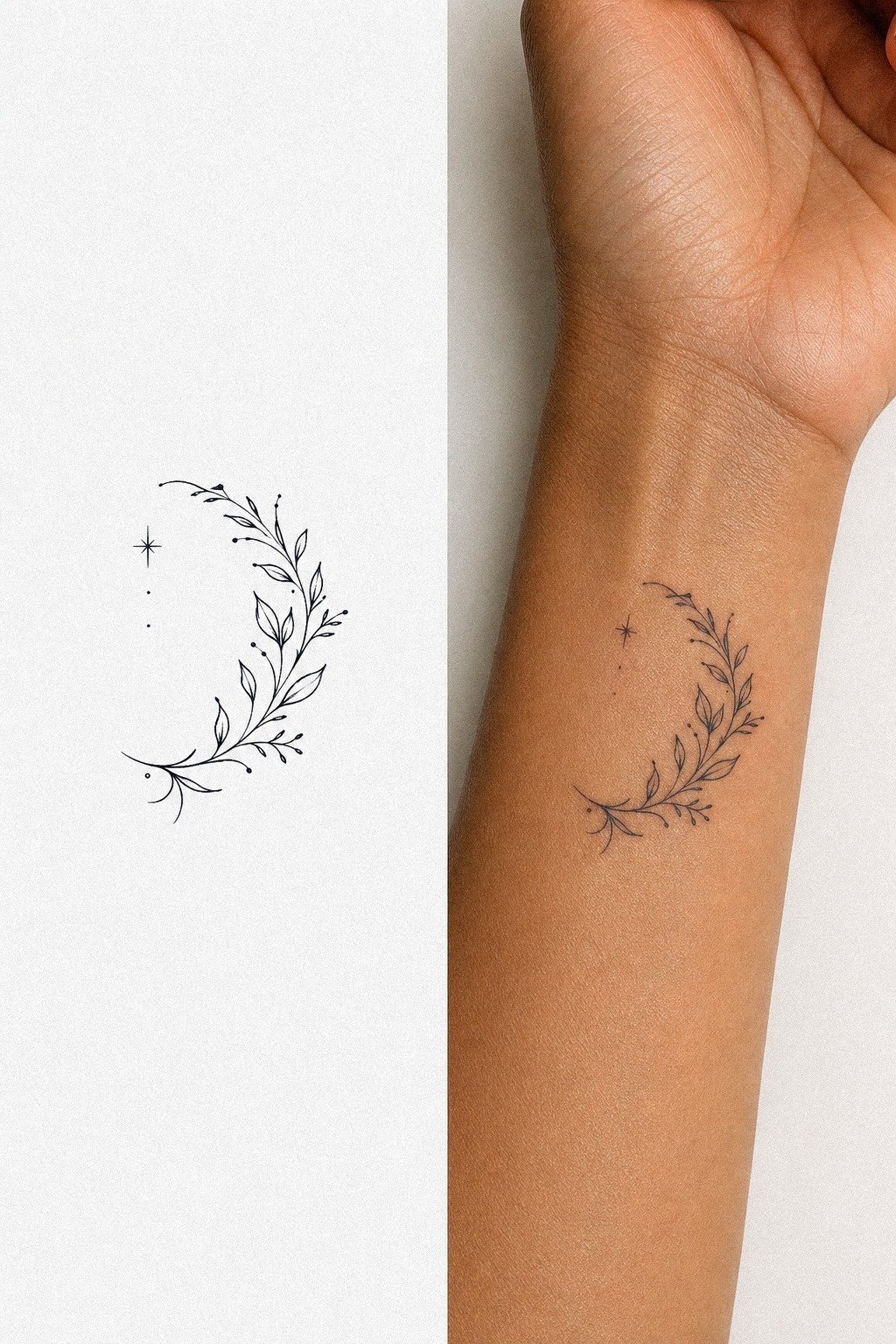
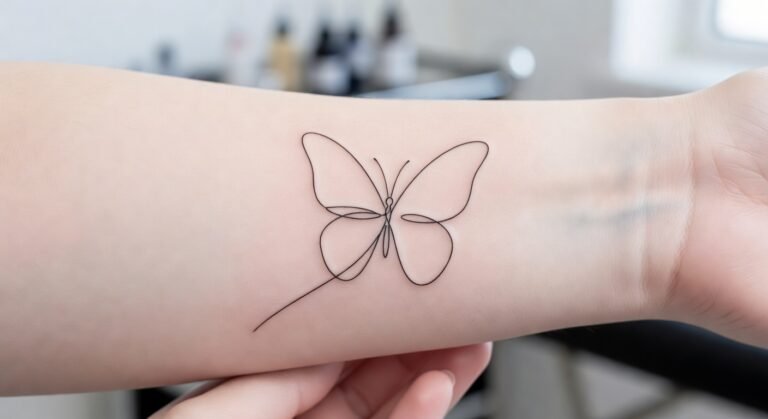
Save references that show both the stencil and the healed wrist tattoo. A split image is gold because it teaches you what changed from clean drawing to healed skin, especially on a wrist where movement and sun do real damage. You are not just collecting pretty pictures here.
You are learning what survives contact with a body.
This is my Stencil-to-Skin Test, and it cuts through fantasy fast. If the stencil side looks airy but the healed side already thickened up, that tells you the design needs more room.
If the healed side still looks elegant, great, save it. Keep a folder of subtle tattoos that repeat the same lessons: fewer lines, stronger silhouette, better spacing. For more wrist-specific reality, I’d pair your saves with why tattoos blur over time so you’re not judging fresh ink like it’s permanent truth.
11Build Meaningful Fine Line Tattoos Around Dates
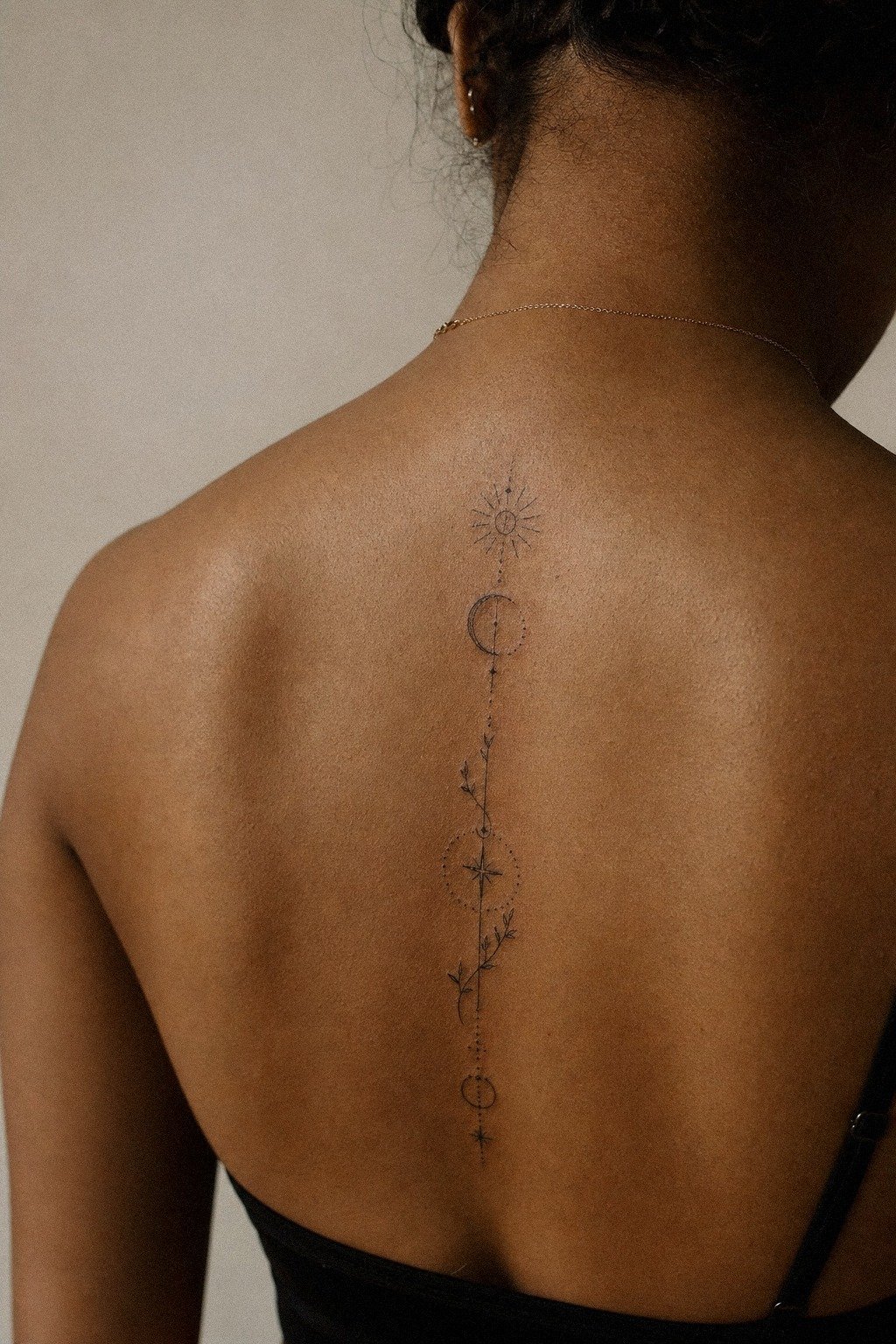
Dates work best when the date is the anchor, not the whole performance. On a deep brown upper back piece, a date can sit beautifully when it has breathing room and a shape around it, like a branch, star map, or soft frame line. I usually steer people toward Roman numerals, clean numerals, or a handwritten date that is short enough to stay legible.
The mistake is making the date too tiny because you want it discreet. Discreet is fine. Illegible is not.
Give the numbers enough height, usually at least 0.5 to 0.75 inch tall depending on the font, and keep extra flourishes to a minimum. If the meaning matters for life, let it read clean for life too. But if you are adding more than one symbolic element, choose a main anchor first so the tattoo does not turn into a memory board.
12Try Small Fine Line Ink Behind The Ear
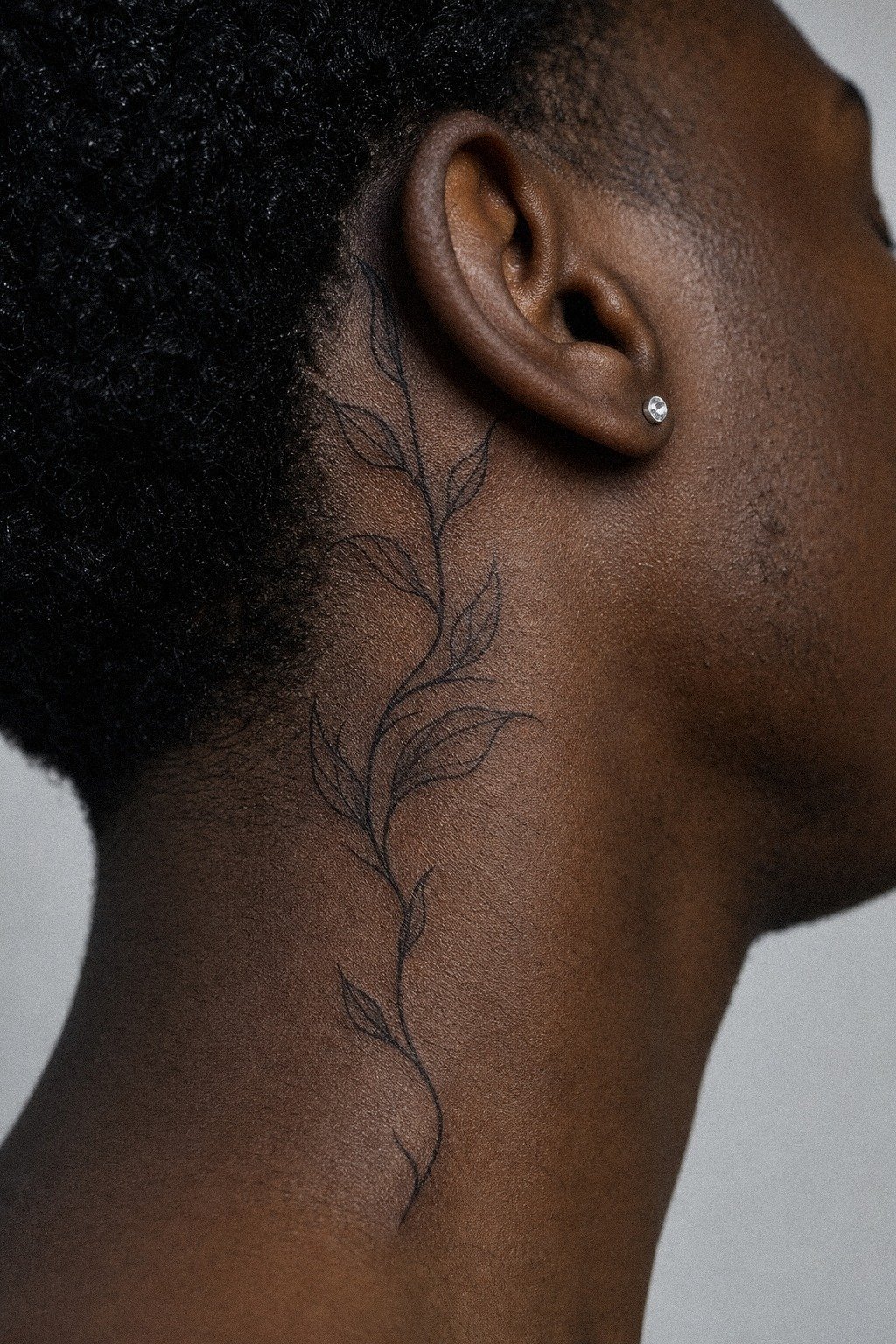
Behind the ear is a strong move for small ink tattoos if you respect the scale. In a macro close-up on deep ebony skin, the beauty is in how little it takes: a tiny star, a curved leaf, a soft spark, maybe a single initial. You don’t need a lot back here because the placement already does part of the talking.
This spot is discreet, but it’s not maintenance-free. Hair products, clippers, headphones, and sun exposure can all bother a fresh tattoo. I’d keep the design under 2 inches, use simple black linework, and avoid delicate script that depends on perfect skin texture.
If your goal is subtle, hidden, and low-commitment visually, behind the ear can be a winner. If you are still deciding between ear, wrist, and ankle, compare a few more fine line tattoo ideas before you settle. Just treat it like an open wound for the first few days, because that’s what it is.
13Place Fine Line Birth Flowers On The Shoulder
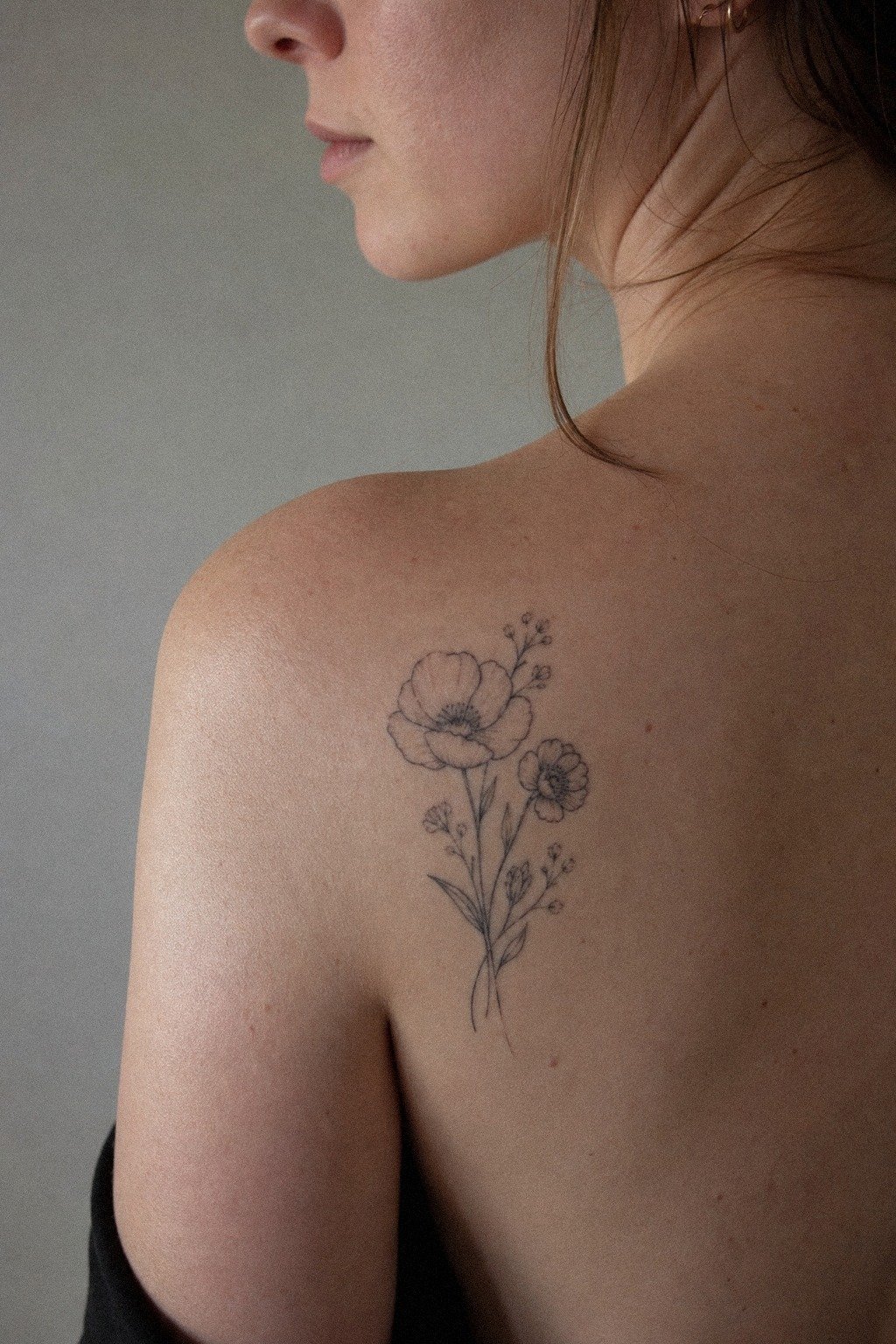
Shoulders are generous to fine line florals. On fair cool-pink skin, a healed birth flower can sit on the shoulder cap and still read soft because the area is broad, lower-wear, and easy to protect. I like this spot for a single stem or two blooms because you get curvature without the distortion that shows up on smaller joints.
Birth flowers also let you build meaning without forcing symbolism. A rose, lily of the valley, narcissus, or poppy can all stay elegant here if you keep the petal count under control and let the outer contour do the work.
If you want to add a name or date later, the shoulder gives you expansion room. And if you are torn between floral and symbolic linework, browse fine line tattoo ideas and save the pieces that still read clear when you half-close your eyes.
14Shared Idea, Not Copy-Paste Matching Tattoos
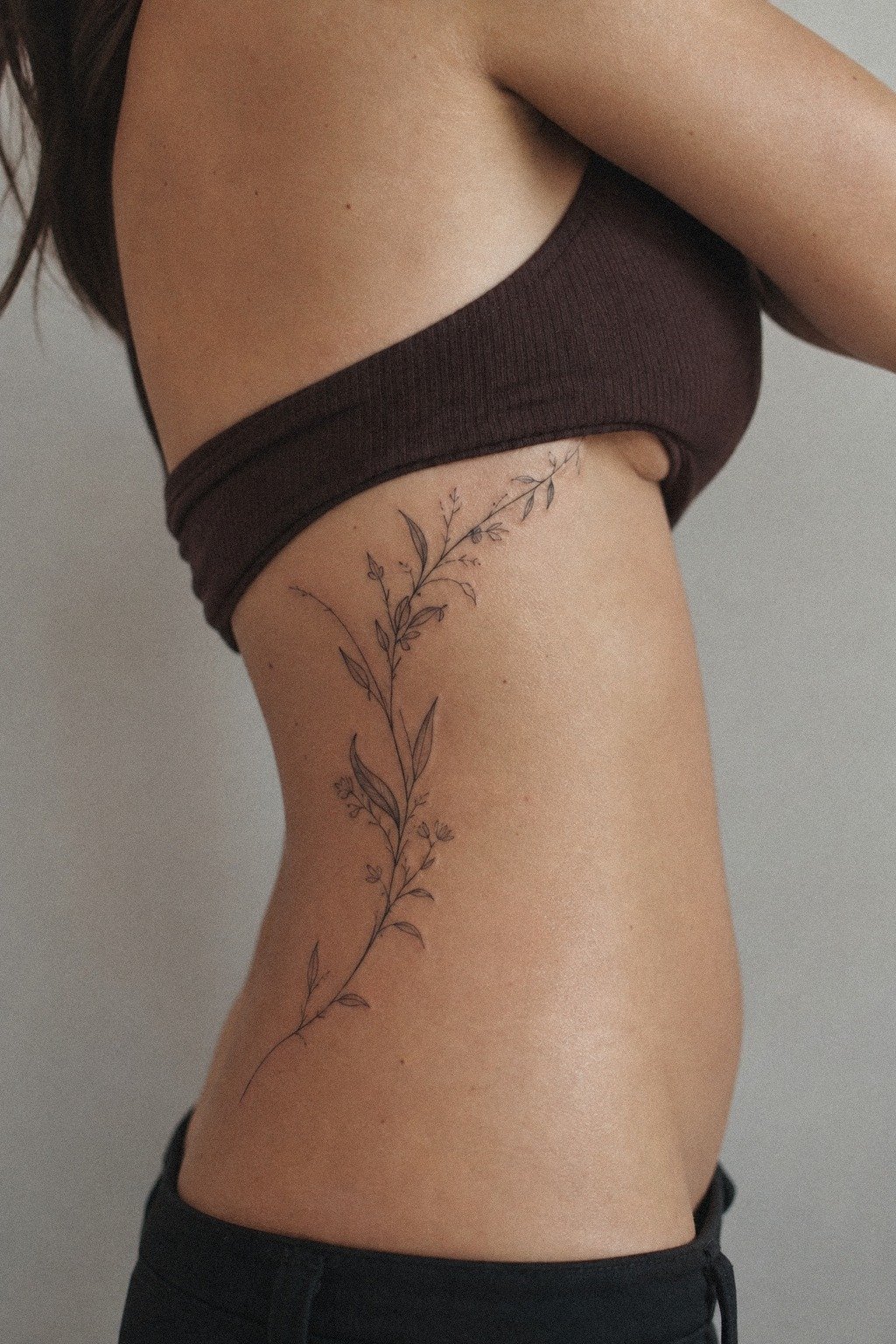
Matching tattoos need shared intent more than shared exactness.
15Keep Fine Line Lettering Short And Legible
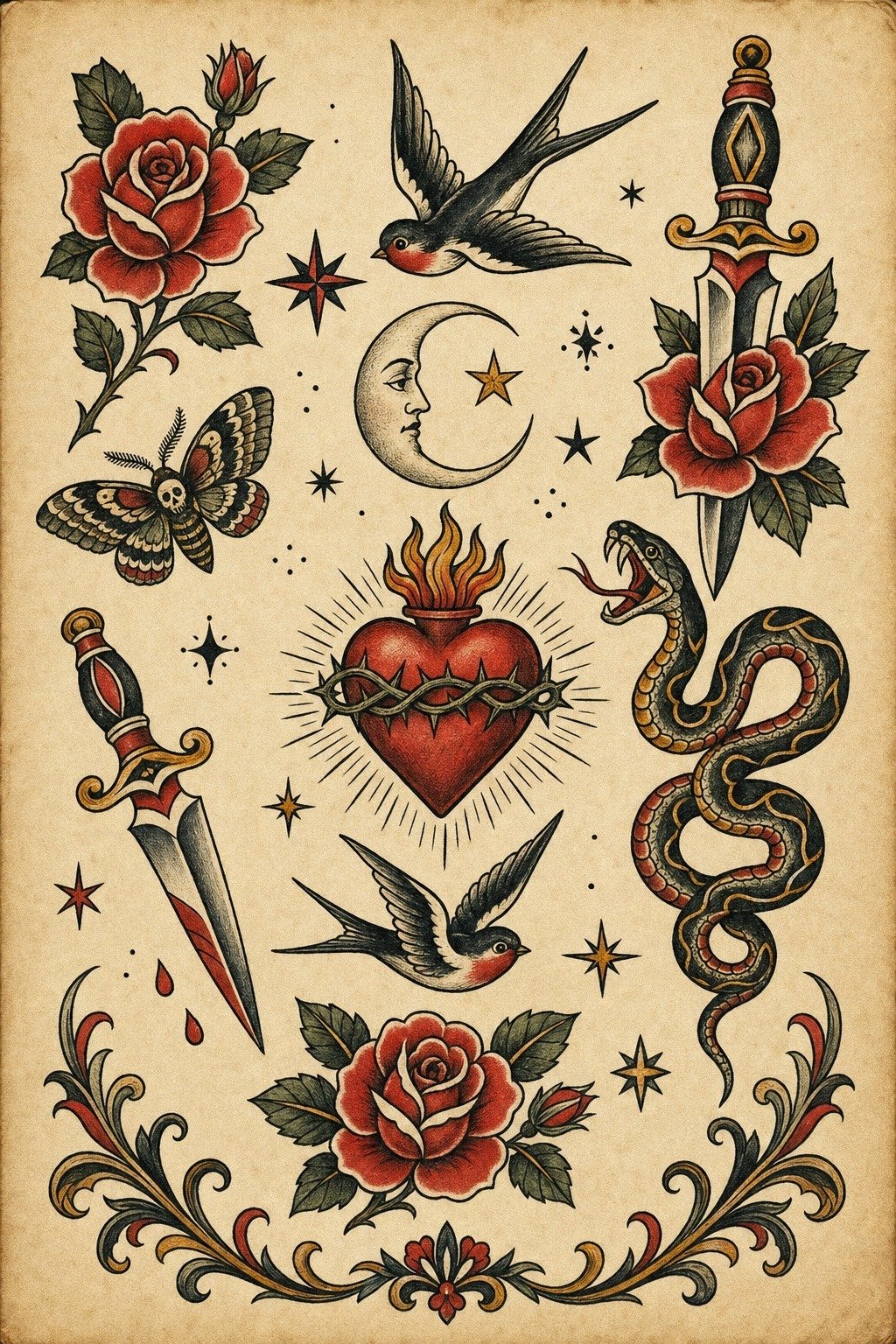
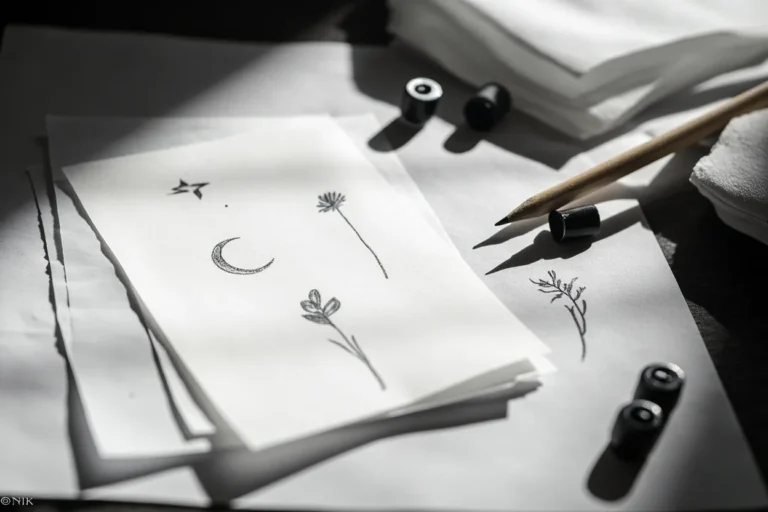
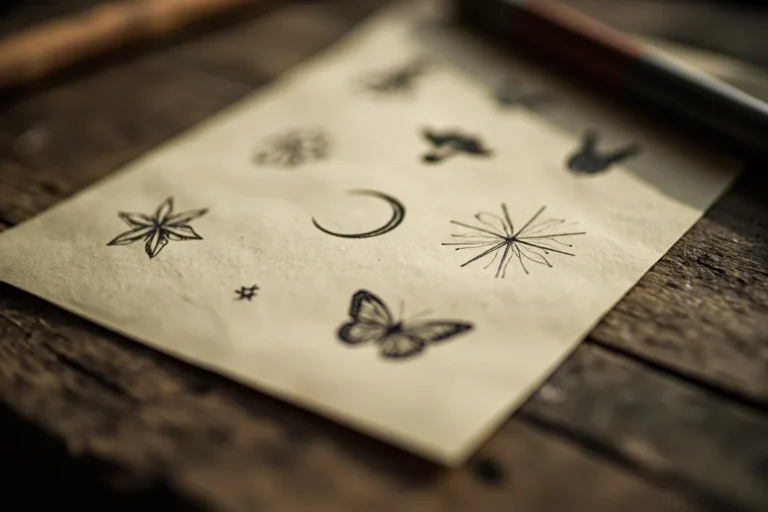
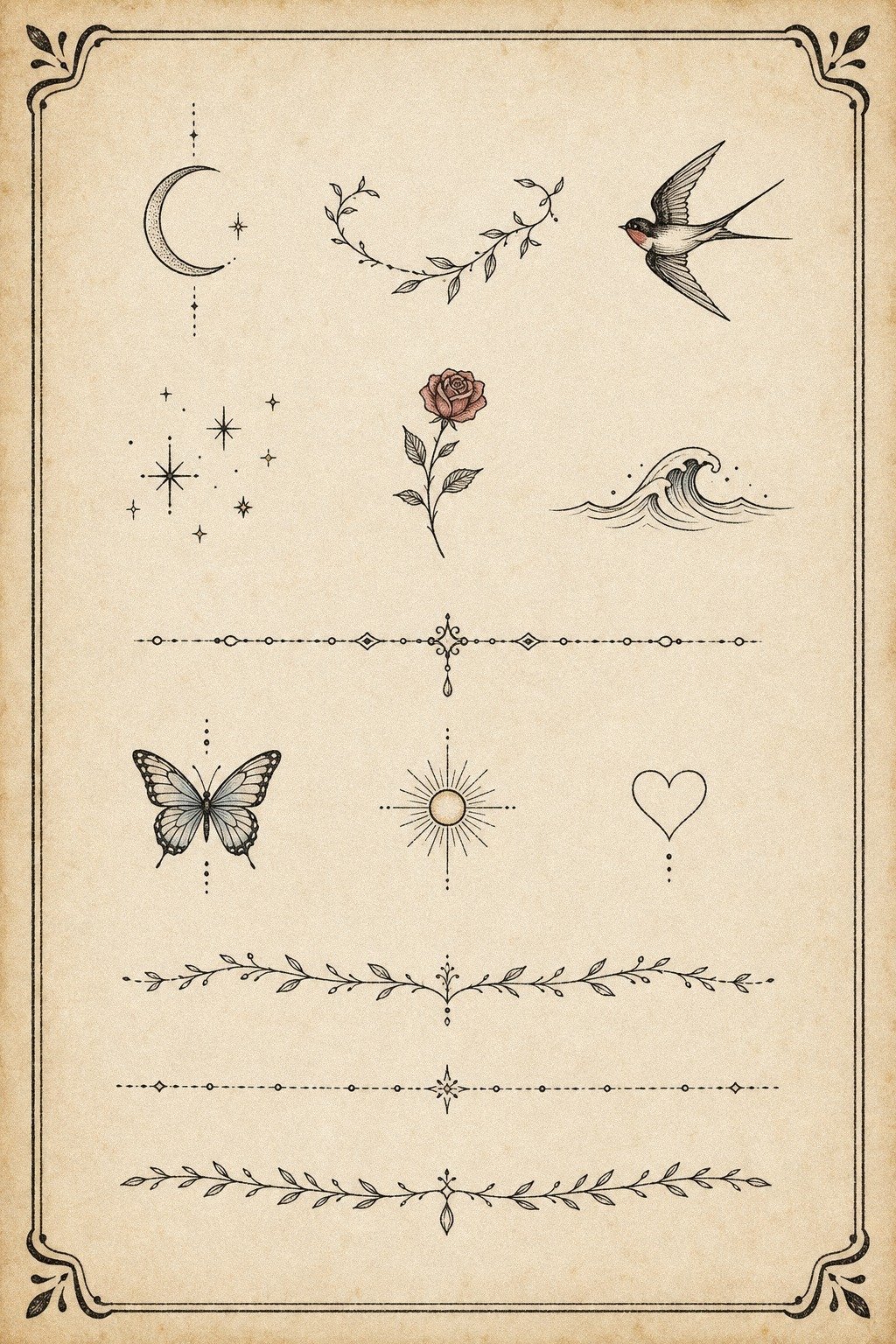
Lettering should be read first and admired second. A flash sheet tells you fast whether the letters still breathe at tattoo scale.
A flash sheet of hand-drawn options is the right way to test this because you can compare block print, soft cursive, serif caps, and tiny handwritten styles before any stencil hits skin. I tell people to cut the phrase in half, then cut it again if the design still feels crowded.
One word is often enough. Two or three can still work. Beyond that, you need more size than most fine line fans expect.
Open spacing, simple letterforms, and clean baseline control matter more than fancy style. Skip ultra-thin script with stacked loops, because that is how lettering gets fuzzy fast. If you are tempted by pale alternatives, compare them with white ink tattoos in white ink tattoos so you understand the tradeoff before you chase a subtle look that may not last.
16Think In Layers With The Future-Sleeve Rule
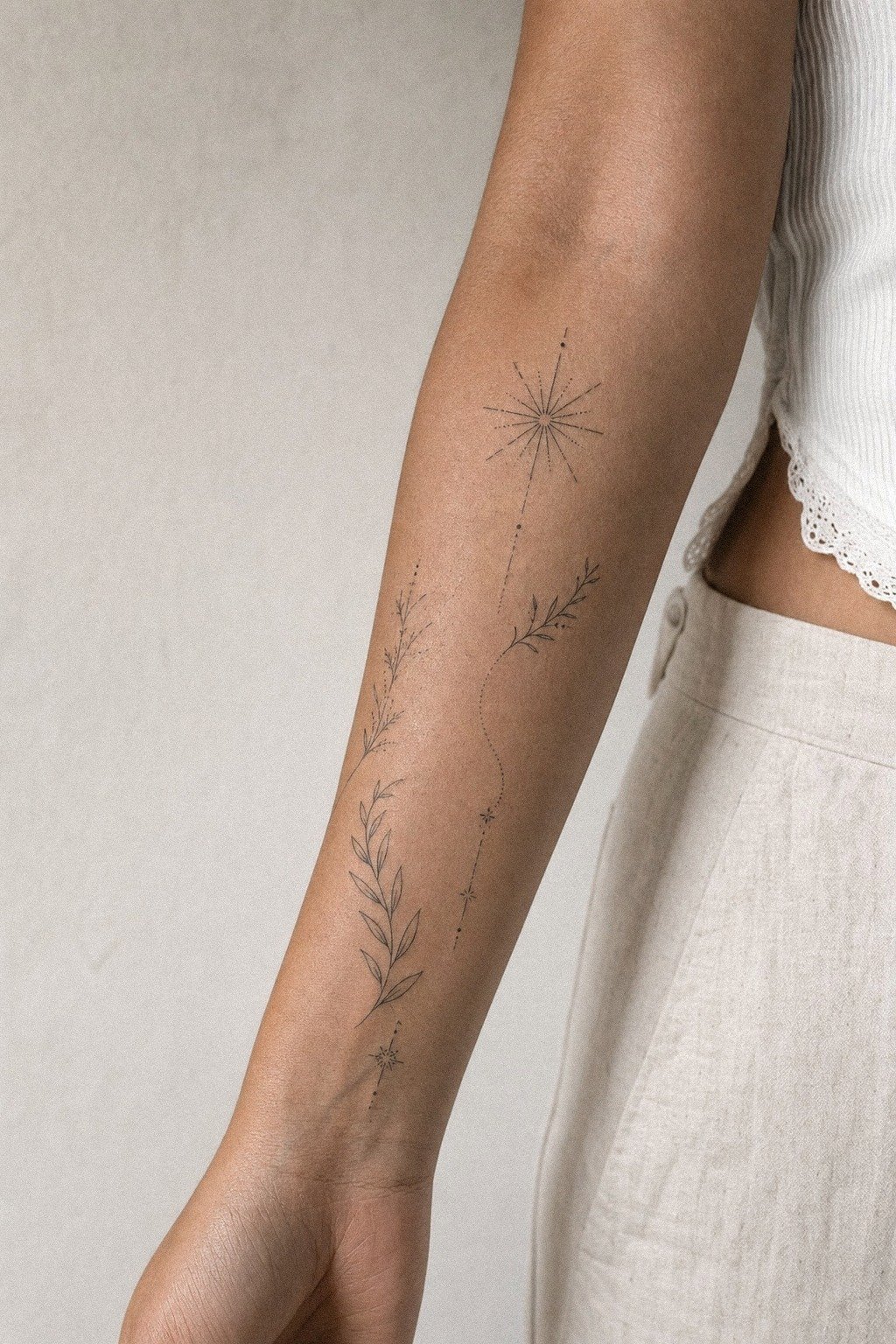
Think of your current tattoo as the first sentence, not the whole book.
17Use Fine Line Stars For Hidden Placement
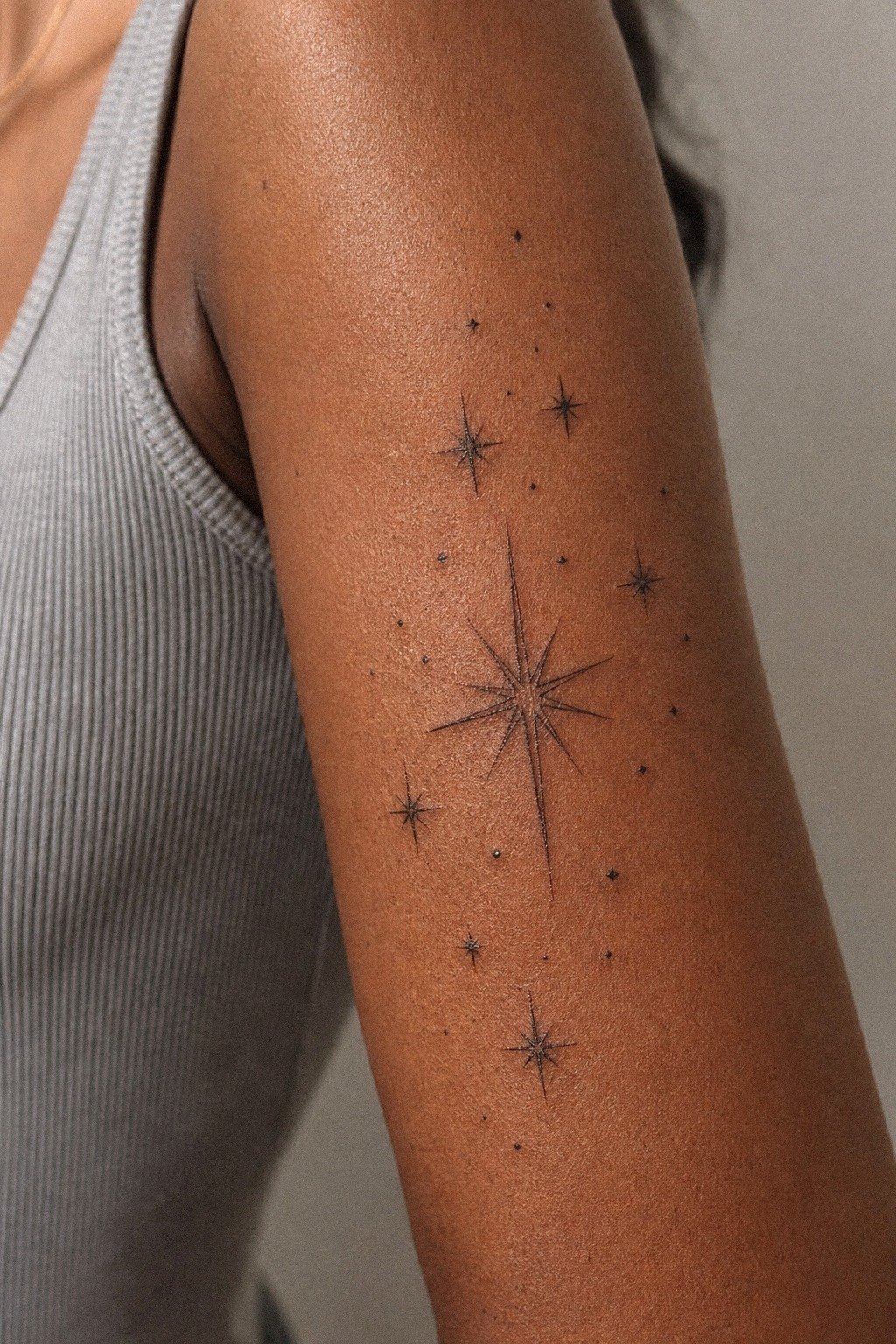
Stars are one of the safest hidden tattoos because the star shape stays readable even when the tattoo is tiny. In a forearm macro on deep brown skin, a small cluster of stars can still look clean if each point has room and the spacing is intentional. I’d rather tattoo three simple stars than one overworked celestial scene the size of a coin.
This is also where subtle tattoos and fandom tattoos can overlap without getting corny. A star arrangement can nod to memory, luck, night, or even something like line drawing simple star wars tattoos if you keep the reference light.
Hidden placement works best on inner arm, rib edge, ankle, or behind the ear. But keep the stars crisp, not dusty.
Black is your best friend for longevity here.
18Pick Fine Line Red Ink With Caution
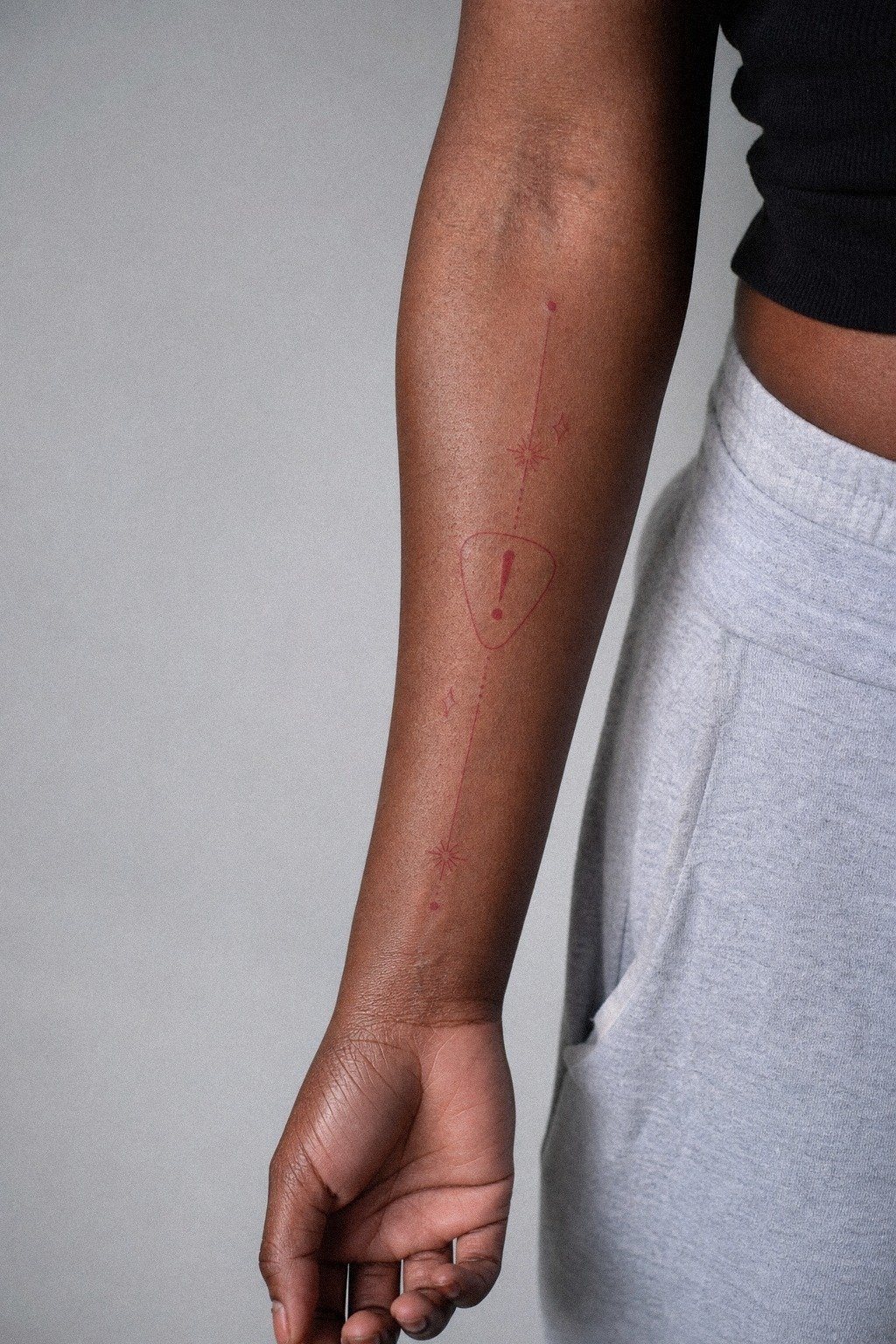
Red ink can look beautiful on healed deep ebony skin, but you need to go in with your eyes open. The issue is not just taste.
It’s visibility, healing behavior, and the fact that some people react badly to red pigment compared with black. I never frame red ink as a casual switch.
Ask your artist what brand they use, whether they have healed examples on similar skin tones, and whether the design would read better in black first. Some red pieces heal soft and elegant.
Others lose punch fast or irritate the skin more. That’s why I treat red as spice, not structure.
And if you are between pale white and red for a subtle effect, read white ink tattoos before you decide which compromise you can live with. It can be worth it, but only when you understand the tradeoff and the possible extra cost of touch-ups.
19Want It To Heal Clean? Protect It Early
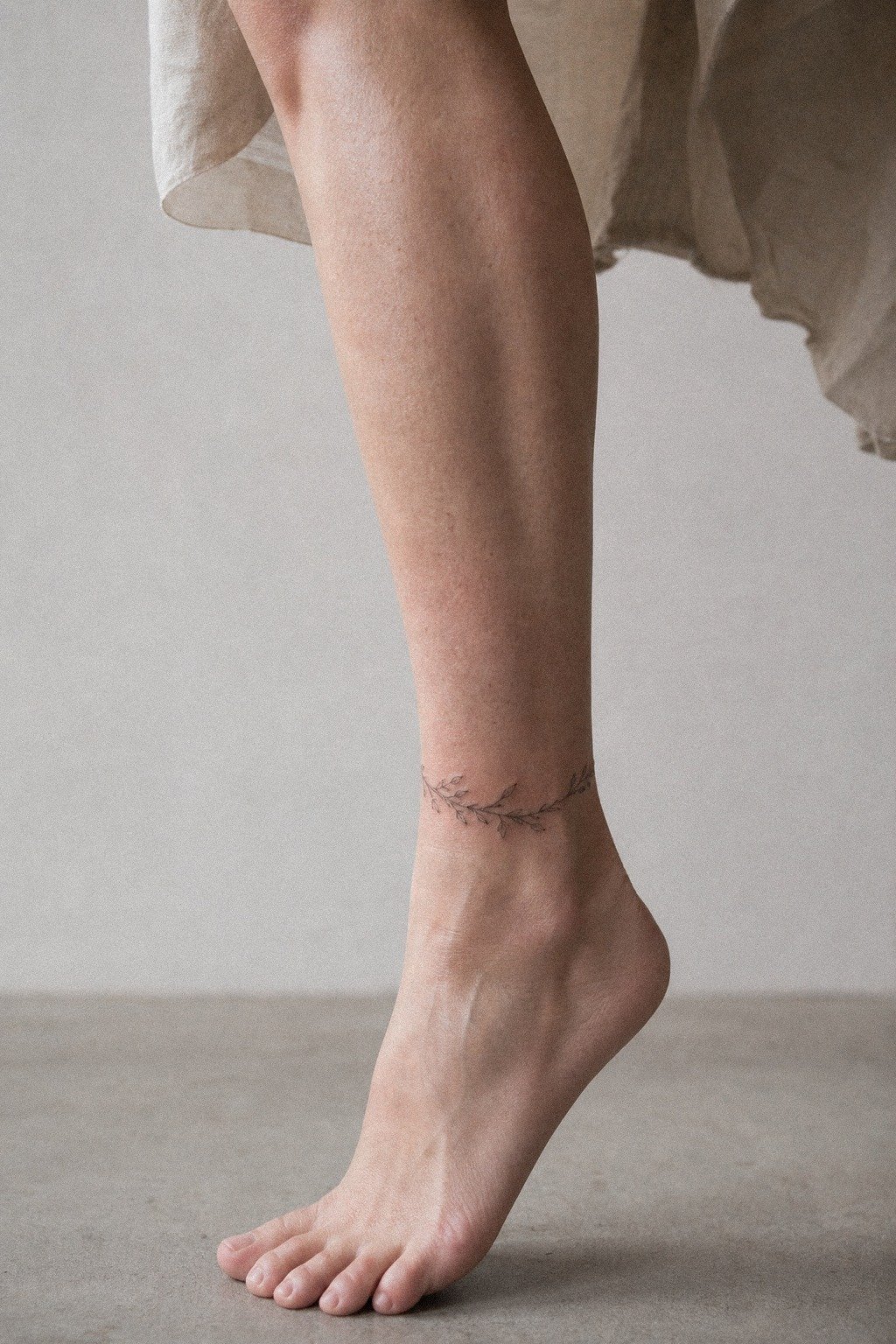
Healing decides whether the tattoo you bought is the tattoo you keep.
The Clean-Heal Framework I Use In The Shop
When people ask me why one fine line tattoo stays crispy and another one goes soft fast, the answer is almost never luck. It’s usually three boring decisions made early, then respected all the way through healing. Size.
Placement. Artist fit. That’s it.
I have seen clients come in convinced they need a more meaningful design, a more special font, or a more hidden placement. Sometimes they do. But more often, they need a simpler shape and a little less ego.
Fine line is not fragile by default. It just does not forgive crowding. If your tattoo only works when someone is six inches away and squinting, it was too small from the jump.
The placement part matters just as much. Low-wear zones like outer arm, shoulder, upper back, thigh, and calf usually age cuter on you because the skin is steadier and the friction is lower.
High-wear zones like fingers, hands, feet, and parts of the wrist can still be worth it, but only if you accept touch-ups as part of the deal. I’d never sell you fantasy on that. Bold will hold.
Fine can hold too, but only when the drawing has enough air.
And then there is artist choice. This is where people get seduced by pretty fresh photos and forget to check healed work.
I want to see one clean pull, not ten fuzzy ones. I want lines that look intentional on all skin tones, not just pale studio skin under perfect lighting.
I want an artist who knows when single needle is the move and when a tighter liner will heal better. That kind of judgment is what you are paying for when the hourly rate climbs.
So if you feel stuck, strip the process down. Choose the design that still reads when it is small but not microscopic. Put it where your body will not chew it up.
Book the artist whose healed work makes you trust the boring parts. That’s the whole game, honestly.
Not flashy. Just solid.
What People Always Want to Know
How much does a Fine Line Tattoos usually cost?
About $100 to $300 is common for a small fine line tattoo, though many shops still have a $50 to $100 minimum. If the linework is custom, the placement is tricky, or the artist is in a major city, the rate climbs fast.
– Small symbol or short word – Placement and shop minimum – Artist experience and city rate
Are Fine Line Tattoos a good idea for a first tattoo?
Yes, if you pick a forgiving placement and a design with enough room to heal clean. Clean simplicity is what makes first tattoos go well, and it usually gives you the smoothest first appointment.
– Outer arm or shoulder – One main subject – No micro clutter
How do I choose a tattoo artist for Fine Line Tattoos?
Check healed portfolio photos first, then line quality, then studio hygiene. Healed proof tells you more than fresh shine ever will. I also like clients to review a fine line tattoo needles longevity placement guide before they compare artists, especially if they’re weighing long-term quality.
– Daylight healed photos – Crispy and confident lines – Licensed, clean studio setup
How much do Fine Line Tattoos hurt?
Pain depends mostly on placement. Outer arm, shoulder, and calf are usually easier, while ribs, sternum, hands, feet, and ankle feel spicier. If you’re nervous, don’t make your first tattoo a pain-pride contest.
– Bony zones, sharper feel – Fleshier zones, calmer sit – Breaks before you crash
How long does a Fine Line Tattoos take to heal?
Surface healing is usually 2 to 3 weeks, and full settling often takes 2 to 3 months. Your job is to protect the line while the skin does its work so the tattoo keeps the clean look you paid for.
– Gentle unscented soap – Thin ointment, then light lotion – No pool, no picking, less sun
What’s the best placement for Fine Line Tattoos?
Outer forearm, shoulder, upper arm, and upper back are strong picks because they balance visibility, healing, and longevity. Low-wear skin gives fine lines a better chance, and this guide on where tattoos hurt less breaks down why those zones are friendlier.
– Room for 2 to 4 inches – Lower friction – Easier sun protection
Where I’d Start First With The Tiny-First Rule
If I had to pick one step, I’d start with a tiny symbol on the outer arm. That placement buys you healing margin, pain margin, and future options.
Get the first win there. Then build bigger.