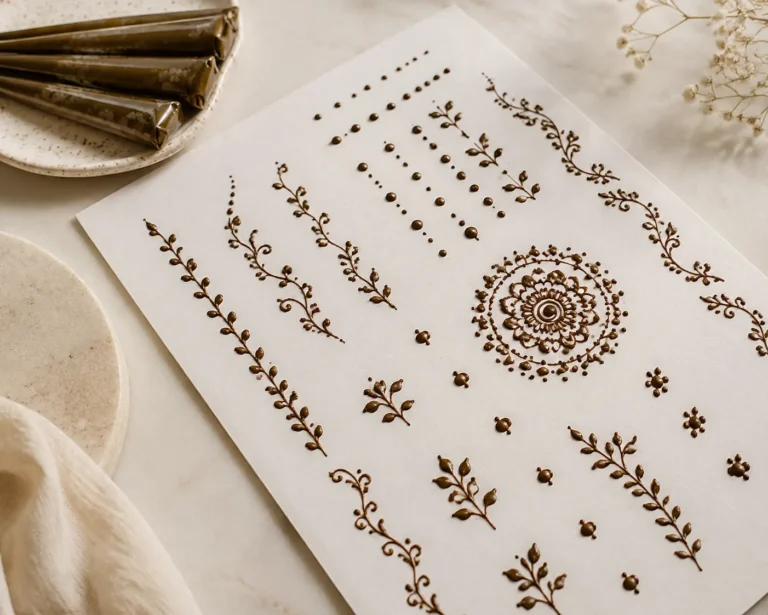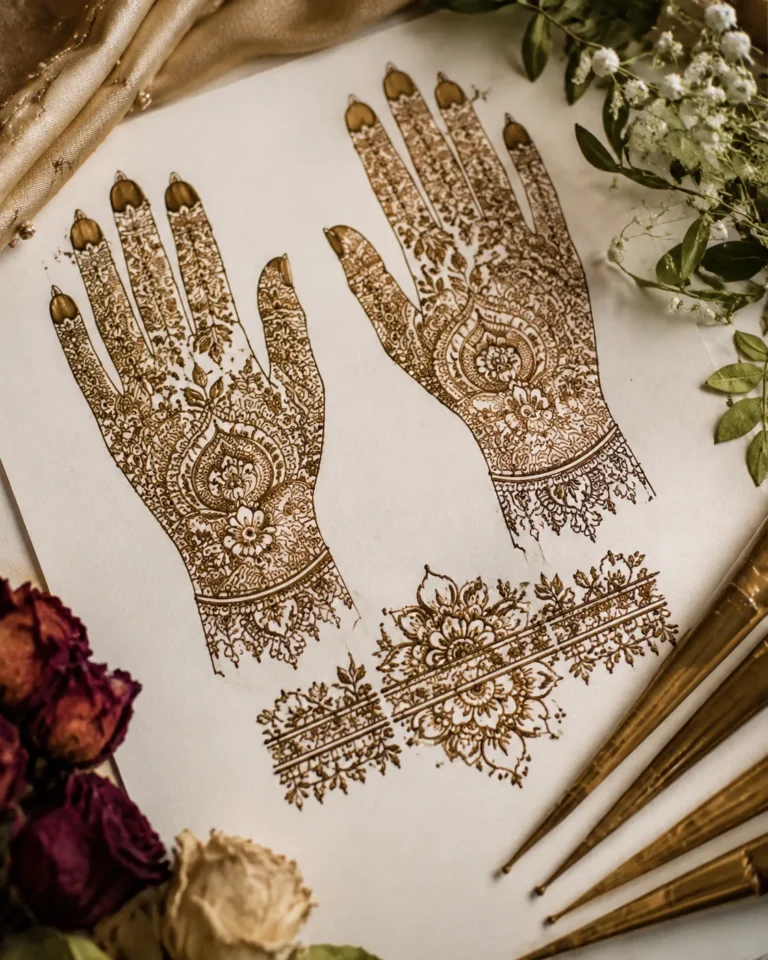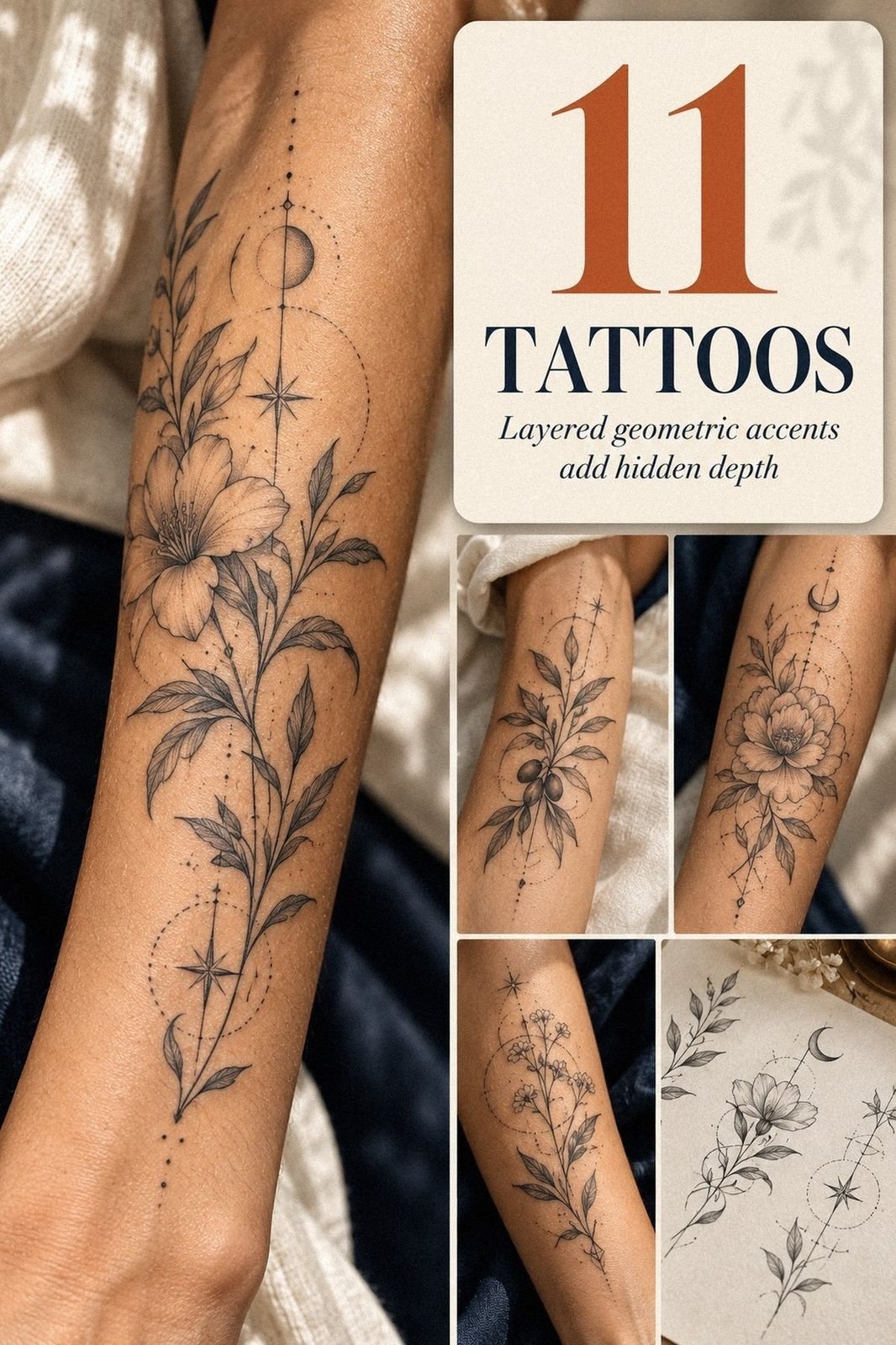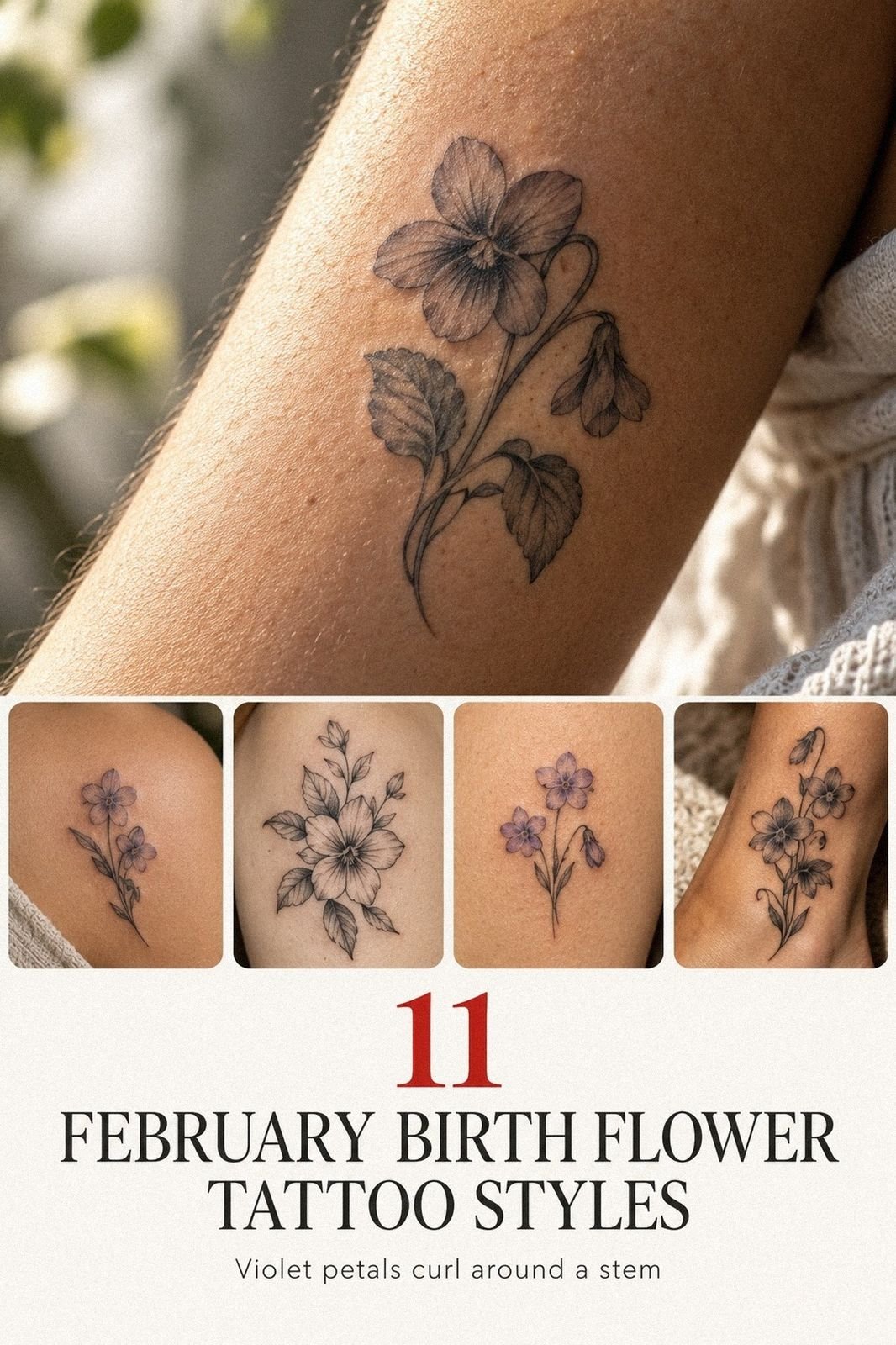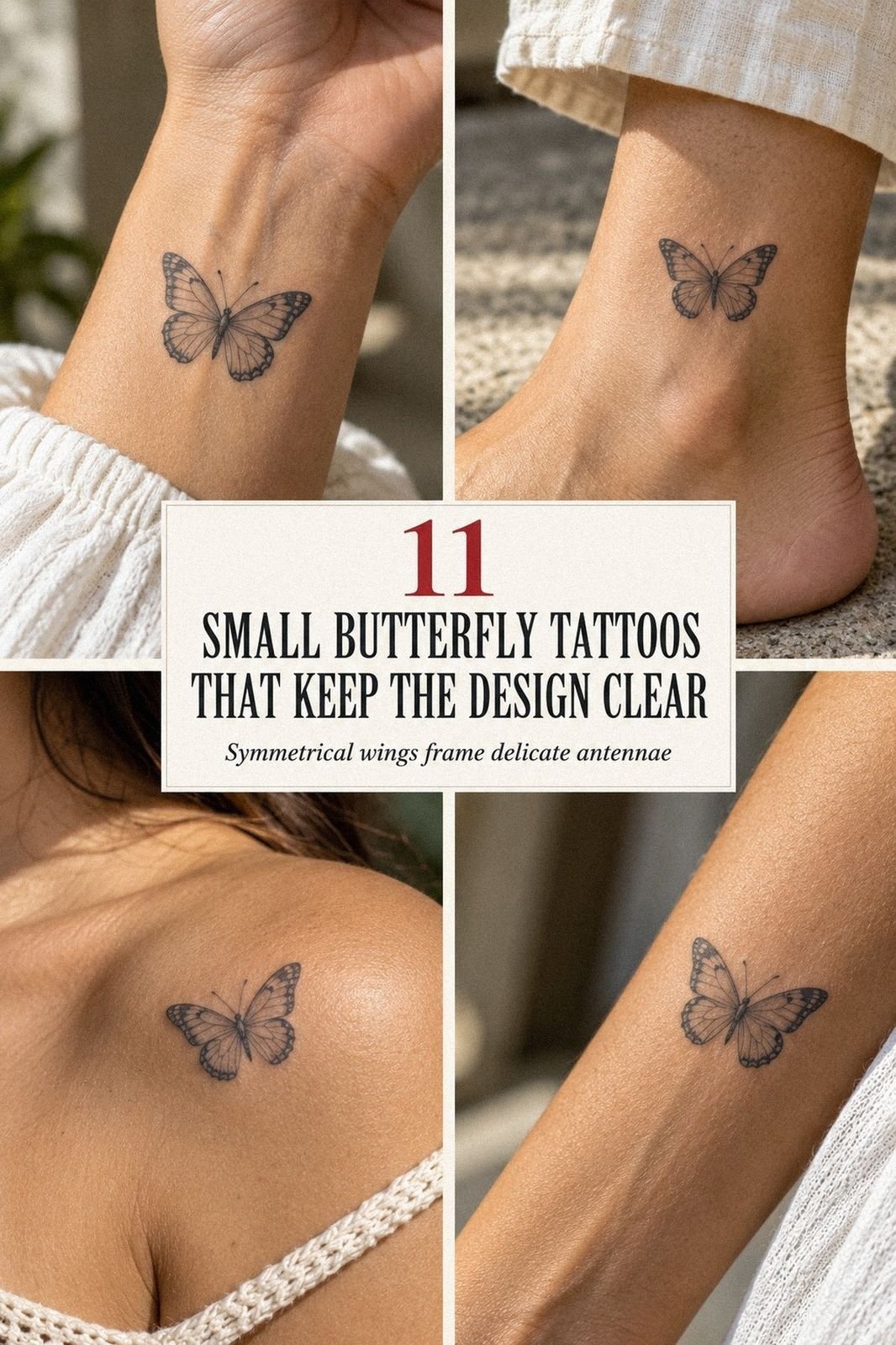

New style mehndi design works best when you treat it like a temporary stain, not a fresh henna photo you are trying to freeze forever. I almost chose a wrist pattern that was too tiny for the detail. Glad I didn’t. These 16 ideas keep the mehndi mood, dry cleanly, and give you better long-lasting linework.
- Fine Line Floral Mehndi Finger Design
- Front Hand Mandala Mehndi Ink Design
- Wrap the Wrist Like Jewelry, Not Wallpaper
- Arabic Vine Mehndi Forearm Design
- Use Open Skin on Purpose
- Push Contrast for a Bold Blackwork Mehndi Look
- Tiny Finger Trail Mehndi Design
- Layer a Bridal Lace Mehndi Sleeve So It Doesn’t Turn to Soup
- Geometric Mehndi Wristband Ink Design
- Is Red Ink Mehndi Worth It?
- Lotus Centerpiece Mehndi Palm Design
- Make Dotwork Finger Rings Stay Light
- What Makes a Peacock Mehndi Design Stay Rich Longer?
- Bianca-Style Bridal Symmetry Versus Loose Vine Flow
- Add a Hidden Henna-Mood Accent Behind the Ear
- Henna Softness Versus Black-and-Grey Structure
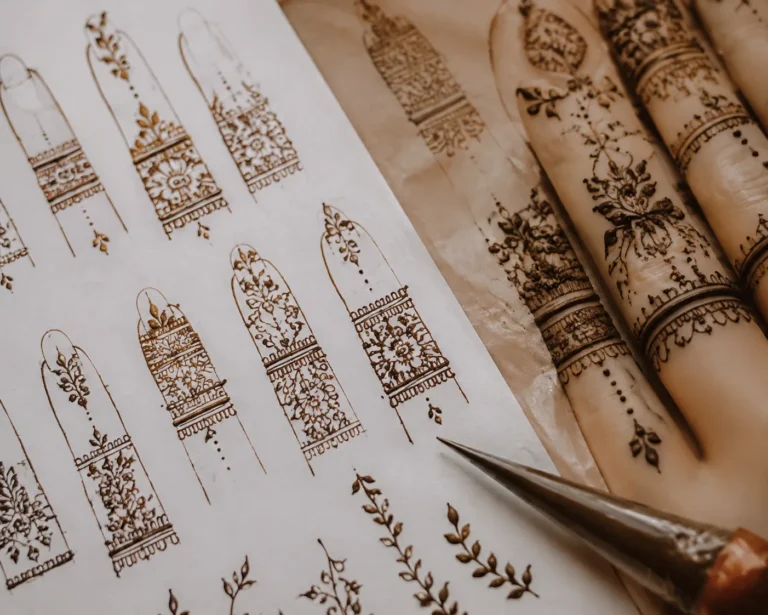
1Fine Line Floral Mehndi Finger Design

[IMAGE: fine line floral mehndi finger design on hand]
Start with a finger trail if you want the mehndi feel without full-hand commitment. The petals need to stay airy and separated. On fingers, that matters because this is a high-wear placement.
I’d taper this design down two or three fingers, not all five. Kuro Sumi lining black or a warm brown sketch pass helps your artist map the flow before the final linework.
Keep the pattern edited. One clean stem. Tiny leaf breaks.
If you want a lower-cost start, this usually gives you better mileage than dense hand coverage. See very simple mehndi designs first.
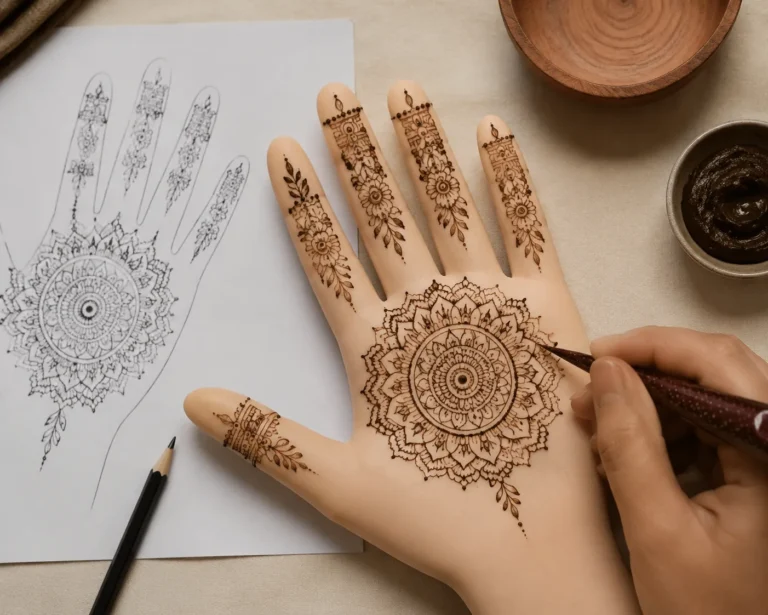
2Front Hand Mandala Mehndi Ink Design

[IMAGE: front hand mandala mehndi design]
Go symmetrical if you want the front hand to feel intentional. A centered mandala only works when the circles stay even and the outer petals don’t get muddy near the finger creases. Palm skin moves a lot, so your artist needs bold enough arcs.
This is where I tell clients not to chase micro-detail. Seriously, don’t. A Cheyenne SOL Nova can keep the circles clean, but the bigger win is leaving open skin between the rings.
Use one clear center, one stronger halo, then let the fingers carry lighter detail. That edit protects the design and keeps the price from climbing for no real gain. The coverage in stylish mehndi designs for front hand shows why.
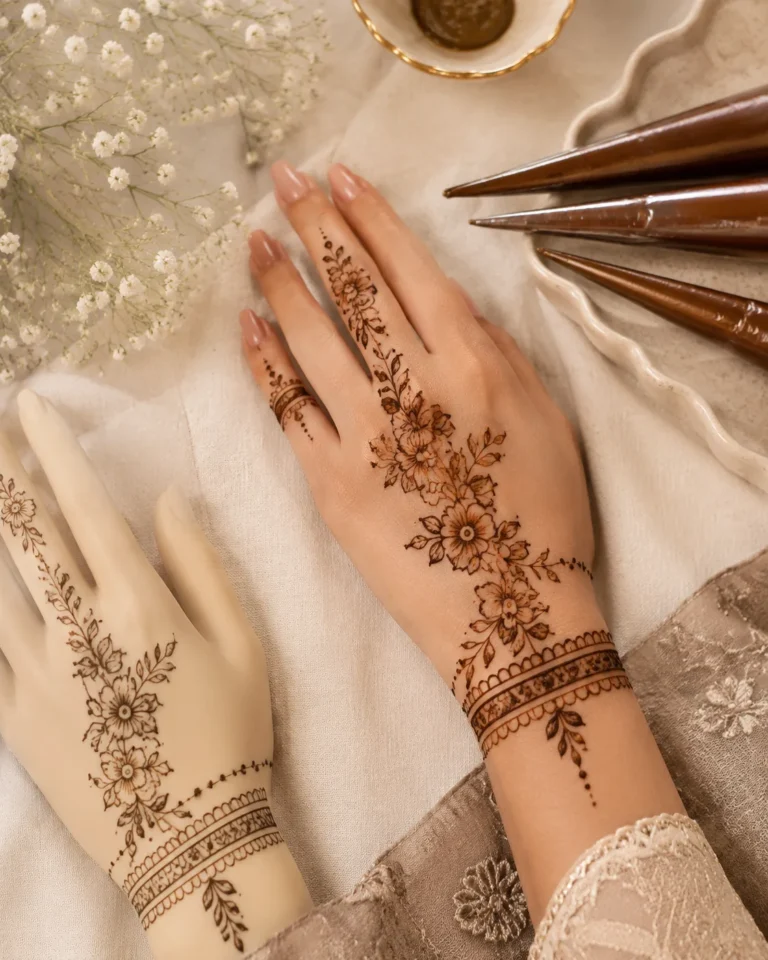
3Wrap the Wrist Like Jewelry, Not Wallpaper

[IMAGE: minimal mehndi wrist cuff design]
A wrist cuff should read like jewelry at a glance. If you pack every dot, petal, and filler shape into a thin band, it’ll blur faster than people expect. Around 0.5 to 1 inch tall is usually the sweet spot for a cleaner cuff.
I prefer a band that leaves open skin above and below the design. Dynamic Triple Black gives you a strong long-term edge if you want those borders to stay solid.
Short petal chain. One center diamond.
Tiny drops that stop before the wrist bend. From a price angle, this is one of the smartest entries in the whole list because you get visibility without full-hand maintenance.
Worth it for a starter budget.
4Arabic Vine Mehndi Forearm Design

[IMAGE: Arabic mehndi vine forearm design]
Let the vine travel instead of stacking every leaf in one tight cluster. Arabic flow looks best when the stem drifts in an S-curve from the hand toward the forearm. That movement keeps the design from feeling stiff once it becomes permanent ink.
I’d skip a dead-straight vine. It kills the softness this style needs. World Famous Limitless Blackout is not the headline here, but a smooth black line with tiny leaf turns and soft dots is.
One long stem, one pause, one blossom, then another climb. You save paste, save time, and get a pattern that looks more graceful as the stain develops. For cleaner movement references, check sketch-style movement.
5Use Open Skin on Purpose

[IMAGE: foot and ankle mehndi design]
Open skin is part of the design. When you leave the right gaps, the untouched areas sharpen the whole pattern and keep it from turning heavy. That matters a lot on feet and ankles because the paste can smudge fast before it dries from shoe friction.
Feet are spicy, and the paste dries slower when you keep rubbing them. A little lemon-sugar seal can help the design stay put, but loose sandals and patience still matter more.
Big filled blankets of detail rarely age cute here. One center motif, clear borders, and airy teardrops usually read better. If you want fuller coverage, 23 new bridal mehndi designs that cover every inch right shows how to go bigger without losing the pattern.
6Push Contrast for a Bold Blackwork Mehndi Look

[IMAGE: bold dark-paste mehndi hand design]
Push the contrast if you want a back-hand design that doesn’t read flat. Bold dark-paste mehndi borrows strong traditional shapes, then gives them a more graphic read. On deeper skin tones, open spacing and a clear focal point can help the reddish-brown stain look especially solid.
This is not the moment for timid linework. But it also should not become a solid glove. FK Irons Flux Max paired with big mags can pack rich black fast without overworking the skin.
Solid petals. Solid leaf blocks. Then enough untouched skin so the shape still reads clean. That’s the real payoff here.
Strong blackwork often stays readable longer than whisper-thin detail, so the maintenance can be lower.
7Tiny Finger Trail Mehndi Design

[IMAGE: tiny mehndi finger trail design]
Keep the trail tiny, but not microscopic. A little dotted path or leaf chain can look sweet, but only if each mark has enough size to stay readable through hand washing, sun, and daily wear. Finger mehndi is one of those zones where fading is part of the deal.
I tell first-timers to think of finger mehndi like fine rings you wear for a few weeks. They are delicate, visible, and temporary. A lemon-sugar seal will not fix a weak design, but careful drying can help the stain settle richer.
Three dots. One curved stem. One bloom near the knuckle. That’s enough.
If you want a softer start before committing to finger work, scroll latest simple mehndi designs.
8Layer a Bridal Lace Mehndi Sleeve So It Doesn’t Turn to Soup

[IMAGE: bridal lace mehndi sleeve design]
A bridal lace sleeve needs visual order or it falls apart fast. You want one hero motif near the wrist or lower forearm, lighter connectors, then a second wave of detail that fades before it gets muddy. That hierarchy is what keeps dense mehndi work from becoming soup.
I see people bring in screenshots loaded with filler and ask for all of it. Real talk: you do not want all of it. Eternal Maxx Black can hold a clean sleeve structure, but the line plan matters more than the bottle.
Try a 60-30-10 split. About 60 percent framework, 30 percent softer filler, 10 percent tiny accents. That gives you better long-term payoff because you are paying for clarity, not just a busy fresh photo.

9Geometric Mehndi Wristband Ink Design

[IMAGE: geometric mehndi wristband design]
Swap floral softness for geometry when you want something sharper and more unisex. A geometric wristband still nods to mehndi, but the shapes give it a cleaner, more graphic read. This kind of structure stays legible when each shape gets real clearance.
I’d go slightly bigger here than most Pinterest refs show. Intenze True Black can carry a clean band, but spacing is still the hero.
Repeated shapes, harder corners, fewer filler dots. That’s the move.
It pays off if you want a cuff that reads clearly while the stain develops, not just while the paste is fresh. For more layout ideas, see mehndi design layout ideas.
10Is Red Ink Mehndi Worth It?

[IMAGE: red-brown henna mehndi hand design]
Red-brown henna can be beautiful, and it is the classic natural finish. The stain starts lighter, deepens toward its richest color around day two, then gradually fades depending on your skin, placement, washing, and how long you leave the paste on.
That doesn’t make it bad. It just makes red pigment a trade-off.
I’d use red only when the design is anchored with clear linework and enough contrast. solid red pigment needs a steady hand and a pattern with fewer tiny moving parts.
Some artists charge the same hourly rate, some charge a little more because saturation can take longer. If your price limit is tight and you want maximum longevity, black usually gives you better payoff.
It’s the safer natural-paste call. Preview red-brown mehndi ideas before you book.
11Lotus Centerpiece Mehndi Palm Design

[IMAGE: lotus centerpiece mehndi design]
Center the lotus and let everything else support it. A lotus layout looks best when the flower stays the hero and the filler stays secondary.
You don’t need twelve competing motifs. You need one clear flower with enough contrast that it still reads after the paste dries and the stain deepens on day two.
Weak lotus designs get too busy around the petals. I’d rather see eight clean petals than twenty fuzzy ones. Stencil Stuff matters in prep because centered symmetry is brutal to fake once you commit.
Keep the middle strong, the dots mirrored, and the outer trails soft. That’s the whole job. If you’re torn between fuller coverage and one strong symbol, peacock mehndi designs is a good reminder that restraint ages nicer.
12Make Dotwork Finger Rings Stay Light

[IMAGE: dotwork mehndi finger ring design]
Dotwork rings can look refined, but only when the dots are intentional. If the dot size drifts or the marks get packed too close, the whole ring starts reading fuzzy instead of delicate. This is one of those ideas that needs a very controlled hand.
I like dotwork rings best when they are paired with one tiny connector on the hand instead of stacked across every finger. Bishop Da Vinci V2 style precision machines can help keep those dots consistent.
Price-wise, this usually lands below a full cuff and above one single finger accent. That’s a fair middle ground if you want visible detail without jumping into a much bigger commitment.
13What Makes a Peacock Mehndi Design Stay Rich Longer?
[IMAGE: peacock mehndi forearm design]
The feather eye is the whole fight. A peacock motif only ages well when the artist edits that center eye down to something readable instead of stuffing it with tiny rings. The feather detail needs real restraint or it softens into blur.
I’d put this on the outer forearm or upper calf before fingers or the top of the foot. open round shader setups can help with soft grey accents, but I still want the black outline doing most of the work.
Those lower-wear zones usually make the final spend feel more worth it because the curves hold longer. If you want to compare references, check peacock mehndi designs.
14Bianca-Style Bridal Symmetry Versus Loose Vine Flow
[IMAGE: bridal symmetry versus vine mehndi designs]
If you are torn between bridal symmetry and loose vine flow, ask yourself one blunt question: do you want polish or motion? Symmetrical layouts feel formal and ceremonial. Loose vine layouts feel softer and easier to adapt for future occasions.
I lean vine for everyday wear. I lean symmetry when the point is statement coverage. Mast Tour Pro level machine control is nice, but your real choice is visual rhythm.
There’s usually a price difference too. Symmetry takes longer because every side has to echo the other cleanly, so the price can creep up faster. Loose vine work often gives you better payoff if you want grace without mirrored density.
15Add a Hidden Henna-Mood Accent Behind the Ear
[IMAGE: behind the ear mehndi accent design]
A behind-the-ear accent nods to mehndi without committing to a full hand layout. It borrows the petal rhythm and dot clusters of henna, but it needs to stay graphic enough that it doesn’t disappear. Small does not mean weak design.
I wouldn’t over-detail this one. The pain gets spicy fast, and the shape is small. small round liner grouping is usually enough for a bloom, one dot chain, and a tiny leaf hook.
From a payoff standpoint, this is more about vibe than pattern depth. It can be worth it if you want a personal nod, but it won’t replace the impact of a wrist or forearm piece. Still cute!
16Henna Softness Versus Black-and-Grey Structure
[IMAGE: henna softness versus deep-brown mehndi design]
This choice clears up a lot of indecision fast. Henna softness gives you airy petals and open shapes. Black-and-grey structure gives you bolder anchors and a stronger read.
If you hate touch-ups, I’d push you toward the stronger version. If you love softness and accept that some detail may mellow faster, the airy version can still be gorgeous. grey wash shading should stay secondary either way.
The smartest design is often the one that looks a little simpler than what you first pinned. That’s not settling. It is knowing what will still look solid on real skin later.
Why do these new style mehndi designs keep working?
[IMAGE: developing mehndi stain collage]
I’ve seen a lot of people choose mehndi designs because they love the softness of henna and want something temporary. Fair.
The mistake is thinking softness means tiny detail everywhere. It doesn’t.
What makes these designs work in real tattooing is structure, open skin, and a pattern that still reads once the fresh sharpness settles.
Fresh henna paste always looks extra crisp at first, then it dries and flakes away. The stain starts orange, deepens over the next day or two, then gradually fades over 1 to 3 weeks.
After that, the full settle keeps happening for 2 to 3 months. If the design only looked good when it was razor fresh, it was never built well enough in the first place.
That is why I keep pushing people toward clean petals, bolder center motifs, and linework with some clearance.
I also think hand and finger clients get sold a fantasy online. Tiny ultra-detailed work on high-wear zones gets posted fresh, filtered, and glowing. You don’t see the healed version six months later nearly as often.
Hands, fingers, feet, and ankles are maintenance placements. If you know that going in, you’re cool. If not, move the same motif to the outer forearm and you usually get a cleaner result for the same session spend.
The good news is you don’t have to make these designs boring just to make them smart. You can keep the lace, mandala, vine, and lotus. You just need a mehndi artist who knows how to edit.
One clean pull, not ten fuzzy ones. Enough contrast that it reads clearly.
Enough restraint that the design ages cute on you instead of melting together. Clean wins, every time!
The Questions Worth Answering First
[IMAGE: mehndi design consultation setup]
How much does a New Style Mehndi Design usually cost?
About $100 to $300 is typical for a small to medium piece, though some shops start at $50 to $100 just for the minimum. Bigger bridal-style coverage or denser hand work can push past that fast.
Are New Style Mehndi Design a good idea for a first henna application?
Yes, if you choose a smart placement and keep the detail controlled. cleaner lines age better than overpacked tiny patterns, and a wrist or outer forearm version is usually easier than fingers or feet.
How do I choose a mehndi artist for New Style Mehndi Design?
Look for deepened stains, not just fresh paste. crisp and confident lines matter more than fancy captions, and you want an artist whose portfolio shows clean dots, symmetry, and solid hygiene. See how to plan your own mehndi design.
How much do New Style Mehndi Design hurt?
It depends on placement, but hands, fingers, feet, and ankles are usually spicier than outer forearm or thigh. lines feel sharper on bony zones, while shading feels more like a dull burn.
How long does a New Style Mehndi Design take to dry?
The paste usually dries in about 1 to 2 hours, while the stain deepens through day two and lasts about 1 to 3 weeks. gentle aftercare keeps it richer: leave the paste on as long as practical, avoid scrubbing, and limit water while the color develops.
What’s the best placement for New Style Mehndi Design?
For longevity, I like the outer forearm and upper wrist best because the pattern stays visible and the wear is lower. hands and fingers look beautiful, but they need more maintenance.
Where I’d Start First
If I had to pick one, I’d start with the wrist cuff. open skin gives those lines a better shot at staying crisp, and you still get the mehndi feel without full hand drama. Pin it for later! and compare it with very simple mehndi designs.