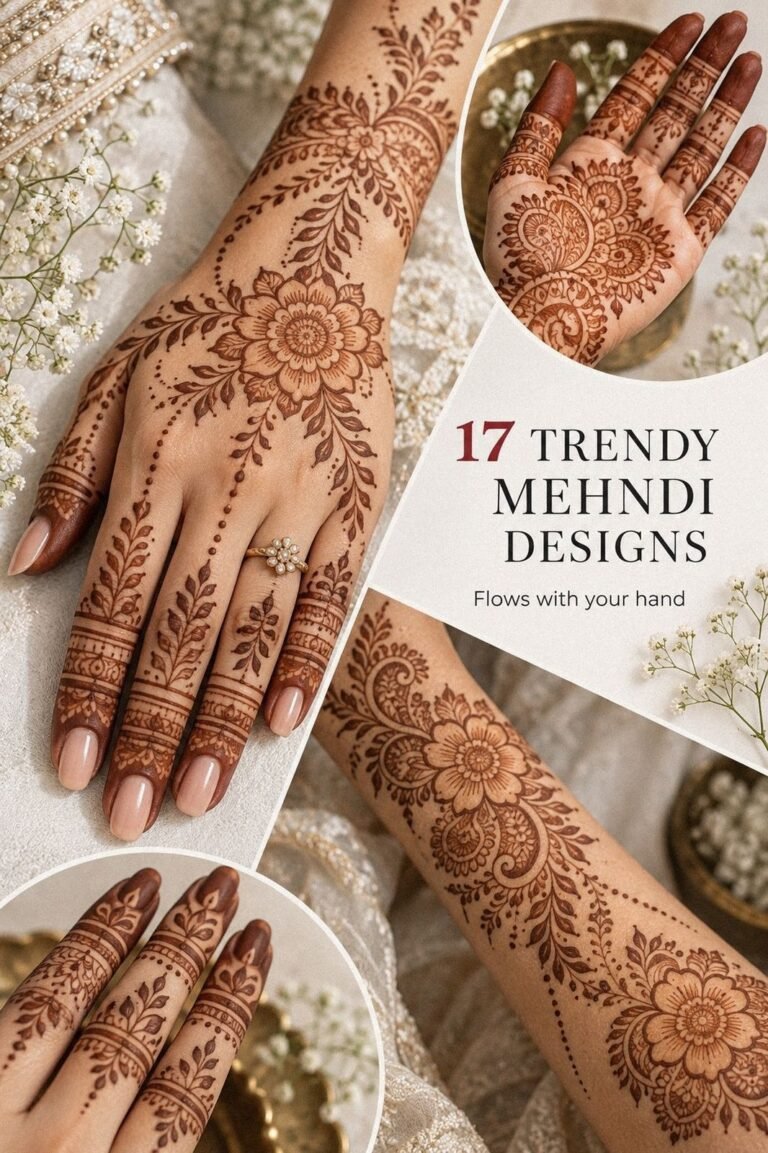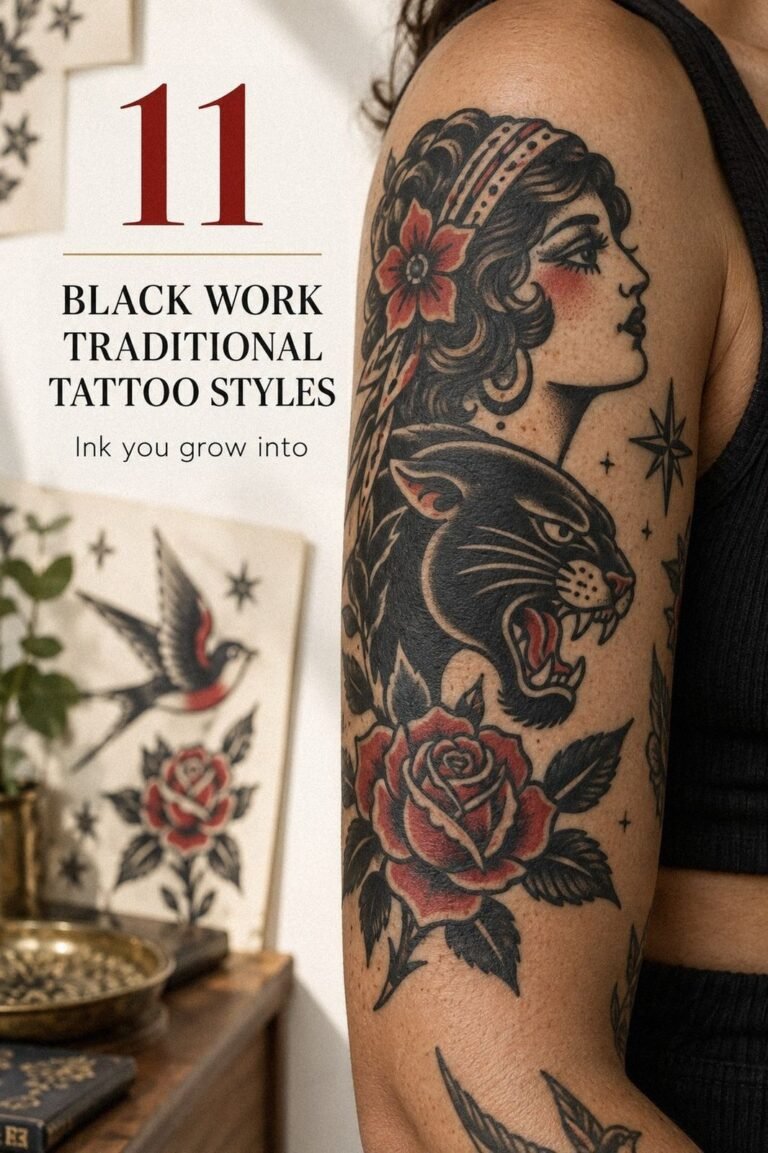
A mythology tattoo is a decision problem before it’s a design problem. Style, placement, longevity, and meaning all have to line up, or you end up with a beautiful sketch that goes dull, fuzzy, or embarrassing on actual skin. I’ve been collecting Greek mythology tattoo meanings longer than I’ve been tattooing, and what changed everything for me was a simple rule: the myth has to fit the body, not the mood board. Here are the twelve pieces I actually committed to, what worked, what didn’t, and the parts I’d tell my past self to think about twice.
Here’s what it looked like before: The Blank-Skin Problem
Before any of these felt right, I had a folder of saved screenshots and no real direction. You probably know that spiral. One day it’s a Greek goddess profile, the next it’s a blackwork dragon, then runes, then a serpent coiled around a phrase, and none of it feels like you anymore.
I had one narrow scar running down my upper back, a blank forearm I kept overprotecting, and that twitchy feeling you get when a design looks great online but won’t age nice on real skin. Scar cover ideas only got useful once I stopped forcing them.
If you are still sorting placement pain, start with where tattoos hurt less. It saved me from booking a spicy spot before I was ready, and most of my friends who skipped that step regret it!
What changed was a single shift. I quit asking “what myth looks impressive?” and started asking what would still read clean at a glance, what would fit the way my body moves, and what I wouldn’t be tired of in ten years.
That pushed me toward fine line choices in low-wear placements first, then heavier concepts only where the skin could carry them. If longevity is the part you keep going back to, the fine line needle and placement guide will save you a lot of trial and error.
[IMAGE: collage of mythology tattoo references pinned beside a forearm placement sketch, upper-back scar map, fine line symbols, and black and grey statue studies on real skin]
- I Picked the Myth That Matched My Scar
- I Built a Greek Sleeve Around Athena
- I Chose Hades for My Inner Forearm
- Why Medusa Behind My Ear Did Not Work for Me
- I Asked for Apollo in Statue Shading
- I Placed Artemis Across My Shoulder Blade
- I Turned a Phoenix Into Rib Ink
- I Added Norse Runes Around the Valkyrie
- I Committed to a Japanese Dragon Backpiece
- Koi vs Thigh: Why My Knee Won
- Athena’s Owl or a Random Symbol? I Checked Every Mark Before the Stencil
- Protect the Mythology Ink While Healing
1I Picked the Myth That Matched My Scar
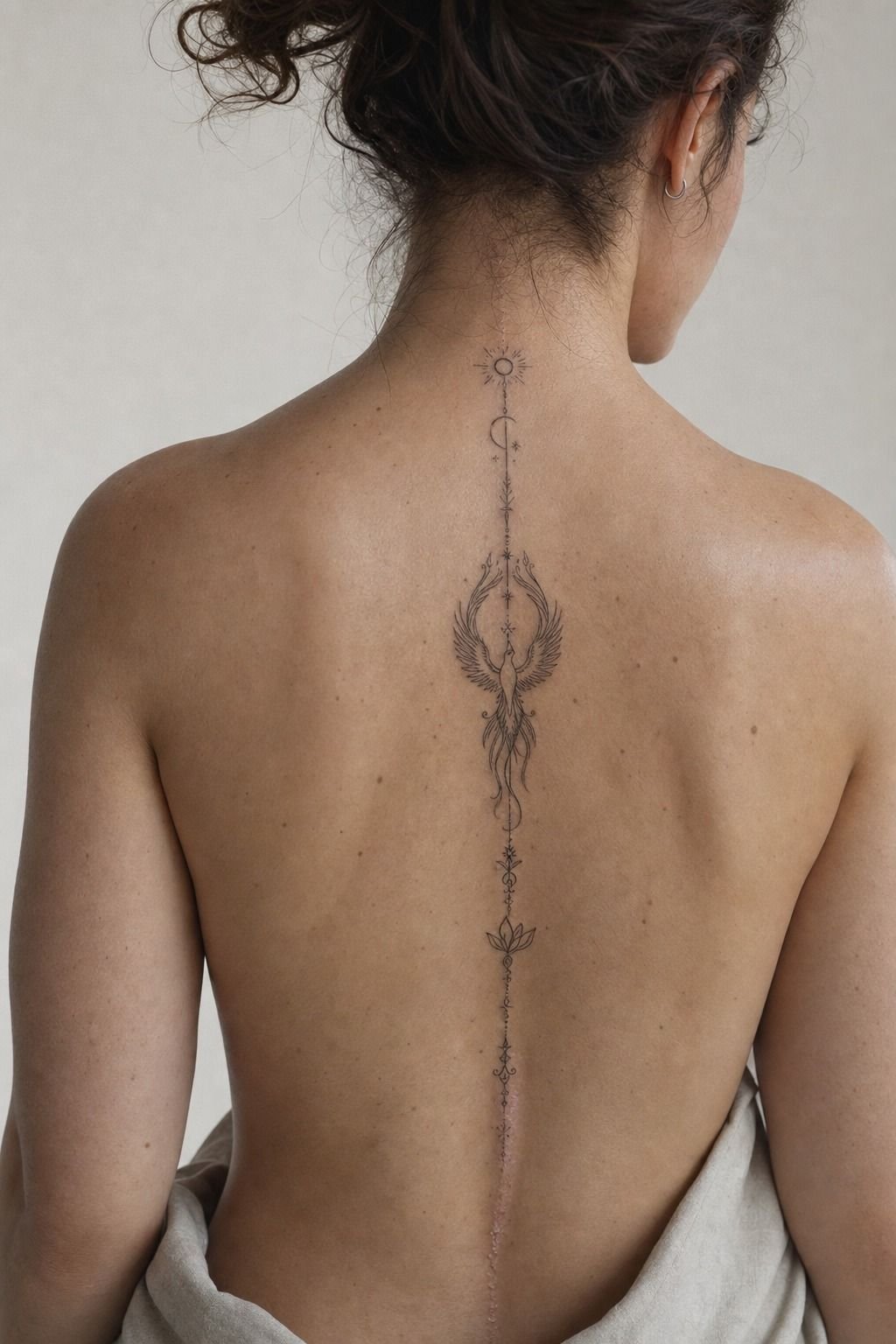
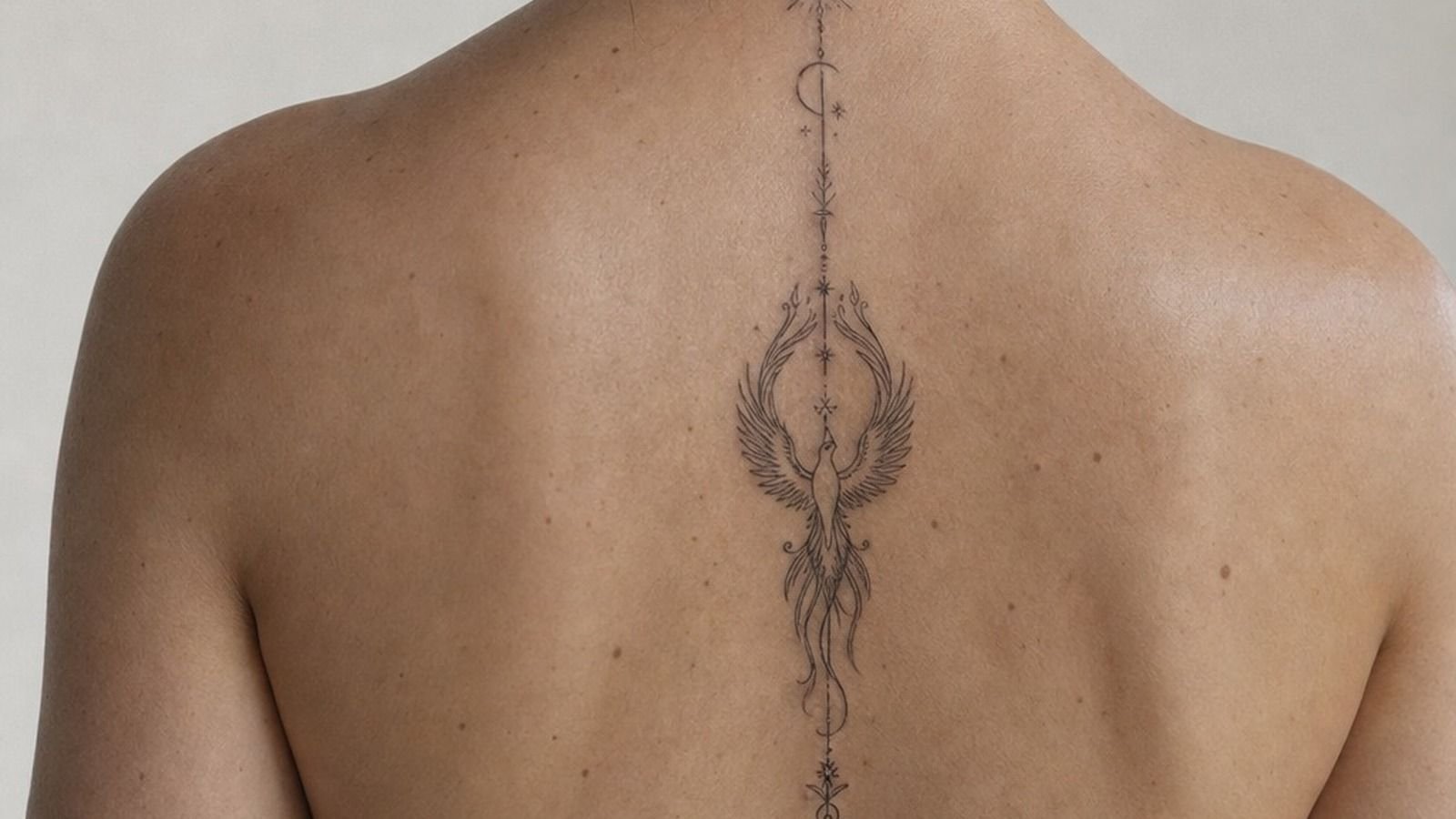
The first breakthrough came when I stopped hiding the scar on my spine and used it as the design cue. Instead of forcing a random goddess there, I picked a vertical mythology piece with a clean symbolic pull, something that could travel from nape to mid-back without turning fussy.
You want that kind of placement to breathe. Thin stems, laurel movement, one central figure.
Not twelve tiny details fighting each other.
I asked for single needle linework with a soft grey wash around the scar rather than over it. That mattered.
Scar tissue grabs ink differently, and you do not want a scratcher chewing it up with ten fuzzy passes. My artist kept the key lines a touch bolder than Pinterest-pretty, because bold will hold and spine skin shifts more than people think.
What made it feel personal was the meaning, not just the look. I picked a myth about surviving a change you didn’t ask for, and that gave the tattoo a job beyond being ornamental. You should do the same.
If a symbol only works because the caption explained it, I’d pass.
[IMAGE: vertical spine mythology tattoo using scar-aware composition, fine single needle lines, soft grey wash, and open skin breaks around a healed back scar]
2I Built a Greek Sleeve Around Athena
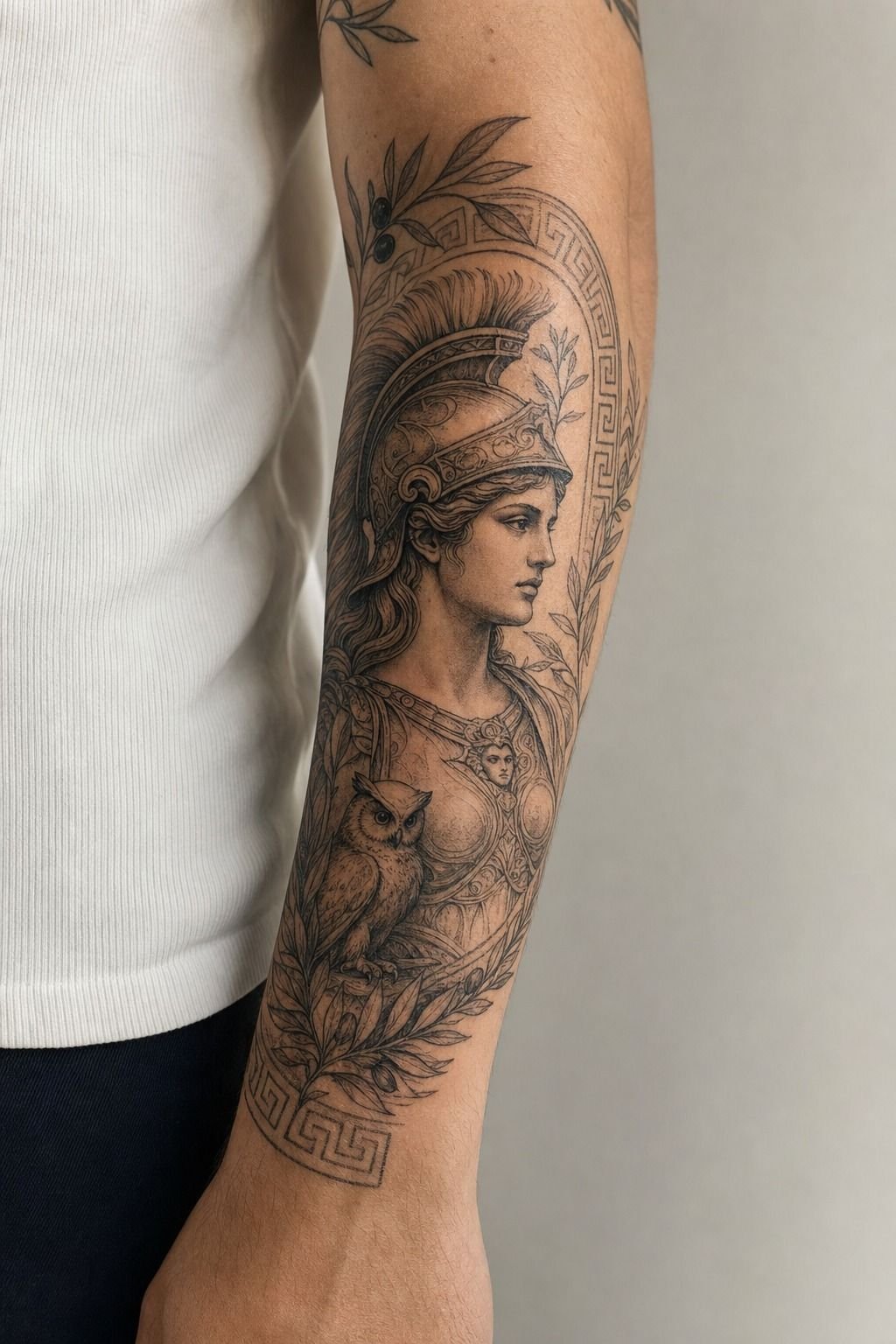
Athena made sense on my forearm because I wanted a mythology piece that felt smart, not sugary. A forearm sleeve also gives you enough length for a helmet, profile, olive leaves, and a spear without shrinking everything into soup.
You need enough width for those shapes to stay crispy. On medium warm ivory skin, that kind of black and grey linework can heal really clean if the artist leaves enough open skin between elements.
If you want a head start on the layout, these forearm tattoo ideas cover the geometry that actually works.
I built the sleeve in layers instead of trying to cram a whole temple scene into one sitting. First pass, the Athena profile. Second, olive branch movement around the elbow break.
Third, small statue drapery lines that tied it together without making it muddy. That approach kept the composition reading from wrist to elbow, and it gave me time to see what the arm still needed.
The Athena tattoo meaning breakdown was useful for deciding which attributes to keep and which to skip.
And here is the part people skip. Athena only works if you treat the arm like a sleeve map, not a sticker page. I told my artist I wanted one clean pull, not ten fuzzy ones, and I meant it.
You should too. A mythology piece can look strong on paper, then heal flat if the contrast is not pushed enough.
This is the most common regret I see in healed work.
[IMAGE: black and grey Athena forearm sleeve with olive leaves, spear rhythm, statue drapery, and clean open skin spacing from wrist to elbow]
3I Chose Hades for My Inner Forearm
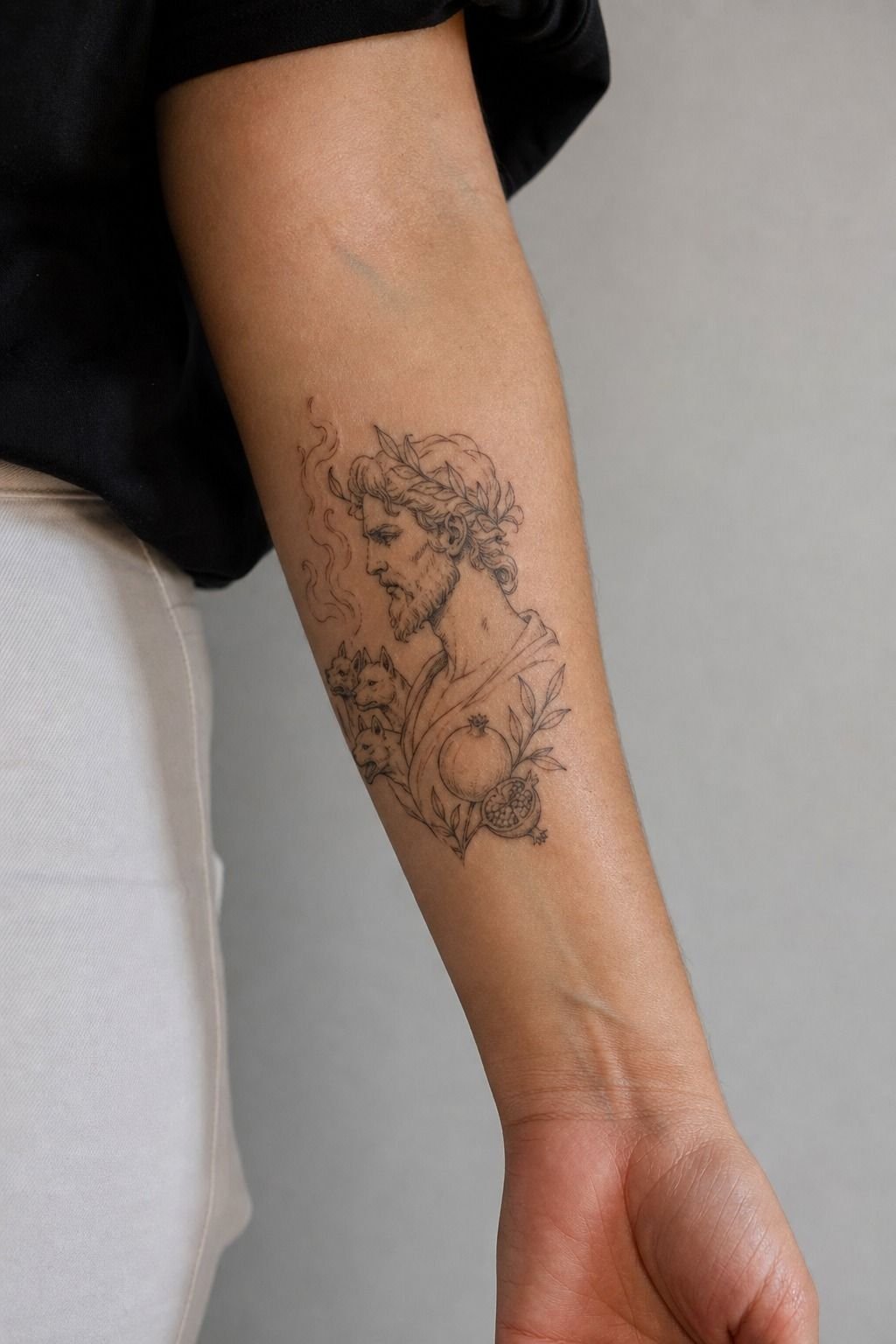
Hades on the inner forearm felt right because that placement keeps the design visible to you without putting it on blast every second of the day. Inner forearm skin is more tender than the outer arm, but it’s still a solid first big placement if you sit well.
Lines feel sharper there. Shading is more of a dull burn.
Color packing would be the spicy part, which is why I kept this one black and grey. The does forearm tattoo hurt page maps the inner vs outer difference better than most studio consultations.
I went with black and grey realism cues for the face but kept the rest of the piece in fine line language so it matched my other work. That mix only works when the artist knows restraint. Too much smoke, too many tiny chains, too much underworld texture, and the whole thing turns to soup fast.
If you’re sizing anything down, read about fine line tattoo ideas first so you know what actually holds.
But the real reason I chose Hades was emotional. I did not want another cheerful symbol pretending to be deep.
Sometimes the design that feels like you is the one with a little edge, a little quiet, and enough clean margin around it that the face does not mush out later. The Hades tattoo meaning write-up helped me confirm the symbolism before I committed.
[IMAGE: inner forearm Hades tattoo in black and grey realism with restrained smoke, clean facial contrast, and fine line framing that reads clearly on healed skin]
4Why Medusa Behind My Ear Did Not Work for Me
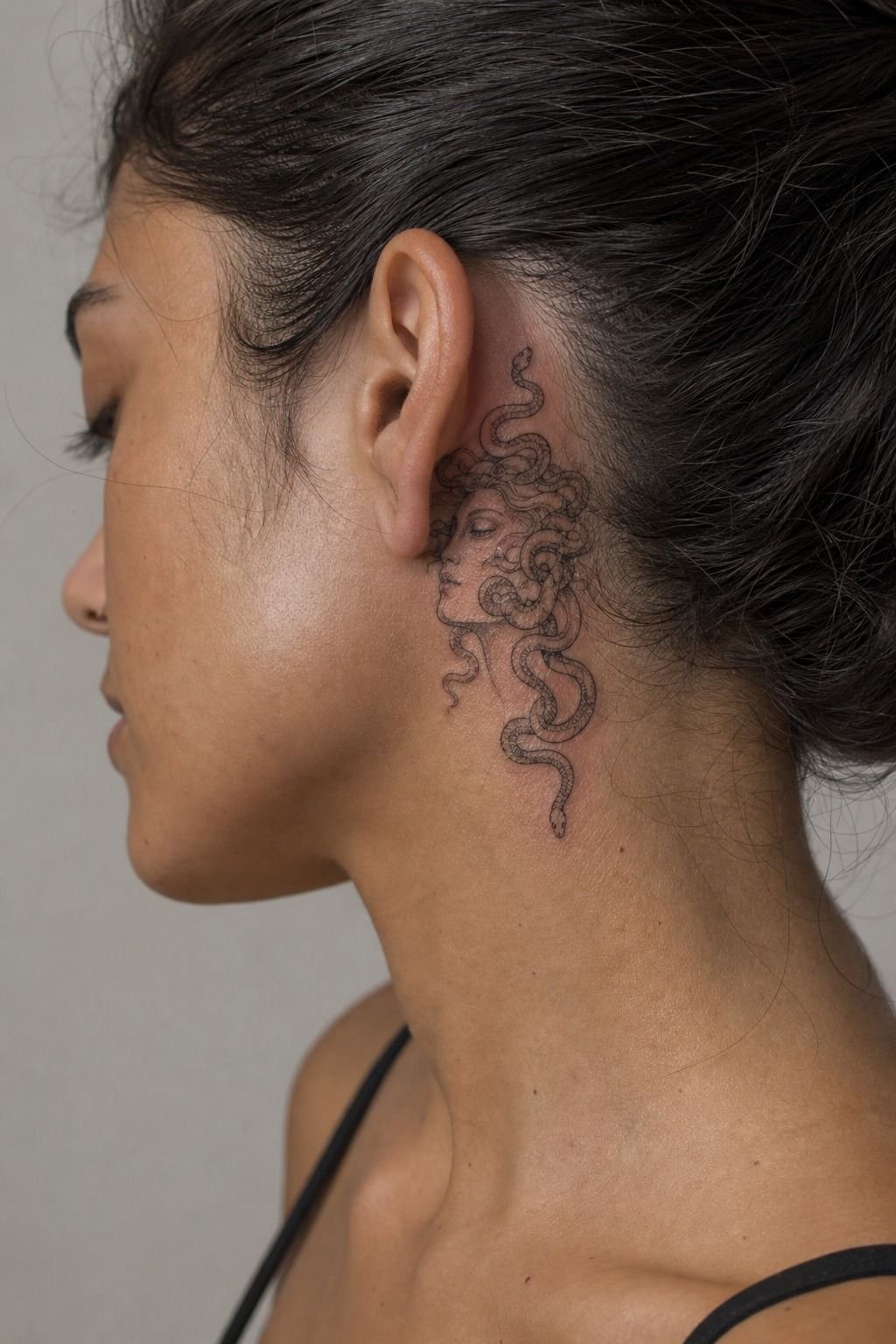
Medusa behind the ear sounds cool until you remember how small that patch of skin really is. Behind-the-ear is one of the highest-fade zones on the body: hair rubs it, collars push against it, glasses sit on it, and any fine detail compresses into a gray smudge inside two years.
I tried a tiny Medusa head there first. It healed cute. It did not survive the first winter.
What fixed it for me was moving the concept down to the side of the neck and sizing up enough that the snakes had room to breathe, then going back to the behind-the-ear spot for a smaller companion piece later. If you are set on the placement, the behind-the-ear tattoo ideas roundup and the Medusa tattoo meaning breakdown together will tell you whether the symbol is too dense for the canvas. The honest version: most Medusa designs need at least 2 to 3 inches of usable width to read, and a behind-the-ear patch gives you maybe 1.5.
So learn from my redo. Pick the symbol, then pick the placement that matches its actual size, not the mood-board version.
[IMAGE: small Medusa tattoo behind the ear with hair tucked back, showing the limited skin canvas and the kind of detail that survives one to two years of fade]
5I Asked for Apollo in Statue Shading
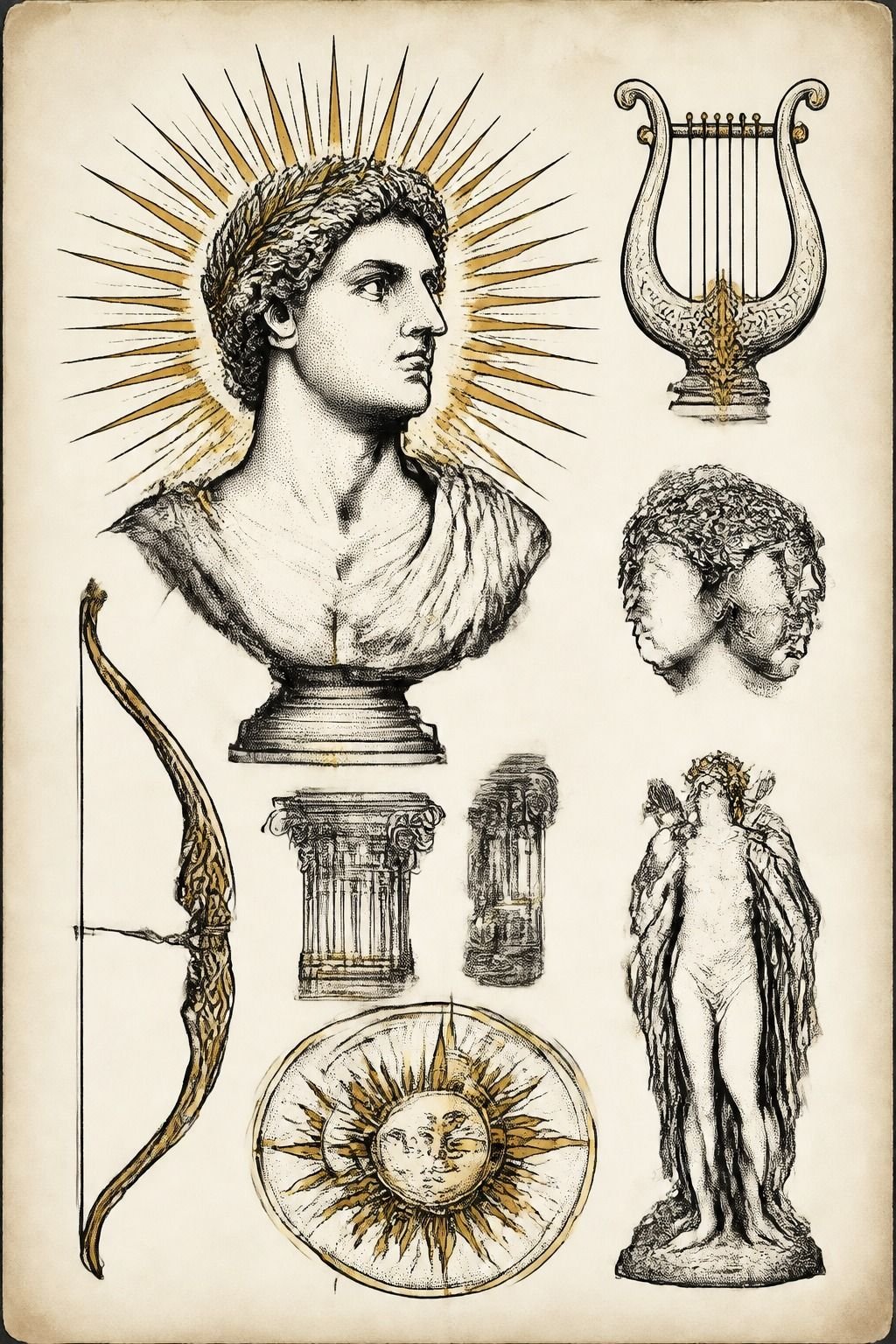
Apollo was the point where I stopped bringing in finished tattoos as references and started asking for flash-sheet logic instead. That changed everything.
On paper, you can see whether a statue-inspired design has solid bones before it ever hits skin. You can also spot the weak parts fast, like too many hair strands, muddy lyre strings, or fake marble cracks that won’t hold after healing.
I asked for statue shading built from grey wash rather than hard black fill, because Apollo needs softness to look like stone instead of comic-book chrome. My artist sketched several versions on aged off-white paper, almost like a clean custom flash sheet, and we picked the one with the clearest light source. The Greek goddess tattoo meaning page helped me decide which attributes to keep.
And yes, I made them simplify the laurel crown. Twice.
That is normal! A statue tattoo that looks rich on paper can heal patchy if the shading breaks into too many tiny channels. You want soft so it heals velvety, not patchy, and that means fewer hairline details, not more.
The laurel wreath tattoo meaning piece is a good reference if you want a clean separate laurel rather than cramming it into Apollo’s head.
[IMAGE: Apollo mythology tattoo drawn from statue reference with soft grey wash shading, simplified laurel crown, and flash-sheet style clarity before stencil]
6I Placed Artemis Across My Shoulder Blade
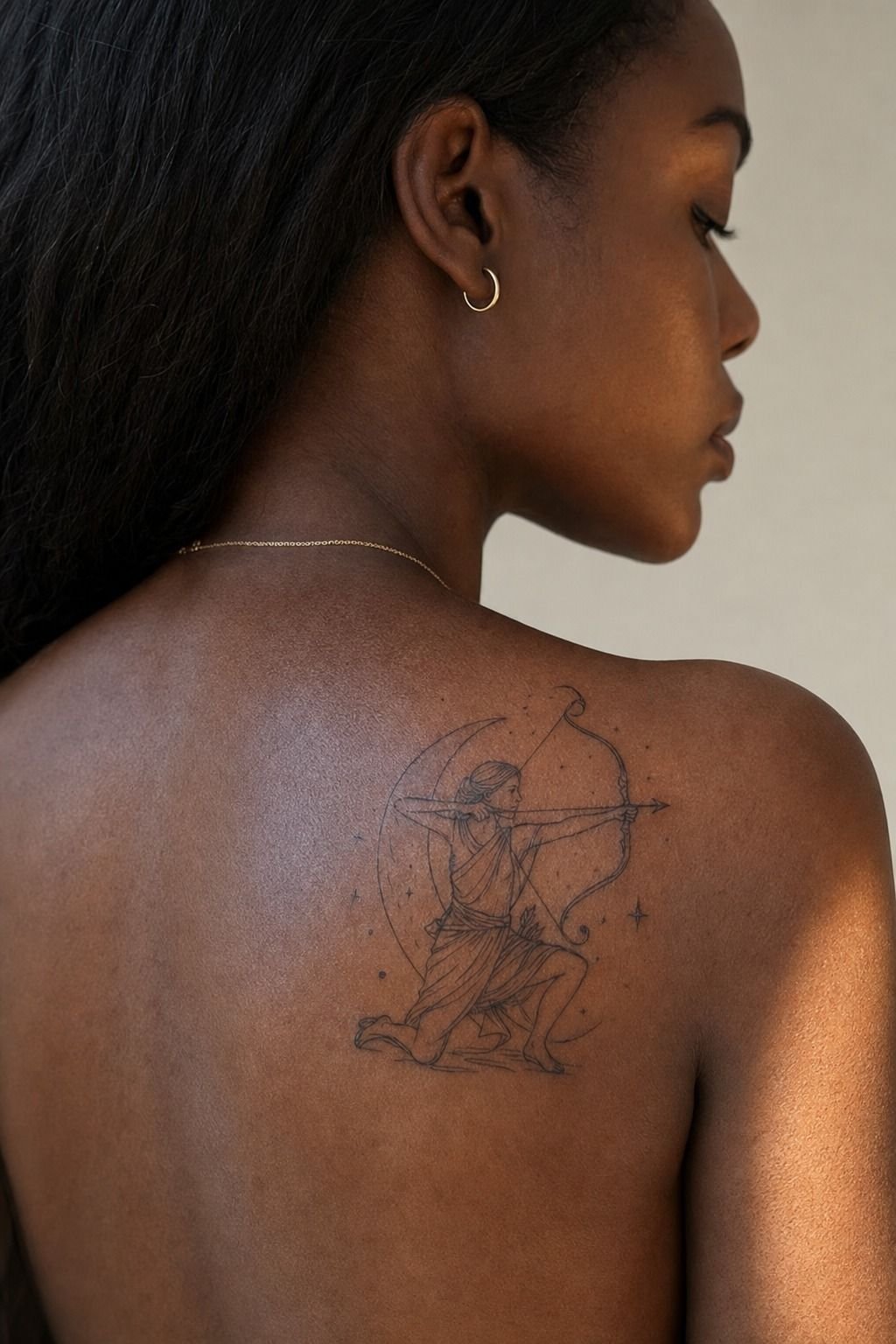
Artemis belonged on my shoulder blade because that area gives a fine line mythology piece enough width to move without the skin folding it up every day. It’s one of my favorite low-wear placements for a first collector piece. The pain is manageable for most people, especially compared with ribs or sternum, and the healed result usually stays cleaner because shirts don’t grind that area the way waistbands or socks do.
I kept the figure stretched across the blade with bow linework leading the eye outward and small moon accents kept near the shoulder cap. The best artists understand how to push readability with black saturation and skin breaks, not by overworking the skin. If you’re comparing shoulder layouts, these shoulder blade tattoo ideas cover how the wing direction changes how the piece ages.
Here is my no-bullshit note. Artemis does not need a whole forest around her.
You do not need every deer, star, and branch from the myth. A cleaner silhouette ages cuter on you, and it keeps the shoulder looking intentional instead of busy.
Two strong shapes beat ten little ones every time on this placement.
[IMAGE: shoulder blade Artemis tattoo with arched bow linework, small moon accents, strong black contrast, and open skin that keeps the silhouette clean]
7I Turned a Phoenix Into Rib Ink
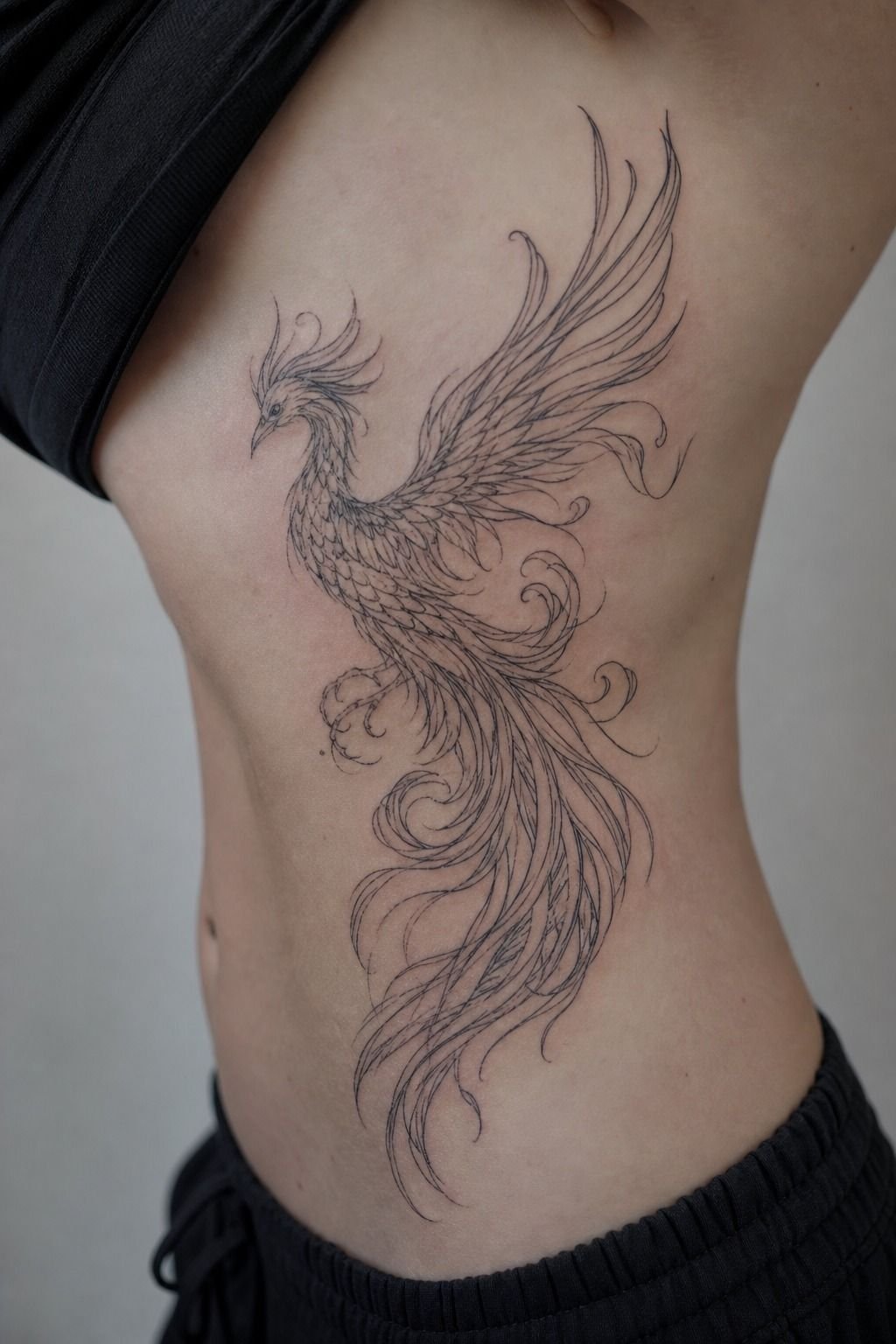
Rib tattoos are spicy. There, I said it. Lines feel sharper, shading drags hotter, and if you hold your breath wrong the whole session gets harder for both of you.
I still picked the ribs for a phoenix because upward movement belongs there. The body already gives the design lift, so the wings don’t need to over-explain themselves.
If you’re weighing it, the do rib tattoos hurt guide is honest about the difference between side ribs, sternum, and lower back.
I told my artist to keep the phoenix in fine line blackwork with whip shade only in the tail and lower feathers. That kept the piece light enough for the ribs while still giving it some push.
Anything denser would have been too rough on that thin skin. The phoenix meaning and rebirth piece is what made me commit to the bird instead of another abstract flame.
The shape made it personal. Not the bird itself, the lift. I wanted something that followed my breathing without looking stiff, and that meant longer feather gaps, fewer flame details, and a final size closer to 6 to 8 inches so it had enough width to age well.
Tiny phoenixes usually do not. They just become little angry blobs later, and there’s no fixing that without rework.
[IMAGE: rib phoenix tattoo in fine line blackwork with upward feather flow, selective whip shading, long clean gaps, and realistic healed readability]
8I Added Norse Runes Around the Valkyrie
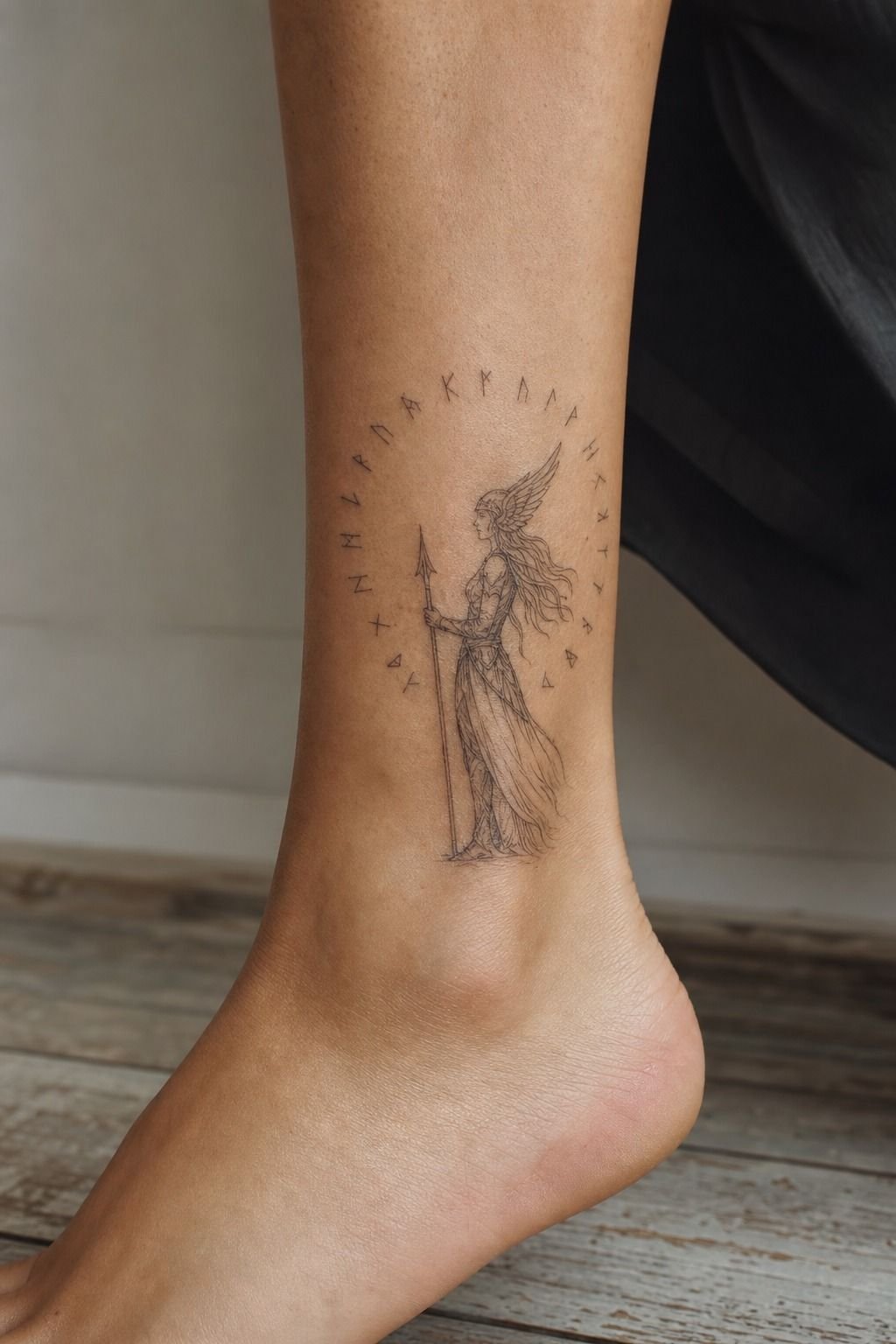
This was the moment I got strict about symbol-checking. Norse runes look clean around a Valkyrie, but they are not interchangeable little aesthetic marks, and a lot of internet references are flat-out wrong. Before I approved anything, I cross-checked each character, the order, and the spacing so the ankle piece didn’t end up saying nonsense.
You should be that picky. The vibe is not enough.
The Norse tattoo meaning and Valkyrie tattoo meaning pages saved me from a few Pinterest lies.
Placement-wise, the ankle is cute but unforgiving. It is high wear, socks rub it, shoes hit it, and fine details can soften faster there than on a calf or upper arm.
I used rune bands around a Valkyrie silhouette in a way that left open skin between each element, because that was the only path to a healed tattoo that still reads clean. The ankle tattoo pain guide explains why most ankle pieces feel hotter than people expect.
And I sized it up. Good decision.
Ankle mythology pieces get over-miniaturized online, and that is where they lose you. If the runes are important to you, give them at least enough height to survive the first few years without turning scratchy.
Tiny symbolic work on a high-wear zone is a future touch-up, not a forever piece.
[IMAGE: ankle Valkyrie tattoo wrapped with Norse rune bands, open skin spacing, and high-contrast blackwork built for a high-wear placement]
9I Committed to a Japanese Dragon Backpiece
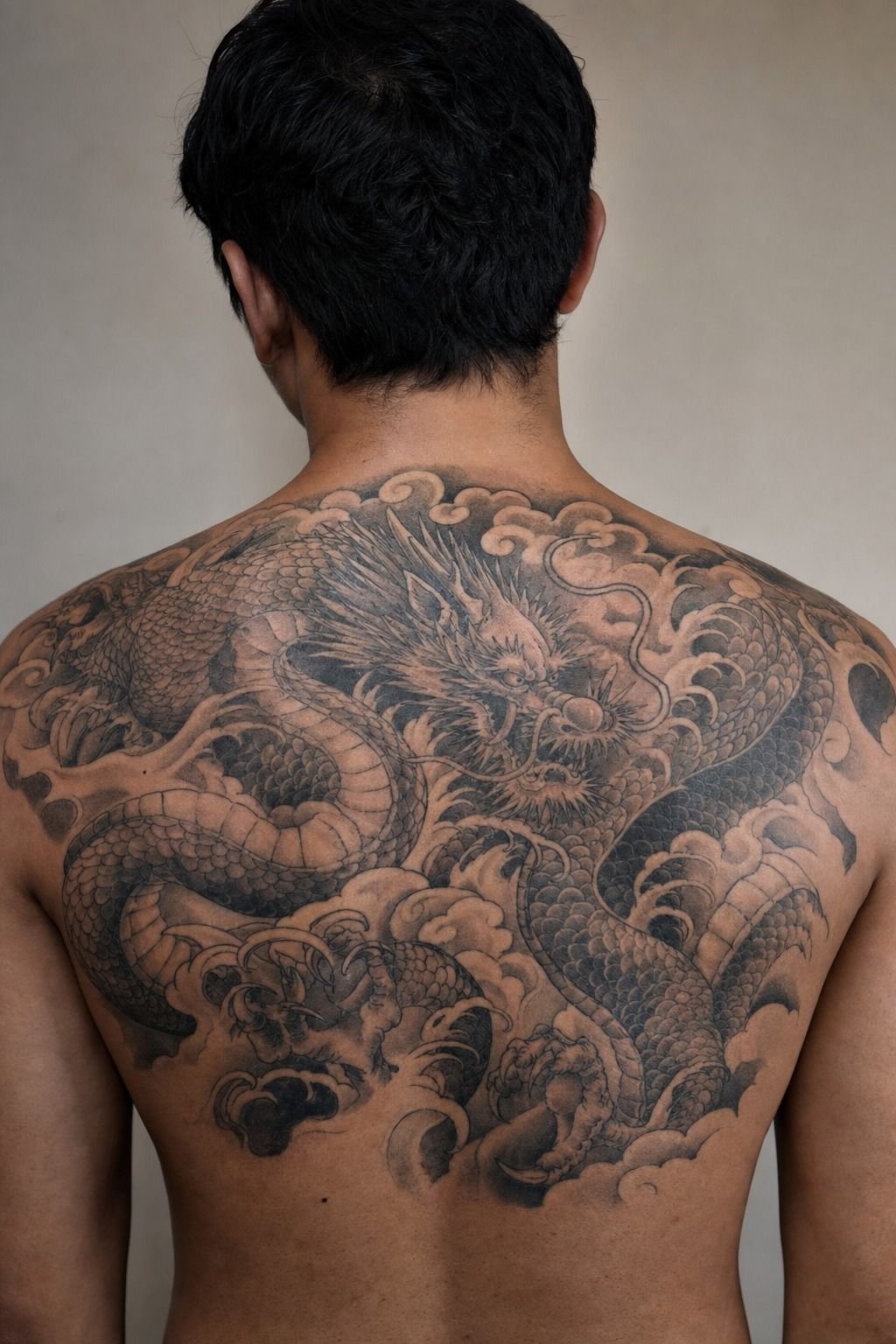
This is where I switch hats a little, because Japanese dragon work plays by different rules than a tiny fine line forearm piece. You do not dabble with a backpiece.
You commit. Traditional Japanese tattoos need flow, scale, and a real understanding of how the body carries movement from shoulder to shoulder.
That means planning the whole field, not just the dragon head you fell in love with on your phone. If you are considering it, the Japanese tattoo artists guide and the irezumi guide are worth reading first.
For the upper back, I wanted traditional Japanese energy with a dragon spine sweep that used the shoulder blades like natural turning points. The artist mapped the body first, then placed the head off-center so the movement didn’t go stiff. Smart.
A centered dragon can look formal, but a slightly shifted composition feels more alive on actual skin. The Japan dragon tattoo meaning breakdown was useful for picking direction and water element cues.
Would I tell a first-timer to start here? No chance. Backpieces take multiple sessions, usually many hours, and you need trust with the artist before you hand over that much skin.
But if you are ready, Japanese mythology gives you some of the best body flow in tattooing. Period.
[IMAGE: large Japanese dragon backpiece with off-center head placement, sweeping body flow across the shoulder blades, bold scales, and traditional black and grey structure]
10Koi vs Thigh: Why My Knee Won
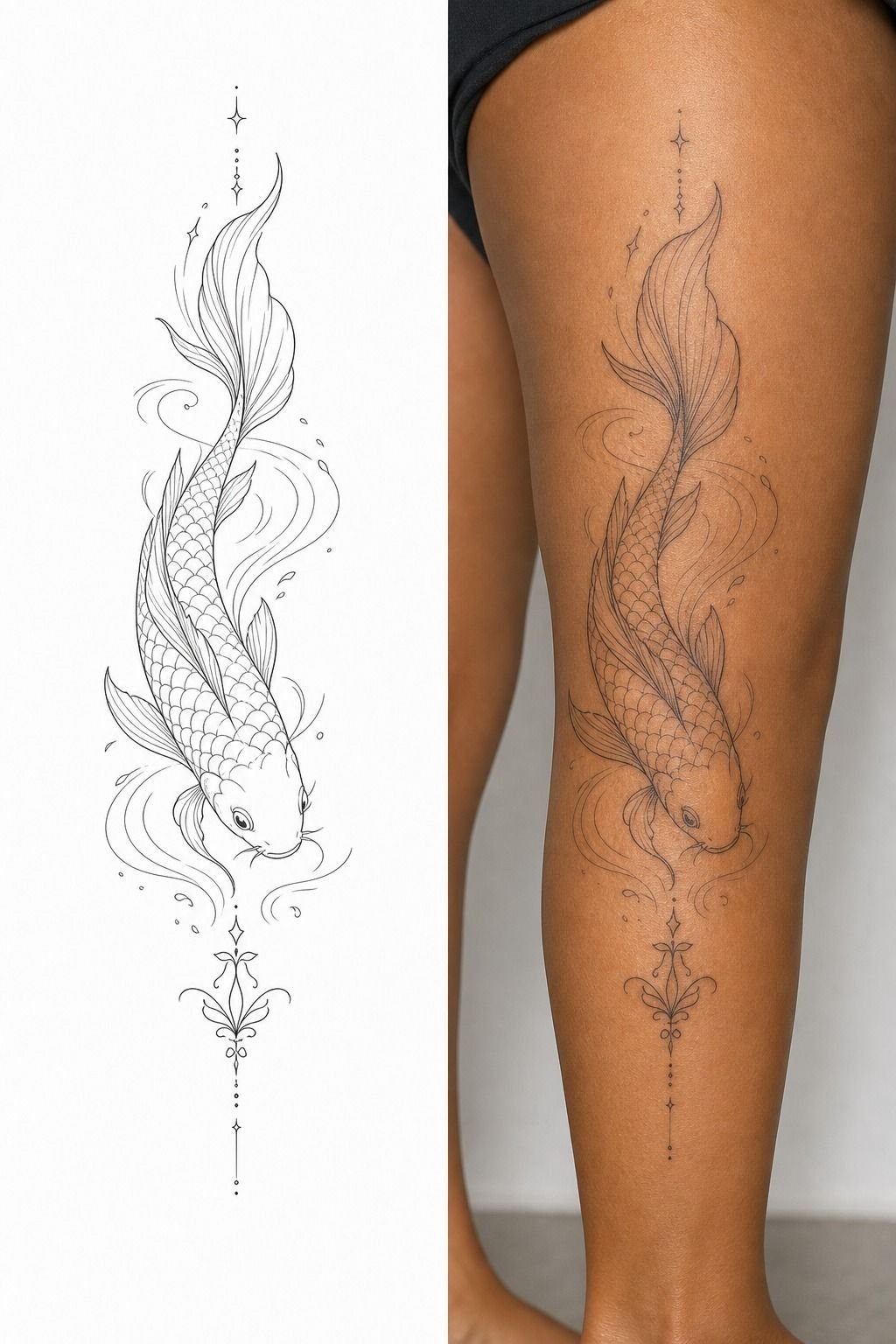
The koi idea started as a larger thigh concept, but I kept getting pulled back to the area just below my knee where the movement felt tighter and more honest. A koi climbing upward needs direction, and that lower-leg channel gives it a natural path without forcing the symbolism.
It also gives you enough length to keep the fins readable, especially if the final design has to balance line precision with the healed version on skin. The koi fish tattoo meaning and knee tattoo ideas pages gave me the confidence to commit to the smaller canvas.
I loved seeing this one as a split between stencil and healed tattoo, because it proved what survives the process. The stencil looked delicate.
The healed tattoo needed heavier outer lines and simplified scales to stay solid. That’s the lesson right there. A design that looks a little too bold on paper usually heals better than the super-fragile version people save online.
But I skipped water splashes around the whole thing. Too busy. The koi legend carries enough on its own if the body angle is right and the artist leaves open skin for the fins to breathe.
That one edit made the piece feel grown, not gimmicky.
[IMAGE: below-the-knee koi mythology tattoo with upward movement, heavier outer lines, simplified scales, and a healed-versus-stencil comparison that shows what holds]
11Athena’s Owl or a Random Symbol? I Checked Every Mark Before the Stencil
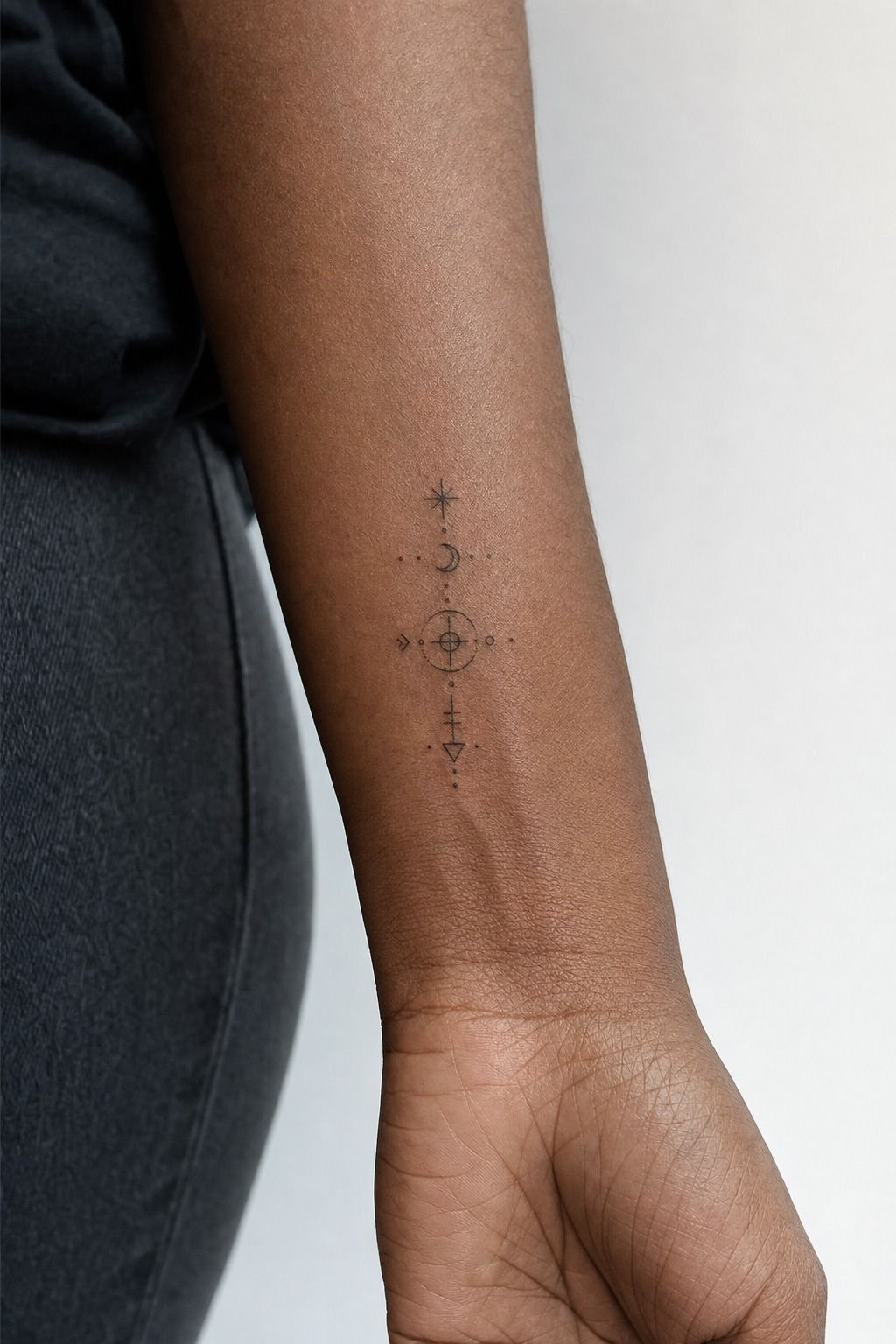
This step sounds boring until you realize it’s the one that saves you from wearing a mistake forever. Before the stencil touched my wrist, I checked every symbol, every attribute, and every line direction again.
Which hand holds the torch. Does that rune belong to the right alphabet.
Is that serpent tied to the right myth, or did somebody on Pinterest mash three references together because it looked cool. You need to ask the annoying questions. A good tattooer won’t be offended when you verify symbols. They’ll respect it.
If they rush you past the stencil check, I’d leave.
For wrist work, I also checked scale harder than meaning. Wrists are high-wear, high-movement zones, and very fine details can spread faster there.
I kept the final wrist emblem clean, with black line contrast strong enough to survive healing and hand washing. The wrist tattoo ideas roundup and the owl tattoo meaning page both helped me decide that the owl beats a generic torch.
If you want a sharp filter for the artist themselves, the how to choose a tattoo artist checklist is the cleanest version of the questions I’d ask in a consultation. Healed portfolio, not just fresh work. Style match, not “we can try.” Stencil approval in writing, not a wave.
[IMAGE: wrist mythology emblem stencil beside reference notes for owl, torch, and serpent symbols, showing scale checks and bold black line contrast for longevity]
12Protect the Mythology Ink While Healing
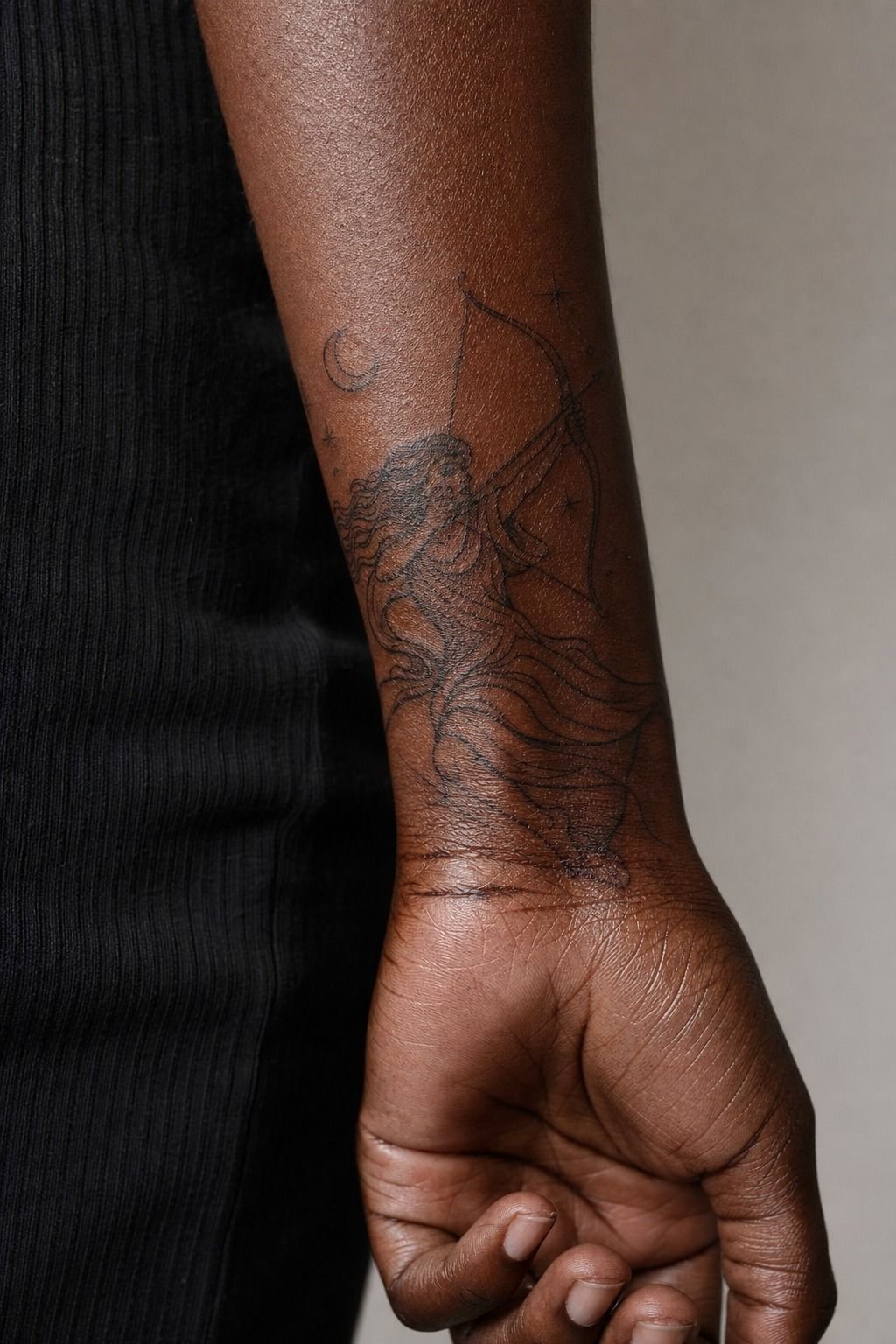
Aftercare is not the glamorous part, but it’s the part that decides whether your mythology tattoo heals crisp or ends up dull and patchy. First few days, it’s an open wound.
Treat it like that. Gentle unscented soap, lukewarm water, clean hands, then a thin layer of ointment so the skin stays comfortable without getting suffocated.
The how to heal tattoo faster page matches what I’d tell you in studio.
My wrist piece taught me the most because that area gets bumped all day. I kept the healing film on as instructed, then switched to fragrance-free lotion once the peel started.
No gym friction on the wrap edge. No pool.
No picking flakes because that’s how you pull color out. Surface healing is usually about 2 to 3 weeks, but the deeper settle is more like 2 to 3 months, and you need to act like the tattoo is still vulnerable during that silver-skin stage. If a faded patch worries you, the tattoo faded while healing guide explains when to wait and when to book a touch-up.
The big one is sun. Always sun. Mythology tattoos with fine lines can heal nice and still get wrecked early if you fry them in UV before they settle.
Black is your best friend for longevity, and sunscreen becomes part of the tattoo, whether you like that idea or not. No exceptions.
[IMAGE: healing mythology wrist tattoo with protective film, fragrance-free lotion, mild peeling, silver-skin stage, and clean black lines settling without overworked skin]
Ovid, Odin, and the Overcrowding Problem
What surprised me while studying mythology tattoos was how often people pick the myth first and the tattoo second. I get why.
The stories are loaded, the symbols are sharp, and Pinterest makes every statue face and serpent coil look like destiny. But skin isn’t a mood board, and this is the part I wish more people heard from an artist before they booked.
The design that means the most to you still has to survive movement, friction, healing, and time.
I learned to build from the body outward. Scar first. Then placement. Then how the line weight needs to shift so the tattoo still reads clearly a few feet away.
Only after that did the mythology part settle into place. That is why the Athena sleeve worked and the first Medusa sketch did not.
Athena had structure. The early Medusa version was all drama and no clean margin, which is a fast path to mush if the tattoo is tiny.
You do not need less meaning. You need better architecture.
There is a second layer people don’t talk about enough. Mythology can get costume-y fast if you stack every obvious symbol into one design. A dragon, clouds, waves, flames, temple columns, laurel crown, owl, moon, dagger, all of it. Technically impressive, maybe.
Personal, not always. The tattoos that stayed with me were the ones that chose one emotional lane and committed to it.
Grief. Protection. Rebirth. Discipline.
Not all four at once. Restraint is what turns a Pinterest collage into a piece that actually lives on your body for the next twenty years.
If you are planning your own mythology piece, bring references for vibe only and let the artist redraw for your body. If you want Pinterest-exact, I am not your artist.
The body changes the drawing. The scar changes the drawing.
Your pain tolerance changes the drawing. Even your job might change the drawing if you need a placement that hides under a sleeve or skips a high-wear zone. That is not a compromise.
That is the tattoo becoming yours.
[IMAGE: multi-reference mythology tattoo planning board with Greek, Norse, and Japanese motifs reduced into one clean redraw mapped to body placement and flow]
Is the Cost Worth It? The Session Budget Rule
I can’t honestly give you one exact quote for mythology tattoos because artist rate, region, size, and placement swing too hard. What I can give you is the planning math I use before I book, and it’s solid!
Most US shops have a minimum around $50 to $100, and many custom artists charge roughly $100 to $250 per hour. A fine line wrist piece might stay in the lower middle of that range.
A dragon backpiece won’t. The artist choice checklist I link down in the FAQ covers most of the variables that move the number, and the cost table below is a solid starting point for the conversation.
Here is the quick planning table I use before I approve a stencil:
Plan for the boring stuff too. Time off the gym if the placement rubs.
Loose clothing if the piece sits under a waistband. Sunscreen once it’s healed. A small tube of fragrance-free lotion.
None of that is flashy, but it protects the money you already spent.
The cheapest quote is not always the smartest call, and the highest quote is not automatically the right fit either. I would rather pay a steadier artist for one clean pass than save a little money and pay for a muddy touch-up later. A great mythology tattoo is built on line weight, not hourly rate.
[IMAGE: tattoo session budget graphic with hourly shop rates, stencil approval notes, healing-product costs, and examples of small, medium, and large mythology placements]
A Few Things Worth Answering
[IMAGE: FAQ-style collage of healed mythology tattoos on forearm, shoulder blade, ribs, ankle, wrist, and back with visible line weight and placement variety]
How much does a mythology tattoo cost?
Small pieces usually land between $100 and $300, and custom work generally follows a $100 to $250 per hour rate in the US. Size, placement, and artist reputation move that number fast. A wrist symbol, a forearm figure, and a multi-session backpiece are not in the same conversation.
Are mythology tattoos a good idea for a first tattoo?
Yes, if you keep the concept clean and readable and choose a calmer placement. Forearm, outer shoulder, and thigh give you better odds than ribs, feet, or hands for a first piece.
One myth, not five. Solid black, not five faded greys. The first tattoo ideas page has a good short list if you want to start narrow.
How do I choose a tattoo artist for mythology tattoos?
Look for healed photos, not just fresh ones, and make sure the artist already tattoos in the style you want. Fine line needs crisp confidence.
Japanese work needs body flow. Clean portfolio, clean studio, clear stencil process.
The how to choose a tattoo artist page is the cleanest version of those questions in one place, and it has saved me from bad bookings more than once.
How much do mythology tattoos hurt?
Forearm, shoulder, and thigh are usually more tolerable. Ribs, feet, hands, and sternum are spicier.
Lines feel sharper, shading is a dull burn, color packing is often the hottest part. Tap out for five rather than pass out on your artist! The rib pain guide I mention in the phoenix section and the pain timeline page cover the day-of and the week-after honestly.
How long do mythology tattoos take to heal?
Surface healing is usually 2 to 3 weeks, and the full settle is more like 2 to 3 months. Wash gently, moisturize lightly, keep it out of pools and direct sun early on.
Clean soap, thin lotion, no picking. The healing routine I describe in the aftercare section matches what I’d tell you in studio.
What’s the best placement for mythology tattoos?
Forearm and shoulder blade are hard to beat for clarity and longevity because they balance visibility, workable pain, and cleaner aging. If you want tiny details, skip high-wear zones unless you accept touch-ups. The tattoo touch up guide is worth a read before you commit to fingers, hands, or feet so you know what maintenance actually looks like.
Can a small mythology tattoo still look good?
Yes, if you cut the symbol down to its one strongest shape and skip the supporting characters. Tiny Athena with five Greek columns around her = mush.
Tiny owl in a clean circle = readable. The fine line ideas roundup I link in the Hades section is honest about what holds at small scale.
Start Here If You Only Do One Thing
If I had to pick one, I’d start with the Athena forearm piece. You can test how you sit, how you heal, and how fine lines settle without overspending on a high-wear zone.
The myth lands harder once you’ve already learned what your skin does to ink. Get the first piece right, and the rest of the mythology sleeve stops being a guess.
[IMAGE: healed Athena forearm tattoo shown from multiple angles, highlighting readable linework, balanced spacing, and why forearm placement gives strong long-term value]