A tiger lily tattoo looks simple until you try to wear one for ten years. The petals collapse into a generic flower, the stamens blur into ink soup, and the placement you picked on impulse turns into a faded ankle blob by year three. Most clients walk in asking for a tiger lily and walk out with something closer to a generic daisy because nobody slowed down at the reference stage.
This article walks through the decisions I wish every client made before booking: the Lilium lancifolium reference check, the style and size call, the placement trade-offs, the stencil test, the linework and shading pass, the session itself, and the boring aftercare that protects the heal. Cost, pain level, and longevity are covered too, because a tattoo you can’t afford, can’t sit for, or can’t keep clean is not the right tattoo. By the end, you should know exactly what to filter for, what to reject, and which artist is worth the booking.
If you are still choosing the flower, our lily tattoo meaning roundup helps you decide whether a tiger lily is even your species before we go further.
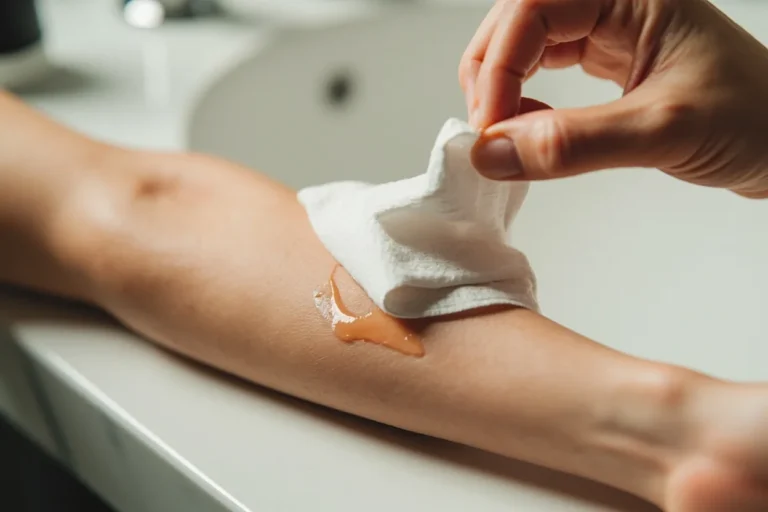
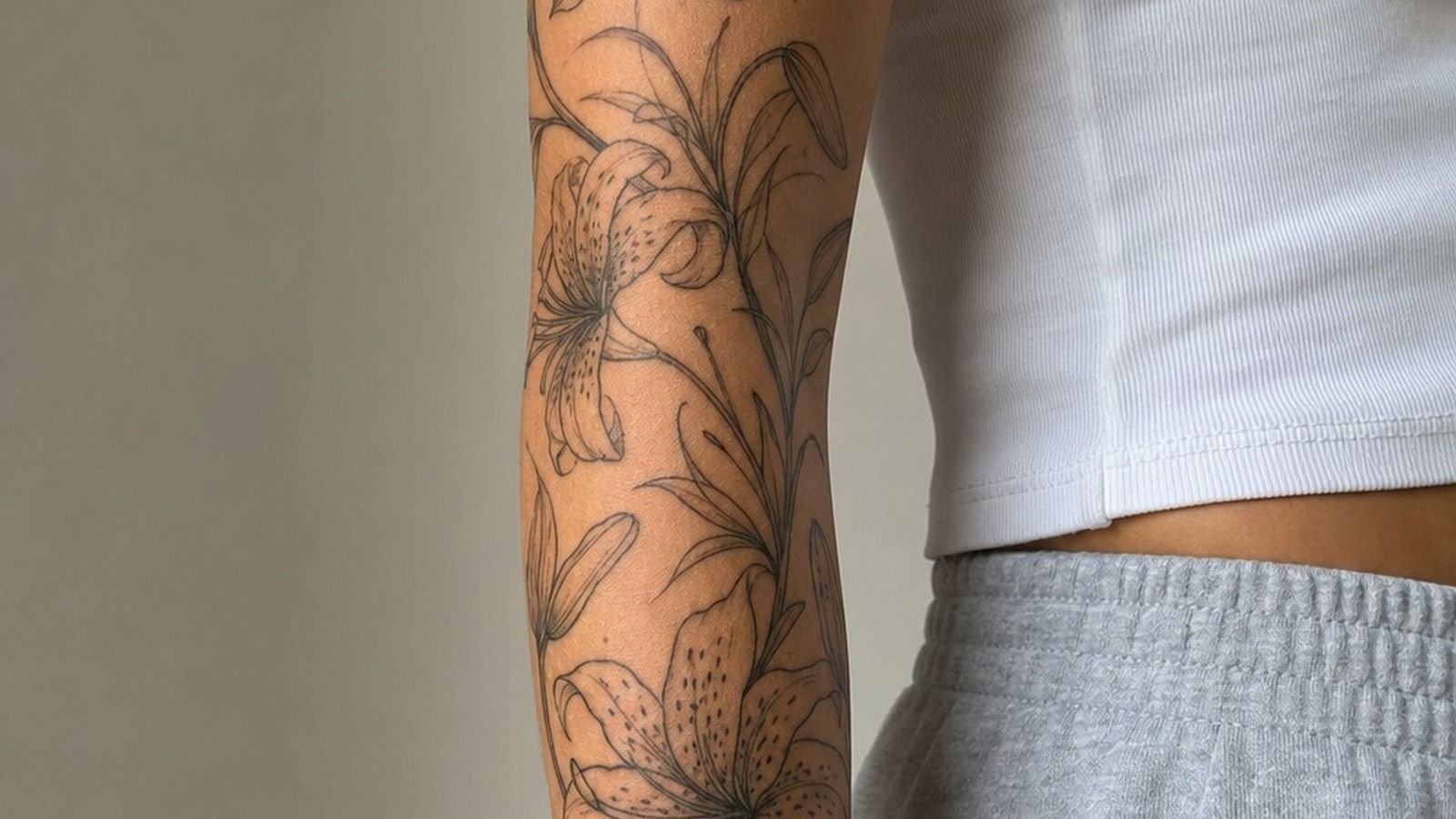
Here’s what the empty skin looked like:
The patch I was working with sat on the outer forearm, just below the elbow, with enough calm skin above and below to give a stem some clearance. No prior ink in the area, no scar tissue, no daily friction from a watch band or a laptop edge. That is the canvas I was designing into, and most of the choices below came from working around that specific surface.
That matters more than people think. Placement sets the rules for size, line weight, and detail level before you even pick the flower.
A tiger lily that would sing on a thigh will chew up on a wrist. A fine line version that looks airy on the outer arm will spread into mush on the inner bicep.
I had three stencil tests I said no to before I landed on the forearm, and that process is most of what this article is about.
- I Locked the Tiger Lily Tattoo Meaning First
- I Pulled Real Lilium Lancifolium Reference, Not Tattoo Collages
- I Compared Tiger Lily Tattoo Styles Honestly
- I Sketched the Fine Line Tiger Lily Around the Body
- I Used Stargazer Lily Notes to Set the Attitude
- I Rejected the Ankle Stencil Test
- I Mapped the Forearm Flow With the Arm at Rest
- I Planned It Like the Start of a Sleeve
- I Chose Black Ink Over Orange Wash
- I Added Dotwork Around the Petals for Lift
- I Kept the Stamens Sharp and Visible
- I Asked for Botanical Line Weight
- The Wrist Stencil Went in the Trash Too
- I Rejected the Spine Stencil for Petal Wrap
- I Protected the Tiger Lily Identity Against Generic Lily Drift
- I Approved the Final Stencil on the Outer Forearm
- I Sat Through the Shading Pass Without Heroics
- I Healed the Tiger Lily Tattoo Cleanly
1I Locked the Tiger Lily Tattoo Meaning First
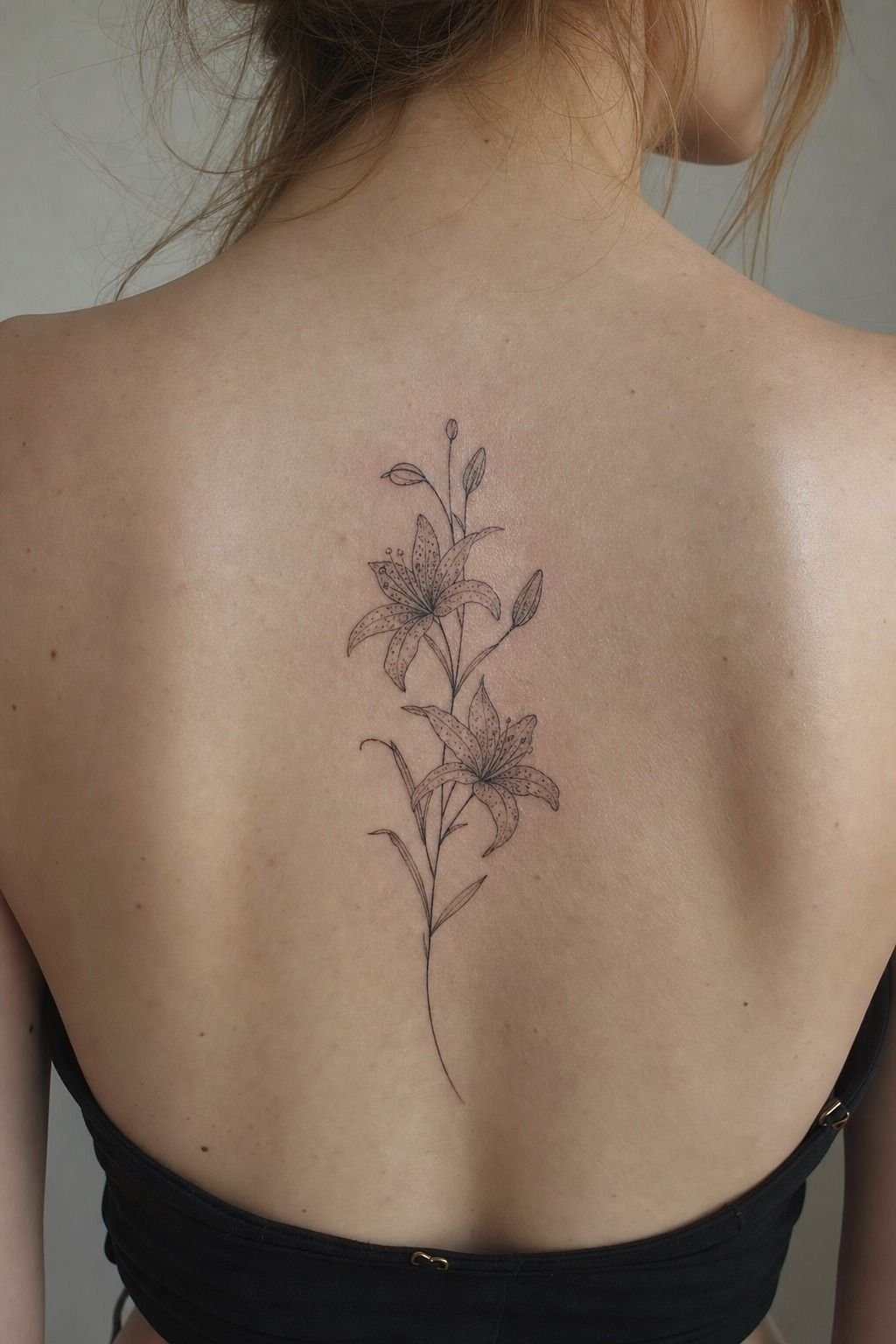
First, I got honest about why I wanted a tiger lily tattoo at all. You can pick a flower because it looks pretty, sure, but if you’re going to wear it for years you need a meaning that still feels like yours when the newness wears off. For me, tiger lily energy felt bold, feminine, and a little feral in the best way.
Confidence without apology. The orange wash in the reference photos is not just color, it is attitude.
I looked at how the flower symbolism overlapped with the broader lily flower tattoo meaning conversation, then cut out what did not fit. I didn’t want a vague “growth” story.
I wanted something that felt like nerve and recovery and taking up my own skin with less permission-seeking. That made every design choice easier, because when the meaning is locked, the artist can build a flower that reads like you, not like random flash somebody slapped on a wall.
If you are still sorting your species, lotus tattoo meaning and hibiscus flower tattoo meaning are worth a slow read. Tiger lily is loud where lotus is calm. Know which one you are before you book.
2I Pulled Real Lilium Lancifolium Reference, Not Tattoo Collages
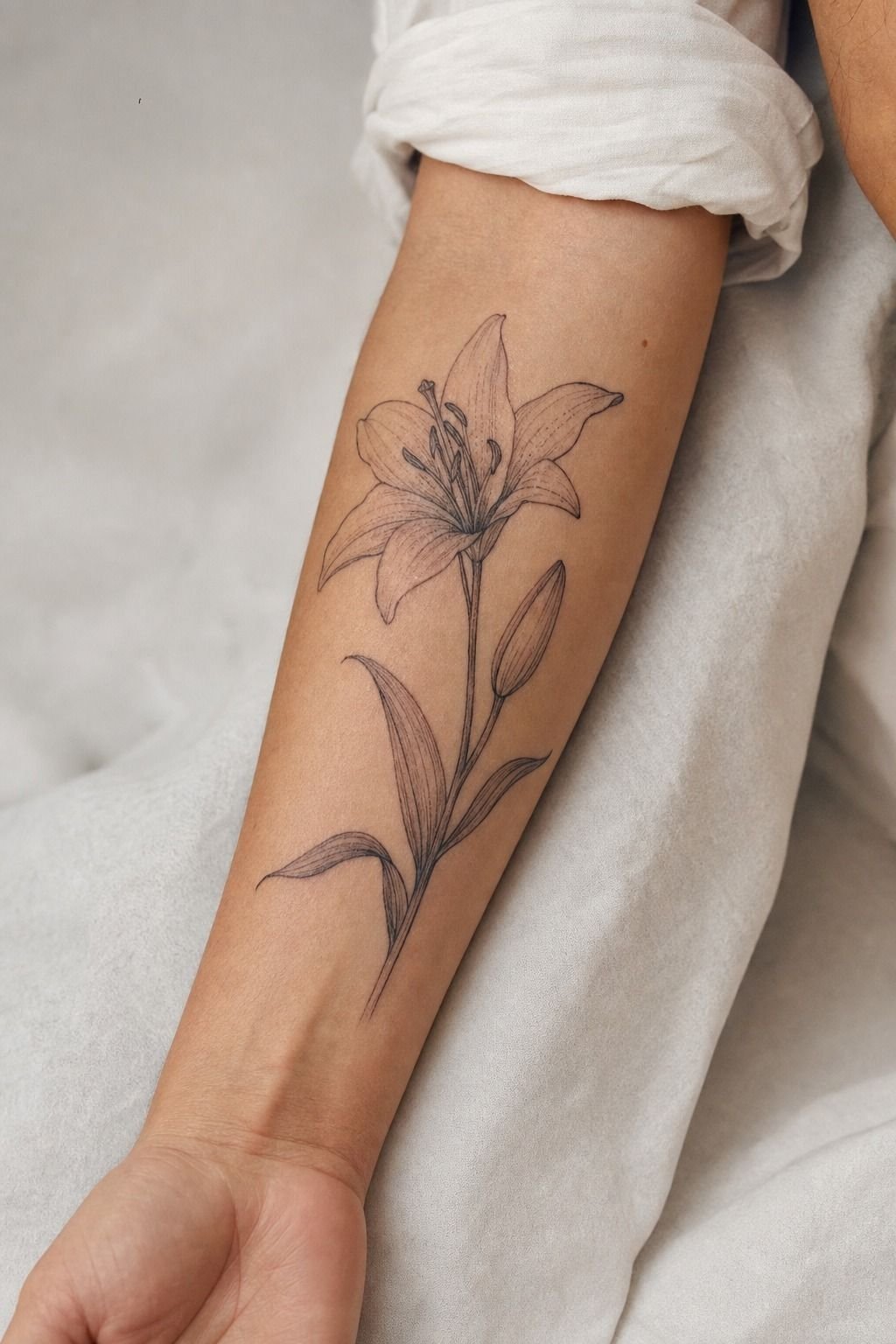
Next, I closed the tattoo collage folders and pulled up real Lilium lancifolium photos instead. That one change did more for the final tattoo than any style decision.
Here is why it matters. Tattoo references are already one translation away from the actual flower.
They have been redrawn, filtered, and softened by another artist’s taste before you even see them. If you start your reference stack from tattoo collages, you’re designing a tattoo of a tattoo of a flower, and every layer of softening strips out the features that make a tiger lily a tiger lily: the backward-curling petals, the heavy freckling inside the throat, the long protruding stamens with rust-colored anthers.
Stack two or three softened references and your artist will hand you back a generic lily.
The technical fix is simple. Pull three or four real flower photos of the actual species, ideally with the stamens and freckling visible, and bring those to the consult alongside any tattoo references you love for vibe.
The tattoo references tell your artist the style you want. The botanical reference tells them what you’re actually tattooing.
You need both, and you need them separate.
The longevity consequence is real. Designers who work from real botanical reference tend to nail the silhouette on the first stencil. Designers who work from a softened collage usually lose the species by the third revision, and the tattoo that comes out the other end reads as “flower” instead of “tiger lily.” That is when people start Googling “what kind of lily is my tattoo” two years in.
Decision criterion: if your artist can’t tell you the difference between a tiger lily and a stargazer lily off the top of their head, they’re not ready for this tattoo. Find one who can.
3I Compared Tiger Lily Tattoo Styles Honestly
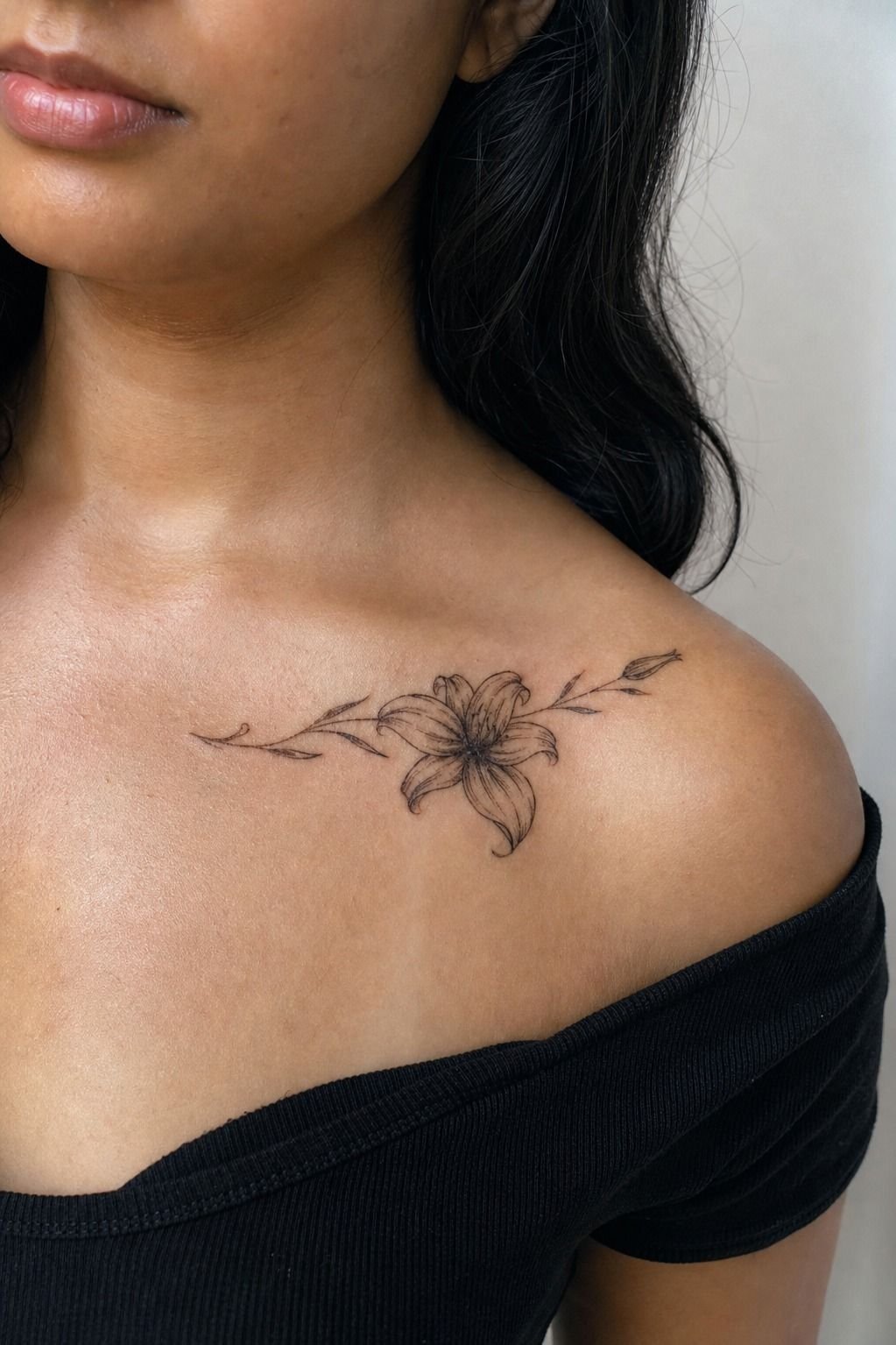
Then I compared styles instead of pretending every tiger lily tattoo lands the same. Fine line, neo-trad, blackwork, and soft black and grey each change the mood hard, and each one ages differently on the same placement.
On an outer forearm, a healed fine line tiger lily can feel airy, personal, and almost illustrative. On that same placement, a heavy blackwork lily will read louder, hold longer, and forgive the kind of sun exposure a forearm inevitably gets.
A neo-trad version with bold outlines and saturated orange will look freshest on day one but starts softening in year three because the orange is the first pigment to fade. Black and grey sits in the middle: enough contrast to age well, enough softness to keep the flower feeling botanical instead of comic.
You should decide what matters more to you: softness, punch, or longevity. I knew I wanted something that aged cute without going dark and stiff, so I skipped the heavier neo-trad route even though I love it on other people. But I also skipped ultra-tiny single needle work because that size on a bony placement will spread and lose the freckled detail before the first year is up.
If you are still weighing flower types, spider lily tattoo meaning is a useful contrast. Spider lilies go ghostly and dramatic. Tiger lilies should still bite a little.
Pick the flower that matches the mood you want to wear, not the one that photographs prettiest in the first week.
4I Sketched the Fine Line Tiger Lily Around the Body
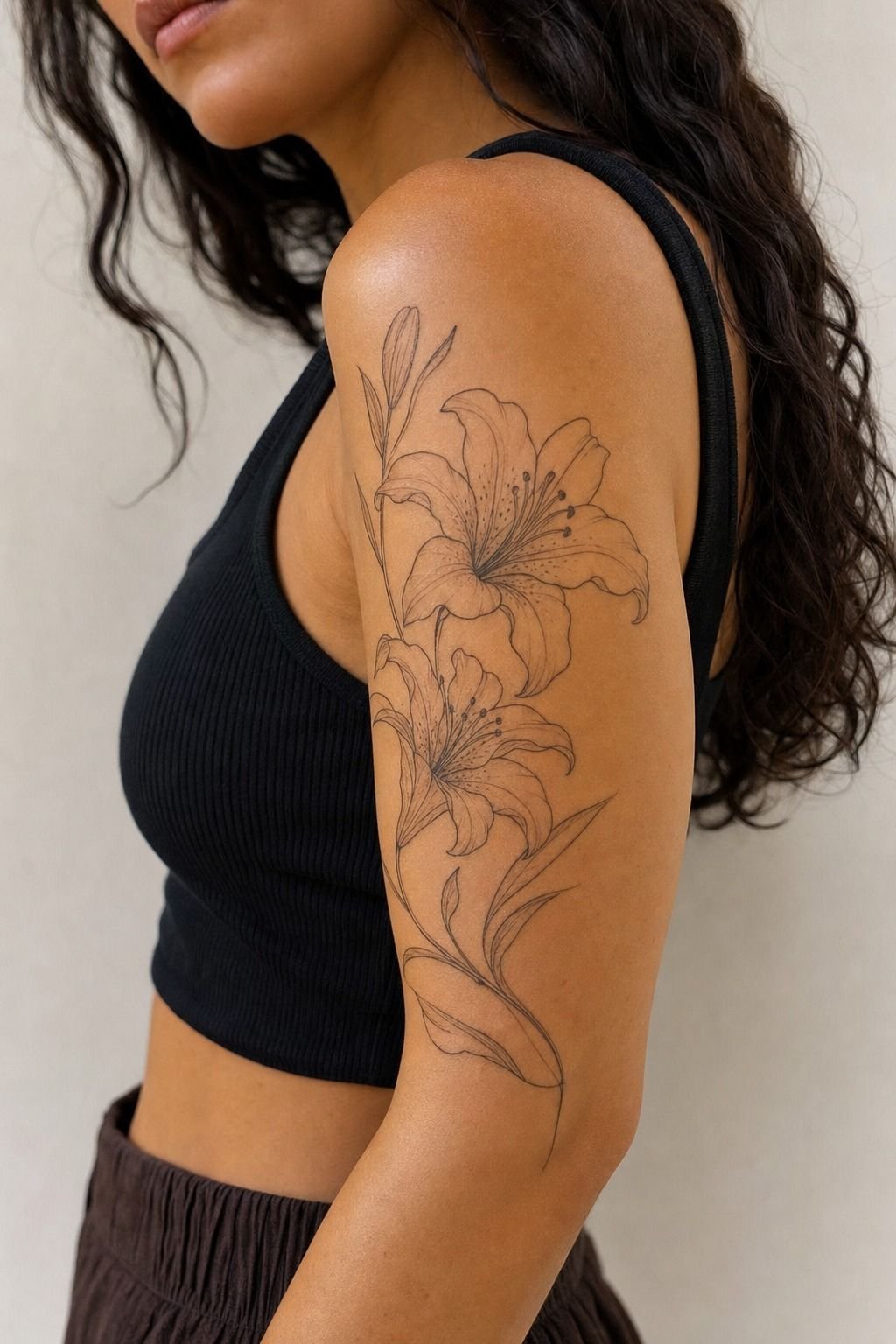
Once the style was locked, I sketched the shape around the body instead of as a flat print. That is where a lot of people pick the wrong design. You fall in love with a drawing on paper, then it hits your outer forearm and suddenly the stem fights the muscle line and the bloom looks pasted on.
My artist roughed in a fine line tiger lily with the flower head angled slightly outward, so the petals opened with the curve of my arm rather than against it. You want that kind of flow.
One clean pull, not ten fuzzy ones, and enough separation between lines that the piece still reads at a glance in ten years. On a flat reference that reads as airy.
On a moving arm that reads as alive.
And this is where you push back if the sketch feels cramped. A tiger lily needs air between the petals. If it doesn’t have that, it won’t heal with the crispy lines you thought you were paying for.
Cramped petals are the single most common reason a fine line lily turns into a smudge in year two. Ask for spacing.
It costs nothing and saves the whole piece.
5I Used Stargazer Lily Notes to Set the Attitude
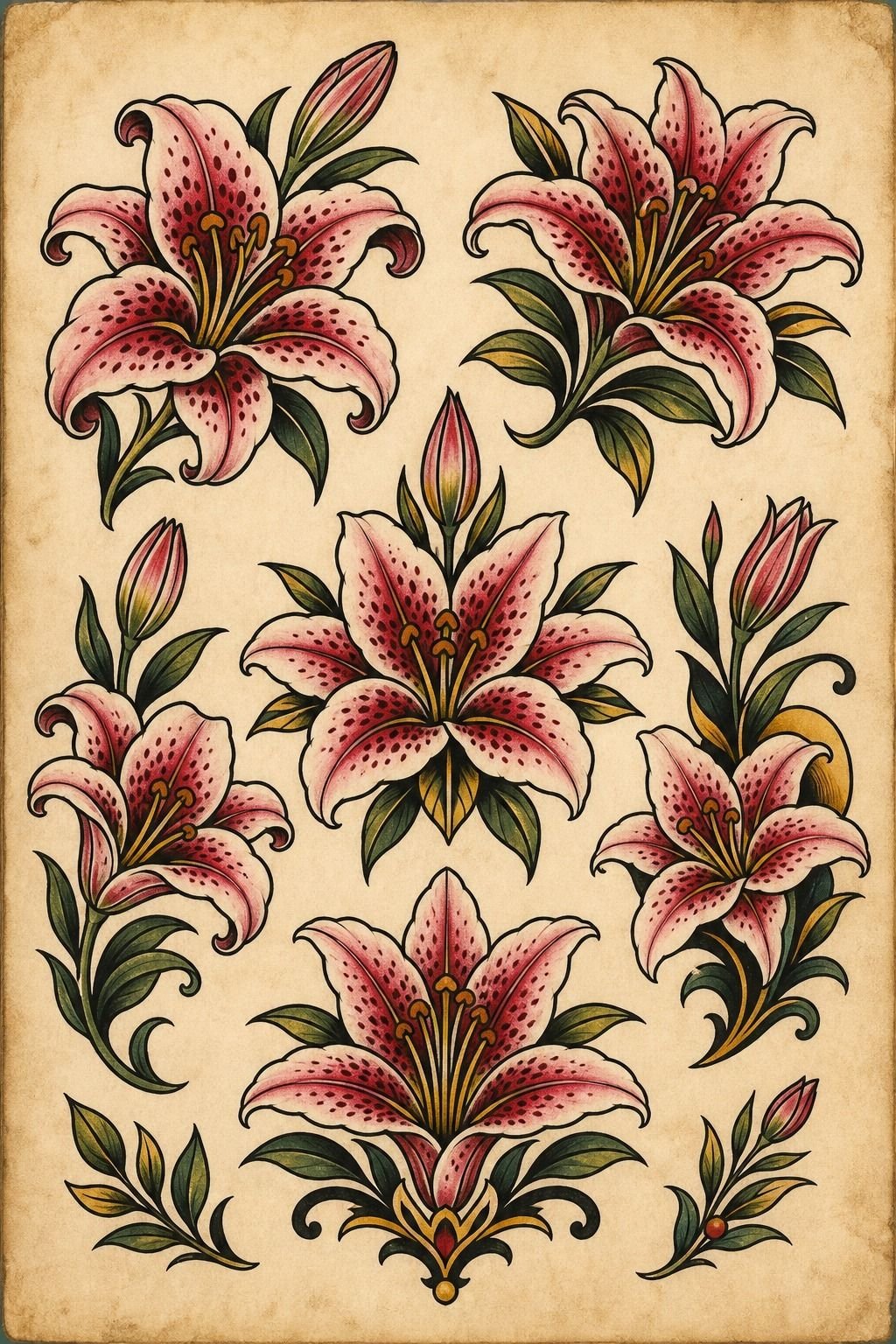
I was not getting a color tattoo, but I still added stargazer lily color notes to the reference sheet so the artist understood the attitude I liked. That sounds extra until you see how useful it is. Color references tell your artist whether you lean sweet, dramatic, vintage, or sharp, even if the final tattoo is all black.
On the flash-style page, I marked where the deeper spots and speckles sat on the petals. That helped us keep the tiger lily identity without forcing orange wash into a fine line piece that would have healed flatter on my skin. Black is your best friend for longevity, color is spice, and I knew the spice was not necessary here.
If you are stuck between flower types, the difference between water lily tattoo meaning and a tiger lily is worth studying too. Water lilies float. Tiger lilies should still bite.
6I Rejected the Ankle Stencil Test
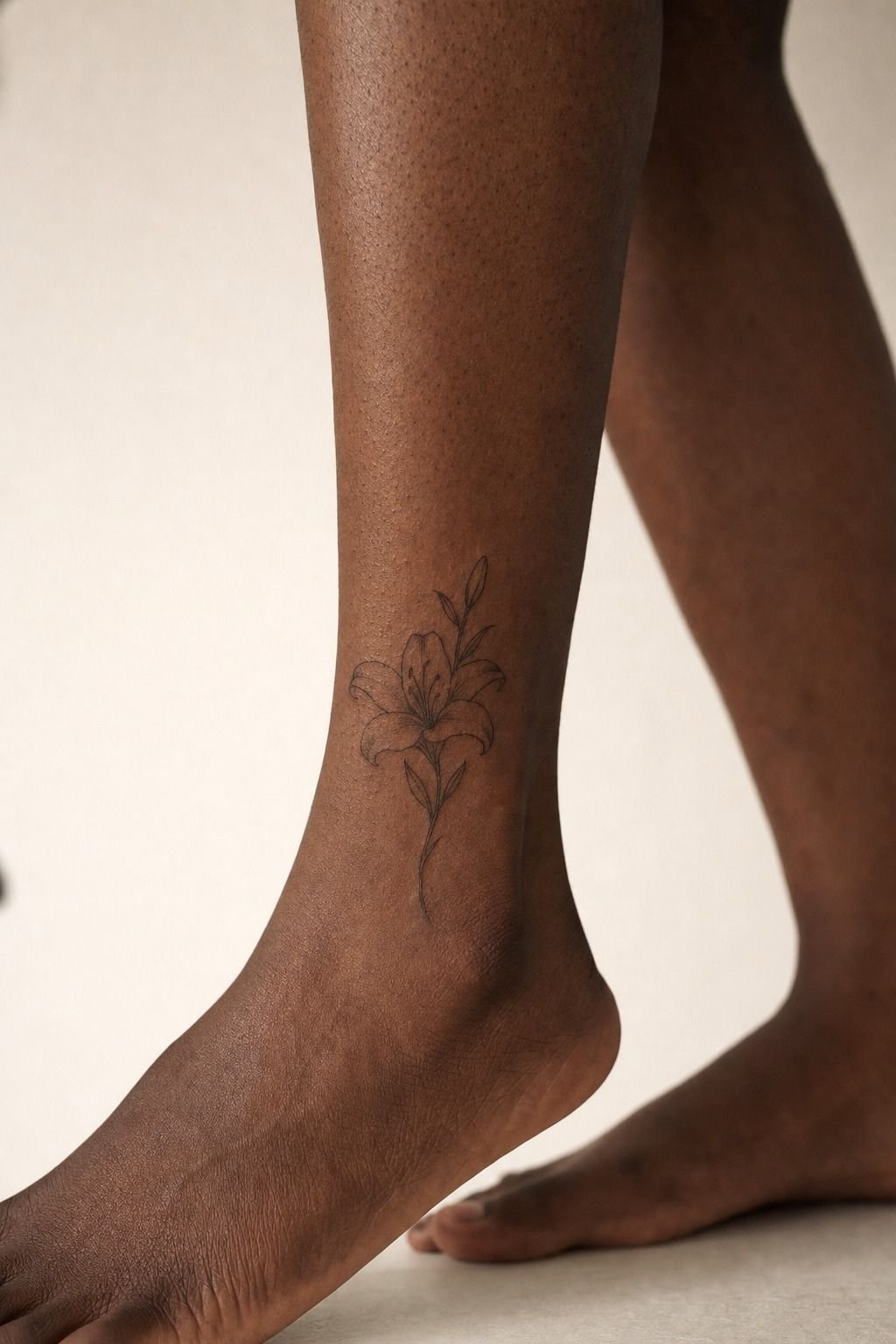
After locking the design, I tested a smaller version on the ankle because I kept thinking maybe a tiny tattoo would feel safer. The stencil looked cute for about five minutes. Then I pictured the heal and said no.
Ankles are high wear. Shoes rub, socks rub, the Achilles crease flexes every single step, and fine petals anywhere near that zone get chewed up faster than most artists admit in the consult chair.
A small tiger lily on an ankle looks adorable in week one and starts looking bruised by month six. You can absolutely do a small tiger lily tattoo there, but you need enough size for the stamens and freckling to stay visible, and on most ankles that means going bigger than people expect.
Under about 2.5 to 3 inches, I’d pass on the ankle. The flower loses its character fast, especially on deeper skin where contrast matters even more during the first settle.
The ankle test taught me something useful: small is not always cleaner. Sometimes going a little bigger is what keeps a tattoo delicate instead of letting it turn to mush.
That stencil went in the trash. Good riddance.
7I Mapped the Forearm Flow With the Arm at Rest
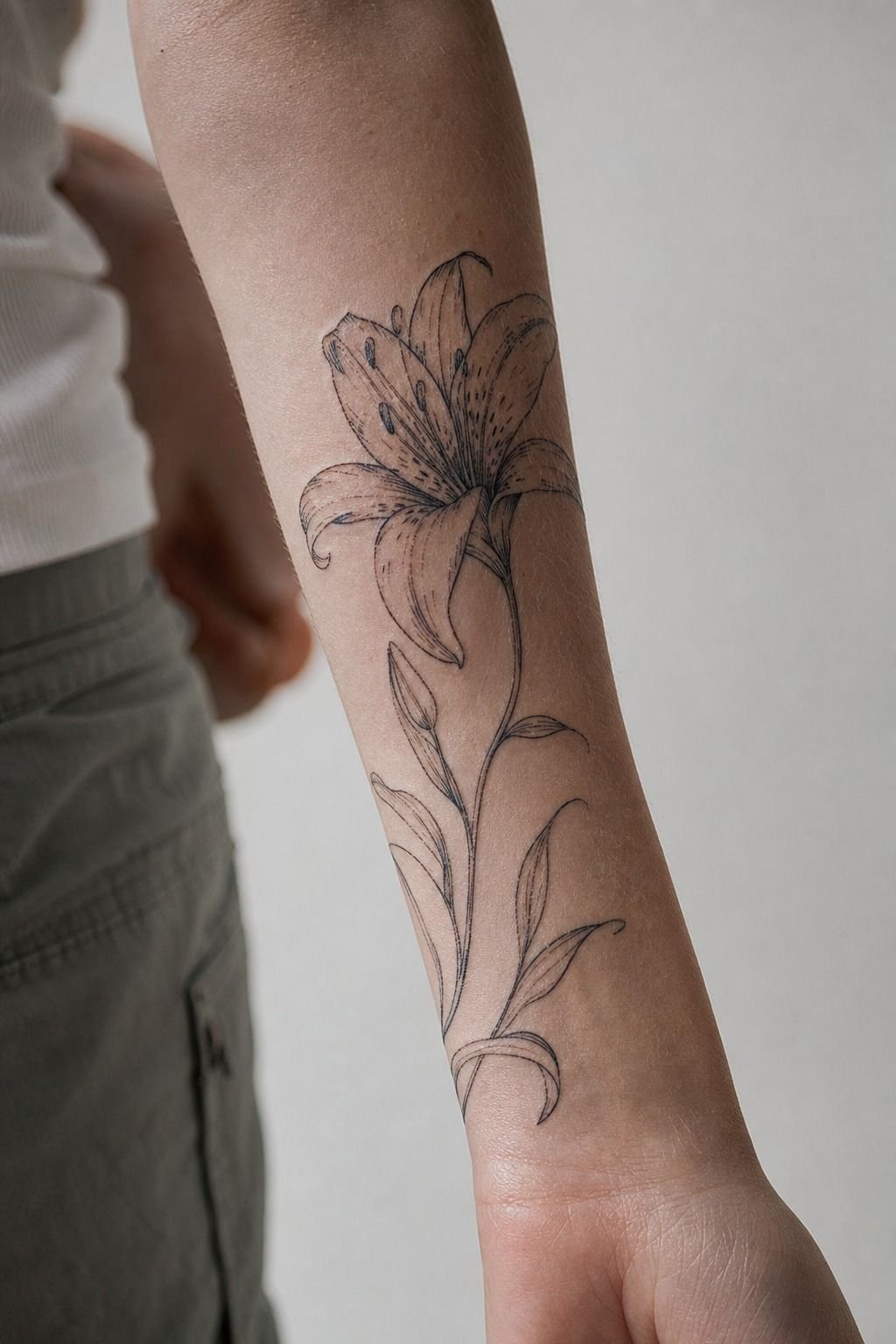
The outer forearm was my serious option, so I mapped the stem with the direction the arm naturally drops when I’m standing relaxed. That is the move. You don’t want the bloom twisted in a way that only looks right when you pose for a mirror shot.
On a forearm, I like a botanical flow that starts near mid-forearm and lets the head tilt toward the wrist or elbow depending on how much motion you want. My artist showed me both, and the version aimed too close to the wrist felt fussy. The longer version had better rhythm and gave the petals cleaner separation.
If you are building toward a larger floral collection, our floral half sleeve design guide covers how to leave yourself clearance to grow into a sleeve without boxing in the first piece.
8I Planned It Like the Start of a Sleeve
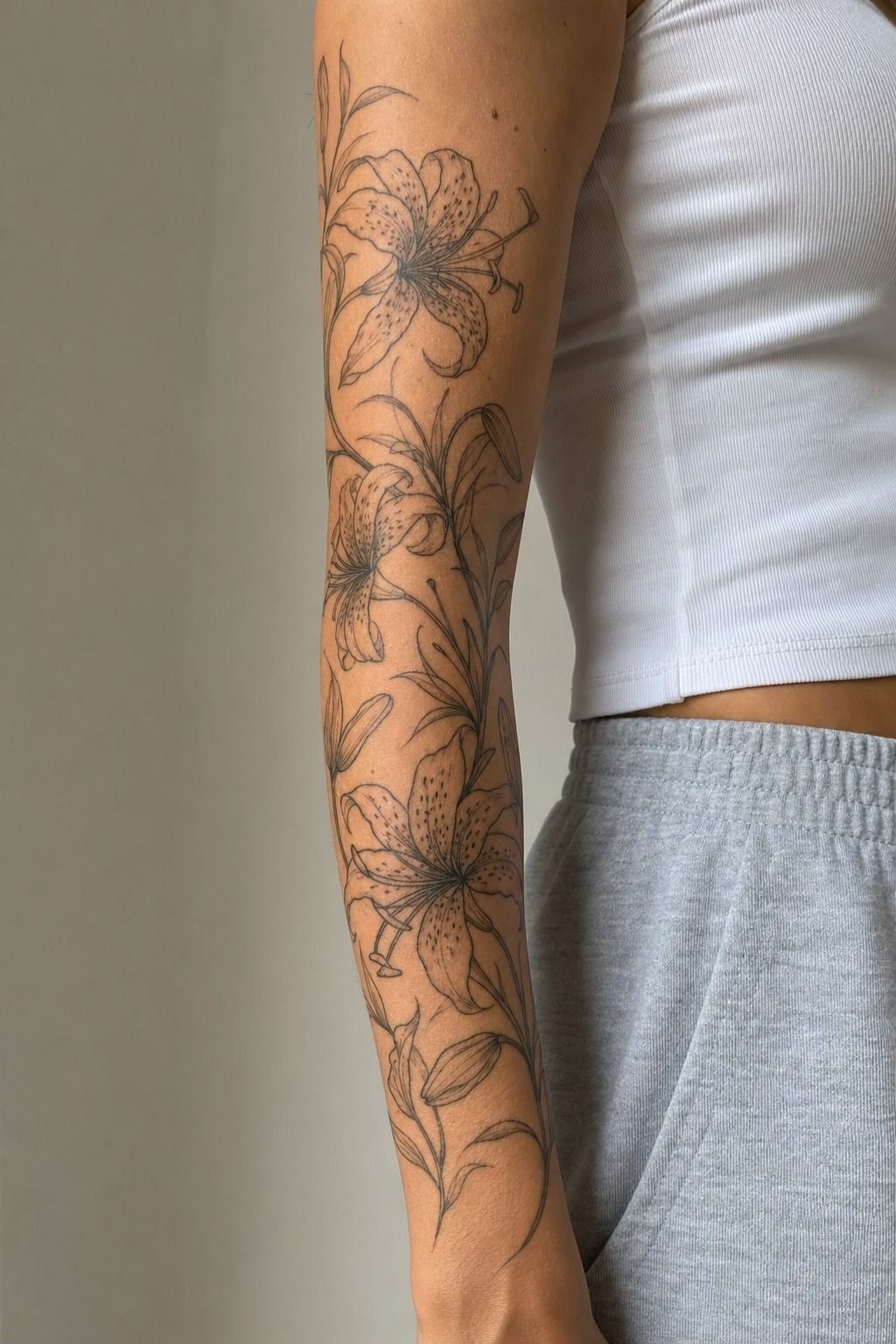
Even though I only booked one flower, I planned it like the start of a sleeve. You should do that too if there’s any chance you’ll add to it later. A lone bloom dropped in the dead center of the forearm can box you in fast, while an offset design leaves clean paths for leaves, buds, or a second flower later.
We talked about where future shapes could sit without crowding the original tattoo. That meant keeping open skin along one edge, avoiding a full wrap, and not stuffing every little detail into the first session. Good sleeves grow from restraint, not panic.
I used lily of the valley tattoo meaning and calla lily tattoo meaning as contrast points because each flower carries a different silhouette. If you are mixing species later, you need the first one to anchor the visual language.
9I Chose Black Ink Over Orange Wash
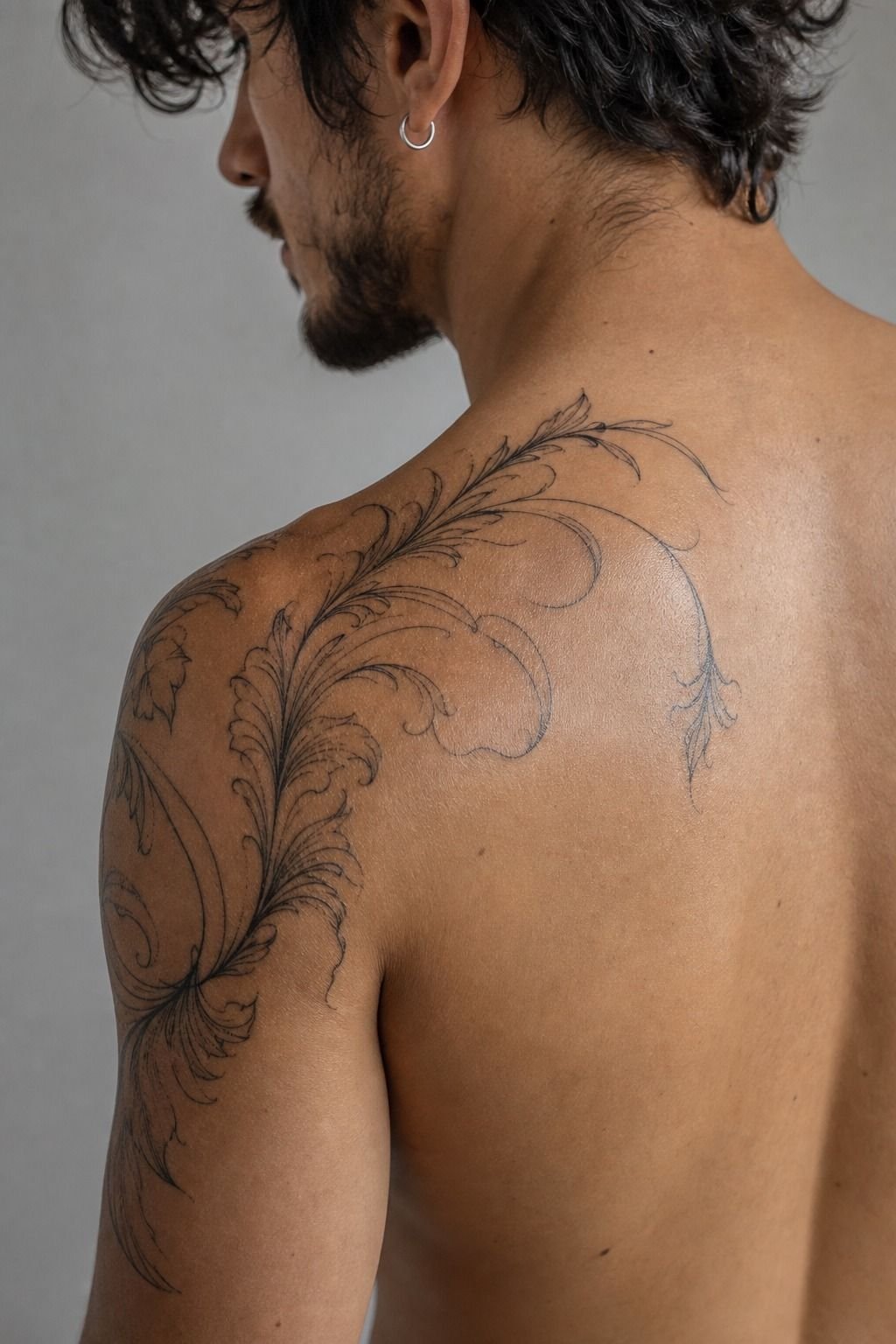
This was the call that kept the tattoo clean, and it’s worth slowing down on because most clients get it wrong.
The instinct is to reach for orange. Tiger lilies are orange in real life, and the first thing every client says is “I want it to look like the flower.” Here is the problem: orange pigment fades faster than black on sun-exposed skin, and a forearm sees sun whether you remember sunscreen or not.
A saturated orange tiger lily looks electric on day one, patchy by year two, and muddy by year four. Most clients do not believe this until they see a five-year-old orange floral tattoo in person.
The technical move is a black and grey tiger lily with the petal curl and freckling doing the work that color would have done. You can suggest the orange without carrying the pigment, and the tattoo ages like iron instead of like a sunset. Black ink also forgives more sun exposure, more swim sessions, and more years of forgetting aftercare.
That is not a compromise. That is the smarter tattoo.
The longevity consequence is straightforward: black holds its line for a decade or more. Orange needs a touch-up every two to three years on a sun-exposed placement. Choose accordingly.
If you really want the orange, save it for a placement that lives under clothing most of the time and budget for the touch-up cycle.
Decision criterion: if you want a tiger lily that still looks like a tiger lily in ten years, go black. If you want a tiger lily that pops on Instagram for the first month, go orange. Pick which decade matters to you.

10I Added Dotwork Around the Petals for Lift
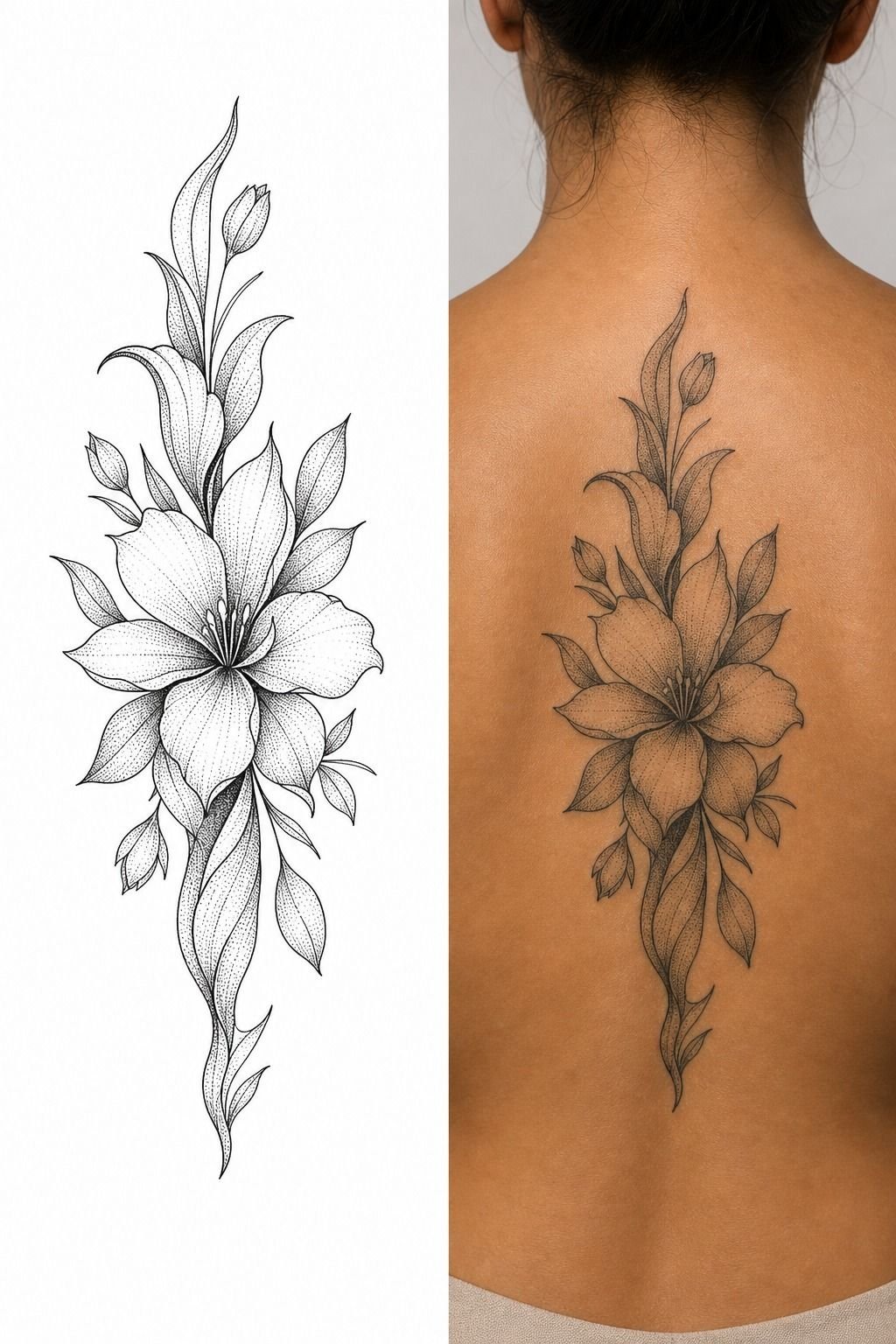
Dotwork was the little adjustment that made the tattoo feel finished without overworking the skin. I didn’t want full shading packed into each petal because that can muddy a fine line flower fast. But a light field of dotwork around the base and under the curve of the petals gave it lift.
The split between stencil and healed version made the value choice obvious. On paper, the plain outline looked clean but slightly flat.
On skin, a touch of pepper shading gave the flower depth and kept the center from reading empty. That is the sweet spot between illustration and realism.
You want the flower to feel alive without losing the graphic crispness of a fine line piece.
And if your artist starts filling every gap just because blank skin makes them nervous, stop them. Tiger lily tattoos do not need soup shading. They need enough contrast to feel alive, and then they need restraint.
Overworked skin is what turns a clean flower into a gray smudge by year three. One light pass, walked away from.
That is the move.
11I Kept the Stamens Sharp and Visible
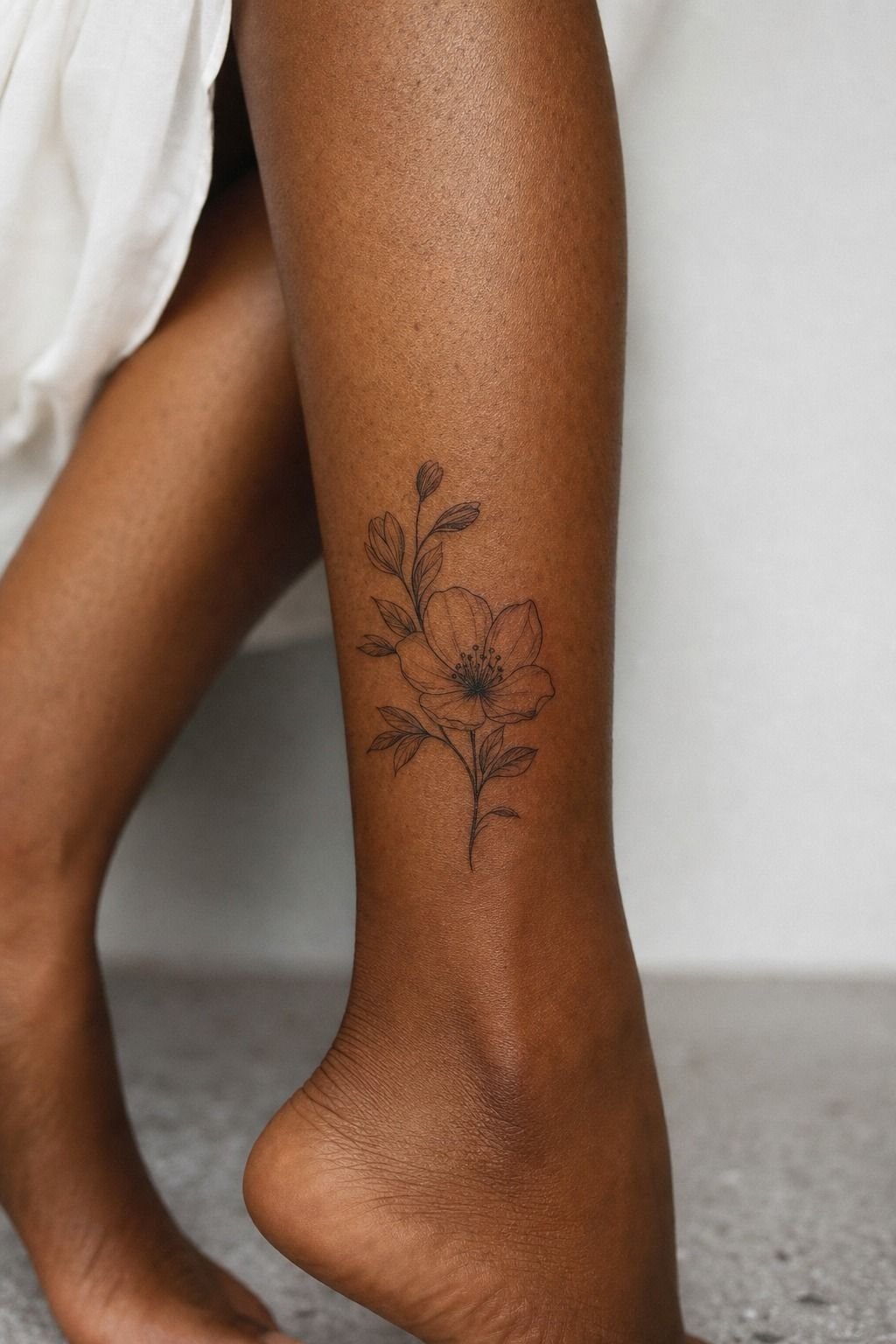
The stamens were locked in for me because that’s where a tiger lily stops looking like any other lily, and it’s the detail most artists get wrong.
Here is what I asked for and why. Tiger lily stamens are long, dramatic, and covered in rust-colored anthers in the real flower.
In a tattoo, they need to read as stamens, not as random lines sticking out of the bloom. That means a confident line weight on the stem of each stamen, a visible anther at the tip (even just a small dot or capsule shape), and enough length that they extend past the petal line instead of staying tucked inside the bloom.
The technical risk is real. Artists underpressure the stamens to keep the design “clean,” and the result is a flower with no center of gravity.
The stamens are the tiger lily’s exclamation point. Pull them in tight and the flower looks like a quiet tea rose.
Push them out with intention and the tattoo has nerve.
The longevity consequence is straightforward: stamens drawn at the same line weight as the petals disappear into the freckling within a few years. Stamens drawn slightly heavier than the petals, with deliberate anther dots, hold their identity through the full settle. That tiny line weight adjustment is the difference between a tattoo that still reads as a tiger lily in year five and a tattoo that reads as “some flower.”
Decision criterion: if the stamens in your stencil look like afterthought lines, ask your artist to push them. Bold will hold. Whisper-thin will fade.
12I Asked for Botanical Line Weight
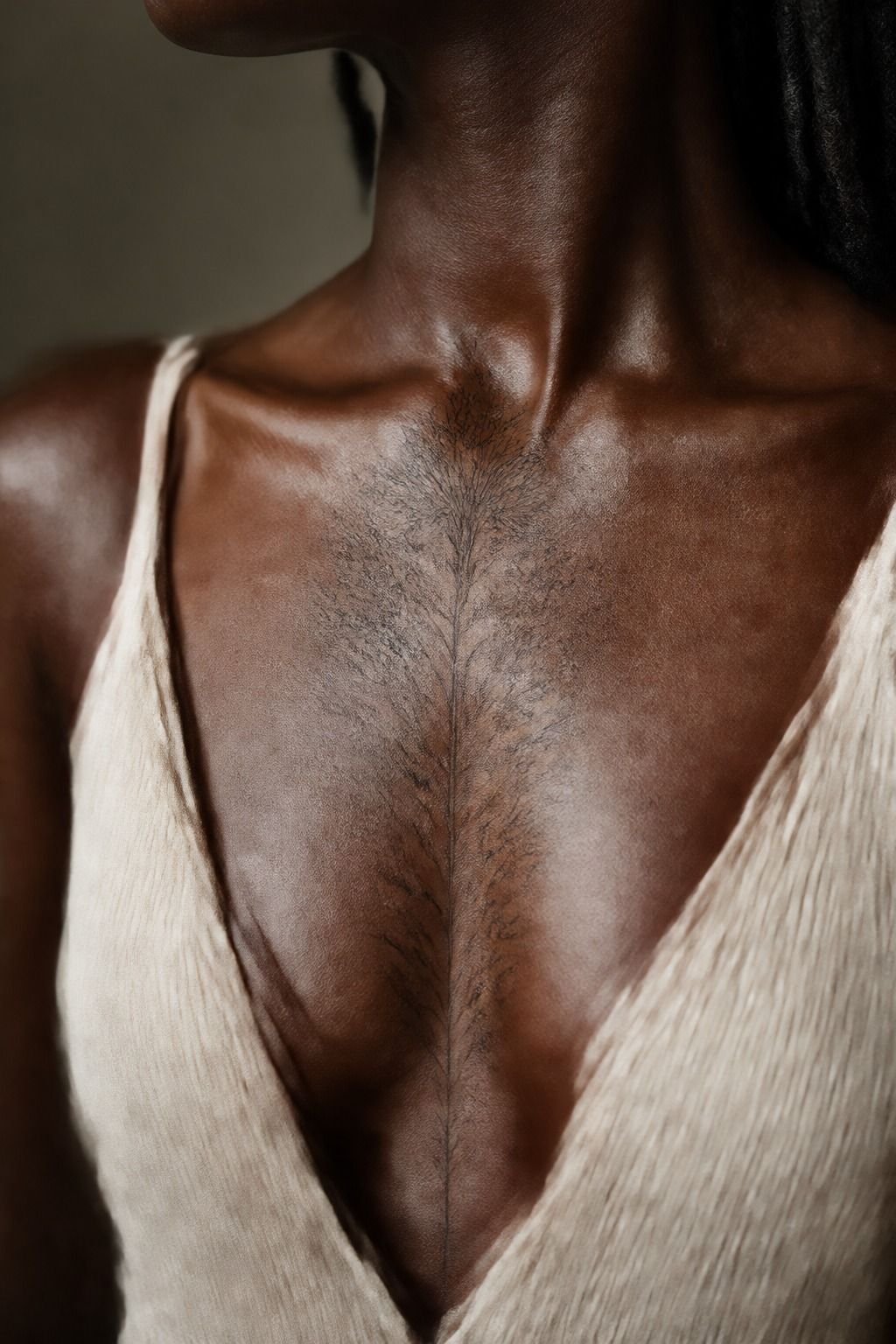
This is one of those requests that sounds nerdy until you see the difference. I asked for botanical line weight, meaning slightly varied line weight instead of one even pen width all the way through. You can ask for this too, especially on sternum or chest work where the skin and movement can flatten a drawing if every line matches.
The outer petal edges got the faintest push. Inner folds stayed lighter. The stem held a more confident line than the freckling, which kept the whole tattoo readable without making it look trad.
That is a clean compromise between illustration and realism.
But you need an artist who can pull that off in one pass. If their healed work looks shaky, do not book them just because their flash page is pretty. One clean pull, not ten fuzzy ones. Anything else is a scratcher, and a scratcher will chew up your freckling inside a year.
13The Wrist Stencil Went in the Trash Too
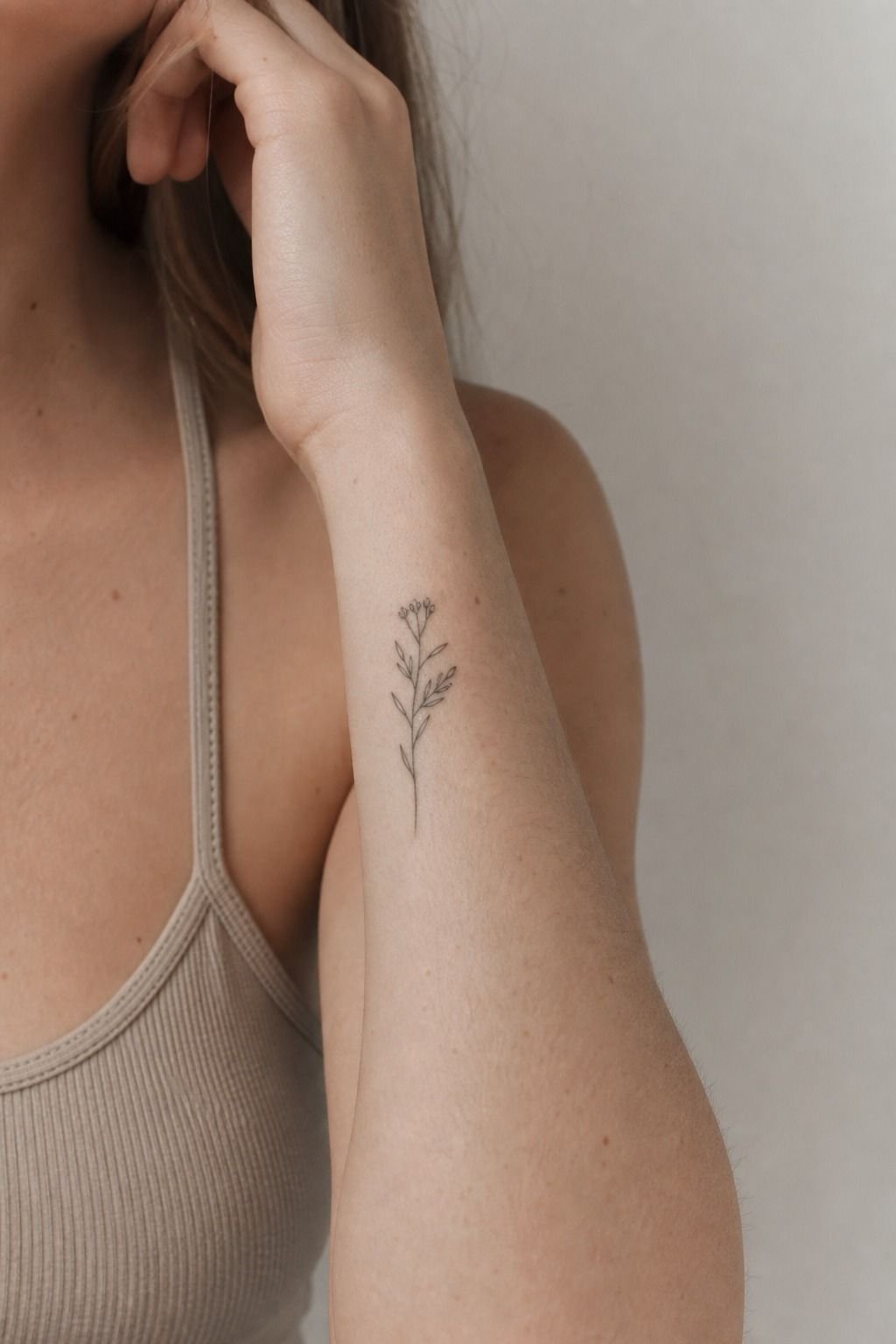
For the wrist option, I learned the stem matters as much as the bloom, and that’s exactly why I said no to it.
The wrist stencil was technically pretty. The bloom sat nicely along the radius bone, the stem curved toward the thumb base, and from a single photo angle it looked elegant.
The problem showed up the moment I moved my hand. The stem flexed with every wrist movement, the bloom slid slightly with the tendon shift, and a small detail near the petal base drifted out of alignment every time I turned my palm up to look at it.
A tattoo that only looks right when your wrist is in one specific position is not a tattoo, it’s a photograph.
The pain calculus pushed the wrist out too. Wrist sits over bone and tendon with almost no padding, so lines feel sharper than they do on the outer forearm, and any shading or dotwork pass turns into a dull burn that lasts longer than it does on fleshier zones. For a piece this detailed, that’s the wrong trade.
The aftercare problem was the real dealbreaker. Wrists live under watch bands, sleeve cuffs, and bag straps.
Every one of those is a friction source during the first two weeks when the tattoo is still an open wound. I’ve seen too many wrist tattoos heal patchy because the client could not keep clothing off them during healing.
Surface healing of 2 to 4 weeks needs clean air and zero friction, and the wrist can’t give you that without lifestyle changes most people are not willing to make.
That stencil went in the trash next to the ankle one. Two rejections, one decision. The outer forearm was the right call.
14I Rejected the Spine Stencil for Petal Wrap
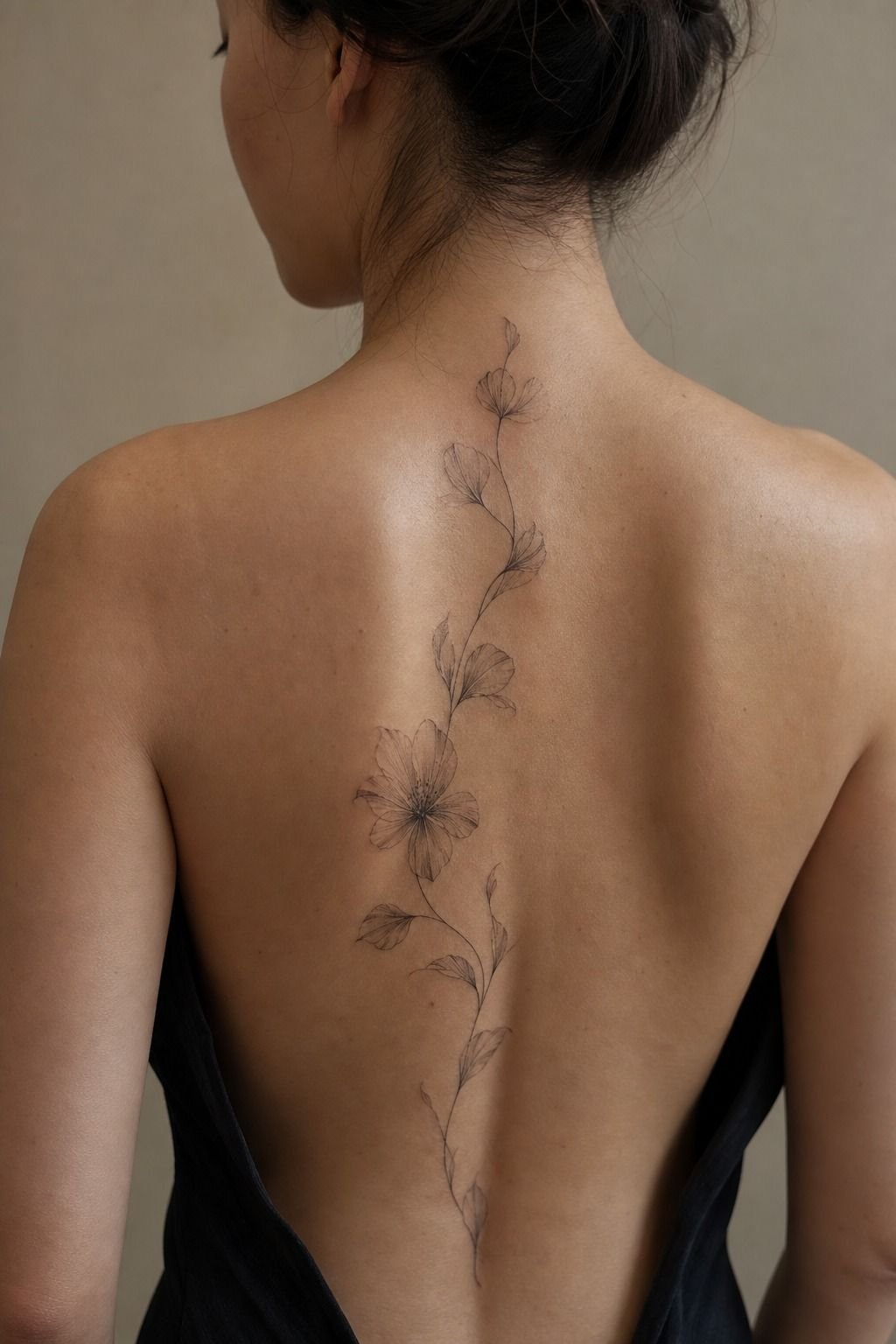
The spine test looked amazing in stencil, then immediately showed why placement can lie to you. On a flat template, the petals felt balanced.
Once we mapped them to the body, one side wrapped beautifully and the other started sliding too far around the rib line. That is the kind of thing you catch before ink if you slow down.
A wrapped flower should hug the body, not disappear around it. On the spine, the centerline can make a lily look elegant and vertical, but only if the petals stay readable from both angles. If half the bloom vanishes when you’re standing straight, the design is too ambitious for that size.
The pain reality sealed it. Spine and rib work is genuinely spicy.
Lines over bone feel sharper, and the longer the artist has to stay in one zone to pull detail, the more the session grinds on you. For a fine line floral with this much freckling, the spine would have meant multiple breaks and a higher chance of overworking the skin as the artist chased contrast on a surface that does not give it easily.
Decision criterion: if the stencil only works from one angle, the placement is wrong. If the placement doubles the session time and the pain, the placement is wronger. Move on.
15I Protected the Tiger Lily Identity Against Generic Lily Drift
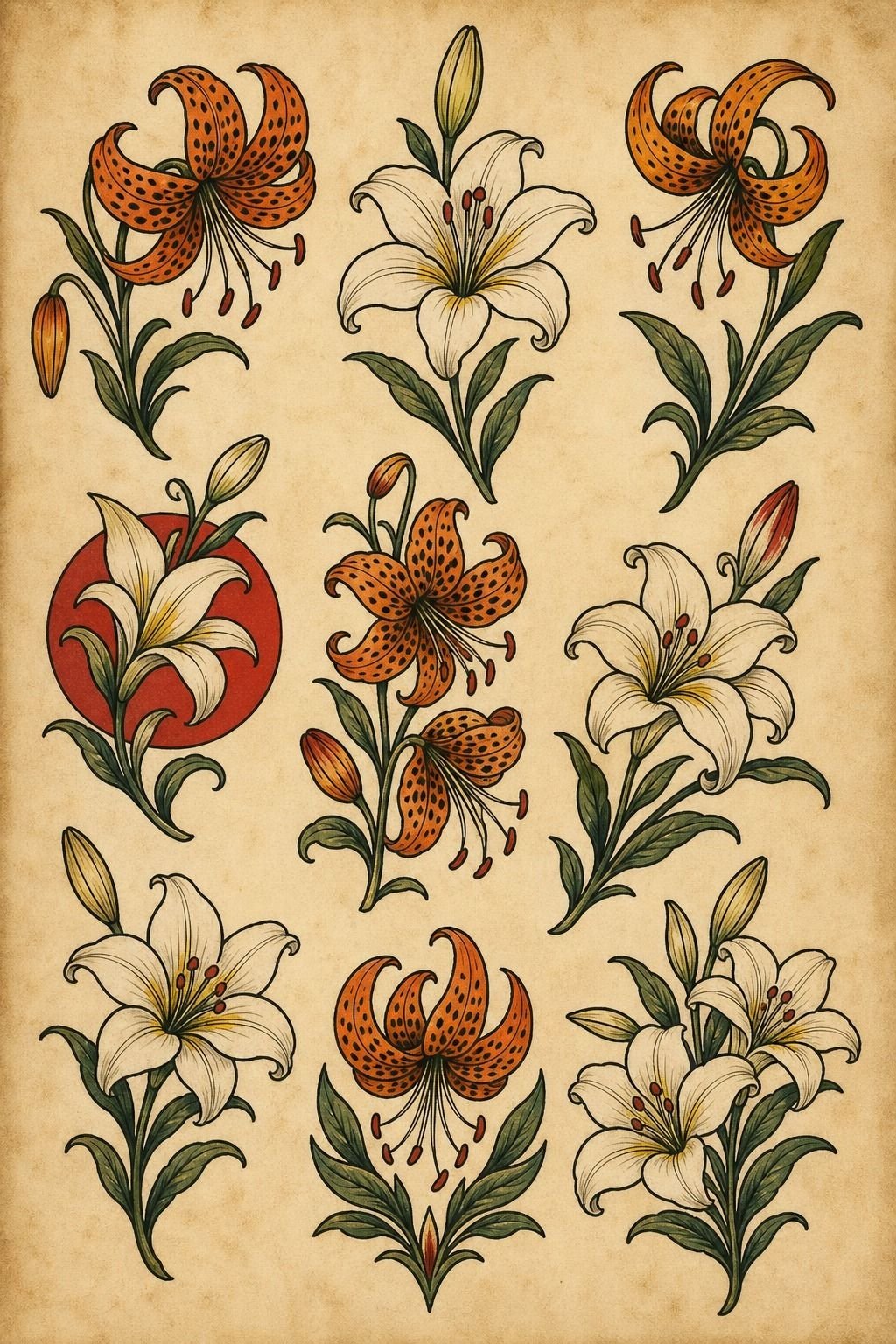
At one point I had three flower references open and nearly drifted into generic lily territory. That is a common mistake. You start with a tiger lily, then one softer reference pulls the petal shape one way, another pulls the stamens back, and suddenly you’ve lost the species that made you stop scrolling in the first place.
I fixed it by putting the flash options side by side and marking what was essential: backward petal curl, visible freckles, long stamens, strong center. If a sketch lost two of those four, it was not a tiger lily anymore. Easy.
That same comparison against spider lily tattoo meaning and sakura flower tattoo meaning helped me keep the final design honest. You can blend vibe. You should not blur identity.
16I Approved the Final Stencil on the Outer Forearm
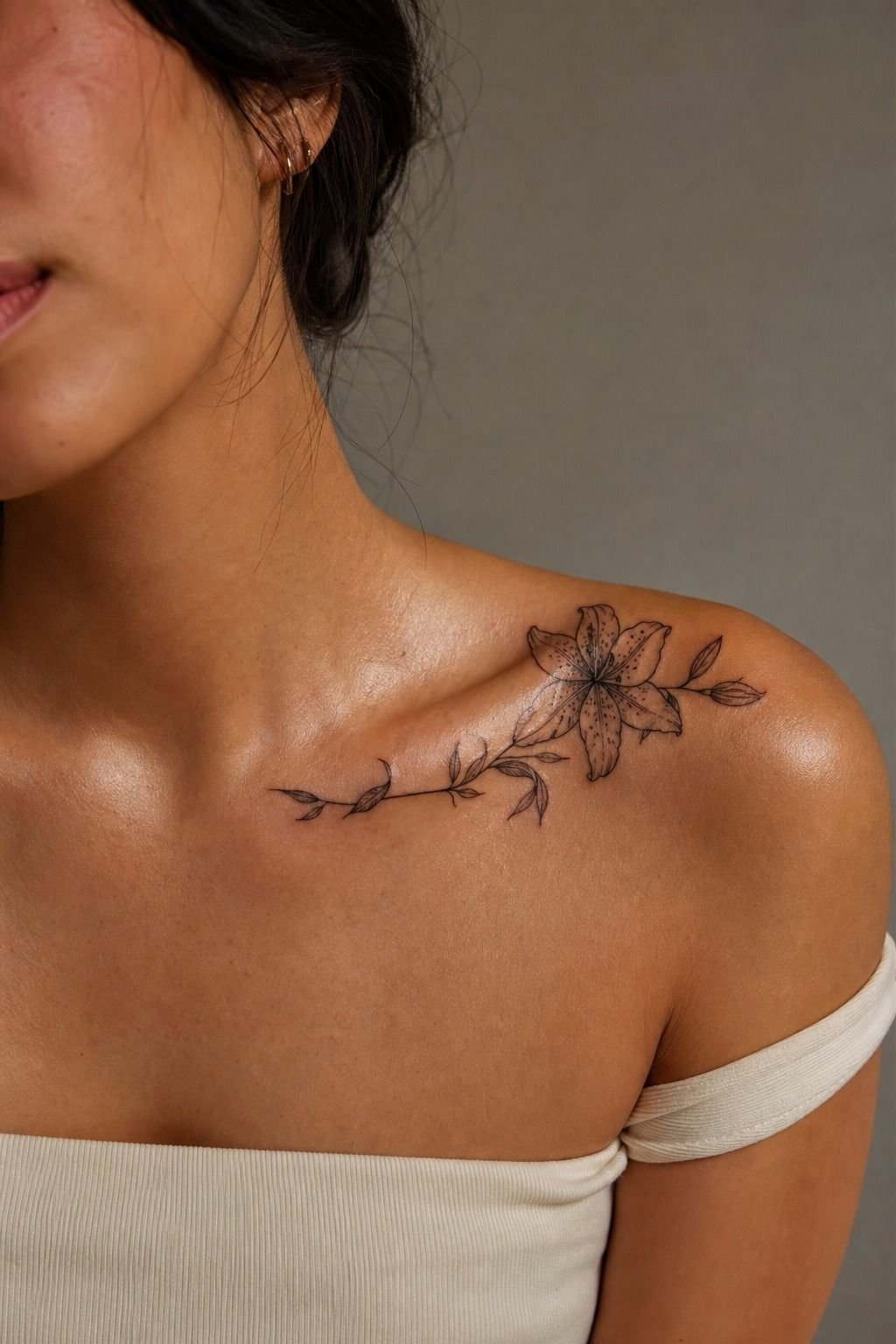
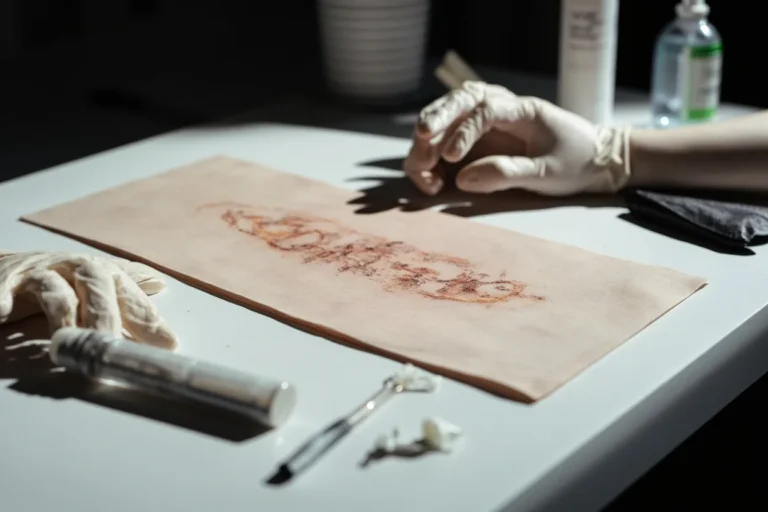
Approving the stencil was the first moment I felt calm instead of excited, and that is exactly how you want it. If you’re still trying to convince yourself during the final placement check, you probably need another five minutes and a mirror. A rushed stencil becomes an expensive correction, and fine line tattoos do not give you much cover for a bad first pass.
We checked the placement twice. First with my arm relaxed at my side, then with my arm bent at the elbow the way it actually lives most of the day. The bloom sat slightly higher than the first test, which let the stem follow the natural line of the forearm without fighting it.
Same drawing, better placement, totally different result.
But this is where you need to speak up. Your artist can’t feel the weird tension in your gut if the tattoo still looks off to you. Say it before the machine starts.
A good artist would rather move a stencil twice than rework a finished piece.
17I Sat Through the Shading Pass Without Heroics
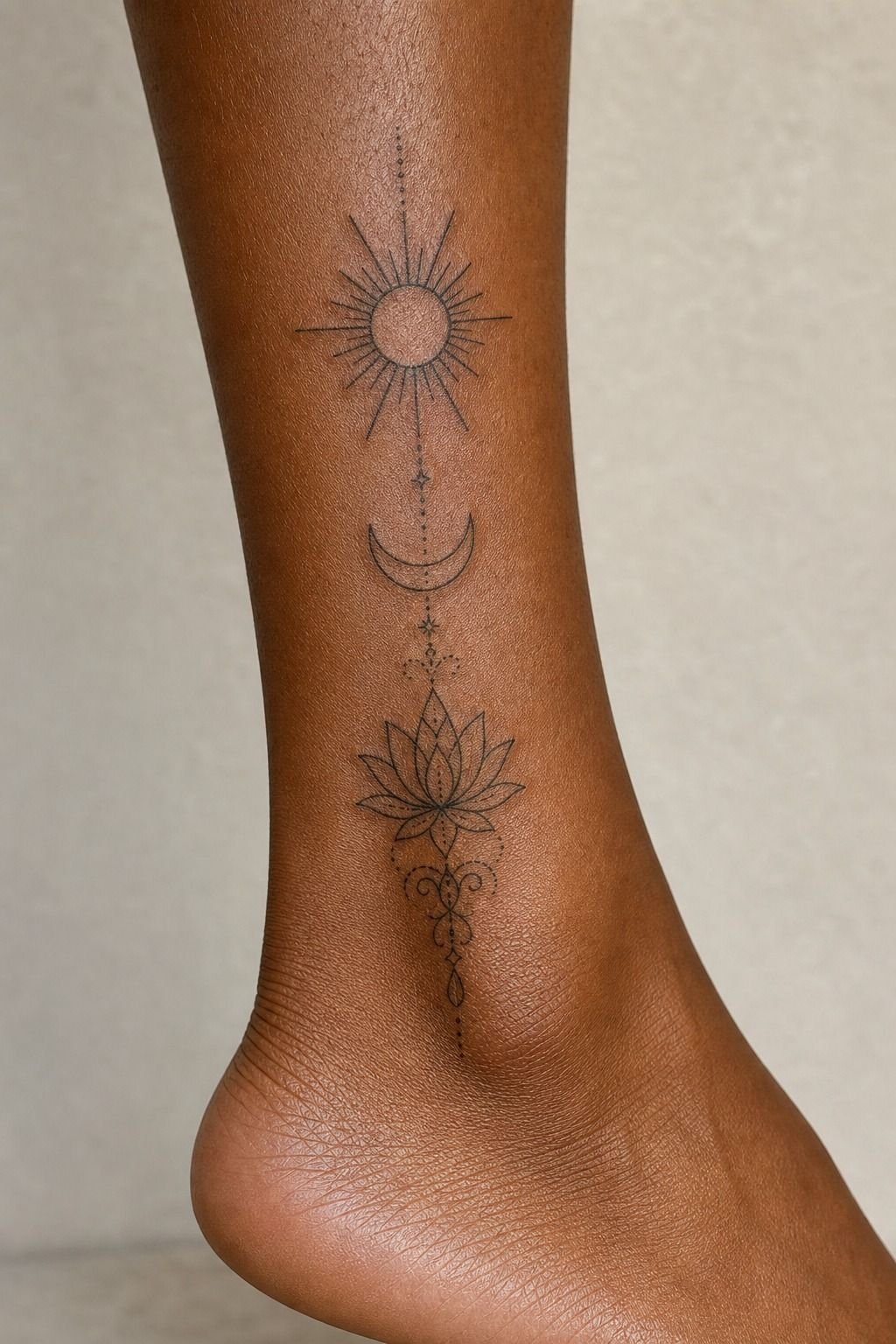
Lines feel sharper, shading is a dull burn, and any packed detail is the spiciest part. That is the standard order of operations for fine line floral work, and this piece followed it perfectly. None of it was unbearable, but I was glad we kept the session short.
The session itself ran about 90 minutes from stencil to final wipe, with the machine time closer to 60 to 75 minutes depending on how you count the breaks. That is a sweet window for a piece this size because you can stay still, your artist doesn’t have to rush, and the skin usually stays calmer than it does in a longer session. Long sessions are where overworked skin happens, and overworked skin is where future fading starts.
I told myself I’d tap out for five if I needed it rather than pretend I was tougher than I was. You should do the same.
A steady client gives better skin to work on than a hero who starts shaking halfway through the dotwork pass. Breaks are free. Shake is permanent.
18I Healed the Tiger Lily Tattoo Cleanly
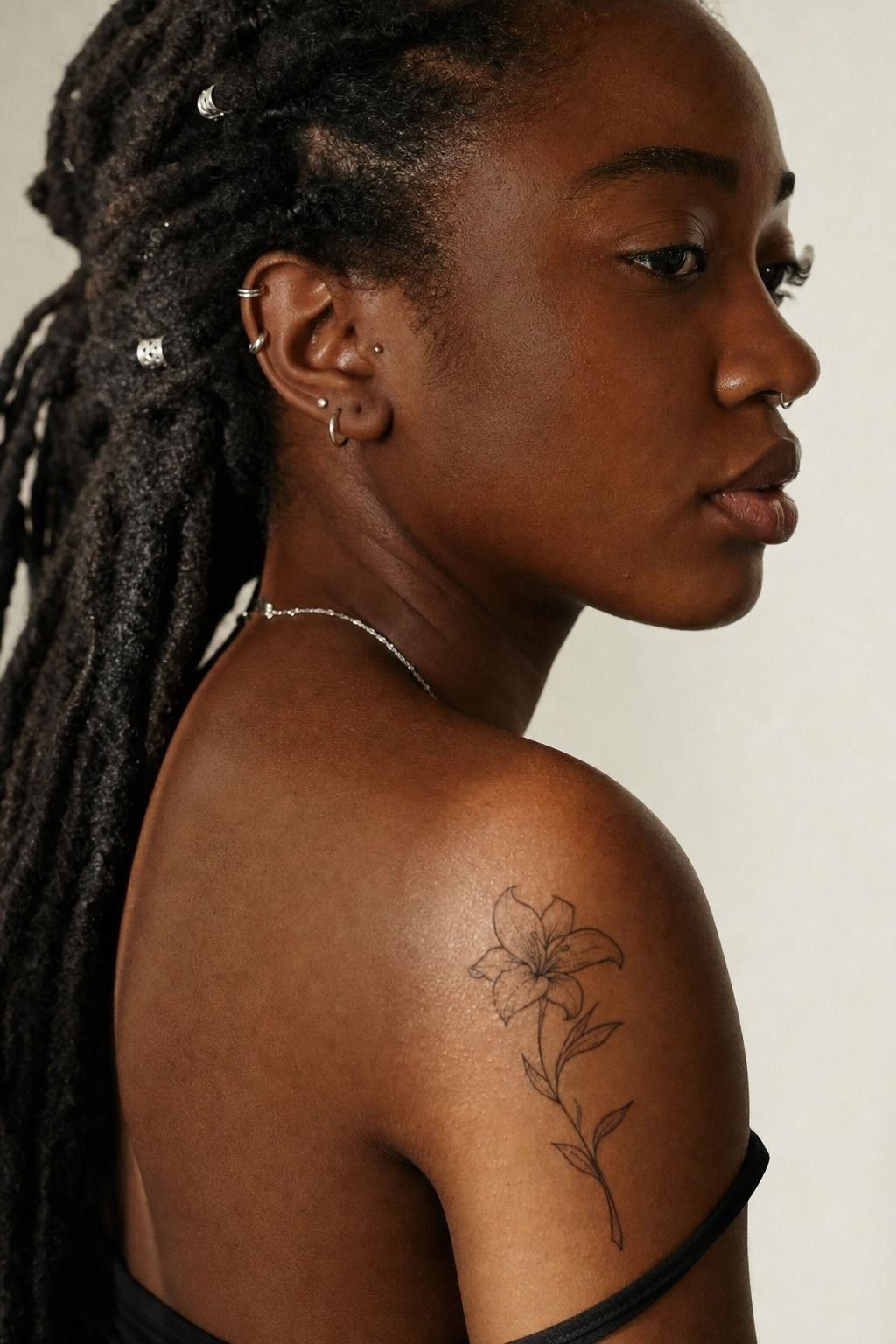
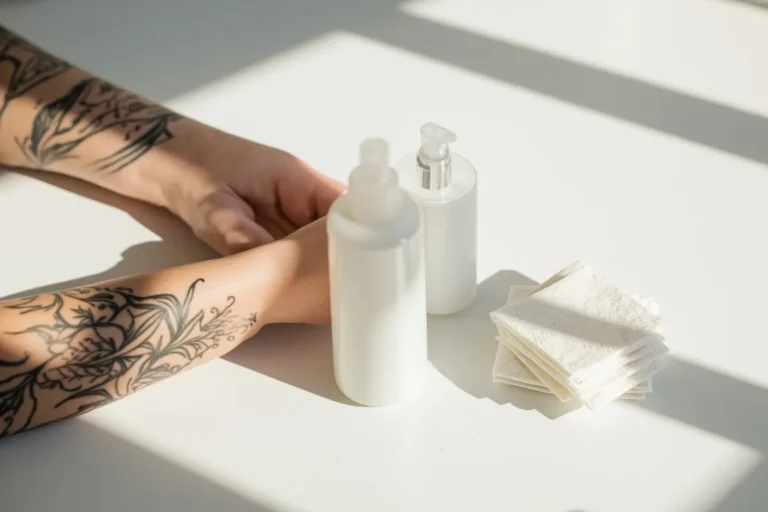
Healing is where you either protect the tattoo you paid for or quietly wreck it. The first few days it is an open wound, so treat it like that. Gentle wash with unscented soap, thin layer of ointment, clean loose shirt, no gym friction on the placement, and zero picking when it starts to peel like a sunburn.
Surface healing for a fine line piece like this typically runs 2 to 4 weeks depending on your skin, your aftercare discipline, and whether you let the placement breathe. The shiny silver skin stage hangs around longer, and the full settle keeps changing for closer to 2 to 3 months. That is normal.
Do not judge your fine line tattoo on day nine and panic. Do not judge it on day thirty either. Judge it at the three-month mark when the freckling has settled and the lines have relaxed into their final weight.
The reason it healed clean was not luck. It was solid application, enough size, black ink with built-in contrast, and boring aftercare done right every day. Boring works.
If you want a full walkthrough of the routine, our tattoo aftercare guide covers what to do, what to skip, and what will wreck the heal.
The Healed-Line Test
What I learned from this tiger lily tattoo is that the first right choice usually is not the flower. It is the filter you use before the tattoo even exists, and I keep coming back to one rule.
I call it the Healed-Line Test. Before you book, ask the artist for healed photos of fine line florals at six months, twelve months, and two years. Not fresh photos from that morning. Healed photos.
Look at the line consistency on each one. Look at whether the freckling is still visible. Look at whether the stamens survived the full settle.
Look at whether the dotwork healed velvety or patchy. If the artist can’t show you that proof, they’ve not earned your skin yet.
That test works because fresh tattoos lie. A fresh tiger lily with tiny freckles, whisper-thin stamens, and pale grey wash can look gorgeous for one day.
Then the lines relax, the skin settles, and you realize the design never had enough contrast to begin with. That is not bad luck. That is a planning problem you can see coming if you look at healed work first.
I also think people get too hung up on copying one exact reference. If you want Pinterest-exact, I’m not your artist, and honestly you probably should not want that anyway. Your body is not the same shape as the model in the photo, your skin tone is not the same, and your artist’s hand definitely is not the same.
The point is to keep the species, the feeling, and the technical strengths. The point is not to trace a stranger’s tattoo and hope it behaves on your arm.
For you, the smarter move is building a checklist. Real flower reference. Healed examples from the artist themselves. Placement that’s not high-wear unless you’re fine with touch-ups.
Enough size for the stamens to stay visible. Black ink over orange if longevity matters to you.
An artist whose lines look crispy when healed, not just fresh. When I followed that checklist, the tattoo stopped being a gamble and started feeling inevitable. That is when I knew I had the right tiger lily.
How much it cost
If you’re planning a tiger lily tattoo like this, here are the real US ranges to budget against. Most shops still have a minimum around $50 to $100, and many solid artists charge roughly $100 to $250 per hour depending on city, demand, and experience. A small to medium fine line floral usually lands somewhere between $150 and $400 total in the current US market.
The numbers above are typical ranges across the US, not the price of any one specific appointment. Your final cost depends on your artist’s hourly rate, your city, and how much detail you ask for.
A 3-inch fine line tiger lily in a smaller market might run $180 to $250. A 5-inch black and grey version in a higher-demand city could push $400 to $600.
Plan for the mid range and you won’t be surprised by the invoice.
But price only tells you so much. The bigger question is whether the artist can show healed fine line florals on skin tones close to yours. I’d pay more for that proof every time, because a tattoo that heals well is worth the difference and a tattoo that does not is worth nothing no matter how cheap it was.
What People Always Want to Know
How much does a tiger lily tattoo usually cost?
About $150 to $400 is common for a small to medium tiger lily tattoo in the US, though shop minimums often start around $50 to $100 and stronger artists may charge $100 to $250 an hour. Size, placement, and detail drive the total. Black and grey versions usually cost less than full color because the artist doesn’t have to pack saturated orange into every petal.
If you’re still trimming detail, our small tattoo ideas that stay readable roundup helps you figure out the smallest size worth booking.
Is a tiger lily tattoo a good idea for a first tattoo?
Yes, they can be a solid first tattoo if you keep the design readable and pick a lower-pain placement like the outer arm or shoulder. You get clean lines, clear symbolism, and a flower that still feels personal instead of generic.
Avoid the wrist, ribs, and sternum for your first piece, because the pain spikes there and so does the temptation to rush the stencil approval. Our first tattoo ideas guide covers more forgiving placements if you want to compare options.
How do I choose a tattoo artist for a tiger lily tattoo?
Look for healed linework first, not just fresh tattoos on a portfolio grid. You want crispy lines, clean botanical structure, good hygiene, and proof the artist can tattoo your preferred style on skin tones close to yours. Ask for healed photos at six months or later.
If they can’t show you any, keep looking. Our fine line tattoo needles longevity placement guide breaks down what to look for in the healed result.
How much does a tiger lily tattoo hurt?
It depends on placement, but bony zones like the sternum, ribs, feet, and hands are usually more spicy than the outer arm, thigh, or shoulder. Lines feel sharper, shading is a dull burn, and packed detail is often the sharpest part.
A 4-inch tiger lily on the outer forearm is a 4 or 5 out of 10 for most clients. The same tattoo on the ribs or stomach is closer to 7 or 8. Pick your placement knowing the pain trade-off, and take a break if you need it.
How long does a tiger lily tattoo take to heal?
Surface healing usually takes about 2 to 4 weeks for a fine line piece, while the full settle can run 2 to 3 months. Wash gently with unscented soap, use a thin layer of aftercare ointment, avoid pools and hard sun, and do not pick the flakes if you want the color and linework to stay clean. Our tattoo aftercare page has the full routine if you want the day-by-day version.
What is the best placement for a tiger lily tattoo?
The outer forearm, shoulder, and upper back are strong placements because they give the flower enough length for the stem and usually age better than high-wear zones. If you want ankle or wrist, go a little larger so the stamens and petal curl stay visible, and accept that touch-ups will come sooner. Our tattoo placement chart breaks down wear zones by area if you want the full map.
The One-Placement Rule
If I had to pick one, I’d start with the outer forearm. It gives a tiger lily enough length for the stem and enough calm skin for fine details to hold.
It ages well, it heals cleanly, and the pain is manageable for most clients even on a first tattoo. Save that placement first, then book the artist whose healed florals prove they can pull it off.
A tiger lily on the right arm, by the right hand, with the right reference, is the version of this tattoo that still looks like a tiger lily in ten years. Everything else is compromise.