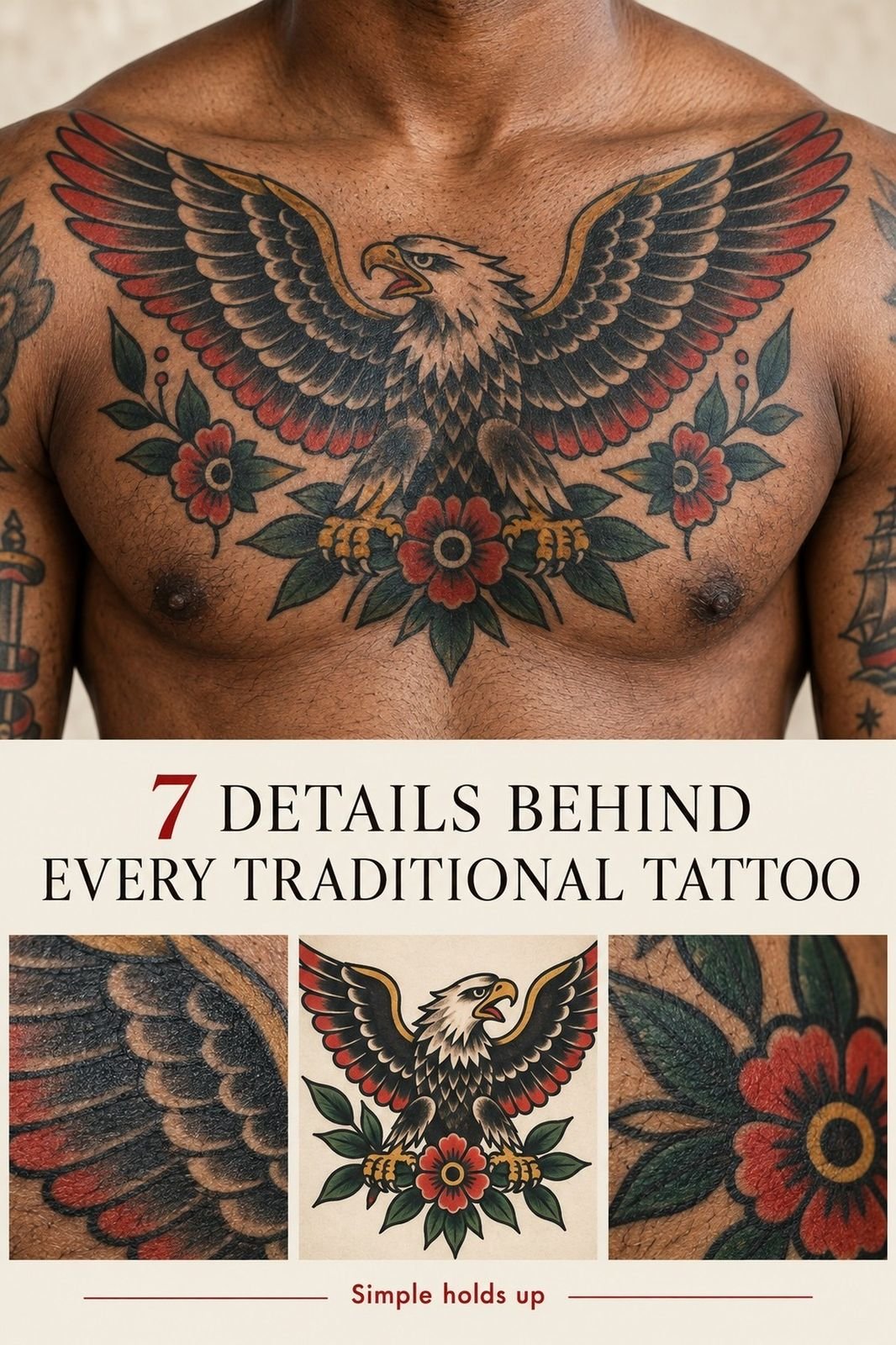
Traditional Tattoo Inspiration lasts best when American traditional linework has room to breathe, strong contrast, and placement that matches your daily life. I learned that after choosing a piece that looked crisp on paper but crowded my arm. The fix wasn’t more detail. It was better scale, cleaner spacing, and a more striking, personal idea.
- Build a Bold American Traditional Eagle Chestpiece
- Why a Delicate Traditional Rose Forearm Tattoo Works
- Let a Fierce Snake Follow the Calf
Quick answer: Choose the subject you would still want after the novelty fades, then match its scale to your body, budget, and tolerance for touch-ups. That decision usually creates a more meaningful tattoo than collecting references without a clear direction.
- Build a Bold American Traditional Eagle Chestpiece
- Why a Delicate Traditional Rose Forearm Tattoo Works
- Let a Fierce Snake Follow the Calf
- Curate a Vibrant Traditional Flash Sleeve
- A Symbolic Dagger and Heart Sternum Piece
- Keep a Dainty Traditional Swallow Behind the Ear
- Watch an Ornate Tiger Head Take Shape
- Choose a Minimal Traditional Anchor for the Ankle
- When Does an Edgy Traditional Skull Hand Tattoo Make Sense?
- Follow a Graceful Mermaid Down the Thigh
- Sailor Jerry’s Classic Upper-Arm Motif
1Build a Bold American Traditional Eagle Chestpiece
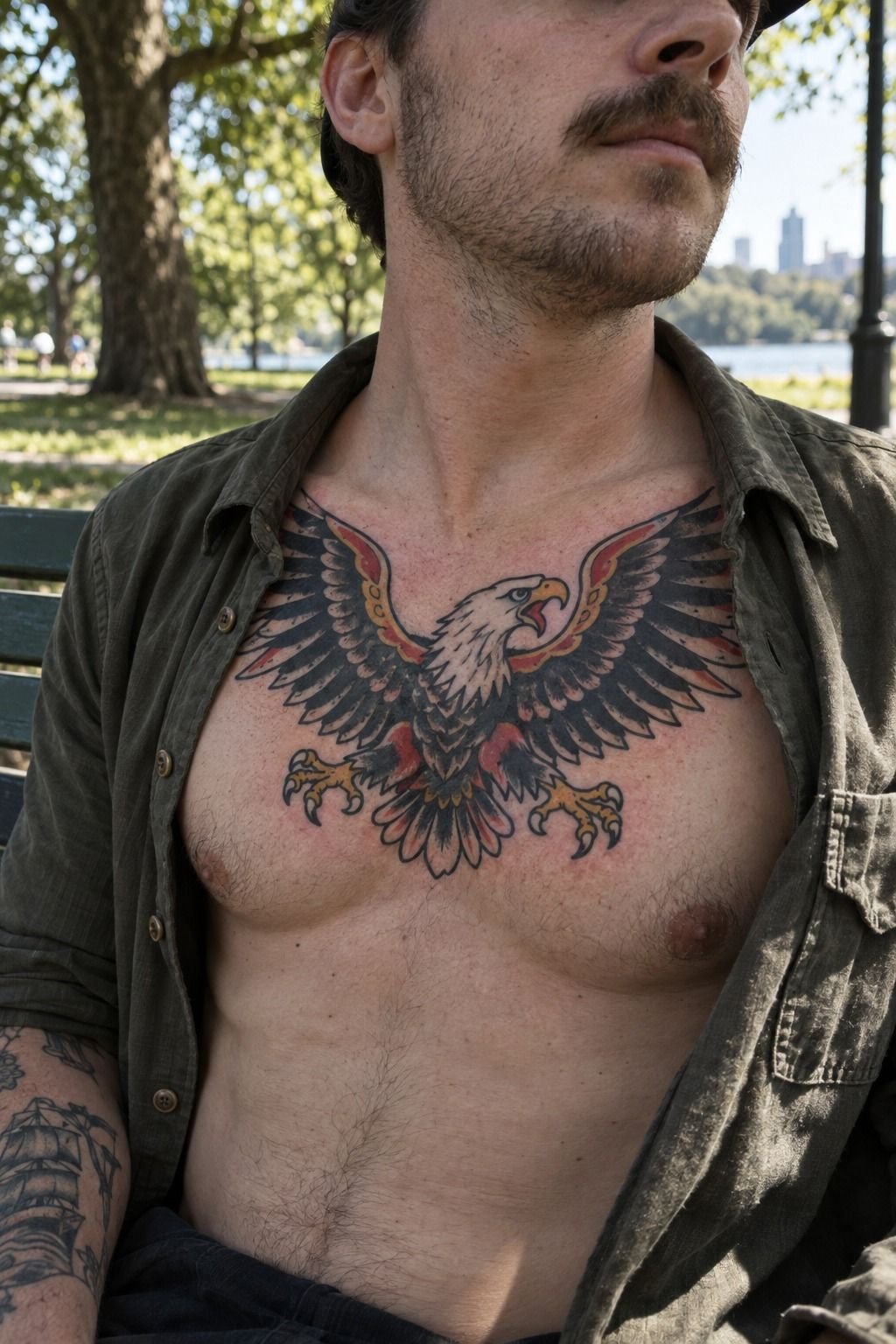
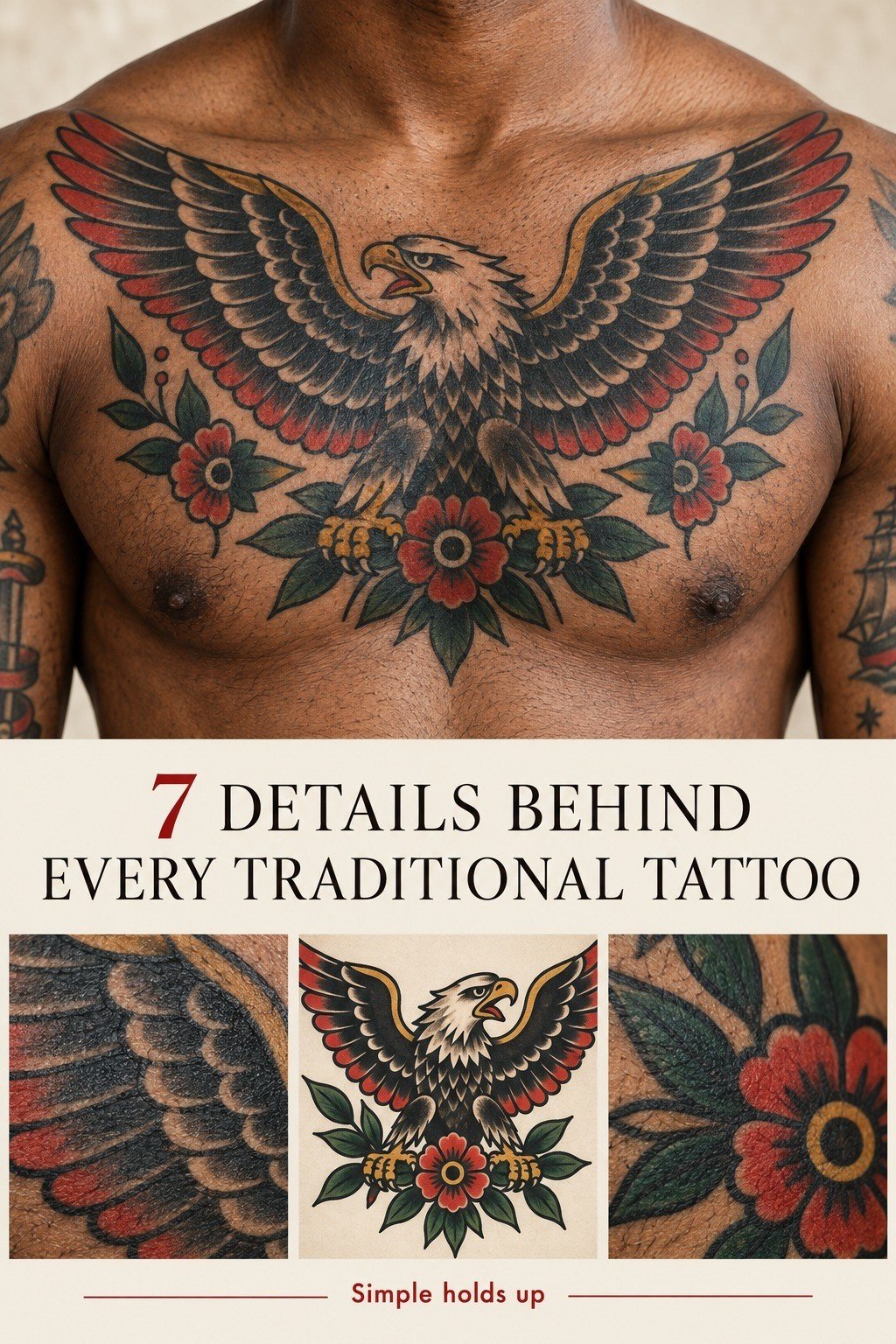
A chest eagle needs confidence in the outline before you worry about feathers. If you’re drawn to a black-ink eagle design, ask your artist for a broad silhouette, a centered head, and enough skin around the wings to keep the shape readable as your body moves.
The strongest versions use vermilion red ink in the banner, shield, or wing accents rather than scattering color everywhere. Your eye should land on the eagle first, then travel through the smaller marks. I’d skip tiny feather textures because they can turn muddy when the design settles.
And your sternum and ribs may feel sharper than an upper-arm session. If you’re new to chest work, compare healed examples through this unique American traditional tattoo reference before you commit. That research can tell you whether the design is worth the cost for your lifestyle.
A 14RL liner grouping can give the outline the authority this subject needs, while a smaller liner keeps the face expressive. You don’t need every feather drawn individually. You need clean rhythm, strong negative space, and a silhouette that still reads from across the room.
Your artist can make the eagle masculine and raw, or softer with a floral banner. I prefer the first approach when the chest has enough width because the piece feels authoritative without becoming busy.
2Why a Delicate Traditional Rose Forearm Tattoo Works
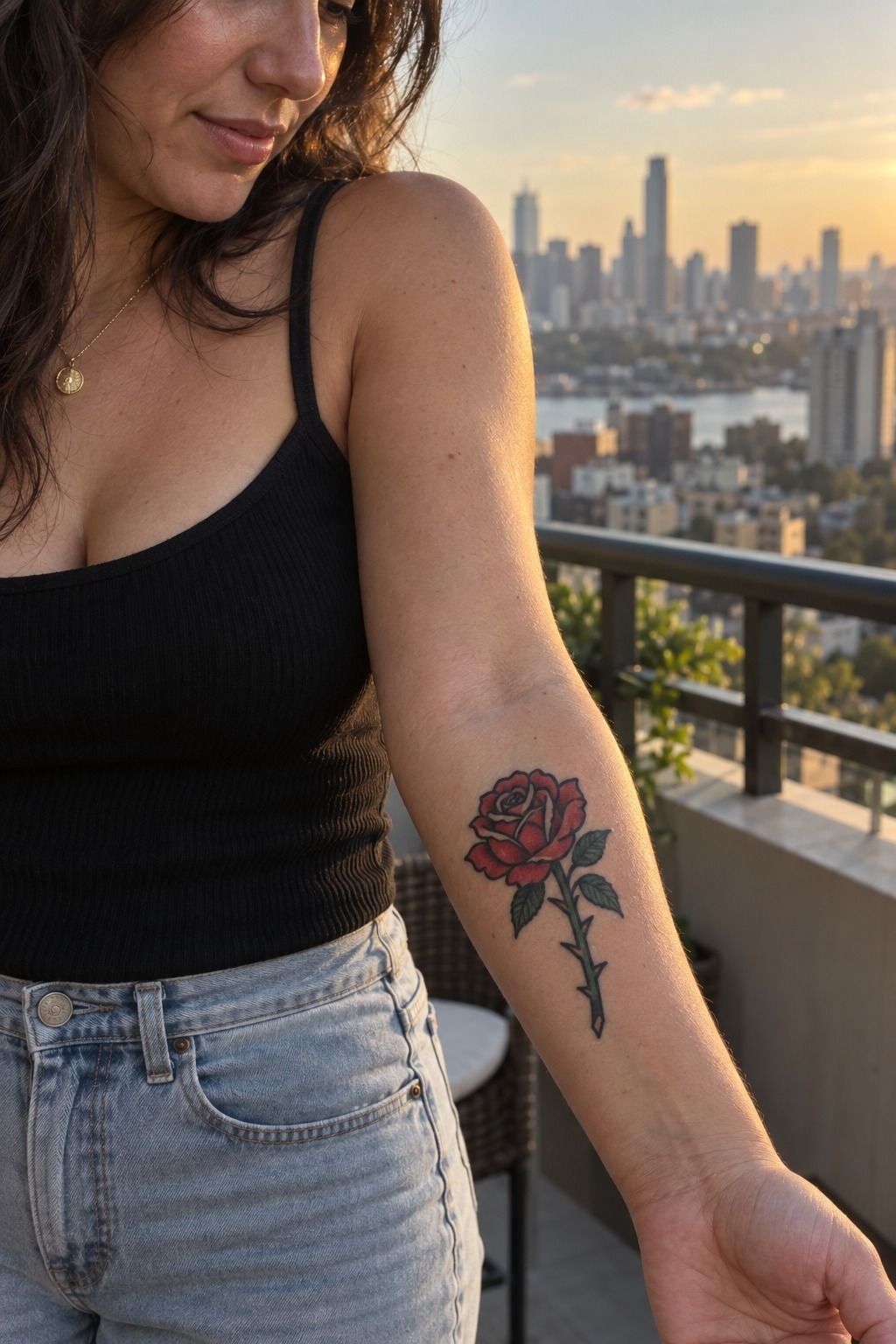
A single rose on the forearm proves that traditional work doesn’t have to be oversized. Its minimal structure gives every petal a clear job, and the placement can feel elegant without demanding an entire sleeve.
Ask for traditional rose linework with a readable center, firm outer leaves, and color blocks that won’t vanish into one another. The forearm is visible often, so you should like the design from every angle before you book.
If your budget only covers one small piece, this can offer strong value. A compact rose usually takes less time than a large composition, but the final result still depends on line quality, healed work, and thoughtful placement.
3Let a Fierce Snake Follow the Calf
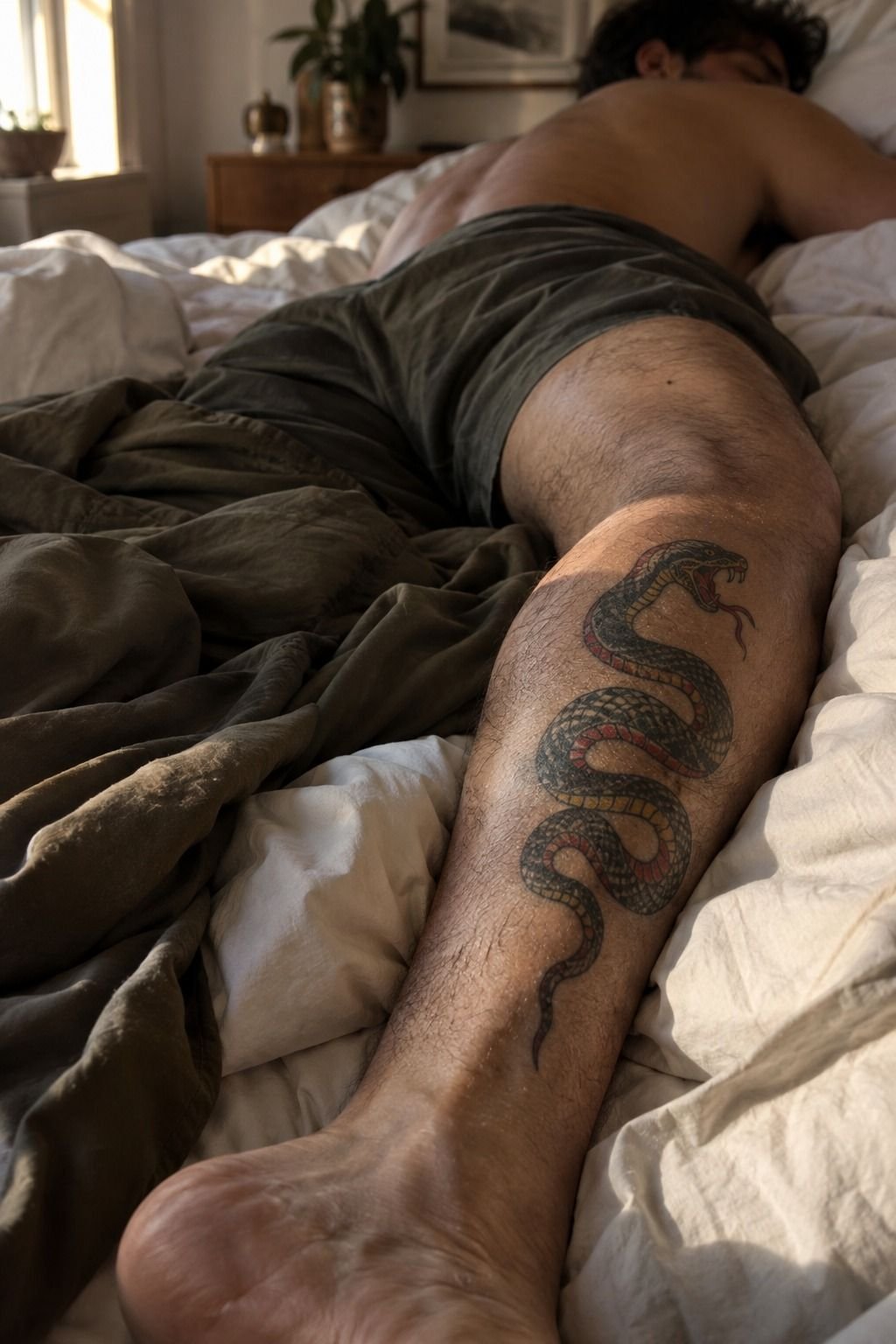
A slim snake works beautifully on the calf because your leg gives the body a natural path to follow. Let the fine black scale linework stay restrained, especially around the bend where the serpent overlaps itself.
Your artist can use solid black shadowing under the body to separate one coil from another. I wouldn’t fill every scale. A crisp head, a pointed tongue, and a few clean scale rows will keep the snake focused without making it look stiff.
And if you’re deciding how much red to include, place it in the eyes, tongue, or a small floral accent. The traditional tattoo stars guide can help you see how tiny supporting marks work without stealing focus from the central figure.
A needle-sharp serpent head gives the design its personality. Your placement matters more than people expect, so ask for a stencil while standing naturally rather than flexing your calf. The coil should follow your leg when you’re walking, not only when you’re sitting.
This is one of the more daring choices in the group, but it doesn’t need to be aggressive. An intricate scale pattern can feel graceful when the spacing is even. I’d skip a crowded background because the snake’s flowing movement is already doing the visual work.
4Curate a Vibrant Traditional Flash Sleeve
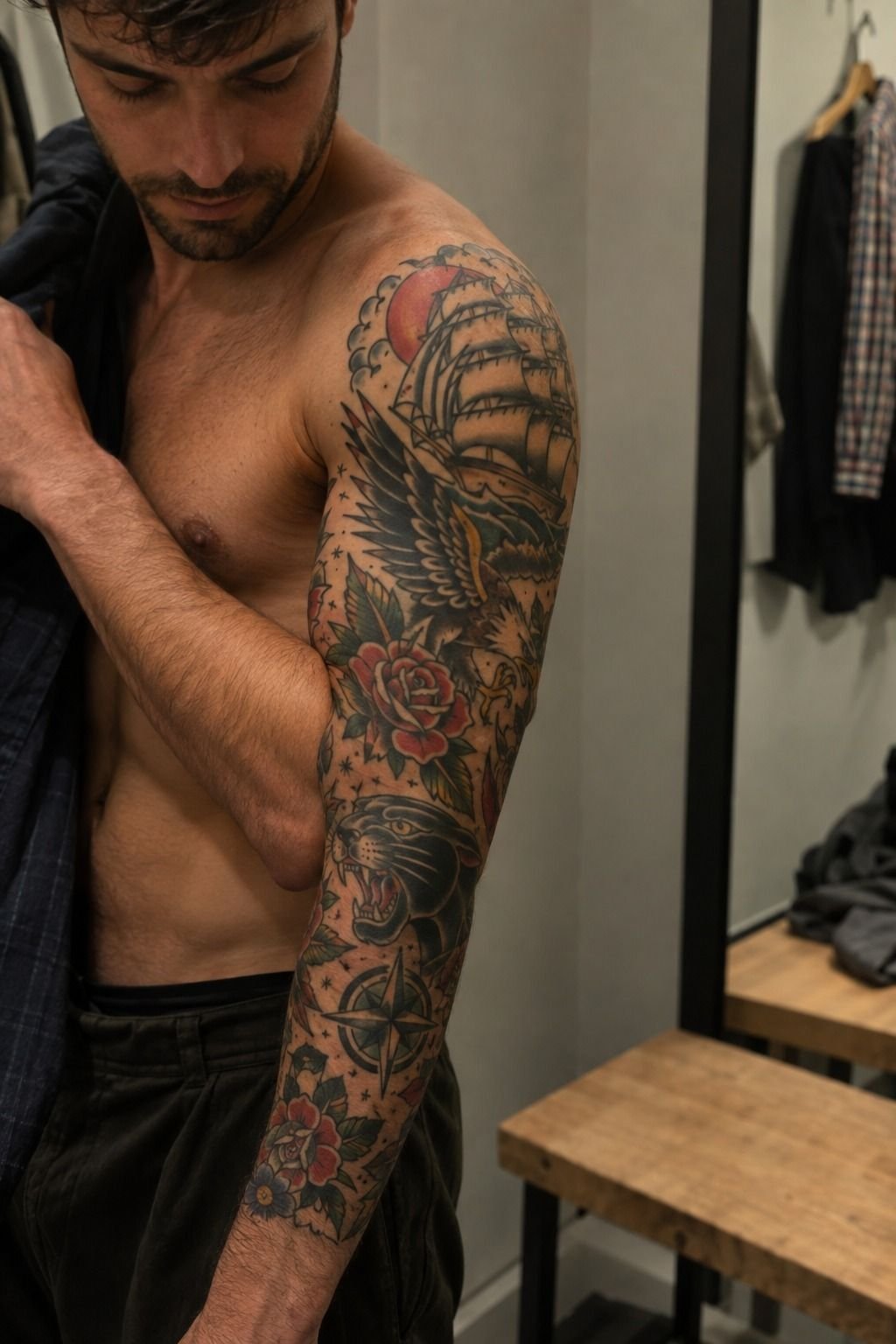
A flash sleeve becomes successful when every individual image has a job. Start with saturated vermilion red, deep black, and one supporting color, then let your skin act as the fourth tone.
Your forearm can carry a rose, star, dagger, or swallow, but the shapes need breathing room. If you’re packing every gap, the sleeve will lose its crisp edge. I prefer a few deliberate spaces because they let each tattoo stay expressive instead of melting into one large block.
The traditional tattoo wallpaper archive can give you a useful way to study repeated motifs and color relationships. Use it for reference, not copying. Your artist should redraw the arrangement for your arm’s actual curve.
And you don’t need a finished sleeve in one appointment. Build from the strongest image first, then let your next piece respond to the gaps that remain. Aged flash-paper references help you compare options without rushing into a permanent layout.
A playful sleeve can still look polished when the line weights agree. I’d skip mixing a very fine single-needle rose with an enormous heavy skull in the same visual cluster. Give your eye one anchor, two supporting pieces, and a few smaller marks that make the collection feel intentional.
5A Symbolic Dagger and Heart Sternum Piece
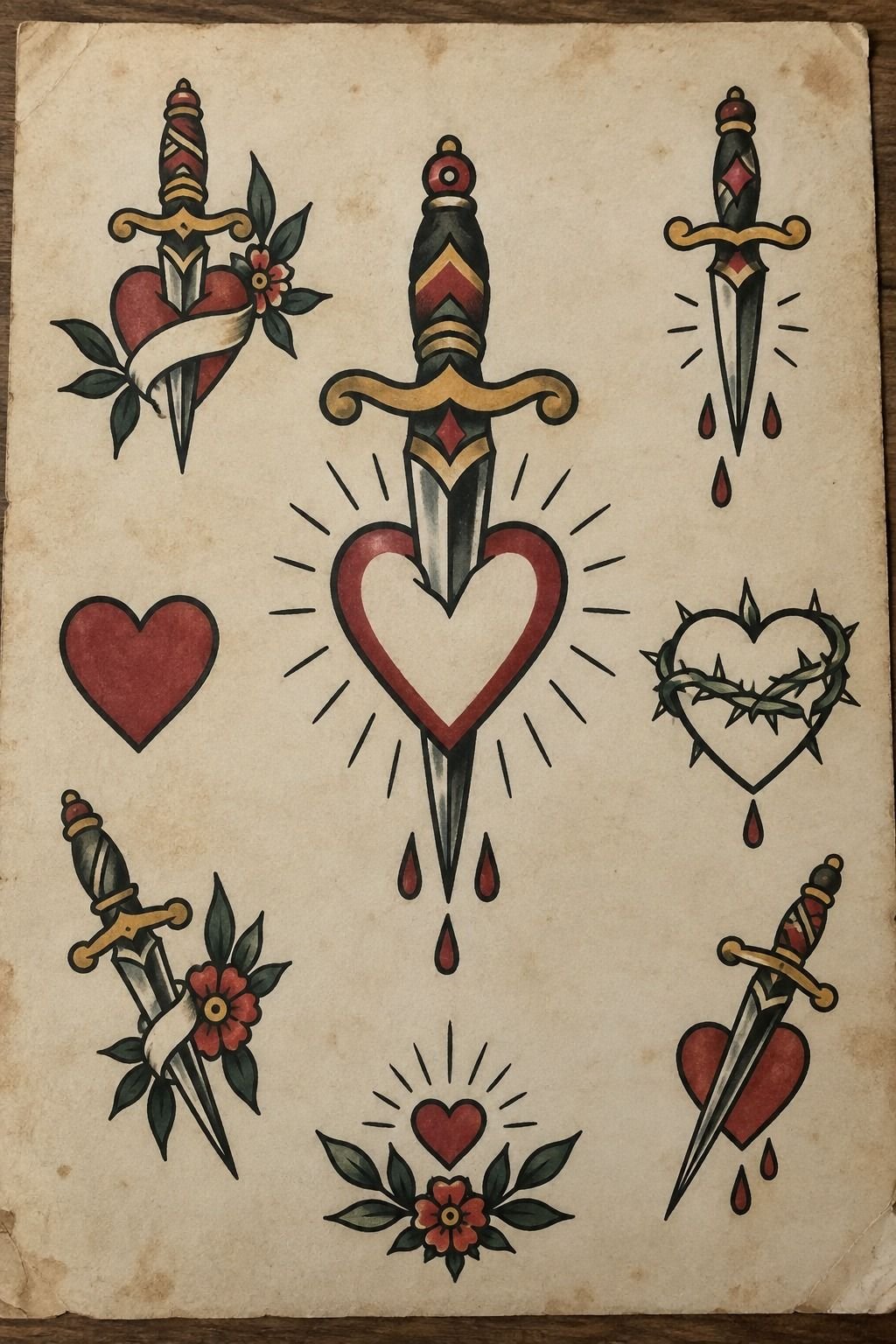
A heart and dagger carries instant meaning, but your version shouldn’t rely on symbolism alone. The angle of the traditional dagger blade can suggest protection, grief, loyalty, or a decision you finally made.
For the heart, deep red fill ink creates the familiar visual center. Your artist can add a short banner or small ornamental points, but I’d keep the words brief if you use any. Long lettering across the sternum tends to compete with the shape and can be harder to read as skin moves.
The traditional tattoo stencils guide is worth reviewing before your appointment because stencil placement is especially important here. Your sternum has a strong vertical line, and even a small shift can make the dagger look tilted.
This placement can be more painful than an outer forearm or shoulder, particularly over the center chest. I wouldn’t choose it only because the photo looks dramatic. Choose it because the design remains connected to you when nobody else can see it.
A hand-drawn aged flash sheet often shows the best versions of this pairing: sturdy outlines, simple color blocks, and a heart that reads immediately. Your finished tattoo can be ornate or restrained, but it should never look undecided.
6Keep a Dainty Traditional Swallow Behind the Ear
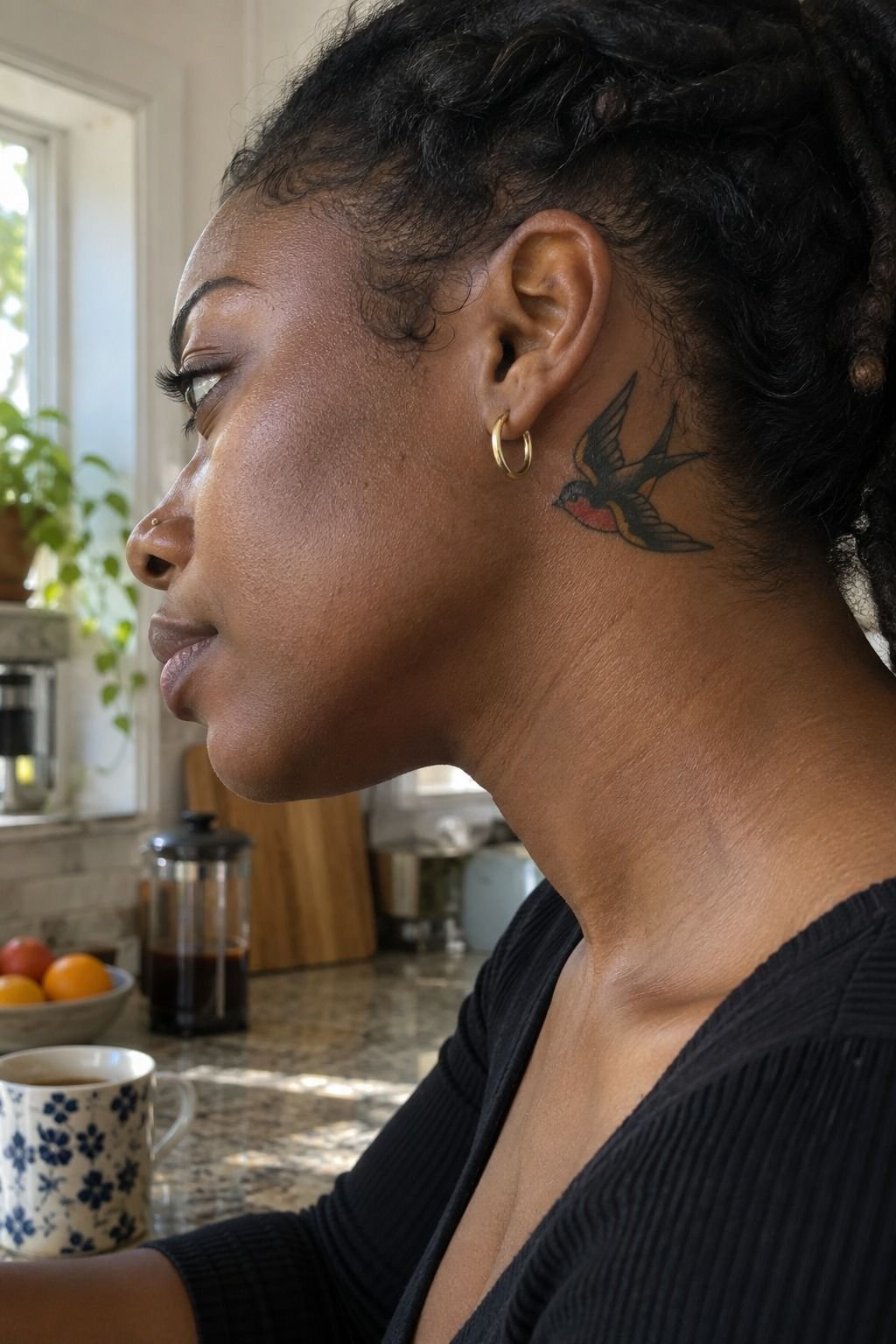
A swallow behind the ear needs a compact silhouette and a clear direction. Your black swallow outline should face forward or slightly upward so the bird doesn’t disappear into the curve behind your ear.
Keep the wing shape distinct with rust-red wing fill, a small eye, and a few deliberate feather marks. This is a dainty placement, but it isn’t automatically easy. The skin is sensitive, the space is limited, and small details need a steady hand.
And because the tattoo may be visible at work or in photographs, talk through your comfort level before booking. A traditional tattoo numbers reference can show how compact details remain readable when the overall design is restrained.
I’d skip squeezing a banner underneath the bird. Your ear already gives the tattoo a natural frame, and adding extra text can make the piece look crowded. A swallow with one strong wing angle will feel more personal than a pile of tiny symbols.
The result can be understated and stylish without losing its traditional character. If you’re worried about commitment, this is a location to discuss carefully with your artist, since it will be seen often in mirrors and close-up photos.
7Watch an Ornate Tiger Head Take Shape
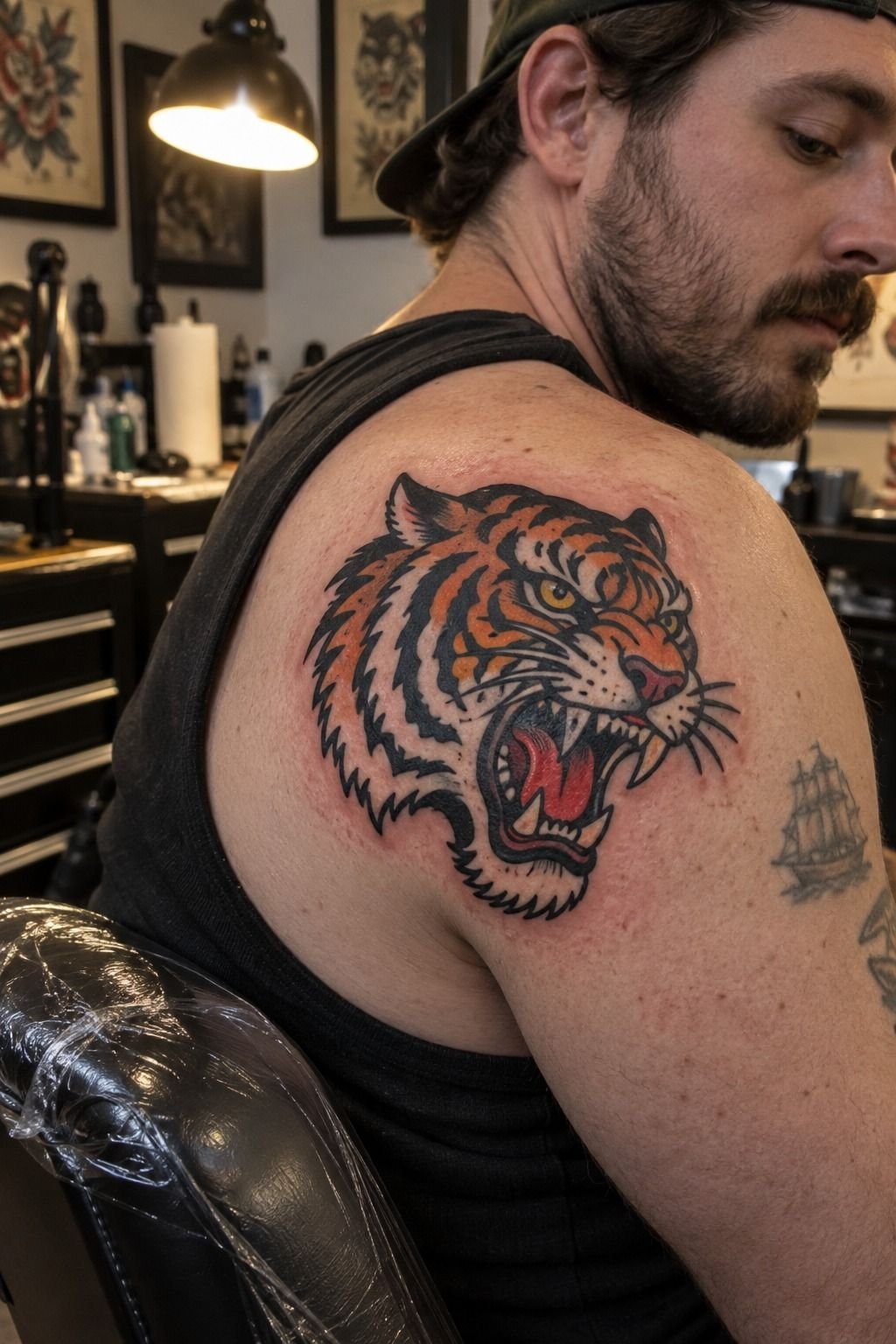
A tiger head belongs on a shoulder when the design can use the rounded muscle as part of its shape. Let the orange tiger face sit high enough to stay visible in a sleeveless shirt, while the stripes curve with your shoulder instead of cutting across it.
Your artist can use mustard-yellow ink in the face and warm black in the stripes, leaving small skin breaks around the eyes and muzzle. That contrast makes the expression sharper. A tiger should look alive, not like a flat mask.
For additional composition ideas, study the traditional tattoo background guide and notice how small leaves, stars, or rays support a central image. You don’t need a full frame if your tiger already has a strong border.
A masculine tiger can feel iconic, but the same subject can become feminine with softer eyes and a floral surround. I’d avoid overworking the whiskers because the face needs room for its sharp expression to hold.
Your shoulder gives you a forgiving canvas, yet placement still matters. Ask to see the stencil while your arm hangs naturally.
When you lift your arm, the face will change, so the design should be checked in both positions. That extra consultation is usually worth paying for.
8Choose a Minimal Traditional Anchor for the Ankle
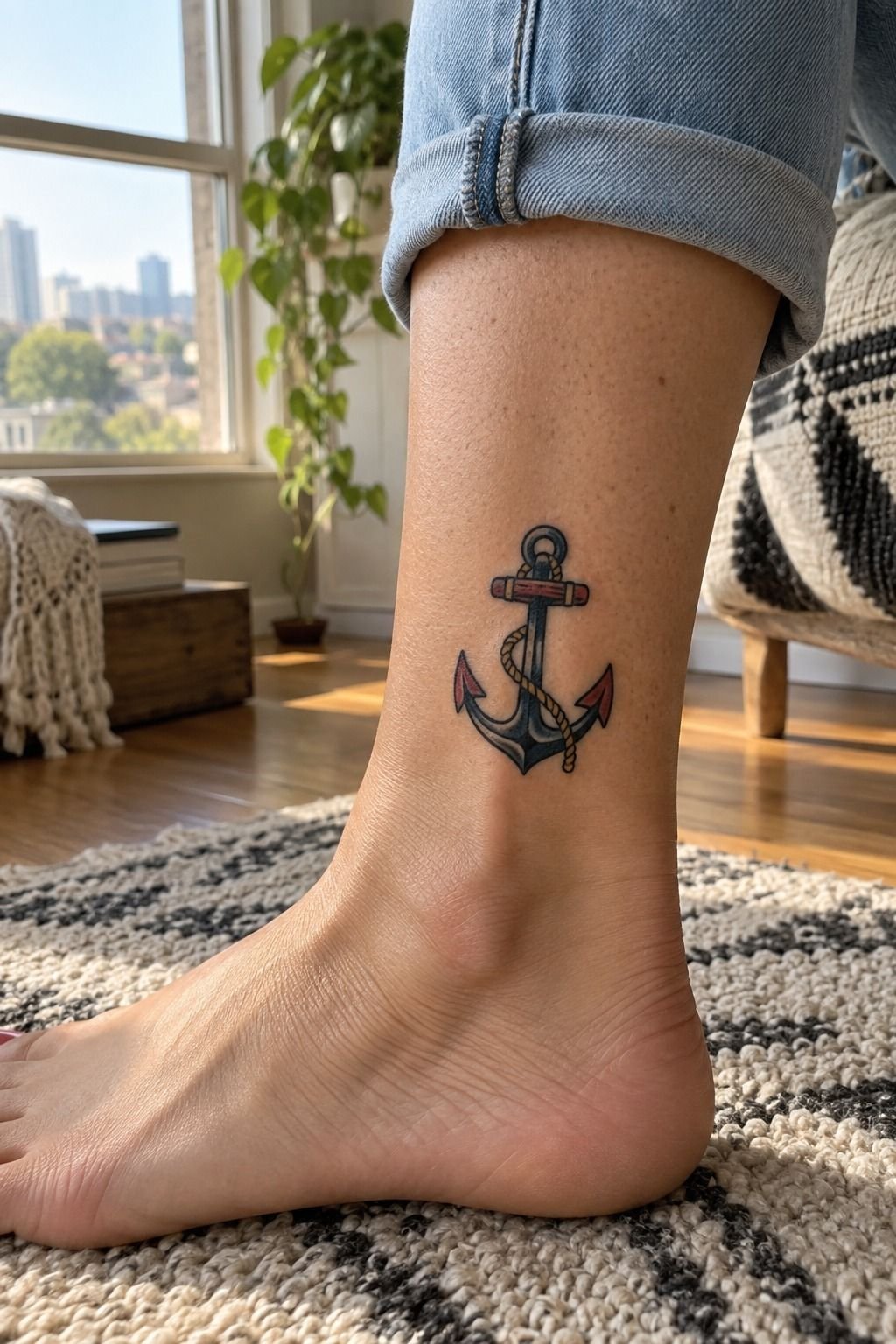
An ankle anchor succeeds through proportion. Your black anchor silhouette needs a strong stock, a readable crossbar, and a rope curl that doesn’t become a dense knot.
Use navy-blue fill ink sparingly, perhaps in the central field or a small banner. The goal is a minimal traditional design with enough contrast to stay crisp. If you’re choosing between a tiny anchor and a slightly larger one, give the artist room for the rope to age gracefully.
The traditional tattoo outline guide can help you compare compact designs before your appointment. Your ankle moves constantly, and the skin may rub against socks or shoes, so the cleanest version is usually the smartest.
And don’t choose this placement only because it looks dainty in a photo. Ankles can feel bony and sensitive, especially near the front and sides. An understated anchor is a better choice than a miniature one packed with lettering.
A sleek anchor can symbolize steadiness without announcing a whole story. I like it with one short rope loop and no background. Your tattoo will feel personal and timeless when every line has space.
9When Does an Edgy Traditional Skull Hand Tattoo Make Sense?
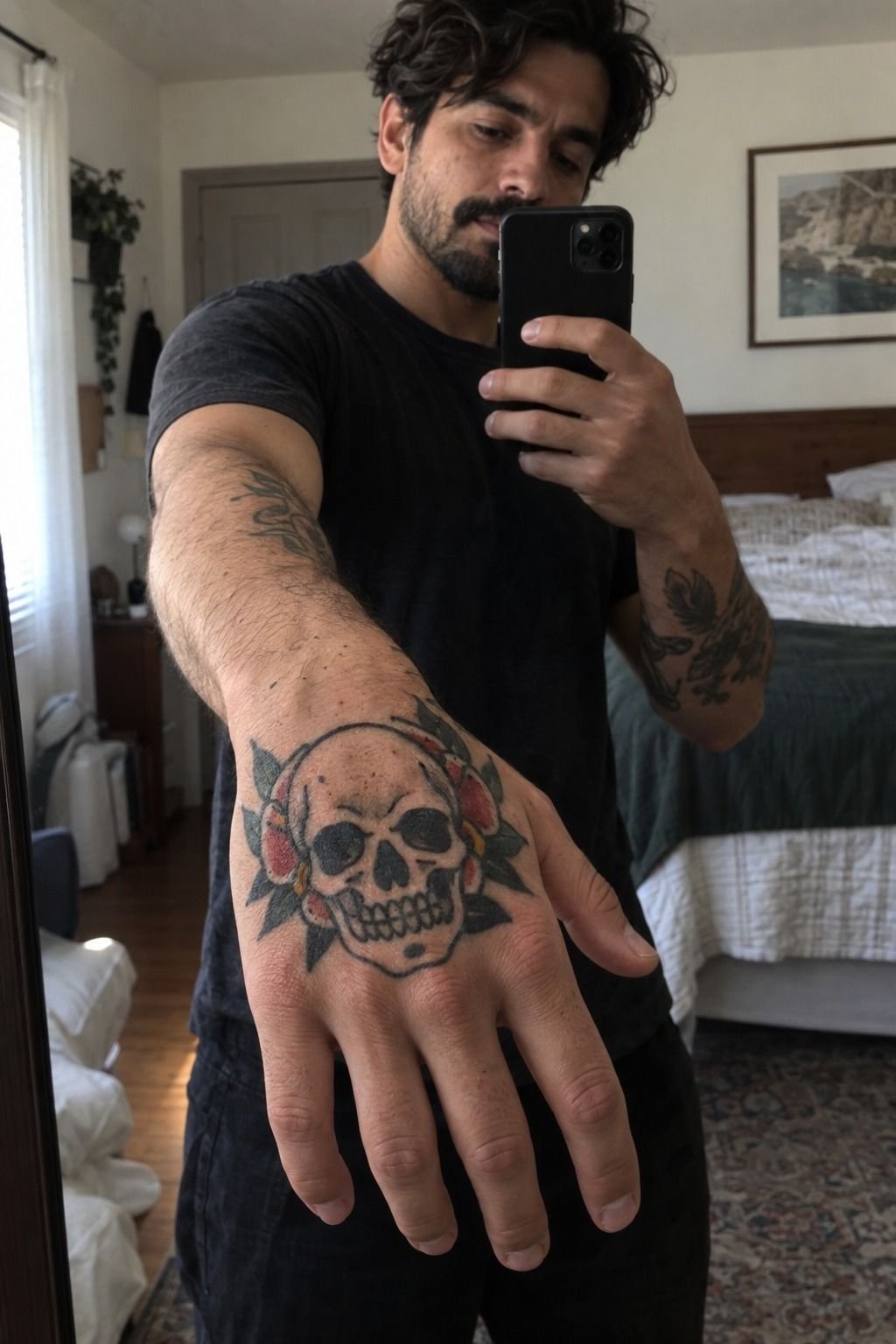
A hand skull has no place to hide, so the design has to be direct. If you want an aged black skull design, keep the teeth, eye sockets, and outer contour readable from a normal conversational distance.
The hand is a high-visibility placement with a higher chance of fading and uneven settling. Ask how your artist handles hand tattoo touch-ups before you commit, and include that possibility in your budget.
A skull can be gritty without becoming cluttered. I like a compact shape with one controlled accent, such as a red forehead mark or a tiny star. This is an edgy decision, so make sure the subject fits your work, relationships, and long-term taste.
10Follow a Graceful Mermaid Down the Thigh
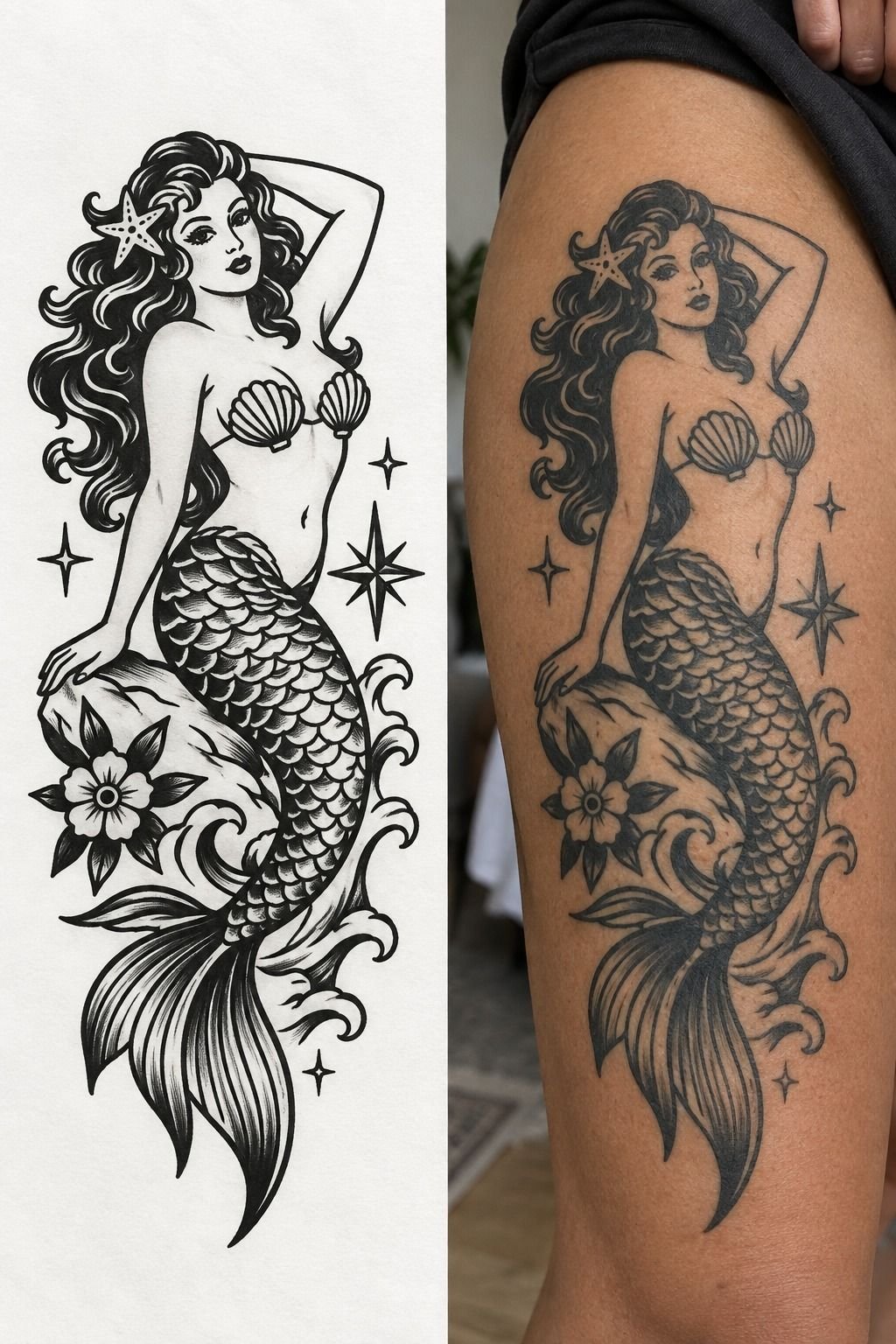
A mermaid gives your thigh enough space for movement, hair, scales, and a strong pose. Your traditional mermaid illustration should have a clear torso, a sweeping tail, and a face that doesn’t get buried under decorative waves.
Use sea-green ink in the tail and reserve warmer color for the hair, shell, or small accent. The split stencil reference is useful because you can compare the clean drawing with the placement before the design becomes permanent.
If you’re choosing a thigh piece, ask your artist to angle the figure toward the front or side of your leg. The traditional tattoo stencils guide can help you think through how the mermaid will look while standing, sitting, and walking.
A mermaid can be romantic and ethereal without becoming overly delicate. I’d skip adding a full ocean scene behind her unless you want a much larger project. The figure and tail already create a sweeping visual path.
Your thigh is often more tolerable than the sternum, foot, or hand, though everyone responds differently. Keep the linework crisp and the color blocks simple. That gives the image a clean, expressive finish that can age with dignity.
11Sailor Jerry’s Classic Upper-Arm Motif
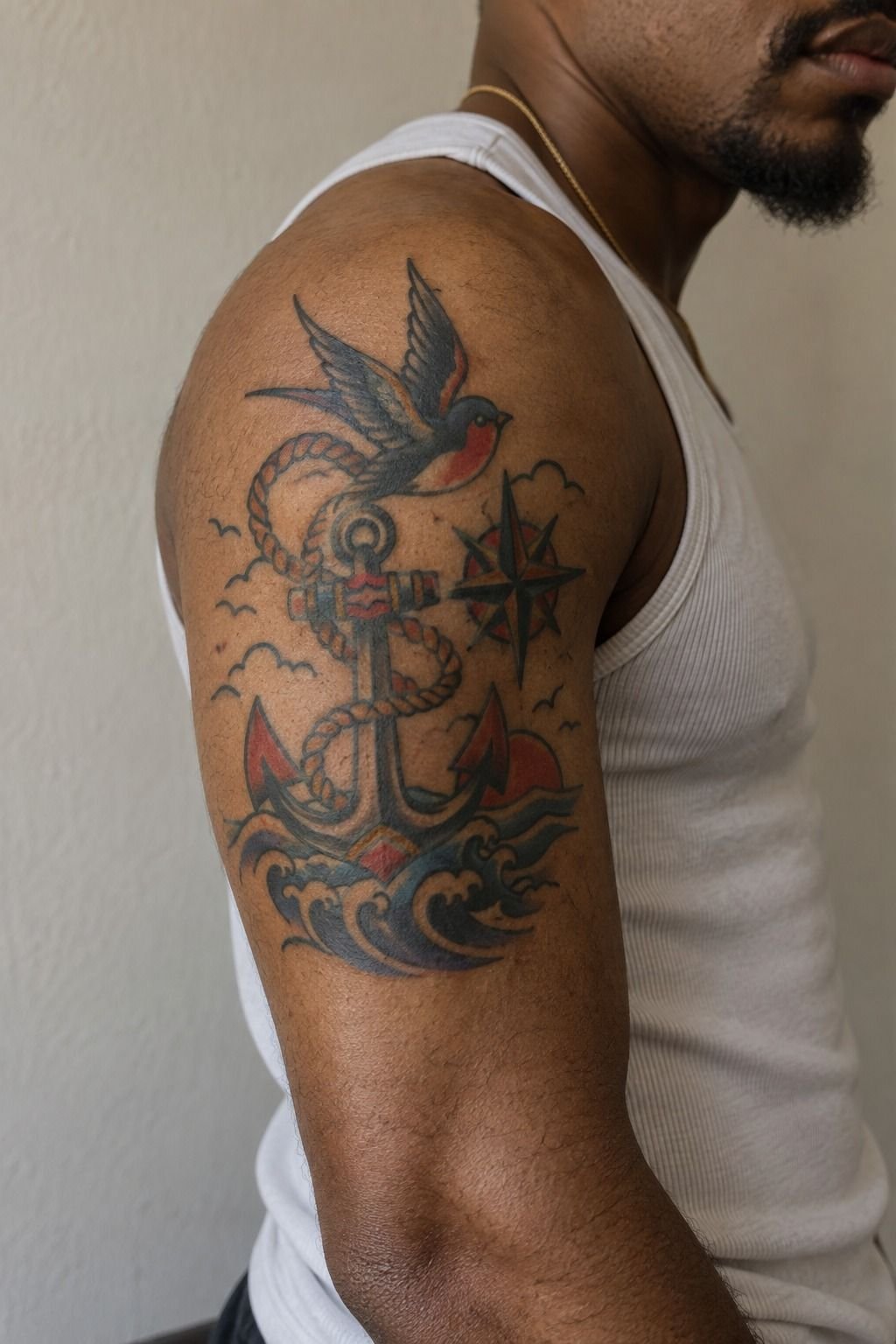
A sailor motif upper-arm piece has strong roots, but your arrangement doesn’t have to look borrowed. Study classic sailor flash conventions such as anchors, swallows, hearts, ropes, and banners, then choose the symbols that actually connect to your life.
An upper arm gives you enough space for a traditional nautical composition without forcing every element together. Your artist can use a central anchor, a small banner, or a single maritime emblem and let the surrounding skin protect the silhouette.
This kind of piece can become empowering when the symbols carry a reason beyond decoration. Consider what you want the tattoo to remind you of, then ask for a design that communicates that idea without a paragraph of lettering.
A vintage reference sheet may show a beautiful starting point, but the final stencil should fit your body. Bring several ideas, explain which details matter, and let the artist decide what will hold its shape.
Start With Placement Before You Price the Piece
The right subject can lose its impact in the wrong location. A detailed chest design needs enough width, while a small behind-the-ear mark needs restraint. Ask your artist to assess movement and visibility, sun exposure, and how the skin folds before discussing the final price.
That’s the test!
Your budget should include the consultation, deposit, appointment, aftercare, and possible touch-up. That doesn’t mean choosing the cheapest quote. It means understanding the full tattoo cost before the needle starts.
Color Should Have a Job
Traditional color works best when each shade supports the focal point. Red can pull attention toward a heart or banner, yellow can brighten a tiger, and blue can cool an anchor without competing with the outline.
A limited color palette often gives better long-term value than adding every shade available. Your skin tone, daily sun exposure, and the artist’s packing technique all affect how the color settles.
If you want an all-black tattoo, make sure the design has enough open skin to avoid becoming a dense patch. If you want several colors, ask how they will separate after healing. Keep it readable!
What Should You Ask Before Booking?
Bring healed examples, your preferred placement, and a realistic size range. Ask about the artist’s experience with healed traditional tattoos, their deposit policy, estimated hours, and aftercare instructions.
You should also ask whether the artist expects one session or several. A lower hourly rate may not be better value if the design takes much longer or needs extensive correction. Ask about the likely session length before you book.
Finally, discuss your tolerance for maintenance. Hands, feet, and areas exposed to sun may need more attention. Your skin is the canvas, but your life is the test!
Named Traditions Worth Studying
Sailor Jerry and Bert Grimm references can help you understand the economy of traditional tattoo design: clear silhouettes, firm outlines, direct color, and symbols that read quickly. Study those Sailor Jerry and Bert Grimm references for structure rather than copying a flash sheet line for line.
A sacred motif, a ship, or a swallow can feel haunting when it connects to a real memory. A whimsical detail can work too, especially when it gives a serious composition a little character. A sacred motif should still serve the overall shape.
The strongest references teach proportion. They show when to stop adding. That restraint can save money, reduce healing complications, and give the final tattoo more authority through visual restraint.
The Cost of Waiting for a Better Fit
Booking quickly can feel exciting, but waiting a week to test the stencil may protect your investment. Wear the placement mentally through work, exercise, travel, and ordinary mornings.
If the idea still feels right, your appointment will be easier to enjoy. Treat that pause as a placement test.
A thoughtful delay can also help you compare portfolios and quotes. Look for consistent healed work, clear communication, and a style that matches the subject.
The cheapest available appointment rarely tells you the whole story. Prioritize healed portfolios over a fast opening.
The Three-Weight Line Rule I Keep Coming Back To
I judge traditional tattoos by what survives after the first excitement fades. The cleanest pieces usually have a dominant outline, a secondary interior line, and a few tiny marks that are allowed to disappear with time.
That balance matters more than squeezing in every reference you saved. If your artist gives every detail the same visual weight, your eye won’t know where to land.
I learned this after choosing a design with too much fine texture. Freshly inked, it looked intricate and impressive.
After healing, the small marks softened and the main silhouette lost its authority. Now I ask where the tattoo will still read at a glance, especially on hands, ankles, and areas exposed to sun.
Your choice of color matters, too. A restrained palette can feel vibrant without becoming noisy, while black-only work can feel raw when the shape is excellent.
I don’t think every traditional tattoo needs red, yellow, and blue. I think every tattoo needs a reason for the colors it keeps.
The best reference isn’t always the flash image with the most decoration. Sometimes it’s the rose, the direct skull, or the snake with only enough scale work to suggest texture. If you’re torn between two concepts, choose the one with the clearer silhouette.
It will photograph well, heal more gracefully, and still feel individual years from now. For more planning, compare this traditional tattoo background guide with your sketch before adding filler.
The Questions I Get Asked Most
How much does Traditional Tattoo Inspiration usually cost?
A typical US tattoo appointment may run about $100 to $300, depending on size, placement, artist, and region. Many shops have a minimum around $50 to $100, while hourly rates often fall near $100 to $250. A clear design brief helps your artist estimate time without guesswork.
Is Traditional Tattoo Inspiration worth it for a first tattoo?
Yes, traditional tattoos can be an excellent first choice because bold outlines and simple color blocks often remain readable as they age. Your first piece should still feel personal, and an outer forearm placement is usually more tolerable than ribs, feet, hands, or sternum.
How do I choose a tattoo artist for Traditional Tattoo Inspiration?
Study healed photographs, clean linework, color packing, and work in the exact style you want. Your artist should explain placement, hygiene, and aftercare clearly. Look through this traditional tattoo outline guide while comparing portfolios, then ask how the lines settle over time.
How much does Traditional Tattoo Inspiration hurt?
Pain varies, but sensitive placements such as ribs, feet, hands, and sternum are commonly more intense because they have less padding and more sensitivity. Forearms, thighs, and shoulders are often more tolerable. Your session may feel sharp, hot, or scratchy, especially near bone.
How long does Traditional Tattoo Inspiration take to heal?
The surface usually heals in about 2 to 3 weeks, while complete healing can take roughly 2 to 3 months. Wash gently, moisturize as directed, and avoid sun and swimming during early healing. Simple aftercare protects the crisp finish.
What’s the best placement for Traditional Tattoo Inspiration?
Forearms, thighs, and shoulders offer useful space and are often more tolerable, while hands, feet, ribs, and sternum bring more visibility or discomfort. Your best placement depends on work, lifestyle, and scale. This traditional tattoo stencils guide can help you judge the design before booking.
Where I’d Start First
If I had to pick one, I’d start with the forearm rose. Its profile stays readable, the placement is manageable, and the limited palette keeps every line accountable. Pin the forearm rose reference for later and review this unique American traditional tattoo guide before choosing your artist.
A rose gives you room to learn how your skin heals without committing to the visibility of a hand or the sensitivity of a sternum. Choose a design you would still recognize as yours years from now. No filler needed!